
- Blitz Tips
- Volumes of septic tanks, dimensions of concrete rings, bottoms and ceilings
- Two-chamber design device
- Pros and cons of a two-chamber septic tank
- Open pit construction
- Concrete rings for sewers
- Soil development
- Arrangement of the bottom of the tank
- How to calculate the size of a septic tank from the rings
- Dimensions
- sump
- Filter well
- Choosing a place for a two-chamber septic tank
- Location of the structure
- The device and scheme of a septic tank made of concrete rings
- Day waterproofing
- Joint sealing
- Ventilation
Blitz Tips
- In conditions where the septic tank is forced to be placed too far from the house and the pipeline between them exceeds 20 meters in length, it is recommended to arrange special revision wells at intervals of 15-20 m, especially at bends. They will allow you to monitor the condition of the pipeline and, if necessary, quickly and efficiently clean the pipes without having to dig them out and dismantle them throughout the entire area.
- On sale you can buy concrete hoops with a completely blank bottom. They are optimal for settling tanks and do not require additional concreting of the bottom.
- To reduce the frequency of calling cesspool equipment, due to the rapid filling of the container with solid waste and to reduce their amount, special bioactive additives can be used.
- To save money and time, it is advisable to first dig a universal pit for a sewer tank, and only then order concrete rings. This will allow you to use the unloading equipment immediately to install the rings from the machine directly into the pit.
- As concrete floors for wells, it is advisable to use slabs with hatches already built into them. This will allow not only to constantly monitor the process of filling the septic tank, cleaning it from impurities until they exceed a critical level, but also to introduce solutions with special bacteria into the tank, which catalyze the decomposition of waste and reduce stench.
- For the most efficient ventilation of the structure, it is desirable to bring ventilation pipes to each well separately.
Volumes of septic tanks, dimensions of concrete rings, bottoms and ceilings
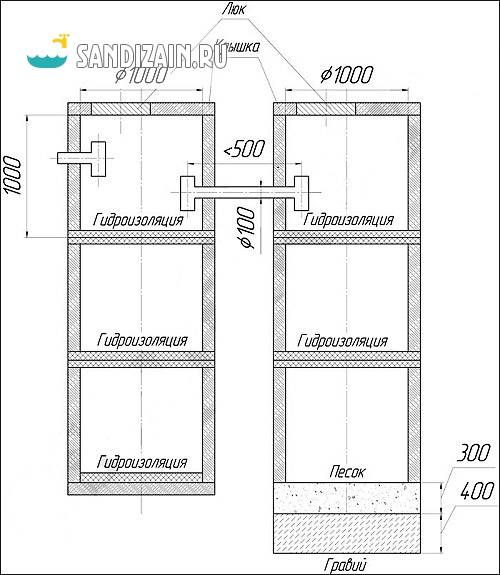
According to the standards, 1 person consumes an average of 200 liters of water per day. The well (drainage is not taken into account) should take a three-day rate - 600 liters. To calculate the volume of sewage, this number is multiplied by number of family members, get the capacity of the tanks. If there are 2 cameras, the first should receive ⅔ drains, the second - ⅓.
According to the calculated volume of wells, rings are selected
Pay attention to the label. The letters indicate the type of concrete, and the numbers indicate the dimensions in inches: first the diameter, then the height. The latter indicator is mainly 0.9 m, but with a diameter of over 1.5 m it can be 60 cm to reduce weight
The diameter of the rings for the septic tank is from 0.7 to 2 m
The latter indicator is predominantly 0.9 m, but with a diameter of over 1.5 m it can be 60 cm to reduce weight. The diameter of the rings for the septic tank is from 0.7 to 2 m.
Deciphering the marking of the reinforced concrete ring
The volume of 1 ring is calculated by size.For example, KS10-9 has a diameter of 1 m, a height of 0.9 m, and its volume is 0.24 m³. For a two-chamber treatment plant, you will need 3 elements for 1 person. If there are up to 3 people in a family, 2-3 such containers are required. The volume is increased due to the diameter, and not the number of rings - it is not recommended to install more than 3 on top of each other, since the stability of the structure is weakened.
The diameter of the bottoms is presented in sizes of 150, 200 and 250 cm. Installation is simplified, tightness increases if a monolithic product with a bottom is chosen instead of a separate element. There are overlaps for rings of all types, except for KS7. They are with an off-center hole with a standard diameter of 0.7 m.
Two-chamber design device
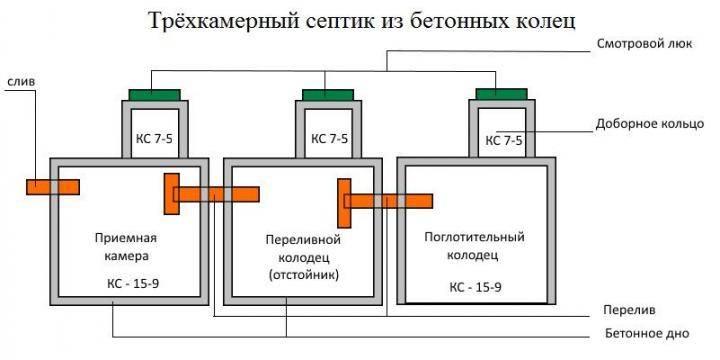
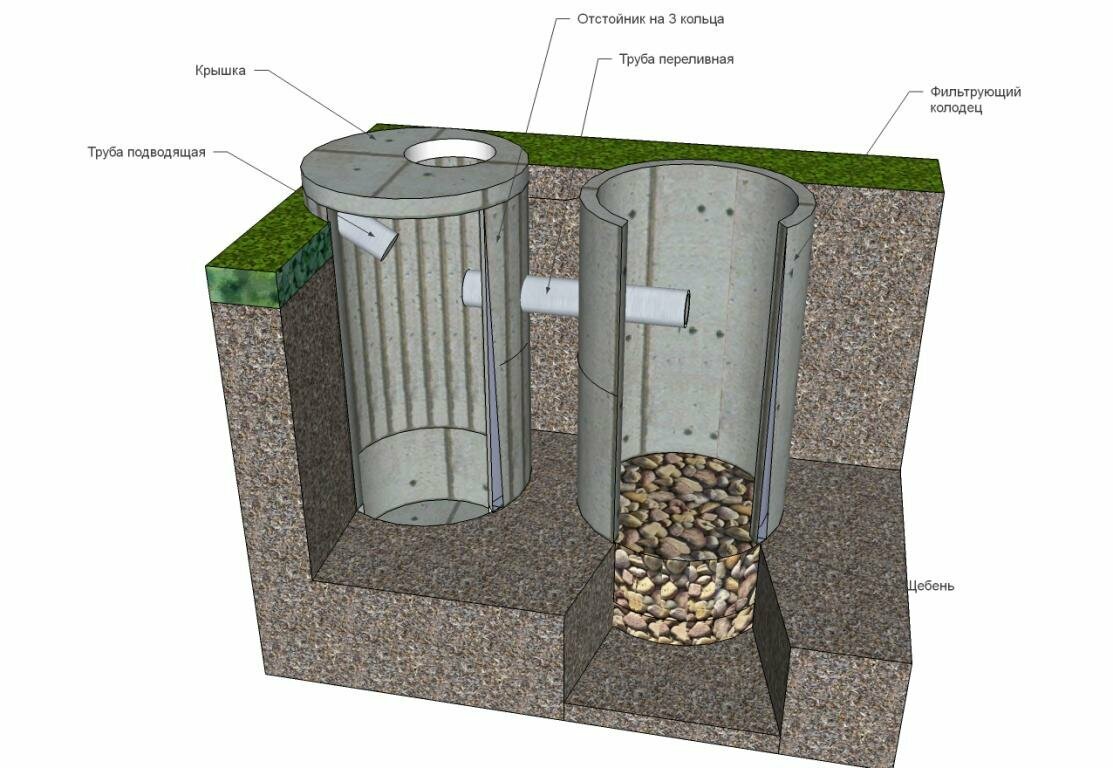
The septic tank, consisting of two chambers, is a practical treatment plant capable of processing organic waste.
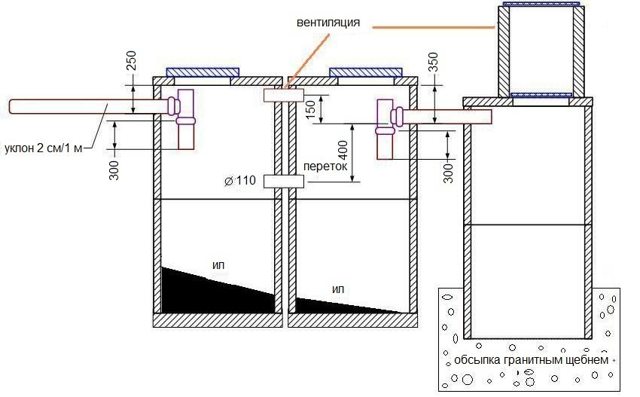
The cleaning mechanism is built on the operation of two communicating compartments, inside which the liquid component and the insoluble solid component are separated by settling.
Each compartment of a two-chamber structure is responsible for certain tasks:
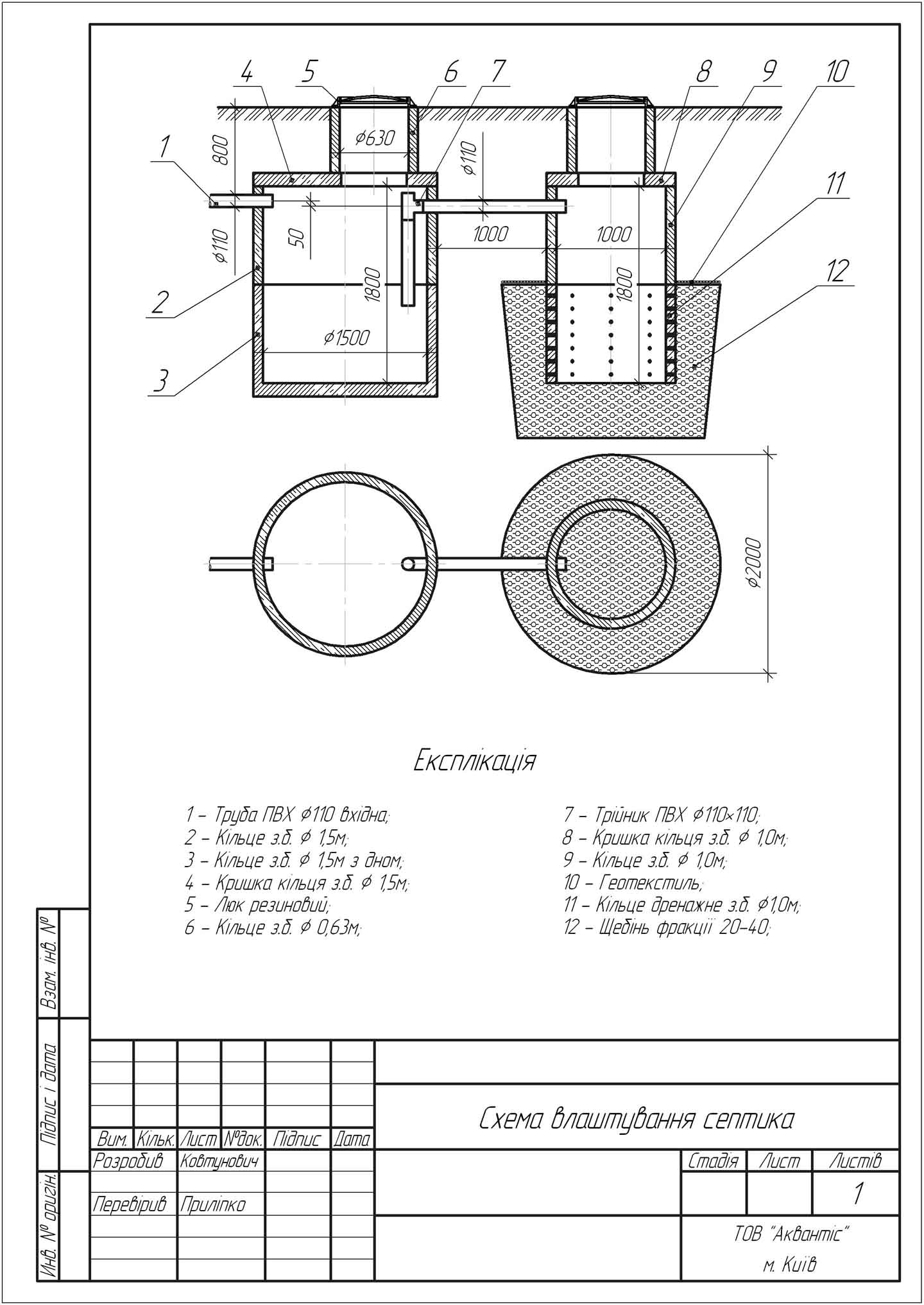
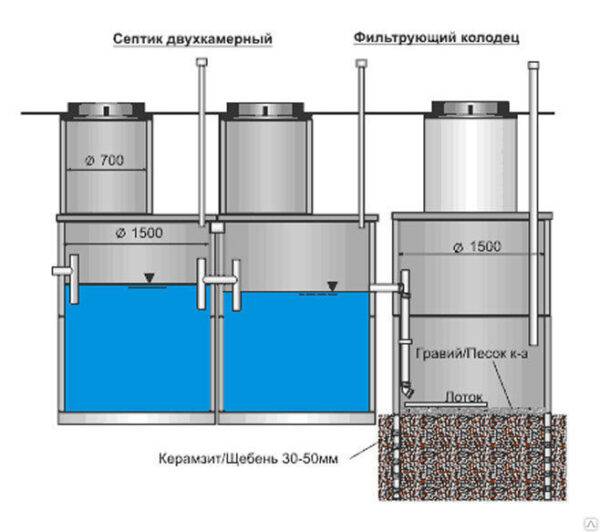
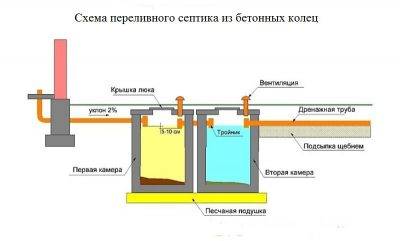
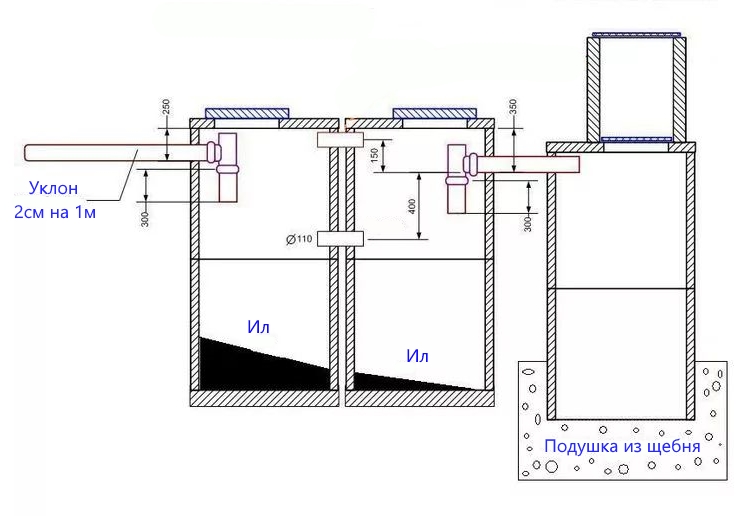
- First camera. Receives drains from the inlet sewer pipe coming from the house. Inside the chamber, the effluents are settled, as a result of which the solid fractions sink to the bottom, and the clarified waste flows through the overflow pipe into the second compartment. The sludge that accumulates at the bottom must be periodically pumped out.
- Second camera. Responsible for the final disposal of clarified settled effluents. Passing through a soil filter with a capacity of 1 m, the effluents are purified to a degree that allows them to freely enter the environment without the threat of disturbing the natural balance.
Additional cleaning inside the second chamber is achieved through a crushed stone or gravel filter. It prevents the penetration of insoluble inclusions into soil layers.
The clarified effluents that have undergone such cleaning significantly reduce the total volume of the sewer mass, due to which it is much less likely to call for sewers to empty autonomous sewer facilities.
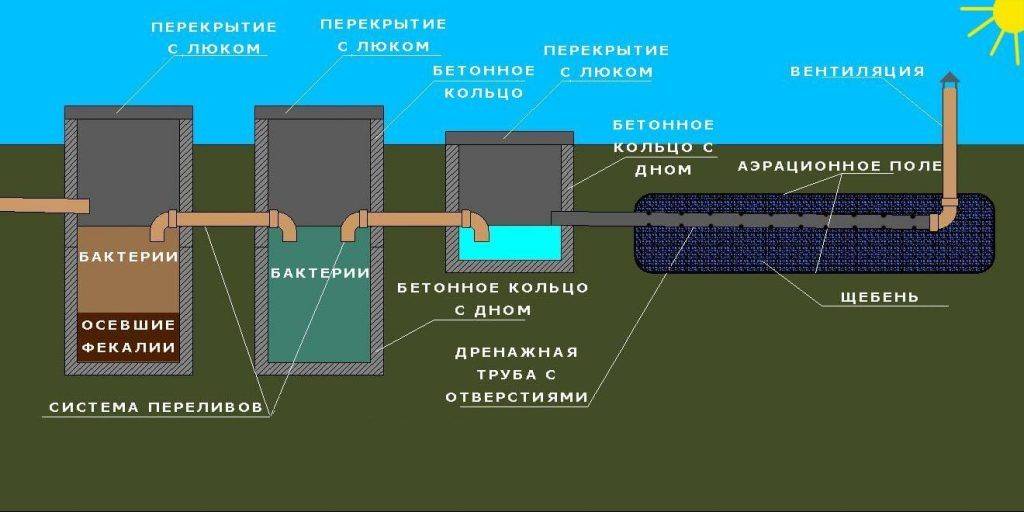
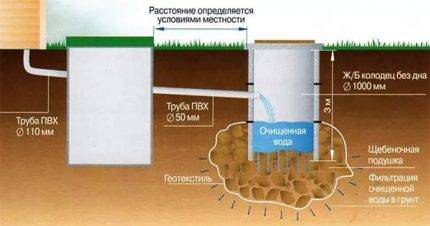 The operation scheme of a two-chamber septic tank is as follows: sewage first enters the first compartment, and after settling in the first chamber, the liquid component flows into an absorption well, from which it is discharged through a soil filter into the underlying layer (+)
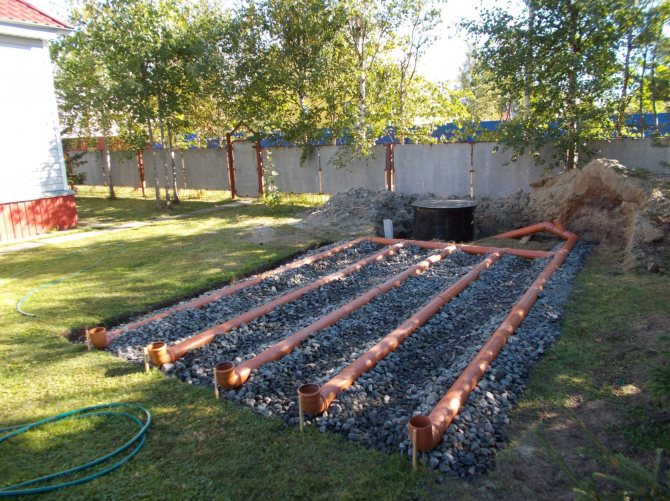
Often, instead of filtration wells, filtration fields are placed. They are several trenches laid in parallel, the bottom of which is covered with gravel-sand filling.
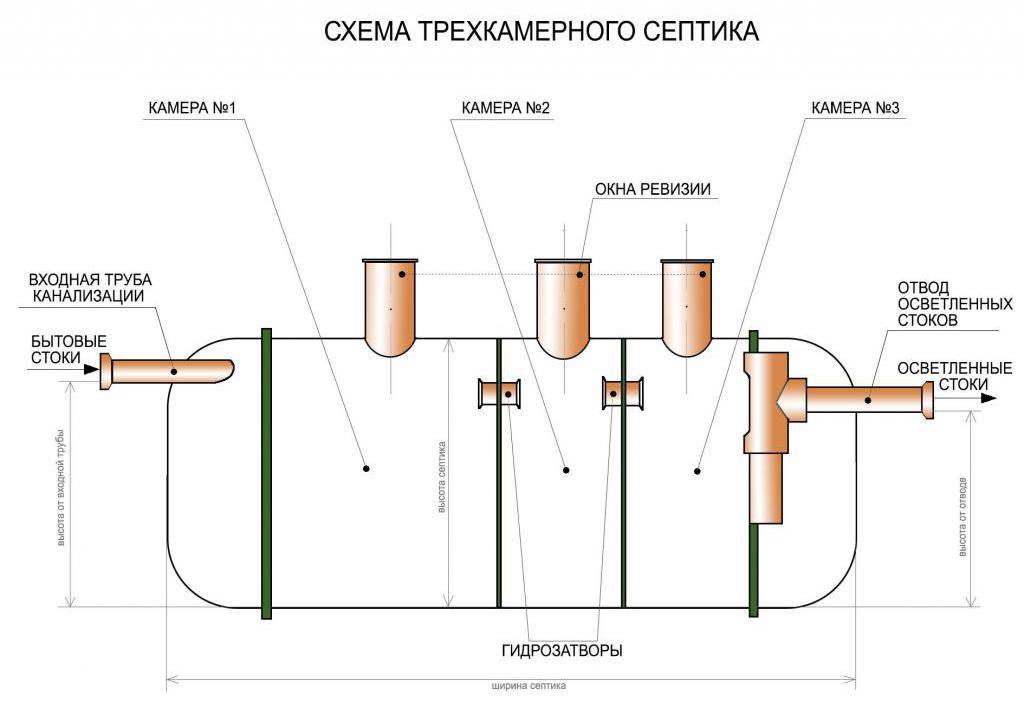
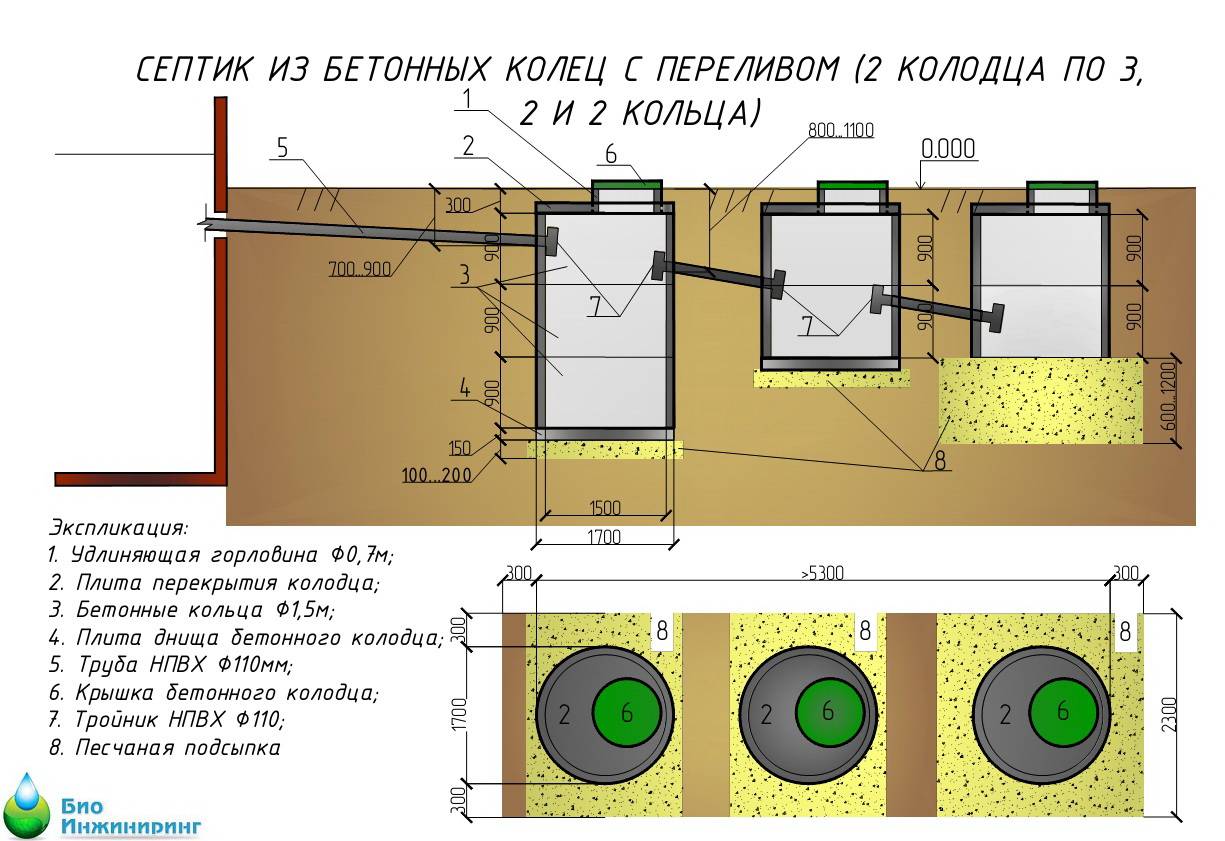


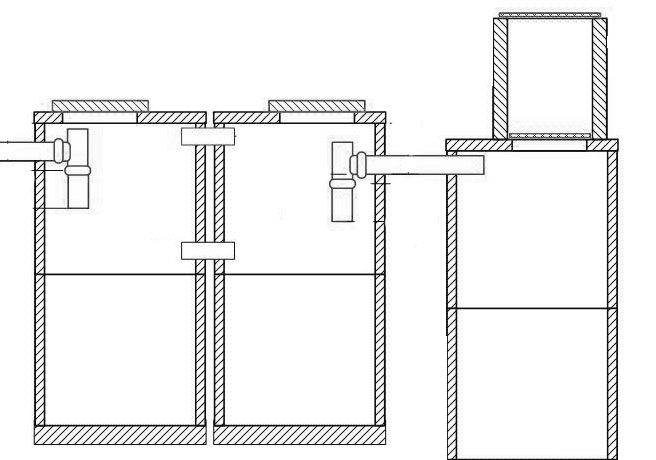


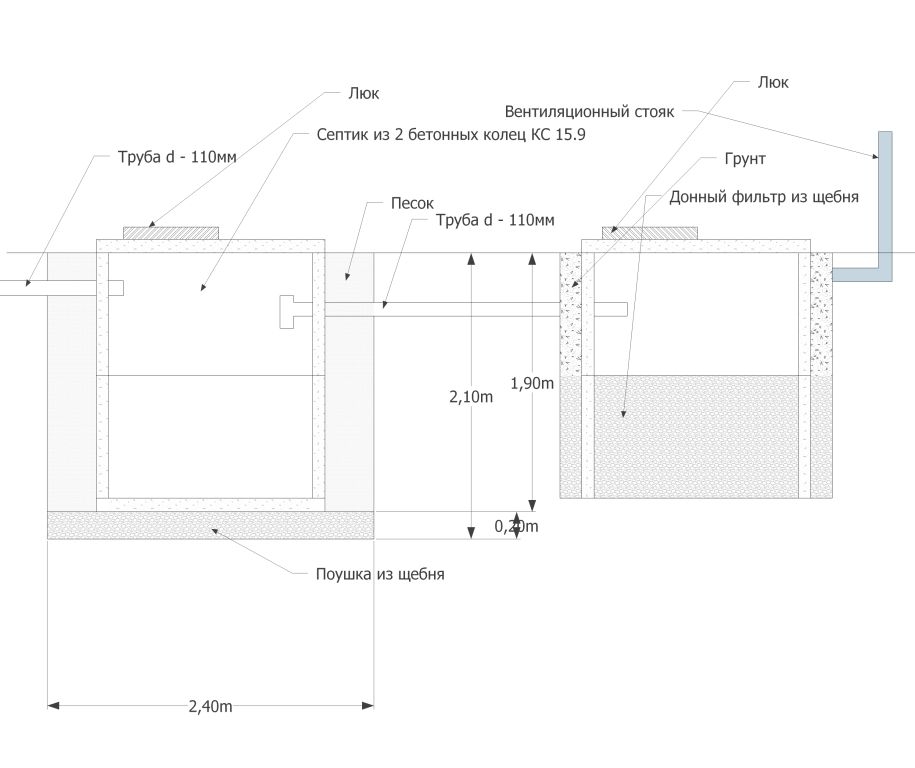
Pipes with perforated walls are laid on top of the filtration backfill. The entire structure is covered with rubble and sand and sprinkled with soil.
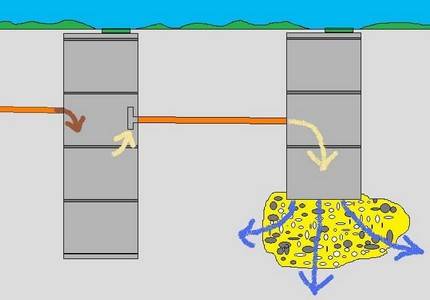
Purified and clarified water, seeping through the filtration materials, penetrates into the underlying soil layers. There must be at least 1 meter of soil thickness between the groundwater level and the conditional bottom of the absorption well
Pros and cons of a two-chamber septic tank
Double chamber reinforced concrete septic tank has the following advantages:
- A simple and understandable assembly technology that does not require professional knowledge and skills. It is enough to be able to use a shovel and a set of simple household tools.
- Small construction budget. If there is time and effort, the costs will be reduced only to the acquisition and delivery of the necessary materials.Having shown ingenuity and ingenuity, everything can be done manually, without the involvement of lifting and earthmoving equipment.
- Reduced construction time. The absence of wet work with mortar allows the project to be completed in a matter of days. Most of the time is spent digging the earth.
- Durability. The structure is resistant to moisture, high and low temperatures. Wells are not susceptible to rodents, insects and microorganisms.
- Strength. Two-chamber septic tanks perfectly tolerate high soil pressure and heaving. Provided that the tanks are properly assembled, they remain airtight under all conditions. Due to the large weight, the stability of the mine in the soil is ensured.
- High efficiency. Due to the use of a pre-settler, most of the wastewater is cleaned and goes into the ground. The remaining substance is gradually processed by bacteria into compost.
- Ease of maintenance. It consists in warming the building for the winter and periodically removing silt. All this can be done by hand.
Despite the obvious advantages, two-chamber septic tanks have the following disadvantages:
- A lot of usable area goes under the buildings, which could be used for flower beds or beds.
- To achieve the required accuracy and tightness of the assembly, it is necessary to use lifting equipment.
- If you do not make screeds at the junctions of the rings, there is a possibility of their displacement and depressurization of the well.
- During the operation of treatment facilities, an unpleasant odor is formed. To get rid of it, you have to put a high ventilation pipe on stretch marks.
Open pit construction
If a decision is made to involve means of mechanization, then it is advisable to use them from the beginning to the end of the work. The money spent makes up for the time and effort.
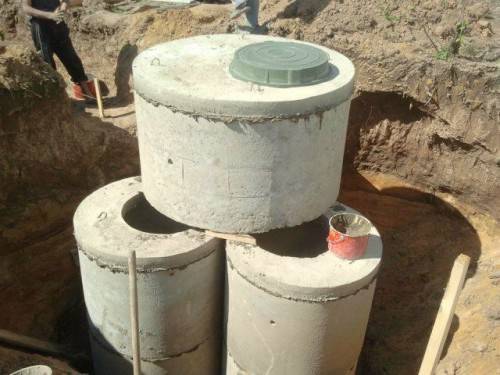
To ensure that the rings are captured for lifting them, through holes for hooks must be made in them. They need to be done with diamond crowns, since the use of a perforator can cause cracks in concrete. A feature of external mounting is the use of a lower element with a bottom. Each subsequent link is placed with great accuracy, characterized by the absence of debris at the joints. After removing the rigging, the mounting holes are filled with cement mortar and reinforced on both sides. After that, it is recommended to treat the inner and outer surfaces of the ring with antiseptics and plasticizers. This will protect the material from moisture, biological and chemical influences.
After installation, cavities remain on the sides of the shafts. They are filled with sand and gravel. The mixture plays the role of a damper and a filter if the mine is depressurized.
Concrete rings for sewers
In the manufacture of sewer concrete rings, they are guided by the sections of GOST 8020-90, which regulate the technical conditions for this type of product. Its main provisions include the following points useful for specialists and ordinary consumers:
- The structures are made of heavy concrete according to GOST-26633 with a compressive strength of 70% of its brand or class.
- For reinforcement, rod reinforcing wire, thermomechanically hardened or hot-rolled steel are used.
- Well rings must comply with the requirements of GOST 13015-2012, which regulate their parameters in terms of the following indicators:
- stiffness, strength and crack resistance of structures without load;
- the physical strength of concrete in its original finished form, and the release after the manufacture of the product;
- water resistance and frost resistance;
- the thickness of the layer of concrete up to the built-in reinforcement;
- steel grades for fittings, running and loop fasteners.

Rice. 4 Concrete sewer rings - dimensions according to GOST 8020-90
Concrete rings and auxiliary structures have symbols consisting of the following sequence of alphabetic and numeric characters with the following interpretation:
1. - an indication of the serial number of the standard size (1, 2, 3, and so on), quite often the first digit is missing in the designation;
2. - view of the reinforced concrete structure:
- KS - a ring of a wall chamber or the neck of a structure, if a narrow manhole of a certain height with a hatch is mounted to access the working chamber;
- KO - support ring, installed on the upper plate of the structure for the construction of a neck under the hatch, through which access is provided to the inside of the working chamber. It differs from the wall view in its low height, greater wall thickness and fixed diameter;
- PN - bottom plate, placed under the well bottom;
- PP - floor slab, installed on top of the structure, has a rectangular or round cutout for mounting a manhole with a hatch;
3. figure: for KO and KS - the inner diameter in decimeters, in the designations PN and PP - the inner diameter of the well rings, on (under) which they are placed;
4. - the digital symbol after the dot indicates the height of the wall concrete goods in decimeters.

Rice. 5 Parameters of support rings KO and plates PO, PN according to GOST 8020-90
Soil development
The pit for the chambers can be individual (for one well) or common, in which all the facilities of a single system for receiving and treating wastewater will be erected.
For a separate well, the dimensions of the pit should be 25-30 cm larger than the diameter of the outer surface of the concrete ringselected for mounting. The resulting gap will facilitate the installation and displacement of sewer rings using special equipment. The main disadvantages of such pits are: work with soil is carried out manually, the impossibility of high-quality sealing of joints and waterproofing works from the outside of the rings with a sufficient depth of the structure being erected.

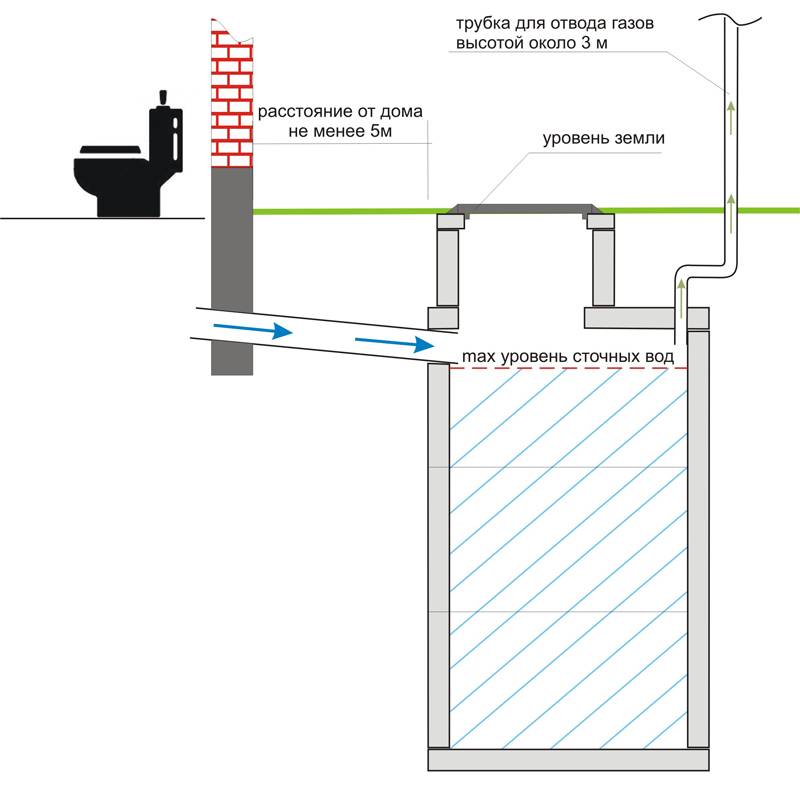
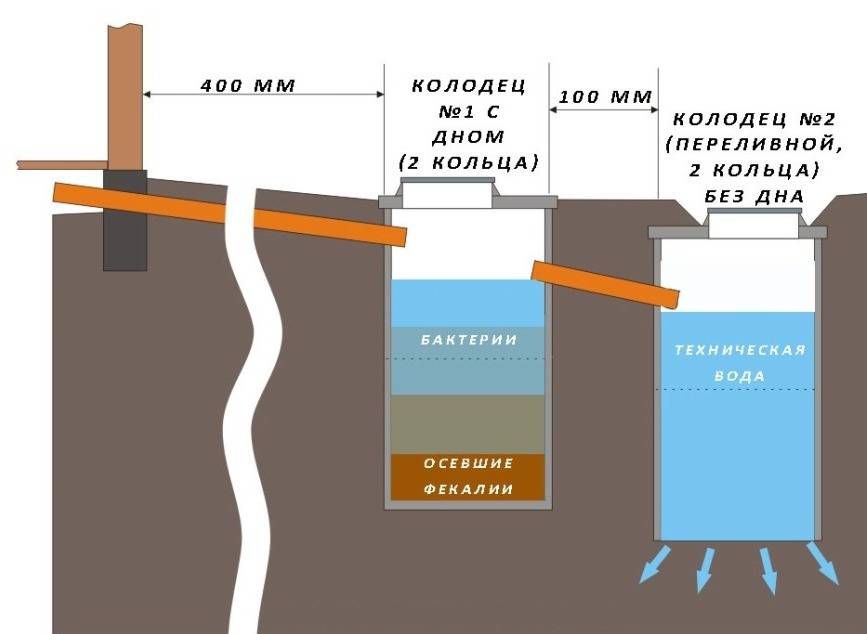

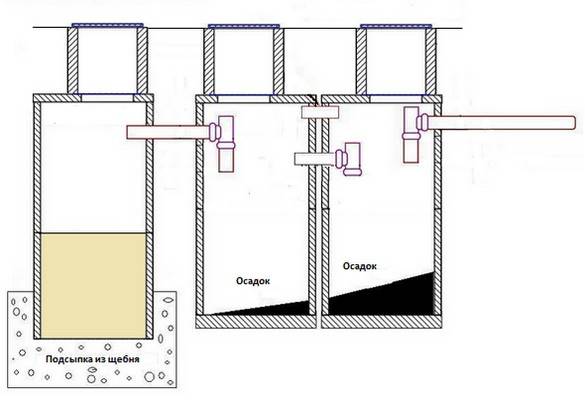
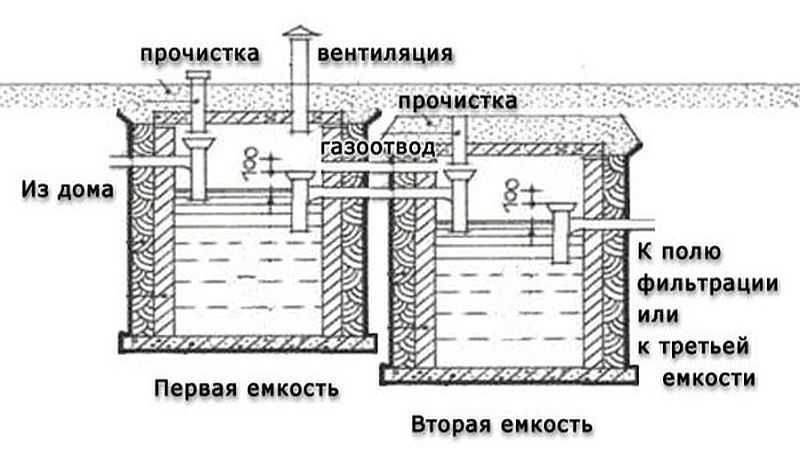

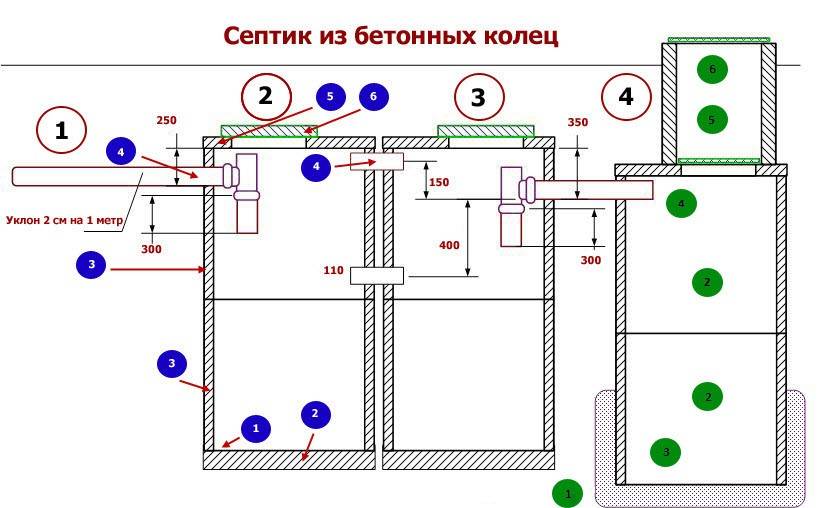

A common pit facilitates all types of construction work. FROM
using special equipment, it will be ready in 1.5-2 hours.
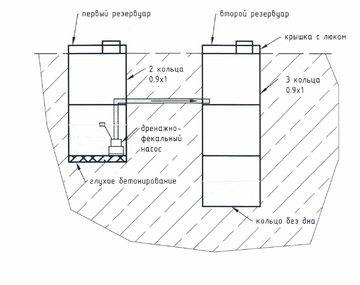
In the places where the receiving chambers are installed, the bottom of the pit is rammed, laid
waterproofing roll material (usually roofing felt) and poured with concrete
mixture. Such a pedestal is not needed if the lower rings were purchased with already
finished concrete bottom. At the site of the future installation of the septic tank filtration chamber
arrange a crushed stone pillow (from 0.5 m). It allows the purified liquid
without obstacles to pass to the ground and soak into it. In addition, such
the pillow performs the final post-treatment of the liquid.
Arrangement of the bottom of the tank
The bottom plate is designed to seal and prevent toxic waste from entering the ground.
The bottom is made in the following sequence:
- The soil is qualitatively leveled and rammed. If there are plant roots, they are cut off, and their sections are treated with an antiseptic.
- A geotextile is laid on the ground. It will prevent grass germination and erosion of the soil under the container.
- At a height of 15 cm, holes with a diameter of 12-16 mm are drilled in the walls. Measurements are taken, reinforcing pins are cut.They are inserted and fixed in holes, forming a lattice with a mesh of 15-20 cm.
- A mixture of sand and crushed stone 10-12 cm high is poured onto the geotextile. The material is wetted and leveled.
- The concrete is mixed. The proportion of cement, sand and gravel is taken 1:3:3. The solution is poured until it covers the reinforcing cage with a layer of 5 cm. It takes at least 14 days for the concrete to gain strength.
This manufacturing technology of the bottom will ensure its resistance to pressure and tightness.
How to calculate the size of a septic tank from the rings
The following information is required for the calculation:
- the number of people living, taking into account the used household appliances that consume water, and plumbing fixtures;
- construction of the structure as a whole - single or multi-chamber;
- type of waste disposal - discharge of drain water into the ground after clarification, connection to centralized communications, pumping out using special equipment;
- soil features in the area. The latter is necessary in order to correctly determine the type of foundation required for installing a septic tank and the nature of the preparation of the pit.
For ease of calculation, we will take the most popular design option - a two-chamber septic tank with the discharge of settled and treated waste into the ground through a crushed stone and sand cushion.
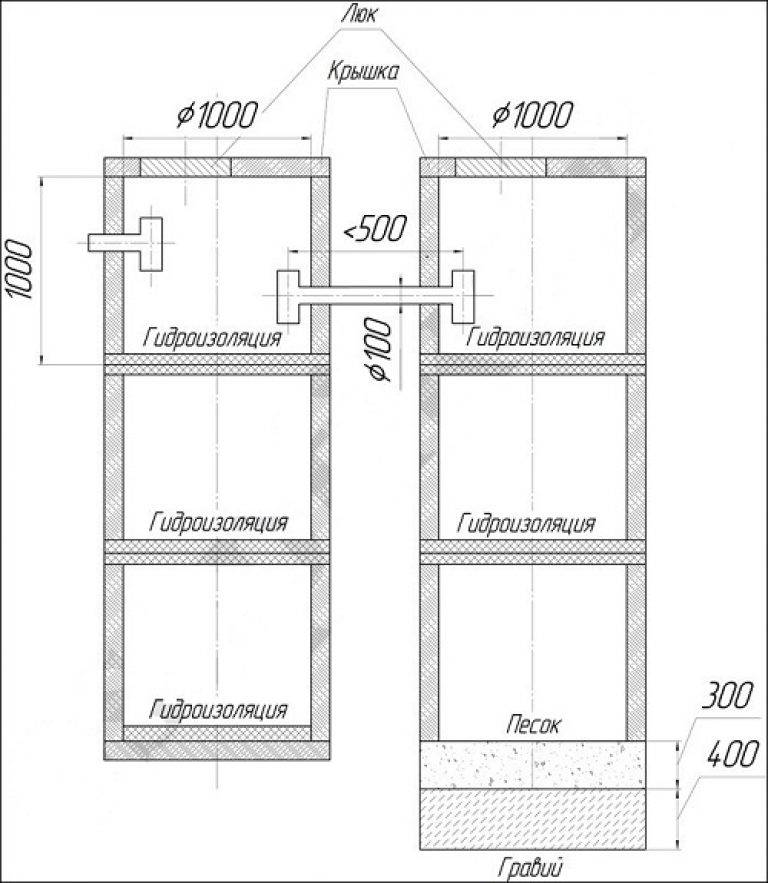
The illustration shows a well with a diameter of 1,000 mm. Since the inner diameter is indicated, the models KS 10-3 and KS 10-6 with a height of 290 and 590 mm, respectively, from Table 1.2 are suitable for this standard size. The capacity of KS 10-3 is 0.1 cubic meters, for KS10-6 the volume is 0.16 cubic meters.
Next, you need to calculate the water consumption and, accordingly, the number of drains per day.
On average, SNiP 2.04.09-85 gives the following recommendations: 200 ... 250 liters per day per person. Accordingly, a family of four consumes about 1000 liters per day, which corresponds to one cubic meter. If this standard seems too "costly", you can recalculate the approximate water consumption for every hygiene procedure.
Table 1.3. Water consumption for hygiene and household procedures.
| Type of procedure, type of plumbing fixture | Amount of water, l |
| Taking a bath | 150…180 |
| Use of a shower (in a shower cabin or a hydrobox, a bathtub, except for devices of the "tropical shower" type) | 30…50 |
| Washing hands, washing over the sink | 1…5 |
| Flushing the toilet (depending on model and availability of partial flushing) | 9…15 |
| Using a bidet (depending on the model, the presence of a manual water flow control) | 5…17 |
| Washing machine water consumption, per cycle | 40…80 |
| Consumption dishwasher water, for one cycle | 10…20 |
| Washing dishes for the family: of two people of three people of four people | 12…15 17…20 21…35 |
| Water consumption during cooking, including during the preservation period | 10…50 l/h |
Important: this does not include the cost of water for irrigation, since the liquid goes directly into the ground, and not into the septic tank.
Interestingly, both hand washing and hand washing of dishes use two to three times more water than when using automatic devices. Therefore, before arranging a septic tank, it’s good install washing machine and dishwasher economical type - the volume of drain water will be less.


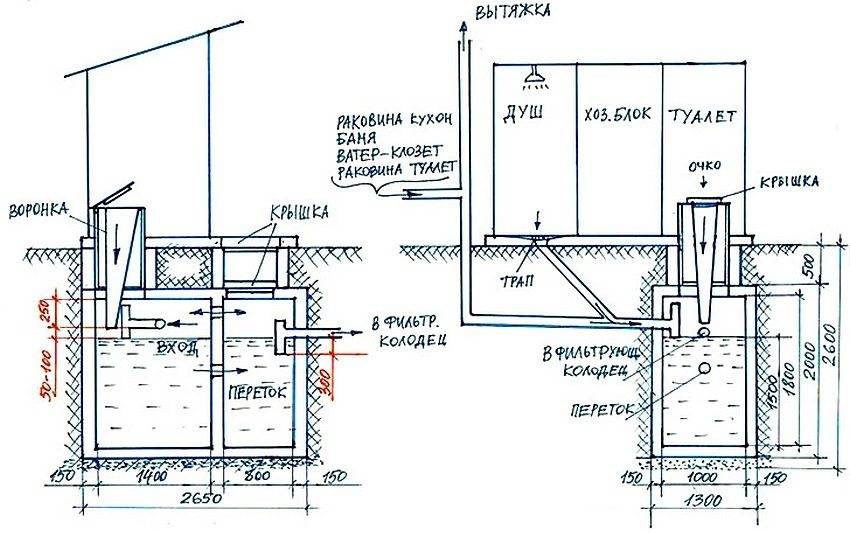


If statistics are to be believed, the average Russian uses plumbing fixtures according to this infographic.
Also, for a family of four, they use a washing machine for a full cycle at least 5 ... 8 times a month, and if there is a dishwasher, they turn on the dishwasher once or twice every day.
Of course, for a private house, the indicators may differ slightly, but it is better to focus on large numbers.
Thus, taking into account the information from tables 1.3. and infographics, we get approximately the same figure that the standards give, that is, a thousand liters (one cubic meter) for a family of four per day.
Since they usually try to make sure that the level of wastewater in the septic tank does not rise above the middle of its height, and even a third is better (taking into account unforeseen circumstances, difficult cleaning of some drains, exceeding the average daily discharge), then, accordingly, the volume of the septic tank is taken equal to the average daily water discharge multiplied on three:
V \u003d Q x 3 \u003d 1 x 3 \u003d 3 cubic meters.
Thus, for a well with a volume of 3 cubic meters, 30 rings KS 10-3 or 19 KS 10-6 will be required. Of course, this number is divided into two wells according to the scheme - about 18 and 12 when using KS 10-3 and 11 and 8 for KS 10-6. The first digit refers to the primary filtration well, the second to the septic tank for the final treatment of water discharged into the ground.
Taking into account the dimensions of the rings, the height of the wells will be 5.5 (7) and 3.5 (4.8) meters. The dimensions are given taking into account the installation of the bottoms and heads of the wells. For rings of other diameters, the height of the wells will be very different, so it is necessary to take into account the level of groundwater and correctly calculate the ratio of the diameter and height of the concrete goods.
The depth of the pit is calculated taking into account the arrangement of a sand and gravel pad under the well (with and without a bottom), and also with an eye to the fact that the head is usually located 0.2 ... 0.5 m below ground level.
Dimensions
sump
The minimum size of the sump is taken equal to the three-day volume of wastewater. Bigger is better: as the volume increases, the content of the sump will be less intensively mixed with the incoming flow.
How to estimate the daily volume of wastewater?
- If there is a water meter - according to changes in its readings.
- In his absence, the consumption is usually taken equal to 200 liters per person per day.
Accordingly, for a family of 4 people, the minimum volume of the sump will be 200 x 4 x 3 = 2400 liters, or 2.4 m3. What follows is a simple calculation.
The volume of a cylinder is equal to the product of its height, pi, and the square of the radius.
The formula for calculating the volume of a cylinder.
When using concrete rings with a meter diameter 90 cm high for the construction of a septic tank, 2.4 / ((3.14 x 0.5 ^ 2) x 0.9) = 4 (rounded up to the nearest whole number) rings will be required.
Filter well
How to calculate the size of the filter well with your own hands?
First you need to assess the need for absorbent surface area. It, in turn, is tied to the absorbency of the soil, the values \u200b\u200bof which for different soils are easy to find in reference books.





| Soil type | Absorption capacity, liters per square meter per day |
| Sand | 90 |
| sandy loam | 50 |
| Loam | 20 |
| Clay | 10 or less |
On soils with low absorbency, a different design is used instead of a well - a filtration field.
For the above case of a family of 4, provided that there is sandy loam soil at the construction site, the filter well must have an absorbent surface of 2400/50 = 48 m2.
It would seem that it does not look very realistic: the bottom of the pit with an area of \u200b\u200bthe size of a two-room apartment is an obvious search. However, there is a little trick here. The absorbing surface can be not only the bottom, but also the walls of the pit; in this case, we need a pit with a side (in the case of its ideal cubic shape) 3 meters 10 centimeters.
How to ensure contact of water with the walls over their entire area?
- The first ring is installed on a draining bedding of crushed stone, boulders or brickwork with a thickness of at least 30 cm.
- The pit is filled with a similar drainage after all the rings and the cover are installed.
A drainage-filled pit increases the soaking surface.
Choosing a place for a two-chamber septic tank
It is customary to place such structures in the backyard away from places of permanent or temporary residence of people. Septic tanks are classified as environmentally hazardous facilities. The rules for their placement and operation are set out in SNiP 2.4.03.85 and SanPiN 2.2.1 / 2.1.1200-03.
When choosing a place for construction, it is necessary to place treatment facilities in relation to other objects at such a distance (not closer):
- residential buildings - 5 m;
- pigsties and cowsheds - 10 m;
- external fences of the site - 1 m;
- water intakes for drinking water - 15 m;
- fruit trees and shrubs - 3 m;
- flower beds, beds and greenhouses - 2 m;
- public roads - 5 m;
- natural reservoirs - 30 m;
- artificial reservoirs - 50 m;
- underground communications - 5 m.
In addition, when planning the construction of a two-chamber septic tank, the following factors must be taken into account:
- Ground water level.They should be 100 cm lower and larger than the bottom of the wells.
- Terrain relief. It is necessary to install structures on hills so that they are not flooded when snow melts and during heavy rains.
- Rose of Wind. It is necessary to consider that the unpleasant smell does not carry to the house of the owners of real estate and their neighbors.
Location of the structure
When designing a septic tank, the sanitary zone is placed in such a way that organic waste cannot penetrate into drinking water and fertile soil. To do this, when choosing a place, you should be guided by sanitary and building codes and regulations.
The correct location of the cleaning system on the site is regulated by:
- SNiP 2.04.03.85. It prescribes the rules for the construction of external sewer structures.
- SanPiN 2.2.1/2.1.1.1200-03. It lists the requirements for creating zones that are environmentally hazardous.
According to the norms, in order to avoid soaking the foundation in case of emergency leaks, the septic tank must be placed lower than the house is located.
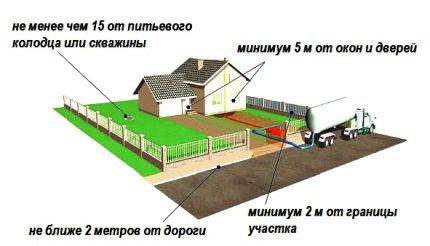 Failure to comply with these requirements may lead to the risk of untreated effluent entering the aquifers (+)
When choosing a place, you should definitely take into account the presence of reservoirs with running water, keeping a distance of 5 m from them. The distance from trees should be 3 m, from shrubs - reduced to one meter.
It is also necessary to know where the underground gas pipeline is laid. The distance to it must be at least 5 m.
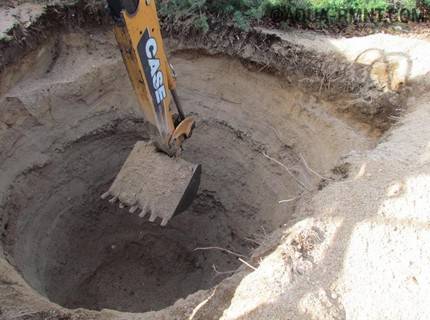
Since the construction of the cleaner chambers from the rings involves the construction of a pit and the use of special equipment, when choosing a place, it is worth providing free space for its entrance and maneuvering
But keep in mind that machines cannot be placed directly above the place of burial of the treatment plant. With their weight, they can destroy the entire structure.
The device and scheme of a septic tank made of concrete rings
The easiest way to install a single-chamber septic tank. This is just a container for collecting sewage, so when installing it, it is not necessary to arrange bottom insulation.

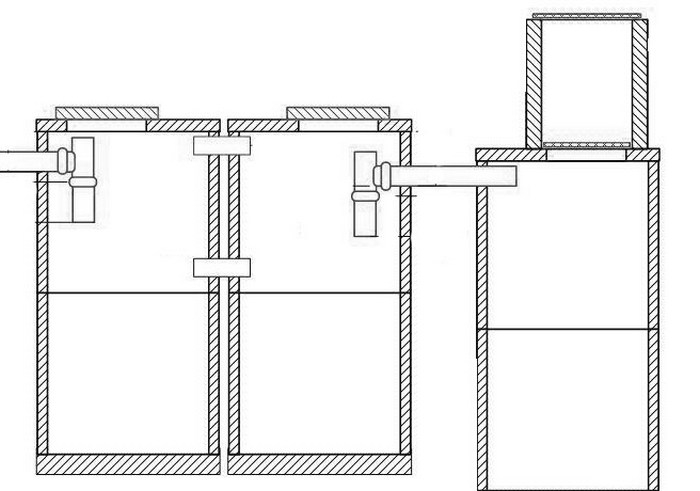
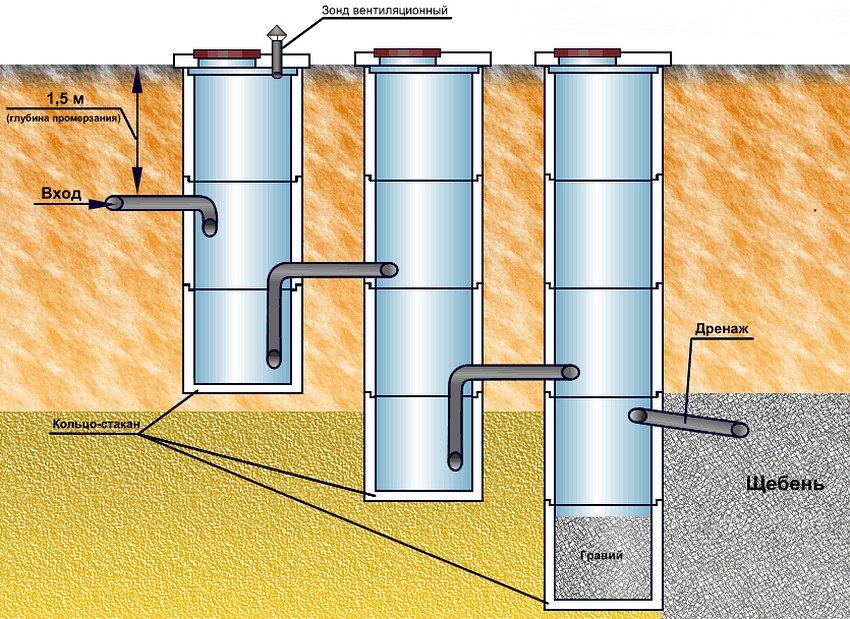


Day waterproofing
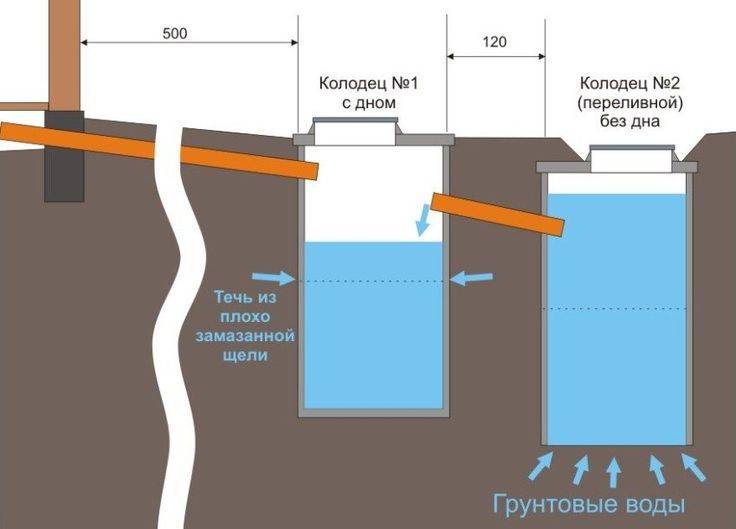
It is impossible to know everything about the groundwater on the site, so no one can guarantee that the water from the septic tank will not seep into the groundwater, and from there into the well and into the house. In addition, groundwater can change its location depending on the season.
If the septic tank is located correctly, then soon a natural layer of silt and settled heavy fractions of wastewater will form below. As a result, a layer of self-isolation will appear, preventing the penetration of wastewater into the soil and groundwater. However, it is better not to hope for this and concrete the base of the septic tank, put rings and waterproof all joints.
Joint sealing
A particular danger arises during floods, when the soil under and around the septic tank can be washed away, which will open the way for sewage to groundwater, soil, and even open water bodies.
Joints are sealed with a special cement mortar, for example, "Aquabarrier". In addition to lubrication of joints, the outer shell of concrete rings is treated with a special composition.
Thus, waterproofing is carried out from below in the form of a concreted base, from the sides - at the joints between the lower ring and the base and between the rings themselves, as well as along the entire outer perimeter of the rings. Maximum sealing can be achieved by installing plastic cylinders inside the concrete rings.
Ventilation
Any septic tank must be equipped with a vent. This is usually a pipe that connects its air space with the air at the surface. The pipe is brought out above the ground by at least a meter and is equipped with a lid to prevent the penetration of precipitation deep into the septic tank.



