
- Features of the system assembly
- Design choice
- The specifics of installation work
- The nuances of installing a septic tank in quicksand
- Flow septic tank
- Local treatment facilities
- Eurolos Primer
- The choice of septic tanks for areas with high GWL
- Finished structures
- Concrete septic tanks
- Septic tank "Tank"
- Installation of a septic tank at a high GWL
- Filtration trenches
- Septic installation algorithm
- Regulatory regulation of the sewerage device
- Digging a pit
- Installing a septic tank in a pit
- Trench backfill
- Choosing a septic tank
- How to install a septic tank in conditions of high GWL
- A few tips from experts
- What difficulties arise?
- Installation difficulties
- Why is it important to consider GWL?
- How to accurately determine GWL?
- Is it worth it to make a septic tank yourself?
- Installation "Topas"
Features of the system assembly
Consider the specifics of creating sewers at a high level
ground water. The overall design of the system remains the same. Can be
used:
- cesspool;
- septic tank;
- fully enclosed water treatment plant.
If the thickness of the aeration layer (UGVA) is large enough,
you can build a system based on standard technologies. However, it is necessary to ensure
tightness of connections and receiving tanks. If the ground water seeps
into the container, there will be a mixing of effluents and soil moisture.It threatens to pollute
drinking water wells. For cut-off, aeration plants are used for sewage at high
UGV. These are the devices
supplying oxygen to the soil. Outwardly, they are spirals of
a thin hose through which oxygen enters the soil. It stimulates the development
aerobic microorganisms that produce biological cleaning of the soil.
The recess under the tank should
dig with a margin. It is necessary to make a pit, covered with a layer of sand. over
beddings establish an anchor - a concrete slab, to which, with the help of
metal strips or nylon belts secure the container. This will rule out
the mobility of the elements of the system and maintain the tightness of the joints.
Arranging sewerage at high groundwater is very
difficult. It is recommended to carry out earthworks in winter so that wet
quicksand did not fill the pit. Digging frozen soil is difficult, but digging in mud
even more difficult. It becomes possible to make a recess of the desired size.
Arrange a mandatory sand cushion and a concrete slab under the tank. They are
compensate for heaving loads and partially drain soil moisture.
Design choice
Local sewerage in a private
a house with a high level of groundwater can have different types of construction:
- flow septic tank. It is necessary to use multi-chamber structures (minimum 3 tanks);
- local treatment facilities. This option will cost more, but the effect of it is much higher.
The level of cleaning produced
septic tank, does not allow the use of drains for domestic or business purposes.
This means that the water from the last section will have to be sent for post-treatment. AT
in conventional systems, these are fields or filtration wells. However, sewerage at high GWL
rarely allows soil post-treatment. For this, it is necessary to comply
the following conditions:
- the thickness of the aeration layer should be large enough;
- there should be no drinking wells or wells nearby.
Clarified wastewater from local
treatment facilities (VOC) comply with SanPiN standards. This allows
use them for business purposes.
limiting factor
becomes the cost of the equipment. A ready-made treatment plant will cost too much, and
building a homemade complex requires skills and time.
Experts recommend choosing
prefabricated plastic tanks
This is important, since to make a sewer, if groundwater is close,
in the most hermetic way possible. If the creation of a full-fledged sewage
station will turn out to be too costly a plan, it’s easier to get by with a cumulative
capacity
It will have to be cleaned frequently, but the risk of contamination of the aquifer
practically excluded. When using a septic tank, you will have to install a line
effluent for safe disposal. This will require the use
pumps, maintenance and repair of equipment.
The specifics of installation work
Produce
assembly of the system is recommended in winter. The liquid will freeze, installation can be
will produce in a dry trench. If this option is not suitable, you will have to acquire
or rent a pump. With its help, the pulp will be pumped out.
The general scheme of work is standard. The differences are only
in measures to cut off loads. Before you make a sewer, if a high level of ground
water, it is necessary to make a protective crate.Sometimes it is also called
formwork. This is a rigid box made of boards or metal elements that protects
tank from external loads. Frosty heaving of the soil is dangerous, it can crush
capacity. Creating a protective cocoon will compensate for lateral pressure
frozen pulp.
If the fluid flow is large,
will have to make a withdrawal. The pump will run almost continuously
mode. This contributes to the rapid development of the resource of the mechanism, the pump will have to
often repair and change.
Wet piping is not recommended. It is necessary to conduct a trench along a dry aeration level. High-quality insulation of the outer line is required, otherwise you will often have to break through ice plugs.
The nuances of installing a septic tank in quicksand
It is incredibly difficult to install a septic tank for a private house with a high level of groundwater in quicksand. Quicksand is a mixture of sand and water. It quickly erodes the walls of the pit, filling it. In clays and loams, installing a septic tank in a quicksand is easier, but not by much. In any case, such work is very labor-intensive.
Digging a pit for a septic tank in a quicksand is easier in winter, as the soil freezes through, does not float, and the level of groundwater and flood waters decreases. Despite this, there remains a risk that groundwater will not fall below the required depth.
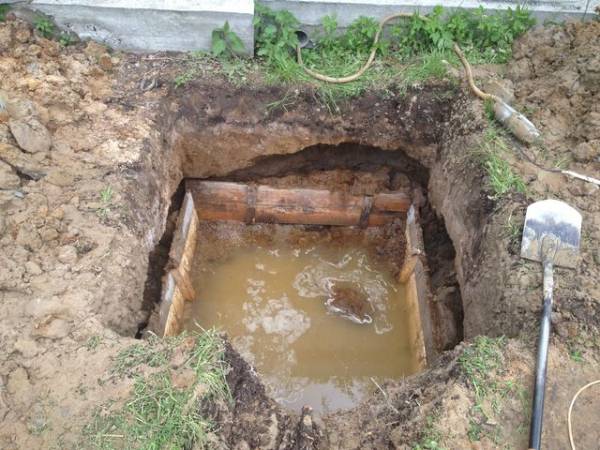
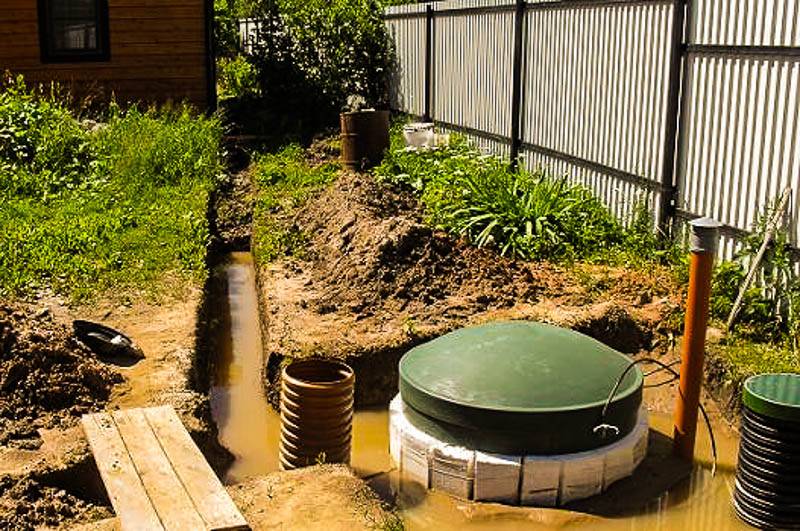
In the summer, when groundwater reaches its maximum level, the installation of a septic tank in the country is necessarily carried out with the installation of formwork. This complex, time-consuming work is carried out in several stages:
- The pit for the installation of a septic tank is dug until water appears. The depth depends on the characteristics of the site.
- After the appearance of water, the assembly of the formwork begins.With high groundwater, formwork with a frame is required. The frame is assembled from a durable beam, on which guide boards are attached. Their choice is also not an easy task, because in case of an incorrect calculation, the soil pressure will simply crush the entire formwork.
- If there is a lot of water coming in, then it is necessary to additionally dig a drainage pit into which water will leave the pit. A drainage pump for dirty water is installed in the pit and groundwater is constantly pumped out.
- Formwork installation. After assembly, the frame is lowered to the current bottom of the pit and earthworks continue. As the depth is deepened, the frame is lowered and new boards are stuffed on top. Constant pumping and installation of boards occurs until the required depth is reached.
- A septic tank is lowered into the resulting pit. Regardless of the model of the septic tank, all installation work is carried out manually, without the use of special equipment. Immediately after installing the station in the pit and leveling it in level, it is necessary to fill all the chambers with water as quickly as possible.
- At the last stage, the development of a sewer trench takes place, this stage also complicates the fluidity of the soil, a pipeline is laid and the sewer pipe is connected to the station.
In practice, the installation of a septic tank at a high level of groundwater can be complicated by other factors, for example, the complex topography of the site or the special location of the station, the lack of the possibility of a quick intake of water or the impossibility of its rapid discharge, for example, into a storm drain, etc.
Having understood the nuances of installation at high groundwater, let's return to the question of choosing the right type of septic tank.
Flow septic tank
Simple 3-chamber septic tanks without aeration, sometimes with a submersible ruff bioload, such as Eurolos Eco. They are low cost, easy to install and operate. The model range allows you to choose the device of the desired performance. It would seem that flow septic tanks are the best choice in terms of cost. In practice, everything is different.


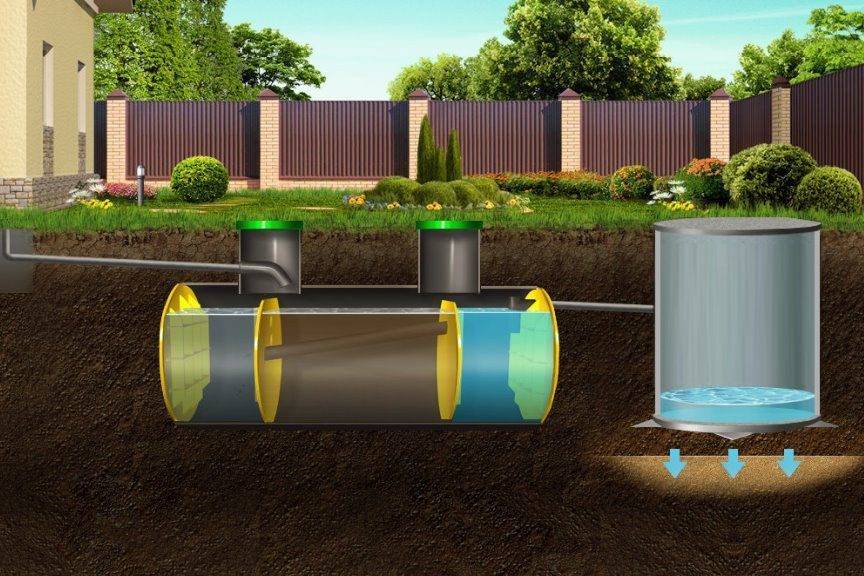
A flow septic tank cannot ensure the degree of wastewater treatment to sanitary standards, which means will require the arrangement of post-treatment systems - one or more drainage elements or a whole filtration field.
High groundwater is always a risk that some of the untreated sewage will fall into the ground and poison everything around. Therefore, in such conditions, it is impossible to install septic tanks with post-treatment of wastewater with soil.
And then a logical question arises: “Then what is suitable?”
Local treatment facilities
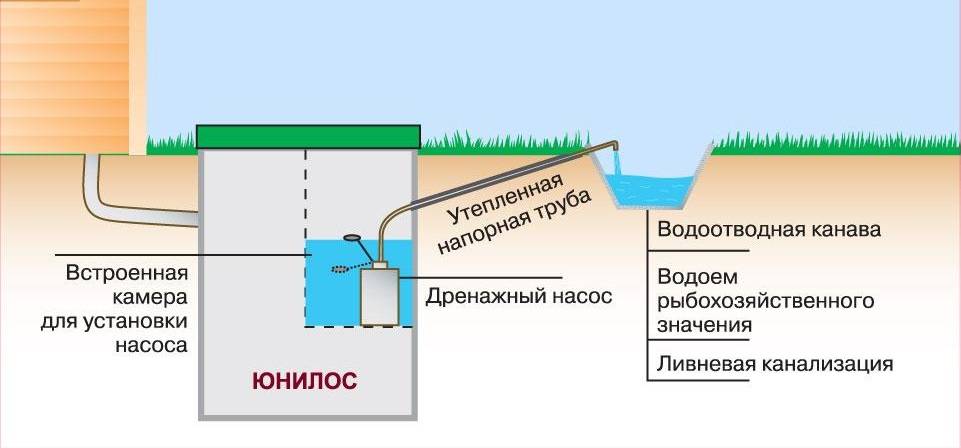
These are biological wastewater treatment plants with gravity or forced discharge of treated water. Their distinctive feature is the treatment of wastewater right inside the septic tank, i.e. soil treatment is not required. After passing through all stages of treatment, wastewater meets the requirements of SanPin 2.1.5.980-00 "Hygienic requirements for the protection of surface waters".
Within the framework of a single house built on a site with a high GWL, this also means savings during operation. Treated wastewater is suitable for technical use, such as lawn irrigation. They can also be safely dumped into the ground, which means that the arrangement of post-treatment systems is not required. After analyzing these advantages, we get an almost ideal septic tank for a high level of groundwater - Eurolos Grunt.
Multi-stage cleaningDepth 1.5 m
Eurolos Primer
Septic tank for work in conditions of high groundwater
99000
rublesPrice
Description
Compressor aeration unit for special purposes for installation and operation in conditions of high groundwater levels.
Main characteristics
- Maximum wastewater treatment
- From 2 people
- Ease of maintenance
The choice of septic tanks for areas with high GWL
In order for the sewerage on the site to work properly at any time of the year, it is necessary to choose the right equipment that is part of the system, including a septic tank. Which septic tank to choose with a high GWL? The wastewater treatment plant should be:
- complete tightness, since water can penetrate into the equipment, which will lead to an increase in the frequency of pumping and a decrease in the level of cleaning;
- high strength, since groundwater strongly presses on the walls of the treatment plant and can lead to deformation and / or equipment failure;
- low height, which facilitates installation, in particular, earthworks;
- large weight, which will avoid the emergence of the device when lifting water. The problem of floating can also be solved by anchoring or otherwise attaching the container to the base.
The best septic tanks for giving with a close occurrence of groundwater are:
- prefabricated structures manufactured in an industrial way;
- from concrete rings;
- concrete cesspools.
Finished structures
Industrial production offers septic tanks made of the following materials:
- plastic. Such devices are distinguished by a variety of models, low cost, maximum tightness and ease of installation.However, due to the low weight during the installation of the structure, additional protection against ascent is required;
- fiberglass. The material is more durable, not exposed to chemically active substances, light, which facilitates the installation process, but also requires anchoring;
- metal. The structures are heavier and more reliable at high GWL. However, the higher cost, susceptibility to corrosion and the complexity of installation significantly reduce the demand for them.
Metal tank of the treatment plant
Septic tanks can be:
- are made in vertical or horizontal execution;
- divided into several compartments for deep wastewater treatment;
- mechanical (effluent treatment by filtration), chemical (cleaning with chemicals) or biological (cleaning is done by bacteria).
Types of septic tanks depending on the design
Rating of septic tanks based on user reviews:
- ROSTOK MINI. The volume of the treatment plant of 1 m³ is suitable for summer cottages with seasonal residence of 1 - 2 people. The device can be installed in a toilet or in a special place in compliance with safety rules;
small septic tank
- Tank. Septic tanks are made of durable plastic. To give the structure strength, the container has stiffeners. You can choose a device of any capacity and with a different number of compartments for wastewater treatment. Water can be drained into reservoirs or a ditch;
Model range Tank
- Tver. The plastic container is completely sealed. Cleaning is carried out in several stages, including the use of bacteria. The model range is wide;
Wastewater treatment plant Tver
- Unilos Astra.The container made of plastic is not subject to deformation, is characterized by low weight and maximum tightness. A multi-stage purification system allows you to reuse water for any technical purposes;
Model range of Unilos septic tanks
- Topas. Energy-dependent septic tank with active microorganisms that clean wastewater. Polypropylene container with stiffeners is durable and tight.
Energy-dependent treatment facilities
When choosing ready-made treatment facilities, it is also important to determine the volume of the device, depending on the daily water consumption and the frequency of cleaning.
Concrete septic tanks
A concrete septic tank made of concrete rings or a monolith is very popular, especially in areas with closely spaced groundwater.
Septic tank from monolithic concrete
These designs are:
- large weight, which complicates the installation process, but does not require additional fastening of the structure;
- high level of tightness;
- maximum strength;
- relatively low cost, if the drain pit is equipped on its own.
Septic tank "Tank"
A compromise solution regarding equality price = quality. However, in the case when groundwater is at an elevated level, savings are not possible. Since the installation of additional equipment will be required, which will practically compare the price with a similar model from the Topas series.





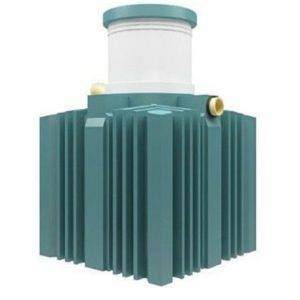
- the design does not provide for the presence of constant power consumption;
- the plastic case is resistant to soil, but subject to all recommendations for installation;
- democratic value;
- a huge range of models with different conditions and volumes.
- it is possible to shift the septic tank when the groundwater level rises, as mistakes were made during laying;
- the design needs additions, especially if the GWL is high, since the degree of wastewater treatment is not high (about 75%).
Dimensions (LxWxH), mm
Septic tanks of this brand include two varieties, such as Cyclone and Astra. They differ only in the presence of various kinds of programs in the management module.
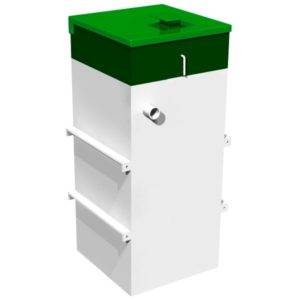
Treatment plant "Unilos"
The Astra system has two options:
- the filling level is shown by the sensor in the form of a float;
- There is a gauge that shows the pressure.
There are models for 3 or more users. Maximum 15 people.
"Cyclone" also has two types, which differ in the placement of the control unit. In the first case, it is located directly inside, and in the second, in a separate room maintaining the optimum temperature.
There is another model for small settlements called "Unilos Mega", whose productivity is more than 30 cubic meters per day.
- perfectly cleans drains, so water can be diverted into a reservoir or into a ditch;
- increased strength of materials for the manufacture of the system;
- a wonderful option for periodic use, since the microorganisms that live inside are able to maintain their vital activity without drains for a long time;
- operates all year round without temperature restrictions.
There are still disadvantages:
- depends on electricity;
- it is necessary to pump out sludge with a certain frequency;
- small assortment;
- high price.
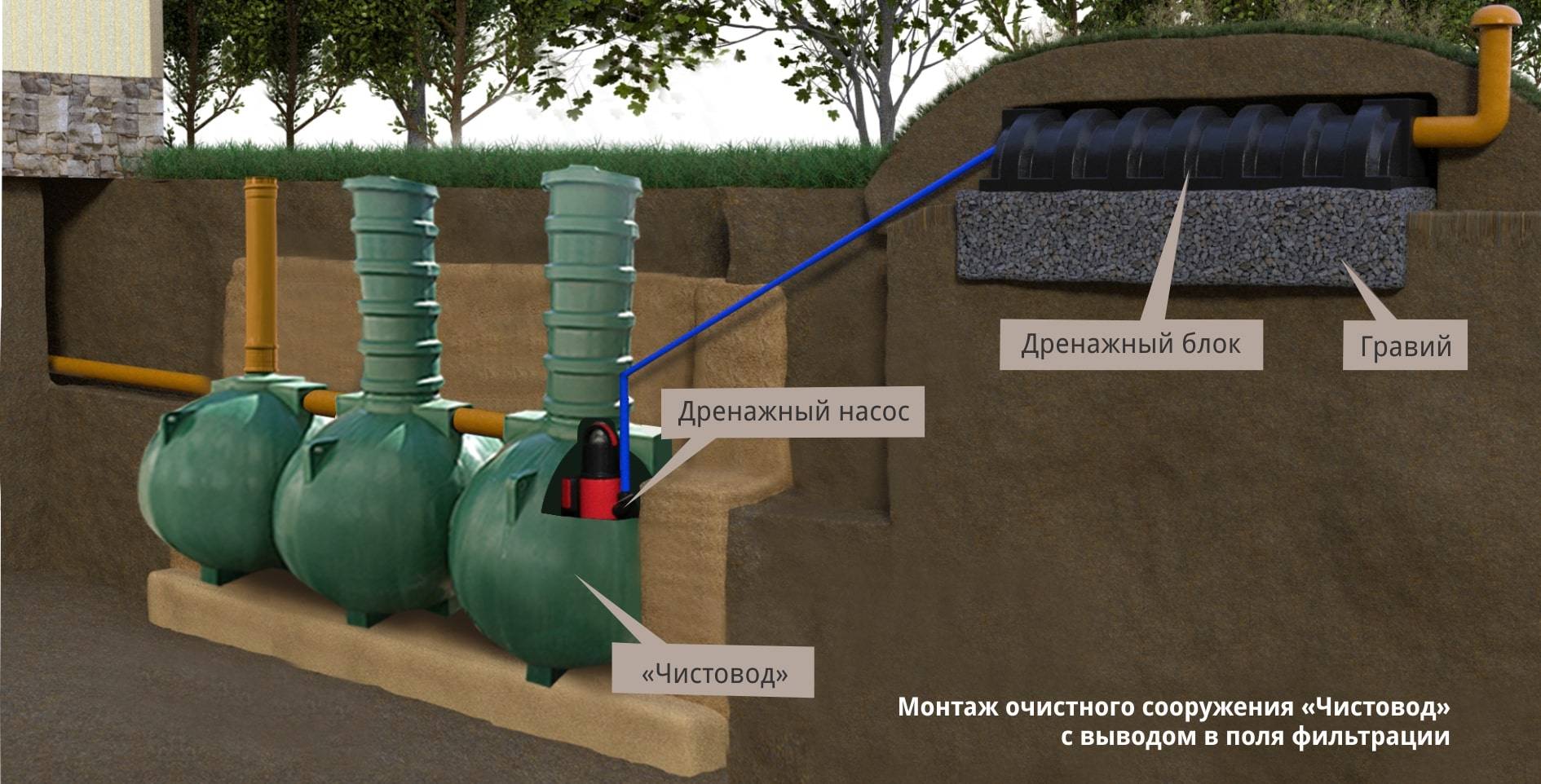
In conditions where groundwater is at a high level, it is necessary to apply additional cleaning elements to standard septic tanks in the form of additional filtration fields located underground, filters from a combination of sand and gravel, as well as filtration cassettes and filtration trenches. Each of the elements must be considered separately.
Installation of a septic tank at a high GWL
Sewerage is always designed taking into account the drainage system. In this case, the consumer will make life easier for himself. You don't have to waste time and money on minor improvements. After that, you need to choose the optimal level of installation depth of the septic tank. For this, a hydrological study of the site is carried out.
For work you will need a rod and a garden drill. The length of the first is at least 2.5 m.
It is better to install a septic tank in the warm season
The procedure is as follows:
- On the rod make marks for the tape measure every 10 cm;
- The minimum well depth is 2 m;
- The well is left for 24 hours, this is necessary for the accumulation of water on its bottom;
- A day later, a dry rod sinks to the bottom;
- Then it is removed to fix the mark, next to which there are traces of moisture;
- After that, calculations are carried out to determine the optimal mounting point for the septic tank.
It is strongly recommended to check the received data several times. Jewelry precision is the key to high efficiency and durability of the system. Beginners should be aware that the water level is rarely stable. Under the influence of external factors, it falls and rises. In this regard, you need to be prepared to correct the attachment point of the septic tank.The second nuance is related to the duration of its operation. Relevant information is in the technical description.
Filtration trenches
Filtration trenches are built on the same principle as sand and gravel filters. But the irrigation pipe is placed linearly and has a length of up to 30 meters.
The trench for loading the irrigation system is about 80 cm and 50 cm wide, capable of withstanding a load of 70 liters per day per meter. According to sanitary standards, an indent of 8 meters is required from the trench to the dwelling.
The filtration trench differs only in shape from the septic tank filter. The filter is made in the form of a square, and the trench is a rectangle.
1 - coarse sand; 2 - irrigation pipe; 3 - backfill; 4 - ventilation risers; 5 - intermediate layer of sand; 6 - distribution layer of sand; 7 - lower drain; 8 - gravel backfill
Septic installation algorithm
Making a sewer in a private household is not difficult if you follow the correct procedure.
Regulatory regulation of the sewerage device
Home cleaning system requires careful observance of sanitary rules. The removal of sewage from the house, as indicated in the requirements of SNiP 2.04.03-85, provides for:






- placement of treatment facilities 50 meters from drinking wells or wells.
- sewer communications are located 3 meters from the plantations.
- the septic system is installed at a distance of 5 meters from residential buildings.
- sewage equipment must have unhindered access to the treatment plant.
Planning of cleaning networks is carried out in a strict order - 1 revision well for 15 m of straight or turning sections. Work must be carried out in a strict order.
Digging a pit
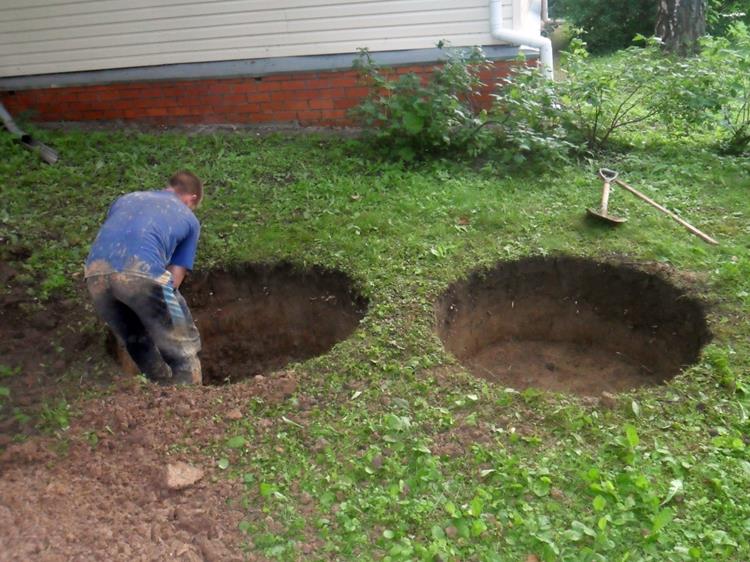
Conducting home sewerage for a summer residence, if groundwater is close, it begins with digging a hole:
- the septic structure is fully included in the pit. In this case, the tank should not touch the walls at a distance of 25 cm;
- observe the maximum evenness of the bottom, compacting it with wet river sand. Fine-grained material is laid in a layer of about 15 cm and carefully compacted. The sand should not contain foreign particles in the form of lumps of earth or gravel.
- to ensure the tightness of communications, the sand is replaced with a concrete slab.
The walls of the pit must be reinforced with timber formwork or metal sheets.
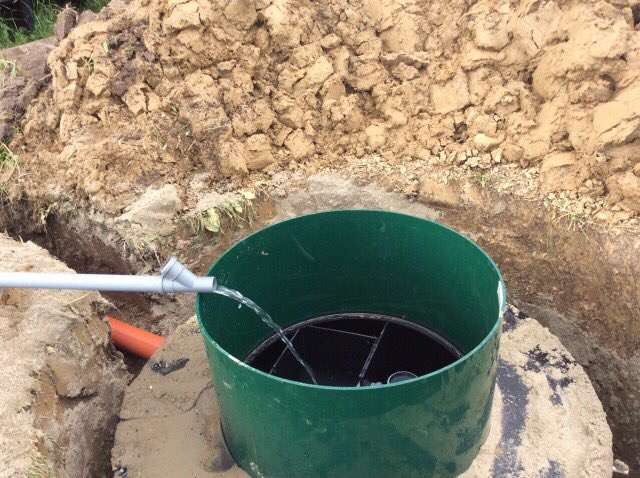
Installing a septic tank in a pit
The finished septic tank is checked for cracks and damage before installation.
The container is lowered to the pit with the help of cables. It should stand perfectly even in the pit, even the slightest roll is unacceptable. In cold winters, it is recommended to wrap the tank with a layer of heat-insulating material.
Trench backfill
After installation, the tank is covered with soil or cement-sand mixture and carefully compacted. The ground level reaches the edge of the supply pipe.
It is not recommended to plant trees and shrubs above the design of the septic tank - they can damage the treatment system.
Choosing a septic tank
Many experts note that the most profitable and economical is the installation of a three-chamber factory septic tank on the site, for example, the domestic model "Tank". This is a capacious plastic tank, divided into several parts. In the first section, the effluents are settled and divided into fractions. In the second and third - post-treatment of waste is carried out.To enhance cleaning, they use infiltrators that provide almost one hundred percent absorption of water into the soil.
Watch the video, selection criteria:
Many consumers in their reviews note that the disadvantage of infiltrators is the large area that they occupy. And although industrial models have a high cost, this investment is justified. If there is groundwater on the site that lies close to the surface, a high-quality treatment system becomes a vital necessity.
If financial opportunities do not allow you to purchase an industrial septic tank, you can create a cleaning device yourself using suitable plastic structures for this. Many craftsmen do septic tanks from eurocubes and self-contained filtration wells. The tanks are interconnected by special pipes, through which effluents flow from one to another.
How to install a septic tank in conditions of high GWL
The industrial option, for various reasons, may not suit the owner of the site. In this case, you can build a septic tank yourself. To do this, you must first make a reinforced concrete pad on which the structure will be installed. Having fixed it to such a solid foundation, in the future there will be no need to worry that groundwater will push the device out of the soil.
We watch the video, installation in conditions of high groundwater level:
Another option for arranging a septic tank is the construction of a monolithic well made of reinforced concrete. The absence of seams in such a design makes it impossible for water to penetrate into it and runoff into the soil.
There are several general rules by which septic tanks are selected for soils with high groundwater levels. Here is some of them:
- Only polymer can serve as a material for their manufacture.
- The volume of the septic tank and the amount of sewage entering it is calculated in advance
- The choice of the type of septic tank, accumulative or with forced pumping of purified water, depends on the availability of power supply
- The quality of wastewater treatment depends on the number of internal chambers of the device
- Accounting for the dimensions and weight of the septic tank
- The possibility of downtime of the cleaning system without compromising its functionality
These rules must be taken into account in order to avoid undesirable troubles during the installation of the cleaning device and during its operation.
A few tips from experts
It is very bad when the groundwater does not leave the septic tank, which can be caused not only by improper installation, but also by other reasons. One of them is to take into account the number of wastewater sources connected to the treatment plant. The volumes of its chambers must correspond to a one-time discharge of waste.
Watch the video, an unusual installation solution:


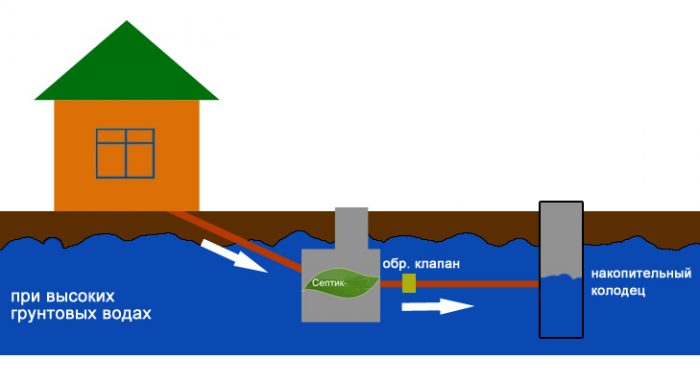


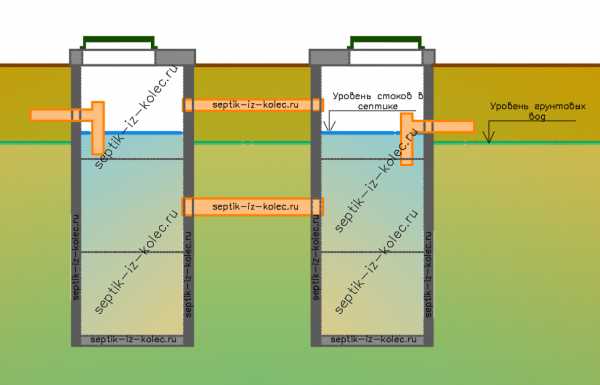

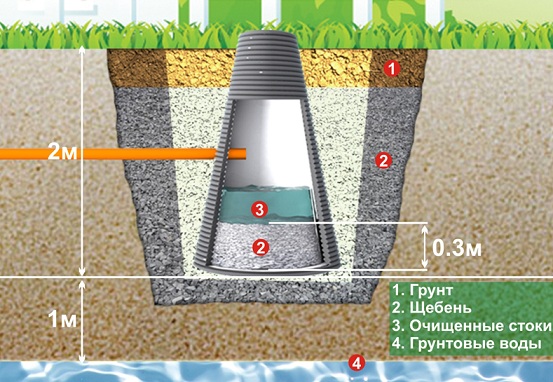
When choosing a septic tank model, it is very important to consider the issue of placing various necessary auxiliary equipment. For some devices, for example, filter cassettes are needed that act as wells
But with a sufficiently high level of groundwater, they cannot be installed.
In the case of a close approach to the surface of ground flows, it is recommended to install a septic tank in the cold season, preferably with already frozen soil. There are other advantages of winter installation of equipment.Since at this time the demand for construction work is small, the cost of the septic tank will be low.
The seasonality of the use of suburban housing in our country determines the fact that summer cottages are practically empty in winter. In this case, the construction of treatment facilities at their summer cottage will not cause inconvenience to neighbors.
What difficulties arise?
To better understand what kind of septic tank is needed at a high level of groundwater, it is worthwhile to figure out what are the problems of a high GWL - within 0.5-1 m. Among the significant:
- Flooding. Since a high GWL leads to heaving and uneven pressure on different parts of the septic tank, there is always a threat of water penetrating into the installation. For example, if it is made of concrete rings, which are difficult to seal under such conditions, then problems are possible: the tank fills up quickly and for subsequent use, vacuum trucks should be called. But this is not the biggest problem, because there is a risk of backflow of drains into the house, and this leads to flooding of the bathroom, toilet, kitchen.
- Floating. A septic tank for a permanent home in such conditions must be strengthened at the bottom of the pit, otherwise the water from the soil will simply push it out. The danger of this increases after heavy rains or in the spring, when the snow melts en masse. As a result, a septic tank for a summer residence pops up like a float. All this is fraught with a violation of tightness and an increased risk of contamination of groundwater with fecal matter, and the appearance of the installation leaves much to be desired. After that, you need to reinforce the tank again.
- Drainage. An important aspect of high-quality wastewater treatment is soil post-treatment. That is, the release of treated effluents to the filtration fields.If the groundwater level is 0.5-1 m, then it is simply impossible to fulfill the requirement of sanitary standards for installing such fields. The filtration field should be deepened by 1 m, the distance to the upper level of groundwater is the same. If this requirement is ignored, pollution of the surrounding water bodies will occur. Therefore, at a high level of groundwater, a cesspool with a filtering bottom is prohibited for construction.
- Waterlogging. The soil in such areas is characterized by high humidity, which means that the possibilities of its absorption for the purpose of post-treatment will be very small. If this moment is not taken into account, and a standard septic tank is made even with a high level of groundwater, very soon the filtration field and the place near the installation will turn into a swamp.
- Structural damage. Soil water is often highly acidic or alkaline. It does not easily press on the walls of the container, but also gradually destroys the structure of even very dense plastic. If, at a high level of groundwater, the design of the septic tank is made of concrete rings, then this is a disaster. It is worth remembering that groundwater is constantly moving, and in its flow contain sharp particles that easily cut the reservoir, pipes.
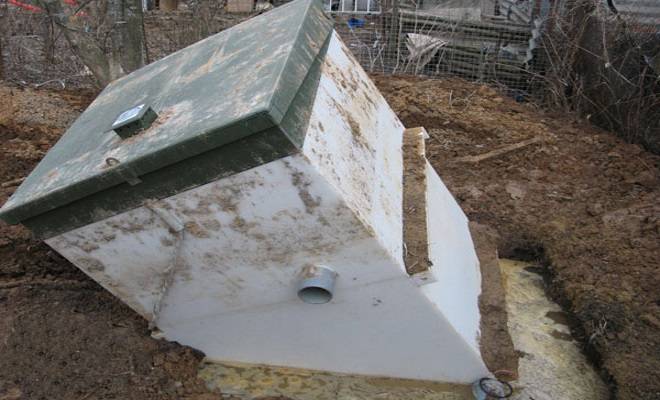 Floating a septic tank in the spring with a high GWL
Installation difficulties
This problem is perhaps the most difficult, because in order to mount and even just dig a pit for a septic tank for a high level of groundwater, you will have to spend a lot of time and effort. In the process of work, builders will have to constantly stand in the water and in such conditions develop a pit.As for laying pipes and filling the bottom, the walls of the pit, this is a time-consuming task, because you have to constantly pump out water. These processes will be expensive, even if a place is being prepared for a simple single-chamber septic tank-barrel. In the conditions of a summer residence, not everyone can afford such financial investments.
Why is it important to consider GWL?
- If the water is near the surface of the earth, this means that when deepening the septic tank, special construction methods will be required to ensure the stability of the structure and prevent depressurization of the joints. In winter, another danger arises - freezing of the soil and, as a result, the occurrence of heaving, which can cause deformation of the drive. That is, the effluents will fall into the ground, and then into the water layer and pollute the environment, which is unacceptable.
- During spring floods, reservoirs can flood the nearest territory and the septic tank can float. The result is expected to be the same as in the previous version, only sewage will also pollute the reservoir. It can also break plastic sewer pipes and have to be replaced. In the worst case, the septic tank will remain in the ground, and water will flood it from above, as a result of which sewage will go back into the house in the absence of a check valve installed.
- Septic tanks with leaky structures should not be used. This is especially true for the use of cesspools or septic tanks in the form of concrete rings. Firstly, its construction will require financial costs comparable to a hermetic septic tank manufactured in an industrial environment, and secondly, this is contrary to sanitary standards.
- Depending on the GWL, it is necessary to apply special constructive measures to ensure maximum protection in order to prevent an environmental catastrophe.
How to accurately determine GWL?
Usually measurements are taken in the spring, when the water rises to the maximum possible height after the snow melts. They take an ordinary garden drill, make a vertical hole in the ground to the surface of the water, and then determine their depth. If the septic tank needs to be installed promptly, then you can use the data of geological exploration, which will reliably show how the water layer passes under the land. Another less informative way is to get the necessary information from the old-timers, but it is not always worth trusting.
Recommended reading: Connecting a septic tank to the mains
Is it worth it to make a septic tank yourself?
Despite the apparent simplicity of the design of a septic tank, design work on its calculation, selection of strength and performance characteristics is a task for professionals. However, their cost is several times more expensive than homemade ones. The difference in this case in them will be significant and will be as follows:
- The finished design will provide maximum tightness by fitting all parts and using stiffeners that can prevent any loads within the passport specifications. It will be very difficult to evaluate a home-made system, so it is not known how it will behave in a particular situation.
- An industrial septic tank is equipped with all the necessary filters, able to cope with specific loads and meet sanitary standards.
- Finished septic tanks have not only a high level of protection from external mechanical, but also from internal chemical influences, while ensuring stable operation during the warranty period. A self-made design will not be able to guarantee the absence of leaks into the ground or a sufficient degree of purification when using filtration fields.
Therefore, before deciding whether to choose a septic tank of a finished design or bookmark your own, you need to weigh everything and make the only right decision.

In the absence of the necessary experience, it is worth contacting a specialist who can analyze the soil or existing data and select the design that is most suitable in terms of parameters.
Installation "Topas"
The principle of operation of this septic tank is a competent symbiosis of biologically active cleaning and aeration process. Domestic wastewater undergoes oxidation and decomposition into components. The main working element of this kind of installation is a colony of special bacteria that organically set in motion the decomposition process. Groundwater does not have a significant impact on this type of septic tank.
Topas 8 station
- Depending on the number of users of the device, the gradation is from 4 to 10 people, but this is not the limit, it is possible to create an installation for more;
- How deep is the pipe that delivers effluent from the house to the treatment plant;
- With a different amount of compressor equipment (there will be “C” in the name);
- The presence of a pump for drainage (+ "Pr" to the name).
There are models for holiday villages, as well as large units for mini-settlements from 50 to 150 users.In a wide variety of models, experienced employees will be able to choose the installation you need, taking into account all the nuances in the context of each individual case.
- a large assortment range;
- increased resistance of the material to soil;
- ease of use and care;
- noiselessness;
- excellent water purification, which allows you to replenish even reservoirs.
- energy dependence;
- certain requirements for the composition of wastewater;
- high price.



