- Rules for taking readings from electronic electricity meters
- How to take readings from a Mercury 200 meter
- How to take readings from an electricity meter Mercury 230
- How to take readings of the energy meter Energomera
- How to take readings from a Micron counter
- How to read a Saiman meter
- Choice of electricity meter
- Pros and cons of smart meters in a private house
- How to install a single-phase electricity meter
- Connection diagrams for electricity meters
- Do I need to dismantle old meters
- Design and commissioning
- Principle of operation
- Principle of operation and technical characteristics
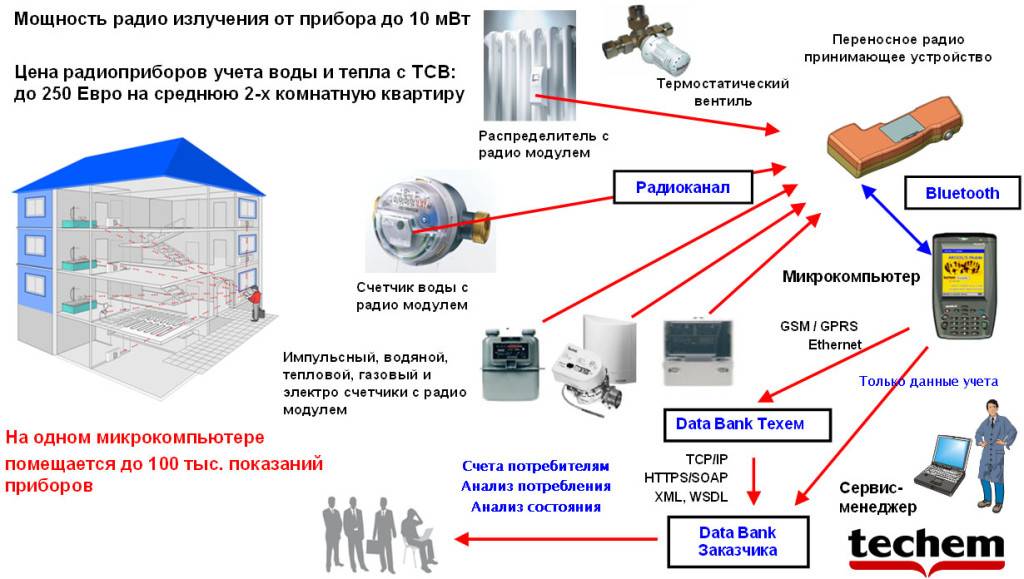
- The structure of the meter for electricity and water, remotely transmitting data
- Legal consequences of using such devices
- Advantages of "smart" electric meters
- Overview of manufacturers and prices for some models
- Features of electricity meters with remote reading
- Functions of the information-measuring system
- Advantages of electric meters with remote reading
- We put the counter
- Let's start installation
- Option 1
- Option 2
Rules for taking readings from electronic electricity meters
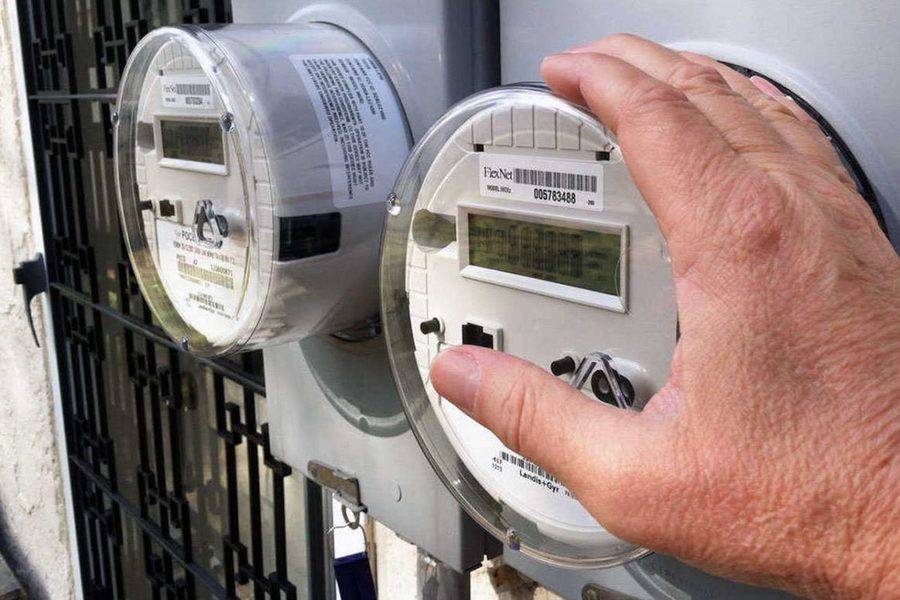
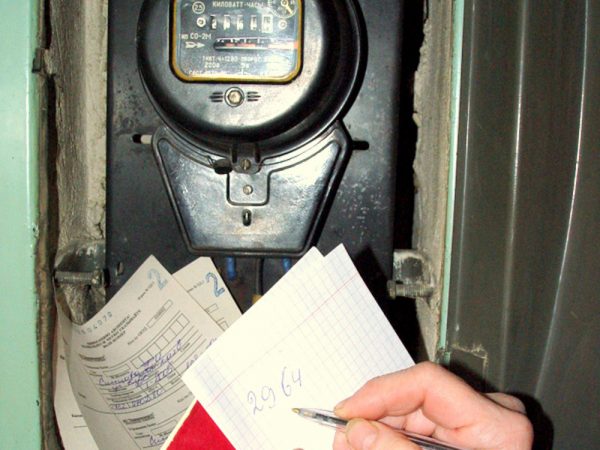
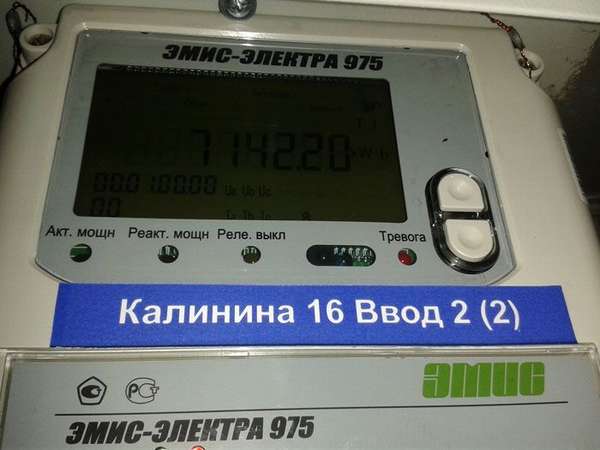
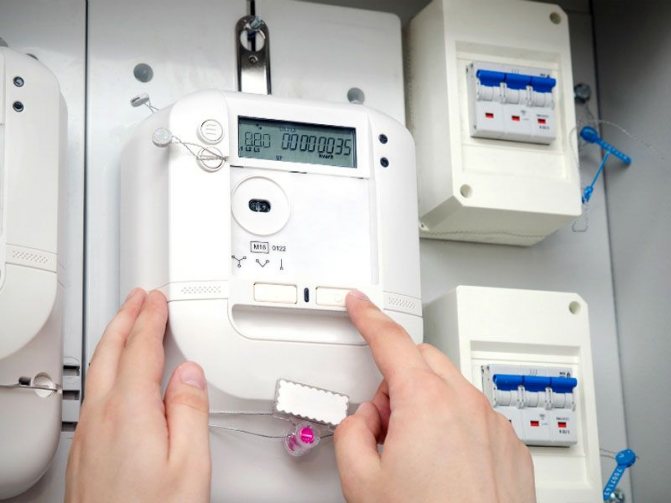
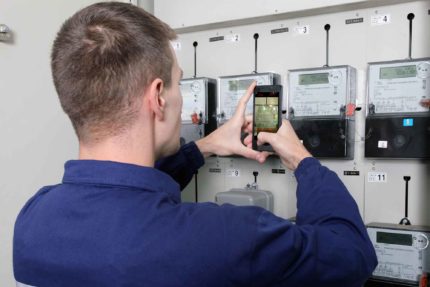
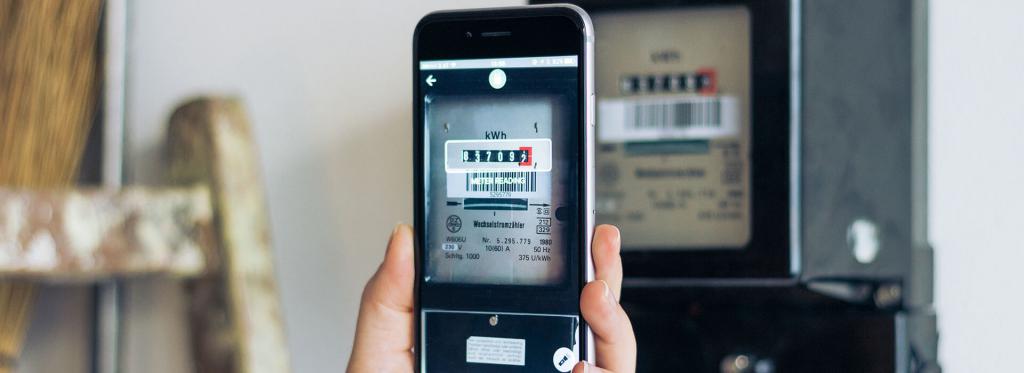
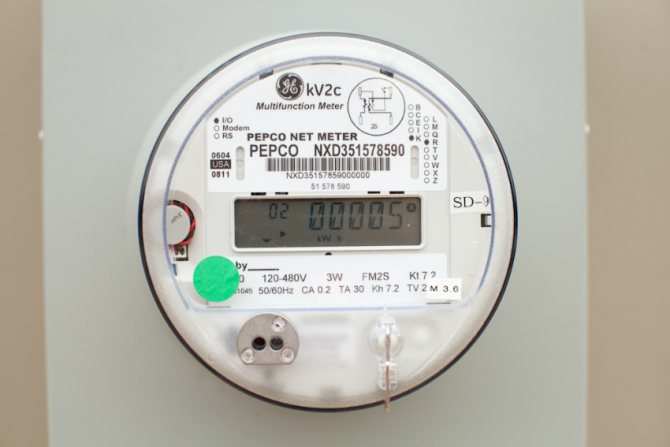
Devices of this type are equipped with an electronic display containing relevant information for the user.Here you can find not only current readings of electricity consumption, but also information regarding the date and time of operation of the device. For most models, these data replace each other on the display with a given frequency. For multi-zone models, readings are displayed in the corresponding zone.
To take readings, just wait until the corresponding information appears on the electronic electricity meter. You can also press the corresponding “enter” button several times until the corresponding information is displayed on the scoreboard, which should be written down on a specially prepared sheet.
It is necessary to take readings from electronic devices in accordance with all the rules
How to take readings from a Mercury 200 meter
The manufacturer offers two types of devices: single and multi-tariff. The first ones are marked as 200.00. The multi-tariff ones in the marking after the dot do not have two zeros, but a certain digital value: 01, 02 or 03. Some models are supplied with a control panel and may have a different number of zones on the display.
On the display of the Mercury 200 device, the following are displayed in turn:
- time;
- the date;
- tariffication by zones, indicating additional tariffs. The label is displayed in the upper left corner. Tariffs are displayed in turn, which allows you to record the readings of consumed electricity. Values after the decimal point should be discarded.
Data change is carried out in 5÷10 seconds. If this time is not enough, you can switch tariffs using the "Enter" button.
The display of the counter "Mercury 200" displays all the necessary information
How to take readings from an electricity meter Mercury 230
The model is three-phase.Calculation of indications is carried out at once according to several tariffs. On the display of the device, you can see the data related to a specific tariff.
Let's look at how to read the Mercury 230 electricity meter
You should pay attention to the zoning of tariffs:
- T1 - peak zone;
- T2 - night period;
- T3 - semi-peak zone;
- T4 - grace period.
The meter readings for light are taken in the following sequence:
| A photo | Description of operations |
| The ENTER button on the front panel allows you to switch the output information. | |
| Tariff T1 corresponding to the peak zone. Significant numbers are up to the decimal point. | |
| After pressing the "ENTER" button, the readings corresponding to the T2 tariff are displayed. | |
| Another press will allow you to see the readings for the third tariff. | |
| A subsequent press will display the data for T4. | |
| If you are paying for a non-differentiated rate, you must press the button again to see the total value. |
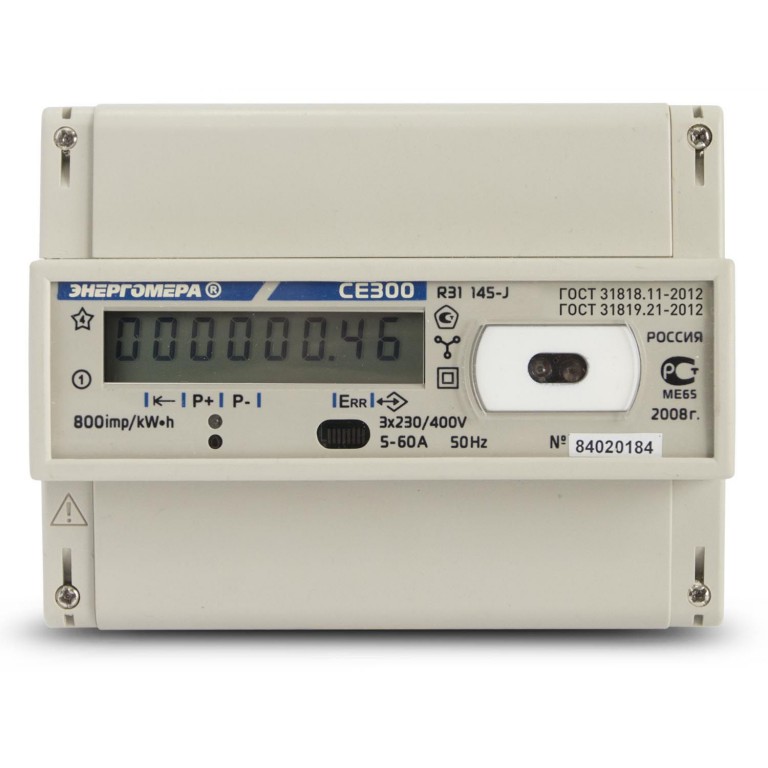
How to take readings of the energy meter Energomera
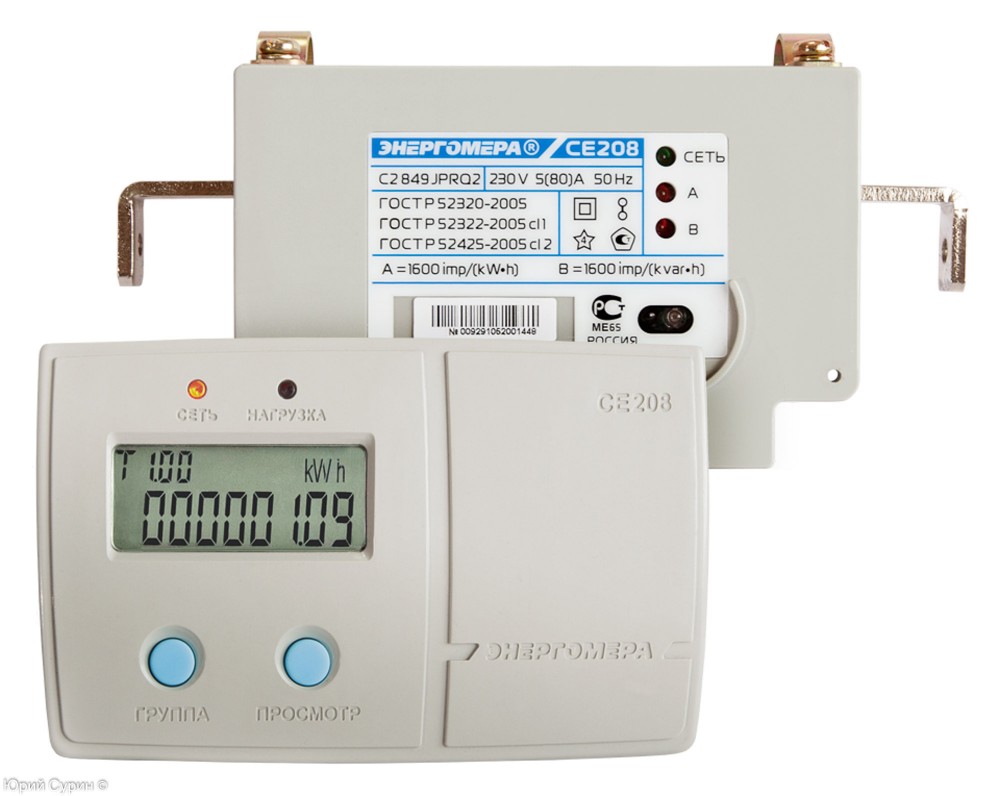
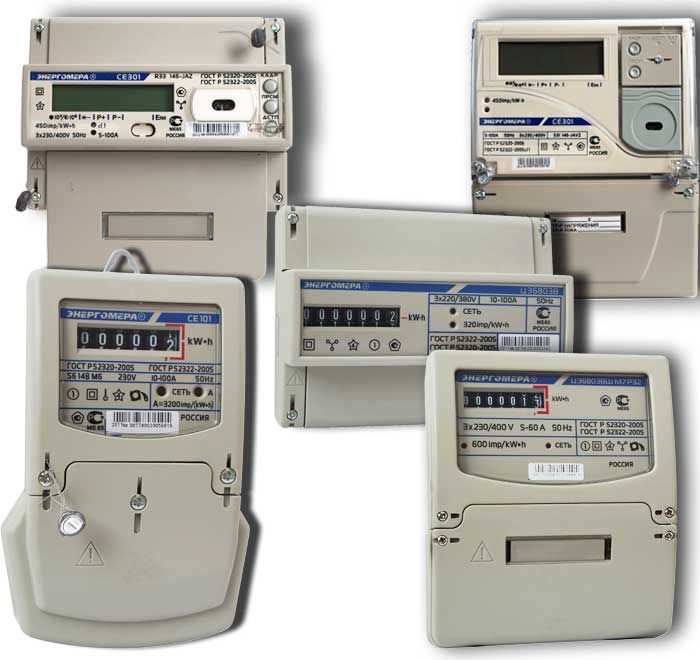
The manufacturer offers the device in various modifications. You can choose between single and multi-tariff meters. The latter are more popular. The number of buttons on the front panel of the counter depends on its design features. As a rule, there are 2 or 3 of them. The data is reflected by tariff zones.
To view digital values, press the "View" button. If you still have questions about how to read the readings of the electricity meter, you should carefully read the instructions that came with the meter.
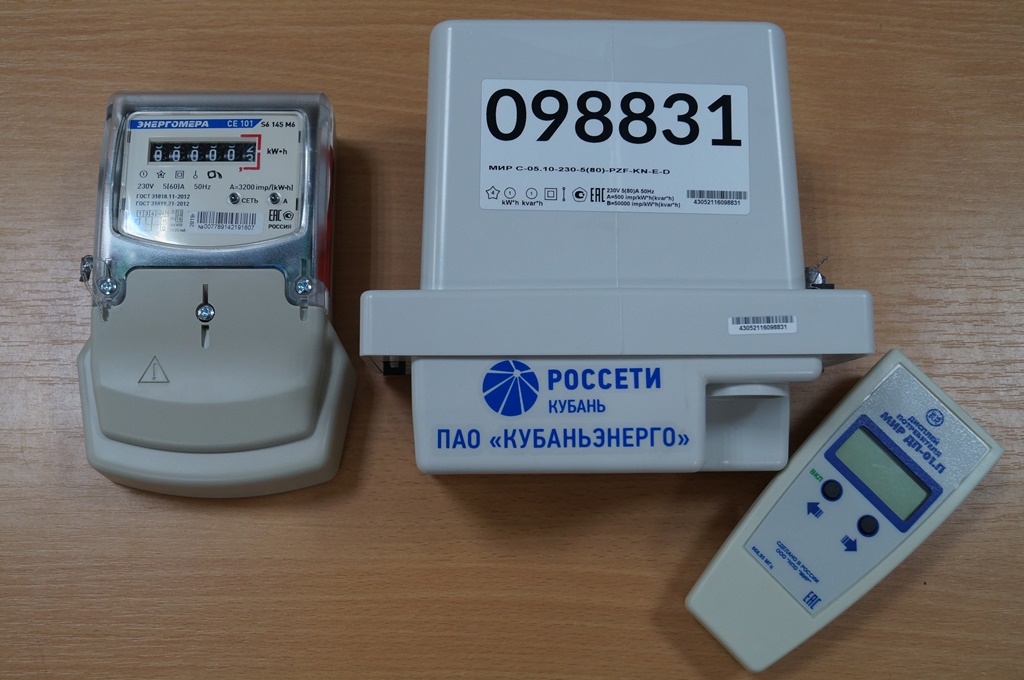
"Energomera" - a device that has various modifications
How to take readings from a Micron counter
Multi-tariff device equipped with an enter button.To display the necessary readings, press it sequentially so that the current values \u200b\u200bappear on the display. Opposite the tariff marking, for example, T1 and the value that should be taken into account in the calculation (R +), “checkmarks” will appear. This is done so that the subscriber knows exactly what meter readings need to be transmitted. Subtracting from the current value the readings for the previous month, it will be possible to find out the expense at the T1 tariff. To switch to the readings corresponding to the next zone, press the enter button, after which the “tick” from T1 will move to T2.
"Mikron" - multi-tariff metering device
How to read a Saiman meter
The device is simple in execution. Saiman counters do not have a special input button for scrolling through data. To read the current values, you have to wait for the symbol TOTAL and numerical data to appear on the instrument panel. The information is displayed in the following sequence:
- the date;
- time;
- device number;
- gear ratio (1600);
- If the meter is single-tariff, the current reading is displayed immediately, if it is two-tariff, T1 and T2 are sequentially displayed.
Saiman is a quality device with a simple design
Choice of electricity meter
When choosing, you need to focus on the following indicators:
- Protected from environmental influences.
- The number of tariffs used to pay for electricity.
- The number of phases that meets the requirements.
- The power of the device.
According to the number of tariffs, devices are divided into two types - with one or with several. By phases - into two types: with one or three.
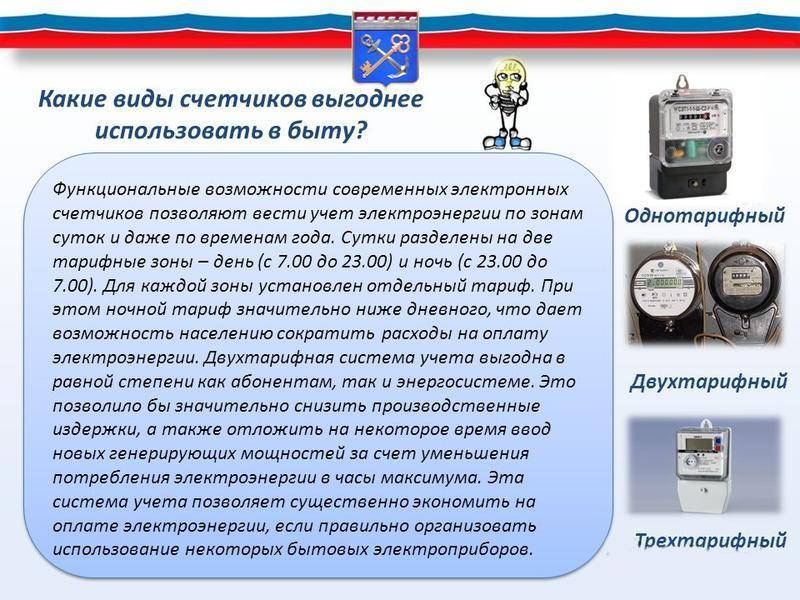
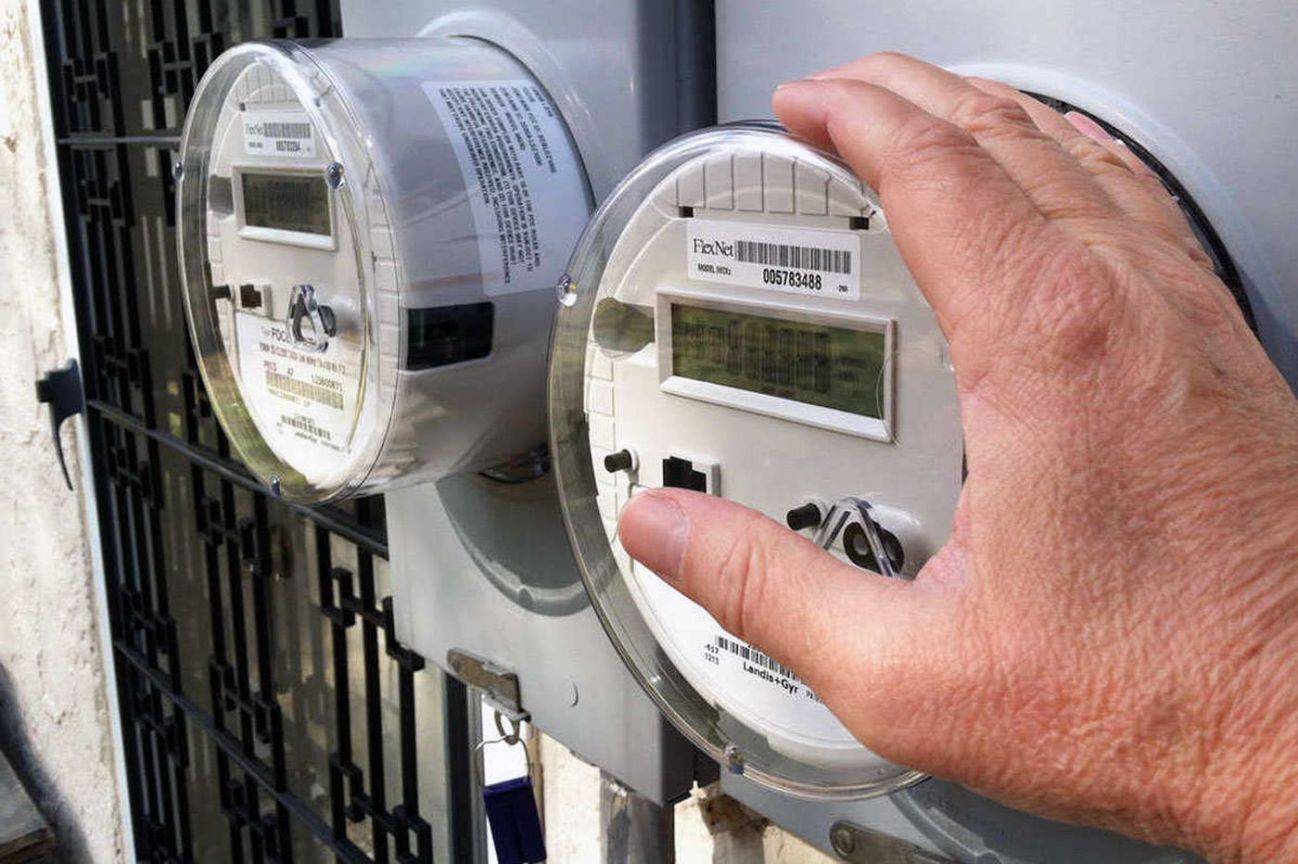
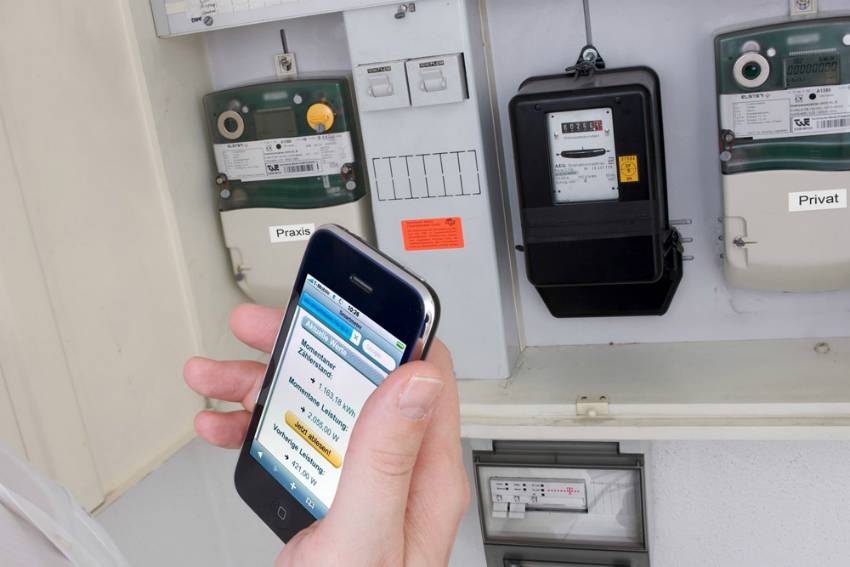
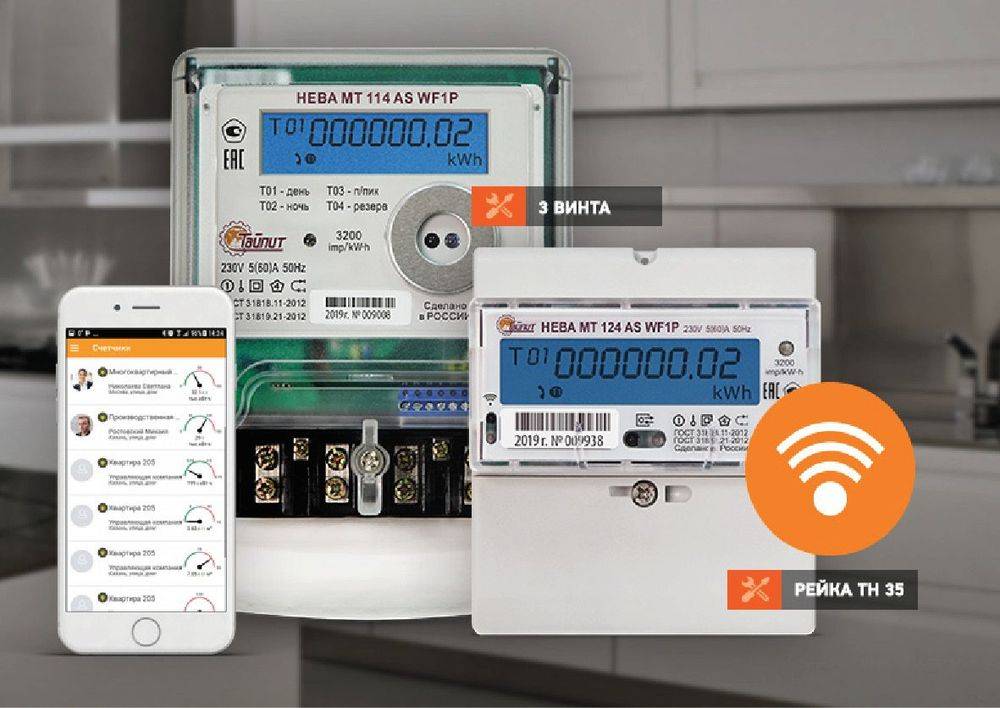
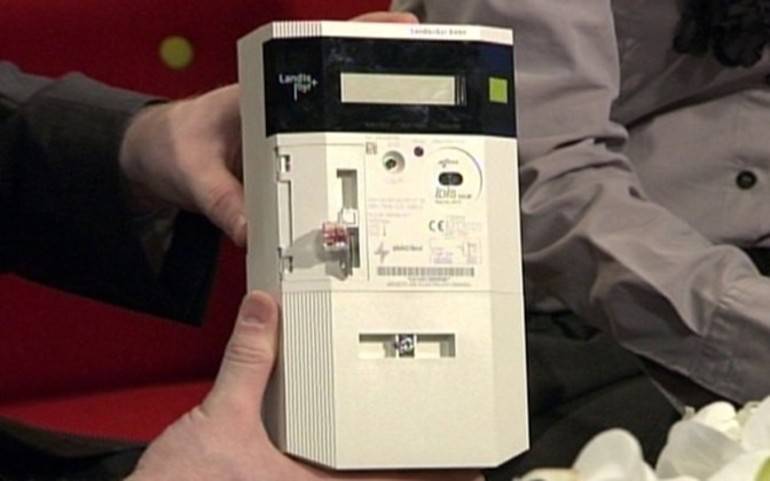
Electric meters are preferable to induction meters, because they are more accurate.They are more resistant to temperature extremes.
According to the PUE, the device on the street must be insulated
Modern street electricity meters are able to operate at low temperatures, but in practice it is necessary to pay attention to protection from external conditions. Mandatory operation in a dry, sealed place
The choice of box depends on the design of the device. For counters installed not high, you need a window. In other cases, you will need space to install the modem. For metal, a ground wire is required.
The number of phases depends on the size of the structure and individual consumption. One is enough for a small house. Three are used for large buildings with several floors or wings. The latter must be properly connected so that the load on the network is uniform.
Pros and cons of smart meters in a private house
There are some nuances when installing a smart water meter in a private house. The installation conditions in a private house are different from the apartment ones, so here you need to take into account all the positive and negative aspects of such an installation:
Pros:
A smart water meter itself takes readings and transfers them to the organization - the water supplier. There is no need to visit the utility company, the smart system will do everything for the consumer. A smart hot water meter is not required for installation in a private house. In the private sector, there is usually no hot water supply, so a hot water meter is not needed. Such a water meter can be connected to a smart home system. Now many people are installing a smart home system in their houses or apartments. When a smart water meter is introduced into this system, it becomes possible not only to take into account and analyze water consumption, but also to manage the water supply at home.Ability to periodically open and close the valve to protect against souring
This is especially important when operating in a well where humidity is high.
There are also disadvantages:
- When installed in a well, the water meter may be flooded along with all equipment. If the system has a flood sensor, then you can use it to prevent the possibility of flooding the well. But a rupture of the pipeline to the solenoid valve may occur, and then flooding is inevitable. If this happens when someone is at home, then maybe it will be possible to prevent flooding. And if not, then when flooded, the device may completely fail.
- A smart meter can simply be stolen from a well. Since the readings are taken automatically, the well can generally be locked. But that doesn't always stop thieves.
What was once considered science fiction is now commonplace. In the near future, smart meters will no longer surprise anyone, but will become commonplace. Especially if there are much more advantages from using new technologies than without them.
How to install a single-phase electricity meter
Therefore, the fastening of such devices was sealed by inspectors of Energonadzor.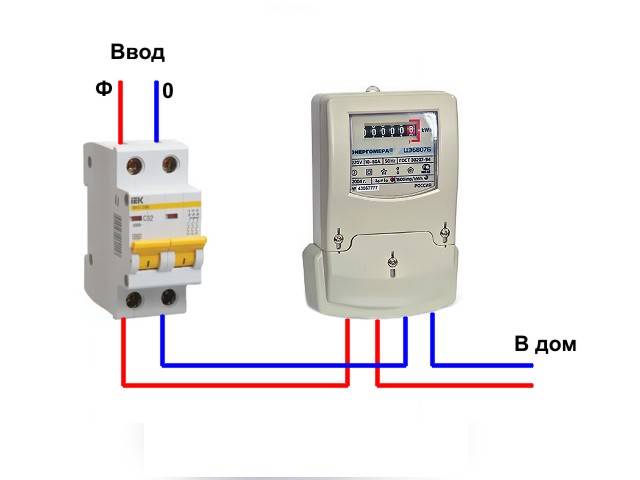
The neutral wire from the introductory machine goes either directly to the second contact of the electric meter, or to it, but through the residual current device RCD. The meter installation option depends on several technical points. Before connecting, after all, you still have to remove the protective cover of the contacts, namely on its inner side the location of the connected wires is shown.
How to connect an electricity meter in a private house on the street The rules for installing an electric meter in a private house on the street do not differ from the rules for in-house installation. Overheating of the equipment itself, which in the shortest possible time will disable it.
Connecting the meter in the entrance First you need to make branches from the supply line. In this case, you can save on electricity. Multi-tariff electricity meters Electricity consumption is uneven at different times of the day.
According to modern requirements, a shield with an electric meter must be installed outside the cottage or cottage. They are more reliable, compact, and the measurement result is displayed. This ensures that the wires are connected correctly by the manufacturer. Therefore, the fastening of such devices was sealed by inspectors of Energonadzor.
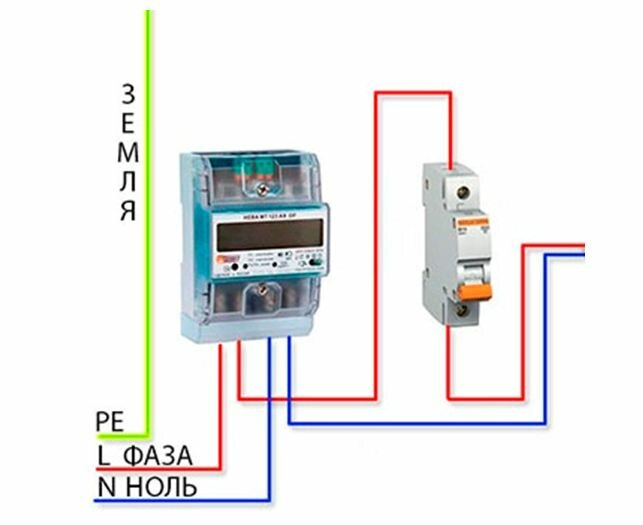
Connection diagrams for electricity meters
If you count these terminals from left to right, then the first terminal is the incoming phase, the second terminal is the outgoing phase. The quarter is indicated in Roman numerals, and in Arabic, on the reverse side, the year of the state verification date. They are only allowed to turn on the circuit breakers in the distribution compartment if they trip due to overload or short circuit. Most often it is installed in the corridor or at the front door.
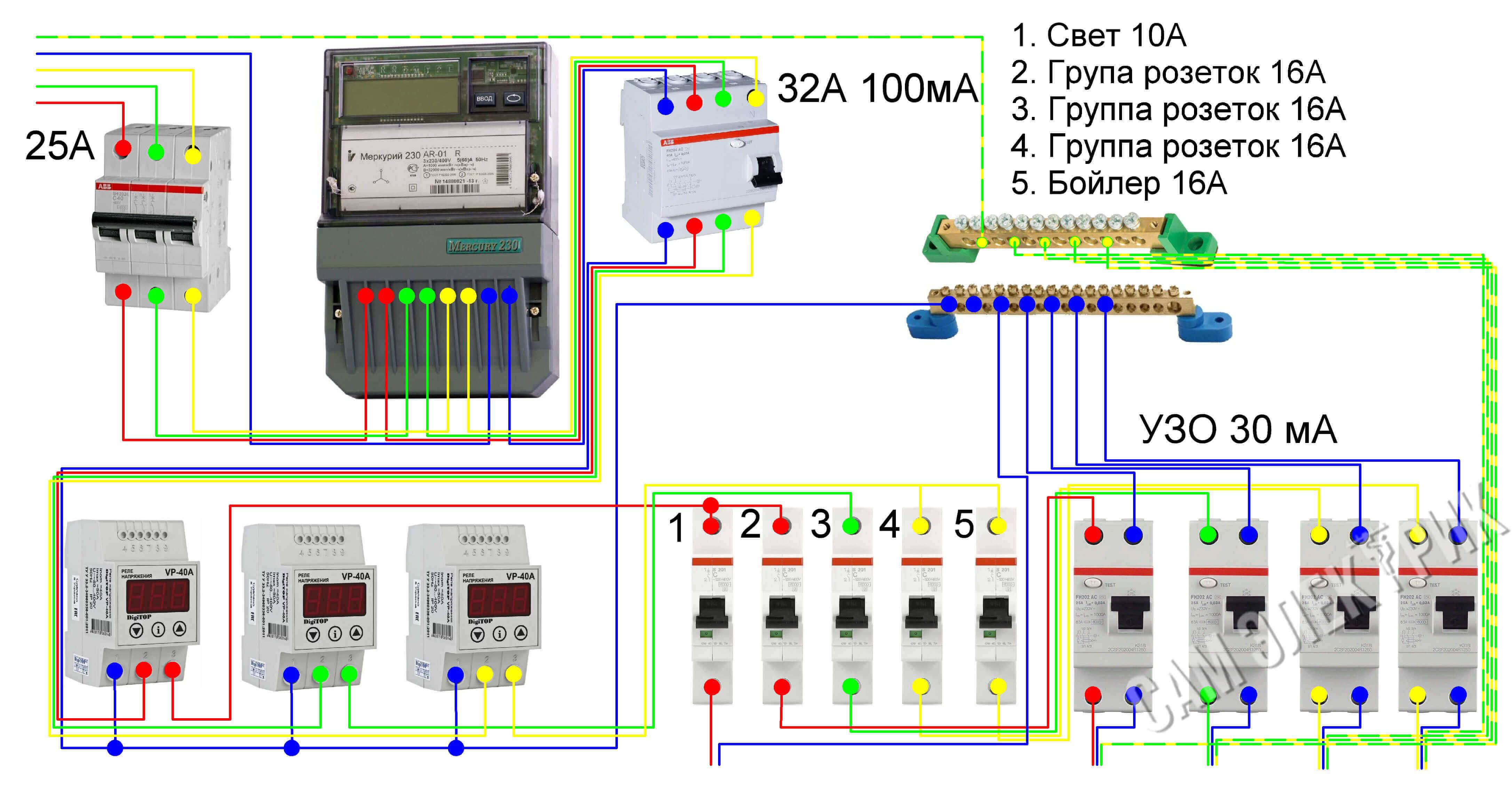
Learn how to wire your own home here. Using a special mechanism on the back, it can be fixed on the top rail inside the box. After that, voltage is applied, the electrical load in the form of household consumers is turned on, and the operation of the meter is visually determined. The following figure shows the connection diagram of the electricity meter.Moreover, this rule concerns the electric meter and power cabinet machines in the first place.
In apartments, the installation of electricity meters is carried out on the landing. If these devices are located in a privatized apartment, in a garage, in a utility room or within the boundaries of a cottage or summer cottage, then their installation, maintenance and replacement is carried out by the owner of the property.
Do-it-yourself installation of the SIP input shield and the meter
Do I need to dismantle old meters
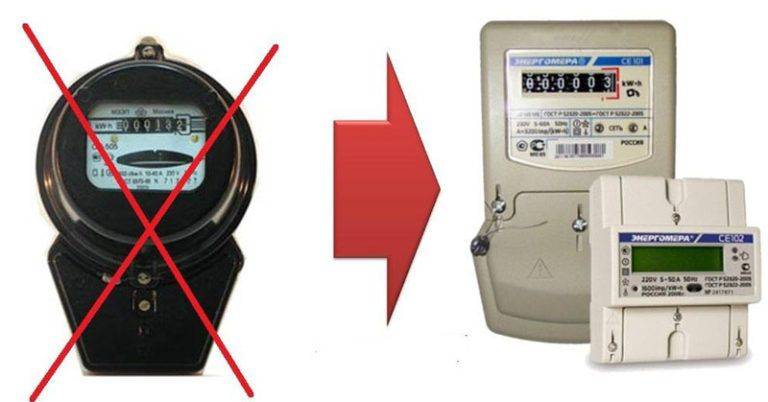
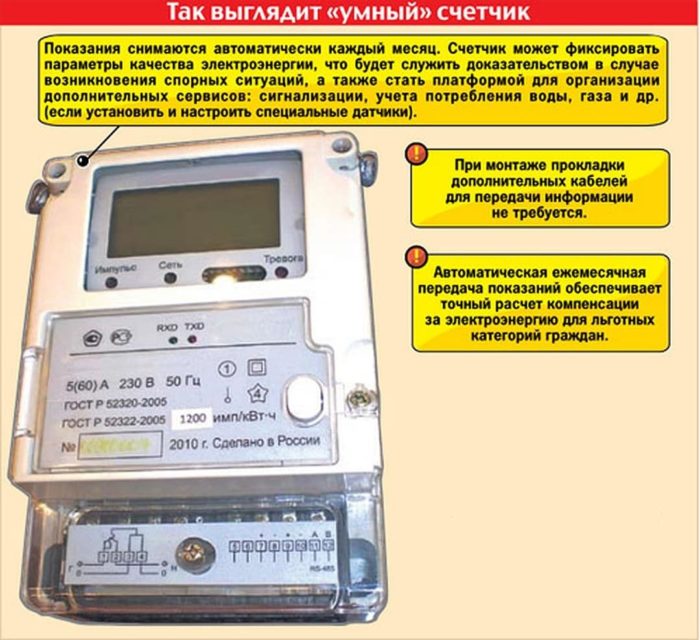
The introduction of smart meters does not mean that all old electricity meters will have to be thrown away. Metering devices will be replaced gradually, as the service life expires, the date of the next verification or failure. They will be replaced with “smart” ones as old electricity meters fail. That is, when they break down, their calibration interval or service life will end.
Until that time, you can safely use the old counters. A certain procedure will also be organized for the admission of new devices to operation, in which the consumer of electric energy will only need to be present.
Design and commissioning
After a visual check of the performance of the electric meter, you can proceed to its design, for this you need:
- Draw up another application to the company supplying electricity with a request to seal and subsequently put the meter into operation.
- An authorized inspector on the appointed day must draw up an acceptance report, which indicates the type of device, as well as its serial number. Moreover, if the connection was carried out independently, his duties also include checking the correctness of the connection.
- Record readings and place a seal on the cover of the electric meter.
Thus, it is still better that the replacement of the device is carried out by the specialists of the supplier's company themselves, who will not only bring and install their own electric meter, but also arrange the replacement and seal.
Finally, we recommend watching a useful video on the topic of the article:

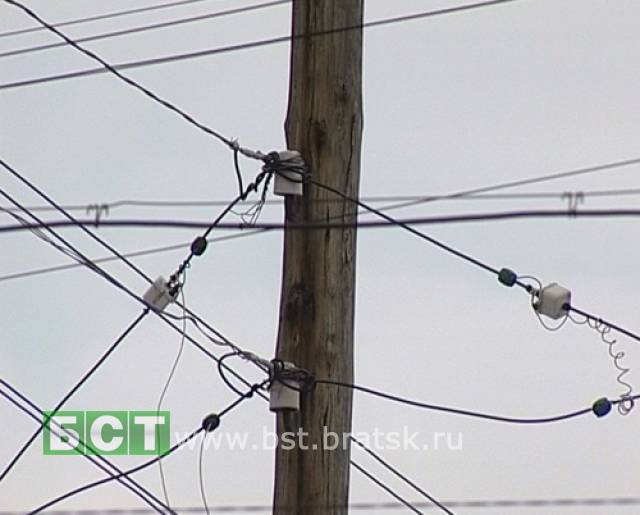
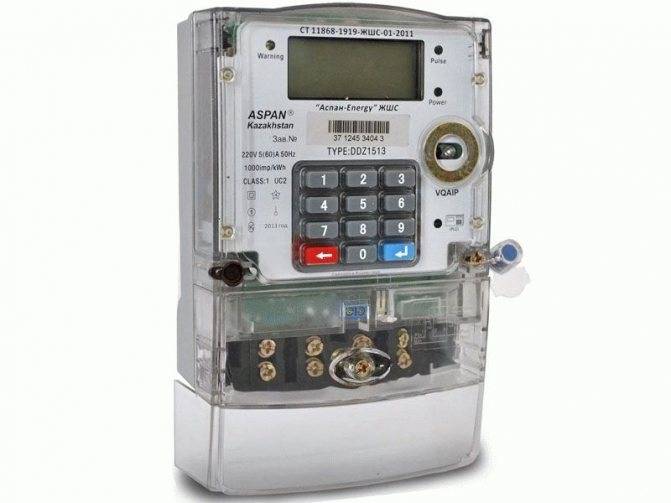
Now you know how to replace an electric meter in an apartment and a private house. As you can see, it is not difficult in principle to change an electric meter, but it is impossible to do this without energy sales representatives.
It will be useful to read:
- How to replace the input cable in the apartment
- How to conduct 380 Volts in a private house
- What to do if the electric meter does not work
- Replacing plugs with circuit breakers
Principle of operation
Smart meters for determining water consumption are a set of equipment consisting of several devices:
Water meter. For smart water metering systems, you can use any type of cold and hot water meters, the main thing is that you can take readings from them remotely. These can be both water meters with a pulse output, and electronic ones that transmit readings to an external display, both via wires and wirelessly. For hot water supply, you can install meters with a temperature sensor that will take into account the temperature of the water and count it separately at different rates.
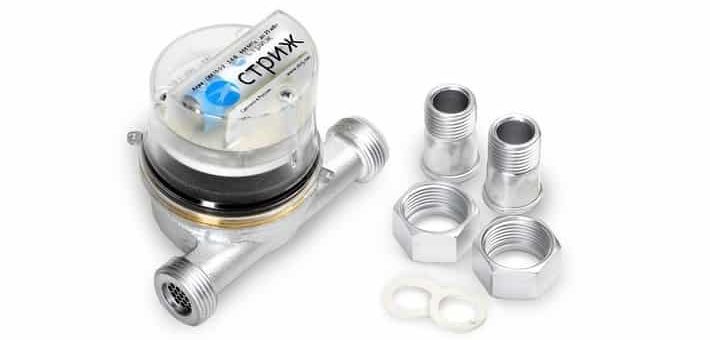
When buying a smart meter kit for installation in water supply systems, you need to take into account that they are supplied without connection nodes
It does not matter if the water meter is installed instead of the old conventional one, but if this is the first installation, then the connecting nodes must be purchased separately
Controller.This is a device for taking readings from a smart meter, processing them and transmitting them via wi-fi to the Internet. In order to control the consumption and payment for water, you need to create a personal account on the corresponding portal. There you can not only check the water consumption, but also set up the transfer of water meter readings for a specific day of the month. If you know the approximate water consumption per month, then you can set up a regular payment of a certain amount. All information can be displayed on the screen of a smartphone or computer, as well as control the operation of the controller using these devices.
The operation of the solenoid valve can be monitored on the smartphone screen. When opening or closing, the controller will give an appropriate signal and indicate the cause - flooding or leakage.
- flood sensor. This device can be supplied with a smart meter or simply plugged into the controller if one is already available. When flooding, the sensor sends a signal to the controller, and it closes the valve.
- Removable display. To take readings remotely, and not from the water meter itself, you can purchase a remote display. This is very convenient, because you can not go down into the well, or open a cabinet with water meters, and all the information can be seen on the screen of the remote display.
Principle of operation and technical characteristics
Types of electronic water meters:
- Tacheometric with pulse output. Such electronic devices, in addition to the standard screen, have an output that transmits electrical impulses. Each pulse is equal to a certain amount of liquid that has passed through the water meter. Some models allow you to take readings only on the water meter itself.Others are equipped with a digital output, the main counter does not have a screen.
- Digital water meter with electronic liquid crystal display and pulse output. Such devices are more accurate than conventional ones, but require electricity.
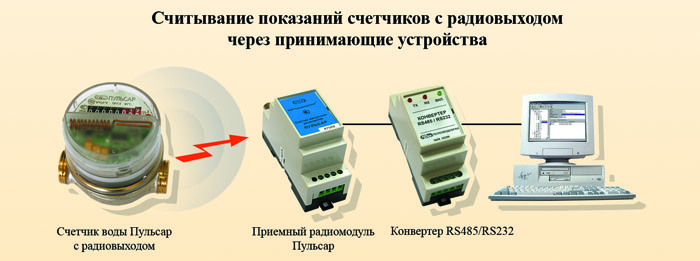
- Wireless water meters. Such electronic devices do not have their own display; they transmit data directly to a remote one. This is convenient, since such a screen can be installed in any suitable place. There are also models that transmit data directly to the Internet.
- Digital water meter with temperature sensor. Such a device takes into account water at several rates. There are two-tariff and four-tariff models. The first consider water, the temperature of which is below 40 ° C, according to the tariff of cold water, the rest according to the tariffs of hot water. Four-tariff divide the temperature of the liquid into four tariffs: cold (below 40 ° C), warm (from 40 to 44 ° C - 70% of the hot water tariff), almost hot (44-49 ° C - 90% of the tariff) and hot - over 50°C.
With this accounting, you can achieve significant savings and not pay for hot water if its temperature does not meet the standards.
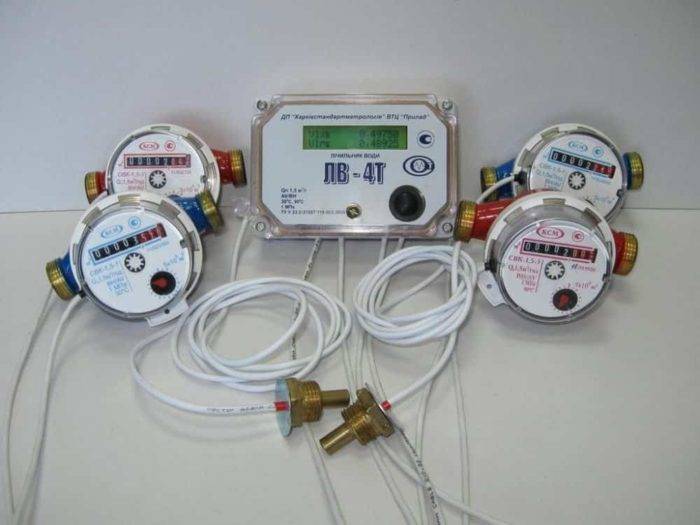
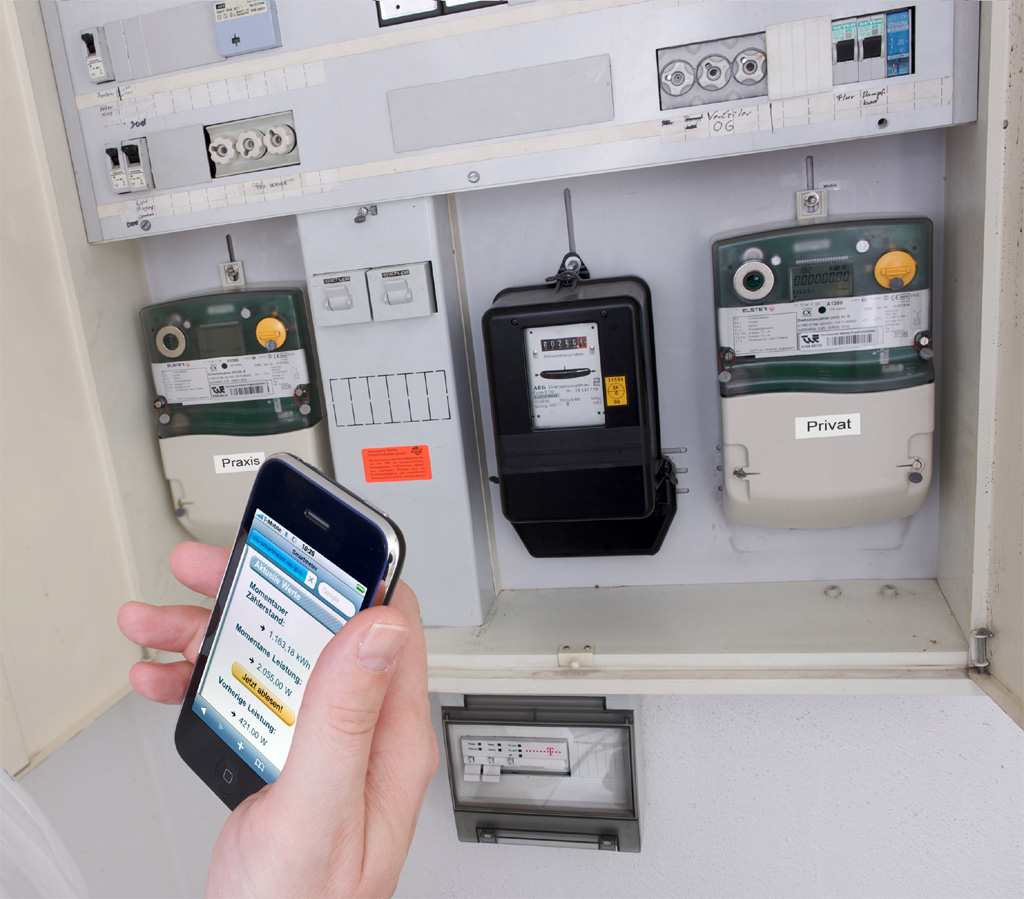
It is convenient to take readings with electronic water meters, since they are transmitted remotely, to any device paired with the meter. The impulse output of the water meter allows you to connect to it both a wired device for converting and transmitting data, and a wireless analogue.
Modern models transmit data from the counter via wi-fi directly to the Internet. From there, they can already be viewed on any device connected to the network. You can transfer data directly to the service provider and pay for it online.
There are single-jet and multi-jet water meters.Multi-jet are considered in all respects better than single-jet, except for the price. They are accurate and not affected by water hammer.
It is not necessary to install a water meter, the nominal diameter of which is equal to the nominal diameter of the pipeline. You can install a smaller meter, as long as it passes the right amount of water. Since small meters are cheaper, you can save.
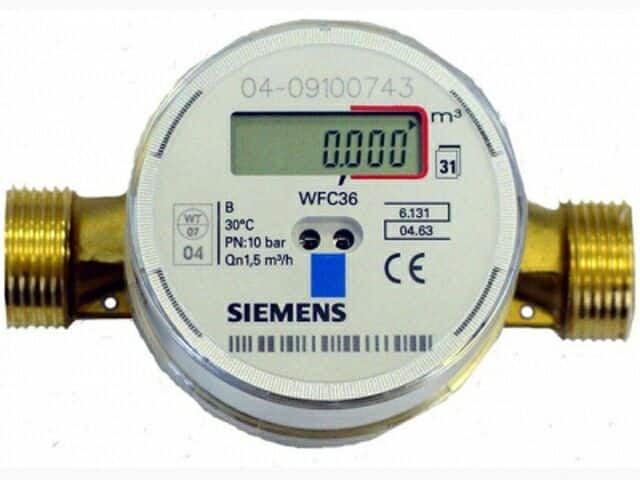
Electronic water meters are the same size as mechanical ones, so they can be put in place of a conventional water meter without re-equipping the installation site. To supply voltage to the meter, a separate wire is drawn. If the model has an autonomous power supply, then you can use it.
In the presence of additional equipment - a controller, an adder, a data transmitter, an electrovalve - you still need an external power supply. In this case, protection against electric shock is necessary, since all devices are in conditions of high humidity. To do this, you can install a residual current device (RCD) in the electrical circuit.
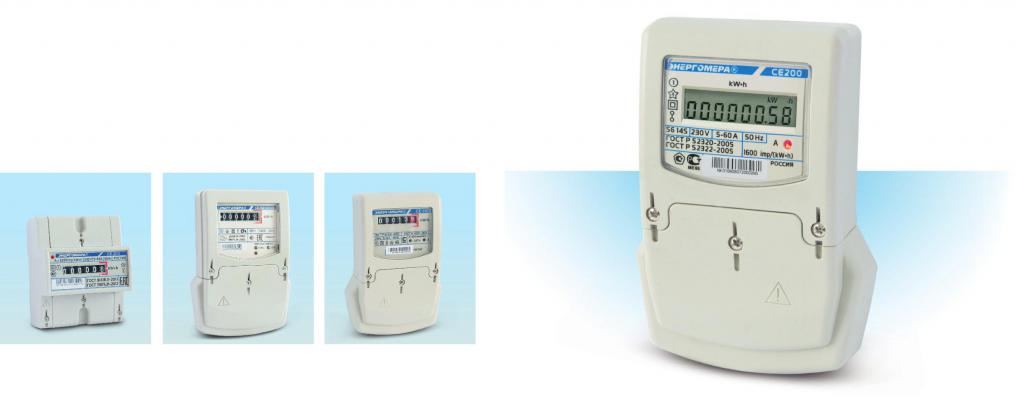
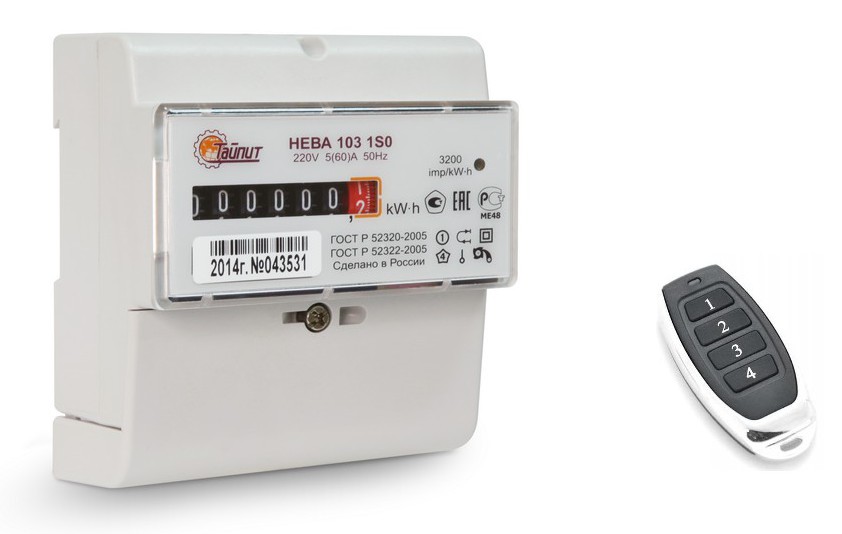
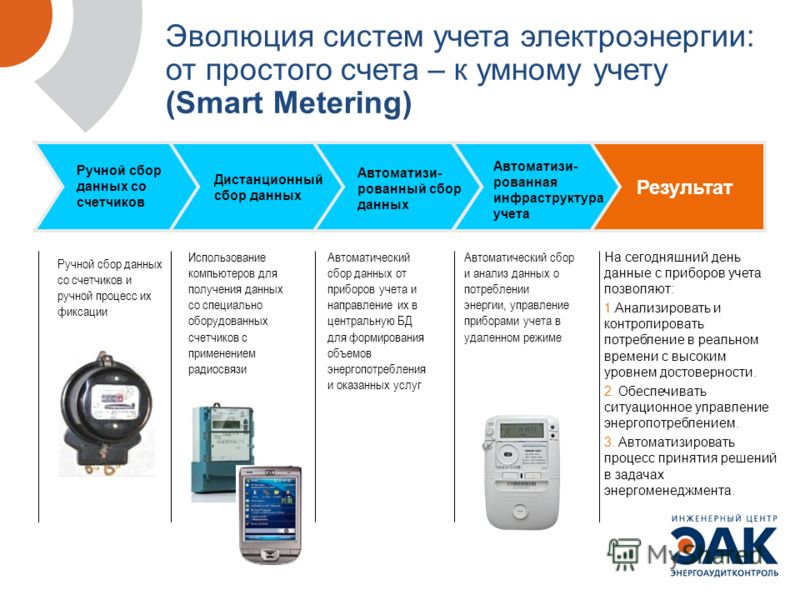
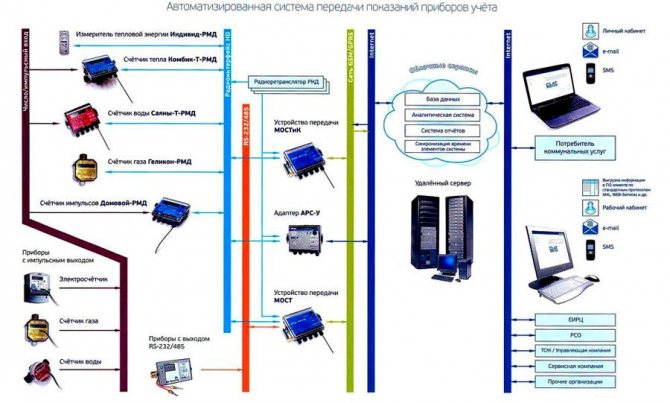
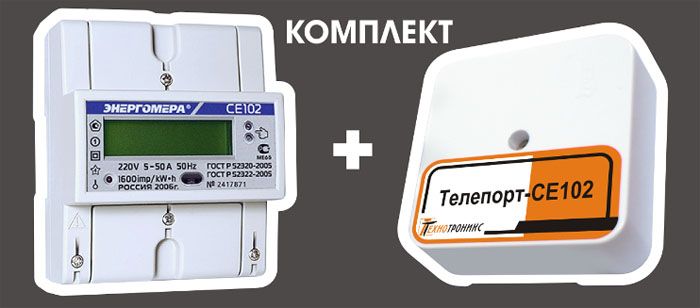
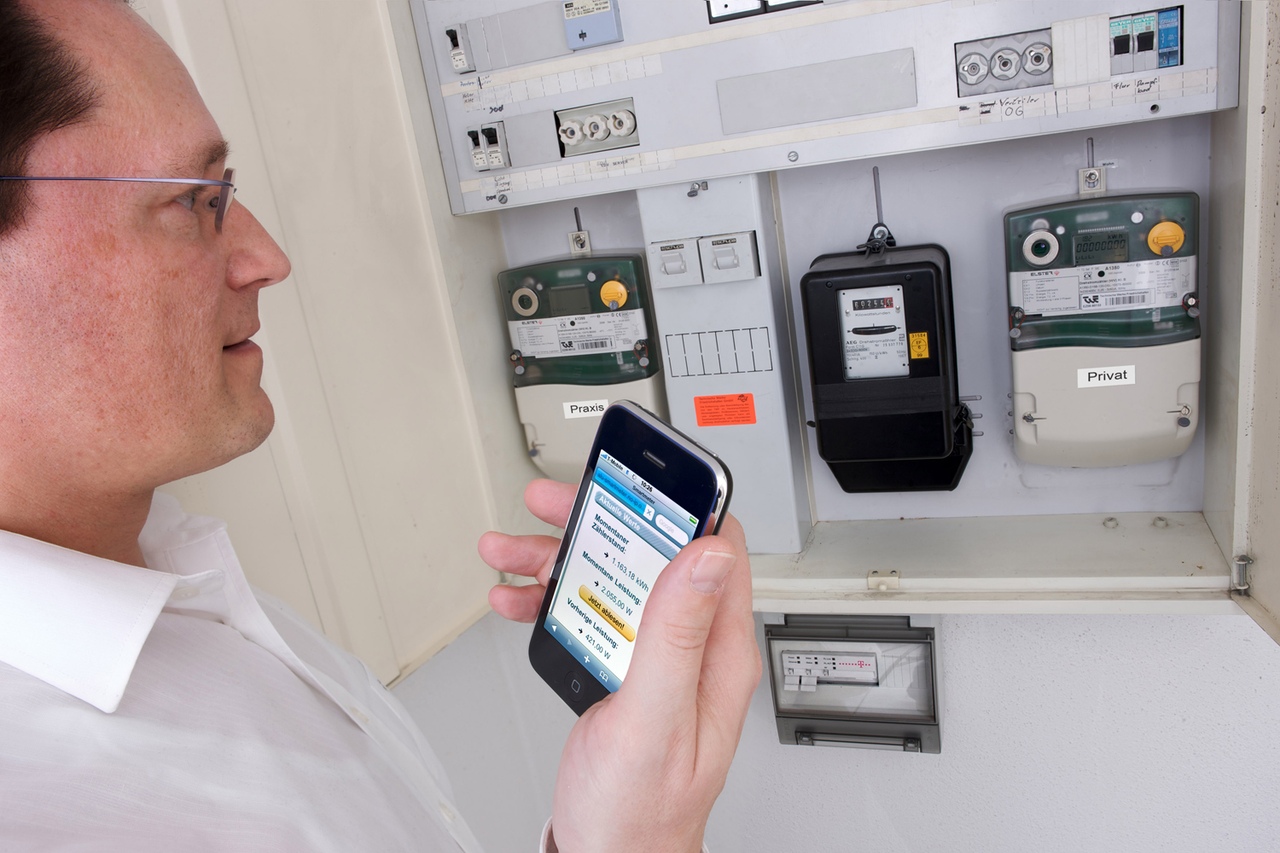
The structure of the meter for electricity and water, remotely transmitting data
A modern electric meter consists of many different elements of different levels of complexity. Among them are a power supply, a current sensor, a clock, a data transmission screen, a microcontroller and other optional items.
All complex electrical elements are protected from damage by a metal case. The base is based on a printed circuit board, where all the electronic components are located.
The liquid crystal indicator (1) is an information symbolic system. Its task is to determine and display various meter modes, the amount of energy consumed, as well as the date and current time.
The clock on the counter is necessary to accurately control the real time corresponding to the time zone. This is facilitated by a special functional block of the SoC chip.
The symbolic interface (2) is required to send data to the system and connect the electricity meter to a personal computer. In fact, it is an input method.
Illegal manipulations are blocked with a seal (4). It cannot be deleted.
The power supply (4) is needed to supply sufficient voltage to all components of the network, especially to the controller and supervisor.
Some models have an on/off button.
The supervisor is an inextricably linked microcircuit that regulates signal changes during voltage surges if it drops below an acceptable limit. It is necessary to protect the entire system of volatile devices of the device. The supervisor helps to prevent spontaneous data recording, and also corrects voltage parameters.
The optical port is an additional function of the electricity meter. This is the node used to receive data directly from the electricity meter.
An electromagnetic device used to control the supply of voltage is called a contactor. When operating the electricity meter, the contactor must be set to certain current indicators that correspond to your network.
The main element of the electric meter is a microcontroller. It simultaneously performs several actions and functions: transformation of the received data into a digital image, interface control, reading and processing information, receiving incoming signals, demonstrating calculations on the liquid crystal interface.
Features of work and additional functions of the electric meter are controlled by firmware.A remote control can be used to control the counters.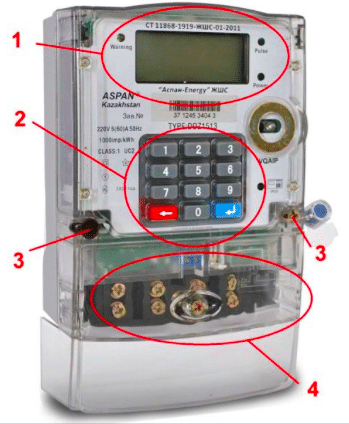
Legal consequences of using such devices
Yulia Kuprina Certified lawyer. The total work experience in the specialty is 13 years.
In accordance with the requirements of paragraphs. and paragraphs 82, 83 of the Rules approved by Government Decree No. 354, representatives of the utility company once a year have the right to inspect installed meters, both household and general house. Once every three months, representatives of the same organization have the right to check the readings of the energy meter.
In accordance with paragraphs 170, 177 of the Basic Provisions approved by Government Decree No. 442, representatives of the grid organization can already come to the subscribers with a check no more than once a month and no less than once a year.
The use of "charged meters" configured to underestimate the consumed kilowatts is one of the methods of theft.
False metering devices are subject to dismantling, and unscrupulous consumers will be sent receipts with invoices for unmetered consumption. The calculation of the fee in this case will be made in accordance with clause 81 (11) of the RF PP 354 according to the formula:
where:
n is the number of citizens permanently and temporarily residing in residential premises. If this value is unknown, the number of owners is taken as the basis
N is the standard for electricity consumption per person;
T - calculation period, which will be calculated for a period of not more than three months;
10 - increasing factor;
P- tariff (price) for a communal resource, established in accordance with the legislation of the Russian Federation.
As a result, the amount that will have to be paid reaches tens of thousands of rubles.
The use of such devices, due to which data on the real consumption of electricity is distorted, can entail not only economic consequences.

In networks of a private residential sector with low-rise buildings, the installation of such energy meters leads to an overload of the network and, as a result, to a deterioration in the quality of the supplied electricity, as well as power outages. In addition, in apartment buildings, the entire volume of unmetered electricity consumption falls on the shoulders of conscientious paying neighbors.
If the network organization considers that such actions of consumers caused damage, violators may be held administratively liable. The amount of fines has increased dramatically since 2016 and amounts to:
- for citizens from 10,000 to 15,000 rubles;
- for officials from 30,000 to 80,000 rubles;
- for enterprises from 100,000 to 200,000 rubles.
It is not uncommon for situations where the theft of electricity using a “charged meter” can be regarded as causing damage. In this case, an unscrupulous consumer of electrical energy may fall under Article 165 of the Criminal Code of the Russian Federation. The punishment will already be severe and will be expressed in forced labor with restriction of freedom or imprisonment for up to two years.
Advantages of "smart" electric meters
Electric meters with a built-in system for remote transmission of information have a lot of advantages. Due to their versatility and practicality, they are often used in the smart home automation system.
The advantages of these devices include:
- taking readings in any mode - daily, weekly and monthly;
- complete autonomy;
- high accuracy;
- efficiency in calculations, especially in the case of differential billing;
- the possibility of organizing remote de-energization of an apartment or house from a computer or smartphone.
The self-reading electricity meter allows you to resolve any disputes that may arise between the subscriber and the service provider (especially if the person does not regularly take readings).
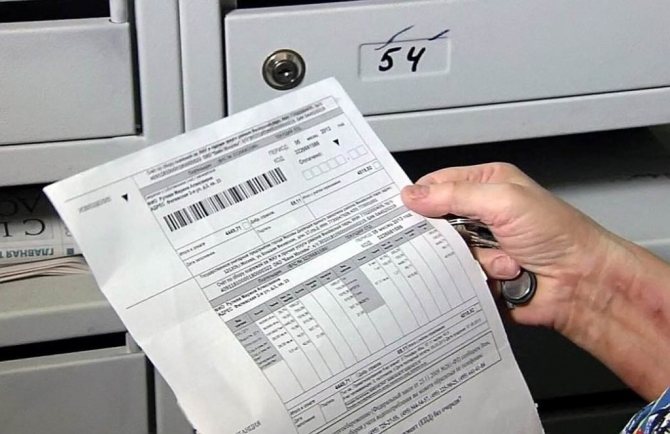
When using "smart" electric meters, you will have to carefully check receipts in order to notice an error in a timely manner and report it to the supplier
Also, the controllability and autonomy of electricity meters will help solve some of the problems of landlords. If only the owner of the apartment can manage the shield, then in the event of a delay in payment or non-payment of money for rent, the owner will be able to immediately turn off the electricity. That will allow you to quickly expel tenants from your home (no one will agree to keep the defense in an apartment without electricity).
Overview of manufacturers and prices for some models
The most famous and popular brand among manufacturers of equipment for automatic transmission of meter readings is Mercury. Models of this brand, their characteristics and cost as of January 2018 now and consider:
| Model | Connection type | Number of tariffs | Communication, interface | Cost, rub |
|---|---|---|---|---|
| 203.2T GBO | single phase | multi-tariff | Pulse output, GSM modem | 8000 |
| 234 ARTM-03 PB.R | three-phase | multi-tariff | Optoport, RS485 interface | 9500 |
| 200.4 | single phase | One-rate | PLC modem, CAN interface | 3500 |
| 206 PRLSNO | single phase | multi-tariff | Pulse output, optical port, PLC modem | 4000 |
| 230 ART-03 CLN | three-phase | multi-tariff | CAN interface, PLC modem | 6500 |
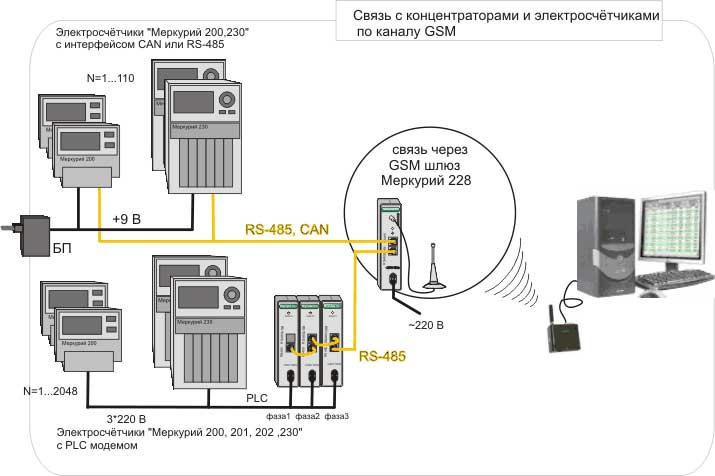
| 234 ARTM-00 PB.G | three-phase | multi-tariff | Internet, GSM/GPRS modem, PLC modem, RS485 interface | 14800 |
Mercury 234 ART-03
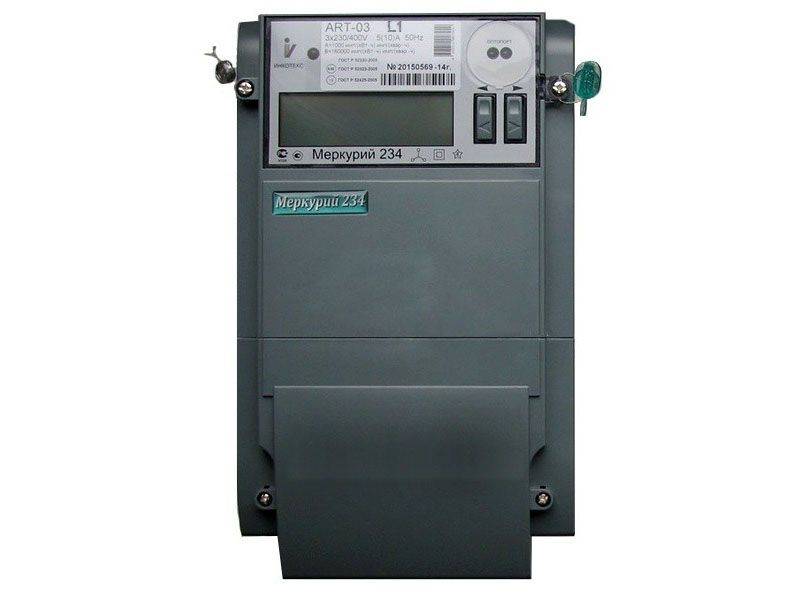 Mercury 234 ART-03 - inexpensive and multifunctional
Well, for comparison, we suggest that you familiarize yourself with other electric meters with a built-in modem for transmitting readings:
| Model | Connection type | Number of tariffs | Communication, interface | Cost, rub |
|---|---|---|---|---|
| Matrix NP71 L.1-1-3 | single phase | multi-tariff | PLC modem | 7600 |
| Energomer CE102 R5 145-A | single phase | multi-tariff | PLC modem | 2300 |
| PSCH-4TM. 05MK. 16.02 | single phase | Multi-tariff (up to 4) | PLC modem | 23300 |
| ZMG405CR4. 020b. 03 | Three-phase, transformer type | Multitariff (up to  | PLC modem, RS485 interface, optoport | 17300 |
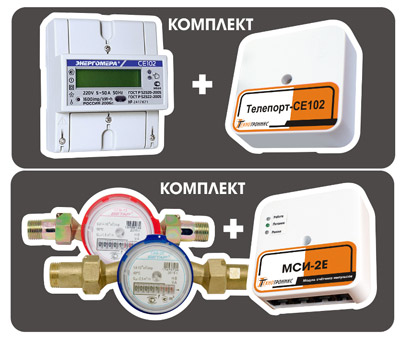
Energomer CE102 R5 145-A
It is clear that the price range is large, which means that anyone will be able to choose the model that will suit him in terms of cost and technical parameters.
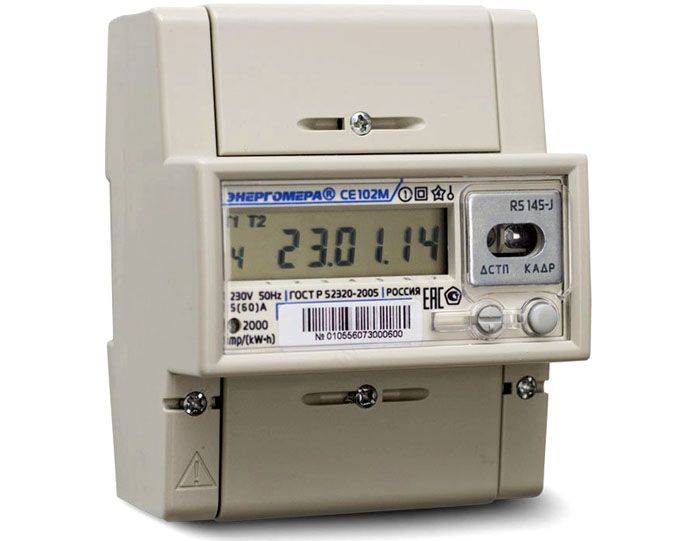 The CE102 R5 145-A energy meter is indistinguishable in appearance from a conventional electromechanical meter
Features of electricity meters with remote reading
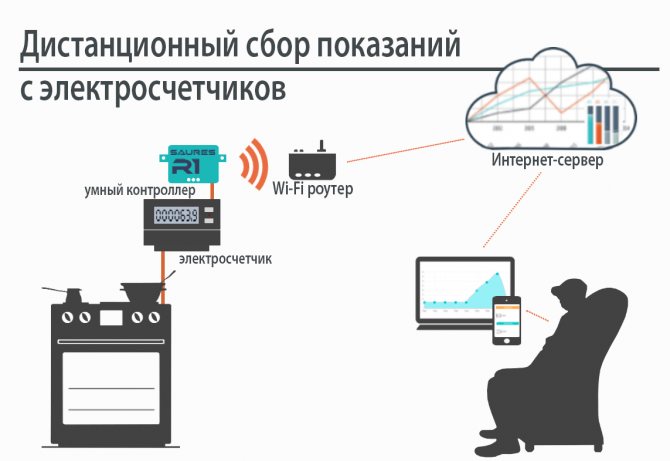
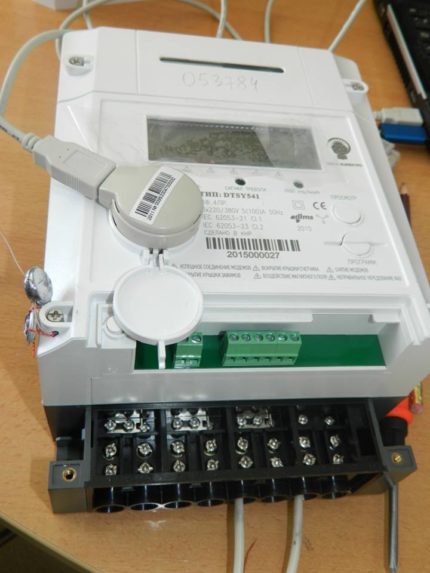
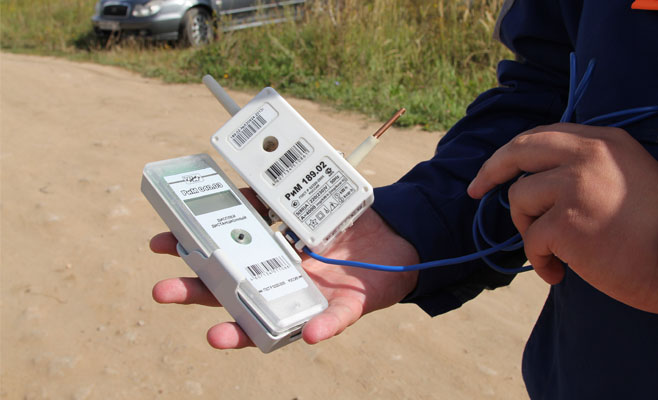
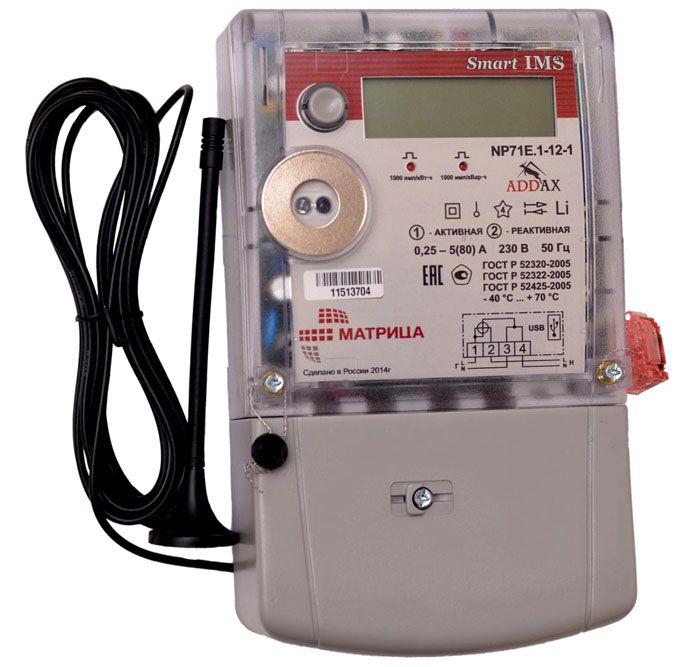
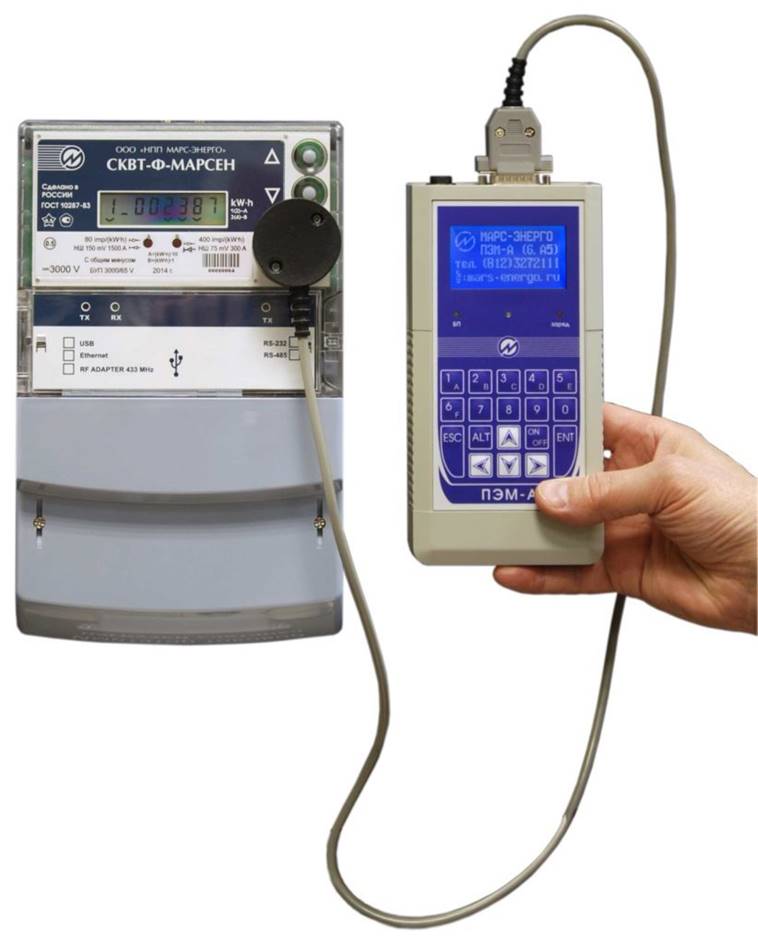
The difference between transmitting electricity meters and simple ones is the presence of a microcontroller and a data transmission system that enable energy sales companies to remotely monitor energy consumption and even turn off its supply to the apartment in case of non-payment. To transfer the readings of the electricity meter, no action is required from the owner - only the initial setup and transmission of the first readings.
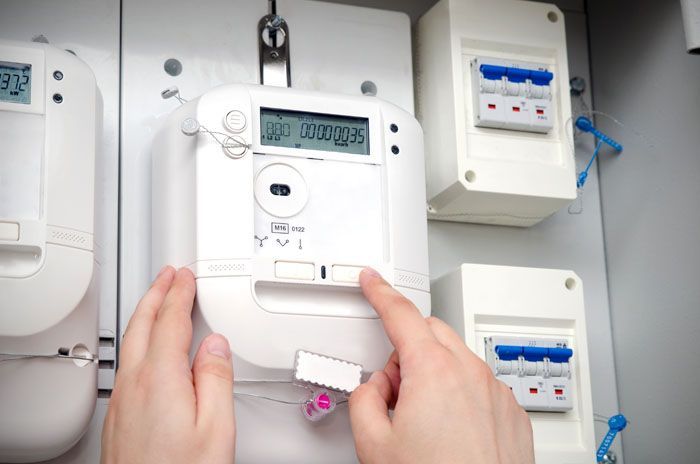 Such electricity meters are capable of transmitting readings themselves.
Functions of the information-measuring system
The task of the information-measuring system is to collect, analyze and transfer information about electricity consumption to a supplier or a controlling organization.It provides the ability to turn off or resume the supply of electricity by the supplier, or even limit the power, if the consumer exceeds the limit under the contract.
Interesting information! With the help of the analysis made by the information-measuring system, it independently warns the consumer by sending informational messages to e-mail or personal account on the company's website.
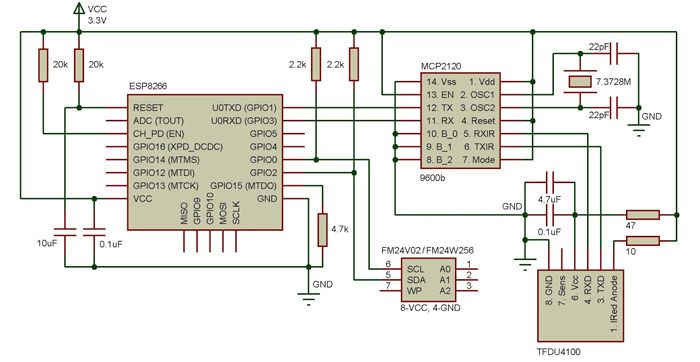 Electrical diagram of the device for automatic data transmission
Advantages of electric meters with remote reading
Electric meters with remote reading have a number of advantages over conventional devices. Let's consider some of them:
- Daily recording of data allows you to resolve disputes - if you have any questions about charges.
- Instant fixation of tariff switching. In the case of conventional multi-tariff meters, there are situations of untimely switching. In this case, the power supply company resolves disputes not in favor of the owner.
- Additional protection. Often the owner forgets to turn off the iron or electric stoves, remembering this at work or on a trip. Using an electricity meter with data transfer, you can turn off the power supply from anywhere using a smartphone or computer connected to the Internet. Agree, a good way to protect your home.
- Saves time. Recording readings, wasting time on data transmission - today this is a luxury in our rhythm of life.
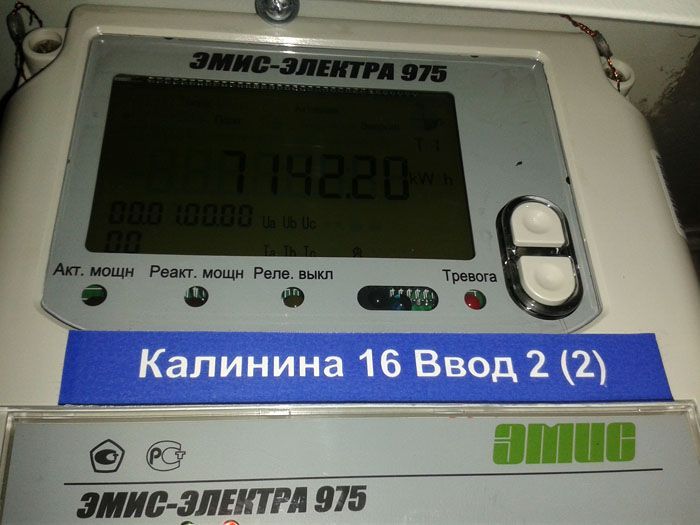 Previously, such devices were installed only as common house ...
We put the counter
If you have already decided that you can handle the installation of a meter in a private house better than a representative of the electrical network, you can try. You will need:
- subscriber electrical panel;
- a counter that meets the technical parameters;
- wires of the required section;
- circuit breakers and RCDs;
- transformers;
- pliers;
- screwdrivers (preferably a set);
- a sharp knife with a plastic handle or wrapped with electrical tape;
- fasteners according to the diameter of the holes in the shield;
- mounting plates (standard, 35 mm wide);
- insulators;
- multimeter;
- insulating tape.
Let's start installation
Of course, you have already decided how many phases you need, and figured out the transformer - it is not always needed, but if you install a three-phase meter, you can hardly do without a converter. Further, the procedure will be as follows:
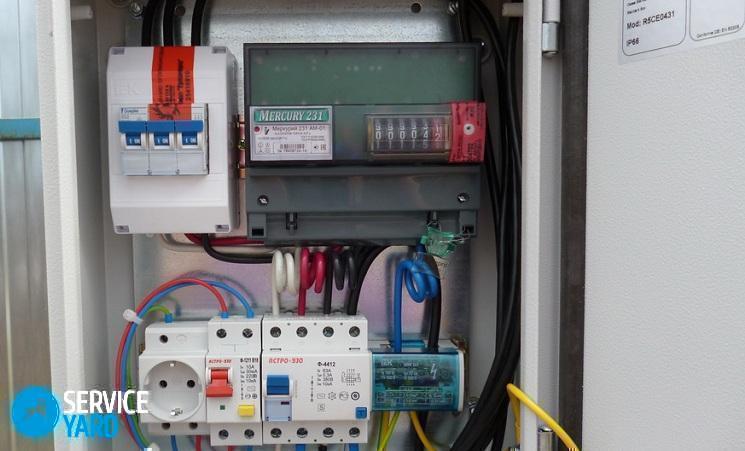
- Install the mounting plate into the shield.
- Install the RCD, the meter itself and the switches - for this there are clamps that are included in the kit.
- Check if the machines are working by turning on the multimeter in the resistance measurement mode.
- Install grounding and protection busbars - they are fastened with nuts and insulating screws.
Option 1
A single-phase meter is connected according to the direct connection scheme in the network. Despite the fact that there are many models, the terminals are exactly the same. Sometimes a transformer is used. They have four terminals:
- phase input;
- zero input;
- phase output;
- zero output.
There are no separate ground terminals. We act in the following order:
- De-energize the house - this is done right on the highway or on the introductory machine, so you still need to negotiate with the network company.
- Mount the meter.
- Check all connections
- Turn on the unit.
Option 2
It will take a little longer to tinker with a three-phase meter. First of all, you need to understand that there are several schemes, and they depend on which model you have chosen. Several connection methods are possible:
- direct connection;
- connection to a four-wire network through a transformer;
- in a three-wire or four-wire network using a transformer;
- through two transformers (current and voltage) into a three-wire network.
You can directly turn on the counter if you see the letter U on the marking, which means universality. Such counters are used most often, they are suitable for the house, and for the apartment. True, the current is limited - 50 A. After the installer assembles the unit, he must do the following:
- Trial start.
- Sealing, and the date must be indicated on the seal.