
- Specifics of submersible pumping equipment
- Vibration pump + well: yes or no?
- Guidelines for choosing a centrifugal pump
- A few words about popular models
- Well pump selection options
- Aquifer characteristics
- Water requirement
- pressure
- The degree of entry into the casing
- How to get the pump out of the well - the correct procedure
- The best pumps for a well from 70 meters
- BELAMOS TF-100 (1300 W)
- Grundfos SQ 3-105 (2540 W)
- BELAMOS TF3-40 (550 W)
- Aquarius BTsPE 0.5-100U
- UNIPUMP ECO MIDI-2 (550W)
- Assignment of manual models
- What to look for when choosing a pump?
- Types of pumps used
- Hand pumps
- Surface pumping stations
- Vibratory pumps
- Submersible centrifugal pumps
- Types of hand pumps and approximate prices of some models
- winged
- Rod
- Piston
- Membrane
- hydraulic
Specifics of submersible pumping equipment
According to the type of device, centrifugal and vibration pumps are distinguished. In the first, a rotating disk with blades is used to supply water, and in the second, a special membrane that transfers water with the help of numerous vibrations. These design features are important because they affect well integrity in different ways.
Vibration pump + well: yes or no?
Is it possible to install a vibration pump in the well? These models are relatively inexpensive, easy to operate, and have performance that is suitable for a significant number of wells.
Many experts categorically object to the use of any vibration technique in the well shaft. However, owner reviews report that pumps of this type are used quite successfully without any damage to the structure. So, which pump - vibration or centrifugal - is better for a well?
The objections of experts are well founded. Prolonged vibration exposure almost always negatively affects the state of surrounding objects. The well is no exception.
Vibrations from the pump located next to the filter affect the condition of the casing and the surrounding soil, which are gradually destroyed. Vibration can cause a significant acceleration of the processes of silting and sanding.
But it doesn't happen right away. Typically, wells successfully resist vibration for some time. Therefore, with the help of such a pump, it is possible to pump the well, and clean it, and successfully operate it without visible damage.
But destruction from vibration still occurs, although not too quickly. The constant use of a vibration pump can significantly reduce the life of the structure.
If necessary, the use of vibration models is quite acceptable, but only as a temporary option. But at the first opportunity, such a pump should be replaced with a safer centrifugal device.
Guidelines for choosing a centrifugal pump
To do this, you need to carefully study the technical passport of the centrifugal device and find out several important points:
- what is the performance of the pump;
- whether its dimensions are suitable for the well;
- from what depth can he raise water;
- what are the features of its installation and operation;
- how and under what conditions warranty service is carried out, etc.
Usually consultants give quite professional recommendations when choosing such equipment. It should be remembered that many manufacturers indicate limiting rather than average characteristics for pumps, so you need to take into account some margin of operational life.
Directly in the marking of a domestic pump or in the technical passport of a foreign one, two numbers that are important for choosing are indicated. The first (in example 55) is the flow in l/min, the second (75) is the maximum head in meters
A few words about popular models
If the decision is made to use a vibration pump, most likely, “Kid” or “Brook” will be bought. These models are distinguished by good performance, resistance to breakdowns and quite affordable price.
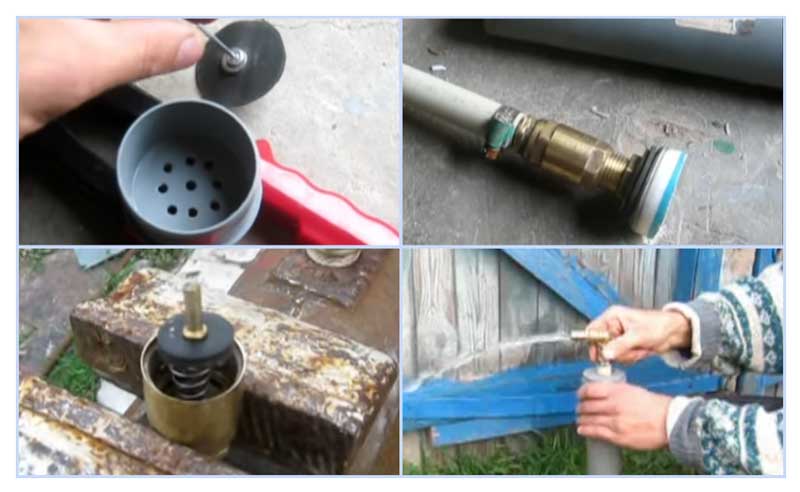
They are easy to clean or repair with your own hands. But for permanent use, vibration technology is not suitable, it must be replaced as soon as possible.
Vibration pump "Kid" is a popular, but not very suitable choice for a well, since the vibrations of the device can cause its destruction
Among the popular brands of submersible centrifugal pumps, it is worth noting "Aquarius" and "Vodomet". They are very similar, but according to user reviews, Aquarius noticeably wins in quality and durability, although it costs more.
However, the Water Cannon also has its adherents. If you are lucky enough to get a well-assembled model, it will show quite decent results.
Submersible centrifugal pumps of the Aquarius brand have established themselves as reliable and durable equipment for the well, capable of coping with increased loads
Special well pumps will cost a substantial amount, but such costs will fully justify themselves over time. As an example of such a technique, it is worth noting the 3STM2 and 4STM2 models manufactured by TAIFU.
Well pump selection options
Aquifer characteristics
The characteristics of the aquifer include:
1. depth - dynamic, changing depending on various factors, and static;
2. debit - the amount of liquid entering the intake per unit of time;
3. the type of soil in which the water is located.
After the work is completed, a passport is drawn up indicating all the necessary data.
Water requirement
In the case of a private house, the need for water is calculated - it should not exceed the debit. When determining it, the number of residents and plumbing fixtures, as well as the mode of operation + the amount of liquid for irrigation, are taken into account.





This parameter, depending on the situation, differs significantly, therefore, with an eye to the norms, it is better to determine it based on consumption habits - under similar conditions, the throughput may need both 2 and 20 m3 / h.
pressure
A mandatory parameter is the head, which can be considered in atmospheres or meters of water column - the ratio between these values is approximately: 1 to 10.
In its simplified calculation, the following are summarized:
1. Geometric lift height (vertical distance from the pump to the highest point of disassembly);
2. Losses on horizontal sections (10 m equals 1 m)
3.Free pressure at the mixer (from 2 or 3 m).
The degree of entry into the casing
The device should enter the casing pipe with a clearance of 1 ... 3 cm. The most common diameters of the latter are 10, 13 and 15 cm. Accordingly, the pumps are produced at 3", 4", more than 4".
How to get the pump out of the well - the correct procedure
In life, situations often arise when the pump can get stuck between the walls of the well. Each owner has a different approach to solving this problem. We will talk about the most effective ways and tips to help get the pump out of a drilled well:
- First of all, you should pull the safety cable and hit it several times with a hammer. In this case, the vibrations on the cable are transmitted to the pump and the deposits accumulated on it are destroyed. This method can take a lot of time and effort - you need to be prepared for the fact that it will take several days to remove the unit;
- If in order to pull the pump out of the well, auxiliary items are used, then they must be fixed by the head to a fixed object near the well;
- To push the equipment into the well, experts advise using a pipe whose diameter will be slightly smaller than the diameter of the well.
The best pumps for a well from 70 meters
BELAMOS TF-100 (1300 W)
Borehole pump BELAMOS TF-100 (1300 W) is used to organize autonomous water supply in private homes and water plants, as well as in agriculture to create irrigation systems.
The 1300 W electric motor is designed for intensive work with increased loads and provides a capacity of 4500 liters per hour.
The thermal relay protects the device from overheating.
The pump part is made of high quality stainless steel.
Main functional characteristics:
- submersible well;
- maximum productivity - 5 m³ / h;
- maximum pressure - 100 m;
- immersion depth - 80 m;
- vertical installation;
- weight - 22.1 kg.
Advantages:
- performance;
- water pressure;
- build quality.
Flaws:
not specified by buyers.
Grundfos SQ 3-105 (2540 W)
The borehole pump Grundfos SQ 3-105 (2540 W) is designed for water supply to private houses, pumping water from tanks, irrigation hydraulic systems and small waterworks.
The single-phase permanent magnet electric motor is capable of high efficiency over a wide power range.
The electric motor is completed with a removable cable connector.
Main functional characteristics:
- submersible well;
- maximum productivity - 4.2 m³ / h;
- maximum pressure - 147 m;
- installation horizontal and vertical;
- weight - 6.5 kg.
Advantages:
- performance;
- water pressure;
- low noise level.
Flaws:
not marked by buyers.
BELAMOS TF3-40 (550 W)
Submersible pump BELAMOS TF3-40 (550 W) is used for pumping clean water from great depths to the house or for watering plants.
The design of the pump part provides the possibility of independent maintenance (cleaning) of the pump part, without going to the workshop.
To disassemble the pumping part, it is enough to unscrew the top cover or the lower flange of the pumping part.
The device is completed with a cable, a plug with a grounding contact.
Main functional characteristics:
- submersible well;
- maximum productivity - 2.7 m³ / h;
- maximum pressure - 42 m;
- immersion depth - 80 m;
- vertical installation;
- weight - 9.4 kg.
Advantages:
- performance;
- build quality;
- water pressure.
Flaws:
not identified by users.
Aquarius BTsPE 0.5-100U
The submersible pump Aquarius BTsPE 0.5-100U consists of a single-phase electric motor and a multi-stage pump part, created in the form of a monoblock, as well as an external condensate box, which is attached to a power cord with a plug.
The electric pump has a thermal relay, which effectively protects it during emergency operation.
The volumetric flow of a submersible pump depends on many factors - the depth of the water, the length and diameter of the operated hose, etc.



Main functional characteristics:
- submersible well;
- maximum productivity - 3.6 m³ / h;
- maximum pressure - 150 m;
- immersion depth - 100 m;
- vertical installation;
- weight - 25 kg.
Advantages:
- performance;
- water pressure;
- build quality.
Flaws:
not specified by users.
UNIPUMP ECO MIDI-2 (550W)
The UNIPUMP ECO MIDI-2 borehole pump (550 W) is used to supply water from sources with a diameter of at least 98 mm.
By means of a deep pump, an automated water supply system can be organized in a summer cottage, in a country house, in production, etc.
"Floating" wheels are made of wear-resistant carbonate.
They minimize the risk that the pump will seize when pumping solids.
A special filter prevents the penetration of large abrasive particles into the pump section.
Main functional characteristics:
- submersible well;
- maximum productivity - 3 m³ / h;
- maximum pressure - 73 m;
- immersion depth - 100 m;
- vertical installation.
Advantages:
- water pressure;
- low noise level;
- performance.
Flaws:
not found by users.
Assignment of manual models
The main purpose of using pump-type equipment is to pump water from a source to certain points: to a residential building, a bathhouse, a garage, a garden. In suburban areas, the source is most often wells and wells, less often - ponds and other bodies of water.
All residential or country houses can be divided into three categories: permanent, seasonal and periodic residence. Not all of them have electricity, and some are supplied irregularly.
Summarizing all these factors, we can draw the following conclusions:
- permanent residences use electricity by default, so the main equipment for pumping water is an electric pump, and the manual model is a spare backup unit;
- if the cottage is used only in summer and power lines are connected, then the volatile option is also ideal, and the manual device plays a secondary role;
- a suburban area without electricity most of all needs manual equipment.
To irrigate 2-3 flower beds, you can still draw water in buckets, but to ensure full and daily watering of beds, greenhouses and lawns, you need a pump. This is where a model comes in handy, for the maintenance of which a pair of hands is needed.
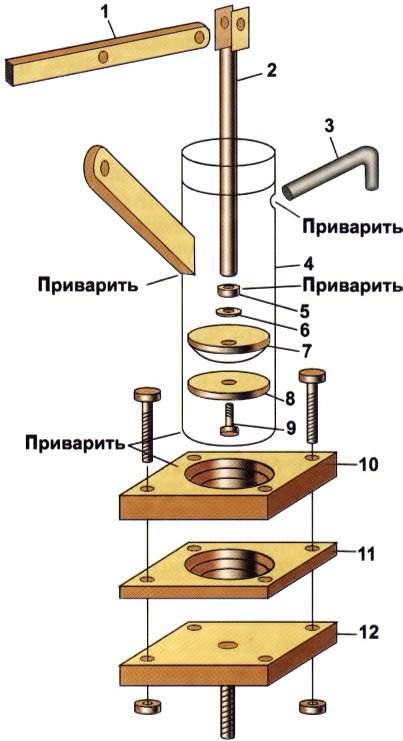
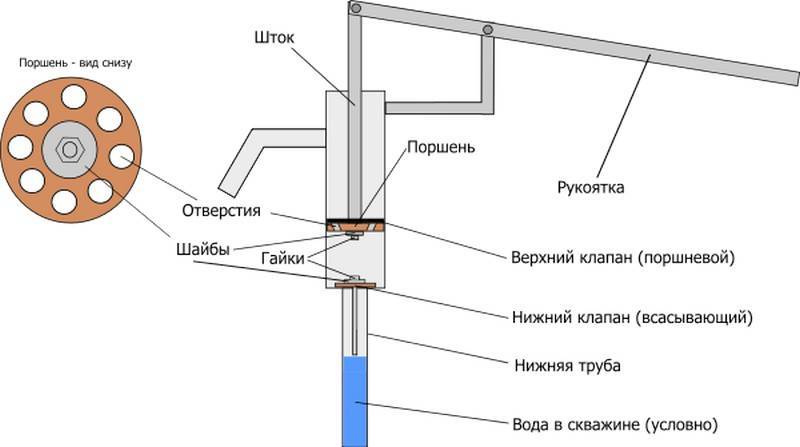
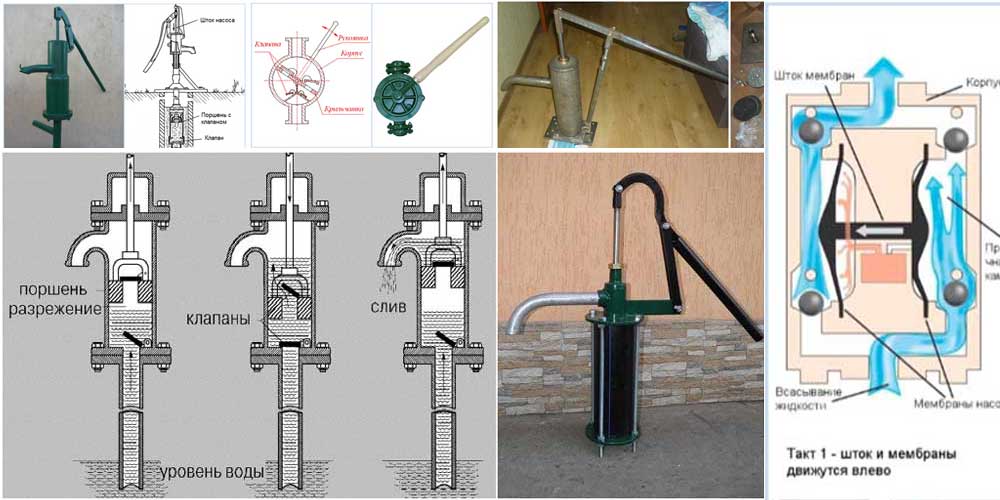
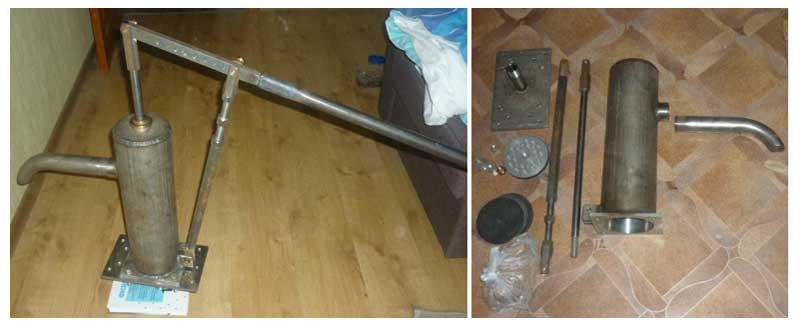
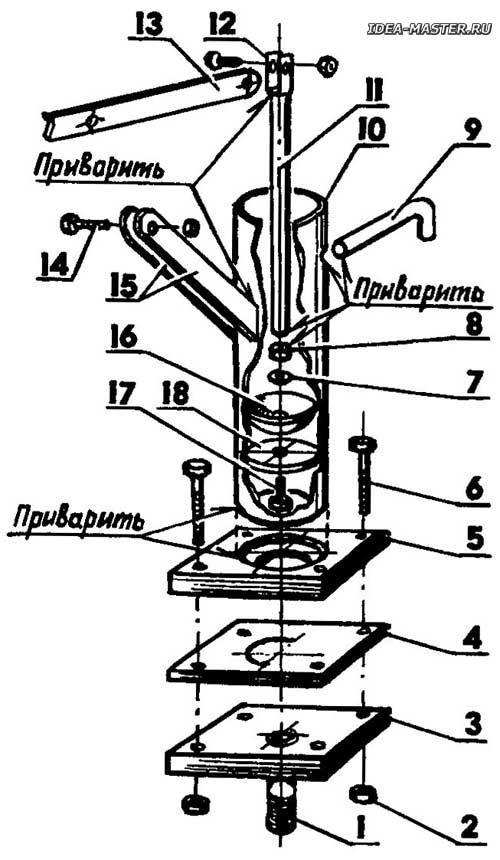
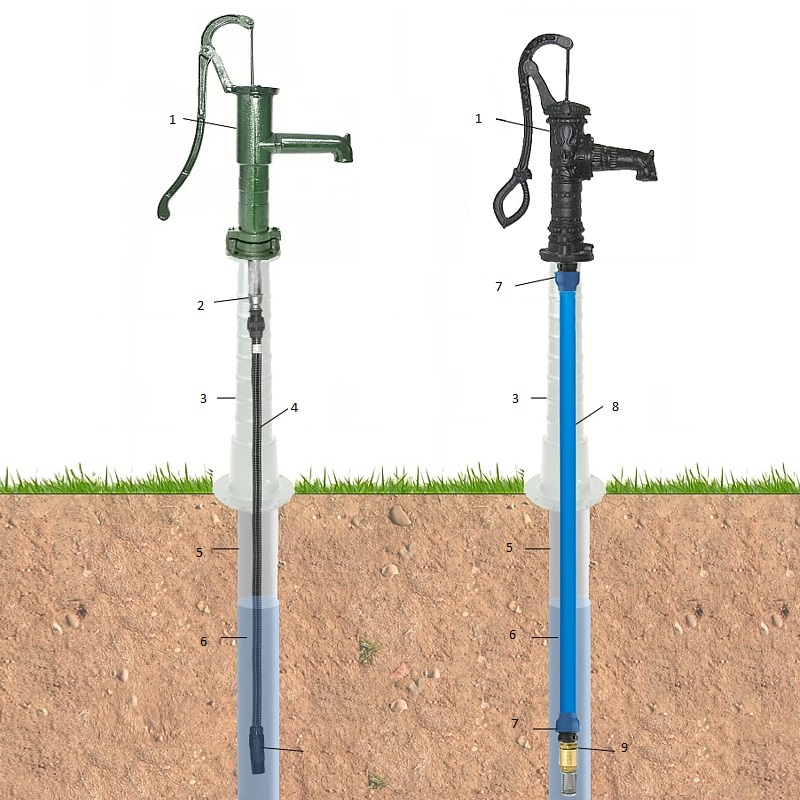
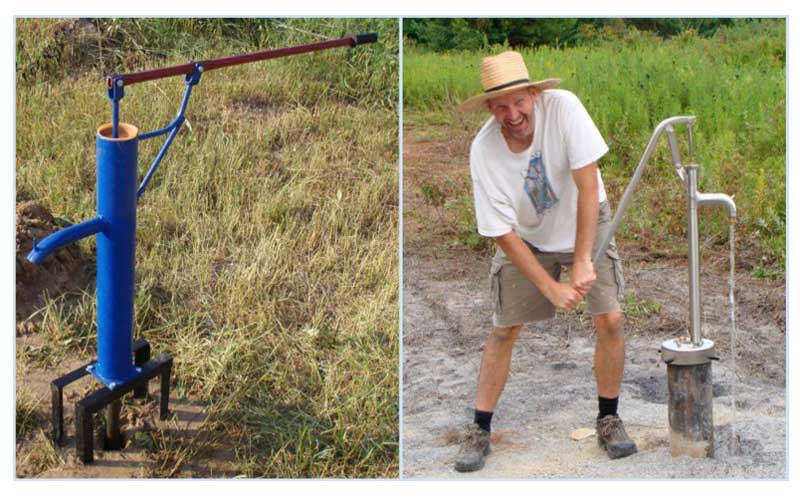
You can make the simplest column yourself by applying the skills of welding and assembling metal or plastic parts.
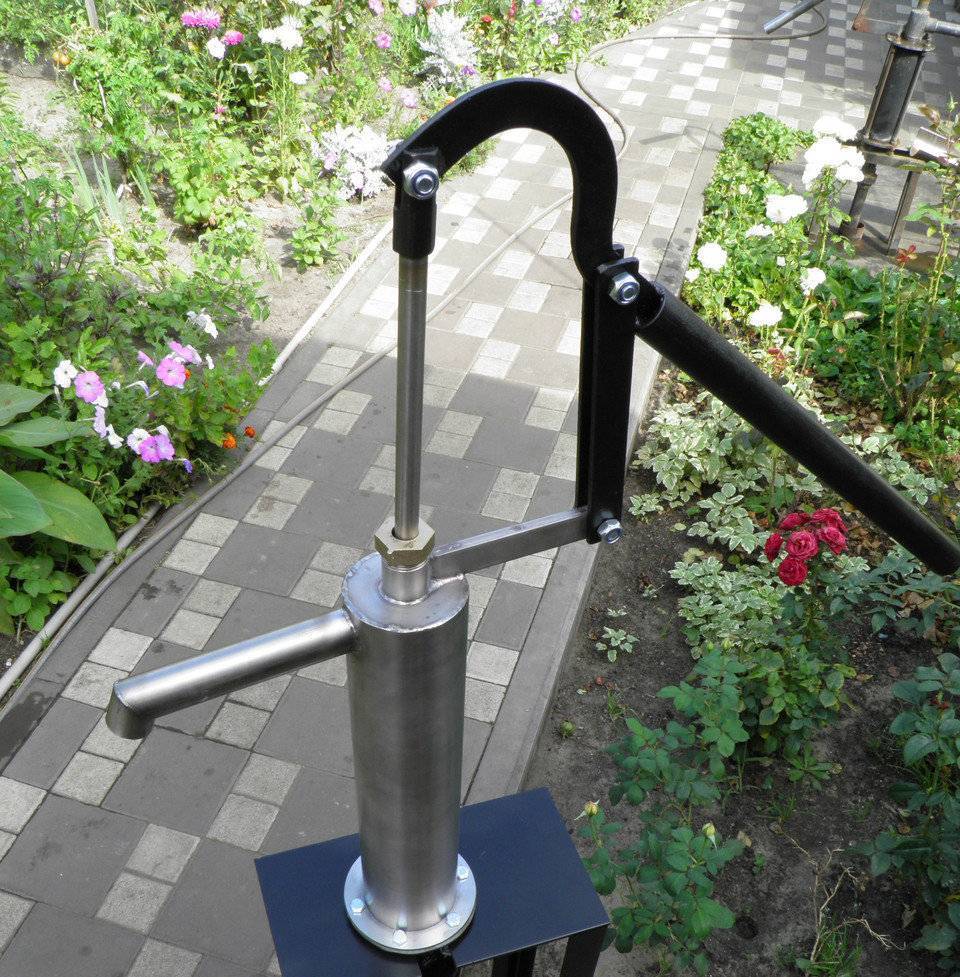
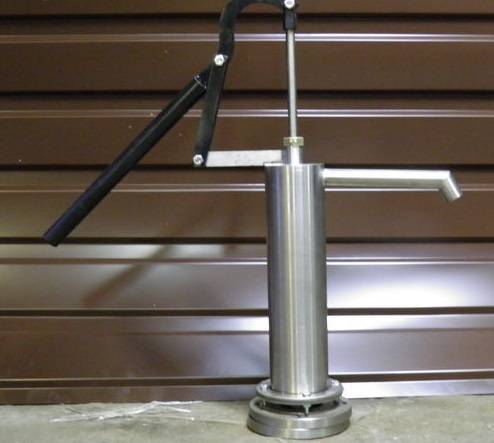
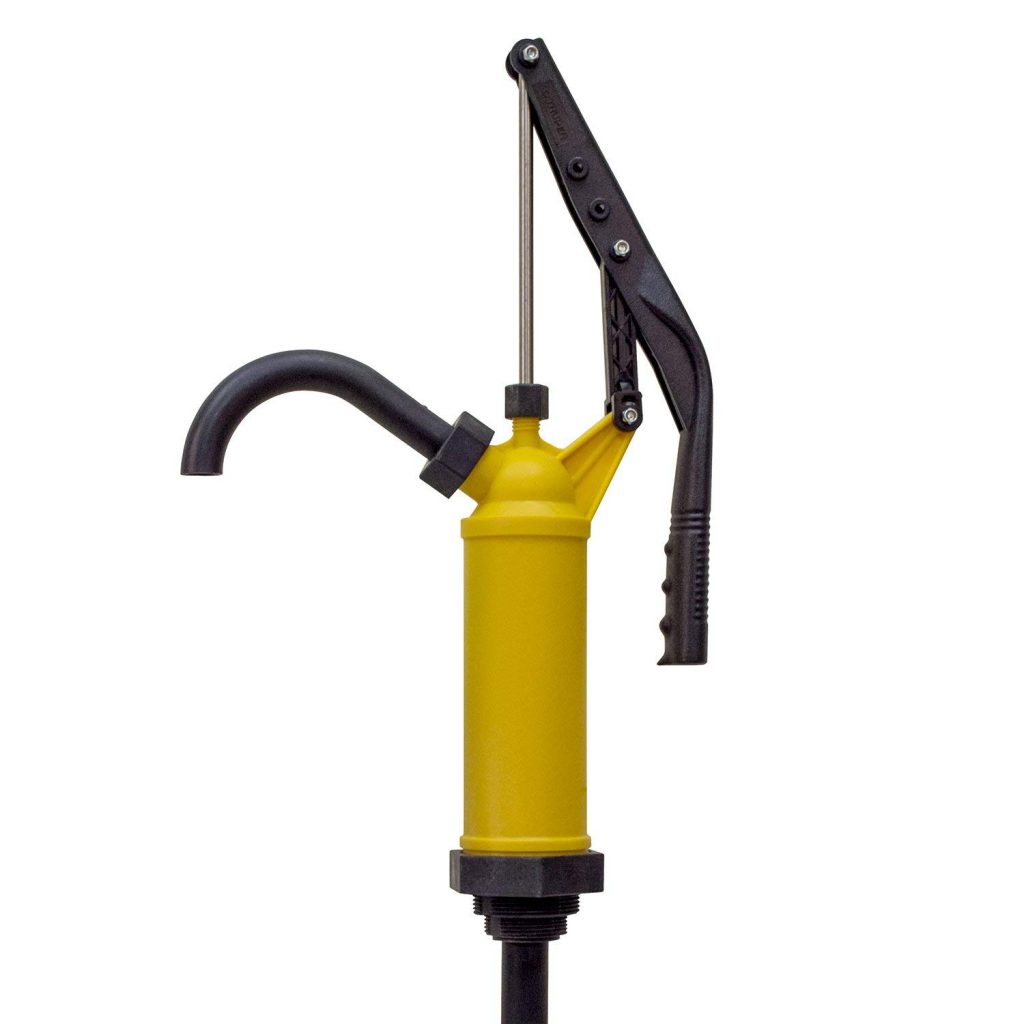
A model for making your own model can be a factory product, assembled from durable cast iron or steel parts, with a comfortable handle for use
What to look for when choosing a pump?
Before the final choice, you should pay attention to several key technical characteristics of pumping equipment. One of these characteristics is performance.
It is measured in l / min or in cubic meters. m / h and means the volume of pumped water per minute or hour. For a family of 2-3 people, this figure should reach 45 l / min or 2.5 cubic meters. m/h minimum
One of these characteristics is performance. It is measured in l / min or in cubic meters. m / h and means the volume of pumped water per minute or hour. For a family of 2-3 people, this figure should reach 45 l / min or 2.5 cubic meters. m/h minimum.
This indicator can be calculated independently. Sum the water consumption of all points of intake (consumers) in the house and multiply by a factor of 0.6. The number 0.6 means that no more than 60% of all water intake points are used at the same time.


The coefficients for calculating the performance are presented in l / min and in cubic meters. m/hour. For calculations, select only the values of those fence points that are in the house
The maximum pressure is an important indicator. It depends on the pressure force whether the pump will pump enough water for your needs. To calculate it, it is necessary to sum up the dynamic and static water levels. Then add 10% of the amount received.
There are more complex formulas that take into account the distance to the house and the number of water intake points. If you do not want to carry out complex calculations yourself, then seek the advice of a specialist.
The statistical water level or depth to the mirror is the distance between the actual water level and the top of the well. If this distance does not exceed 10 meters, then a surface pump should be selected.
Some experts believe that this figure should be in the range of 2-7 meters. In other cases, focus on the submersible. Note that the latter is more durable, almost silent, and also powerful.
Surface pumps are quite heavy and noisy. They are ideal if a well or well up to 10 meters deep
Also important is the height of the water column or the dynamic level - this is the distance from the water's edge to the bottom of the well. It is necessary to take into account the depth of the well or well, since this parameter is also prescribed in the passport for the pump. These indicators should ideally match
It is worth taking into account the height of the pump itself in relation to the well
The power of the equipment is fixed in W and means how much electricity the pump will “pull”. Do not purchase a pump with a power reserve, otherwise you will simply overpay for electricity.
Pay attention to the body material, it must have corrosion protection. Details are also important.
Check, at least visually, the quality of the assembly, the wheels. It is best if they are "floating" and made of durable technical plastic.
The key working tool of a centrifugal hydraulic pump is the wheel. Most often it is made of an alloy of non-ferrous metals, stainless steel or cast iron.
We have provided more tips on choosing the right pump model for the well in the following article.
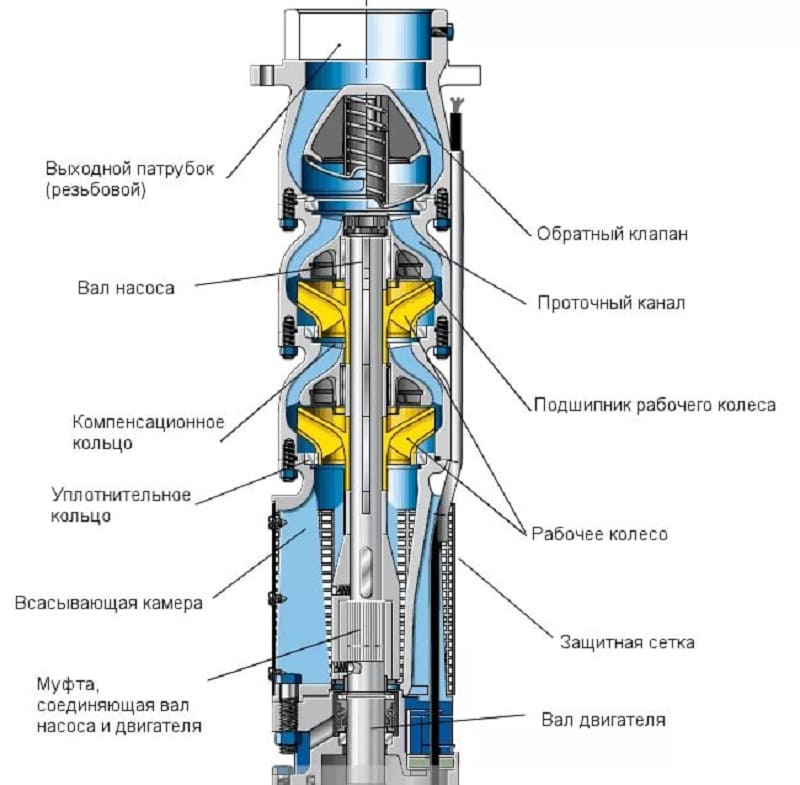
In the case of a centrifugal pump there is an impeller with blades that pump water. In powerful devices, there may be several such wheels.
The wheel is powered by an electric motor. Centrifugal force displaces water to the edge of the wheel from its center.Thus, a zone of high pressure is formed and the liquid flows through the pipes to the points of water intake (kitchen, bath, watering). Then the pressure is reduced and the process starts again.
Some centrifugal pumps have a hydraulic accumulator. This is a tank with a membrane element. It is used to maintain the necessary pressure in the pipes through which water, with the help of a pump, flows from the well and into the house. It is indispensable for wells and wells with a depth of 10 to 30 meters.
Another important element is the check valve. The principle of its operation is that the water does not have the opportunity to move in the opposite direction, that is, from the house through pipes to the well.
It is also worth considering what kind of water the pump can pump. If the water in the well is mixed with lime, clay or sand, then this must be announced before purchase. Otherwise, the pump will clog and fail prematurely.
Before buying, find out the location of service centers and the availability of parts (at least key ones) for the selected pump model.
If you want to install the pump yourself, then be sure to carefully read the instructions for the device and consult with specialists.
Given these characteristics, you can easily select the right pump model.
Types of pumps used
It is impossible to answer unambiguously the question of which pump is better for a well. It all depends on financial capabilities, operating conditions. In practice, various devices are used to lift water.




Hand pumps
Hand pumps
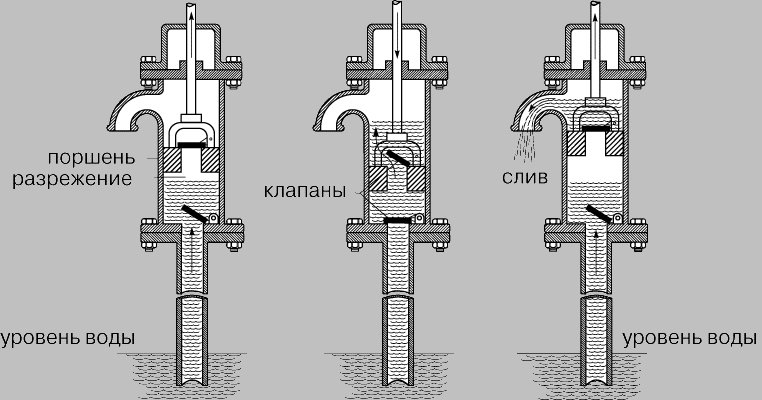
If the depth of the well does not exceed 7-8 meters, and the required flow rate is small, it is quite possible to install a manual pumping unit for a summer residence.Such a pump does not require power supply, it has a simple design, it is quite enough to provide a small suburban area. Such pumps are also used when installed at a water intake point in the yard.
Of course, it will not work to automate such an installation, but it is quite possible to use it as a backup pump.
Surface pumping stations
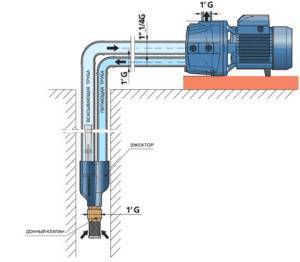
Surface pumping stations
Used to supply water from shallow depths. When deciding which pump is needed for a well, this option should be considered only if it is possible to install it in a specially equipped caisson or if the well is located in the basement. In these cases, a pumping station with a small receiver (storage tank) will be very effective.
The maximum depth of the well is 7-8 meters, when installing the unit, special attention must be paid to the reliability of the check valve. The pressure line of such a pump must be constantly filled with water; dry start-up adversely affects the durability of the electric motor. The choice of models of surface pumps is quite wide, you can choose a model with a capacity of up to 100 liters per minute, with an appropriate drive
The choice of models of surface pumps is quite wide, you can choose a model with a capacity of up to 100 liters per minute, with an appropriate drive.
Vibratory pumps
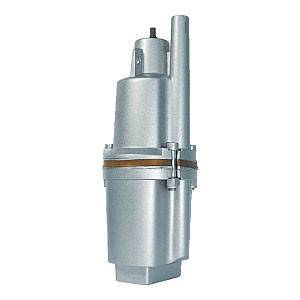
Vibratory pumps
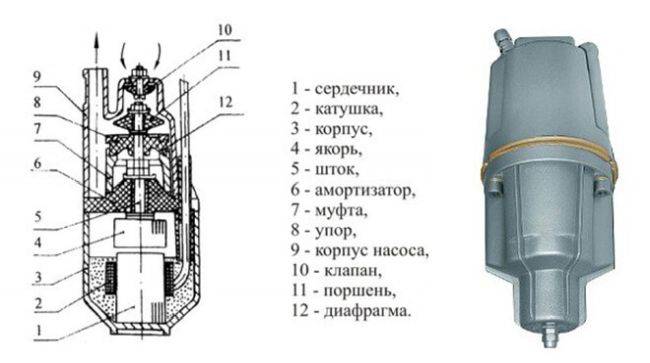
These pumps have a simple design and can be used to supply water from a depth of no more than 40-50 meters (the most powerful and expensive models). The bulk of pumps of this type belongs to the budget class, and has the appropriate characteristics.For installation in wells, it is recommended to use only modern models of devices, this is due to the fact that some modifications can have a significant destructive effect on the casing.
The principle of operation is based on the high-frequency oscillatory movement of the membrane, which provides the required performance. It is worth mentioning that the working life of such pumping units is insignificant, the main area of application is wells and wells for sand
It is worth paying attention to these devices when deciding which pump to pump the well, while preference should be given to installations with a lower water intake
Submersible centrifugal pumps
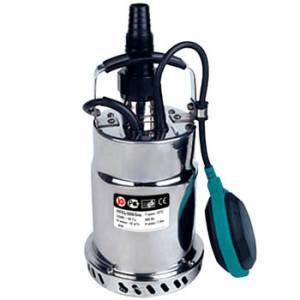
Submersible centrifugal pumps
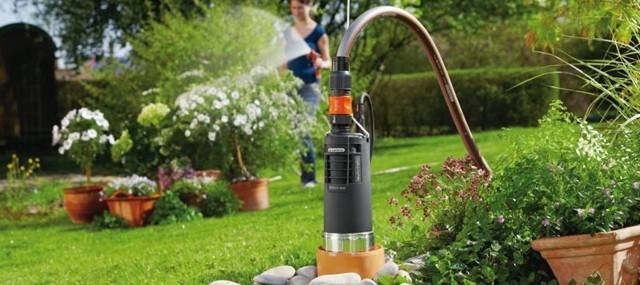
Devices of this type are considered the most effective equipment for installation in wells. They can be used for installation even in artesian wells of considerable depth.
The existing range of units allows you to choose a submersible pump for a well with various parameters, the advantages of devices of this type include the following characteristics:
- High performance with small overall dimensions, there is a choice for wells of all main sections.
- Excellent pressure characteristics.
- Significant working resource and reliability.
- Does not have a destructive effect on the casing pipe.
Pumps of this type can be equipped with various automation systems, they do not require expensive maintenance.
Any mistake in the selection of equipment will lead to a significant decrease in its performance. According to many experts, it is centrifugal pumps that are ideal for well construction.


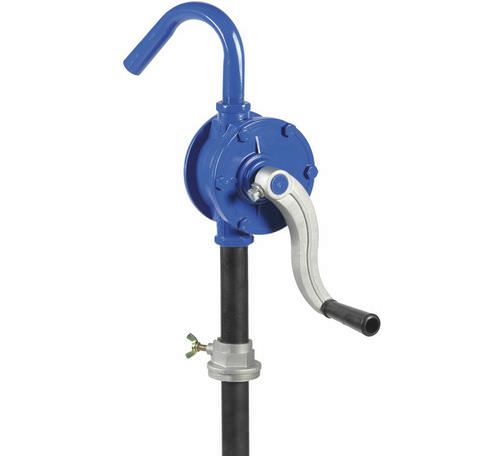


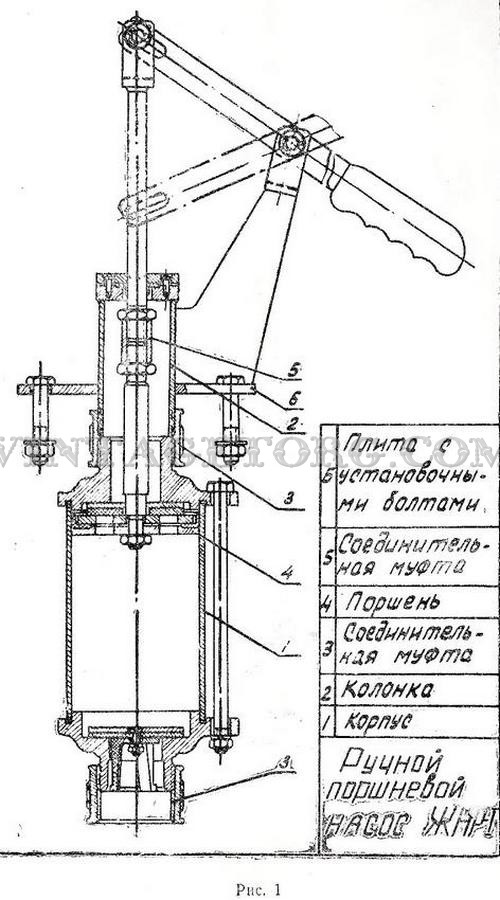

Types of hand pumps and approximate prices of some models
Hand pumps are indispensable in the event of a temporary or permanent lack of electricity on the site. It is advisable to use them with a limited budget. If the level of the water mirror is not deep, and financial possibilities do not allow installing a high-quality expensive device, various models of hand pumps will allow pumping liquid in different ways, depending on the depth and degree of contamination of the liquid.
According to their design, hand pumps for wells are divided into the following types:
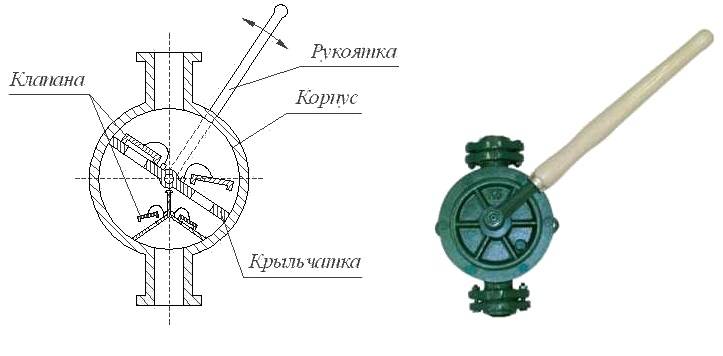
- vaned;
- piston;
- rod;
- membrane.
It is necessary to dwell in more detail on the design features, purpose and price of each type of device.
winged
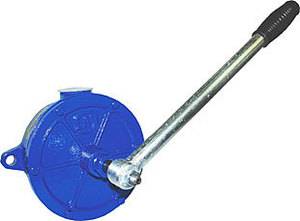
They are designed for pumping and transporting clean water without paraffin, alcohol, liquid fuels, edible oils, any abrasive particles. Imported pumps K1 and K2 (price respectively: 4000 rubles and 5500 rubles). The Russian pump RK-2 is similar to the German model K2. But the imported version has a lower price than the domestic pump. At the same time, the valves and wings are brass, there is no rust inside. In general, K2 is more preferable for use, does not require a bulkhead, and is absolutely ready for operation.
Rod
They are capable of pumping liquid from a depth of up to 30 meters. The design principle of these mechanisms is the same as that of piston pumps. But the end of the piston has a very elongated shape, in fact, is a rod (hence the name). Elements of products are made of various metals, providing the necessary technical characteristics for devices. Such mechanisms are used in straight vertical mines. The disadvantages include their bulkiness and the possibility of breaking the rods.In addition, the use of these models on sloping terrain is limited.
Piston
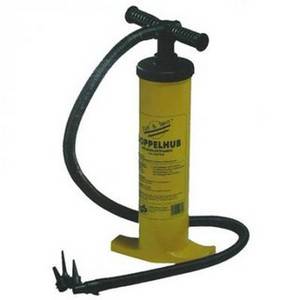
It is impossible to pump water from artesian wells with such devices, but on the other hand, they can successfully replace surface electric pumps for supplying groundwater to the surface. The product has a price - 26400 rubles.
Membrane
They can be used to pump contaminated water. Due to the self-cleaning of the valves, which are rolling balls, there is no jamming of the mechanisms. There are no rubbing parts in the design (unlike vane and piston mechanisms), which wear out quickly in the process of pumping liquids with the inclusion of abrasive particles. The body of such pumps is made of cast iron, and the diaphragm and valves are made of oil and petrol resistant rubber (NBR). In the working position, the pump is located vertically, with the handle down, the upper nozzle is pressure, the lower one is suction. On the sides of the case there are 2 ears for mounting to the wall. The price of the D40 diaphragm pump in Novosibirsk: 7,500 rubles -11,750 rubles. Suction height is not more than 6 meters.
new entries
Chainsaw or electric saw - what to choose for the garden? 4 mistakes when growing tomatoes in pots that almost all housewives makeSecrets of growing seedlings from the Japanese, who are very sensitive to the land
hydraulic
Have small weight (from 4 kg), small overall parameters. Devices are designed to work together with hydraulic equipment with suitable parameters and spring return of the stem. The price is 4400 rubles.



