Cleaning the heating element

To clean the heating element of the water heater from scale, use improvised means: a metal brush, a knife, etc.
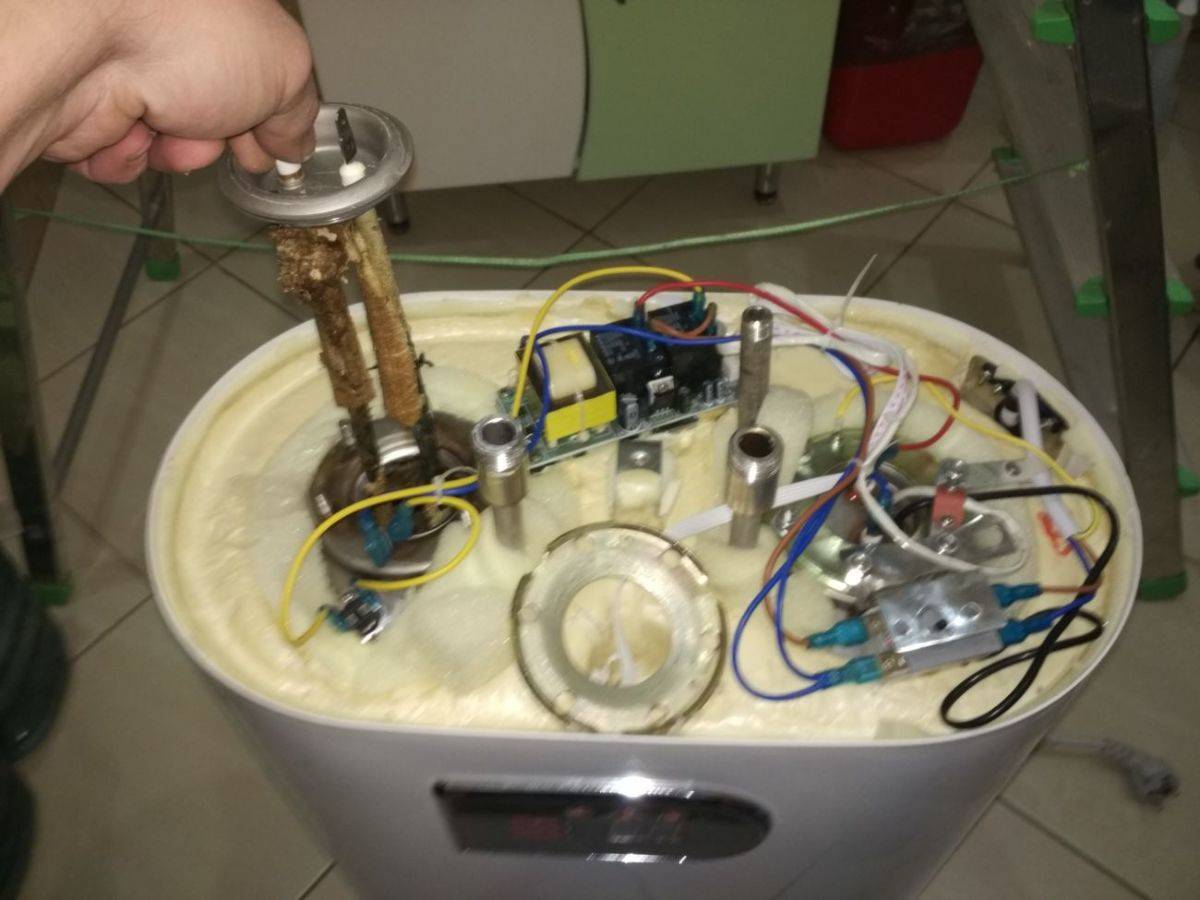
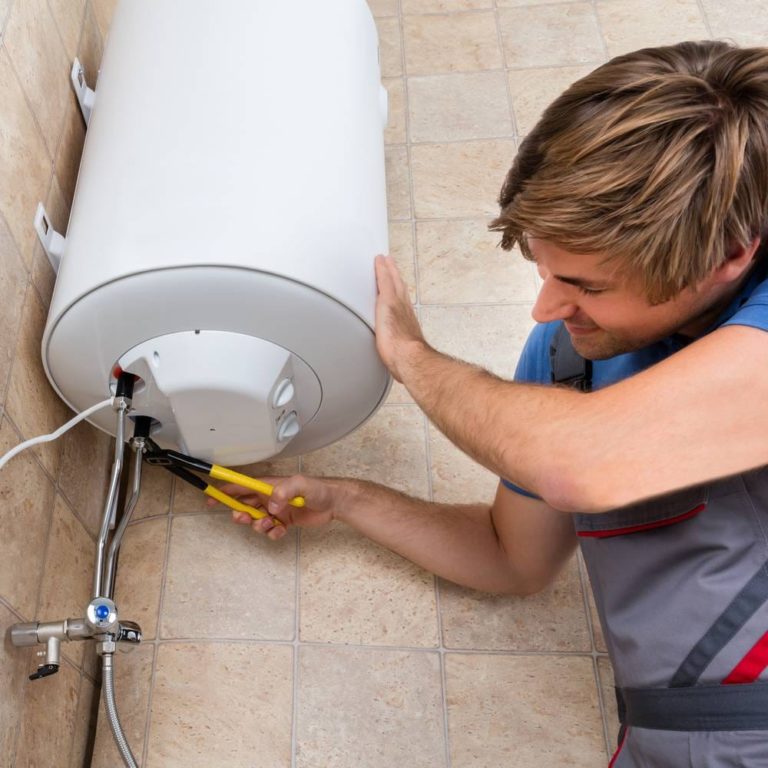
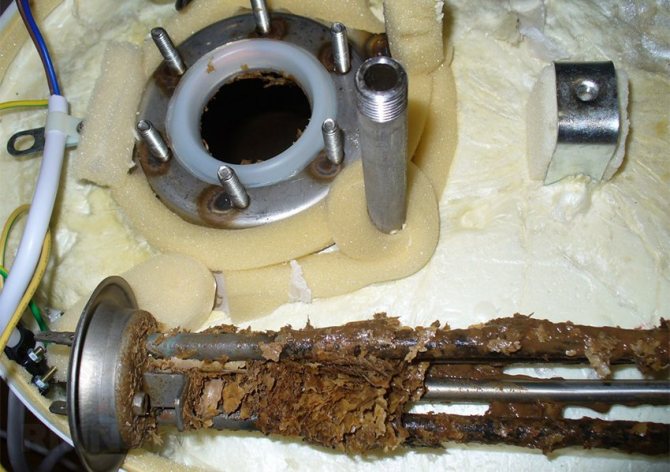
Is your boiler making noise like an electric kettle? Poorly heats water, continuously consuming kilowatts of electricity? The scum covering the surface of the heating element is to blame for everything. It has low thermal conductivity, so the heat from the heater is practically not transferred to the water. As for the noise, it is the sound of water in the thickness of the scale itself. Thus, all the scale from here must be removed. We start repairing the boiler by draining the water, then remove the water heater from the wall, remove the heater and proceed to clean it.
Cleaning the heating element from scale can be done in various ways. The mechanical method involves removing the main layer of scale with your hands while it is still wet. After that, we take sandpaper in our hands and carefully remove the remains of lime deposits from the heating element. As a result, we should get a clean and shiny heating element.
The mechanical method implies a cautious approach - the heating element must be cleaned as carefully as possible so as not to make extra holes in it.It is not necessary to knock the heating element on hard surfaces - this way it can be broken completely.
The chemical method involves the use of special reagents that dissolve or soften scale. They can be purchased at hardware stores, but be sure to read consumer reviews first. As for strong acids, it is better not to use them - they can damage the metal of the heater.
Fault classification
If possible, the breakdowns are divided into critical and non-critical.
It is impossible to fix the following types of faults:
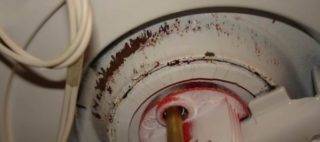
- through corrosion of the metal of the body walls;
- violation of the tightness of the junction of the tank and pipes;
- mechanical damage from impact or fall (hole, crack).
Non-critical failures include:
- burnout of the heating element;
- failure of the thermostat;
- wear of the rubber gasket on the body;
- incorrect operation of the electronic control unit.
Repair of boilers in such cases consists in disassembling, diagnosing and replacing damaged parts.
Boiler malfunctions: the most vulnerable parts of the drive
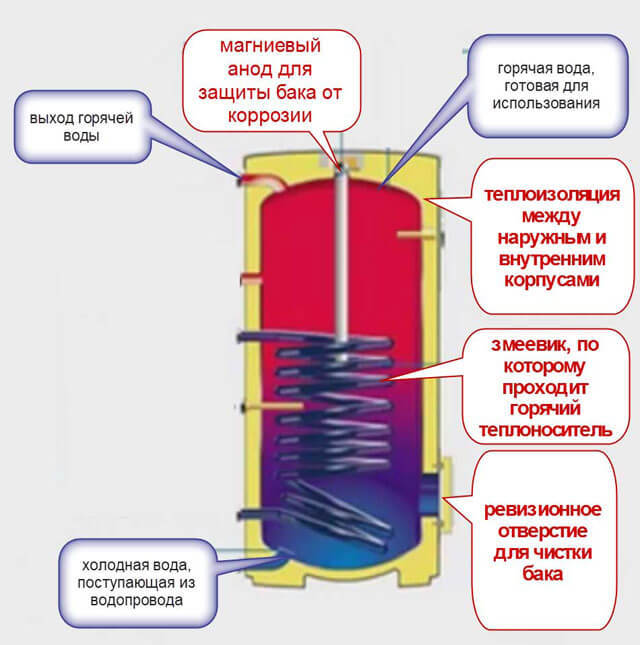
After purchasing the device, before installing it, you should carefully read the technical documentation. It will reflect the design of the device, the location of its individual parts, instructions for proper installation and operation.
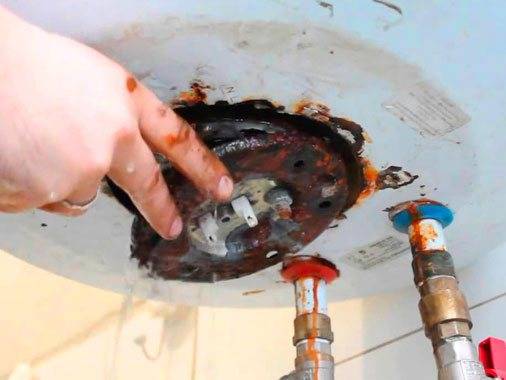
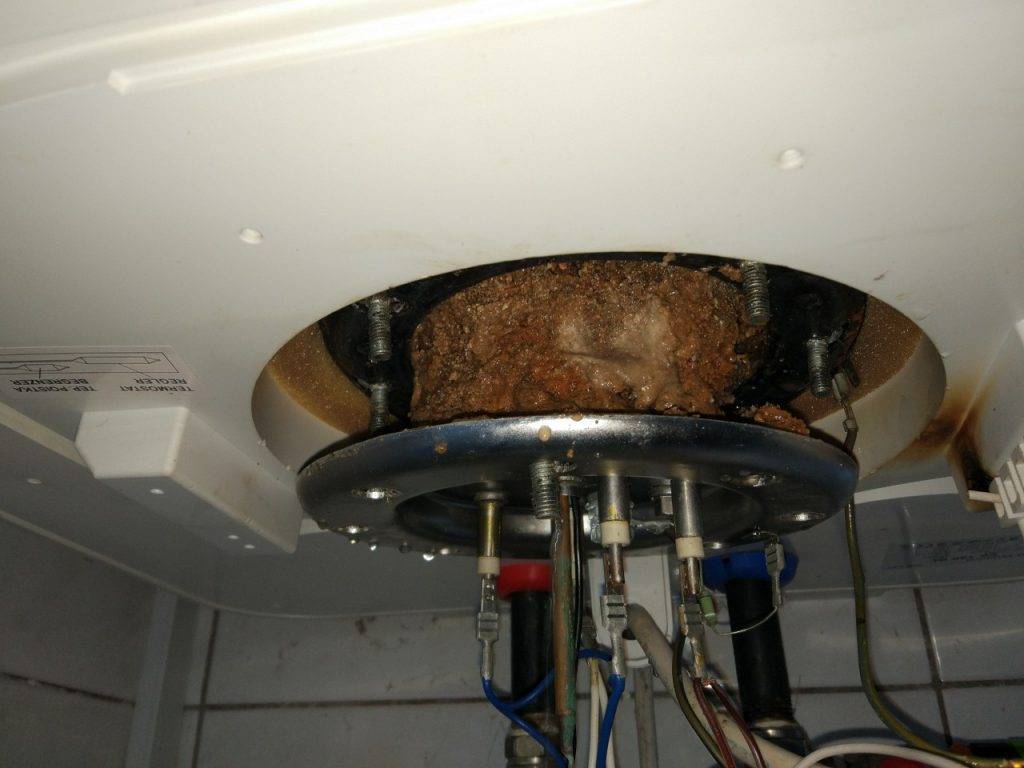
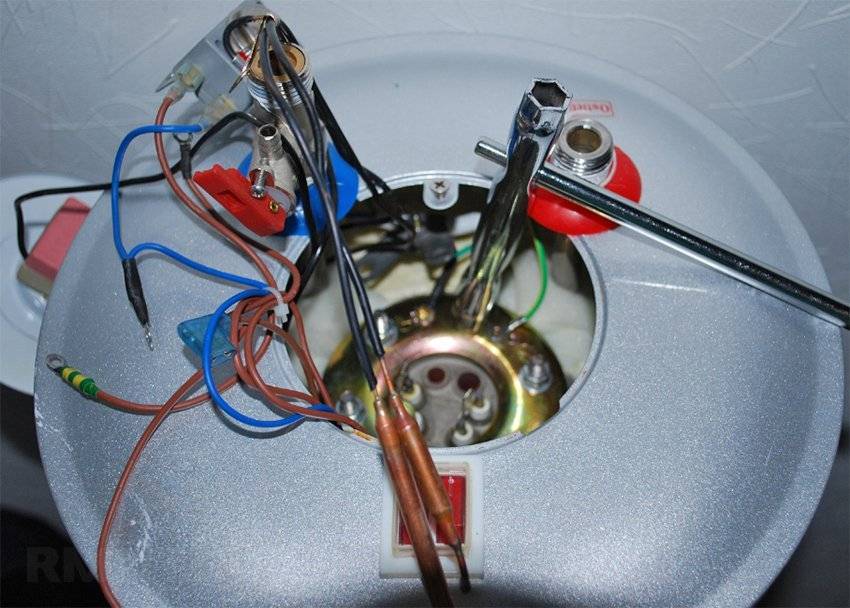
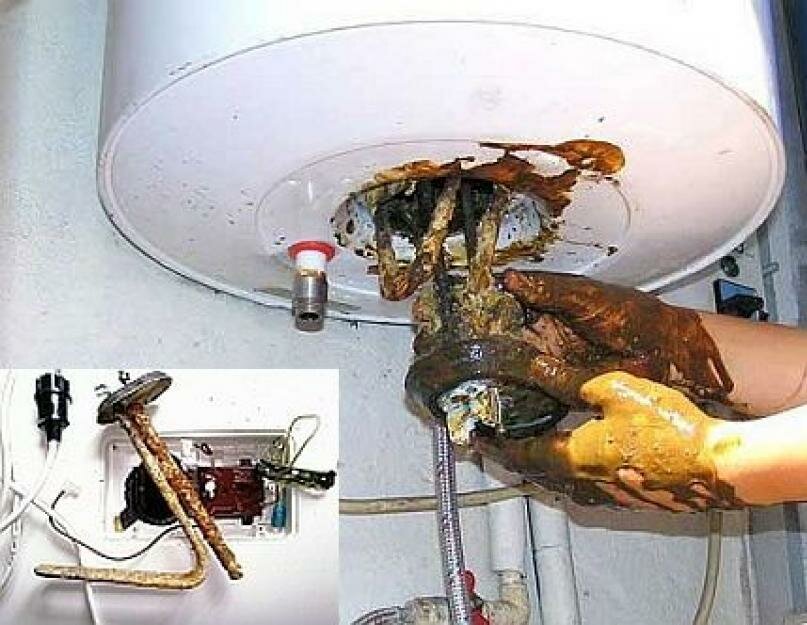
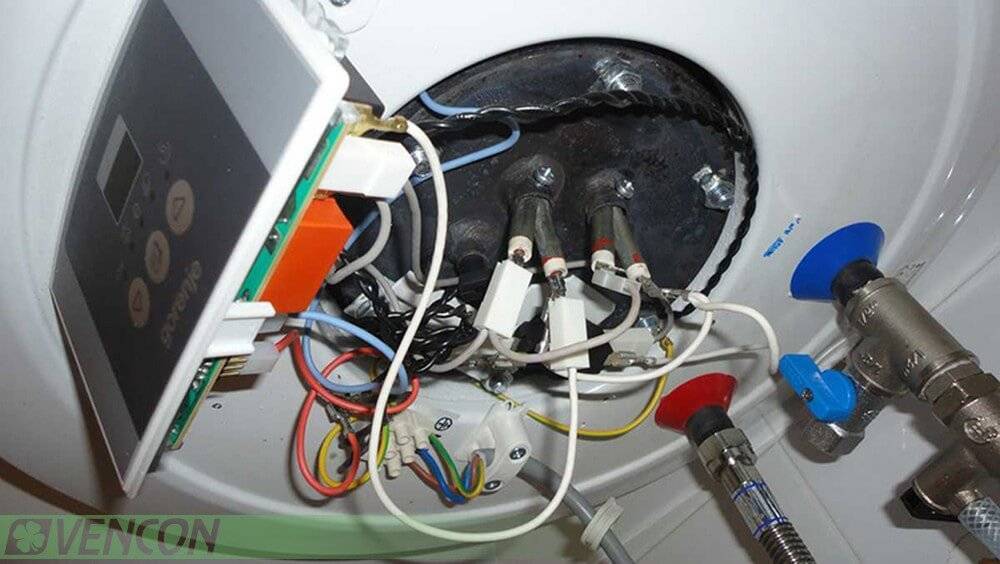
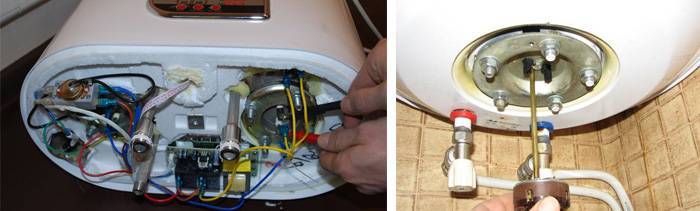
In order to correctly respond to the problem and eliminate it, it is necessary to find the place of the leak and determine the cause.
Possible malfunctions may be related to the following:
- Worn protective gasket in the case
- The malfunction is caused by the operation of the heating element. Its replacement is required.
- The thermostat, temperature sensor is out of order. In high quality boilers, several redundant devices are usually installed that control each other's work.
- The leak occurred in the area of connecting pipes for cold water supply and hot water outlet. Most likely, the problem arose at the installation stage, due to poor sealing of the joints.
Often, a safety valve is connected to the drive system to protect the drive. Thanks to this element, the number of breakdowns of the device is significantly reduced.
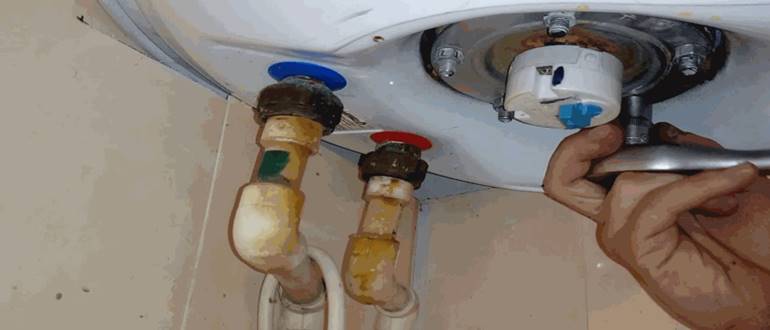
Replacing the heating element
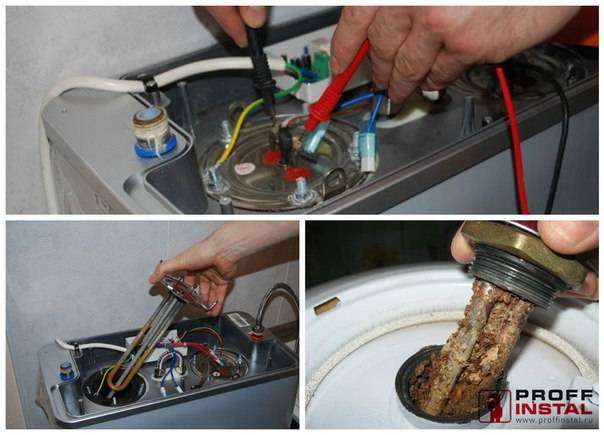
Many factors indicate that it is time to change the heating element. For example, a boiler may stop heating water or start to beat painfully with current. Replacing the heating element begins with draining the water and dismantling the boiler. Next, we open access to the heating element, take a test or a multimeter in our hands, check the resistance of the heater - it should vary from 40 to 70 ohms, depending on its model. If the measuring device shows a break, the heating element can be safely changed.
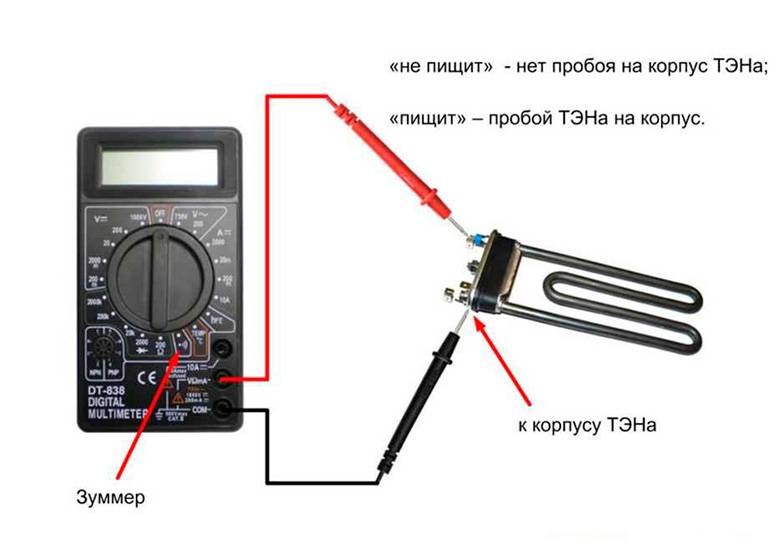
Set the multimeter to sound continuity mode, and place its contacts on the heating element according to the diagram, if there is a squeak, then your heating element must be replaced.
If the boiler fights with current, you need to check the insulation resistance between its contacts and the body (one probe for the body, the second probe for one of the contacts). In megger mode, the meter should show an infinitely high resistance. If it is tens or hundreds of ohms, then this indicates a breakdown. Since heating elements are not repairable, they just need to be changed. To do this, we buy a similar model and install it in the boiler.
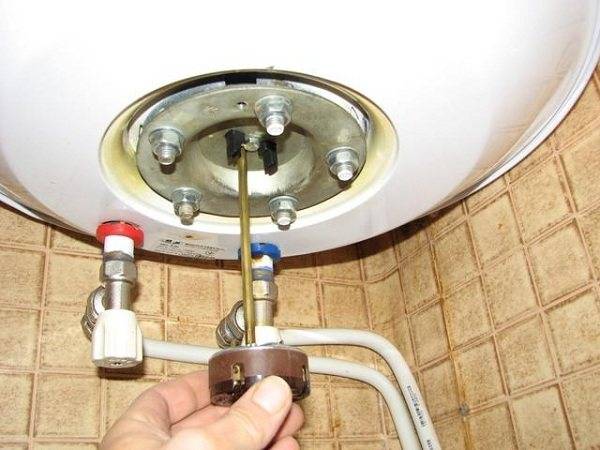
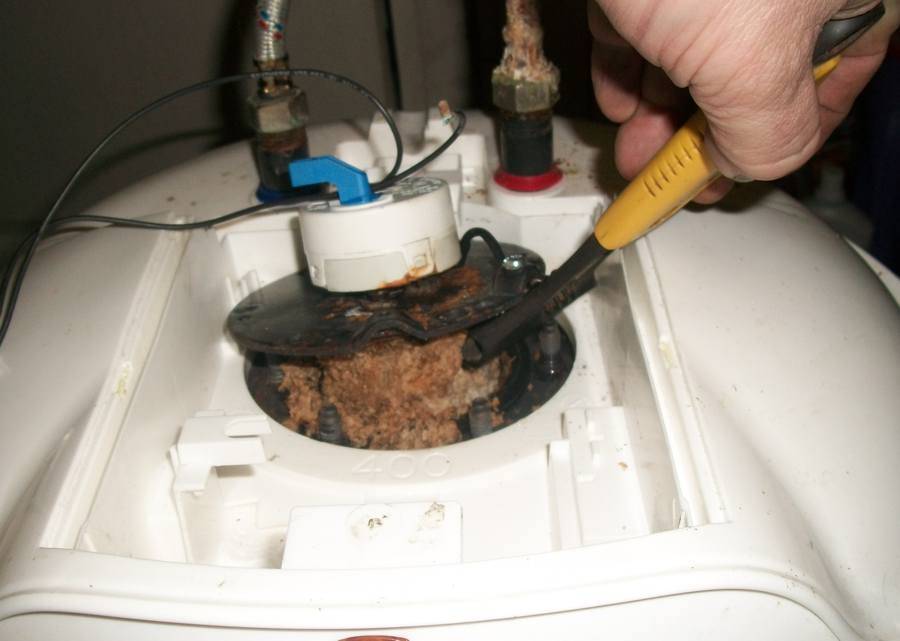
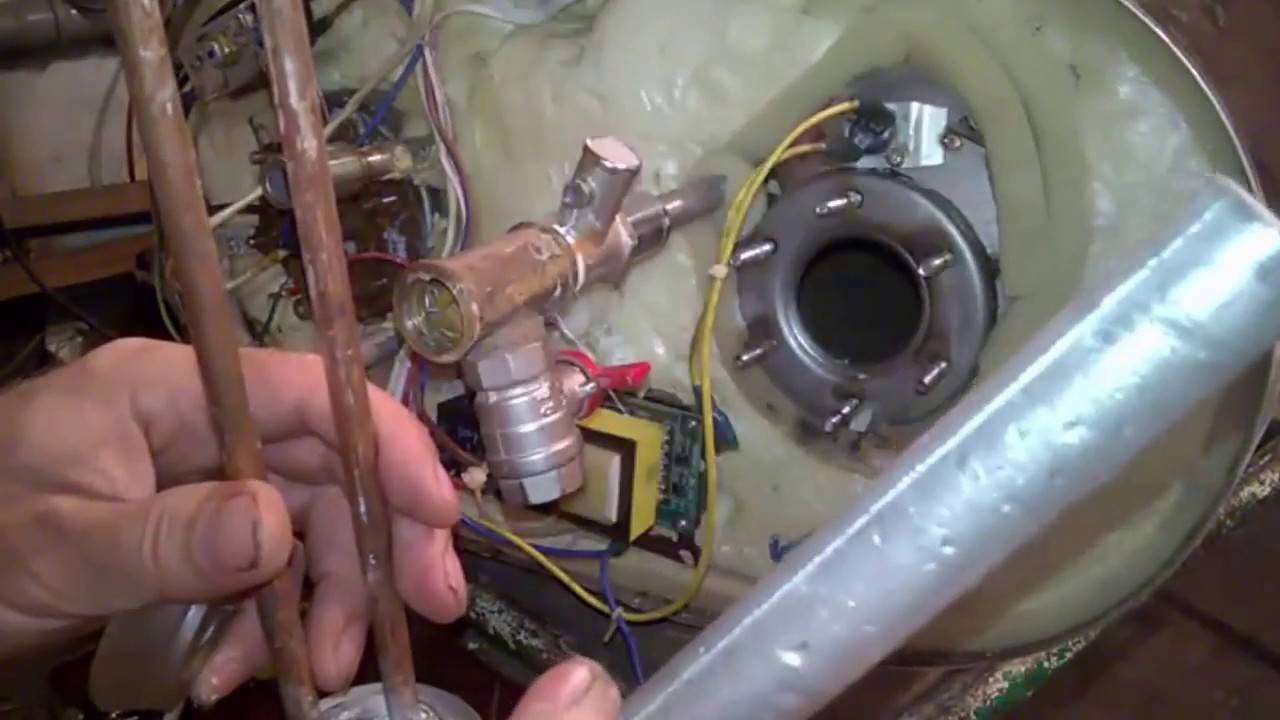
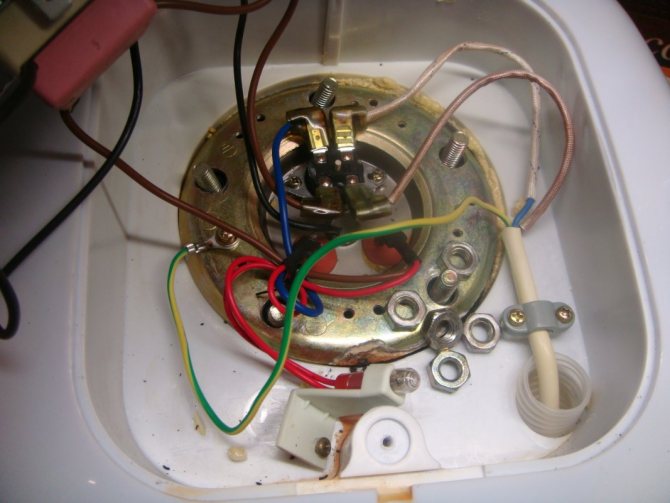
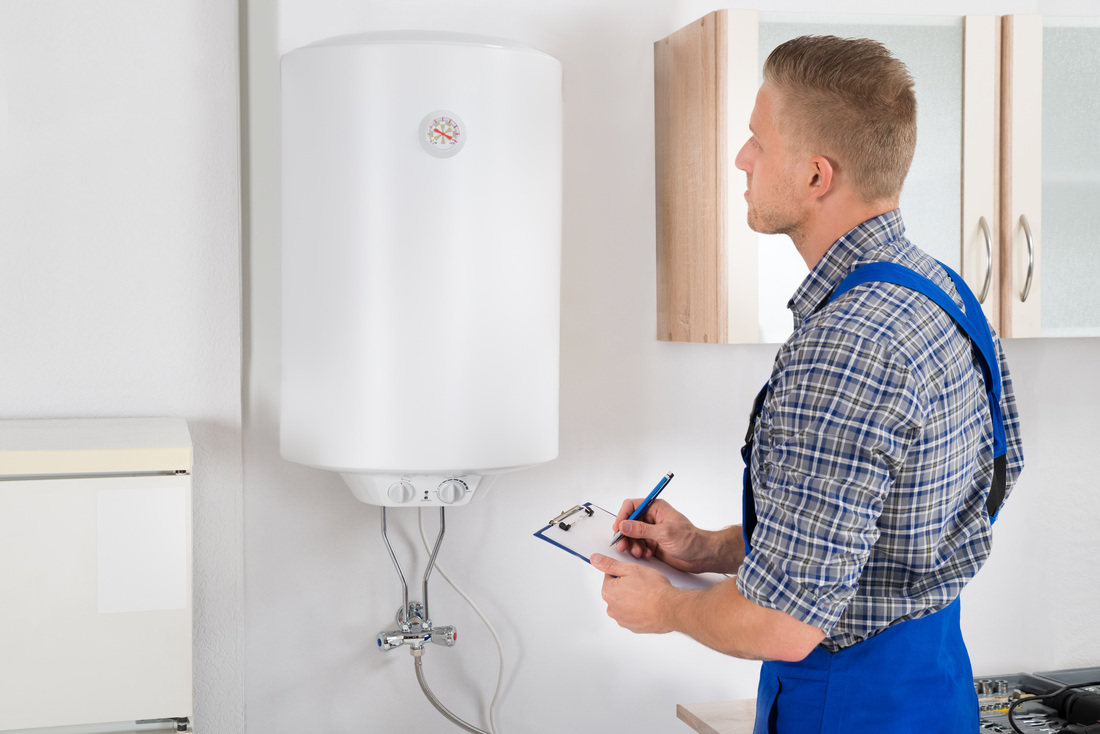
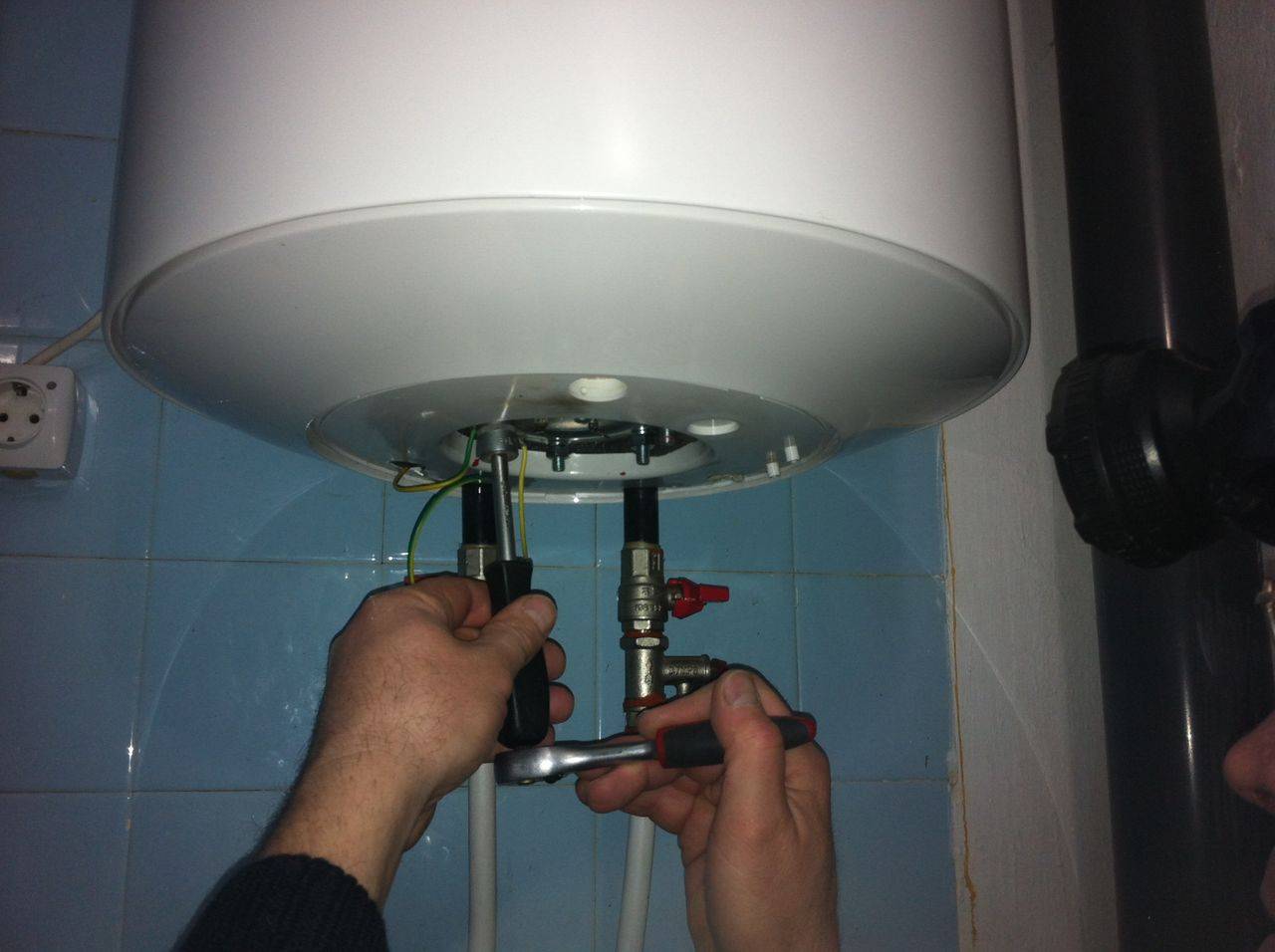
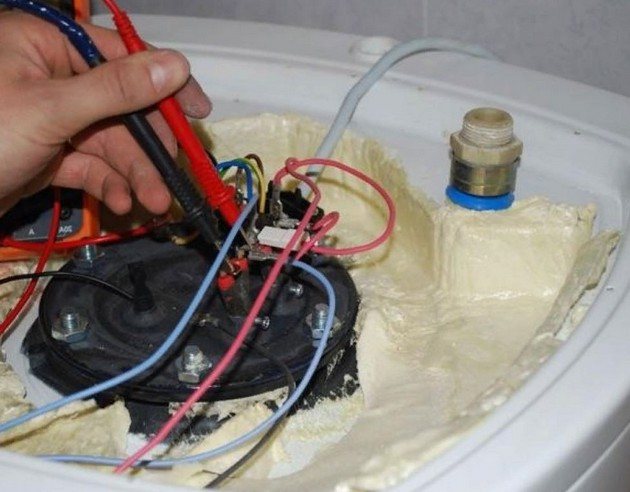
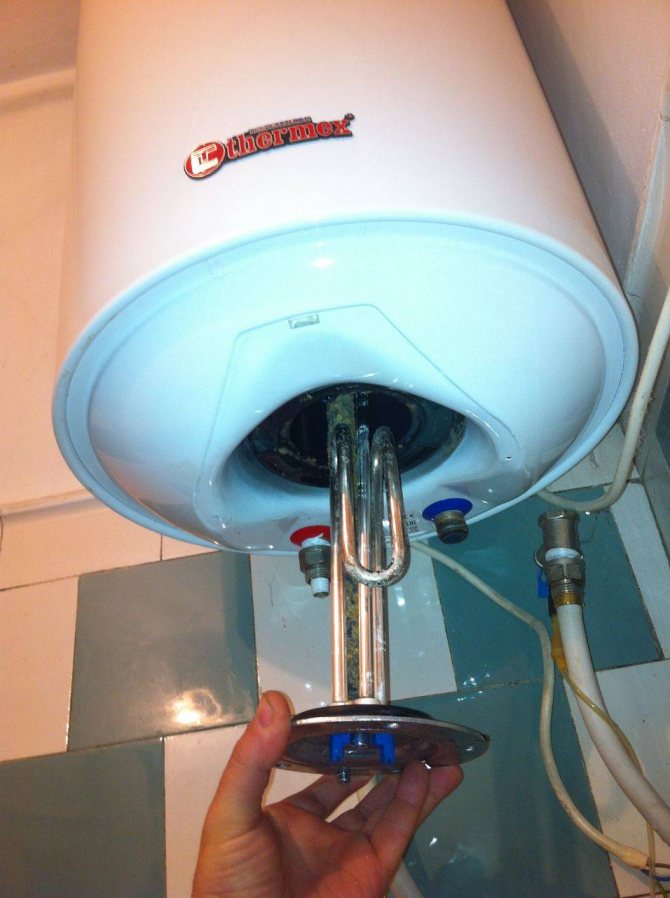
If the problem is related to the lack of heating or wild overheating, then the problem may lie in the thermostat. It needs to be checked with a multimeter and see how it reacts to heating. If a mechanical thermostat with a bimetallic plate is installed in the boiler, press the control button and heat the thermostat with a soldering iron or a lighter. If the button rebounds after heating, then the thermostat is working. At the same time, you need to check the integrity of its contacts using a conventional multimeter.
Dismantling the water heater
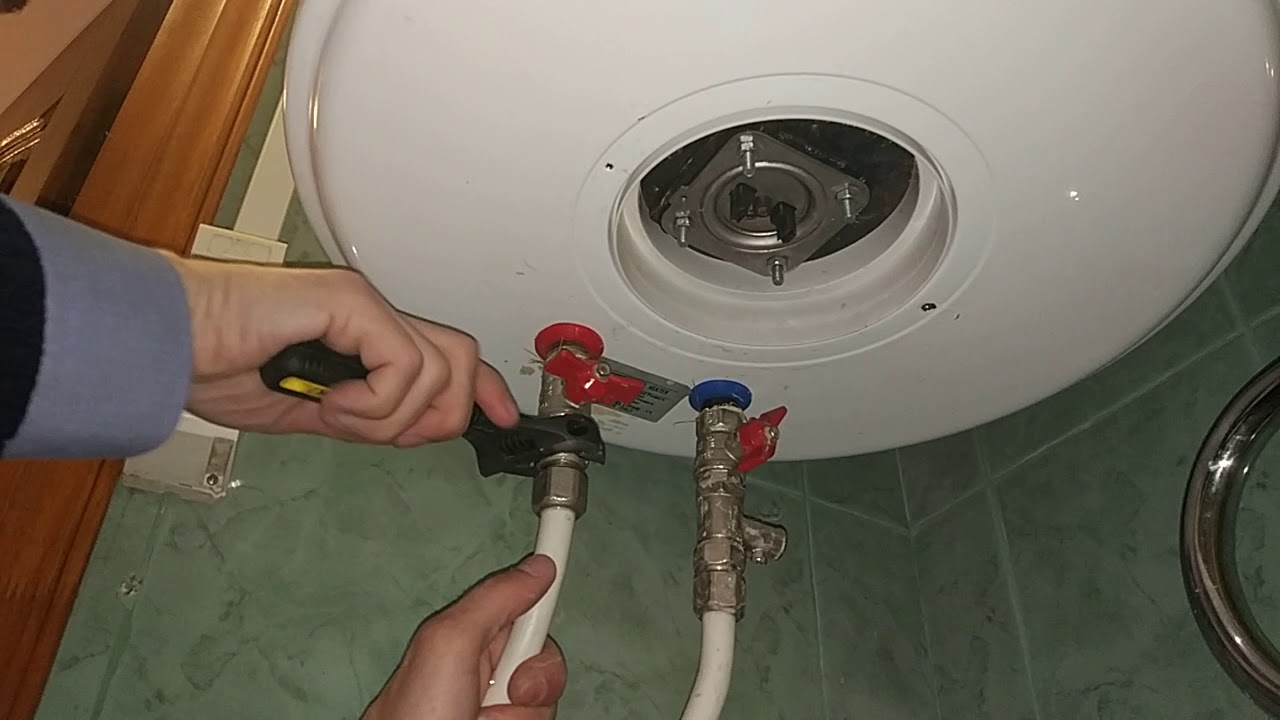
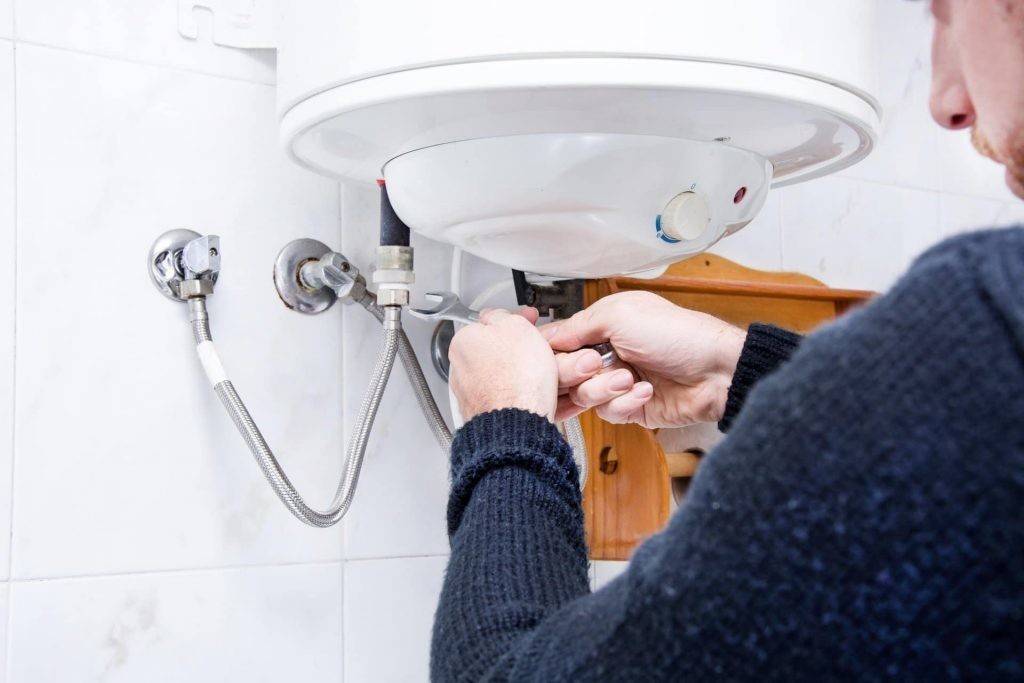
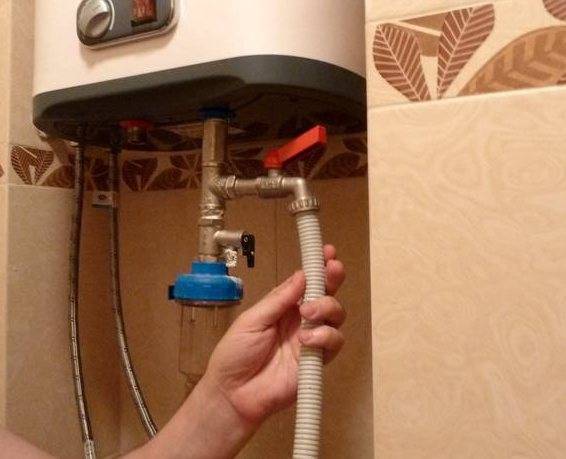
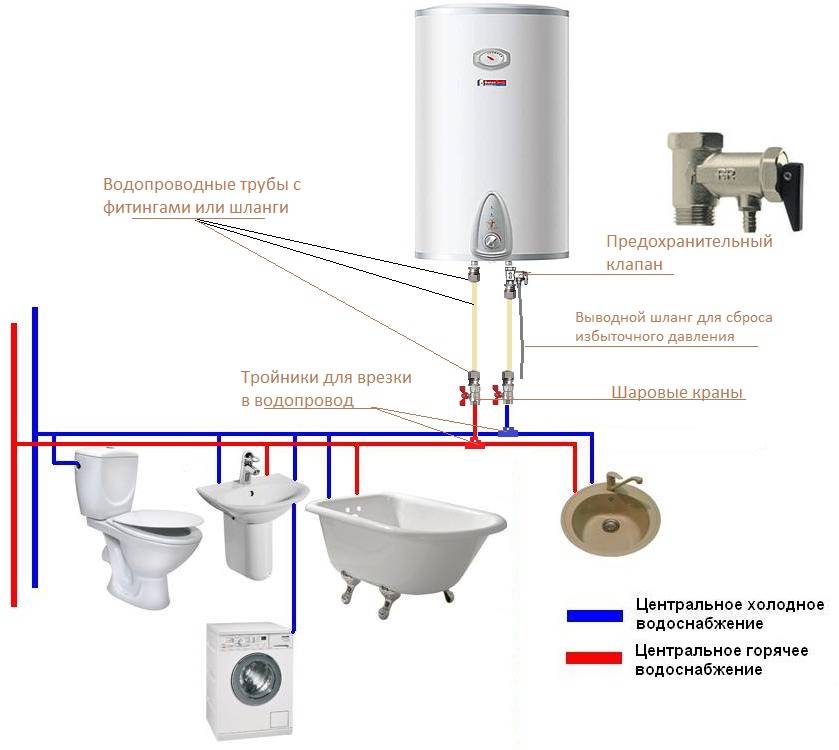
It is recommended to follow one simple rule: if the boiler has the slightest signs of a malfunction, it is better to perform a complete disassembly and a comprehensive audit. To do this, you need to drain the water through the cold water supply pipe by opening the “hot” tap to suck air. With the correct hydraulic piping of the boiler, this possibility is always provided. Unpack the connection fittings and loosen the anchor nuts to lift the tank up and off the wall.

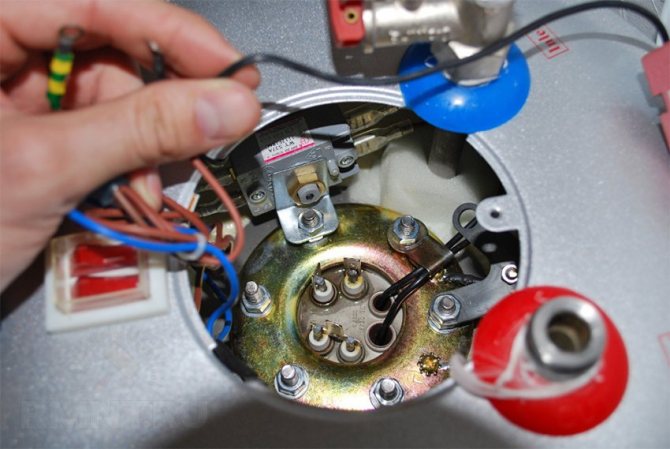
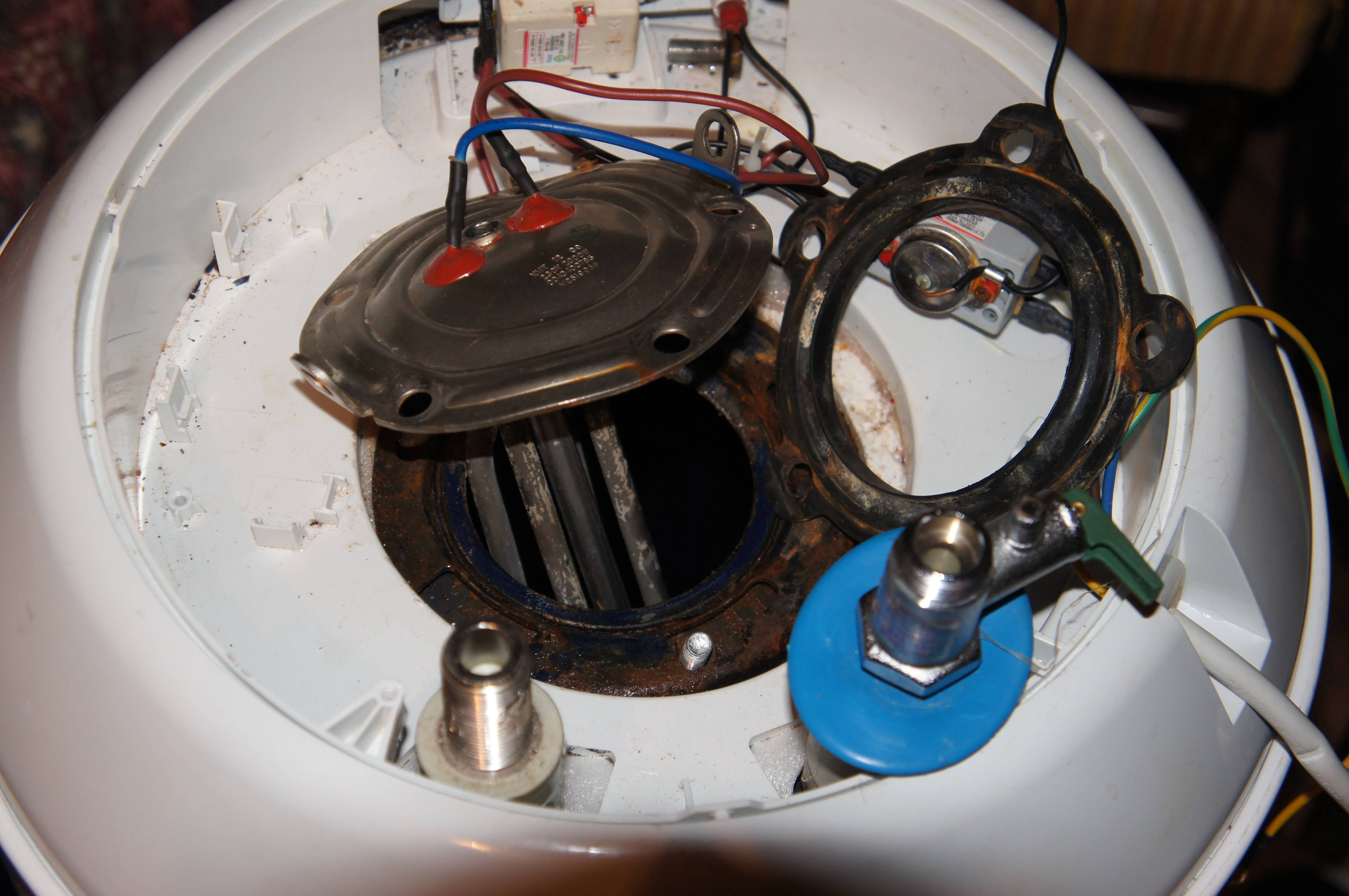
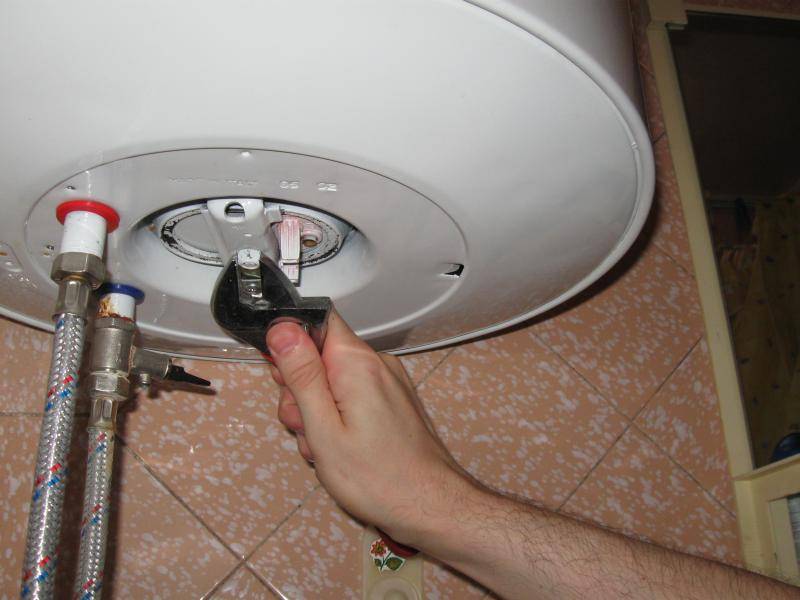
Water heaters of a classical form are serviced from the bottom party. First you need to remove the protective cover of the control unit by unscrewing a few screws and unfastening the latches. The task is quite subtle: not only can some fastening screws be hidden under stickers, a regulator knob or a nameplate, but fragile clips are located far from obvious places.

Having separated the tank and the electrical part, we twist the nuts securing the technical flange. After removing them, you need to tighten up and tear off the flange from the neck, it can boil over thoroughly. At the same time, the tank must be in an upside down position so that the remaining water does not leak onto the floor.

When the flange, together with the devices hung on it, is removed, you can clearly assess the quality of tap water. Scrape off the main part of the dirt from the functional elements directly into the tank and set it aside for the time being, we will return to the heating element and the anode a little later.
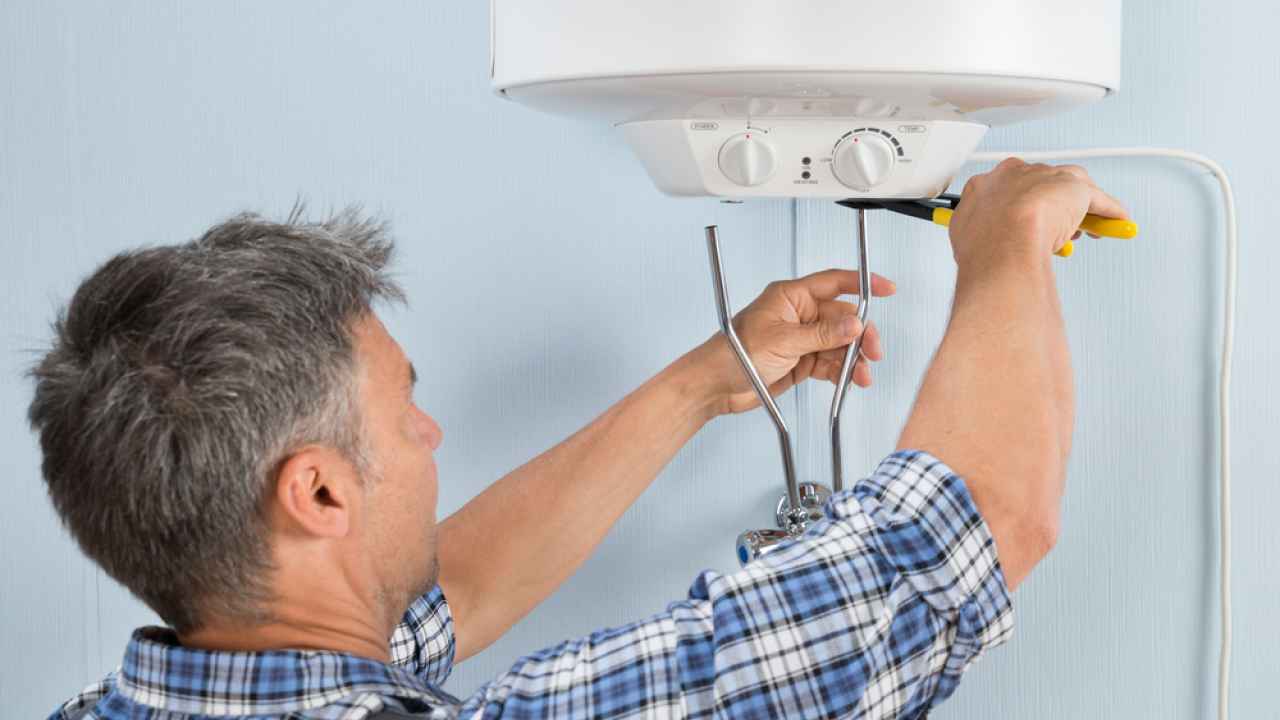
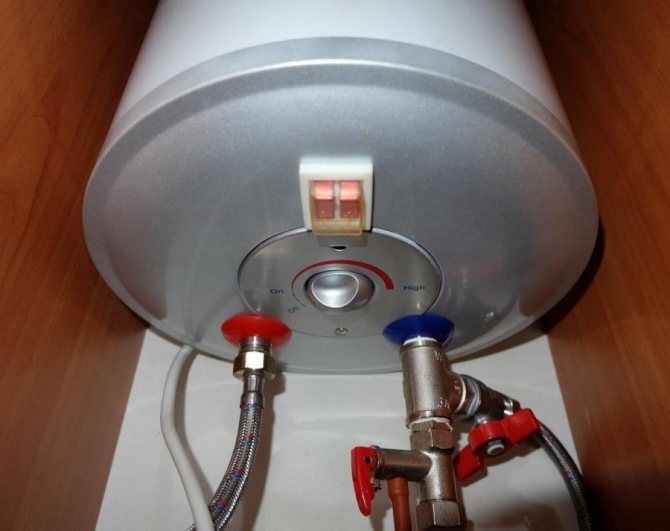
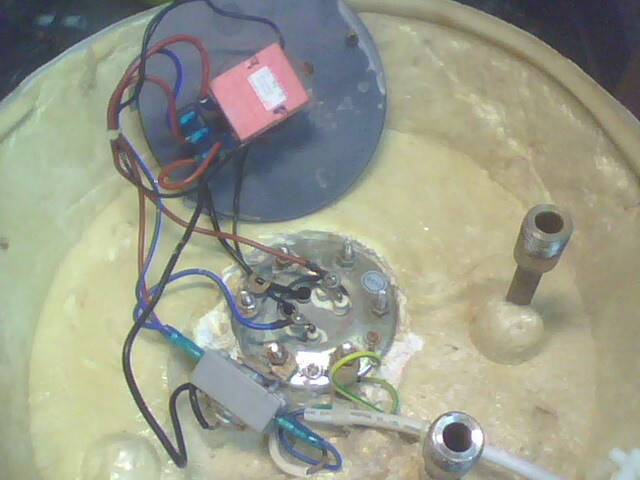
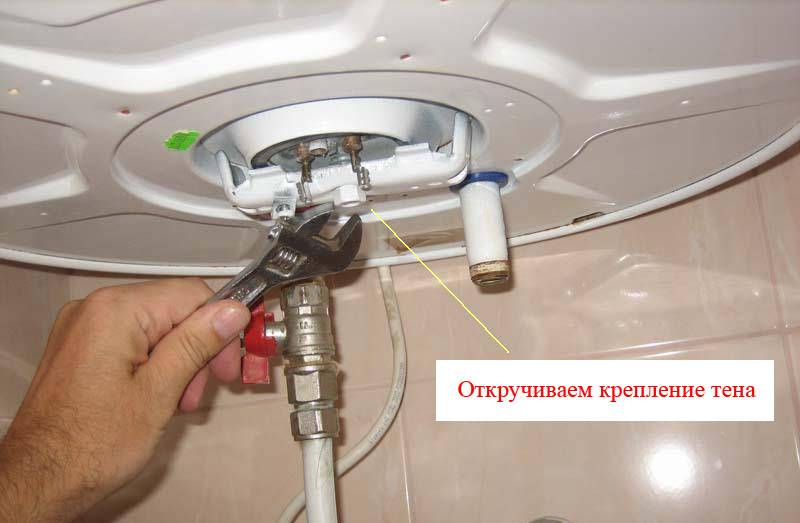
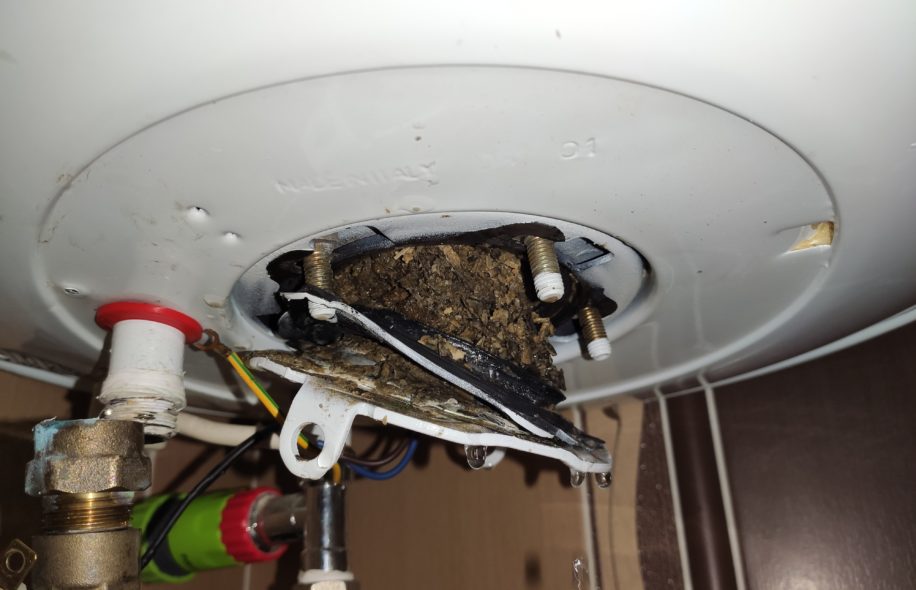
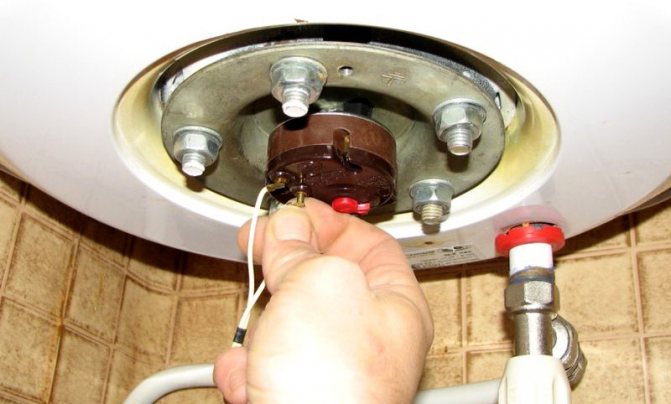
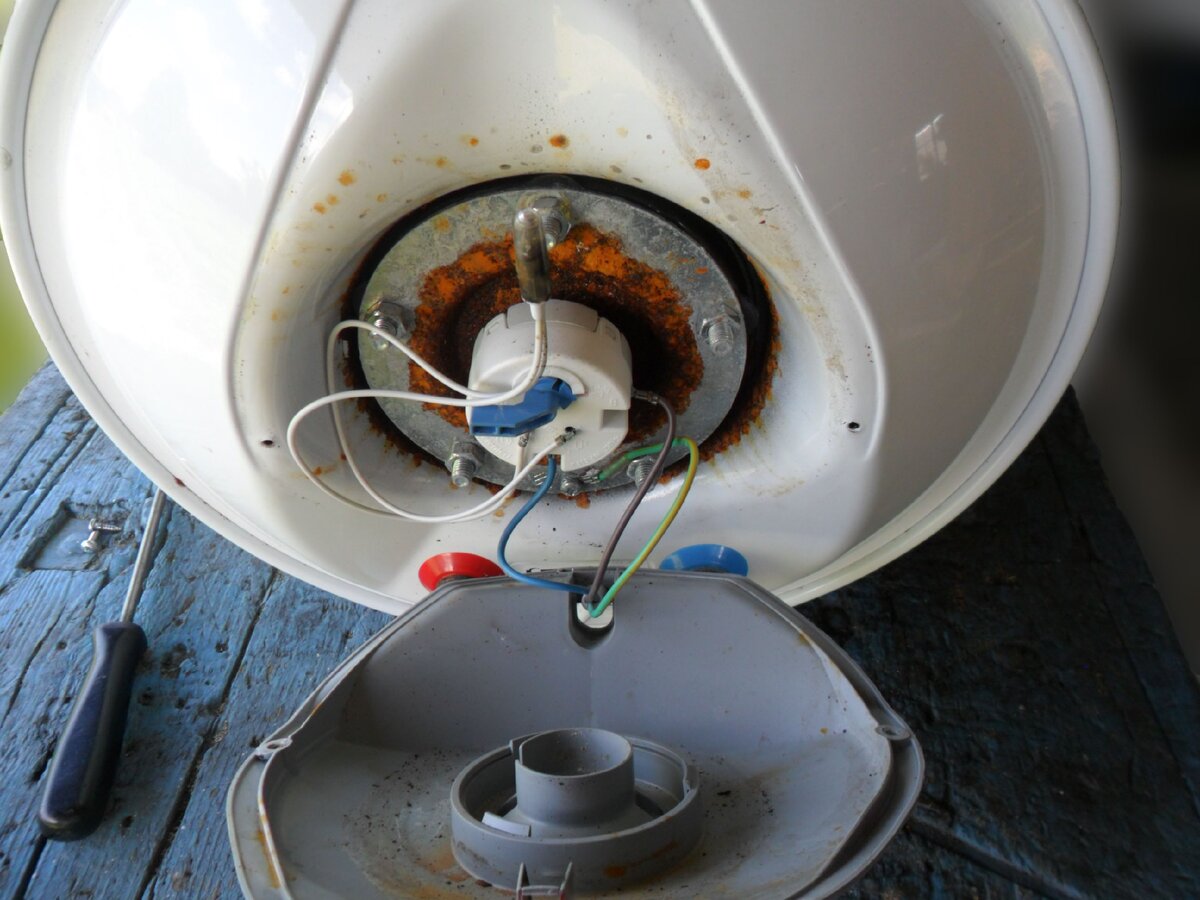

In stylish and modern tanks, the lower part of the body performs the role of a protective casing. Indication and control panels, a built-in thermometer are auxiliary equipment that is not directly related to the operation; in case of failure, they change modularly.
General installation rules
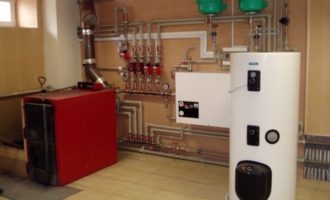
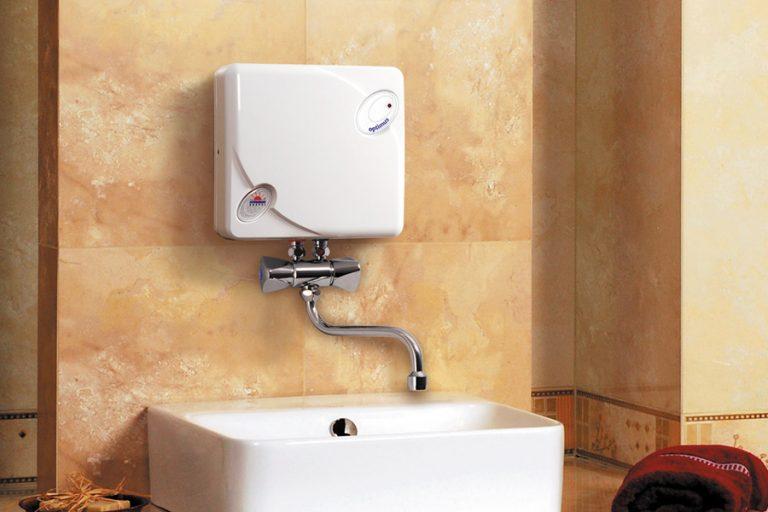
If the issue with the choice of a water heater has already been resolved, and a wall-mounted version of the electric unit has been purchased, you can proceed directly to its installation. But before that, some nuances should be taken into account.
- The first step is to determine the installation location of the device. The location of the unit should be such that it is easy to carry out preventive and, if necessary, repair work.
- Before installing a water heater, it is necessary to assess the condition of the water pipes. If the pipes are old, it is recommended to replace them completely or at least the tie-in section.
- In the vast majority of cases, the device is mounted on the wall (an exception may be the installation of an indirect heating boiler, which can be both floor and wall), so the wall must withstand a load 2 times greater than the tank capacity. For example, with a tank volume of 100 liters, the wall must withstand a mass of 200 kg. Of course, drywall is not suitable for these purposes.
- In the case of installing a water heater in a country house on a wooden wall, make sure that it is strong.
- In addition, since the unit uses powerful heating elements, before hanging the water heater, it must be taken into account that the wiring must withstand a certain load. Therefore, it is recommended to conduct a separate line from the meter with the installation of a circuit breaker in front of the device. The cross section of the wire must be 2.5 mm.
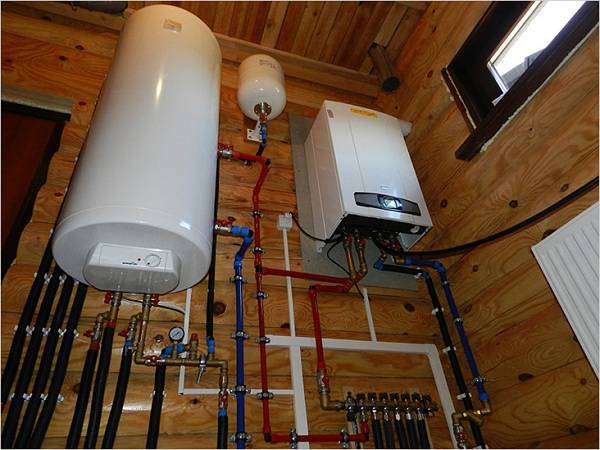
Water heater on the reinforced wall of a country house