- Pump installation
- Where does the water supply come from?
- Well
- 1. Well needle or "Abyssinian well"
- pros
- Minuses
- 2. Filter well
- pros
- Minuses
- pros
- Minuses
- Types of wells, their pros and cons
- Abyssinian well
- filter well
- Artesian source
- Drainage in a private house
- Which well is best?
- Well or well: pros and cons
- What is the difference between a well and a well?
- Advantages of the well
- Advantages and disadvantages of wells
- Types of wells with their pros and cons
- Sandy (filter)
- Artesian
- Well - the best inexpensive option for water supply
Pump installation
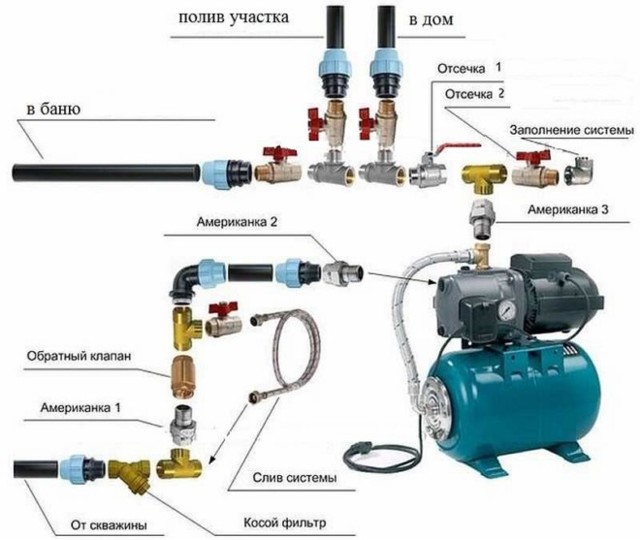
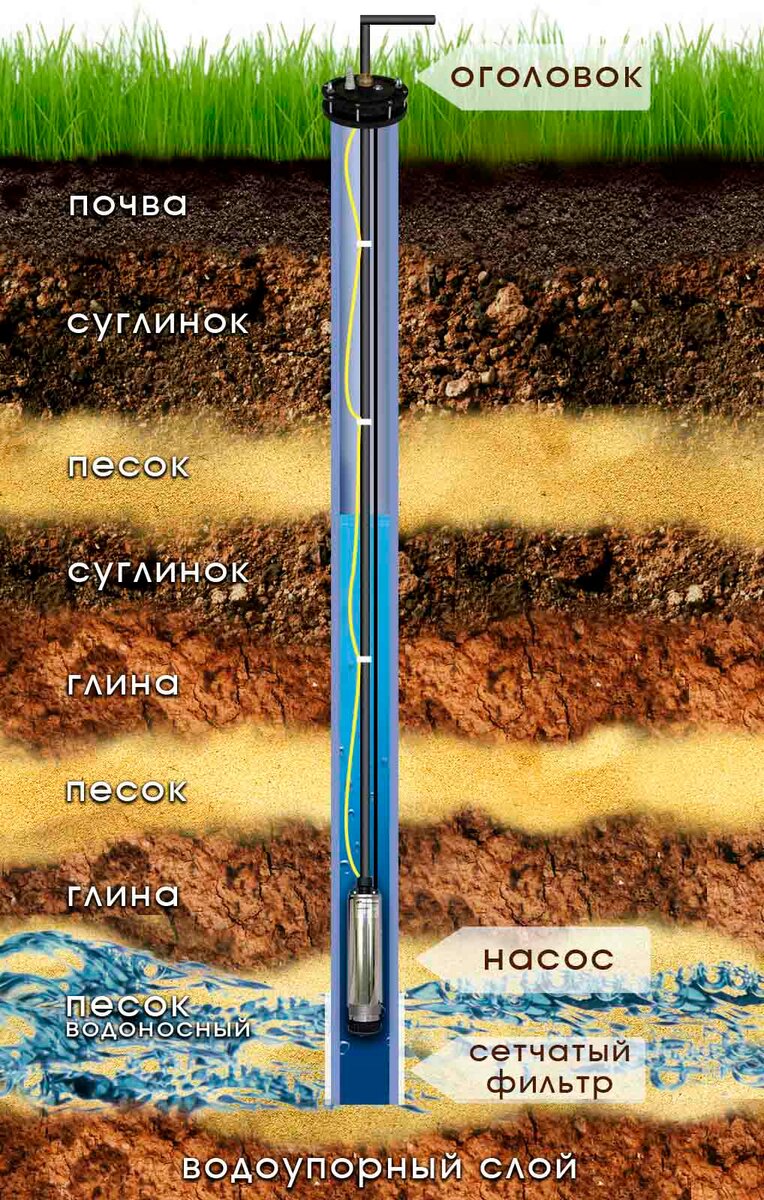
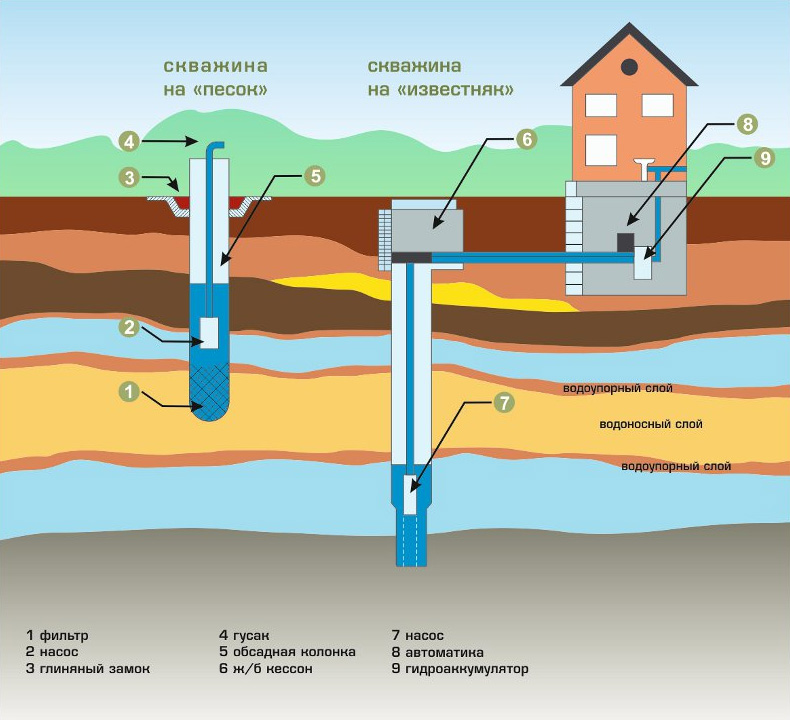
Before conducting water to the house from the well, the pump is equipped with a check valve. Such a scheme is designed so that the water does not drain back into the source, and to prevent hydraulic shocks, which increase many times at great depths with pressure drops. The valve is connected to the line through a compression coupling - an American.
The pump is driven into the well using a cable or synthetic cord, which is attached to the lugs on the body. An electrical cable is attached to the cord to connect the pump. The pump should not reach the bottom, otherwise it will pull the sludge up. Before, how to get a pump from the well (for repair, prevention, or for winter storage), it is disconnected from the mains.

Water is supplied to the house through pipes laid in the ground at a depth below the freezing point, the entire route is insulated. The easiest way to make insulation is with a PPU shell, it is cheaper to fill the track with a layer of expanded clay, which is waterproofed from above. Water must be brought into the house through the foundation, it is better to turn the pipe into a vertical position smoothly, not at an angle of 90 0 - this approach will reduce the possibility of water hammer.
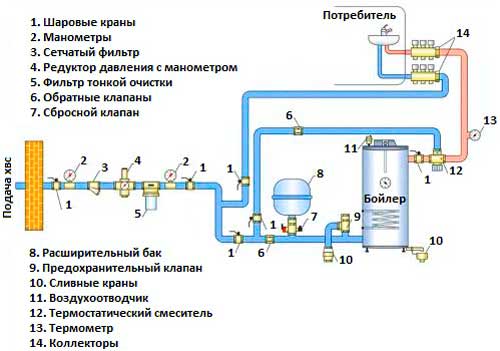
The pipe from the well is connected to the storage tank, from which water is diluted to the points of water intake and supplied to other equipment - a boiler, a boiler, a washing machine, and so on. Before the start of operation of home water supply, it is checked for operability and tightness.
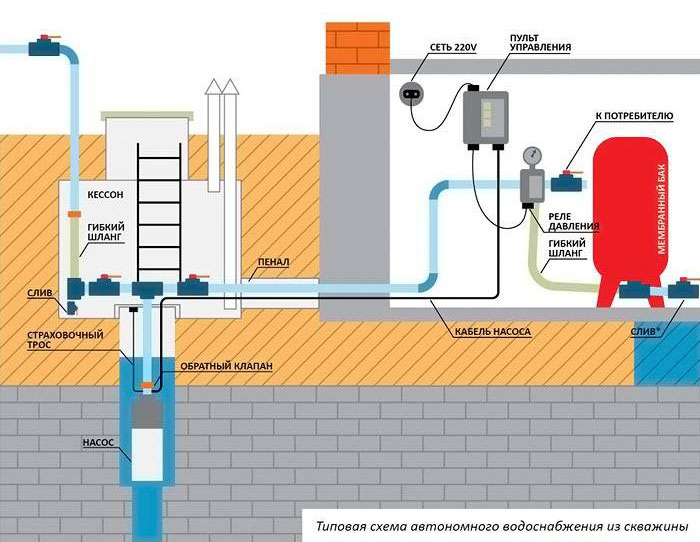
In the scheme, when the pump is in a well or connected to a well at depth, and the equipment is indoors, and not outdoors, the storage tank is installed lower than the pressure switch.
Before you independently bring water into the house and distribute flows in plumbing equipment, you need to make sure that it is potable. To do this, conduct a water analysis in the local SES.
A set of filters is purchased depending on the results of the analyzes. These filters are added to the circuit regardless of the previously installed coarse and fine filters at the ends of the water supply.
Providing a private house or summer cottage with water is one of the main aspects of a comfortable human life. Adequate water supply and proper sanitation allow you to solve a number of domestic issues, and also make it possible to use all the benefits of civilization: a washing machine and dishwasher, various plumbing fixtures.
The most common method of water supply is water supply from a well. Consider the main stages of arranging water supply at home and practical recommendations that ensure the reliability and stability of the water supply system.
Where does the water supply come from?
If a centralized water supply system in your holiday village or rural settlement exists so far only on paper, water can be obtained in several ways:
- Delivery by tanker truck: imported water is usually of high quality, but even with a sufficiently large amount of storage you can’t ditch a lot of it - you need to pay for delivery each time. This option can be considered suitable only for home plumbing, and watering plants will have to be provided in the traditional way - dancing with a tambourine, begging for rain. With year-round living on the site, another drawback appears: in frost, the water in the tank will freeze.
- Collection of melt or rain water: in this case, it is not necessary to talk about a full-fledged water supply - natural precipitation will only help to survive for a while. In addition, such water does not apply to drinking water and, without deep purification, can only be used for technical purposes.
- Pumping from a surface reservoir of natural origin: having a site near a river or lake is a great success. Water supply in this case will be practically free, you will have to pay only for electricity for the pump. However, the use of such water as drinking water is also not allowed, it is usually only used to water the garden.
- Construction of a well or well.
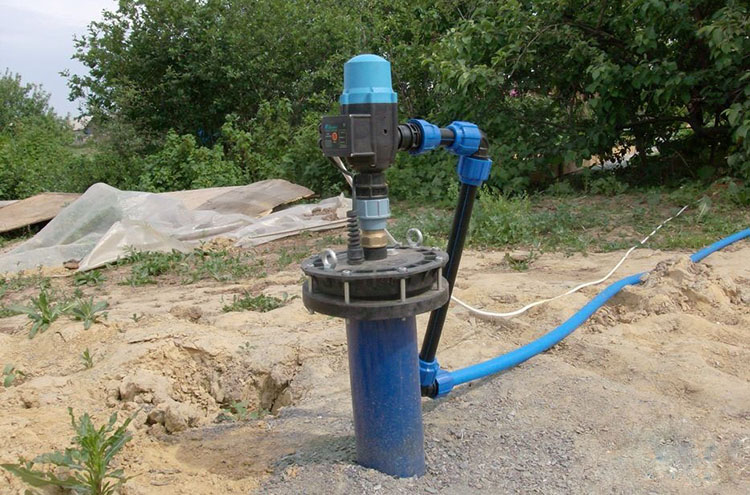
Well construction
The only way to get water of acceptable quality in sufficient quantities is to extract it from underground.And in order to understand which of the structures to give preference to, we will their comparative characteristics.
Well
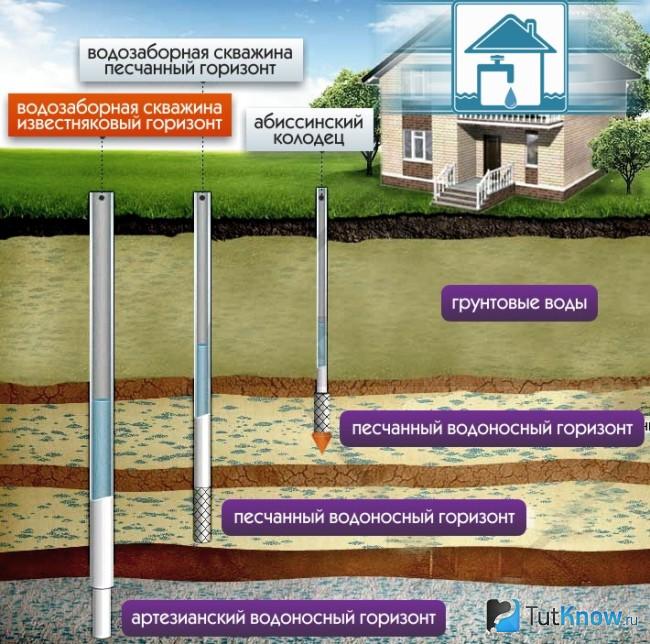
Abyssinian well
1. Well needle or "Abyssinian well"
A pipe with a sharp end is hammered into the ground by hand to a depth of four to twelve meters into the groundwater layer. A self-priming pump is installed for water supply.
pros
- From a well, the needle will be cleaner than from a well of equal depth, since perched water and debris do not get into it.
- Usually, the water from the "Abyssinian well" can be used for drinking without treatment, which reduces costs.
- Construction is proceeding quickly.
- Such a well can be punched in the basement of a house or barn. This will make it convenient to use it for domestic needs, eliminate the need to insulate it for the winter.
- The needle well provides a greater flow of water than a well.
- If the well fails due to clogging of the filter, the well can be restored.
-
The service life is up to three decades.
The well can be equipped even in the house
Minuses
- It is possible to pierce a well with a needle only in soft and loose soil. The peculiarities of the local soil may make its construction impossible.
- Additional costs are required for the purchase and operation of the pump.
- The groundwater layer must be located at least eight meters. A self-priming pump will not be able to lift water from a greater depth.
- The needle well, as well as the well, must be constantly used to avoid silting.
- Without reducing the pressure, several water intake points cannot be connected.
Filter well for water
2. Filter well
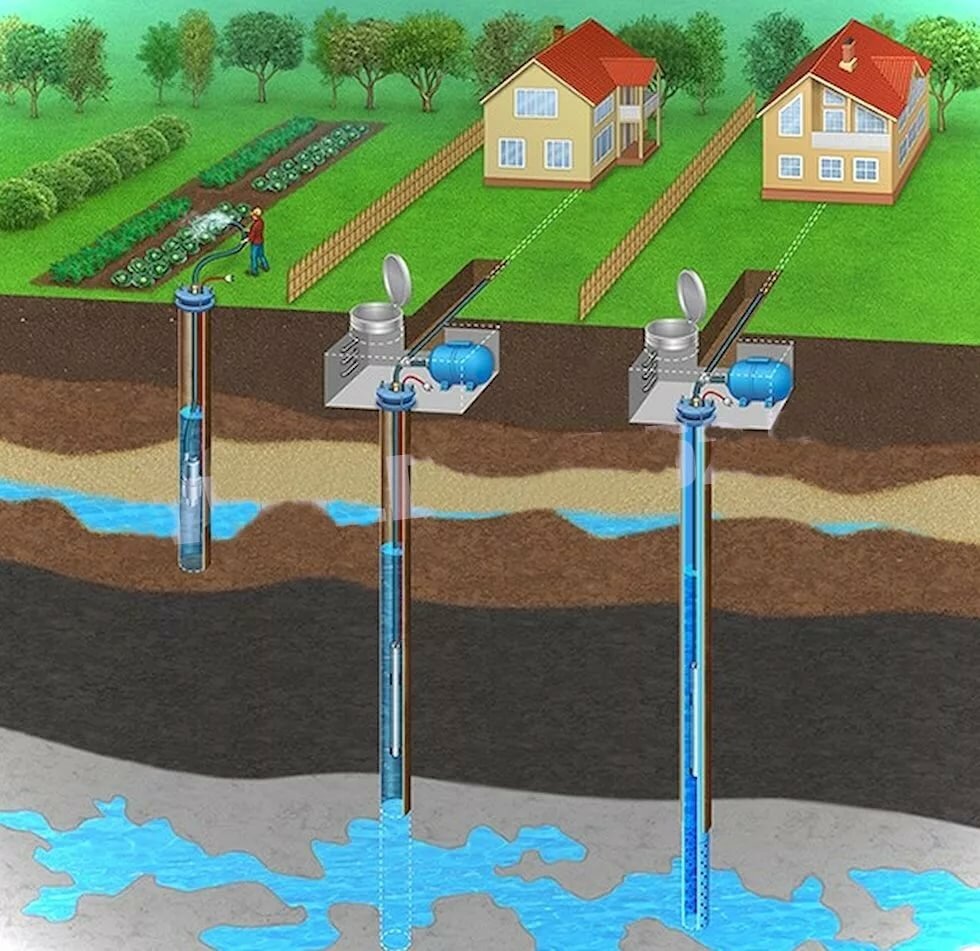
It is drilled in sandy soil to a depth of thirty meters. Works are carried out by professionals on special equipment.




pros
- Drilling a filter well is cheaper than an artesian well.
- Drilling is carried out within one day. For its construction, small-sized equipment is used.
- The water from such a well has a low iron content.
Minuses
- During the cold season, water inflow may decrease.
- The construction of several filter wells in the neighborhood can lead to a decrease in the level of groundwater.
- To avoid silting, the well must be constantly used.
- The service life of such a structure, even if it is built by specialists and properly operated, is no more than fifteen years.
Artesian well - the most reliable source of water
pros
- The high quality of water that comes from the artesian water layer and does not depend on local circumstances. Surface contamination is excluded.
- Water can come from the aquifer under the pressure of higher layers. In this case, it will be possible to do without a pump.
- Uninterrupted water supply at any time of the year.
- High performance.
- Several water intake points can be connected to one well. At the same time, the water pressure does not decrease, it flows to each of those connected in the same amount as with a single user. Therefore, it is realistic to build one well for several owners, which will reduce the costs of each of them.
- It is not necessary to use an artesian well regularly. Silting does not threaten her.
- The service life is approximately 50 years.
Minuses
-
Clean water is worth any cost and effort
The highest construction cost in comparison with other options.
- Artesian water can be highly mineralized, with a high iron content.
- It is necessary to clarify its composition, and decide whether it is acceptable in your particular case. A high percentage of iron can damage appliances, so the water may need to be further purified.
- To drill a well, you need to obtain permits. Using artesian water without an official permit may result in a fine.
- With a low pressure, additional costs for the purchase of a pump and the connection of electricity are possible, which is not possible everywhere.
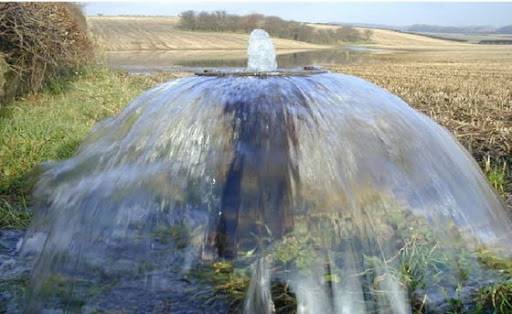
- With a large pressure, an artesian well can gush.
Types of wells, their pros and cons
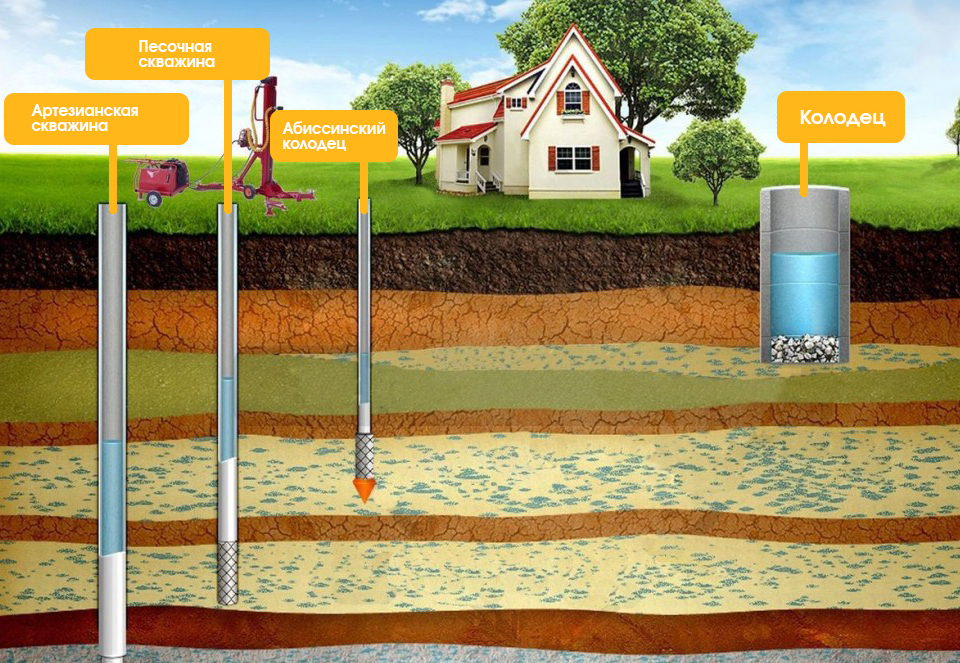
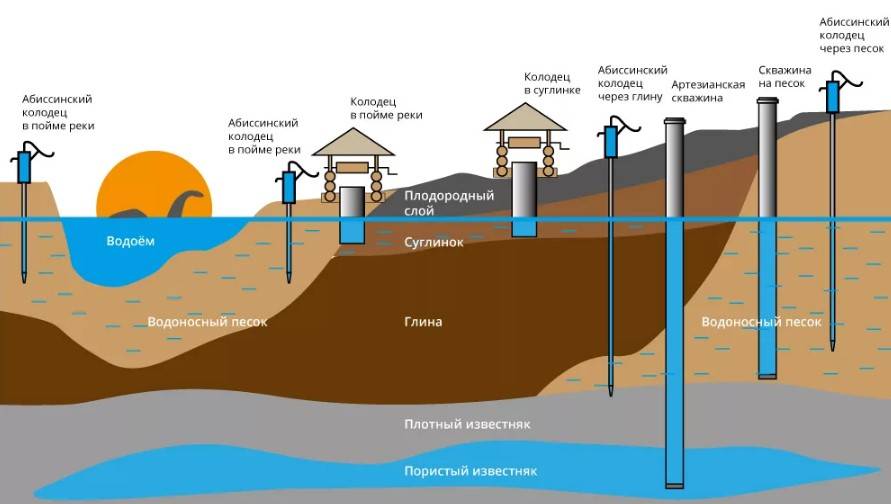
All wells are divided into 3 types: Abyssinian well (needle), filter and artesian.
Abyssinian well
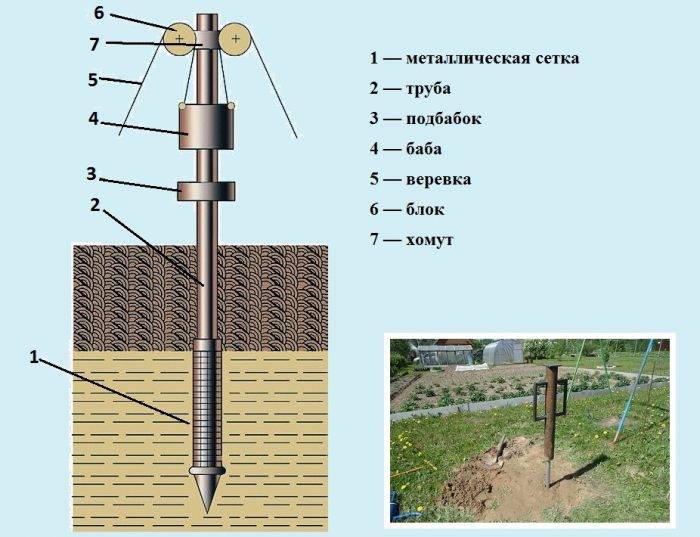
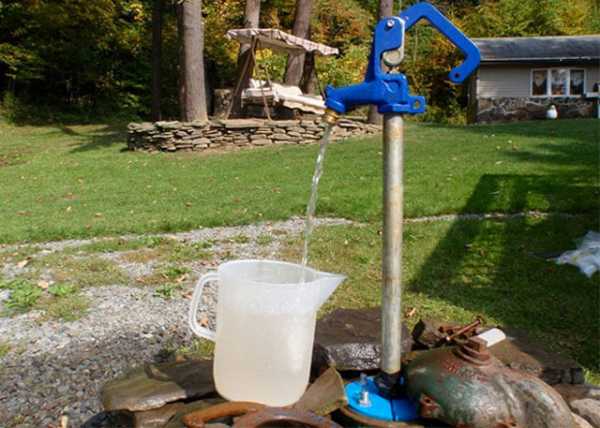
This design is a well-needle, it can have a depth of 4 to 12 meters. Despite the name, which includes the word "well", its difference from it is significant. For its construction, pipes of small diameter are used. The first element, which is a filter, is provided with a sharp tip, then driven into the ground, increasing the following segments. Often used auger drilling. A pump is used to raise water to the surface. The average productivity of the needle is 1 m3/h.
The main advantage of this design is the possibility of building it anywhere. For example, for many, a well in the house, in the basement, becomes an ideal. Other advantages of this method:
- simplicity of design, it makes it possible to cope with the work on their own, and even in a day;
- independence from electricity if a hand pump is used;
- small expenses, since components are available;
- relatively easy installation, simple dismantling;
- good flow rate (performance).
Minuses:
- unsatisfactory water quality;
- the impossibility of construction if the ground is solid.
With constant use, the needle is able to function without problems for about 10 years. If the water intake is carried out in certain seasons, then the needle is threatened with siltation. The source will need cleaning.
filter well
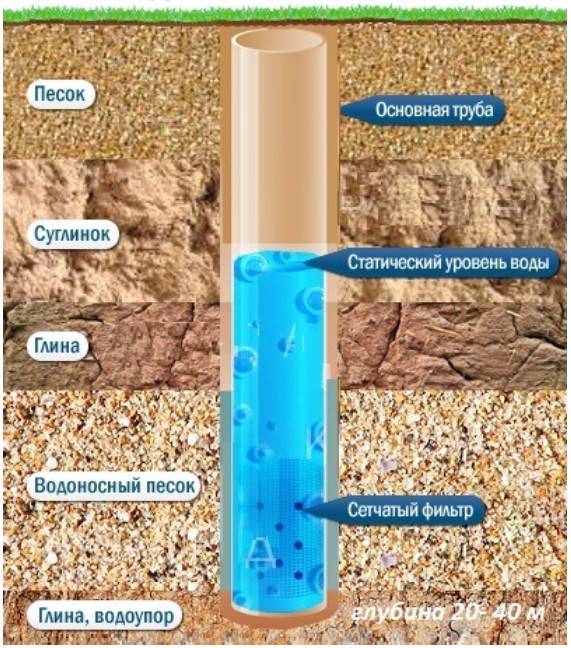
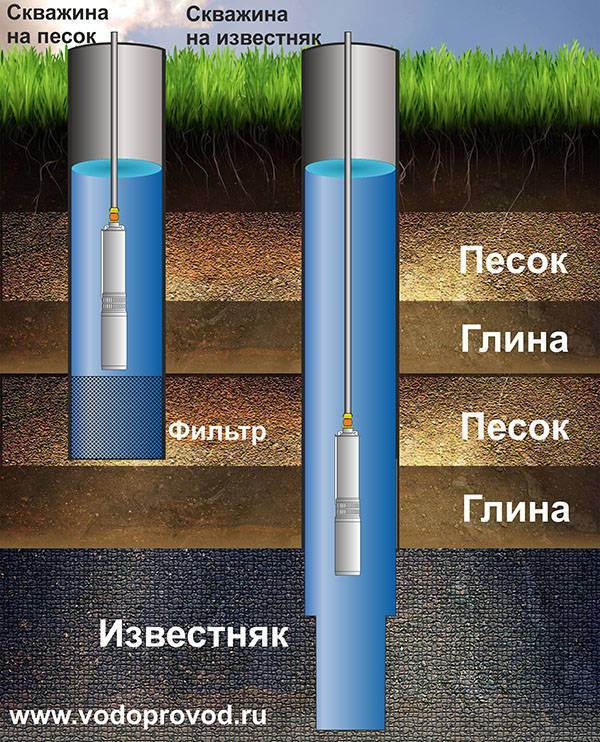
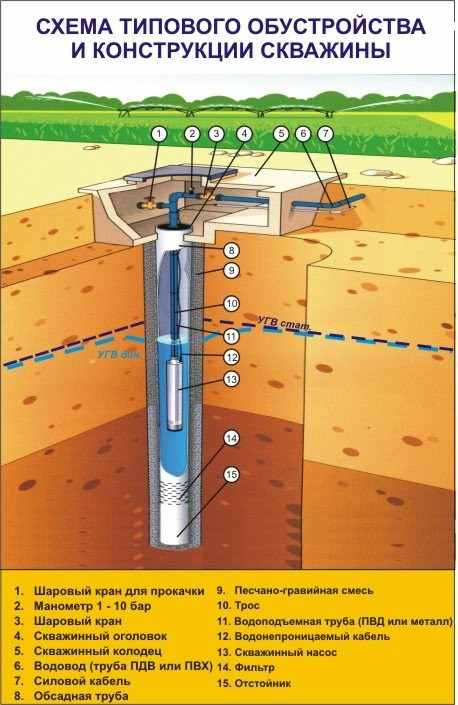
It is also called a sand well. In this case, the depth is much greater - 15-50 m. The filter well includes casing pipe with cap, bottom filter, equipped at the bottom of the column, and pump. In areas with soft soil, auger drilling is used, in other cases, rotary drilling rigs are used. Its productivity is greater - already 1.5-4 m3 / h.
Advantages:
- longer service life;
- good water quality;
- excellent debit.
Flaws:
- service complexity;
- high construction costs;
- obligatory work permit;
- increased mineralization, requiring water filtration.
The filter well will last longer than the Abyssinian one: its minimum service life is 15 years. In most cases, due to the complexity of the work, a contractor is hired to drill such wells.
Artesian source
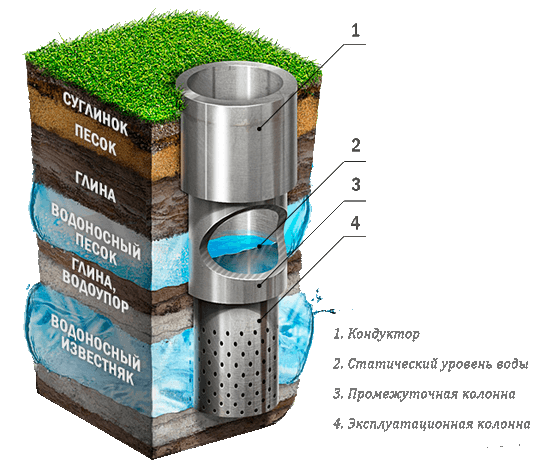
This is the most expensive option due to the depth of the aquifer: it is located between layers of rocks (most often it is limestone) located 70-100 m from the surface. The design is similar to the previous well, but it requires a powerful submersible pump. The biggest plus of the source is the characteristics of the water. The productivity of an artesian well is more than 3 (5) m3/h.
Advantages:
- water of perfect quality;
- its large volume at any time;
- long service life of the source;
- autonomy that does not require serious maintenance.
Weak sides:
- inability to extract water manually;
- mandatory source licensing;
- drilling, which is carried out only by specialists;
- large expenses for the construction of an artesian source;
- the need for the most powerful pumping equipment.
Drainage in a private house
For the full functioning of the home plumbing system in a country house or cottage, a sewer pipeline should be installed. The cross section of the line depends on the total volume of discharged effluents. But for domestic sewage, tubes with a diameter of 150-200 mm are more often taken.





The main requirement of SNiP is that the pipes are laid with a mandatory slope towards the cesspool or septic tank. This eliminates the malfunction of the system. According to the norms, the slope indicator varies depending on the section of the pipes. For a diameter of 200 mm, the level is 0.8 cm per linear meter of the line. With a decrease in the cross section of the sewer, the slope level increases.
The drainage system is also mounted below the freezing level of the ground.
If this cannot be done due to the peculiarities of the relief on the site, it is important to provide for high-quality insulation of the main line. It is undesirable to conduct / bring sewerage along the top on the street. Otherwise, the system will constantly freeze
Or with this method of installation, a high-quality insulation is used
Otherwise, the system will constantly freeze. Or with this installation method, a high-quality insulation is used.
By law, it is prohibited to install open (leaky) cesspools on a plot in the yard. This leads to an ecological catastrophe, pollution of the groundwater of the village. As a wastewater receiver, it is better to arrange a home-made septic tank for 2-3 chambers and discharge waste into it. Many users/craftsmen prefer to install a factory cleaning tank.This is a plastic container with stiffeners. The places where the collector is connected to the tank are securely sealed to avoid leakage of effluents into the ground. A sealed septic tank does not let in a specific smell and qualitatively cleans the drains before they are drained into the ground.
Which well is best?
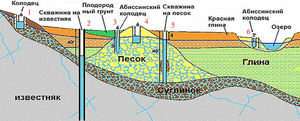 It is also worth looking at the option of installing a well in a private house, especially when it comes to permanent residence. This option will provide the owners of the house with a high-quality and clean source. There are several types of wells and each of them has its own characteristics.
Well-needle or Abyssinian well - the depth reaches from 4 to 12 meters. Water is practically no different from a well. There are no insects or foreign objects in the well. It can be scored in just 1 day. To do this, a sharp pipe is driven into the ground, which will not be able to miss the top water. For the construction, you will need a suction pump for water intake. The well is often equipped in basements. In such a place, the source will be under constant pressure. It does not need additional cleaning. Not all types of soil are suitable for successful drilling. Constant use is necessary, otherwise silting will occur.
The depth of the filter well for sand reaches 30 meters. Work is carried out on sandy soil. Its service life is limited to 15 years. In fact, very often its service life is only 5-7 years. In order for it to work as long as possible, all work must be performed by professionals. The disadvantages also include a small supply of water - 500 liters and rapid silting. A sandy narrow well can have a diameter of only 3.6-5 cm or more.Among the advantages are low cost of work, low iron content, fast drilling process, use of small-sized equipment.
The most expensive way is an artesian well. To drill such a well, you will need to purchase a deep pump. High material costs are compensated by high quality water and durability with a large supply of water. It is quite enough for 2-3 cottages, so you can share the costs with your neighbors and use one artesian well in a private house. The pros and cons will help you decide.
The benefits include:
- the highest water quality and high productivity;
- the volume and quality of water will depend on the sources of pollution located nearby and the time of year;
- the service life is 50 years and is not affected by regular use;
- rapid replenishment of water resources.
To drill an artesian well, a special permit is required and this fact cannot be neglected. Also among the disadvantages:
- high mineralization;
- expensive construction;
- very often in such sources there is a lot of iron.
Well or well: pros and cons
Wells are a very popular option for water intake in a summer cottage. This is due to several important benefits:
- minimum cash costs;
- universality;
- long service life.
However, there are also disadvantages with such a universal method of extracting water. The disadvantages include:
- risk of water pollution;
- regular cleaning and use of the well is necessary;
- small water supply.
Only a small house can provide such a source.For watering green spaces, gardens, household needs and other benefits of civilization, the water in the well will not be enough. The volume of water per hour averages 150-250 liters.
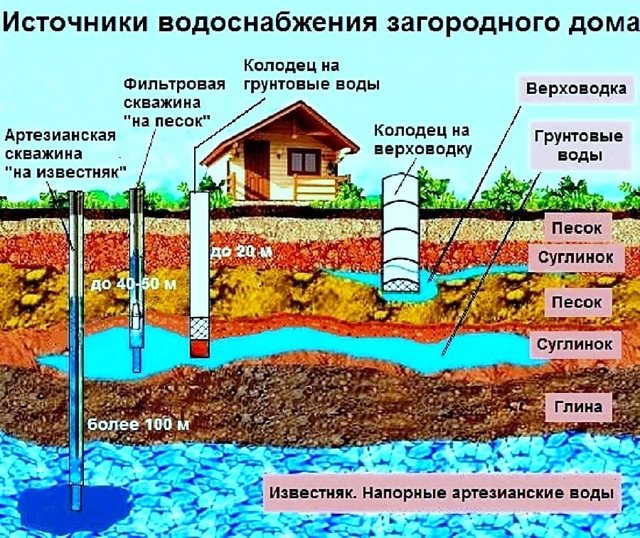





Spring water has always been valued for its unique composition and purity. This is due to the fact that it does not mix with the upper waters, since the fence comes from the depths of the earth. Having a well on its site, it will be possible to use clean and high-quality water. In addition to this, there are other advantages:
- hygiene;
- large volumes of stocks;
- durability;
- ease of operation.
In addition to the undeniable advantages, this method of extracting water has its drawbacks. These include:
- the smell of water;
- high price;
- if the pump fails, it is impossible to get water.
What is the difference between a well and a well?
 According to experts, it is better to build a well when there are no aquifers in the country house or it is impossible to drill a well due to difficult terrain. Cases should be taken into account when clean water in some areas was at a depth of 100-150 meters. With such a water occurrence, it is easier to build a well.
A well from a well basically differs in diameter. Wells are narrower than wells. The well bottom and walls of the well are always available for cleaning. You can fill it with water at any time. The well needs electricity to operate. You will also need a reliable pump capable of supplying water to the surface.
All options have distinctive characteristics that are worth paying attention to. For a country house in which it is planned to live permanently, it is better to choose a well
At their summer cottage, any type of well is quite suitable, since it will not be used constantly.
Advantages of the well
There is no doubt that many people value spring water for its purity. In addition, such water has been considered the most useful among the people since ancient times. In this regard, the owners of city apartments can only envy the owners of private households, who have every opportunity to build a well for water production on their site. It has the following significant benefits:
- High quality water. In a well, water often has direct contact with pollutants from the atmosphere, as well as those brought by surface water. Due to the fact that the well neck area is much smaller, it is possible to avoid the ingress of leaves, branches and living creatures (insects, amphibians, rodents), which, as a result of decay and decomposition, poison the water with toxic substances.
- Life time. Professionally and qualitatively performed works on drilling and arrangement of the well guarantee its uninterrupted operation, subject to maintenance periods of at least 50 years.
- It is widely believed that there is more water in the well. The misjudgment is based on the fact that the diameter of the well is significantly larger than the diameter of the well, but in reality everything is quite different. If we compare a well dug in clay soils with a well drilled in sands, then the latter has a significant advantage in terms of the amount of water delivered, the supply of which in such soils is practically inexhaustible. If, when digging a well, diggers reach a sandy layer, then due to the buoyancy of the soil, they simply will not be able to go deep into it.
- There is no need for regular cleaning, and with the right filter design, you can completely forget about this problem, since the water will always be clean.
- The cost of operating a well is much less than operating a well. Cleaning takes much less time and money, as the work is less labor intensive. The well requires more careful maintenance - disinfection should be carried out at least 1-2 times a year, it is regularly required to clean and flush the walls, monitor the chemical composition of the water, and in some cases replace the bottom filter and even deepen.
- The purity of the water in the well is ensured by isolation from the upper melt water and effective natural filtration.
- The well has the best properties in terms of replenishment of water resources. If the well, using a powerful pump, can be quickly drained and wait several hours for filling with water, then the well is characterized by stability and constancy, naturally, an artesian well is meant.
Obviously, with the advantages, wells also have some disadvantages - if the pump fails, it is impossible to manually extract water, and with some serious blockages, it is impossible to clean the well, the only way out of this situation is to drill a new well. And, of course, the price - an artesian well will cost several times more than a well.
A casing metal pipe, without which it is impossible to arrange a well, can give the water a metallic taste.
It is also worth considering the moment that when arranging a well on sand, the amount of water for water supply to the house may not be enough; in this case, reserve tanks should be provided.When drawing up an estimate, in addition to the costs of drilling and the purchase of casing pipes, one must not forget about the costs of installing a filter and purchasing a submersible pump of the appropriate power.
Advantages and disadvantages of wells
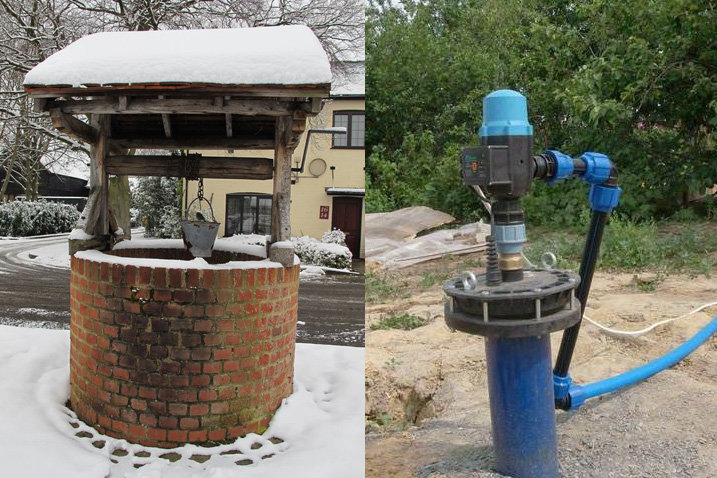
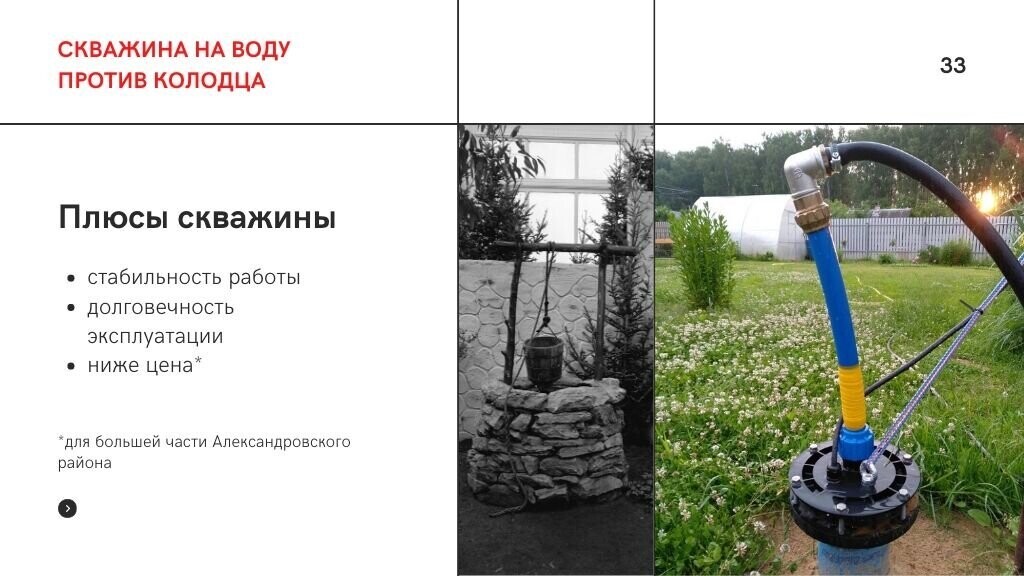
Despite the fact that wells were used in ancient times to extract water, they are still quite widespread today. During the operation, the well has practically not undergone any changes - a mine is arranged in various ways, and a house is installed on top to protect it from pollution.
In some aspects, automation has also affected wells, if earlier they were all equipped with drums with handles for manually lifting water, today simple vibration pumps, as well as deep pumps and even pumping stations, are increasingly being used.
The undoubted advantage of the well can be considered its versatility, since even the absence of electricity does not exclude the possibility of extracting water in the old mechanical way - he threw a bucket, twisted the handle and got water, everything is very simple. Most wells are equipped with pumps, since it is difficult to extract water from a considerable depth mechanically.
Villagers, as well as summer gardeners, prefer a well to a well because of its lower cost. Another point in favor of the well is the difficulty in placing special drilling equipment. For drilling a well, the dimensions of the minimum platform are 6X6 meters, which is not always possible to withstand, especially when the site is already built up.In addition, the pumps used in the well are several times cheaper than those used in the operation of the well.
When deciding to dig a well, you need to be sure that there is a relatively clean place on your site, located at a considerable distance from cesspools, railway tracks, and industrial water discharge sites. The well should be located on a hill, so that surface water does not penetrate into it, a clay castle must be properly arranged. In no case should these requirements be neglected, since pollution, after entering the water, will spread to the human body.
One of the main disadvantages of most wells is a small water intake. As a rule, the capacity of the upper aquifer allows the replenishment of water pumped out of the well at a rate of 100 to 200 liters per hour. If such a volume can be sufficient to serve a small country house, then such a volume will not be enough to maintain a greenhouse and care for a soda, a garden.
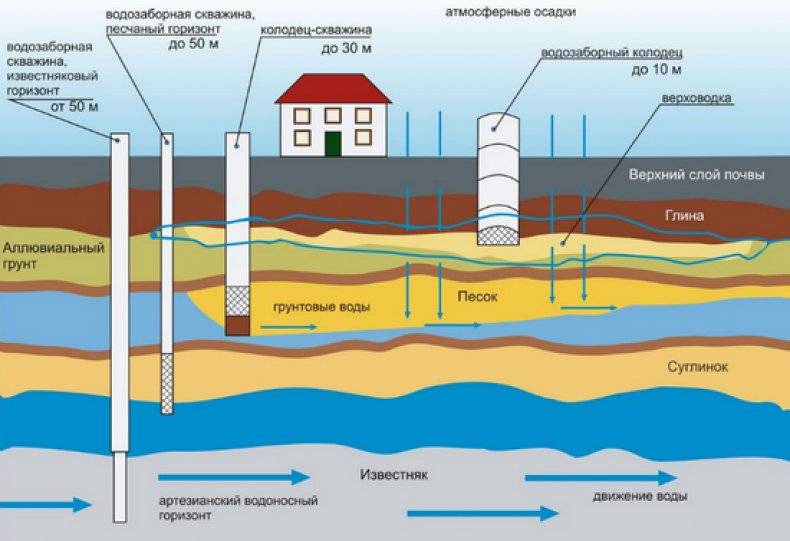
The depth of the aquifer is usually in the range of 7-15 meters, depending on the terrain. In some cases, the depth of the aquifer can reach 30-35 meters. During the construction of the Abyssinian well, it is quite possible to reach such a depth, but it is unlikely to be advisable.

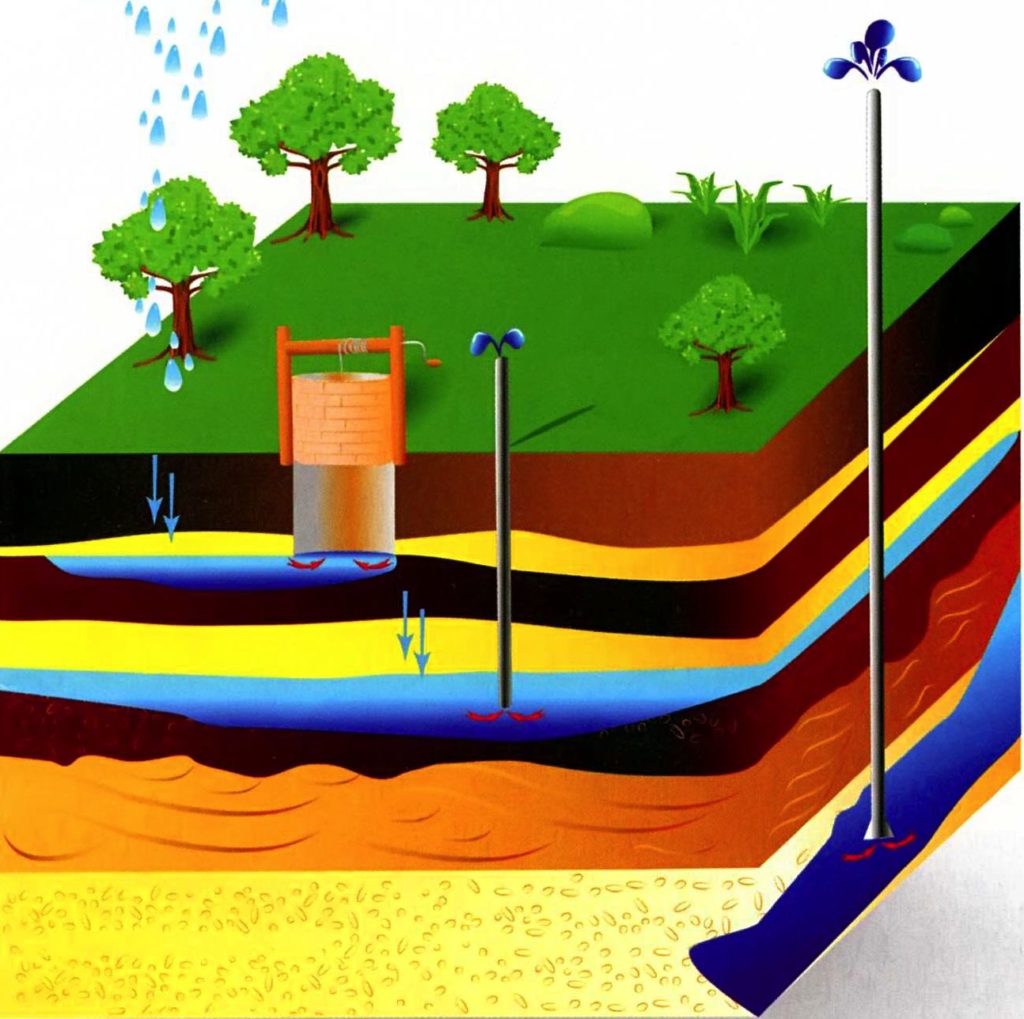


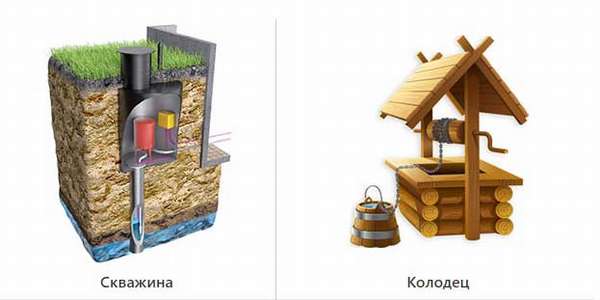


It is in the depth of the aquifer in most cases that the answer to the difficult question lies - what is better than a well or a well?
The choice of the location of the well should be preceded by hydrogeological studies or, at least, the study of hydrogeological maps of the area
This is very important, because in the event of a swamp, dirty water will constantly get into the well.When digging “blindly”, the well shaft can rest against a fixed sandy layer and even against a granite belt, which will be impossible to overcome without special equipment
Types of wells with their pros and cons
There are two main types of wells - sand and artesian. Let's look at how they differ and what are the advantages and disadvantages of each of these types.
Sandy (filter)
The peculiarity of such a well is that it is carried out in sandy soil. Its depth can reach up to 30 meters, and the maximum service life is 15 years. Although practice shows that on average this figure is about 7 years, which is one of the disadvantages of this type of well.
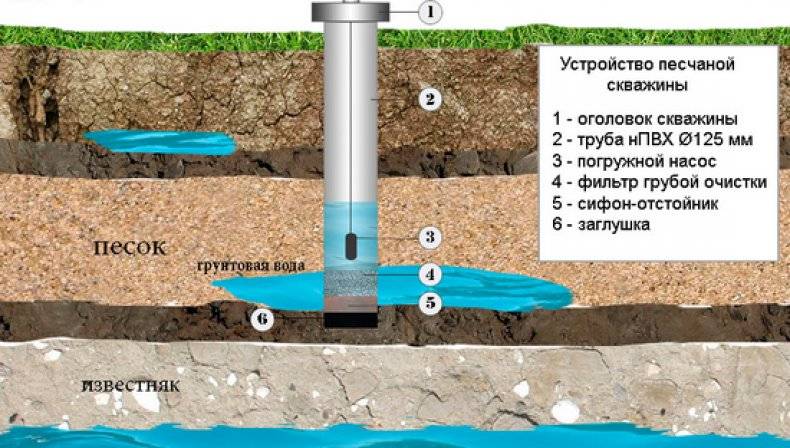
Another disadvantage is the limited supply of liquid - about 500 liters per hour and its not very high quality due to the ingress of precipitation into aquifers. However, the dirtiest perch water does not get into them, so the water will be slightly better in quality than from a well. In addition, to avoid silting, it must be used regularly.
However, if we compare it with artesian, then the advantages include: lower cost, the use of small-sized equipment, short construction time and low iron content.
Artesian
Pipe or artesian mines are called mines with a depth of more than 20 meters, which take water from the artesian layer located between two water-resistant layers. Such work is carried out only with the help of heavy equipment, and sometimes the drilling depth can reach 200 meters. An artesian well produces an average of 2 cubic meters of fluid per hour and, under favorable conditions, can last up to 50 years.
The well itself consists of plastic or metal casing pipes, a caisson, pumping equipment and automation systems. All work on its construction and connection must be carried out only by specialists.
It will be useful for owners of country houses, summer cottages, as well as residents of the private sector in cities to learn how to make a path from wood cuts, concrete paths, build a formwork for a fence foundation, make a gabion fence, a chain-link fence, and also how to build a veranda, a bathhouse , swimming pool, do-it-yourself toilet.
Artesian water is usually of very good quality due to reliable protection against surface contamination. It can fully meet all the needs of a private home. However, before using water for drinking purposes, it is necessary to do its chemical analysis and, depending on its results, install a purification system.
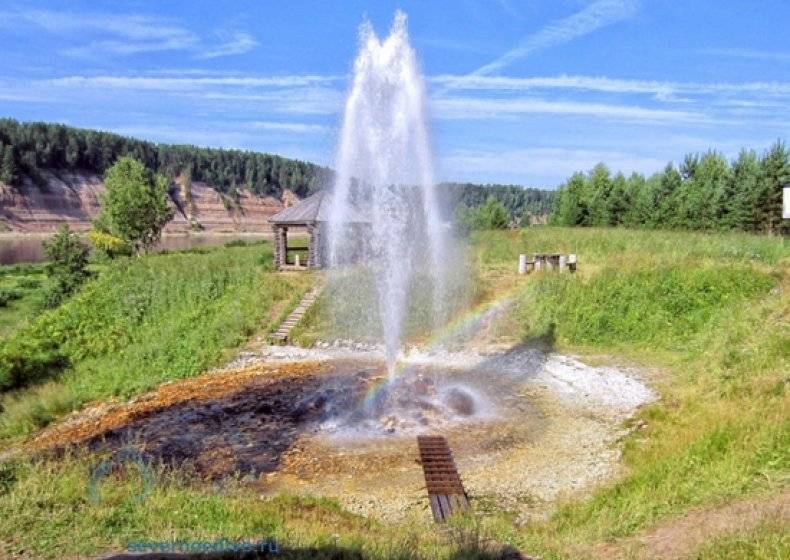
Pros:
- high performance;
- good water quality;
- structural durability;
- occasional use is allowed.
Minuses:
- high cost of works and equipment;
- high mineralization of water;
- inability to work without electricity;
- inability to clean in case of silting.
Important! Even the simplest shaft-type well is better not to dig yourself, but to invite specialists. Since there is a risk of running into the so-called "floater", which can lead to tragedy.
Well - the best inexpensive option for water supply
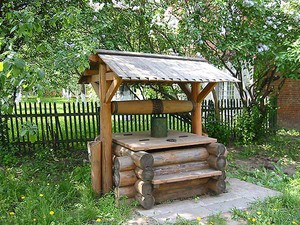 The simplest source of water supply in a private house or cottage is a well. His device does not require large amounts of money. Usually the depth of the well varies from 5 to 15 meters. Everything largely depends on the depth at which the aquifer lies.By choosing a well as the main source of water supply, the owner of a private house saves his money on laying a water supply system. What will be the quality of water, largely depends on the correctness of its construction, as well as the prevailing climatic conditions in the territory of residence.
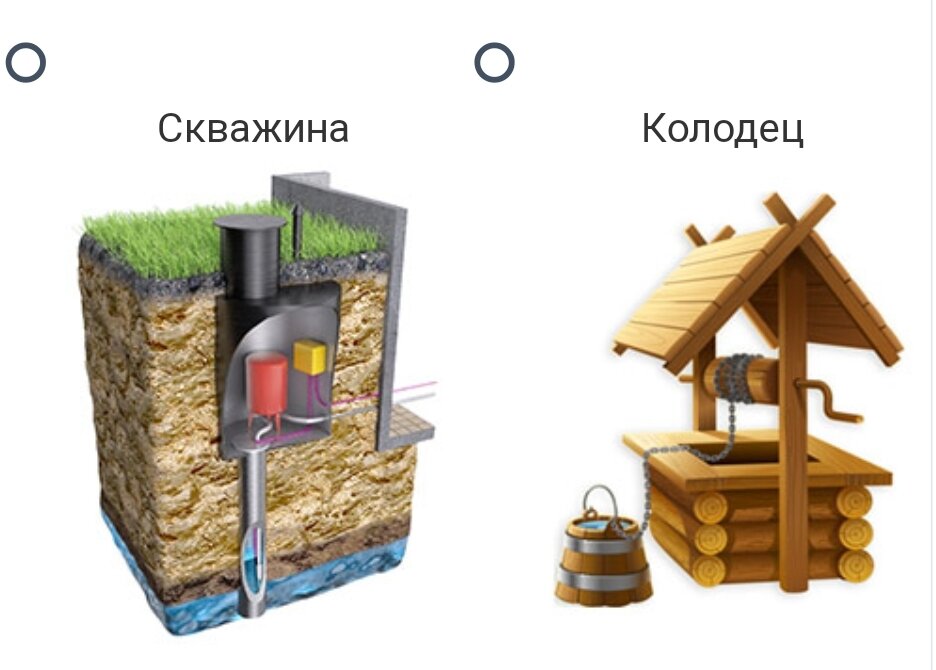
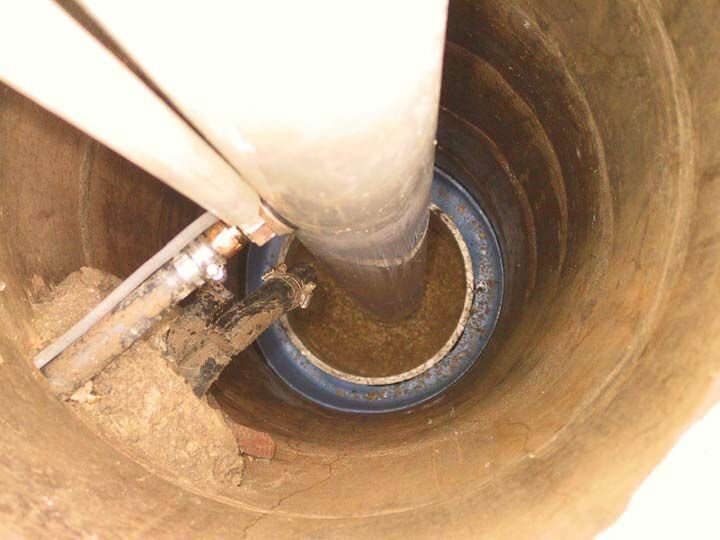


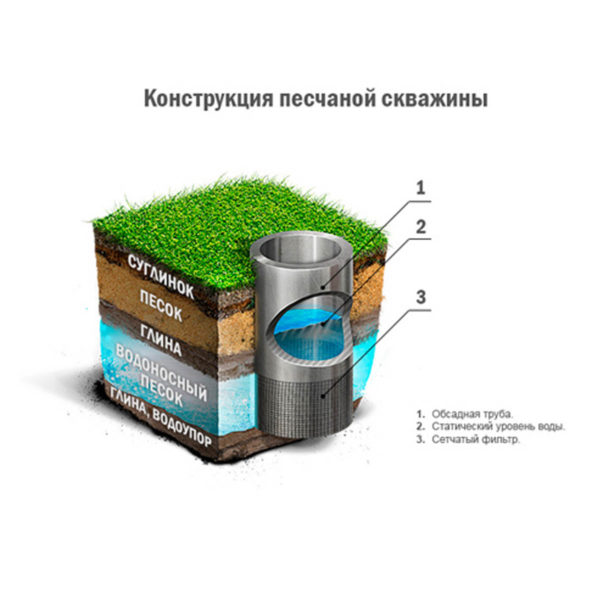


Before making a decision, it is useful to familiarize yourself with the benefits of a well for water supply.
- low construction costs;
- accessibility and ease of use;
- there are no problems with extracting an object that accidentally fell into the well;
- if the well is operated correctly and cleaned in a timely manner, then its service life can reach up to 50 years.
This design also has certain disadvantages:
- possible contamination with perch;
- various objects can fall into the well, which can lead to the development of colonies of bacteria;
- during the operation of this structure, there is a need for constant water withdrawal in order to avoid clogging;
- the need for regular disinfection of the well and its cleaning;
- the volume of water supplied to the facilities is quite small.