- Site assessment: the possibility of installing a gas tank
- Rules for IZHS
- What is a gas holder?
- 2
- Fundamentals of legal regulation of the placement of buildings
- 1
- Vertical and horizontal gas tank: pros and cons
- Types and levels
- Underground gas pipeline
- 3
- Installation order
- Legal issues
- Design and purchase of equipment
- Calculation of the volume of the gas tank
- Accommodation Requirements
- Mounting Features
- Manufacturers
Site assessment: the possibility of installing a gas tank
The main gasification of remote villages has not yet been completed, and many settlements are left without a convenient "blue fuel". An alternative solution for centralized gas supply is the installation of a gas tank and the arrangement of an autonomous network.
A gas holder is a monolithic container for storing natural gas. Structurally, the tank is made in the form of a tank with a neck. In the upper part there are elements that control the pressure and the remaining fuel.
Undoubtedly, the operation of any gas equipment is associated with a certain risk, therefore, a number of requirements are imposed on the organization of autonomous gasification, on the location and installation technology of the gas tank.
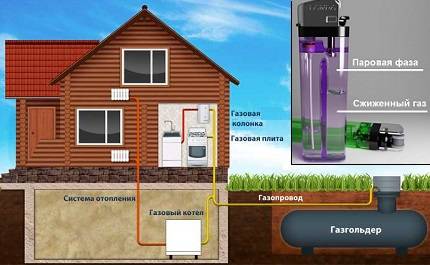
In the galgozer, liquefied gas is gradually converted into steam, the propane-butane composition enters the reactor and acquires the desired pressure.Gas pipeline delivers "blue fuel" to consumers
The site for the installation of a gas storage facility is assessed according to the following criteria:
- relief;
- the composition of the underlying and enclosing soil layers and the proximity of groundwater;
- availability of water intake points, residential, utility and public premises.
Relief. The area chosen for surface mounting must be level. This requirement is especially relevant when installing ground modifications - installation on a slope is prohibited.
Priming. It is acceptable to place the gas storage in soil massifs with different moisture content. The convenience of earthworks and the choice of the type of gas tank will depend on the physical and mechanical properties of rocks.
If there is no risk of reinforcement flooding, models without a high neck can be used. As an option, a tank is suitable, where the taps are attached to welded pipes 12 cm long - this “safety” height, if there are doubts about flooding.
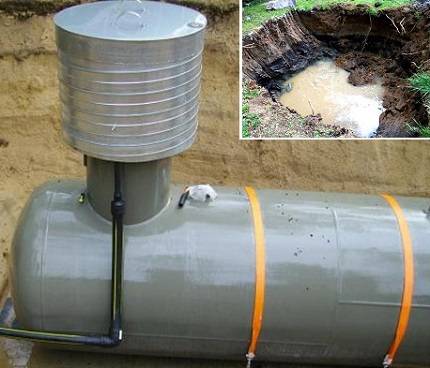
For places with "high" groundwater, structures have been developed with an elongated neck that provides protection for the reinforcement. Due to the protection device, the operation of the gas tank is stable and efficient
Water is an excellent conductor of thermal waves, and the process of evaporation of the propane-butane mixture determines the temperature of the medium. The higher the score, the more intense the process. Installation work in low-moisture rocks is easier, but the environment for the normal operation of the gas tank is less favorable.
Coarse-clastic soil can be dangerous, especially if its components are weakly rounded, i.e. with sharp edges. Boulders, pebbles and large rubble complicate the installation of equipment, and the mass of gravel and gruss creates an additional load on the gas pipeline.
In most cases, a pit is developed for the installation of the selected gas tank, which is recommended to be filled with river or quarry sand after the structure is immersed.
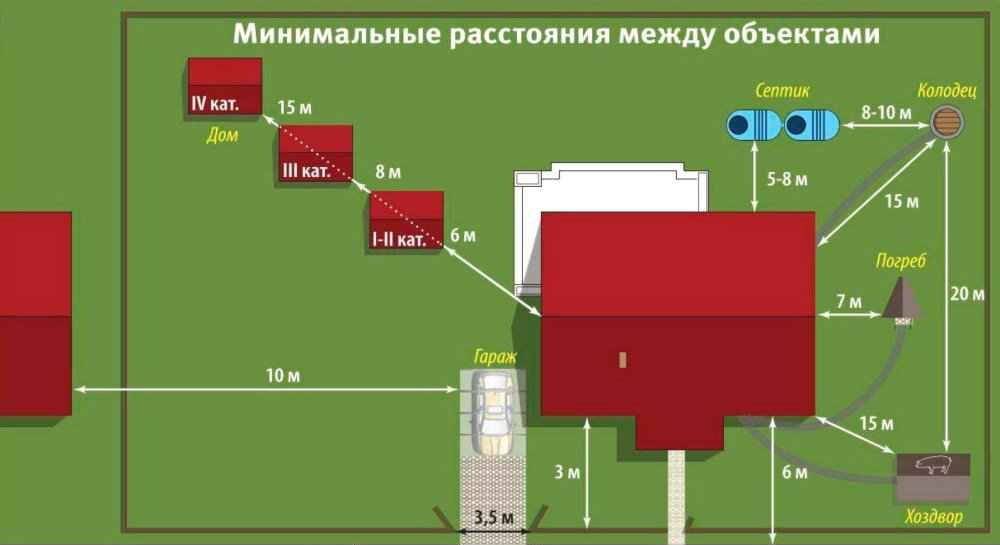
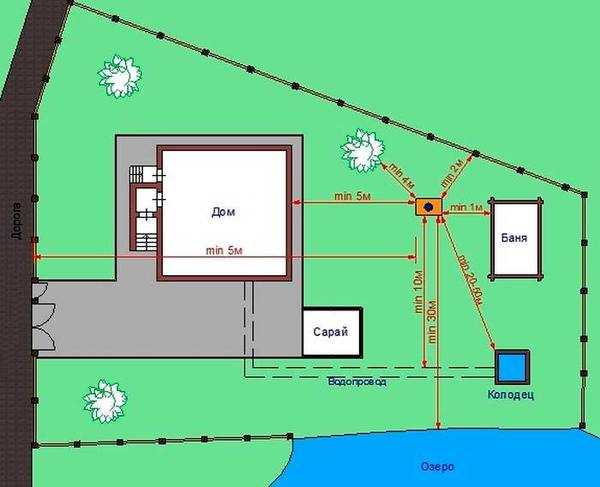
Proximity to water sources. According to building codes, the minimum distance from a gas tank to a reservoir (well, well) is 15 m, to a water main - 5 m.
Neighborhood with buildings. Fire-prevention distances from liquefied gas tanks to structures are indicated in paragraph 8.1.6 of the regulatory document "Gas distribution systems" (SNiP 42-01-2002). The next section is devoted to this issue.
It is more practical to place a gas tank closer to the gate for unhindered access of a gas carrier and filling the tank.
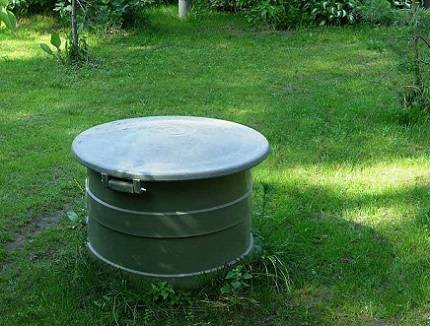
The site above the gas storage is a kind of exclusion zone. It is forbidden to equip a barbecue area, install barbecue grills and other flammable equipment on it.
In addition, concreting or paving the site, as well as organizing a parking space and planting trees, is unacceptable.
Rules for IZHS
Building codes regulate both the placement of buildings on the land and the parameters of the buildings themselves.
Normative legal acts contain current norms
| Living room area | must be over 12 square meters |
| Bedroom size | Not less than 8 m2 |
| Kitchens | over 6 m2 |
| hallway | over 1.8 m2 |
| bathroom | Not less than 1 m2 |
| Ceiling height | must exceed 2.5 meters |
| Ladder width | from 0.9 m. |
The basement floor must be at least 2 meters high (if things are supposed to be stored in it). The arrangement of residential-type rooms in the basement is not allowed.





Video: Fence construction standards at the site of SNT, IZHS and others. SNIP, GOST
What is a gas holder?
The easiest and most economical way to heat a country house is far from electricity, but the most common gas. But connecting directly to the centralized supply system for this type of fuel is far from possible everywhere, and sometimes it costs a lot of money. The timing of connection to such networks can sometimes be quite long, they depend on the remoteness of the highways, as well as on the complexity of the terrain where the house itself is located. Also, do not forget about the execution of a number of documents - our bureaucracy is flourishing. Sometimes, just because of the need to draw up the necessary papers, you have to wait for years for the gas to enter the house.
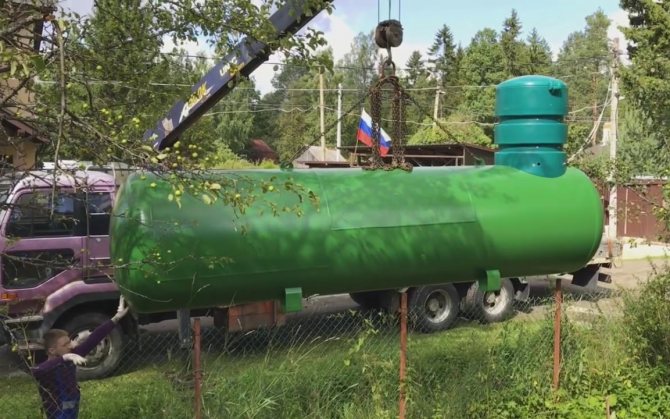
Gas holder for a private house
In this case, it is easiest to think about the possibility of autonomous gasification. One of the elements of such a system is a gas tank, which will allow you to have gas on your site without connecting to centralized systems and without serious red tape, and will also make it possible to always have gas in the house.
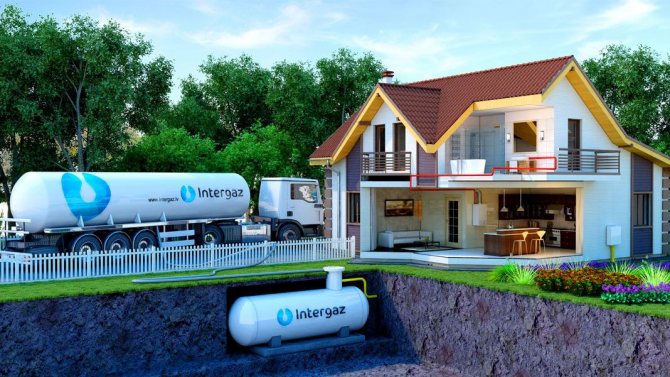
Liquefied gas from a gas tank is used for home heating, water heating
A gas holder is a fairly capacious metal container designed to store gaseous substances, mainly (in domestic terms) to save a mixture of butane and propane, that is, the same gas that is used to operate stoves and heating systems in the house. You can call a gas tank a large gas cylinder, from which it differs only in very large sizes and is installed once, regularly performing its task for many years. This "cylinder" does not even need to be taken to a gas station - it is enough to call a special tanker who will come and fill the tank with gaseous fuel.
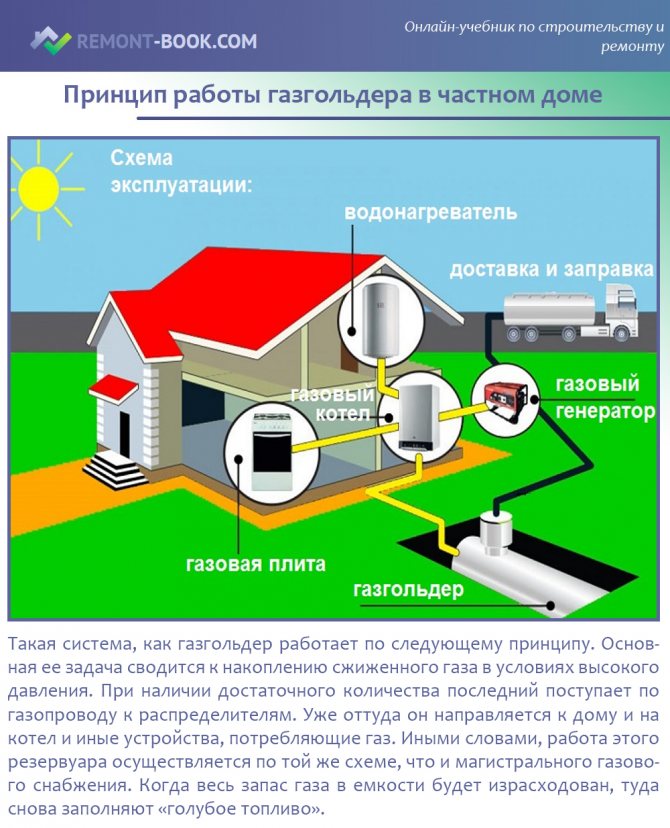
The principle of operation of a gas tank in a private house
The gas tank is usually made of high-quality steel with a thickness of at least 5.5 mm (this figure is taken from GOST), treated with special compounds that prevent corrosion. Thus, the tank will serve for a very long time, about 20 years. Also, the gas tank has special sensors that will show how much gas it has at the moment, what is the pressure in the cylinder. The equipment has a filling valve, a tank filling sensor and valves for connecting gas distribution. Thanks to a well-thought-out system, the gas tank is completely safe for home use.
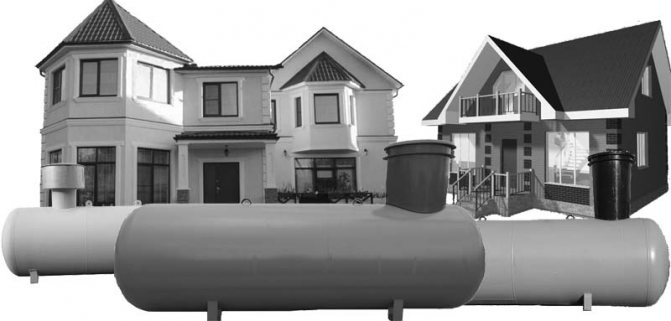
The gas tank is completely safe for home use.
The gas tank is always located outside the residential building, at a certain distance from it. Gas enters the house through the laid pipelines, where it is spent on the operation of a heating boiler, gas stove, etc. Usually, a gas tank is buried underground and does not even take up space on the site. It is capable of containing several thousand liters of gas liquefied under pressure of 6 atmospheres.
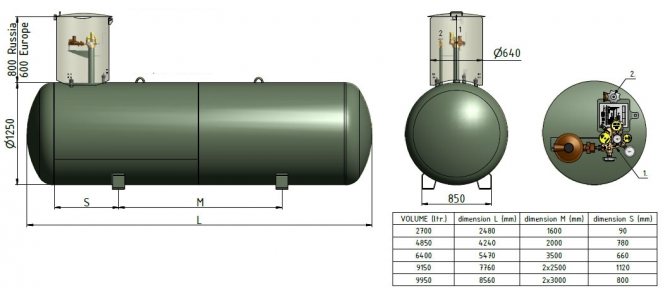
VPS gas tanks dimensions
2
But what if the balloon was made very large so that it had to be filled every few years! This has long been thought of, and such a cylinder is called a gas tank. This is a very capacious horizontal tank, where a gas supply of 2-5 thousand liters is pumped. For a house with a heated area of 100–250 m 2, the gas tank will have to be refueled every six months or a year. Usually, refueling is carried out before the heating season, since fuel consumption is significantly reduced in the summer.
In general, this method makes it possible to recoup the initial costs in 5–10 years, since gas companies providing installation and maintenance of gas supply usually sell gas for gas tanks at lower prices. And what is most interesting is that if you organize everything correctly, purchase the necessary equipment, a boiler and, in fact, the gas tank itself, in 3-4 days your house will have gas. How is this possible? As a rule, companies that are engaged in the production or sale of gas tanks undertake all the technical documentation and registration in the relevant authorities.
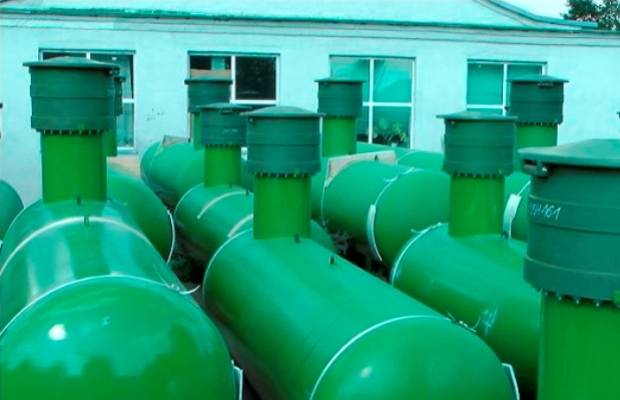
Such a pleasure is not cheap - an average of 150,000 rubles. Previously, in some cases, connecting to a gas main was not cheaper, but since March 2014, laws have been adopted in the Russian Federation that have simplified and reduced the cost of connecting private owners with small volumes of gas consumption. Now the cost of the connection itself can cost up to 50 thousand rubles, or half as much - it all depends on the distance between the site and the gas pipeline.


For example, if your house is located at a distance of no more than 200 meters from the main pipe, and the volume of gas consumption per hour will not exceed 5 cubic meters (enough to heat a house with an area of 250 sq.m.), then you will have to pay about 30 thousand rubles for connection . The law describes the process in detail and does not allow any discrepancies. True, the paperwork and all permits take several months, so do not put off this issue until winter if you intend to move to a private house for permanent residence.
Fundamentals of legal regulation of the placement of buildings
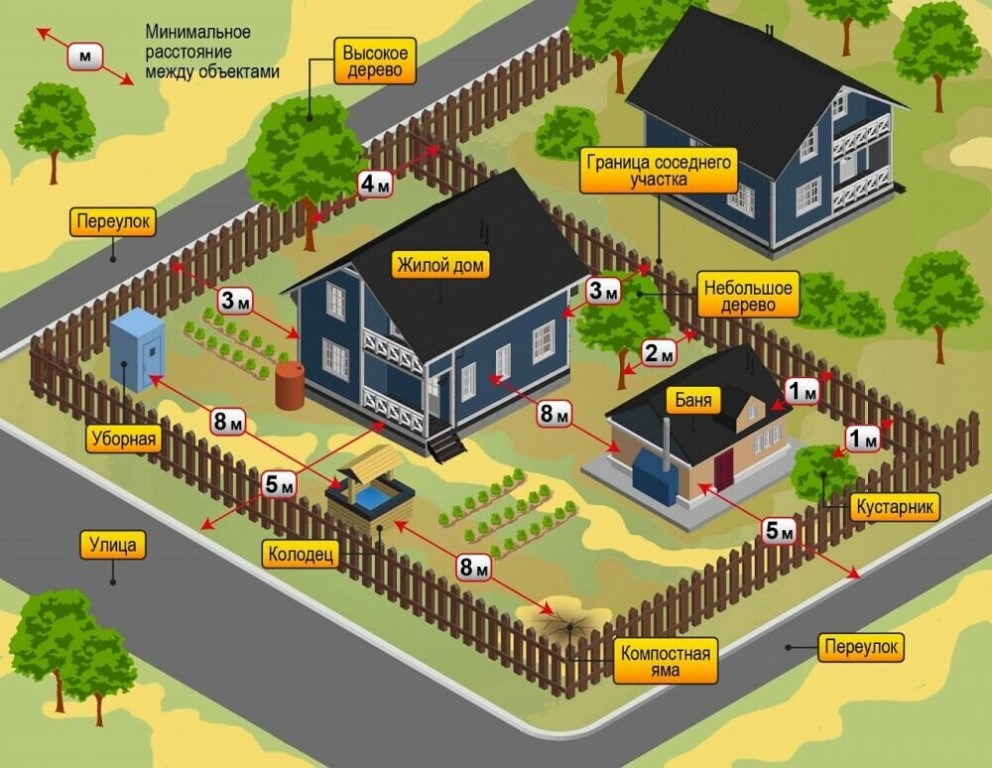
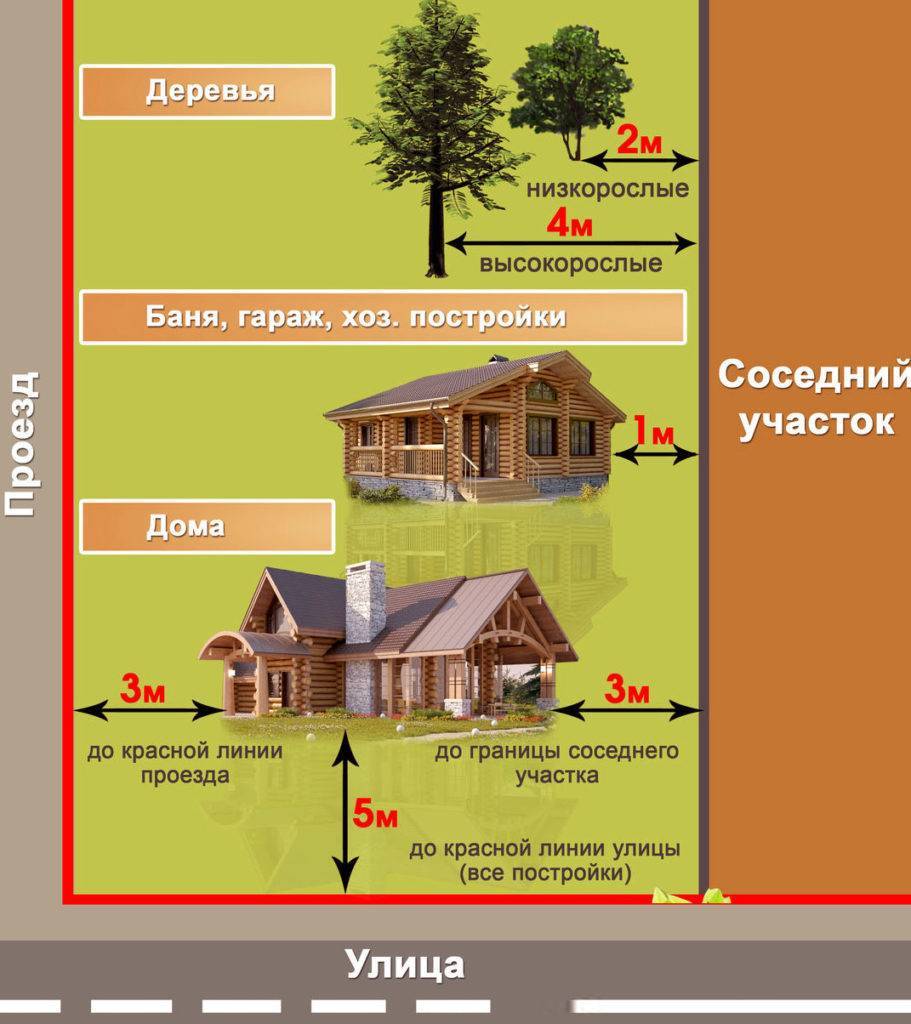
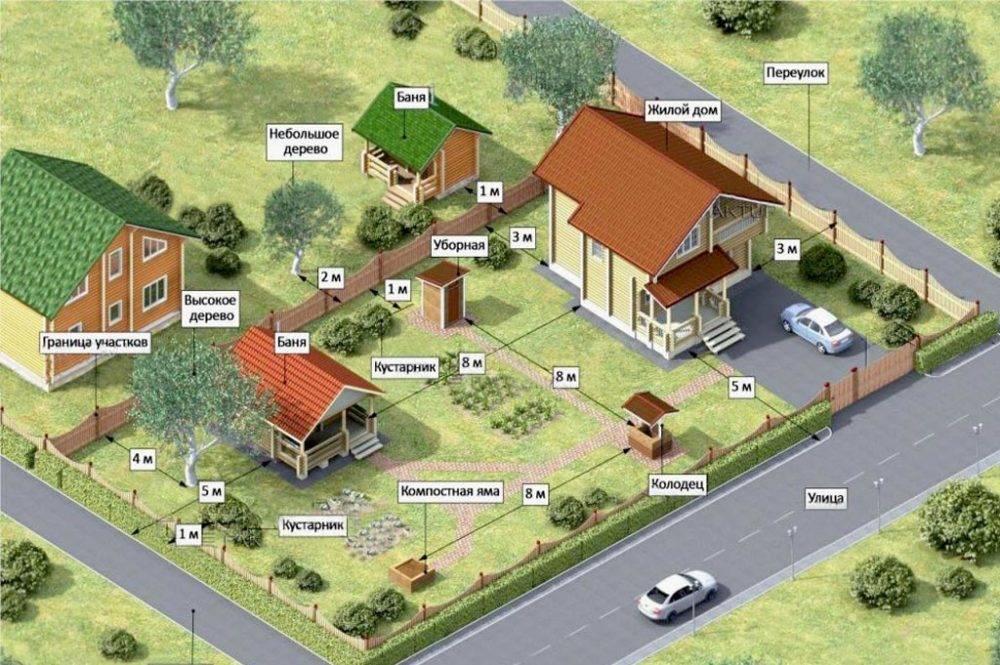
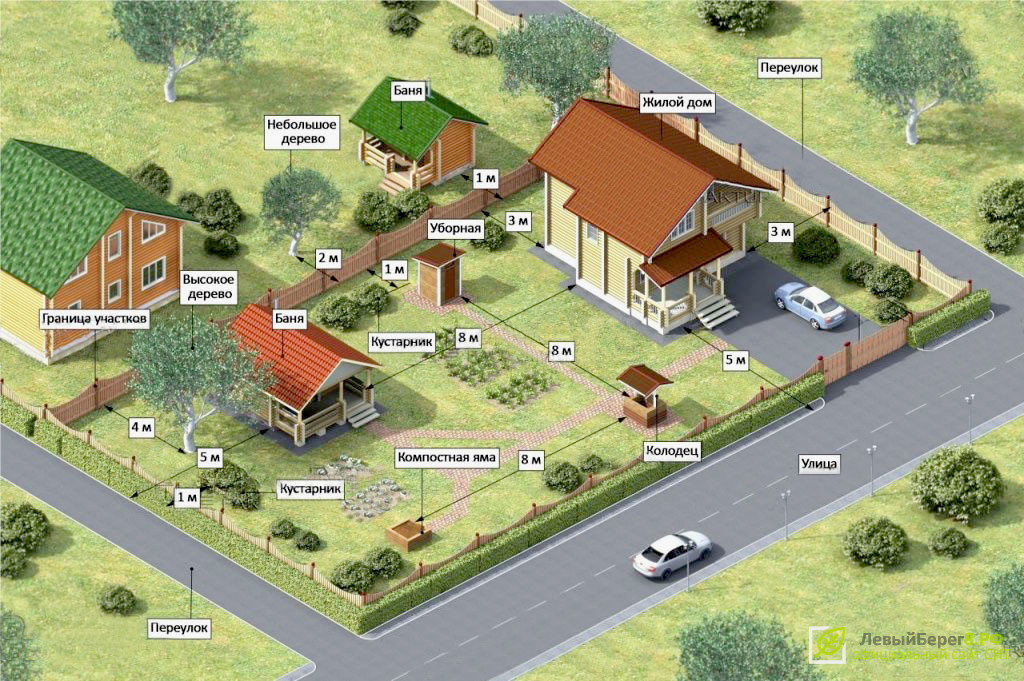
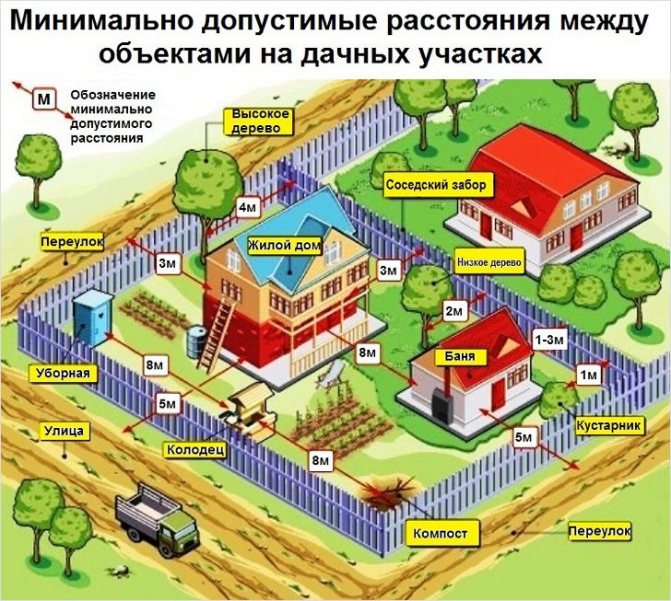
Not a single normative act precisely regulates the issue of the distance between buildings.The norms for the position of architectural structures on the site are determined by the local administration. To avoid paying a fine and demolishing a building, you need to contact the architecture committee to familiarize yourself with the accepted standards for the placement of buildings in this locality.
The issue of building planning is regulated by the following standards:
- SP 30-102-99. Establishes norms of distances between IZHS objects and other outbuildings. Thus, a residential building should be located at a distance of at least 6 m from dwellings, garages and outbuildings on an adjacent site.
- SP 4.13130.2009. The main document that establishes fire safety measures. Compliance with security distances between buildings is designed to protect buildings from fire and prevent the spread of fire due to their proximity.
- SNiP 30-02-97. Regulates the placement of buildings in horticultural associations. In some cases, by decision of the local administration, the standard applies to the objects of individual housing construction, private household plots and summer cottages.
- SNiP 2.07.01-89. Regulates the area related to the general development of the settlement. Unlike previous standards, this regulation regulates the placement of buildings on the site from the point of view of the local authority, and not the owner.
1
Needless to say, most owners of country houses are interested in laying gas, first of all, for heating in the autumn-winter period. According to statistics, up to 70% of buyers of heating equipment stop their choice on a gas boiler, and the remaining 30% are forced to be content with electricity or solid fuel boilers, by and large, only because the house was built far from the gas main.
Fortunately for many, today there are also universal units on sale that can be used initially as a solid fuel or electric boiler, and then, having slightly altered the internal structure (strictly according to the instructions!) Connect the boiler to gas.
The advantages of gas heating are, as they say, on the surface:
- coal, firewood and other types of solid fuels require huge storage areas, while gas actually does not take up any space on your site;
- solid fuel boilers require the construction of special utility rooms (boiler rooms), and this is not required when connecting gas;
- gas in the house is a solution to both the problem of heating and the problem of hot water supply;
- with gas in the house, you can even heat the garage and other utility rooms;
- when selling a house, the presence of gas heating plays a big role in pricing - the value of the house increases significantly!
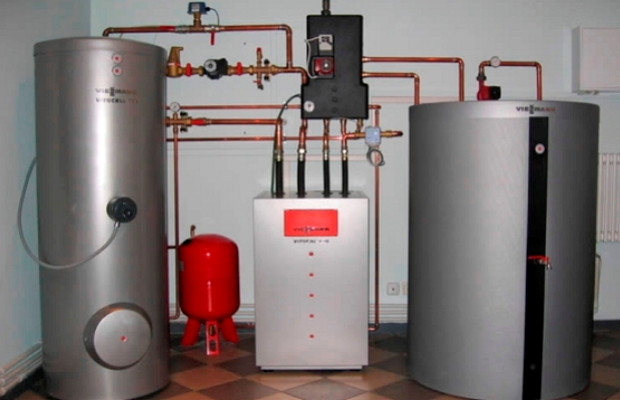
Most people understand by gas supply only the connection to the main gas pipeline. However, there are other ways to provide the home with this useful resource. The simplest of them is the use of liquefied gas in cylinders. In many localities, an organized supply and replacement of cylinders is carried out, many traditional gas stations are also equipping gas filling stations today. However, the cylinders are suitable only for cooking, for heating a large house this method remains very costly - every now and then you have to visit a gas station with empty containers.
Vertical and horizontal gas tank: pros and cons
The question of choosing a suitable device worries the vast majority of potential buyers.According to some experts, the best option is to buy a horizontal gas tank - due to its shape, it has a larger area for gas evaporation inside the tank. Accordingly, the larger the evaporation area, the more efficient the operation of the device.
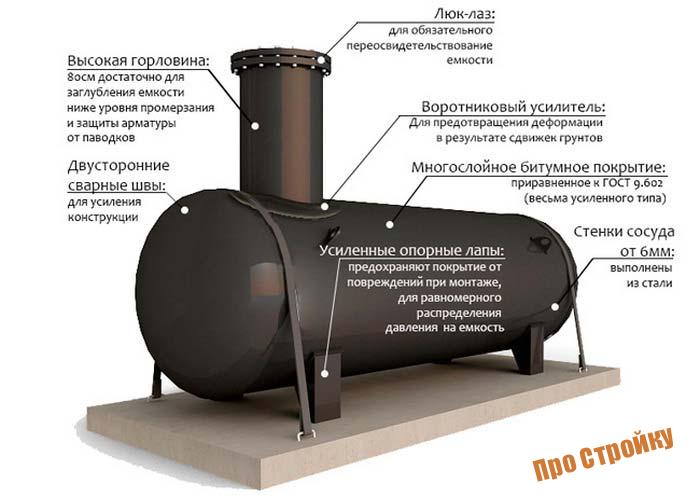
At the same time, vertical gas holders should also not be discounted - a small evaporation area is easily compensated by installing an evaporator
In addition, vertical models take up much less space, which is very important when there is a shortage of free space!. Vertical gas tanks in winter should be covered with a layer of thermal insulation
This will greatly increase the power of the system. Horizontal ones do not need to be insulated, since they are mounted in a private house, as a rule, in a pit on a reinforced concrete or concrete base. The boiler falls asleep after installation, and there is no need for insulation. It is not necessary to additionally process the body of a horizontal gas tank - it is already coated with a special anti-corrosion compound. In turn, the body of the vertical gas holder needs anti-corrosion treatment!
Vertical gas tanks in winter should be covered with a layer of thermal insulation. This will greatly increase the power of the system. Horizontal ones do not need to be insulated, since they are mounted in a private house, as a rule, in a pit on a reinforced concrete or concrete base. The boiler falls asleep after installation, and there is no need for insulation. It is not necessary to additionally process the body of a horizontal gas tank - it is already coated with a special anti-corrosion compound. In turn, the body of the vertical gas holder needs anti-corrosion treatment!
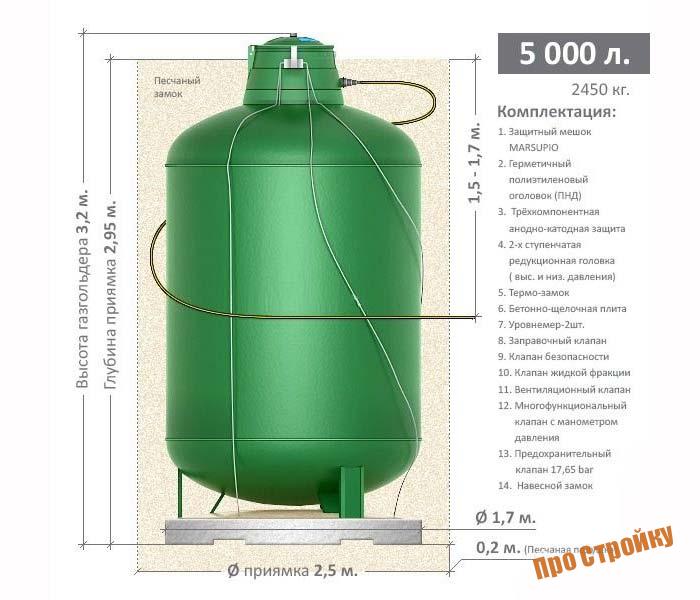
The main factor in choosing a suitable gas tank for a private house is the size of the area under the tank. With its shortage, the choice of a vertical model is ideal and vice versa.




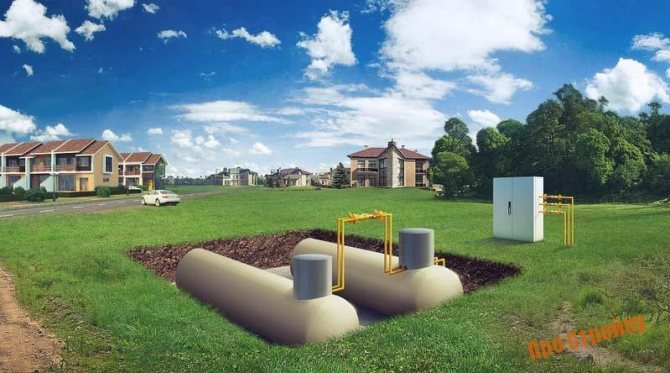
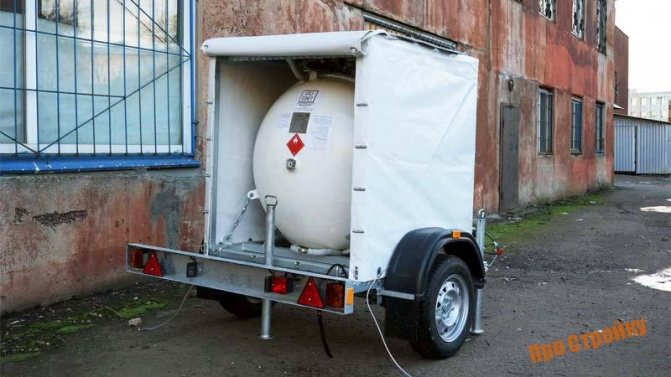
Mobile gas tanks are popular in Europe. As a rule, they are transported on a trailer and will be connected directly to the gas exhaust system. Connection speed - 1-2 minutes. It is possible to refuel a mobile gas tank at gas filling stations, which allows the consumer to choose the most optimal price for gas. The maximum volume of such a gas tank is 500 liters - it is more than enough to service a residential building with an area of up to 100 m2.
Types and levels
The population is supplied with high-calorific gas, the most optimal option for domestic use. The level of safety of fuel transported through main pipes is considered higher than its movement and use in cylinders. Laying pipes for this purpose depends on the characteristics of the relief and the required operation and is divided into 3 types:
- Overground communications are the least problematic type of installation, which is also used in suburban areas due to the lack of the need for expensive work both during the assembly process and, if necessary, repairs. It is made only of steel (as regulated in SNiP), but no special strictness is prescribed in the distance to construction. The only requirement is a two-sided security zone around the pipe of at least 2 m.
- Underground pipelines, recognized as the safest way to lay, with a minimum likelihood of damage from external causes. They can be made of polymer or steel pipes, but here the distance is normalized depending on several components.
- Internal networks are located inside the building, they must be left in the public domain, and the assembly should be made only from steel and copper. There are also standards for internal networks - they are determined by the object of consumption and its installation, while taking into account everything that may pose a potential threat of fire or explosion, up to the chimney.
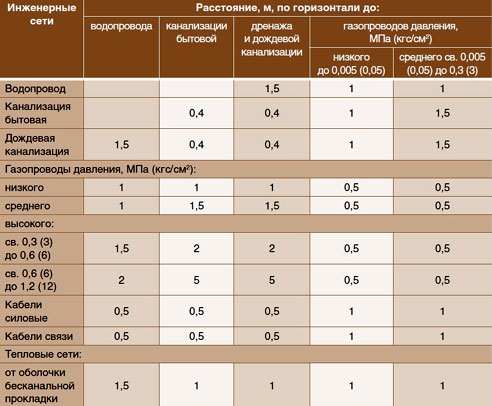 Table of the distance of buildings from the gas pipeline in accordance with the norms of SNiP
Underground gas pipeline
For underground structures, the distance at which a residential building can be placed during planning and development is dictated by the diameter of the pipe and the pressure under which gas is supplied.
The higher the transport pressure, the greater the potential hazard to residential buildings. That is why the distance from the gas pipe to the house must be strictly observed.
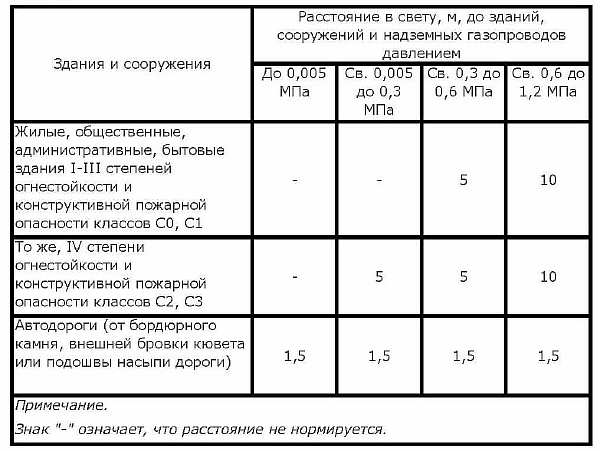 Table of distances from the gas pipeline to buildings
To obtain a permit, calculations are made by types of communications:
- low is considered to be up to 0.05 kgf / cm2 - served for residential, specialized and public buildings;
- a gas pipeline with medium pressure (from 0.05 kgf / cm2 to 3.0 kgf / cm2) is needed in urban boiler houses or in the main if the city is large;
- high pressure can be used in industrial facilities or in a separate project, used quite rarely.
The local gas distribution station has the necessary data on the placement of the pipe in relation to the level of soil freezing, its diameter and pressure. That is why it is necessary to apply there for permission and information. If we are talking about a small settlement where there is no centralized supply and main gas supply, such an appeal is not required.
The degree of fire resistance of buildings
3
Let's start with the main thing - laying a pipe is feasible only to an existing house.It is forbidden by law to supply gas to an empty site, even if you are planning here in a month. However, the room does not have to be already inhabited - if the walls and roof are built, you have every right to tie into the main pipe. Prepare a package of documents, namely:
- Documents for the right to own the land.
- Registration certificate of the built house.
- Certificate of ownership of the house.
- Cadastral plan.
You hardly need to be reminded of the presence of a passport and an identification code - these documents are needed everywhere. The farther the house is from the gas distribution pipeline, the greater the costs will be - laying the distribution line will cost a pretty penny, and you will also have to negotiate with neighbors who must give permission to lay pipes on the territory of their plots. Such permissions must be notarized!
If the rooms in your house have a standard ceiling height of 2.5–2.7 m, the house is well-insulated, and modern double-glazed windows are installed, then you can calculate the heat load yourself, starting from the square of the heated premises - by 10 sq.m. 1 kW of thermal energy is required. If the project of your house is replete with high non-standard ceilings, wide glass on the entire wall, you intend to heat the winter garden and glazed porch, then it is better to contact a specialized organization for the correct calculation of the power of heating equipment. Information about the heat load will also be needed when drawing up documents for gasification of the house, choosing a boiler and radiators.
Installation order
The procedure for installing and putting into operation a gas tank for a house or a summer residence consists of the following steps:
- preparatory, including system design and equipment purchase;
- connection of gas-consuming equipment.
Legal issues
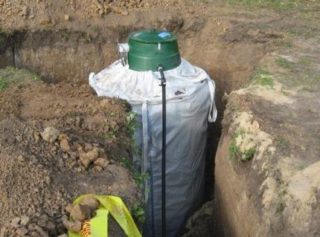 The gas tank must be registered in the gas industry
Gas storage tanks larger than 100 liters are subject to registration with supervisory authorities. The gas tank is never less than 450 liters. However, registration and registration requirements apply only to legal entities and individual entrepreneurs.






Design and purchase of equipment
It is better to entrust the drafting of the project to an organization that has a license for this type of activity. Accurately calculate the parameters of the equipment and draw up a safe gasification scheme for a private house only by highly qualified specialists.
Based on the specification, the selection and purchase of equipment is carried out. It is worth giving preference to large companies - their equipment is cheaper, it is easier to achieve warranty repairs than small one-day firms.
Calculation of the volume of the gas tank
 For a 100 sq. m. need a capacity of 2500 l
The consumption of the gas mixture is not constant throughout the year and depends on the street temperature, the method of installing the gas tank, individual preferences for the level of comfortable temperature in rooms and utility rooms, and the quality of insulation of building structures.
According to statistics collected by organizations operating individual gas supply systems, on average, about 25 liters of gas per year are consumed on average only for heating one square meter of a house.
For housing with an area of 100 m2, you will need a capacity of 2500 liters. Taking into account the operation of the gas stove and water heater in the warm season, a margin of 10% should be made.Take into account possible extremely low temperatures when more fuel is needed. Therefore, it is necessary to purchase a gas tank for 3000 liters if refueling is carried out once a year.
Calculations are approximate for the whole country, it is better to find out the exact figures from neighbors using similar equipment, or from local specialized organizations.
Accommodation Requirements
The place for mounting the gas tank on the site is chosen based on the requirements of SNiP and fire safety rules.
Basic Rules:
- it is necessary to organize a hard-surfaced entrance for the tanker and fire trucks;
- the foundation is made of prefabricated reinforced concrete slabs or poured with reinforced concrete with a thickness of at least 16 cm;
- to open water bodies, the distance should be at least 50 m;
- to infrastructure elements and neighboring areas at least 10 m with a gas tank volume of up to 10 m3 and 20 m with a capacity of more than 20 m3;
Outbuildings should not be located above the gas tank.
It is impossible to organize lawns with irrigation due to increased corrosion of underground parts.
Mounting Features
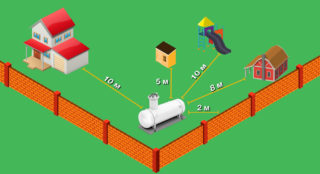 Rules for mounting a gas tank
For proper installation, you should study the documents:
- SP 62.13330.2011;
- SP 42-103-2003;
- SP 31-106-2002;
- PB 03-576-03;
- Federal Law of the Russian Federation N 123-FZ.
Learning all the rules and complying with the requirements on your own is a difficult task. Install the gas tank and carry out further maintenance is entrusted to a specialized organization.
In case of accidents and fires, property, including those of neighbors, may be damaged.
For the installation of a gas tank, it is necessary to provide for fastening to a concrete base. For outdoor systems, this will ensure structural stability and reduce the risk of capsizing in strong winds.Underground tanks are also necessarily attached to the pillow. Otherwise, when groundwater appears, the tank will float, destroying the pipelines.

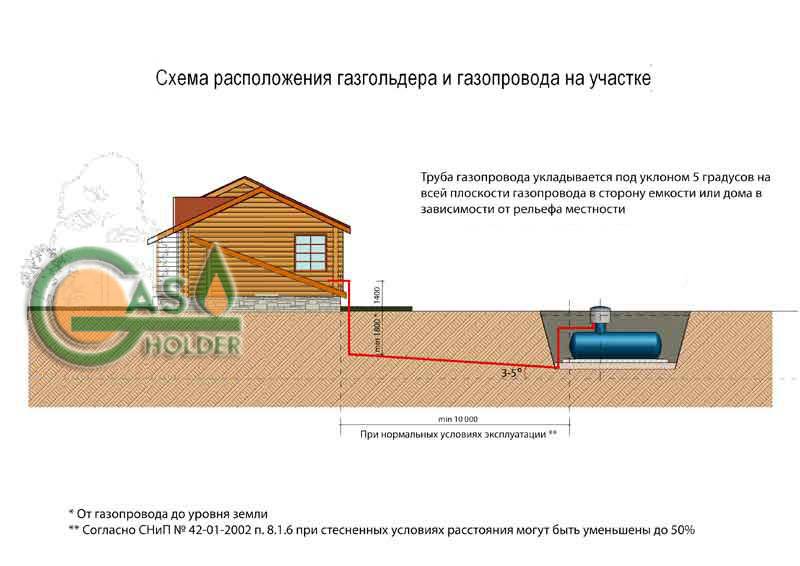


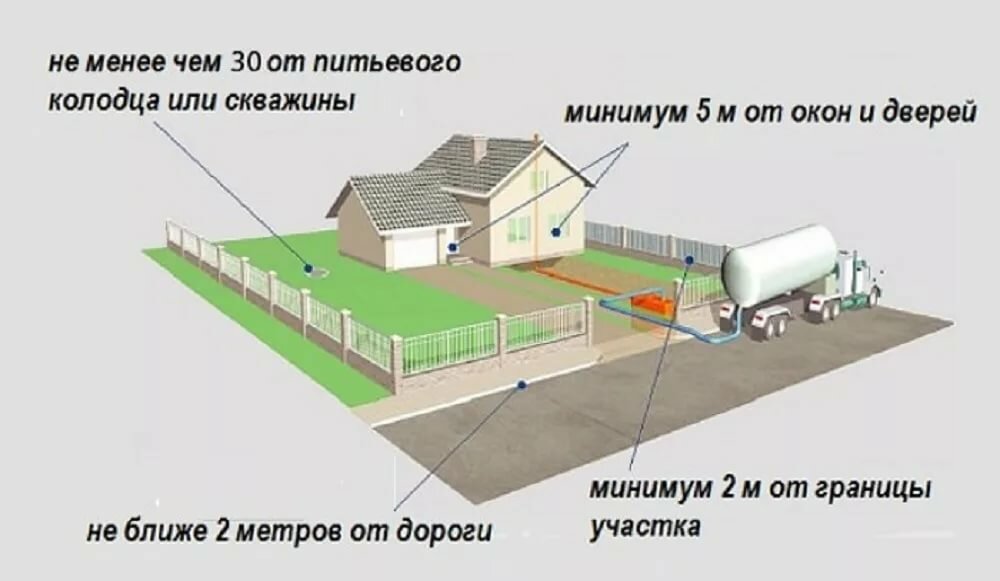


Installation of supply pipes is carried out at a depth of at least 1.5 m, and the slope should not exceed 1%. It is obligatory to install a condensate collector with the possibility of its cleaning.
The top of the tank must be at least 60 cm below ground level. Control, shut-off, safety valves are mounted above ground level.
Manufacturers
| Name | Characteristic |
|---|---|
| Deltagaz (Czech Republic) | The company produces tanks with a volume of 2700, 4800, 6400 liters, etc. It manufactures mainly underground tanks. Temperature range: from -20 to +40 degrees. Service life - 20 years. Models have a wall thickness of 8 mm, they are protected from corrosion by an epoxy coating. Moscow firms offer installation of the Deltagaz 2700 model for 175,000 rubles. Models for 10,000 liters can cost 425,000 rubles. |
| VPS (Czech Republic) | Models are slightly different from Deltagaz gas tanks. So, the temperature regime: from - 40 to +40 degrees. It is guaranteed that the model will last about 30 years. Underground tanks are produced; location is horizontal. Tanks are available in volumes of 2700, 4850, 6400, 9150 and 9950 liters. Prices for models and installation are almost the same as for Deltagaz products. |
| Antonio Merloni (Italy) | The company in its production focuses on the production of vertical underground tanks. Models have a protective epoxy layer and, as an option, are equipped with seven-component protective bags made of polymers. Tanks are available in volumes of 1000, 1650, 2250, 4500, 7250 and 10000 liters. Horizontal tanks for 5000 liters are also produced. Temperature conditions: from -40 to + 50 degrees. Service life - 50 years.Prices for Antonio Merloni tanks are on average from 170,000 to 390,000 rubles. |
| Chemet (Poland) | Gas holders of this Polish company have a polymer coating. The tanks are made of steel, have solid stiffeners inside - all this, of course, increases the cost of the model. Three underground horizontal models are in demand on the Russian market: Chemet 5 (4850 l), Chemet 6 (6400 l), Chemet 9 (9200 l). The cost of models starts from 330,000 rubles, excluding installation and connection. |
| Fas (Russia) | There are five horizontal underground models on sale: Fas 4.6, Fas 6.5, Fas 8.5, Fas 9.2, Fas 20 (the numbers after the name are volumes in thousands of liters). The tanks are coated with a two-component polymer. The service life is 30 years. The price of the Fas 4.6 tank is approximately 200,000 rubles. |
| Syty Gas (Bulgaria) | The manufacturer produces four types of tanks, with capacities of 2700, 4850, 6400 and 9150 liters. Working temperature: from -40 to +40 degrees. The service life is about 20 years. The tanks are covered with a layer of polyurethane paint and an epoxy layer. These are underground tanks of horizontal type. The price of a Syty-Gas tank for 4850 liters is about 330,000 rubles. This price includes all installation, connection and configuration work. |
Thus, the gas tank is able to contribute to autonomous gasification and solving the issues of heating and hot water supply of a country house, summer house and other objects.