
- Types of wires for electrical wiring
- Selection and calculation of the cross-section of cables with voltage up to 1 kV (for an apartment, house)
- Open and closed wiring
- Calculation of the cable cross-section by power
- Cross section of the input cable to the apartment
- How to determine the wire cross section for current
- Calculation example
- Why is the calculation made?
- What you need to know
- Which wire is better to use
- Types of wiring
- Cable selection
- Single core or stranded
- Copper or aluminum
- The choice of cable cross-section by power
Types of wires for electrical wiring
Basically, the wires are divided into copper and aluminum. Recently, copper cables have become increasingly popular because they have a fairly low resistance. With an equal cross section, a copper cable can pass more current and generate more power.

Copper cable has a longer service life. But aluminum products are much cheaper, so very often people prefer them.

Also, the wiring cable can be divided into:
- solid. Rough and not flexible, they are mainly laid in a hidden way. There is no need to constantly change them, they are quite high quality and durable. Bending is not allowed;
- stranded. Soft, provide constant bending. Sufficiently elastic, they are suitable for use in household appliances, for extension cords, carrying.Multi-core cables are used when laying electrical wiring using an open method. Therefore, they need to do double protection.
The following describes in detail what is best suited for the wiring system in a private house.
Selection and calculation of the cross-section of cables with voltage up to 1 kV (for an apartment, house)
Electric networks up to 1 kV are the most numerous - it's like a web that wraps around the entire electric power industry and in which there are so many automata, circuits and devices that an unprepared person's head can spin. In addition to 0.4 kV networks of industrial enterprises (factories, thermal power plants), these networks also include wiring in apartments, cottages. Therefore, the question of choosing and calculating the cable cross-section is also asked by people who are far from electricity - simple property owners.
The cable is used to transfer electricity from the source to the consumer. In apartments, we consider the area from the electrical panel, where the introductory circuit breaker for the apartment is installed, to the sockets into which our appliances are connected (TVs, washing machines, kettles). Everything that moves away from the machine to the side of the apartment in the department of the service organization, we have no right to climb there. That is, we are considering the issue of laying cables from the introductory machine to sockets in the wall and switches on the ceiling.
In the general case, 1.5 squares are taken for lighting, 2.5 for sockets, and calculation is necessary if you want to connect something non-standard with high power - a washing machine, a boiler, a heating element, a stove.
Open and closed wiring
Depending on the placement, the wiring is divided into 2 types:
- closed;
- open.
Today, hidden wiring is being installed in apartments.Special recesses are created in the walls and ceilings, designed to accommodate the cable. After installing the conductors, the recesses are plastered. Copper wires are used. Everything is planned in advance, because over time, to build up electrical wiring or replace elements, you will have to dismantle the finish. For hidden finishes, wires and cables that have a flat shape are more often used.
With open laying, the wires are installed along the surface of the room. Advantages are given to flexible conductors, which have a round shape. They are easy to install in cable channels and pass through the corrugation. When calculating the load on the cable, they take into account the method of laying the wiring.
Calculation of the cable cross-section by power
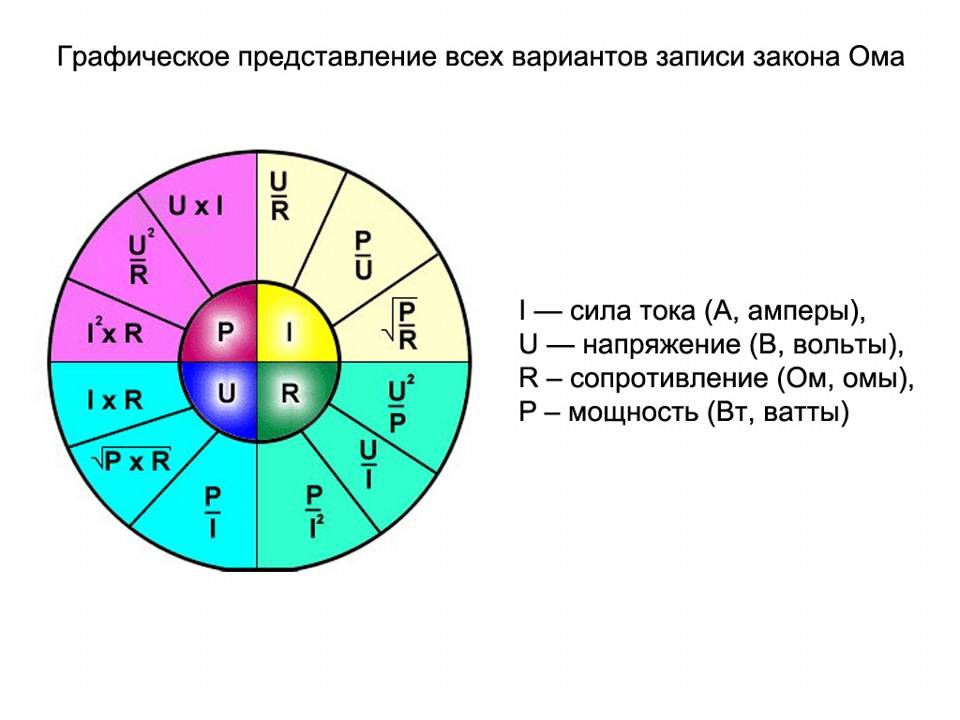
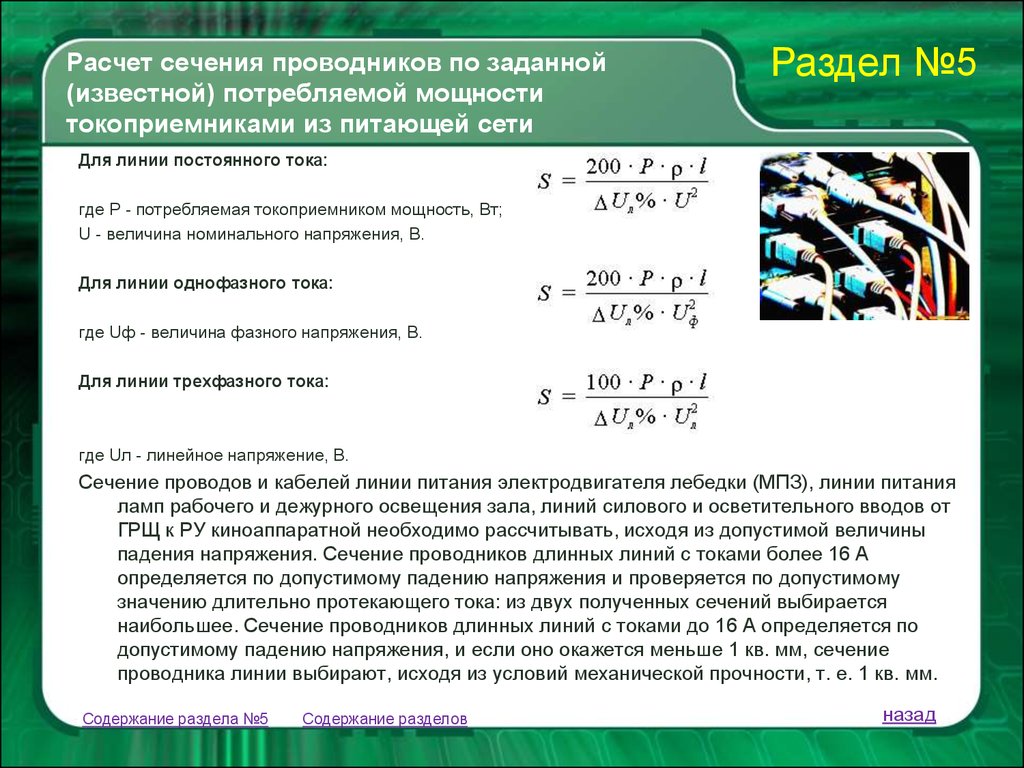
After calculating the power for a separate room or group of consumers, you should calculate the current strength in a household network with a voltage of 220 V. For this, there is a formula:
I = (P1 + P2 + ... + Pn) / U220, where: I - desired current strength; P1 ... Pn is the power of each consumer according to the list - from the first to the nth; U220 - mains voltage, in our case it is 220 V.
The calculation formula for a three-phase network with a voltage of 380 V looks like this:
I = (P1 + P2 + .... + Pn) / √3 / U380 where: U380 is the voltage in the three-phase network, equal to 380 V.
The current strength I, obtained in the calculations, is measured in Amperes, denoted by A.
The tables are compiled according to the throughput of the metal in the conductor. For copper, this value is 10 A per 1 mm, for aluminum - 8 A per 1 mm.


Determine the cross section according to the throughput follows by the following formula:
S = I / Z, where: Z is the capacity of the cable.
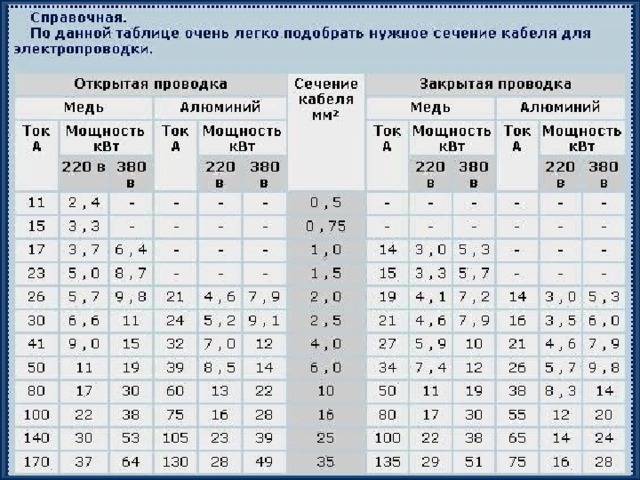
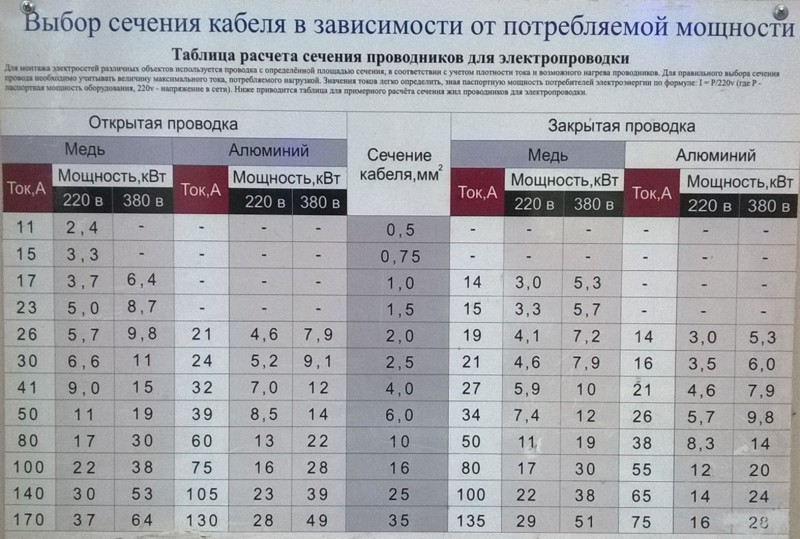
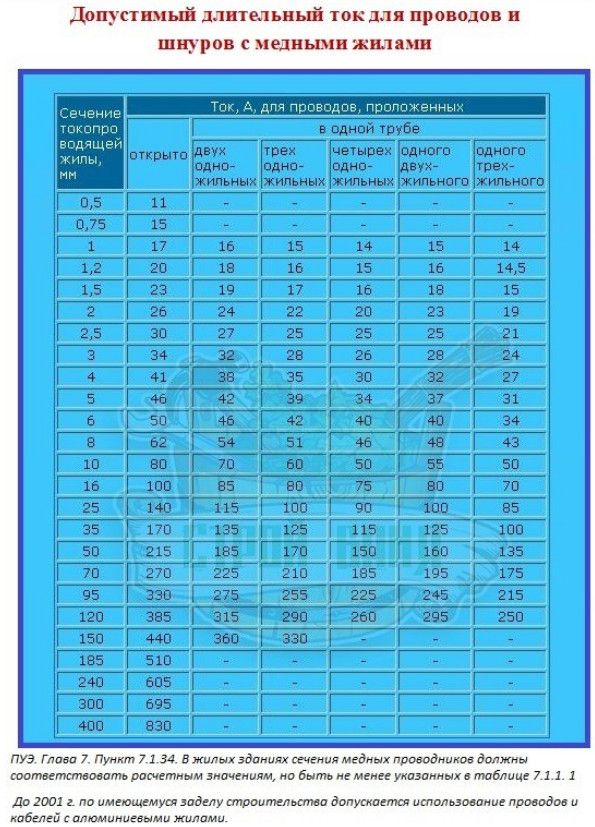
Table of the relationship between the magnitude of the current and the minimum cable cross-section
| Conductor core cross section, sq. mm | Current strength in conductors laid in one pipe, A | Current strength in the cable laid in an open way, A | ||||
| one 3-wire | one 2-wire | four 1-wire | three 1-wire | two 1-wire | ||
| 0,5 | – | – | – | – | – | 11 |
| 0,75 | – | – | – | – | – | 15 |
| 1 | 14 | 15 | 14 | 15 | 16 | 17 |
| 1,2 | 14,5 | 16 | 15 | 16 | 18 | 20 |
| 1,5 | 15 | 18 | 16 | 17 | 19 | 23 |
| 2 | 19 | 23 | 20 | 22 | 24 | 26 |
| 2,5 | 21 | 25 | 25 | 25 | 27 | 30 |
| 3 | 24 | 28 | 26 | 28 | 32 | 34 |
| 4 | 27 | 32 | 30 | 35 | 38 | 41 |
| 5 | 31 | 37 | 34 | 39 | 42 | 46 |
| 6 | 34 | 40 | 40 | 42 | 46 | 50 |
| 8 | 43 | 48 | 46 | 51 | 54 | 62 |
| 10 | 50 | 55 | 50 | 60 | 70 | 80 |
| 16 | 70 | 80 | 75 | 80 | 85 | 100 |
| 25 | 85 | 100 | 90 | 100 | 115 | 140 |
| 35 | 100 | 125 | 115 | 125 | 135 | 170 |
| 50 | 135 | 160 | 150 | 170 | 185 | 215 |
| 70 | 175 | 195 | 185 | 210 | 225 | 270 |
| 95 | 215 | 245 | 225 | 255 | 275 | 330 |
| 120 | 250 | 295 | 260 | 290 | 315 | 385 |
| 150 | – | – | – | 330 | 360 | 440 |
| 185 | – | – | – | – | – | 510 |
| 240 | – | – | – | – | – | 605 |
| 300 | – | – | – | – | – | 695 |
| 400 | – | – | – | – | – | 830 |
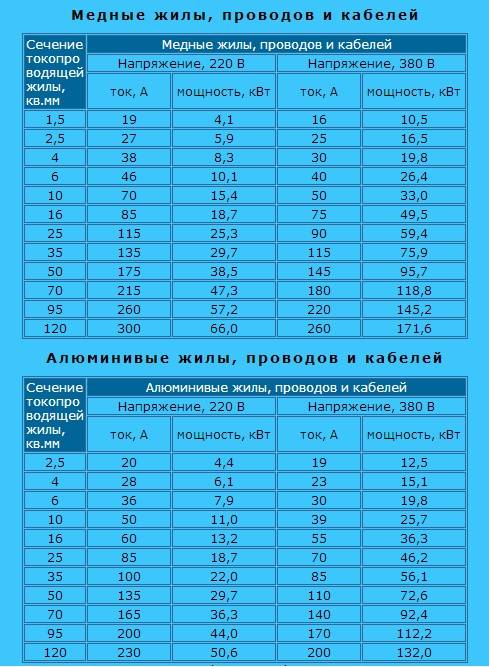
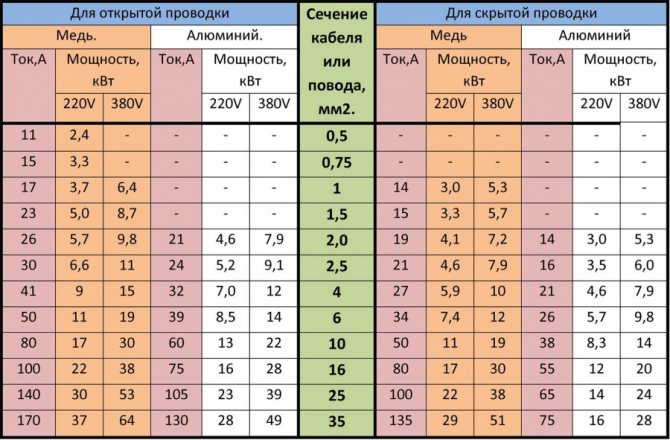
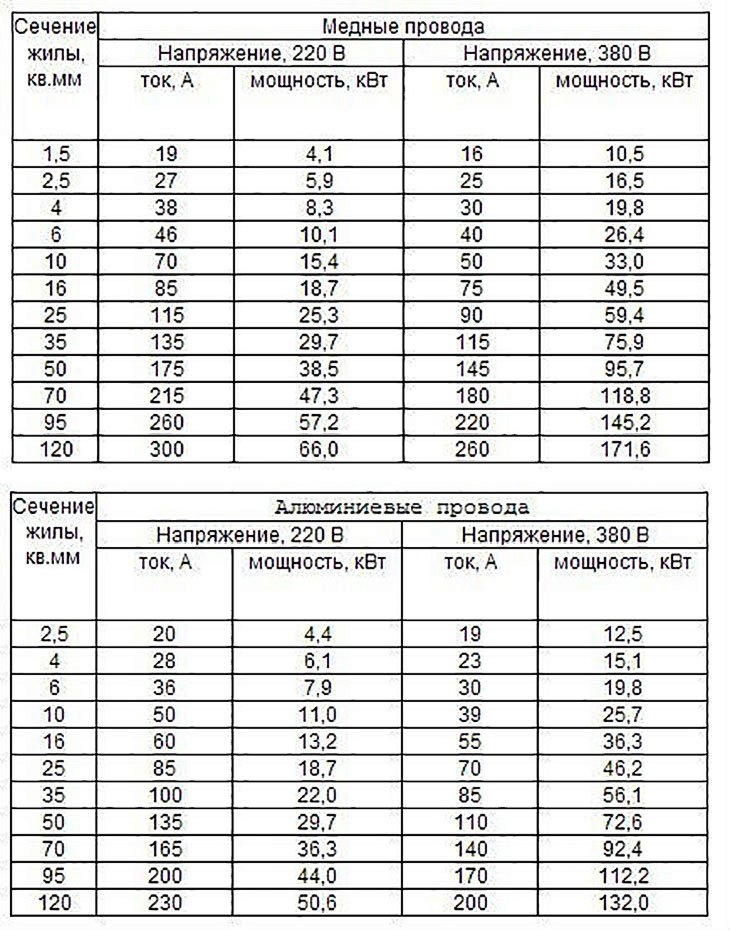
Table of power, current and section of copper wires
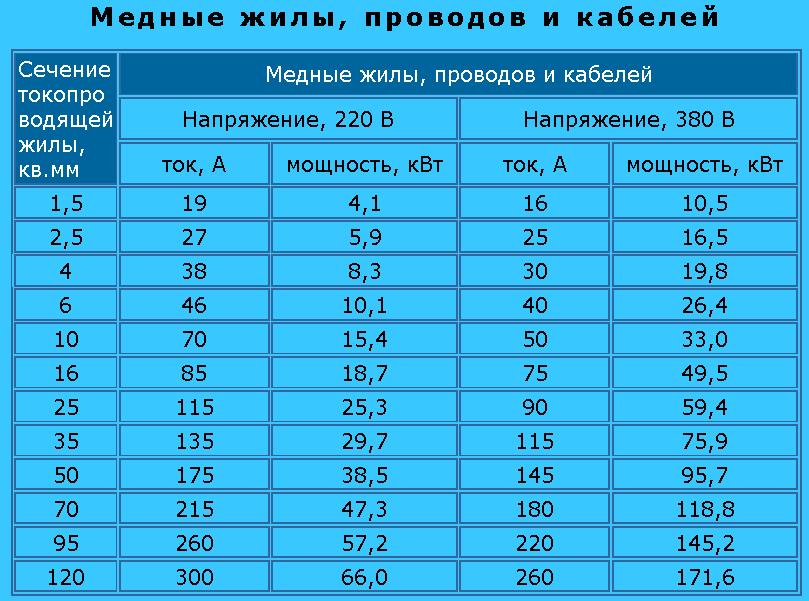
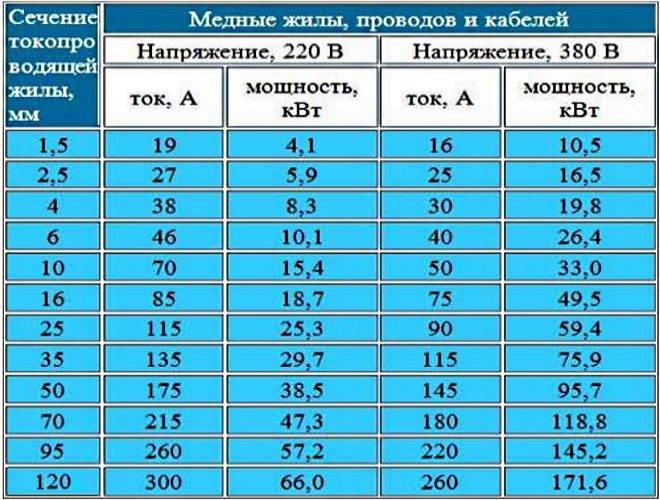
According to PES, it is allowed to calculate the cross section of the conductor depending on the power of consumers. For the copper core of the cable, see the table for calculations for a network with a voltage of 380 V and 220 V.
| Conductor core cross section, sq. mm | Copper core cables | |||
| Mains voltage 380 V | Mains voltage 220 V | |||
| Power, W | Current strength, A | Power, W | Current strength, A | |
| 1,5 | 10,5 | 16 | 4,1 | 19 |
| 2,5 | 16,5 | 25 | 5,9 | 27 |
| 4 | 19,8 | 30 | 8,3 | 38 |
| 6 | 26,4 | 40 | 10,1 | 46 |
| 10 | 33 | 50 | 15,4 | 70 |
| 16 | 49,5 | 75 | 18,7 | 80 |
| 25 | 59,4 | 90 | 25,3 | 115 |
| 35 | 75,9 | 115 | 29,7 | 135 |
| 50 | 95,7 | 145 | 38,5 | 175 |
| 70 | 118,8 | 180 | 47,3 | 215 |
| 95 | 145,2 | 220 | 57,2 | 265 |
| 120 | 171,6 | 260 | 66 | 300 |
According to this document, it is recommended to lay cables with copper conductors in residential buildings. To provide power to some types of engineering equipment, it is allowed through aluminum wiring with a minimum cross section of at least 2.5 square meters. mm.
Table of power, current and section of aluminum wires
According to the table, to determine the cross section of the aluminum core of the wiring, the following correction factors should be taken into account: according to the location (in the ground, hidden, open), according to the temperature regime, depending on humidity, etc. AT calculation table below valid for wires with rubber or plastic insulation of the types APPV, VVG, AVVG, VPP, PPV, PVS, VVP, etc. Cables with paper shielding or without insulation should be calculated according to the tables corresponding to their type.
| Conductor core cross section, sq. mm | Copper core cables | |||
| Mains voltage 380 V | Mains voltage 220 V | |||
| Power, W | Current strength, A | Power, W | Current strength, A | |
| 2,5 | 12,5 | 19 | 4,4 | 22 |
| 4 | 15,1 | 23 | 6,1 | 28 |
| 6 | 19,8 | 30 | 7,9 | 36 |
| 10 | 25,7 | 39 | 11 | 50 |
| 16 | 36,3 | 55 | 13,2 | 60 |
| 25 | 46,2 | 70 | 18,7 | 85 |
| 35 | 56,1 | 85 | 22 | 100 |
| 50 | 72,6 | 110 | 29,7 | 135 |
| 70 | 92,4 | 140 | 36,3 | 165 |
| 95 | 112,2 | 170 | 44 | 200 |
| 120 | 132 | 200 | 50,6 | 230 |
Cross section of the input cable to the apartment
The total power consumption of the apartment is always limited by the amount of allocated power, which is regulated by the installation of the input circuit breaker. The introductory machine is designed for a certain current, if it is exceeded, it will turn off the electricity supply.
Simply put, the power supply company has allowed you to use electricity, with a maximum power consumption of, say, 5.5 kW, this is the peak load value, you can simultaneously turn on electrical appliances, the total power consumption of which will not exceed this value. To ensure that these figures are not exceeded, a 25A circuit breaker is installed at the input, which will break the electrical circuit when a larger current is detected.
Most often, in an apartment building, an introductory machine is installed in the electrical panel in the common corridor on the landing, from which a power cable has already been thrown into your apartment - this is for the introductory cable.
The entire electrical load of your apartment falls on the input cable, so it has the largest cross section. His choice must be taken as seriously as possible and it is better to immediately provide for a power reserve.
Most often, according to SP31-110-2003, the allocated power of modern apartments with electric stoves is 10 kW, and even if you have an old house, sooner or later the power grid will be upgraded and when laying the input cable to the apartment, it is better to be prepared for this and lay the appropriate section.
The apartments use input cables of the following sections:
For a single-phase network: Copper cable (for example, VVGng-lS) 3 x 10 mm.kv. , circuit breaker 50A
For a three-phase network: Copper cable (for example, VVGng-lS) 5 x 4 mm.kv. , circuit breaker 25A



The rated power that these cables can withstand exceeds 10 kW, which is a necessary margin, given the logic of work inherent in protective automation.
In practice, most apartments have allocated electrical power from 3 kW to 15 kW, it all depends on the year the house was built, the presence of a gas or electric stove, and some other indicators. In old houses, with a gas stove, the allocated power rarely exceeds 3-5 kW, while in modern apartments with an electric one, it varies from 8-15 kW.
Indirectly, the denomination of the introductory machine to the apartment, installed in the floor board, can tell about the allocated power. But in any case, if you choose the wires recommended above, you will not lose.
This is interesting: Hidden wiring in a wooden house - video, photo, installation rules
How to determine the wire cross section for current
Considering that modern household equipment is quite capacious in terms of energy consumption, it must be remembered that an insufficient wire cross section with a large current passing through it can cause the cable to overheat. The consequences are a break in the circuit, which is difficult to detect, and a de-energization of part of the apartment. Even more often, in a place where the cross section is especially small or wires are twisted, a fire occurs as a result of overheating.
In general, the current strength in the network is determined for a single-phase network by the formula
- Where P is the total power of consumer devices, in watts;
- U - voltage in the wiring, 220 or 380 Volts;
- ToAnd - the coefficient of simultaneity of switching on, usually I take CI = 0.75;
- cos(φ) is a variable for household electrical equipment, taken equal to one.
For three-phase electrical wiring, the formula changes:
Here, the coefficient of simultaneity of switching on is not taken into account, information is entered on the presence of three phases
Calculation example
In a private house, LED lighting is used, the total power of all lighting fixtures is up to 1 kW. An electric heating boiler with a nominal power of 12 kW, two instantaneous water heaters with a power of 4 and 8 kW, a refrigerator (1.2 kW), a washer-dryer with a maximum power of 2 kW, and other large and small equipment with a peak power of 3 kW were installed. The wiring is divided into four lines - lighting (general), three power lines (for the boiler, water heaters, washing machine, refrigerator and iron), for a group of ordinary sockets. The current strength in each of the circuits will be determined either by the above formula.
- For the two most powerful power lines (12 kW each), we calculate the current strength I \u003d 12000 / (√3 × 220 × 1) \u003d 31 A
- For the third power line 6.2 kW I= 6200/(√3×220×1)=16.2 A
- For ordinary type sockets I= 3000/(√3×220×1)=7.8 A
- For illumination I= 1000/(√3×220×1)=2.6
From the table of the section of copper and aluminum wires below, we select the normal size of the section of the copper wire for current, taking the nearest larger value. We get for:
- the first two power lines have a cross section of 4 sq. mm, a core diameter of 2.26 mm;
- third power - 1 sq. mm, 1.12 mm in diameter;
- sockets and lighting - a section of 0.5 sq. mm and a diameter of 0.8 mm.
Interesting: often when calculating by current strength, the “plus 5 A” rule is used, that is, 5A is added to the figure obtained by calculation and the cross-sectional size is selected according to the increased current.
In practice, wires with a cross section of 1.5 sq. mm are accepted for the lighting line, and 2.5 ... 4 sq. mm for sockets.For the most "heavy" devices such as electric boilers and heaters, you can increase the cross section to 6 sq. Mm.
An increase in the cross section and diameter of the core is made with a decrease in the number of sockets. So, if you need to turn on a refrigerator, a kettle and an iron at the same time (using a tee), it is better to use wiring of a larger diameter than when plugging electrical appliances into three different sockets.
Interesting: for accelerated calculations, you can determine the cross section of the core as the current strength in the line divided by 10. For example, for power line 1 at a current of 31 A, we get 3.1 sq. mm, the nearest larger from the table is 4 sq. mm, which is quite consistent given calculations.


Why is the calculation made?
Wires and cables through which electric current flows are the most important part of electrical wiring.
The calculation of the wire cross section must be made in order to make sure that the selected wire meets all the requirements for the reliability and safe operation of electrical wiring.
Safe operation lies in the fact that if you choose a section that does not correspond to its current loads, this will lead to excessive overheating of the wire, melting of the insulation, short circuit and fire.
Therefore, the issue of choosing a wire cross-section must be taken very seriously.
What you need to know
The main indicator by which the wire is calculated is its long-term permissible current load. Simply put, this is the amount of current that it is able to pass for a long time.
To find the value of the rated current, it is necessary to calculate the power of all connected electrical appliances in the house.Consider an example of calculating the wire cross section for an ordinary two-room apartment.
Table of power consumption / current strength of household electrical appliances
| electrical appliance | Power consumption, W | Current strength, A |
|---|---|---|
| Washing machine | 2000 – 2500 | 9,0 – 11,4 |
| Jacuzzi | 2000 – 2500 | 9,0 – 11,4 |
| Electric floor heating | 800 – 1400 | 3,6 – 6,4 |
| Stationary electric stove | 4500 – 8500 | 20,5 – 38,6 |
| microwave | 900 – 1300 | 4,1 – 5,9 |
| Dishwasher | 2000 – 2500 | 9,0 – 11,4 |
| Freezers, refrigerators | 140 – 300 | 0,6 – 1,4 |
| Meat grinder with electric drive | 1100 – 1200 | 5,0 – 5,5 |
| Electric kettle | 1850 – 2000 | 8,4 – 9,0 |
| Electric coffee maker | 630 – 1200 | 3,0 – 5,5 |
| Juicer | 240 – 360 | 1,1 – 1,6 |
| Toaster | 640 – 1100 | 2,9 – 5,0 |
| Mixer | 250 – 400 | 1,1 – 1,8 |
| hair dryer | 400 – 1600 | 1,8 – 7,3 |
| Iron | 900 –1700 | 4,1 – 7,7 |
| A vacuum cleaner | 680 – 1400 | 3,1 – 6,4 |
| Fan | 250 – 400 | 1,0 – 1,8 |
| Television | 125 – 180 | 0,6 – 0,8 |
| radio equipment | 70 – 100 | 0,3 – 0,5 |
| Lighting devices | 20 – 100 | 0,1 – 0,4 |
After the power is known, the calculation of the cross section of a wire or cable is reduced to determining the current strength based on this power. You can find the current strength by the formula:
1) The formula for calculating the current strength for a single-phase network 220 V:
calculation of current strength for a single-phase network
where P is the total power of all electrical appliances, W; U is the mains voltage, V; KI= 0.75 — simultaneity coefficient; cos for household appliances - for household appliances. 2) The formula for calculating the current strength in a three-phase network 380 V:
calculation of current strength for a three-phase network
Knowing the magnitude of the current, the cross section of the wire is found according to the table. If it turns out that the calculated and tabular values of the currents do not match, then in this case the nearest larger value is chosen. For example, the calculated value of the current is 23 A, according to the table, we select the nearest larger 27 A - with a cross section of 2.5 mm2.
Which wire is better to use
Today, for installation, both open wiring and hidden, of course, copper wires are very popular.
- Copper is more efficient than aluminum
- it is stronger, softer and does not break in places of inflection compared to aluminum;
- less susceptible to corrosion and oxidation.When connecting aluminum in a junction box, the twist points oxidize over time, this leads to loss of contact;
- the conductivity of copper is higher than that of aluminum, with the same cross section, a copper wire is able to withstand a greater current load than aluminum.
The disadvantage of copper wires is their high cost. Their cost is 3-4 times higher than aluminum ones. Although copper wires are more expensive, they are more common and more popular than aluminum wires.
Types of wiring

Before the procedure for calculating the cable cross-section, it is necessary to determine the material from which it will be made. It can be aluminum-copper or a hybrid - aluminum-copper. We will describe in detail the characteristics of each product, as well as their advantages and main disadvantages:


- Aluminum wiring. Compared to copper, it can be purchased at a lower price. She is much lighter. Also, its conductivity is almost 2 times less than that of copper wiring. The reason for this is the possibility of oxidation over time. It is worth noting that this type of wiring needs to be replaced after some time, as it will gradually lose its shape. Soldering an aluminum cable can be done independently without the help of a specialist;
- Copper wiring. The cost of such a product is several times higher than an aluminum cable. At the same time, according to experts, its distinguishing feature is elasticity, as well as significant strength. The electrical resistance in it is quite small. Soldering such a product is quite easy;
- Aluminium-copper wiring. In its composition, most of it is reserved for aluminum, and only 10–30% is copper, which is coated on the outside by a thermomechanical method.It is for this reason that the conductivity of the product is slightly less than copper, but more than aluminum. It can be purchased at a lower cost than copper wire. During the entire period of operation, the wiring will not lose shape and oxidize.
It is this type of wiring that is recommended to be used instead of aluminum. In this case, its diameter should be exactly the same. In the event that you change to copper, then this ratio should be 5:6.
If the choice of wire section is necessary for laying in domestic conditions, then experts recommend using stranded wires. In this case, they guarantee you flexibility.
Cable selection
It is best to make internal wiring from copper wires. Although aluminum will not yield to them. But there is one nuance that is associated with the correct connection of the sections in the junction box. As practice shows, the joints often fail due to the oxidation of the aluminum wire.
Another question, which wire to choose: solid or stranded? Single-core has the best current conductivity, so it is recommended for use in household electrical wiring. Stranded has high flexibility, which allows it to be bent in one place several times without compromising quality.
Single core or stranded
When installing electrical wiring, wires and cables of the PVS, VVGng, PPV, APPV brands are usually used. This list includes both flexible cables and solid core.
Here we would like to tell you one thing. If your wiring will not move, that is, it is not an extension cord, not a fold that constantly changes its position, then it is preferable to use a monocore.
As a result, if there are a lot of conductors, then the oxidation area is much larger, which means that the conductive cross section “melts” much more. Yes, this is a lengthy process, but we don’t think that you are going to change the wiring often. The more she works, the better.
Especially this effect of oxidation will be strongly manifested at the edges of the cable cut, in rooms with temperature changes and high humidity.
So we strongly recommend that you use a monocore! The cross section of a cable or wire monocore will change slightly over time, and this is so important in our further calculations
Copper or aluminum
In the USSR, most residential buildings were equipped with aluminum wiring; this was a kind of norm, standard, and even dogma. No, this does not mean at all that the country was poor and did not have enough for copper. Even in some cases it's the other way around.
But apparently the designers of electrical networks decided that they could save a lot economically if they used aluminum rather than copper. Indeed, the pace of construction was enormous, suffice it to recall the Khrushchevs, in which half of the country still lives, which means that the effect of such savings was significant. There can be no doubt about this.
However, today the realities are different, and aluminum wiring is not used in new residential premises, only copper. This is based on the norms of the PUE paragraph 7.1.34 "Cables and wires with copper conductors should be used in buildings ...".
So, we strongly do not recommend you to experiment and try aluminum. Its disadvantages are obvious. Aluminum strands cannot be soldered, it is also very difficult to weld, as a result, contacts in junction boxes may break over time.Aluminum is very fragile, two or three bends and the wire fell off.
There will be constant problems with connecting it to sockets, a switch. Again, if we talk about conducted power, then a copper wire with the same cross section for aluminum is 2.5 mm2. allows a continuous current of 19A, and for copper 25A. Here the difference is more than 1 kW.
So once again we will repeat - only copper! Further, we will already proceed from the fact that we calculate the cross section for a copper wire, but in the tables we will give the values \u200b\u200band for aluminum. You never know.
The choice of cable cross-section by power
I will continue to consider an apartment, since the people at the enterprises are literate and know everything. To estimate the power, you need to know the power of each electrical receiver, add them together. The only disadvantage when choosing a cable with a larger cross section than necessary is the economic inexpediency. Since a larger cable costs more, but it heats up less. And if you choose the right one, it will come out cheaper and will not warm up much. It is impossible to round it down, since the cable will heat up more from the current flowing in it and will quickly go into a faulty state, which can lead to a malfunction of the electrical appliance and all wiring.
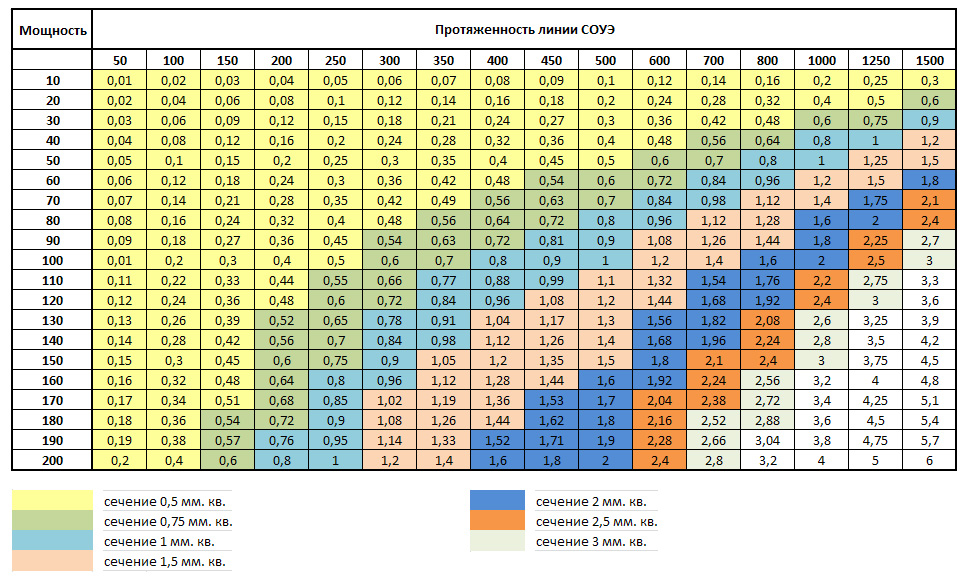
The first step in choosing the cable section will be to determine the power of the loads connected to it, as well as the nature of the load - single-phase, three-phase. Three-phase it can be a stove in an apartment or a machine in a garage in a private house.




If all devices have already been purchased, then you can find out the power of each according to the passport that comes with the kit, or, knowing the type, you can find a passport on the Internet and see the power there.
If the devices are not purchased, but buying them is included in your plans, then you can use the table where the most popular devices are listed. We write out the power values and add up those values \u200b\u200bthat can simultaneously be included in one outlet. The values given below are for reference only, the larger value should be used in the calculation (if the power range is specified). And it is always better to look at the passport than to take averages from tables.
| electrical appliance | Probable power, W |
|---|---|
| Washing machine | 4000 |
| Microwave | 1500-2000 |
| Television | 100-400 |
| Screen | E |
| Fridge | 150-2000 |
| Electric kettle | 1000-3000 |
| Heater | 1000-2500 |
| Electric stove | 1100-6000 |
| Computer (everything is possible here) | 400-800 |
| Hair dryer | 450-2000 |
| Air conditioner | 1000-3000 |
| Drill | 400-800 |
| Grinder | 650-2200 |
| Perforator | 600-1400 |
The switches that come after the introductory are conveniently divided into groups. Separate switches for powering the stove, washing machine, boiler and other powerful appliances. Separate for powering lighting of individual rooms, separate for groups of room outlets. But this is ideal, in reality it is just an introductory and three machines. But I got distracted...
Knowing the value of the power that will be connected to this outlet, we select the cross section from the table with rounding up.
I will take as a basis tables 1.3.4-1.3.5 from the 7th edition of the PUE. These tables are given for wires, aluminum or copper cords with rubber and (or) PVC insulation. That is, what we use in home wiring - copper NYM and VVG, and aluminum AVVG, beloved by electricians, are also suitable for this type.
In addition to the tables, we need two active power formulas: for a single-phase (P = U * I * cosf) and a three-phase network (the same formula, just multiply by the root of three, which is 1.732). We take the cosine to the unit, we will have it for the reserve.
Although there are tables where for each type of socket (a socket for a machine tool, a socket for this, for this) its own cosine is described. But it cannot be greater than one, so it’s not scary if we accept it as 1.
Even before looking at the table, it is worth deciding how and in what quantity our wires will be laid. There are the following options - open or in the pipe. And in the pipe you can have two or three or four single-core, one three-core or one two-core. For an apartment, we have a choice of either two single-core in a pipe - this is for 220V, or four single-core in a pipe - for 380V. When laying in a pipe, it is necessary that 40 percent of free space remain in this very pipe, this is to avoid overheating. If you need to lay wires in a different quantity or in a different way, then feel free to open the PUE and recalculate for yourself, or choose not by power, but by current, which will be discussed a little later in this article.
You can choose from both copper and aluminum cable. Although, recently, copper has been more widely used, since a smaller section will be required for the same power. In addition, copper has better electrical conductive properties, mechanical strength, is less susceptible to oxidation, and, in addition, the service life of copper wire is higher compared to aluminum.
Decided on whether copper or aluminum, 220 or 380V? Well, look at the table and select the section. But we take into account that in the table we have values \u200b\u200bfor two or four single-core wires in a pipe.
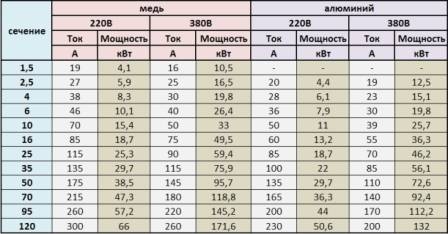
We calculated the load, for example, at 6kW for a 220V outlet and look at 5.9 a little, although close, we choose 8.3kW - 4mm2 for copper. And if you decide on aluminum, then 6.1 kW is also 4mm2.Although copper is worth choosing, since the current with the same cross section will be 10A more allowable.



