- Recommendations for installing Kermi radiators
- Classification
- Determining the power of radiators based on the volume of the room
- How to choose the right thermostatic mechanism for a radiator
- Models Kermi FTV 33
- Characteristics
- Price
- Peculiarities
- Models
- Compact radiator therm-x2 Plan-K
- Compact sleek radiator (Kermi PK0)
- valve radiator therm-x2 Plan-V
- Smooth valve radiator with pre-installed valve (Kermi PTV)
- therm-x2 Plan-Vplus
- Smooth valve radiator with universal connection (Kermi PTP)
- therm-x2 Plan-K / -V / -Vplus Hygiene
- For hygiene requirements
- Other benefits
- What is the Kermi brand
- Peculiarities
- General information about Kermi radiators
- Kermi range of radiators
- Price and installation algorithm
- Steel appliances
- Innovative technologies
- Existing varieties
Recommendations for installing Kermi radiators
Kermi battery models are specially manufactured in common sizes to make installation or replacement easier. At the same time, the manufacturer took care to make the connection task as easy as possible by providing detailed instructions:
- Calculation of the power of Kermi heating radiators. The required performance is calculated by the formula - 100 W + 1 m². You can choose a radiator simply by determining the heated area and using the calculator located on the site.
Installation features - the minimum installation height from the floor is 10 cm. It is recommended that the product does not adjoin the wall closely, the minimum gap is 5 cm. When installing, it is better to use branded accessories for installation. Wall mounts are included, the lower connection unit, shut-off and control valves are purchased separately.
Connection - series connection of radiators in a single-pipe heating system is carried out through a special adapter. With a two-pipe connection, the installation of additional units is not required. It is recommended to install a Mayevsky valve on each radiator, which allows you to bleed air from the heating system after filling the pipeline with water. It is necessary to ventilate the system starting from the battery closest to the boiler.
Features of the installation of convectors - when installing the convector into the floor, a recess is prepared in advance. With the help of a grinder, a niche is cut out in the floor, 5 mm larger than the dimensions of the convector body. At the connection point of the pipeline, strobes are cut out of sufficient width to ensure unhindered access to the connection point. Floor mounting is carried out using special legs that fix the convector body. The design of the floor brackets (included) allows you to set the required height.
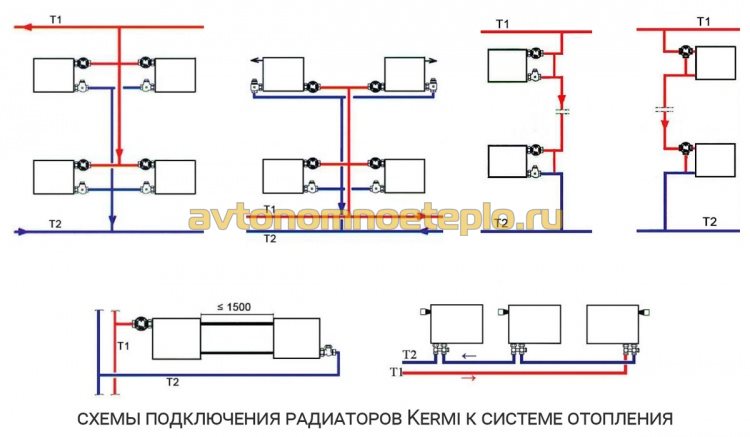
The kit includes a detailed wiring diagram for Kermi radiators with a bottom connection, provided by the manufacturer. The heat dissipation of the battery and the uniformity of the heating of the panel depend on the exact observance of the instructions.
Classification
At the moment, three types of radiators with a lower connection are on sale:
- Typical, made of aluminum alloy, or bimetallic - sectional, equipped with convection plates.Such radiators are classified as universal. They are equipped with four channels for connection, therefore, there are also four ways to connect them to the heating network. Radiators of this type are characterized by a low power loss - only 15% with the most unfavorable option. Some models are equipped with a thermostatic insert, which makes it possible to install a thermostatic head on each radiator.
- Panel: can have a smooth or corrugated surface. The scheme for connecting radiators of this type is floor or bottom. On sale there are models with the right-hand or left-side arrangement of connecting fittings.
- Steel tubular: are among the most efficient, because they have the largest heat transfer area. Models up to 2.5 meters high are designed for one-way connection, that is, both pipes - inlet and outlet - are located side by side.
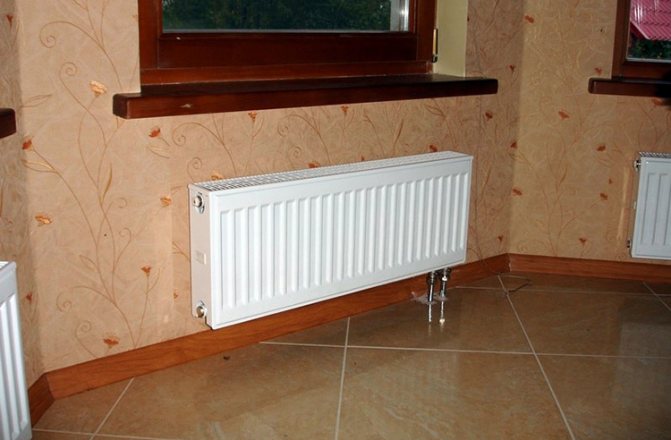
Steel radiator with bottom connection
According to the type of connection to the heating network, radiators are divided into:
In the first case, the inlet and outlet are located on the same side of the device. The upper one serves to supply the coolant, the lower one - to return it to the system.
The versatile method - when the supply and discharge is carried out from opposite sides of the radiator - is the most successful for individual heating.
Gone are the days when only cast-iron radiators were used in apartments. Other materials have been replaced. Which radiator is better - copper or aluminum: a comparative review and a conclusion about efficiency.
Installation guide do-it-yourself heating batteries in the apartment, see here.
You will learn about the features of installing heating batteries in a private house from this article.
Determining the power of radiators based on the volume of the room
According to building codes, one cubic meter of space requires the following heat transfer:
- in panel buildings - 0.041 kW;
- in brick - 0.034 kW.
For example, let's take a room in a brick building. Ceiling height - 2.7 m. Walls 3 and 5 m long. Room volume - 40.5 m3. To obtain an average power indicator, it is necessary to multiply the volume by a factor of 0.034 kW. The result of the product (40.5x0.034) is 1.377 kW (1377 W).
But this result is valid only for the middle climatic zone and without taking into account the correction, which depends on the number of external walls and windows. The illustration shows the dependence of the coefficients on the average winter temperature.
Some coefficients by which you need to multiply the average required heat transfer, depending on the number of external walls and windows, as well as taking into account the location of window openings:
- 1 outer wall - 1.1;
- 2 external walls and 1 window - 1.2;
- 2 external walls and 2 windows - 1.3;
- windows "look" towards the north - 1.1.
If radiators are supposed to be installed in a niche, then for Kermi batteries, the power calculation is adjusted taking into account a factor of 0.5. If the thermal structure will be covered with a perforated panel, the average value should be multiplied by 1.15.
For example, in our conditional room with a volume of 40.5 there are two walls facing the street. At the same time, the average temperature in winter is -30. In this case, we multiply the obtained heat transfer by the required coefficients - 1377x1.2x1.5 = 2478.6 W. The rounded result is 2480 watts.
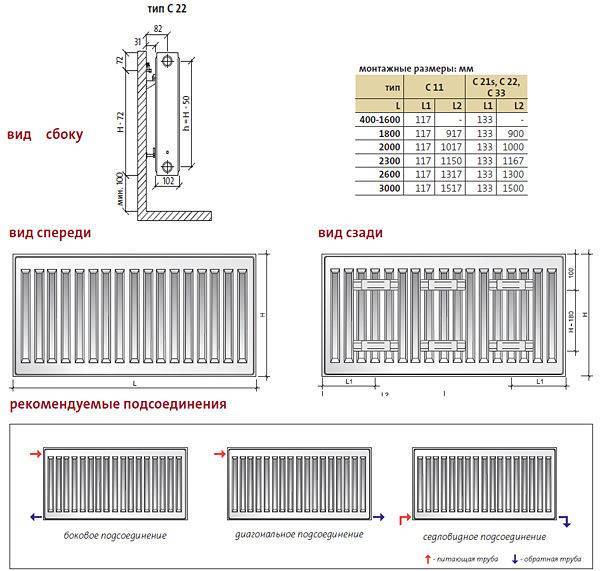
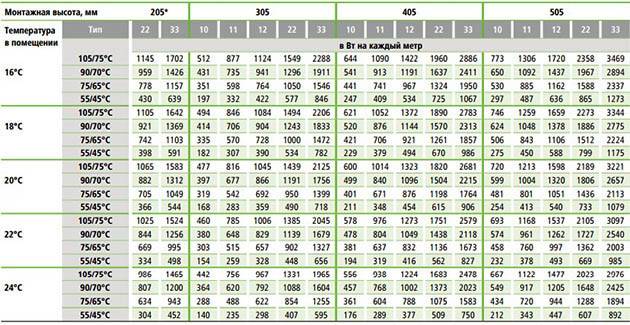
This number is relatively accurate, but the matter is not limited to the mentioned coefficients. Specialists in thermal calculations take into account what material the walls are made of, the characteristics of the rooms located around, etc. But subject to average indicators, this number can be used.To determine the type of batteries, the Kermi radiator power table is used.



How to choose the right thermostatic mechanism for a radiator
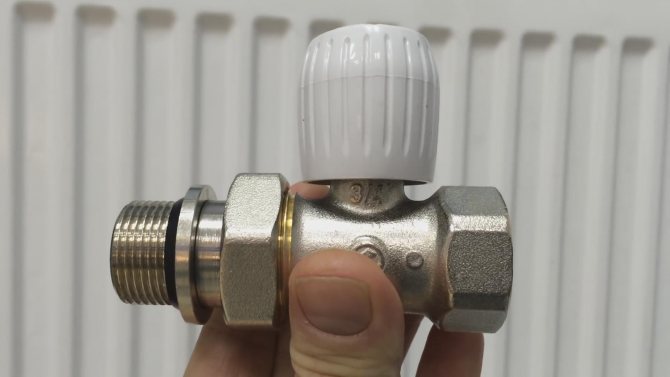
When choosing a thermal head, it is necessary to take into account all the features of the installed heating system. Given these features, as well as the installation conditions of the radiators, a wide choice of combinations of heads and valves opens up.
For example, if your heating system is identified as one-pipe, valves with maximum water flow are best suited, as are systems with two-pipe systems in which water moves naturally, without the intervention of any mechanisms.
But if a two-pipe radiator is used, the water supply to which occurs due to the circulation pump, then it is best to select a valve with regulation of this very supply.
After the correct decision on the choice of the valve is made, you can proceed to the thermal head itself.
There are five most common and affordable types of Kermi thermal heads that you can buy, namely:
- consignment note with an internal thermoelement;
- electronic with the possibility of programming;
- with external temperature sensor;
- anti-vandal;
- thermal heads with external regulator.
Classic thermal heads, in which the temperature sensor is installed internally, are installed in cases where the axis of the device is in a horizontal position after installation.
Many professionals recommend not to install the thermal head on a heating radiator in a vertical manner.The fact is that the heat that comes from the radiator will greatly affect such an installation, as a result of which the device will not function correctly with almost 100% probability.
If for some reason it is not possible to install the head in a horizontal position, you can use a special remote temperature sensor that is attached to the capillary tube.
Read also: How to connect a speed controller to an angle grinder
There are other reasons for installing an external temperature sensor, namely:
- If the radiator will be located behind the curtains.
- If there is another heat source near the thermal head.
- If the battery is located under a large window sill.
As for electronic sensors with an external display and the possibility of programming, they also come in two types:
- with built-in control unit;
- with a removable (remote) control unit.
Devices with a removable control unit can also continue to work after it is separated from the structure, which the option with an integrated unit cannot boast of. However, of course, the price of the second option is somewhat higher.
Such types of thermal heads can significantly reduce the price of electricity, since they allow you to adjust the temperature in different modes and at different times of the day. Thus, the heat level can be reduced during the day and increased at night.
Anti-vandal devices will be a great solution for homes with small children. As we all know, children always love to touch and twist everything. And this is not always safe both for children and for the mechanisms themselves in the house. Anti-vandal thermostats will protect the settings of the mechanism from vandal actions performed with them.In public buildings, oddly enough, such thermal heads were also able to become widespread.
Models Kermi FTV 33
In terms of heat transfer, these models are recognized as one of the best heaters: they are ideal for large houses, have many functions, and in general, such heating systems allow you to set different modes for individual rooms.
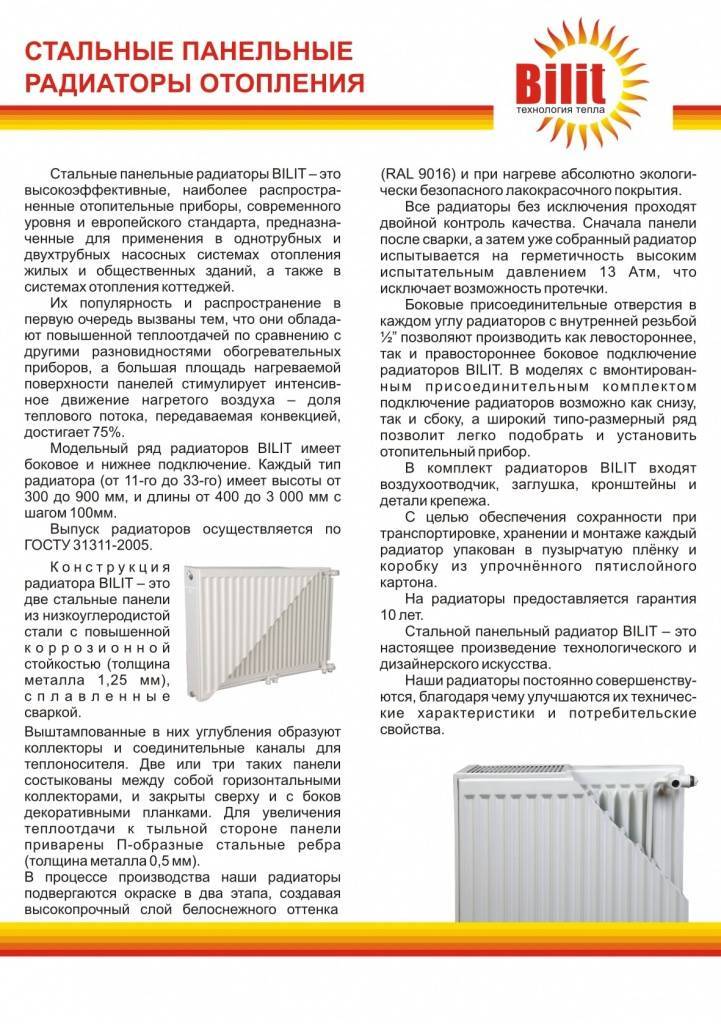
This line of heaters has the most powerful thermal conductivity thanks to three heating panels and three heat convectors.
Characteristics
All Kermi equipment is made from the same materials, the difference is only in the number of heaters and parameters:
- strong steel with hydrocarbon gives strength and durability;
- good heat dissipation;
- the presence of two heating pipes: supply and discharge;
- the maximum number of heating panels on the heater market;
- external U-shaped view;
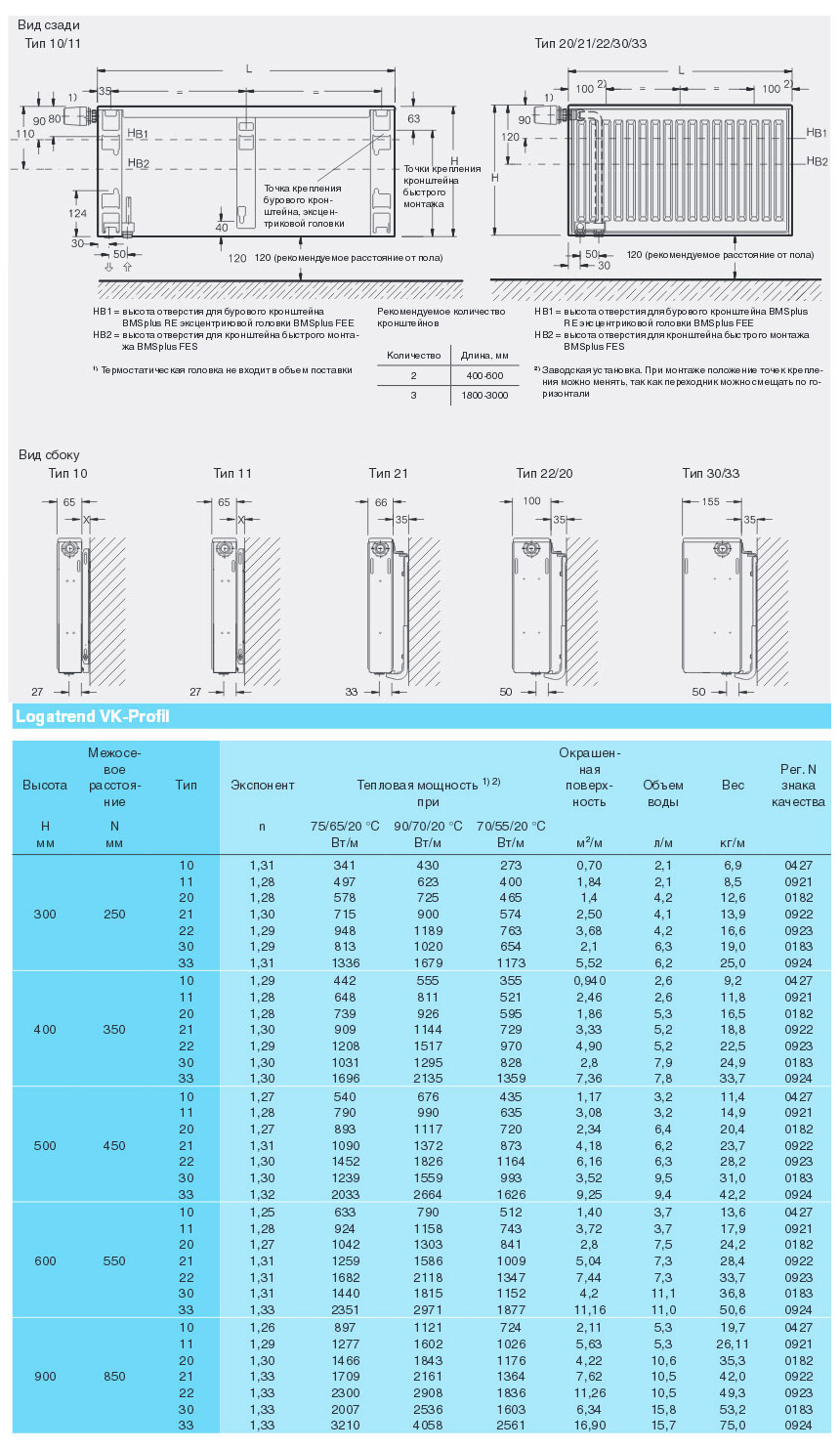
- height - from 300 mm, width - from 400 mm, depth - from 155 mm.
Price
The price of devices is higher than previous models, which is due to the greater heat dissipation of FTV 33 radiators. Approximate prices are as follows:
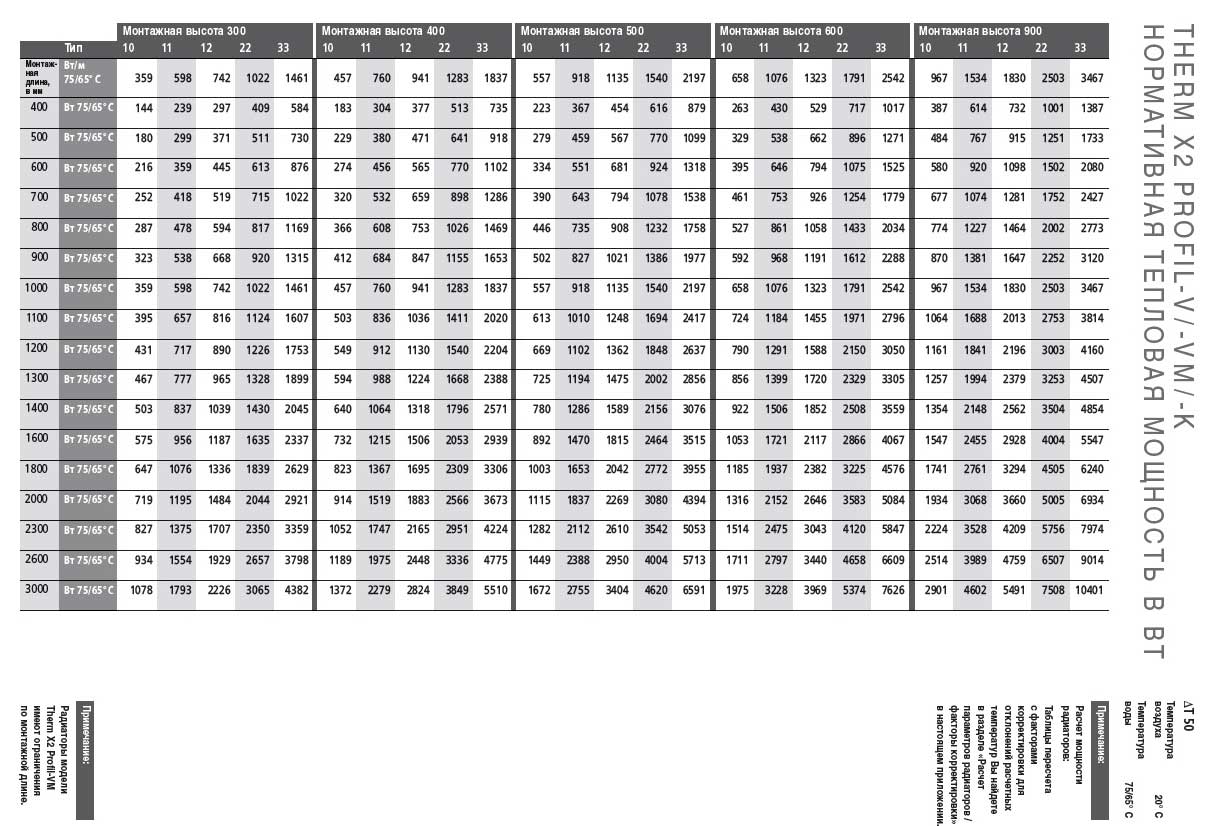
- a 300x1600 model with a heat output of 2939 W and a capacity of 8.64 liters costs 10,000 rubles;
- a 500x3000 heater with a heat output of 8319 W and a capacity of 24.3 liters costs 18,000 rubles;
- a 900x2000 radiator with a heat output of 8782 W and a capacity of 27 liters costs 22,000 rubles.
Peculiarities
Heating in the radiator is carried out sequentially, which ensures high heat transfer in large rooms. Kermi models can be mounted in a niche, but for this it is necessary to leave a small distance on the sides to be able to remove the end caps and the grille.
Models
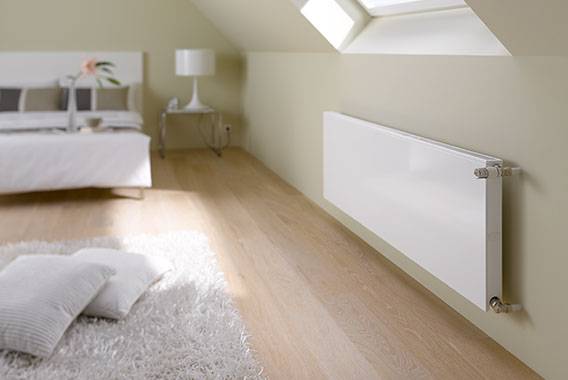
Compact radiator therm-x2 Plan-K
Compact sleek radiator (Kermi PK0)
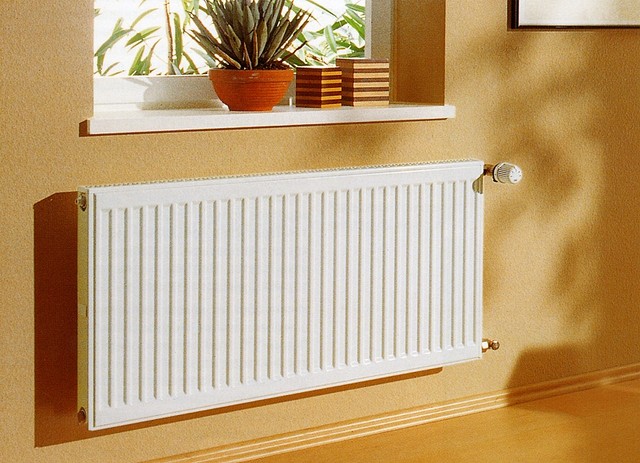
Basic model with smooth front panel, side trims and decorative grille.The radiator has four connection outlets, which provides a wide range of connection options and allows you to integrate it into any interior. Designed for all heat sources and for both single and double pipe systems High heat output, sensitive and dynamic control due to low water level.
In the Type 12 version with an installation depth of only 66 mm, the radiator meets all the requirements of condensing heating technology. Optimum power with low heat carrier consumption.
- Side connection
- Diverse connection options
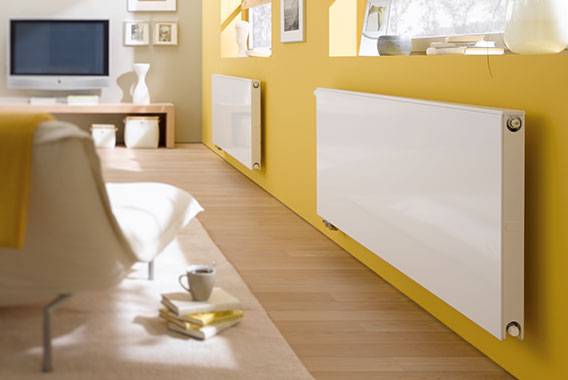
valve radiator therm-x2 Plan-V
Smooth valve radiator with pre-installed valve (Kermi PTV)
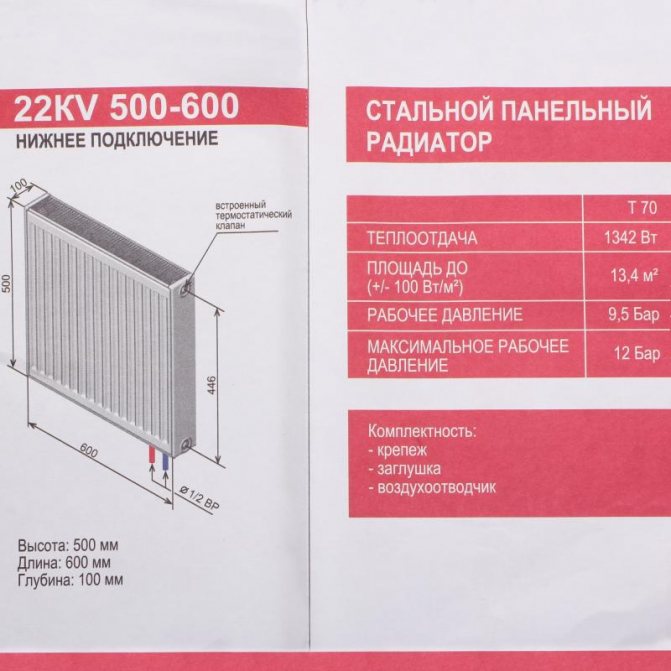
The Kermi valve radiator is connected from the bottom side. Built-in valve with factory preset kv values.
Built-in valve with factory preset kv values
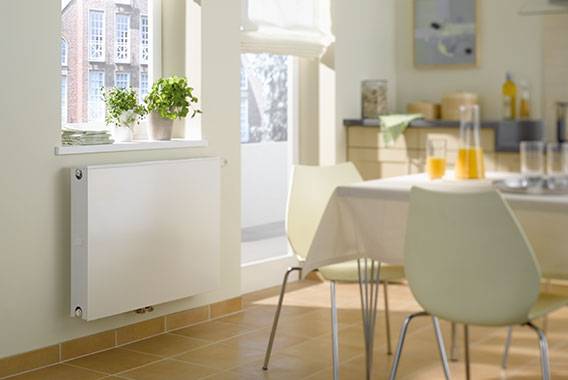
therm-x2 Plan-Vplus
Smooth valve radiator with universal connection (Kermi PTP)
Thanks to their design, smooth radiators blend in harmoniously with almost any interior. The therm-x2 Plan-Vplus radiator can be connected in almost all existing ways. Optimum planning flexibility, fast and reliable installation.
- Freedom to organize your space thanks to a variety of connection options
- Easy replacement during repair
- Reliable and uncomplicated installation due to the use of known dimensions and connections
- The type of radiator and its dimensions can be safely selected even after the pipeline has been laid.
- Save time during installation: all connections are sealed
- High mobility for short-term change of type of connection on the construction site
- High energy efficiency thanks to innovative therm-x2 technology
- Built-in valve with factory preset kv values
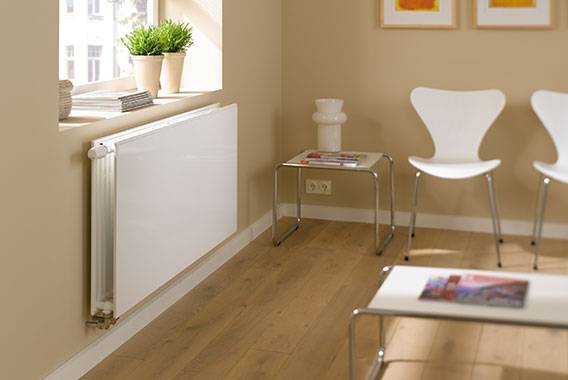
therm-x2 Plan-K / -V / -Vplus Hygiene
For hygiene requirements
Kermi Plan hygienic radiators are designed without side rails and convective fins. For quick and affordable cleaning and creating a dust-free room climate in accordance with the special hygiene requirements of hospitals. The high-quality Kermi coating is resistant to conventional disinfectants. A protective profile is provided for the edges.
- Without convective fins
- The radiator is easy to clean
- For areas with especially high hygiene requirements
- Microclimate almost dust-free
Plan hygienic radiator: a clean solution for special hygiene requirements. Quick and easy to clean For a dust-free microclimate, best suited for allergy sufferers.
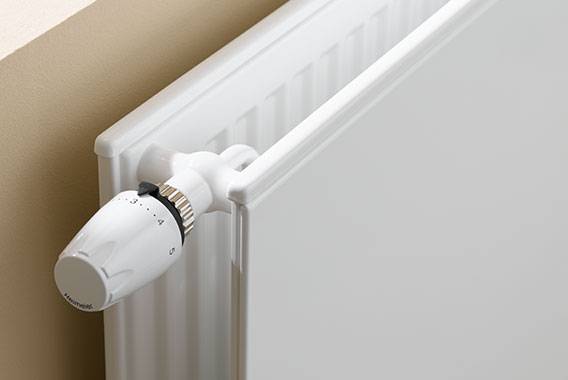
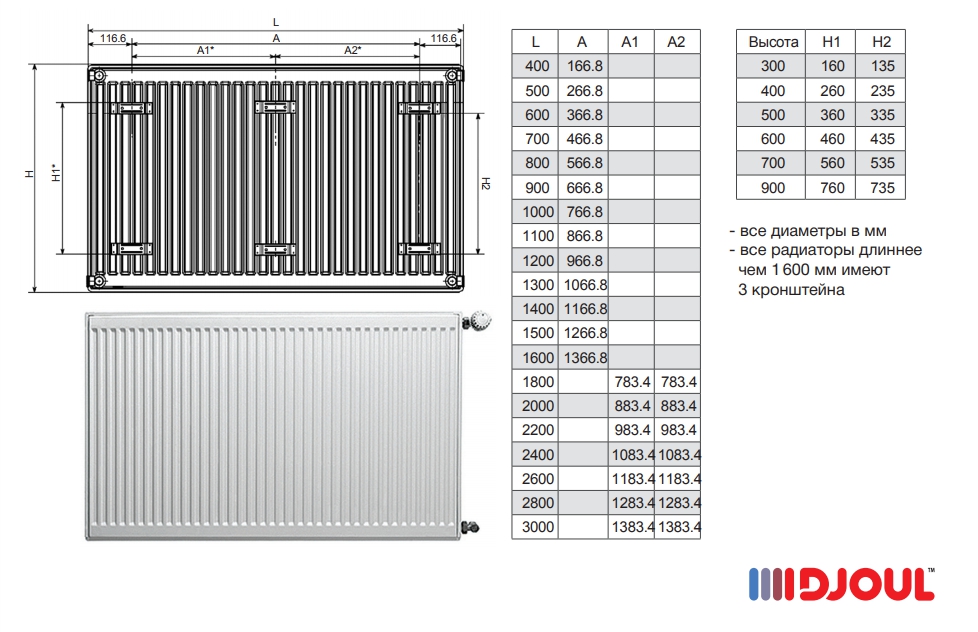
| Mounting height | 200 - 959 mm |
| Mounting width | 400 - 3005 mm |
| Mounting depth | 61 - 157 mm |
| Heat output 75/65-20 C | 407 - 9655 Watts |
A simple online calculator for calculating the required heating load and selecting heating appliances.
Other benefits
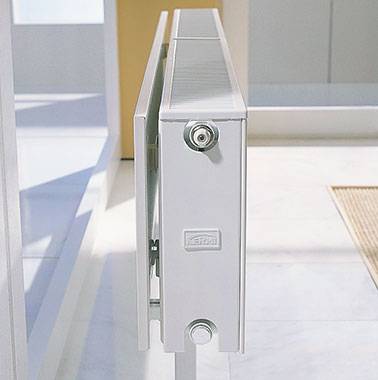
Kermi heat shield. Ideal for large glazed areas. This way you can reduce heat loss by up to 80%. Easy to install on all Kermi panel radiators.
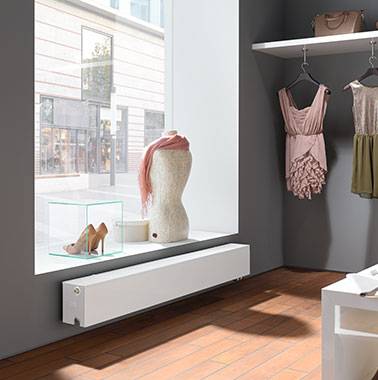
Height 200 mm. Kermi Plan panel radiators with a height of 200 mm are ideal for verandas, winter gardens, and for any other premises, the architectural appearance of which is created by large windows or low window sills.

What is the Kermi brand
 The manufacturer of Kermi brand radiators is a division of AFG Arbonia-Forster-Holding AG, located in Lower Bavaria.The company owns two large manufacturing enterprises. Products are supplied to Asian countries, USA, EU and Russia.
The AFG holding has been producing panel radiators since 1975. Since that time, the production of shower cabins, as well as heating equipment for bathrooms and rooms with high humidity, has been launched. After 50 years of intensive development, the holding was able to take and maintain a leading position among manufacturers of domestic and industrial heating systems.
Peculiarities
The German company Kermi was founded in 1960. The main type of manufactured products is steel panel radiators, although the manufacturer is also known for shower enclosures. However, it was German radiators that gained wide popularity not only in Germany, but throughout the world. Russian buyers also liked the appearance of German batteries
An important component of success was the quality of products
Features of radiators are two types of connection, as well as three different thicknesses of metal. In addition to steel products, bimetallic options are available to customers. The Russian consumer is especially fond of products designed for installation in individual houses and cottages. Appearance of devices is refined, noble and elegant. The units are not cheap, but consumers note the cost recovery, as well as a high degree of comfort.
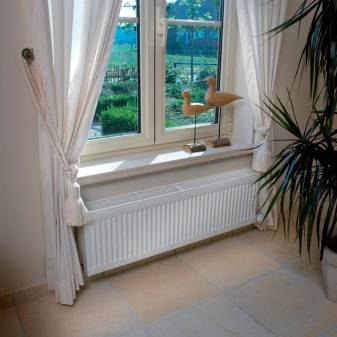
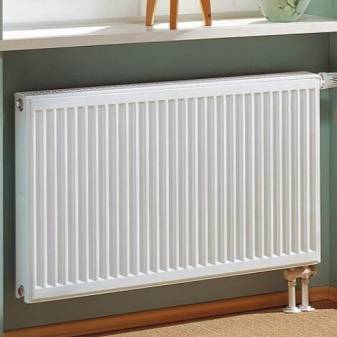
The principle of operation of any radiators is based on the coolant circulating inside the device. The liquid entering the radiator tends to slow down the movement from device to device and also cool down. As a result, less heat is transferred into the room. The main feature of German radiators is the increased characteristics of the heat given off.The heat dissipation from the front surface of the installed batteries is quite decent. Therefore, for autonomous heating systems with low operating pressure, Kermi radiators are ideal.
The company offers batteries in various sizes. On sale are mainly white models. According to the manufacturer, the powder coating of products is environmentally friendly. And it is also claimed that this special coating allows you to better keep the temperature indicators of devices. Decorative models found on sale differ from the main line in color and design features.
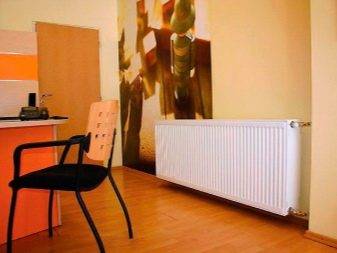
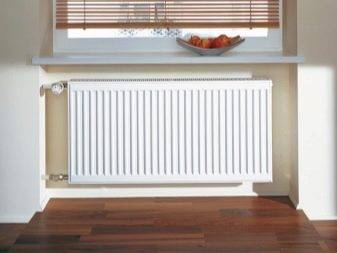
The main type of products manufactured by Kermi are panel radiators, consisting of steel plates connected in pairs. The coolant in such radiators moves through channels extruded by stamping. Usually there are several channels for the circulating fluid. One of them is located at the top, and the other is at the bottom. There are several paired plates in a steel product.
To increase the return, some models have convective ribs - these are corrugated steel sheets that are thin and are usually welded behind the front panel. Outwardly, this usually does not change anything, and the side and top of the products are supplied with decor. Some Kermi batteries have a different way of feeding the media. The Therm-X2 technology is considered consistent and renowned. In practice, hot liquid is supplied first to the front, then to the subsequent ones. As a result, the hottest part is the part facing the rooms.
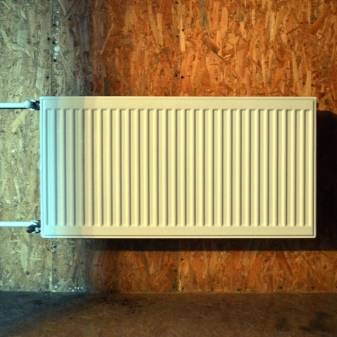
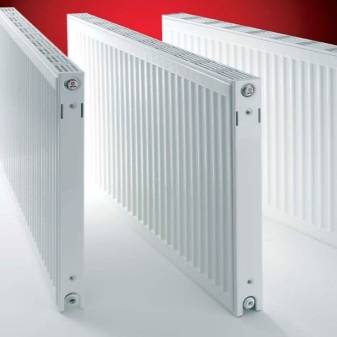
More heat is consumed in the room. Other heat costs with such a connection are much less. In practice, series-type Kermi batteries heat up a room faster than other types of devices.The devices showed a special quality of heating with connected pumps and collectors in the system. The company installs control valves on its devices. The novelty allows you to optimally balance a stable temperature in all rooms. Basically, steel radiators from other manufacturers are supplied with thermostats, while the thermal head must be purchased separately. Kermi radiators add comfort to individual heating systems. The system consumes only a balanced amount of fuel, which significantly reduces costs.
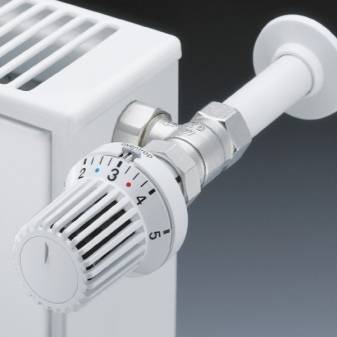
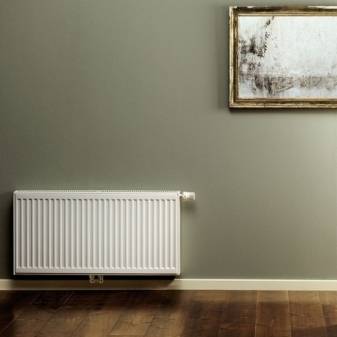
In addition to the serial version, Kermi batteries have the possibility of a side and bottom version. The bottom inlet can be either left or right, and it can also be in the center. Therefore, the distribution of heating pipes can be done in a way that is convenient, without taking into account the features of the heating device. The installation of appliances can be carried out after the completion of the finish, it is only desirable to strengthen the brackets on the wall in advance. It is worth considering in more detail the technical characteristics of the main types of radiators produced by the company.
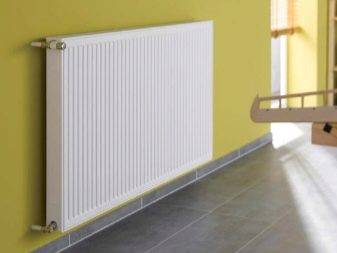
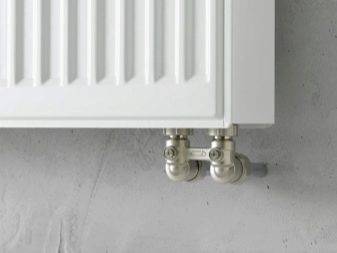
General information about Kermi radiators
The main principle of Kermi is a systematic control of compliance with quality standards at all stages of product manufacturing, from the design and selection of materials for the production of heating appliances to testing for safety and reliability parameters. There are various types of Kermi radiators, the product line includes more than 150 models that can be used in office and residential areas.
They can be used in various heating systems with a circulation pump. Both with a single-pipe and with a two-pipe scheme, they can be used with various coolants.Kermi steel panel radiators are significantly better than other similar devices. The technology of their manufacture is based on the operation of welding a pair of sheets of St 12.03 steel, processed by stamping to obtain channels for the circulation of the coolant.

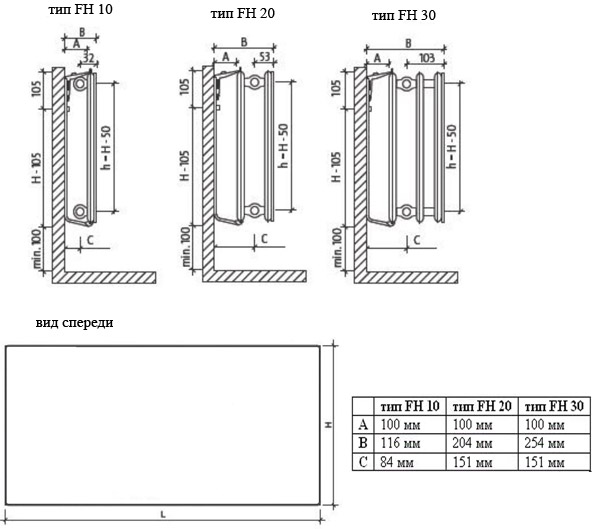


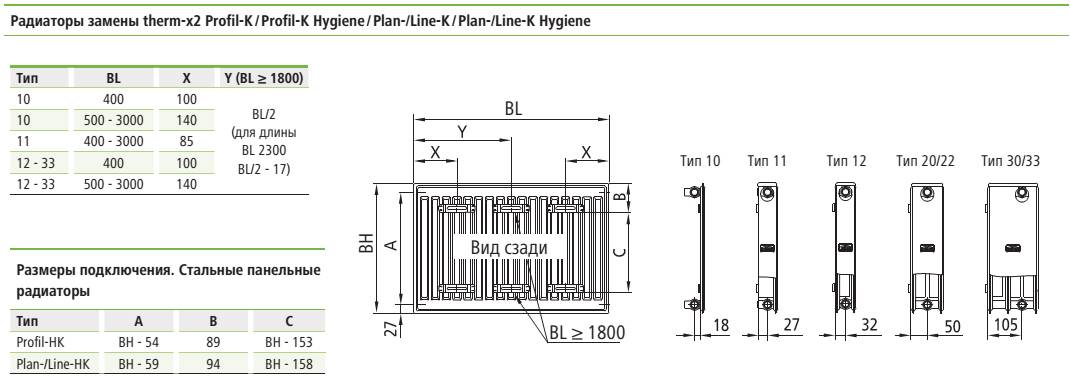
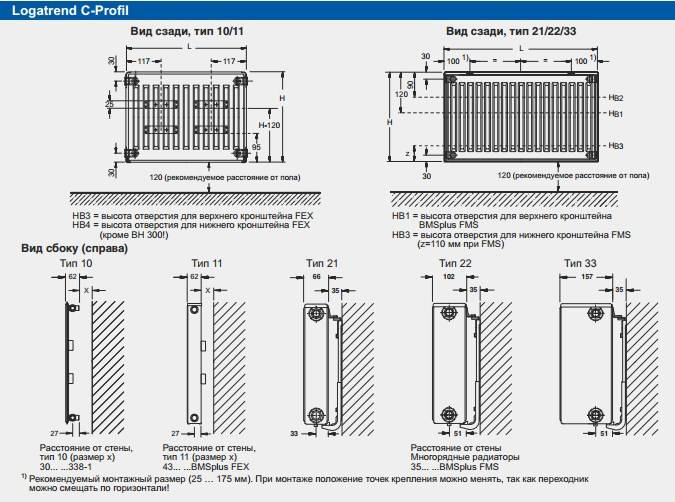
The design of the radiator provides from one to several U-profile heat exchangers with a thickness of only 1-2 mm, which increase the mass of the air flow. Everything that is inside the battery is hidden by a decorative panel with special inserts on the sides, so I call this type of radiator a panel one. A two-layer varnish safe layer is created by immersion in a cataphoresis tank and electrostatic spraying, which guarantees the resistance of the device to corrosion and a shiny surface.
Main advantages:
- Low thermal inertia.
- Acceptable price.
- Wide range of power and sizes.
- The efficiency of the device is 75 percent.
- A small amount of coolant.
- Excellent heat dissipation.
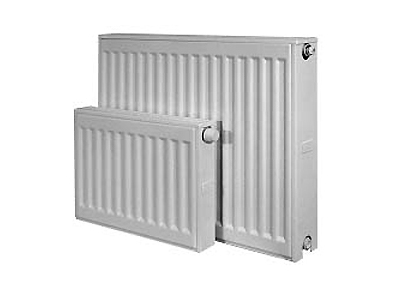 Steel radiators KERMI type 11-22-33 FKO/FTV
The disadvantages of Kermi radiators include:
- The operating pressure limit of the system is 8-10 atm.
- The possibility of corrosion when there is no coolant (to prevent it, radiators should not be left without it for more than half a month).
- Possibility of damage due to water hammer (it is necessary to ensure a gradual increase in pressure in the heating system).
Kermi range of radiators
There are two types of heaters:
- Radiator Kermi with bottom connection (FKV).
- Radiators Kermi with lateral connection (FKO).
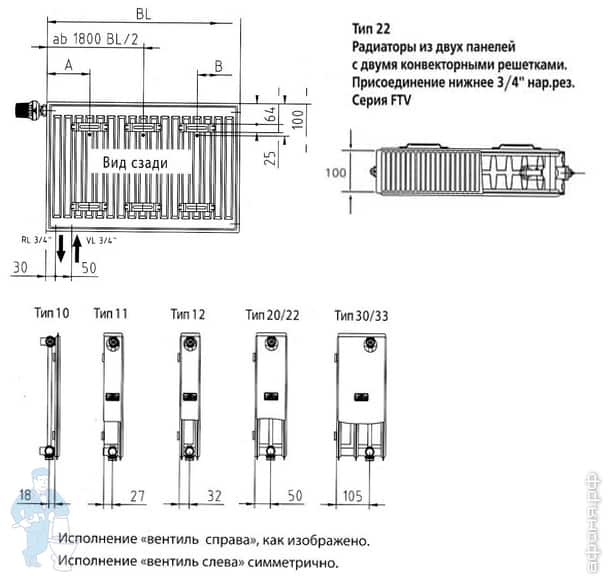
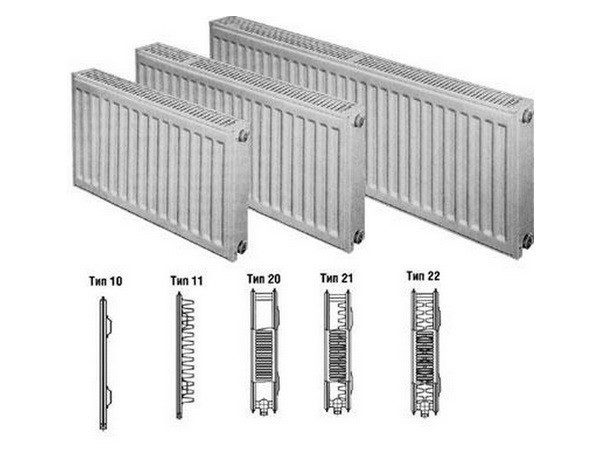
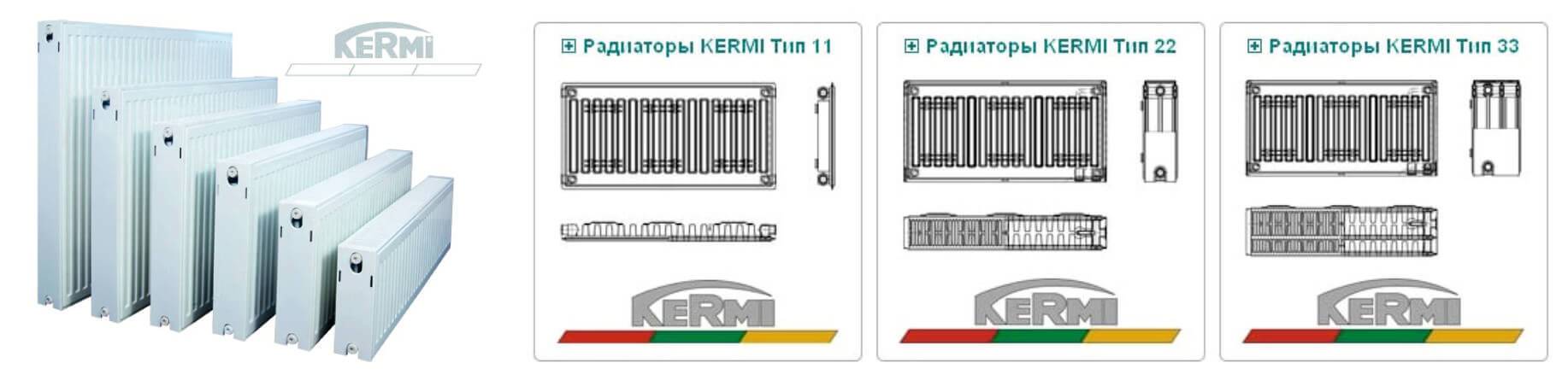
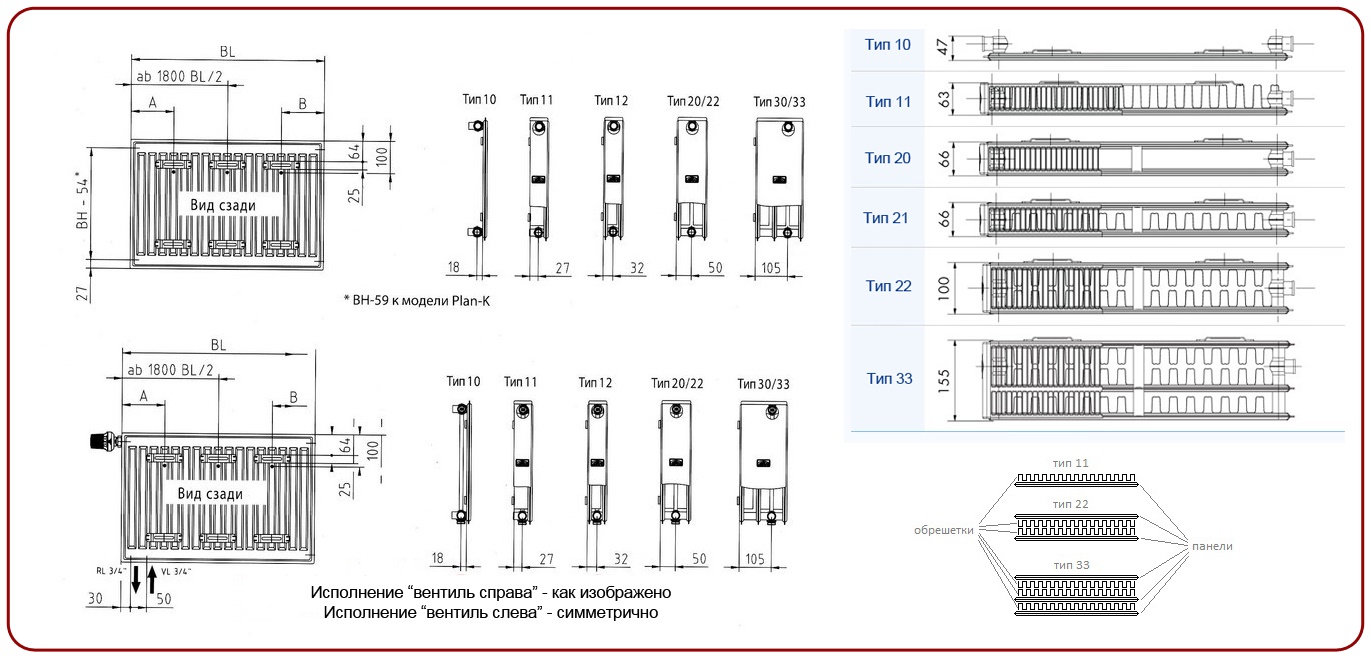
If we classify Kermi FKV radiators and Kermi FKO radiators according to their design features, then Kermi Therm X2 Profil-V radiators come in 5 types:
- Type 10 - single row, without cladding and convector.
- Type 11 - single row, with cladding and convector.
- Type 12 - two-row, with fast-flow cladding and convector.
- Type 22 - two-row, with fast-flow cladding and a pair of convectors.
- Type 33 - three-row, with fast-flow cladding and three convectors.
Heating devices made of Kermi steel in three- and two-row versions are manufactured using the advanced Therm X2 design. Its principle is the sequence of strapping. It moves the coolant from the front to the back, which reduces the heating time by a quarter and saves the energy used for heating by 11% compared to other conventional batteries.
ThermX2 Profil-K is a small radiator with a side connection, in the basic version, manufactured to high quality standards.
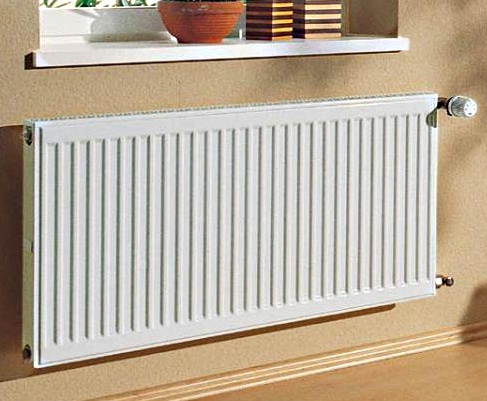 Steel radiators Kermi Therm X2 Profil-Kompakt
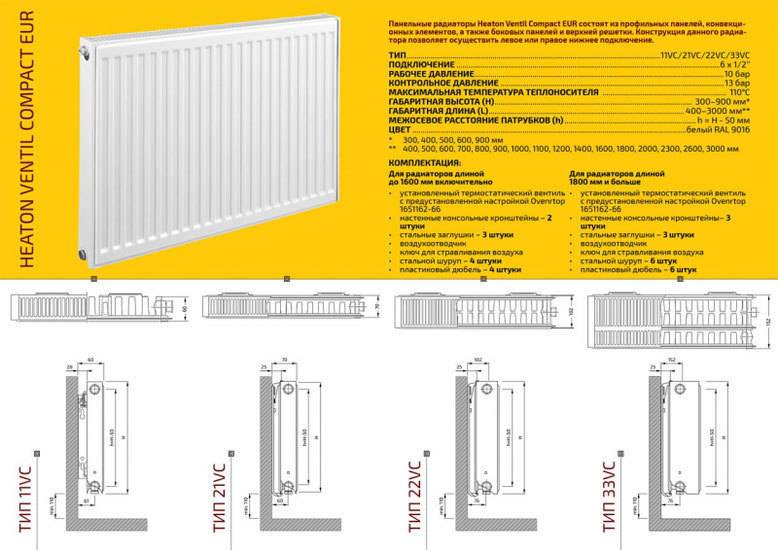
All Kermi steel radiators are supplied complete with manual air vent, plug, wall brackets. For devices with a lower connection type, a thermostatic valve is provided.
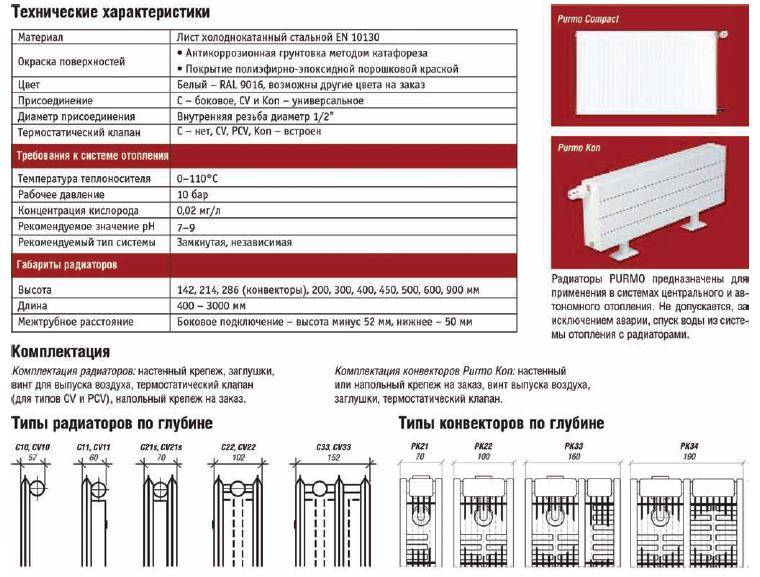
The technical parameters of the radiators are as follows:
- The maximum operating temperature is 110 Cº.
- The maximum working pressure is 10 bar.
- Height - from 300 to 954 mm.
- Length - from 400 to 3000 mm.
- Power (range) from 0.18 to 13.2 kW.
Price and installation algorithm
For those who decide to do it themselves, you need to follow the following sequence:
- Calculate the number and location of fastener points.
- Make two holes for all consoles (the largest diameter of the screws is 7 mm), for heaters longer than 1.8 m, three brackets will be required for installation.
- Install the top holder.
- Using dowels and screws fix the console for wall mounting.
- Remove the protective packaging at the connection points.
- Mount the heater in the corner consoles, starting from the lower ones and ending with the upper tabs.
- Unscrew the painted plugs at certain points.
- Connect the radiator to the heating system using a conventional threaded connection (taking into account the removal and supply of the coolant).
- Remove all remaining packaging material completely.
Steel appliances
Steel heating equipment from the kermi series is designed for the assembly of heating systems in private homes. But it is not designed for the operating conditions of the central heating system. After all, steel radiators are afraid of water hammer.
The main advantage of this choice can be considered a high specific thermal power. In its manufacture, an innovative technology is used that increases the efficiency of the device by 10–12%. This is achieved through a modernized design.
Innovative technologies
In conventional models, metal steel tubes are interconnected by special soldering. A coolant is launched through them, which evenly heats the entire area of \u200b\u200bthe battery. German manufacturers, when manufacturing Kermi radiators, use a completely different principle. They have steel tubes in two rows. The coolant is first supplied to the first row, so the front panel warms up. Then it enters the back row, warming up the rear panel. Thanks to this circulation, the device warms up much more strongly, therefore, the power of heat engineering increases markedly.
Given that already chilled water is supplied to the rear panel, many skeptics felt that such a design would not justify itself during operation. But in fact, everything turned out differently. The rear panel acted as a screen that prevented any heat loss. At the same time, energy is no longer spent on heating the back wall - everything goes into the room. Therefore, the efficiency also increases.
Note! The features of the described design made it possible to increase the heating time of heat engineering by almost 2 times, and the savings in fuel consumption increased by 11%. At the same time, it became possible to reduce the size of the device without reducing the power. Therefore, Kermi steel heating radiators have become compact
Therefore, Kermi steel heating radiators have become compact.
Usually white models are on sale, although you can also find decorative options that differ from the main line not only in color, but also in shape and design.
Existing varieties
Kermi with side connection
The manufacturer produces three modifications of heat engineering. There are single-layer, two-layer and three-layer models with different specifications. The number of panels is indicated on the product label.

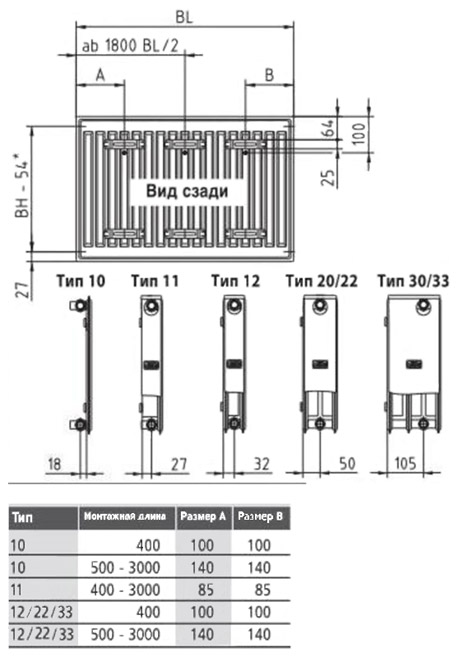


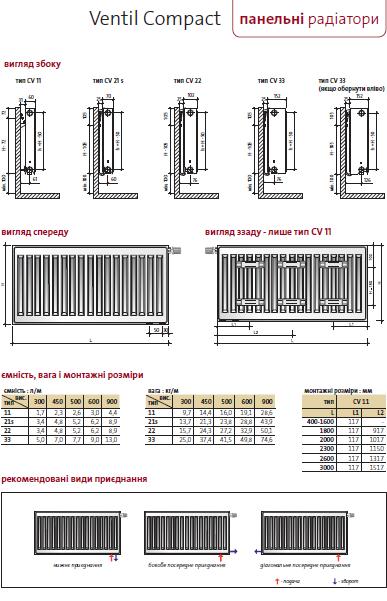

Today, kermi steel radiators are represented by five types:
- The 10th type has one panel, the depth of which is 6.1 cm. This model does not have a convector.
- The 11th type has one panel with single-row finning, one convector and special cladding.
- The 21st type has a pair of panels and one fin located between them. The depth of the device is 6.4 cm, there is one convector.
- Type 22 - new technology: a pair of panels and two fins. The model is fully lined and equipped with two convectors.
- The 33rd type is the latest know-how, which is distinguished by three panels and three rows of fins.
The listed varieties have common technical characteristics:
All presented heating radiators can have a height of 300 to 900 cm.
The length of the described heat engineering is from 40 cm to 3 m.
A working pressure of 10 atmospheres is allowed.
Pressing pressure - 1.3 MPa.
The maximum allowable coolant temperature should not exceed 110 degrees Celsius.
The permissible water temperature inside the system is 95 degrees.
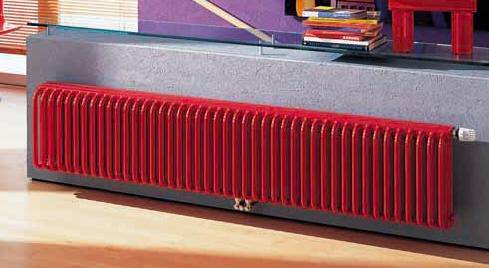
Tubular radiator with valve
Each model is understaffed with a thermal valve. It's already built into the radiator. This technical element has a right-hand thread. There is no thermostat in the standard regulation. Therefore, it will have to be purchased additionally. The thread at the inlet pipe is external. This type of device involves connecting to a system consisting of two pipes. If a single-pipe system is available, you will have to additionally purchase special reinforcement bends.
Note! Heating batteries presented by German manufacturers have different connection options. Each model has its own. Therefore, potential buyers have the opportunity to connect batteries from the right or left side, side or bottom.
Therefore, potential buyers have the opportunity to connect batteries on the right or left side, side or bottom.
If you need to choose heating radiators with side connection, you should look at the models from the Kermi ThermX2 Profil-K (FKO) line. For connection from below, options from the kermi ThermX2 Profil-V series (FKV or FTV) are suitable.