- Natural ventilation in a wooden house
- Technology of laying ventilation ducts
- Ventilation design
- Video description
- Conclusion
- System Performance Calculation
- Why do you need a hood in a private house with a stove or fireplace
- Additional moisture reduction
- Types of devices and photos
- Natural
- Forced
- Combined
- Additional Tips
- Prices for ventilation units
- Selection of the section of ventilation ducts
- How to operate and maintain a PES
- The need for a ventilation system
- Types of ventilation systems for a cottage
- Natural air exchange
- Mechanical ventilation in the house
- Calculations
- Do-it-yourself ventilation device in a private house
- Step #1 Calculations
- Step #2 Natural Ventilation: Improving Parameters
- Step number 3 Supply and exhaust ventilation systems
- Step number 4 Do-it-yourself ventilation in a private house scheme
- Conclusions and useful video on the topic
Natural ventilation in a wooden house
An interesting fact is that traditional Russian log huts do not need additional improvements for natural ventilation. Air exchange processes here go literally through the walls, thanks to the excellent breathability of natural wood. Another air exchange channel is the chimney of the furnace.
Modern wooden buildings are quite another matter.
Here, various sealing solutions are increasingly encountered:
- Machine profiling of joined sections of wooden surfaces.
- Treatment of seams with sealing compounds.
- Sheathing of ceilings with steam, hydro and windproof films.
- Installation of sealed plastic double-glazed windows.
Wooden walls themselves are often treated with poisonous protective compounds. Furnace heating is also gradually becoming a thing of the past.
All these measures clearly have a positive effect on the thermal efficiency and comfort of the home, but at the same time make it mandatory to build a ventilation system.
Technology of laying ventilation ducts
When there is a plan for arranging the ventilation system in the house, it remains to be implemented. For this, all the components of the future system indicated in the previously compiled scheme are acquired. Each house will have its own characteristics.
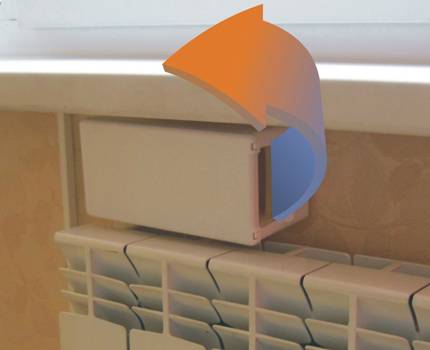
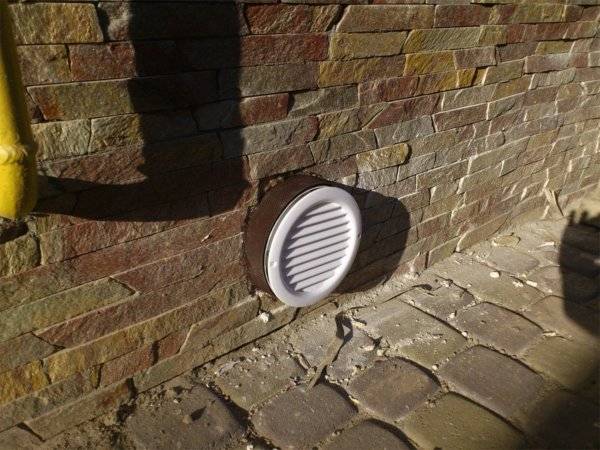
For natural air flow inside the house, micro-ventilation windows or wall valves should be installed.
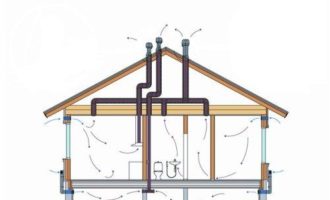
When installing a natural type system, ventilation shafts are first laid out in the wall - separately for the kitchen, furnace / boiler room, bathroom or bath and toilet rooms. Then decorative grilles are installed. In order for these channels to fulfill their role, one must not forget about the allowable height above the roof level.
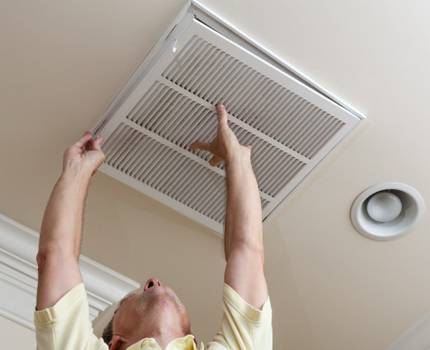
As an option, you can put ceiling grilles in the rooms if the attic is equipped with a window for free air circulation
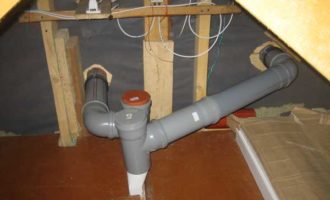
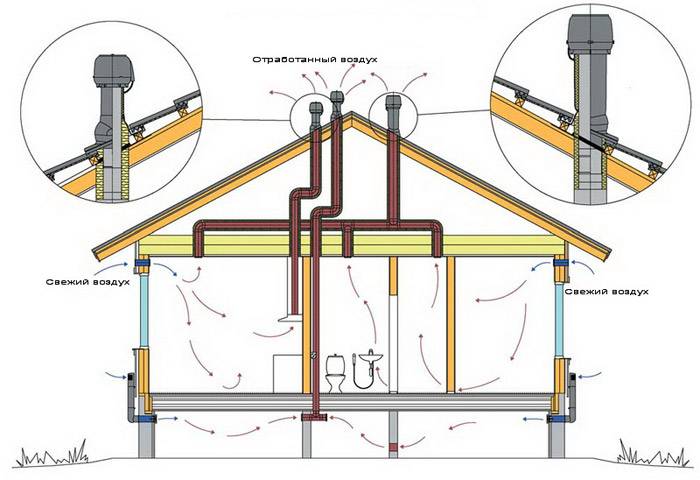
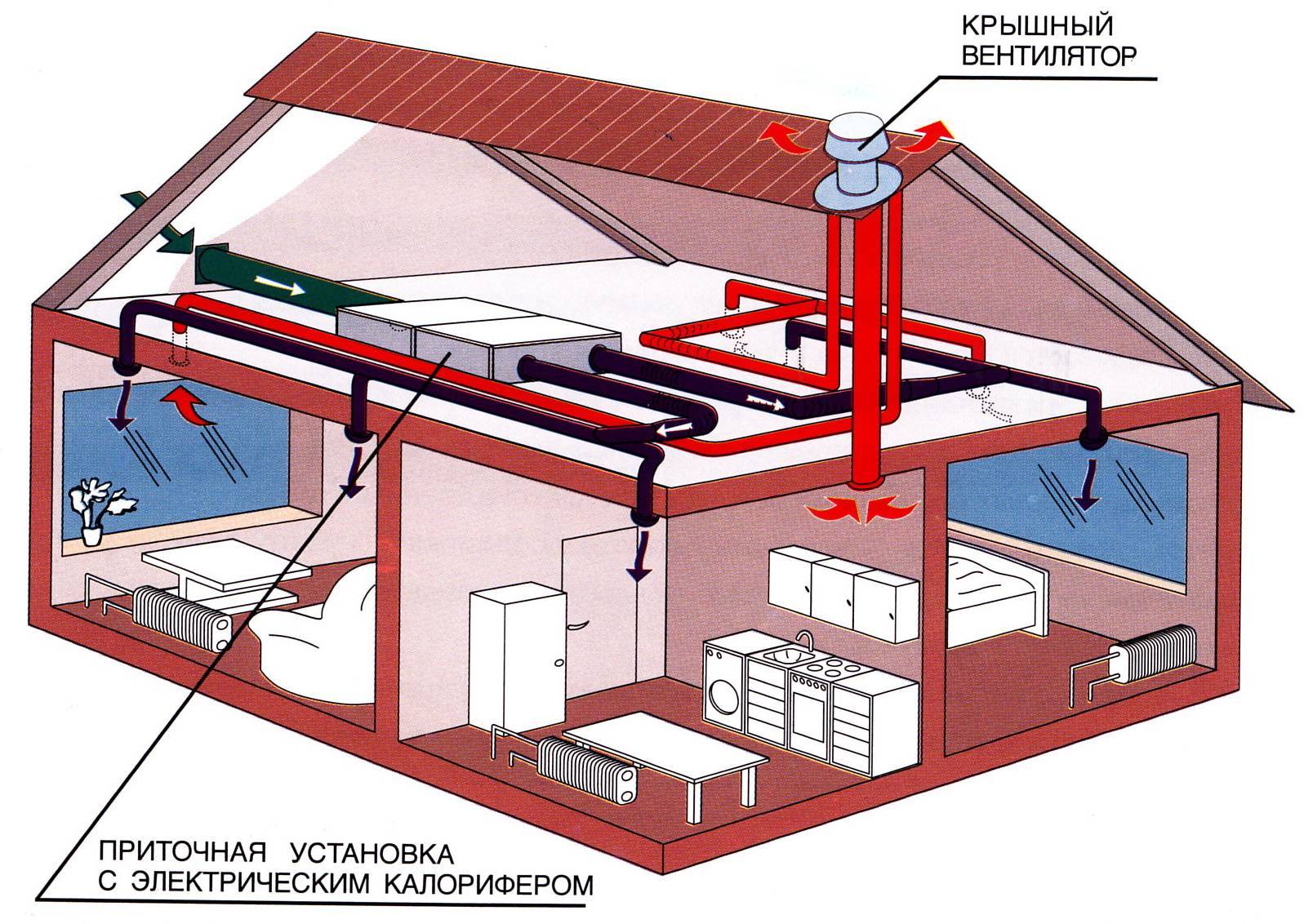
If you want to equip a mechanical or mixed type of ventilation in the house, then you need install ventilation pipes. For this, the attic space is used. When this is not possible, then the ventilation ducts are arranged under the ceiling of the house.Then they have to be masked in any convenient way.
Supply and exhaust openings in the ventilation pipes are formed by air distributors. Receiving and ejection equipment, if necessary, can be equipped with an electric heating system. If necessary, check valves should be installed, carefully treating the joints with sealant.
Ventilation pipes are fastened with clamps or other fasteners provided for this purpose. All joints are securely sealed. In the future, this will be the key to the excellent operation of the entire system.
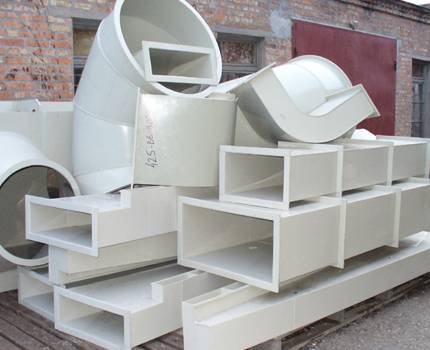
Pipes can be used rectangular or round. The diameter of the ventilation pipes is selected according to the calculations
Fans are mounted according to the instructions attached to them. If complex systems are to be installed, then the equipment is installed as recommended by the manufacturer. Otherwise, you may void the warranty.
Ventilation design
Ventilation unit project - what must be taken into account without fail?
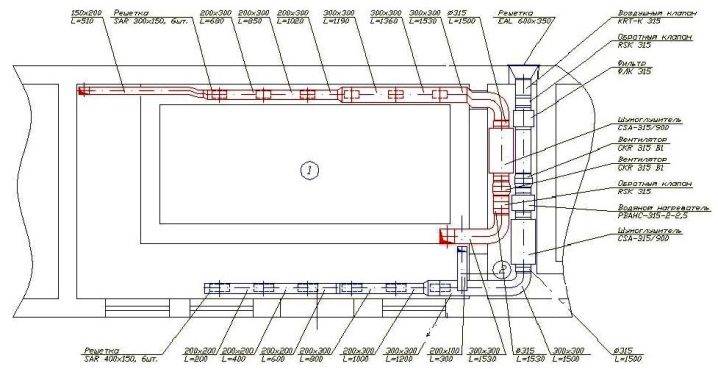
The location of the air ducts should be logical and cannot block light sources, violate the stability of the house structure and disfigure the interior. All air ducts should be planned as short as possible, and near the central fan, make a connection to the sewer to drain the condensate that forms in the heat exchanger. Ventilation ducts must be sealed and insulated with mineral wool. The duct diameter should be chosen so as to achieve a sufficient air flow rate. The use of hoses with smaller diameters than justified by the designer will lead to an increase in the resistance of the installation, and this will cause a violation of its operation and an increase in noise level.
Video description
For the basics of ventilation design, see the video:
Any future ventilation project is carried out with the obligatory consideration of air exchange rates for each individual room and in general for the entire building. In accordance with the norms and requirements, air exchange must comply with the following indicators:
- room 3 m3/h for each 1 m2 of residential premises;
- bathroom, lavatory, shower room 25 m3/h;
- combined room 50 m3/h, 25.
The parameters are indicated for the temperature in the cold season, indoor temperature is 16-25 °C.
The proper functioning of ventilation is given special attention when designing smart home systems.
After creating the project, installation of ventilation can be carried out, on which only specialists should also work. The process itself takes place in several stages - the preparation of the scheme and the project of the house. In this case, all other communications and systems must be taken into account. Installation and design of ventilation in country houses is a rather complicated procedure and mistakes cannot be made here. Otherwise, they will not be able to achieve their goals. For example, the ventilation system requires preparatory actions:
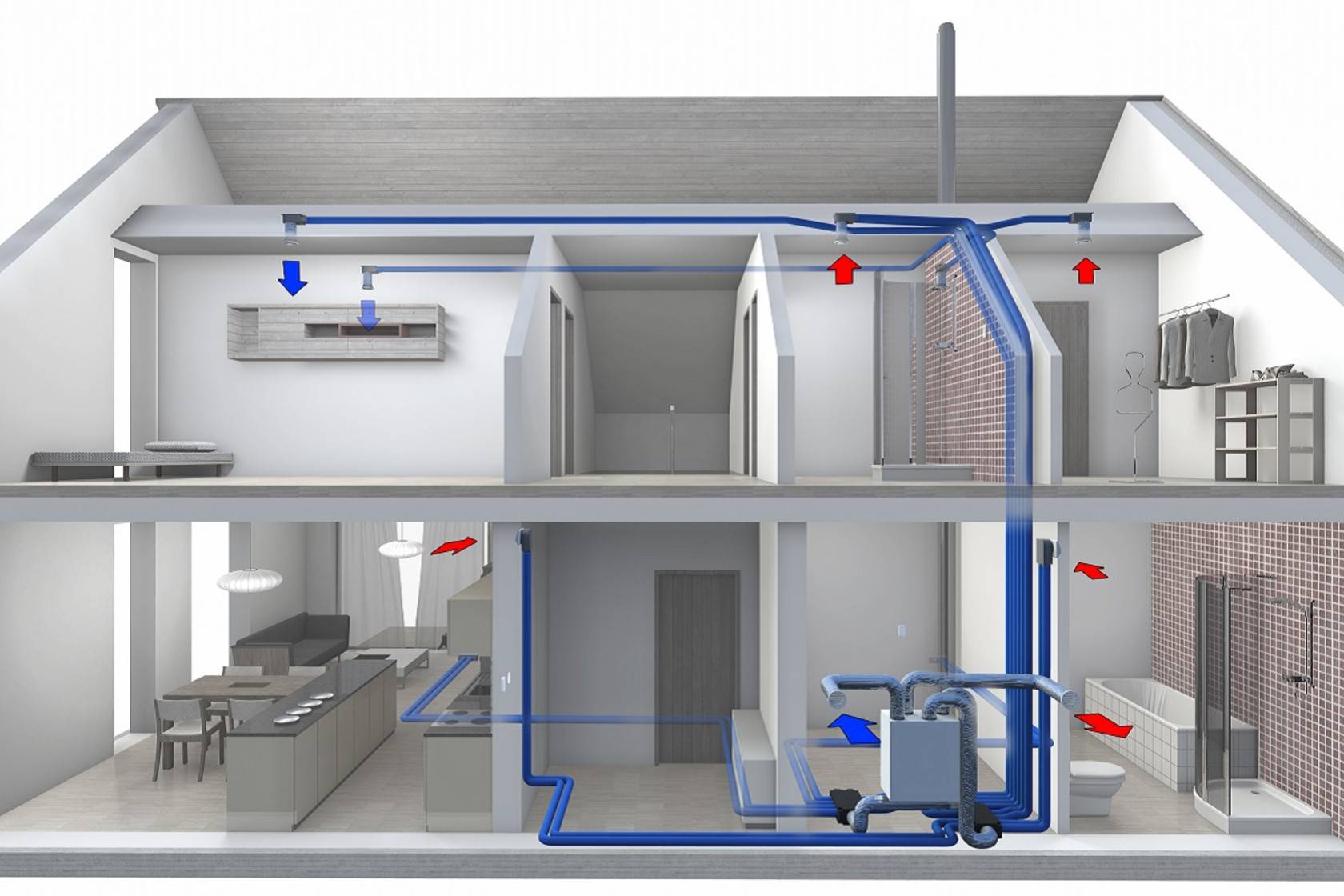


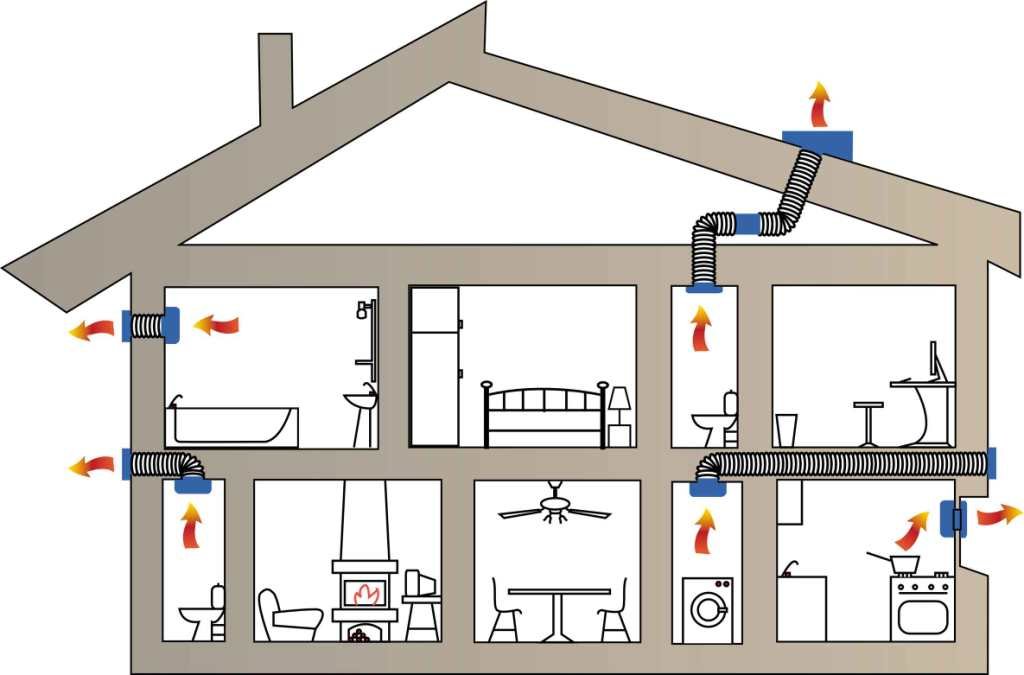
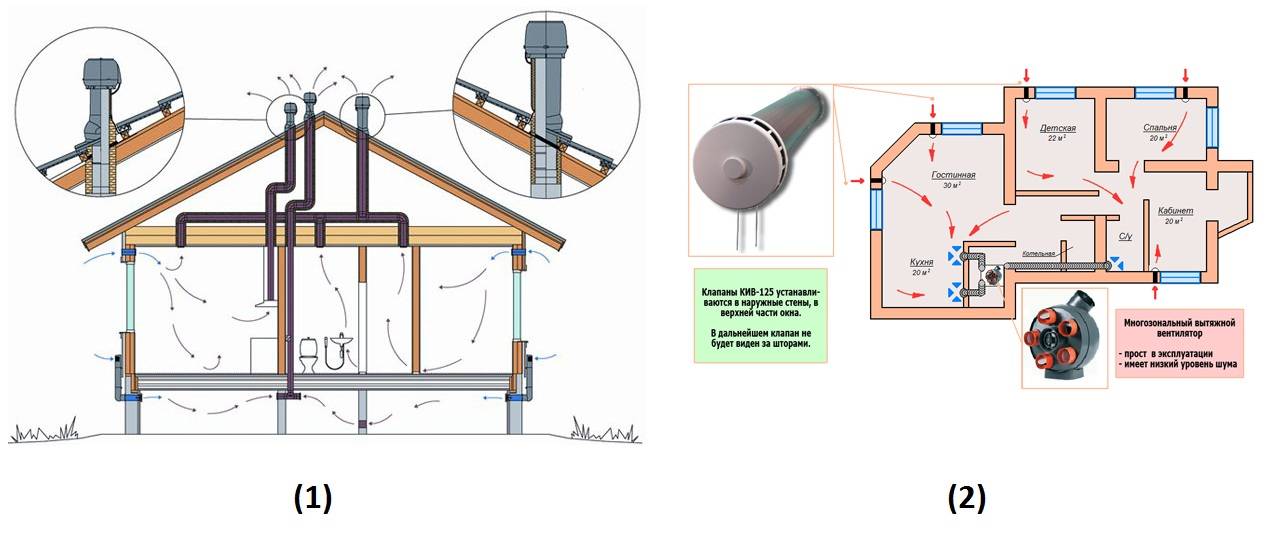

- determination of the capacity of power grids, their laying and possible reduction in energy consumption;
- the possibility of installing special equipment, as well as the arrangement of air ducts;
- selection of equipment taking into account the characteristics of the premises and operating conditions;
- installation of all selected equipment.
Conclusion
Professional ventilation will make your stay in the cottage safe and comfortable. The system will constantly function for the benefit of man.
When using modern equipment, you can control the flow of fresh air or set the system to operate automatically.
Such systems allow you to make your stay as comfortable as possible at any time of the year and in a variety of weather conditions. In addition, a high-quality ventilation system of the premises allows you to purify the air from pathogenic microbes and microorganisms. This is a very important indicator, especially if there is a small child in the house. The correct calculation of ventilation is a rather difficult task, the solution of which should be dealt with by professionals.
System Performance Calculation

Calculation of the duct area
It is easier to calculate the diameter and length of air ducts using an online calculator. But you still need to know the principle of calculations in order to avoid errors.
All rooms in the house are conditionally divided into "dirty", requiring more intensive ventilation (kitchen, toilet, bathroom, laundry, etc.) and residential "clean". According to SNiP, the air in "dirty" rooms must be renewed at a rate of 60 cubic meters. m per hour. If there is gas stove in the kitchen the update rate is increased to 100 cubic meters. For bathrooms, this figure is slightly lower - 25 cubic meters. m, and for laundries it is 90 cubic meters. m per hour.
Forced ventilation is used in "dirty" rooms. To do this, the kitchen provides a separate channel made of galvanized steel, running vertically, without elbows. It is allowed to combine it only with the bathroom ventilation duct.
For "clean" rooms (living rooms and corridors), ventilation is reduced to 3 cubic meters. m per hour. For pantries, 0.5 cubic meters is enough.It remains to calculate how much air per hour is required to be removed from these rooms.
There is another way in which air exchange is calculated depending on the number of people living in the house. In this case, an influx of fresh air of about 30 cubic meters is considered the norm. m per hour per person. In the southern regions, it is better to increase this figure to 40. For the northern regions, where the air density is lower, 20 cubic meters will be enough. m. To the amount received (according to the number of residents), it is necessary to add another 30 cubic meters. m for the kitchen.

How to make flower pots with your own hands: outdoor, indoor, hanging | Step by Step Charts (120+ Original Photo Ideas & Videos)
Why do you need a hood in a private house with a stove or fireplace
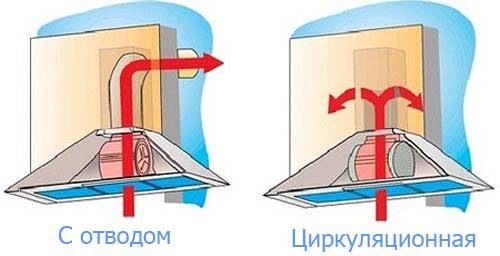
If a stove or fireplace is used in the house not as an element of decor, but perform their direct duties - they heat the room, you need to take care of double natural ventilation. For complete combustion of the fuel, a sufficient amount of oxidizing agent (in this case, oxygen) is necessary. With its shortage, the fuel will not burn out completely, while releasing carbon monoxide, which will enter the living quarters. Pleasant and useful in this, of course, is not enough.
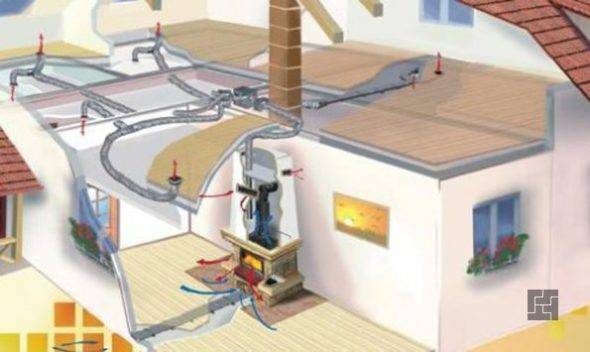
Ventilation device in a house with a fireplace
If there is not enough air flow, then in the warm season you can open the window - this will be enough. In winter, such a trick is unlikely to pass, therefore, even at the construction stage, it is advisable to run a pipe under the floor directly to the stove or fireplace, through which the required amount of air will flow.
To organize the hood, they most often resort to the services of experts, this article is aimed at craftsmen who plan to do the installation themselves.Next, we consider the main recommendations for the construction of such ventilation, often occurring problems and shortcomings.
Additional moisture reduction
So that the ventilation system does not have to be strengthened by increasing the total cross section or installing fans, the following work must be carried out:
- The device of an effective drainage system is the diversion of water from the foundation.
- Waterproofing the base of the house and basement. There are many types of waterproofing: it can be rolled, welded, coated, etc.
- Implementation of insulation. The best material in terms of economy and efficiency is XPS. It is a good thermal insulator that does not let water through. It does not interest rodents and does not rot. EPPS can also be insulated with a blind area.
The listed measures do not cancel, but only supplement ventilation. Only in a complex it is possible to achieve ideal drainage of space in the basement compartments.
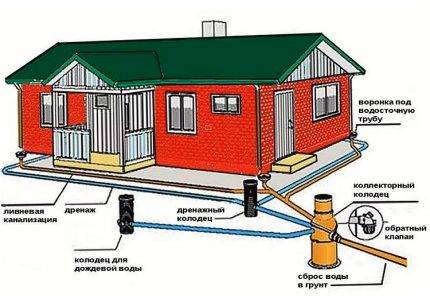
If the house is built on a soil base that does not drain water well, in addition to the ventilation system, drainage and storm water are required. The drainage system will collect water from the soil and the upper layers of the soil, the storm drain will collect and remove precipitation
When a system is arranged according to a forced scheme, the costs for installation, maintenance and service will be greater than when organizing a natural type. It should be borne in mind that in winter, condensation can form on the walls of the ventilation pipes themselves, and in cold weather, the cross section can completely clog the jacket.
To avoid this, the pipes can be thermally insulated with penofol. At the lower turn of the pipe, you can come up with a condensate trap - for example, drill a hole or put a tee instead of a corner.
Types of devices and photos
Natural
- Differences in atmospheric pressure indicators in the upper and lower parts of the ventilation duct.The higher it is, the more powerful the thrust.
- The difference between indoor and outdoor air temperature.
- The degree of saturation of air masses with moisture. Wetter air is also lighter and tends to rise.
Pros:
- saving money on the arrangement;
- independence from energy sources;
- malfunctions are practically excluded;
- no noise.
Minuses:
- poor air exchange and inefficient circulation;
- you can not adjust the degree of intensity;
- lack of air movement in warm weather;
- significant outflow of warm masses to the outside.
 here
here
Forced
Work patterns may vary slightly depending on the type of equipment:
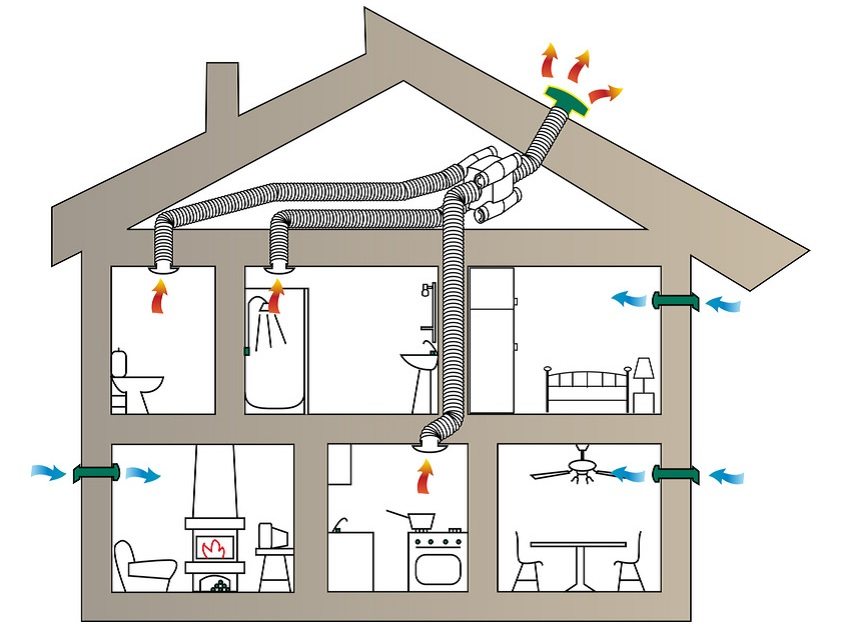
- The inflow is provided by breathers installed in each room. A common hood is equipped in the attic area.
- In the rooms, devices for supply and output with a recuperation function are mounted. They are built in the outer walls of the building.
- Air exchange is provided by a central air conditioning system. The equipment can be responsible for cleaning, heating or cooling the air, depending on the current need. Air circulation occurs through an extensive network of ventilation channels.
Pros:
- independence of work from environmental conditions and the height of the building;
- the air supplied to the house has ideal indicators of purity, temperature and humidity.
Minuses:
- dependence of equipment on electricity;
- high costs for its purchase, installation and ongoing maintenance.
 here
here
Combined
- air supply from the street by mechanical supply equipment and removal through a vertically located channel;
- installation of a fan in the exhaust zone when organizing inflow through wall valves.
Attention
An example would be a hood in a bathroom or kitchen.To organize the inflow into the thickness of the wall, breathers are mounted that carry out a mechanical air flow
They can filter and heat the air masses.
Additional Tips
Council the first. When installing a fan in the bathroom, it is advisable to purchase a system with a humidity sensor. As soon as the level of air humidity exceeds the permissible norm, the same fan will automatically start.




Tip two. An exhaust system with a timer is ideal for a toilet. At first, the unit starts, and after a while it automatically turns off.
Tip three. For the kitchen, it is desirable to install a fan equipped with a grid. This mesh will protect the room:
- from the penetration of insects into it;
- from debris from the general ventilation system.
Periodically, the mesh should be removed and washed with plain water. This is done very easily.
Council the fourth. Ventilation systems with useful add-ons can be difficult to obtain. In addition, they are more expensive, and the family does not always manage to allocate additional funds for their purchase. You can choose the regular model.
Tip five. The fan is installed in the manner indicated in the instructions. Usually this is done simply: the body and other parts are attached to the wall with self-tapping screws.
Tip six. To increase the efficiency of air exchange allows the creation of a small gap between the lower edge of the interior door and the floor. The height of the gap is up to 1.5 cm. A mesh or a decorative perforated panel will help to mask the gaps.
Using the recommendations given here, the owner of the apartment will be able to equip the supply and exhaust ventilation independently without much effort. Then the air exchange in his housing will become effective.
Prices for ventilation units
Video: Simple supply ventilation for the apartment do it yourself:
Selection of the section of ventilation ducts
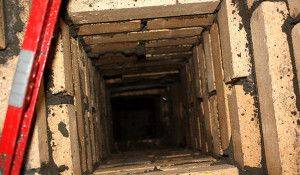 masonry exhaust duct
The smallest acceptable duct diameter for natural ventilation of a private house made of brick, stone or wood is 150 mm. The cross-sectional area of such a pipe is about 0.016 sq.m. If it is planned to install rectangular or square ducts for the exhaust ventilation system in a private house, the side length must be at least 100 mm. If a height difference of at least 3 meters is provided, such an air duct passes through itself about 30 cubic meters of air per hour. You can improve throughput by increasing one of the values:
- length of the vertical exhaust channel;
- diameter or cross-sectional area of the duct.
If the length of the vertical section is less than 200 cm, there will be no thrust
When conducting ventilation in a private house, one should take into account the height and shape of the roof, the number of storeys of the house and the presence of an attic.
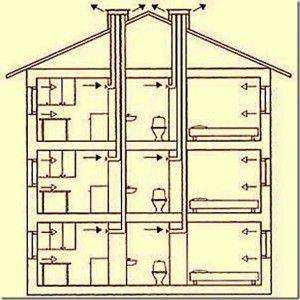 all ventilation ducts are assembled together in one block
With a small number of exhaust ducts, it is not advisable to connect horizontal air ducts to one common line, this reduces draft. Blocks are conveniently hidden in load-bearing walls, in special hollow concrete blanks. It is possible to lay ventilation in a private brick house in specially laid out rectangular channels 14x27 cm or square 14x14 cm.
The outer stone block of ventilation ducts is supported on a reinforced concrete slab or foundation.In light frame or wooden houses, the channels are made of plastic or galvanized pipes, which are placed in a single box.
In order to increase the productivity of the channel without changing the height, it is necessary to increase its cross-sectional area. Channels made of different materials have different throughput, the smoother the inner walls, the higher it is, this must be borne in mind when calculating ventilation in a private house.
| Height (cm) | Room temperature | |||
| 16 | 20 | 25 | 32 | |
| 200 | 24,16 | 34,17 | 43,56 | 54,03 |
| 400 | 32,50 | 45,96 | 58,59 | 72,67 |
| 600 | 38,03 | 53,79 | 68,56 | 85,09 |
| 800 | 42,12 | 59,57 | 75,93 | 94,18 |
| 1000 | 45,31 | 64,06 | 81,69 | 101,32 |
Table 1. Performance of a stone ventilation duct with a cross-sectional area of 204 sq.cm.
How to operate and maintain a PES
High-quality work of the supply and exhaust ventilation system depends not only on professional installation, but also on competent maintenance. The elements of the supply and exhaust device require:
- periodic cleaning of filters;
- their renewal, in case of contamination or expiration of their service life;
- replacement of lubrication of moving parts and parts of fans;
- if the system is equipped with heating elements, ionizers and noise isolators, regular checks of their serviceability are necessary.
Usually, all the necessary actions for the care of this system are described in the operating rules and instructions.
The need for a ventilation system
If we do ventilation in a private house with our own hands and draw up a future project for an effective system, it is necessary to study the need for its arrangement.

Without a high-quality and productive complex of ventilation and exhaust air removal, a house or apartment is not suitable for life for the following reasons:
- stagnant air with a high content of carbon dioxide is not suitable for humans and animals;
- the exhaust gas-air mixture creates a favorable environment for the development of pathogenic bacteria;
- well-heated air causes condensation in the room and an increase in humidity;
- fresh oxygen and its constant supply are necessary for the normal functioning of the human body.


The arrangement of the ventilation system can be done by hand, for this it is important to choose the appropriate project and carry out the necessary calculations.


Types of ventilation systems for a cottage
Normal life activity and comfortable well-being of residents are ensured by the presence of effective air exchange
Especially the presence of pure oxygen is important for living rooms - nursery, bedroom, living room. To remove polluted air, it is important to establish an effective ventilation system in the kitchen, in the toilet and bathroom, as well as in service areas.
To install a ventilation system that will update the air masses inside the housing, there are two options:
Natural air exchange
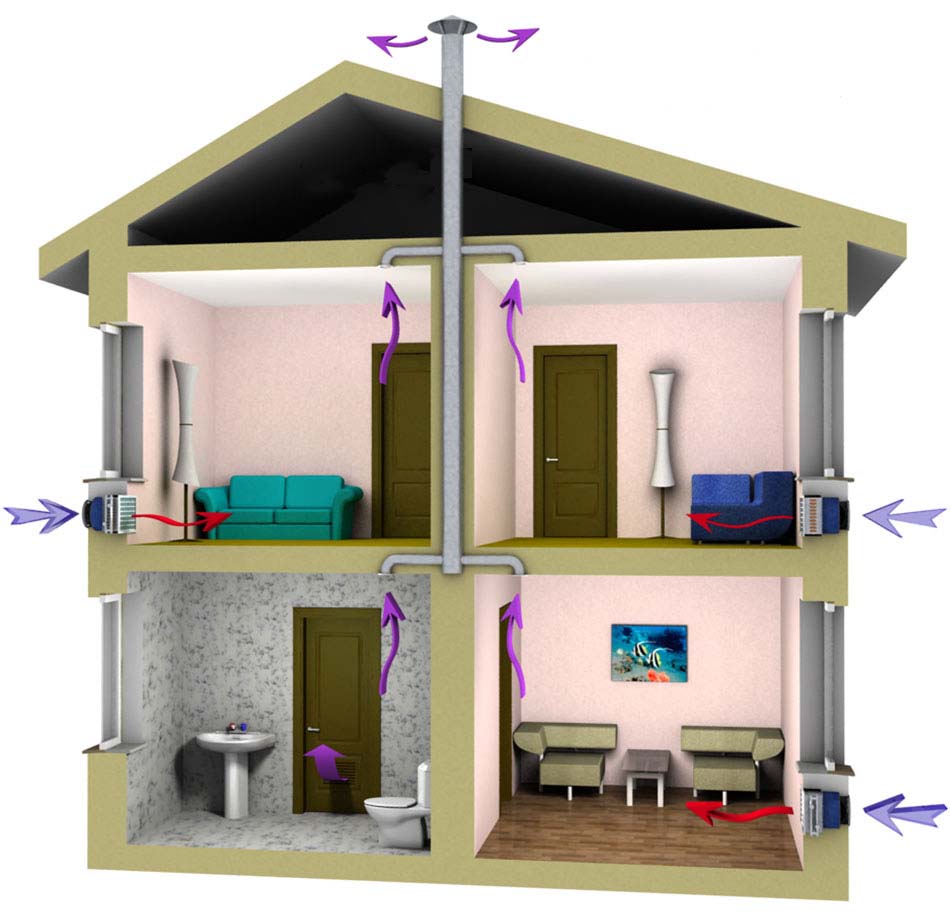
This ventilation system in a private house functions due to the resulting pressure difference between the air flows inside and outside the building. Due to the fact that the oxygen coming from the outside is colder, when it enters the room, it displaces the lighter, heated air that rises through the shafts and goes outside.

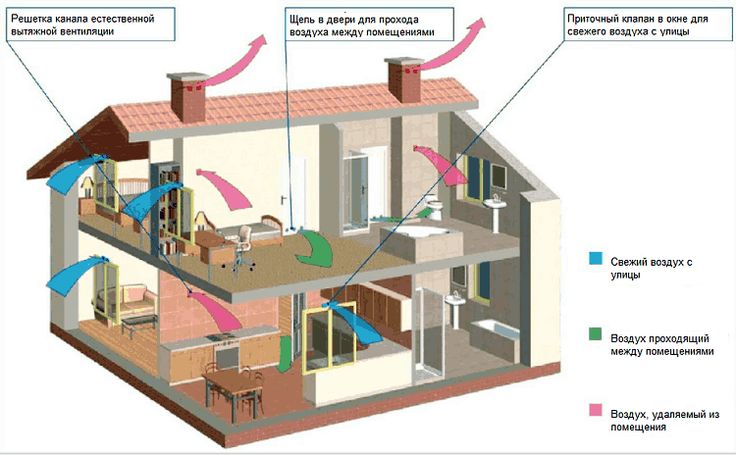


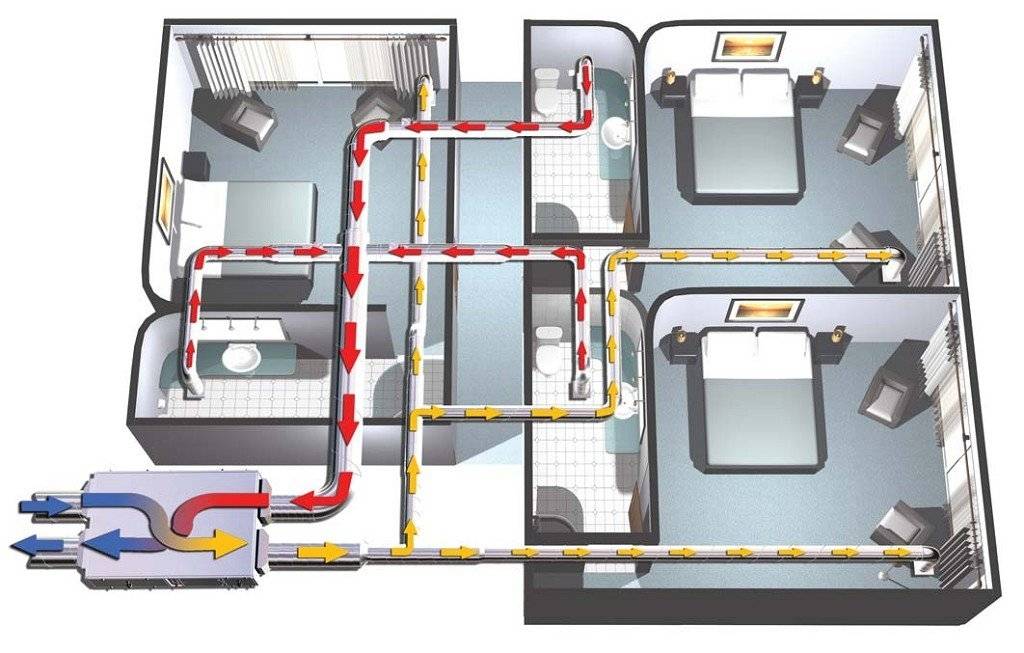
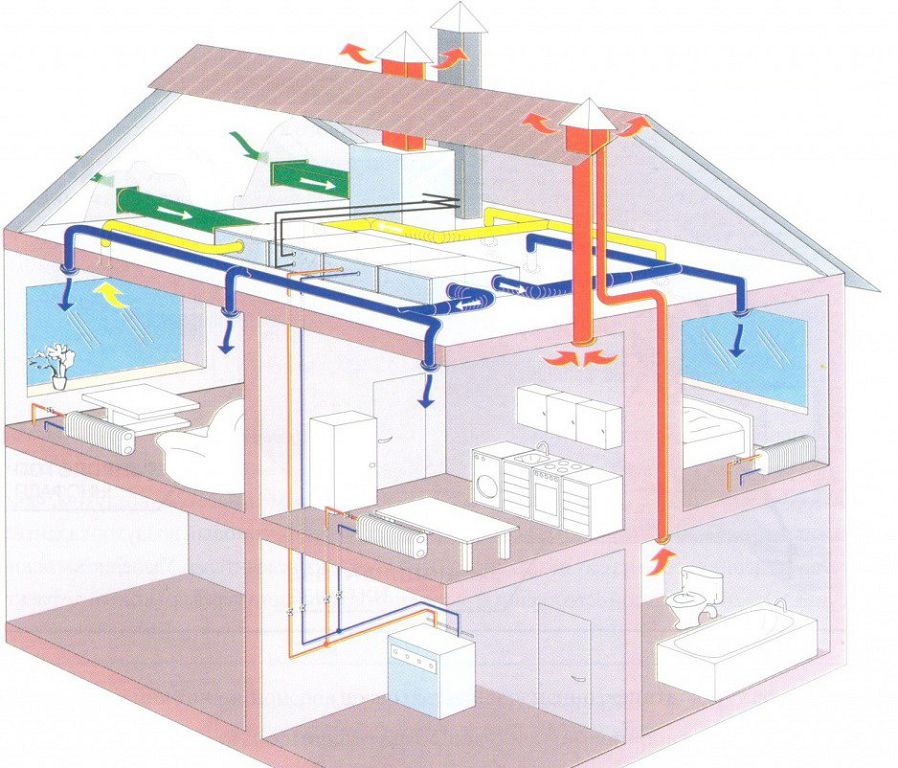

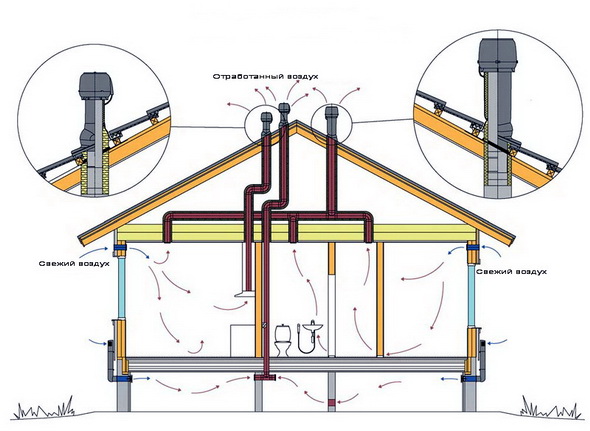
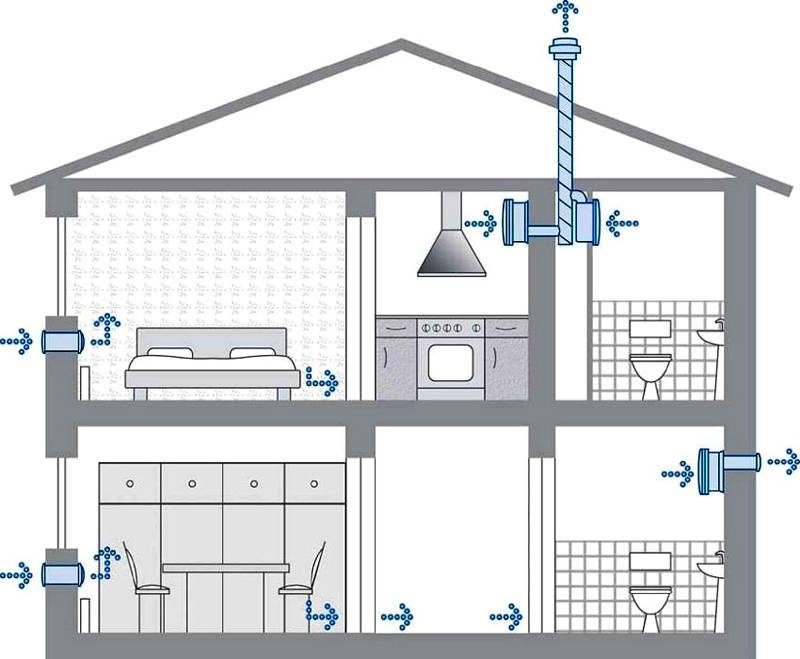
When the wind gusts increase, as well as when there is a temperature difference between inside and outside the building, more fresh air enters. Modern plastic double-glazed windows make it difficult for the natural entry of air masses from the outside, but they, and the walls of the house, have special supply valves.Thus, polluted air is removed from the house, entering the ventilation ducts located in the kitchen and in the bathroom with a toilet, and clean air enters after ventilation of the premises.
Pros and cons of ventilation due to natural air circulation:
- The ventilation of the house is carried out without the use of electricity or special equipment.
- It is a simple system that does not need constant maintenance.
- Silent ventilation.
- Can be combined with various filters and conditioners.
- Among the shortcomings are noted: poor air circulation, the inability to control the volume of incoming and outgoing air, as well as dependence on the external air temperature. When the outside temperature is the same as inside the building, the draft becomes very weak, disrupting air circulation.
Mechanical ventilation in the house
It differs from the natural one in that various equipment for air injection (fans, compressor units, pumps) is used for efficient air circulation.
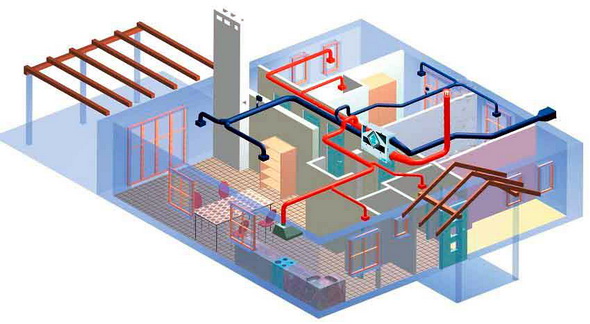
- The possibility of operation where it is impossible to produce natural ventilation or such a system is not operational.
- The functioning of the system regardless of temperature and climatic conditions.
- The ability to create comfortable conditions by heating, cooling, purifying or humidifying outdoor air.
- Among the shortcomings are noted: financial costs for equipment and electricity, as well as periodic maintenance of the system.
Calculations
Competent calculation of supply and exhaust ventilation implies the determination of its following parameters:
- total air flow;
- normal pressure in the system;
- heating power;
- cross-sectional area;
- the size of the inlet and outlet holes;
- electrical energy consumption (for mechanical systems).
Productivity is calculated based on data on the height and area of the premises, on the use of each site and on its workload. When choosing a multiplicity air passage through ventilation it is impossible to deviate from the values prescribed by SNiP. If necessary, only corrections are made for heating characteristics and for the number of people present. For most residential apartments, it is required to ensure the supply of 100-500 cubic meters. m of air in 60 minutes. And if the area of the apartment is large (or you need to ventilate a private house), this figure will already be 1-2 thousand cubic meters. m.
For an overview of the design of ventilation systems, see the following video.
Do-it-yourself ventilation device in a private house
Step #1 Calculations
To find out the power of the system, a parameter such as air exchange is calculated. It is calculated for each room separately according to the formula:
P \u003d VxK, where
V - the volume of the room (cubic meters), is calculated by multiplying the width, length and height of the room;
K - approved by SNiP 41-01-2003 norms for the minimum air exchange in the premises (cubic m / h). For residential areas - 30, separate sanitary rooms - 25, combined - 50, kitchens - 60-90.
Also, in the calculations of the ventilation system of a private house, other indicators are taken into account:
- The number of people permanently in the house. One requires 30 cubic meters. m/h of air.
- The thickness of the walls of the premises.
- Number of household and computer equipment.
- Glazing area.
- The location of the building relative to the cardinal points.
- The presence (absence) of the prevailing wind in the area.
- The presence in the building of the pool. For him, it is recommended to carry out a separate system.
Step #2 Natural Ventilation: Improving Parameters
Natural ventilation in a private house does not always cope with its task of maintaining the specified temperature and humidity parameters. Then, it is desirable to “finish” the system.
The principle of the ventilation system in a two-story private house
Window inlet valves will help with this. They will not depressurize the window, but will create an influx of fresh air. Their installation is elementary, following the instructions, even a completely ignorant person can handle it. The principle is that an elongated device (350 mm) is mounted on the upper part of the sash. From this place, a regular seal is cut off and installed from the delivery set (narrower).
A few more devices that improve air circulation. In order not to block the flow of air, ventilation grilles are installed on all interior doors. It is impossible to “block” with a window sill that is too wide the process of mixing the cold air of the window and the warm radiator.
If during the construction of the house a natural ventilation system is designed, then the following nuances should be taken into account: the house should not have rooms without windows; a guarantee of good ventilation - the windows overlook all sides of the building (deaf walls are excluded).
Step number 3 Supply and exhaust ventilation systems
The supply ventilation device in a private house is solved using a wall ventilator. It is a telescopic or flexible tube, on one side (outer) of which there is a decorative grill with a mosquito net (from midges and mosquitoes), on the other (inner) - a fan, a filter.
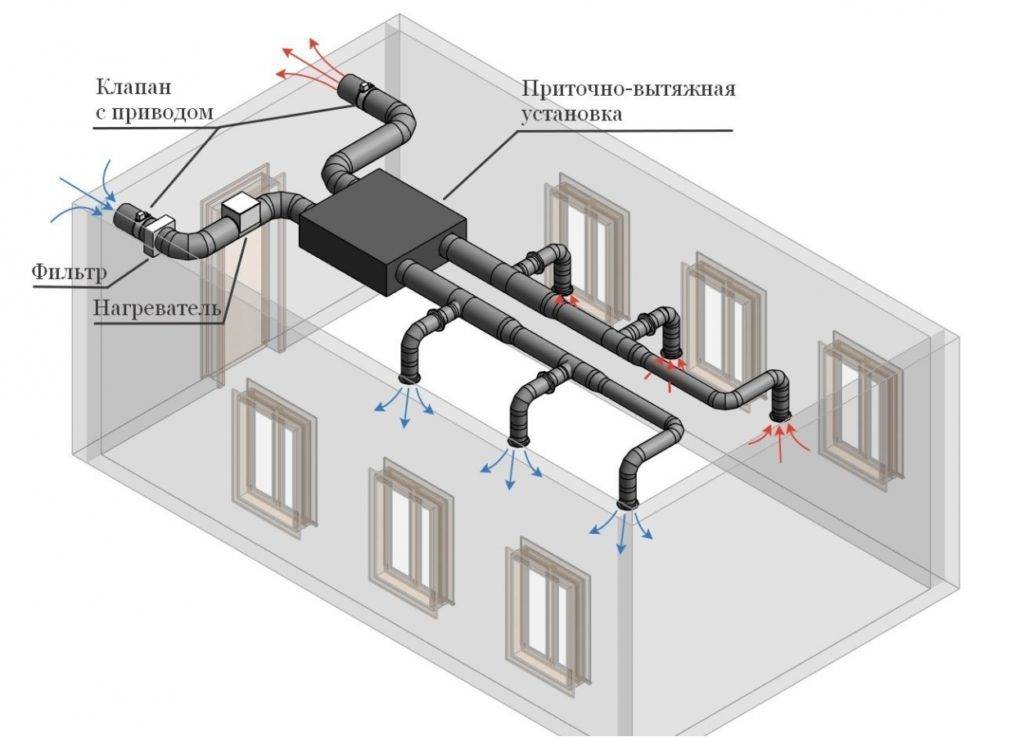





Recuperator for ventilation system
Supply ventilation in a private house, mounted in the wall in this way:
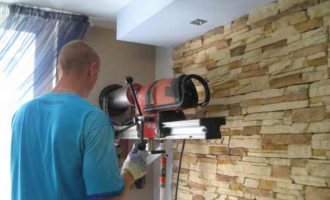
- Using the appropriate equipment, a hole of the required diameter is punched.
- A pipe with a heater is inserted into it.
- The device itself is mounted on the adhesive solution, consisting of a fan, a filter, some models are equipped with an ionizer.
- Connection to the electrical network.
- From the side of the street, a decorative cover is installed that protects against rain and snow from getting inside, from the inside - a decorative grille.
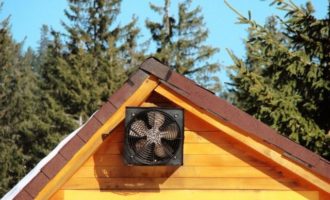
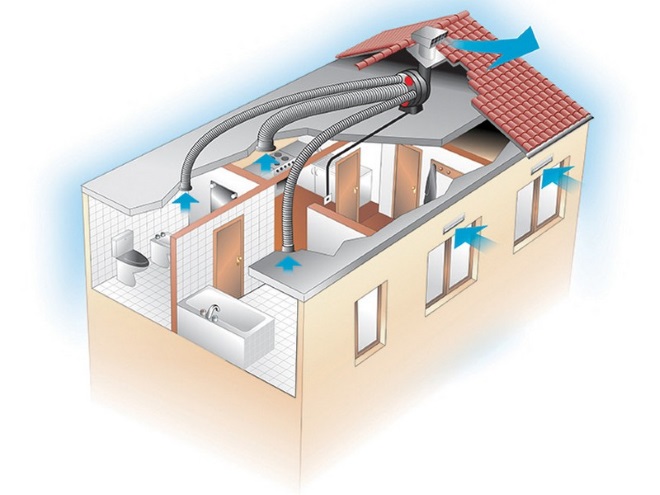
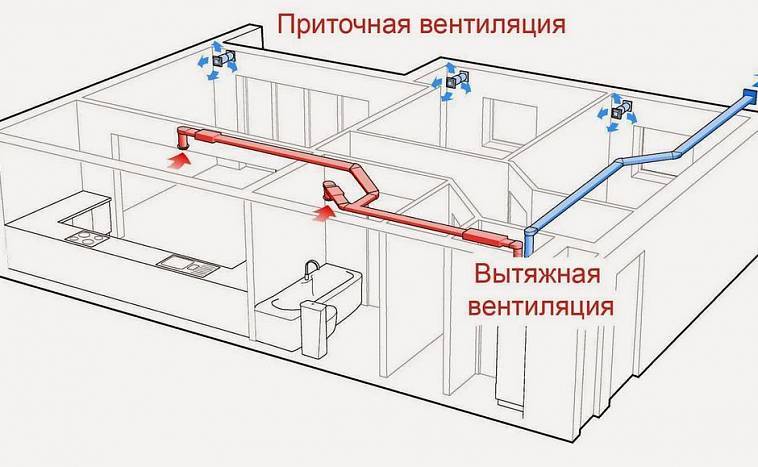
The exhaust ventilation scheme in a private house, with a good natural inflow, may consist of fans mounted in the sanitary rooms, in the kitchen. The wall exhaust fan in the kitchen is installed similarly to the supply fan. In the sanitary room, either axial or channel is mounted in the ventilation duct.
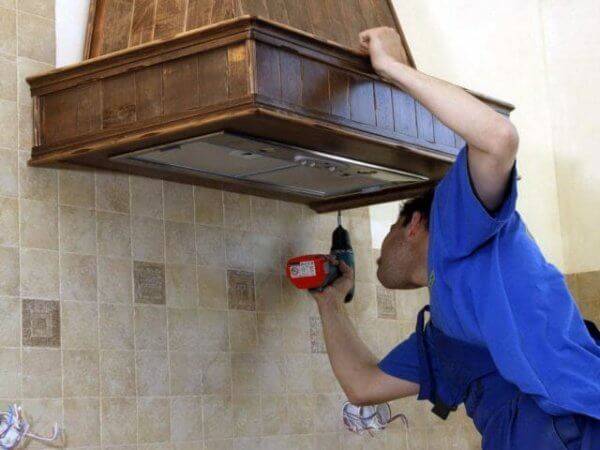
Hood in the kitchen over the stove will also be an additional exhaust channel. If the exhaust ventilation works more intensively than the supply, then the house will suffocate.
Step number 4 Do-it-yourself ventilation in a private house scheme
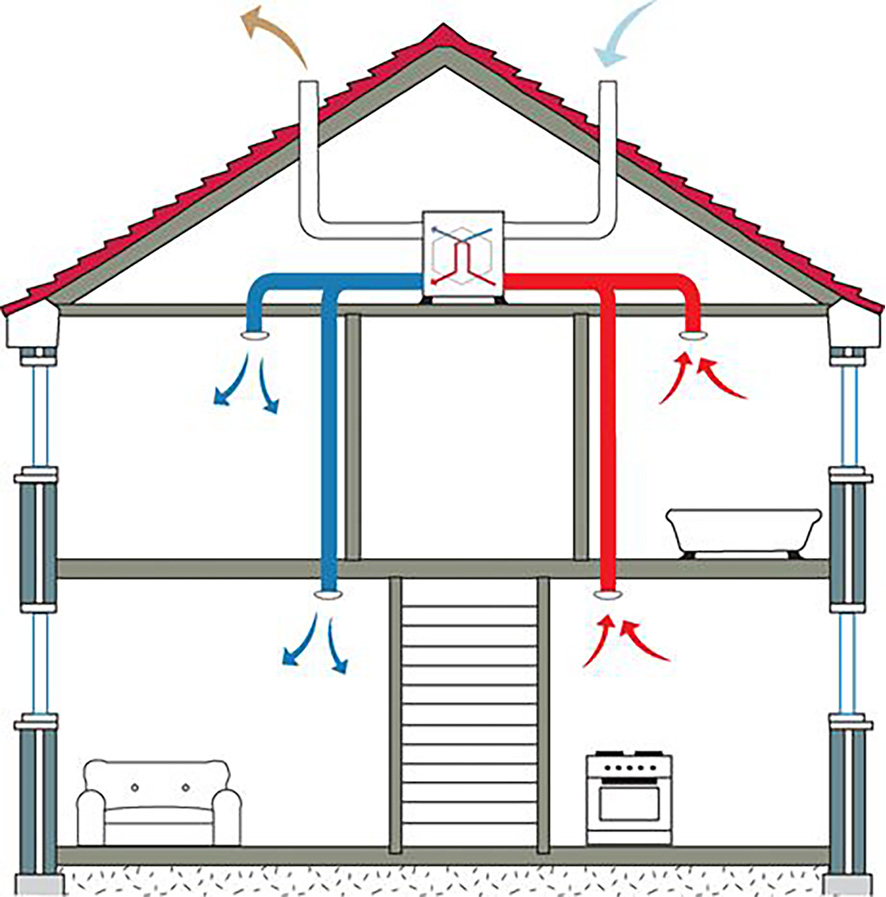
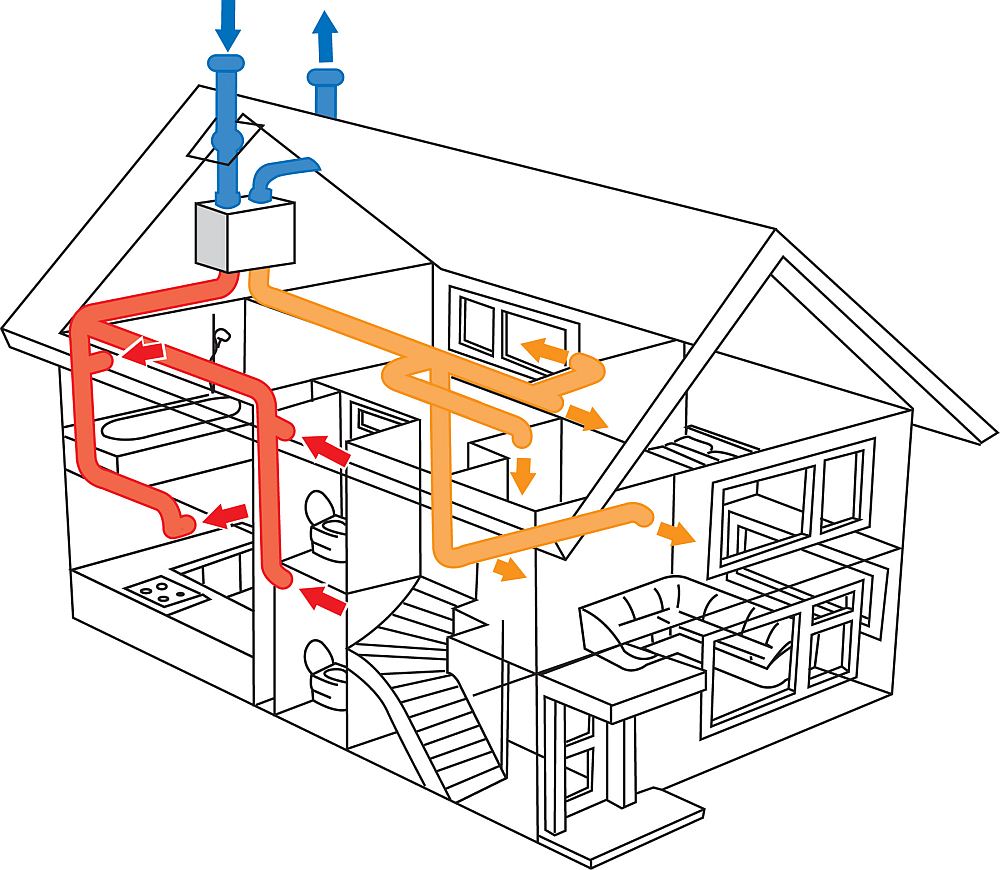
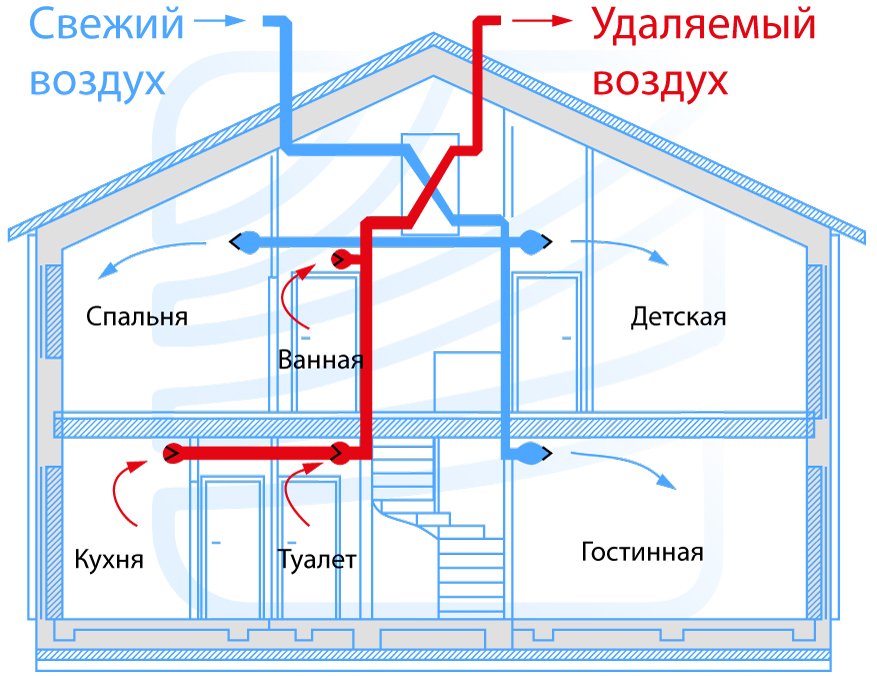
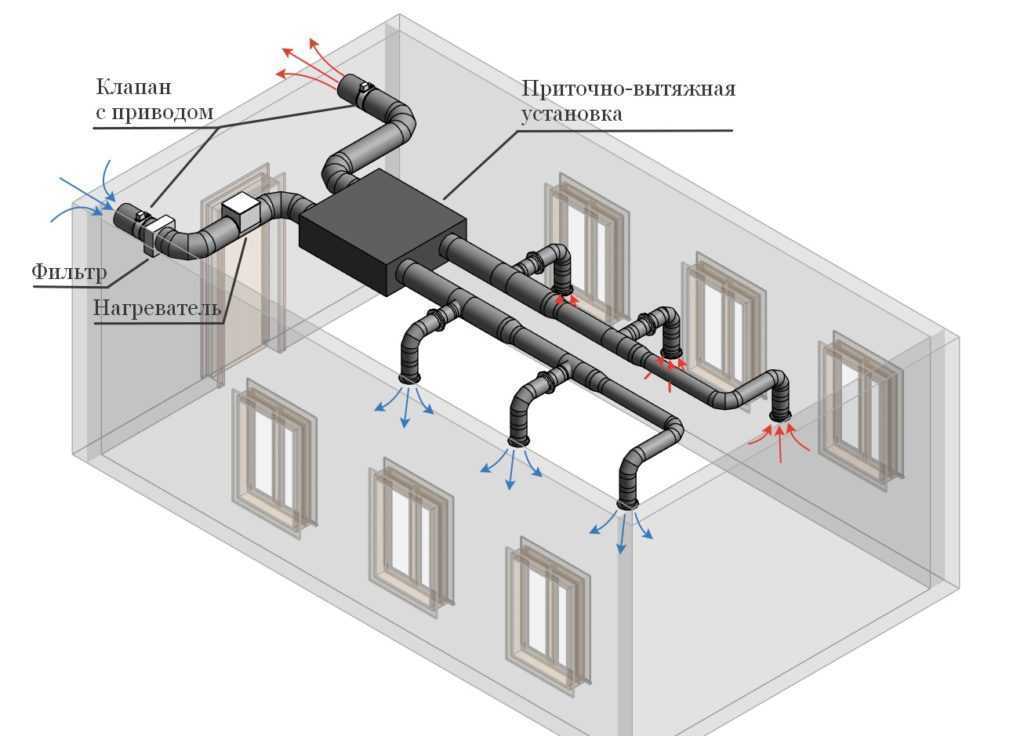
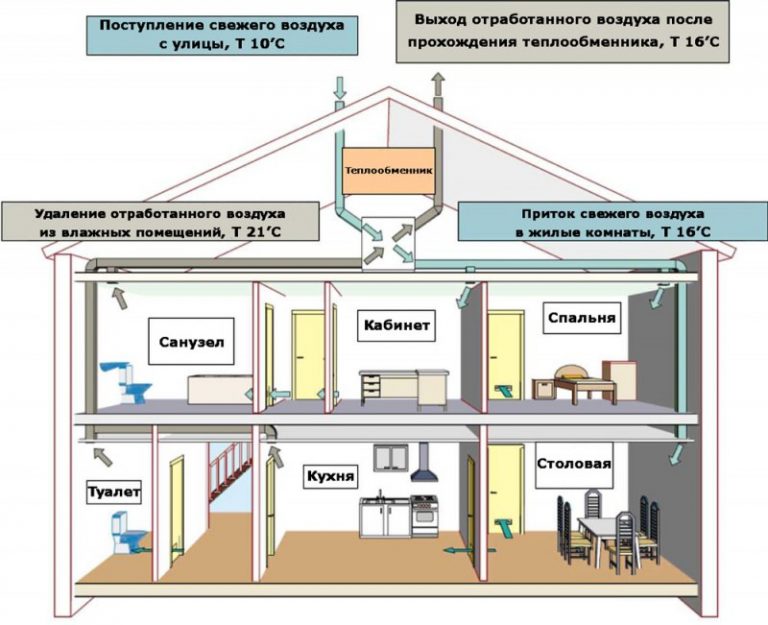
The most optimal ventilation option for a private house is supply and exhaust with mechanical stimulation. Two types of its designs are used: type-setting and monoblock.
Energy saving ventilation duct
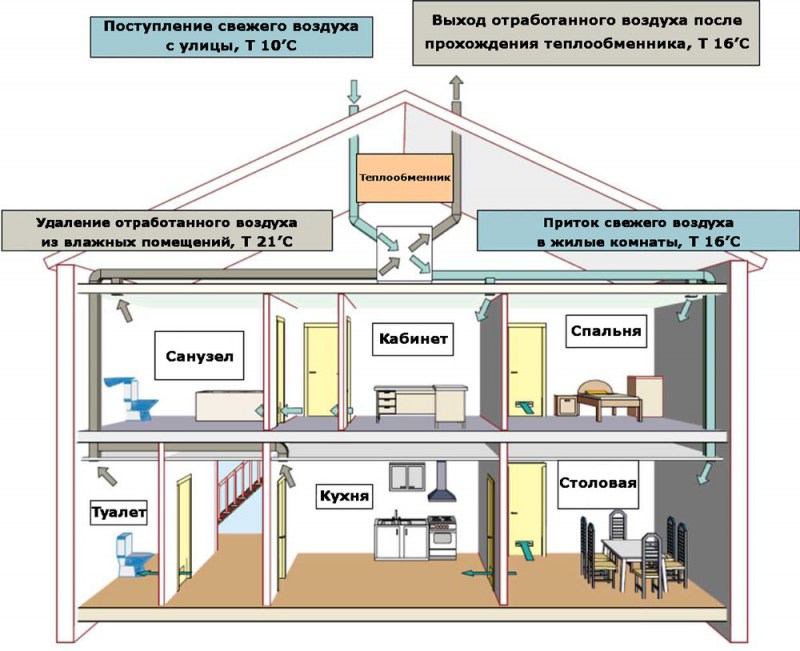
The ventilation scheme in a private house of a monoblock system looks something like this:
- air from the street, through the supply air duct, enters the heat exchanger;
- it is cleared of harmful impurities of the atmosphere;
- heated to the required temperature;
- further, through the air duct, it enters all the premises of the house;
- exhaust air through the exhaust pipeline enters the heat exchanger;
- gives off its heat to the incoming cold air;
- from the heat exchanger, through the exhaust pipe - to the atmosphere.
Conclusions and useful video on the topic
The video explains why ventilation is needed in every private house and why mixing of supply and exhaust air flows should not be allowed:
This video clearly shows how to properly organize the inflow and evacuation of air with a natural ventilation scheme in a country house:
Video on how the supply and exhaust ventilation of sufficient power with heat energy recovery operates using the profi-air system of the German manufacturer FRANKISCHE as an example:
Having studied the principles of operation of ventilation systems, it is quite possible to properly organize air exchange in a small one-story building on your own. However, it is better to entrust the design and installation of ventilation in spacious country houses to professionals. After all, the installed system should not only work, but also cope with planned tasks.
Properly equipped ventilation will solve the problems of stagnant air and the unpleasant feeling of mustiness in a private house.
Still have questions, found shortcomings or want to share useful information on arranging ventilation in a private house? Please leave your comments, ask questions and share your experience in the block under the article.