
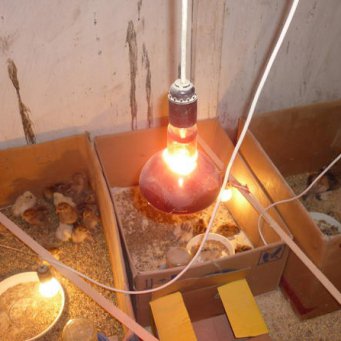
- Proper lighting in the incubator
- How to organize a brooder with your own hands?
- Types of heating
- Natural
- Artificial
- Basic rules of use
- Heating options
- red heating lamp
- Infrared Ceramic Heater
- Artificial mother hen
- Natural heating and alternative methods
- How to equip a brooder for chickens
- General information and scope
- Design
- Advantages
- main parameters
- How to make a brooder for raising chickens with your own hands
- Choice of option
- Dimensions and drawings
- Tools and materials
- Manufacturing steps
- Heating to maintain temperature
Proper lighting in the incubator
Compliance with the lighting regime of the brooder is no less important for the full development and normal growth of chickens than heating. In the first 2-3 days of chicks' life, artificial daylight hours should be at least 21-23 hours. Then, until the age of three weeks, its duration is gradually reduced to 15-16 hours a day. After that, it is already possible to switch to the standard natural duration of daylight hours at 10 ÷ 12 hours.
Recent research by scientists has shown that darkness is just as important to the health and growth of birds as light. During the dark phase, melatonin is produced in the growing body of the chick.This hormone contributes to the proper formation and strengthening of the immune system. Birds reared under the correct lighting regime have greater resistance to disease, are significantly less prone to mortality, and generally do not have leg problems.
In addition, the behavior and growth of the bird is affected by the color of the lighting. Thus, studies have shown that blue light has a calming effect on birds, red light helps reduce "bird cannibalism", blue-green light stimulates growth, orange-red light improves reproductive function.
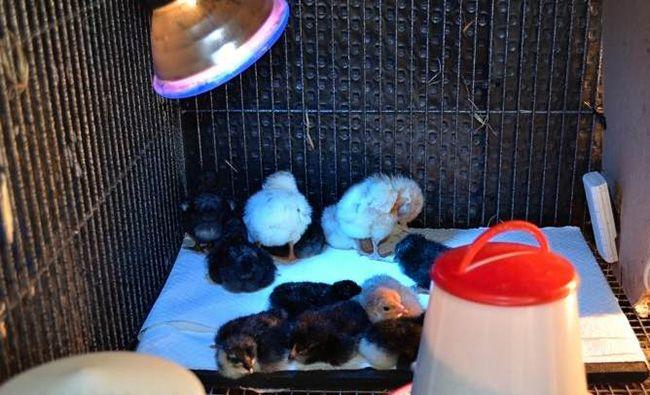
How to organize a brooder with your own hands?
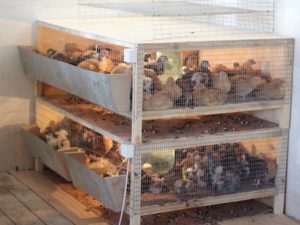
In this case, you should pay attention to the brooder (English brood - sit on eggs) - a house for chickens, specially equipped and organized for rearing young animals. The brooder must be equipped with:
The brooder must be equipped with:
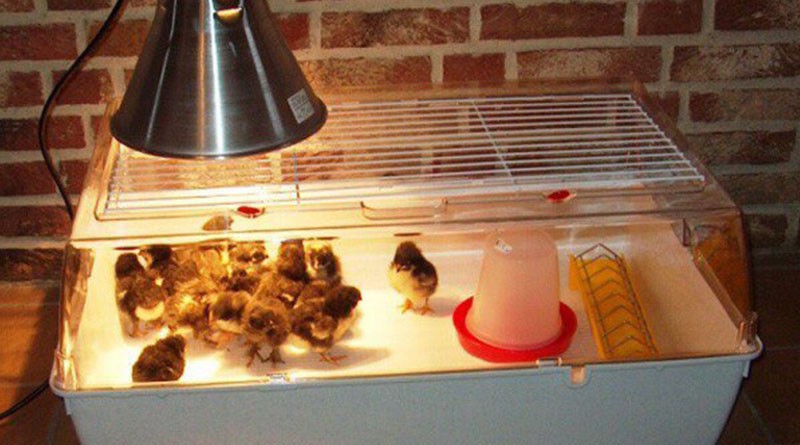
- A good heating system, lighting, quality feeders and drinkers. The margin of safety and ventilation are provided by fine-mesh gratings on the sides and on the floor of the cage (mesh size is about 10 mm).
- All chick waste should easily fall through the floor grate into a metal or plastic bin that can be quickly removed, washed or disinfected. The entire structure of the brooder should also be well and easily cleaned, washed and treated with disinfectants.
- For rearing young animals in the first days of life, protection from drafts and maintaining a higher temperature, it would be good to provide removable side walls made of easily washable materials, PVC panels or fiberboard, plywood, thick cardboard in cases of single use.For the first time, it is possible to install additional removable mats with dry bedding on half-cages.
- The brooder should be equipped with several infrared lamps, and a thermostat is also desirable, which reacts to changing conditions outside and adjusts the temperature inside the brooder.
- The door should be large enough to allow easy cleaning inside the brooder.
Well, and the last moment: the correctly calculated brooder area for the livestock of young birds. If the landing is too tight, it is possible to peck each other, case, leg morbidity due to insufficient movement.
Types of heating
There are two types of chicken coop insulation in winter: natural and artificial. Both options have the right to exist, have their strengths and weaknesses. Having considered in detail the essence of each type of chicken coop heating, the owner of the chickens will decide which one to give preference to.
Natural
This option is based on careful warming for the winter of the room where the bird is kept. No heating devices are used. An acceptable temperature in the chicken coop is achieved by eliminating the loss of heat generated by the birds themselves through the walls, floor, windows, ceiling and doors.
They resort to such measures of warming:
- the walls are made double, laying insulation inside;
- second frames are inserted into the windows or tightened with a film;
- the doors are adjusted to the box so as to remove all the cracks, the doorway is curtained with a blanket or any suitable material;
- the ceiling is sheathed with insulation from the inside or a layer of expanded clay, earth in the attic is scattered;
- when snow falls, it is raked up to the barn, insulating the walls from the outside.
Litter in such a chicken coop is not cleaned all winter, it serves as an additional source of heat.Fresh bedding (sawdust, straw, hay, peat) is sprinkled all winter.
This method of heating the chicken coop is chosen in regions with relatively mild winters, where the temperature drops below -15–18 degrees. Summer residents also resort to it, forced to leave livestock unattended for several days. The use of heating systems in this case is dangerous.
Artificial
If the air temperature in winter drops below 20 degrees, simple insulation is no longer enough. Additional sources of heat in the poultry house are:
- wood and coal stoves;
- electric and infrared heaters;
- gas boilers;
- water heating.
The last two options for heating a chicken coop are rarely used in private courtyards due to the high cost of equipment and the complexity of installation. Gas and water heating is relevant for large farms, where the profit from the sale of products more than pays for expensive heating.
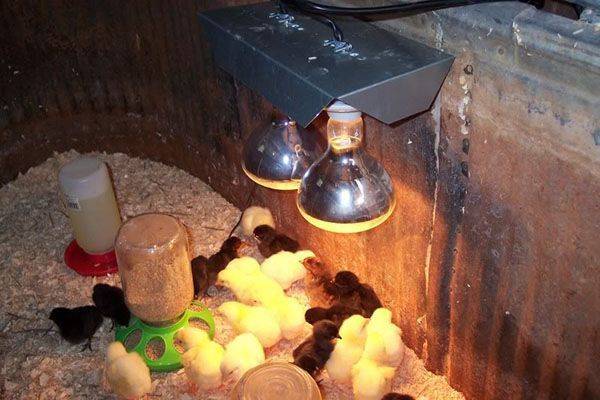





Installation of furnaces of various modifications (potbelly stove, bulleryan, brick) requires certain skills. The operation of the stove requires skill and the constant presence of people on the farm, leaving such a heater unattended is dangerous by causing a fire or smoke in the room. This option is acceptable if you want to heat the chicken coop without electricity.
The advantage of installing a stove for heating a chicken coop is the cheapness of fuel. Furnaces are heated with firewood, special sawdust pellets, coal, lumber waste.
Electric and infrared heaters and lamps are the safest livestock house heaters.By using a fuse that cuts off the power supply in the event of a short circuit, the likelihood of a fire is reduced to almost 0.
The disadvantages of these heating systems include the need for uninterrupted supplies of expensive electricity.
Basic rules of use
Use a thermometer to control the temperature. Newborn chicks need a high temperature - 35-37 degrees. Subsequently, it is recommended to reduce it by 1-2 degrees. At 9 weeks, chickens feel comfortable at a temperature of 18-21 degrees.
To adjust the temperature, you can remove or bring the lamp closer to objects. To choose the lamp power, you should focus on this ratio: 1 kilowatt of energy is required per 10 square meters. If the temperature in a room without heating is 10 degrees, 1 600-watt light bulb is required per 10 square meters.
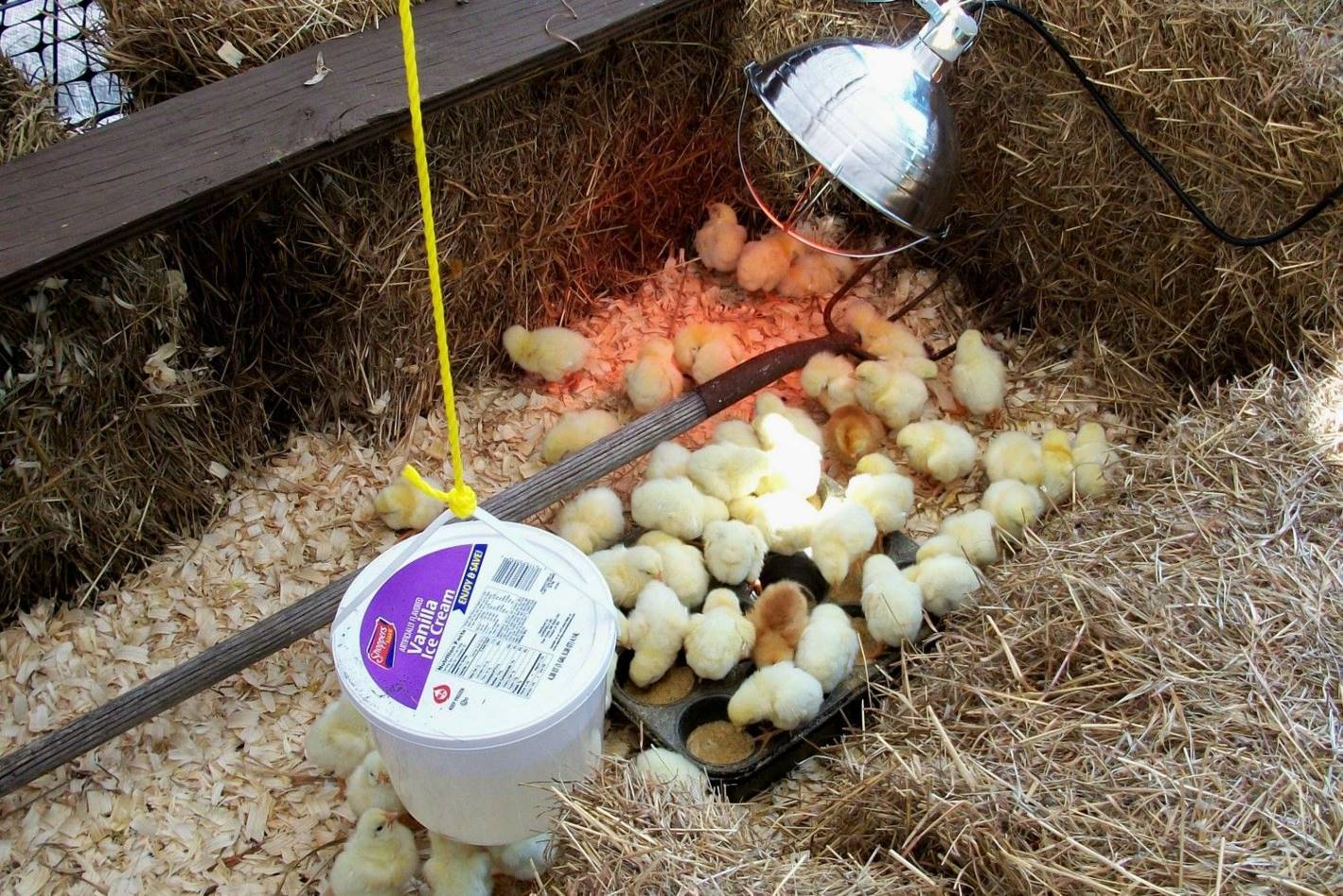
Equally important is the distance at which it is worth placing the heat source. At first, this is done at a distance of 30-40 centimeters from the chicks.
After some time, the temperature is measured. If it exceeds 37 degrees, the heat source is moved higher.
In the arsenal should have 2 lamps. If one deteriorates, it should be replaced in a timely manner. This will help keep the chicks healthy.
Heating options
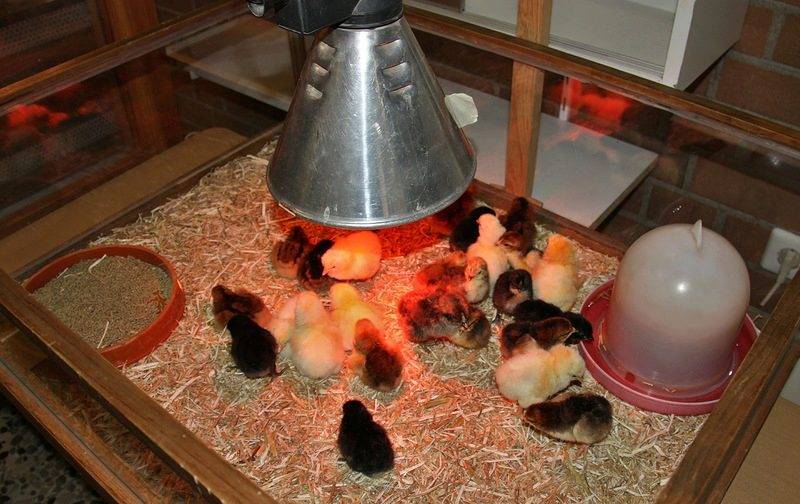
It is not enough to build a good and strong brooder. It is necessary to provide excellent heating in it, because this is the main component necessary for small chicks. Of course, when choosing a particular heating system, most poultry farmers start from their own preferences and financial capabilities. You can maintain the required temperature with ordinary incandescent lamps of the appropriate power.But such a method cannot be called economical, and it does not differ in particular safety, because a simple incandescent lamp can be very easily broken by accident.
Each of these devices has its pros and cons.
red heating lamp
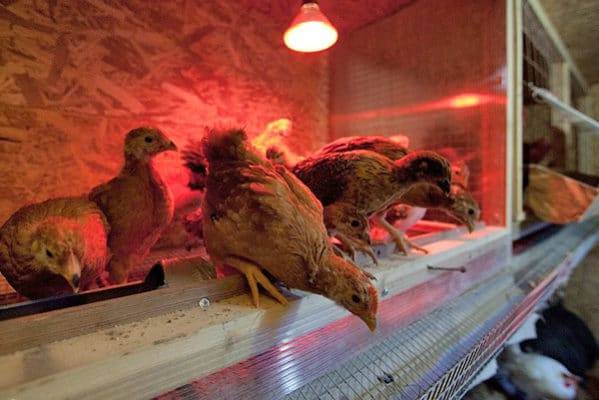
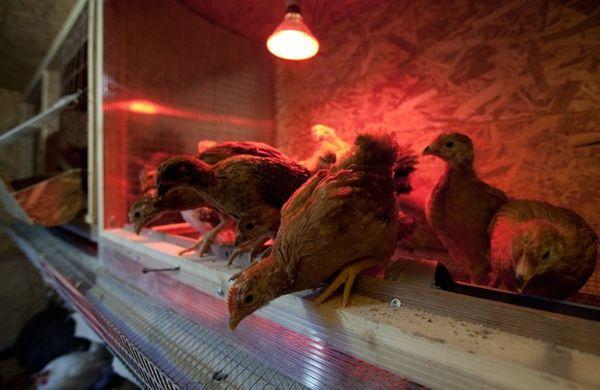
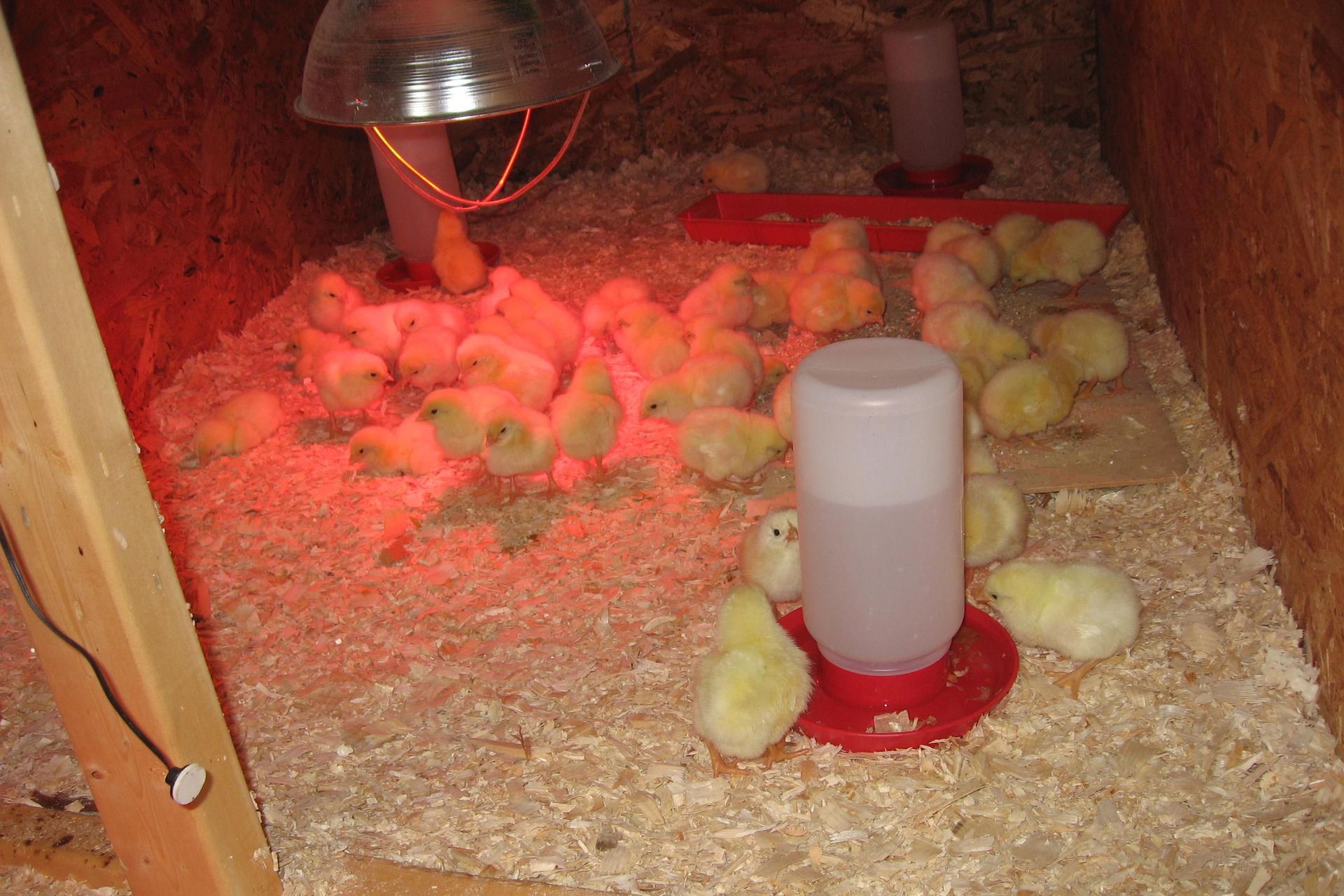
This is a common method of warming up a brooder. Such a lamp emits energy in the red and infrared range. It is designed to emit warm and fairly soft lighting. Calling such a device universal is not worth it, although experts often say that red lamps do not interfere with the chicks to sleep and rest normally.
When the temperature rises, the red lights should be turned off. This can be done both independently and with the help of special regulators. This means that in order to maintain the optimal lighting mode, it will be necessary to use another lighting device for a pair with the specified lamp.
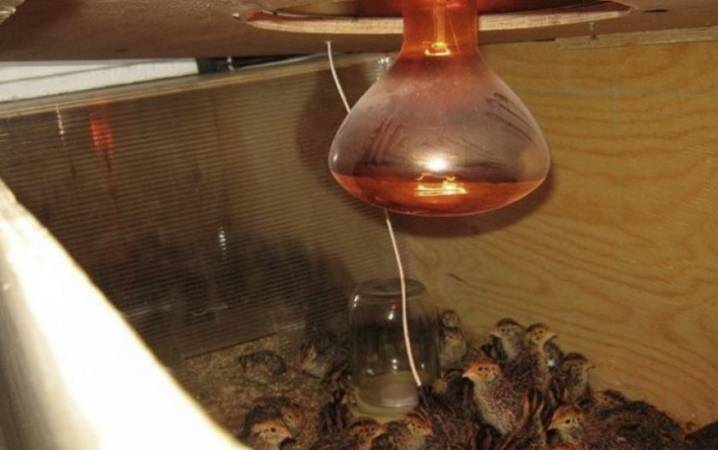
The main advantages of these devices are:
- they have a good resource - about 5000 hours - this is an excellent indicator;
- are inexpensive.
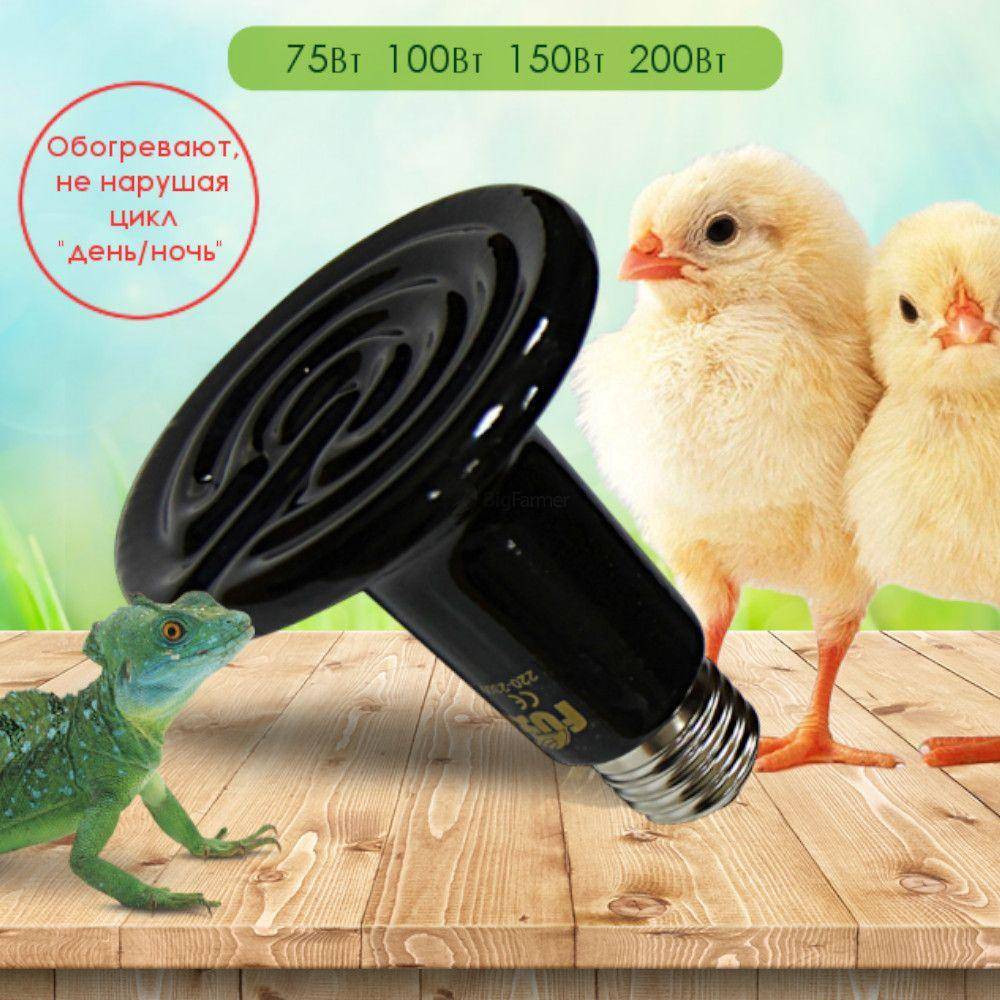
Infrared Ceramic Heater
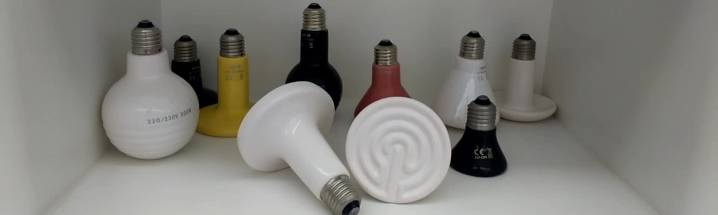
This is another version of the lamp for keeping day old chicks. Increasingly, poultry farmers are using an infrared ceramic heater, which makes it easy to maintain the required temperature. This option has a lot in common with a conventional lamp. If we compare it with a classic red light bulb, then it has the following advantages:
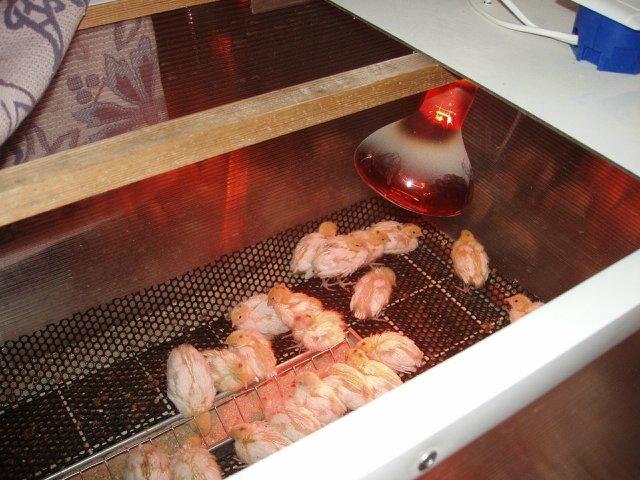


- can last much longer - continuous operation of such a heater can be from 10,000 to 30,000 hours;
- has a high efficiency - up to 98%;
- characterized by high impact resistance;
- are waterproof;
- “not afraid” of vibrations.
The power limits of such heaters are very wide - from 25 to 200 watts. It is not difficult to find the ideal ceramic heaters for brooders of any size. If you wish, you can put several of these heat emitters at once in one design. Many poultry farmers use this method.
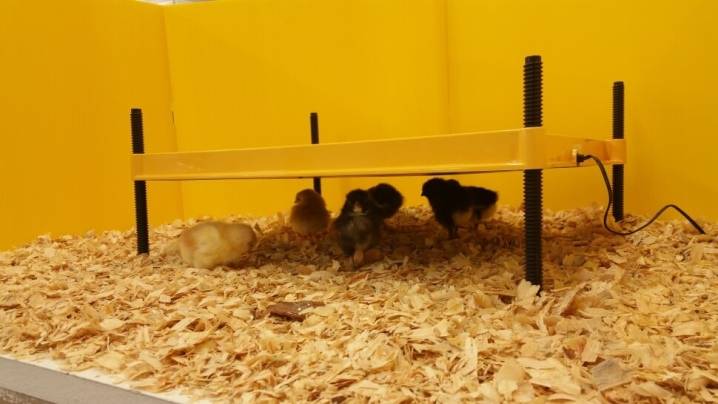
Artificial mother hen
Such an addition to the main heating system will come in handy. It is a low power heating plate. It stands on 4 small pillars. Such a device almost does not raise the temperature of the surrounding space, but if you lean against its warm surface, the chicks can warm up in the same way as in natural conditions - with a laying hen.
As the chicks grow, the gap between the floor of the brooder and the surface of this heater is gradually made larger. Due to this, it will be very convenient to operate it during the entire time of growing chicks in the brooder.
The dimensions of this apparatus are selected depending on how many chicks are contained in the brooder. Classic products are designed for no more than 20 heads. There are specimens for 50 chicks - their power is higher and they cost more.
If you decide to put this device in a brooder, you need to observe one important condition - the floor area of the brooder must be at least 2 times larger than the heater itself. Only in this case, the chickens will be able to warm up normally under the artificial “mother chicken”
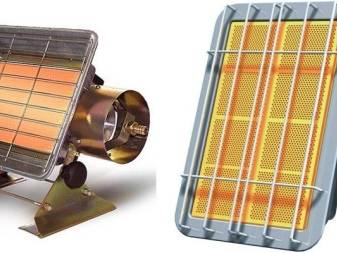
There are other types of brooder heating for chicks:
- ordinary incandescent lamps;
- special infrared films;
- heat emitters made of plastic;
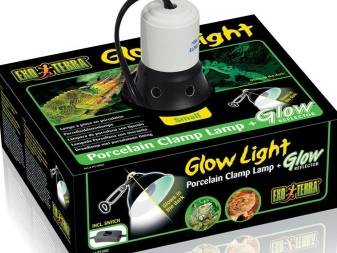
- lamps designed for heating terrariums;
- Heating elements of different power levels and structures.
Natural heating and alternative methods
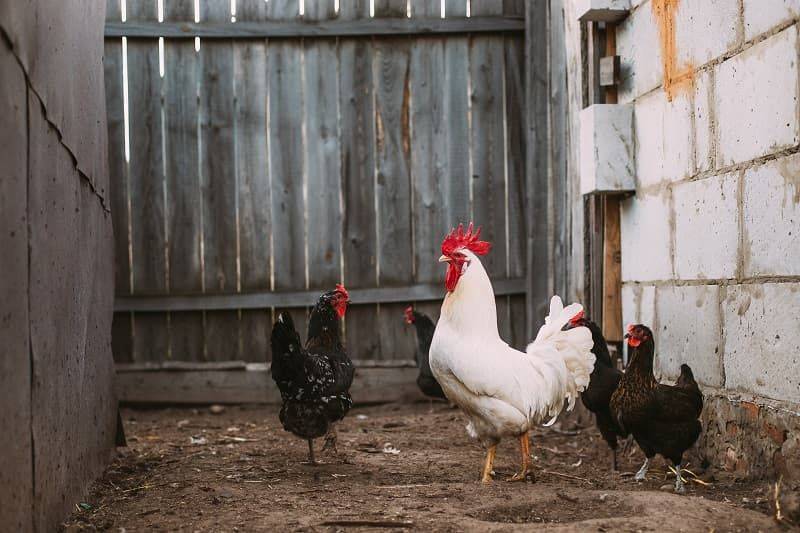
In regions with a temperate climate, natural heating chicken coops in winter. Its essence lies in the high-quality insulation of the building and the use of manure, which perishes and releases a large amount of heat. Periodically, it is updated, laying a new layer on top of the old one. The disadvantage of this method is a specific smell.
 The temperature regime for chickens in the winter in the chicken coop to maintain egg production, as well as for walking
Read
 Keeping chickens in winter. Highlights on the equipment of the chicken coop, the organization of walking and nutrition
More
 Proper feeding and optimal maintenance of broilers in the winter for normal productivity
Watch
Among the innovative alternative heating methods, the fermentation substrate can be noted. It contains a large number of lactic acid and photosynthetic bacteria that process organic products (litter, food leftovers and used bedding) and generate a large amount of heat. Such bedding can be heated up to +50 °C. When using, careful calculation is required depending on the number of birds.
 What material is chicken bedding made of? What requirements must be met in order for the litter to bring maximum benefit?
Read
 Fermentation litter for chickens with biobacteria - comfortable rearing of poultry in warm and dry conditions
More
How to equip a brooder for chickens
A brooder is a capacious box in which the brood is kept for several weeks after birth. It should create optimal conditions for growing chicks:
- humidity 60% (without feeling damp);
- heat according to the table above;
- illumination (at 1 week) is constant, general, then decreases.
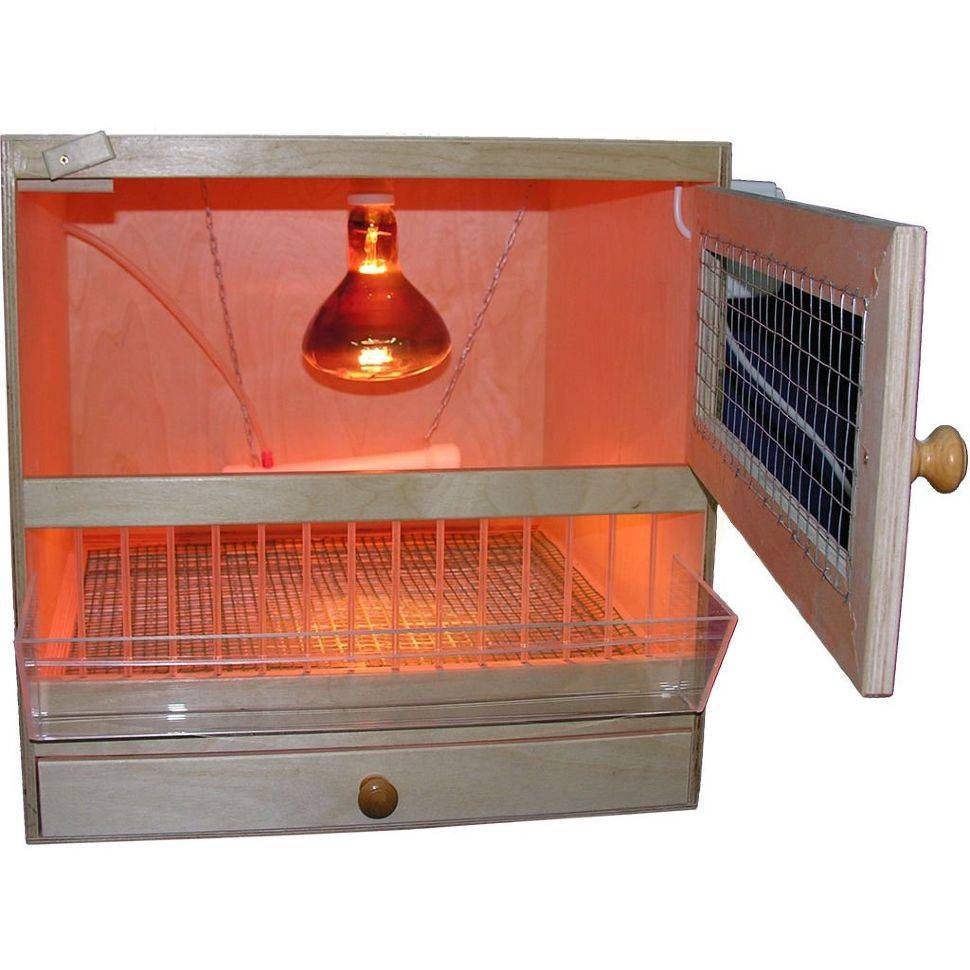
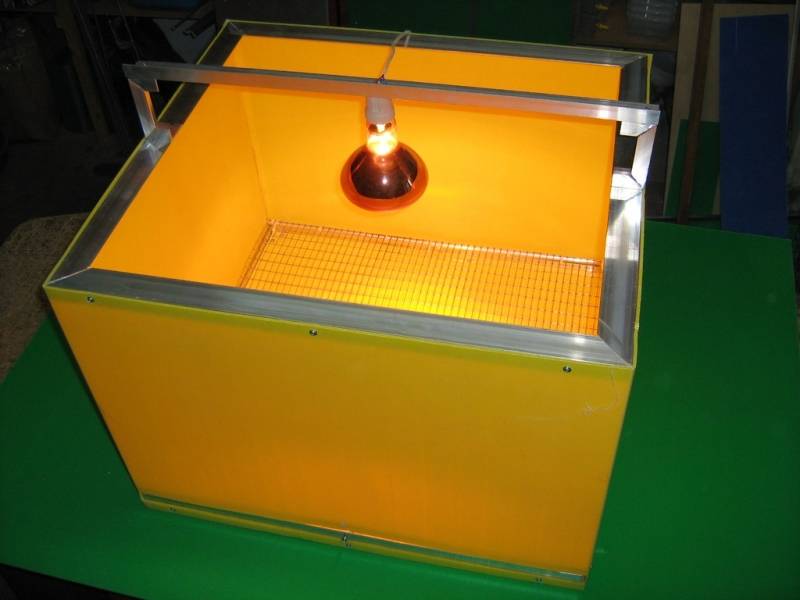
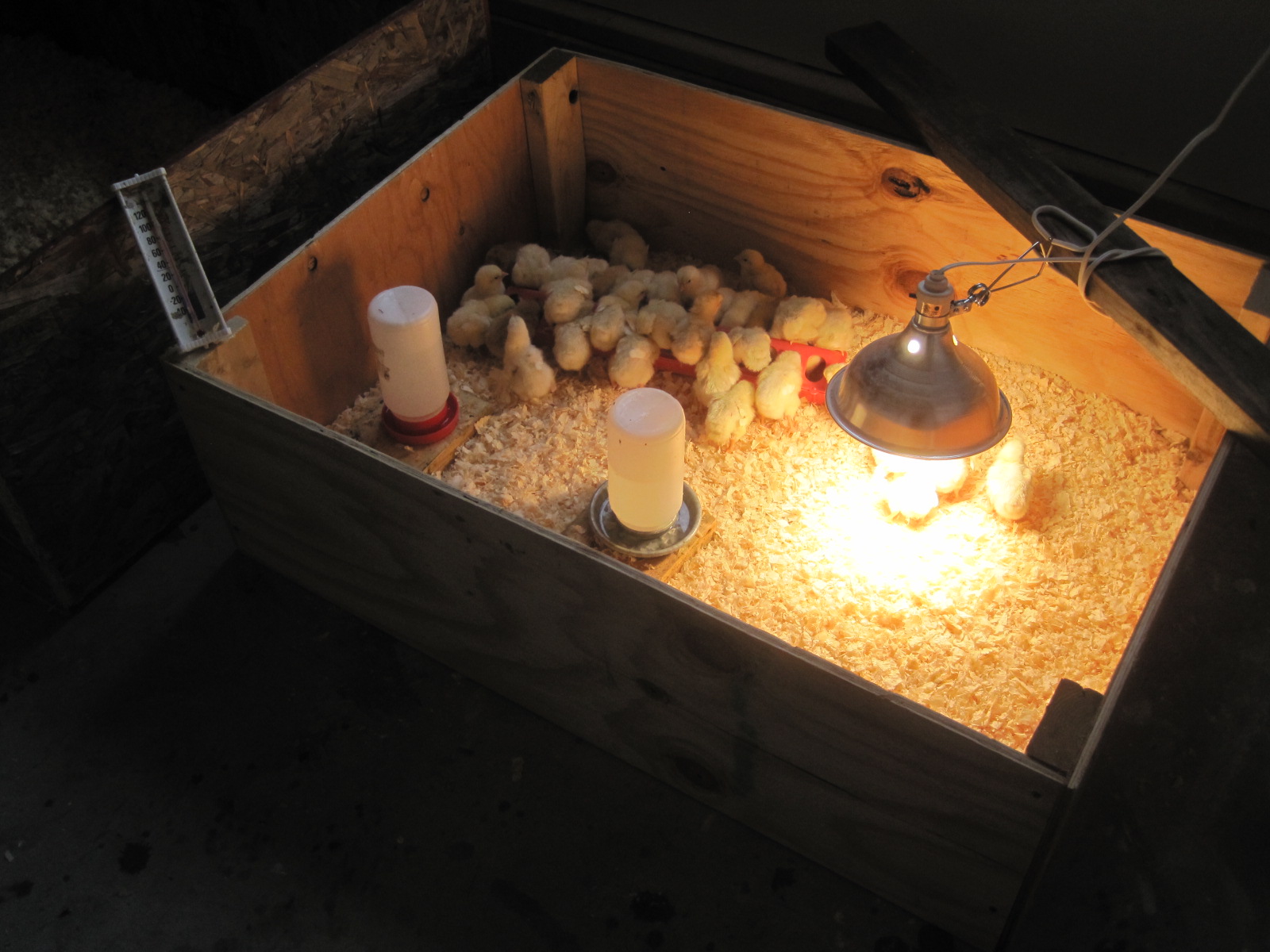
Brooder of a suitable design: inside view
You can buy the device in specialized outlets. But in order to save a brooder, it is better to do it yourself. You will need simple tools and materials:




- jigsaw;
- self-tapping screws;
- screwdriver;
- plywood 20-25 mm thick;
- timber timber 30x30 mm;
- 2 piano hinges for doors;
- plastic cloth (bottom of the litter tray);
- floor grid with a cell of 10x10 mm;
- plastic or metal mesh for viewing windows of doors;
- electric lamp;
- cable with lamp holder;
- thermostat.
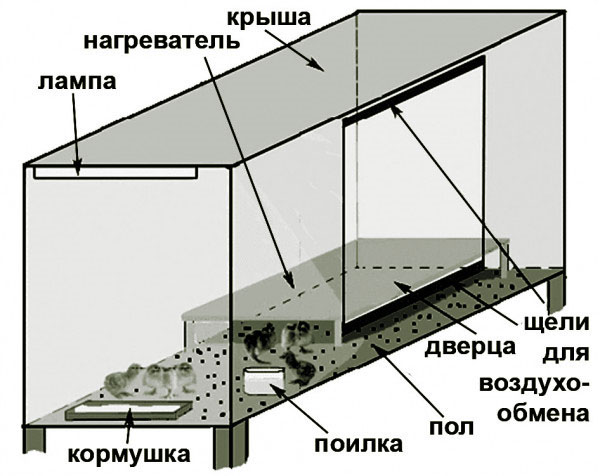
Typical brooder design
How to make a brooder from scratch:
Step 1. Calculate the dimensions depending on the number of chicks. For example, a box 70x50x40 cm can contain 100-150 chickens. Make a drawing.
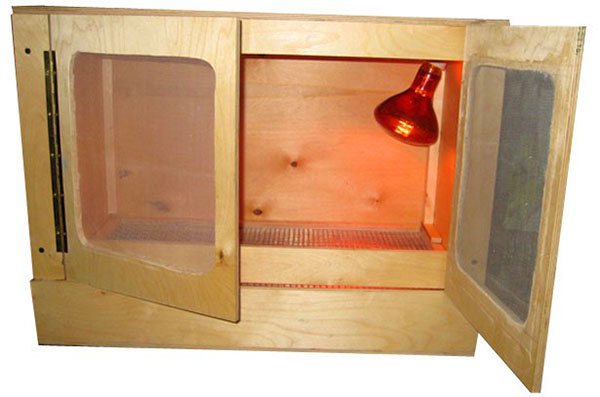
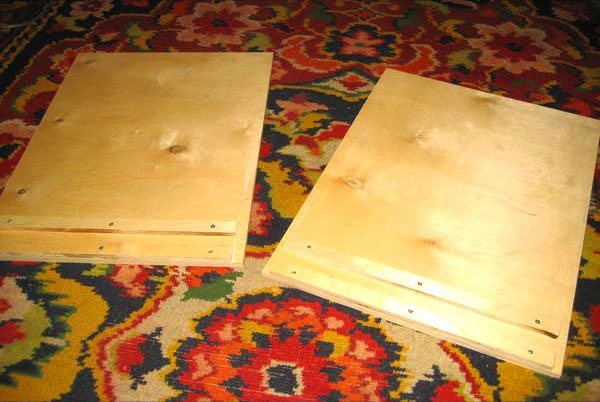
Step 2. Cut the plywood according to the drawing.
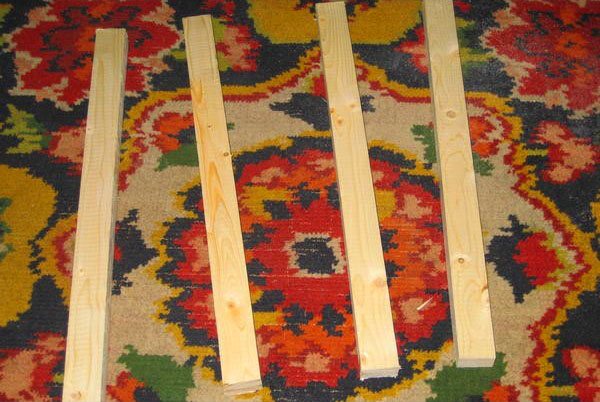
Step 3. Cut 4 equal strips for the walls and 2 for the end. They should be shorter than the walls by 2 cm.
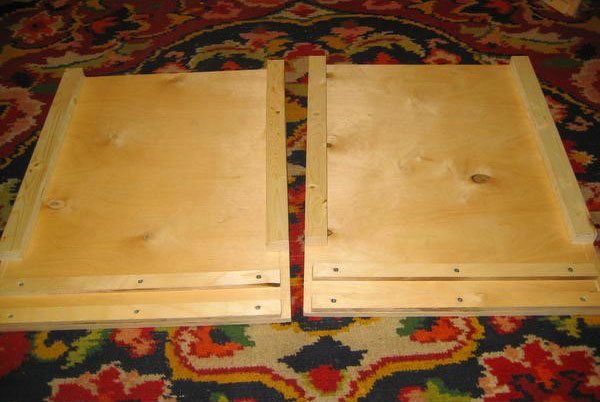
Step 4. On the rear and side walls, install slide rails for the bottom grille: fasten the planks along the edges of the walls (1 cm from the side cut, 3 cm between two planks). Fasten the bars on the sides to get stiffeners. The top edge of the bar should be on a par with the edge of the side walls, the bottom should be 3 cm higher than the top bar.
Step 5 Assemble the 3 sides of the box so that the grooves match up.
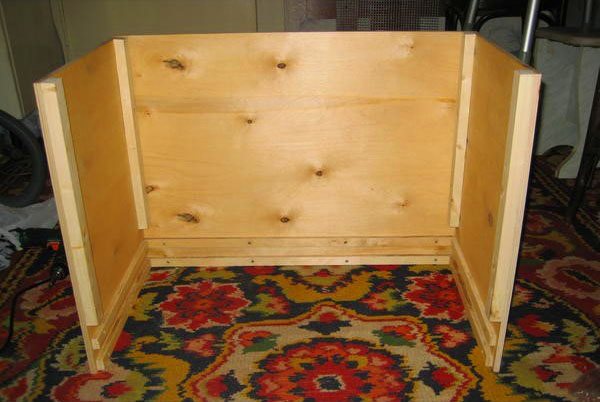
Step 6 Cut out the front piece from plywood. Attach the door hinges to the sides of the frame. Screw the blind parts of the doors into place. Mount the structure completely.
Step 7. Make a removable mesh bottom.The mesh is fastened between plywood planks in a frame-like manner so that the construction is durable and practical.

Step 8. Make the litter tray similar to the mesh bottom, only use a lightweight, hygienic plastic panel as the base.
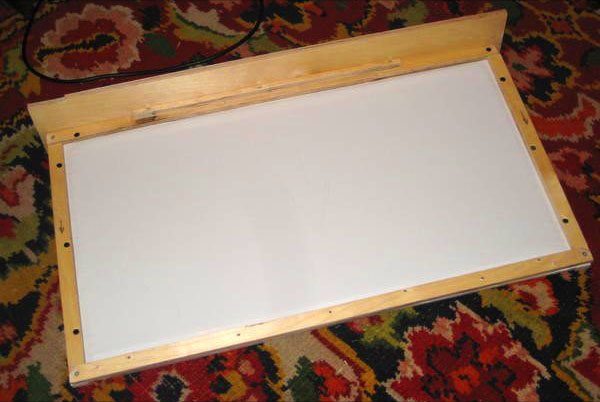
Step 9 Replace the bottom grill and tray.
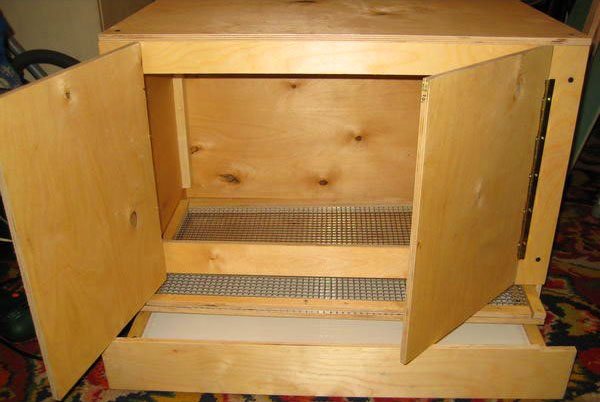
Step 10 Remove the front panel with doors. Select the central part of each door with a jigsaw and fasten the grid to the formed frames - these will be windows for tracking.


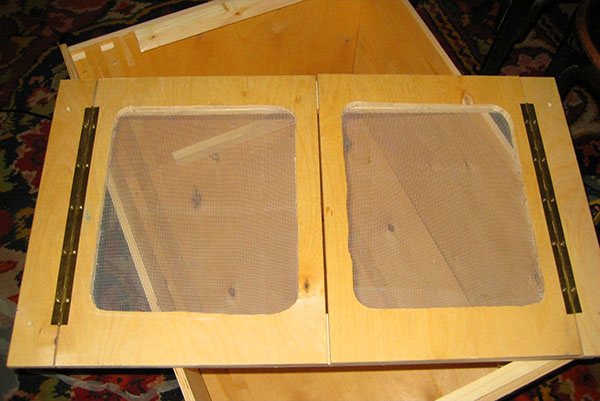
Step 11. Fasten the front panel with doors in place.
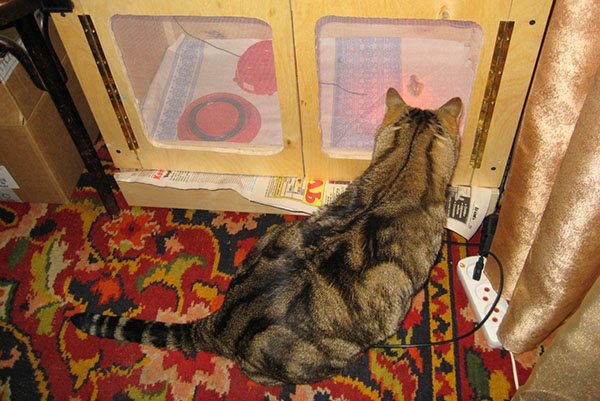
Bruder is ready! But a “naked” box is not enough for chickens - additionally, you need to bring adjustable lighting and heating. How many lamps are needed, and what power they should be, depends on:
- box dimensions;
- its location;
- external conditions.
There are no special requirements for the source material - a brooder can be made from old furniture, boxes, etc. The finished structure must be comfortable and warm - these are the only conditions that must be met.
The next stage before adding birds is the installation of drinkers, feeders and thermometers for accurate temperature control, as well as preheating the structure.
The box will be used for 3 weeks - after that the birds are seated in different rooms. The recommended number of chicks in each dropping "batch" is 50 pieces.
General information and scope
An infrared lamp and a lamp are light sources that radiate heat in the direction in which they are directed. Principle of operation - when connected to the electrical network, the lamp filament instantly heats up and due to the special design of the bulb, infrared radiation is generated, the temperature of which can reach 75 C.
Infrared lamps are classified according to the following criteria:
- application (medical, for heating, for drying);
- depending on the length of the light wave (short-wave, medium-wave and long-wave);
- constructions (incandescent, halogen);
- form (ordinary, in the form of tubes);
- light (red, white, blue);
- power (from 50 to 500 W).
The scope of such lamps is extensive. They can be used for heating small areas (kiosks, balconies, winter gardens, living quarters, offices, etc.). They are also used for medical purposes. An infrared lamp for treatment has found application for colds, joint and muscle pain, and lowering blood pressure. Such lamps can be bought at a pharmacy. In paint shops, repair shops, car workshops, infrared lamps are sources that speed up the drying of paints, enamels and varnishes and make coatings of better quality.
Agriculture is an industry that is indispensable without infrared lamps. In livestock and poultry farming, they are used for heating and rearing young animals. Infrared illumination not only heats, but also helps to increase the appetite of calves, piglets, foals, bird chicks, which increases weight gain. In addition, the young organism of animals and birds is better resistant to disease. In a brooder where chickens or other poultry are reared, infrared radiation dries the hay at the same time, which improves hygiene. Directed heat provides the necessary temperature conditions. The installation of such sources of heat and lighting in greenhouses and winter gardens contributes to the growth of the crop, because. allows you to adjust the heating height of seedlings and seedlings.
Design
An incandescent lamp and an infrared lamp have much in common. Structurally, the IR light source is a flask, on the inner surface of which a mirror amalgam is applied. There is a tungsten spiral inside the glass case in red, blue or white. The sealed housing is filled with gas (a mixture of nitrogen and argon in various proportions). To connect to a power source, the heat and light emitter is equipped with an E27 ceramic cartridge.
Powerful products have protective fittings to protect the source of heat and light from moisture and overheating and can be used in dusty and humid areas.
Low-temperature models, which include long-wave products, are ideal for use in private houses and apartments, medium-wave ones heat the areas of kiosks, shops, stalls and other medium-sized premises, and short-wave ones heat up production workshops, warehouses and rooms of considerable size.
Advantages
The main advantages of infrared radiation sources include:
- small dimensions;
- possibility of use for different purposes;
- high efficiency;
- instant heating;
- noiselessness;
- they do not burn oxygen;
- fast installation;
- environmental friendliness;
- safety.
main parameters
When choosing a lamp, you need to pay attention to the following indicators:
- lamp type;
- power;
- cartridge type.
Infrared lamps will replace expensive equipment for drying, curing and heating. It is only necessary to choose the right source of light and heat. The best products are General Electric (USA), Philips (Netherlands), Osram and Sylvania (Germany), which are world leaders in the production of lighting equipment.These companies manufacture their lamps on high-tech equipment from high-quality materials in compliance with production technology. Therefore, their products are capable of serving 6,000 hours or more. Customer reviews indicate that the most popular models are: Rubystar, Thera Red and Halotherm of the German company Osram, Ir - the company Sylvania.
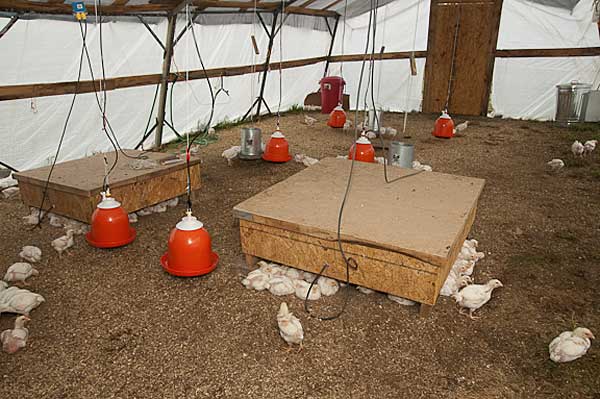
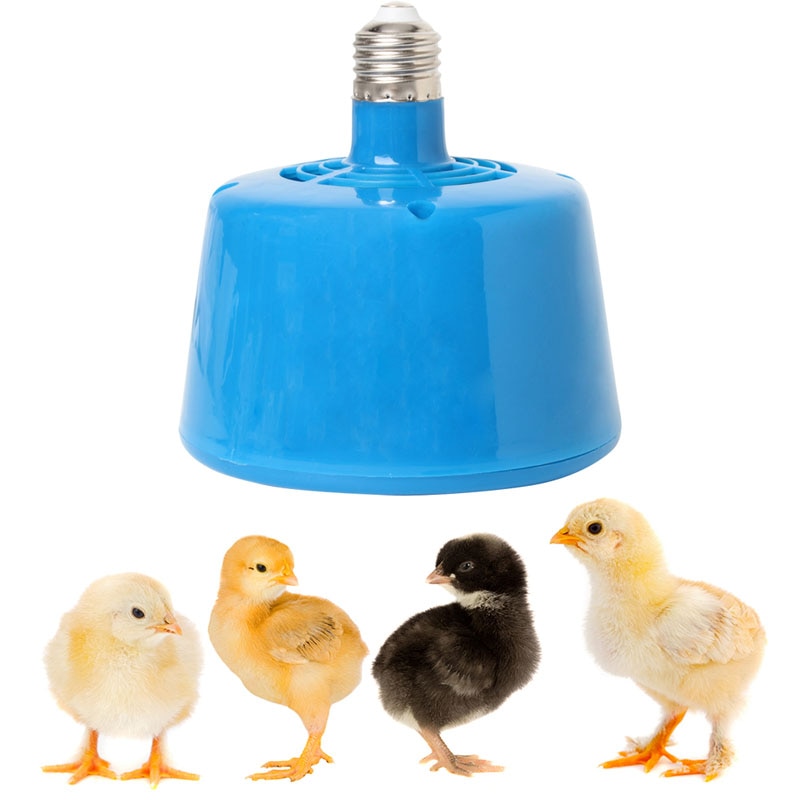


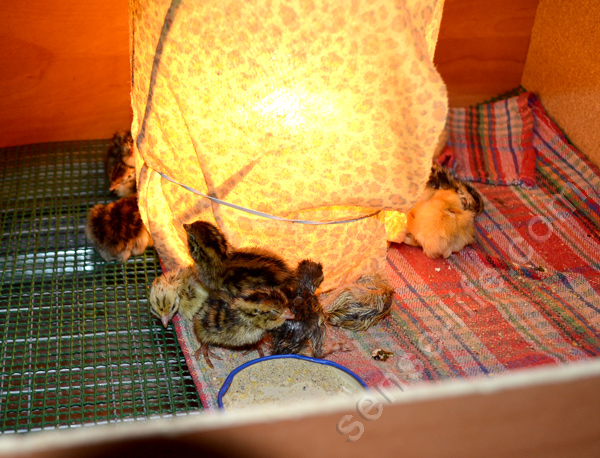

How to make a brooder for raising chickens with your own hands
The type of structure and its dimensions can vary significantly depending on the type of poultry being grown, as well as its quantity. The floor should not be slippery and wet, and a pallet should be placed under it. A prerequisite is the presence of high-quality ventilation in the absence of drafts. The source of heating is most often a closed fluorescent lamp.
Choice of option
There are different options for brooders that allow you to minimize the percentage of waste and provide chickens with full growth and development in the first days of life. The most budget option is a fenced part of the utility room and a lamp installed for heating.
The dimensions for 100 chickens are 200 x 100 cm with a height of 50 cm. This type of brooder, such as boxes and boxes, does not always have a positive effect on the health of the young, so special designs are most often made.
Dimensions and drawings
It is very difficult to achieve comfortable conditions in cardboard boxes and ordinary boxes. Little chickens are extremely susceptible to any changes in external factors, including temperature fluctuations, changes in humidity, insufficient lighting or drafts, so building a simple structure with your own hands is very important.
Tools and materials
Before you start making your own “house”, you will need to prepare high-quality and durable material, as well as all the tools necessary to complete the work.
Material:
- sheet plywood - two sheets measuring 1.5 x 1.5 m;
- metal corners;
- steel mesh with cells 10 x 10 mm;
- wooden slats - 50 x 15 mm;
- fasteners - galvanized self-tapping screws;
- door hinges - four pieces;
- lampholder, 60W electric lamp, plug and cable;
- feeders and ready-made drinkers.
Tool:
- wood saw or electric jigsaw;
- construction tape measure and level;
- a hammer;
- drill;
- screwdriver or screwdriver;
- pliers and wire cutters;
- marker.
Depending on the design features, the number and type of tool may vary.
Manufacturing steps
The simplest and at the same time the most convenient design option is to create a box brooder:
- to create a frame, you need to cut sheet plywood in half;
- one of the resulting halves is sawn in half again, which will make it possible to obtain a pair of plywood squares, 75 x 75 cm in size, to create side walls;
- the three remaining plywood pieces, measuring 150 x 75 cm, will be used to create the top and bottom of the structure, as well as the back wall;
- the frame is assembled using galvanized self-tapping screws and metal corners;
- fasteners are inserted into pre-drilled holes;
- for the manufacture of the floor, a fine-mesh mesh and a frame knocked down from wooden slats are used;
- doors are made similarly to a mesh floor and are hung in front of the frame.
The final step is to screw on the side walls of the guides made of rails and the subsequent installation of the mesh floor. Under the grid you need to install a metal pallet, which can be covered with paper or covered with small wood shavings.
Heating to maintain temperature
Ensuring a comfortable temperature regime inside the brooder is a prerequisite for raising chickens at home. For every square meter of area there should be 0.28 kW of heating. You can evaluate the quality of heating by observing the behavior of the chickens.
At a comfortable temperature, the bird actively eats and drinks. With excessive cooling, the bird strays into large groups. The increased temperature inside the "house" causes difficulty in breathing in chickens and is accompanied by a large waste of birds
Relative humidity plays a very important role in ensuring thermoregulation, and during the first three days it should be 60-70%. During the first three days, it requires lighting for 23 hours a day.



