
- Which hidden wiring detector is better to buy
- How to make a DIY detector
- What to look for when buying
- Scan depth
- Indication type
- Store Test
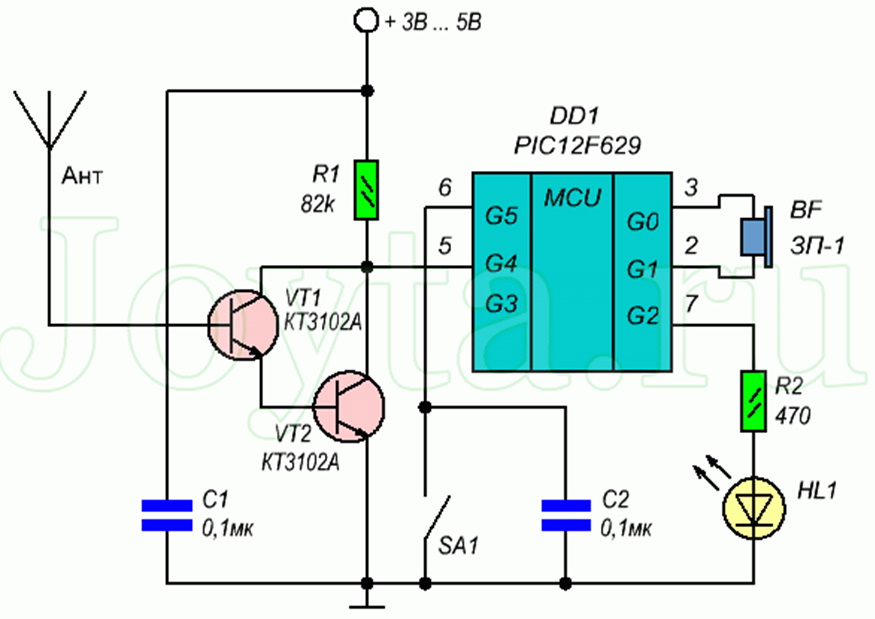
- 1 Homemade detector with a piezoelectric element - in simple words about the complex
- Search instruments
- Lis M
- DSL8220s
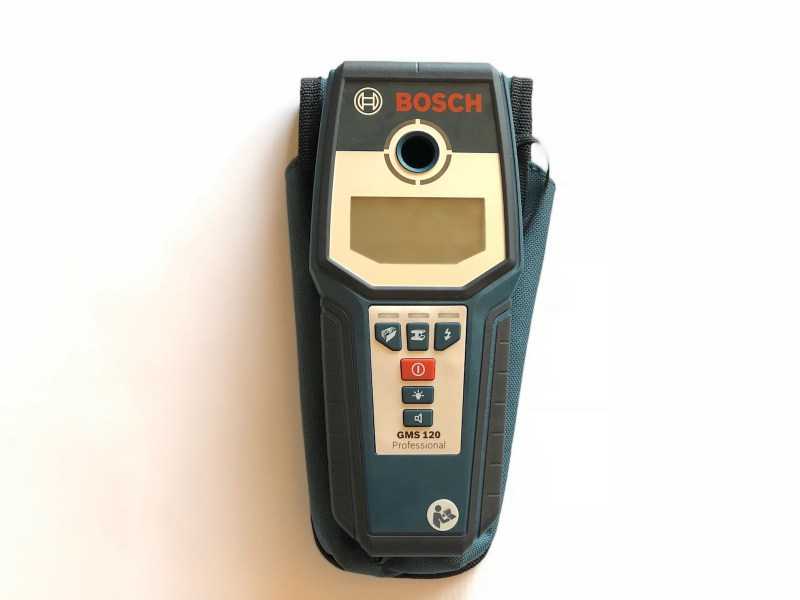
- BOSCH GMS 120
- Woodpecker E121
- Mastech MS6812
- Examples and comparison of popular models
- Summary table of technical characteristics of wiring scanners
- Types of indicators
- Electrostatic devices
- Electromagnetic finders
- metal detectors
- Passive detectors (radiation receivers)
- Combined finders
- Main types of verification
- contact method
- Looking for a cliff
- Concealed wiring
- Main types
- Design
- BOSCH GMS 120 Professional
- Types of voltage indicators: single-pole and double-pole devices
Which hidden wiring detector is better to buy
One of the main indicators for wire finders is the depth of detection. The maximum working distance of the detector depends on it. Models intended for domestic use must have a detection depth of at least 5 cm. Professional devices can work at a depth of 2 meters.
An equally important parameter should be considered accuracy. The value specified in the documentation reflects the permissible error in determining the distance to the cable.
The accuracy indicator for professional devices usually does not exceed 5 mm. Household models have an error of up to 10 millimeters.
The detector can react to various materials in the walls or ceiling. To accurately locate the wiring, you should purchase a device with an accurate determination function. Many modern models are able to detect metal, plastic, wood, and also recognize the shape of an object.
It is worth paying attention to the convenience of setting up the device. With frequent changes in working areas, constant adjustment of the sensor to specific conditions is necessary.
Their change may depend on the presence of extraneous interference, the material of manufacture and the thickness of the wall.
The possibility of auto-calibration greatly simplifies the regular use of the device.
The use of a detector when repairing a damaged line requires special accuracy in determining the location of the break. This will reduce the cost of work and reduce their volume. Only electrostatic and metal detector models are equipped with a search system for a problematic cable section.
How to make a DIY detector
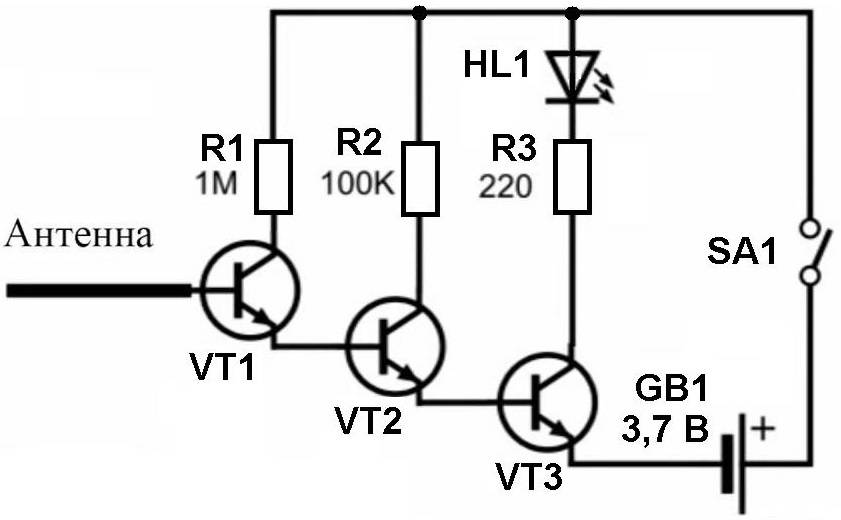
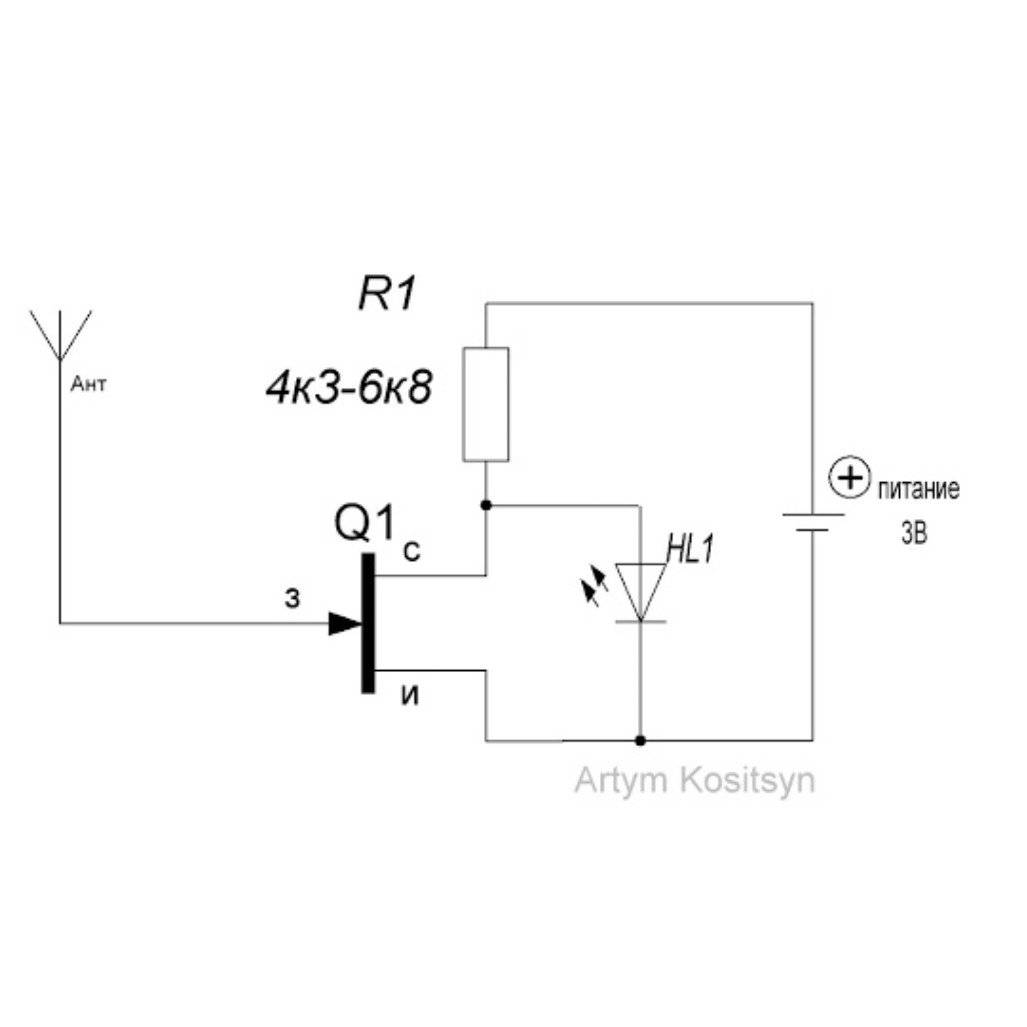
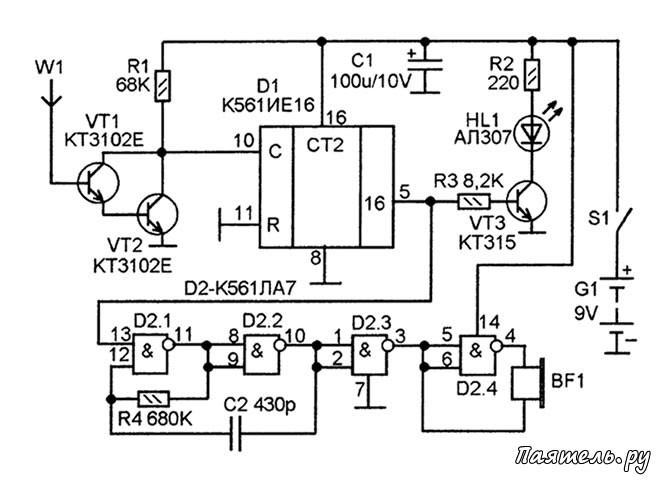
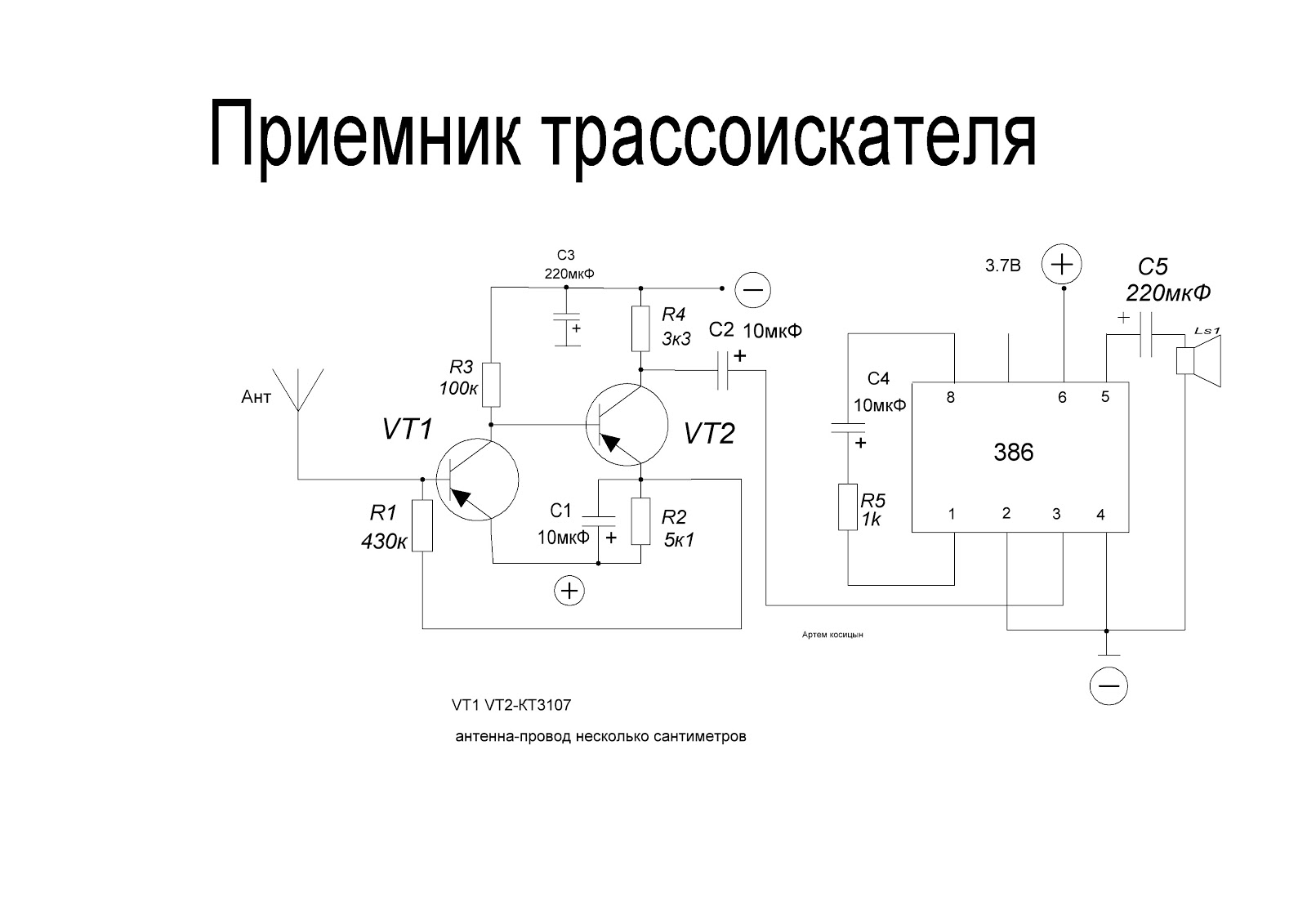
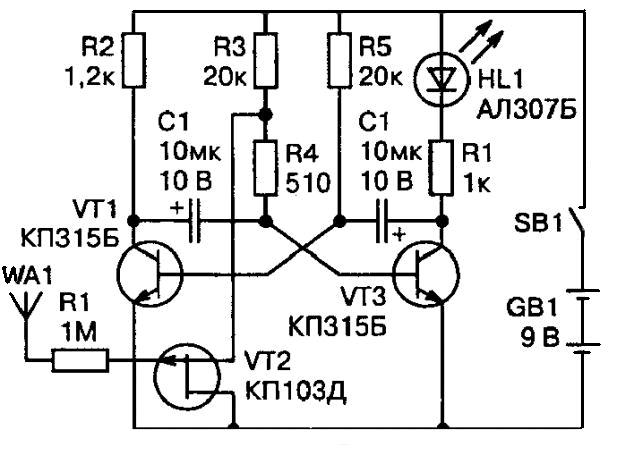
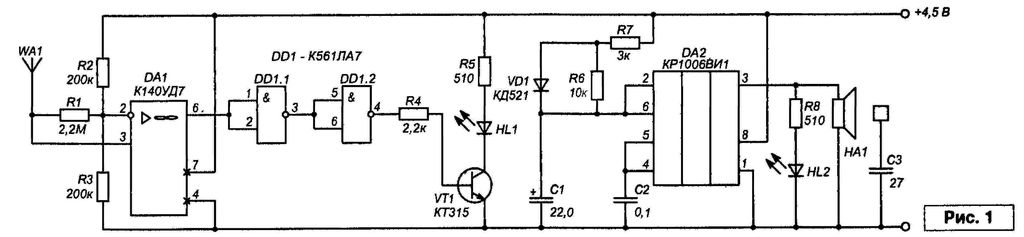
A simple device for searching for hidden wiring can be made independently and for this it is not necessary to be a specialist in radio engineering. Such a primitive detector has only one function, but is not inferior in measurement accuracy to many models on the market (for example, an indicator screwdriver with a wiring search function). It is assembled according to the following scheme:
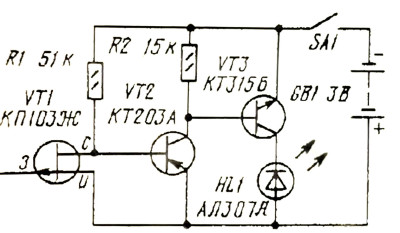
In this example, spare parts available to every electrical engineer are used:
- 3 high sensitivity transistors;
- 2 resistors;
- 1 power supply (you can take dead batteries);
- Light-emitting diode
The antenna exits in the diagram on the left.
To carry out measurements, it is desirable for us to isolate all work items from contact with hands (although the video below uses the same scheme, but in an open form). The best option would be to choose a suitable case, such as a container for a toothbrush.

This container is perfect for our device
We take three small 1.5 V batteries as a power source. We assemble the circuit, supplementing it with a switch and an LED light as a signaling device.
We check the device for operability. We turn it on and bring it close to the open wire.
The indicator lights up. Let's try at a distance through the thickness of the plaster in the place where the wire exactly runs.
By the way, such a simple do-it-yourself detector can be quite sensitive, to the point that it will respond to an electric field from the palms.
And at the end of the video with the collection of a home-made indicator and comparing it with factory copies:
What to look for when buying
First you need to decide on the set of features that you need. If you only need to find the wiring, an inexpensive detector will do just fine. If you also have to define frames or pipelines, you will need a more serious device.

Hidden wire finder will come in handy during repairs
Scan depth
When buying, pay attention to what materials this model can determine, to what depth these materials can be located. Cheap models are usually searched at a depth of 20 mm, which is clearly not enough - the plaster layer is usually larger - about 30-40 mm
In general, it is desirable to "see" the device for hidden wiring detection as deep as possible. True, such models are more expensive.
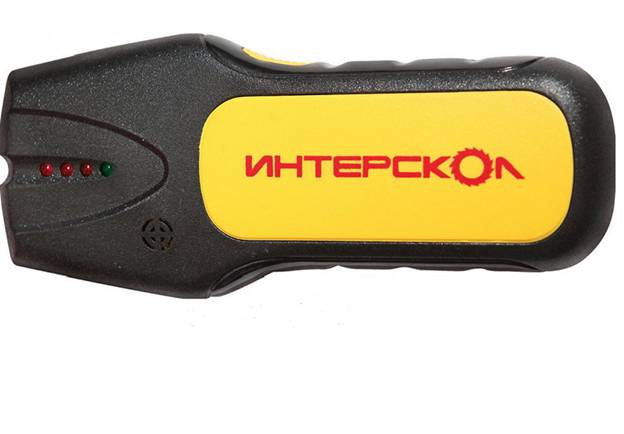


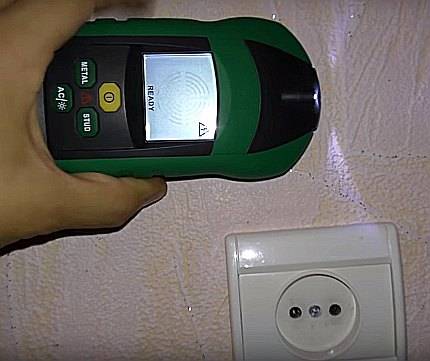
Scanning depth is one of the key characteristics
Indication type
It will be necessary to decide on the type of notification. It is of three types:
- Signals are given by sound of different tonality and/or duration. By the type of signals, you can distinguish what exactly the device found in this place.
-
Light indication. There are LEDs that light up when wiring or communications are detected. They can glow in different colors, with different intensity. Knowing how the device reacts to what materials or the degree of approximation, if you get used to it, you can quite accurately identify the “finds”.
- LCD screen. The most expensive type of devices, but also the most convenient. Information is displayed in an understandable form, no problems with decoding. The presence of the screen does not interfere with the use of an audible alarm - this combination is the most convenient.
In general, you need to get used to any detector - to study what signals it gives when approaching each type of "finds". To do this, you must first check the reaction on open wires, fittings, wood, then try to find what is hidden in the wall or in the floor. In addition, before starting work, it is advisable to do the incredible - read the instruction manual. This usually helps to quickly learn how to handle the device.
Store Test
Before buying the selected model, test it. As an object, you can use any wire that goes to an electrical appliance. See if the declared scanning depth corresponds to the real one - try to “find” the wire at different distances from it, cover it with a board, a piece of plastic, etc., try again. If all tests are passed normally, you can buy.

Before buying, check how the device works
1 Homemade detector with a piezoelectric element - in simple words about the complex
Flush-wire detectors are divided into low-end and high-end devices. The low-class device is designed to search for electrical appliances and wiring that is energized. The high-class detector has great sensitivity and advanced functionality. Such a device serves to determine the breakage of hidden wiring, detects the location of wires without voltage.
You can make a hidden wiring detector with your own hands from improvised means by purchasing a few small parts. When designing this instrument, please note that in order to determine live wires in the wall he will fit. And if you need high-frequency equipment to detect a break and pinpoint the exact location of the cable down to the millimeter, purchase a quality detector in the store.
You can make a hidden wiring detector yourself
To assemble the device, you will need the following set of elements:
- chip K561LA7;
- 9 V Krona battery;
- connector, battery connector;
- current limiter (resistor) with a nominal resistance of 1 MΩ;
- sound piezoelectric element;
- single-core copper wire or wire L = 5–15 cm;
- wiring for soldering contacts;
- a wooden ruler, boxes from under the power supply, another home-made design for laying the chain.
Additionally, for work, you will need a low-power soldering iron up to 25 W, so as not to overheat the microcircuit; rosin; solder; wire cutters. Before proceeding with the assembly, let's take a closer look at the main elements. The main part on which the assembly takes place is the Soviet-type K561LA7 microcircuit. It can be found on the radio market or in old stocks.The K561LA7 microcircuit is sensitive to static and electromagnetic fields, which are created by electrical devices and conductors. The level of current in the system controls the resistor, which is located between the integrated circuit and the antenna. We use a single-core copper wire as an antenna. The length of this element affects the sensitivity of the device, it is selected experimentally.
Another important assembly detail is the piezoelectric element. Capturing an electromagnetic signal, it creates a characteristic crackle that signals the presence of wiring in a given location. It is not necessary to specifically purchase a part, remove the speaker from the old player, toys (Tetris, Tamagotchi, clock, sound machine). Instead of a speaker, you can solder headphones. The sound will be clearer and you won't have to listen to the crackle. As an indicator of hidden wiring, an LED element can be additionally mounted in the device. The circuit is powered by a 9-volt Krona battery.
A 9-volt Krona battery will be needed to power the circuit
To make it more convenient for you to work with the microcircuit, take cardboard or polystyrene and mark with a needle the places for attaching 14 legs (legs) of the part. Then insert the legs of the integrated circuit into them and number them from 1 to 14, starting from left to right with the legs up.
Scheme of assembling a detector with an LED
We make connections in the following sequence:
- 1. We prepare a box where we will put the parts after assembly. For a cheap alternative, use a plastic bottle cap. Make a hole in the end with a knife with a diameter of about 5 mm.
- 2.Insert a hollow rod into the resulting hole, for example, the base of a ballpoint pen, suitable for the diameter, which will be the handle (holder).
- 3. We take a soldering iron and solder a 1 MΩ resistor to pins 1–2 of the microcircuit, blocking both contacts.
- 4. We solder the first speaker wire to the 4th leg, after which we connect the 5th and 6th legs together, solder them and connect the second end of the piezoelectric wire.
- 5. We close legs 3 and 5–6 with a short wire, forming a jumper.
- 6. Solder the copper wire to the end of the resistor.
- 7. Pull the connector wires (battery connector) through the handle. We solder the red wire (with a positive charge) to the 14th leg, and the black wire (with a negative charge) to the 7th leg.
- 8. From the other end of the plastic cap (box), we make a hole for the copper wire to exit. We put a microcircuit with wiring inside the lid.
- 9. From above, close the lid with a speaker, fixing it on the sides with hot glue.
- 10. Straighten the copper wire vertically and connect the battery to the connector.
The wiring detector is ready. If you have connected all the elements correctly, the device will work. If possible, we advise you to equip the system with a switch or remove the battery from the socket after the end of work in order to save battery and not overload the system.
Search instruments
There are many brands of hidden wire detectors, but before you buy, try to familiarize yourself with their features and capabilities. After all, not every detector can detect places where hidden wiring passes if there is no voltage in the network or it is of insufficient power. In addition, not all devices are able to work in an environment of a large accumulation of metal elements.Factors such as temperature and humidity should also be taken into account.
Lis M
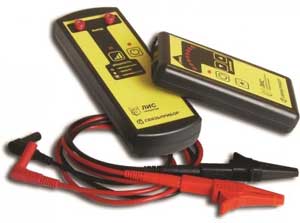
The Fox M hidden wiring finder is produced in Russia. It was created specifically to search for wiring in the walls. It is convenient to use as it runs on two batteries. Having found what you are looking for, the device, in addition to indicating, signals with a sound. The detector reacts to alternating current in the network. The signal enters the device, where it is digitally processed. The results are displayed on the indicator. The device is able to find the wiring, which is laid at a depth of two meters.
DSL8220s
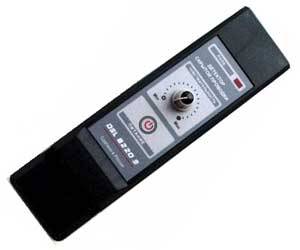
The DSL 8220s hidden wire detector will help to detect electrical wires, antenna cable, telephone wire in the wall. This compact device is able to find hidden wiring under drywall, plastic, plaster, brick. In addition, it is used when there is a need to find the "phase" wire of the network. Having found the wires, the device signals with an indicator using a light indicator, as well as with a sound.


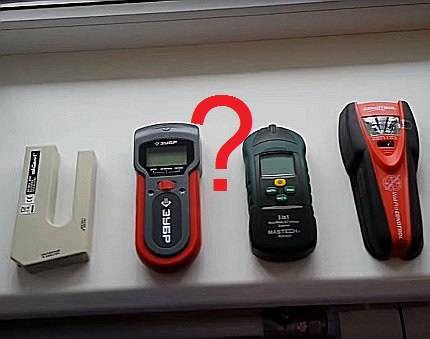




BOSCH GMS 120
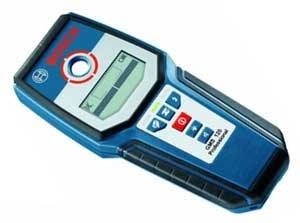
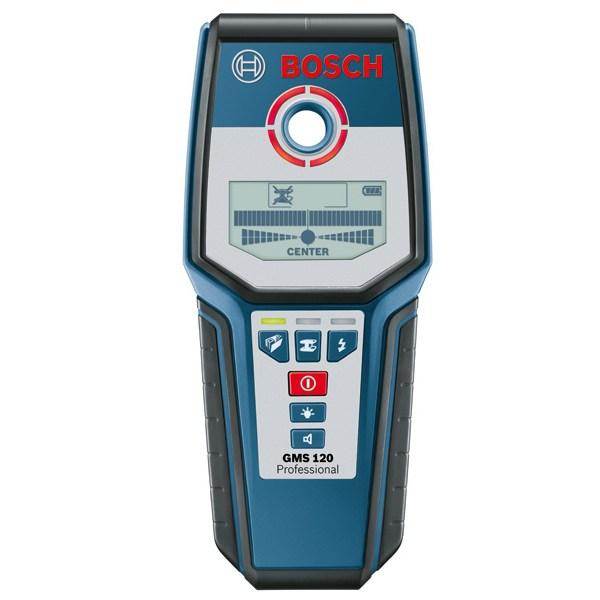
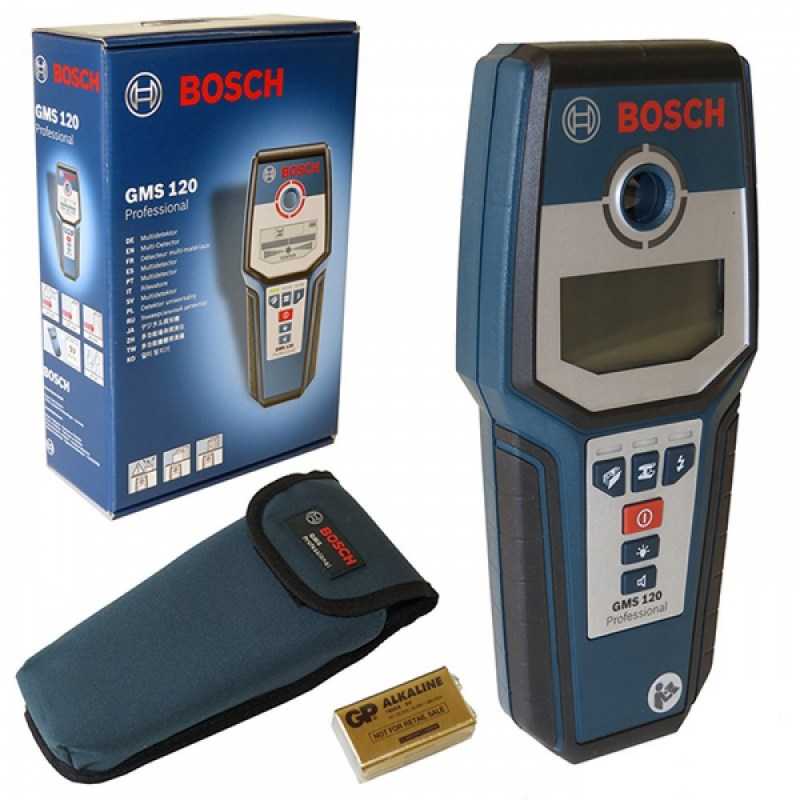
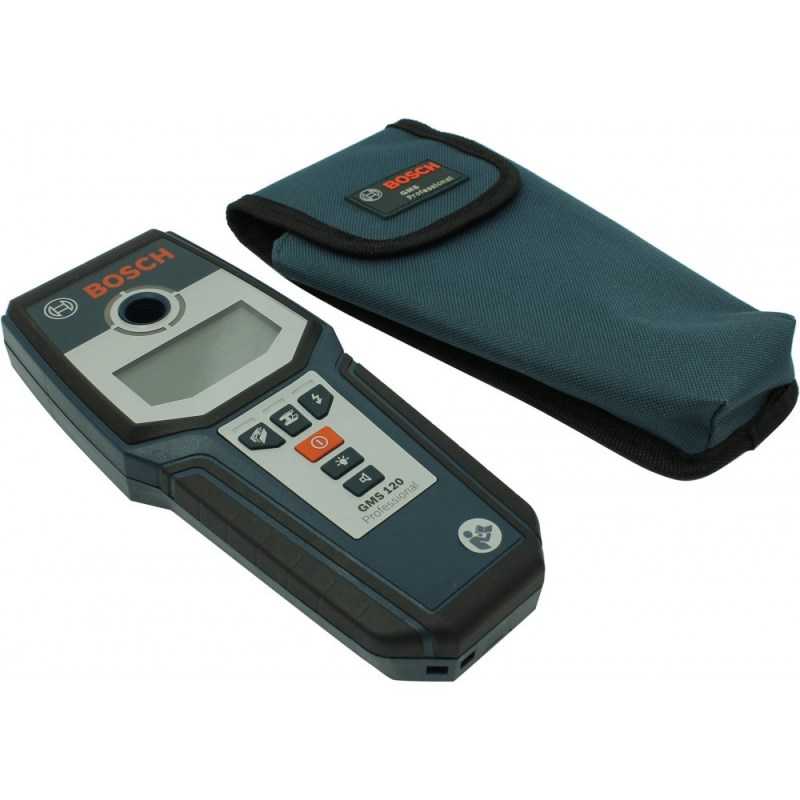
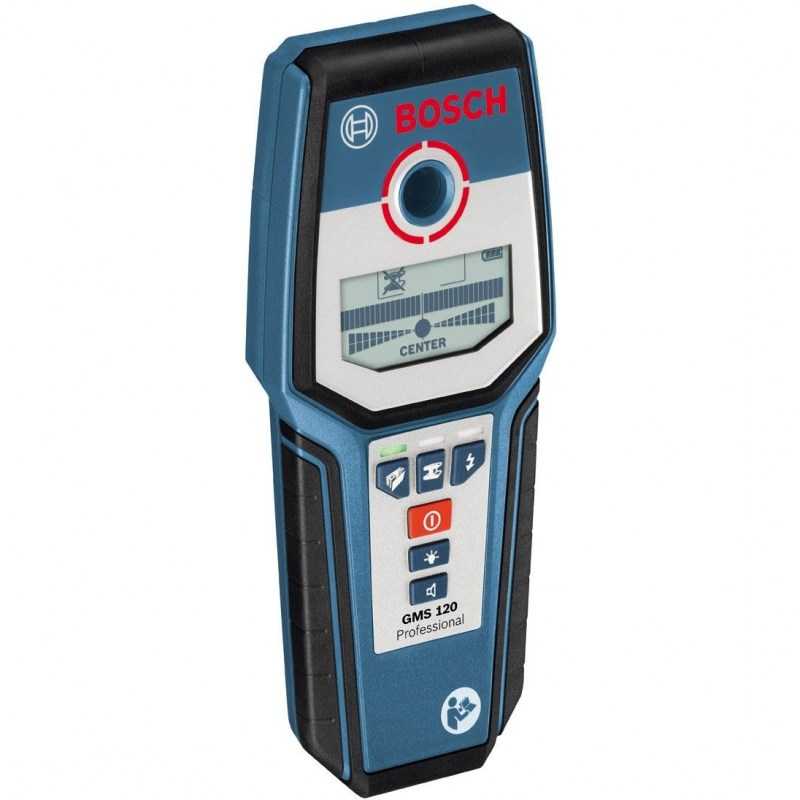
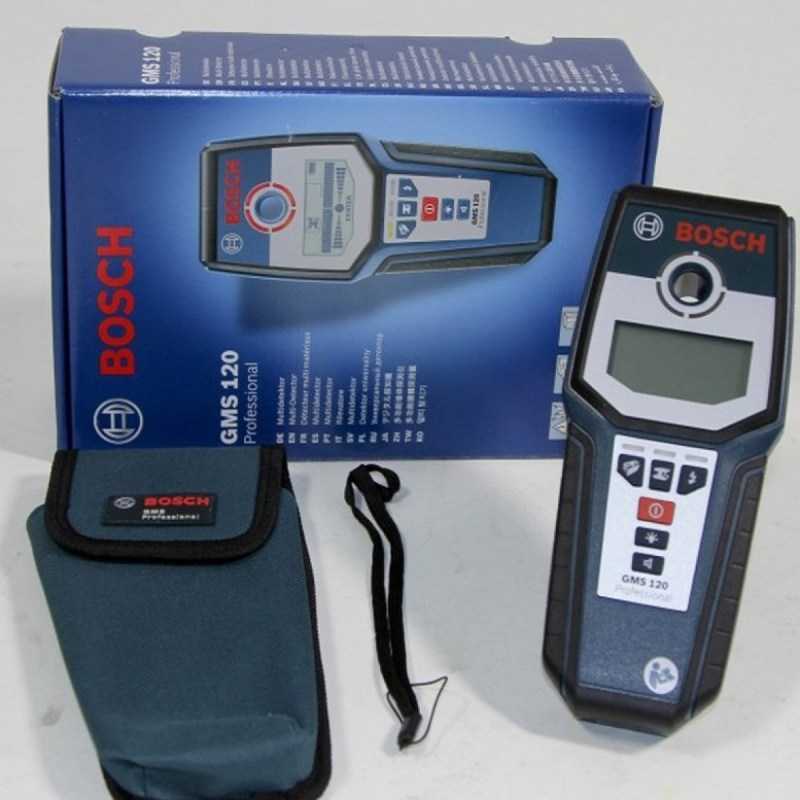
The BOSCH GMS 120 hidden wiring detector is able to detect not only wires in the walls, but also non-ferrous metals and wooden floors. When wiring is detected in the walls, the indicator on the device lights up in red. If the wiring was not found, the indicator color is green. The device works in several modes: drywall, live cable and metal. It can also detect magnetic and non-magnetic elements. The body of the bosch hidden wiring finder is equipped with a wall marking hole.
Woodpecker E121
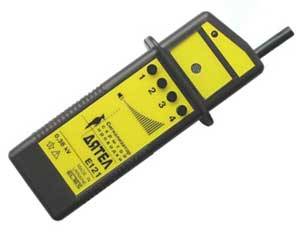
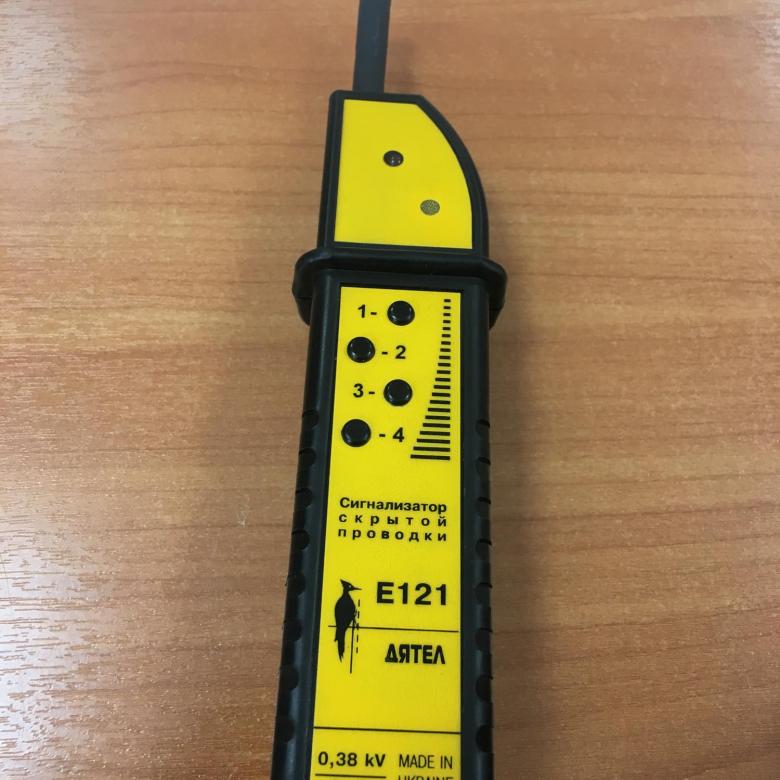
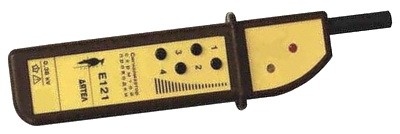
If necessary, to determine the scheme of electrical cables laid in the walls, you can use the Dyatel E121 hidden wiring detector.This device determines not only the location of hidden wiring, but also checks the correct phasing of electric meters in the absence of a protective cover. The Dyatel device works on the principle of detecting an electric field. To do this, it is enough that the network has a voltage of 0.38 kW. The operation of the device is regulated by the self-control mode, that is, the detector starts emitting light and sound signals.
Mastech MS6812
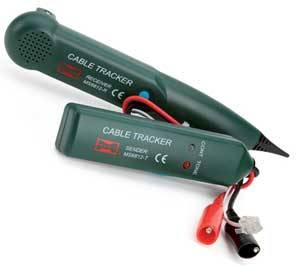
One of the smallest devices for determining the location of electrical wires inside walls is the Mastech hidden wiring detector. The device finds what you are looking for with high accuracy, while it is able to work with different materials: brick, drywall. In addition, it is endowed with metal detector functions and fully complies with international safety standards. When an electrical wiring is detected, the device signals with sound and light.
If necessary, purchase such an appliance, which can be best suggested by an experienced electrician or a company that deals with services related to electricity in the house. The modern market for electrical goods offers a wide selection of devices for finding hidden wiring. You can select a multifunctional detector, signal transmitter or hidden wire finder on the microcontroller. The main thing is that the result is what you expect it to be.
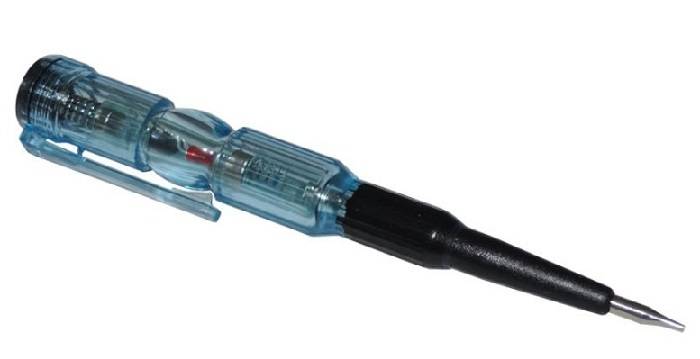
There is a very budget option, a 5-in-1 multifunctional screwdriver. The characteristic of this device has a wiring search function, the search is based on live wires, that is, on their electromagnetic radiation. Given the size of the screwdriver, the depth of the desired cable should be small, for example, under plaster.
Watch a video on how the Lis M device works, and how to look for hidden wiring in the next article.
Examples and comparison of popular models
On sale you can find different factory-made detectors.
-
Finder hidden electrical wiring "Woodpecker". It is a multifunctional device for working with electrical networks. A hidden wiring tester is included in its design. In the complex Woodpecker tool, several irreplaceable gadgets are connected at once. The device has 4 levels of susceptibility. The highest one allows you to find electrical wiring and metal objects at a depth of up to 700 mm. The conductor location error is 10 mm. Despite such high performance, the price of this detector does not exceed 2,000 rubles. Perhaps because it is local.
-
The metal detector and wiring indicator Bosch GMS 120 Professional detects live wires at a depth of 50 mm, ferrous metals at a depth of 20 mm, non-ferrous metals at a depth of 80 mm. The price of such a device is about 5,500 rubles.
-
The Bosch PMD 7 wiring indicator detects wires and metals at a depth of 70 mm with maximum guarantee. Drilling is performed according to the indication of the LED. The device is controlled with just one button. It costs up to 4,000 rubles.
-
The indicator of metal and electrical wiring LUX-TOOLS costs no more than 1,000 rubles. The maximum depth of detection of electrical wiring and any metals is 30 mm.
-
CEM LA-1010 481172 sound detector of hidden electrical wiring with laser indicator detects materials at a depth of 20 mm. Its distinguishing feature is that, in addition to wires and metals, it also reacts to wood, that is, it helps to find wooden structures. Such a device costs about 2,500 rubles.
-
The multifunctional wire detector Skil 0550 AA works at a depth of up to 80 mm. He is looking for live wires, ferrous and non-ferrous metals, wooden structures. Convenient reading of information is provided by the big liquid crystal display. The cost of such a device starts from 4,000 rubles.
-
The Skil 0550 AB multi-detector has fewer features. It finds only live wires, ferrous and non-ferrous metals at a depth of no more than 50 mm. Accordingly, it costs less - 2,000–2,500 rubles.
Summary table of technical characteristics of wiring scanners
For clarity, I selected those performance characteristics that are more important for the home master during operation and summarized them in a table.
I understand that the choice is still influenced by the cost of the device and the conditions for its acquisition. However, price is a variable. You can find it if you enter the name of the device and the word buy into Google or Yandex.
The search engine will give you many options from which you can choose the best option.
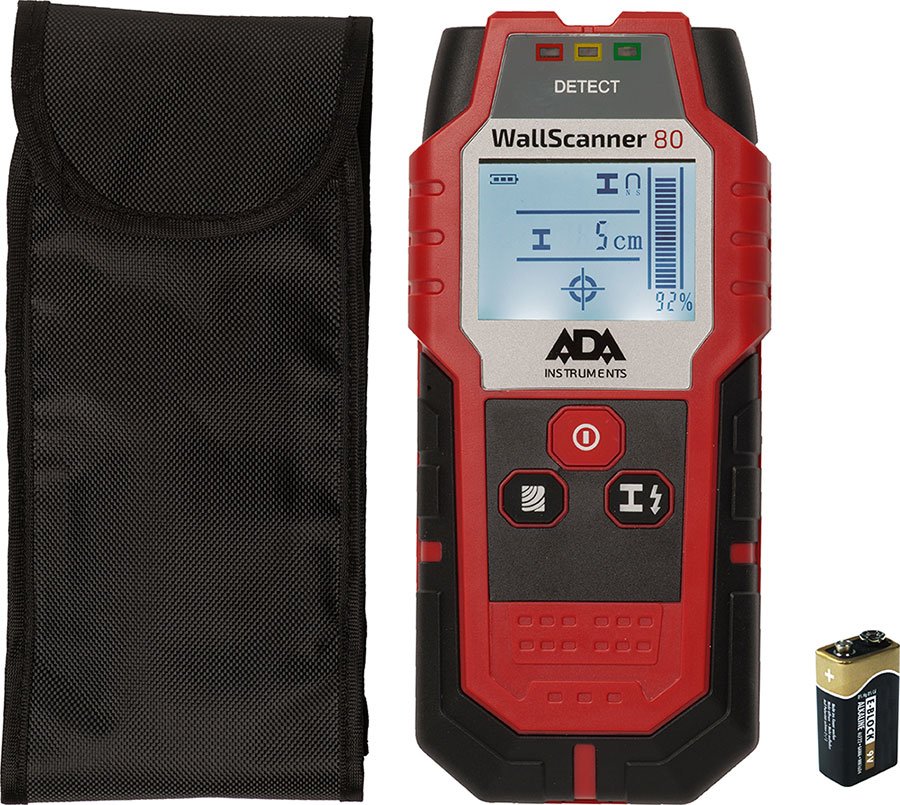
| Concealed wire detector brand | BOn3 SCH GMS 120 Professional | MASTECH MS6906 | UNI-T UT387B | Woodpecker E121 | Floureon hidden wiring detector | Skil detector 550 | ADA Wall Scanner 80 |
| Weight, kg | 0,27 | 0,25 | 0,195 | 0,12 | |||
| Detects materials | Wood, metal, wiring | Wood, metal, wiring | Wood, metal, wiring | Wood, metal, wiring | Metal, wiring | Wood, metal, wiring | |
| Calibration | Auto | Manual | Auto | Manual | Auto | Auto | |
| Metal search depth, cm | 12 | 3-5 | 8 | 7,6 | 8,0 | 8,0 | |
| Search depth of wiring, cm | 5 | Up to 7.5 | 8 | 7,6 | 5,0 | 5,0 | |
| Color search depth metal, cm | 8 | 8 | 7,6 | 6,0 | 6,0 | ||
| Tree search depth, cm | 3,8 | 3-5 | 2 | 3,8 | 2,0 | ||
| Max. search depth, cm | 12 | ||||||
| Food | Battery 9V | Battery 9V | Battery 9V | Battery 9V | Battery 9V | Battery 9V | Battery 9V |
The performance summary table has empty cells. I just took all the data from the technical data sheets published by the manufacturers, but I didn’t find any parameters.
If you have such devices, you can supplement this information through the comments section.
In general, while collecting information from manufacturers' websites, I noticed one strange feature: not a single plant gives a 100% guarantee for the accuracy of determining the final result.
Even Bosch specifically stipulates in his passport that many concomitant factors affect the accuracy of the device, which must be taken into account at the measurement site.
These include:
- strong magnetic and electric fields;
- the presence of foreign metal objects of different sizes;
- wall moisture and its conductive properties;
- other hidden wires laid nearby;
- voltage pickups;
- other random events.
Therefore, it is necessary to additionally look at the design and executive construction documentation, check it during work. It’s just that it’s very difficult for us to implement these Boch recommendations in practice. It remains for us to take into account all these factors, to study and follow the requirements of the instructions for calibrating and measuring the detector, and to take into account the possibility of its error.



By the way, the measurements of the same wall with hidden wiring by different detectors showed slightly different results.
Individuals are wondering how to steal electricity and how to deceive a hidden wiring detector when the Energy Supervision Authority begins to check their household.I want to warn you right away that this is a very bad idea, which is almost immediately doomed to failure. An experienced craftsman, and even strongly financially interested, easily solves such problems.
In general, devices for finding hidden wiring greatly facilitate the work of a home, and even a professional electrician. Their results should be approached creatively, given that the greater the load on the wiring, the less error the scanner can make.
The main disadvantage of their design is that in the event of a malfunction, the manufacturer recommends refusing to repair and advises simply to purchase another device. This should also be taken into account when buying. I remind you that now it is convenient for you to share your experience of operating such detectors with other readers of the site in the comments section. It will be useful to many people.
Types of indicators
Detectors are divided into several different types. They are classified according to the principle of operation, the mechanism used to alert the user when wires are detected, and so on. Each device has its own advantages and disadvantages.
Let's look at them below:
- An electrostatic hidden wire indicator is used to find the electric field generated by the voltage on the wires. Of the advantages, we highlight the simplicity of the circuit and the ability to detect current at large distances. Cons - the ability to work only in a dry environment, as well as the presence of voltage in the network to register the wiring.
- An electromagnetic device captures the electromagnetic field created by the current moving through the wires. The detector scheme is as simple as possible, allows you to achieve high accuracy.The disadvantage is similar to the electrostatic counterpart: the wiring must be energized, while the connected load is at least 1 kW.
- An inductive indicator is, in fact, an ordinary metal detector. Such a device independently creates an electromagnetic field, and then fixes its changes. The main advantage is that there is no need for tension. Among the shortcomings is a complex circuit and the possibility of false positives, since the detector will fix any metal products.
- Combined indicator - factory models that have different operating principles. Against the background of high accuracy, sensitivity and efficiency, the only drawback is the high cost.
Electrostatic devices
Searchers of this type register the presence of an electromagnetic field emanating from wires to which voltage is connected. This is a fairly simple device that is easy to assemble with your own hands (the device diagram will be given in the final section). Note that almost all inexpensive detectors operate on this principle.
Detector E121
Features of electrostatic type detectors:
- given that the device responds to electromagnetic radiation, detection of the wiring requires that it is not de-energized;
- when working with the detector, it is necessary to choose the optimal sensitivity level. If it is low, it may be difficult to detect deeply located wiring; at the maximum level, there is a high probability of a false alarm;
- damp walls or the presence of metal structures in them make it almost impossible to find wiring.
Given the low price, simplicity and efficiency (with the exception of small restrictions), devices with an electrostatic principle of operation are popular even with professional electricians.
Electromagnetic finders
This type of signaling devices allows you to detect electromagnetic excitation emanating from the wires if a load is connected to them. The accuracy and efficiency of electromagnetic wiring finders is much higher than electrostatic ones.
Electromagnetic signaling device
These devices have a characteristic feature, which consists in the fact that in order to guarantee the determination of the wiring route, it is necessary to connect a load to it, the power of which is at least one kilowatt, which in most cases does not cause difficulty. For example, this can be done by connecting an electric kettle to the appropriate power line (remembering to fill it with water).
metal detectors
In cases where it is not possible to connect voltage to the wiring or load to it, metal detectors are used. The principle of operation of these devices is based on the fact that the metal, falling into an electromagnetic field, causes disturbances in it, which are recorded by the device.
Model PMD 7 from Bosch
The peculiarities of this class of devices include the fact that they react to any metal in the walls. That is, in addition to wiring, the detectors will be triggered when fittings, screws, nails, etc. are detected.
Passive detectors (radiation receivers)
Such wire detectors respond to the electric or magnetic field of the wire. They are insensitive to de-energized wiring. It is also useless to look for DC wiring with their help.
Combined finders
Devices of this type are multifunctional devices - multidetectors. They can combine several principles of searching for wiring hidden in the wall, which significantly expands the scope and increases efficiency.
An example is the TS-75 model shown in the photo below. This device combines the functions of a metal detector and an electrostatic detector.
– reliable and inexpensive multi-wiring detector
Main types of verification
Depending on the type and functionality of the indicator screwdriver, contact and non-contact checks of equipment, equipment, and the electrical network are carried out.
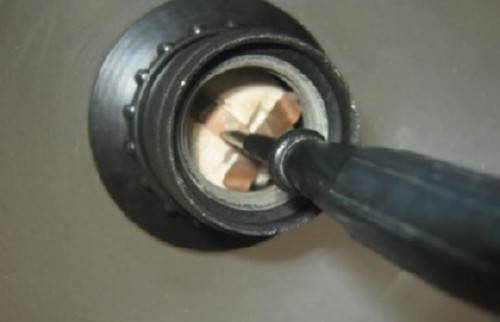
contact method
- When checking the cartridge, care must be taken not to short-circuit the contacts of the base, which are located very close to each other. The phase comes to the internal contact, and not to the thread, otherwise, leakage to the body of the lighting fixture may occur.
- If the bulbs in the chandelier do not light up correctly or not all, then you should check the connection of the switch. If the indicator lights up on the zero terminal, this means that the phase hits the zero of the switch, passing through the chandelier bulb. In this case, the installation error must be corrected.
- A voltage leakage test is carried out when it tingles, pinches the hand from touching the technique. The electrical device is connected to the network, its operation is started and a tester is applied to the body. Leakage to the body occurs if the indicator lights up in the floor of the channel. The indicator will light up in full force if there is a direct contact of the phase wire with the device case. In these cases, the equipment should be repaired or replaced.
Looking for a cliff
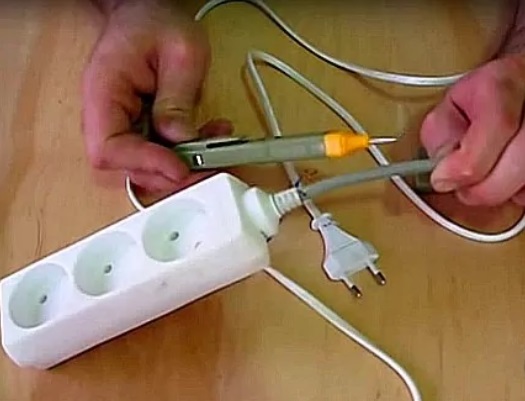
It happens that when you connect the device through an extension cord, it does not work, in order to prevent damage to the mechanism, you need to check it for a possible break.
The indicator screwdriver is taken by the sting, the end of the handle (heel) is applied to the insulation of the extension cord plugged into a working outlet. The diode lights up, the probe is led along the entire length of the wire. In the place where the light bulb goes out, there is a broken cable.






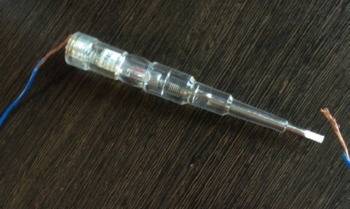
When a break is not found from the first check, it is necessary to unplug the extension cord from the socket, turn it over, then plug it in again, repeat the test. If the actions did not reveal a malfunction of the extension cord, the problem is in the device.
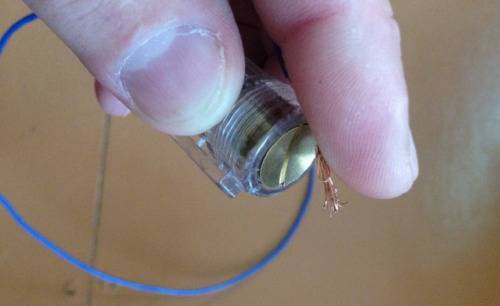
Concealed wiring
The ends of the wire immured in the wall are applied to the "heel" and the probe of the screwdriver. If the indicator gives a signal, there is no break in the wiring, if the wire is damaged, the diode will not light up. The wire can be extended if it is impossible to reach the probe from one end to the other. Before building up additional wiring, check by analogy.
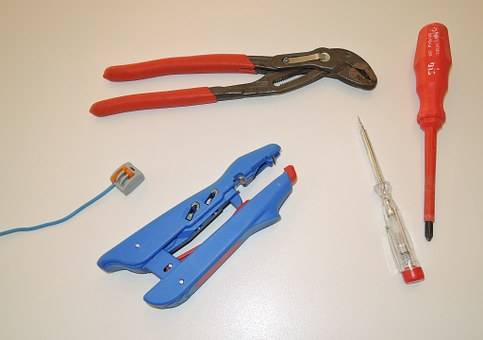
Main types
Varieties, with the exception of different manufacturers supplying their products to the market, relate to the principles of operation. Among others, there are three main principles of action:
1. Electrostatics. This is the simplest method that works on the principle of electromagnetic field propagation. If the conductor gets into it, the device gives a sound signal. The closer the conductor is to the center of the field, the stronger the signal.
Such devices are simple in design and easy to operate, but are only designed for a depth of up to 7 cm in the most powerful configuration.Among the devices of this subspecies there are those that work on the capacitive principle, which even allows you to search for voids and wood.
If the batteries of such an instrument are depleted, there is a chance that the magnetic field will not be enough, which will lead to a decrease in the depth. Therefore, the batteries of an electrostatic detector should be monitored regularly.
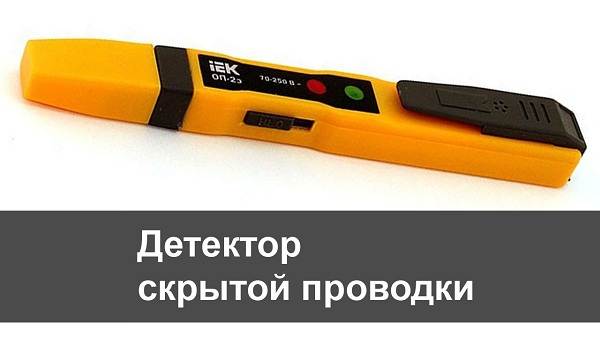
IEK wire detector
This tool is easy find exactly the phase wire. If voltage flows through it, then you need to turn off the light bulb using the switch. An interruption in the power supply will have an excellent effect on the magnetic field, which will allow us to quickly determine the core we need.
2. Electromagnet. This principle works quite the opposite. That is, the device is able to find conductors around which a magnetic field is located. It is everywhere if the wire is energized. The field is approximately 1 cm in diameter around the conductor strand.
The device is designed to work up to 10 cm. An important condition for finding a wire is that voltage flows through it, since otherwise there will be no magnetic field. Therefore, such a tool for finding a broken power circuit will not work. Otherwise, the greater the load on the cable, the easier it is to detect it in the wall.
3. Metal detector. Such a device works on the principle of a metal detector. He himself creates an electromagnetic field around himself, into which the conductor enters. In this conductor, its own field is formed. It is on the potential difference that the detector works.
In addition to the cable, he is looking for pipes, fittings, self-tapping screws and other metal objects. In some cases, this is inconvenient, because even in wooden houses, not to mention panel houses, there can be metal in the walls.Although this is suitable for drilling, because you will know for sure that you will not hit iron with a drill.
4. Capacitive device. We said earlier that they are able to find wood and voids. The principle of their operation is such that the capacitive detector, being near the cable, measures its dielectric constant. Such an instrument is considered inaccurate, which makes it a secondary detector.
5. Ultrasonic detector. This is the most accurate tool on the market today. It sends out a sound impulse and analyzes it according to the "Echo" principle. Such a tool is expensive, but for professional work it is ideal.
BOSCH hidden wiring detector
Among other things, it should be noted that there are combined detectors that combine the properties of electrostatics, a metal detector, a capacitive device
Therefore, when choosing a tool, even if you don’t know anything about it, pay attention to the cost. Market analysis says that up to a thousand rubles you can hardly find anything other than an electrostatic tool
Design
The effect of magnetic resonance is used to detect wires hidden in the wall. Metal objects are characterized by the accumulation of electrostatic electricity, which makes them visible to special equipment. A live wire becomes a source of a powerful electromagnetic field, which also makes it possible to recognize it in a state hidden from the eyes.
Regardless of the type and complexity, almost any indicator that allows you to detect hidden wiring consists of:
- antennas;
- signal amplifier;
- indication systems.
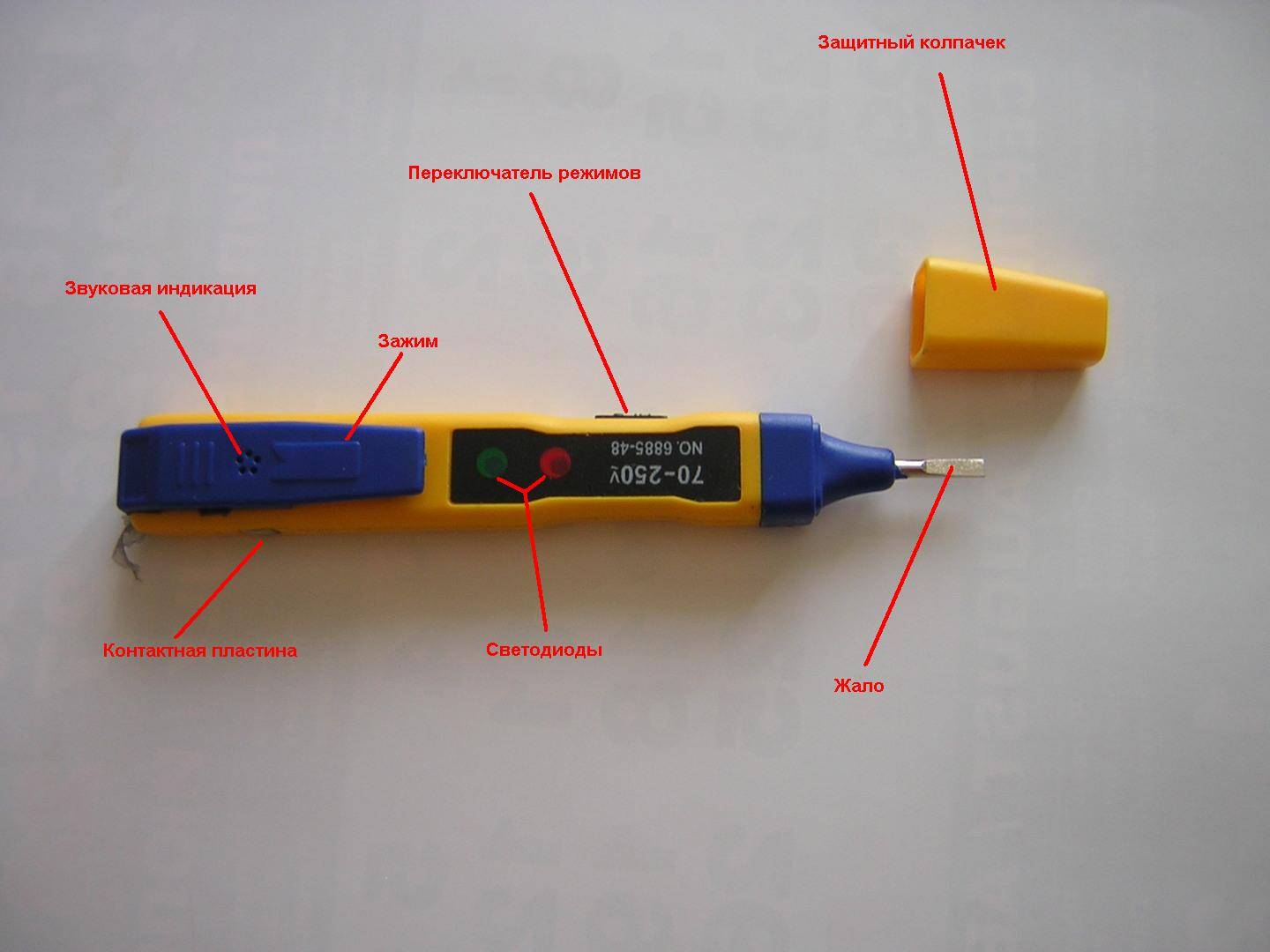
Structurally, ICPs are most often cylindrical (Fig. 3) and flat. The former are similar to standard indicator screwdrivers.The second is characterized by equipment with controls.




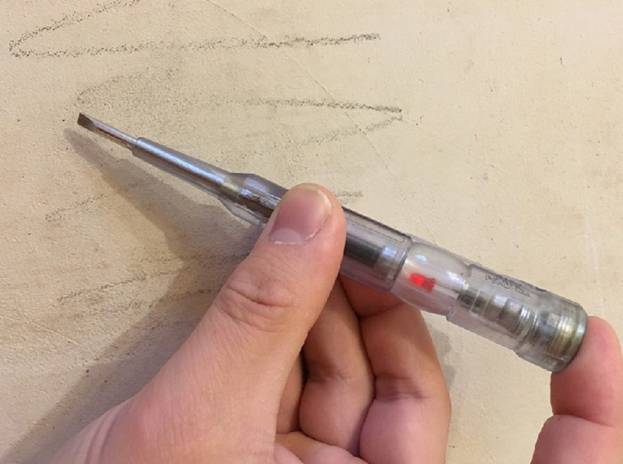
Information about the object under study can be taught in several ways. With sound signaling, the tone, duration and sequence of signals are used for analysis. Light signaling is provided by LEDs, the different colors of which correspond to one or another characteristic of the buried wire. Complex, multifunctional devices are equipped with liquid crystal displays. This option allows you to work with multiple data at the same time.
BOSCH GMS 120 Professional
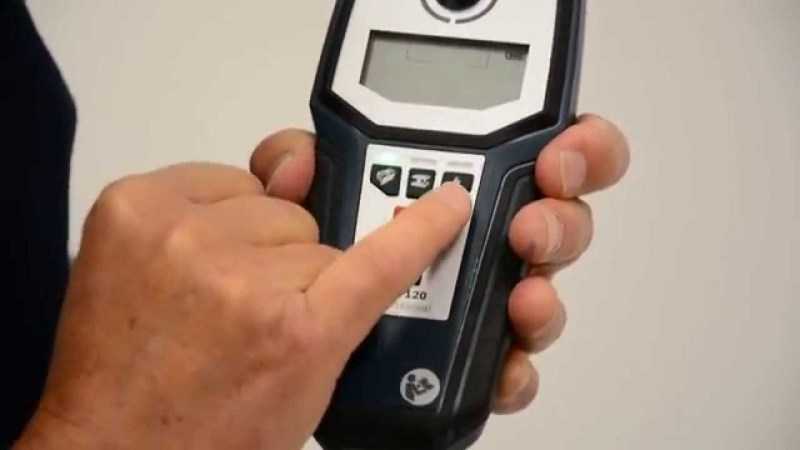
The indicator is designed to search for hidden cables, fittings and other technical communications. When turned on, the instrument auto-calibrates, which increases the accuracy and reliability of operation.
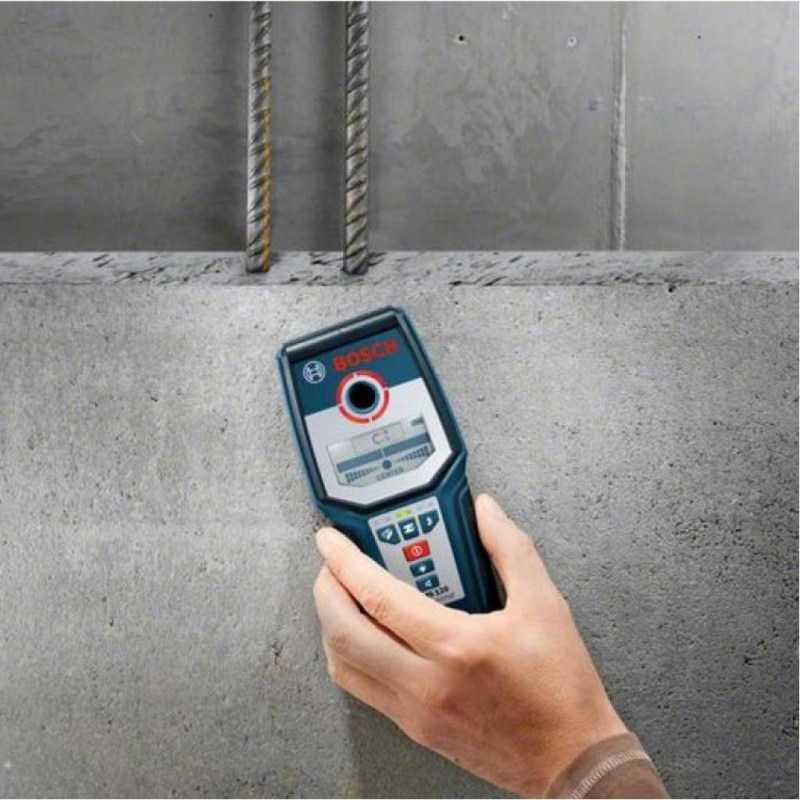
There is a backlit screen that allows you to work in low light. The light indication is made in the form of a light bulb that changes color depending on the mode:
Drywall. Detects metal and wood products hidden behind plasterboard walls.
Conductive cable. Indicates a wire that is energized between 110 and 230 V.
Metal
Shows objects (whether magnetic or not) hidden in a wall made of any material.
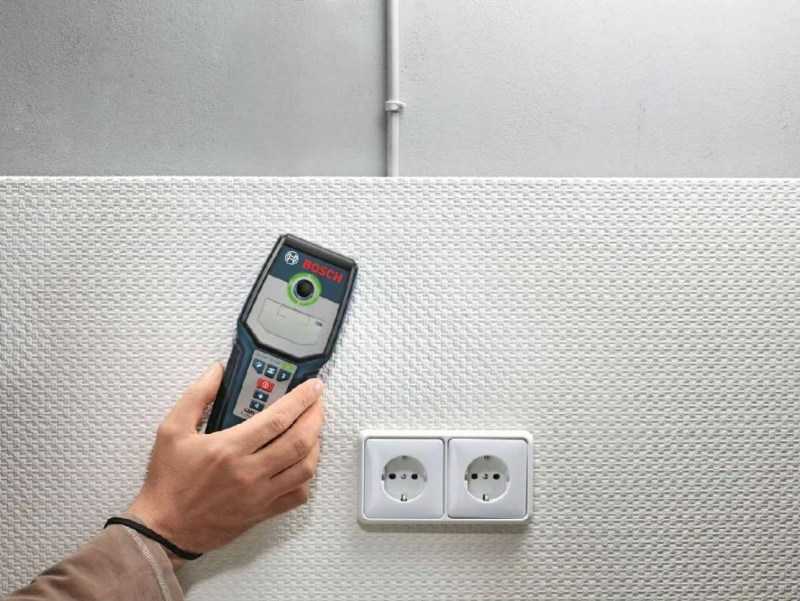
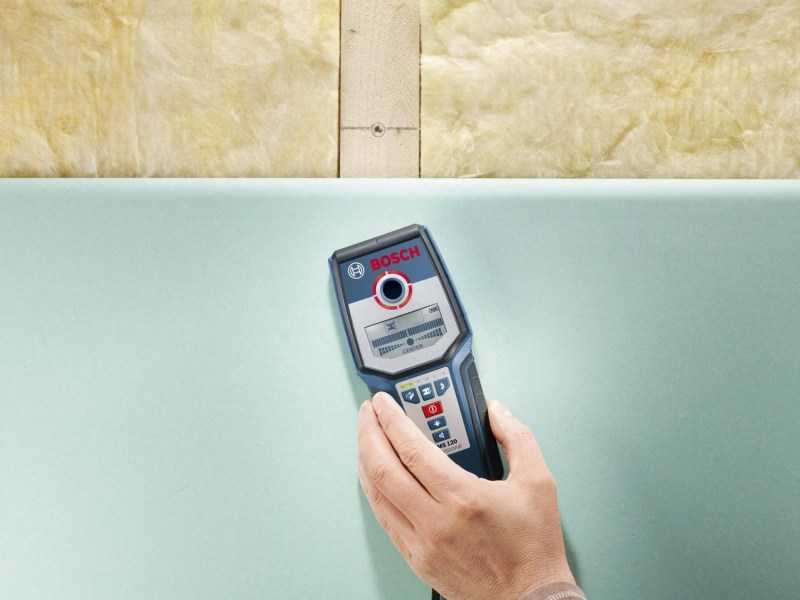
It is difficult to immediately say which device is better. It all depends on the type of material you are looking for (cable, metal, wood, plastic) and financial capabilities. For simple purposes, a screwdriver indicator will do, but for long-term repairs, you should spend money on a good detector.


Types of voltage indicators: single-pole and double-pole devices
Modern industry produces a large number of different indicators. There is no standard classification for them.According to the features of the technical device, devices can be divided into single-pole and double-pole, and also distinguish between passive and active products. In this section, we will focus on the classification according to the first feature.
Single pole indicators. This type includes the simplest devices, the design scheme of which is described above: based on a sting and a neon lamp for indication. More advanced single-pole devices have an LED lamp, battery power, a sound signal - in addition to the glow of the lamp. According to the principle of operation, such indicators are identical to the simplest devices, but it becomes possible for wires to ring.
The most advanced single-pole models have a complex device, although the principle of operation is preserved. In addition to the functions already listed, they have the ability to detect a break in hidden wires under a layer of plaster.
The bipolar type of indicator screwdrivers is different in that it has not one, but two cases. Each is made of a dielectric material, has a backlight - a neon or LED lamp. Some devices are equipped with an audible signal. Two cases are connected by a wire, the length of which usually does not exceed 1 m, both have a sting. Such devices are considered professional, they are used to check the presence of current between two contacts. Among the bipolar there are models that determine not only the presence of voltage, but also its magnitude.
 The bipolar type of indicator screwdrivers is characterized by the presence of two housings.



