- Roof ventilation - why is it important?
- roof ventilation requirements
- Varieties of ventilation for the roof
- Installation of the ventilation passage through the roof
- Assembly and adjustment of passage nodes
- Ventilation schemes through the wall
- Mechanical or natural?
- Installation of UE on a concrete roof
- Where to place the ventilation outlet?
- Types of ventilation
- 3 Mounting requirements
Roof ventilation - why is it important?
Since, due to sudden changes in air temperature, numerous indoor evaporations and high humidity, condensation forms in the under-roof space.
Thus, the accumulated moisture penetrates the heat-insulating layer, which leads to a decrease in its effectiveness.
 Due to the prolonged exposure to moisture on the truss system, the wooden structure will begin to gradually collapse, and regardless of whether it has undergone special treatment with anti-corrosion agents
In addition, the lack of the necessary air exchange leads to a significant overheating of the roof during the hot season, which makes it unbearable to stay indoors.
Therefore, installing a roof ventilation system allows you to solve several problems at once, providing:
- sufficient inflow of fresh air into the under-roof space;
- stable temperature and humidity in the attic;
- reliable protection of roofs, ceilings and walls from mold formation;
- full functioning of the thermal insulation material.
Installing ventilation for the roof will significantly reduce the cost of heating or cooling the room, replacing the truss system, or numerous attempts to combat the fungus.
The ideal time to install a ventilation system is to replace the old roofing with a new soft tile roof.
roof ventilation requirements
Proper ventilation for soft tile roofing should be taken seriously to avoid the above problems.
First of all, you should remember about the space between the base and the insulation, to achieve which you will need to fill a beam with a thickness of 5 cm
In addition, it is important to take care in advance that there are small holes at the bottom of the slope to ensure a sufficient supply of fresh air.
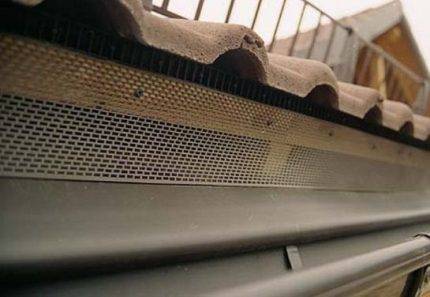 It is advisable to immediately equip the ventilation openings with special decorative grilles so that the birds do not have time to build nests inside them, and the system works properly
In the process of installing a soft roof, you should also not forget about the holes for ridge ventilation and the installation of aerators.
When installing the crate, it is important to take into account the need for gaps, due to which continuous circulation of fresh air will be ensured. All these nuances should be thought out at the system design stage.
Varieties of ventilation for the roof
The shape and design of the roof completely determine the type of roof ventilation.If a roof made of soft tiles has a complex geometric surface, sufficient air exchange can only be ensured by equipping ridge ventilation.


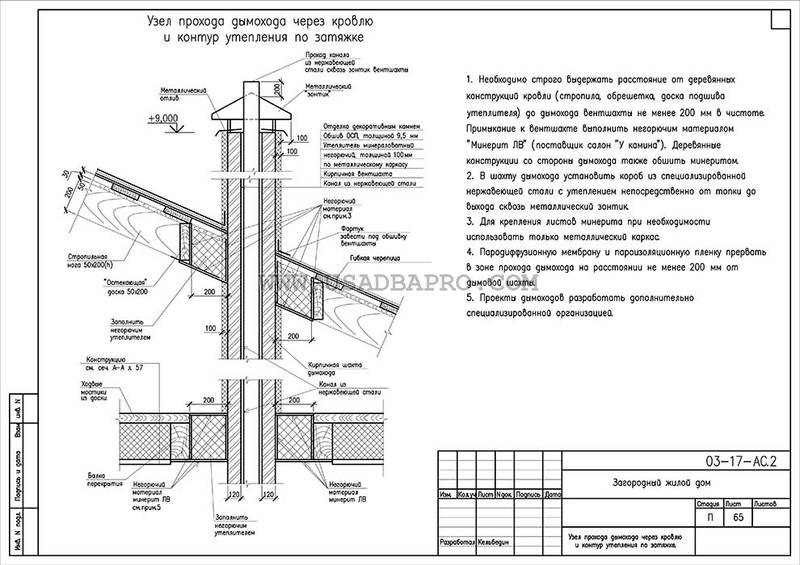


So, depending on the features of building a house, there are two types of ventilation through the ventilation ridge:
- Spot. It is installed on separate sections of a ridge or slope, while it has a mushroom shape. Such aerators are often integrated into the general ventilation system of the building, but in some cases they can be equipped with a separate hood.
- Continuous. Mounted along the entire ridge, and thus provides full ventilation of the under-roof space. Unlike a point system, continuous ventilation is more effective for soft roofs.
In this case, it is worth considering a continuous type of ventilation. So, the ridge element is a rigid plastic structure, which consists of a solid upper part in the form of a corner, as well as perforated walls.
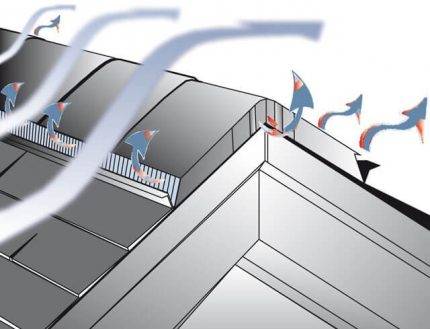 Roof continuous ventilation can be installed on almost any roof, however, with the only condition - the slope of the slope should be 14-45 degrees, while the length of the aerator must fully correspond to the length of the ridge
Ridge ventilation works by convection, in which warm air masses rise up from the eaves, and cold air, in turn, is pulled down. In this case, the system has its own entry and exit zones.
So, fresh air penetrates into the under-roof space through ventilation roof overhangs (from below), while the ridge aerator, located at the top of the soft roof, is the outlet for the exhaust air.
Installation of the ventilation passage through the roof
Running the chimney to the roof is a task that for most homeowners may seem like a no-brainer. However, the ventilation passage assembly through the roof must be equipped very carefully in compliance with all technical norms and rules. Only under these conditions will the integrity of the roof pie be preserved, and the ventilation system will work efficiently.
Most often, in private housing construction, ventilation ducts from the bathroom, kitchen and living rooms are led through the ceiling to the roof. Roof venting, ending in a tube that rises above the roof, can provide efficient air draft. This method of arranging ventilation ducts makes the air in the house clean, since all unpleasant odors exit through the penetration into the street.
Taking into account SNiP, the outlet of the duct passage through the roof is required for:
- air exchange in the attic or attic room of the house;
- installation in the wall of the fan section of the sewer shaft (the fan pipe is connected to the sewer and ventilation to remove odors);
- supply of clean air enriched with oxygen.
Ideally, the development of a ventilation passage through the roof should be carried out at the design stage or during construction before the house contour is closed (roof, doors and windows).
But in practice, it is often necessary to reconstruct the roof passage assembly in an already constructed building and build on the existing features of the layout of the premises.
If there are errors in the arrangement of the passage unit, then this is fraught with a high concentration of unpleasant odors, carbon dioxide, and the appearance of reverse thrust.
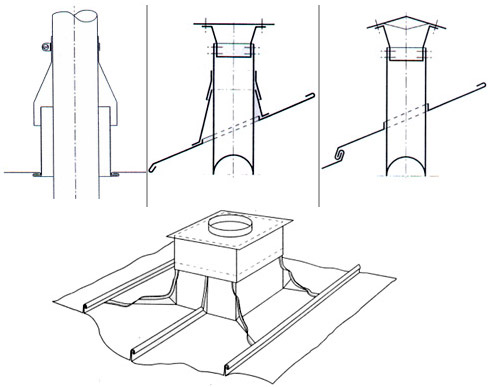
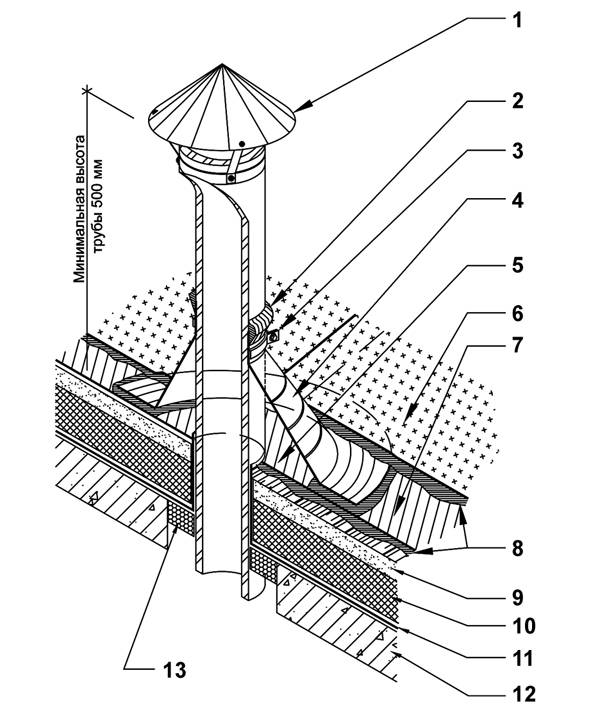
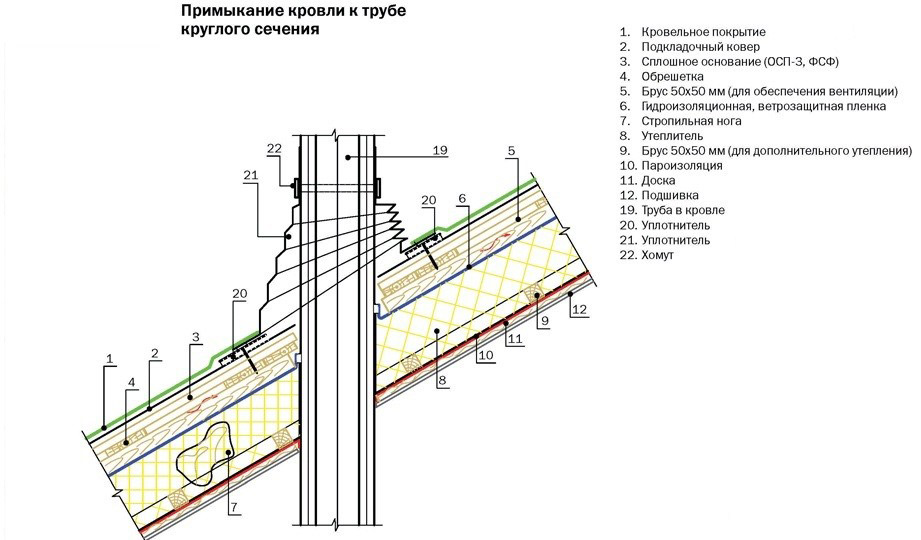
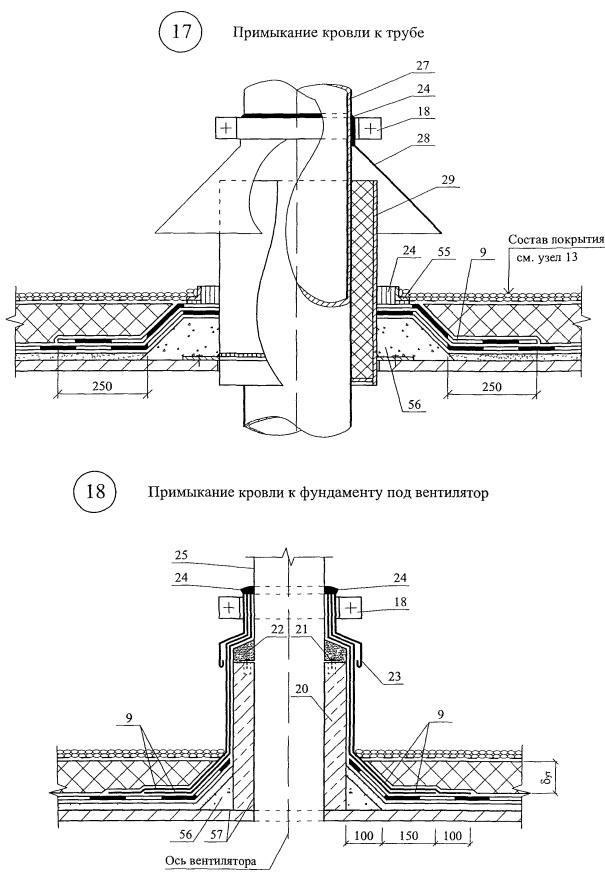
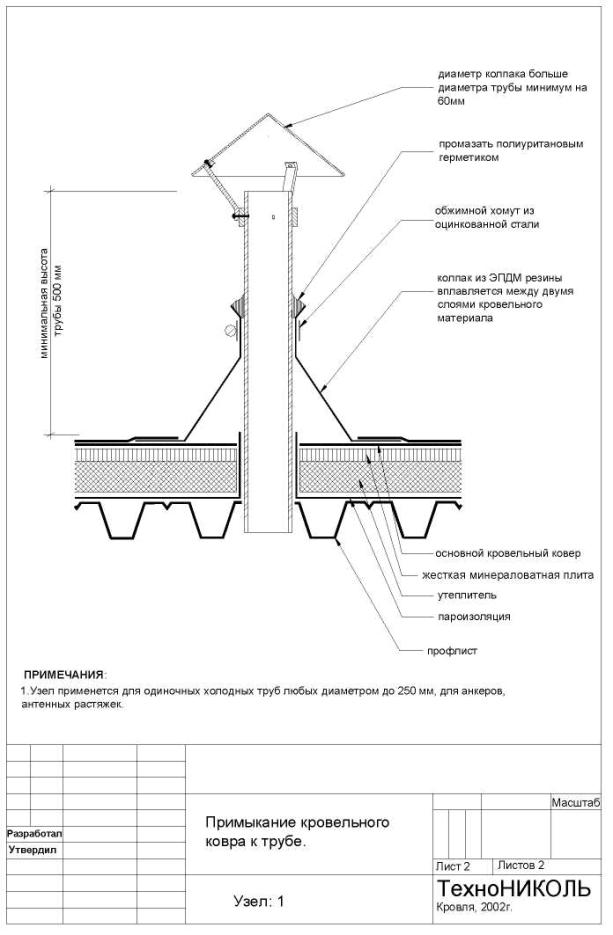
The through-flow ventilation unit is a plastic, metal or combined pipeline. It is placed in a hole in the roof and fixed in a metal cup. After installation, the hole must be sealed and insulated. An air duct of the ventilation system is connected to the penetration from below, and a protective cap is placed on top.
To organize the passage of the pipe, you can also use a ready-made product, which is designed for ventilation on the roof. This is a pipe that consists of an outer polypropylene layer and a galvanized metal pipe inside. At the bottom of the product, where the air duct is installed, there is thermal insulation, and at the top of the structure there is a protective drip.
The design and installation of the node will depend on a number of factors:
- roof slope angle;
- type of roofing material - profiled sheet, ceramic or soft tiles;
- roof type.
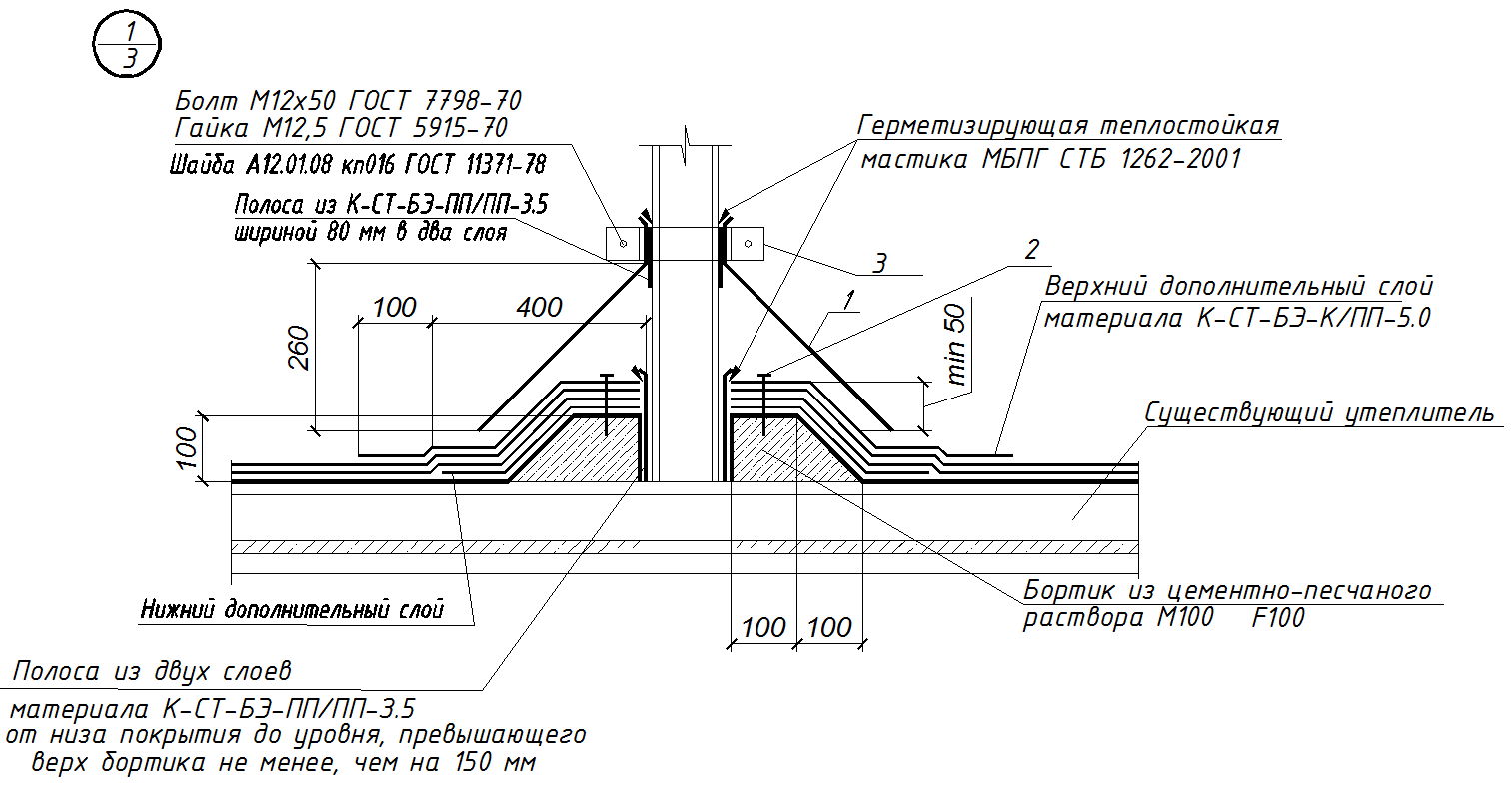
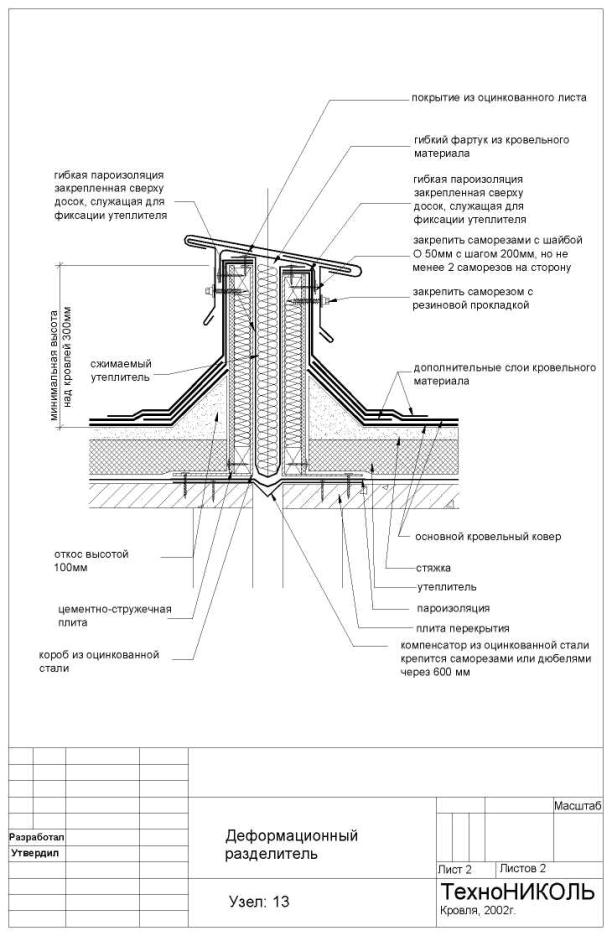
Since for the installation of the pipe it is necessary to cut out a part of the roof, including the outer section, the layer of hydro- and thermal insulation after fixing the structure must be well sealed. If this is not done, then water will pass through the ventilation pipe into the house, and the temperature in the rooms will be disturbed.



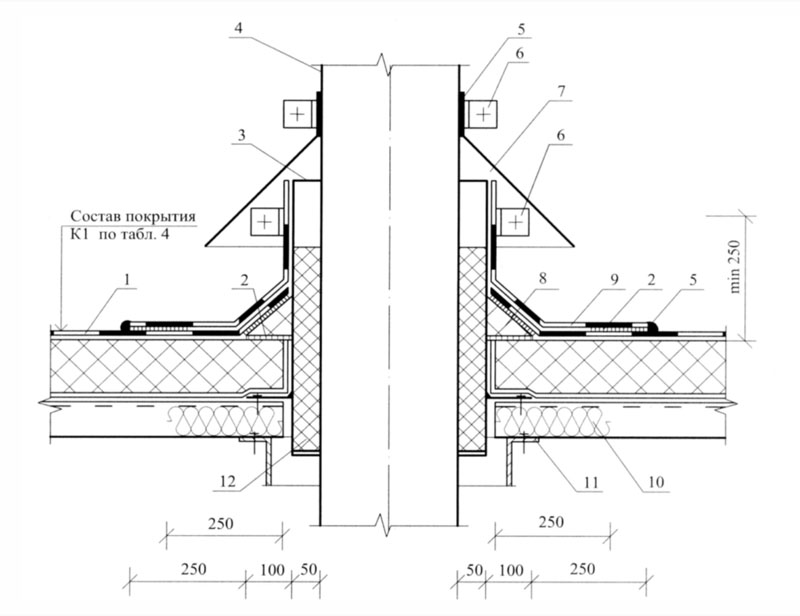

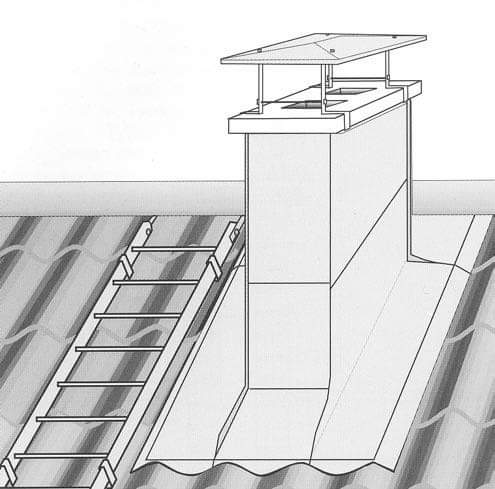
There are certain requirements:
- it is not necessary to connect several ventilation passages into one, but for all parts (sewer riser, hood, attic, living rooms) make a separate exit to the roof;
- structures must be vertical without bends, so that it is possible to freely ensure the movement of air to the street;
- for the installation of mines, it is necessary to choose high-quality shaped products that can ensure tightness and unhindered movement of air masses;
- ideally, ventilation shafts must pass through the ridge in the middle of the structure or at a close distance near it.
Installing ventilation passages through or near the ridge is the best solution for a gable roof that is not equipped with a ridge rafter system.
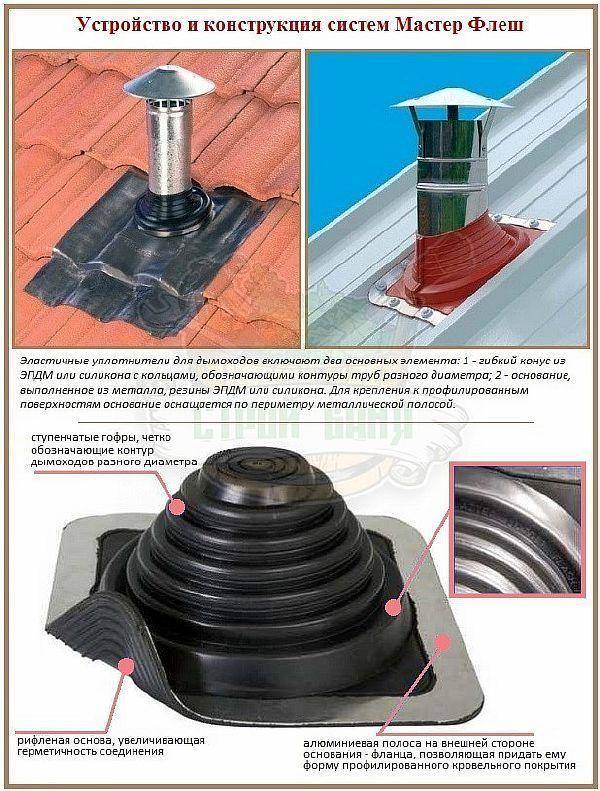
The main element of the passage assembly is the outlet - a shaped product in the form of a branch pipe, which has a flat base corresponding to the type and coverage of the roof. For different engineering structures, various types of fittings are used: a passage for pipes, an outlet for a sewer riser and for an exhaust hood.
Separately, in stores you can find special ventilation units for the passage through the roof for corrugated board, metal tiles, for flexible and seam roofs, as well as universal products. Many types of passages correspond to the geometry of the roofing materials, due to this they provide a strong sealing of the assembly during installation.
Assembly and adjustment of passage nodes
The passage through the ventilation roof is equipped after the operations to create the air exchange scheme of the building are completed. When arranging, you need tools and fixtures:
- penetration;
- sealing element, which consists of rubber or silicone;
- silicone sealant;
- screwdriver;
- drill;
- screws.
The assembly of a conventional node is carried out according to the following plan:
- The area for the removal of air pipes is determined. According to the required standards, it is necessary to place the exit ventilation ducts between the rafters and at the closest distance to the ridge.
- The hole is marked.To do this, you can use a marker or a cardboard pattern. The size of the hole should be 20-30 mm larger than the diameter of the duct.
- A hole is being cut. A hole is made in the marked area, which involves the removal of the roof insulation and vapor barrier material. You should also remove the crate parts, the waterproofing layer. Metal roofing involves the use of a drill, a hacksaw and metal shears. Using these tools, slots are first drilled, and then a circle is cut out.
- Installation of a roof gait. It is located on a pipe above the roof surface. Layers of hydro- and vapor barrier material are placed on the pipe, which are glued with construction tape or sealant. The use of a rubber seal allows you to tightly fix the penetration on the roof. In the case of a solid roof, fastening is provided with self-tapping screws. And if the roof has a soft coating, then the sealing element is glued with a sealant.
- Putting a protective umbrella on the head to prevent rain, birds, debris from entering the pipe.
When the node of the passage is correctly placed, there are no depressions around it. In the presence of such depressions in the winter season, the formation of a snow pocket is possible, which contributes to the penetration of melt water under the roof.
There are situations when the use of a standard assembly is not possible, since the duct must be installed high above the surface or a roof with a profiled surface is used. In such situations, the use of additional devices is recommended:
- A metal sleeve with a support piece, which involves an auxiliary hole for it.Waterproofing is placed under the support, and the rubber seal will be under the roof.
- Long air ducts are provided with an auxiliary lining made of a material having water resistance properties.
- Wide pipes with a lot of weight are reinforced with stretch marks made of cable or wire, or with props.
- If there is a roof structure made of concrete, it is necessary to install concrete slabs with holes already made for the pipe in the areas for penetration.
- Additional sealing of the passage nodes is required in the presence of a roof made of metal. To do this, you can apply a foil coating to close the joints with the roof.
Different types of roof coverings suggest a separate scheme for arranging the evil of the passage. Therefore, there are many options for placing the duct passage.
When the ventilation system is brought out into the street, many begin to look for the answer to the question - what is the passage node in the ventilation and how to equip it. After all, the correct location and strengthening of this site will avoid many problems in the future.
- Appointment and selection of roofing units of the ventilation passage
- Passage node device
- Varieties of ventilation passages through the roof
- Installation of passage nodes
During construction, there is often a need to mount a ventilation passage assembly through the roof of buildings.
After all, almost any of them, which has a residential, economic or public purpose, is equipped with a ventilation system. At the same time, there are as many options for the passage of ventilation systems through the roofing as there are options for the roof itself.Each type of roof has its own type of passage assembly, designed specifically for it.
Therefore, in order to select the right ventilation system for the roof, you need to know certain rules and regulations. It is worth remembering that ventilation systems only remove air at low temperatures. Other materials and designs are used for flue systems.
Ventilation schemes through the wall
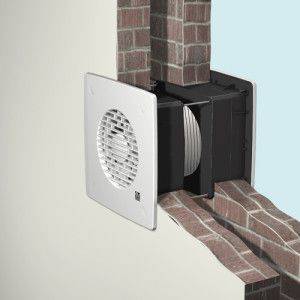
In apartments or private houses, the most rational arrangement of ventilation through the wall:
- with natural traction;
- with mechanical outflow;
- combined.
Natural ventilation is based on the draft principle. Air moves due to the difference in pressure and temperature inside and outside the apartment. Such a system does not depend on energy sources and is a structure of air ducts and holes, usually coming out through the walls.
Natural ventilation was widely used in the construction of old multi-storey buildings, in modern buildings it is much less common.
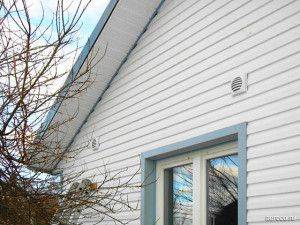
One of the problems that arise during its operation is the lack of air flow. It is understood that fresh air enters the premises through the gaps between the window sashes, open vents. However, modern windows provide almost complete sealing. Therefore, residents solve the problem on their own, pulling ventilation through the wall to the street, installing supply valves.




Household hoods also often work poorly, but it is not possible to make a ventilation passage from the bathroom through the wall in all apartments. It is much easier to build ventilation in the wall of a private house. It is advisable to design the ventilation passage through the wall in advance, linking it with all other structures.
Mechanical or natural?
When planning ventilation in an external wall, decide on the system. One of the most important indicators of air exchange are speed and temperature.
This is probably why people feel worse in rooms with fans. But in some cases, mechanics are indispensable. For example, if it is not possible to make wide exhaust ducts in the outer wall for exhaust ventilation. The higher the speed of air flow, the smaller the cross section of the ventilation duct. Therefore, mechanical ventilation is often installed in the outer walls. Mechanical stimulation is also more expedient in large areas.
Installation of UE on a concrete roof
The process of installing a penetration in a concrete roof is no more difficult than it is on a conventional roof. Most often, the concrete base is covered with soft roofing material such as euroroofing material, etc. Holes in the floor slabs are provided at the project development stage. The optimal arrangement of the UE involves the use of a plastic sleeve. It is inserted into the hole of the concrete slab, fixing it from the inside.
The plastic support is lubricated with sealant and glued to the roof waterproofing. Moreover, it is necessary to glue with precise centering markings for the ventilation pipe. The air duct is inserted inside the plastic sleeve and wooden spacers are driven into the gaps between their walls. To extend the life of the node, the wood is pre-treated with an antiseptic.
Next, there is a process of warming and sealing the node. If a plastic sleeve was used for penetration, it is covered with insulation and sealed with polyurethane foam.However, in concrete floors, metal or asbestos-cement bushings can be used for penetrations. They are sealed with hot bitumen.

In a concrete slab, the pipe passage through the roof is difficult to seal. Although the joints of the supporting part are well treated with sealant, the possibility of its delamination is not ruled out. For 100% protection of the assembly, an outer cap is put on it, covering all joints from water ingress. In addition, the cap-nozzle is able to replace the stretch marks that contribute to the stability of the duct.
We recommend reading:
- How to bring the chimney through the roof;
- The device of the roof of the house - single-pitched, gable and flat
Where to place the ventilation outlet?
When arranging an exhaust outlet through the roof, it is important not only to ensure the tightness of the passage through the roofing pie, but also to choose the right location. You also need to correctly determine the height of the exit, because the draft in the ventilation duct directly depends on it
Firstly, it is better to make the ventilation outlet through the roof as close to the ridge as possible.
Even a ventilation outlet with an electric fan is better to bring closer to the ridge. In this case, during a power outage, natural traction through it will remain.
This arrangement has several advantages:
- Most of the ventilation duct will pass through the attic, where there is no wind, and the temperature is always slightly higher than outside. Thanks to this, the layer of insulation on the pipe can be made thinner;
- The ventilation outlet, located at the ridge, has a minimum height above the roof surface, therefore it is resistant to gusts of wind and does not require additional fasteners;
- You can use a factory-made ventilation outlet, which will give the roof additional aesthetics.
Don't worry. It is better to think carefully about how to make a tight exit of the ventilation pipe on the roof if it is not possible to install it close to the ridge. In this case, the passage simply needs to be additionally isolated and secured.




Secondly, in order not to get into the wind backwater zone with the pipe, which every house with a pitched roof has, the height of the ventilation pipe deflector should be:
- 0.5 m above the roof ridge, if the exit is located no further than 1.5 m from the ridge;
- not lower than the roof ridge, if the exit is at a distance of 1.5 m to 3 m from the ridge;
- not lower than a line drawn at an angle of 10o from the ridge to the horizon, if the ventilation outlet is located more than 3 m from the ridge;
- if the ventilation pipe is removed from the annex to the house, then its deflector should be located 0.5 m above the line drawn from the roof eaves of the main building at an angle of 45o to the horizon.
Providing the specified height above the roof is extremely important for any ventilation, and for natural ventilation it is vital. Do not allow the end of the natural ventilation pipe below the dotted lines indicated in the diagram
If this rule is not observed, there will be no normal draft in the ventilation duct.
Do not allow the end of the natural ventilation pipe below the dotted lines indicated in the diagram. If this rule is not observed, there will be no normal draft in the ventilation duct.
If this rule is neglected, then the hood deflector will fall into the zone of wind backwater and in windy weather, at best, there will be no draft, and at worst, reverse draft will appear and air from the street will go into the house.
Types of ventilation
There are many types of ventilation systems that are not always associated with heaters and a chimney. Classification of ventilation systems:
- according to the method of movement of air masses - natural and forced;
- by application - supply, exhaust and combined supply and exhaust;
- by design features - channel and channelless.
There are other types of ventilation that perform additional functions: heating, filtration and cooling.
Natural ventilation is equipped in residential buildings, providing fresh air and the removal of polluted air without mechanical intervention. Through the ventilation ducts, under the influence of the physical laws of temperature and pressure differences, the masses rise and go outside, and substitution occurs through windows and doors.
The advantage of the design is accessibility and work without external intervention.
The negative side of the issue is that in order to provide air draft from the street, at least one window must be open. Systems become clogged and require periodic cleaning.
To improve ventilation, it is equipped with forced air suction points. It becomes mechanical. Fans with the ability to adjust the mode and speed of rotation serve as superchargers. The masses are constantly moving, regardless of whether the source of inflow is open, the weather on the street and other factors that adversely affect natural draft.
Forced ventilation does not require human intervention in terms of operation, except in cases of equipment breakdown and blockages. It is considered the most comfortable and productive.
The duct ventilation system is characterized by the presence of a central unit with channels connected to it for the passage of air masses, providing both inflow and outlet. The device is almost always equipped with additional equipment that cleans and disinfects, cools and heats the air entering the room.
Its arrangement requires sufficient space under the ceiling, so the channel structure is almost never mounted in small apartments. It is installed in public, industrial, office and warehouse premises, where there is a constant crowd of people.
The channelless air purification and ventilation system can be equipped with a mobile device equipped with filters, fresheners and a humidification function.
Supply and exhaust ventilation complement each other, although they can be installed separately. In the process of development, the design was combined into a combined supply and exhaust system.


In order to ensure the supply of not only clean, but also warm air, heating points are built into the air ducts with the possible maintenance of climate control. To improve the quality, ventilation is equipped with filters.
3 Mounting requirements
Since for the installation of the pipe it is necessary to cut out a part of the roof, including the outer section, the layer of hydro- and thermal insulation after fixing the structure must be well sealed. If this is not done, then water will pass through the ventilation pipe into the house, and the temperature in the rooms will be disturbed.
There are certain requirements:
- it is not necessary to connect several ventilation passages into one, but for all parts (sewer riser, hood, attic, living rooms) make a separate exit to the roof;
- structures must be vertical without bends, so that it is possible to freely ensure the movement of air to the street;
- for the installation of mines, it is necessary to choose high-quality shaped products that can ensure tightness and unhindered movement of air masses;
- ideally, ventilation shafts must pass through the ridge in the middle of the structure or at a close distance near it.
Installing ventilation passages through or near the ridge is the best solution for a gable roof that is not equipped with a ridge rafter system.
The main element of the passage assembly is the outlet - a shaped product in the form of a branch pipe, which has a flat base corresponding to the type and coverage of the roof. For different engineering structures, various types of fittings are used: a passage for pipes, an outlet for a sewer riser and for an exhaust hood.
Separately, in stores you can find special ventilation units for the passage through the roof for corrugated board, metal tiles, for flexible and seam roofs, as well as universal products. Many types of passages correspond to the geometry of the roofing materials, due to this they provide a strong sealing of the assembly during installation.