- The system of automatic control and protection against gas pollution and gas leakage in a house, apartment
- Dangerous properties of gas fuel:
- Gas alarm - gas leak sensor, is it necessary to install
- Gas detector for LPG
- Checking gas equipment
- New rules for the use of gas in residential premises
- What to do in case of a gas leak?
- List of maintenance work
- Rules for using a gas boiler (Gasified stove)
- General fire safety rules
- Basic rules for using gas at home
- How to replace gas with electricity
- How to check traction
- Payment
- Temperature coefficient of the meter for the first half of 2020
- How to pay online?
- Is it a public service or not?
- What is strictly prohibited when using gas
The system of automatic control and protection against gas pollution and gas leakage in a house, apartment
Dangerous properties of gas fuel:
- the ability of gas to form flammable and explosive mixtures with air;
- suffocating power of the gas.
The components of gas fuel do not have a strong toxicological effect on the human body, but at concentrations that reduce the volume fraction of oxygen in the inhaled air to less than 16%, they cause suffocation.
During the combustion of gas, reactions occur in which harmful substances are formed, as well as products of incomplete combustion.
Carbon monoxide (carbon monoxide, CO) - is formed as a result of incomplete combustion of fuel. A gas boiler or water heater can become a source of carbon monoxide if there is a malfunction in the combustion air supply and flue gas removal path (insufficient draft in the chimney).
Carbon monoxide has a highly directed mechanism of action on the human body up to death. In addition, the gas is colorless, tasteless and odorless, which increases the risk of poisoning. Signs of poisoning: headache and dizziness; there is tinnitus, shortness of breath, palpitations, flickering before the eyes, redness of the face, general weakness, nausea, sometimes vomiting; in severe cases, convulsions, loss of consciousness, coma. Air concentrations greater than 0.1% result in death within one hour. Experiments on young rats have shown that a concentration of CO in the air of 0.02% slows down their growth and reduces activity compared to the control group.
Gas alarm - gas leak sensor, is it necessary to install
Since 2016, building regulations (clause 6.5.7 of SP 60.13330.2016) require the installation of gas alarms for methane and carbon monoxide in the premises of new residential buildings and apartments in which gas boilers, water heaters, stoves and other gas equipment are located.
For buildings that have already been built, this requirement can be seen as a very useful recommendation.
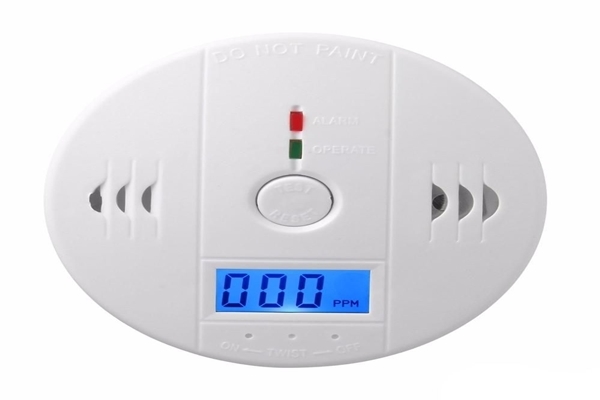
The methane gas detector serves as a sensor for the leakage of domestic natural gas from gas equipment.The carbon monoxide alarm is triggered in case of malfunctions in the chimney system and the ingress of flue gases into the room.
Gas sensors should be triggered when the gas concentration in the room reaches 10% of natural gas LEL and CO content in the air is more than 20 mg/m3.
Gas alarms must control a quick-acting shut-off (cut-off) valve installed at the gas inlet to the room and shutting off the gas supply by a signal from the gas contamination sensor.
The signaling device must be equipped with a built-in system for emitting a light and sound signal when triggered, and / or include an autonomous signaling unit - a detector.
The installation of signaling devices allows you to timely notice a gas leak and disturbances in the operation of the smoke exhaust path of the boiler, to prevent a fire, explosion, and poisoning of people in the house.
NKPRP and VKPRP - this is the lower (upper) concentration limit of flame propagation - the minimum (maximum) fuel concentration (gas, vapors of a combustible liquid) in a homogeneous mixture with an oxidizing agent (air, etc.), in which the flame can spread through the mixture at any distance from the ignition source (open external flame, spark discharge).
If the concentration of a combustible substance in the mixture is less than the lower limit of flame propagation, such a mixture cannot burn and explode, since the heat released near the ignition source is not enough to heat the mixture to the ignition temperature.
If the concentration of a combustible substance in the mixture is between the lower and upper limits of flame propagation, the ignited mixture ignites and burns both near the ignition source and when it is removed. This mixture is explosive.
If the concentration of a combustible substance in the mixture exceeds the upper limit of flame propagation, then the amount of oxidizing agent in the mixture is insufficient for complete combustion of the combustible substance.
The range of concentration values between NKPRP and VKPRP in the "combustible gas - oxidizer" system, corresponding to the ability of the mixture to ignite, forms an ignitable region.
Gas detector for LPG
The building regulations do not contain mandatory requirements for the installation of gas alarms in rooms when using liquefied gas. But liquefied gas alarms are commercially available and installing them will undoubtedly reduce the risks for you and your loved ones.

Checking gas equipment
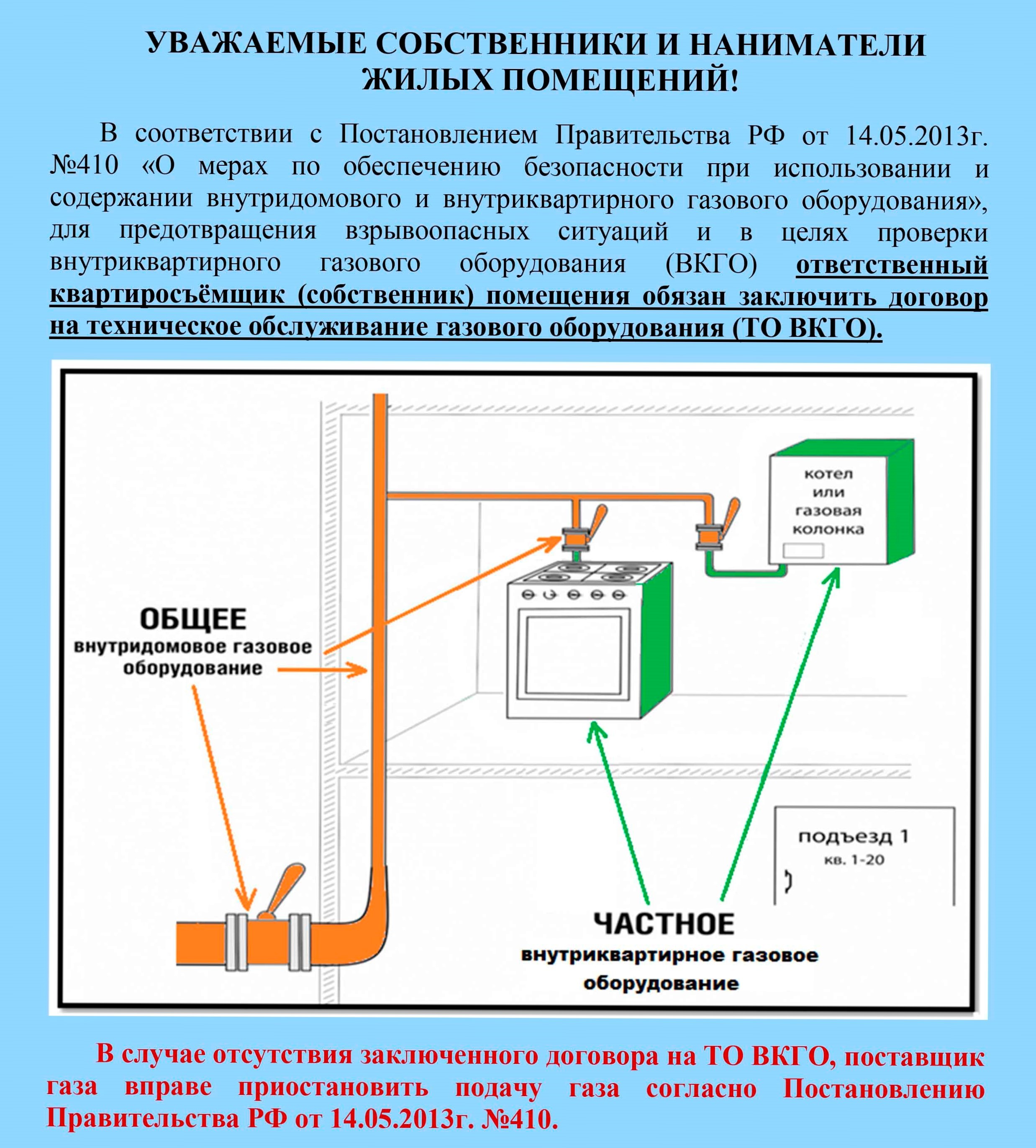
According to the requirements of the housing code, to prevent accidents, possible leaks and failure of gas equipment, technical services conduct regular checks. The owner of the accommodation is obliged to provide employees with unhindered access to examine the condition of the devices.
For the safe operation of gas equipment available in residential buildings, test standards have been established. Gas stoves should be checked every three years, boilers and water heaters once a year. Faulty and obsolete equipment must be replaced in a timely manner.
Tenants are notified in advance in writing about the time of equipment inspection. This deprives the homeowner of the opportunity to challenge the violations identified as a result of the inspection.
During the inspection, experts must:
- check the tightness of the fasteners in the places of all joints;
- make sure that there are no leaks in places where the gas pipeline connects to the gas shut-off point (if necessary, a liquid pressure gauge can be used);
- make a visual inspection of the chimney and hood in residential buildings;
- check the quality of gas supply to stoves and water heaters;
- if necessary, adjust the intensity of the supply of blue fuel;
- check the operation of automation and electronic devices.
In case of detection of serious violations, the service organization repairs the equipment, replaces gas valves, pipeline sections. If breakdowns and emergencies occurred due to the fault of the owners, the gas supply may be stopped.
Other possible reasons for shutting off the gas supply:
- the user independently carried out the installation of gas equipment (additional equipment);
- upon detection of malfunctions (poor ventilation, lack of exhaust, insufficient gas concentration);
- illegal connection to the gas supply network;
- an emergency has occurred;
- during the repair of gas communications or equipment;
- in the absence of an agreement with the gas service;
- the debt for the used blue fuel exceeds two settlement periods;
- the consumer does not transmit data on the actual volume of gas used and interferes with the work of regulatory authorities;
- equipment is used that is not specified in the contract.
20 days before disconnection from the gas supply, the consumer must be informed by the gas service with which the service contract has been concluded. The notice must come in writing with a detailed explanation of the reasons.
If an emergency occurs, the gas is shut off without warning
The total shutdown of gas per month for the purpose of repair work is 4 hours.If this condition is violated, for each extra hour the amount of payment for blue fuel should be reduced by 0.15%.
In case of an emergency shutdown, the gas can be shut off without warning for a maximum of a day. Gas is supplied within 48 hours. If a subscriber is turned off gas for non-payment, the first notification is sent to him 40 days in advance, and the second 20 days before the disconnection.
About where, to whom and how to complain about representatives of GorGaz is detailed in the following article on this important issue.
New rules for the use of gas in residential premises
All residents of apartment buildings are required to listen to a briefing on safety measures when operating gas equipment. The event is held after the conclusion of an agreement with representatives of GorGaz. Also, the briefing is repeated after each scheduled inspection.
Residents are required to provide GorGaz employees with access to the premises where gas equipment is installed at any time of the day. Otherwise, you will have to pay a hefty fine. In the absence of residents in the house or apartment for more than 24 hours, it is imperative to turn off the gas supply valve.
The new rules require management companies to regularly check basements and ventilation conditions once every 10 days.
Residents are required to:
- monitor the cleanliness of ventilation;
- before you start cooking, ventilate the room;
- do not install flammable furniture close to the stove.
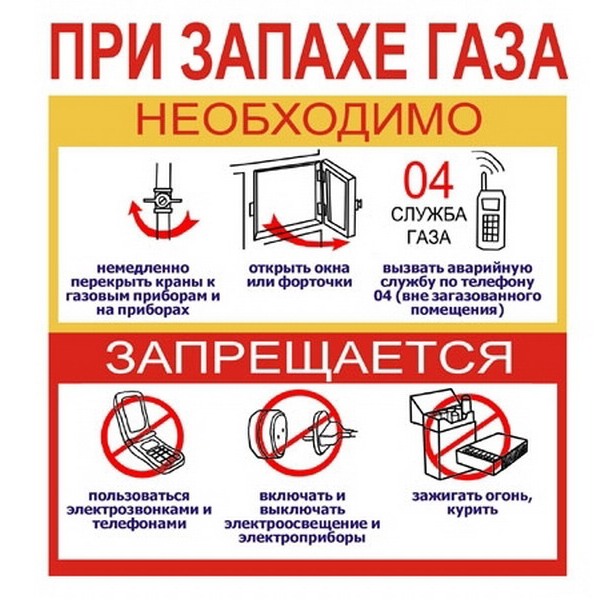
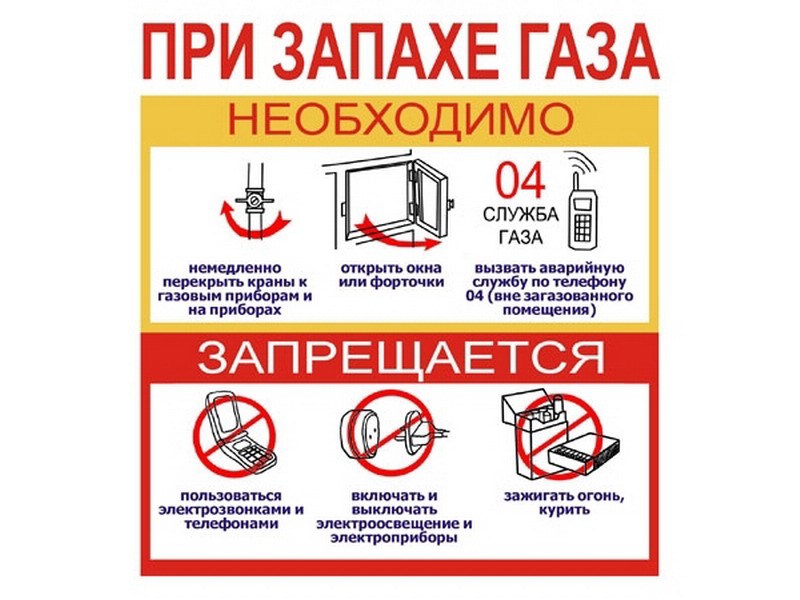
If there is a smell of gas in the room, urgently turn off the tap, open the windows and call the emergency service.
Improper use of gas appliances in residential buildings can lead to sad consequences.
The new rules are effective May 9, 2018.
What to do in case of a gas leak?
The formation of a gas-air mixture in a room is a fire and explosion hazard. And often leads to sad consequences. Therefore, when a leak is detected, appropriate measures must be taken.


The presence of danger is determined by the characteristic smell of "blue" fuel (special substances - odorants - with a sharp unpleasant odor are added to the gas, so that it is easier for users to notice a leak). Also, for safety reasons, you can install a special device that detects gas leakage - a sensor.
It is allowed to use only serviceable gas appliances. Which consumers are required to keep clean. And this rule applies to the main ones for a reason. The reason is that fats, soot, and other products of combustion that have settled on the surfaces of equipment, chimneys, and hoods often cause fires.
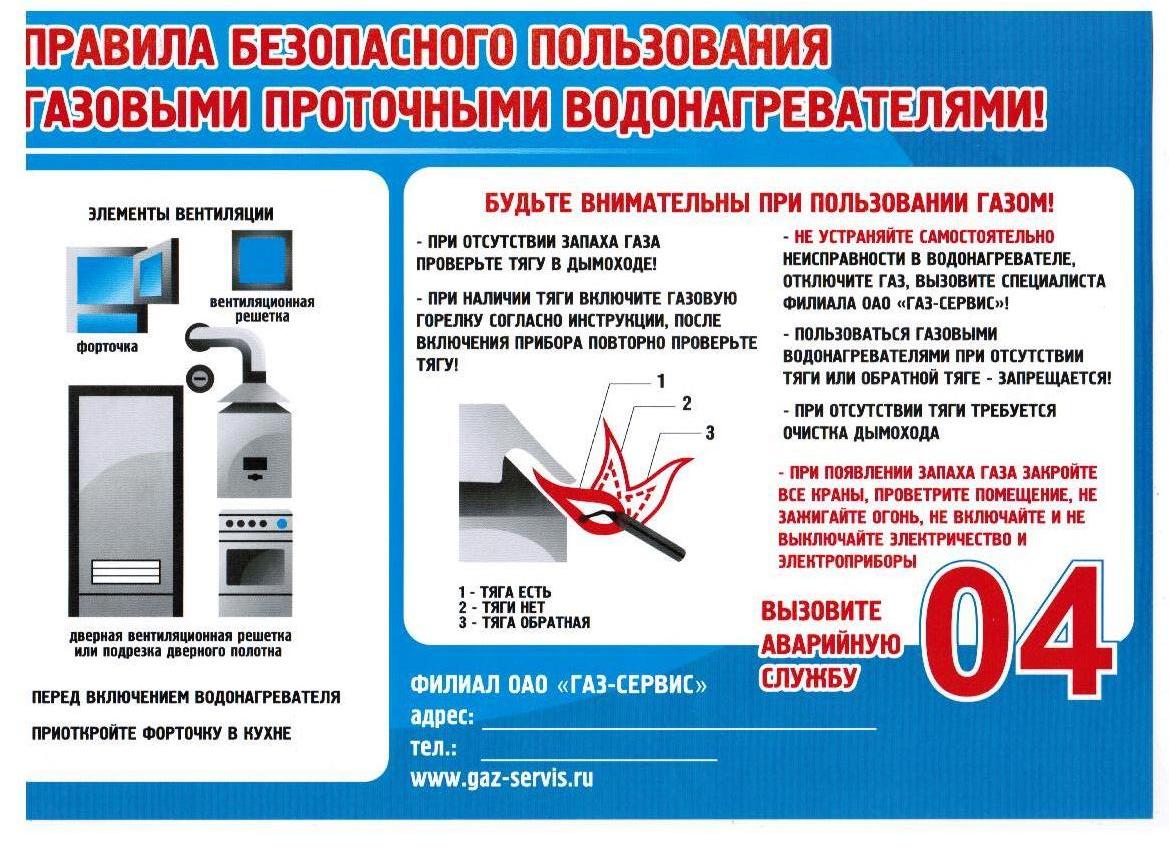
An effective procedure to prevent fires and explosions is to regularly check the presence of draft in the smoke exhaust system. Such an operation must be performed before each switching on of gas equipment, especially when the climatic conditions are difficult. Since a normal gust of strong wind can create a reverse thrust and burning sparks will fly into the room
Leaks most often occur in the area of \u200b\u200bgas distribution connections, as well as taps.
Having identified the smell of fuel, it is necessary to perform a number of actions, namely:
Shut off the taps of gas appliances (if they are open).
Organize room ventilation. This refers to the opening of windows, doors to ensure air exchange. At the same time, it is forbidden to turn on electric hoods, use other electrical appliances, lighters, lighting fixtures.
Leave the area where the leak is detected
But, if other people are present in the danger zone, then it is necessary to notify them and warn them of the need to take precautions.
Organize evacuation if necessary. It does not need to use electrical devices (for example, bells, telephones)
That is, to wake up the tenants of a neighboring apartment, you just need to knock, and not press the call button.
Notify the on-duty services of the Gorgaz by calling 104 (04). But it should be remembered that the call can only be made in a safe place, which is not a room saturated with gas.
Employees of special services can arrive to eliminate the leak at any time of the day. And they are obliged to let them into the necessary building, premises.
Gas consumers often try to dry things over burning burners. And the network is full of recommendations on how to quickly dry clothes with gas and hoods, make a dryer for the stove, etc. But it is forbidden to use gas appliances for other purposes - this is one of the main causes of fires
Having identified a leak and / or found a malfunction that may lead to a leak or has already led, it is imperative to call the gas service. As well as taking other necessary measures. Otherwise, you can pay a fine in the amount of 1-2 thousand rubles (according to Article 9.23 of the Code of Administrative Offenses of the Russian Federation). And this is if everything went without consequences and there was no threat to the lives of citizens, and the mistake was made for the first time.
The necessary measures should be taken regardless of where the characteristic smell of fuel is detected - indoors, outdoors, in other places. That is, the procedure is the same for all situations.
When detecting the smell of gas, you do not need to reassure yourself with thoughts that it is not strong.Since explosions with possible subsequent ignition occur, just at a low concentration of "blue" fuel, when it does not exceed 5-15% of the volume of the room. And at a higher value, the fuel just burns.
Leaving gas appliances turned on unattended is extremely dangerous.
The reason is that a phone call, an interesting TV show can switch attention, which is fraught. It takes only a few minutes for boiling water to fill a flame or catch fire in a frying pan.
In the event of incorrect operation of gas appliances, wiring problems that threaten the formation of a gas-air mixture, the owner must arrange for their repair and, if necessary, replacement.
If the owner of the premises, the building will be absent there for a long period of time, it is necessary to contact the Gorgas (Raygas) to turn off the gas supply. Which is one of the measures to prevent energy leakage.
List of maintenance work
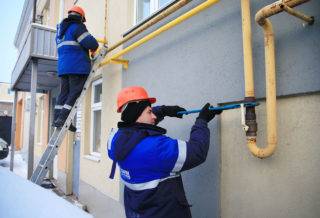 Gas pipeline maintenance carried out by gas industry specialists
The volume and frequency of maintenance of the intra-house gas economy in each case is determined individually. These activities are carried out in accordance with the instructions developed on the basis of regulations, taking into account the specifics of the region and the individual building.

Maintenance Tasks:
- examination of the condition of the equipment;
- determination of the need and scope of routine maintenance;
- elimination of detected defects;
- creation of conditions for extending the service life of instruments and pipelines;
- elimination of prerequisites for the occurrence of emergencies.
During maintenance, the following list of activities is carried out:
- inspection of pipelines and devices for their wear;
- measurement of the wall thickness of communications;
- assessment of the state of the protective coating;
- detection of leaks, as well as the prerequisites for their occurrence;
- adjustment or replacement of individual parts, mechanisms and sections of the pipeline;
- checking the tightness of the system;
- inspection of the ventilation system, and, if necessary, its cleaning.
Rules for using a gas boiler (Gasified stove)
The igniter may be ignited only if the equipment is in good working order and there is draft in the chimney. When the igniter is lit, open the tap on the main burner and light it.
If the burner goes out, close the tap, ventilate the firebox a second time and repeat all the operations to ignite the main burner. After 3-5 min. after turning on the burner, check the draft again.
It is forbidden to use a gasified furnace (boiler) with a faulty automation system.
Owners of gasified stoves must necessarily check the gate and holes in it, which tend to be covered with soot, which can ultimately lead to carbon monoxide entering the room.
General recommendations:
- The window must be open during operation of the boiler (furnace).
- Before lighting the boiler, do not forget to open the chimney damper.
- Check the draft in the chimney before lighting the heaters and during their operation.
- Monitor the condition of the chimney: the destruction of the masonry, the ingress of foreign objects into it can cause a violation of draft and the accumulation of carbon monoxide in the room. Unfavorable weather conditions, freezing of the chimney caps can also lead to a violation of draft.
- Prepare gas equipment for operation in winter: check the condition of chimneys and ventilation ducts; paint and fix gas pipelines; Seal all utility entries through building foundations to prevent gas intrusion in the event of damage to underground gas pipelines. Call a gas distribution company for troubleshooting.
- The blockage of the chimney, the destruction of its masonry, the ingress of foreign objects into the chimney can cause a violation of draft, while the products of combustion of gas enter the room, which leads to carbon monoxide poisoning. Unfavorable weather conditions: freezing of tips, strong wind, fog can also lead to a violation of draft in the chimney.
General fire safety rules
Consumers are obliged to stop using any devices after signs of their malfunction are detected. This is especially true in situations where a gas leak is detected.
An important measure to prevent a fire is the promptness and correctness of response when a hazard is identified. First of all, it is necessary to turn off the taps of gas appliances and open all windows
Which in a matter of minutes will reduce the concentration of hazardous impurities in the room
It is forbidden to turn off the automatic safety, regulation when using gas equipment.
Also, you can't:
- close access to the gas riser taps or complicate it in any other way;
- use smoke exhaust and ventilation systems after the validity of the act on their cleaning has expired;
- arbitrarily change the layout of the placement of gas equipment;
- to prohibit employees of Gorgasov to perform any work (some of them can be carried out at any time of the day);
- allow children of preschool age to operate any gas appliance and children must not be left unattended in the room where the specified equipment is located;
- store empty or full cylinders of liquefied gas indoors, basements.
It is impossible to bend, twist rubber-woven sleeves. If damage to their outer layer is allowed, then the product should be replaced. Otherwise, after a while, fuel leakage will begin.
It is inappropriate to tie ropes to pipelines, as this leads to broken connections with subsequent gas leakage.
It is forbidden to heat any premises using gas stoves and other appliances that are not intended for this purpose. Place flammable substances, liquids near them.




The norms and recommendations listed in the article are spelled out in the Fire Safety Standards NPB 01-93, put into effect by order of the Ministry of Internal Affairs of the Russian Federation of December 6, 1993 N 521.
Basic rules for using gas at home
 When using gas, it is necessary to follow the rules, check the equipment in time
Understanding and remembering the rules for operating gas equipment in residential buildings will not be difficult. They are simple, to achieve and maintain the proper level of security, you need to make a minimum of effort.
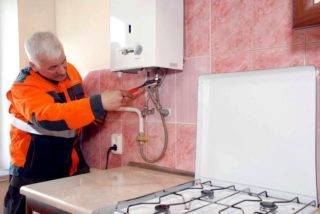
- Use of serviceable devices of factory production. The connection of the equipment should only be carried out by an experienced gas service specialist.
- Providing controllers and inspectors with free access to equipment and communications at any time of the day. Fulfillment of all requirements of authorized persons.
- Regular cleaning of ventilation grilles from dust, and channels from dirt, deposits and foreign objects.
- The use of gas only for its intended purpose, in accordance with the attached instructions - heating water in circuits, cooking on burners.
- Timely payment of invoices for consumed fuel. Prevention of debt formation.
- Cleaning of devices with minimal physical pressure, without the use of active chemicals that can cause metal corrosion and destruction of gaskets.
- Use of products only with constant presence in order to prevent accidental ignition or extinguishing of fire by spilled liquid.
How to replace gas with electricity
There is an opinion among housewives that pies are tastier in an electric oven than in a gas one, and electricity bills in a non-gasified apartment are smaller, plus everything - you can afford more redevelopment options. Perhaps it is for these reasons that the number of those eager to replace a gas stove with an electric one is steadily growing, although such a reorganization can definitely be called one of the most difficult to coordinate. First of all, the problem lies in the fact that the regulatory documents governing the reorganization and redevelopment do not contain an accurate and unambiguous algorithm of actions. In practice, to solve such a problem, you will have to shovel departmental instructions and regulations, so we will tell you an approximate plan of action.
- Enlist the support of neighbors. Let's say right away that it is extremely difficult to obtain such consent, only if you do not find like-minded people among the neighbors.
- By contacting the management company, get permission to allocate additional electrical power to your apartment.
- The management company must also approve the change in the appearance of the house, because the transit gas pipe will have to be led around your apartment along the outer wall of the house.
- Then you can contact a specialized organization to prepare a project for a new electrical installation and a project for the reconstruction and redevelopment of an apartment. The redevelopment project must be coordinated with the gas supply company and the electric grid company (ESC).
- After the documents are received, the specialists of the gas company (in Moscow - OAO Mosgaz) carry out work to disconnect the apartment from the gas supply. ESC specialists are laying and connecting a new power cable. Representatives of the management company record all work.
- The installation of a new electrical installation of the apartment is in progress. These works are also formalized in the Criminal Code and ESC, an Act of delimitation of balance sheet ownership and operational responsibility is drawn up.
- In the territorial body of Rostekhnadzor, an Act on the admission to operation of a new electrical installation of the apartment is drawn up.
- After the completion of the reconstruction and redevelopment work, the Housing Inspectorate draws up an Act on the Completed Reorganization in the usual manner.
- The supplier of electricity (in Moscow this is most often OAO Mosenergosbyt) should issue documents for changing the tariff for paying for electricity.
In practice, this path takes at least a year and a half. Only close-knit groups of neighbors - homeowners - can pass it.
How to check traction
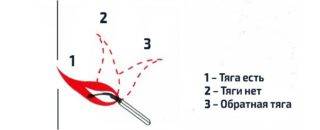 The position of the flame with good draft is directed towards the chimney
Draft is the circulation of air in the room and its outflow.Natural ventilation works on the principle of pressure difference between the outside and inside the room. This is achieved by a difference in height between the levels of the location of the gas equipment and the head of the chimney pipe.
The enforcement system works more efficiently. The movement of air is provided by fans that act as blowers, extractors or are installed at the entrance to the room and at the exit from it in the wall or roof manifold.
The rules for the safe handling of household gas oblige the owners of the equipment to check the presence of draft in the ventilation system before using it. It should be borne in mind that, according to sanitary standards and rules, the air exchange rate in rooms with gas appliances should be at least 10. The atmosphere in the room should be updated so many times per hour.
You can check the efficiency of traction in the following ways:
- Sheet of paper. When the system is in working condition, the sheet is pressed tightly against the grate and does not fall down under its own weight. However, this option does not allow determining the air exchange rate, but only indicates that there is thrust.
- A special device that determines the strength of the wind. It must be brought as close to the grate as possible and wait until the indicators on the scoreboard become stable. After that, it remains to convert the speed to cubic meters per hour.
- Steam or smoke from an aromatic candle. A bowl or candle is brought to the hole. By the intensity of absorption of released substances, its effectiveness is determined.
Payment
Payment for gas can be made according to the standard, depending on the number of people registered in the apartment and the installed gas-consuming equipment, or according to the readings of an individual meter.
The installation, verification and maintenance of the gas meter is carried out by the gas supply organization (or a company licensed for this type of activity).
Temperature coefficient of the meter for the first half of 2020
Gas, like all other physical bodies, decreases at low temperature, and expands when heated. If the gas meter is installed on the street, then in the cold season, low-temperature gas passes through it, and when it enters the room, it expands. At the entrance to the gas equipment, the volume of gas is much larger than that which was taken into account by the meter.
The Federal Tariff Service sets prices for 1,000 m3 of gas under standard conditions:
- temperature +20°С;
- atmospheric pressure 760 mm Hg. Art.;
- humidity 0%.
Some new models of gas meters already have a built-in temperature compensation device that immediately adjusts the volume of gas that has passed through the meter to the volume under standard conditions.
You can determine the presence of such a device by the name of the meter model: the letter “T” will necessarily be present at the end.
How to pay online?
Gazprom services can be paid without leaving home. This can be done using the following Internet services:
- Portal of the State Service.
- QIWI WALLET.
- YANDEX MONEY.
- MOBI MONEY.
- SBERBANK ONLINE.
- RAPIDA ONLINE.
- AZ SYSTEM.
- Website of the resource supplying organization.
Detailed instructions for online gas payment through popular Internet services you will find in another article.
Is it a public service or not?
Part of the housing stock in the Russian Federation is equipped with electric stoves and has nothing to do with the gas supply service
For all other citizens who use gas stoves, water heaters and gas-fired heating boilers, gas supply is an important and mandatory part of housing and communal services.
An agreement is concluded between the provider of this service and the consumer, which spells out the obligations and responsibilities of the parties. The supplier must ensure the provision of the service in accordance with the law, and the consumer must know and comply with the rules safe use of gasand timely pay for the amount consumed.



What is strictly prohibited when using gas
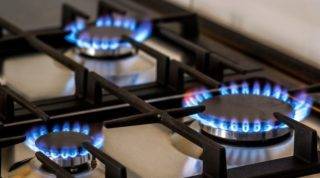 The included burner leads to an increase in the amount of carbon monoxide in the room
Gas appliances are a source of increased danger and this must always be remembered when bringing safety rules to your immediate environment, especially to children.
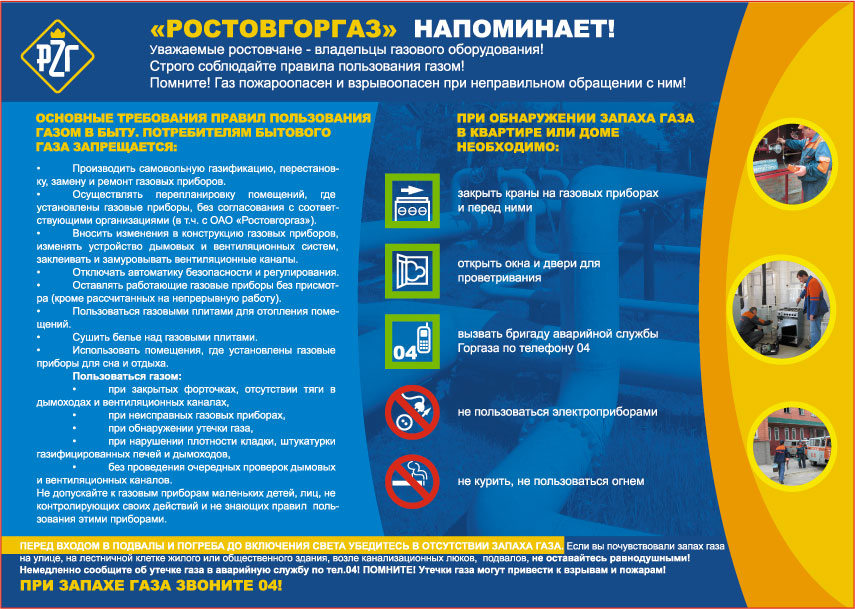
Owners of gasified real estate are prohibited from:
- Use faulty equipment. We are talking about household appliances and the ventilation system.
- Use stoves as heaters in the cold season. This is fraught with the risk of high concentrations of carbon monoxide in the room.
- Do your own repairs to your equipment. It is not allowed to disassemble devices, change taps, change the configuration of pipes.
- To allow children and adults in an inadequate condition to use stoves, boilers and columns.
- Check for possible gas leaks with an open flame. To do this, there is a soap solution and analyzers.
- Use gas pipes as a support for clotheslines, as well as tie electrical cables from hoods and lighting fixtures to them.
- Cover with overhead panels or furniture places that need regular inspection - taps, welds, meters, control sensors and safety devices.
- Seal, muffle ventilation ducts, unauthorized change their configuration.