
- Construction device
- Tools and materials
- Regulatory requirements for the arrangement of drainage
- Drainage around the house - do it yourself and step by step
- Step 1: surveyor
- Step 2: Digging
- Step 3: backfill and cover
- Step 4: finally drainage
- Step 5: Finishing
- Types of drainage systems
- Surface drainage
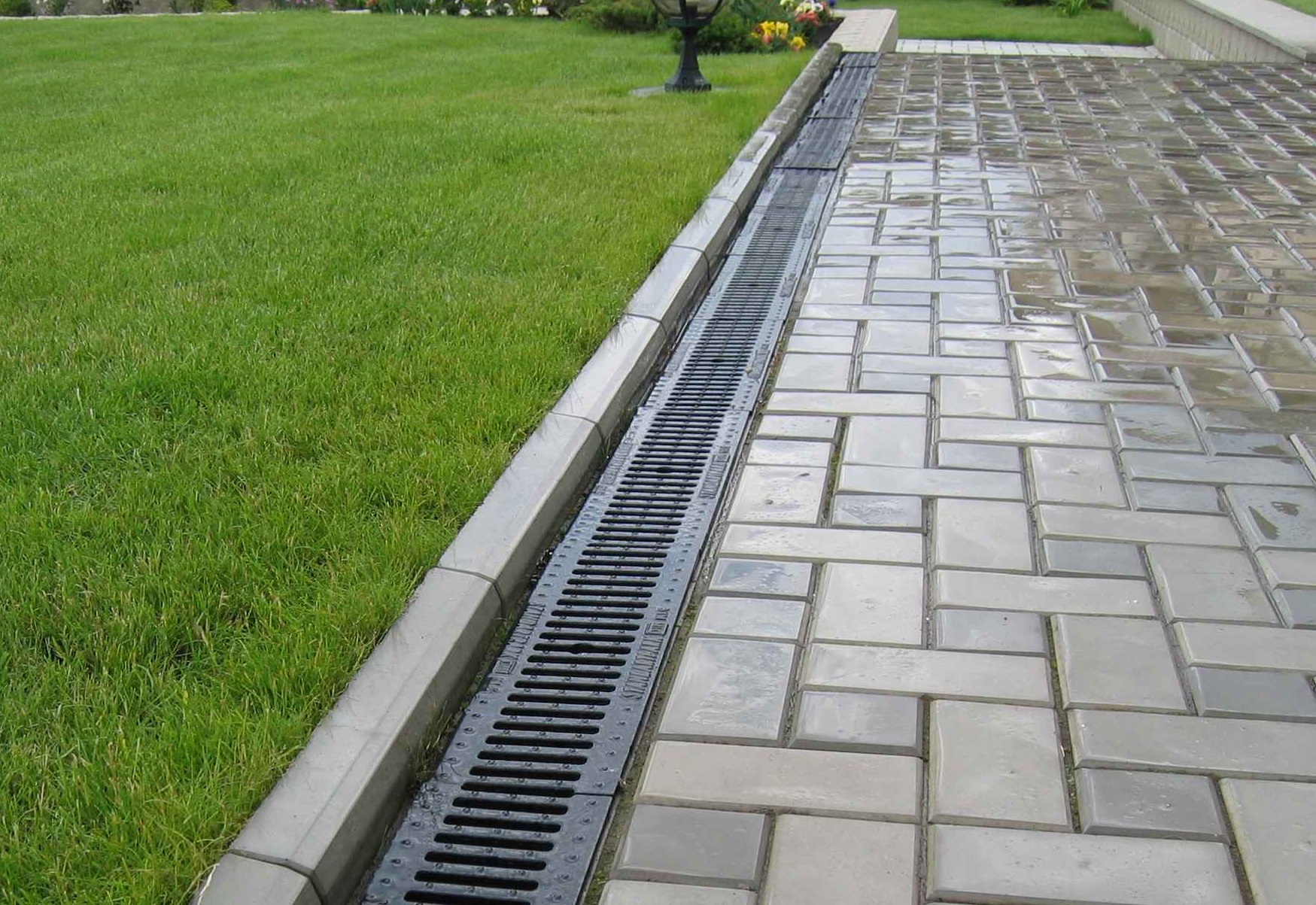
- Linear drainage
- Point drainage
- open drainage
- The principle of the open drainage system
- Closed drainage
- Backfill drainage - a system of backfilled trenches
- deep drainage
- drainage well
- Design
- Conclusions and useful video on the topic
Construction device
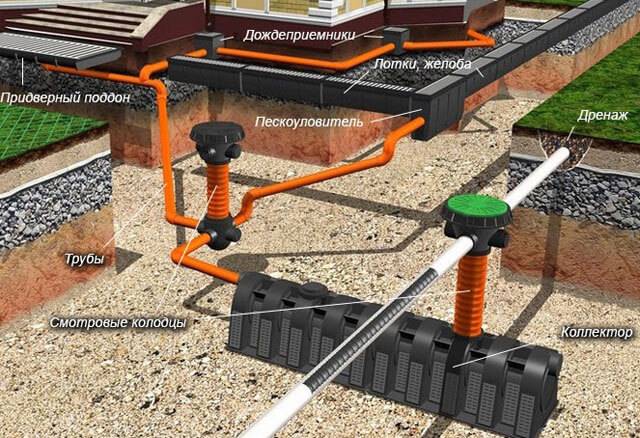
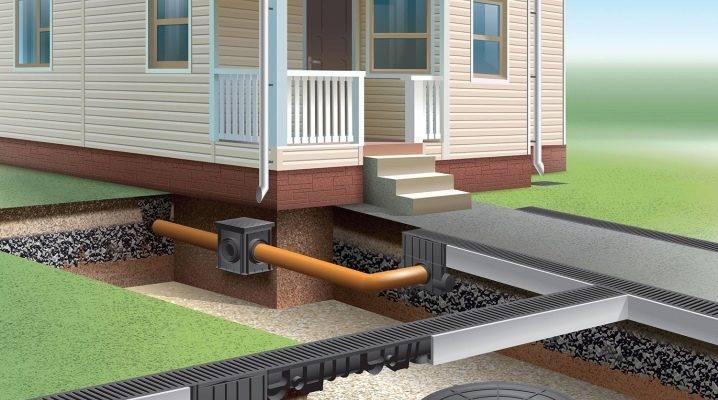
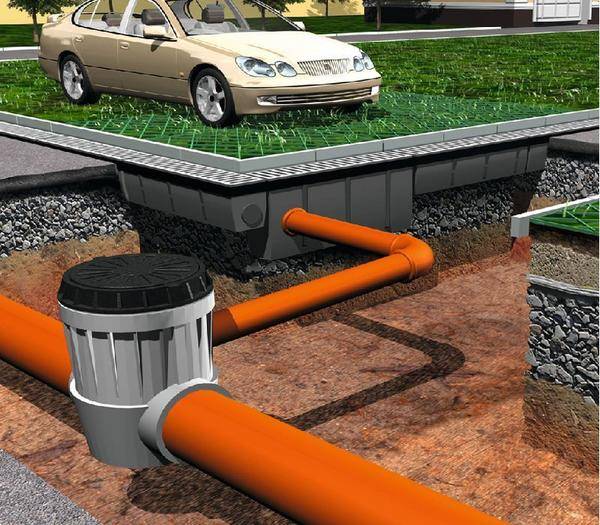
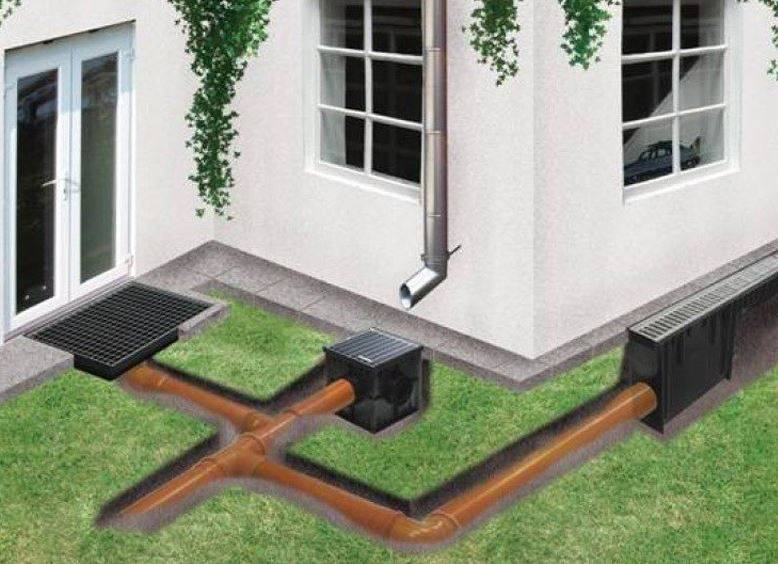
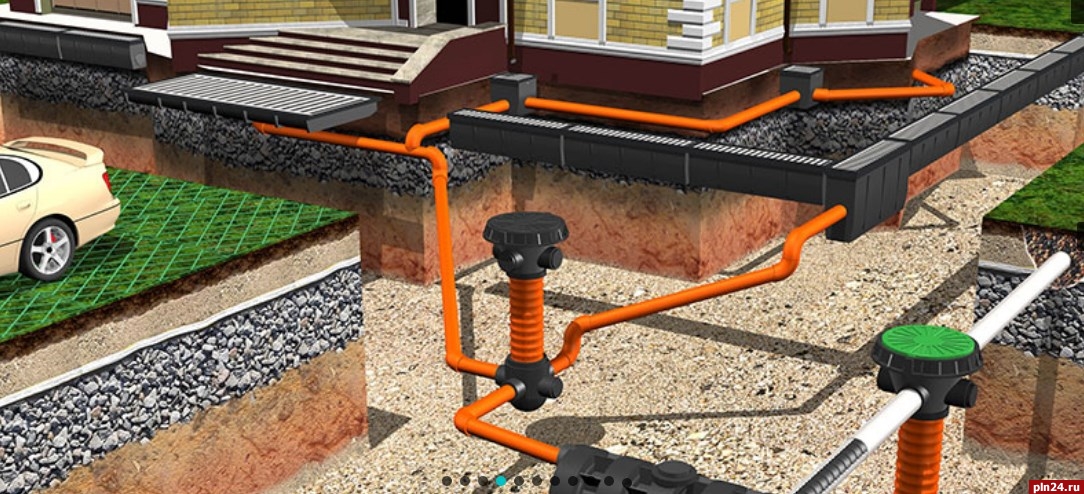
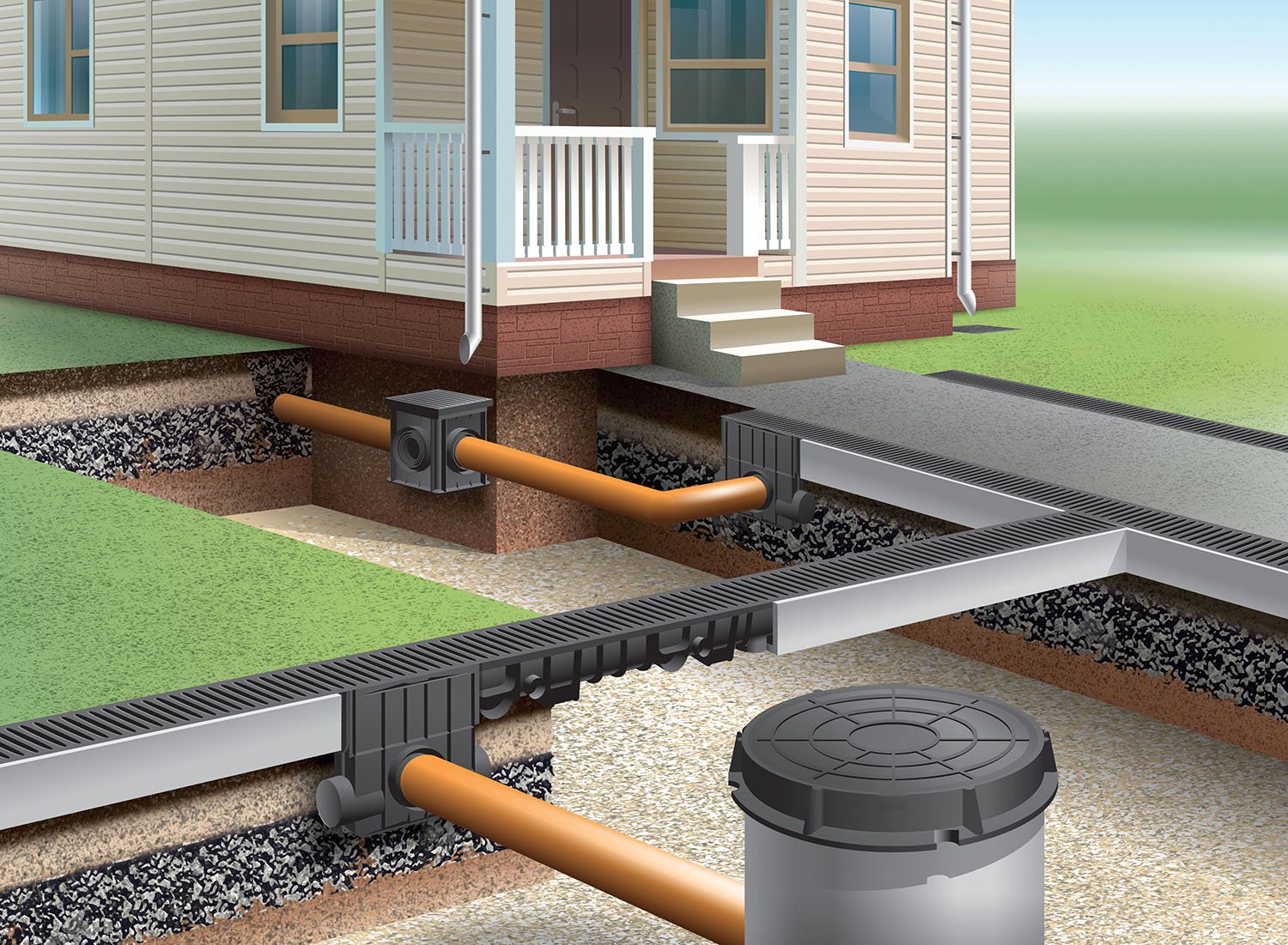
Considering the design of the drainage, we can say that it is an engineering network consisting of pipes and wells. In it, special couplings are used to connect pipes to each other.
For the manufacture of pipes of the drainage system, materials with certain filtering qualities are used. The greatest popularity is noted for pipes made of polymeric materials.
Wells are installed in certain places, while the lowest point in the relief of the site can be called the best option. In this case, you can count on the effective disposal of wastewater. Also, wells are used when flushing the drainage system in case of serious blockages.
Pumping equipment is installed when forced transportation and adjustment of the direction of water through pipes and channels to the drainage well is required. This situation occurs when there is no possibility of water drainage in a natural way, for example, on a perfectly flat surface. Pumping equipment for the installation of a drainage drainage system is presented in a fairly wide range, it can have different capacities and throughput of hoses.
The arrangement of the drainage system is carried out in the presence of the following factors:
- The location of the site in the lowland between the slopes or in places of the watershed.
- Proximity to groundwater. Most often, an alarm can be sounded at a GWL of less than 1.5 meters.
- The location of the site on clay, loamy, sandy and gravel soils, which are characterized by low throughput. In this case, the arrangement of the drainage drainage system is a mandatory measure.
- When the site is located near rivers or other bodies of water, the risk of waterlogging is quite high.
Sites located on the slopes allow you to equip open drainage systems. As a result, there is a possibility of interception of sewage.
Tools and materials
To organize the drainage system around the built house, you will need tools: a shovel and a level. In some cases, a glue gun will come in handy. The list of materials needs a little more.
To equip the drainage, you will need geotextiles, the density of which should not be less than 160 microns, and it is better to choose a width of 2 meters. You will need a 110 or 160 mm drain pipe and a coupler. Here it is better not to save and take a two-layer deep pipe.To organize the well, you will need a tube, a bottom and a cover. As a filler, it is better to choose crushed stone from granite; river sand will also be required.
Regulatory requirements for the arrangement of drainage
The arrangement of surface drainage of a modern city is regulated by a number of documents, starting with design, ending with the requirements for the quality of materials and their technical characteristics.
Let's take a look at the main ones:
- Arrangement of external sewer networks - SNiPa 2.06.15-85.
- Designing systems for protecting territories from flooding and flooding - SP 104.13330.2016.
- General norms for the construction and improvement of urban areas Urban Planning Code of the Russian Federation of December 29, 2004 N 190-FZ.
- General rules for the construction of buildings, structures and utilities - SNiP 12-01-2004.
- Drainage systems in the construction of roads - STO 221 NOSTROY 2.25.103-2015.
- Installation of drainage networks during the construction of airfields - STO 221 NOSTROY 2.25.114-2015.
- And other legal acts.
General requirements for materials for the arrangement of drainage systems are set out in GOST 33068-2014 (EN 13252:2005). Recommendations for the calculation of drainage systems during the construction of roads are regulated by ODM 218.2.055-2015. Specifications for storm water inlets are set out in GOST 3634-99.



Drainage around the house - do it yourself and step by step
A step-by-step instruction with practical tips on how to make drainage around the house consists of the following steps for arranging it:
Step 1: surveyor
We determine the lowest point of our site - yes, yes, the trench will have to be pulled up to it, there will be a drain well
Because avoiding mold in your basement is important, but preventing waterlogging of the soil will also not be superfluous. With the flat nature of the site, the presence of tall grass and other external complications, theodolite will help determine the lower point
This tool can be rented or asked from friends - you can’t attribute it to items of constant construction necessity.
Ditches around the house should have a slope of at least 1 centimeter per linear meter. Water will flow even with a slope of 3 mm per meter, but dirty moisture will go through our drainage, with fine sand and loam, the inner surface of the pipes will eventually become covered with plaque. So you have to lay a slope of at least 10 mm per 1 meter. This will lead to an increase in the volume of excavation, but will serve for the benefit of the durability of the drainage system.
Step 2: Digging
Dig, Shura, they are golden... The depth of the ditch around the house itself should exceed the lowest point of the foundation by at least 30 cm. it is still dug out "with a margin" sufficient for laying pipes. For the digging stage of work, a sharp bayonet shovel is needed, and a shovel assistant will not be superfluous - to lift the soil up.
The top point of the ditch is located on the opposite side of the drainage well in the lower part of the site, the width of the ditch is about 50 cm. Each linear meter must be checked with a bubble level for compliance with the required slope.
Step 3: backfill and cover
At the bottom of our trench, crushed stone of fractions of 10-15 mm is poured - that is, quite large. A layer of sand is laid on top and rammed. The total thickness of the sand and gravel layer is approximately 15 cm.The slope profile should be precisely maintained - 1 cm per meter is visually poorly recognized, especially in a narrow trench. Again using the level, the uniformity of the slope is important for the long-term gravity flow of water in the drainage pipes.
Step 4: finally drainage
Drainage pipes are laid on the second crushed stone surface. Their joints are isolated with a special tape. Inspection wells with covers are laid in at least two opposite corners of the house - their height must immediately correspond to the level of the turf on the backyard.
The pipe line is pulled to the inspection and drainage wells and checked by pouring water from the top point, at least several buckets. As long as the drainage communications are open, any error is easy to correct. When there is no doubt about the accuracy of the slope and the tightness of the joints, the pipes can be filled up.
Step 5: Finishing
A layer of gravel up to 40 cm thick is carefully poured onto the surface of the pipes. Geotextiles are wrapped around it - now the gravel will not be subject to silty layers. On top of the geotextile fabric, you can lay a storm sewer pipe and also lead it into a drainage well. A storm pipe is joined with drains, for which its fittings are brought to the surface.
The gravel layer is covered with earth, sod is laid on top. Our drainage system around the house is ready. Now, no bad weather is terrible for the home, as well as fluctuations in the level of groundwater and dampness in the premises - just do not forget to perform high-quality waterproofing of the basement, drainage does not replace it.

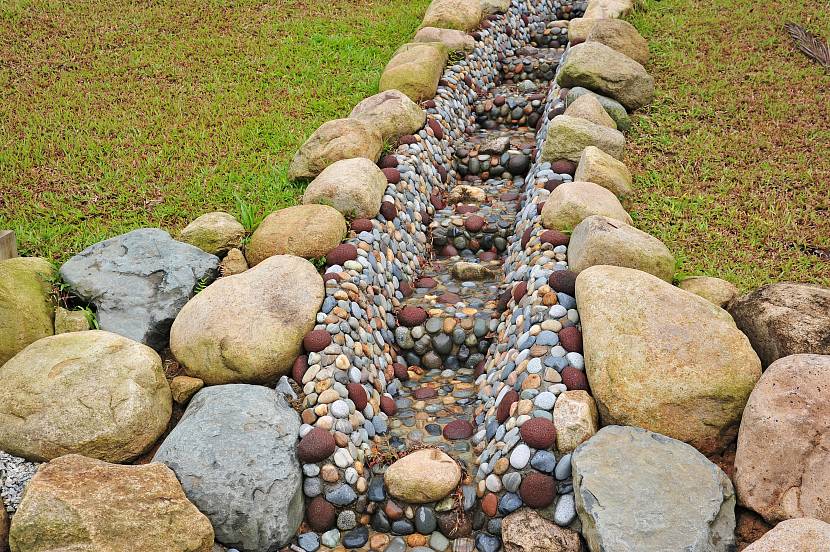

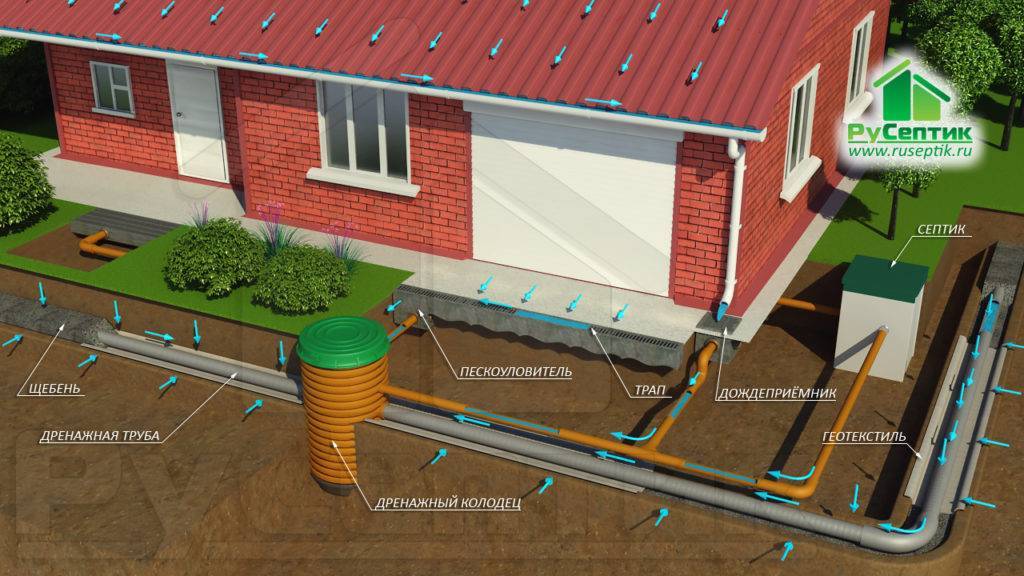

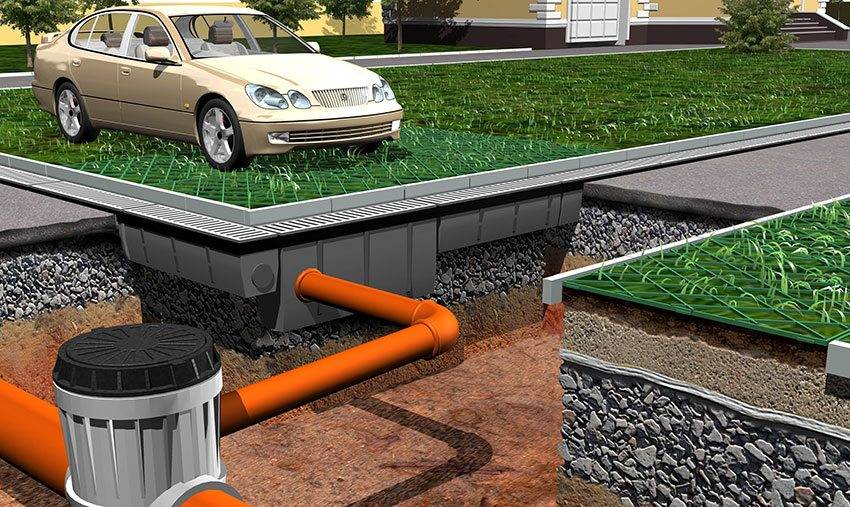


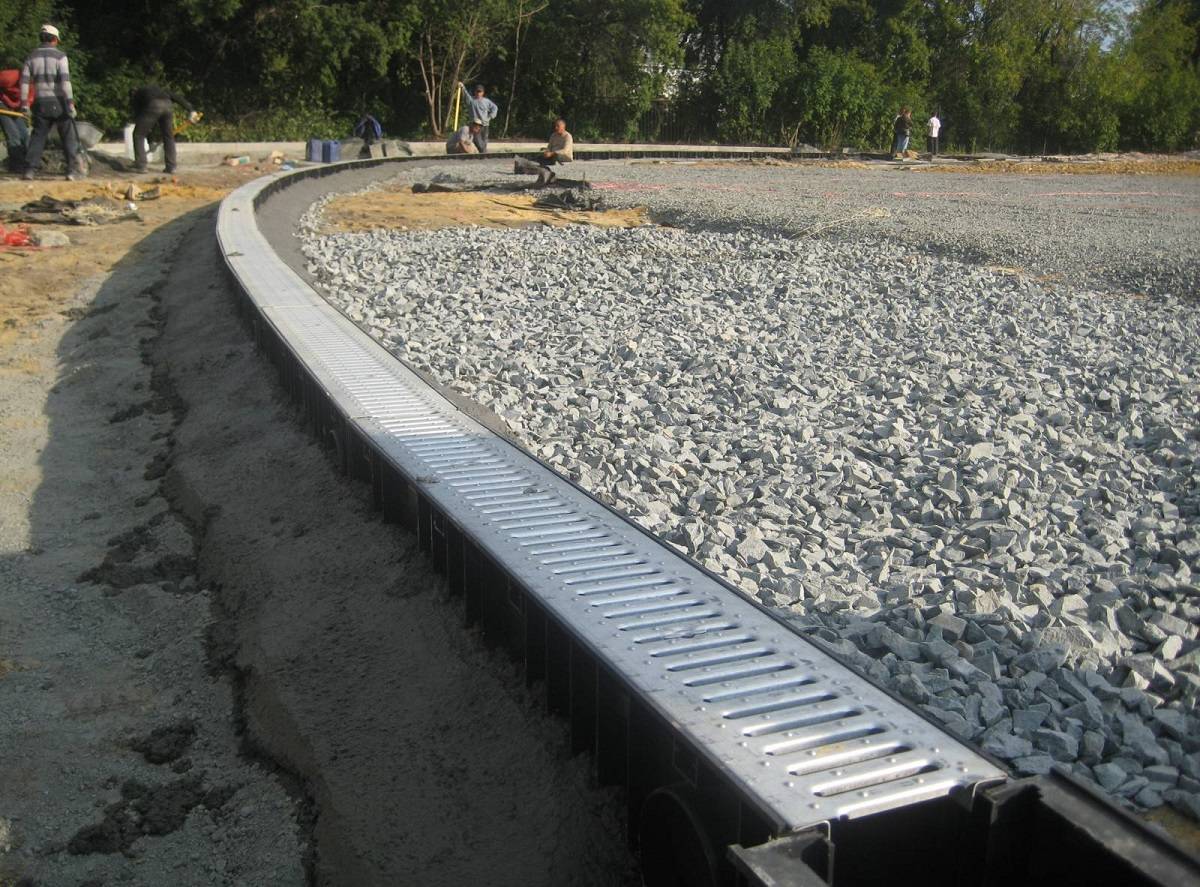
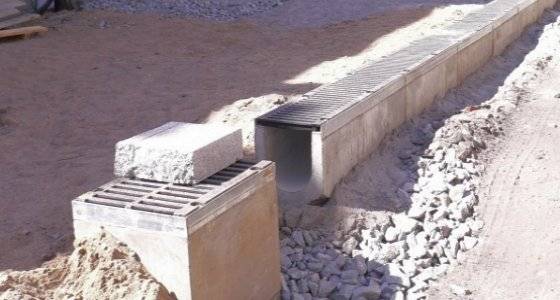
Photo of the drainage system around the house, basementsystems.ca
On the photo - drainage system around the house,
In the photo - installation of drainage, ludens.cl
Photo of the installation of the drainage system,
In the photo - how to make drainage on the site with your own hands,
Types of drainage systems
Depending on the severity of the problem of flooding the site, there are several ways to make drainage around a private house.
Surface drainage
This type includes storm sewers (storm sewers). The advantage of such drainage is that its arrangement is simpler and accessible after most types of work on the site have been completed. Surface drainage systems allow you to divert only rain and melt water, they can not cope with groundwater.
There are two types of surface drainage devices: linear and point.
Linear drainage
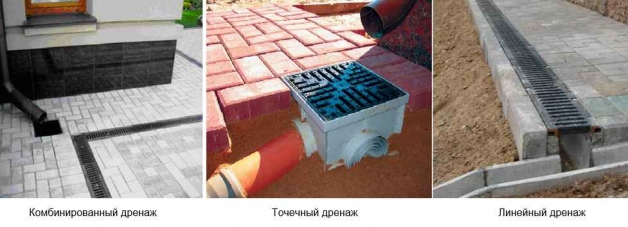
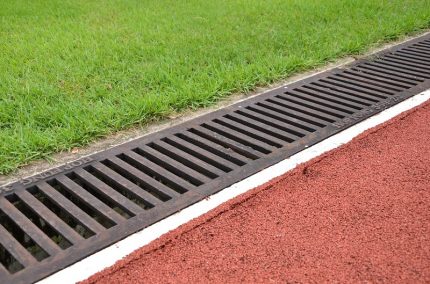
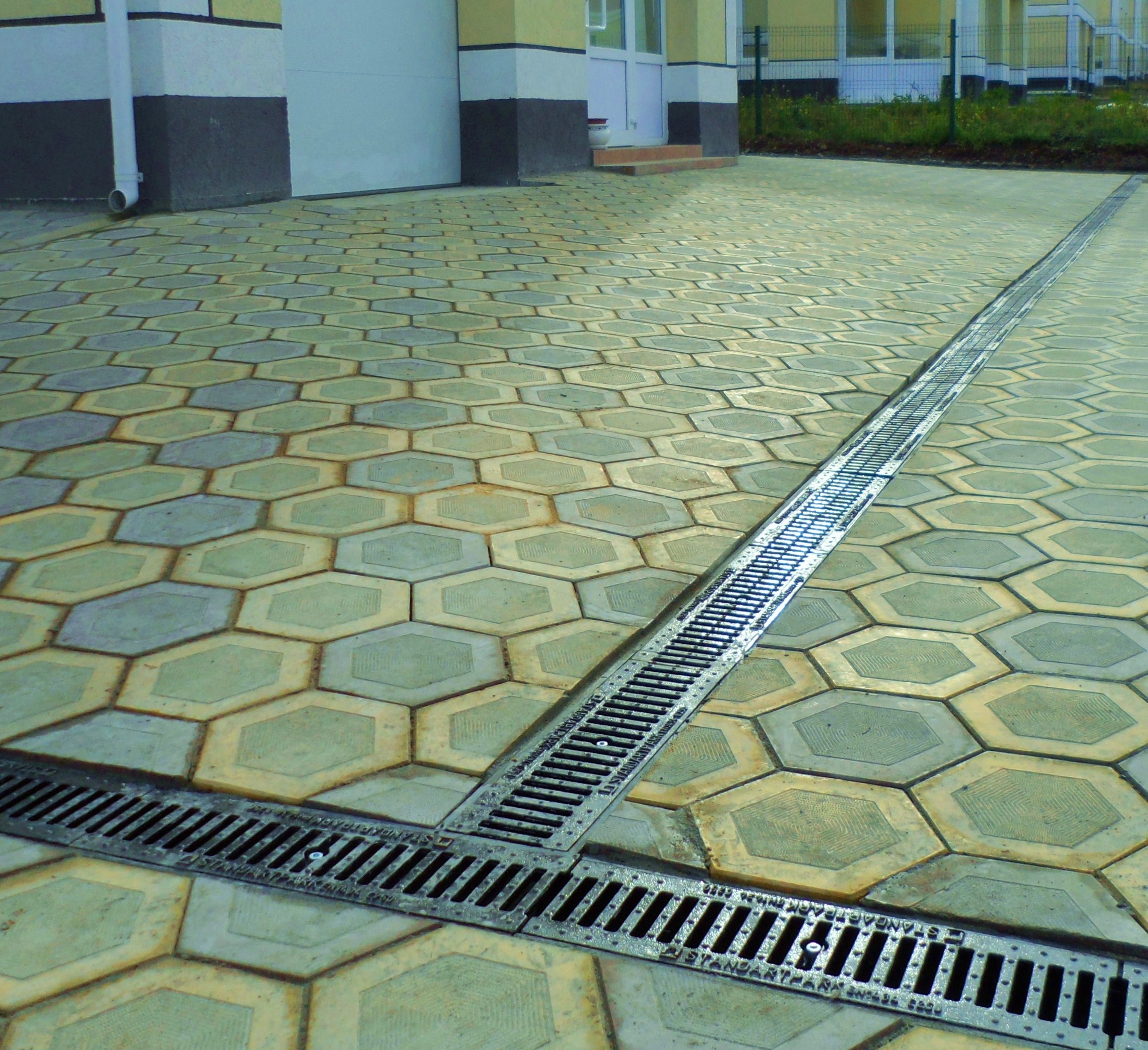
It is focused on the removal of storm or melt water from the entire site and from the house, in particular. Water flows into channels dug in the ground and is discharged into a drainage well. As a rule, the channels have a straight linear shape and are closed with gratings.
Point drainage
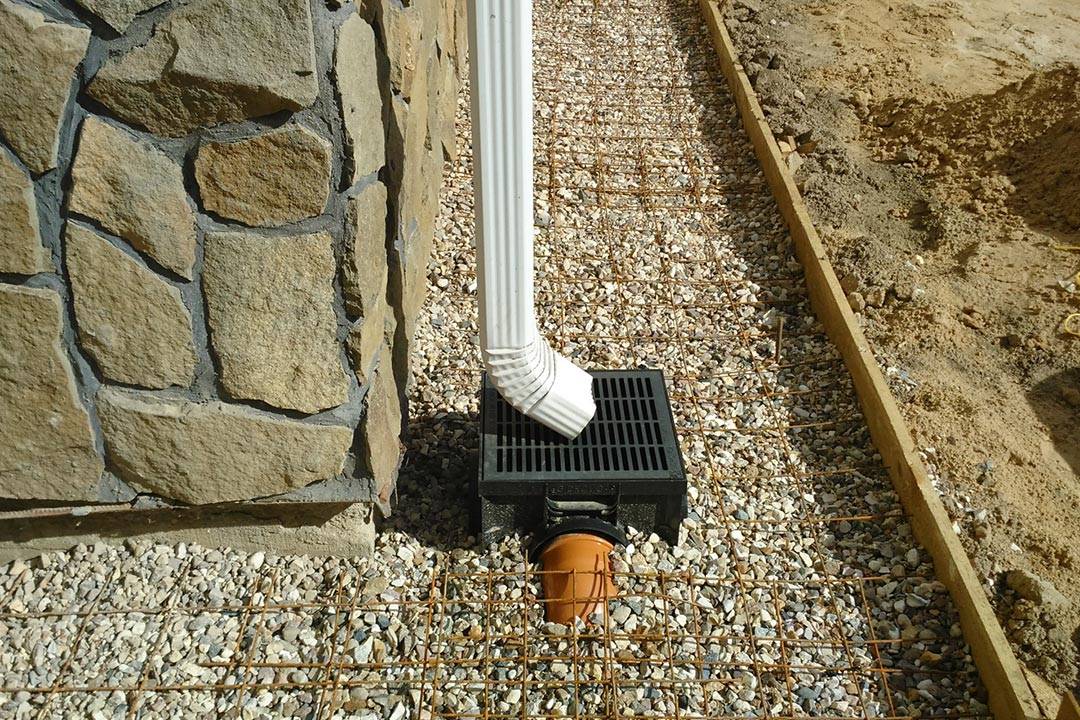
Designed for quick drainage of water generated from local sources (eg under roof gutters, watering taps, etc.). Point drains are covered with decorative metal gratings to prevent clogging of the channel with debris and leaves. From each point, drainage pipes are laid, which are connected to the main main pipe leading to the drainage well.
According to the method of the device, the drainage can be open and closed.
open drainage
A system of trenches, gutters, drains or catchment trays.
Such a drainage is a trench, which is designed to drain storm and melt water from the house and from the site.
The principle of the open drainage system
A ditch up to half a meter wide and 50-60 cm deep is dug along all sides of the site and around the house. All these trenches are connected to a common drainage trench.
In order for water to flow freely into the trench from the side of the house, a bevel is made in the ditch at an angle of 30 °. and the slope towards the main water intake trench (or drain well) will allow water to be diverted by gravity in the right direction.
The advantage of an open drainage system can be called low cost and high speed of work. But, if you need to drain a large amount of melt and rainwater, then you will have to arrange a deep drainage line into which someone can fall. The unfinished walls of the ditches are collapsing. Such a system spoils the appearance of the site.


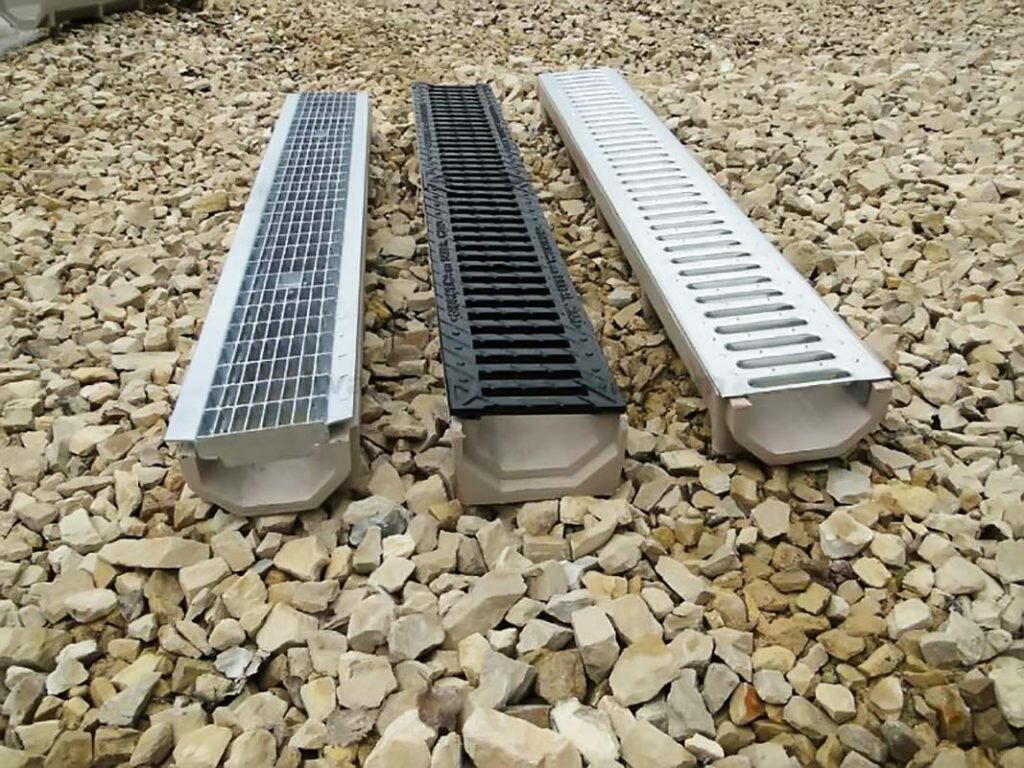


It is possible to increase the service life and increase the safety of such a system through the use of special trays (made of plastic or concrete), which are closed with bars from above.
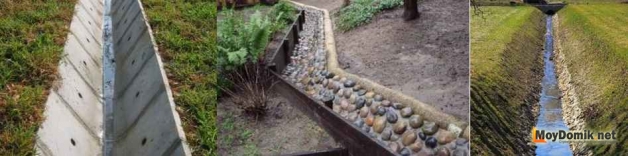
Closed drainage
It has a more aesthetic appearance compared to the previous one, as it is equipped with a protective grill, but the receiving ditch is much narrower and smaller. Their views are shown in the photo.
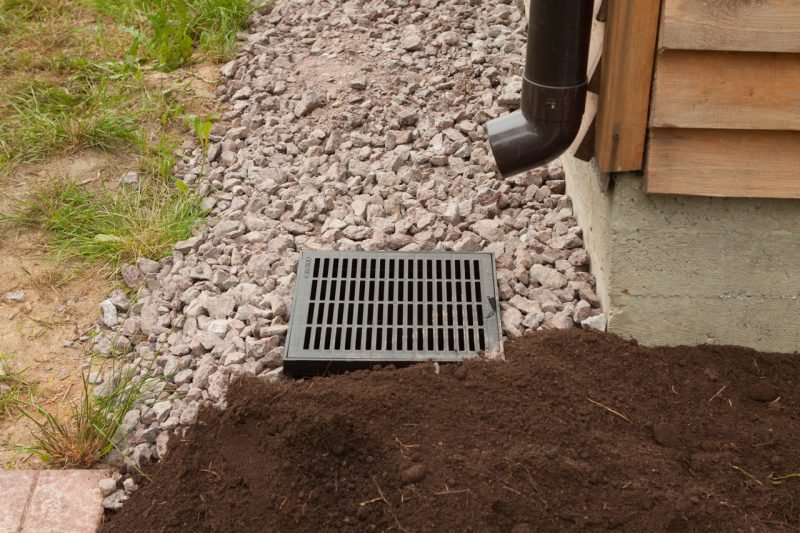
Backfill drainage - a system of backfilled trenches
It is used in the case when the area of the site is small, and it is impossible or impractical to make open drainage. The disadvantage of this system is the inability to carry out maintenance of the trench after the arrangement without dismantling.
Proper drainage around this type of house is arranged in several stages.
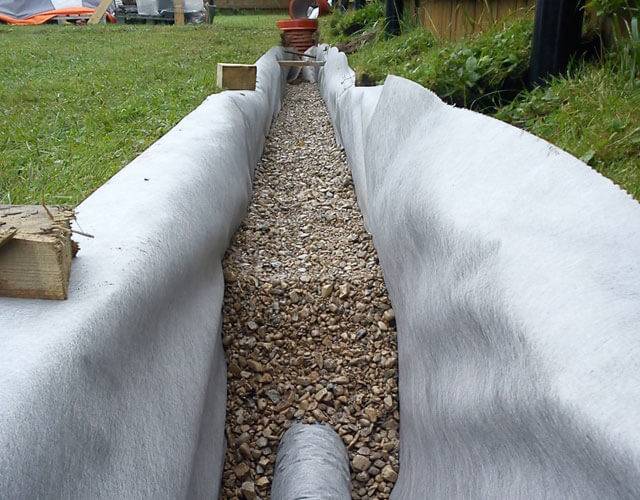
a trench is dug to a depth of about a meter with the obligatory observance of a slope towards the drain (drainage) well;
geotextile is laid at the bottom of the trench;
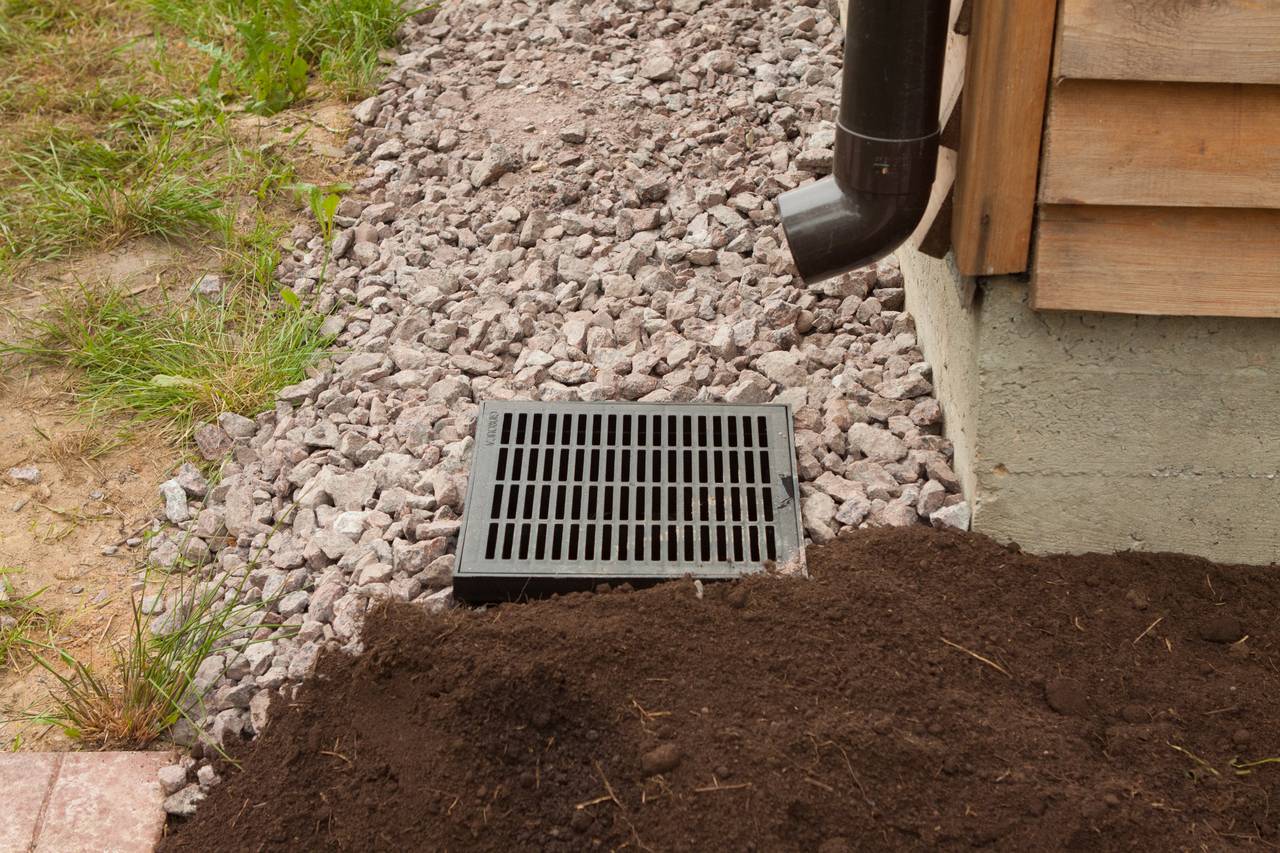
the trench is covered with gravel, crushed stone, etc.;
a layer of turf is laid on top. This stage is optional, but allows you to give the site a more aesthetic appearance.





deep drainage
The removal of a large amount of groundwater requires the construction of a solid system - deep drainage of the site. The device of a deep drainage system is used in areas with clay soil located in a lowland and characterized by a high level of groundwater.
The device process is laborious and consists in laying pipes (the diameter depends on the amount of water removed) from perforations into deep trenches (depending on the height of the soil water).
drainage well
The well of the drainage system is an important part of the whole structure. You can set it up in different ways.
Depending on the needs, wells can be built:
- Viewing - with its help, the operation of the entire system is controlled; a person can fit in it.
- Swivel - allows you to clean the pipes and pumps of the system; It is usually placed on the turning sections.
- Collector - water is collected in it, which subsequently goes into a reservoir or ditch; such a well is made of reinforced concrete rings or plastic.
- Absorption - acts as a filter element of the system and is used in those areas where it is impossible to drain water; the depth of such a well should be about two meters.
In any drainage system, a collector well must be equipped. The remaining options from the listed types of wells are only additional structures and are installed as optimizing equipment. Without them, the system will work stably, but perhaps not as efficiently.
Design
There are many factors to consider when designing any site drainage system, including stormwater drainage systems.
When designing a storm water drainage system, the following should be considered:
The depth of the drainage system. The optimal indicator in this case is 0.5-1.2 meters.
The distance between the channels in which drains are planned to be laid. For clay soils, this figure is 11 meters, for soil with a looser composition, about 22 meters.
The degree of slope of the drainage channels. The standard slope is 1.5-2 cm per linear meter of pipe.
Cross-section and length of drainage pipes. The throughput of the entire system depends on the diameter of the installed pipe.
In addition, it is important to understand that a narrow pipe clogs faster and requires more frequent cleaning. The cross section of the pipe must be known to determine the width of the ditch; 0.4 meters must be added to the pipe diameter.
Terrain characteristics.
The quality and quantity of the material used.
Conclusions and useful video on the topic
A guide to arranging a surface drainage system can be viewed in the following video:





A properly designed and installed drainage system will help maintain an attractive appearance for landscaped areas of a modern city, garden plots and private households. It will also extend the life of roads, bridges, foundations of buildings and residential buildings, reducing the hydraulic load on structures. But to create a drainage project, it is better to contact specialists who will take into account the type of soil, climatic features and a number of other important points.
Do you have your own opinion on the feasibility of installing a drainage system? Or do you want to supplement the above material with useful recommendations and facts? Write your comments, participate in discussions - the comment form is located a little lower.



