
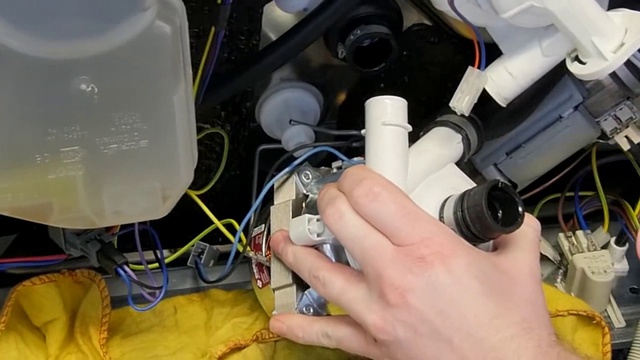
- Dishwasher device and principle of operation
- Prevention measures
- Assessing the situation
- Eliminate water leaks from the door
- Checking the correct use of the dishwasher
- Video
- Primary fault diagnosis
- Possible violations of operation
- We fix problems in the PMM with our own hands
- No water intake
- Water does not circulate well, detergent problems
- Heating problems
- How to clean parts and clear clogs
- Drain filter
- Drain pump
- Spray
- intake filter
- Reasons for the appearance of white plaque
- Irregular care
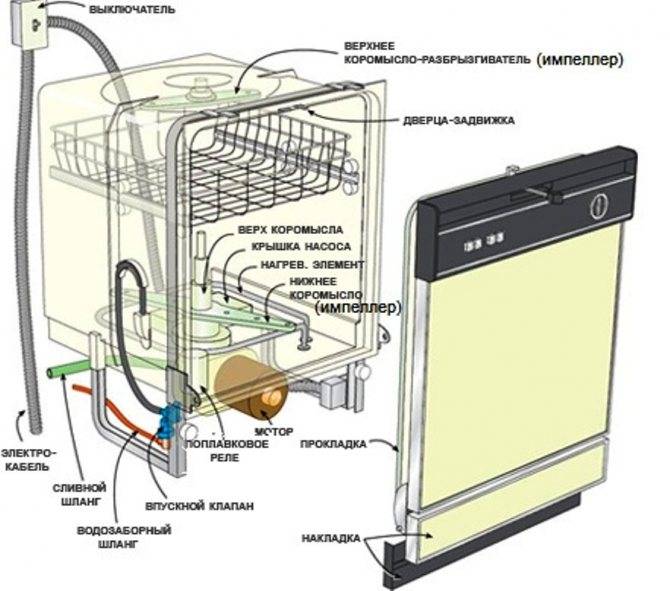
Dishwasher device and principle of operation
If you are going to repair a dishwasher with your own hands, you must accurately represent its design, the purpose of all components and the general principle of operation. The optimal configuration and layout of this type of equipment has developed for a long time. Almost all well-known manufacturers use them, adding only minor design changes and special processing modes for dishes.
 Dishwasher - an indispensable assistant to the hostess in the kitchen
In general, the dishwasher is a fairly roomy cabinet, inside of which there are special baskets for placing dirty dishes.Washing occurs due to jets of hot water beating from all directions, to which surfactants can be added to increase efficiency.
For information! Modern technology uses a minimum amount of water due to its repeated circulation and filtration.
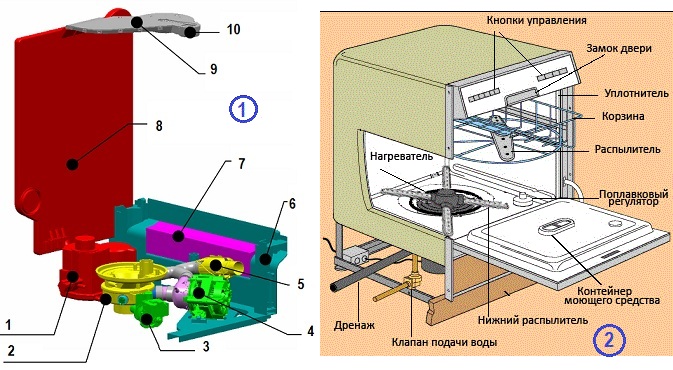
The water circuit includes:
- a volumetric tank, usually located under the washing chamber;
- receiving pipeline connected to the cold water supply system;
- shut-off valve with a water level sensor in the tank, responsible for the presence of the required amount of liquid during operation;
- circulation pump;
- a small container for powder or detergent solutions;
- coarse and fine water filters;
- nozzles and rotating sprinklers of various designs;
- a pump for pumping dirty effluents connected by a hose to the sewerage system.
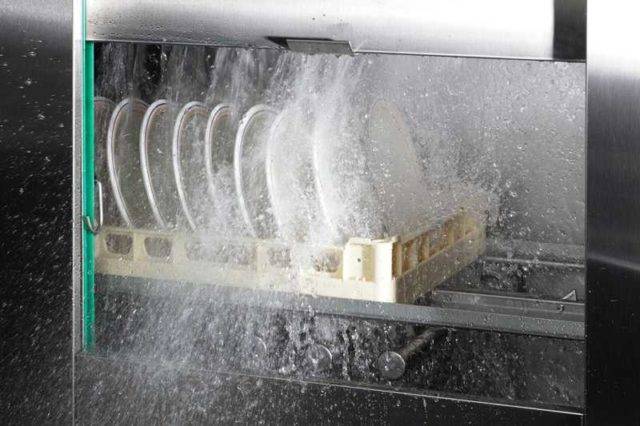 In the dishwasher, cutlery is washed with jets of hot water.
Powerful heating elements are responsible for heating water. The whole process is controlled by a control unit with pre-selected standard dish processing programs. Main modes:
- prewash;
- main sink;
- rinsing with clean water;
- drying.
The drying process can take place in two ways:
- Natural evaporation of liquid. To speed it up, the last rinse is done with hot water.
-
Turbo-drying with a fan blowing water vapor out of the chamber.
Prevention measures
In order to prevent a situation where half of the program has passed and the sink suddenly stops, you need to remember a few rules for operating the equipment:
- Place dishes cleaned of large food residues in the basket;
- Keep the coarse filter clean;
- Periodically change the bulk filter;
- Wash the tank, blades and the entire machine from the inside;
- Clean the dishwasher from scale;
- Dry after every wash cycle.
In order to avoid problems with the operation of dishwashers, it is necessary to monitor their operation and carry out maintenance of the machine from time to time. This will take much less time than searching for the causes of the breakdown and its subsequent elimination.
Assessing the situation
A modern dishwasher with a self-diagnosis system that indicates any malfunction in the form of a code on the display. If the machine has Aqua-stop leakage protection, such as in Bosch dishwashers, error code E15 will appear when it is triggered.
But it may also be that there is no error, and the water has somehow leaked out of the car. The first thing to do is unplug the dishwasher from the outlet, in case you don't get "shocked" by current. Next, carefully inspect the dishwasher door, run your hand to see if there are any drops of water. If the door is damp, then water flows through the sealing gum.
Be sure to check whether your equipment is level, because if the machine is tilted, then the water from the pan will flow out after reaching a certain level. Also open and see how much water is in the pan, if it is more than the threshold value, then the problem is a faulty water sensor.
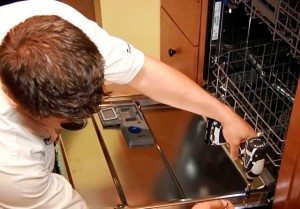 Water can get on the floor in front of the dishwasher if the door is opened immediately after the end of the washing cycle. And all because condensate collects on the door, which flows to the floor, so you should not rush to unload clean dishes, you need to wait a bit when it cools down and the temperature inside the machine and outside approximately equalize. And if you open the door immediately, then just wipe it with a dry towel.
If the machine is in a puddle of water, then it is obvious that it is leaking from below or through the ventilation holes. In this case, the reasons may be:
- in a faulty hose;
- in weak pipe connections.
The least likely cause of a leak can be:
- tank failure;
- pallet depressurization;
- sprinkler malfunction.
Eliminate water leaks from the door
So, water leakage from under the dishwasher door is the most common and easily fixed. To do this, you need to open the door and tear off the old sealing gum around the perimeter of the machine with your hands, even a child can handle this.
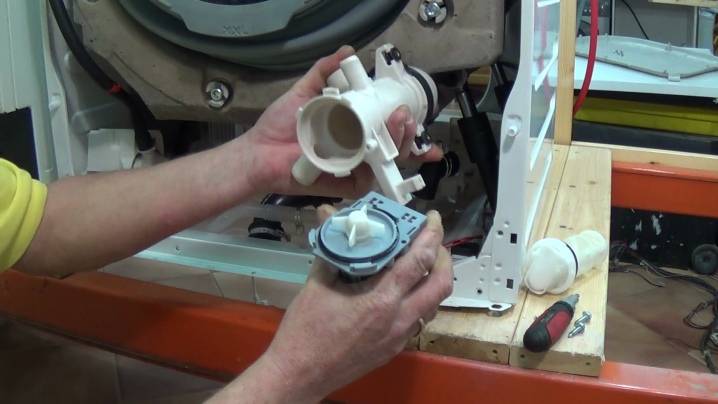





Now we take a new gum suitable for a specific dishwasher model, that is, for Electrolux machines this is one seal, and for AEG it may require a completely different one. Insert the rubber band with your hands into the place from which you pulled out the old one, carefully moving along the perimeter of the car.
In addition to the seal around the perimeter of the machine itself, there is also a seal at the bottom of the door. Let's describe its replacement using the Electrolux dishwasher as an example.
- Open the door and unscrew the bolts around the perimeter.
- Close the door and remove the front panel.
- Next, open the door, remove the lower basket for dishes so that it does not interfere, and gently pull out the sealing rubber at the bottom of the door with tweezers.
- Then take a new seal and insert it so that the end strictly coincides with the edge of the tank. When filling the seal into the door until it stops, make sure that it sits well in the groove, then screw the panel onto the door.
Checking the correct use of the dishwasher
Often the cause of many malfunctions is non-compliance with the manufacturer's instructions for operating the equipment.
It is important to check the correct use of the dishwasher. First of all, you should make sure that water flows into the faucet.
In apartments, water is supplied to the kitchen by one riser. If water does not enter the faucet, it will also not be drawn into the dishwasher. Interruptions in the water supply often lead to temporary malfunctions of the dishwasher.
It is important to use a suitable and high-quality detergent. The use of low-quality household chemicals can lead to serious malfunctions of the dishwasher
Usually the manufacturer gives recommendations regarding the choice of detergents.
The water supply valve may be closed. The mechanism is located at the point where the hose of the device is connected to the plumbing system. When the tap is turned off, the equipment cannot draw water, so it should be opened.
Video
How to repair the dishwasher if water does not enter it due to a malfunction of the water level sensor:
Eliminating blockages and unlocking the drain pump in Bosch PMM:
About the author:
Electronic engineer with many years of experience. For several years he was engaged in organizing the repair of household appliances, including washing machines. She loves sport fishing, water tourism and traveling.
Found an error? Select it and press the buttons:
Ctrl+Enter
Interesting!
Astronauts, while in Earth orbit, solve the problem of dirty things in an original way. The clothes are dropped from the spacecraft and burn up in the upper atmosphere.




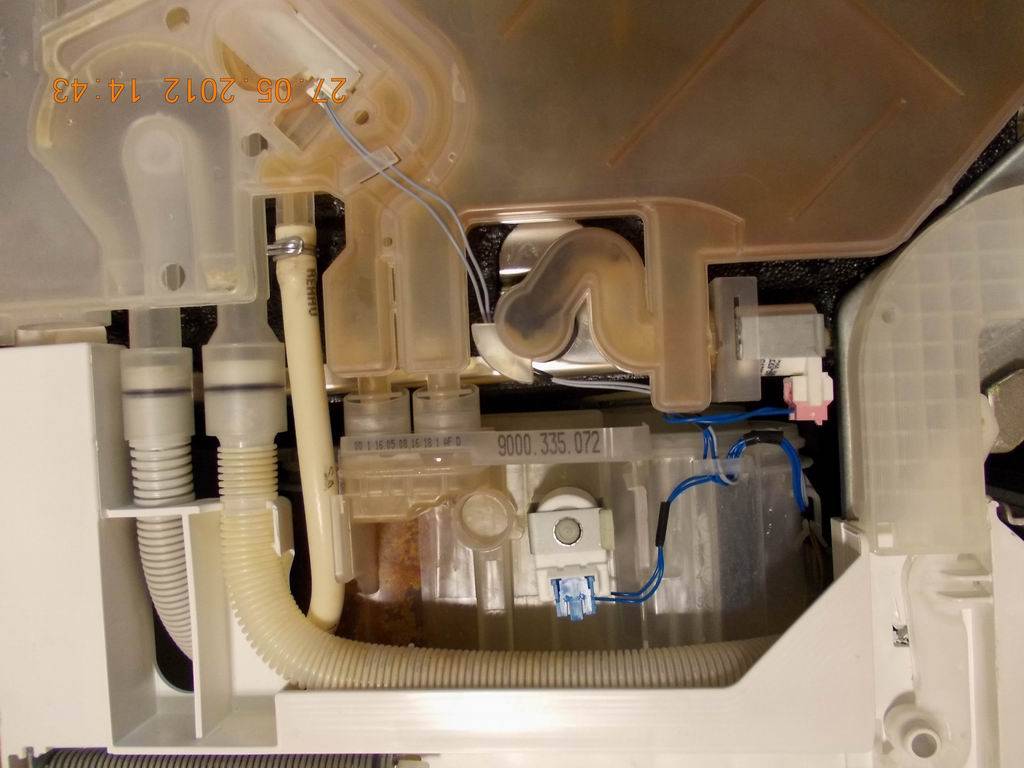
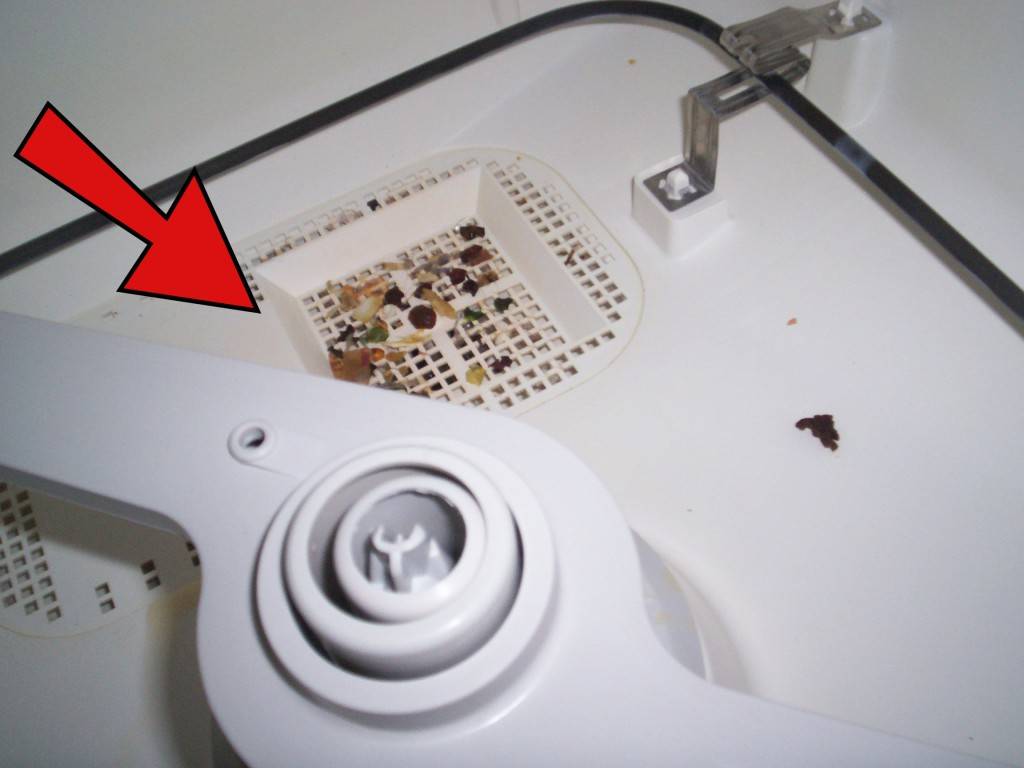
Primary fault diagnosis
There are actually not so many malfunctions due to which the dishwasher does not work properly. They are known, and some of them are eliminated on their own.Very often, breakdowns are associated with the connection of communication devices or with violations in the operation of the device.
First of all, you need to make sure that the problem is in the machine itself. The supply and discharge of water, the serviceability of the electrical network are checked. To do this, the dishwasher is disconnected from the communication systems, and their serviceability is checked independently of each other.
If you suspect a breakdown of the device itself, attention is drawn to the following factors:
- The presence of extraneous sounds during operation. Most likely, the bearings of the atomizer or pumps are out of order. Incorrect loading of dishes.
- Water supply error. It will be necessary to replace the outlet valve or supply hose, the pressure switch is faulty.
- Stop the program while running. Failure in the control system, it is necessary to repeat the launch on another program after a few minutes. Such a breakdown can also be caused by a malfunction of the filter, heating element, violations in the intake of water, with low voltage in the network.
- No heating. There is a high probability of failure of the temperature sensor or heating element, damage to the terminals of the heating element.
- The machine does not start. Damage to the electronics unit, no water supply, front door not closed.
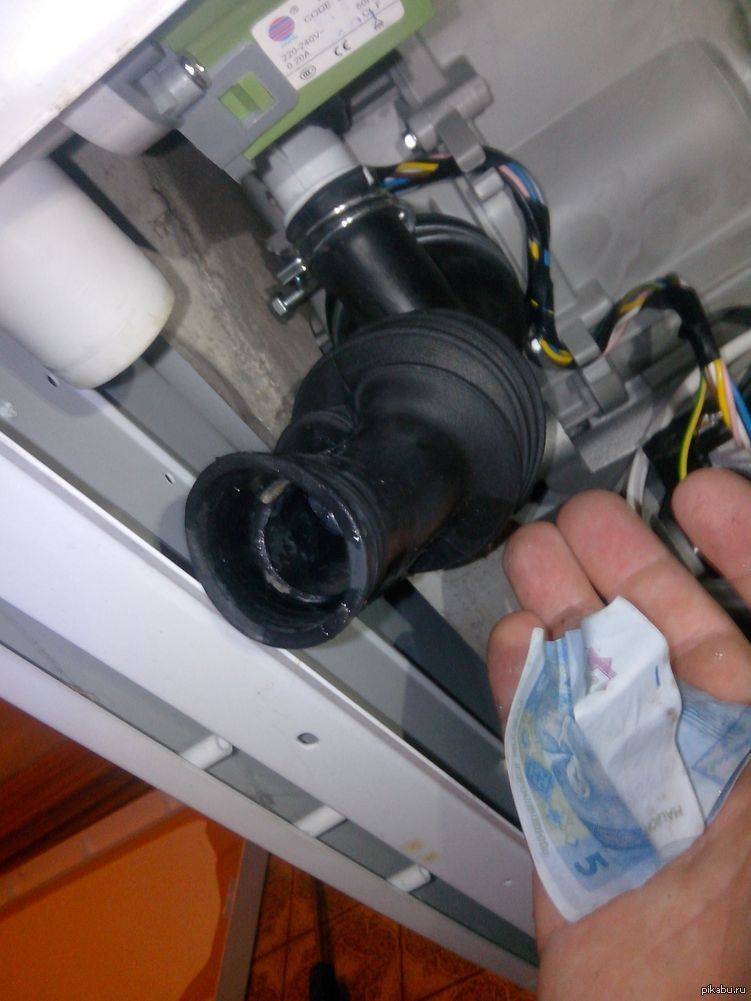
- The device does not drain water. First of all, you need to check the pumping pump and the hoses connected to it.
Malfunctions can be caused by a lack of salt, which is required to give the correct water hardness, or by the use of unsuitable detergents. Some users try to pour various gels used for manual washing into the detergent drawer.
For example, this is what happens if you pour fairies into the dishwasher. When water is supplied, due to the composition of the detergent, foam will begin to form.Since there are no defoamers, after a while it will become so much that it will fill all the components and parts of the dishwasher. In this case, the water inflow sensor will not be able to work normally and the indication of its absence will light up. The dishwasher will stop. You will need to open the machine and remove all removable structural elements, rinse the machine thoroughly with water and dry it thoroughly.

Possible violations of operation
If the detergent does not wash out of the compartment, it is possible that its lid simply did not open. What could prevent the opening of the cuvette:
- the dishwasher chamber is overloaded with dishes;
- some plate or pan is set so that it interferes with the washing out of the powder;
- the compartment in which you put the detergent was wet - then the drug could stick to the walls;
- the detergent is not suitable for a specific PMM model;
- compartment cover is deformed.
If you have gone through all the possible causes of the problem, and the powder still does not dissolve, then a breakdown has occurred - you need to call the master. Let's find out what could go wrong.
We fix problems in the PMM with our own hands
There are also more serious problems that need to be fixed.
No water intake
Why is the system heating the water but not washing the dishes? The control board "thinks" that there is water in the tank, because it receives such data from the pressure switch. As a result, the heating element is turned on for heating, but without water it overheats and burns out. So, you need to check the level sensor.
What to do:
- stop the program;
- check shut-off valve;
- check the valve.
Usually it is located below the front panel.But different manufacturers can place the valve on the side and back.
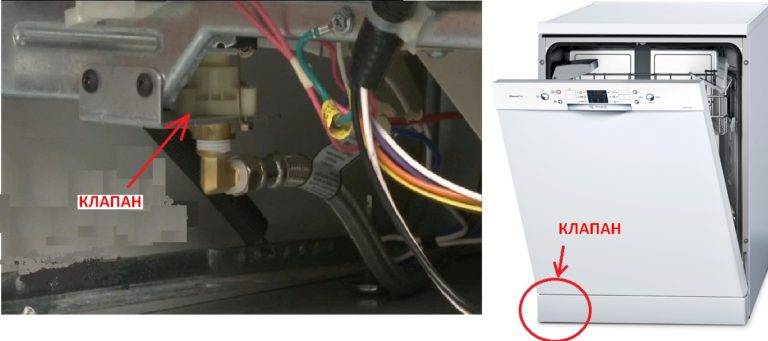
We will describe the general sequence of works:
- shut off the water supply;
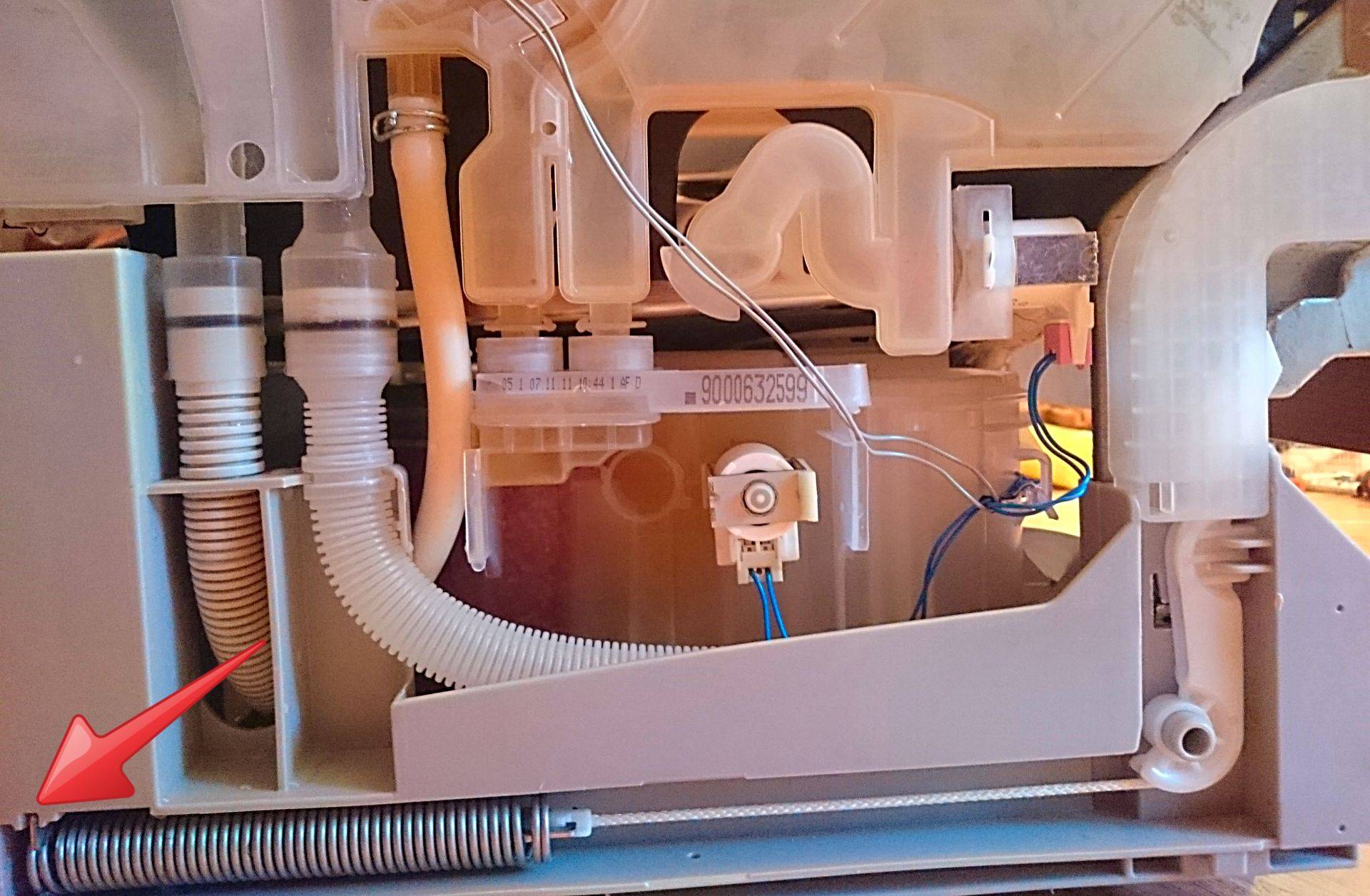
- remove the bottom panel under the door;
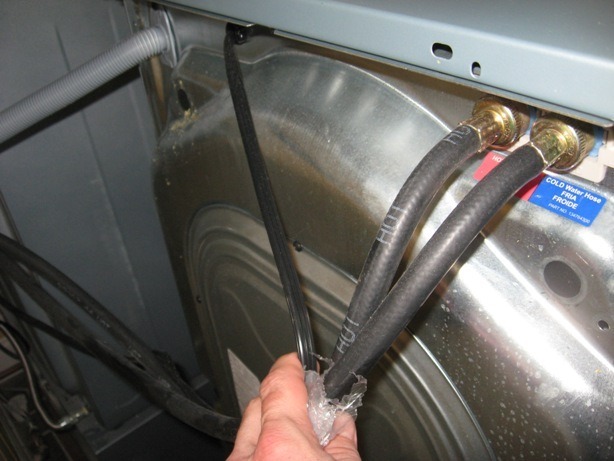
- disconnect the inlet hose;
- behind it is a valve;
- check the electronic part of the part with a multimeter, connect the probes to the contacts and see the value;
- if the valve is working, it will show from 500 to 1500 ohms;
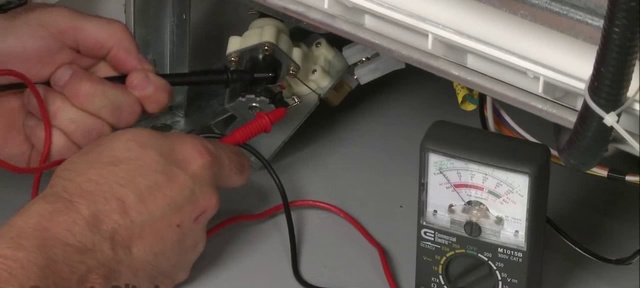
- check the mechanical part by applying voltage to 220 V; if at the same time the membrane opens, the part is working;
- to replace, disconnect the hose and wiring from the valve;
- set a new element.
Water does not circulate well, detergent problems
If there is a normal water intake, but the equipment does not start washing or does not wash off the dirt from the dishes, then the circulation system in the PMM is broken. Check:
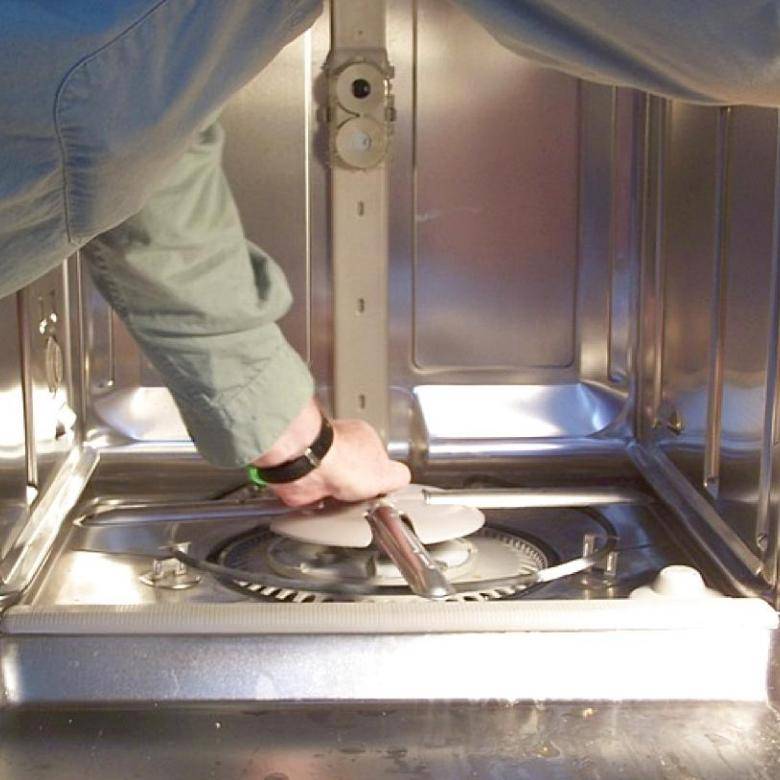
- Nozzles. Open the bunker, pull out the baskets. Remove the lower and upper spray arms. Clean the nozzles with a toothpick and rinse under the tap.
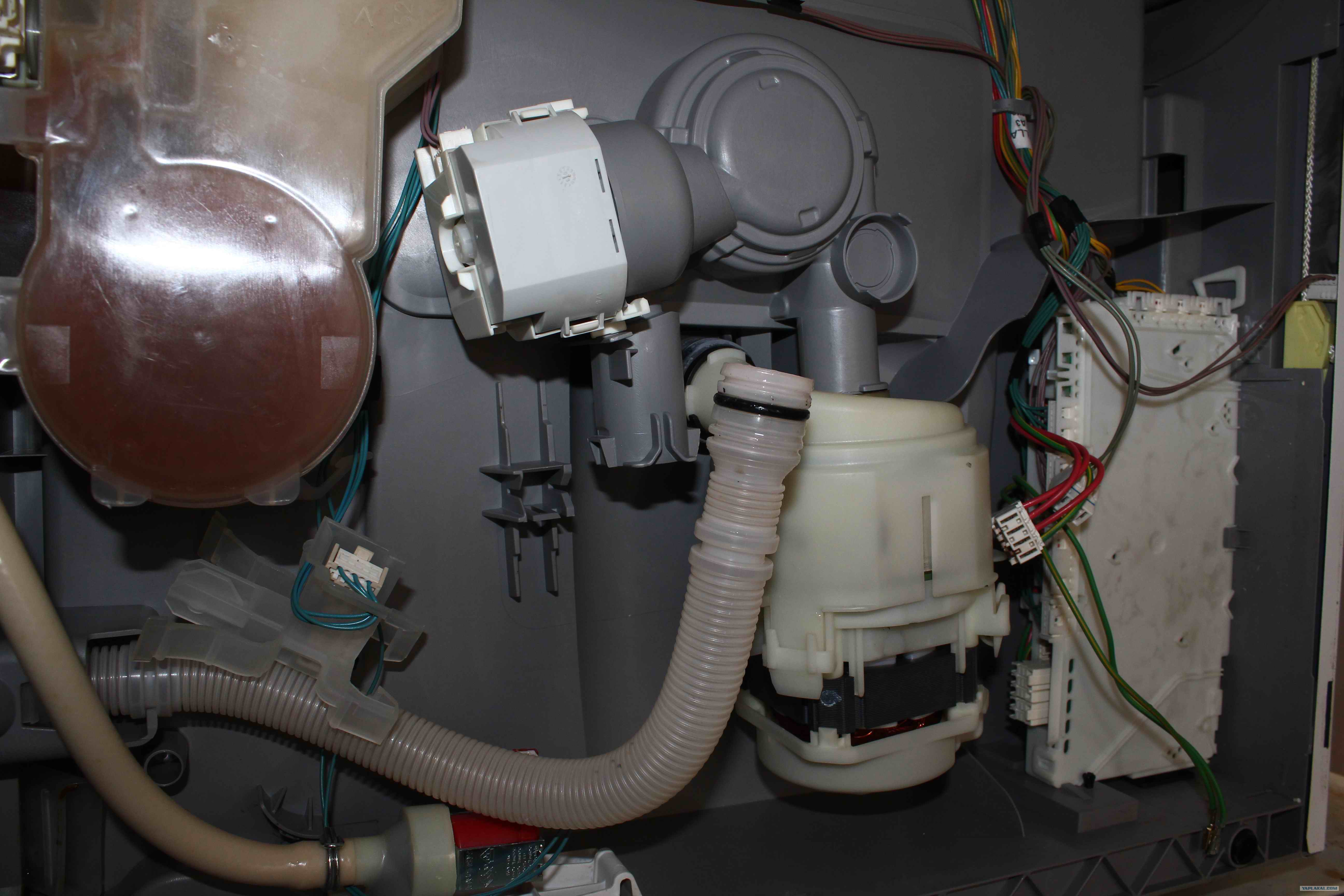
- Circulation pump. The machine fills with water, but then stops. To diagnose, you will have to disassemble the dishwasher.
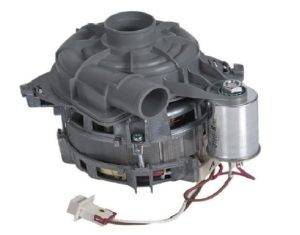
What do we have to do:
- disconnect the PMM from the network and communications;
- put in a free place and lay an old blanket (towel);
- flip the case onto the back panel;
- remove the bottom panel under the door;
- unscrew the screws around the perimeter and remove the pallet (preliminarily disconnect the float sensor, which is located on the pallet);
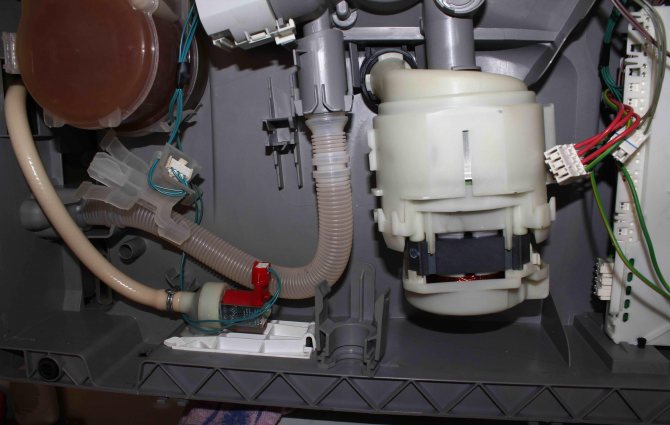
- in the center you will find a circulation block;
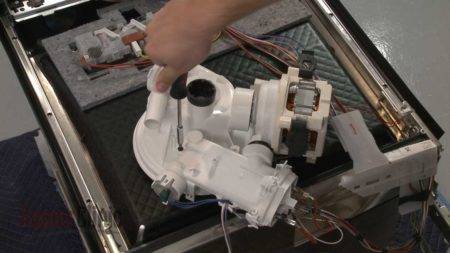
- inspect the pump, ring the electronic part with a multimeter;
- in the event of a malfunction, the element will have to be completely replaced.
If you are convinced that the water washes the dishes normally, but there are stains and food residues on the surface, check the detergent dispenser.Unscrupulous manufacturers make a cuvette from cheap material.


When exposed to hot steam, the plastic expands. Therefore, the compartment is jammed. The tablet does not dissolve properly. The way out is to replace the cuvette or adjust the compartment with your own hands.
Heating problems
Depending on the PMM device, a breakdown can manifest itself in different ways. More modern models have a built-in temperature sensor that controls the heating temperature. If you set the program to 70 degrees, then when the temperature is reached, the sensor sends a signal to the module, which turns off the heating element.
If the heater burns out, then the machine (Bosch, Siemens, Ariston and others) draws water, starts heating and stops. Models without a sensor continue to work with cold water, so the devices are difficult to clean.
Usually, a flow heater is installed in the machines, so in the event of a breakdown, you will have to change the entire unit. The sequence of work is the same as when replacing the pump. Only first you need to unscrew the fixing screws inside the camera.
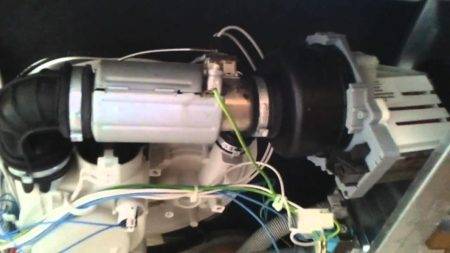
When the equipment does not turn on and does not start, the matter may be in the control module. This is the most serious damage that you cannot fix on your own. The electronic board controls all processes in the dishwasher. You can check it, but it is better to entrust the repair to a specialist.
How to clean parts and clear clogs
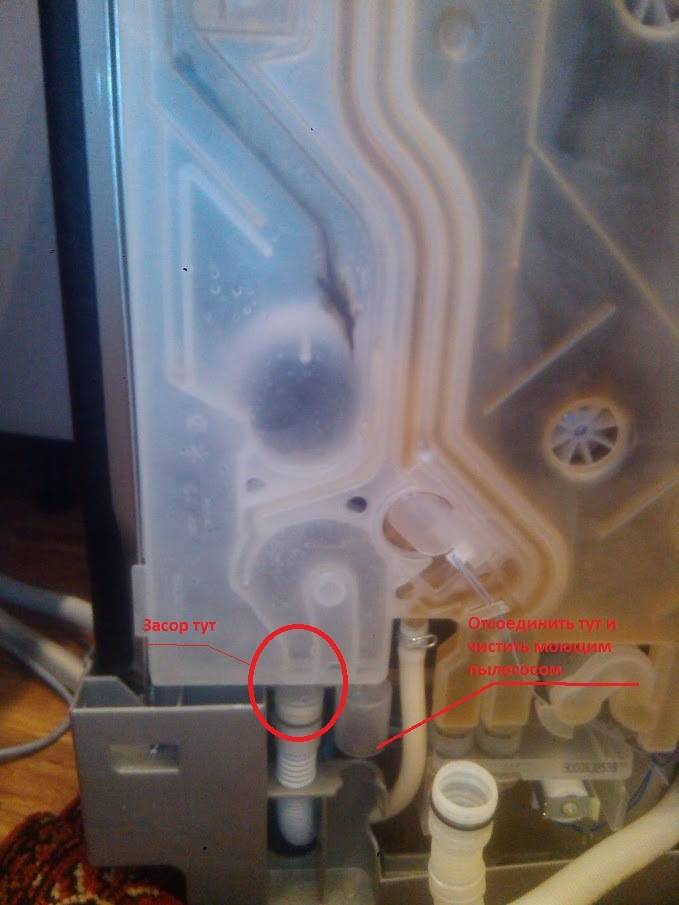
To solve sewer problems, you can call a repairman or handle it on your own. For example:
- clean the contaminated area with a thin wire brush;
- disconnect the siphon and rinse it with water;
- pour a special powder and use a plunger.
What to choose is up to you. You also need to clean the drain hose: under pressure from a tap or mechanically (using a brush).
More time will have to be devoted to internal problems. Consider how to clean the filter from blockage.
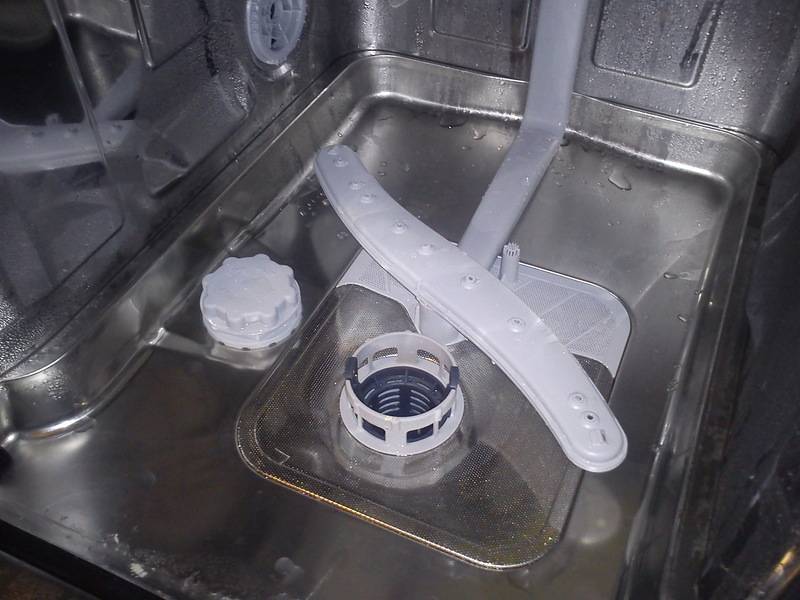
Drain filter
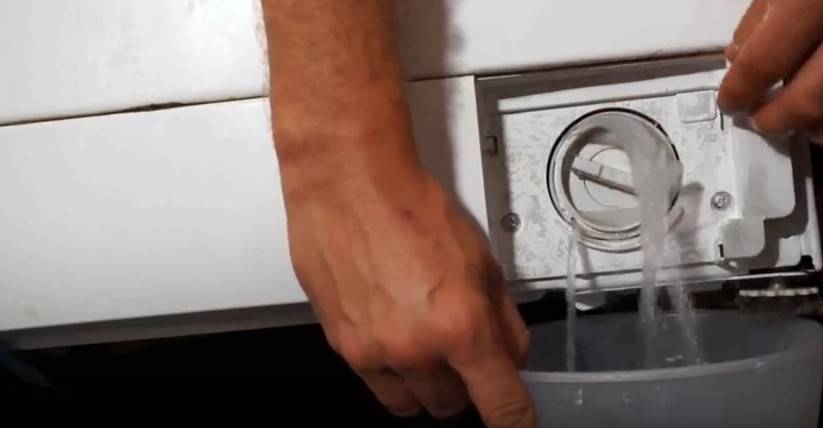
Before starting work, disconnect the PMM from the network, turn off the water supply. Proceed like this:
- Open the chamber door.
- Pull out the lower basket for dishes.
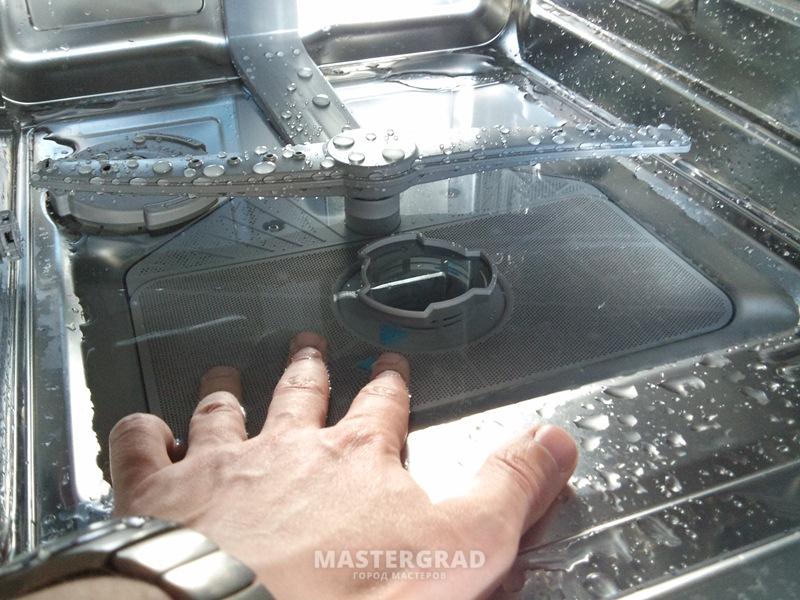
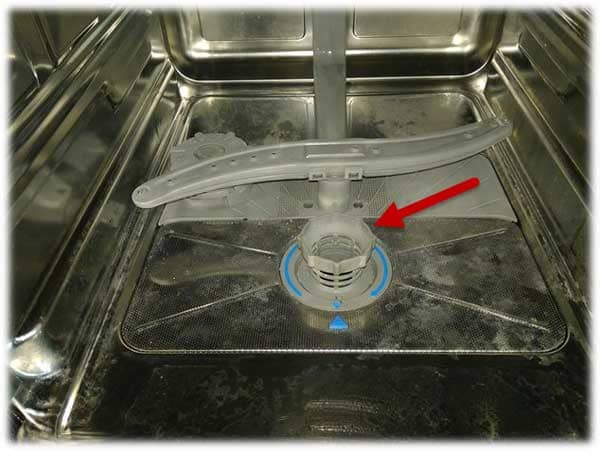
- Unscrew the filter and metal mesh from the pan.
- Rinse under the tap. Additionally, you can use a non-rigid brush and a toothpick for especially difficult dirt.
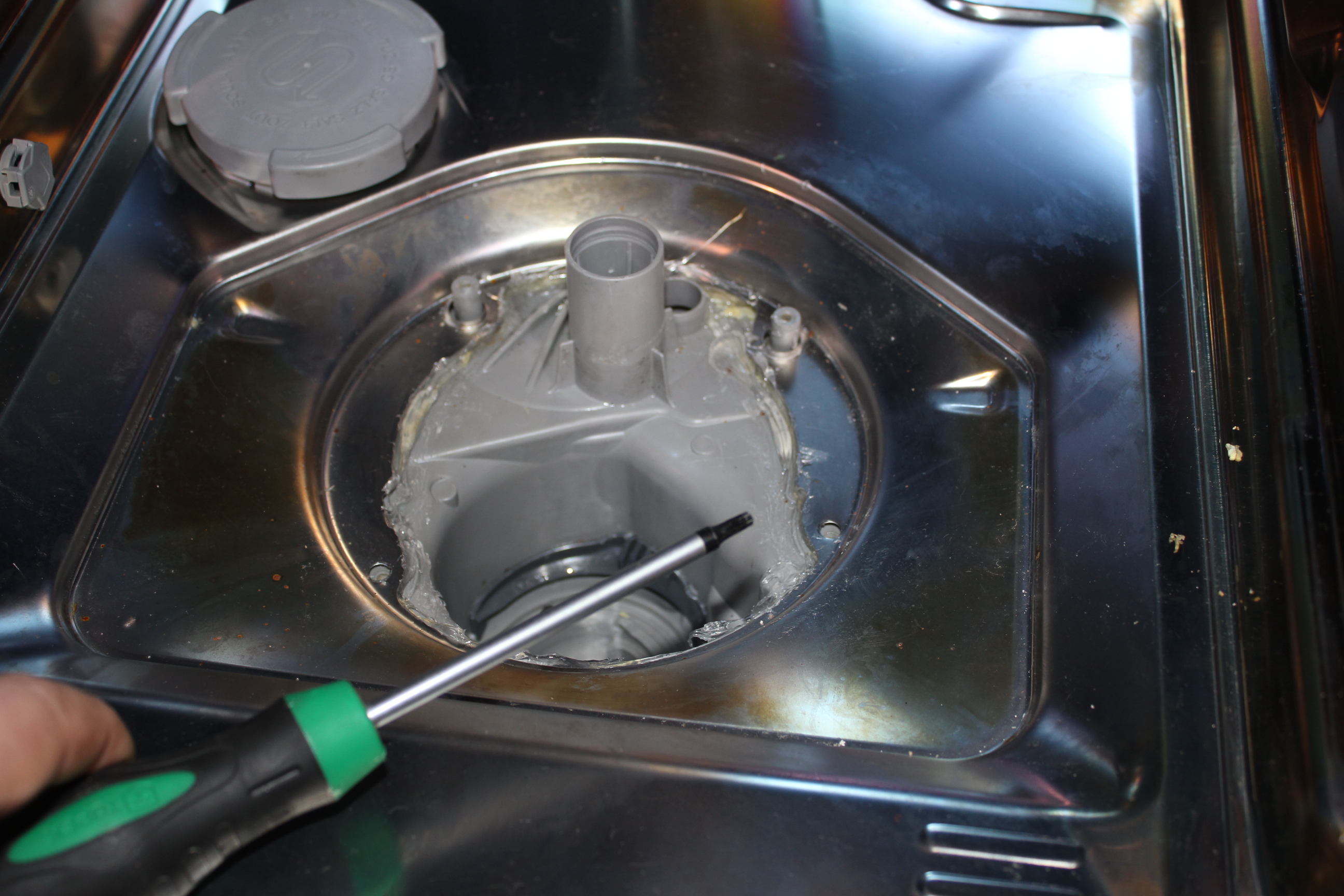
Remove water from the container in the drip tray with a sponge. Remove the pump valve. Pull the cover to the side and then towards you. Additional screws may need to be removed. Check impeller for blockage. If everything is in order, then inspect the pump and its parts.
Drain pump
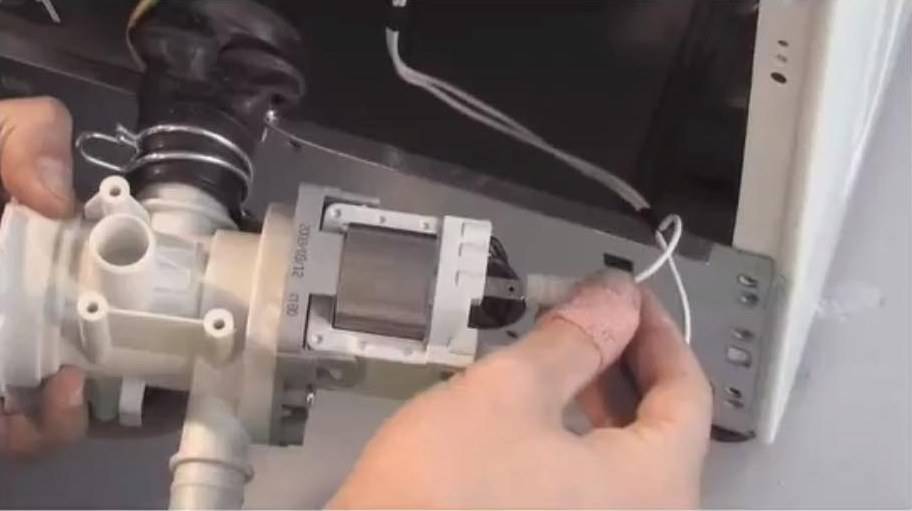
You need to disassemble the dishwasher to get to the pump. Remove all baskets from the chamber. Pull the machine out into the free space and put it “on its back”. Then do it like this:
Loosen the screws or latches on the bottom cover (bottom).
A float sensor can be attached to the back of the bottom.
Carefully unscrew the mounting bolt and unfasten the wiring.
Having gained access to the circulation block, you will notice that the pump is attached to the side.
Loosen its screw.
Disconnect wiring chips.
Additionally, you can inspect other parts, hoses, pipes.
Spray
Everything is simple here:
- The lower rocker is located near the drain filter.
- Scroll it and remove from the seat. On some models, it may be necessary to press the tabs.
- Rinse the item with water. Additionally, the nozzles are cleaned with a toothpick.
Don't forget to inspect the top atomizer and its openings.Sometimes the scale accumulates in the holders to which the sprinkler is attached.





intake filter
The mesh can be cleaned by disconnecting the inlet hose from the PMM body. If the part is clogged with scale, put it for a while in water with the addition of citric acid. The mesh is recommended to be cleaned at least once every six months.
Reasons for the appearance of white plaque
The same plaque can be found on the walls of the apparatus itself. Why does he appear? Over time, deposits, dust, and plaque accumulate on the device. First of all, the device should be cleaned. The filters become clogged with food debris and should be cleaned. Plaque is removed with the help of special means. The reasons for the white coating on the dishes after washing in the dishwasher are different. One of them is the incorrect distribution of detergent compositions. They may be of poor quality. With their excess, white spots also remain. Or maybe too little rinse aid and conditioner. Sometimes the rinse aid is poured into the wrong compartment. Substances produced in the form of tablets do not always have time to dissolve. Do not confuse the compartments for detergent compositions.
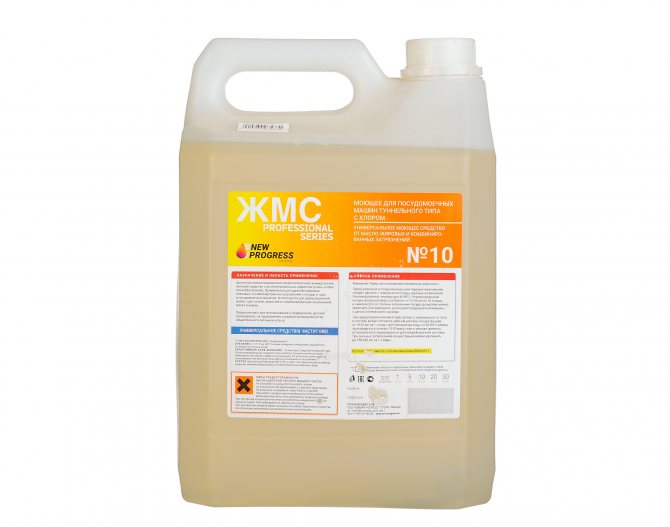
Improper distribution of detergent compositions can cause white deposits.
After washing in the dishwasher, a plaque remains on the dishes if the hostess is mistaken with the dosage of salt. In order for the water to remain soft, it is necessary to fill in the exact value of the ingredient. It is better to find out the level of water hardness from the company that provides it. The hardness sensor shows the required amount of magnesium and calcium salts that can be added to the water. Otherwise, they can leave lime deposits at high dosages. If the sensor breaks, call the master.
The hardness sensor shows the required amount of magnesium and calcium salts that can be added to the water.
Each brand is always suitable for its own detergents. They must be of high quality so as not to damage the machine. If they are incorrectly selected, then plaque will form on the machine in a short time. When washing dishes, some of the scale will fall on it
IMPORTANT: You do not need to purchase capsules, they contain the cheapest and least effective remedies. Why spend money on poor quality products when you can buy excellent products from the following brands:
- Frosch Soda;
- Claro;
- Calgonut Finish gel;
- Clean Fresh Active Oxygen Lemon.
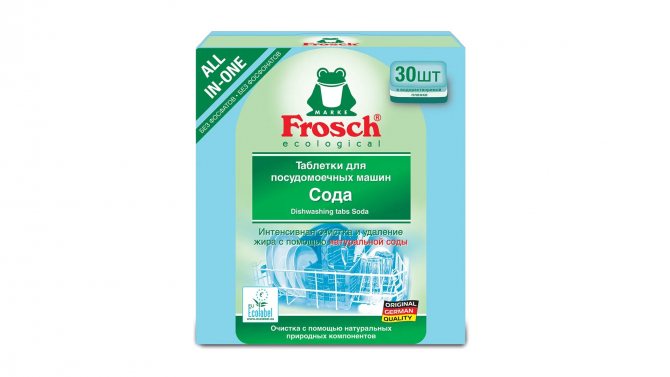
Washing dishes with these compositions will save the hostess from many problems. Why does a white coating remain on the dishes after washing in the dishwasher? If the water is hard, it contains a huge amount of salts and impurities. They settle on the dishes, limescale and layers can remain on the walls of the machine. In order to soften water, you need to add the necessary elements to it.
Each dishwasher has a salt container. Sometimes the salt runs out. The problem here is easily solved. The ingredient should be added again.
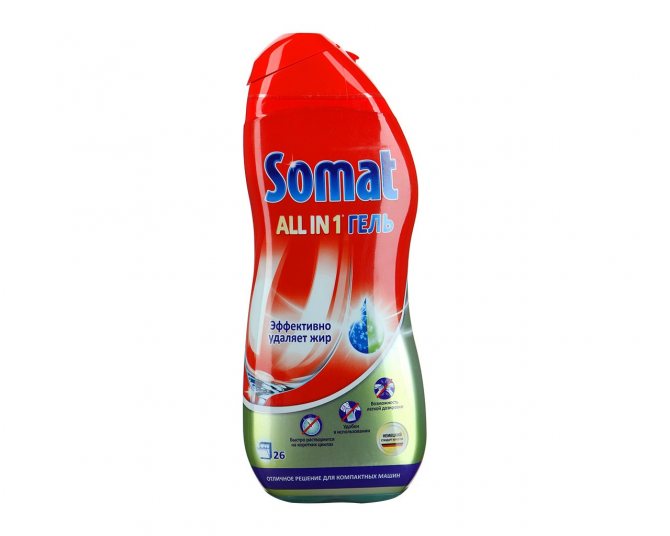
To reduce the hardness of water, emollients are added.
Irregular care
It can also cause streaks to appear on the dishes. Accumulated fats, food residues, dirt may remain on the appliance. They are the cause of poor-quality dishwashing. With such care, the operating time is reduced, the device and parts wear out faster.
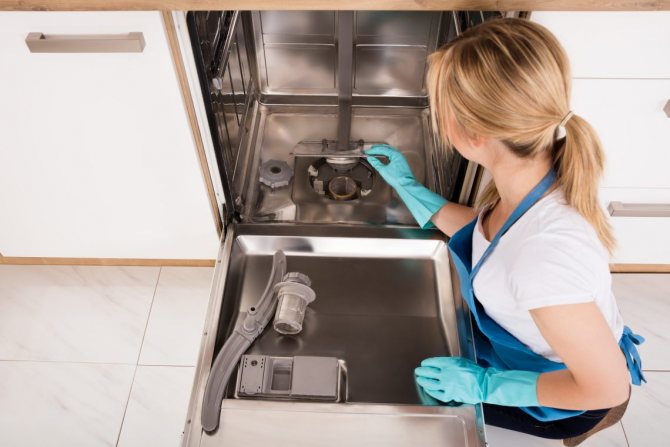
Accumulated fats, food residues, dirt may remain on the appliance.
In cases of serious damage, the hostess will be forced to seek help from the service. It comes from negligence, laziness.From not bothering to read the instructions. But electrical appliances have clearly defined limits to their capabilities.
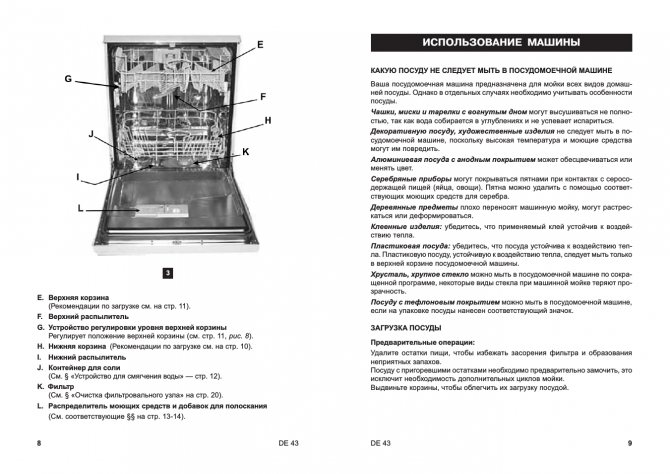
Electrical appliances have clearly defined limits of their capabilities.
Incorrect immersion of dishes, incorrect washing regime for this type of dish, irregular care can cause technical problems. Dirty filters can also leave streaks and lead to technical problems. They need to be cleaned of food debris in a timely manner. Poor quality cookware can also lead to technical problems.
When answering the question of whether this very white plaque is harmless to humans, it should be remembered that only pure water evaporates, and the sediment is what was dissolved in the water. And since household chemicals are used in the dishwasher, this sediment is nothing more than detergent or salt.
We suggest you familiarize yourself with How to soften the water in the well
It is impossible to eat from such dishes. White deposits on the dishes after the dishwasher should be washed off immediately by rinsing the dishes under a stream of warm running water and wiping dry. Of course, plaque in the dishwasher - this is serious. The reasons for the appearance of white plaque on the dishes may be:





- Too hard water in the tap.
- Poor quality household chemicals used in the car.
- Lack of dishwasher care.
- Malfunctions of individual components and assemblies of the dishwasher.




The Kaiser F8 dishwasher is running, but water is overflowing from the top opening of the filling tank. What is the reason?