- Scenarios of the consequences of a cylinder explosion
- Cylinder rupture and flame ejection
- Secondary damaging effects from the explosion
- Danger of gas leakage
- Scenarios of the consequences of a cylinder explosion
- Cylinder rupture and flame ejection
- Secondary damaging effects from the explosion
- Danger of gas leakage
- Fire hazards
- If the explosion has already happened
- Scenarios of the consequences of a cylinder explosion
- Cylinder rupture and flame ejection
- Secondary damaging effects from the explosion
- Danger of gas leakage
- HBO propane-butane in case of fire
- Safety measures to become a habit when using city gas
- The degree of danger of HBO
- Basic information about gas cylinders
- Types of gas vessels
- How is the balloon arranged?
- Gas mixture for domestic cylinders
- Fundamentals of Safe Cylinder Handling
- "You've been breathing a lot lately"
Scenarios of the consequences of a cylinder explosion
The above reasons for the explosion or fire of gas vessels can, in various ways, provoke the following dangerous scenarios.
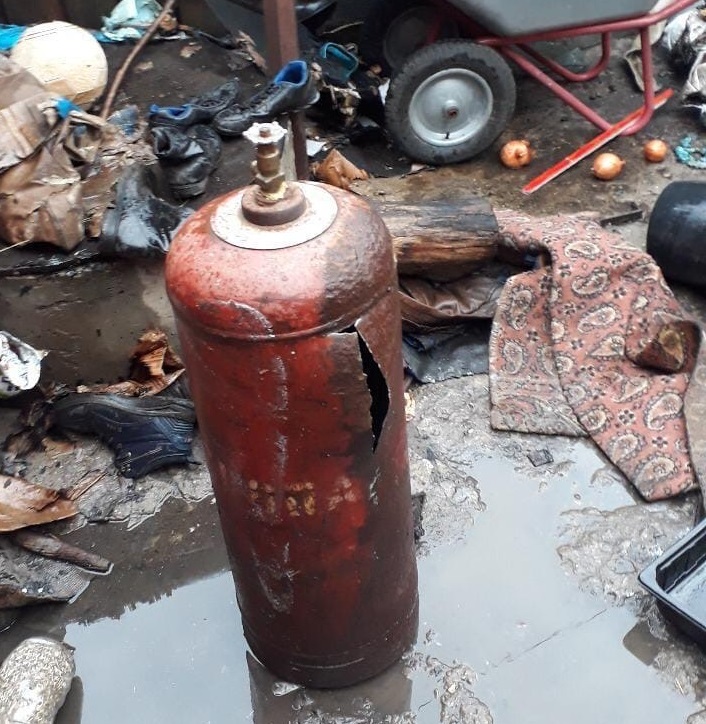
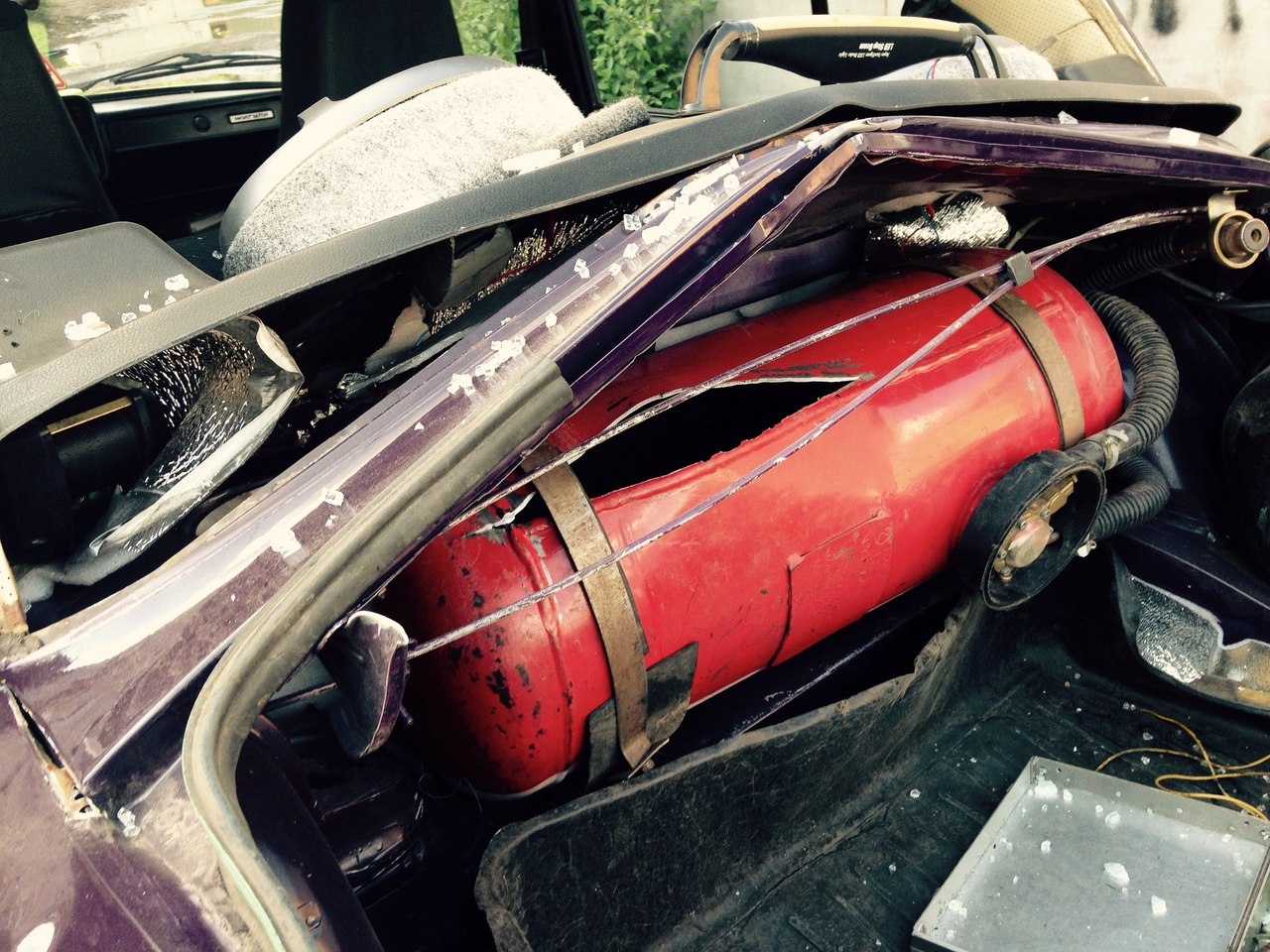
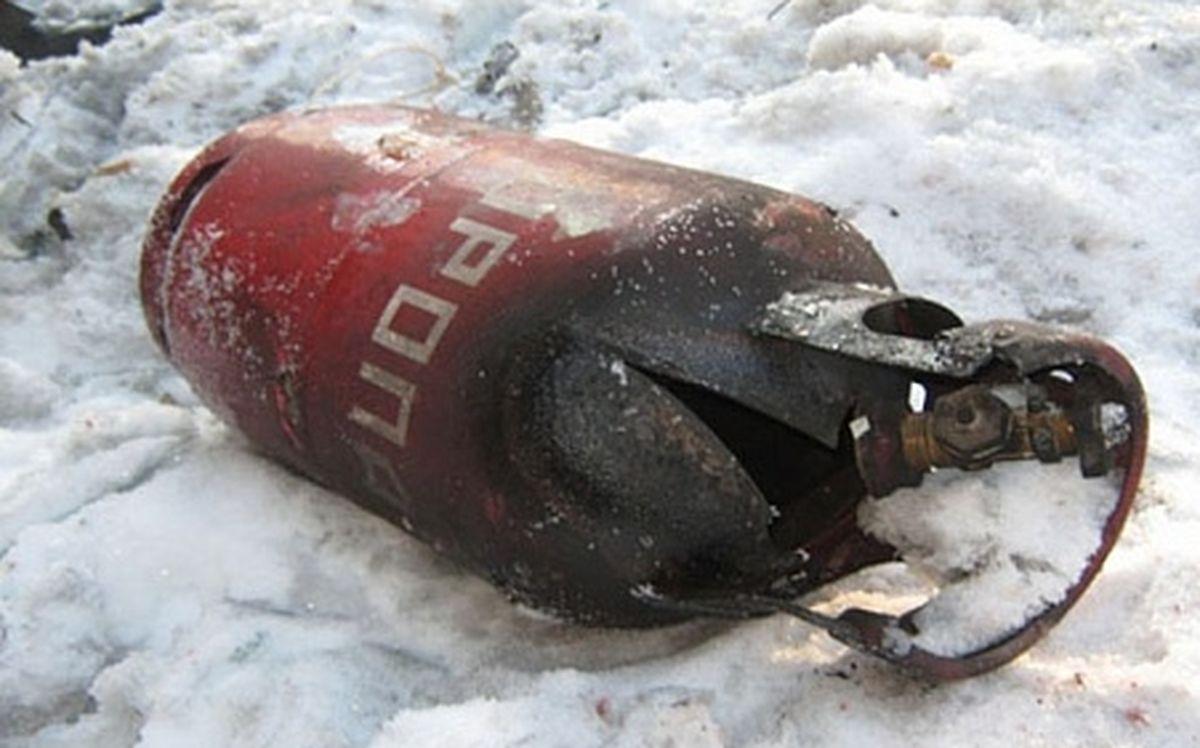
Cylinder rupture and flame ejection
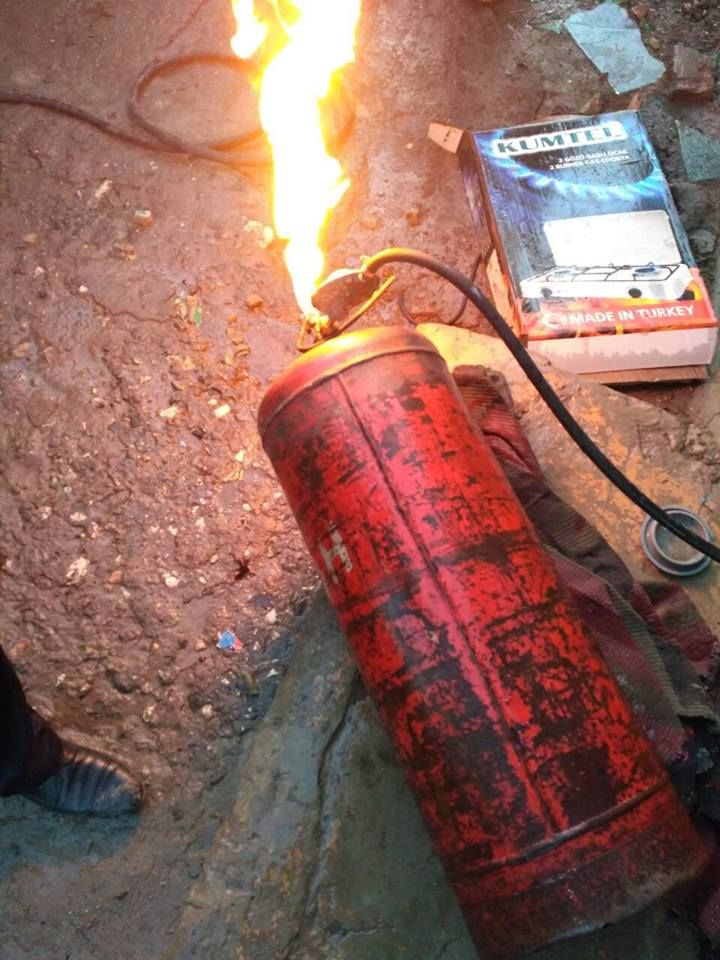
The explosion of a cylinder and the ignition of propane-butane are dangerous due to the following factors:
- a column of strong flame, rapidly increasing the area of the fire;
- high temperature of the fire in the explosion;
- toxicity of combustion products.
The defeat can also come from suffocation, due to a significant decrease in oxygen with a sharp concentration of harmful gases.

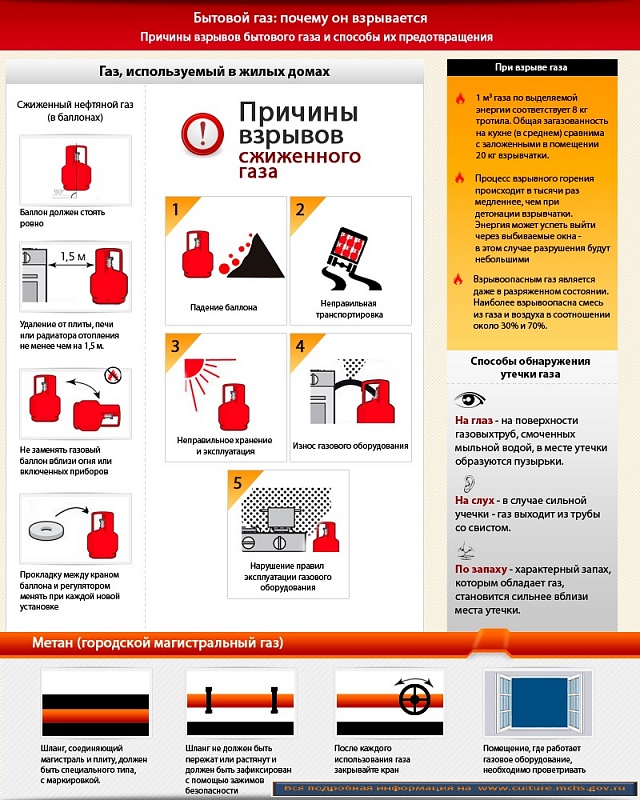
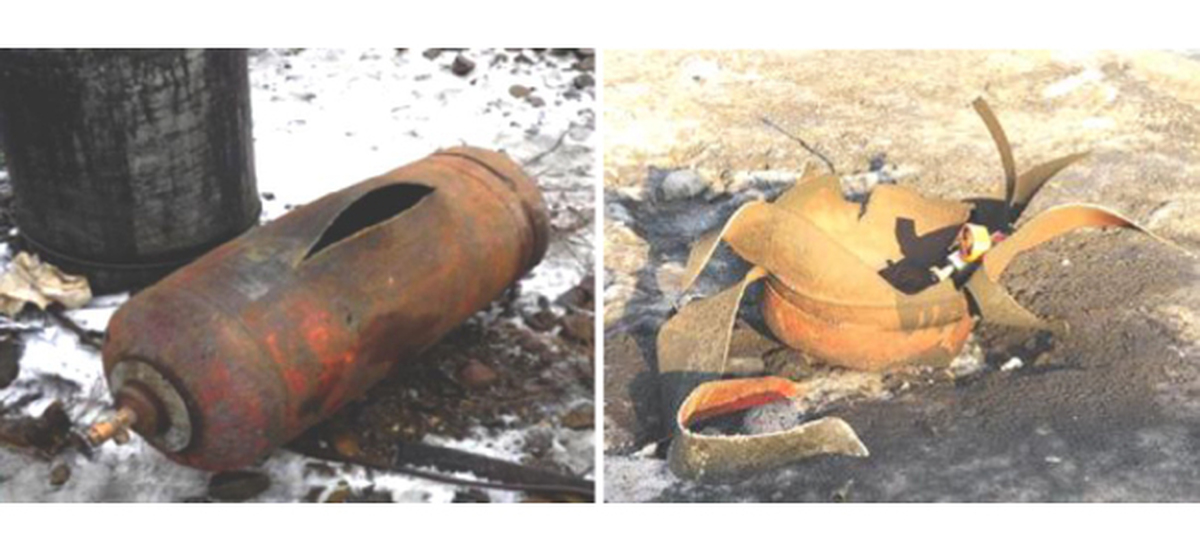
Conducted studies have shown that the sealing of a 50-liter gas vessel with liquefied gas caught in the fire is broken in less than 5 minutes. As a result - a flash fire with the release of a "fireball" reaching a diameter of 10 m
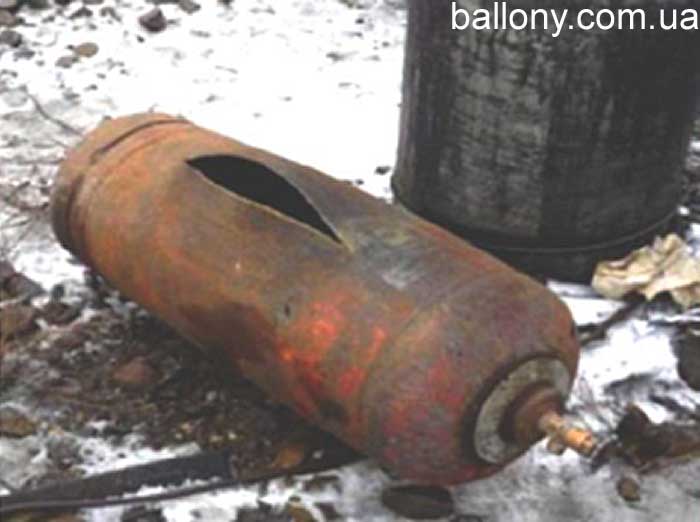
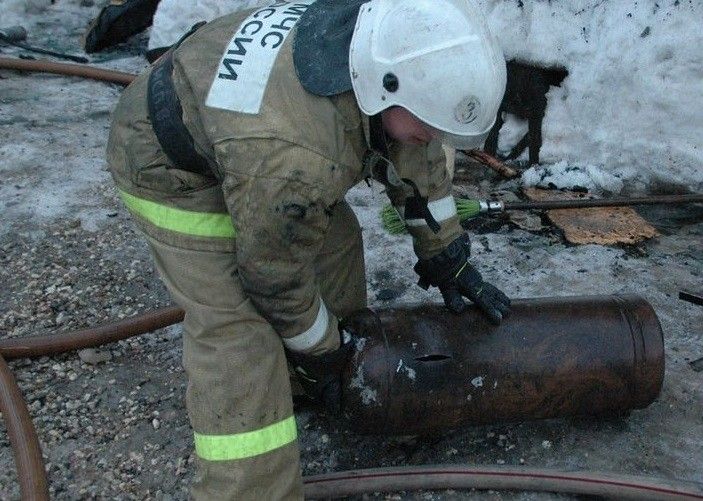
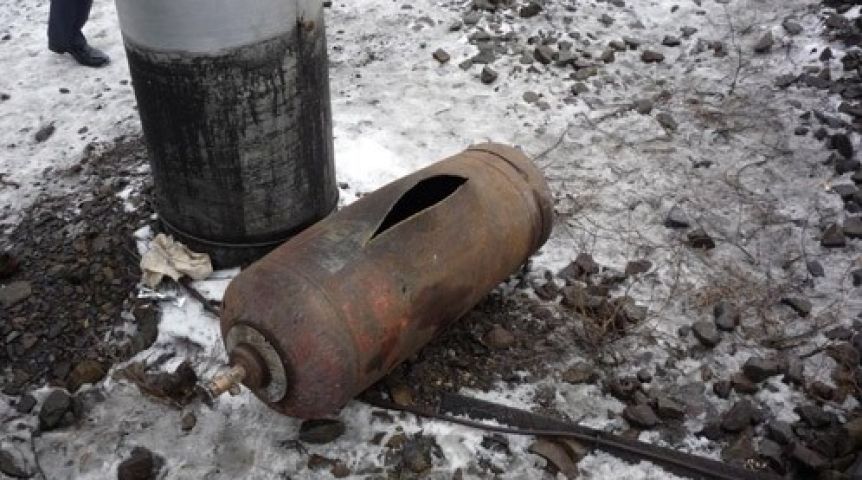
Usually, the rupture of the vessel occurs along its lateral part.
Secondary damaging effects from the explosion
Secondary, but no less serious damaging effects in the explosion of a cylinder are:
- valve separation;
- the impact of a compression wave or shock wave;
- damage from shell fragments.
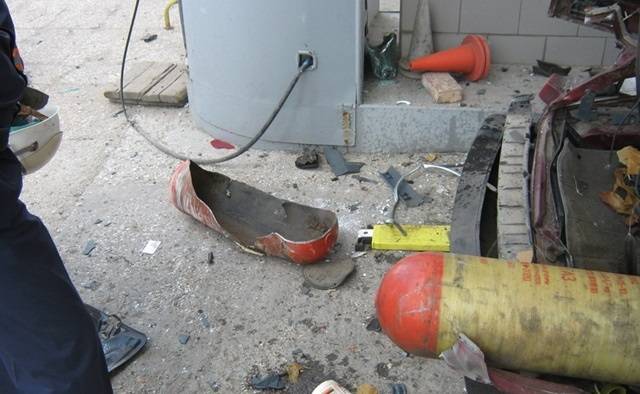
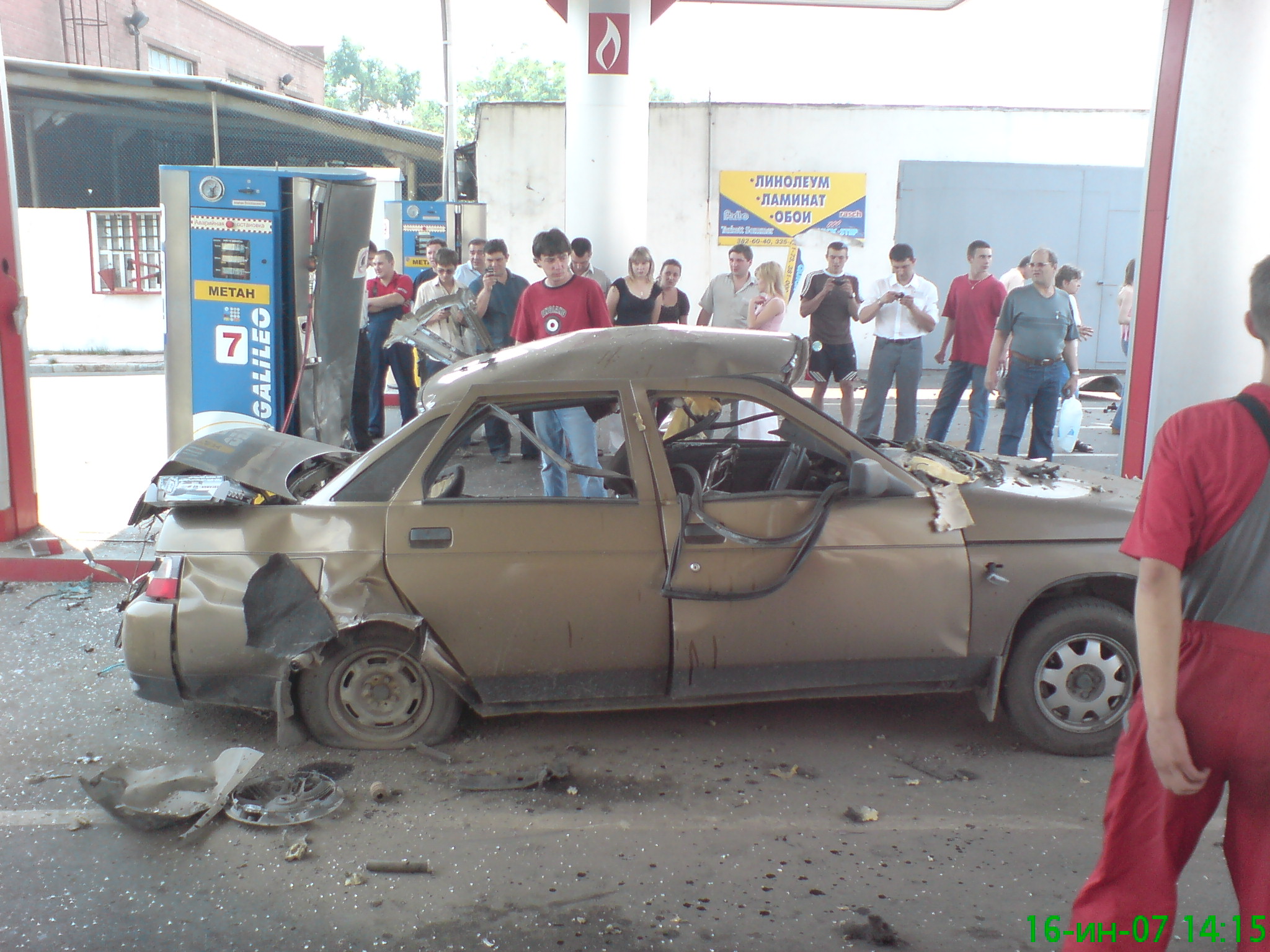
Fragments from the cylinder and its detached elements can scatter very far, causing damage in a radius of up to 250 m, and rise to a height of thirty meters.
Danger of gas leakage
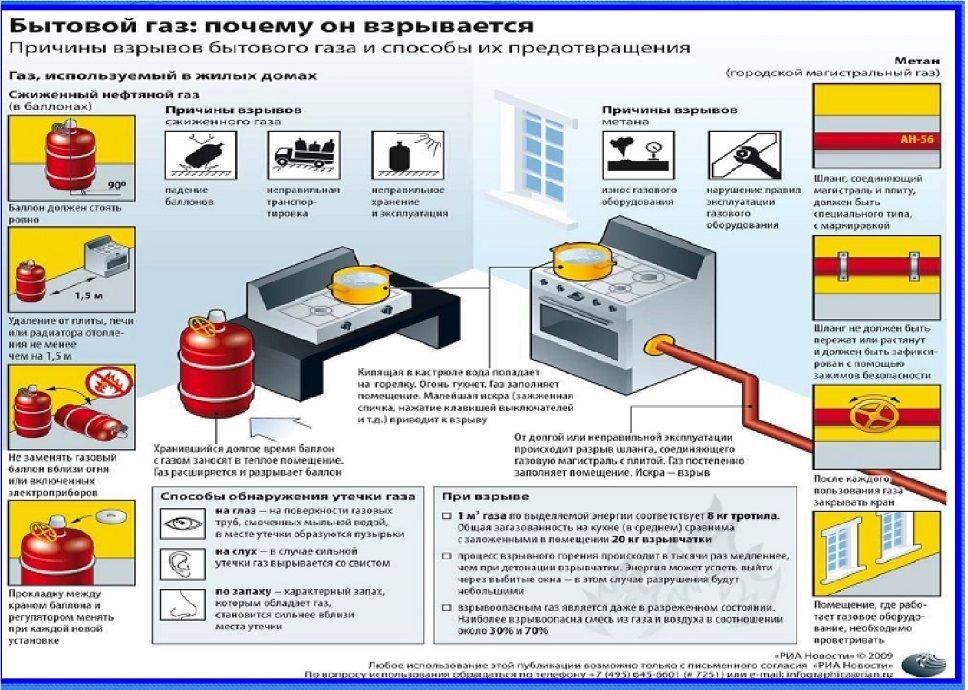
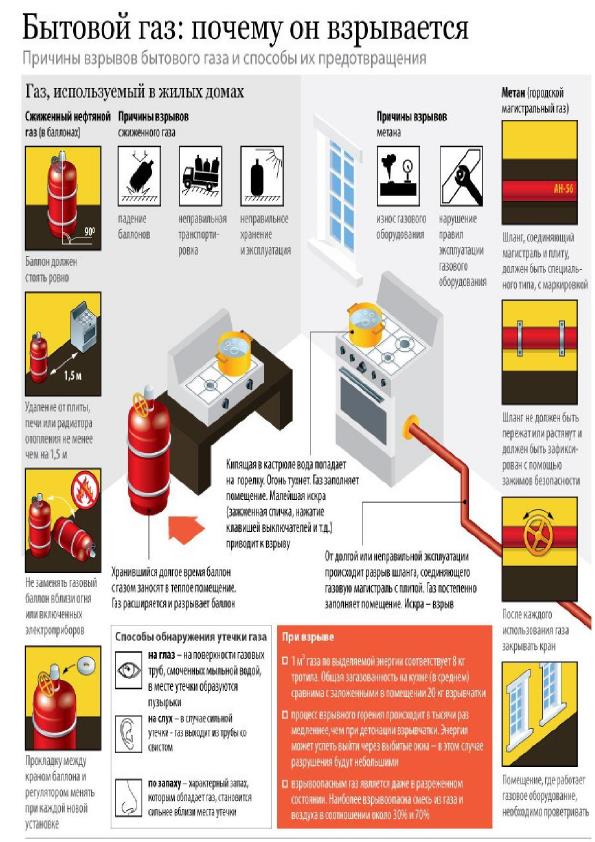
The danger of propane leakage from a damaged tank lies in the fact that an explosive concentration of a mixture of hydrocarbon and oxygen is created in the room very quickly, and in large volumes - much faster than with leaks of liquid combustible substances.
A strong leak of a mixture from a flask or a faulty shut-off valve can be determined by smell or by ear - a sound similar to what we hear when we quickly deflate a balloon.

If a gas leak is suspected or in order to control its absence, it will be enough to apply a soapy solution to the cylinder with a sponge and determine the place of depressurization by the bubbles formed.
If there is a gas leak, then it is necessary to cover the place of depressurization with a wet rag, carefully take the vessel outside and call the gasmen.Since 2016, the technical regulations provide for the mandatory installation of gas alarms in new homes
For previously built housing, this norm is advisory in nature, but the benefits of this device, especially in houses where bottled gas is used, are undeniable
Since 2016, the technical regulations have provided for the mandatory installation of gas alarms in new homes. For previously built housing, this norm is advisory in nature, but the benefits of this device, especially in houses where bottled gas is used, are undeniable.
The fact is that the density of the hydrocarbon mixture is greater than the density of air. If the sealing of the flask, shut-off equipment or connecting hose is broken, the gas begins to accumulate at the bottom, and its smell may not be immediately detected. That's why a propane mixture released into the air from a damaged gas cylinder often explodes in houses from any spark without being noticed.
Scenarios of the consequences of a cylinder explosion
The above reasons for the explosion or fire of gas vessels can, in various ways, provoke the following dangerous scenarios.
Cylinder rupture and flame ejection
The explosion of a cylinder and the ignition of propane-butane are dangerous due to the following factors:
- a column of strong flame, rapidly increasing the area of the fire;
- high temperature of the fire in the explosion;
- toxicity of combustion products.
The defeat can also come from suffocation, due to a significant decrease in oxygen with a sharp concentration of harmful gases.

Conducted studies have shown that the sealing of a 50-liter gas vessel with liquefied gas caught in the fire is broken in less than 5 minutes.As a result - a flash fire with the release of a "fireball" reaching a diameter of 10 m
Usually, the rupture of the vessel occurs along its lateral part.
Secondary damaging effects from the explosion
Secondary, but no less serious damaging effects in the explosion of a cylinder are:
- valve separation;
- the impact of a compression wave or shock wave;
- damage from shell fragments.
Fragments from the cylinder and its detached elements can scatter very far, causing damage in a radius of up to 250 m, and rise to a height of thirty meters.
Danger of gas leakage
The danger of propane leakage from a damaged tank lies in the fact that an explosive concentration of a mixture of hydrocarbon and oxygen is created in the room very quickly, and in large volumes - much faster than with leaks of liquid combustible substances.
A strong leak of a mixture from a flask or a faulty shut-off valve can be determined by smell or by ear - a sound similar to what we hear when we quickly deflate a balloon.
If a gas leak is suspected or in order to control its absence, it will be enough to apply a soapy solution to the cylinder with a sponge and determine the place of depressurization by the bubbles formed.
If there is a gas leak, then it is necessary to cover the place of depressurization with a wet rag, carefully take the vessel outside and call the gasmen. Since 2016, the technical regulations provide for the mandatory installation of gas alarms in new homes
For previously built housing, this norm is advisory in nature, but the benefits of this device, especially in houses where bottled gas is used, are undeniable
Since 2016, the technical regulations have provided for the mandatory installation of gas alarms in new homes. For previously built housing, this norm is advisory in nature, but the benefits of this device, especially in houses where bottled gas is used, are undeniable.
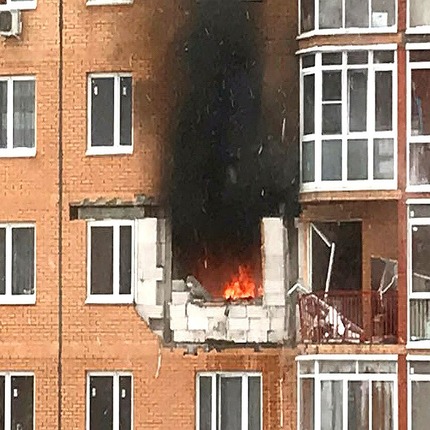
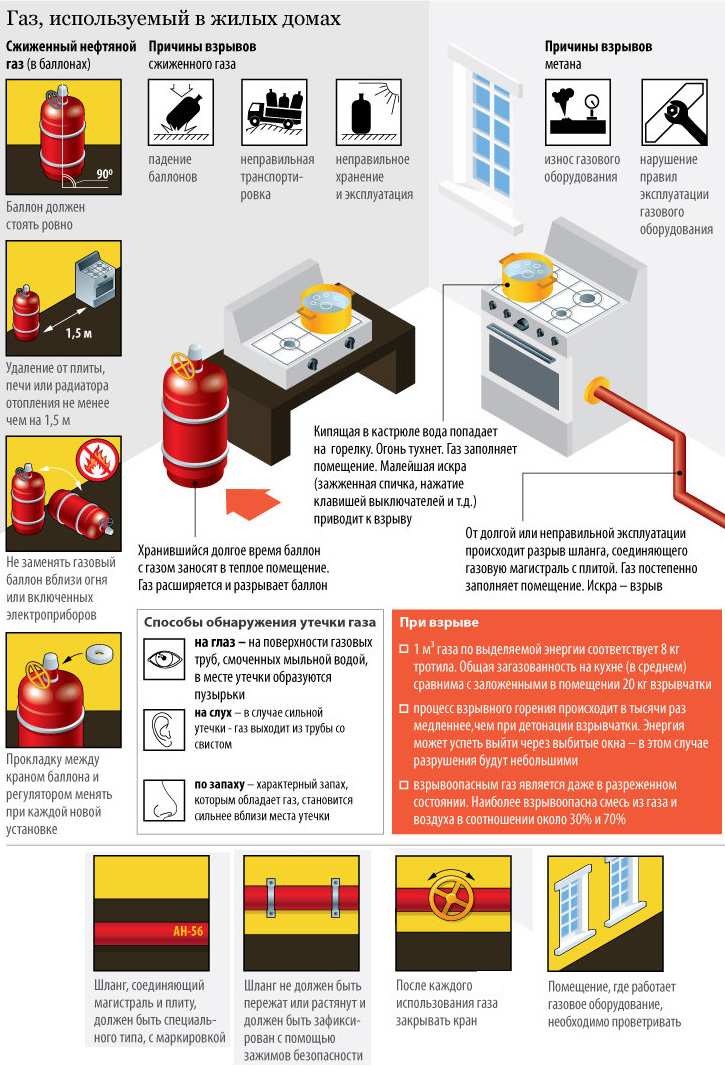
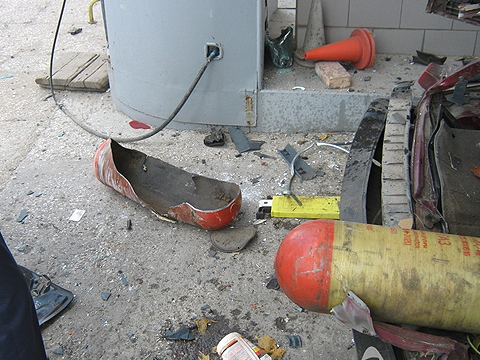
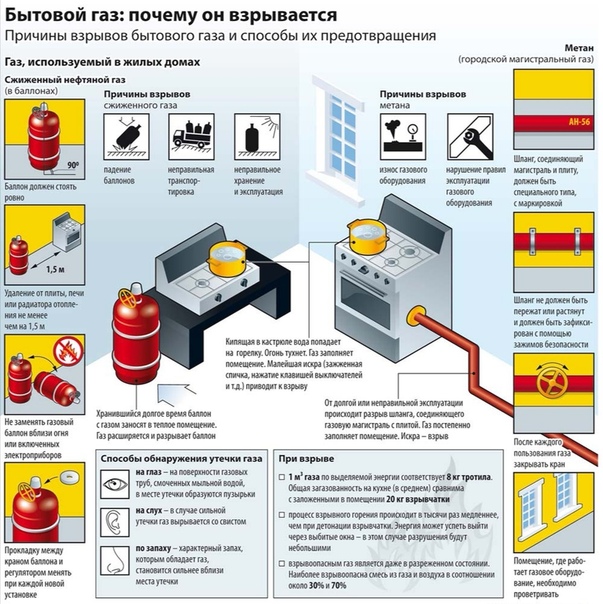
The fact is that the density of the hydrocarbon mixture is greater than the density of air. If the sealing of the flask, shut-off equipment or connecting hose is broken, the gas begins to accumulate at the bottom, and its smell may not be immediately detected. That's why a propane mixture released into the air from a damaged gas cylinder often explodes in houses from any spark without being noticed.
Fire hazards
Any
the fire is accompanied by the manifestation
fire hazards. Dangerous
fire factor (FFP)
–
factor
fire, the impact of which
injury, poisoning or death of a person,
as well as property damage.
Dangerous factors
fire (OFP) affecting people
and material values are:
-
flames and sparks;
-
increased
ambient temperature; -
toxic products
combustion and thermal decomposition; -
decline
visibility in smoke; -
reduced
oxygen concentration.
To
secondary manifestations of hazards
fire relate:
-
fragments, parts
destroyed devices, units,
installations, structures; -
radioactive and
toxic substances and materials from
destroyed devices and installations; -
electric
the current resulting from the removal
high voltage on conductive
parts of structures, devices, units; -
dangerous
factors of the explosion that occurred in
result
fire; -
impact
fire extinguishing agents.
Near
73% of fire victims die
from
exposure to toxic products
combustion, about 20% –
from high
temperature,
around 5% –
from low oxygen levels.
The rest die from their injuries.
as a result of building collapse
structures, scattering of fragments during
explosion, due to exacerbation and manifestation
hidden diseases and mental
factors.
Dangerous
fire factors act in
time
and space and have a negative
influence on a person, material
values surrounding natural or
industrial environment at the same time.
In fires, as
As a rule, there is a combined
the impact of several OFP at once.
Supposed,
that the full striking effect of such
the impact will be greater than from a simple
summing up the impacts of individual
components. Such a phenomenon, when
the result of the interaction is not
a simple sum of partial actions, and
generates qualitatively new results,
depending on the totality
interactions is called
synergy. However
no reliable data yet
confirming or refuting it
assumption.
fundamental
document based on probabilistic
approach is GOST 12.1.004 - 91. SSBT.
Fire safety. General rules.
This document sets out the requirements
for fire prevention activities.
In accordance with
by this standard, objects must have
fire safety systems,
aimed at preventing
exposure of people to hazards
fire, including their secondary
manifestations at the required level. At
determining the required level of security
people's fire safety is accepted,
that the probability of prevention
exposure to hazardous factors per year in
per person should be
not less than 0.999999, and the acceptable level
fire hazard for people - no more
10-6
exposure to dangerous fire factors,
exceeding the maximum allowable
values, per year per each
person.
In table. 17 are given
hazard limit values
fire.
Table 17
Limit values
fire hazards
-
Dangerous
factorlimiting
meaningTemperature
environmentsthermal radiation
Content
carbon monoxideContent
carbon dioxideIndex
attenuation of light by smoke per unit
length70 °C
500 W/m2
0.1% (vol.)
6% (vol.)
Less than 17% (vol.)
2,4
If the explosion has already happened
The algorithm of actions during the explosion is identical. If possible, close the valves and leave the room. When calling, you should indicate the fact of the explosion, seek help from doctors, firefighters and gas workers. A call can be made by a single telephone number 112.
According to the observations of the rescuers, the panic of the residents becomes a significant obstacle to the coordinated actions of the emergency services. Therefore, during rescue operations, it is advisable to calm down and accurately follow the instructions of specialists.
In 90 percent of cases, a gas explosion is accompanied by a fire. Therefore, the actions in such an accident are identical to rescue from fire.
For this you need:
- Press a damp cloth bandage to your face, breathe only through it.
- Determine the path to the exit. If it is blocked by local fires, try to neutralize them by throwing a blanket and thick outerwear over the hearth.
- If it is not possible to exit through the main entrance, the chances of leaving the premises through the windows should be assessed.
In some situations, it is wiser to wait for rescuers than to evacuate yourself.
Therefore, it is important to correctly assess the risks, not to panic.
Leaving the apartment after the explosion, you can not use the elevator. The shaft quickly fills with smoke, equipment stops functioning and gets stuck between floors.
After leaving the house, rescuers are advised to move away from the building as far as possible, to remain at a safe distance until all sources of danger are eliminated. Residents are informed about this by emergency services.
Scenarios of the consequences of a cylinder explosion
The above reasons for the explosion or fire of gas vessels can, in various ways, provoke the following dangerous scenarios.
Cylinder rupture and flame ejection
The explosion of a cylinder and the ignition of propane-butane are dangerous due to the following factors:
- a column of strong flame, rapidly increasing the area of the fire;
- high temperature of the fire in the explosion;
- toxicity of combustion products.
The defeat can also come from suffocation, due to a significant decrease in oxygen with a sharp concentration of harmful gases.
Conducted studies have shown that the sealing of a 50-liter gas vessel with liquefied gas caught in the fire is broken in less than 5 minutes. As a result - a flash fire with the release of a "fireball" reaching a diameter of 10 m
Usually, the rupture of the vessel occurs along its lateral part.
Secondary damaging effects from the explosion
Secondary, but no less serious damaging effects in the explosion of a cylinder are:
- valve separation;
- the impact of a compression wave or shock wave;
- damage from shell fragments.
Fragments from the cylinder and its detached elements can scatter very far, causing damage in a radius of up to 250 m, and rise to a height of thirty meters.
Danger of gas leakage
The danger of propane leakage from a damaged tank lies in the fact that an explosive concentration of a mixture of hydrocarbon and oxygen is created in the room very quickly, and in large volumes - much faster than with leaks of liquid combustible substances.
A strong leak of a mixture from a flask or a faulty shut-off valve can be determined by smell or by ear - a sound similar to what we hear when we quickly deflate a balloon.
If a gas leak is suspected or in order to control its absence, it will be enough to apply a soapy solution to the cylinder with a sponge and determine the place of depressurization by the bubbles formed.
If there is a gas leak, then it is necessary to cover the place of depressurization with a wet rag, carefully take the vessel outside and call the gasmen. Since 2020, the technical rules provide for the mandatory installation of gas alarms in new homes
For previously built housing, this norm is advisory in nature, but the benefits of this device, especially in houses where bottled gas is used, are undeniable
Since 2020, the technical rules provide for the mandatory installation of gas alarms in new homes. For previously built housing, this norm is advisory in nature, but the benefits of this device, especially in houses where bottled gas is used, are undeniable.
The fact is that the density of the hydrocarbon mixture is greater than the density of air.If the sealing of the flask, shut-off equipment or connecting hose is broken, the gas begins to accumulate at the bottom, and its smell may not be immediately detected. That's why a propane mixture released into the air from a damaged gas cylinder often explodes in houses from any spark without being noticed.
HBO propane-butane in case of fire
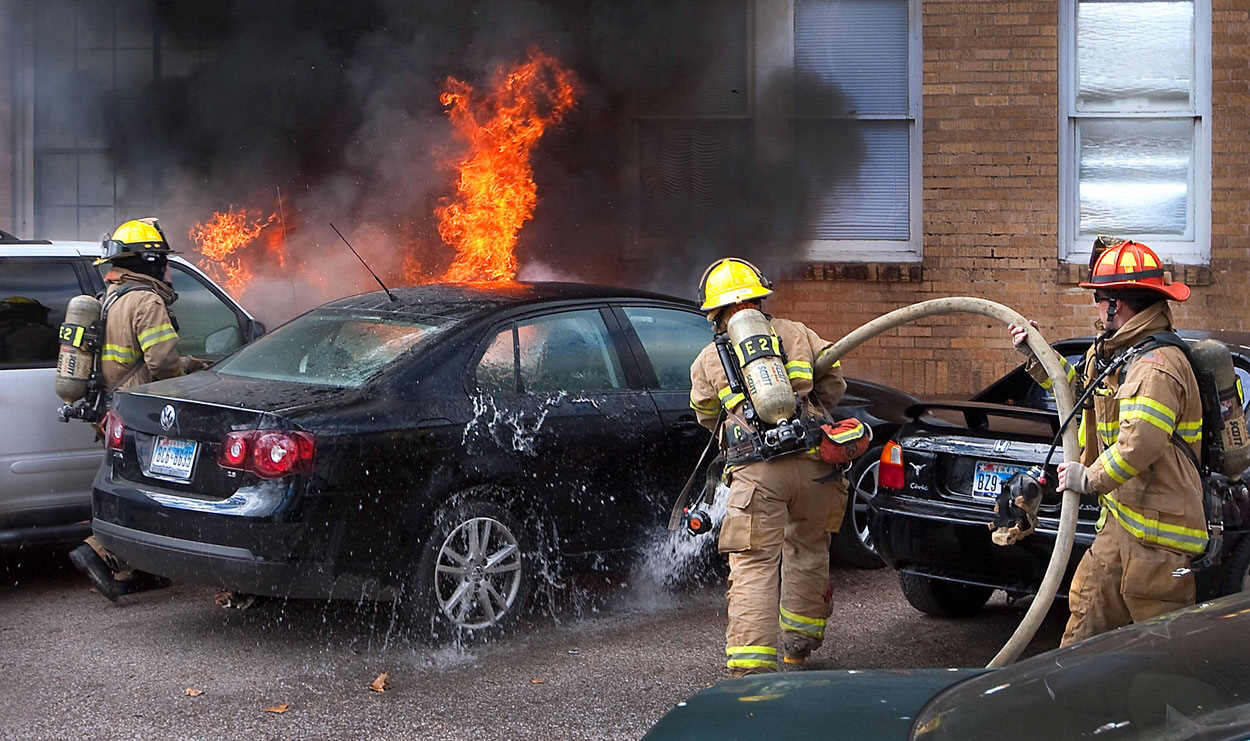
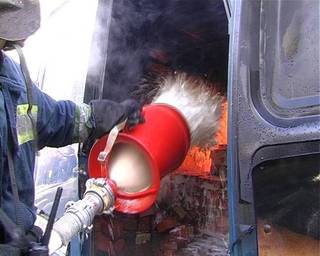
Gas cylinders are especially dangerous in case of fire. In case of fire at facilities where propane-butane cylinders are stored or used, pressurized HBO explosions often occur. When extinguishing objects with the presence of gas cylinders, the physical and chemical properties of the gas used should be taken into account.
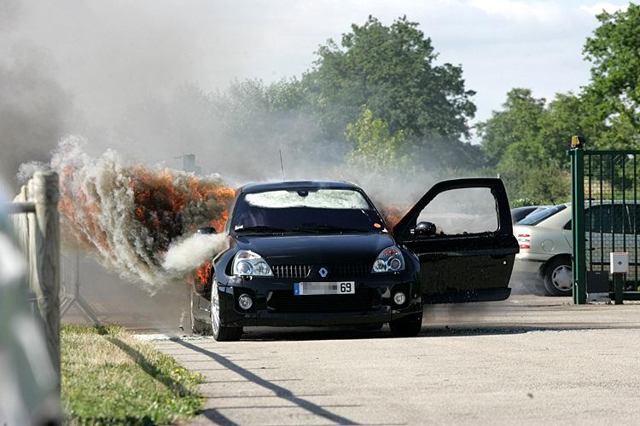
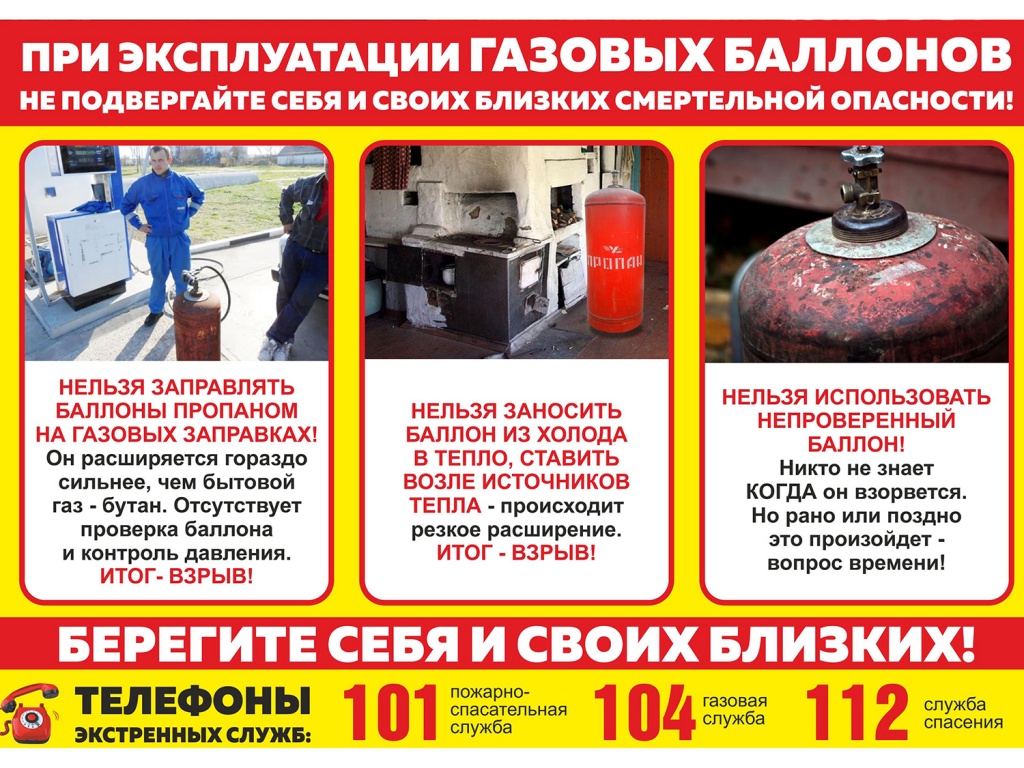
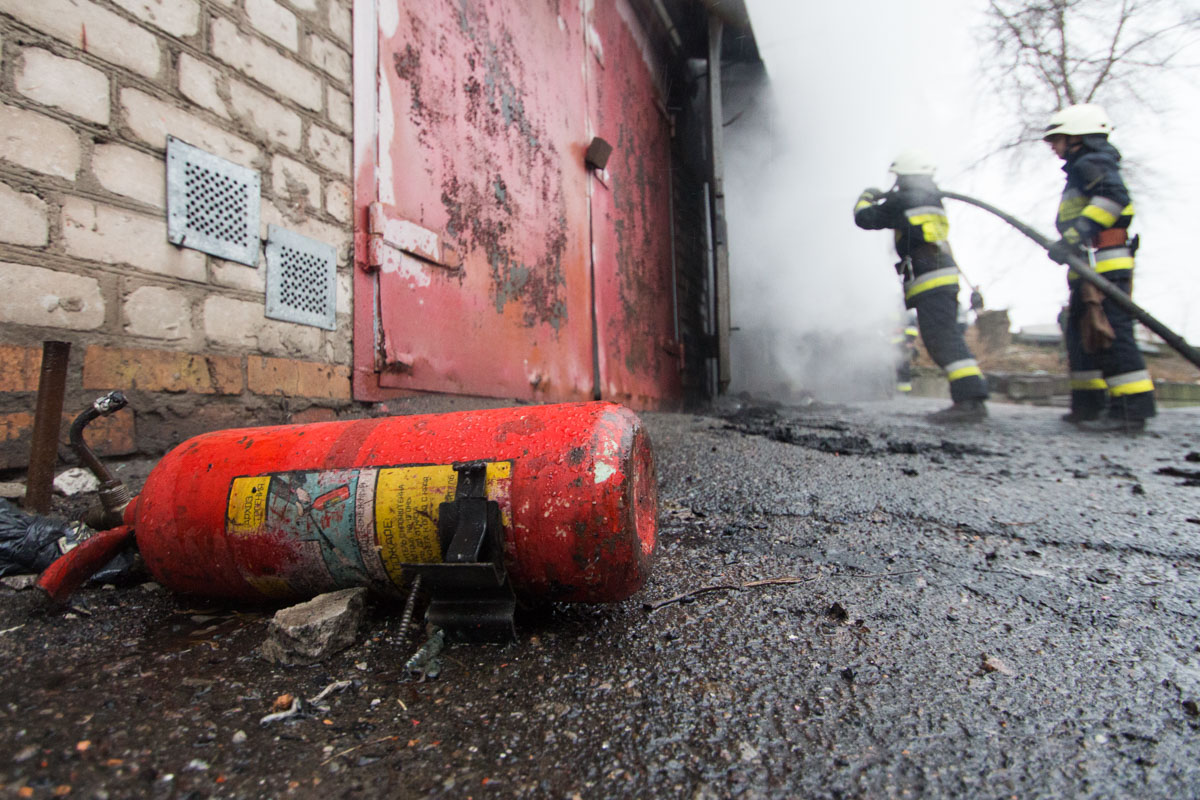
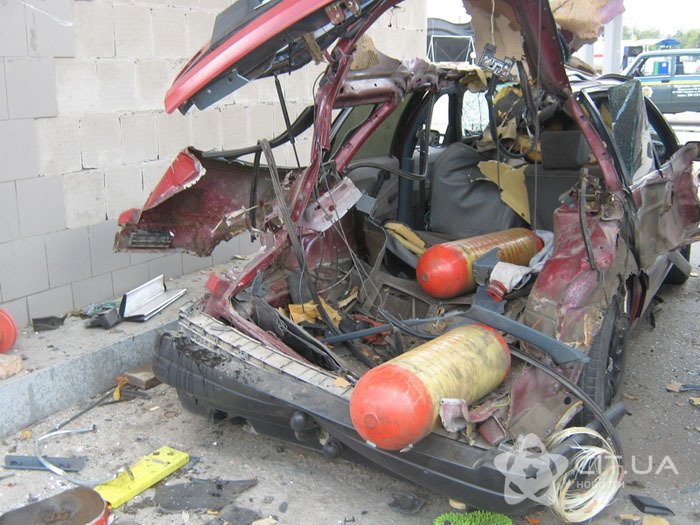
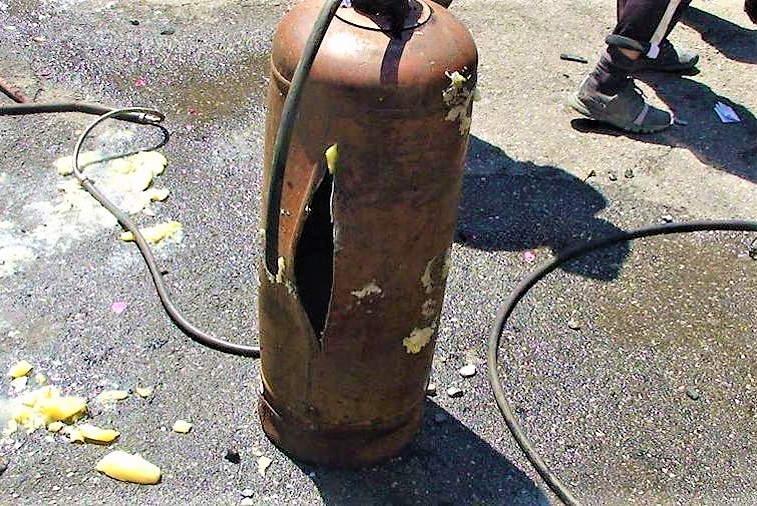
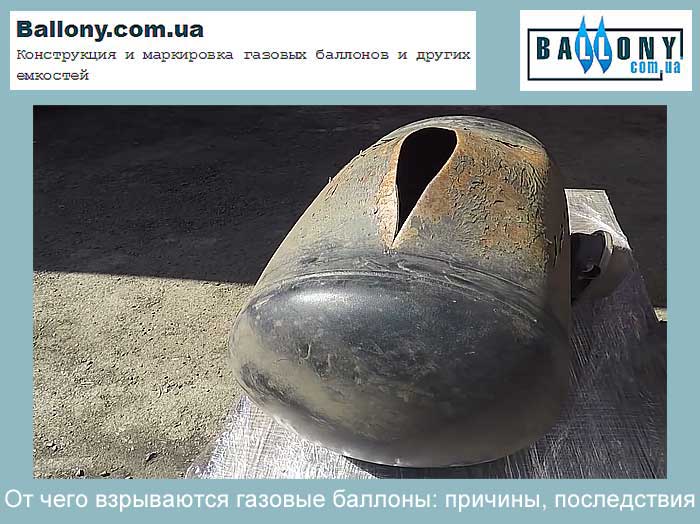
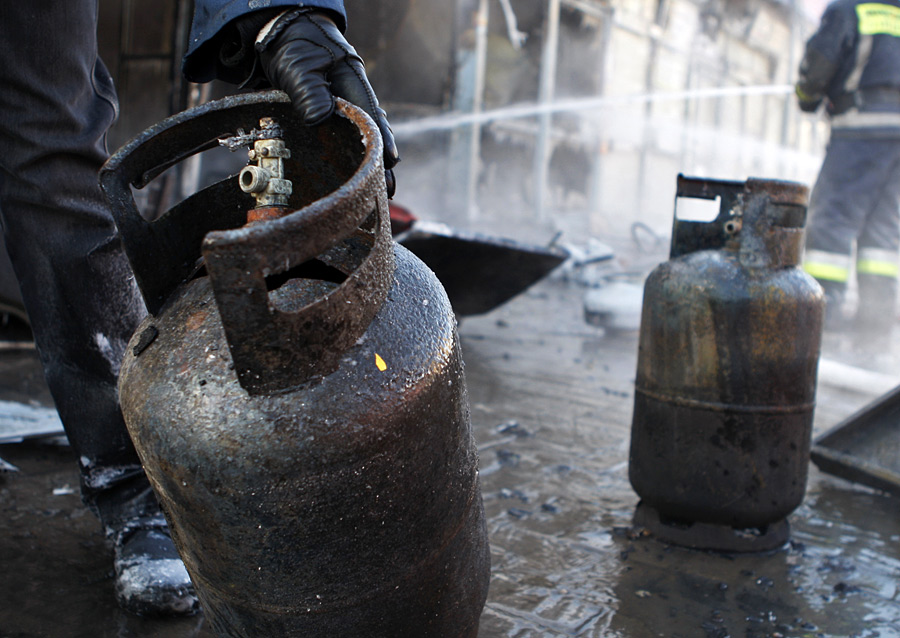
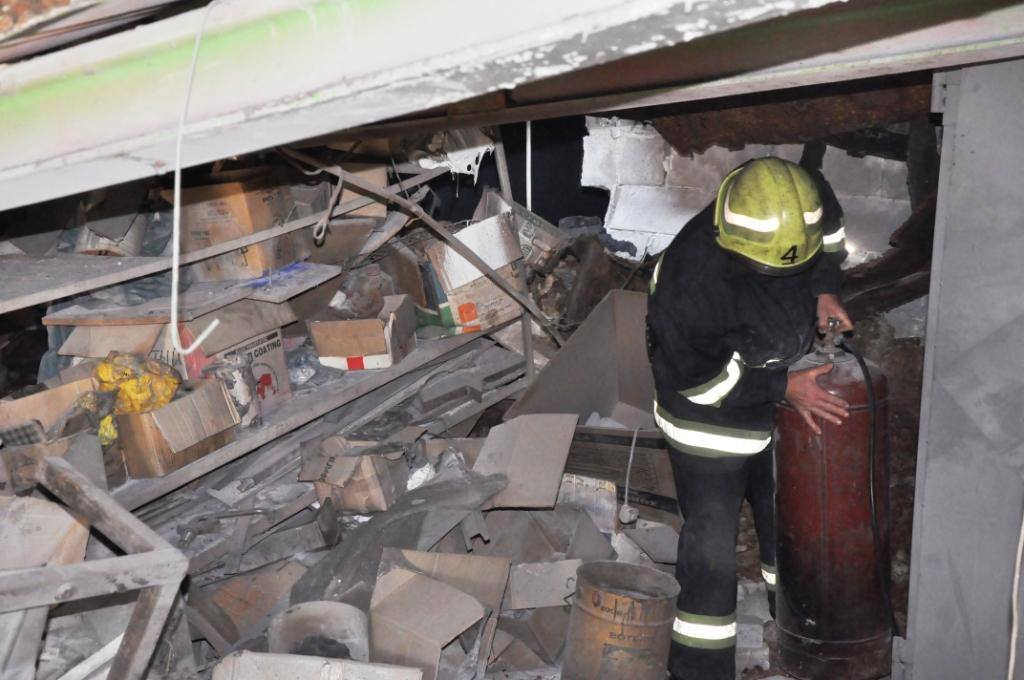
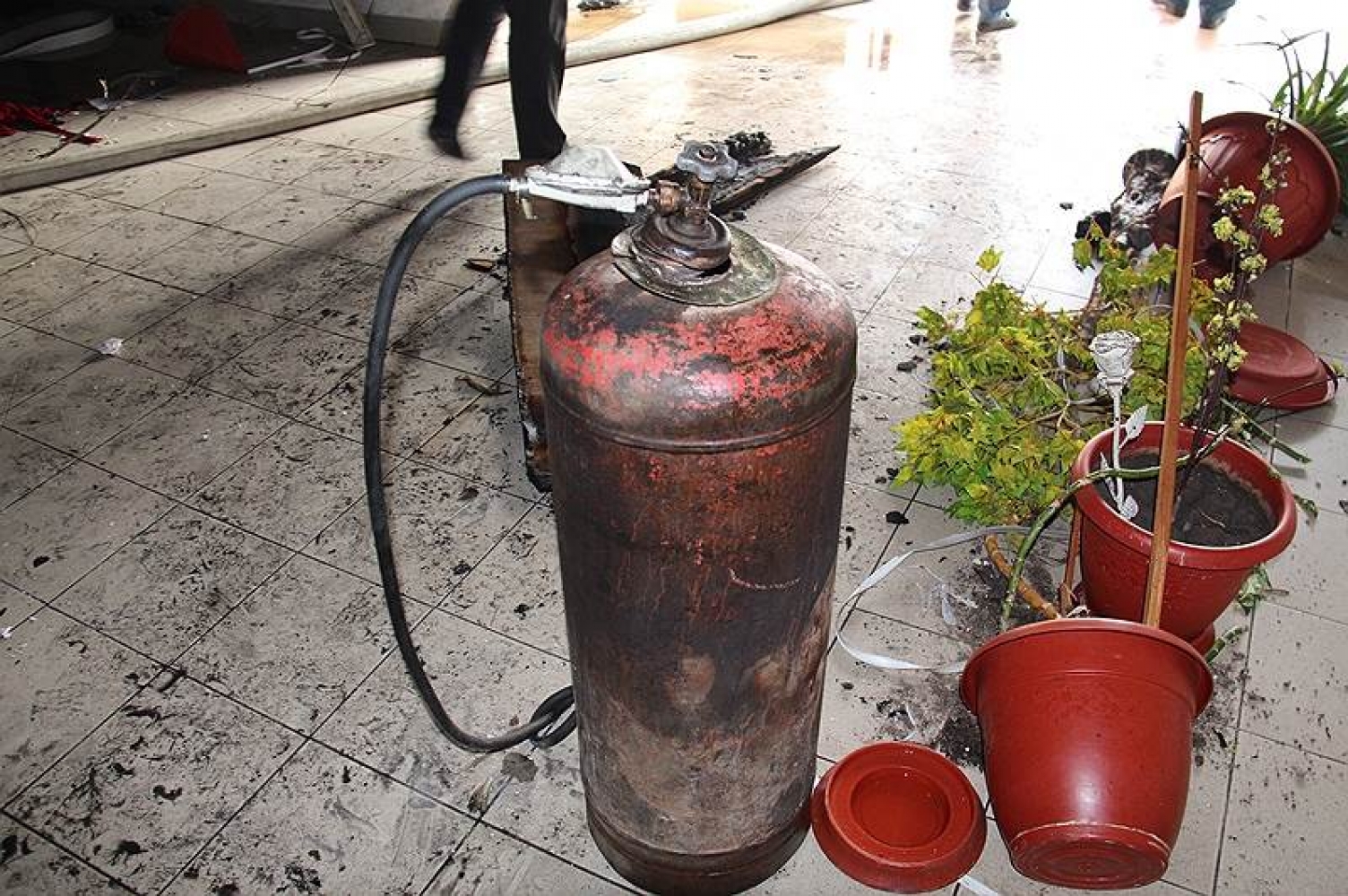
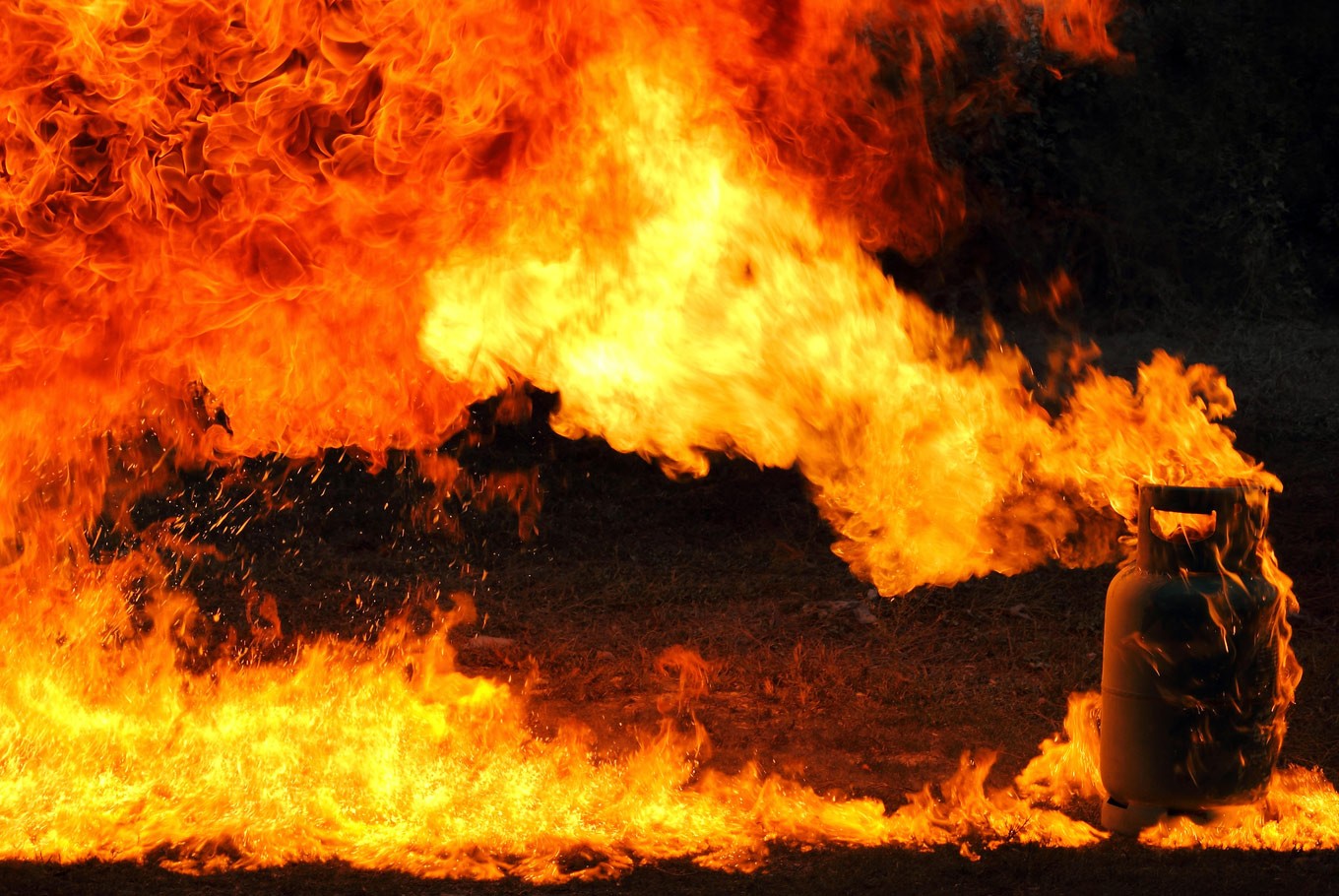
When a propane-butane cylinder enters the fire, the vessel heats up, which leads to the boiling of the liquid phase and an increase in pressure in it. The flame heats the walls of the vessel and weakens their initial strength due to uneven heating of the surface, which, as a rule, leads to the destruction of the vessel. In this case, the vapors from the instantaneous evaporation of the liquid are ignited and a "fireball" is formed.
In case of fire, the liquefied gas leaving the cylinder can burn in vapor, liquid and vapor-liquid phases, each of which has its own combustion temperature. The nature of the outflow of gas from the cylinder can be determined by the color and type of flame: in the vapor phase, the gas burns with a light yellow flame; in the liquid phase, the flame is bright orange with the release of soot; in the vapor-liquid phase, combustion occurs with a periodically changing flame height. These signs of a visible flame are indirect characteristics of the depressurization of a cylinder with domestic gas and are fraught with an explosion.
Propane-butane gas used in everyday life to generate thermal energy, due to lack of control during operation, can lead to suffocation, poisoning, and explosion. Therefore, it is necessary to know and strictly follow the rules for using gas appliances, water heaters, stoves and caring for them. In order for gas to remain only a good helper, remember that it is strictly forbidden: to use gas appliances in the absence of draft in the ventilation duct; leave unattended gas appliances turned on; allow children under the age of 13, as well as persons who have not been instructed, to use gas appliances; arbitrarily transfer and repair gas-cylinder installations.
Safety measures to become a habit when using city gas
You always need to remember about the safety rules that must be followed at a subconscious level.
Before lighting a gas stove, it is necessary to ventilate the room at least for a short time.
Follow the sequence of turning on gas appliances: first light a match, and then turn on the gas supply.
Before turning on the oven, it must be ventilated.
The gas should burn with a uniform blue flame. If there are yellow tongues in the flame, then the burner is clogged. Still the flame can break away from the burner. This indicates the intake of a large amount of air. In both cases, you need to call a wizard who will fix the problem.
Each user of gas equipment must conclude a contract for professional maintenance of appliances and renew it in a timely manner.
Homeowners should regularly check vents and outlets during the heating season for blockages and ice build-up.
Do not leave working gas appliances unattended if they do not have the appropriate automation and are not designed for continuous operation.
Constantly check the ventilation draft and / or keep the vents in the rooms where gas appliances are installed open.
Preschool children may not be allowed near gas appliances. As well as persons who do not give control to their actions and have not been pre-instructed.
It is forbidden to use gas appliances for other purposes: for drying things, heating the room, etc.
It is forbidden to sleep and rest in a room with working gas appliances.
At the end of the use of gas, it is necessary to close the taps on gas appliances, the valves in front of them, and when using cylinders, the valves of the cylinders.
It is advisable to place gas cylinders (working and spare) for household gas appliances outside buildings (in annexes, basement and basement floors) at a blank wall at a distance of no closer than 5 m from the entrances to the building
Outbuildings must be made of non-combustible materials.
To detect the presence of household gas leaks, a soapy solution is used, but not an open flame.
All work related to gas equipment or gas pipelines is carried out by special licensed organizations.
When leaving for a long time, you need to close all the valves on the gas pipe.
Be attentive to elderly neighbors who may forget to turn off the gas, and be wary of dysfunctional neighbors ... Although in which case this will not help much, unless, of course, you live in a communal apartment.
Timely checking of equipment significantly reduces the likelihood of dangerous situations (boilers and columns are checked once a year, and stoves - once every three years.
although if the plates are old, it is better to check every year).
The hose connecting the gas line to the stove must not be pinched by an object standing on it or stretched, bent, twisted. It is best to fix it with safety clips above the floor. Please note that the hose connecting the gas line to the stove must be specially made for this type of operation and be marked accordingly. In domestic conditions, as a rule, red hoses (with a red stripe) of class I are used. The hose for supplying oxygen to the gas appliance is marked in blue and belongs to class III. Extended information about the purpose of the hose is indicated in the product specifications.
Make sure the flexible hoses are tight on the faucet. The recommended length of such a hose is up to 2 meters, the service life is up to 4 years (optimally 2 years), after which it should be replaced.
After each use of the gas stove, it is recommended to close the valve on the pipe, blocking the gas supply.
Very good advice - if possible, set up an alarm against gas leaks. In the event of a leak, it will sound an alarm. And some will be able to turn off the gas.
Its disadvantage is the price and the need to periodically check and maintain.
Install the analyzer in the immediate vicinity of a window or ventilation duct, avoid installation in places where the sun's rays constantly fall. Exposure to high temperatures may cause the gas analyzer to become unusable.However, if there is no other suitable place, then sun protection must be installed on the device. An important condition for the operation of the gas detector is its constant cleanliness. Because even a slight contamination of the sensors can lead to unstable operation of the device.
The degree of danger of HBO
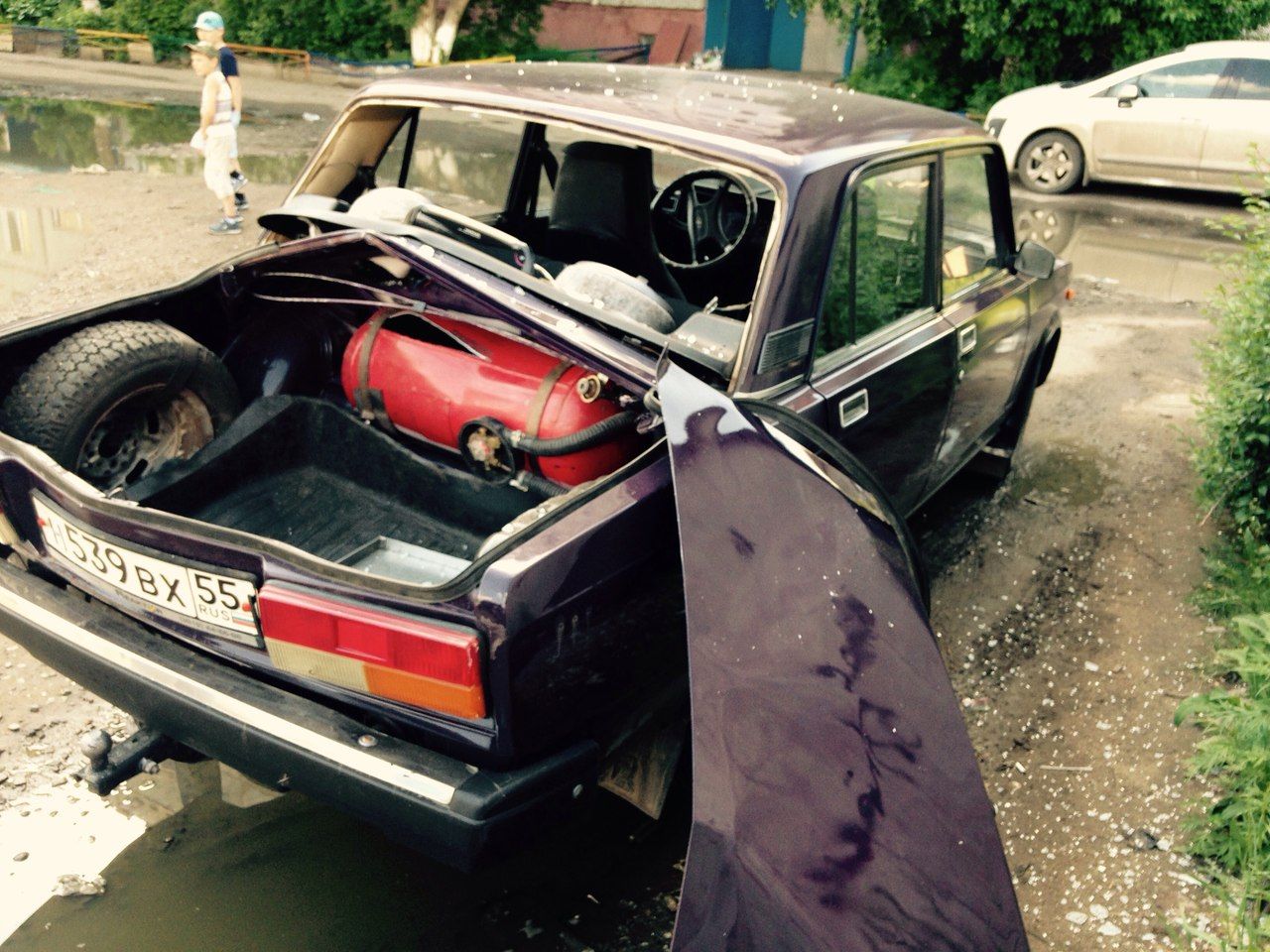
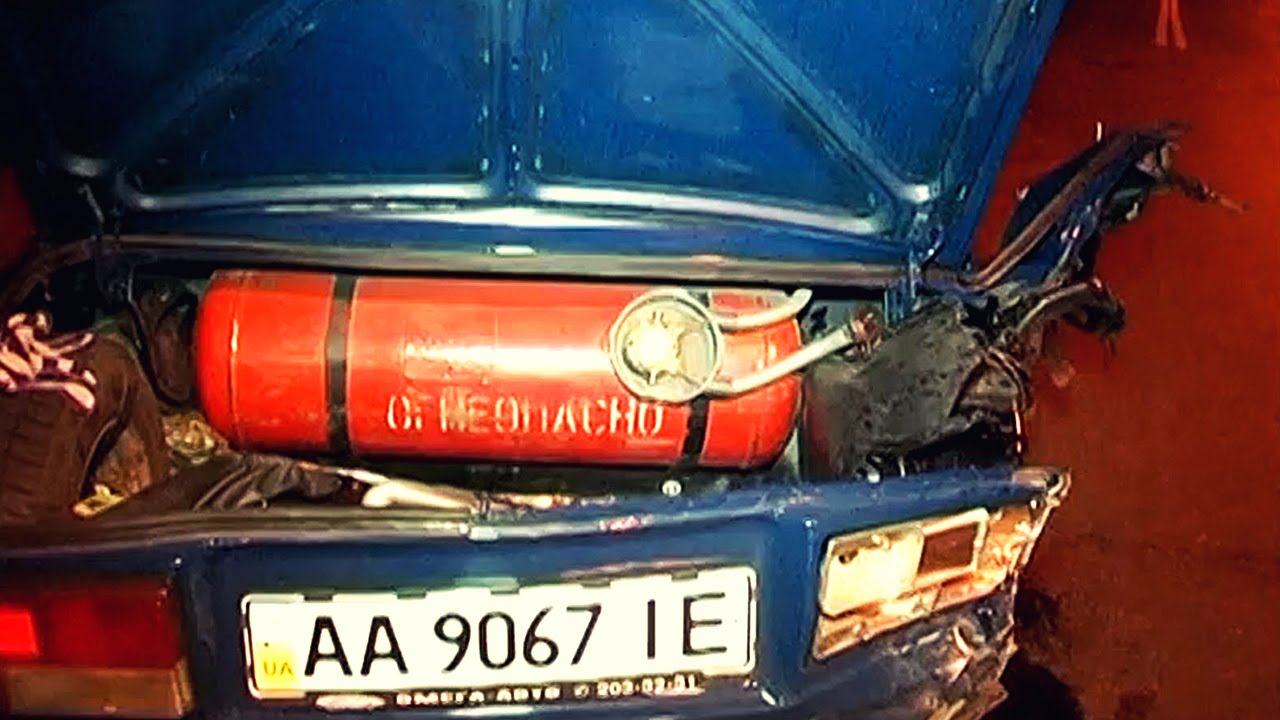
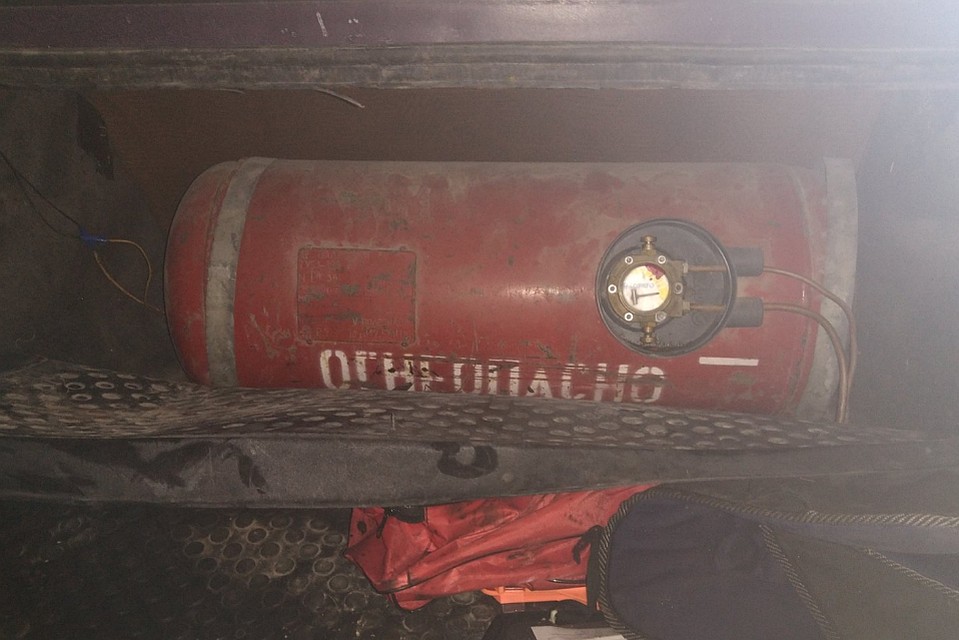
The main disadvantage is that the use of gas can cause unintended consequences. Often gas cylinder explosion in the car causing serious injury. This usually happens when the installation is incorrect or violations of the HBO operating standards. But there are cases when a gas cylinder exploded in a car for no apparent reason.
The danger of an additional fuel supply system is explained by other factors. In addition to explosions of gas-powered cars, cases of ignition of gas cylinders have been registered. At the same time, drivers and passengers of the car are saved, but irreparable damage is caused to the car.
Basic information about gas cylinders
Indispensable to date gas cylinders at home can confirm with certainty a significant part of the population of Russia.
At the state level, Rostekhnadzor has identified common problems in the use of gas vessels that you need to be aware of, as they are related to their safe use:
- outdated fleet - about 90% of all cylinders are not protected from overfilling during refueling;
- lack of clear state regulation in the field of circulation of cylinders on the market, which can include the presence of illegal gas stations;
- the need to improve and bring the norms of technical parameters to international standards.
Non-compliance with these requirements and recommendations of the European Commission makes it difficult to ensure the safety of gas-balloon products used in Russia and imported.
In addition to knowing the general problems, to make it easier to imagine the causes leading to an explosion and the conditions that can contribute to this, it will be useful to know what cylinders exist, understand the device, understand some of the nuances of the physics of the explosion and combustion of the mixture used in them.
Types of gas vessels
Depending on the area of application, the filler used and connection methods, gas vessels may differ both in design and in the material from which the body is made.
The most popular are metal cylinders, both new and old park vessels. The main reason for the increased demand for tanks of this type is their relatively low price and a large number of offers on the market, including due to tanks manufactured back in Soviet times.
But it is steel cylinders that are subject to the greatest danger of explosion and, following the principles of safety, require compliance with a number of conditions during their storage and operation. Therefore, we will dwell on them in more detail.
How is the balloon arranged?
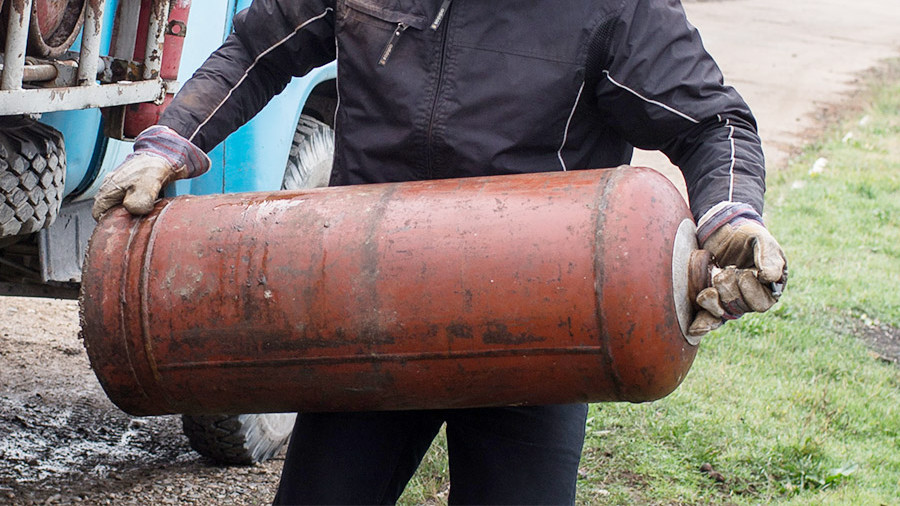
By design, the gas vessel resembles an ordinary lighter, the capacity of which is also filled with a substance in two states of aggregation. Part of the reservoir is occupied by gas in the liquid phase, the remaining free space is filled with the same substance, but in a gaseous (working) form. Through the shut-off device, the gas enters the appropriate equipment for ignition and use for its intended purpose.
The standard equipment of the gas cylinder includes:
- The gas vessel itself, or shell, is cylindrical in shape and has a minimum wall thickness of 2 mm.
- Balloon valve with locking element and handwheel.
- An annular support (shoe), which ensures a stable vertical position of the gas container.
- Casing that protects the valve from damage and contamination during transportation, storage and operation.
A cap is attached to a special threaded part - the cylinder neck ring.
Its use allows you to reduce, stabilize and maintain the pressure of the mixture at the values specified for a particular gas consumer. Such an adapter is easily installed on cylinders of any kind.
Gas mixture for domestic cylinders
The cylinders are filled with hydrocarbon gas - a mixture of propane and butane, which is pumped into a vessel under pressure up to 15 MPa.
The ratio of these hydrocarbons determines the seasonality of the use of the mixture or a specific region. The fact is that with relatively the same basic properties, propane and butane have a significant difference in evaporation temperature values: butane - 0.5 ° C, propane - 43 ° C (with a minus sign).

Knowing the principle of mixing hydrocarbons used in gas tanks is essential not only to reduce the cost of fuel (butane is cheaper than propane), but also to reduce, due to less intense butane evaporation, the risk of overpressure formation with a significant increase in ambient temperature. A sharp increase in pressure in the tank can cause its depressurization and, accordingly, an explosion or fire.
Fundamentals of Safe Cylinder Handling
Before installing the balloon and
Only certified cylinders supplied by specialized organizations, having a paper passport for all cycles of operation and the corresponding marking applied by the impact branding method, will be used.
The main technical requirements that must be observed during the operation of cylinders include:
- All cylinders, with the exception of one (five-liter for connecting to a gas stove) must be installed in outbuildings outside buildings and at a distance not closer than 5 m from their entrance.
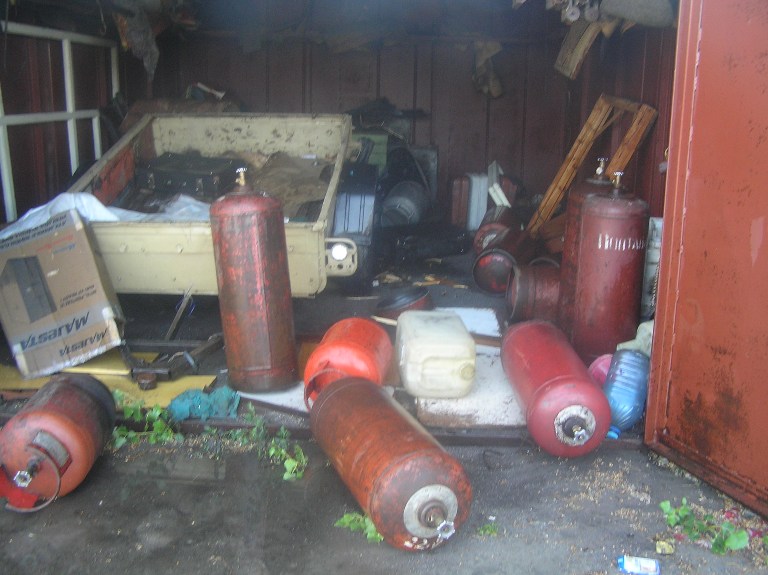
- Avoid storage of cylinders in living rooms, basements and attics.
- Do not place cylinders closer than 1 m from heaters and 5 m from open flames.
Obvious, but often forgotten safety measures when using vessels with gas, the following should be attributed and taken for strict execution:
- Do not bring a lit match or lighter near the cylinder to check for gas leaks.
- Categorically exclude the use of open fire to heat the gearbox or valve. For these purposes, only hot water is allowed.
- If gas is detected in the room, do not turn on any electrical appliances, including lights, and do not turn them off. The temperature of a spark in a socket or switch can reach up to a thousand degrees.
- Do not attempt to repair valves and other structural elements of the cylinder yourself.
In addition, you must strictly follow the time frame prescribed by the manufacturer for the use of cylinders. Vessels manufactured before December 2014 can be used for 40 years.
In the absence of information on the permitted period of use of gas cylinders manufactured after this date and not having accompanying documentation for them, Rostekhnadzor recommends taking 20 years as the cylinder's shelf life.

It is strictly forbidden to carry gas cylinders using the valve as a holding device. This can cause depressurization or breakage of the locking device.
A safe alternative to steel gas cylinders are more modern polymer-composite vessels - eurocylinders. Their flasks are protected by a plastic casing, do not accumulate static electricity. The explosion safety of composite cylinders is ensured by equipping them with a new generation of safety devices - a fusible link and an overpressure relief check valve.
"You've been breathing a lot lately"
Olga Grabar, a lecturer at the Lviv Polytechnic State University, who died of a coronavirus infection, complained about the lack of oxygen in Zhytomyr Communal Hospital No. 1.
“There is no oxygen for people in intensive care with Covid-19! Today resuscitation worked through time! And this is our only chance for salvation! Intervene!!! I know that you can do everything in this city!!! I don’t know how we can survive the night now, and in the morning there is no oxygen at all !!! I am now lying here myself, oxygen has been turned off eight times today!!! Poor doctors in intensive care do not know what to do!!! Save!!!" — wrote the woman in the social network. A day later she was gone...
The hospital immediately denied the lack of oxygen that Olga wrote about, saying that the 39-year-old woman did not die from oxygen deficiency. The cause of death was severe pulmonary embolism.However, any medical handbook says that the treatment of pulmonary embolism requires constant oxygen therapy.
Partially recognized the problem of the Deputy Mayor of Zhytomyr Maria Misyurova. Although hospitals are provided with oxygen, there were “some technical problems” over the weekend, she said. The Ministry of Health concluded: "Concomitant diseases made it impossible to save the woman's life."
Olga Grabar died last week. But the situation has not only not changed for the better, but worsened. Daniil Dovbun from Dnipro said that in the hospital with a saturation of 84% (the norm is 98% and above) he was allowed to "breathe" 20 minutes a day.
“Paleness and cyanosis, weakness and loss of consciousness alarmed no one. I was recommended to carry ammonia in my pocket,” says Daniil.
Yulia's relatives from Kyiv were in two hospitals - No. 5 and No. 17. And, according to Julia, there is no oxygen for everyone. “It is already being sold under the counter. We need oxygen - drive the grandmother, and the person will be allowed to breathe, ”Julia is indignant.
Lyudmila Kravtsova, whose friend is now in one of the Kyiv hospitals with coronavirus, shared her recently written letter: “A collapse is when the head doctor of the hospital cannot fill the oxygen tanks. There is no oxygen in Ukraine! Not for any money! You lie in a ward where oxygen is carried along the walls, and the pipes are empty. You have been breathing a lot lately. Everything, tired, went on to drip. Do not be ill! There won't be enough money!"