- Whether or not to flush toilet paper in the 21st century
- Items that also cannot be sent down the drain
- How to use the remedy?
- Signs and superstitions
- Can you throw this down the toilet?
- Why can't condoms be flushed down the toilet?
- What sizes are condoms?
- Why you can't flush condoms down the toilet - objective reasons and superstitions
- Rational explanations
- Why you shouldn't throw tampons down the toilet
- Signs and superstitions
- Clearing sewer blockages
- 11 items that should never be flushed down the sink or toilet
- Video
- Does the material of the condom matter?
- Polyurethane
- Polyisoprene
- Logical explanation of the ban
Whether or not to flush toilet paper in the 21st century
However, those who flush ordinary toilet paper down the toilet for many years notice that this does not affect the operation of the sewer in any way. And they are sincerely surprised when they hear prohibitions in connection with this and see angry announcements.
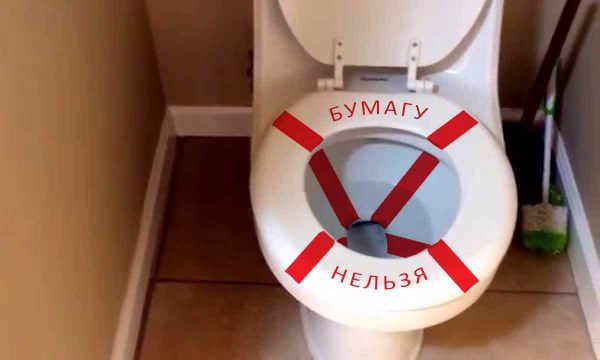
This is natural - after all, recycled paper is easily soluble in water and can in no way damage the flow of water and waste. This also applies to new buildings, and houses of the Soviet era, where the sewage system is old. What about country houses? Yes, nothing will clog there either if wide pipes were used during communications.In most cases, it will not interfere even with autonomous systems where septic tanks are used.
Items that also cannot be sent down the drain
So let's get started:
- Construction garbage. Nothing like this can be placed in the toilet (especially just installed). Moreover, we are talking not only about large-sized objects - pieces of bricks or concrete - but also about bulk substances. The former, for obvious reasons, will get stuck in the nearest knee, and it will be very difficult to pull them out of there. The second will settle on the pipes and will also cause blockage, but not immediately, but a little later.
Residues of cement do not need to be flushed down the toilet
- Granules for cat boxes. It all depends on the variety: gel, mineral, clumping, woody, and so on. The first three are made from special substances that do not decompose in water. Therefore, they, like condoms, are strictly forbidden to flush down the toilet. The consequences will be similar. As for the wood filler, the compressed ash pellets decompose well under the influence of liquid, so they can go down the drain for further cleaning in special city-wide settling tanks. However, it is better to refuse this, as sometimes wood ash can clump and get stuck in some narrow place, adding to your headache.
Cat litter pellets shouldn't be flushed down the toilet either.
- Toilet paper. It all depends on whether your home is connected to a centralized waste collection and disposal system or you are the proud owner of a spacious country house with an individual septic tank. In the first case, everything is fine. Toilet paper is made entirely of cellulose.Therefore, although it is resistant to mechanical stress and does not dissolve in water, once it enters the collector, it decomposes into its constituent elements under the action of substances specially added to the treatment sedimentation tanks.
As for individual septic tanks, everything is not so simple here:
- firstly, when constructing an individual sewage system, pipes of a much smaller diameter are used, so the chance of cellulose clogging increases many times over;
- secondly, toilet paper, getting into its own septic tank, does not decompose and settles on the walls and bottom of the container, clogging the tank.
Toilet paper recycles well in city wastewater treatment plants, but can clog your own septic tank
- Food waste. The situation with organic waste is generally similar to that described in the previous paragraph. For city sewers, food particles are absolutely safe (unless, of course, you flush too large pieces down the toilet that will get stuck in the nearest knee). It is strictly forbidden to flush food waste into an individual sewer, especially if you have a biological treatment plant with anaerobic bacteria installed.
How to use the remedy?
For a condom to be effective as a contraceptive, it must be used correctly. It is more convenient to open the package along the jagged edge, it is specially designed for this. During passion, you want to make this manipulation as quickly as possible, but you should not lose your head. Do not use scissors or other sharp objects and shred the foil, as this may damage the condom itself. In addition, you need to know why condoms should not be thrown down the toilet, and what to do with them next.
The next step is to determine how the condom is folded.If it's in the dark, this can be done on touch. For these purposes, you need to hold the folded ring in your hand and carefully unfold the remedy with your fingers. If this does not work, then the direction is chosen incorrectly. Don't roll the condom too hard, as it will be harder to put on and may not work as well. When the correct direction is chosen, you need to roll the contraceptive back.

Signs and superstitions
Most folk signs were formed many years ago, when no one thought about contraceptives. But even in the modern world, 2 beliefs about condoms have appeared:
- If you flush contraceptives down the toilet, the unborn child will suffer from this. His life will be, to put it mildly, similar to the contents of a sewer pipe.
- This can lead to infertility. Seeing how carelessly a person treats the rudiments of life, the Universe can punish him by depriving him of the ability to have children.
So, you should not flush contraceptives down the drain. This can cause trouble with a clogged pipe, and you will have to call a plumber. But the main problem is not even this, but the negative impact of latex on the environment. If every person harms the world around, then it will not end in anything good.
They can lead to disastrous consequences. Newcomers are worried that they do not know how to use a condom and are afraid of getting into an awkward situation that will make the girl laugh. But with their proper use, you can not worry about sexually transmitted diseases, as well as the fact that an unplanned pregnancy will occur.
Can you throw this down the toilet?
8. Dental floss
From the outside it seems that this is just a thin thread, but it does not decompose.In addition, she also has one bad property.
When you flush it, it wraps around other items that have fallen into the drain, and as a result, you will have to call a plumber because of the lump formed.
9. Fats
Almost every one of us flushed the fat left after cooking down the toilet, but this is a very bad habit. When fat is hot, it looks like a liquid, but as soon as the fatty product enters the sewer, it cools and solidifies, turning into a fatty lump that clogs the pipes.
Over time, the hole in the pipe will become narrower and narrower until there is nothing to pass at all.
10. Cat litter
Although you think that the filler is just the place in the toilet, it should not be flushed down the toilet.
First, cat litter is made up of clay and sand, and these things should not go down the drain. Secondly, cat feces often contain toxins and parasites that end up in the plumbing.
11. Disposable diapers
Just because a baby has defecated in a diaper doesn't mean you can throw it down the toilet. Diapers contain toxic plastic that swells on contact with water.
It is very unlikely that it will slip through the sewer pipe, and as a result, you will have to contact a specialist to remove the blockage.
12. Tampons and pads
There is a good reason why you often see warnings against throwing feminine hygiene products down the toilet.
These hygiene items have absorbent properties and they are able to grow in size, making it difficult to pass through the pipe. In addition, the material from which they are made does not decompose.
13.Hair
Oddly enough, but hair, although it seems natural to us, can play a cruel joke with your pipes.
Not only do they clog drains, but they also trap other items, resulting in bad odors and slow drains.
It seems that a few hairs that have fallen into the toilet should not cause serious problems, but they have the property of accumulating.
Why can't condoms be flushed down the toilet?
After flushing them into the toilet, they enter the pipe, then create blockages. They can stop in the knee, branch, riser. At first, a slight obstruction will appear, water from the toilet will drain slowly. And then foreign objects can overlap each other, and form a complete blockage of the pipe. Everything, the sewerage does not work! Only a plumber can remove the plug. He does it mechanically, using a certain tool. This work is expensive, it will take a lot of time from both the owner of the apartment and the plumber.
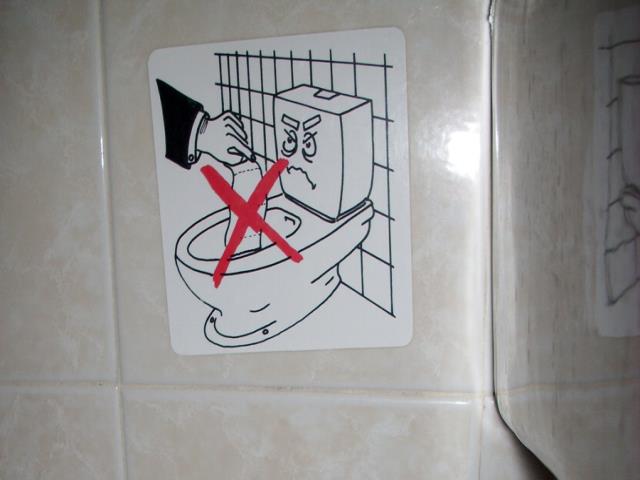
To prevent such incidents from happening, young people need to be more attentive, and even more literate. After all, there is an inscription on the packages of condoms. This is a warning - do not throw hygienic, personal items into the sewer network. Only the inattentive will not see this inscription. If he did not see this inscription, he remains at a loss. But, until a certain point, namely, until the pipe is clogged.
Young people should already know that after a certain act it is necessary to put personal hygiene products in a napkin. Then you can throw them in the trash. In general, if two people use a condom, then they should think in advance how to make sure that this product does not get into the toilet, but even so that an outsider does not see it. Especially the parents.A used condom is rubbish that no one should see! But it also happens that we meet them in street garbage, near houses, in vacant lots. These "gifts" from illiterate people who do not respect anyone, even themselves!
Condom packaging is colorful, noticeable, it should also be immediately removed from view for the same reason. You can cut it with scissors without cutting the packaging. By the way, a condom does not give a guarantee for a possible pregnancy. Sometimes they become pregnant and contract bad diseases, although sexual intercourse took place in a condom. To be completely sure that you will be in order, you must learn to refrain from liaising with unreliable partners.
And it is better to have one / one partner, but reliable, after which only pleasant memories will remain. Repeat which you want on the second day. This is a reliable way not to get sick with diseases that are only transmitted sexually. But no one is immune from mistakes, especially in this matter. But you need to know: only one mistake can break your whole life, make a person sick for life!
After that, he will be an outcast among the people. Although they say there are medical secrets, how can you believe in them? If, for example, they say that an AIDS patient lives in that house. And in this case, one person is ill with something incomprehensible, but with something contagious. And people say this, they didn’t come up with such information, but learned from somewhere. Here is the secret for you!
What sizes are condoms?
To find out which condom is best for you, you will need to measure your penis. To do this, you can use a ruler or centimeter (this is such a tape made of durable inextensible material). To get the correct size, measure your penis while it is erect.You need to know the length, width and girth of the penis (all three parameters in an erect state). We advise you to take measurements twice to make sure you get the correct numbers.
To measure a member, follow these steps.
For length:
- Place a ruler or tape measure at the base of the erect penis.
- Slightly press the ruler into the pubis: the fat layer can sometimes hide the true length of the penis.
- Measure the erect penis from the base to the end of the glans.
For girth:
- Use a piece of rope or the same centimeter.
- Gently wrap a string or tape measure around the widest part of your penis shaft.
- If you decide to use a rope, mark where the pieces meet and then measure the resulting distance with a ruler.
- When using a centimeter, simply mark the value as soon as the end of the centimeter reaches the digital reading.
For width:
You can calculate penis width in the same way as if you needed determine the diameter of the circle. To do this, divide the girth measurement by 3.14. The resulting number is the width.
It’s worth mentioning right away that in different countries and even between manufacturers there are different systems for dividing condoms by size - they can be both alphabetic and numeric, and they also vary in value: the same indicators from one manufacturer can be labeled as “ medium", and the other - "large".
Thus, the width indicators of standard European condoms are usually a couple of millimeters smaller than those sold on the Russian market, and the difference with Asian condoms can be a full size.
What condoms are considered standard in our country? Back in 1983, when barrier contraceptives in the USSR were also called "rubber product number two", GOST 4645-81 was adopted, according to which the dimensions of the condom had to correspond to the following indicators:
- Length - 18 cm (± 2 cm).
- Width - 54 mm (± 2 mm).
- Condom weight 1.4 g (±0.3 g).
I must say that some domestic manufacturers are still guided by this standard, while others take the international notation system as a basis:
- Small - S or Small.
- Medium - M or Medium.
- Large - L or Large.
- Very large - Extra Large or XXL.
By the way, where is the size of the condom? Usually on the back of the box, although some brands may put "Extra Large" or "XXL" on the front of the box.
When you wear the right size condom, you are much more likely to not break, which means you can better protect yourself from sexually transmitted diseases (STDs) and avoid unplanned pregnancies.
We suggest you familiarize yourself with Penis Enlargement with Soda: How to Use Baking Soda for Penis Enlargement
But although the length is often the same for different brands and types, the width and girth are the most important when choosing a condom.
The selection of a contraceptive according to these parameters will be the key to comfortable sex. The fact is that a condom that is too small in width can sit too tightly around the tip of the penis, rub against the genitals and eventually break.
And the condom that sits too loose around the head or bases, may slip off during or at the time of ejaculation. Both of these options are very undesirable.
And owners of penises with a width that is much smaller than the standard are advised to pay attention to the Japanese brand "Segami Xtreme" - their product "Cobra" fits a width of 44 millimeters, and "Feel Fit" - 49 millimeters
Why you can't flush condoms down the toilet - objective reasons and superstitions
/ Interesting /
During critical days, many girls, as leakage protection use sanitary pads. However, not everyone knows where to put them after use. Some manufacturers include detailed instructions with the packaging, including how to dispose of them.
Some girls wonder if they can flush a used tampon down the toilet, because many people throw toilet paper in there and it dissolves. Some instructions say that it is not recommended, others that the product can be thrown into the toilet.
Rational explanations
If you were careful, you probably noticed the warning on the packaging of condoms. It clearly states that it is forbidden to flush the contraceptive into a sanitary device. There are several reasons for this:
- On sale you can find latex and polyurethane condoms. These materials are not able to dissolve in water. Moreover, rubber does not decompose for decades and even centuries, which harms the environment.
- The contraceptive easily catches in the toilet, knee or pipes, then stretches and is able to get stuck. As a result, the system becomes clogged, a traffic jam forms, which provokes conflicts with neighbors and employees of the housing office. Moreover, the standard compositions of the chemical type for cleaning pipes do not work on rubber and do not eliminate the blockage.
- Condoms that have entered the sewer and passed to the treatment systems can disable processing equipment. The contraceptive quickly wraps around the impeller of the pumps and forces them to rotate in the opposite direction. That's why you shouldn't flush condoms down the toilet.
- When a blockage has formed, it is necessary to call an experienced plumber, who is unlikely to be happy with the long and hard work associated with cleaning pipes from a rubber product. In this case, the price of services will increase.
Why you shouldn't throw tampons down the toilet
People who are used to throwing toilet paper down the toilet and flushing it down the drain do not think about what will happen to it later. High quality paper is made from cellulose, which is safe, environmentally friendly and completely soluble in water. Cheaper and lower quality paper is made from recycled paper, has poor solubility and can clog sewer pipes.
To find out whether it is possible to throw tampons into the toilet, one should study their composition well. These modern hygiene products consist of absorbent materials: organic and ordinary cotton wool, viscose, and various fibers.
They are made by pressing, give a cylindrical shape by inserting a thin strong cord inside. Some products for comfortable insertion are equipped with a convenient applicator, which is a two tubes.
Tampons come in different sizes depending on the intensity of your period:
- Mini. Designed for a small amount of discharge, used at the beginning and end of menstruation.
- Normal. Usually used by nulliparous women who have moderate discharge.
- Super. For more copious secretions.
- Super plus. Used for very heavy menstrual bleeding.
If the tampon is made of dissolving cellulose, is small in size, and the instructions that come with it say that it can be thrown into the toilet, this method of disposal is quite acceptable.
Some manufacturers of tampon applicators use dissolvable materials such as split cardboard in the manufacture of tampon applicators and indicate this fact in the accompanying manual.
Tampons with such applicators are also allowed to be thrown into the toilet.
Signs and superstitions
It is hardly possible to say that superstitions about contraceptives arose in antiquity, because condoms began to be used relatively recently. But even in this short time period, some beliefs were formed that began to spread among superstitious people:
- Do not flush the contraceptive down the drain because of fears for the health and fate of the unborn child. Many believe that in this case, the life of a baby born in the future will be seriously spoiled.
- Some fear that such a habit will lead to infertility. After all, the Universe can react negatively to how a person treats a potential new life. Well, the punishment will not be long in coming.
Not everyone believes in superstition, so it's best to avoid dumping condoms down the drain for rational reasons. After all, not many will agree to spoil their day by looking for a plumber, a non-working bathroom and spending money. Yes, and spoiling relations with neighbors will not be the best solution.
Clearing sewer blockages
Blockage removal
Ways to eliminate blockages for all their types are almost the same, they usually differ slightly. The most important thing in this matter is to be confident in your actions and know how sewer pipes are arranged.If you do not have the slightest idea about this, contact a specialist so as not to worsen an already deplorable situation.
If you feel confident and lack of trembling in your hands, you can proceed. At the moment, there are many ways not only to eliminate, but also to prevent blockages, which do not require large financial and time costs.
Prevention methods
The two simplest and least costly prevention methods, as mentioned above, are to refrain from disposing of waste through the sink or toilet, as well as using special nets for the bath or sink. These meshes are designed to block excess debris from entering the sewer pipes.
Another simple method of preventing blockages is flushing pipes. To do this, you need to turn on hot water at least several times a week. The jet must be powerful and must fall directly into the drain hole. Leave the faucet open for 10 minutes. Using this method, you can prevent blockages and dissolve existing ones. on the walls of pipes deposits.
Cleaning the sink with vinegar and lemon juice
Step 1: This method is best suited for cleaning pipes under the sink. In order to start removing the blockage with vinegar, you need to drain all the water in the sink. If it drains very slowly, you will have to wait, because in an empty sink the prepared mixture will act many times faster. If you don’t have time at all, you can scoop out excess water from the sink.
Step 2: Next, you need to find the following substances in your kitchen, or at least some of them: apple cider vinegar, white vinegar, baking soda, sodium tetraborate, or salt. They can be combined with each other, because each has unique properties.
Vinegar (apple or white) can serve as the acid base for the foaming reaction. Lemon juice has the same acidity as vinegar, but smells much fresher and more pleasant. This makes it one of the favorites when cleaning pipes. Baking soda is often used as an all-purpose and natural cleanser, as is borax, sodium tetraborate, and salt will help break down clogs.
Combining them - for greater effectiveness - is in the following combinations: vinegar + baking soda, lemon juice + baking soda, salt + borax + baking soda. To enhance the effect, it is necessary to mix the ingredients in certain proportions.
For the vinegar + baking soda combination: ½ cup vinegar and ½ cup baking soda. For the lemon juice + baking soda combination: 1 cup lemon juice and 1 cup baking soda. And finally, for the salt + borax + vinegar combination: ¼ cup sodium tetraborate, ¼ cup salt, and ½ cup vinegar.
Step 3: Once you have chosen the combination that suits you and cooked it up, pour it down the sink so that most of it goes down the drain. To achieve a greater effect, close the hole with a special plug or cover with a hot cloth. Leave the sink like this for 30 minutes.
Step 4: Clean out any debris with a plunger. In this case, it will only be of auxiliary importance, because the mixture you have prepared will dissolve the main part of the blockage.For the final cleaning, it is necessary to fill the sink with a little water. Then firmly lean the plunger against the hole and push, then release, then push again. Repeat the procedure several times. Remove leftover debris.
Step 5: Open the faucet and fill the sink with hot water, the jet can be continuous - 5-7 minutes will be enough. Hot water will easily remove the last remnants of blockage. This method is quite effective and helps in most cases, but there are also blockages that citric acid cannot overcome. Then another useful method comes into play.
11 items that should never be flushed down the sink or toilet
- Eggshell. Never leave it in the kitchen sink drain. The sharp edges of the shell will, like a magnet, attract and cling to other food particles and accumulate them. Which over time will definitely lead to blockage.
- Fat and oil. Who doesn't flush the remaining oil from a frying pan down the sink or toilet? It turns out that this is by no means the case. Fat does not dissolve in water, but settles on the walls of pipes. The layer keeps growing and growing until other objects no longer fit in the pipe and it clogs up. To prevent this from happening, let the fat or oil cool, add some cool water with a drop of dishwashing detergent, and then pour it into a plastic bag or foil and throw it in the trash.
- Flour. It's simple: when flour is mixed with water, it swells. And the dough in the pipes is definitely not for you.
- Medicines. Most medications are water soluble and won't cause a blockage unless you wash the whole pack off at once. But it's different. Dissolving, they saturate the water with their active components. To put it less optimistically, they poison.Are you sure the filters will handle this? Therefore, if you decide to dispose of expired tablets (which must be done!), The most correct way is to take them to the nearest pharmacy. Local pharmacists have access to proper medical disposal sites.
- Stickers from fruits and vegetables. Before washing, never forget to remove stickers from vegetables and fruits and throw them in the trash. These papers do not dissolve in water.
- Coffee grounds. Unlike you, plumbers don't like strong coffee at all. After all, coffee grounds are the #1 cause of clogged pipes. And water, as you might guess, does not take. Therefore, do not forget to throw the grounds in the trash can. Both from the coffee filter and from the cup.
- Items marked "washable". "Water soluble" cat litter or baby wipes are better thrown in a container than rinsed. Less risk.
- Household chemicals. Except the one designed to clean the toilet or unblock the pipes. And that, without fanaticism. After all, as in the case of medicines, this entire cocktail of Mendeleev will end up in your water and the world's oceans.
- Paper. Except, of course, the toilet. Another "grade" is very poorly soluble in water.
- Macaroni and rice. They swell on contact with water, clump together, and dissolve very poorly. Sounds like a potential blockage, right?
- Dye. Viscosity and chemical composition is a dangerous combination for your pipes and health.
Video
On the packaging of contraceptives of any brand, you can find a mark that says that you can not throw them into the sewer. Few people actually follow this rule, and those who read wonder why don't throw a condom down the toilet?
Does the material of the condom matter?
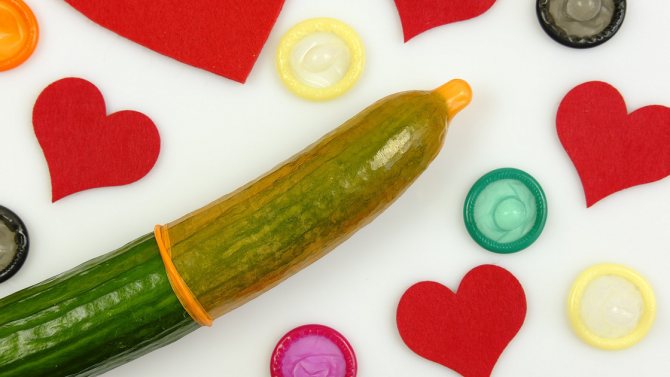
Condoms differ not only in size, color and taste - they are also available from various materials. Most are made from latex, but some brands offer non-latex alternatives for people who are allergic to latex, vegans (latex uses milk protein), or just those who want a change.
Polyurethane
Condoms made from polyurethane (a type of plastic) are the most popular alternative to latex condoms. Polyurethane is thinner than latex and has better thermal conductivity.
Polyisoprene
However, the development of new, even more ethical materials and technologies for the production of condoms continues, for example, they are funded by the Bill and Melinda Gates Charitable Foundation.
Logical explanation of the ban
On the packaging of contraceptives from most well-known brands there is a warning that it is forbidden to flush the products down the drain. There are 4 objective reasons for this:
- Condoms are latex and polyurethane. Both materials are insoluble in water. Rubber can remain intact for centuries, which violates the natural state of the ecosystem.
- The contraceptive is quite capable of catching on something, stretching out and getting stuck in a pipe bend or elbow. This will provoke a blockage of the system, problems with neighbors and the intervention of the Housing Office. After all, chemicals used to clean traffic jams are powerless against rubber.
- Rubber products interfere with the operation of treatment facilities and stop the operation of processing equipment. Most often, pump impellers suffer - the contraceptive is wound around this element and causes it to spin in the opposite direction.
- When a plumber pulls a “not fresh” condom out of the pipe, he will almost certainly ask for more work than usual. This is not surprising.