- Solution of problems
- Solving the problem of constant hum
- Solving the periodic noise problem
- Solving the problem of knocking in pipes
- Other causes of hum
- How to increase weak pressure
- Causes of knocking sewer pipes in the apartment
- The reason for the knock is debris in the structure
- Deformed valve valve
- Structural expansion due to temperature changes
- What types of noise can pipes emit?
- Causes of hum in pipes
- Increased pressure in the system
- Leaks
- Overgrowth of pipes
- Mounting marriage
- Valve break
- thermal expansion
- Depreciation of the crane box
- Air locks
- causes and methods of solving the problem
- Because of the mixer
- Due to the squeezing of cold water into hot water or vice versa
- How to find the cause of the hum
- Alternative causes and ways to eliminate them
- Conclusion
Solution of problems
Solving the problem of constant hum
If the water pipe is constantly buzzing, let's start with a raid into the basement. You can find your risers, if you have not yet been introduced to each other, by comparing their location relative to the entrances. The basement is easy to navigate through the stairs from the entrance to the first floor.
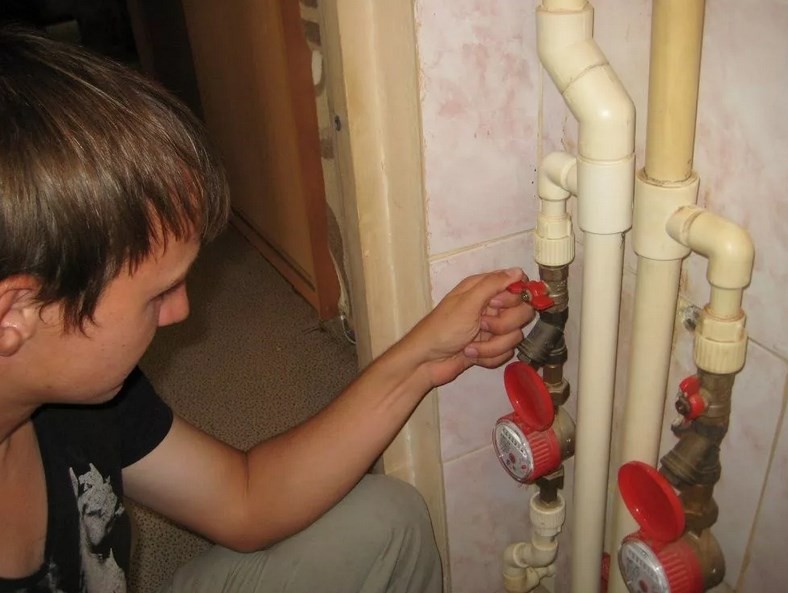
Did you find a leak? Wonderful. Further actions completely depend on the degree of your competence in the repair of plumbing. If you know exactly what and how to do - the tools in hand and go.In all other cases, it is better to make an application to the housing organization.
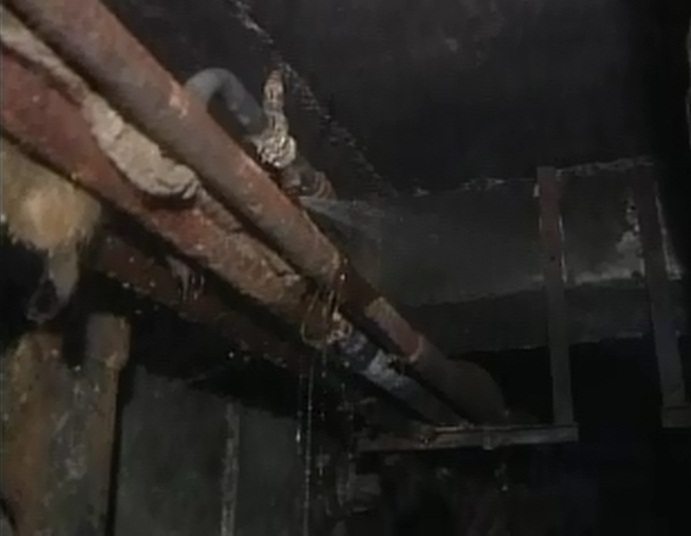
Here on the first floor is not only noisy, but also humid
If the basement is dry, we raid the apartments of your riser. The question to the owners is the same - whether the taps are leaking. With the notorious damage to the gasket under the kitchen faucet, a characteristic sign is that hot water flows from a cold tap (almost the whole year the pressure is higher on hot water).
Finally, if this stage has not borne fruit, the most tedious thing lies ahead - by ear to find a place where a piece of slag or scale that has fallen into a trap prevents the passage of water. Most often this happens in the valve body (by the way, make sure it is fully open) or on pipe thread connections.
Solving the periodic noise problem
The description is much simpler than the implementation. The noise in the water pipes is caused by a malfunction in the neighbors. If so, we have to pay a visit to all the neighbors in the riser and convince them to do repairs. It can take nerves for a wagon and a small cart ...
Solving the problem of knocking in pipes
Here the main problem will be the exact localization of the sound source. Alas, you will have to rely only on hearing and vision: there are no exact recommendations on where to hit with a hammer so that everything is quiet. If quite strong blows are heard repeating at regular intervals, most likely, the solution will be to replace the valve on the riser.
This is also the case when it is better to entrust the work to representatives of the housing organization. Actually, such work is included in their direct duties.

These valves will not disturb residents with noise
If there is a pronounced connection between a change in the temperature of the riser or hot water supply and knocking in the pipes, you have to find the point where the pipe comes into contact with a stationary object.Alas, there are no universal solutions.
In the case of a steel pipe (for heating or water supply), this solution can sometimes help: weld a bracket to it and firmly fix it with an anchor. It would make more sense for the bowl to simply eliminate the very point of contact with the wall or other pipe, creating a small gap.
If we are talking about a riser in the ceiling, you don’t want to leave a hole for the neighbors. However, it is possible, by slightly expanding the hole in the concrete, to fill it with mounting foam. This will solve the problem completely.




Other causes of hum
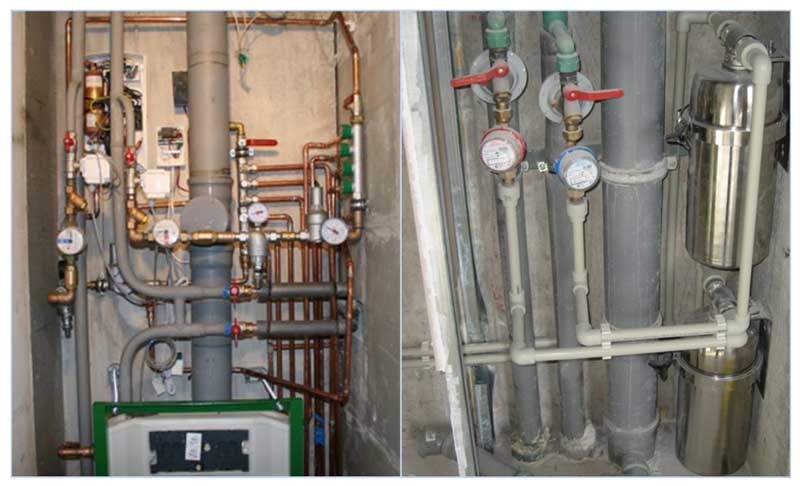
First of all, it is high blood pressure. For apartments in an apartment building, the cold water pressure rate is 6 bar or atmospheres, for hot water - 4.5 bar. When liquid passes from pipes with a large diameter to a small one, the pressure rises, which provokes the appearance of strong noise when the mixer is open or in the process of filling the toilet tank.
In this case, it is necessary to replace pipes with a larger cross section with a smaller one. If this is not possible, install a special rubber membrane in a metal case on the tee pipe, which will drown out unpleasant noise.
Leaks can also cause such noise. Moreover, these are cases with small fistulas, when a very small amount of fluid flows out. Leaks occur due to a fistula in a riser or pipeline, a valve that is not tightly closed, or when threaded connections are depressurized. To eliminate noise, you need to eliminate the leak.
We note once again that metal pipes without timely and competent cleaning are gradually covered inside with limescale. The passage of the channel narrows, and the contact of water with sediments causes noise interference.Unfortunately, in such advanced cases, it will not be possible to eliminate the problem by standard cleaning or flushing the passage.
You will have to contact the management company or the housing and communal services authorities and replace the pipes with new ones, already from modern materials that are not subject to lime accumulation. In addition, you can always seek help from experts if you do not want to fix the problem yourself.
How to increase weak pressure
If the water heater gives a weak pressure of water, it is worth correcting the cause of the problem. The method of increase depends on the characteristics of the breakdown, blockage.
How to find out the cause of the malfunction and understand why the hot water supply is weaker:
- Determine if neighbors have such a problem. There are supply problems throughout the house, and there is not enough pressure on the upper floors.
- Check the system, detect blockages and scale layers. Inspect filters and their suitability.
If the renewal of surfaces and treatment with cleaning agents did not help, but there is not enough pressure for water, they act in a different way. The power of the device may not be enough for normal feeding. A water pump for a gas column will help increase pressure and improve pressure. Devices differ in types of control. It can be manual or automatic. The pumps are intended for pumping only cold or hot water.
If a from the gas column there is no good pressure, and it requires flushing, they also use a pump. This requires a device, a container for liquid, an eyeliner, a hose, a key, citric acid and vinegar.
Causes of knocking sewer pipes in the apartment
When clicks produced by pipes begin to be heard in the apartment, a rare person will not be confused, because it is not clear why the room was suddenly filled with these specific sounds. This problem can be caused by three factors:
- Dirt accumulated in the structure;
- Deformed valve valve;
- Expansion of the structure under the influence of temperature changes.
The reason for the knock is debris in the structure
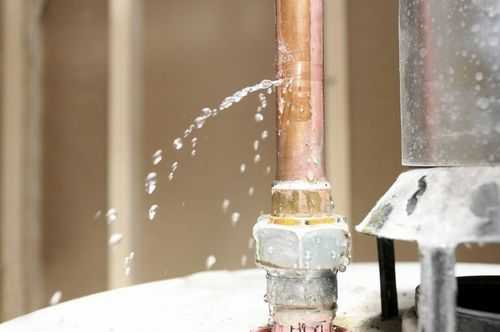
Debris can get into the pipes, which creates sounds when it collides with the walls of the structure. The problem is solved simply. Foreign objects can be removed by flushing.
For this purpose, a flush hose is attached to the structure, then it opens. However, you can only do this work if you have the opportunity to turn off the riser, as debris can jam the system.
Flushing is the easiest way to solve the problem. If there is a lot of debris and flushing does not help, you can disassemble the radiator. This work is carried out at the end of the heating season.





Deformed valve valve
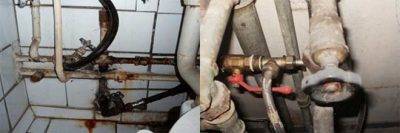
This problem often torments owners of helical valves. If installed incorrectly, the valve is deformed and then stops closing. It is recommended to eliminate the defect urgently, because a torn off valve causes not only a knock, it can also shut off the water, which will leave all residents of the entrance without heat. With weak and medium deformation of the part, turbulence occurs, the water flow is blocked, and a water hammer is created. So there is a heavy knock, from which not only the inhabitants of a separate apartment suffer, but the entire entrance.
In this case, it is urgent to change the valve. To do this, turn off the heating structure.The entire job of replacing the valve will take approximately one hour. You should not delay the call of the master, because when the pipes knock - this is only half the problem. In the event that the circulation of water stops, it will take much more time and effort to eliminate the consequences.
Structural expansion due to temperature changes
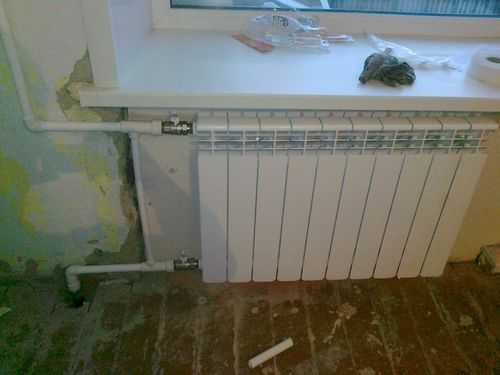
A characteristic sign of this kind of problem is that the pipes knock quite quietly, but often, which has an extremely annoying effect. The essence of the problem is that at high temperatures the structure begins to expand. The loose end of the structure begins to move during temperature changes, which causes a characteristic creak. The expansion of the pipes is very slow, and therefore the movement of the structure is accompanied by clicks.
Thermal expansion is most often observed in structures transporting hot water, since temperature drops most often occur in such systems. However, this does not mean that this problem does not occur during the operation of heating systems. In some heating structures, the temperature may change several times during one day. Drops can occur due to open windows located next to the pipes.
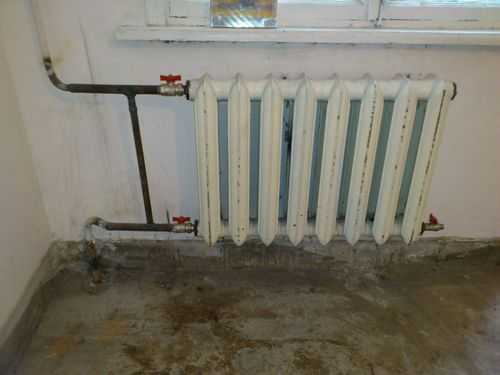
How to get rid of knocking in the apartment in this case? First of all, it is necessary to determine the source of the sounds. Then, a suitable method is found to eliminate a specific problem. In the best case, you can get rid of noise by fixing a fluoroplastic plate under the structure. It will be more difficult to repair the system with a punched ceiling in order to fill the resulting space with mounting foam. After pouring, plastering and sealing of the floor is carried out.
Summing up
If the pipes are knocking, it is important, first of all, to determine the cause of the problem. Without this, it is impossible to choose the right set of necessary measures.
There are many ways to eliminate noise. Some of them can be done with your own hands, for large-scale work you will need the help of a professional.
What types of noise can pipes emit?
There are legends about the sounds emanating from the elements of heating systems. Under certain circumstances, not only heating pipes, but also other pipelines make noise in the house. At the same time, the sound range of all sanitary systems is approximately the same. The most "musical" are metal pipes, but plastic ones can also "please" with unusual melodies. The water heating system can make a wide variety of sounds:
- murmur;
- gurgling;
- rattling;
- knock;
- crackling;
- clicks;
- hum;
- whistling;
- howl.
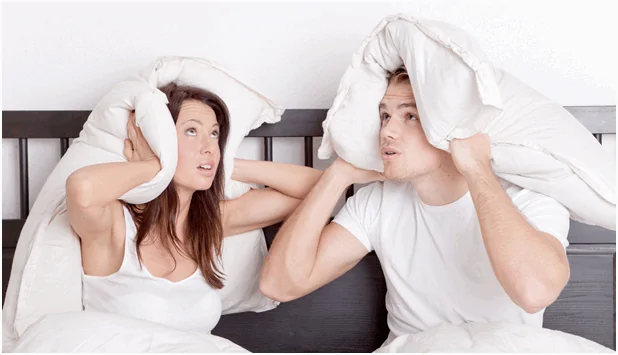
Specific sounds signal the presence of problems in the heating system, therefore it is necessary to identify and eliminate the source of noise in a short time, since its systematic impact on a person leads to disorders of the nervous system, interferes with sleep and reduces performance. Why does water make noise in heating pipes Noise in heating pipes cause the following reasons:
- air jams;
- high speed of movement of the coolant, due to an incorrectly selected diameter of the pipeline or a decrease in the internal lumen of the pipe due to overgrowth of its walls;
- coolant leakage in emergency areas or through poorly closed valves;
- scale peeled off from the walls of pipes or debris that got into the circuit during installation;
- faulty or incorrectly installed valves;
- excessive pump power or improper installation;
- wear of control valves or thermostatic heads;
- cavitation - the formation of steam bubbles in the coolant at the site of a sharp increase in the diameter of the pipeline (the appearance of a low pressure area) with their subsequent collapse, destroying the equipment;
- violations of the installation technology (use, non-observance of the minimum distance between parallel sections of a metal pipeline during installation, installation of a filter or valve not in the direction of flow indicated on it, etc.).
If extraneous sounds appeared at the height of the heating season or did not disappear after the start-up, then this is a signal of the presence of malfunctions, and problems should be looked for not only at oneself or neighbors in the riser, but also at the heating point or elevator unit - the source of trouble may be far away outside of housing, as sound waves propagate well through pipes.
Noise elimination methods
The source of noise often turns out to be in the locations of common house communications. The coolant pressure at the heating main input node is the highest, so the slightest malfunctions in it can immediately declare themselves in the form of strange sounds throughout the entire entrance. In a private house, the noisiest place is the furnace or heat generator, where the boiler and its entire piping system are located.


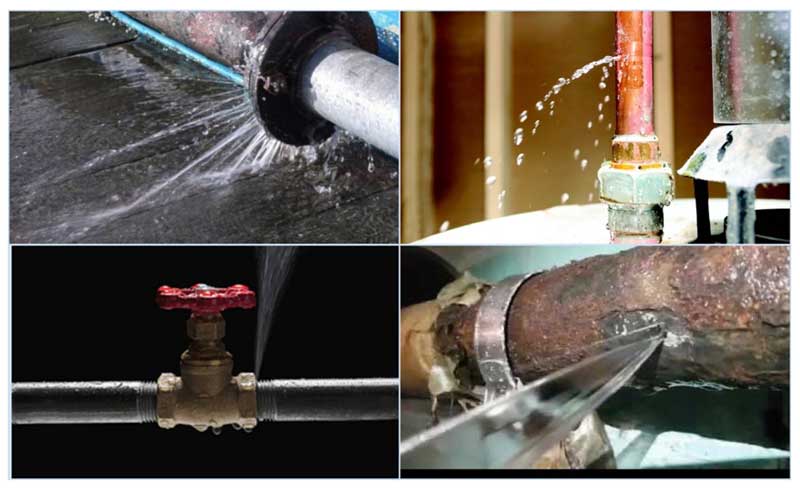
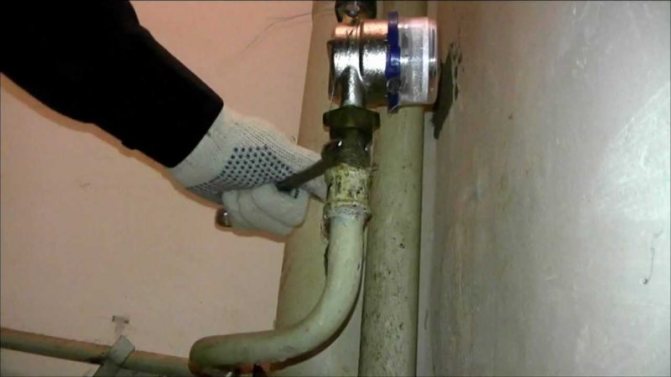


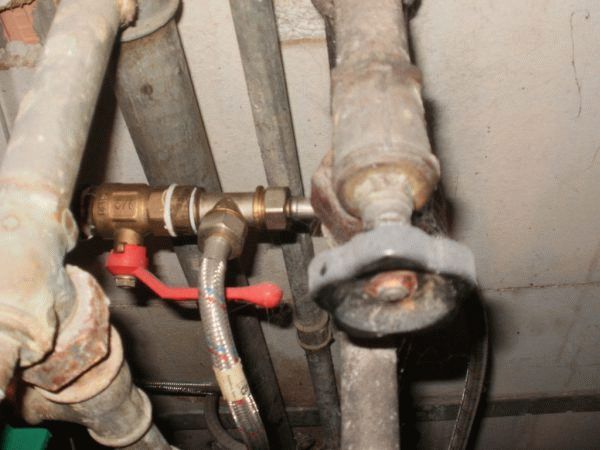
If the problem turned out to be a malfunction of the collective property equipment, then it is not worth fixing it yourself. Worn-out nodes can literally crumble at the slightest attempt to unwind them, and all the blame will be placed on the one who unauthorizedly interfered with the work of a “perfectly tuned” system.It is better to file a complaint with a service organization and wait patiently for their representative to repair faulty components.
A visual memo with the coordinates of the addressees if it is necessary to apply for housing and communal services
If you managed to diagnose problems within your own or neighboring housing, then you should deal with their elimination as soon as possible. In this case, any delay is fraught with aggravation of the situation and complication of repair work.
Causes of hum in pipes
The specific sounds emitted by the pipeline are temporary or permanent. There are three types of pipe noise:
- vibration vibrations.
- Knock when turning on the faucet.
- Whistling hum.
The specificity of each type is determined by the nature of the noise effects, time and place.
If the pipes in the bathroom are buzzing, then this may mean:
Increased pressure in the system
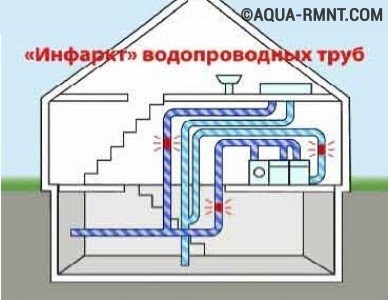
According to statistics, 50-60% of all malfunctions and noise in the pipeline arise as a result of
water hammer (sudden pressure surges). If turning on the faucet is accompanied by a strong, steady buzz and vibration, then this is a sign that the system cannot cope with the pressure of water. Exceeding the allowable pressure standards (over 6 atmospheres) causes depressurization of the pipe or its connections and can lead to rupture of the pipe sheet.
Special equipment will help protect the water supply from water hammer and minimize the consequences:
- The damping block is a plastic pipe installed in front of the thermostat in the direction of flow. Its length varies from 30 to 40 cm depending on the length of the pipeline.
- The thermostat is a special protective device, the spring mechanism of which, during a pressure surge, prevents the valve from closing. It is installed between the valve and the thermal head.
- A hydraulic accumulator (water hammer compensator) is a device that accumulates liquid, takes excess water and dampens a water hammer if it occurs.
- Expansion tank - the design keeps the pressure within normal limits. The tank has a simple design. Therefore, you can do it yourself.
Leaks
This problem is the result of poor installation or worn fittings and/or O-rings. Eliminate such defects repair or replacement of worn parts. But often the search for a leak is complicated by the fact that access to damaged collapsible connections is closed by boxes installed at all levels.
To find an emergency section of common house communications, as a rule, the work of a brigade is required. It is not possible to independently diagnose in this case.
Overgrowth of pipes
Even new DHW pipes become clogged with various deposits. Moreover, in steel products and polypropylene analogues. Lime, scale, grease, dirt reduce the diameter of the duct and cause vibration noise, knocking. It is easy to spot overgrowth. To do this, check the connecting elements of the drains. The easiest way to eliminate this problem is the use of chemicals.
Mounting marriage
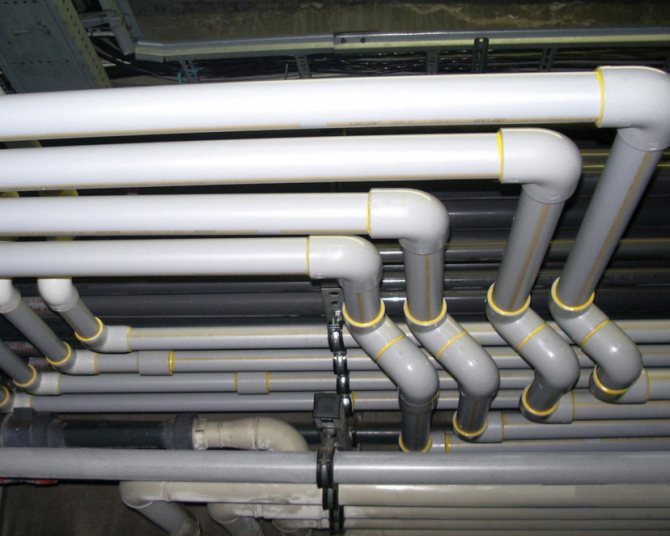
When repairing or laying a pipeline, poor-quality installation is possible. The reason in this case may be loosely closed connections or pipes located at a close distance from each other. In the first case, it is enough to carefully tighten all the connecting elements. In the second, wrap the pipes with dense insulating material.
Valve break
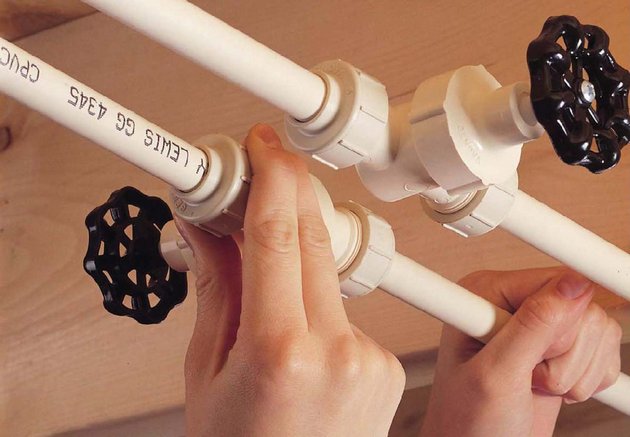
Incorrect installation of the valve leads to breakage or even failure of the safety valve. A broken valve, hitting the pipe walls, makes a characteristic knock.Such damage leads to a decrease in flow. The only solution to the problem is a complete replacement of the part.






thermal expansion
Thermal expansion is the cause of the short tapping that is typical of steel plumbing. The source is pipes with hot water, in which sharp temperature drops occur. A solution to the problem is staples welded to pipes and fixed with an anchor.
Depreciation of the crane box
One common source of extraneous noise is a damaged crane box. Makes her sing:
- installation error;
- marriage in detail;
- worn pad.
By opening a hot and cold faucet alternately, you can easily determine the origin of sounds. Then dismantle it, after shutting off the water supply. Replace damaged sealing rings. If after replacing them and reinstalling the tap, the sounds do not disappear, then the product is defective.
Air locks
The presence of air in the communication system. The technical standards used in the construction of houses provide for the mandatory installation of air outlet pipes. This problem occurs in houses built in violation of these standards.
You can get rid of the cork with the help of bleeding devices:
- ball valve axle boxes;
- Mayevsky mechanical valve;
- automatic air vent.
causes and methods of solving the problem
Why pipes buzz along the riser and what can be done. I have already written possible reasons in some articles, and now I will try to combine them in one article and describe everything in detail. Once again I will say that there may be different reasons, and which I do not know, I describe only those that I myself met and eliminated.
Because of the mixer
I will tell with examples.Your mixer buzzes when you open the tap, and the pipeline immediately starts to rattle. Here, I think, everything is clear with this: it is necessary to repair it, and everything will be in order. This happens with mixers that have half-turn crane bushings or with rubber gaskets. I have not seen this happen in single-lever devices. But this is a clear reason. Several times I met not so obvious. It buzzed monotonously and only at night the entire riser of the water supply, and during the day everything was fine, the residents persuaded to come at night, everyone was warned by the riser. Having passed all the apartments for the first time, I could not determine where the monotonous rattling came from, since visually the pipeline did not pull, and the hum was in all the apartments. Then I thoroughly began to check on the second round. How I did it: I went into the apartment and turned off the main taps (common to the apartment), the main thing is that they keep it. If the rumble did not stop, then he opened it and went to the next one. And somewhere, either on the fifth or on the 6th floor, when they closed, the noise stopped. The reason is a mixer with a half-turn ceramic crane box. And, by the way, most often, from my experience, it was because of them that such problems arose.
Due to the squeezing of cold water into hot water or vice versa
I'll tell you an example. Hot water was turned off for maintenance, of course, it is necessary to turn on the boiler. Some people sometimes forget to close the hot water inlet tap, and it goes into the corresponding riser with a draft, if there is no non-return valve or the check valve does not work, well, this is a retreat. After the water was turned on again, some residents, forgetting to turn off the taps, i.e.turn off the boiler, open the inlet valve, and if the pressure of cold water is greater, it starts to press through the water heater into the hot riser. Also, if the inlet valve of the old model, that is, not a ball valve, starts to play a penny in it, for more details on why this happens, I wrote in the article the water pipes in the basement are buzzing, and I will not repeat, the scheme is identical. But even if the root valve is a ball valve, then in this case there will be no buzzing, but another problem will arise, from the hot water tap all over cold water will flow, and if there is no relief valve on the water heater or it does not work (if it is out of order and the pressure of hot water is greater than cold water, then it will seem to you that the boiler is buzzing), then depending on the pressure difference, you have cold water instead of is hot or vice versa.
How to find the cause of the hum
With intermittent hum in the pipes, the following methods are available:
- A sharp change in pressure (open / close the tap several times in a row). If after this execution over the pipes they react adequately (do not shake, do not tremble, do not leak), then the noise, most likely, turned out to be random. Otherwise, it is better to record the situation on a mobile phone camera, and then show the video to the plumber:
- Monitoring the condition of the inner surface of the pipe that made noise. An endoscope is suitable for this, or just a long steel bar made of elastic steel, which can be used to examine a pipe section up to 1 m long. The most suitable moment is to remove the meter for verification in an organization that provides centralized water supply services. Then the channel is open, and access to it is free;
- Measurement of the current pressure value - both on the riser and at problem points of the internal pipeline line. You will need a pressure gauge, but read on how to use it.
Alternative causes and ways to eliminate them
If the above reasons did not help to understand, why are the plumbing pipes buzzing pipes, then you need to look for a solution further. Perhaps this is due to the membrane in the toilet cistern, which has lost its rigidity due to long-term use. It will require a full replacement to be repaired. It is not difficult to do it yourself. The algorithm of actions is as follows:
- pour out the water from the tank;
- disassemble the siphon;
- replace the old membrane with a new one;
- reinstall all parts in order of priority.
At first glance, this seems like a difficult process. But, having the skill and the right tool, changing the membrane will take no more than 30 minutes.
The situation is critical when the buzz of water pipes is accompanied by noise from the meter. This happens due to serious damage and eventually leads to its replacement. Solutions:


- when the meter comes to the end of the verification period, you need to call the specialists to replace it. In addition, they will see if there are any foreign objects inside that accidentally got into the structure. It is forbidden to replace the meter on your own, as you will have to pay a fine for violating the integrity of the seal.
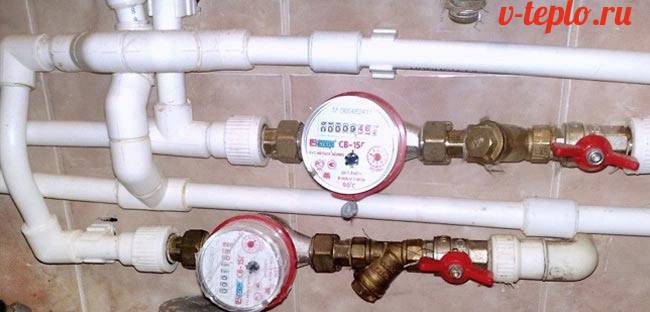
- Is there a filter in front of the meter on the pipe? Remove it and examine how dirty it is. With severe clogging, dust particles penetrate inside and cause hums. To eliminate the cause, thoroughly clean the inlet pipes.
- If the pressure on the reducer is too high, then it can be changed down.The counter will again work in the normal mode, the sounds will be eliminated, and the service life will increase.
The third alternative reason is the mixer, the sounds of which resemble a real howl. This is especially true for designs with cartridges.
To eliminate the problem, check the hoses connected to the water and leaving the mixer. To do this, turn on cold and hot water in turn. By the characteristic howl, it will immediately become clear where the sounds come from.
After that, you need to pinch the hose with your hand. If the noise is gone, then the vibration was the problem. The problem is easily solved - the hose is strengthened. Couldn't get rid of the howl? Then we move on to the cartridge. We solve the problem as follows:
- turn off the water in the kitchen or bathroom;
- pull out the button that shows where which water is;
- unscrew the screw holding the lever with a hexagon and remove it;
- remove the lid;
- using an adjustable wrench, unscrew the clamping nut and pull out the cartridge;
- buy a similar one in the store;
- Carry out the installation operation in reverse order. Howl should disappear.
In addition to these tools, you may need a thin knife and a screwdriver.
Conclusion
Buzzing in water pipes is a nuisance that, with the right approach, can be eliminated on your own. Before that, it is strongly recommended to study at least the theoretical part. Even after that, in practice, everything turns out to be much more difficult.
From the first time, the malfunction is difficult to determine, even with a perfect ear for music. The employees of housing and communal services, who are responsible for repairing all equipment in the house, will come to the rescue. And never put off repairs indefinitely.Any noise in the water pipes is a sure sign that some part of them has fallen into disrepair.