- Features of ventilation installation
- Installation of natural ventilation
- Installation of forced ventilation
- Prohibition on connecting a kitchen hood to a central ventilation shaft
- Air duct from the hood and grille with non-return valve
- A few more important points
- Appointment of kitchen ventilation
- Ventilation in the foundation
- How to properly and legally make a strobe?
- Modern kitchen ventilation - rules for the design and installation of the system
- Conclusion
Features of ventilation installation
The technology of laying air ducts is a sequence of certain operations and depends on the type of ventilation system. However, the installation of an engineering network is preceded by its calculation, the selection of pipes and the marking of their location.
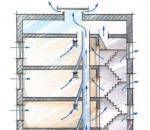
Installation of natural ventilation
The system is laid down during the construction of the house or mounted in channels specially provided for this. Installation of natural ventilation consists of the following steps:
- fixing air ducts;
- installation of gratings and deflectors;
- ensuring air flow due to supply valves;
- installation of hoods in the kitchen;
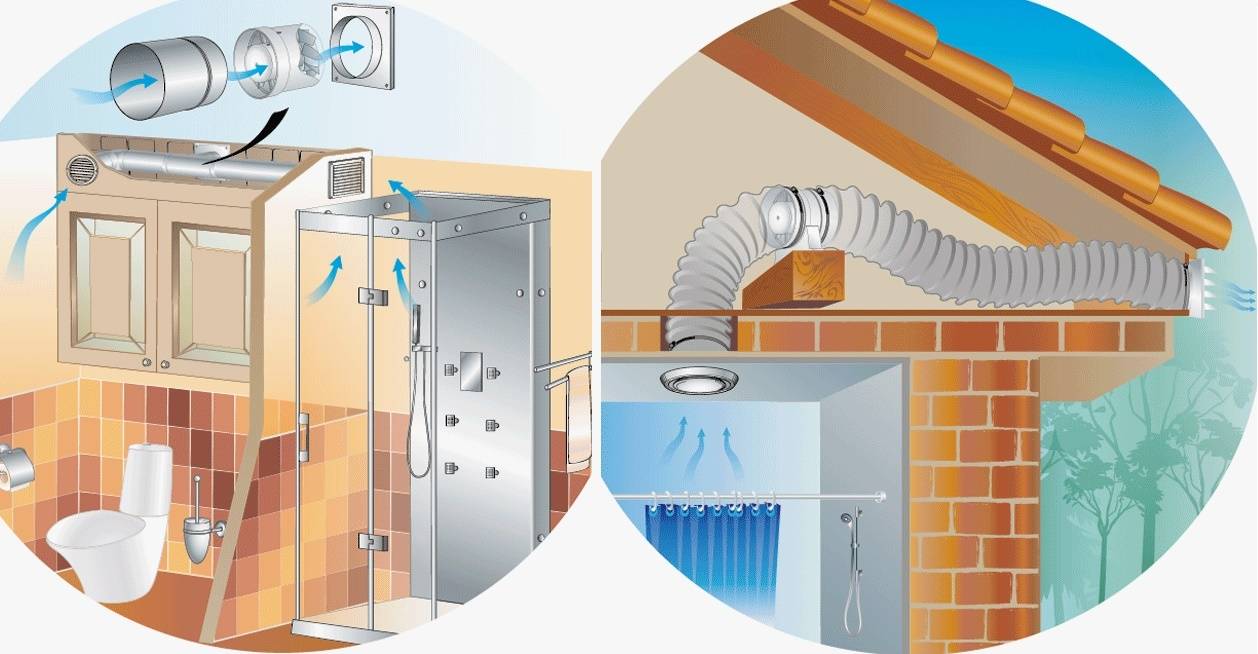
- installation of fans in bathrooms in the grilles of ventilation ducts working for blowing.
In this case, it should be borne in mind that the ventilation round pipe will provide better draft, and the air change will be more efficient.
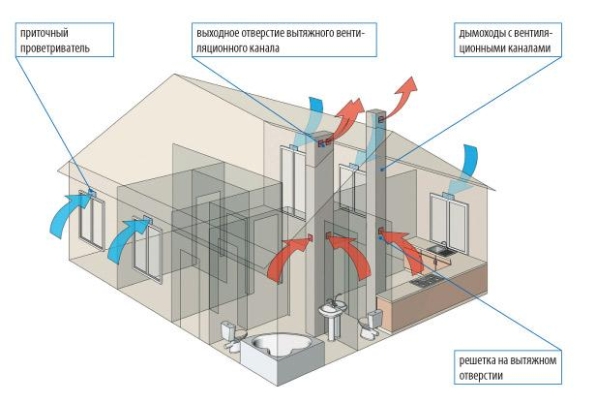
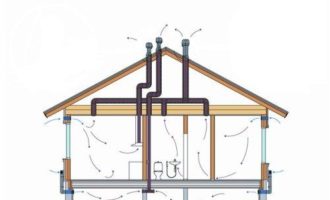
Scheme of natural ventilation of a private house
If, during natural ventilation in the premises, the air is dry and there is a musty smell, then it is necessary to provide air flow through an additional valve or an ajar window. The reason for the increased humidity and the appearance of mold is insufficient outflow. It is quite difficult to eliminate this defect after construction is completed, and the easiest way is forced ventilation.
Installation of forced ventilation
This type is indispensable in a country house with a large number of isolated rooms and rooms with high humidity. Installation of forced ventilation is carried out as follows:
- install a supply and exhaust ventilation unit, placing it in an insulated attic;
- connect air ducts to it;
- an air intake is mounted on the outer wall so that the distance to the sewer risers and chimneys is at least 10 m;
- if the air ducts were not installed during the construction of the house, then during the installation of the system they are fixed according to the markup, while the ventilation supply pipe should be closer to the windows or on the opposite side from the door;
- connect the air ducts to the unit using corrugated pipes;
- conduct insulation of ventilation pipes;
- gratings are installed at the ends of the air ducts, and anemostat sockets are installed on the supply air ducts.

Scheme of forced ventilation of a private house
The optimal choice of ventilation pipes, compliance with the technology of their installation and regular maintenance of the system will ensure the supply of fresh air to the premises of a private house and will create a comfortable microclimate for its inhabitants.
Prohibition on connecting a kitchen hood to a central ventilation shaft
There are cases when the hood from the kitchen cannot be connected to the general house ventilation channel. The prohibition applies to the installation of forced-type equipment with a branch pipe leading into the channel with a complete blockage of the outlet ventilation opening. That is, if a gas stove is installed in the house, a forced ventilation hood is mounted to it and the gas outlet pipe blocks the outlet channel of the general house ventilation shaft - this is a violation of the rules.


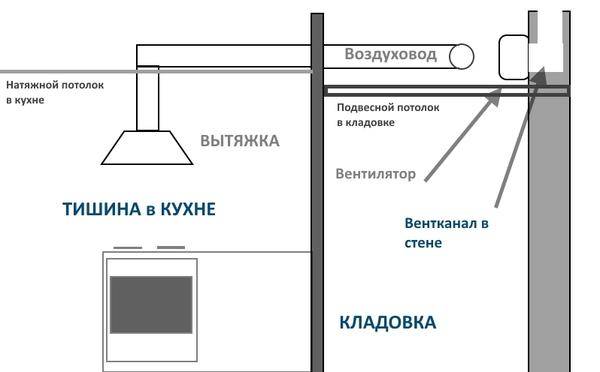

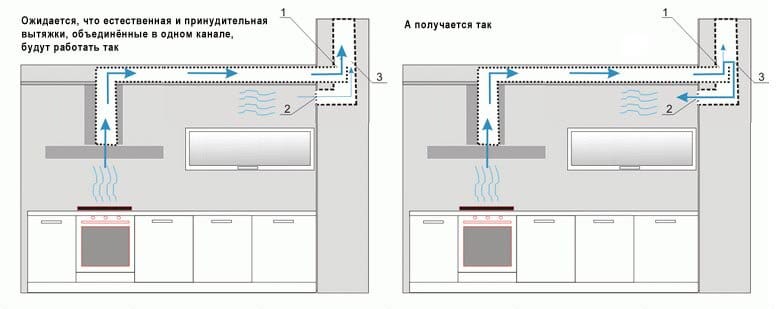
In case of detection of violations, the controlling organizations issue an order to eliminate the violations as soon as possible. The fact is that when the outlet is completely blocked, the gas masses are concentrated inside the channel. The sealing of the cork can cause an explosion even with the slightest spark. This is fraught with the collapse of buildings and poses a threat to human life.
The design of the air ducts of the ventilation duct of a common house type provides for the possibility of natural gas output in a natural way. The gas is lighter than oxygen, accumulates under the ceiling of the premises and is regularly discharged through the opening of the general house ventilation. In case of blocking the outlet opening with a hood outlet, natural gas is not removed from the kitchen, which will also lead to an explosion in the room.
Air duct from the hood and grille with non-return valve
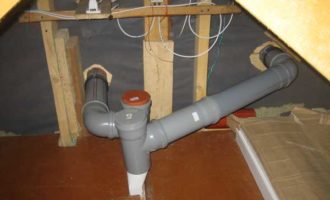
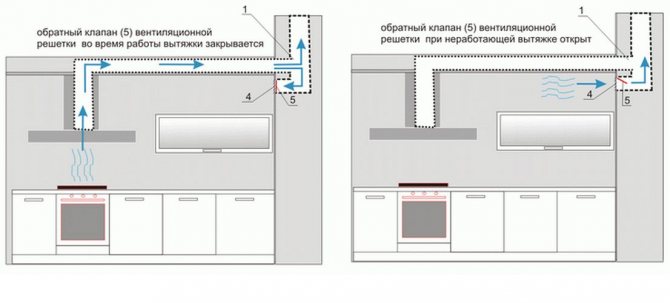
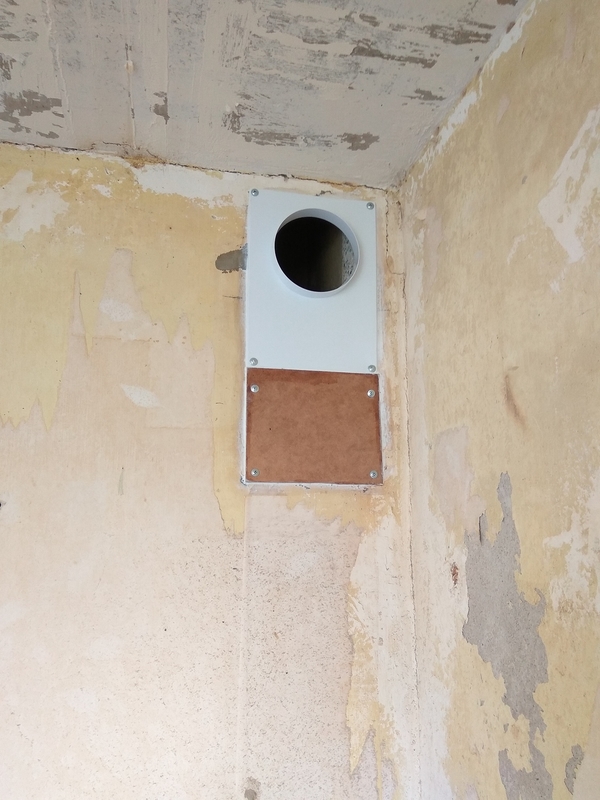
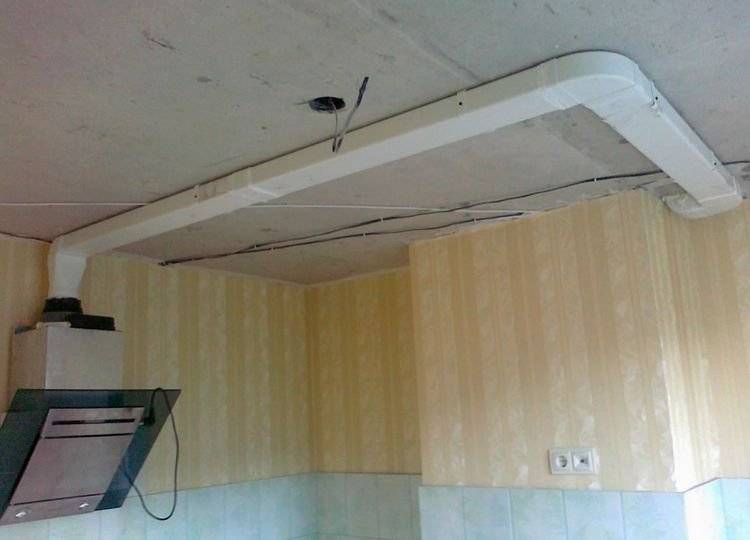
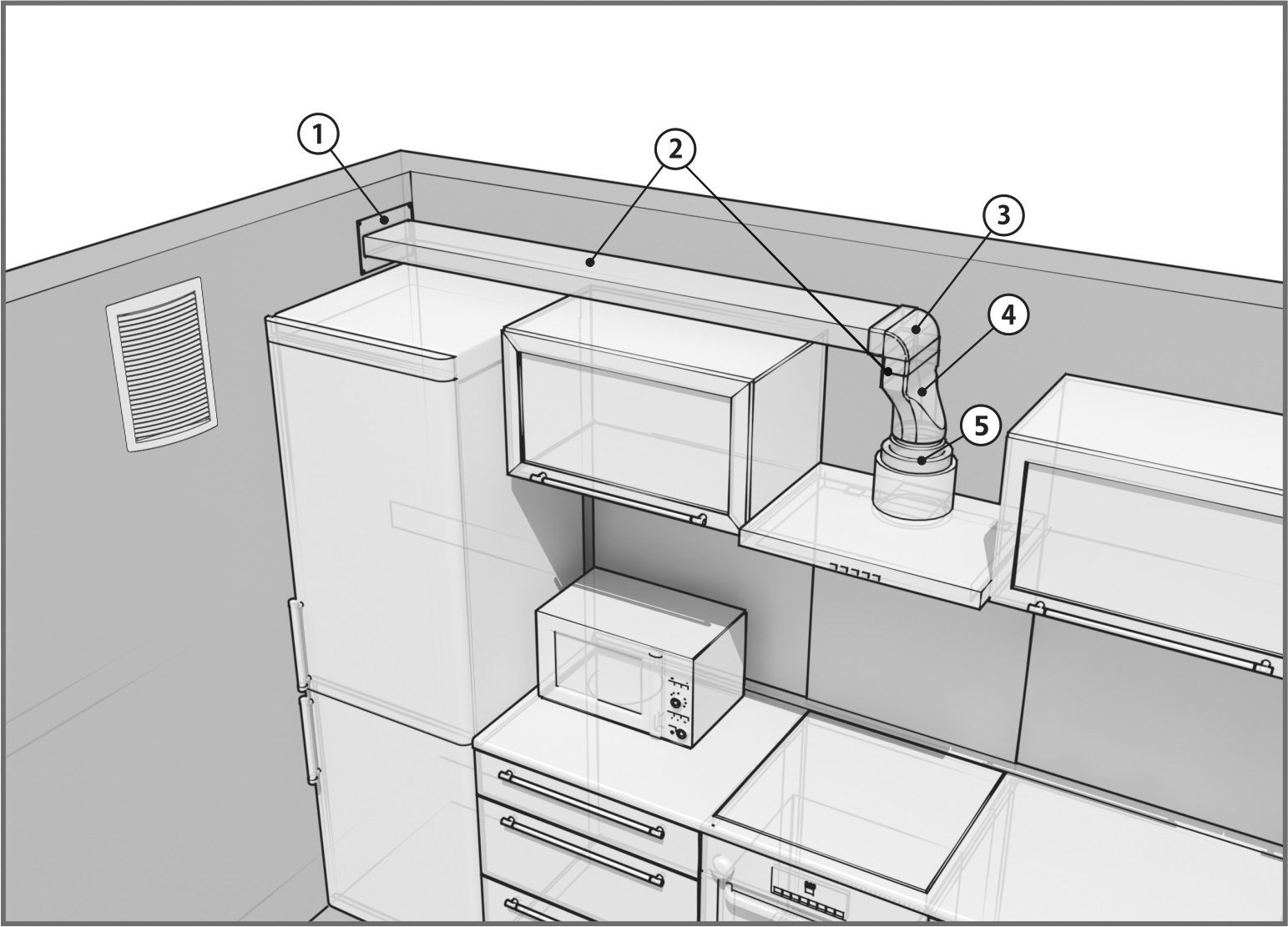
First - instead of a corrugation, a plastic pipe is taken (for example, d-125mm), and through one or more elbows it is led into the hole of the ventilation duct. At the same time, a certain division is made in the hole itself under the ceiling.
An entry under the pipe is mounted on top, and a small rectangle is left through the grate with a valve below for natural inflow.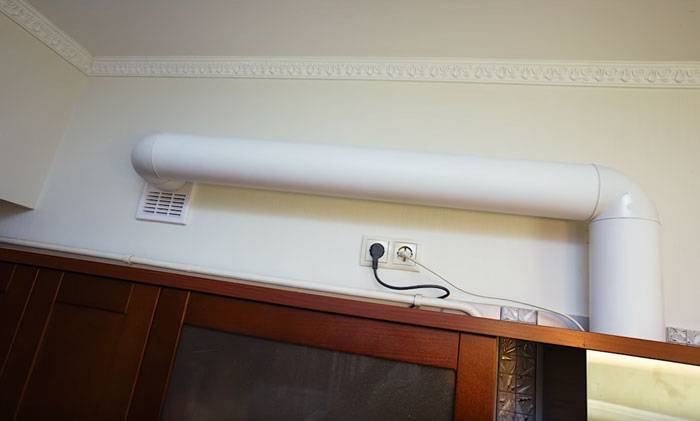
Moreover, the grid should be exactly below, and not above. Otherwise, the air flow from the hood will blow up and lift, the so-called non-return valve.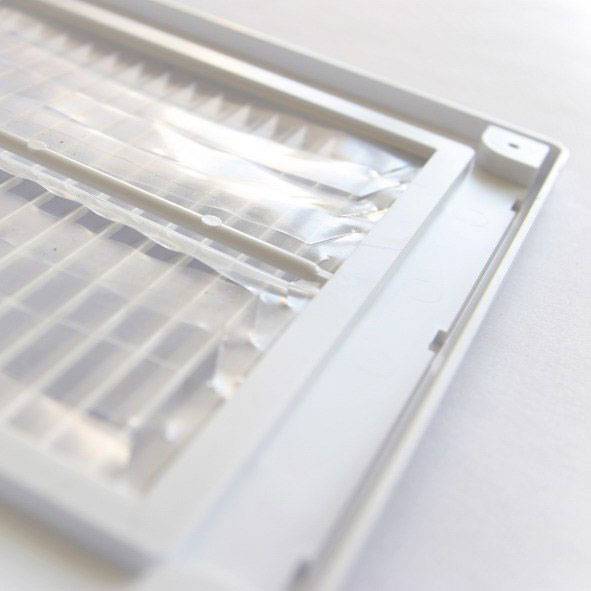
Although, of course, if you have a more advanced valve design - a circle or a rectangle with an offset axis, and not simple strips of polyethylene, or there is a solid partition, then you can safely put it as you want - from above, from the side, from below.
However, in fact, this whole design often does not work as intended. When you turn on the exhaust unit and create pressure, a small part of the dust still seeps through the cracks, micro-holes, after which it safely enters your kitchen on the dining table.
No check valves are 100% safe. The bulk of the air, of course, goes outside, but the gradual formation of dust inside the apartment is a fact.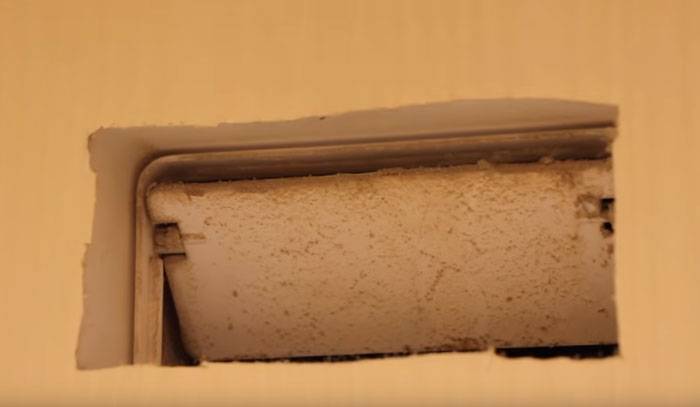
And when the hood is turned off due to a decrease in the diameter of the original hole, natural ventilation through narrow gratings will be much worse.
Everything can be done much better.
A few more important points
- Ventilation. It is mandatory in the new premises, but its transfer is the most problematic part. It is not advisable to move the kitchen if you have to pull the ventilation pipe more than 10 meters. The pull will decrease. Additional fans will be required. For an apartment with a low ceiling, this is not the best idea.
Also useful to read: Overview hoods for the kitchen without ventilation.
Temperature regime. Permissible temperature - 18-26 degrees Celsius
In cold weather - 19-21 degrees.
The natural light factor is also important. Its value is from 0.5. The new location must have sufficient light
It is not allowed to cock deaf partitions that will block the window to the street.
It is not recommended to move the water supply far. This is fraught with a decrease in pressure due to the large horizontal extent. Pipes are hidden under the floor or in a drywall box.
The cross section of sewer pipes is larger than water pipes. Considering that they must pass under a slope, it is necessary to raise the floor under which they are hidden. Idea for apartments with sufficient ceiling height.
It is necessary to take into account the load of the mains, if necessary, install a separate machine.
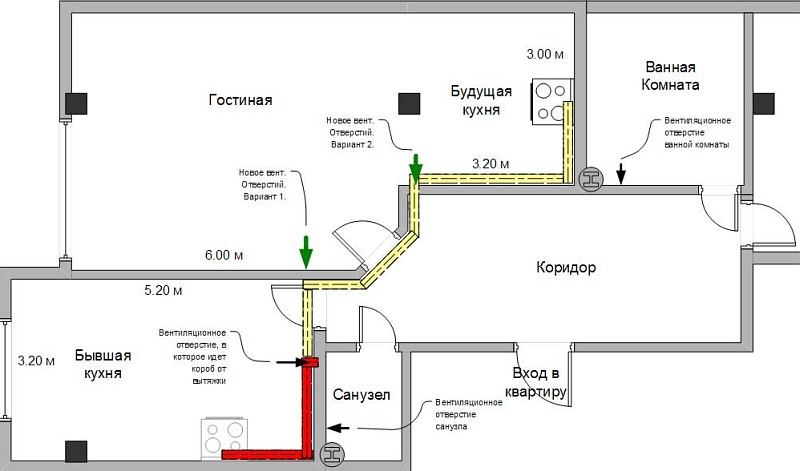
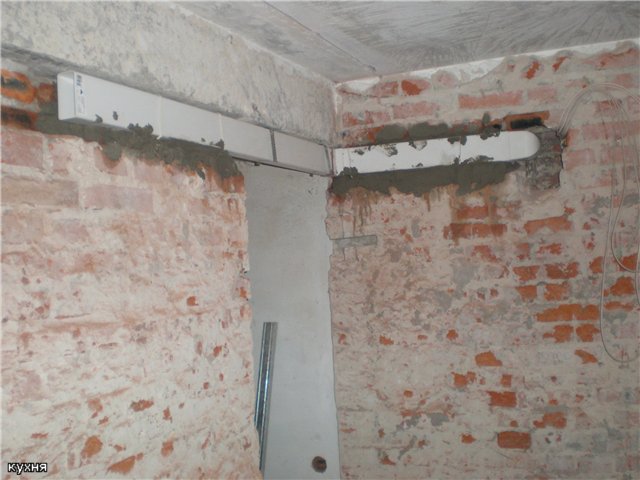


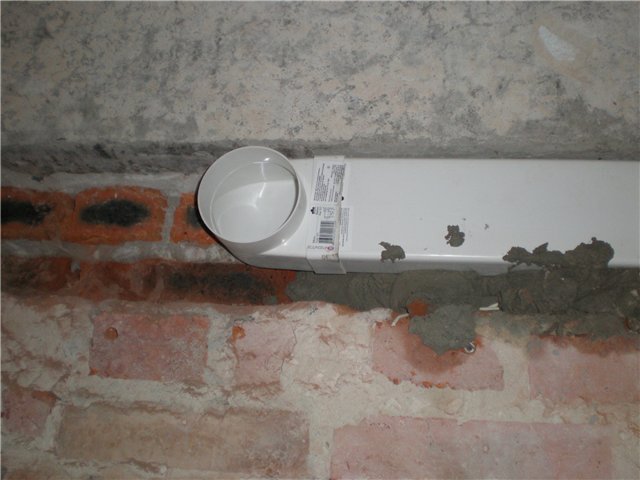


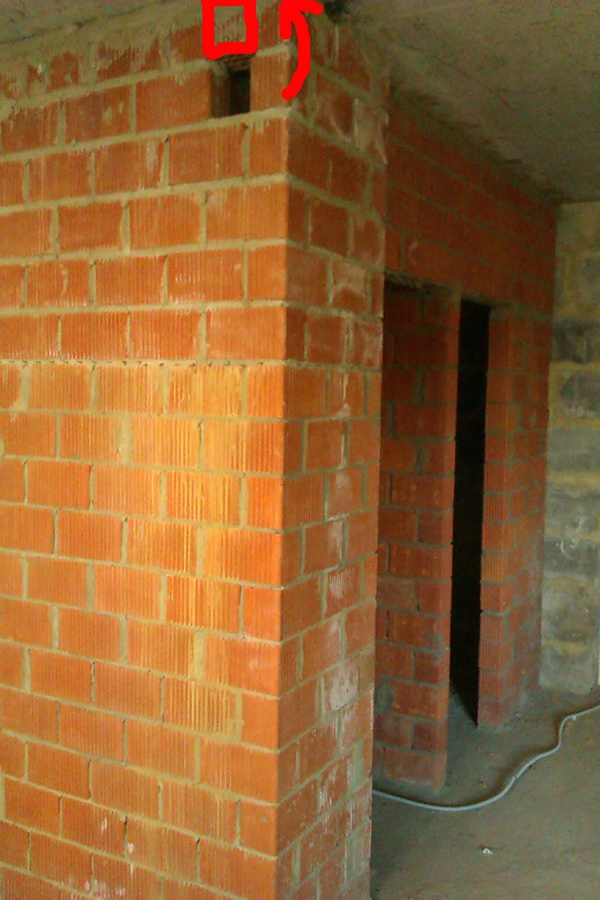
The new location must have sufficient light. It is not allowed to cock deaf partitions that will block the window to the street.
It is not recommended to move the water supply far. This is fraught with a decrease in pressure due to the large horizontal extent. Pipes are hidden under the floor or in a drywall box.
The cross section of sewer pipes is larger than water pipes. Considering that they must pass under a slope, it is necessary to raise the floor under which they are hidden. Idea for apartments with sufficient ceiling height.
It is necessary to take into account the load of the mains, if necessary, install a separate machine.
Appointment of kitchen ventilation
In the process of cooking, a whole bunch of dangerous chemicals are released into the air.
Among them are:
Carbon monoxide (CO), better known as carbon monoxide. An extremely toxic substance, even in small concentrations leading to severe poisoning of the whole organism. And when the concentration of CO in human blood reaches 5 ml per liter, almost instantaneous death occurs. The main danger of carbon monoxide is that it has neither color nor smell.Therefore, it is possible to detect its dangerous concentration only by a sharply worsened state of health - a severe headache accompanied by vomiting. CO is released during any combustion, including when frying food on a stove fire.
- Natural gas (propane, butane, methane) is another dangerous chemical component present in the kitchen. It is commonly used as an energy carrier for gas hobs. But in high concentrations, it can cause not only poisoning of a person, but also cause a fire and explosion. Every year hundreds of people in the world become victims of gas leaks, which could have been easily avoided with an efficient ventilation system.
- Carcinogens are volatile substances that are released into the air during the frying of foods, the combustion of fats in a pan. This is the same child that stands in the kitchen when cooking, and then settles on the walls and ceilings of the room with a greasy coating. Carcinogenic substances, although they cannot lead to immediate death of a person, like CO or propane, can accumulate in the human body. Getting into the liver, kidneys, lungs, these substances eventually become the cause of severe pathologies, including cancer.
- Water vapor - is released when cooking soups, boiling a kettle. By itself, it is absolutely harmless to humans. But in high concentrations, it condenses on the walls and ceilings of the interior, causing the appearance of fungus and mold. The fungus significantly reduces the service life of finishing materials, and can also affect the load-bearing elements of the building structure. Microscopic spores released by mold into the air cause severe allergic diseases - dermatitis, asthma, chronic bronchitis.
Therefore, it is imperative to equip each kitchen with a ventilation system, in full compliance with the requirements and standards of SNiP and GOST. This will allow not only to maintain hygiene in the kitchen, but also to preserve the health, and even life, of the inhabitants of the apartment.
Ventilation in the foundation
To ensure that the basement is always dry, it is necessary to ensure round-the-clock ventilation of the base of the house. This can be done in two ways: by forming appropriate holes in the basement of the building, by making several ventilation holes on different sides of the foundation, or by bringing the exhaust pipe to the roof. Today, there are two main ways to create a ventilation system in rooms that are in a building below ground level:
- Cut special vents in the foundation. In this situation, excess moisture is removed due to a draft: ventilation holes should be located in opposite walls.
- Organize air extraction from the basement rooms, for which purpose bring the ventilation pipes to the roof, and ensure the air supply by installing a grate in the rooms. In this case, ventilation holes are not formed at the base of the building, but they necessarily make good external insulation of the foundation, basement and even blind areas, if any. After that, inside the basement, the soil is waterproofed.
Specialists can cut ventilation holes in the foundation both round and square. Much less often, such devices are made triangular or any other shape. The main condition is that vent sizes were sufficient to ensure effective removal of moisture from the basement and basements.
Do not invent a "bicycle" and break the rules. SNiP 31-01-2003 regulate the dimensions of the ventilation holes in the foundation. According to these standards, the area of such devices should be at least 1/400 of the total area of \u200b\u200bthe basements. For example, if the subfloor area is 80 sq. m, then the total area of ventilation holes in the base of the building should be 80/400 \u003d 0.2 square meters. m or 20 sq. cm.

How to properly and legally make a strobe?
If it becomes necessary to lay pipes or conduct electrical networks in this place, it is necessary to thicken the wall of the ventilation shaft using gas blocks or other building materials.
After an artificial thickening is created, the necessary communications are already laid in it. Such an operation is not recognized as interference and it is absolutely legal.


The main nuance in the legislation is the permission of the following actions with the ventilation shaft:
- expansion of the opening of the ventilation shaft to install a grate or a special fan;
- a slight shift of the ventilation shaft opening to the side.
These works should be carried out by a person who has an idea of how the ventilation shaft is arranged, and who is familiar with the ventilation network of this house.
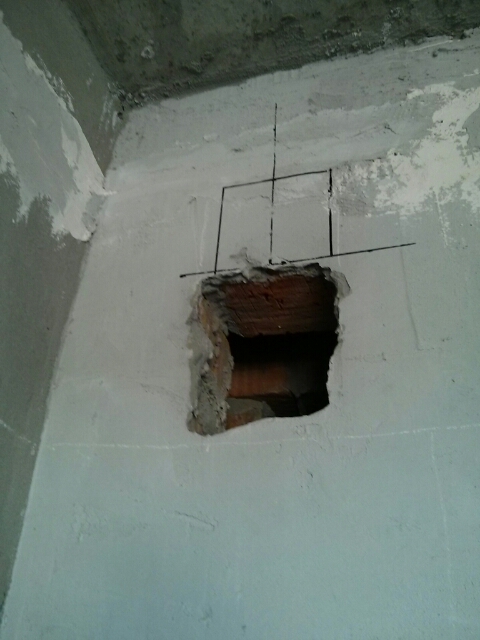
The photo shows one of the options for conducting communications - along the perimeter of the ventilation duct.Such wiring is also prohibited, but with careful chasing, laying communications and further plastering this channel without leaving visible marks and without harming the ventilation system, there is a place to be
In order to shift the hole, it is necessary to drill and assemble a special satellite channel, which will be a continuation of the ventilation shaft along the wall in the room.
If the satellite channel is installed incorrectly and the ventilation shaft is damaged, unpleasant odors from neighboring apartments will enter the room.
We also recommend that you familiarize yourself with the rules for transferring the vent in the kitchen.
Modern kitchen ventilation - rules for the design and installation of the system
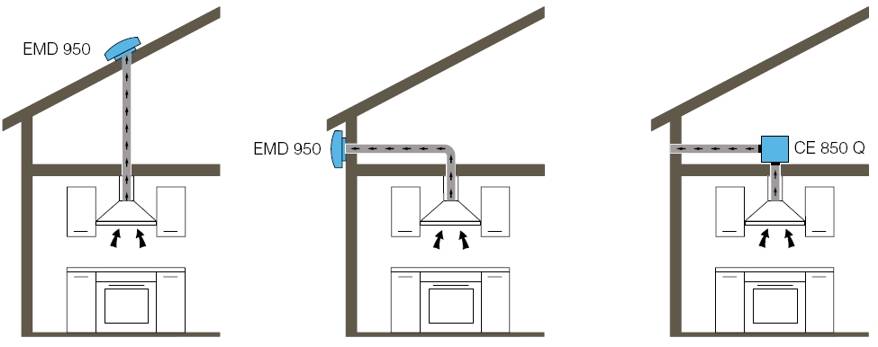
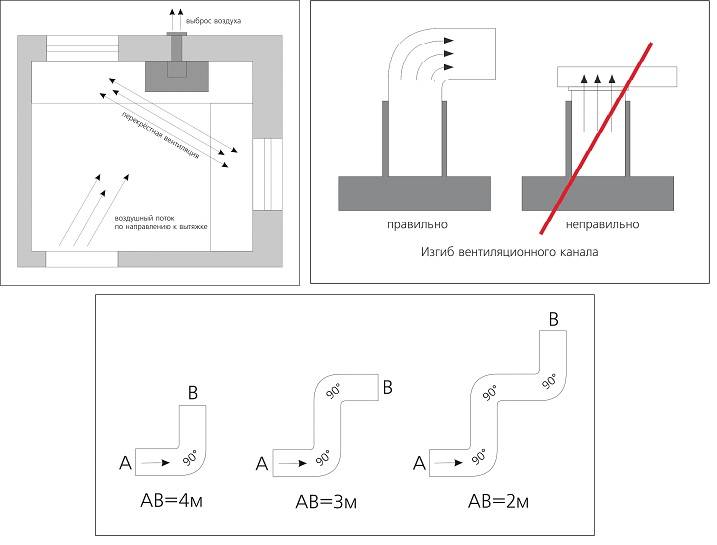
Consider how to make ventilation in the kitchen reliable and efficient. For efficient operation, the air exchange channel must be brought to the roof above the ridge mark. Parts of the air duct laid outdoors and in unheated areas of the house must be covered with thermal insulation.
A kitchen with a 4-burner gas cooker requires an exhaust air duct section of at least 0.02 square meters. m. Such an area has a square air duct 0.14x0.14 m or a round one with a diameter of 0.16 m. For better traction, a channel height of at least five meters is required. The entrance to the channel should be located on the ceiling or on the wall, below the ceiling level by 0.15 ... 0.3 m.
Proper installation of ventilation in the kitchen is carried out according to the following rules. For a fan with a non-return valve, an opening is made to the outside. When installing a fan on an exhaust duct grille, do not use models with a check valve so as not to cut off natural air exchange. It is advisable to use special kitchen moisture and grease resistant models of fans.
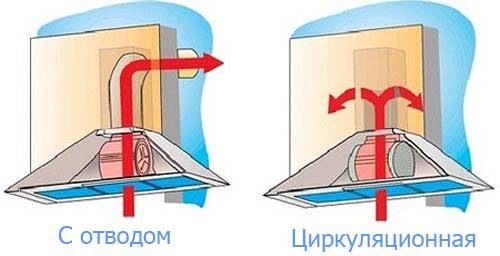
When installing ventilation in the kitchen, the hood is placed at a level of 0.5 ... 0.7 m above the electric stove and 0.6 ... 0.8 m above the gas burner. It is better to use flow type hoods. Recirculating hoods do not guarantee complete air purification, do not protect against carbon monoxide, and require frequent replacement of filters. Air can be vented horizontally into the outer wall using a non-return damper. However, this may cause contamination of the outer wall.
You can use special ventilation ducts, created only for the hood, which are led vertically above the roof ridge. Air ducts are fixed to the ceiling in meter steps with clamps and pins. Clamps and brackets are used to fix vertical air ducts. When choosing fans and hoods, the passport noise level should be below fifty decibels. The requirements and recommendations set out in the passport of the device must be strictly observed.


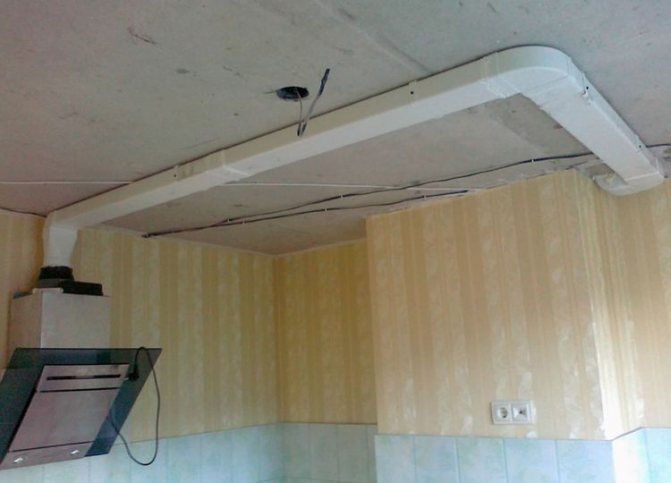


Subject to the above rules, do-it-yourself ventilation in the kitchen will be performed, which will ensure efficiency and comfort.
When natural gas is burned, oxides of carbon, nitrogen, sulfur, and formaldehyde are released. Accumulating in the air, they cause lethargy, dizziness, lacrimation and the development of serious diseases. In addition, the combustion products of household gas are explosive. Therefore, any room with gas equipment must be equipped with ventilation.
Conclusion
Properly selected air purification equipment will improve the microclimate in the entire apartment. Unpleasant odors will be completely removed from the outside, and the air entering the living rooms will be additionally cleaned.
Using a hood in the kitchen with a vent to the ventilation, you can effectively clean the air throughout the room, especially in a studio apartment. The kitchen will always have fresh air, without soot, grease and dust.
Cleaning can be done less frequently, as grease particles that create a film of sticky plaque and dirt are removed from the apartment.
If access to fresh air through the windows is not always possible, the best option would be a combined model. She works in recirculation and exhaust mode into ventilation.
Equipment with a programmable operating mode will allow you to purify the air during the absence of the owners in the house in an energy-saving mode.