- Replacing the nozzle in the oven
- Replacing the jet from the oven
- Replacing the jet after dismantling the oven wall
- What is a gas jet
- How to determine the correct operation of the gas stove
- Popular injector malfunctions
- Why does the burner burn poorly?
- What is a jet?
- Types of jets and their main characteristics
- Nozzle cleaning technology
- What it is?
- Safety Precautions When Replacing the Injector
- Features of connecting a stove to a gas cylinder
- What gas is in household stoves. Gas stove jet: replacement features
- What is a jet (nozzle)
- Why and why you need to change the jet
- Choosing a jet for bottled gas
- How to calculate the number of cylinders in the system
- Rework steps with a burner change
Replacing the nozzle in the oven
Just as in the case of replacing nozzles in burners, preparatory work cannot be done without carrying out preparatory work. Getting to the jets in the oven is also not so easy. And if in the case of burners we had to dismantle the table, then to replace the nozzles in the oven we need to either disassemble the floor, and in a difficult case, remove the left side wall.
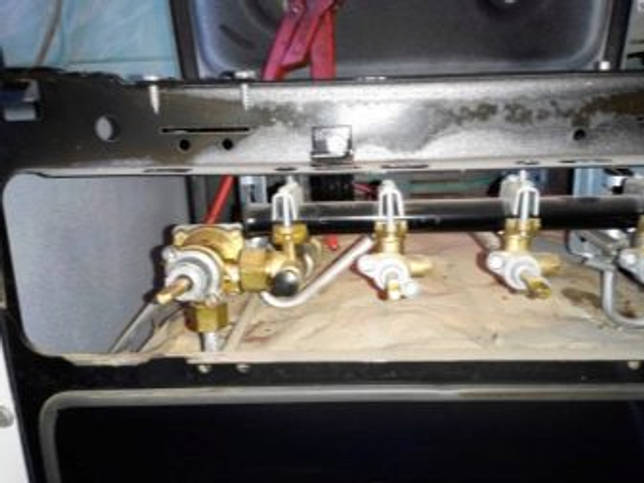
Let's go in order - the jet is located in the nozzle body behind the plate wall on the left side.To get to it, you need to open the lid of the lower drawer, open the oven door completely and pull the floor towards you - it should easily come out.
Replacing the jet from the oven
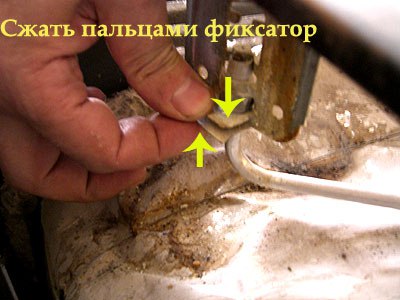
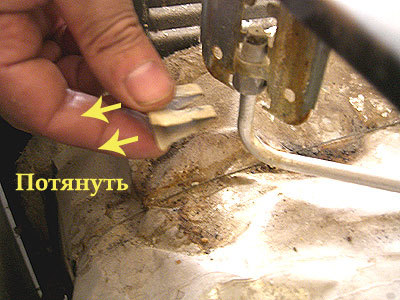
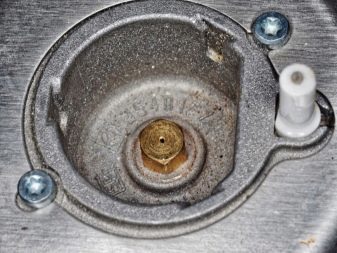
The oven burner is a curved tube fixed with two screws that need to be removed. The jet is located inside the nozzle body.
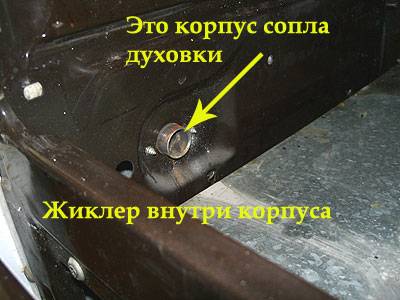 The jet is located inside the nozzle body, and if it is not very stuck, then it can be easily unscrewed and replaced with a new one.
If it is not very stuck, then you can simply unscrew it with a tubular wrench and install a new one in its place.
Replacing the jet after dismantling the oven wall
If it is not possible to unscrew the nozzle, then you need to unfasten the left side panel, fixed with three vertically located screws. After dismantling the wall, we will get access to the pipeline, fixed with a nut.
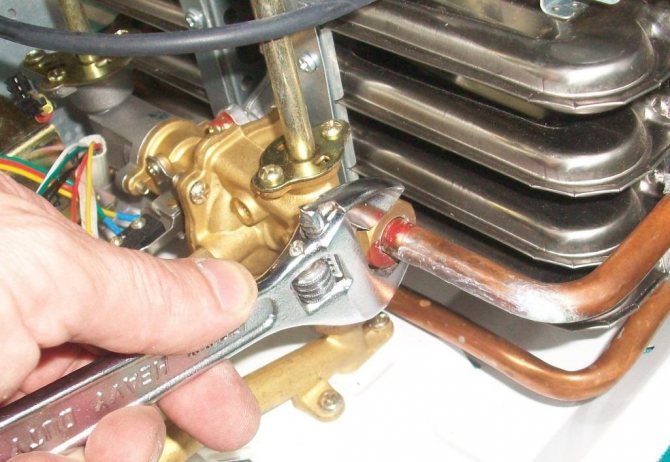
From this position, you can try to grab the jet with an open-end wrench and try to turn it out. If even here it is not possible to cope with the removal of the jet, then you need to unscrew the nut, unscrew the two screws and separate the body with the nozzle from the oven wall.
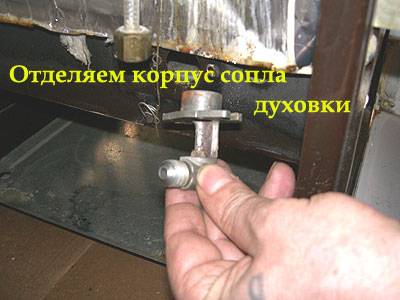 After releasing the nozzle body from the wall of the oven, you can process the threaded connection and easily unscrew the jet
Now the stuck jet can be removed from any convenient position. It is best to treat the threaded connection with some universal tool (for example, VD-40), leave it for a few minutes and only then unscrew the jet.
It remains to install a new jet in the nozzle and perform the work of fixing the housing to the wall of the oven and assembling in the reverse order.
What is a gas jet
Jet (nozzle) - a part through which a gas-air mixture for a flame is supplied to the burner of a gas stove.
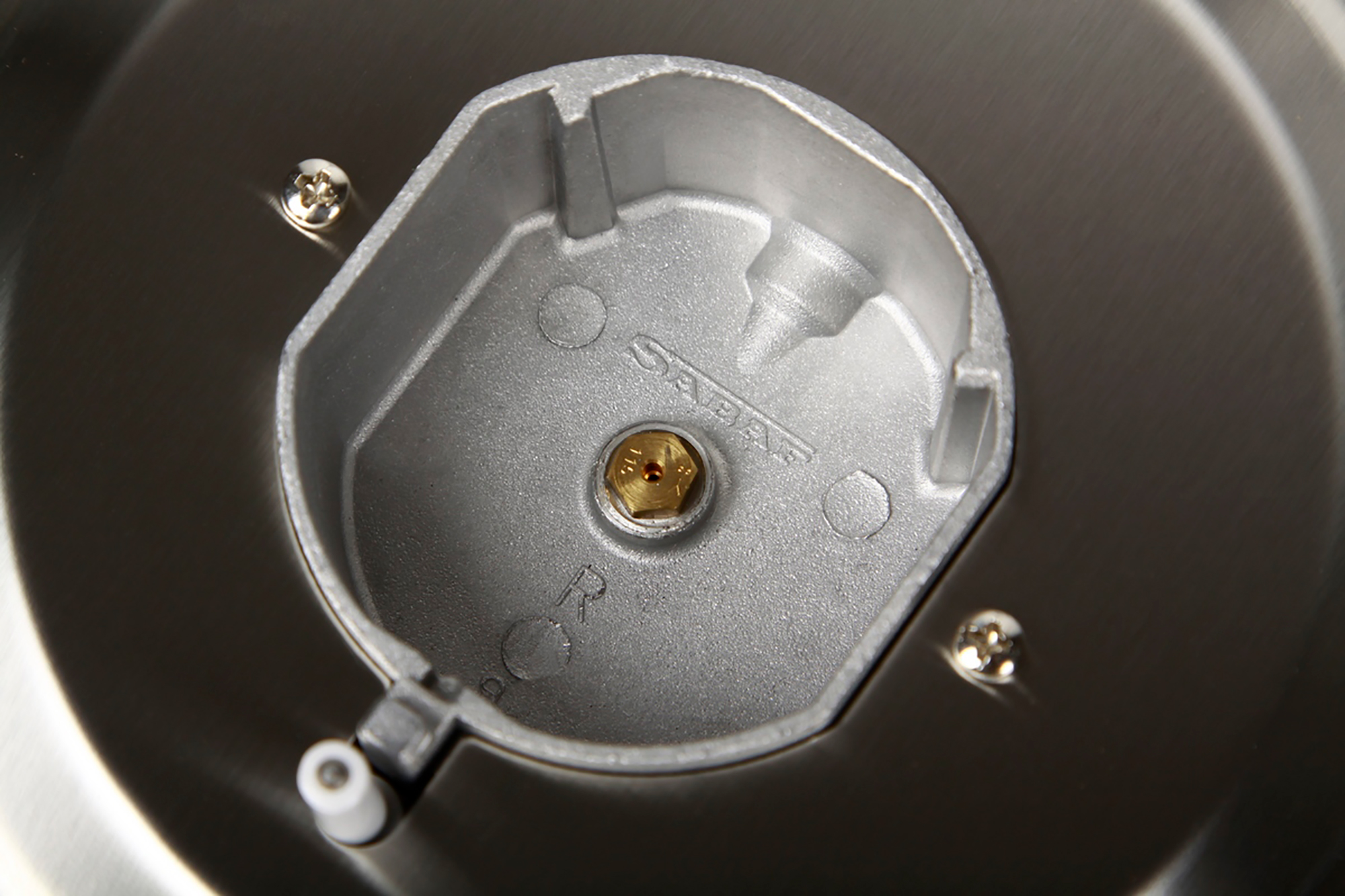
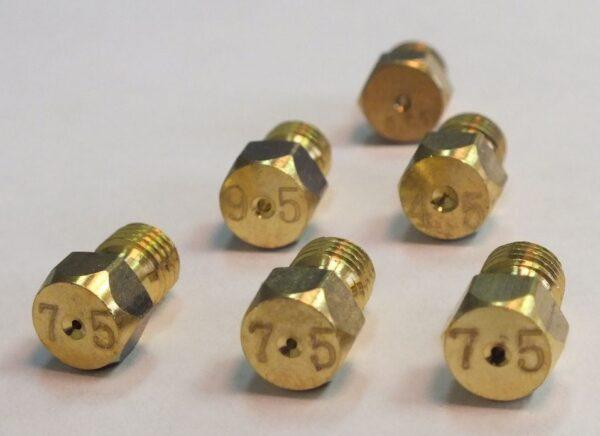
Jet for gas plate in the center has a hole of a certain diameter. The value of the diameter (in hundredths of a millimeter) is necessarily stamped on the end (face) of the jet. For example, the number 135 on the edge of the nozzle means that the hole for the passage of the gas-air mixture has a diameter of 1.35 mm.
 Jet (nozzle) for a gas stove
The diameter of the jets depends on the power of the particular burner and the type of gas that the stove is set to. So, we approached the questions of what nozzles are for, and what features the stoves have, depending on the type of gas supplied.
How to determine the correct operation of the gas stove
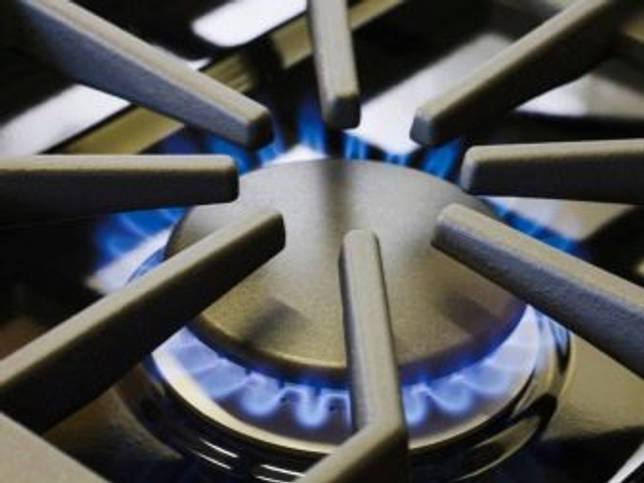
When igniting the burner, there should be no extraneous sounds in the form of pops. The flame should burn evenly, its tongues should be bluish-white in color, it is not for nothing that the gas is otherwise called "blue fuel".
If, during the combustion of the air-gas mixture, yellowish impurities are observed, and the flames acquire a red tint, then this clearly indicates a malfunction of the jets.
When transferring the stove from main gas to bottled gas, all of the above disadvantages are very characteristically manifested. And plus, due to improper pressure, soot will be observed. So it is difficult to notice it immediately with the naked eye, but it will manifest itself in the form of black spots on the dishes after 1-2 days of operation.
Avoiding all these troubles is quite easy. It is necessary to choose the right nozzles for a gas stove when operating conditions change and conversion to bottled gas. In this case, it should be borne in mind that due to the difference in pressure of the incoming fuel, the diameter of the holes in the nozzles (jets) will also be different.
Popular injector malfunctions
Usually the jets last a long time.Their replacement is required when switching to a different type of gas or in the event of a factory defect. More often there is a need to clean them from soot and clogging.
The following manifestations are associated with clogged nozzles:
- the stove smokes, instead of an even blue flame, red-yellow tongues appear above the divider;
- one of the burners does not light up;
- the burner does not burn well, sometimes it goes out;
- when the button (knob) is released, which turns on the ignition device, the oven flame goes out or does not ignite at all - this happens when, due to insufficient gas supply, the generated heat is not enough to heat the temperature sensor, and the fuel supply is automatically shut off by the gas control system.
Replacement of a separate nozzle is required if the gas burns so intensely on the burner that the flames come off the divider. This happens in the case of a factory marriage. If a similar picture is observed on all burners, it is worth checking the gearbox.
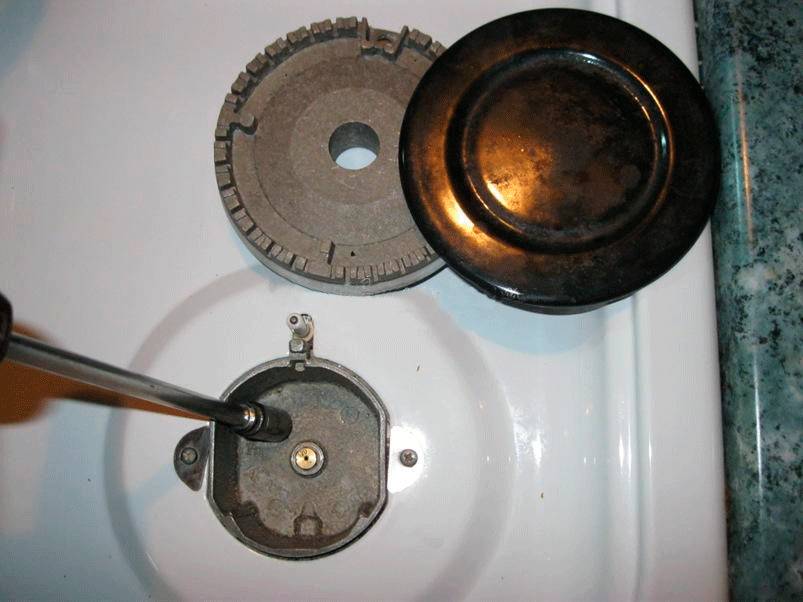
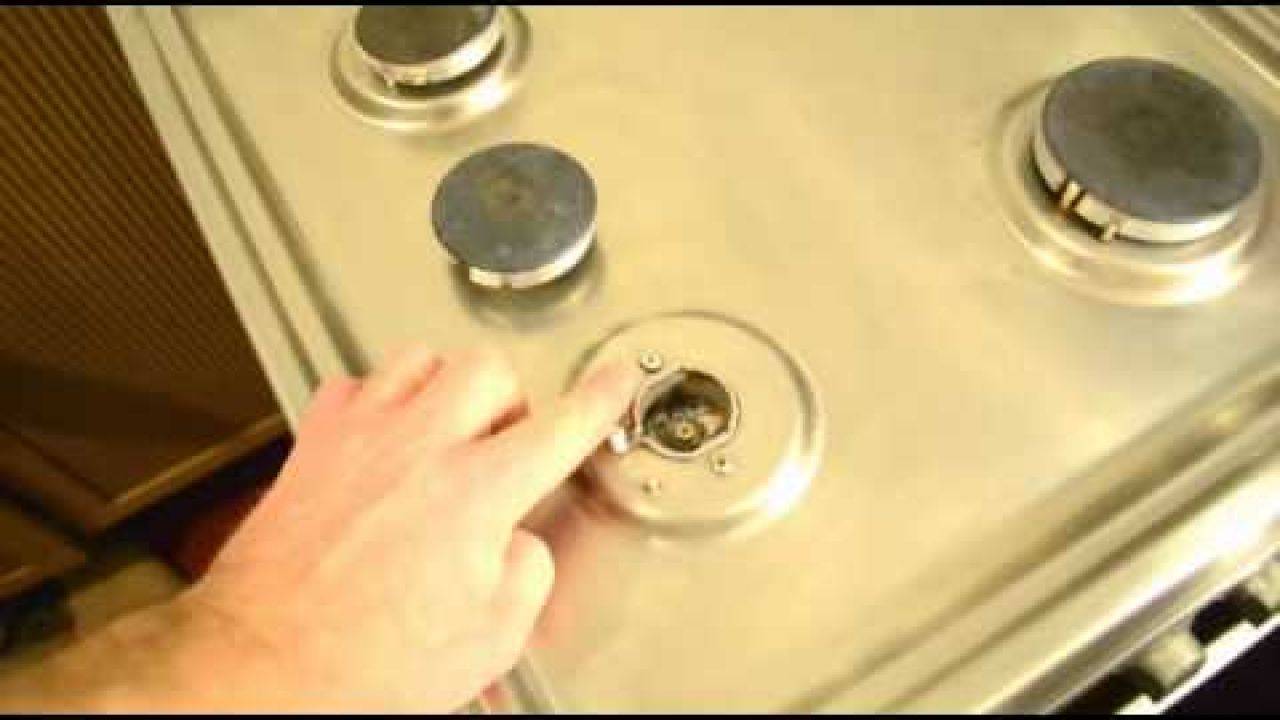


You will need a few tools for work related to nozzles: a set of open-end and box wrenches, a Phillips screwdriver, a thin needle (it is better to attach it to the end of a pencil), wire or fishing line. A soapy solution or other liquid dishwashing detergent is also useful for cleaning. Abrasives must not be used!
The most commonly needed keys are:
- for old jets - 8 mm (for liquefied gas - 7 mm);
- for burner nuts - 14 mm;
- for the tip of the pipeline of the oven - 17 mm.
However, since the plate designs are different, other wrenches may be needed. Therefore, it is more rational to stock up on their full set.
Why does the burner burn poorly?
If, according to the passport, the burner has more power, but in fact does not produce the required volume of flame, it is worth looking for possible reasons for the decrease in the efficiency of the equipment.
The most common reasons for low combustion are the following:
- line pressure is too low;
- the air-gas mixture enters the burner in insufficient volume;
- the holes in the "crown" or jet are clogged with combustion products;
- the design of the burner is broken or the gas sleeve itself is damaged;
- The burner does not match the burner set.
The latter option is rather an exception to the rule, since all hobs are thoroughly tested at manufacturers. Diagnostics and repair of equipment should be carried out exclusively by a certified gas service master.
Another reason for the incorrect operation of the burners may be the wrong jet. Many gas stoves come with two types of these nozzles, each of which is suitable for a specific type of gas: bottled or main.
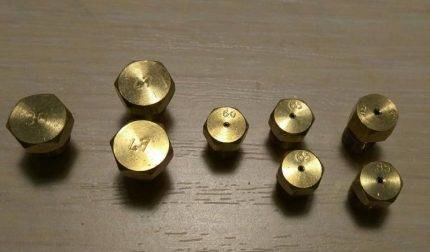 The difference in the diameter of the through hole in jets for different purposes plays a huge role in the actual power of the burner.
The gas pressure in the cylinder is significantly higher than in the pipeline, so jets with a narrower throughput are used to connect the stove.
Perhaps, when installing and connecting the stove to the centralized gas supply pipe, the nozzles of the required type were not replaced, so the burner does not work correctly.
What is a jet?
The jet is one of the main components of the gas stove.It ensures the supply of blue fuel to the burner in sufficient volume and the required pressure. Without a nozzle, the operation of a gas stove would generally be impossible.
Deviations in the work of the jets are immediately visible, they are noticeable by yellow and red flames and soot on the dishes
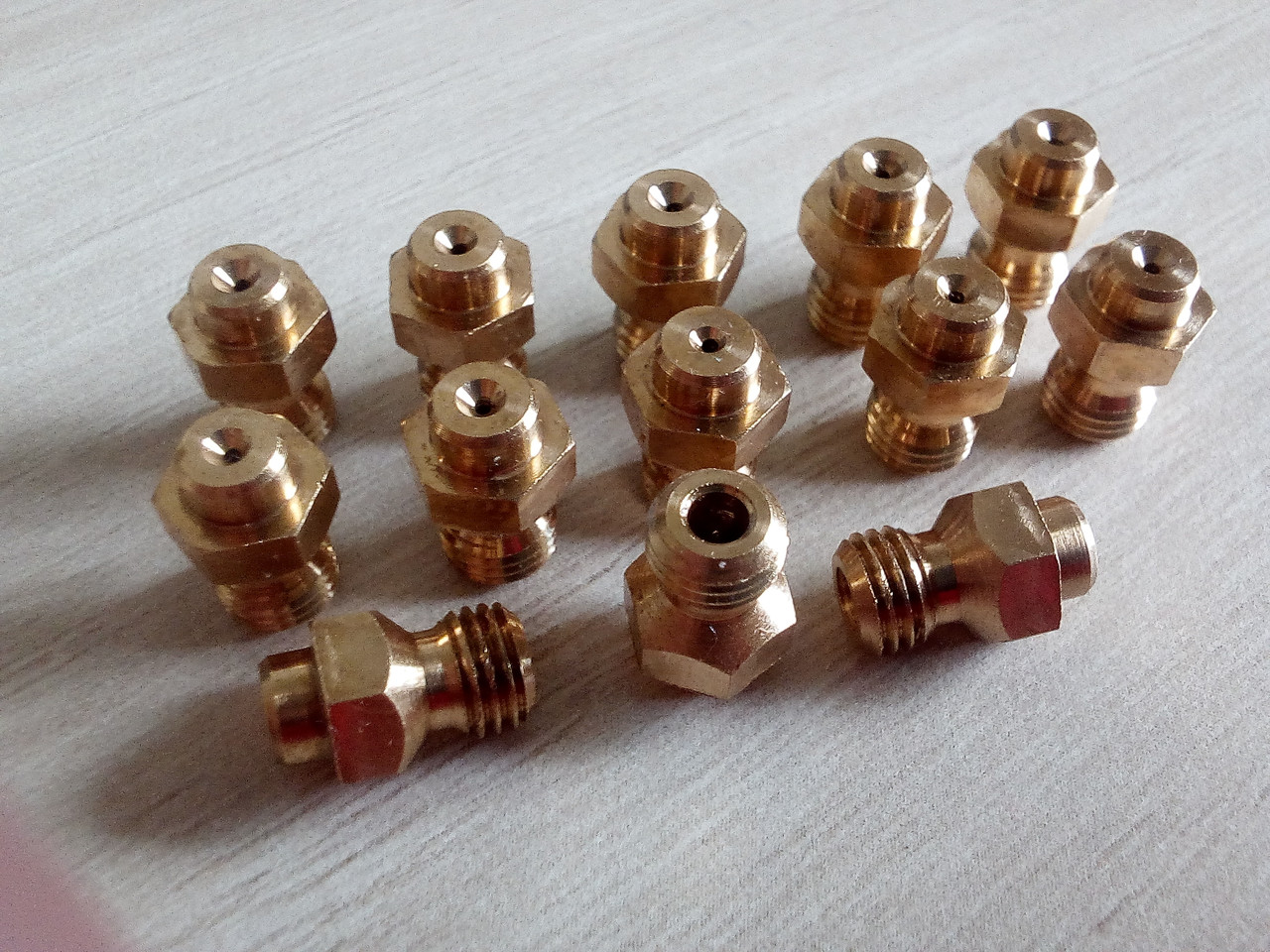
In its shape, the jet resembles a bolt, in the head of which a through hole is arranged. The diameter of the hole must correspond to the pressure of the supplied fuel and the power of the burner.
It must be taken into account that the pressure of the main gas and bottled gas is significantly different, therefore the diameter of the nozzle for these types of fuel will be different. The jet regulates the pressure and ensures the flow of gas into the burner in the required volume, equivalent to the volume of air required for the normal combustion process
The jet regulates the pressure and ensures the flow of gas into the burner in the required volume, equivalent to the volume of air required for the normal combustion process
In order to ensure the most efficient operation of the stove, to exclude the release of harmful products, the smoking factor, to normalize fuel consumption, it is necessary to install nozzles, the dimensions and diameter of the outlet of which meet the requirements of the gas stove manufacturer.
Types of jets and their main characteristics
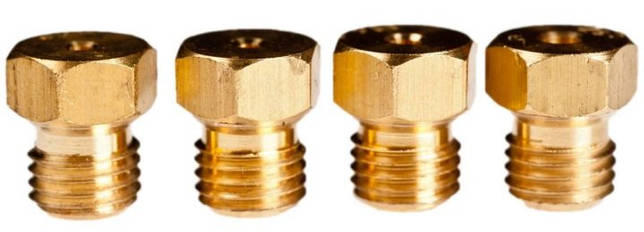
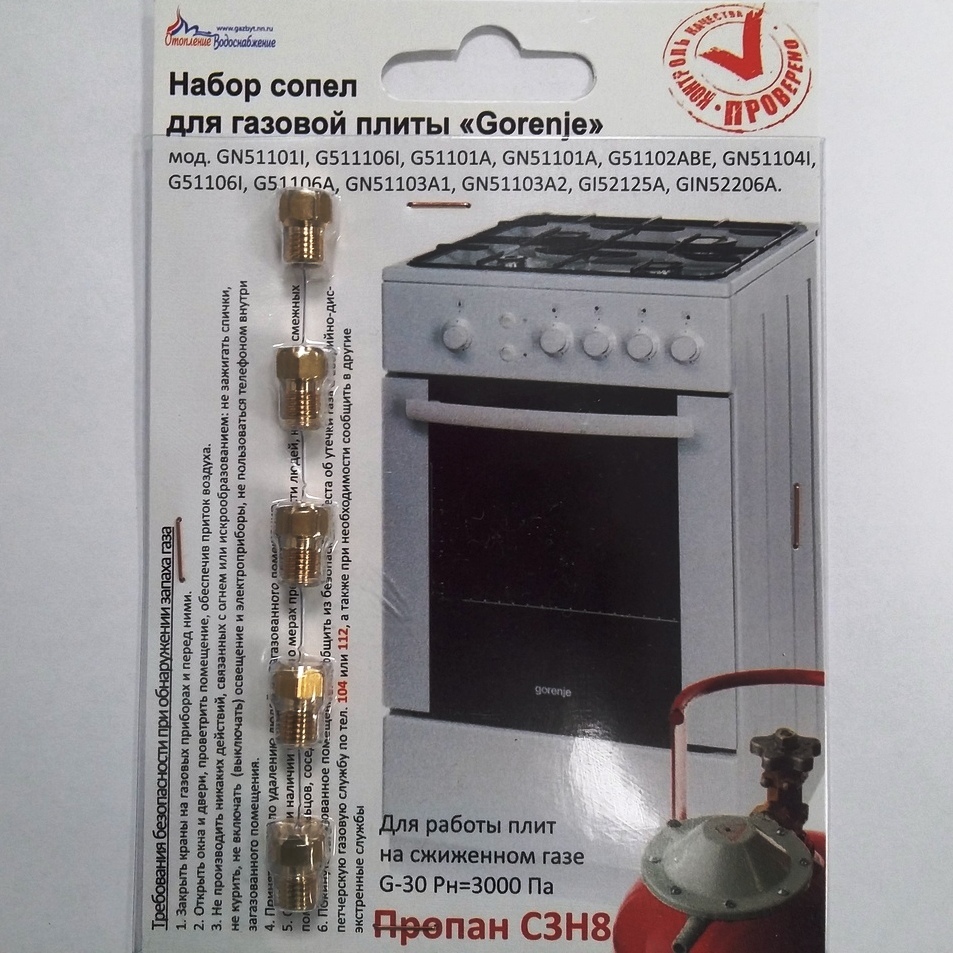
Jets or nozzles with a hexagonal head, external thread and a longitudinal internal hole. Most of them are made of bronze.
Jets for main and bottled gas differ in thread length and diameter of the gas supply channel, which is associated with different fuel supply pressures
On the end part there is a marking that displays information about the throughput of the nozzle.Units of measurement - the volume of gas in cubic centimeters that the jet is able to skip in 1 minute.
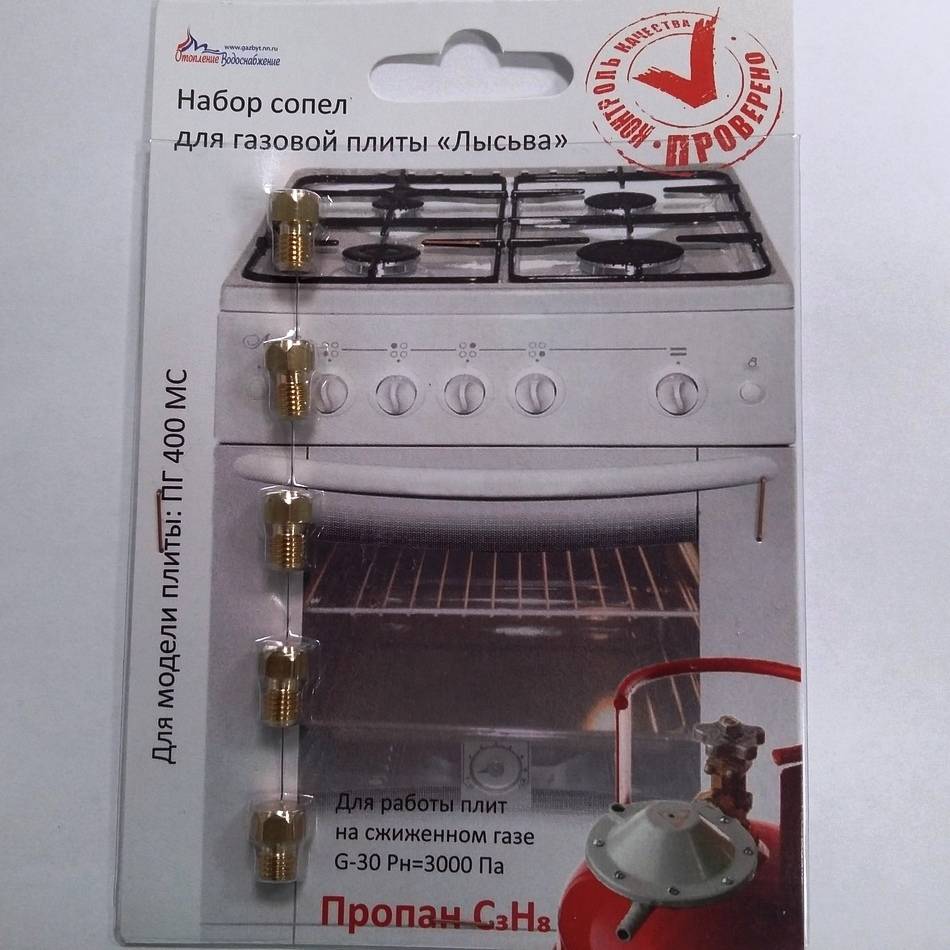


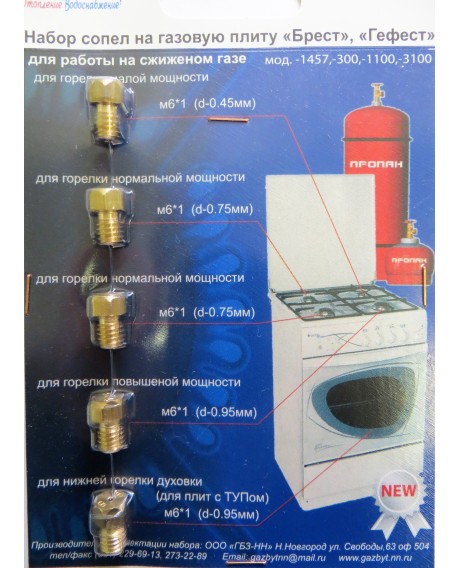


Jets can be of two types - for natural gas (they have a large hole diameter and a shortened body), for liquefied gas (they have a smaller hole diameter and an elongated body, which is associated with higher pressure).
The pressure in the cylinder exceeds the pressure in the gas line, which explains the smaller diameter in the head of the corresponding jet. The power of the burner is determined by its size, therefore, the diameters of the holes in the corresponding jets will be different.
The diameter of the hole in the nozzle must correspond to the gas pressure:
- Large burner - 1.15 mm (20 bar); 0.6 mm (50 bar); 1.15 mm (20 bar); 0.75 mm (30 bar).
- Medium burner - 0.92 mm (20 bar); 0.55 mm (50 bar); 0.92 mm (20 bar); 0.65 mm (30 bar).
- Small burner - 0.75 mm (20 bar); 0.43 mm (50 bar); 0.7 mm (20 bar); 0.5 mm (30 bar).
- Burner in the oven - 1.2 mm (20 Bar); 0.65 mm (50 bar); 1.15 mm (20 bar); 0.75 mm (30 bar).
It must be taken into account that the incorrect operation of the jets can be caused not by a change in the type of fuel, but by a banal clogging of the outlet. In this case, you can clean the nozzles without resorting to replacing them.
Nozzle cleaning technology
From time to time you have to change the nozzles or clean them. The recommended frequency of the procedure is once a year.
Clogged nozzles impair the quality of the flame, leading to a decrease in the amount of heat generated. In addition, fuel consumption increases, which is undesirable for owners of liquefied gas equipment. This fact will not suit homeowners with installed gas meters.
To clean the jets you will need:
- Universal means - soda or vinegar, dishwashing detergent;
- dish cleaner;
- Toothbrush;
- Thin wire or needle.
Work begins with the removal of soot, soot and fat from the area of \u200b\u200bthe jet. The nozzle must be unscrewed and soaked in detergent, in a solution of soda or vinegar.
To clean the nozzles, no special tools are required, it is enough to have a thin wire, a toothbrush and detergent on hand.
The outer surface can be cleaned with a toothbrush using regular household scouring powder. The nozzle opening should be cleaned with a needle, blowing with a pump or compressor is sometimes justified.
The cleaned and dried jet must be reinstalled
In this case, it should be noted that if there is a sealing gasket under the jet, it is necessary to replace it
What it is?
The principle of operation of the gas stove has a certain algorithm. Gas under pressure is supplied to the gas pipeline system that is part of the stove. When the shut-off valve located on the front panel is opened, the blue fuel moves towards the combustion point. In this section, depending on the design of a particular model, the gas is mixed with air, which provides optimal conditions for ignition. Flame spreaders are installed at the end point, giving it the ability to burn in a stable mode.
Gaseous fuel can be supplied via a network gas pipeline or in a liquefied state in special cylinders. In most cases, network and liquefied gases are the same substance.However, the methods of their delivery to the final consumer affect the properties of combustion and the conditions under which the latter becomes possible.
Gas stove nozzles are replaceable parts of the stove burner. Their main function is to supply fuel to the point of combustion in the required volume under the appropriate pressure. The jets are equipped with a through hole, the diameter of which determines the parameters of the "jet" of gas. The size of the hole in each particular type of jet is designed for a certain pressure in the gas pipeline system. The characteristics of the latter differ significantly depending on the method of supply and the type of fuel - natural or liquefied (propane).



Safety Precautions When Replacing the Injector
Ensuring that the replacement can be carried out safely is of the utmost importance when performing gas-related activities.
Therefore, do not neglect a number of rules:
- Before replacing jets, disconnect the stove from gas and electricity.
- Make sure the burners are cool.
- Before starting work, open windows, turn off devices that run on electricity that can give a spark.
- Do not engage in self-modification of plate parts or replace them with non-native, unsuitable sizes or made by yourself.
- After mounting the parts, be sure to check all gas connections for possible leaks. To do this, the compounds are washed from all sides (with a brush or sponge) and, by turning on the gas supply, observe whether bubbles form. If a leak is detected, the connection is either tightened or disassembled and reassembled.
Do not use nozzles designed for gas burners of stoves of a completely different design or other gas devices.
You should not replace the nozzles in the gas stove yourself if you are unsure of your capabilities.
Features of connecting a stove to a gas cylinder
Jets are an important part of any stove. Each jet has a special hole of a specific diameter through which the gas mixture is supplied to the burner. As you know, the pressure of natural gas, which enters our houses and apartments through the central highways, is much lower than the pressure of bottled gas. Therefore, the size of the holes in the jets of gas stoves operating on bottled gas should be smaller than in conventional stoves. Some manufacturers of gas stoves pre-equip them with jets for different types of gas mixtures (propane-butane, natural gas, etc.). However, if your stove does not have such jets, then they can be purchased separately and replaced by yourself.
What gas is in household stoves. Gas stove jet: replacement features
The jet for a gas stove is a very important element that needs to be replaced from time to time. Most often, this procedure is performed if it is necessary to change the type of fuel. For example, if the old stove should be taken to the dacha and a balloon stove connected to it, although it has been working on natural all the time, then the jets should be replaced. If this is not done, then the device will begin to smoke heavily and fuel consumption will be much higher. The fact is that the presented element has a different cross section, which is intended for one or another type of combustible substance.
If the jet for the gas stove is not replaced and left in the apartment, then the burners will work very poorly. The first signs that a new nozzle is needed are the appearance of smoking or low fire. The element is a small bolt, which has holes of different diameters in the center. For example, a nozzle with a large hole is required for propane - with a small one.
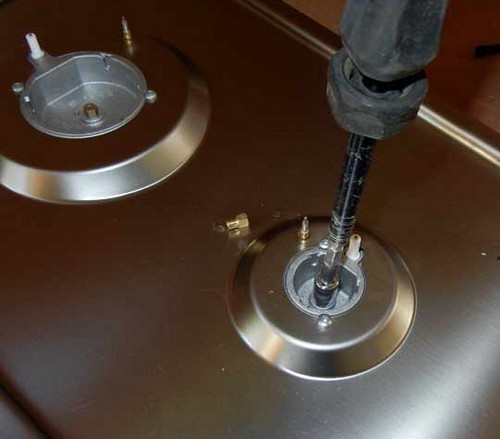
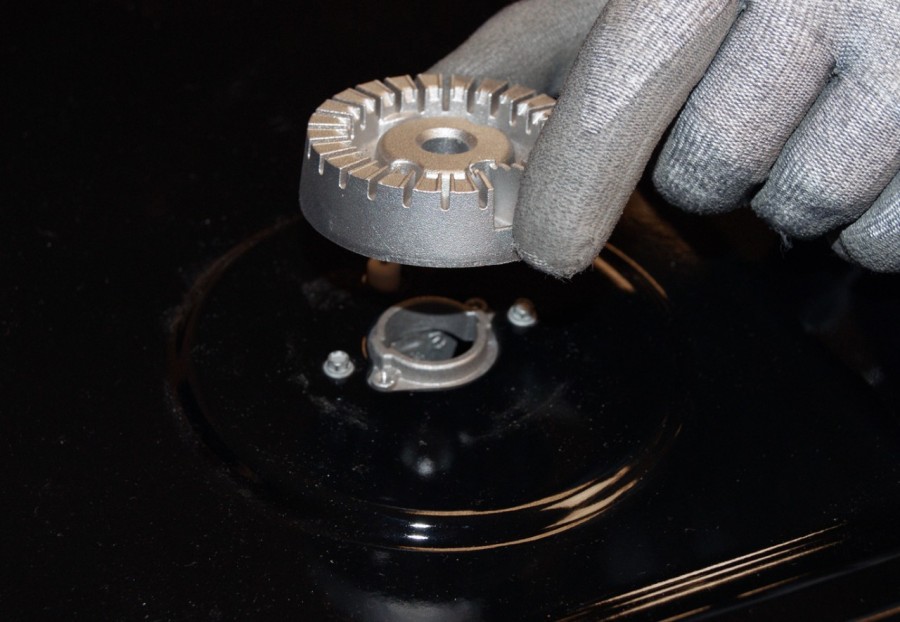
Replacing the jet for a gas stove is quite simple, however, during operation, all safety rules must be observed: the supply of combustible substance must be turned off. Now you can remove all the burners and unscrew the nozzles with a special key (7 mm). This must be done in sequence. Each element has a corresponding number.
In order to replace the nozzles for gas stoves in older models, it is imperative to remove the top of the device. You won't be able to unscrew the bolts otherwise. The assembly process of the plate is carried out in the reverse order.
In addition to nozzles, the device is equipped with special nozzles that are installed in each burner. Thanks to them, the gas is sprayed. Nozzles for a gas stove have a different diameter, depending on the size of the burner. In addition, the size of the presented element depends on what kind of combustible substance is used. If the type of gas changes, then new nozzles should be installed.
Modern stove models can be sold with two sets of blowers. It should be noted that not all nozzles can be easily found on the market. Although if you have a stove from a well-known manufacturer and you contact a specialized store, then there should be no problems with the search. If the purchased elements do not fit, then you should not try to reduce or increase the diameter of the holes yourself.Qualitatively, this can only be done in the factory. In addition, you can make a mistake with the angle of inclination of the passage channel, which will lead to the wrong direction of the gas jet. In the worst case, an explosion may occur.
If there is no suitable equipment in stores, then you can contact the manufacturing plants or service centers. A socket wrench is required to replace injectors. The procedure itself is not difficult. After that, new elements can be adjusted.
So, both the nozzle and the jet for the gas stove are indispensable elements, without which the device will not be able to work. It is advisable to choose those spare parts that are intended specifically for your device.
A small part of any gas stove, without which it cannot work properly, is a jet. They have to be changed very rarely and only in the case when the incoming blue fuel is changed to the version of liquefied from cylinders instead of stationary gas. You can replace the jets in a gas stove with your own hands, only for this you need to know all the nuances of dismantling, and visually distinguish the nozzle from other parts.
All modern gas stoves can run on natural or main gas, as well as from a replaceable cylinder where liquefied gas is located. When propane is used, it is necessary to change not only the jets on the stove, but also the gearbox.
Jets are made in the form of a small bolt with a thread and a hole in the head - gas is supplied through it to the burner of the stove. Further, in the burner, it is mixed with air, this mixture is ignited, an open flame is formed, on which food is cooked.
Nozzles are available in two types: for natural gas the hole is slightly larger in diameter, and the part itself is shorter and visually different; under liquefied gas bolts are made with a longer thread.
This is how the jets look like - a complete set for the Hephaestus gas stove:
What is a jet (nozzle)
Almost all gas stoves are equipped in such a way that they can work on both natural gas and propane (from a replaceable cylinder). It should be noted that when switching to liquefied gas, not only the replacement of jets is required, but also the installation of a gearbox, which is responsible for equalizing the pressure of the incoming fuel.


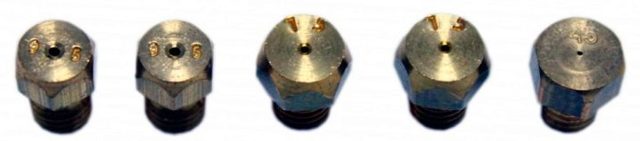




The nozzle (jet) is a bolt, in the head of which there is a hole for supplying gas to the burner. After entering the burner, the gas is mixed with air, and the gas-air mixture is ignited.
Depending on the fuel used, there are two types of nozzles: for supplying blue fuel from the main pipeline and for supplying gas from a gas tank or cylinder.
Jets (nozzles) for natural gas, in comparison with jets for liquefied fuel, are characterized by:
- Shortened bolt body;
- Fewer threads;
- Enlarged hole diameter.
In the case when incorrect operation of the stove is observed, it is best to replace not one jet, but the entire set at once, and when switching to bottled gas, this is generally a necessity.
Why and why you need to change the jet
Jets for different types of gas vary greatly, therefore, when changing the type of gas-air mixture injectors need to be replaced
If you pay attention to the diameter of the hole, it becomes obvious that they are not the same. In this case, the diameter of the hole depends not only on the type of gas used, but also on the size of the burner itself.
Each of the burners of the gas stove is different in power and size, so for stable operation it is equipped with a separate nozzle.
The more powerful the burner, the more gas it needs to work, so the nozzle diameter is also larger.
Choosing a jet for bottled gas
As already mentioned, the propane jet has a shortened body and a smaller outlet diameter. It is not recommended to try to reduce the hole yourself, since even fractions of millimeters are important here. By eye, you can only improve the operation of the stove, but not achieve its ideal operation.
It is important to understand that standard jets simply do not exist. They are specific to each specific model.
Modern cookers are equipped with a set of jets designed to run on propane. Some models are even made specifically for bottled gas.
How to calculate the number of cylinders in the system
Fuel consumption in case propane boilers are used is important. It's one thing if you use a gas tank with a capacity of up to 6000 liters, one refueling of which, with a consumption of 20 liters per day, is enough for almost a year of uninterrupted operation.
The same fuel consumption when using cylinders will look completely different. Taking into account the capacity of one tank equal to 40 liters, up to 120 liters will be consumed by a double-circuit boiler per week. That is, the expense will be quite tangible.And, in order to avoid frequent refueling or an unexpected shutdown of the fuel supply, it is worth making sure that one refueling is enough for at least a month of uninterrupted operation.





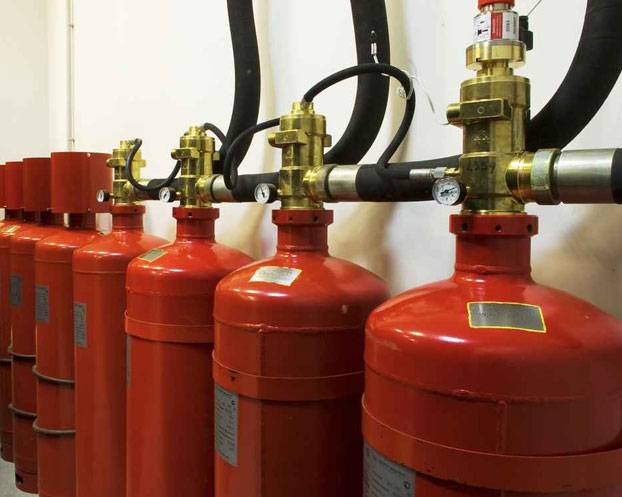
To do this, the cylinders are combined into groups - according to the standards, the number of tanks in them can reach 15 units. But, most standard ramps are designed to connect up to 10 containers at once. They are connected through independent gearboxes or one common pressure converter - according to the main and backup schemes, within which the fuel consumption in each set is controlled. As soon as the pressure in the system falls below certain values, the installed fittings will open access to the gas supply from additional tanks, thus ensuring safety during the operation of the equipment.
It is possible to reduce fuel consumption if an automatic control system is used. In this case, it will be possible to set up different modes of fuel consumption, taking into account seasonal factors and atmospheric temperatures. For example, while maintaining the average temperature in the house during the absence of the owners at +9 ºС, the consumption will be less than one cylinder per week.
Rework steps with a burner change
The design of a number of boilers is arranged in such a way that there is no point in turning the nozzles separately. For them, manufacturers produce modules designed for liquefied gas. You can easily change the burner module, for example, in the Navien Deluxe boiler.
All work consists in replacing the manifold with nozzles with exactly the same device, but with holes of a different size. The fact that it will be factory-made is a definite plus, guaranteeing the tightness of gas pipelines.There is no need to doubt its further safe operation.
Re-equipment and reconfiguration works in this case are carried out as follows:
- We disconnect the unit from the power supply and turn off the tap on the gas supply pipe.
- Remove the front panel from the boiler body.
- Disconnect the electrodes connected to the ignition system.
- We dismantle the gas supply pipe located within the boiler, after unscrewing the 4 screws holding it.
- We remove the cover installed on the closed combustion chamber. To do this, unscrew 11 screws.
- We dismantle the overheating protection sensor together with the bracket intended for it.
- We remove the collector together with the nozzles attached to it. To remove it, unscrew the two screws located to the right and left of the device.
- We install a sealing ring on the new collector to be installed, sealing the inlet of the gas pipe. We mount the new collector in a regular place and fix it with screws.
- The microswitch, fifth from the bottom, is translated to the right. So we reconfigure the device to work from liquefied gas.
After these simple manipulations, we assemble the boiler, following the reverse sequence. In the same way, most floor-standing gas boilers are reworked and reconfigured, especially if they are of a condensing type. This version of the boilers is most often even designed for the possibility of translation.
The following photo selection will help you visually familiarize yourself with the procedure for replacing the manifold with gas injectors and setting up the boiler:
Now it remains only to change the manifold and set up the gas unit to work from cylinders or a gas tank:
However, you should be aware that both of the above methods of alteration are generally not implemented with all models of units. There are boilers that you should not even try to convert to liquefied gas, especially units that have been produced for a long time.
In any case, before planning a rework and translation, you need to ask the representatives of the company that performed the first launch whether it is possible to implement such a project. It is also worth studying the passport of gas processing equipment and the manufacturer's recommendations. Usually there is a possibility.