- Autonomous gas heating
- Steam heating boiler in a private house
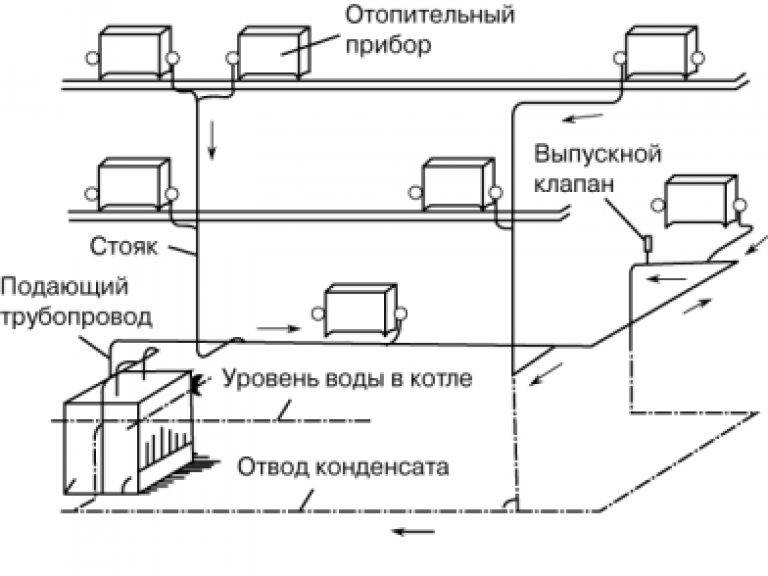
- Steam heating scheme: description and principle of operation
- Advantages and disadvantages of steam heating
- Do-it-yourself steam heating from a stove
- Work technology
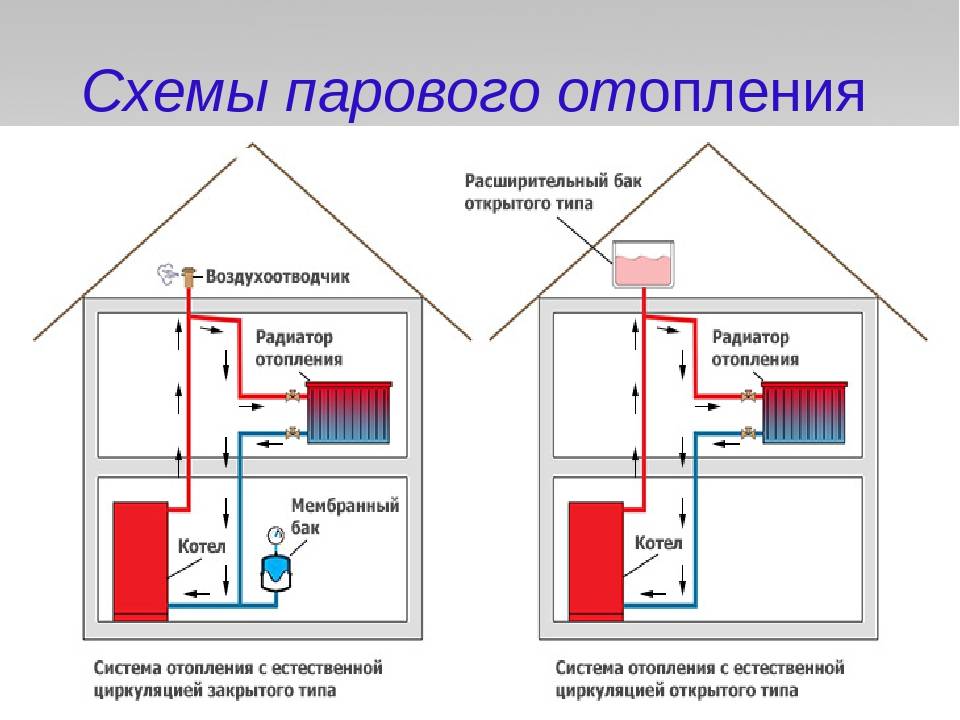
- Natural circulation system
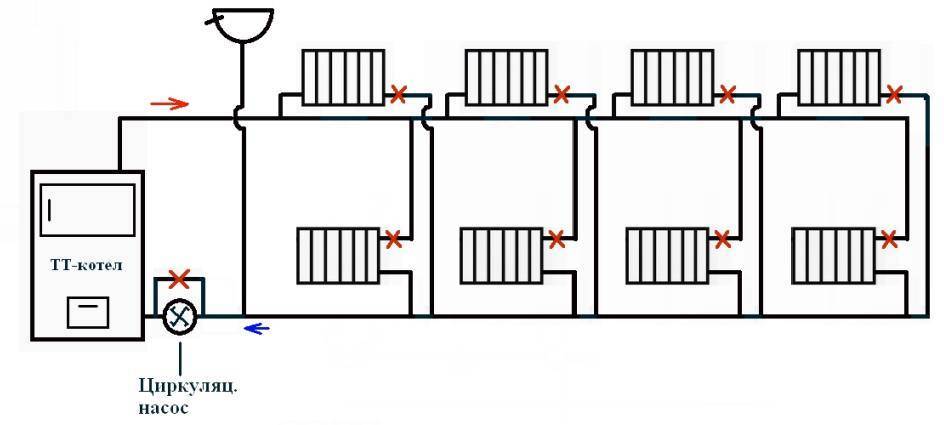
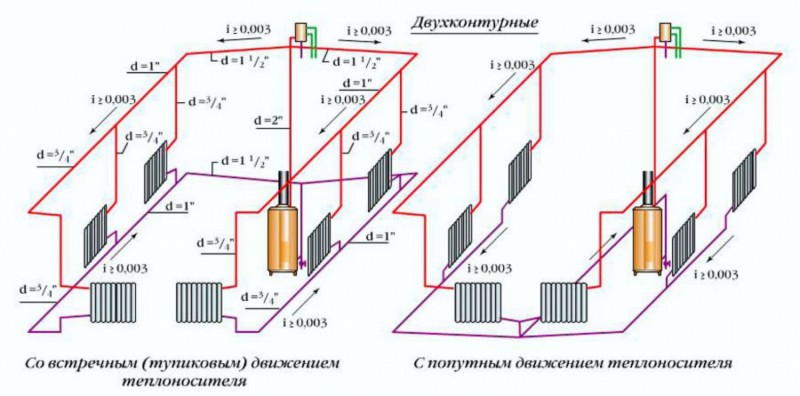
- Two-pipe passing scheme of the heating system
- Why choose steam heating?
- Choosing a heating method for a private house
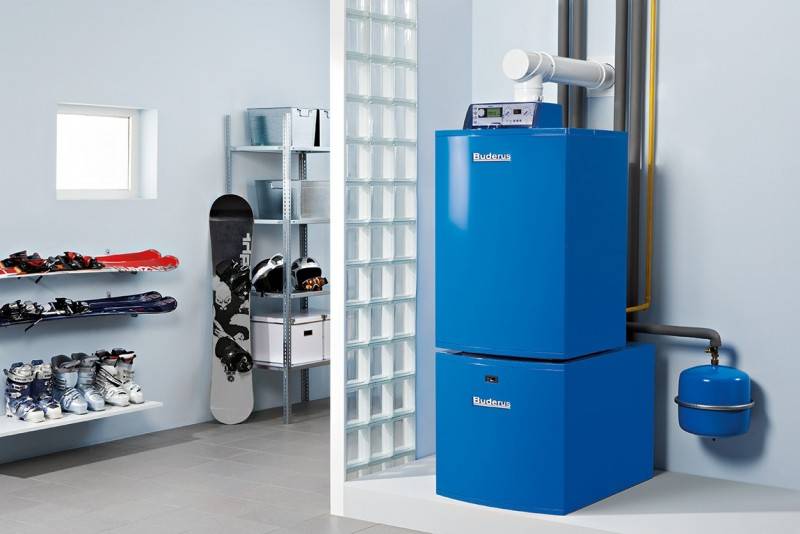
Autonomous gas heating
Not all settlements in Russia have a gas pipeline. The solution is to use gas gelders.
The propane-butane mixture pumped into pressurized tanks is used for heating. Such cylinders can be connected to almost any gas boiler.
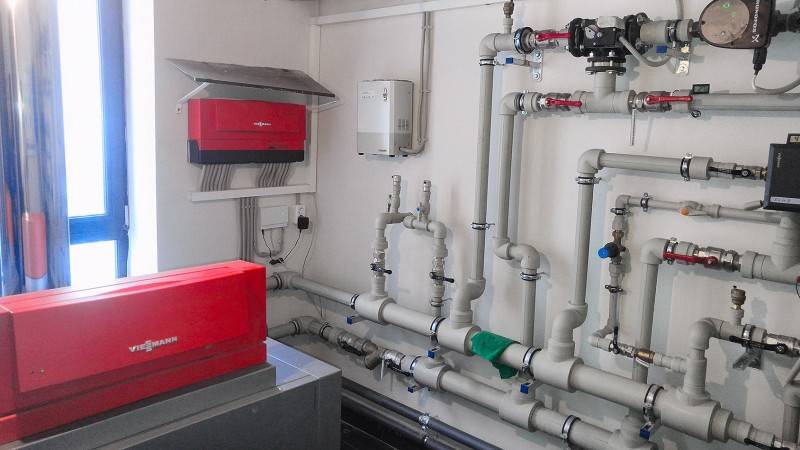
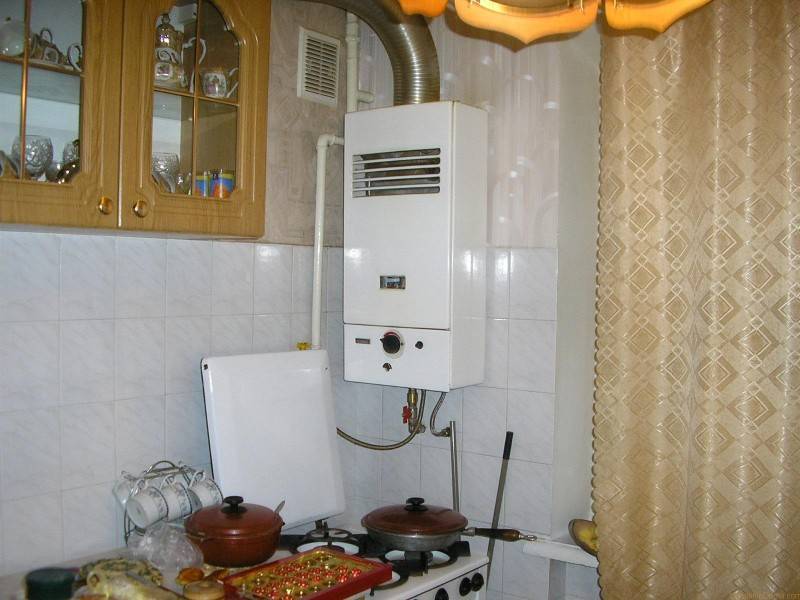
Not everyone is able to independently understand the schemes of gas heating from a photo on the network, so it is better to turn to professionals. After all, heating in the house is one of the most important fundamental comfortable living in it.
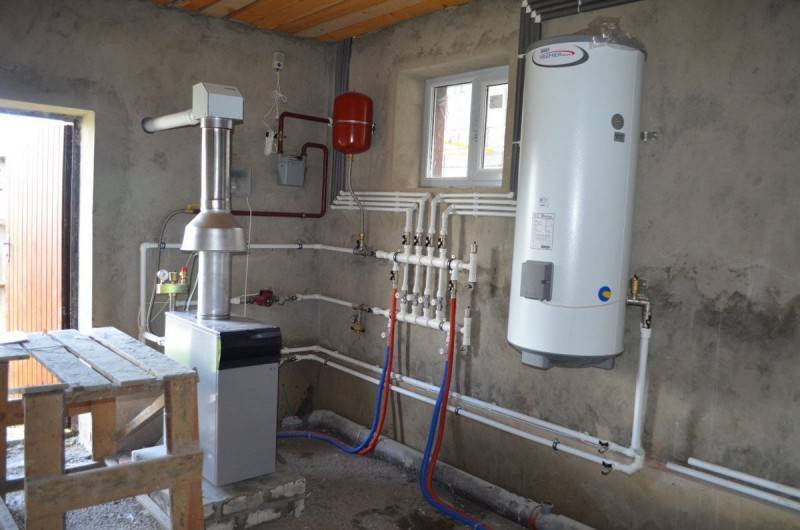
Numerous positive reviews about gas heating allow us to understand that there is no worthy alternative in terms of convenience and efficiency of heating.
Steam heating boiler in a private house
A steam boiler is an alternative type of heating for private houses and cottages.Water heating of buildings is incorrectly called “steam” - such a confusion in the names is associated with the principle of heating apartment buildings, where an external coolant under pressure flows from a CHP to individual houses and transfers its heat to an internal carrier (water), which circulates in a closed system.
Steam heating in a private house is used much less frequently than other methods of space heating. It is economically justified to use the boiler in a country house or a country house, when year-round living is not provided, and the main role in heating is played by the speed of heating the premises and the ease of preparing the system for conservation.
The possibility of installing such equipment in addition to the existing one, for example, a furnace, is another advantage of using steam as a heat carrier.
As a result of water boiling in the boiler unit (steam generator), steam is formed, which is supplied to the system of pipelines and radiators. In the process of condensation, it gives off heat, providing rapid heating of the air in the room, and then returns in a liquid state in a vicious circle to the boiler. In a private house, this type of heating can be implemented in the form of a single- or double-circuit scheme (heating and hot water for domestic needs).
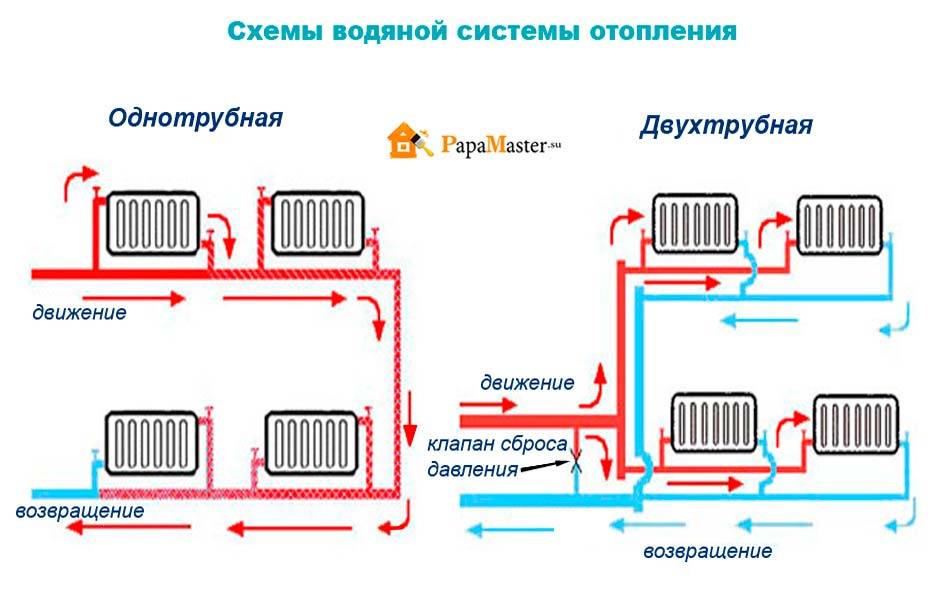
According to the wiring method, the system can be single-pipe (serial connection of all radiators, the pipeline runs horizontally and vertically) or two-pipe (parallel connection of radiators). Condensate can be returned to the steam generator by gravity (closed circuit) or forcibly by means of a circulation pump (open circuit).
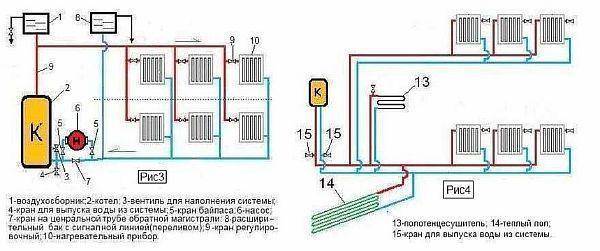
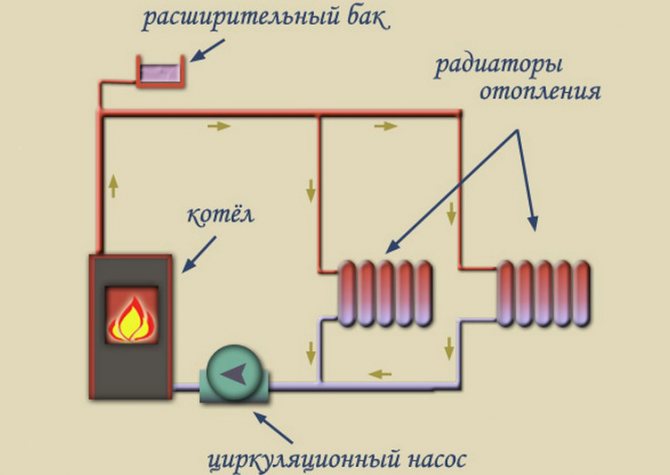
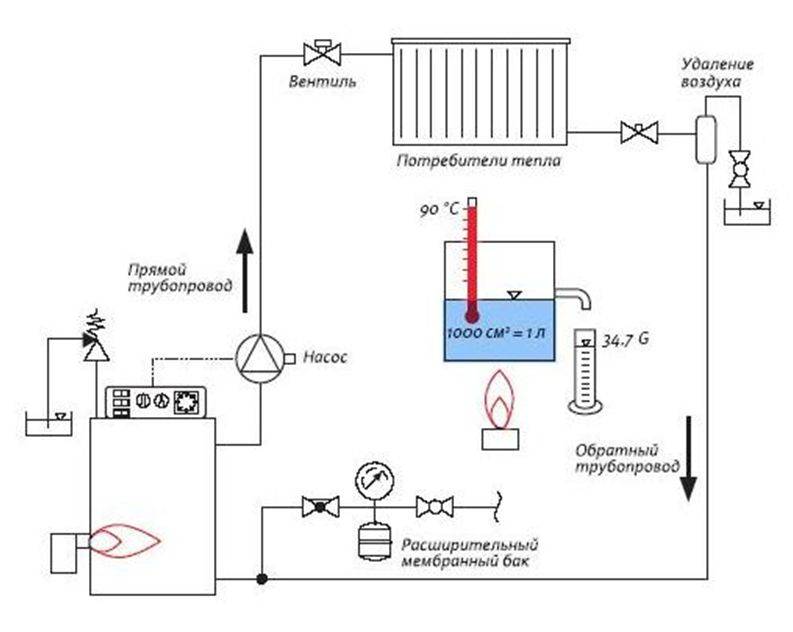
The scheme of steam heating of the house includes:
- boiler;
- boiler (for a two-circuit system);
- radiators;
- pump;
- expansion tank;
- shut-off and safety fittings.
Description of steam heating boiler
The key element of space heating is the steam generator, the design of which includes:
- furnace (fuel combustion chamber);
- evaporator pipes;
- economizer (heat exchanger for heating water due to exhaust gases);
- drum (separator for separating the steam-water mixture).
Boilers can operate on various types of fuel, but it is better for private houses to use a household steam boiler with the ability to switch from one type to another (combined).
The efficiency and safety of such space heating depends on a competent approach to choosing a steam generator. The power of the boiler unit must be commensurate with its tasks. For example, to create an optimal microclimate in a house with an area of 60-200m 2, you need to buy a boiler with a capacity of 25 kW or more. For domestic purposes, it is effective to use water-tube units, which are more modern and reliable.


Self-installation of equipment
Work is carried out in stages, in a certain order:
1. Drawing up a project taking into account all the details and technical solutions (length and number of pipes, type of steam generator and its installation location, location of radiators, expansion tank and shutoff valves). This document must be agreed with the state control authorities.
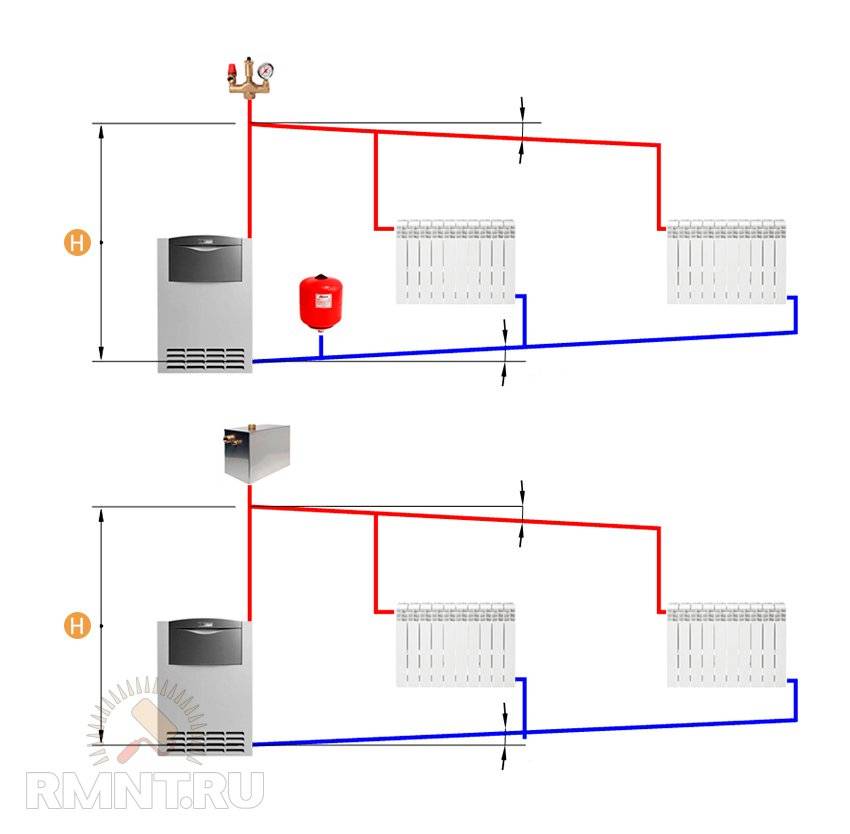
2. Installation of the boiler (made below the level of the radiators to ensure steam advances upwards).
3. Piping and installation of radiators. When laying, a slope of about 5 mm should be set for each meter. Installation of radiators is carried out using a threaded connection or welding.In reviews of a steam heating system, experienced users recommend installing taps to eliminate problems when air locks occur and facilitate subsequent operation.
4. Installation of the expansion tank is carried out 3 meters above the level of the steam generator.
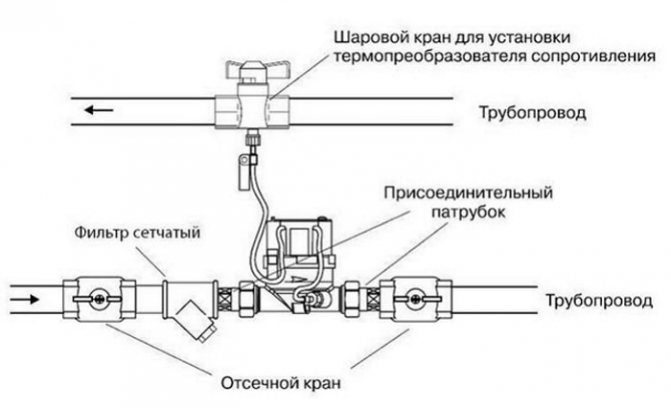
5. The piping of the boiler unit must be carried out only with metal pipes of the same diameter with outlets from the boiler (adapters must not be used). The heating circuit is closed in the unit, it is desirable to install a filter and a circulation pump. A drain unit must be installed at the lowest point of the system so that the pipeline can be easily emptied for repair work or conservation of the structure. Necessary sensors that control the process and ensure safety are necessarily mounted on the boiler unit.
6. Testing a steam heating system is best done in the presence of specialists who can not only perform all procedures in accordance with applicable norms and standards, but also eliminate any shortcomings and inaccuracies in the installation scheme with their own hands.
Steam heating scheme: description and principle of operation
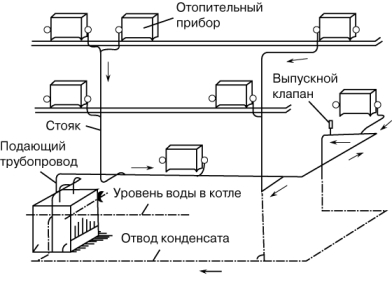
Steam heating is quite simple in principle. A steam boiler that heats water to the boiling point produces steam which permeates the radiators and pipes appropriately. As it condenses, the water returns to the boiler. Here, the difference between the heating system lies in the choice of the method for draining condensate.A steam turbine or a reduction-cooling plant extracts steam, the resulting condensate enters through a certain technological inclination of the pipe back into the boiler or into the pump that pumps the condensate. Heating devices can be convectors, radiators or pipes (ribbed or smooth), depending on the choice. As a standard, either pipes are often used, as the most economical option, or radiators.
The following is a distinction based on the following criteria:
Steam pressure systems:
- High pressure (pressure 0.18 - 0.47 MPa);
- Low pressure (from 0.15 to 0.17 MPa).
Condensate return:
- Closed type (condensate is returned directly to the boiler at a certain angle of the pipes);
- Open type (the tank collects condensate, from where it is subsequently pumped to the boiler by a pump).
- Upper wiring (The location of the steam line is above the heating devices, the condenser is below);
- Lower wiring (Steam line and condenser are located below the heaters).
The choice of a one-pipe or two-pipe system primarily depends on the room in which it will be installed. In a private house, a more compact one-pipe system is desirable, combining less space and the ability to heat a small room, in contrast to the two-pipe system, which is used in large, often non-residential, premises.



Steam boiler types:
Also, boilers differ in the type of fuel burned:
- solid fuel;
- liquid;
- Combined (possible choice of fuel, both solid and liquid);
- Gas.
Advantages and disadvantages of steam heating
Like any other heating system, steam heating has its advantages and disadvantages. Consider them in more detail and start with the advantages:
- The low cost of equipment is the most obvious plus for any consumer;
- Low heat loss - high efficiency allows to reduce the cost of space heating;
- High heat dissipation - thanks to this, rapid heating of the premises is ensured.
Not without drawbacks:
- Increased noise level - remember how noisy steam engines and steam locomotives are. Therefore, when filling pipes and radiators with steam, you will hear noise;
- High temperature of pipes and radiators - due to the high temperature of the steam, burns can occur;
- A high level of corrosion of individual elements is solved by using more expensive components;
- There is no smooth temperature control - there is only a steam supply adjustment. Sometimes the temperature in the house is lowered by turning off the system, which will be difficult when it works on coals or wood;
- Low level of safety - due to possible accidents, steam heating systems are not used to heat residential premises.
Naturally, individual shortcomings can be dealt with, but this is fraught with additional costs.
Do-it-yourself steam heating from a stove
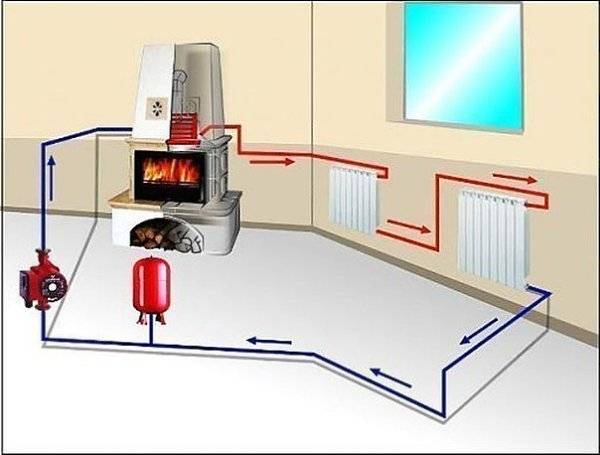
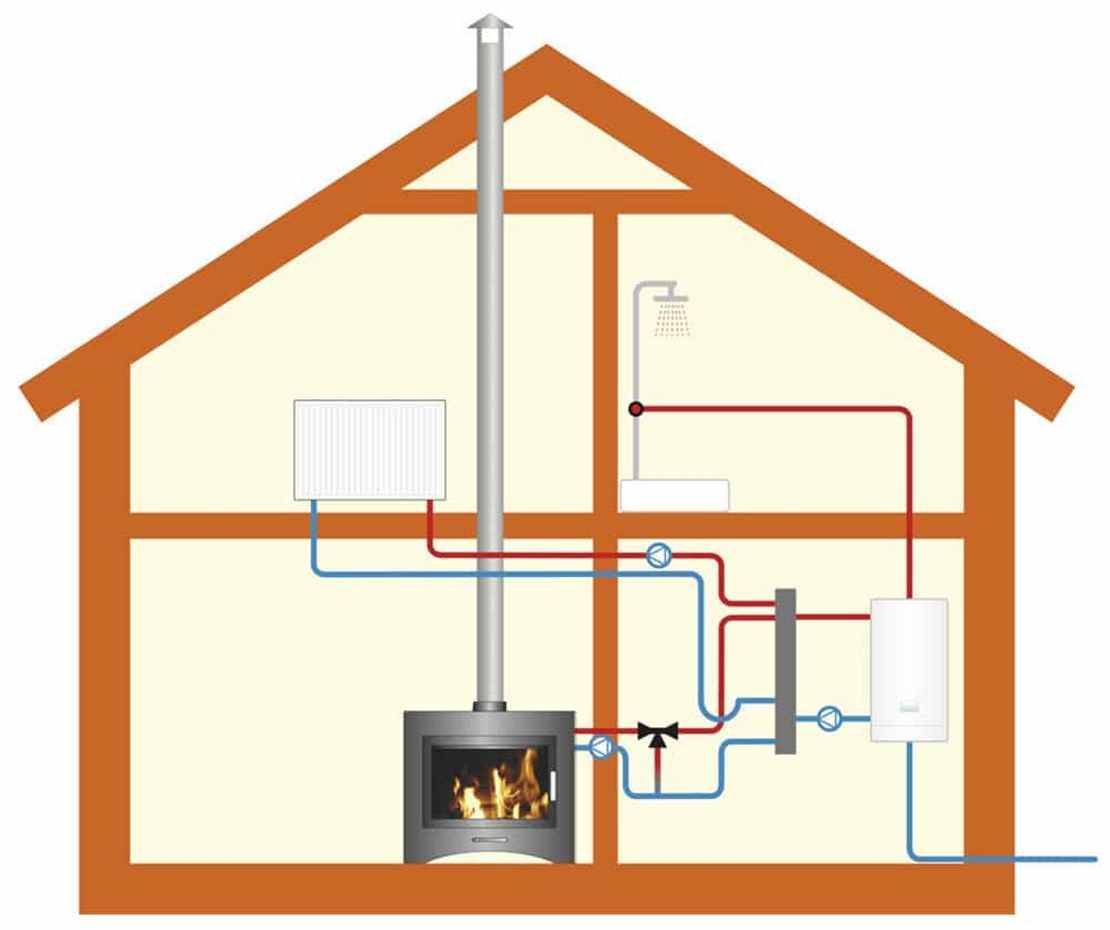
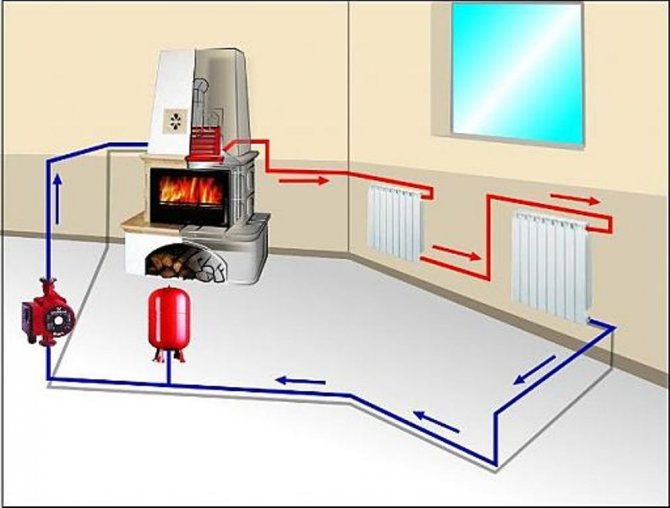
In order not to install a heating boiler for a steam heating system and spend money on it, you can use the stove available in the house. It will act as a heat source with inexpensive solid fuel, moreover, it does not depend on the central gas and electricity supply. The steam generator is a heat exchanger, which can be made to order or independently.The disadvantages of a steam boiler stove are the same as those of a conventional stove or fireplace: the inability to accurately adjust the heating temperature, the lack of complete fire safety, and the possibility of smoke in the room due to improper kindling. Thus, the furnace-boiler has the same disadvantages as the conventional one, but there are much more advantages.
 Steam heating from the stove
Before you make steam heating from the stove, you need to check the heat exchanger for leaks. This can be done as follows: kerosene is poured into the device, while the seams are outlined with chalk. Places where the chalk has darkened indicate a leak, which means that this device cannot be used for a steam heating system.
To divert steam heating from the stove, you will need the following components:
- Heating batteries. Their number should be equal to the number of windows in the room.
- heat exchanger
- Copper or galvanized pipes for condensate and steam pipes.
- Shut-off valves (faucets for air release, valves)
- Connecting fittings: elbows, pipe clamps, fittings.
- Brackets for radiators
- hydraulic shutter
- Reducing-cooling unit, with the help of which the vapor is transferred to a liquid state.
- Reducer to reduce the pressure inside the system.
- Pump for forced circulation of liquid.
- inverter welding machine
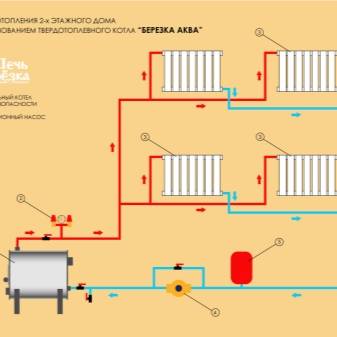
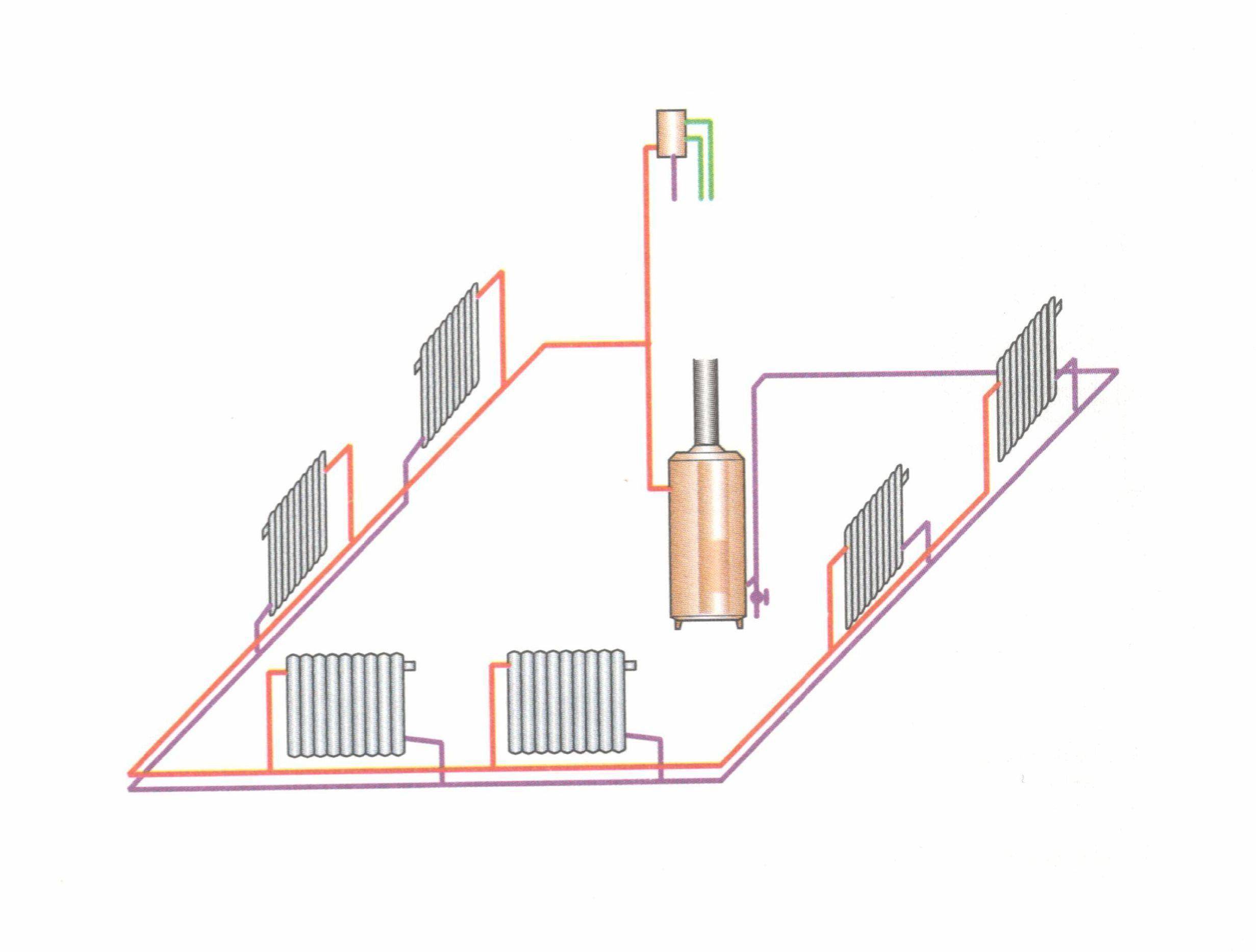
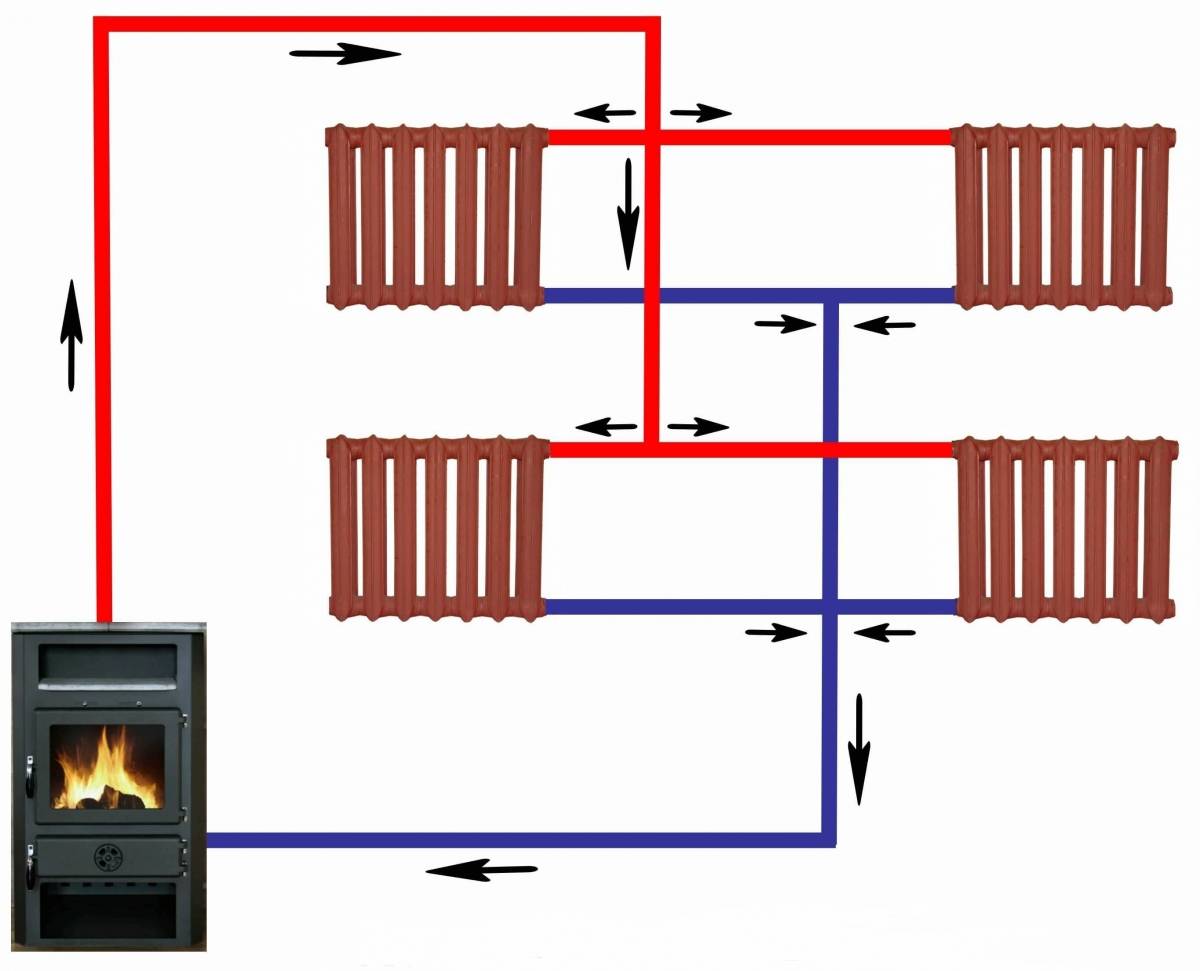
Before starting work, a connection diagram and installation of pipes are preliminarily developed. The drawing determines the location of the furnace-boiler, from which the wiring diagram with all the necessary connection elements is further laid. For heating area no more than 80 sq.m. a single-pipe radiator connection scheme is suitable.With this connection method, the convectors heat up sequentially, the first of them is stronger than the others. The two-pipe scheme is suitable for space heating over 80 sq.m. and two-story houses. The pipes are connected to the convectors in parallel. If it is planned to install a system according to the principle of natural circulation, the heat exchanger should be located below all convectors and pipes at an angle of inclination. This requires the installation of a pump for uninterrupted circulation of the heating system.
After the scheme has been developed and all the structural elements necessary for assembling the heating system have been taken into account, you can draw up an estimate for the purchase of materials and get to work.
After the scheme has been developed and all the structural elements necessary for assembling the heating system have been taken into account, you can draw up an estimate for the purchase of materials and get to work.
Work technology
It must be borne in mind that it is impossible to install a steam heating system without dismantling the old furnace. In order to build in a heat exchanger, it is necessary to mount it inside the furnace at the stage of laying the furnace.
Radiators are arranged under each window, to which inlet and outlet pipes are connected at a slight slope of 3 mm. Each radiator is supplied with an air bleed valve.
 Steam heating from the stove
To secure the system, shut-off valves are installed in front of each convector and in front of the entire system as a whole. At the beginning of the system, a cooling reducer and a pressure reducing valve are also installed. At the end of the system, a condensate collection tank is installed with the same slight slope as the pipes.From it, water flows into the heat exchanger. A pump is installed in front of the stove in a forced circulation system.

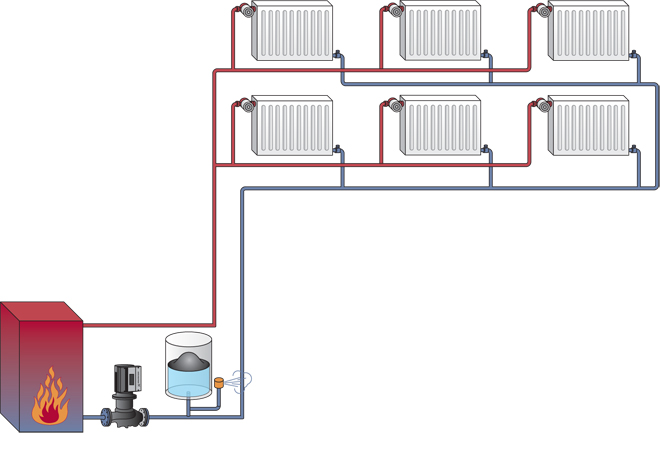
Natural circulation system
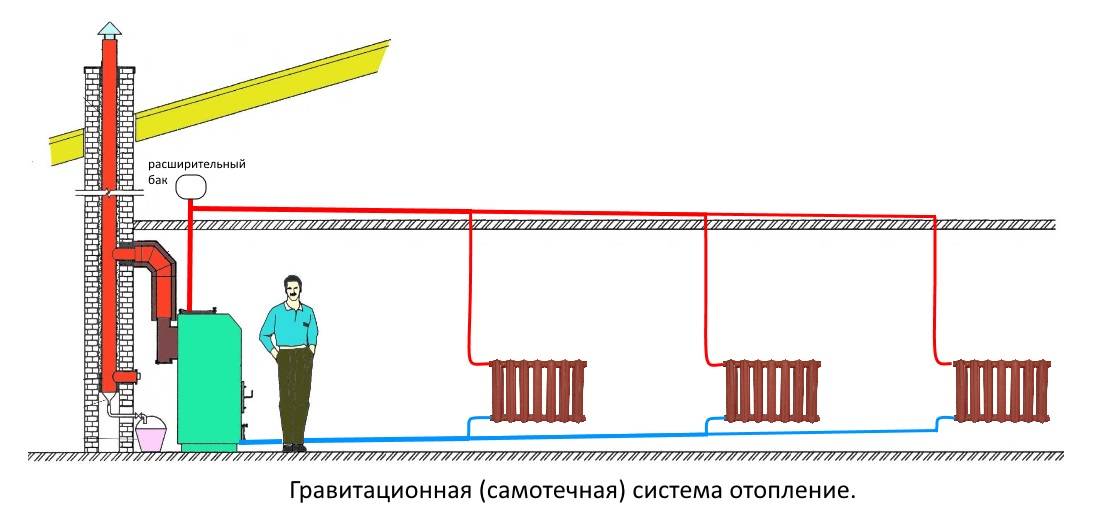
This is the simplest heating option that does not require significant financial investments. The design and installation of the system does not involve complex work, and all components and materials are available. Therefore, such a water heating system for a private house can be done independently - a detailed description is contained in the instructions for the equipment.
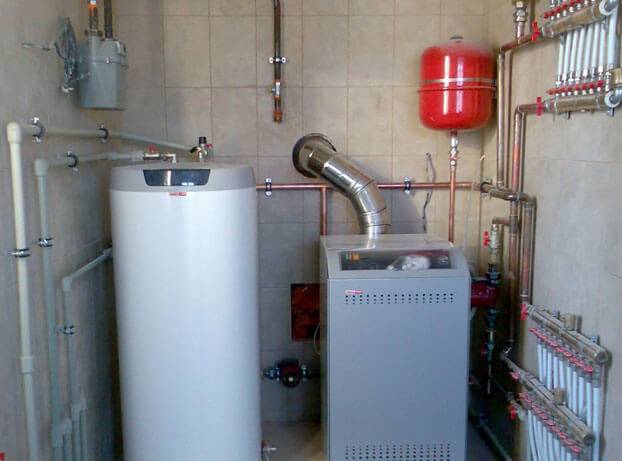
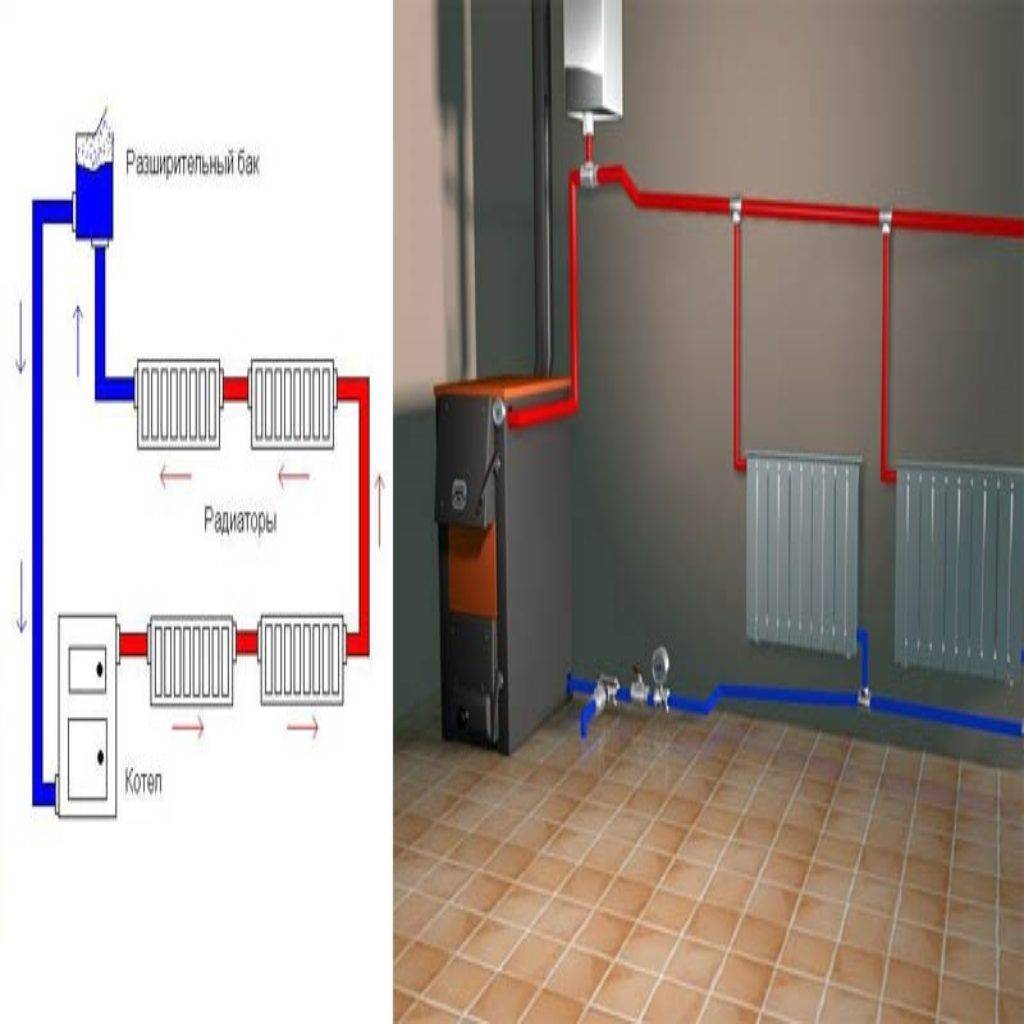
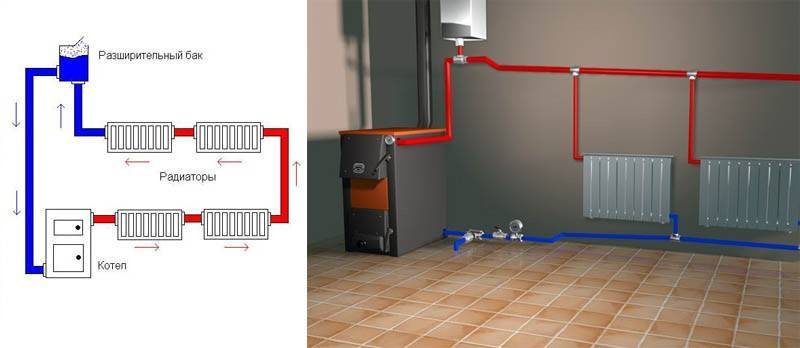
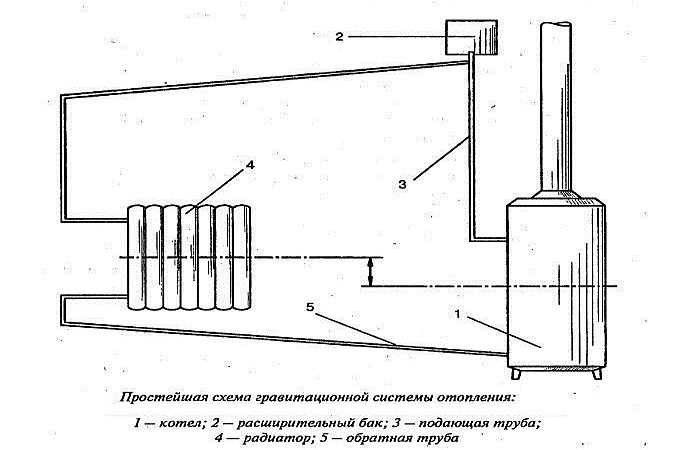
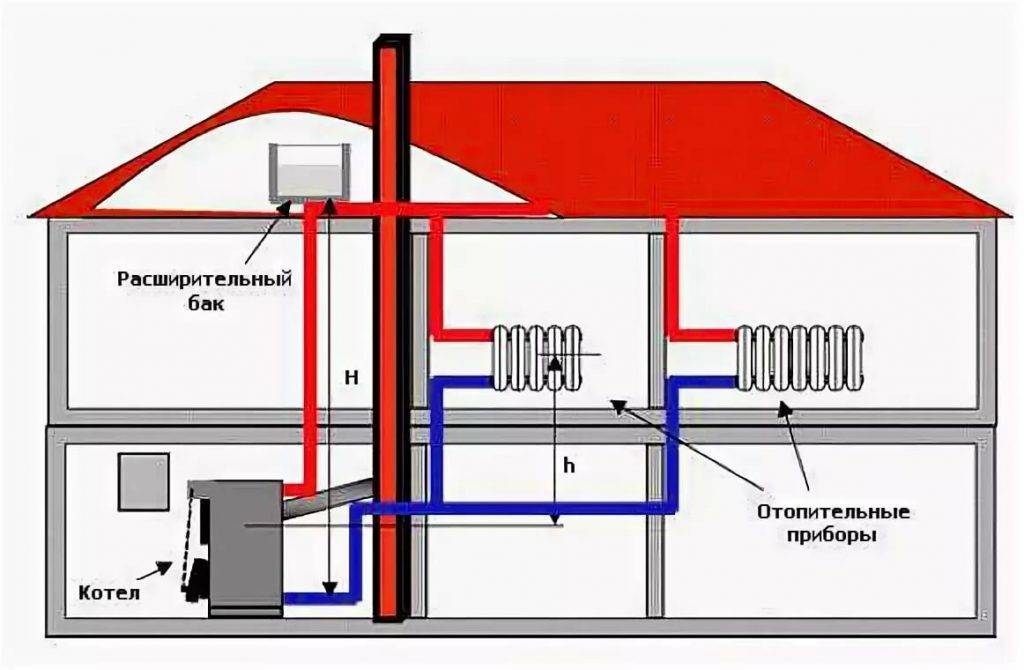
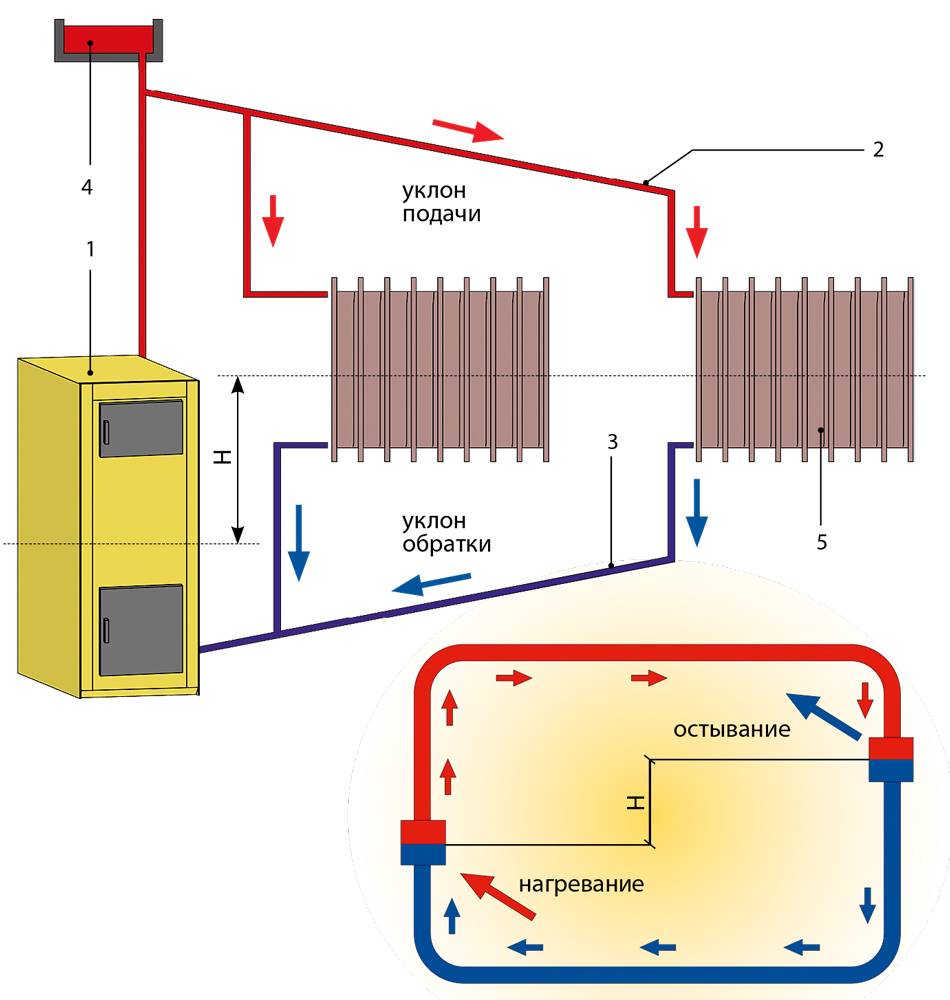
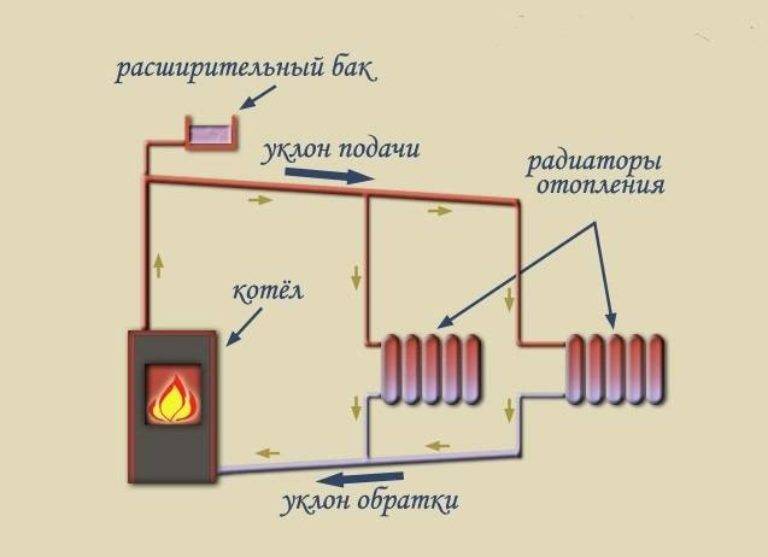
The principle of operation of water heating with natural circulation is extremely simple. The water heated in the boiler rises up the pipeline (this is due to the temperature difference), and eventually gets into all the radiators located around the house. The already cooled water is returned to the boiler. Thus, the coolant circulates through the heating system naturally, without the use of special equipment.
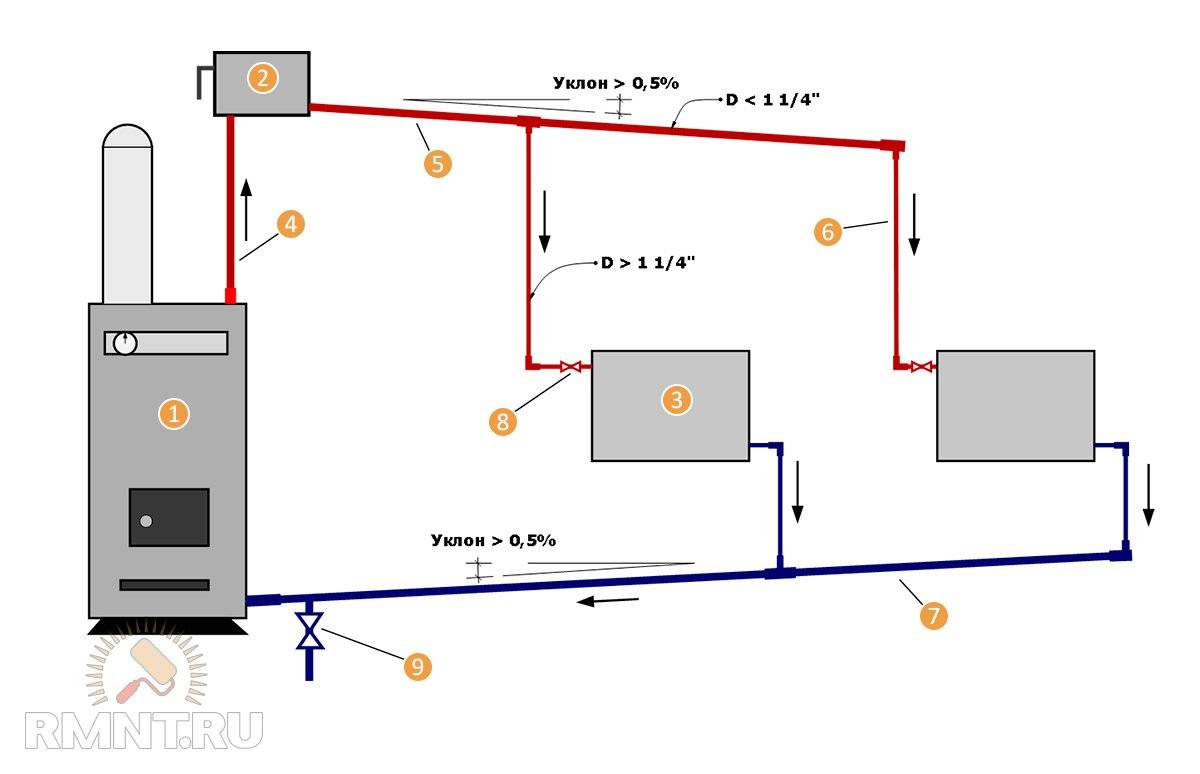
For wiring, pipes of different diameters are used - the choice depends on the characteristics of the equipment and radiators. It is imperative to observe a decrease in the cross-section of pipes towards the extreme point of the heating system - the last battery.
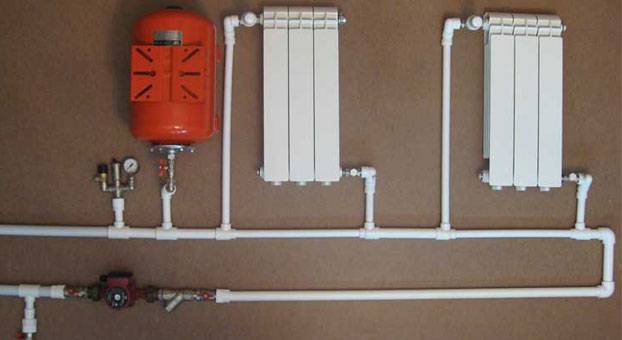
The pipe through which the water heated in the boiler is supplied to the system is installed in such a way that there is a maximum slope towards the batteries. The entry point to the return heat generator is made as low as possible relative to the radiators - this is necessary for the efficient circulation of the coolant. For this purpose, a heating boiler is often installed in the basement or basement.
An integral part of the natural circulation water structure is the expansion tank.This device is installed, unlike the boiler, at the highest point of the house, for example, in the attic. Hydroaccumulating tanks are also sometimes used, but in this case it is necessary to install safety and air valves, pressure gauges.
For wiring the heating system, you can use not only metal, but also plastic pipes. The latter of them are easy to install, and the turnaround time is reduced.
Two-pipe passing scheme of the heating system
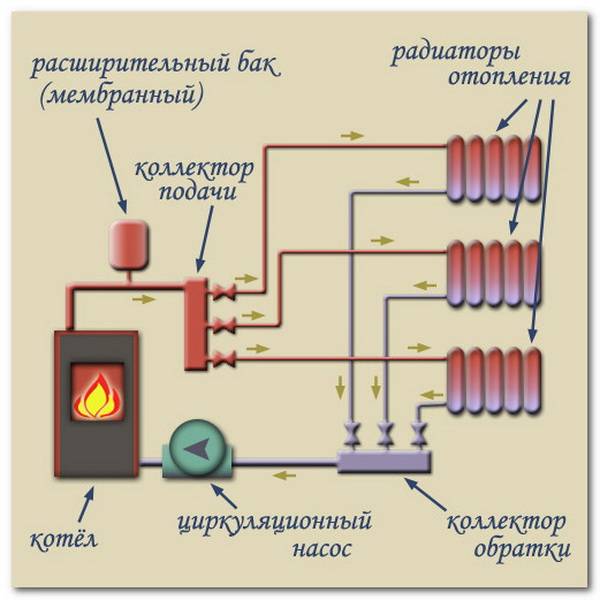
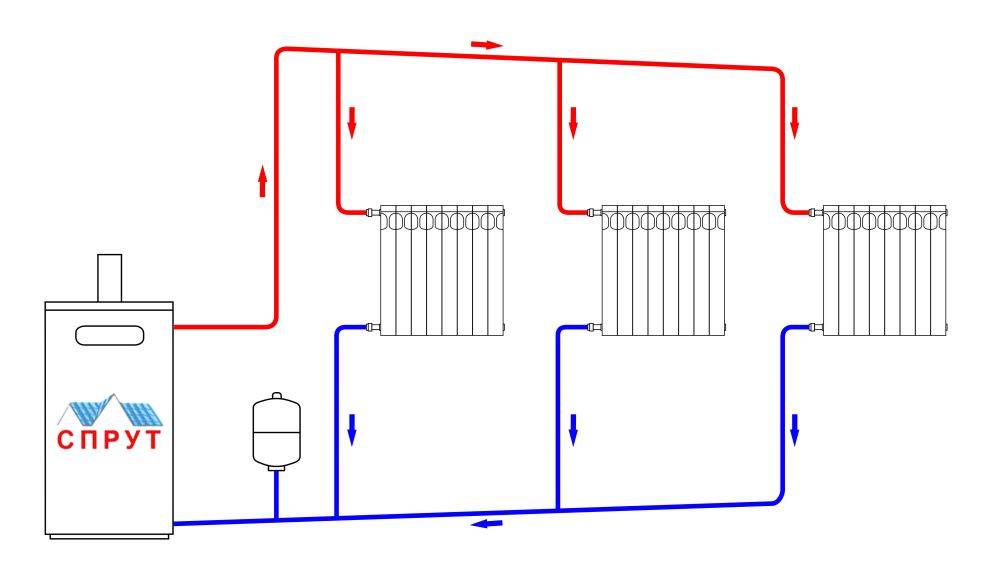
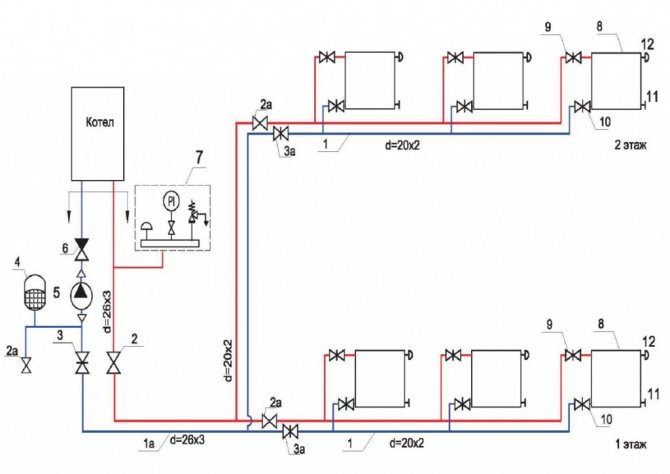
The two-pipe scheme is the highest quality in terms of control. In it, heating devices are connected to pipelines in parallel. This principle provides convenience in temperature control, allows you to turn off individual devices for maintenance and repair.
Part of the coolant from the supply pipeline enters the radiator, the bulk moves to subsequent heating devices. This type of piping is applicable for autonomous and centralized heating systems. The installation of thermostatic heads can fully automate the heating control process.
Why choose steam heating?
It must be admitted that steam heating systems cannot be classified as very popular. Such heating is rather rare. Let's take a closer look at its advantages and disadvantages.
The first ones are undoubtedly:
- The efficiency of the heating system. It is so high that a small number of radiators will be enough to heat the premises, and in some cases you can do without them: there will be enough pipes.
- The low inertia of the system, due to which the heating circuit warms up very quickly. Literally a few minutes after starting the boiler, heat begins to be felt in the rooms.
- There are practically no heat losses in the system, which makes it very economical compared to others.
- The possibility of rare use, because due to the small amount of water in the pipes, the system does not defrost. As an option, it can be installed in country houses, where they come from time to time.
The main advantage of steam heating is considered to be its efficiency. The initial costs for its arrangement are quite modest; during operation, it requires relatively small investments.
However, even with so many advantages, the disadvantages of the system are very significant. They are connected primarily with the fact that water vapor is used as a coolant, the temperature of which is very high.
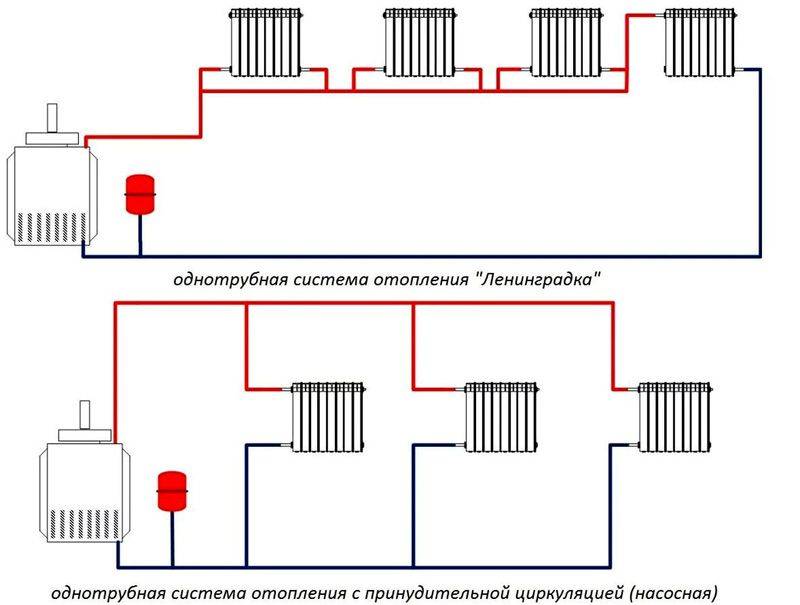


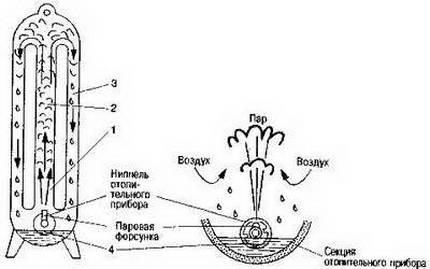 Water vapor condenses inside the steam heating radiator. During this process, a large amount of thermal energy is released, which explains the high efficiency of the system.
Due to this, all elements of the system are heated up to 100 °C and even higher. It is clear that any accidental touch to them will cause a burn. Therefore, all radiators, pipes and other structural details must be closed. Especially if there are children in the house.
The high temperature of radiators and pipes provokes active air circulation in the room, which is rather uncomfortable and sometimes dangerous, for example, in case of an allergic reaction to dust.
When using steam heating, the air in the rooms becomes too dry. Hot pipes and radiators dry it out. This requires the additional use of humidifiers.
Not all finishing materials that decorate rooms heated in this way can withstand the proximity to red-hot radiators and pipes. Therefore, their choice is very limited.
The most acceptable option in this case is cement plaster painted with heat-resistant paint. Everything else is in question. Steam heating has another drawback that affects the comfort of those living in the house: the noise that the steam passing through the pipes produces.
The more significant disadvantages include the poor controllability of the system. The heat transfer of the structure is practically impossible to control, which leads to overheating of the premises.
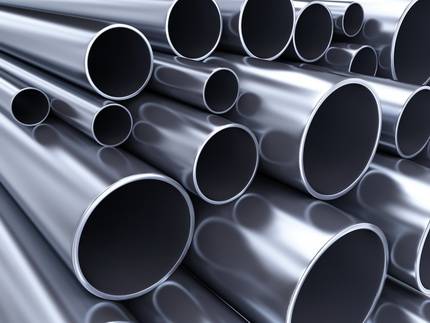
Steam heating is a potentially dangerous system, so the choice of equipment must be treated very responsibly. Pipes for the system should only be metal
There are solutions. The first is the installation of automation, which will turn on the boiler when the rooms cool down. In this case, those living in the house will be quite uncomfortable from constant temperature fluctuations.
A more “gentle”, but time-consuming way is to arrange several parallel branches that will need to be put into operation as needed.
The main disadvantage of steam heating, due to which it is little used, is its increased emergency hazard. It must be understood that in the event of a rush, hot steam will spurt out of a pipe or radiator under pressure, which is extremely dangerous.
That is why such systems are now banned in apartment buildings and are less commonly used in production. In private houses, they can be equipped under the personal responsibility of the owner.
Choosing a heating method for a private house
In the conditions of Russia, many factors influence the choice:
- climatic conditions of the construction region;
- the availability of a particular fuel;
- availability of heating units of the required type on the market;
- builder's personal preference.
If there is no gas pipeline in the construction region, you can build a gas tank and arrange heating with gas appliances. But this is provided that there is an organization involved in the installation of equipment and the supply of propane-butane for them. The cost of this type of gas supply is lower than when using main gas.
When choosing a type of system, usually choose more than one. Interruptions in the supply of fuel are possible, there should not be such problems with heating. Therefore, in parallel with a gas or electric boiler, wood-burning stoves or liquid fuel units, such as diesel fuel, are installed. In this case, heating is guaranteed in case of any failures.





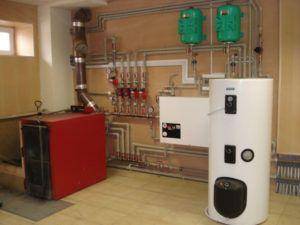
This is about a device for generating thermal energy. But the rational distribution of heat inside the room is also important. In a private house, radiator water heating is most often used. Recently, floor heating devices have been actively included in such systems as an auxiliary element.
Modern systems, as a rule, are multi-circuit, with separate temperature control in each of them. Usually, the automatic control of the return flow is carried out with the admixture of hot water from the boiler, or cold water from the expansion tank to obtain the desired heating of the system.
Some features have heating systems of a two-story house. A significant rise height of the heat carrier in this case provides spontaneous circulation in a natural way.This allows you to refuse to use a circulation pump in the pipelines, and the expansion tank can be installed not in the attic, but directly in the boiler room.
Such devices are filled with a significant amount of water, so they warm up slowly. To get rid of this disadvantage, it is recommended to use a circulation unit. Its power is not high, and, as a rule, does not exceed 90 W, and it can be turned on periodically.