- What heating is more profitable in the Russian Federation
- Analysis of calculation results
- Differences in schemes according to the method of connecting heating radiators
- Varieties of heating systems
- Advantages and disadvantages of natural circulation
- Distinctive features of pumping systems
- Using direct electric heating for heating in a wooden house
- Types of heating wooden houses
- Electric heating
- Gas heating
- Solid fuel
- oven
- liquid fuel
- infrared
- Air heating of the building
- Local or offline?
- Is gas heating suitable for a log house?
- Pipeline of the heating system
- Water heating in a wooden house
- What is the best heating for a house made of timber: autonomous or local
What heating is more profitable in the Russian Federation
Before determining the cheapest way to heat, we list all the energy sources available to residents of the Russian Federation:
- various types of solid fuels - firewood, briquettes (eurofirewood), pellets and coal;
- diesel fuel (solar oil);
- used oils;
- main gas;
- liquefied gas;
- electricity.
To figure out which heating is the cheapest, you need to find out how much each energy carrier can release heat and how much it will result in, and then compare the data.To determine the most economical heating will help the table, which contains the results of the calculations:
Anyone can perform such a calculation by substituting in the table the heat load on the heating system of their building and the cost of fuel in the region of residence. The calculation algorithm is as follows:
- Column No. 3 contains the values of the theoretical heat transfer per unit of fuel, and column No. 4 - the efficiency (COP) of heating equipment using this energy carrier. These are reference values that remain unchanged.
- The next step is to calculate how much heat actually enters the house from a unit of fuel. The calorific value is multiplied by the boiler efficiency divided by 100. The results are entered in the 5th column.
- Knowing the price of a unit of fuel (column No. 6), it is easy to calculate the cost of 1 kW / h of thermal energy received from this type of fuel. The unit price is divided by the actual heat output, the results are in column No. 7.
- Column No. 8 shows the average heat consumption per month for a country house with an area of 100 m², located in the middle zone of the Russian Federation. You must enter your heat consumption value for the calculation.
- The average monthly heating costs for housing are indicated in column No. 9. The figure is obtained by multiplying the monthly heat consumption by the cost of 1 kW obtained from various types of fuel.
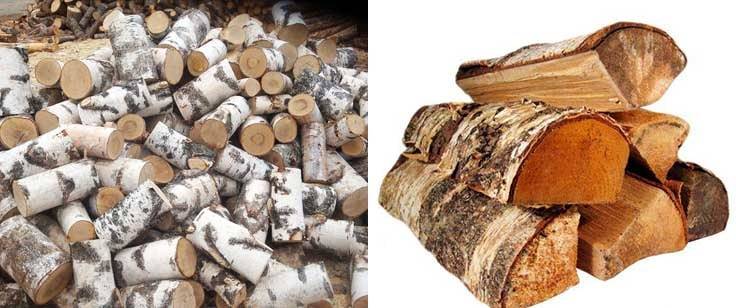
The table shows 2 types of firewood commonly available for sale - freshly cut and dry. This will help you understand how profitable it is to heat a stove or boiler with dry wood.
Analysis of calculation results
The calculations show that the most economical heating in 2019 for private houses in the Russian Federation is still provided by natural gas, this energy carrier remains unrivaled.Consider the fact that gas-using equipment is relatively inexpensive, and is quite efficient and comfortable to use.
The problem with gas in the Russian Federation is the high cost of connecting to existing pipelines. In order to economically heat a home, you will have to pay from 50 thousand rubles. (in remote regions) up to 1 million rubles. (In the Moscow region) for joining a gas pipeline.
Having learned how much the connection costs, many homeowners are thinking about how and with what to heat their house without gas. There are other energy carriers listed in the table:
The use of purely electric equipment for round-the-clock heating of the house cannot be called profitable, since the cheap nightly rate is valid for 8 hours a day, and the rest of the time you will have to pay the full rate. So heating with electricity alone will not work out cheaply.
Differences in schemes according to the method of connecting heating radiators
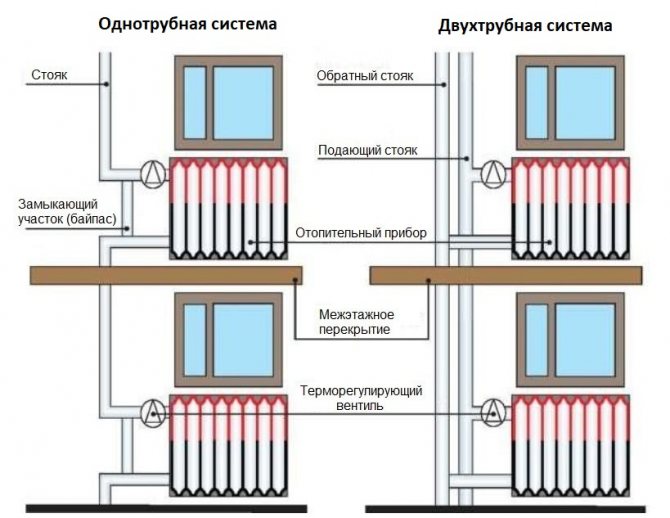
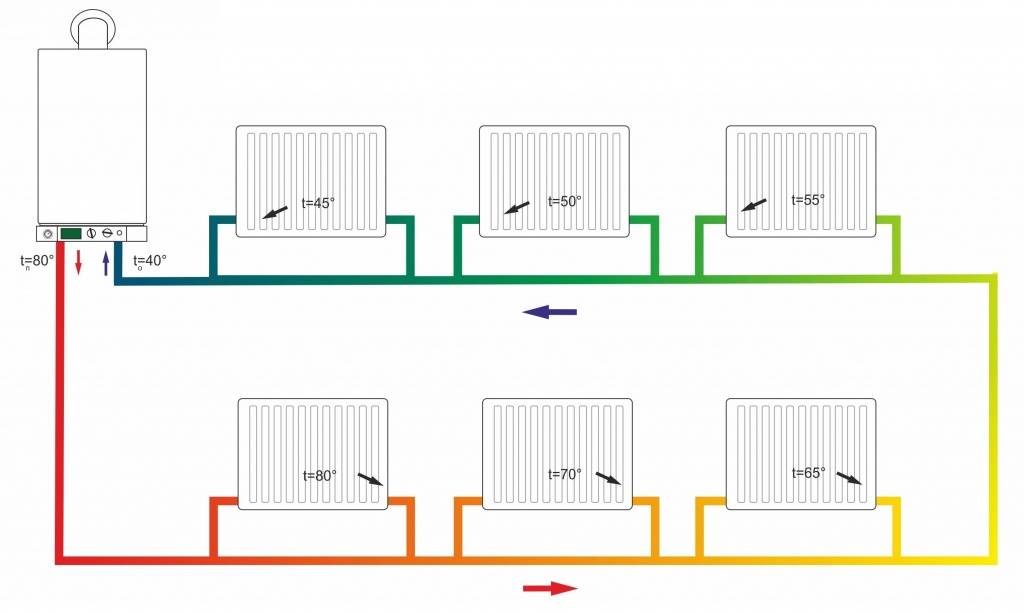
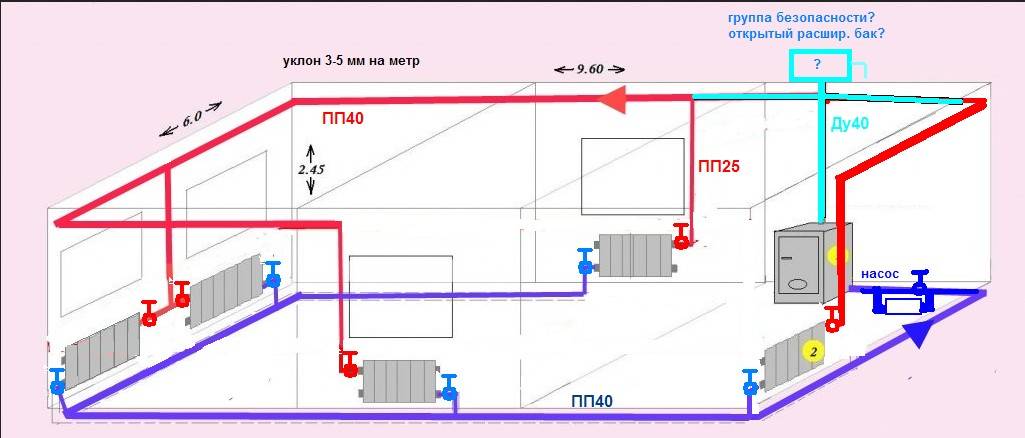
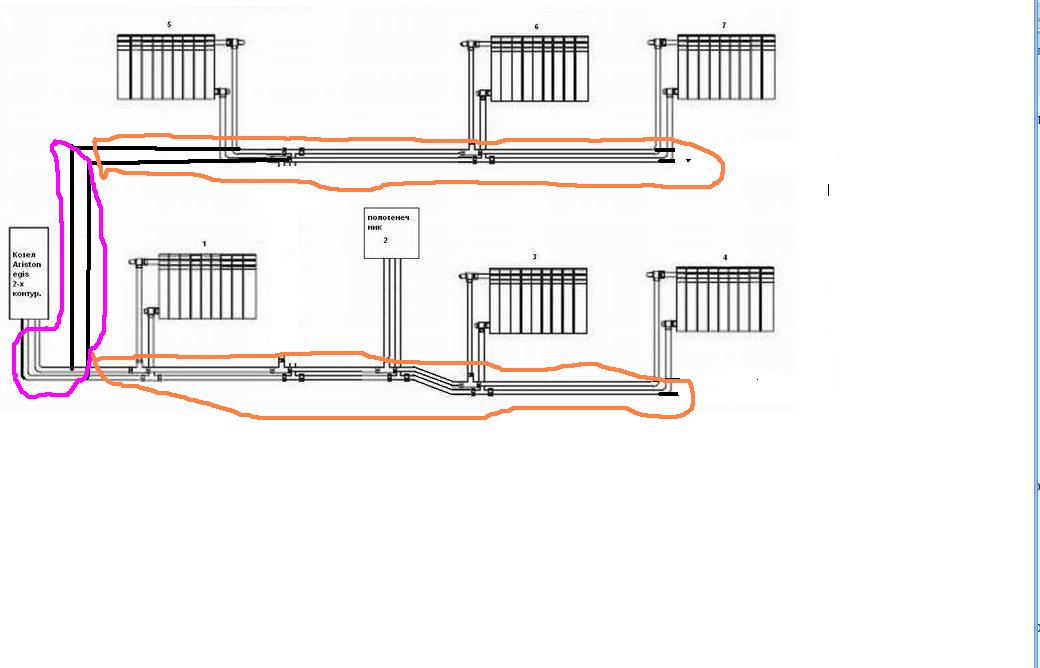
When radiators are connected in series, the coolant from the boiler first enters the first radiator, then the next, and so on. The water that has cooled down at the end is sent back to the boiler.
Such a scheme is quite simple, uses a minimum amount of material, but its effectiveness is a rather controversial point. Already cooled water will flow into the last radiator, so it is used only in small houses.
"Leningradka" is a modification of the one-pipe system discussed above. But she has one feature. Each radiator is equipped with a "bypass" pipe, which has a smaller diameter and a control valve. With it, the heating of each individual radiator is adjusted. Such a system is much more balanced than a simple one-pipe system.
Varieties of heating systems
First of all, the house can be heated using an autonomous structure with forced or gravitational (natural) circulation of the coolant. Each of these methods has its own advantages and disadvantages. In addition, there are situations when it is better to use one or another variety.
Advantages and disadvantages of natural circulation
Gravity pumping is entirely based on the laws of physics. To be more precise, the heat carrier moves through the pipeline due to the difference in weight between the cooled and heated water.
A hot liquid has a much larger volume, but a much smaller mass. Accordingly, it rises up the riser, moves further along pipes that are laid at a slope, and is pumped into heating radiators, where it is cooled.
Before making the final choice in favor of a certain type of fluid circulation in the system, you need to consider the pros and cons of each of the heating options.
The list of advantages of such a solution should include ease of installation. The natural circulation system lasts much longer and is more stable. At the same time, the absence of a pump allows you to get rid of excess noise and ensure independence from the availability of electricity.


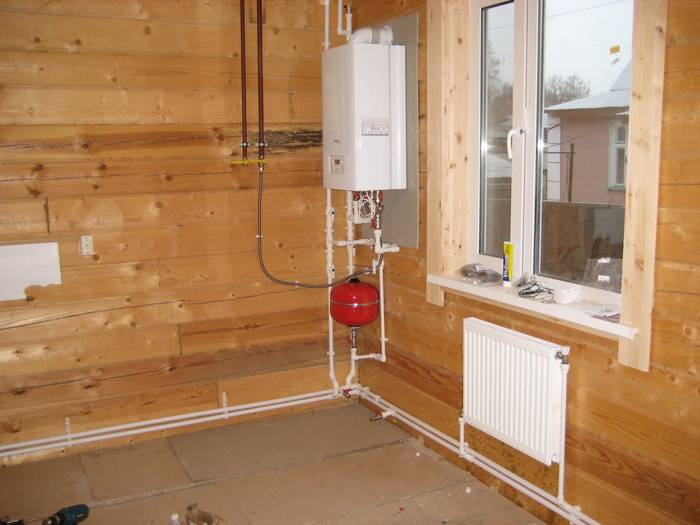


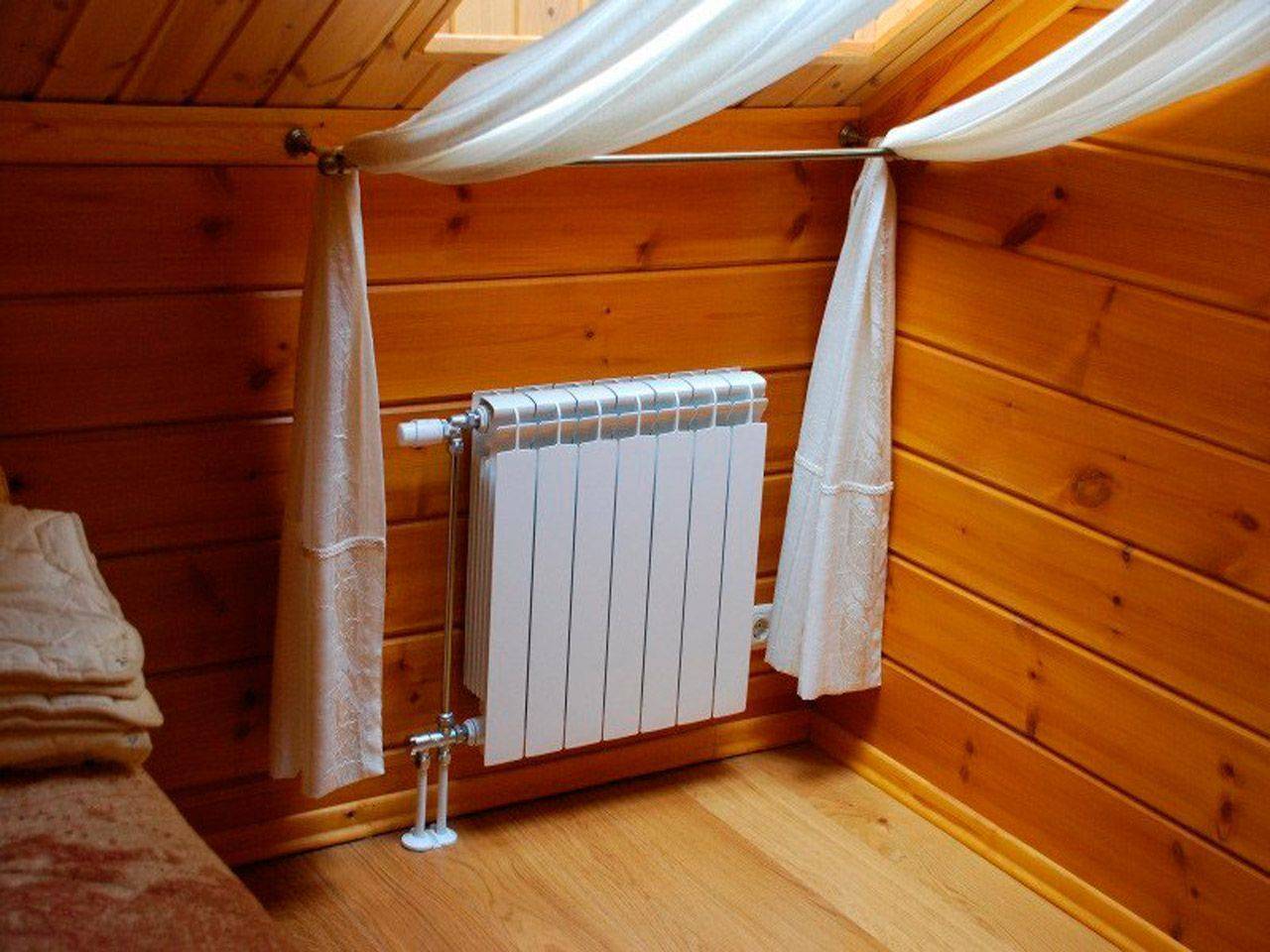
As for the disadvantages, this kind of solution can only be used when heating a small house. In addition, the system needs to lay pipes of large diameter, which significantly increases the cost of organizing a home heating system.
When choosing natural circulation, you need to responsibly approach installation - errors will lead to a serious decrease in the speed of transferring the heat carrier
Distinctive features of pumping systems
To make the water move faster through the pipes, a circulation pump crashes into the heating system. With it, you can move the media with virtually no temperature loss. As a result, a wooden building warms up much faster, which saves a lot of fuel.
The main advantage of forced circulation is that the area of a heated house can be practically unlimited. At the same time, the owner is given the opportunity to control the amount of heat and the speed of the pump. The disadvantages of this solution are the dependence of the system on the availability of electricity and the high noise level of the equipment.
When installing a heating pump, pipes of small diameter can be used. This allows you to save on the purchase of sanitary fittings.
This is interesting: Thermal imager for construction - how to do it home thermal inspection
Using direct electric heating for heating in a wooden house
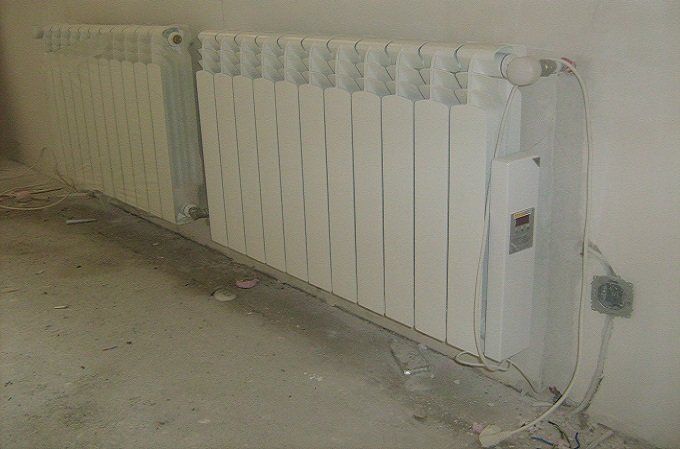
These devices are several sections filled with mineral oil. This is the coolant. Built-in heating elements are able to heat this oil up to 200 °C, but the temperature of the radiator is maintained at a level not exceeding 100 °C.
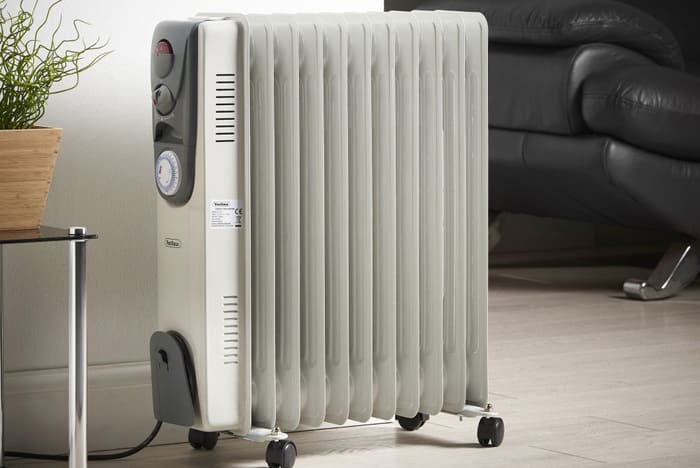
Oil radiators have significant advantages, as they do not burn oxygen in living quarters during operation and are able to maintain a comfortable temperature in any room. However, their use is limited due to the high power consumption.
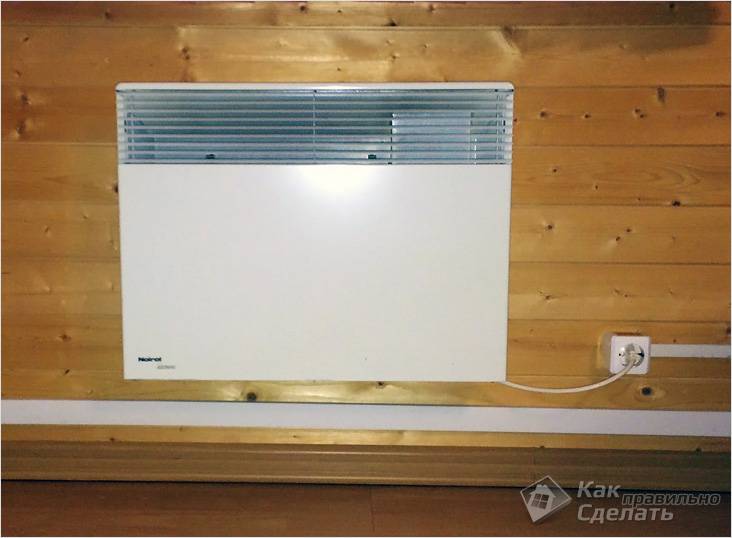
Convectors
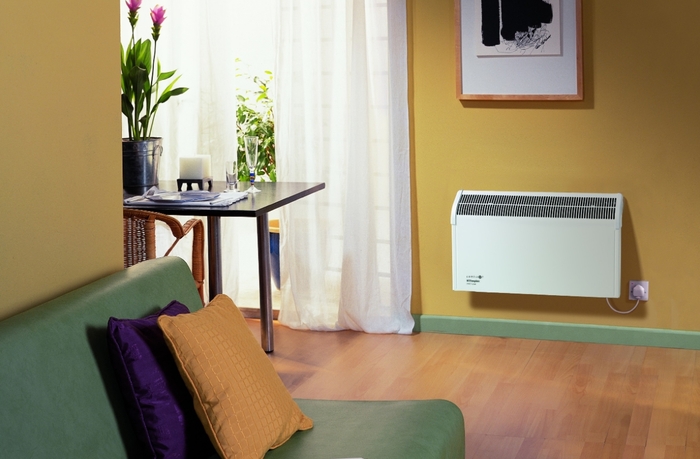
These heaters are arranged somewhat differently.There is no intermediate coolant, so the heater directly heats the air in the living room. Therefore, higher economy and efficiency. However, due to the direct contact of the room air with the heater, oxygen is burned, which negatively affects the well-being of people.
When using convectors or radiators, the following air convection occurs: when heated from the device, it rises to the ceiling and from there it is distributed throughout the room.
If, for example, the air near the ceiling heats up to +22 °С, this means that the temperature near the floor will be kept at +17 °С. It is quite warm, but this state of affairs cannot be called comfortable.
Convectors are usually equipped with temperature sensors and an automation system tied to them. This allows significant savings in electricity consumption.
There is also a sense in placing the convector under the window. Thanks to this arrangement, cold is prevented from entering through cracks from the external environment, and drafts are excluded.
Infrared heating system
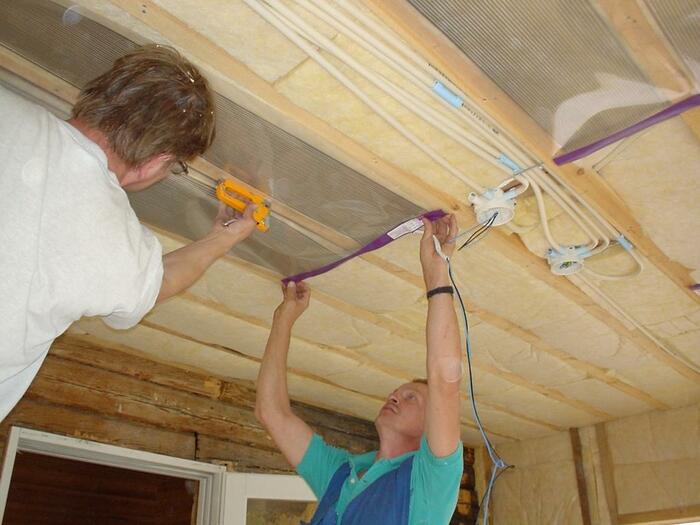
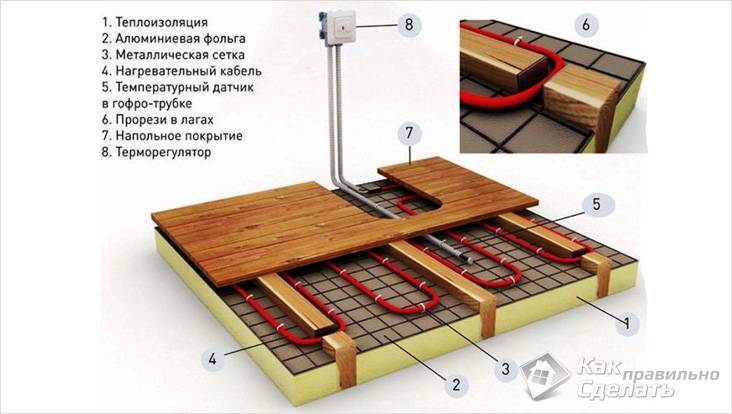
The system is based on the use of an electrical cable capable of generating infrared radiation. It propagates in all directions from the cable. But mostly from top to bottom. The rays do not heat the air, but the solid surfaces and objects in the room: the floor surface, furniture, carpets.
This method of heating is called friendly to the human body, since infrared radiation primarily heats the human body and surrounding objects.
Currently produced infrared heaters have an efficiency of about 90%. This is a very good indicator.Before buying such devices, you need to analyze everything well, because a lot of money is asked for IR heating systems.





Baseboard heating
The advantages of the method are in excellent decorativeness, due to which it is successfully used with different designs and layouts. The heating system can be fixed to any surface and any building material, be it wood, drywall, concrete, brick or tile.
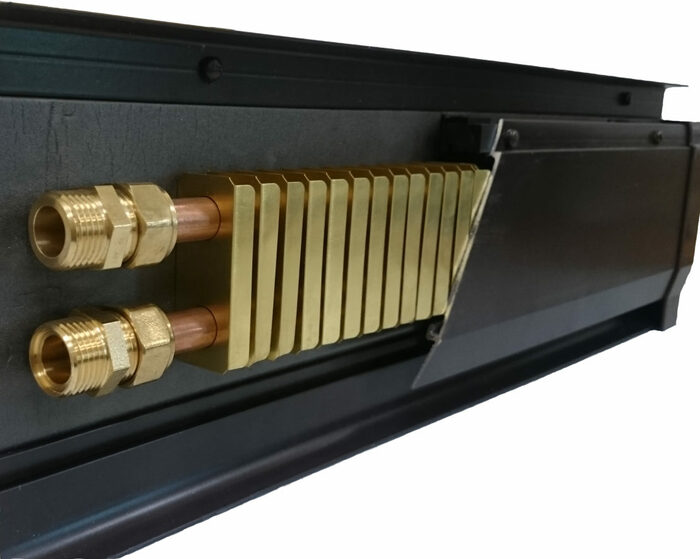
The heating elements are built into the plinth, which differs from the usual one only in large dimensions.
Heat transfer can be carried out:
- water circulating through pipes;
- electric heating elements powered from the network using cables.
Radiators in the form of plinths are fixed at the bottom of the walls, either around the entire perimeter of the room, or in certain places. The plinth has openings at the bottom and top to allow air convection. Cold air from the floor passes through the radiators, heats up and rushes to the ceiling.
In this case, the heat rises along the wall, heats its surface and the nearby air. Then the air masses are mixed and the heat is evenly distributed throughout the room.
Heating with skirting boards provides the following benefits:
- moisture condensation on the walls is impossible;
- energy savings can be 20÷40%;
- the temperature is uniform in all parts of the room, the air is evenly mixed.
Types of heating wooden houses
In order for a log house to be cool in summer and warm and cozy in winter, it is important to choose the right heating options based on modern heating systems.
Electric heating
Heating a wooden house by means of electric heating guarantees residents the ease of controlling appliances and the absence of harmful emissions.In addition, there is no need to build a separate boiler room and chimney.
The electrical system has practically no flaws, but it can be affected by external factors in the form of an ever-increasing resource cost and imperfect operation of power networks with frequent voltage drops. To protect yourself from such problems, you can stock up on a generator, but in this case, the issue of savings becomes moot.
If water electric heating is used, then the risk lies in the coolant, which, if the equipment is used incorrectly, can leak or freeze.
Electric heating is provided by:
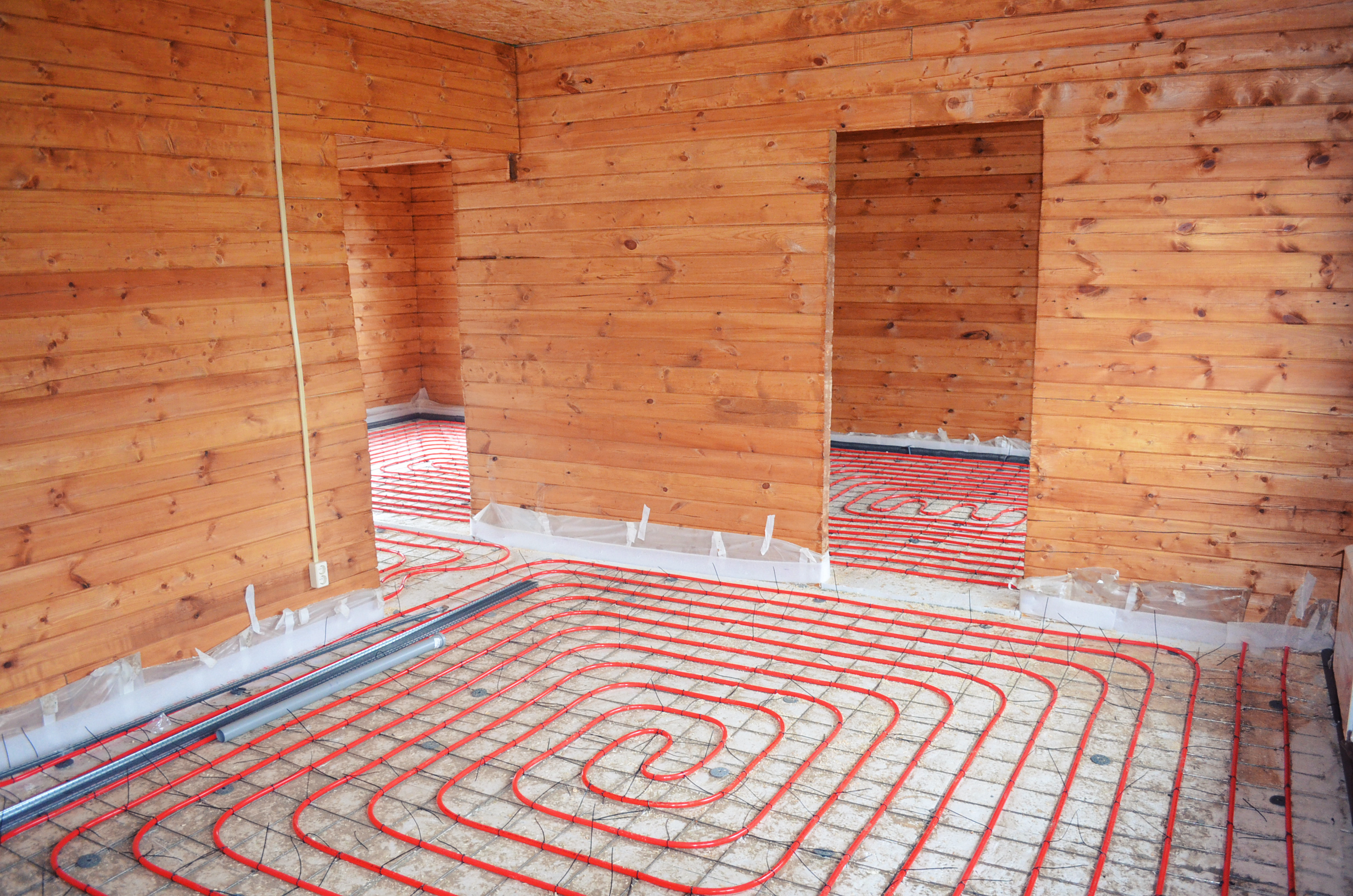
- heaters (mounted, floor, built-in - such as underfloor heating);
- radiators equipped with individual heating elements;
- radiator heating scheme, the "heart" of which is considered to be a heating electric boiler.
Gas heating
Gas heating in a wooden house is an easy-to-maintain and quite effective method that provides high efficiency, but at the same time requires increased attention to safety. This is especially true of wooden structures in which it is planned to install a gas boiler.
In addition, far from all suburban settlements are supplied with gas, which is also a problem that can be solved by installing a special container for storing imported gas on the site - a gas tank or by purchasing cylinders, but this will significantly increase costs.
Solid fuel
Solid fuel equipment is considered the best option to heat those houses, which are deprived of access to the gas pipeline and where the questionable operation of the power grid is observed.
Such heating is efficient and less expensive than an electric unit, and also attracts by the low price of equipment and the possibility of installing all the elements with your own hands. In modern models of solid fuel boilers, components and parts are provided that improve their efficiency: for example, an automatic machine for metered supply of coal to the boiler.
For normal operation of the unit, it is necessary to install it on the ground floor or in a specially built boiler room.
The raw material for heating this type of boiler is coal, peat, firewood, sawdust or pellets. During operation, the device becomes very hot, which increases the risk of fire
In order to ensure safety, it is important that the boiler room is lined with non-combustible material. In addition, it is necessary to take care of the room intended for the storage of raw materials.
oven
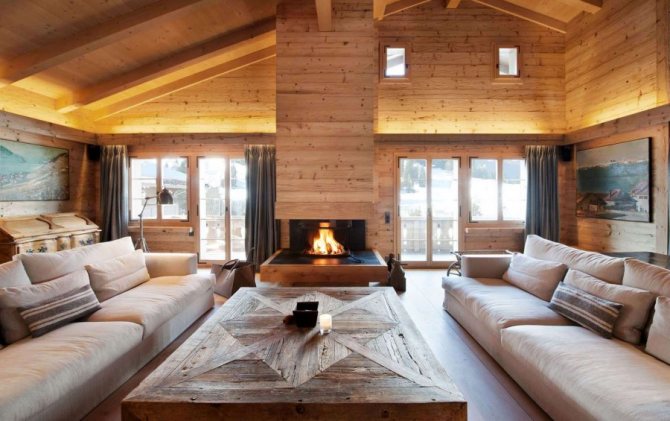
Stove heating in a wooden house provides warmth and comfort. Most often, stoves of the "Swede" type are used, which combine not only the functions of heat transfer, but also equipped with a hob and an oven. If desired, such a stove is supplemented with a fireplace and sleeping places are arranged near its wall.
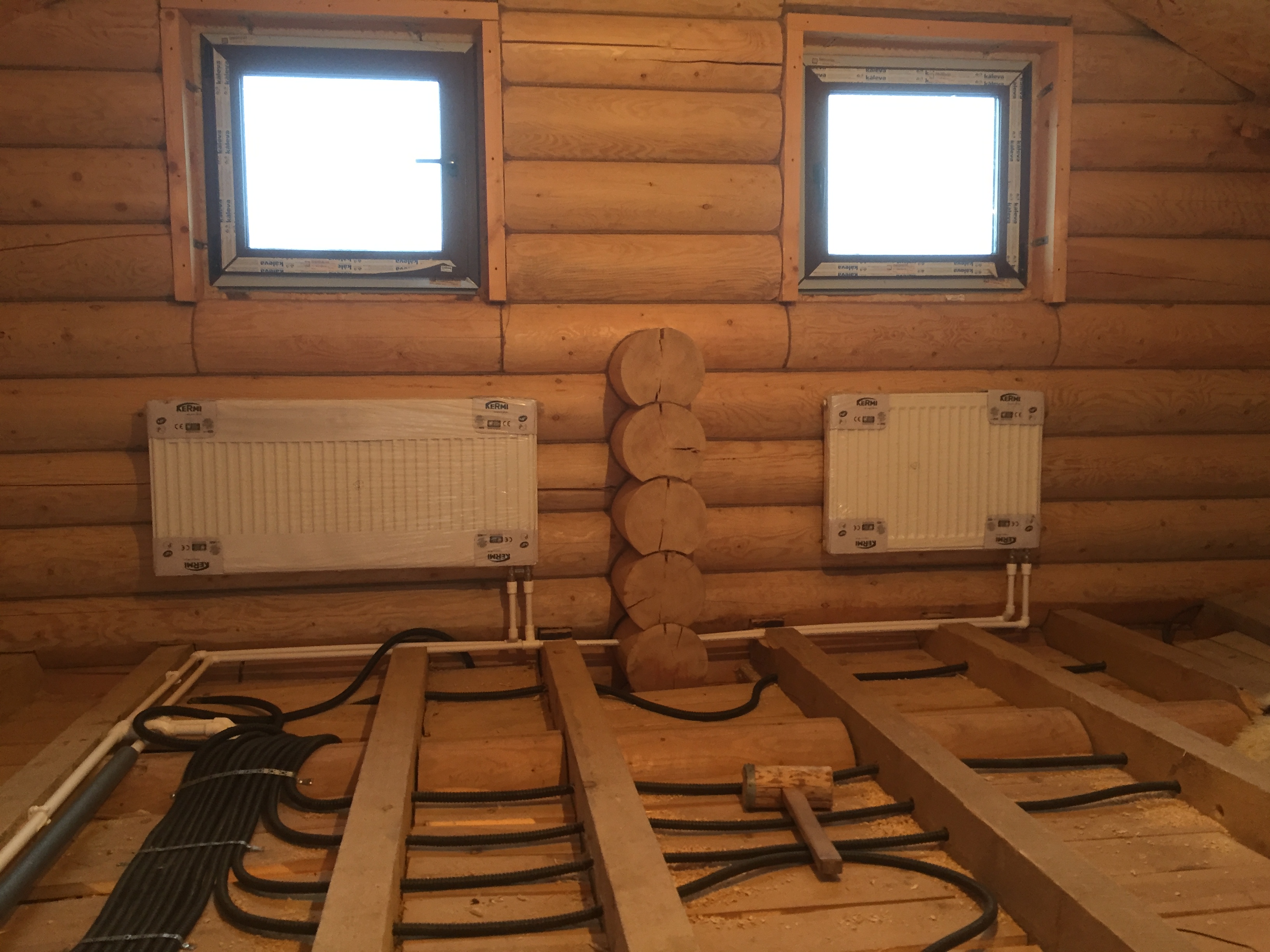
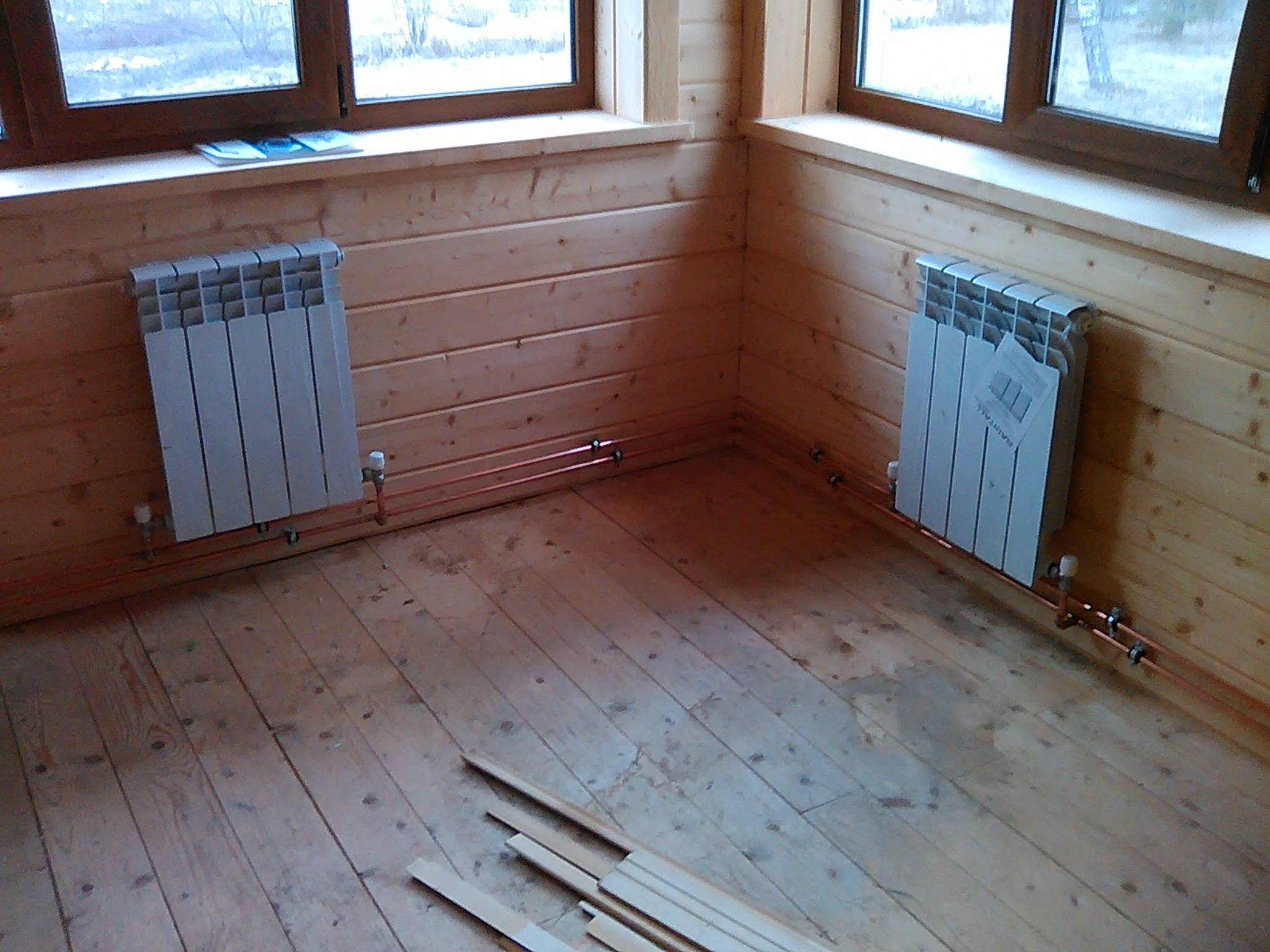


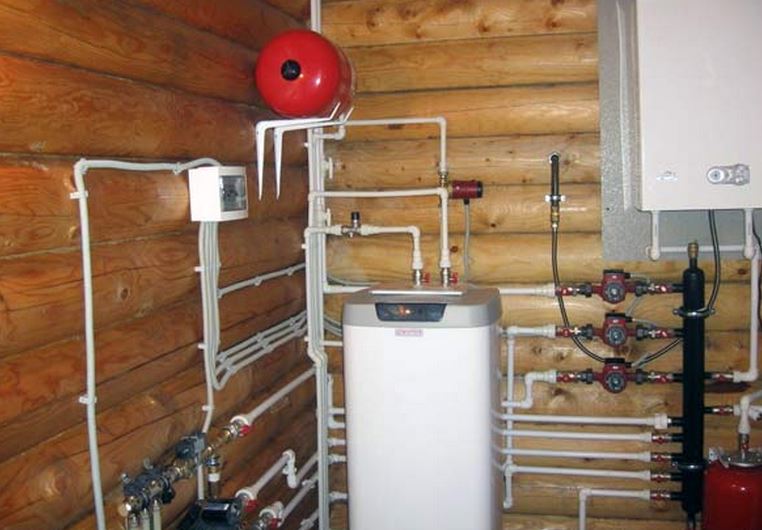


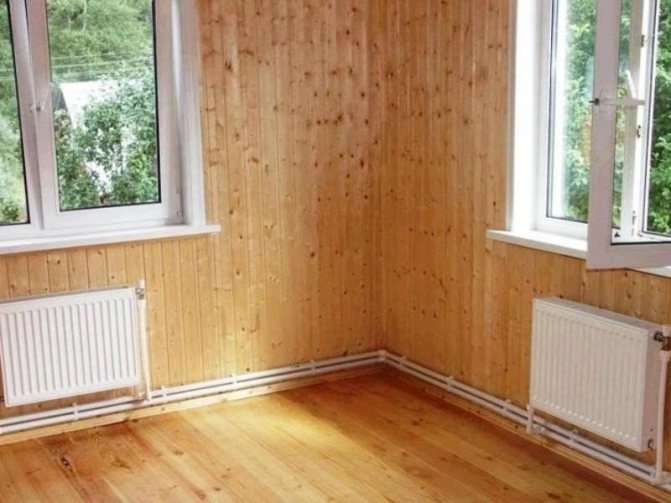

The disadvantage of stove heating is the likelihood of poisoning by combustion products or ignition. In addition, the oven will be able to warm up wood or coal a house with an area of no more than 100 square meters. m.
liquid fuel
Oil-fired boilers are also particularly popular in areas where other heating options are not possible.
Diesel fuel (solar oil) is used as the main raw material.The advantage of this type of heating is the low cost of raw materials, and the main disadvantage is the possibility of carbon monoxide poisoning, the occurrence of fires if safety precautions are not observed, and the need to equip special rooms.
infrared
Given the difficulties with popular heating systems, an innovative and rational heating scheme based on infrared radiation was developed.
The principle of operation of this equipment is the operation of heating elements that radiate thermal energy on the surface of a wooden house (furniture, walls, ceilings, floors), which, when heated, release heat into the air. At the same time, warm air rises and mixes with cold air, which avoids overheating and saves up to 70% of energy.
Sometimes combined types of heating are used when several types are used simultaneously. This may be heating with an electric boiler, the functions of which, in the event of a power outage, begin to be performed by a solid fuel unit.
Air heating of the building
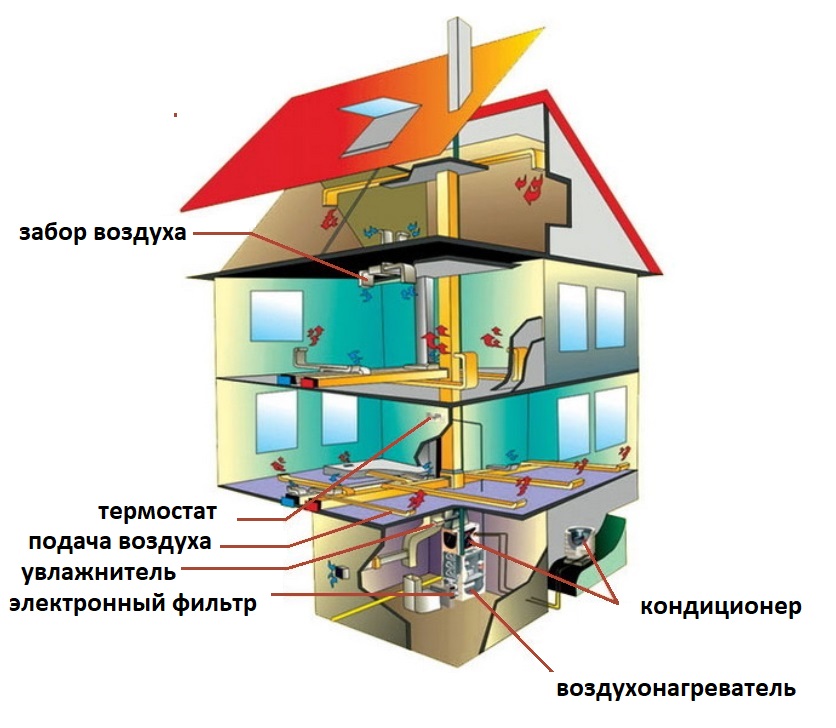
This is another type of heating a private house. Its main distinguishing feature is the absence of a coolant. The air system is designed so that air flows pass through the heat generator, where they are heated to the desired temperature.
Further, through special air ducts, which can have a wide variety of shapes and sizes, the air masses are sent to heated rooms.
Air heating can be used to heat a private house of a large area, while it is possible to create a comfortable microclimate in each room
According to the laws of convection, heated flows rise, cooled ones move down, where holes are mounted through which air is collected and discharged to the heat generator. The cycle is repeated.
Such systems can work with forced and natural air supply. In the first case, a pump is additionally mounted, which pumps the flow inside the air ducts. In the second - the movement of air is carried out due to the temperature difference. It is clear that forced circulation systems are more efficient and powerful. We talked about the arrangement of air heating with our own hands in the next article.
Heat generators are also different. They can operate on a variety of fuels, which determines their performance. Most of all, gas, electric and solid fuel appliances are in demand. Their disadvantages and advantages are close to similar water heating boilers.
The circulation of air masses inside the building can be carried out in different ways. It can be a closed cycle without adding outside air. In this case, indoor air quality is poor.
The best option is circulation with the addition of air masses from the outside. The indisputable advantage of air heating is the absence of a coolant. Thanks to this, it is possible to save the energy required for its heating.
In addition, installation of a complex system of pipes and radiators is not required, which, of course, also increases the efficiency of the system. The system does not have the risk of leaks and freezing, like its water counterpart. It is ready to work at any temperature. The living space heats up extremely quickly: literally, about half an hour passes from starting the heat generator to raising the temperature in the premises.
A gas heat generator is one of the possible solutions for the implementation of an air heating project for a private house. However, such systems are rarely used in practice.
Another significant plus is the possibility of combining air heating with ventilation and air conditioning. This opens up the widest possibilities for realizing the most comfortable microclimate in the building.
The air duct system in the summer can be successfully used for air conditioning. Installing additional equipment will make it possible to humidify, purify and even disinfect the air.
Air heating equipment lends itself well to automation. "Smart" control allows you to remove burdensome control over the operation of appliances from the homeowner. In addition, the system will independently select the most economical mode of operation. Air heating is very easy to install and durable. The average life of its operation is about 25 years.
Air ducts can be installed at the construction stage of the building and hidden under the ceiling covering. These systems require high ceilings.
The advantages include the absence of pipes and radiators, which gives room for the imagination of designers decorating the interior. The cost of such a system is quite affordable for most homeowners. Moreover, it pays off quickly enough, so its demand is growing.




Air heating also has disadvantages. These include a significant difference between the temperatures in the lower and upper parts of the room. On average, it is 10 ° C, but in rooms with high ceilings it can reach up to 20 ° C. Thus, in the cold season, it will be necessary to increase the power of the heat generator.
Another disadvantage is the rather noisy operation of the equipment. True, this can be leveled by the selection of special "quiet" devices. In the absence of a filtration system at the outlets, a large amount of dust in the air may occur.
Local or offline?
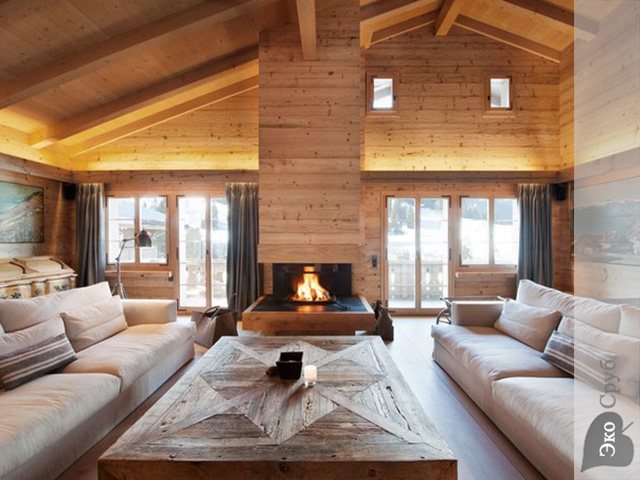
The type and method of heating must be determined at the design stage of the building. They are determined, first of all, by the intended purpose of the future home and the frequency of people living in it. If this is a cottage in which people stay for a fairly short period of time - the heating requirements are the same and relatively mild, if a family with a small child lives permanently in the house - the rigidity of the requirements increases very much. Local space heating is, for the most part, heaters of one type or another (convectors, heat guns, fireplaces and heaters, stoves, "potbelly stoves" ...), each of which can heat only a relatively small space. They are usually installed in the amount of one or two per average room and are used in warm climatic zones and when people live in a heated room in a non-permanent manner.
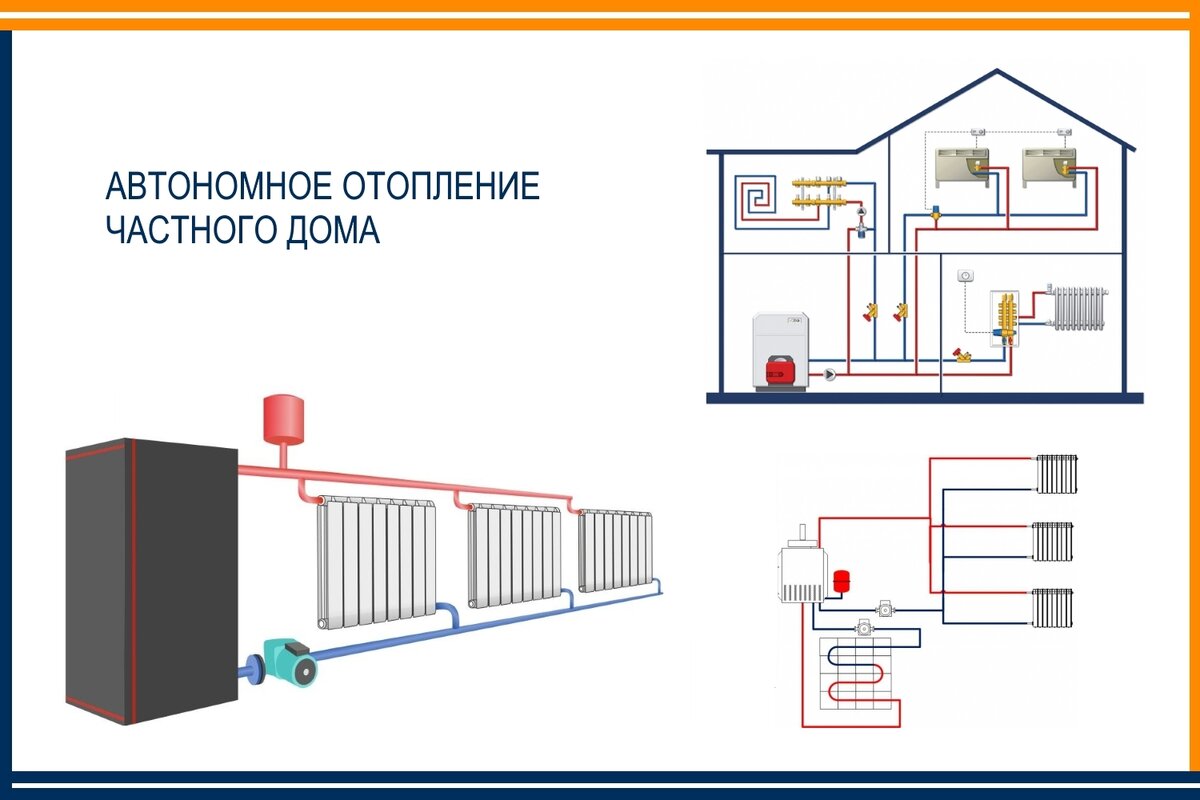
Autonomous heating implies the presence of a central heating device (boiler) and a pipe heating system that is stationary and allows heating the air simultaneously throughout the house. This is by far the most common type of heating in a low-rise private sector - thanks to the individual design of the heating system for each individual house, the autonomous system is very efficient and cost-effective.
Is gas heating suitable for a log house?
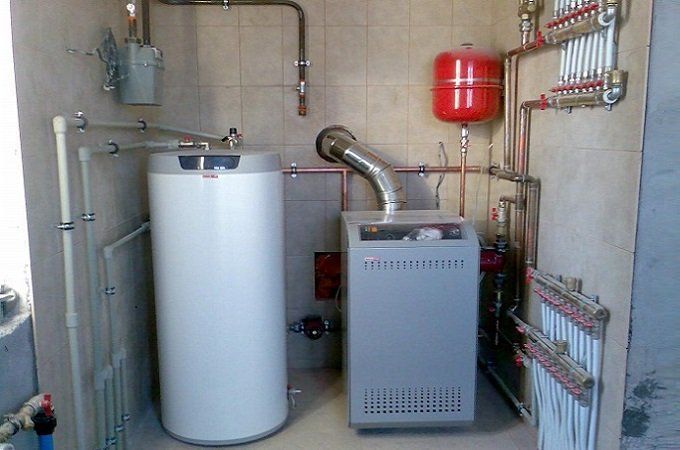
Autonomous gas-fueled heaters in local heating systems for log houses are used very rarely. This is due to the presence of open fire in such devices. There is another significant drawback of gas heaters. During the combustion of fuel, they burn oxygen in heated rooms.
At the same time, gas fuel is the most common energy carrier for autonomous heating systems in private homes. The main condition for such systems is the ability to connect to the central gas pipeline. Modern gas-fired heating boilers are economical, have an automated control system and high power. Such a unit can effectively heat a house made of timber with an area of several hundred square meters. There are floor and wall models of gas boilers. The latter devices can be used without arranging separate chimneys. The main disadvantage of autonomous heating using such boilers is the high cost of laying a gas pipeline to the house. In the absence of such an opportunity, some developers use gas tanks or liquefied gas cylinders. Such decisions are not always economically justified.

Despite all its shortcomings, gas heating is considered the most convenient and cost-effective option for a log house. Very often, together with such boilers, floor heating systems are also used. In private houses with a small area, gas convectors can be installed.For the installation of heating systems on gas fuel, you will need equipment such as a gas boiler (the best option is automatic wall-mounted models with a pump), polypropylene, gas pipes and special valves.
It is important to design and professionally equip a chimney for a gas boiler. A disc with a small hole is embedded at its base.
To calculate and equip the design of the chimney, you will need an experienced stove-maker. It is not allowed to place a gas boiler in the basement. Such equipment is located in the corridor or in the kitchen. Installing a convector allows you to achieve more economical operation of the heating system, as it becomes possible to adjust the temperature in certain rooms of the house from a bar.
Pipeline of the heating system
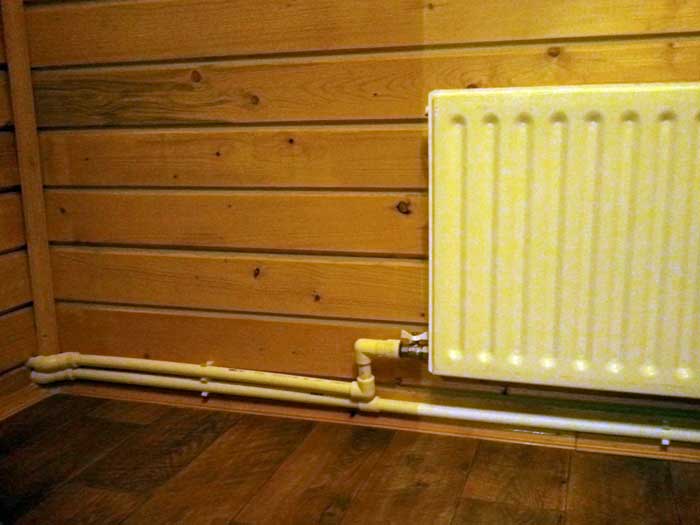
The main task of the pipes is to transfer the heat carrier from the boiler to the radiators. There are many types of them - they are divided into categories depending on the material.
Pipelines are:
- polymeric;
- steel;
- copper.
The latter variety is resistant to high temperatures and high pressure. Currently, copper pipes are the most reliable and safe. Thanks to this, they can be hidden in the wall. But they are quite expensive.
Now heating pipelines are most often assembled from metal-plastic or polypropylene products. They are characterized by ease of installation and resistance to corrosion. The elements are connected to each other by soldering. Their disadvantage is the low hydraulic resistance.
For the installation of a steel pipeline, it is necessary to involve a welder - it will be problematic to cope with the work on your own.In addition, such structures are prone to corrosion.
Water heating in a wooden house
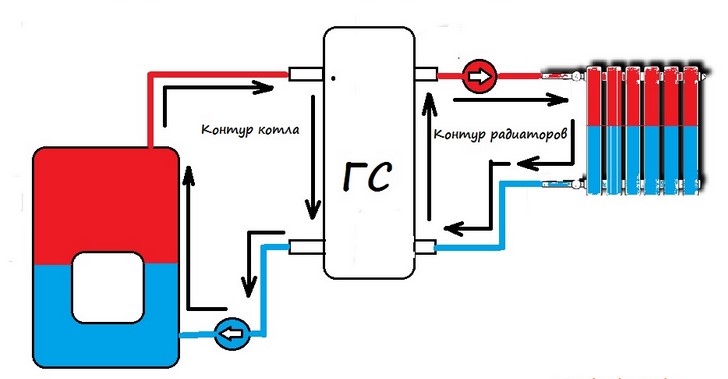
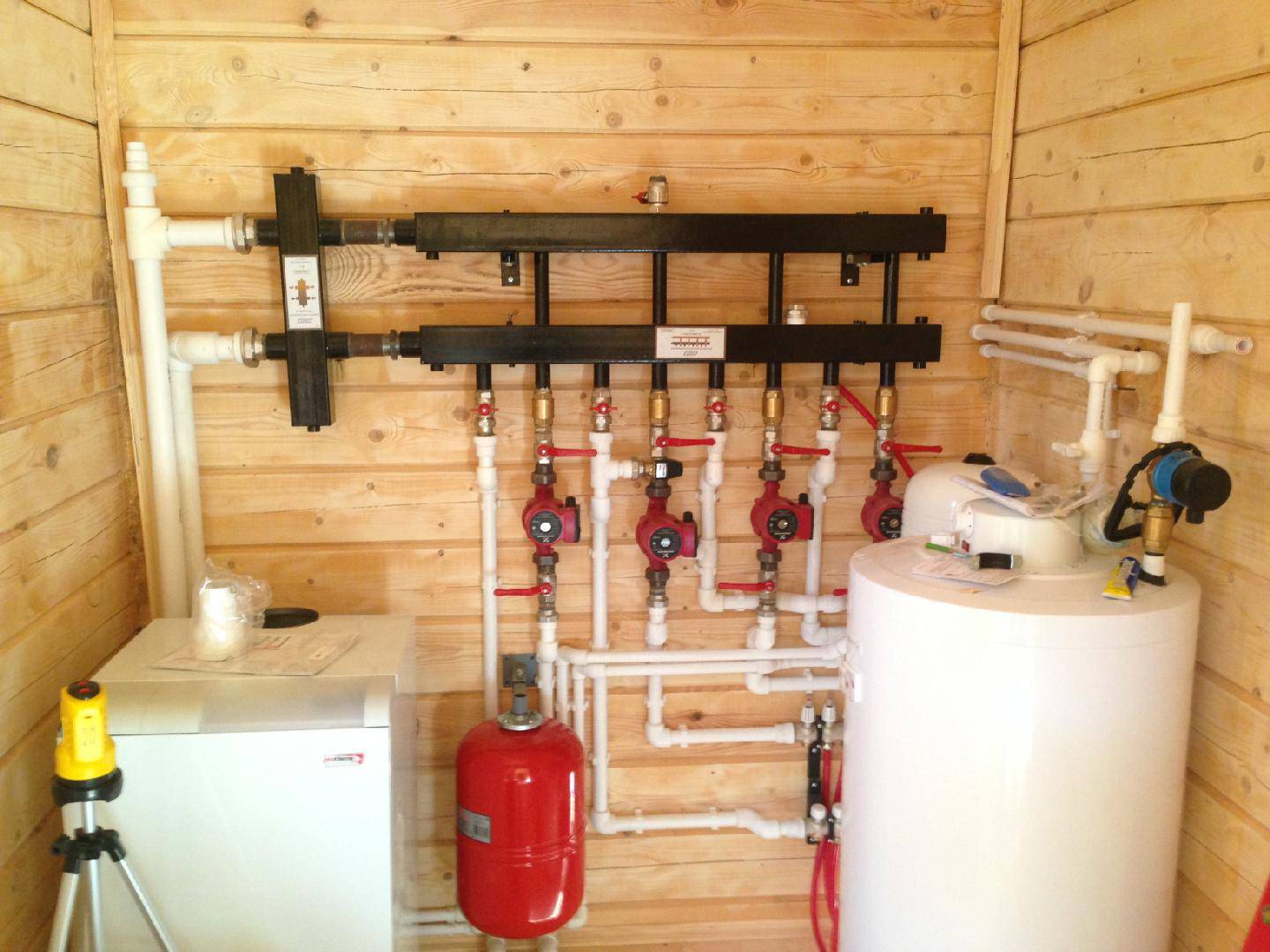
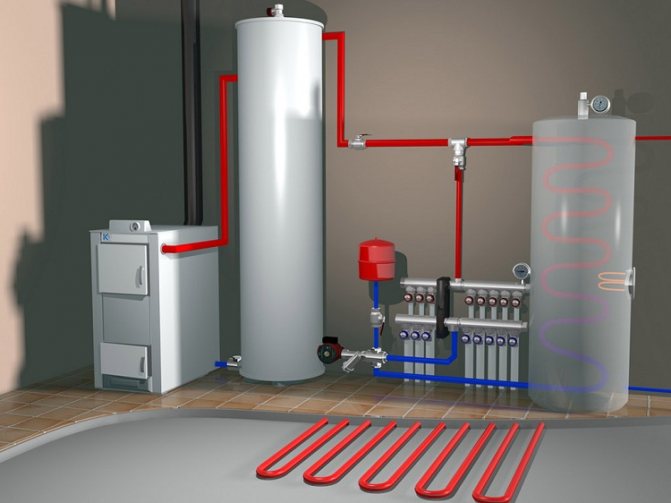
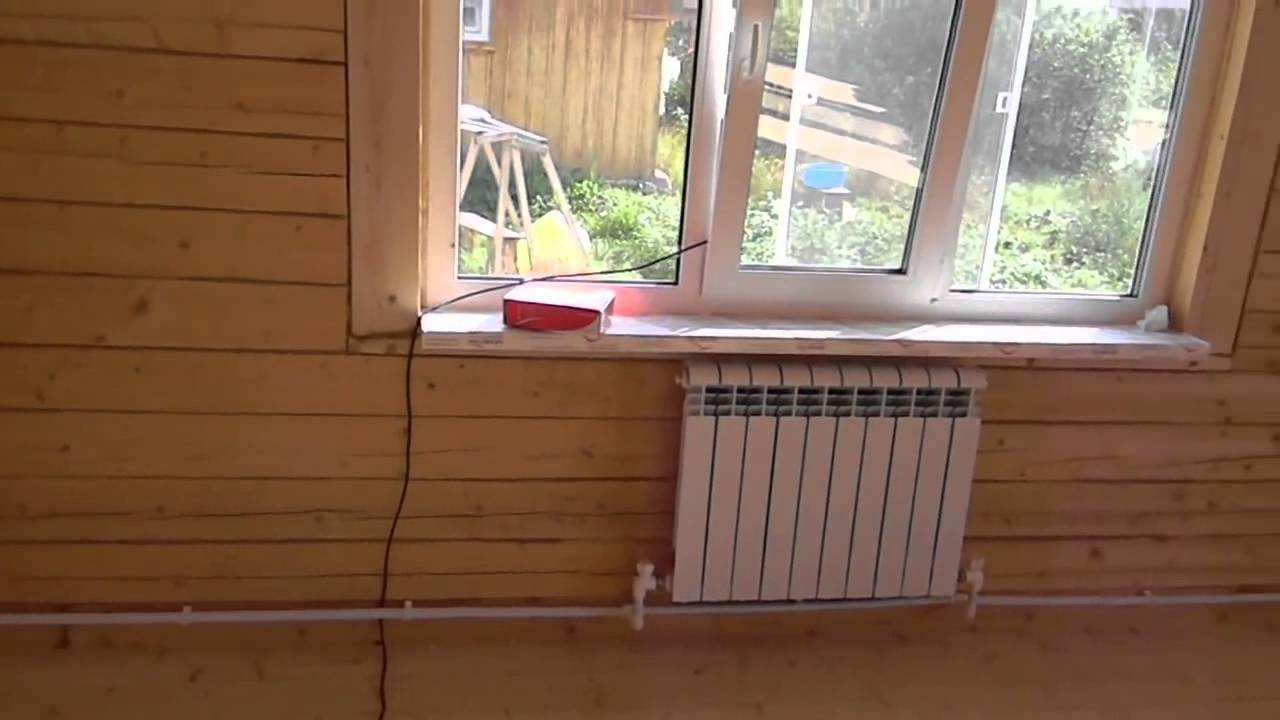
The circulating fluid heating system is efficient, reliable and easy to use. Water heating for a wooden house is in demand due to the harsh domestic climate. The boiler heats the water, which moves through the pipes to the radiators. After the coolant has given up all the energy, it returns the liquid back to the boiler.
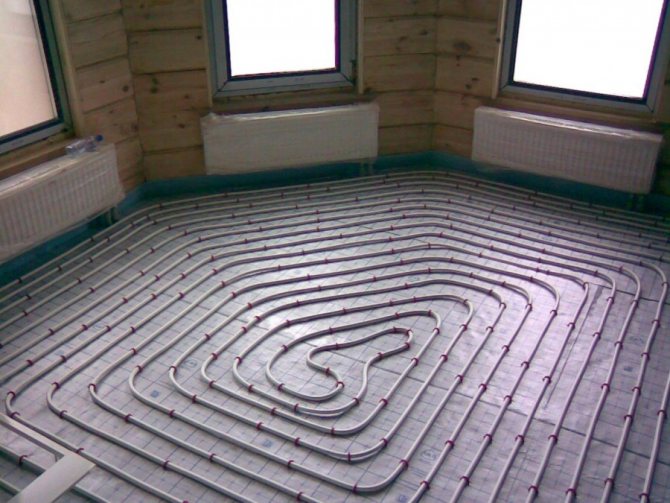
Gas, coal, wood and diesel fuel are used as fuel. Instead of water, antifreeze can be poured into the system, which does not freeze at low temperatures.


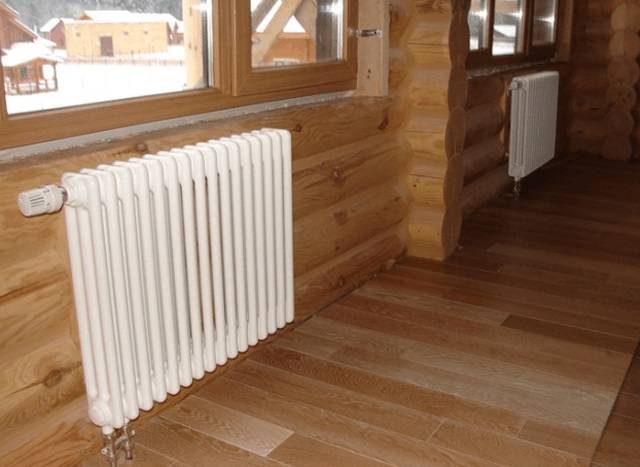


There are two types of fluid circulation:
- natural;
- artificial
In the first case, the water flow moves through the system due to the created pressure. In artificial circulation, the fluid is moved by a pump. This allows you to install pipes of smaller diameters.
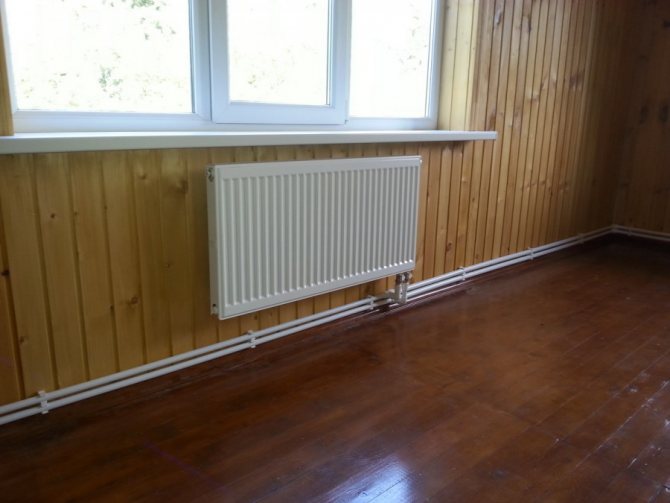
During operation, the wooden beam loses moisture and dries out. Over large areas, the deformation can reach several centimeters. Because of this, communications fixed by rigid fasteners break and break.
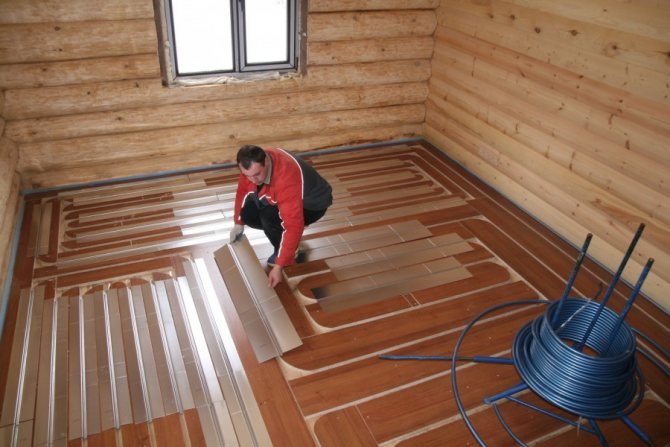
Compensators are installed both on horizontal and vertical sections of the highway, thereby increasing its service life.
What is the best heating for a house made of timber: autonomous or local
The option of the heating system must be chosen at the design stage of the house. At the same time, its intended purpose must be taken into account. For a country house where people do not live permanently, the heating requirements are not as stringent as for a cottage where a family with children lives permanently.
Autonomous heating systems operate independently of centralized heating networks.It is these systems that are currently the most common heating option for low-rise buildings. Individual heating is the most efficient and economical option for a private log home.
There are also local heating devices. These include various convectors, heat guns, fireplaces, infrared heaters, potbelly stoves, etc. Each such device can provide a comfortable temperature only in a small space. Local heaters are installed in a separate room and they are most often used to heat objects that are not intended for permanent residence.