- Types of solar panels
- silicon batteries
- Monocrystalline
- Polycrystalline
- amorphous
- hybrid
- The future belongs to alternative energy sources
- Principle of operation
- Benefits of a solar heating system
- Ways to use solar energy
- Varieties
- photovoltaic cells
- Silicon
- Film
- concentrator
- Heating system complete set
- Solar collectors
- Complete set of solar system
- The benefits of solar panels
- Tubular solar collectors
- Pros and cons of tubular collectors
- Types of solar panels
Types of solar panels
Devices are divided into classes according to the degree of power:
- low power;
- universal;
- solar cell panel.
In addition, there are three battery types with different destination:
- Photoelectric converters (PVC). They convert solar energy into electrical energy.
- Solar power stations (HES). They are used to ensure the functioning of various industrial installations - turbines, steam engines, etc.
- Solar collectors (SC). Serve for heat supply of premises.
The choice and calculation of solar panels for a private house requires the owner to know the design features of the equipment. There is a division according to the physical and chemical state of the battery material.This issue should be considered in more detail.
silicon batteries
Silicon cells are the most common types of photovoltaic converters.
The reason for this is the prevalence and availability of this material. At the same time, the production technology is very complex, the production of elements costs significant amounts, which forces manufacturers to look for options to reduce costs.
So far, this is only achieved at the expense of reduced efficiency, but developers are constantly looking for ways to improve the quality and performance of their products. Consider the types of silicon batteries.
Monocrystalline
The most effective and expensive elements. High-purity silicon is used, the production technology of which has been worked out in the manufacture of semiconductors. The elements are thin sections (300 µm) from a single crystal grown specifically for this task. The crystal structure has a regular shape, the grains are directed in one direction. The cost of the material is high, the efficiency is 18-22%. The service life is very long, at least 30 years.
Polycrystalline
These elements are obtained by gradually cooling molten silicon.at which polycrystals are formed. The structure of such a material does not have a regular shape, the grains are not parallel and directed in different directions. Production is much cheaper, since this technology requires less electricity, but the product efficiency is lower - 12-18%.
amorphous
Amorphous batteries are not made from crystalline silicon, but from silicon hydrogen (silane), which is applied in a thin layer on the base material. The efficiency of these batteries is low - only 5-6%, but the price is also the lowest.At the same time, there are some advantages - a high coefficient of optical absorption, the ability to work in cloudy weather, resistance to panel deformation.
hybrid
Hybrid panels are a combination of photovoltaic cells and solar collectors. The fact is that when generating energy, the panels heat up and lose performance.
Water cooling was used to reduce heating. It turned out that the amount of heat received by water from photocells can be used for domestic needs or for space heating.
Such solar panels are good for both energy generation and home heating. Manufacturers claim that the efficiency of such panels is extremely high (some say 80%), but this is a common marketing ploy, taking into account the stability of indicators as an increase in efficiency.
This is another type of photovoltaic converters, which are not made on a silicon basis, but from several polymer films folded into a dense pack and performing different functions.. The efficiency of such batteries is about four times lower than that of silicon ones, but they are light, relatively cheap to manufacture and, as a result, cheaper to sell. It is believed that polymer devices have high potential and will be actively developed, since low cost and speed of production are the most important advantages of the material.
The future belongs to alternative energy sources
The demand for energy is growing in proportion to the speed of technology development. If today alternative energy sources are exotic and are used only where no other methods are suitable, then after a while the situation will change radically.Dependence on resource supply companies is not the most promising prospect, forcing us to look for other, more independent options for providing housing with energy and heat.
As soon as cheaper and more productive equipment appears, the use of solar panels will become widespread.. The impetus for this will be the overpopulation of the central regions, the lack of housing and work, the need to resettle in more remote regions. If by that time the parameters of the equipment become quite stable, and prices fall to affordable levels, then the demand for solar panels will become very high.
Principle of operation
 The principle of operation of the solar battery. (Click to enlarge)
The principle of operation of a solar battery is quite simple. It is the conversion of solar energy into electrical energy. Photoreceptors located on the plate absorb sunlight, which causes a micro-discharge on the surface of the plate.
The power of one such microdischarge is quite small, but many photoreceptors located on the battery area are able to generate and accumulate the necessary amount of electricity for human needs.
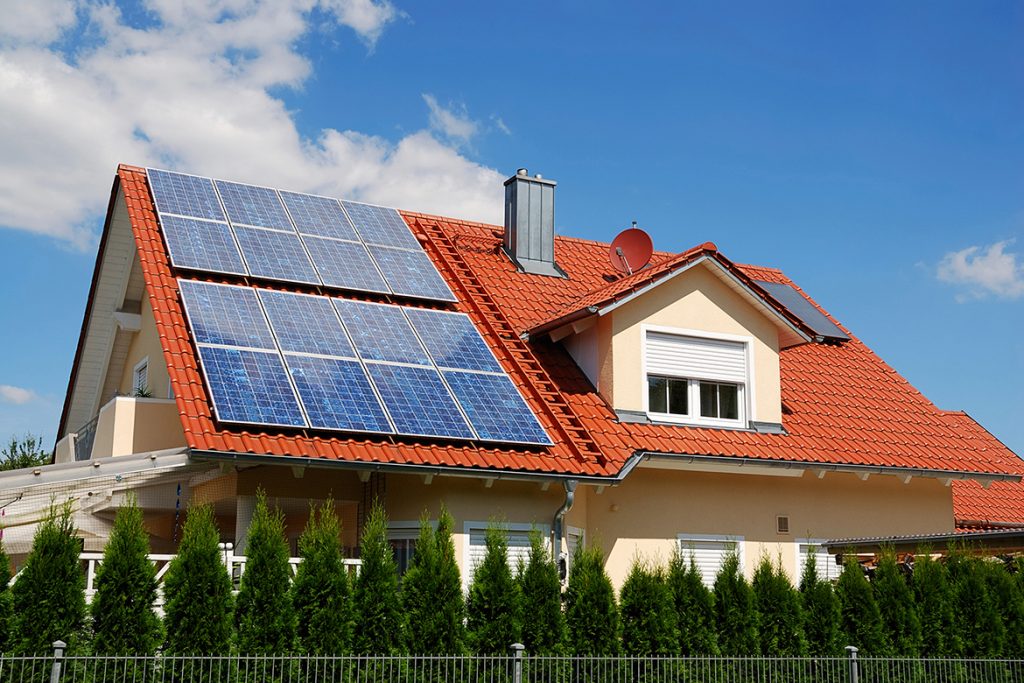
Solar panels can be installed on rooftops:
- private houses;
- multi-storey buildings;
- small industrial premises;
- pavilions;
- canopies.
The condition for placing the structure is a flat roof or other plane of a large area.
Expert advice: solar collector modules are placed towards the sun
Therefore, it is important to install the module on the south or southeast side during installation.
Benefits of a solar heating system
There are several advantages of solar panels for home heating:
- All year round your home is provided with the necessary heat. You can also adjust the temperature in the house at your discretion.
- Total independence from housing and communal services. Now you don't have to pay huge heating bills.
- Solar energy is a reserve that can be used for various household needs.
- These batteries have a very good operating life. They rarely fail, so you don't have to worry about repairing or replacing some components.
There are some nuances that you should pay attention to before choosing this system. After all, such a system may not be suitable for everyone.
In many ways, the quality of such a heating system depends on the geography of residence. If you live in a region where the sun does not shine every day, then such systems will be ineffective. Another disadvantage of this system is that solar panels are expensive. True, we should not forget that such a system will fully pay for itself over time.




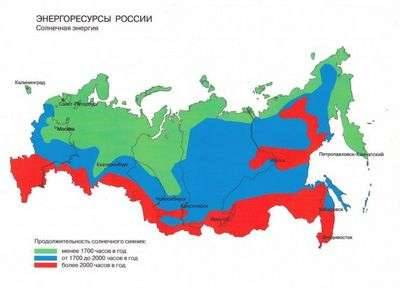
The duration of sunshine in Russia
In order to supply the house with the necessary amount of heat, it will take from 15 to 20 square meters. meters of solar panel area. One square meter emits an average of up to 120W.
In order to receive about 500 kW of heat per month, it is necessary that there are about 20 sunny days in a month.
A prerequisite is the installation of solar panels on the south side of the roof, as it spreads the most heat.In order for solar heating to be as efficient as possible, the angle of the roof should be about 45 degrees. It is desirable that tall trees do not grow near the house and there are no other objects that can create a shadow. The truss system of the house must have the necessary strength and reliability. Since solar panels are not exactly light, care must be taken that they do not harm the building and do not provoke destructive processes. The probability of collapse increases in winter, since at this time, in addition to heavy batteries, snow will accumulate on the roof.
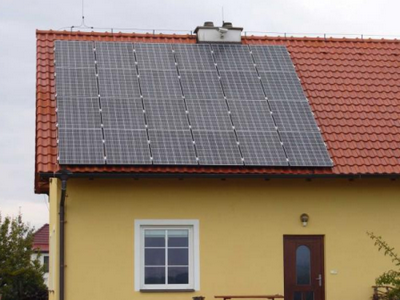
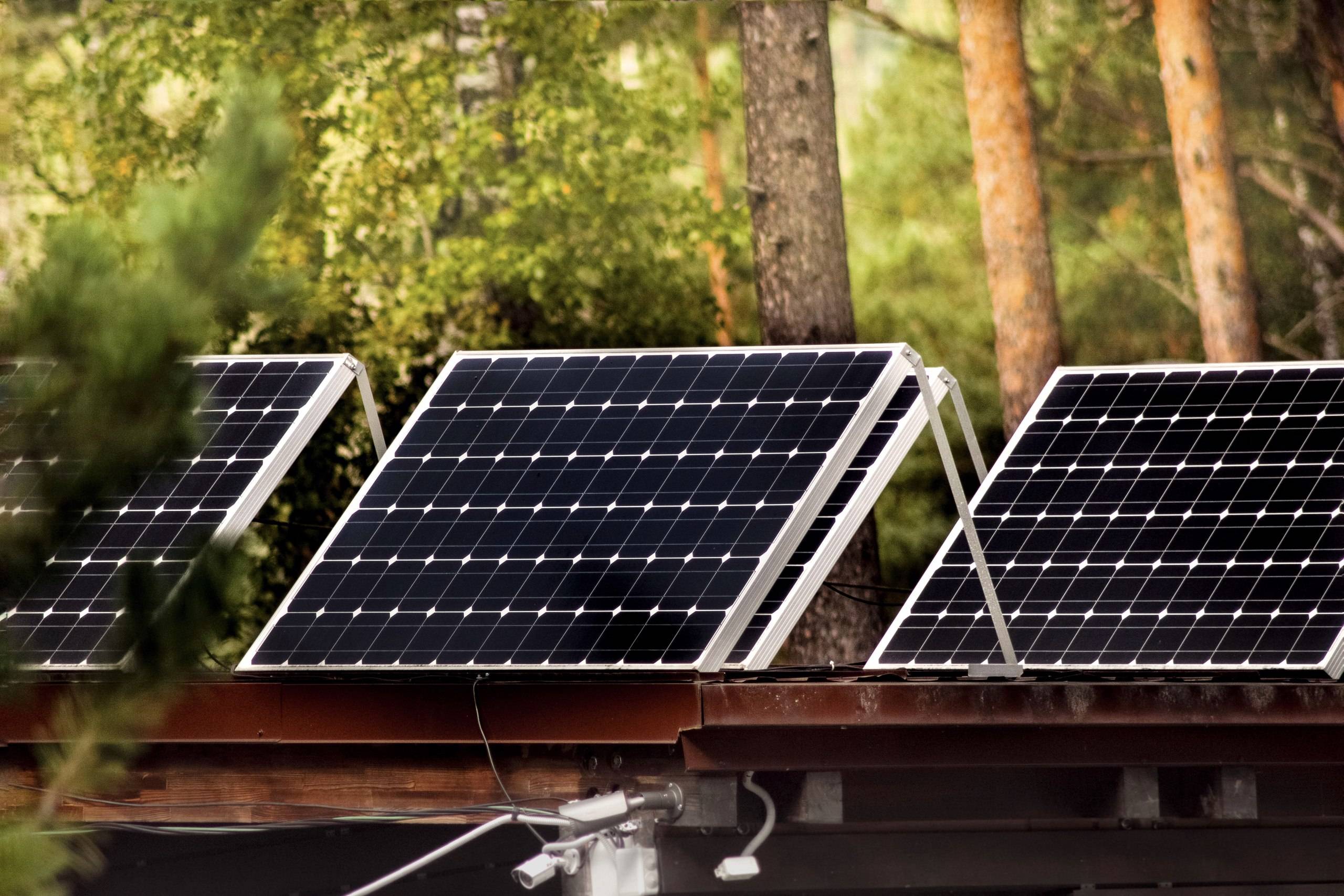
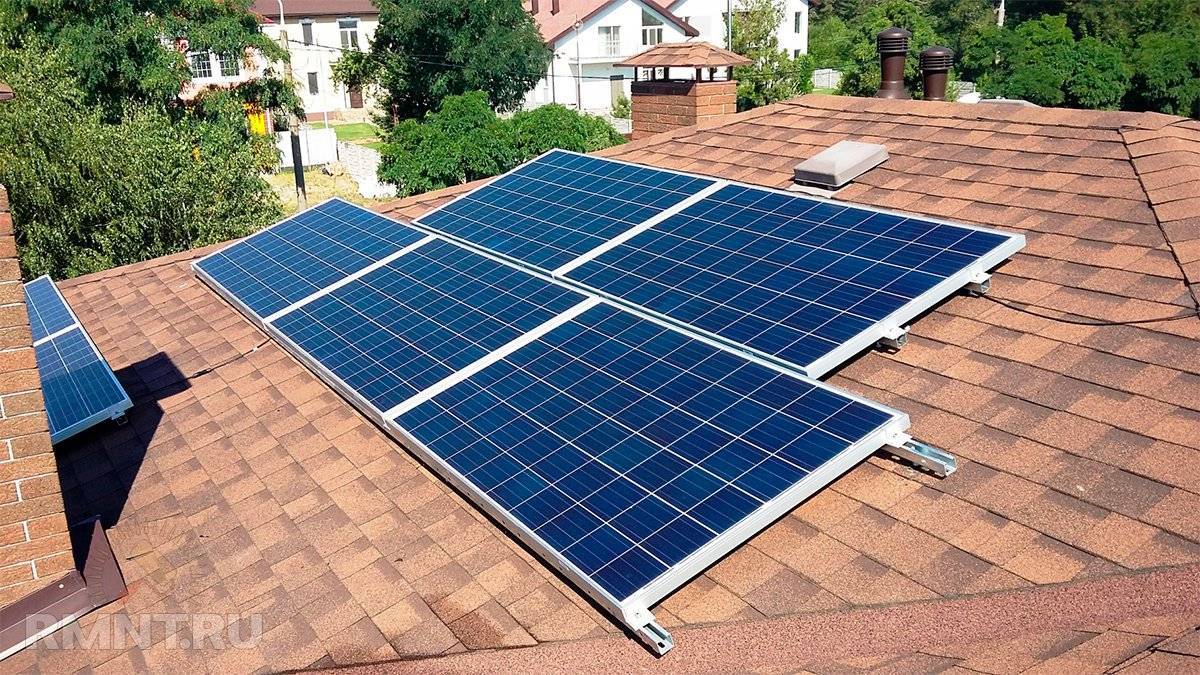
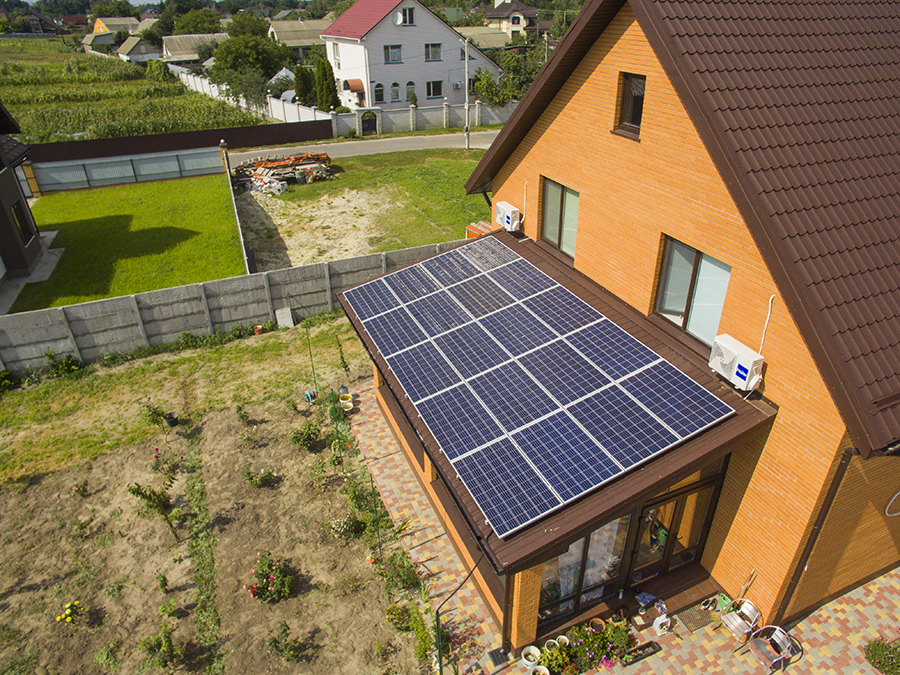
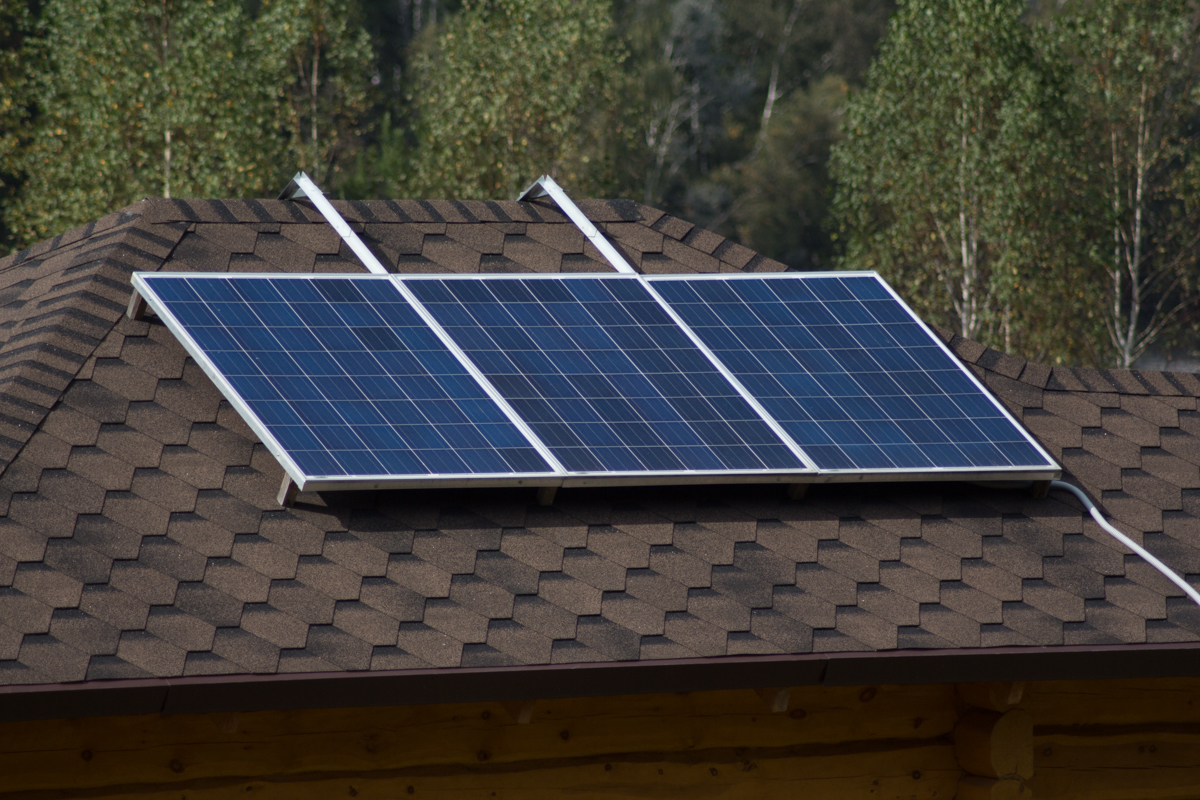
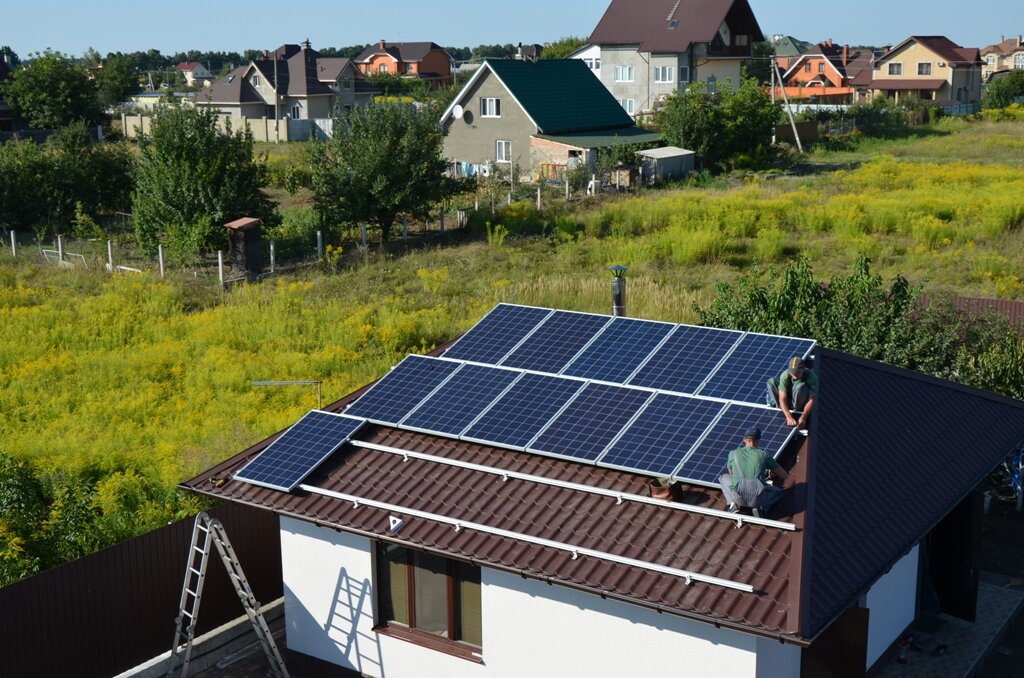
Solar panels are usually placed on the roof of the house.
Despite the fact that solar panels are quite expensive, they are gaining more and more popularity. They are used even where the climate is not too hot. Such a system can also be used as additional heating at home. Such systems are most effective during the summer months, when the sun shines almost every day. However, do not forget that the house must be heated mainly in the winter months.
Ways to use solar energy
The methods of using the energy of the celestial body do not belong to innovative technologies; solar heat has been used for a long time and very successfully. However, this applies mainly to Australia, some countries in Europe, America and the southern regions, where alternative energy can be obtained throughout the year.
Some northern regions are experiencing a shortage of natural radiation, so it is used as an additional or fallback option.
Image gallery
Photo from
Solar panels are one of the ways to get practically free energy, radiated free of charge by the celestial body.
The installation of an autonomous solar power plant is advisable in regions with a large number of sunny days, which is not related to the average annual temperature
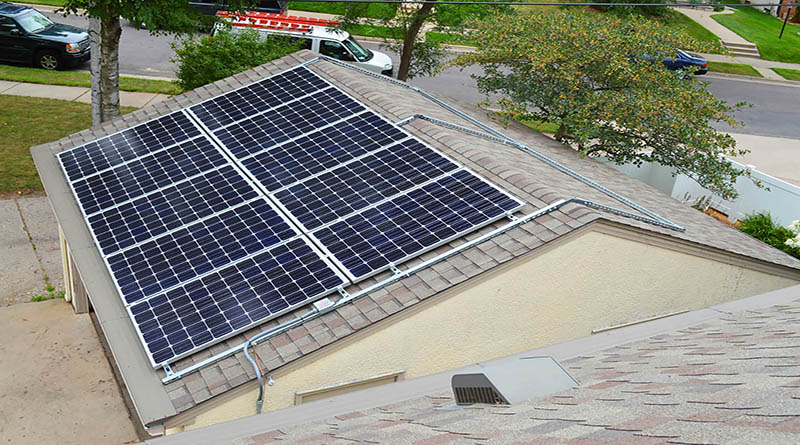
An autonomous solar system is located mainly on the roofs of low-rise buildings and in tree-free areas.
In the period of frost, solar systems supply energy for heating air, steam or water heating, in summer they provide heated water
Solar power plants are among the "green", environmentally friendly, continuously renewable types of energy generation
So far, the efficiency of solar power plants is too dependent on the number of sunny days. It is profitable only in southern latitudes. In the middle lane and in the north, it can only serve as a backup source



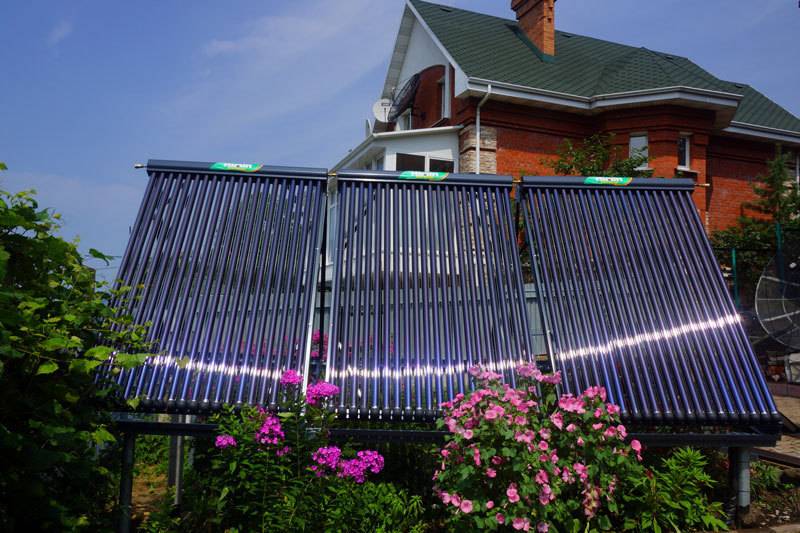


Solar panels in the south of the CIS countries will be able to provide a country house with electricity, hot water and coolant for heating circuits
Solar systems, even used as a backup energy source, bring a fairly high economic effect, reducing the burden on the main options for generating energy.
Passive use of solar energy
Solar panel installation option
Optimal location of a private solar system
Location of the solar panel along the eaves
Solar system on a flat roof
Solar power plant as a backup source
Operation of batteries in the southern regions of the CIS countries
The real benefits of a solar system in the private sector
Intermediaries between the sun's rays and the mechanism that generates energy are solar batteries or collectors, which differ in both purpose and design.
Batteries store energy from the sun and allow it to be used to power household electrical appliances. They are panels with photocells on one side and a locking mechanism on the other. You can experiment and assemble the battery yourself, but it’s easier to buy ready-made elements - the choice is quite wide.
Solar systems (solar collectors) are part of the heating system of the house. Large heat-insulated boxes with coolant, like batteries, are mounted on raised shields facing the sun, or roof slopes.
It is erroneous to assume that absolutely all northern regions receive much less natural heat than southern ones. Suppose there are much more sunny days in Chukotka or in central Canada than in Great Britain located to the south
To increase efficiency, the panels are placed on dynamic mechanisms that resemble a tracking system - they rotate following the movement of the sun. The process of energy conversion takes place in tubes located inside the boxes.
The main difference between solar systems and solar panels is that the former heat the coolant, while the latter accumulate electricity. It is possible to heat the room with the help of photocells, but the device schemes are irrational and are suitable only for those areas where there are at least 200 sunny days a year.
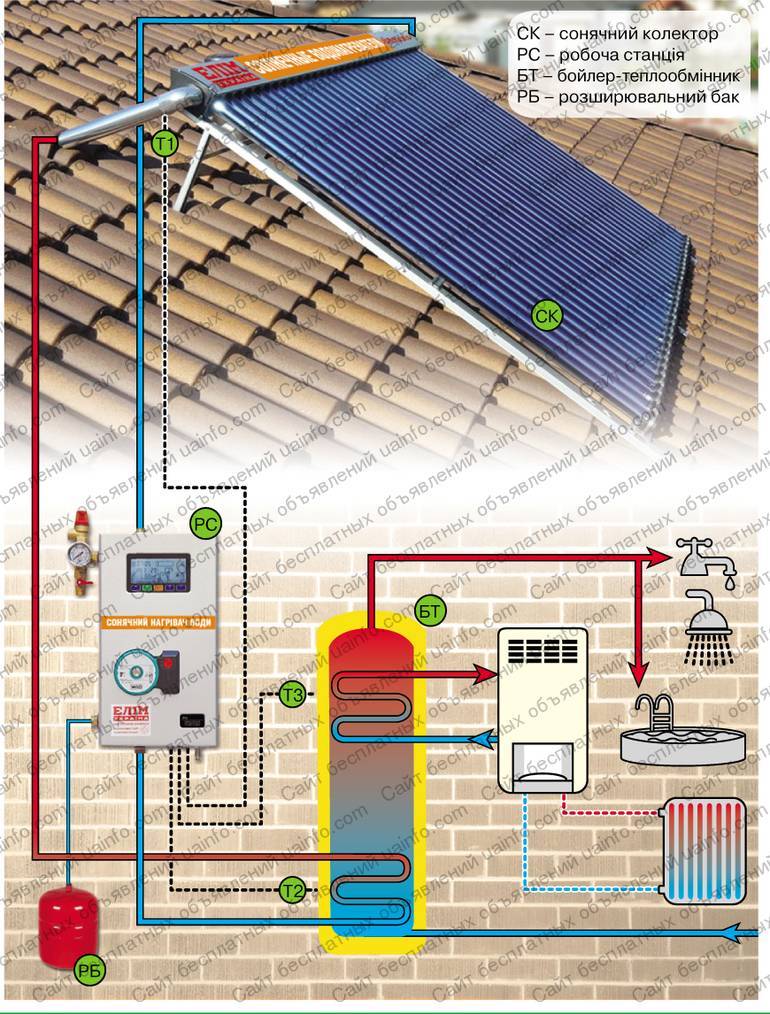
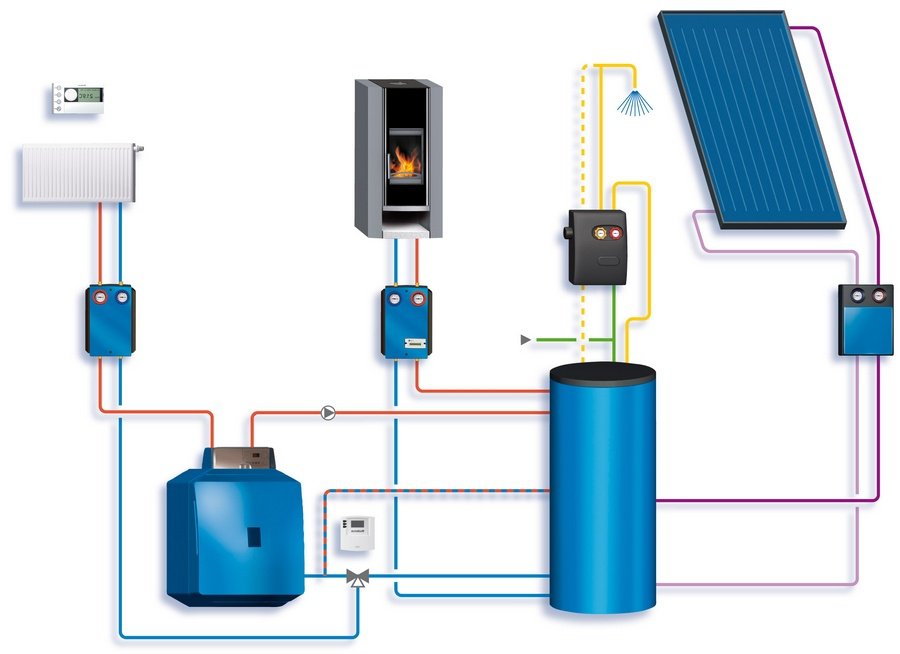
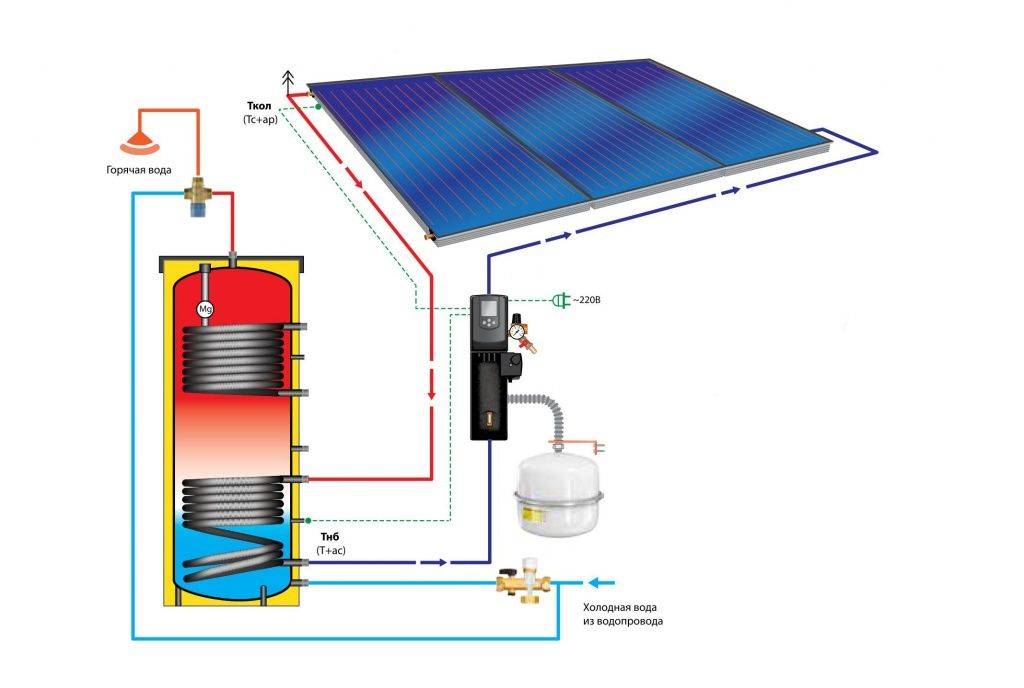
Scheme of a heating system with a solar collector connected to a boiler and a spare source of electricity (for example, a gas boiler) running on traditional fuel (+)
Varieties
In the broadest sense, the term "solar battery" means some device that allows you to convert the energy radiated by the Sun into a convenient form for the purpose of subsequent use in various areas of human life. Two types of solar panels are used to heat houses.
photovoltaic cells
Batteries of this class are often called converters, since with their help the energy of solar radiation is converted into electrical energy. This transformation became possible due to the properties of semiconductors. The cell of a photoelectric cell consists of two materials, one of which has hole conductivity, and the other - electronic.
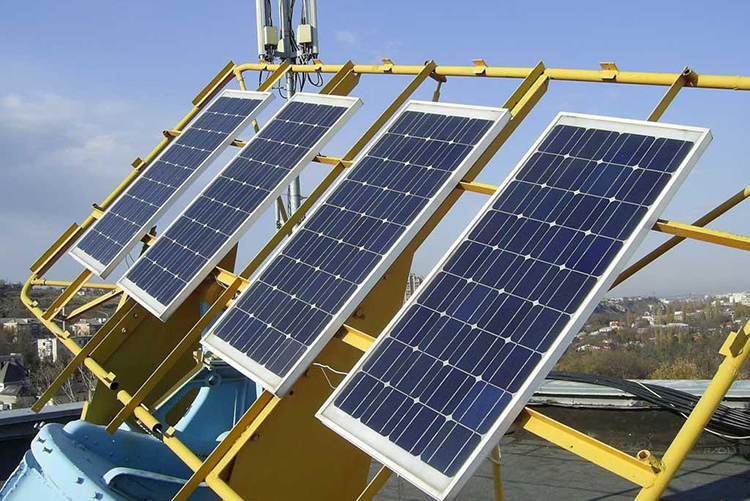
photovoltaic cells
The flow of photons that make up sunlight causes the electrons to leave their orbits and migrate through the Pn junction, which is, in fact, an electric current.
According to the type of materials used, there are three types of photovoltaic batteries: silicon, film and concentrator.
Silicon
More than three-quarters of the solar panels produced today are of this type. This is due to the prevalence of silicon in the earth's crust, as well as the fact that most of the technologies in the production of semiconductor electronics were focused on working with this material.
In turn, silicon-based elements are divided into two types:
- monocrystalline: the most expensive option, efficiency is 19% - 24%;
- polycrystalline: more affordable, but have an efficiency in the range of 14% - 18%.
Film
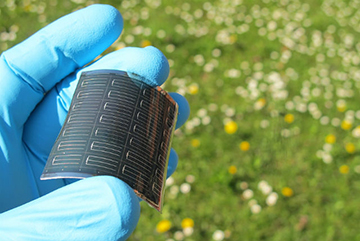 In the production of photocells of this group, semiconductors are used that have a higher light absorption coefficient than that of mono- and polycrystalline silicon.
This made it possible to reduce the thickness of the elements by an order of magnitude, which had a positive effect on their cost. The following materials are used:
- cadmium telluride (efficiency - 15% - 17%);
- amorphous silicon (efficiency - 11% - 13%).
concentrator
These batteries have a multilayer structure and are characterized by the highest efficiency - about 44%. The main material in their production is gallium arsenide.



Heating system complete set
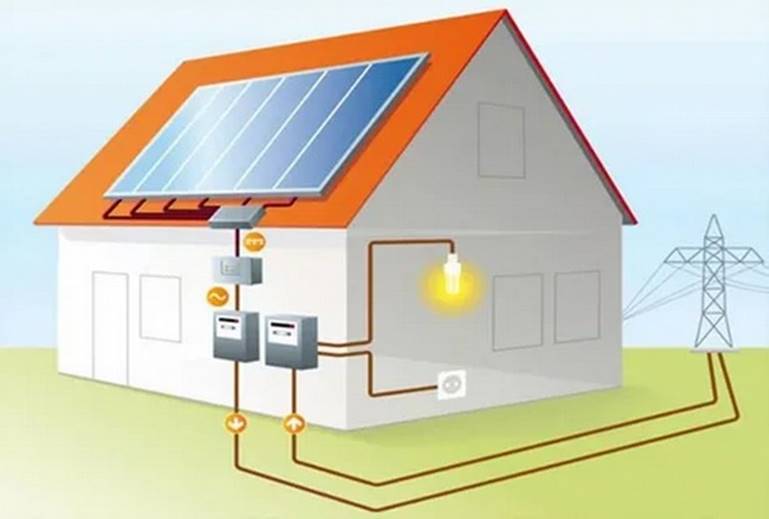
The heating system based on photovoltaic batteries consists of the following components:
- the batteries themselves;
- battery;
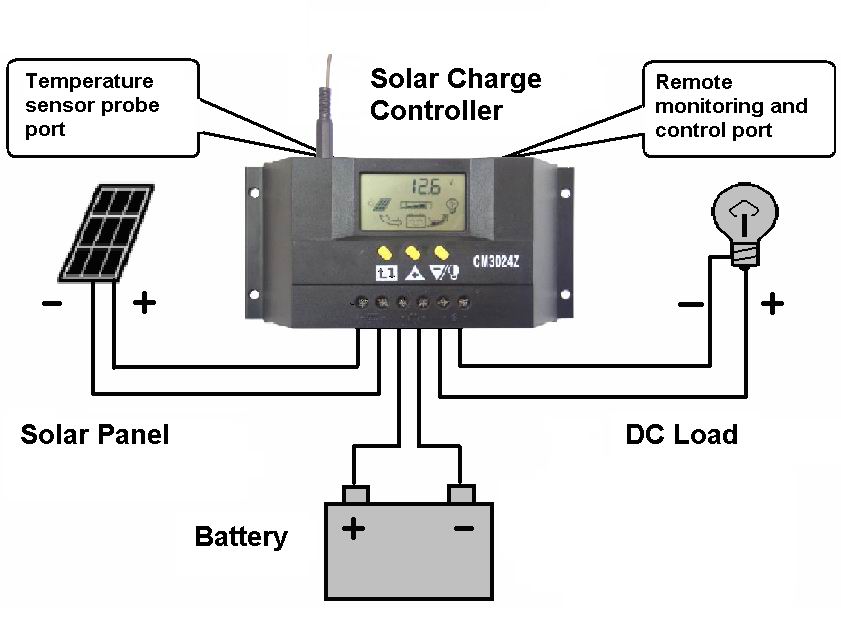
- controller: controls the battery charging process;
- inverter: converts direct current from a battery or accumulator into alternating current with a voltage of 220 V;
- convector, hot water boiler or any other type of electric heater.
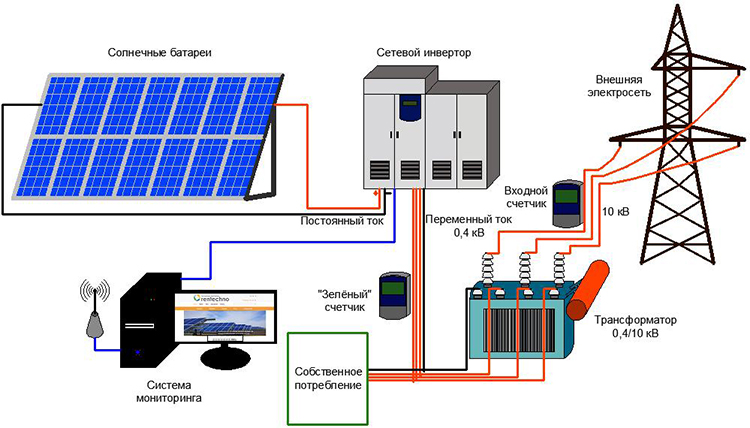
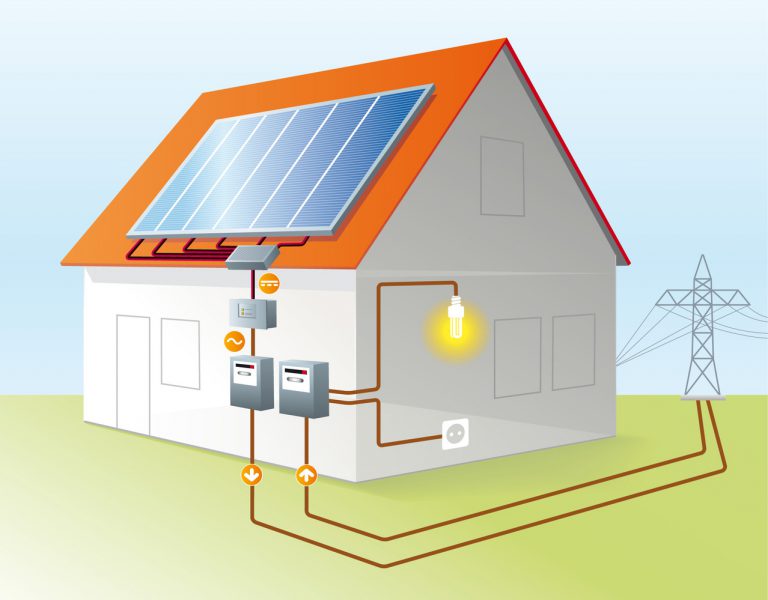
Grid-mounted photovoltaic system
Solar collectors
Batteries of this variety consist of several black-painted tubes through which the coolant circulating in the heating system is pumped. At the same time, the thermal energy of solar radiation is absorbed by the working environment without any conversion. In most cases, it uses a propylene glycol-based mixture (it has antifreeze properties), but there are also collectors oriented to work with air. The latter, after heating, is fed directly into the heated room.
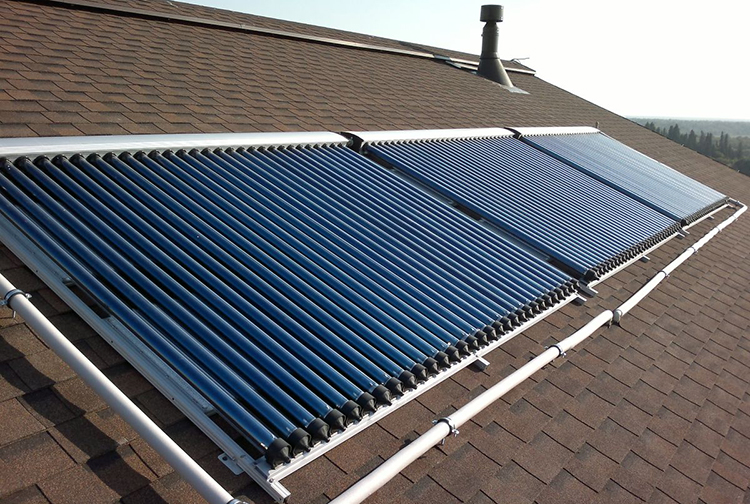
Solar collectors
In its simplest form, a solar collector is called a flat collector. It is made in the form of a box made of glass with a dark coating, which is in contact with the coolant passing through the tubes. Vacuum collectors have a more complex device.In such batteries, tubes with coolant are placed in a sealed glass case, from which air is pumped out. Thus, the tubes containing the working medium are surrounded by a vacuum, which eliminates heat loss from contact with air.
Obviously, the manufacture of solar collectors is based on simpler technologies than the production of photovoltaic cells. As a result, they are also less expensive. At the same time, the efficiency of such installations reaches 80% - 95%.
Complete set of solar system
The main elements of the solar system (solar battery systems for the home) are:
- solar collector;
- circulation pump (in systems with natural circulation of the coolant, it may be absent, but they are ineffective);
- a container with water, which plays the role of a heat accumulator;
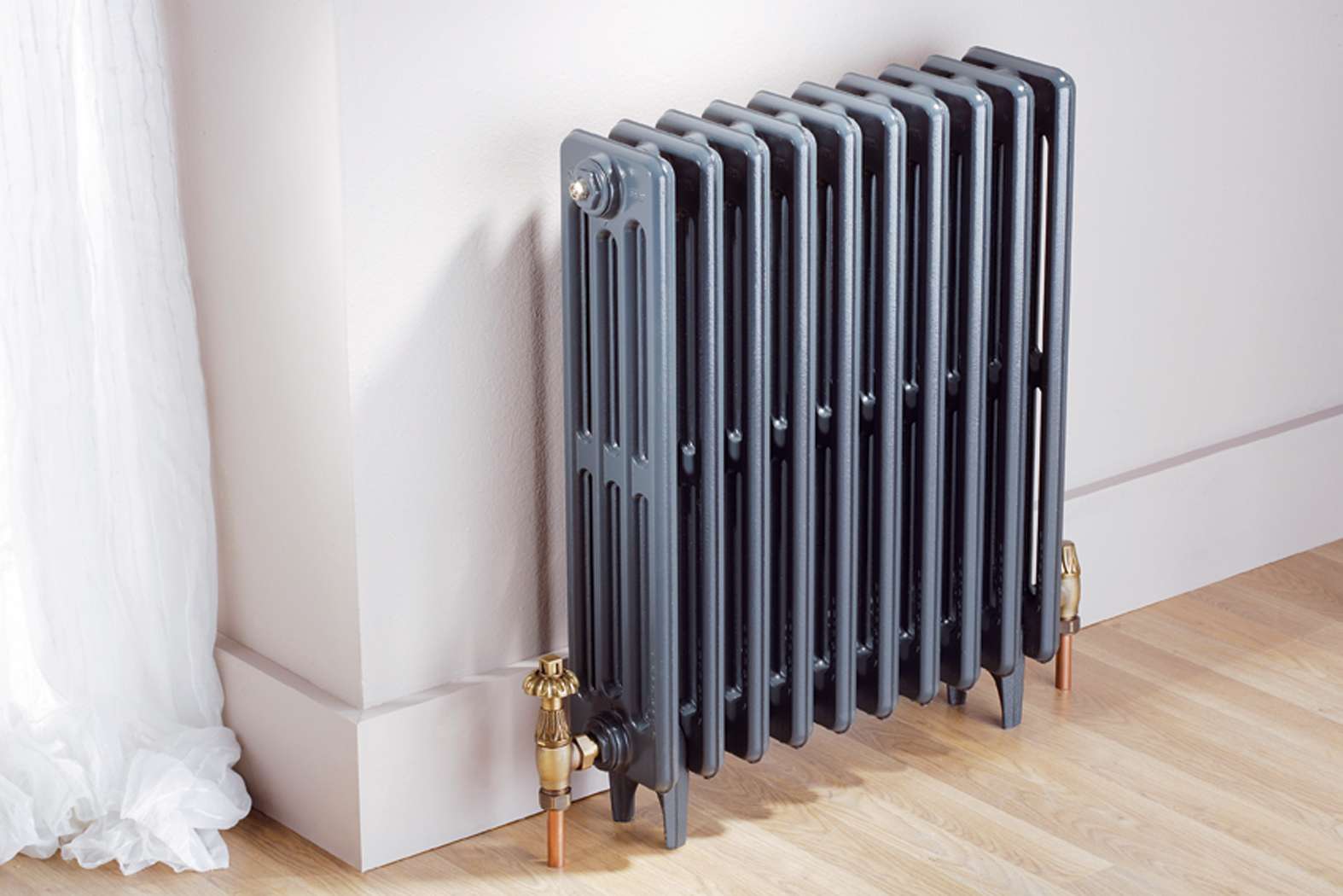
- water heating circuit, consisting of pipes and radiators.
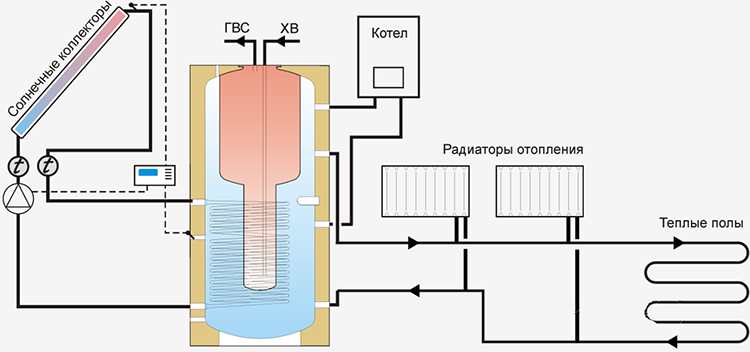
Scheme for the implementation of a solar system with heating support with daily energy storage
The benefits of solar panels
The most important advantage of photovoltaic converters is independence from resource organizations. Electricity is generated completely autonomously, without being connected to the network. It is only necessary to have a source - sunlight, at night the system cannot work. There are other benefits as well:
- Environmental friendliness. The system does not affect the environment in any way, does not emit any harmful substances.
- Long service life. The equipment can operate almost indefinitely, subject to periodic maintenance by specialists.
- Complete silent operation.
- Possibility to increase the power of the system by adding new modules.
- Payback of equipment.The price of the kit is gradually returned to the owner in the form of energy savings. After a few years, the equipment is already starting to make a profit.
- Constant reduction in the cost of kits. The volume of production of such equipment is large, and this causes a decrease in prices. A solar system for a home purchased a few years from now will be cheaper than one purchased today, and this instills confidence in the development of technology and the availability of equipment.
Tubular solar collectors
Tubular solar collectors are assembled from separate tubes through which water, gas or steam runs. This is one of the open type solar systems. However, the coolant is already much better protected from external negativity. Especially in vacuum installations, arranged according to the principle of thermoses.
Each tube is connected to the system separately, parallel to each other. If one tube fails, it is easy to replace it with a new one. The entire structure can be assembled directly on the roof of the building, which greatly facilitates installation.
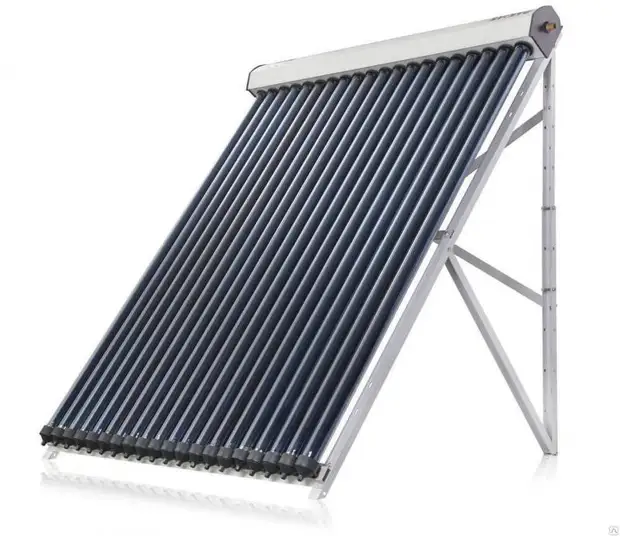
The tubular collector has a modular structure. The main element is a vacuum tube, the number of tubes varies from 18 to 30, which allows you to accurately select the power of the system
A significant plus of tubular solar collectors lies in the cylindrical shape of the main elements, thanks to which solar radiation is captured all day long without the use of expensive systems for tracking the movement of the luminary.
A special multi-layer coating creates a kind of optical trap for the sun's rays.The diagram partially shows the outer wall of the vacuum flask reflecting the rays onto the walls of the inner flask
According to the design of the tubes, pen and coaxial solar collectors are distinguished.
The coaxial tube is a Diyur vessel or a familiar thermos. They are made of two flasks between which the air is pumped out. The inner surface of the inner bulb is coated with a highly selective coating that effectively absorbs solar energy.






With a cylindrical shape of the tube, the sun's rays always fall perpendicular to the surface
Thermal energy from the internal selective layer is transferred to a heat pipe or an internal heat exchanger made of aluminum plates. At this stage, unwanted heat losses occur.
The feather tube is a glass cylinder with a feather absorber inserted inside.
The system got its name from a feather absorber, which tightly wraps around a heat channel made of heat-conducting metal.
For good thermal insulation, air is pumped out of the tube. Heat transfer from the absorber occurs without loss, so the efficiency of feather tubes is higher.
The thermotube is a sealed container with a volatile liquid.
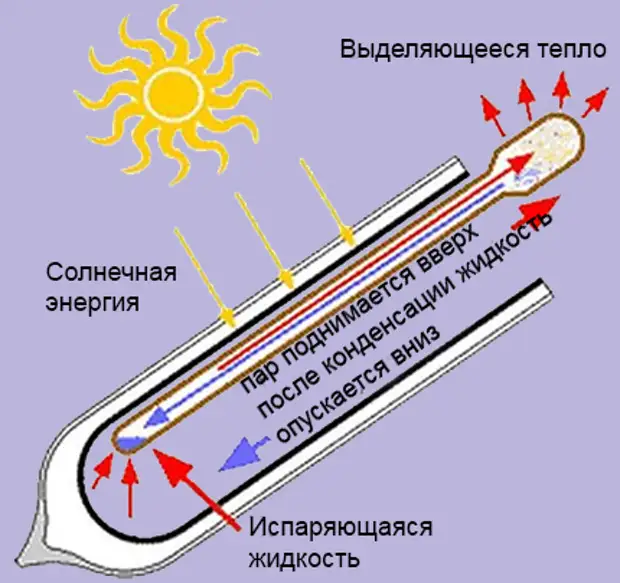 Since the volatile liquid naturally flows to the bottom of the thermotube, the minimum tilt angle is 20°
Inside the thermotube there is a volatile liquid that absorbs heat from the inner wall of the flask or from the feather absorber. Under the action of temperature, the liquid boils and rises in the form of vapor. After the heat is given off to the heating or hot water coolant, the steam condenses into a liquid and flows down.
Water at low pressure is often used as a volatile liquid.
The direct-flow system uses a U-shaped tube through which water or the heat carrier of the heating system circulates.
One half of the U-shaped tube is designed for cold coolant, the second takes the heated one. When heated, the coolant expands and enters the storage tank, providing natural circulation. As with thermotube systems, the minimum angle of inclination must be at least 20⁰.
With a direct-flow connection, the pressure in the system cannot be high, since there is a technical vacuum inside the flask
Direct-flow systems are more efficient because they immediately heat the coolant.
If solar collector systems are planned for use all year round, then special antifreezes are pumped into them.
Pros and cons of tubular collectors
The use of tubular solar collectors has a number of advantages and disadvantages. The design of a tubular solar collector consists of the same elements, which are relatively easy to replace.
Advantages:
- low heat loss;
- ability to work at temperatures up to -30⁰С;
- effective performance throughout the daylight hours;
- good performance in areas with a temperate and cold climate;
- low windage, justified by the ability of tubular systems to pass air masses through them;
- the possibility of producing a high temperature of the coolant.
Structurally, the tubular structure has a limited aperture surface. It has the following disadvantages:
- not capable of self-cleaning from snow, ice, frost;
- high price.
Despite the initially high cost, tubular collectors pay for themselves faster.They have a long service life.
Tubular collectors are open type solar thermal systems, therefore they are not suitable for year-round use in heating systems.
Types of solar panels
There are different types of photovoltaic converters. Moreover, the material from which they are made and the technology differ. All these factors directly affect the performance of these converters. Some solar cells have an efficiency of 5-7%, and the most successful recent developments show 44% or more. It is clear that the distance from development to domestic use is huge, both in time and money. But you can imagine what awaits us in the near future. Other rare earth metals are used to get better performance, but with improved performance, we have a decent price increase. The average performance of relatively inexpensive solar converters is 20-25%.






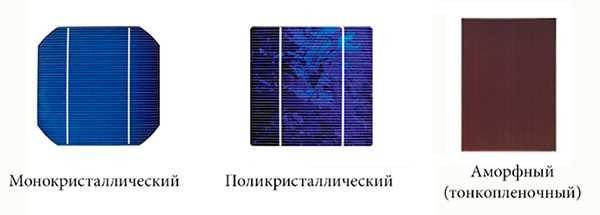
Silicon solar modules are the most widely used
The most common silicon solar cells. This semiconductor is inexpensive, its production has been mastered for a long time. But they do not have the highest efficiency - the same 20-25%. Therefore, with all the diversity, three types of solar converters are mainly used today:
- The cheapest are thin-film batteries. They are a thin coating of silicon on the carrier material. The silicon layer is covered with a protective film. The advantage of these elements is that they work even in diffused light, and, therefore, it is possible to install them even on the walls of buildings. Cons - low efficiency of 7-10%, and, despite the protective layer, the gradual degradation of the silicon layer.However, by occupying a large area, you can get electricity even in cloudy weather.
- Polycrystalline solar cells are made from molten silicon, slowly cooling it. These elements can be distinguished by their bright blue color. These solar panels have the best productivity: efficiency is 17-20%, but they are inefficient in diffused light.
- The most expensive of the whole trinity, but at the same time quite widespread, are single-crystal solar panels. They are obtained by splitting a single silicon crystal into wafers and have a characteristic geometry with bevelled corners. These elements have an efficiency of 20% to 25%.
Now, when you see the inscriptions “mono solar panel” or “polycrystalline solar panel”, you will understand that we are talking about a method for the production of silicon crystals. You will also know how effective you can expect from them.
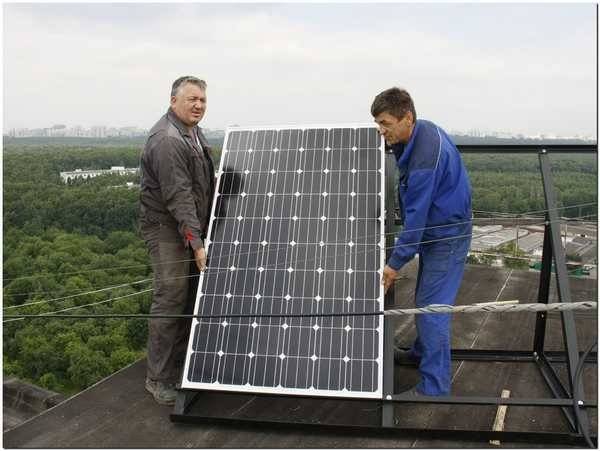
Battery with monocrystalline converters