- air heating
- Characteristics
- Stove heating
- Heating schemes for a private house
- Pipes
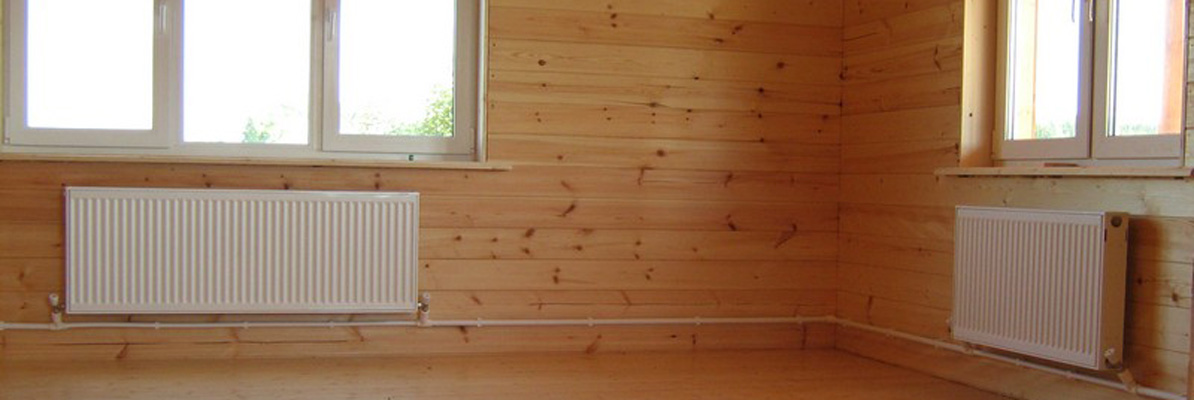
- Heating batteries
- coolant
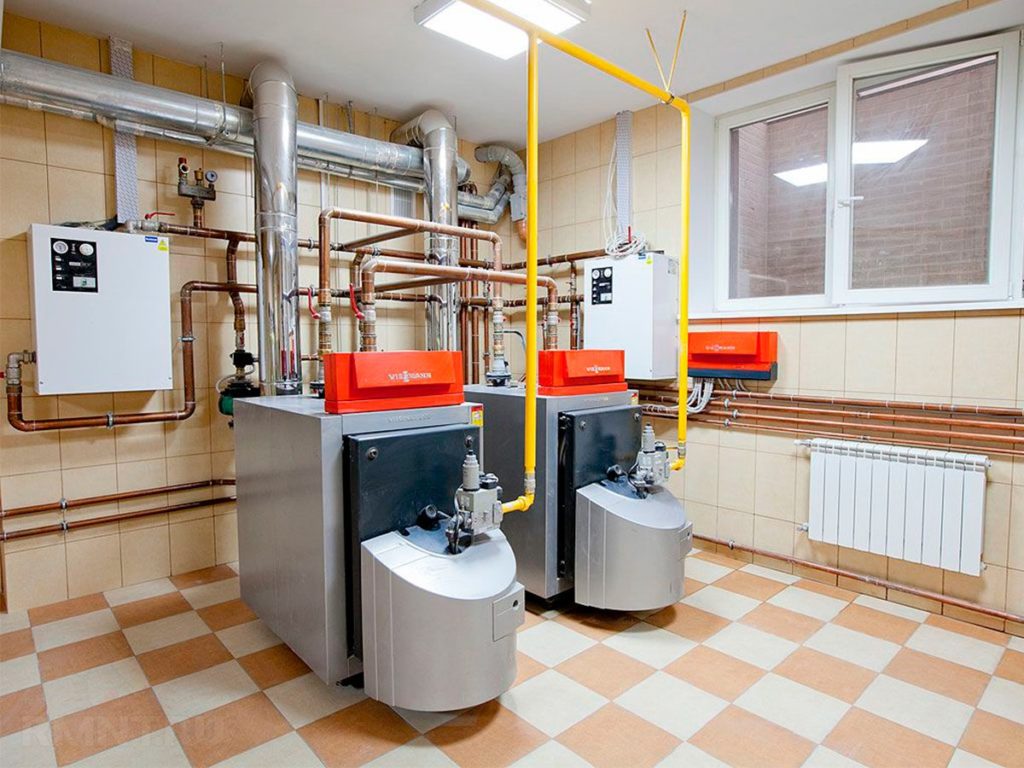
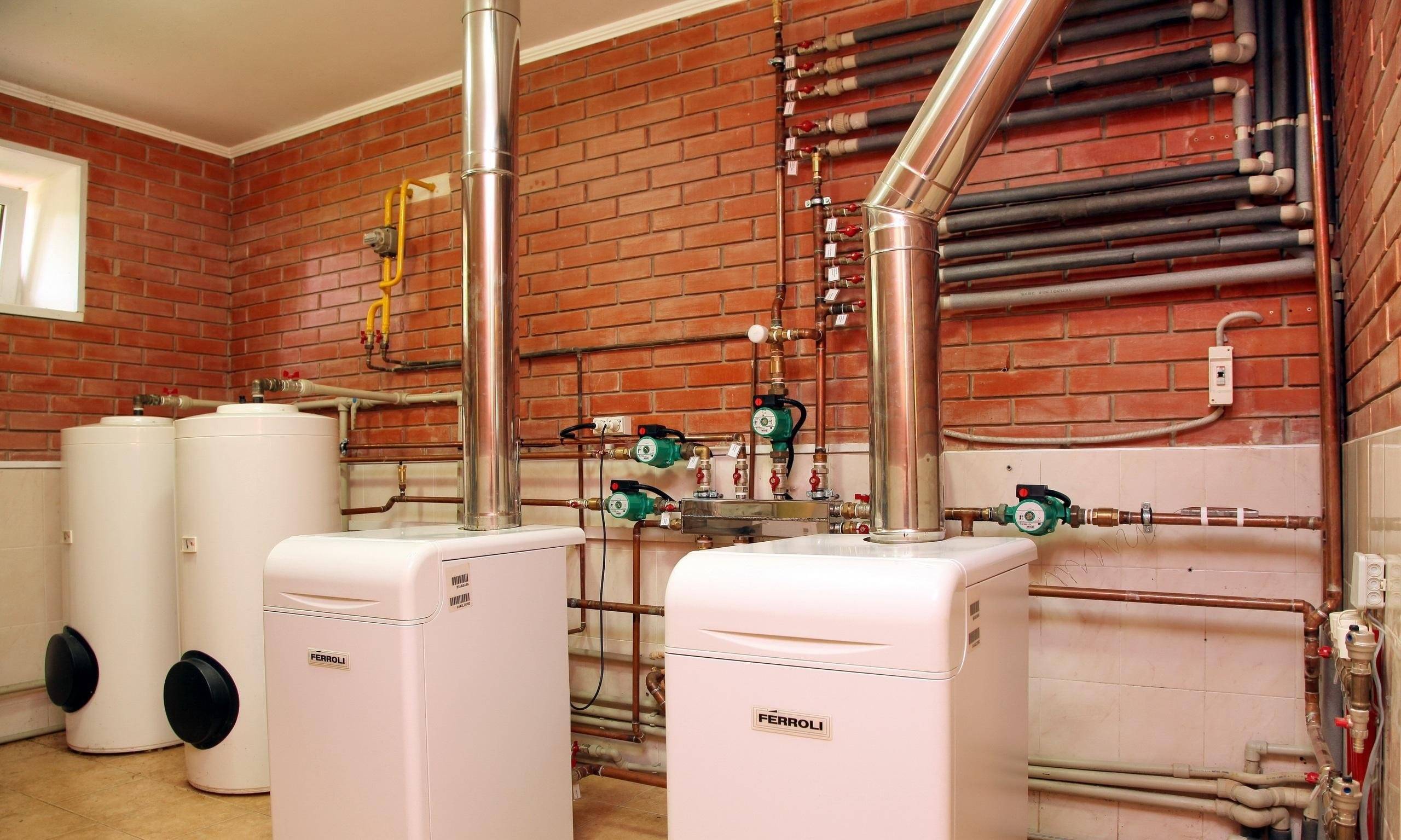
- Types of boilers and other water heaters
- Efficient boilers for space heating
- Condensing gas
- Pyrolysis
- solid fuel
- Electric boiler
- Comparison of costs of different heating systems
- The device and elements of a single-pipe heating system
- Heating schemes for a private house
- Geothermal systems
air heating
The air heating system consists of a heat generator and a water heater responsible for heating the air. Due to the fan and distribution heads, air masses are distributed throughout the house.
Characteristics
The advantages of the air heating system are: high efficiency (93%), the ability to warm up the room in the shortest possible time, maintaining the optimum temperature. Also, the heating system with an air intake can be equipped with air ionizers or cleaning filters.
Of the disadvantages of air heating, the following should be mentioned:
- an air heating system can only be installed at the stage of building a house;
- regular service is required;
- high demand for electricity (an additional source of power supply will be required);
- Air filters need to be changed frequently
- high installation and maintenance costs;
- drawing dust from the street (applies only to the system with forced draft).
The air heating system can use gas or diesel fuel. The calculation of fuel consumption is similar to example No. 1.
Stove heating
A proven old-fashioned method is to heat a country house or cottage with a stove. Now this option is rather an exception. Meanwhile, stove heating is an indispensable thing, because:
- reliable and independent of gas or electricity;
- inexpensive;
- environmentally friendly.
A few more disadvantages:
- low efficiency (however, if you place the stove in the center of the house and run the chimney in the center, you can heat the whole house);
- long heating;
- soot, soot;
- it is required to throw up fuel, monitor the coals;
- need a corner to store firewood.
If you are not satisfied with the stove, you can replace it with a solid fuel boiler. Not only firewood is thrown into such boilers, but also coal, peat, sawdust. The advantages of solid fuel boilers are consonant with the advantages of stove heating. The disadvantages are the same.
Experienced owners of country houses note that the best option for heating a country house often consists of a combination of several methods. Furnace heating or a solid fuel boiler perfectly coexist with electric heating. During the day, the stove is used, and at night there is a transition to electric heating at a reduced rate. It will cost a little more, but one option insures the other, and various force majeure is not terrible.
Another great option is a combination boiler. Various combinations, for example, gas + firewood, electricity + firewood. The advantage is that the first type of heating is easily replaced by the second. Built-in automation independently controls fuel transitions.
Heating schemes for a private house
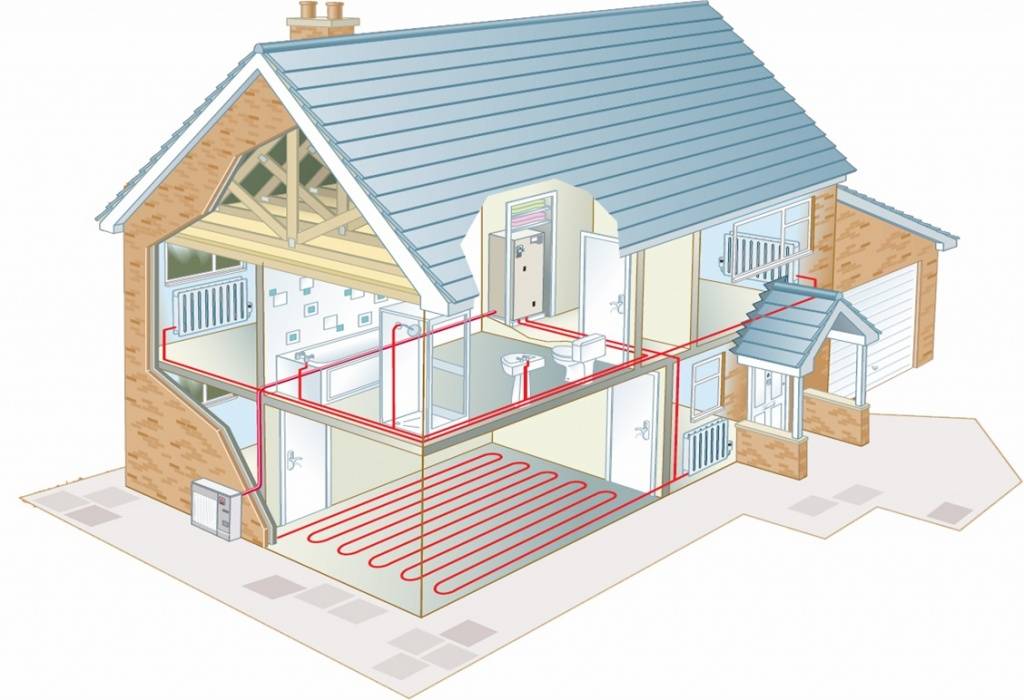
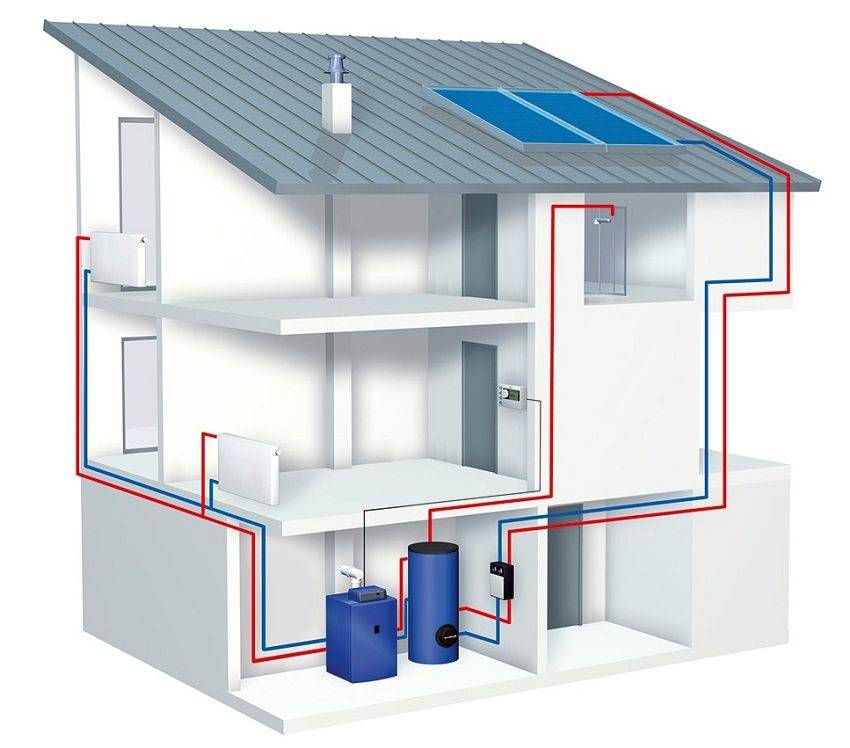
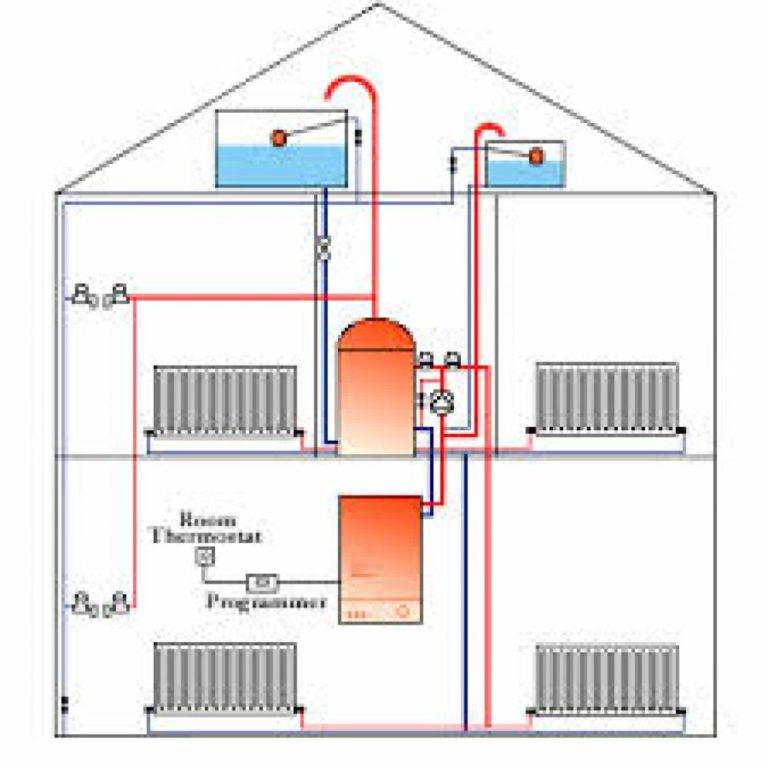
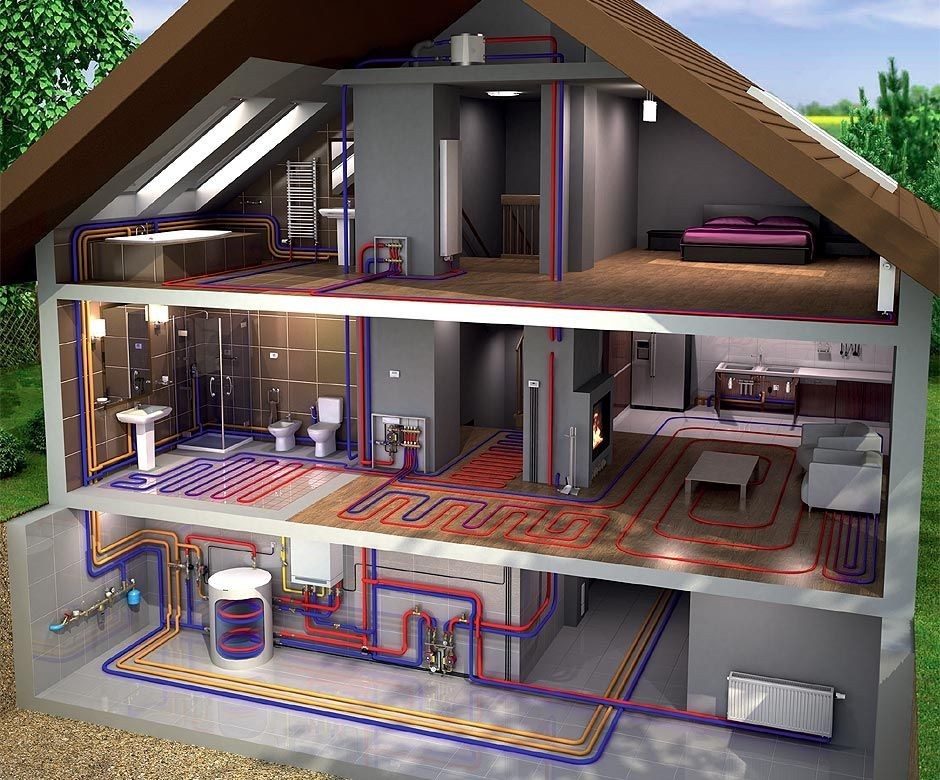
Water heating is considered one of the most effective solutions for a private home. It is a closed circuit with wiring. The coolant is constantly moving through the pipeline, heated by the boiler.
The system can be installed in different ways. For each specific cottage, the best heating scheme is selected at the design stage
To make the right decision, it is important to familiarize yourself with the schemes listed below, evaluate their advantages and disadvantages
Depending on the type of movement of the coolant, there are:
- Schemes with natural circulation - the movement is carried out due to the pressure difference. Hot water is supplied through the risers, then enters the mains, radiators. When laying pipes, a slight slope is observed, about 3-5 ° С. The main advantage of such a solution is complete energy independence, a minimum of equipment in the system.
- Schemes with forced circulation - the movement of the coolant is carried out by a pump that pumps heated and sucks in cooled water. The advantage of such a system is the ability to heat rooms of any size, no need to withstand the slope. The downside is volatility.

By number, the features of connecting the risers of the connection scheme are different.
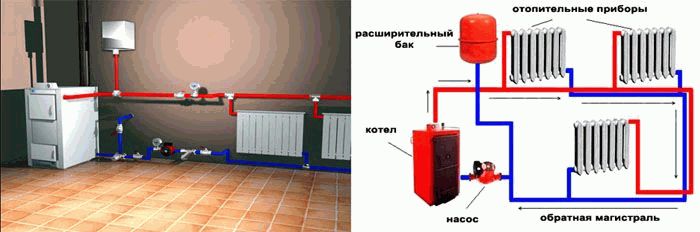
Single-pipe - the coolant is supplied to all radiators in series. The advantages of this option include ease of installation, affordable cost, low labor costs. The disadvantages are the need to use a pump, the inability to regulate the temperature in individual rooms.
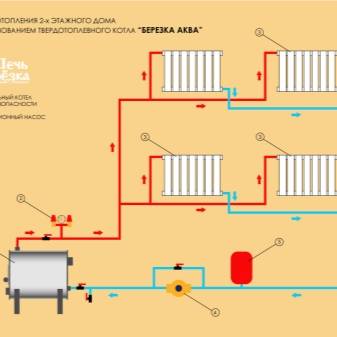


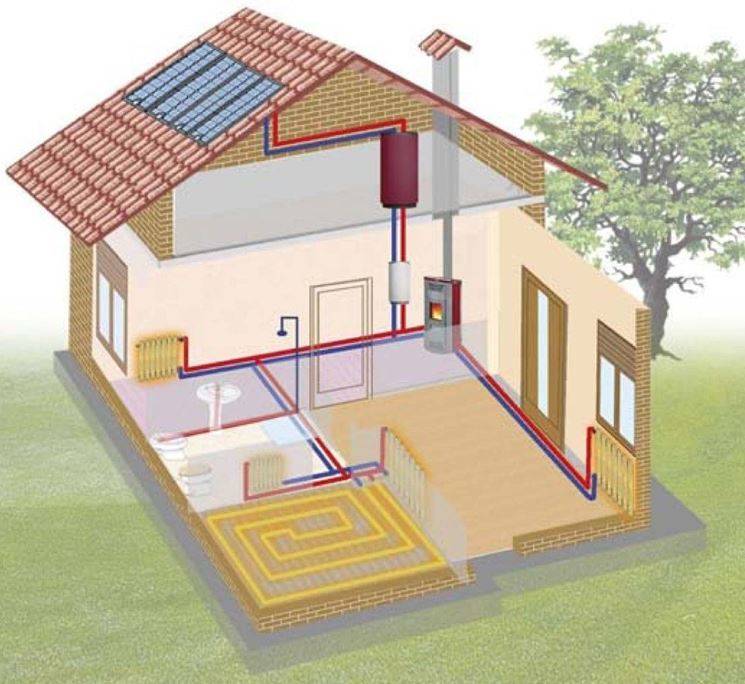
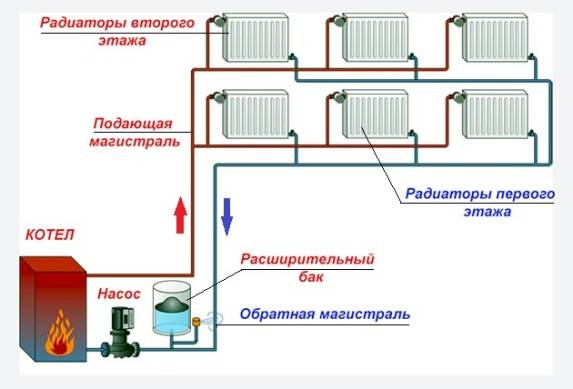
By installing a bypass pipe, stopcocks on each radiator, as well as other equipment, you can reduce the negative impact of the minuses. However, the cost of installing the system will increase.
Two-pipe vertical - a similar scheme allows you to bring a direct, return line to each battery. From the boiler can be made top or bottom wiring. Such a solution will significantly increase the cost of the heating system, but will provide the possibility of temperature control in each room.
Two-pipe horizontal - the scheme involves the parallel connection of the supply, return line, located horizontally. A similar solution is most often used for heating cottages. Hot water is supplied to all radiators almost simultaneously, which makes it easy to ensure a comfortable temperature in all rooms. If the cottage has several floors, a separate circuit is created for each.
Two-pipe horizontal schemes are divided into the following subspecies:
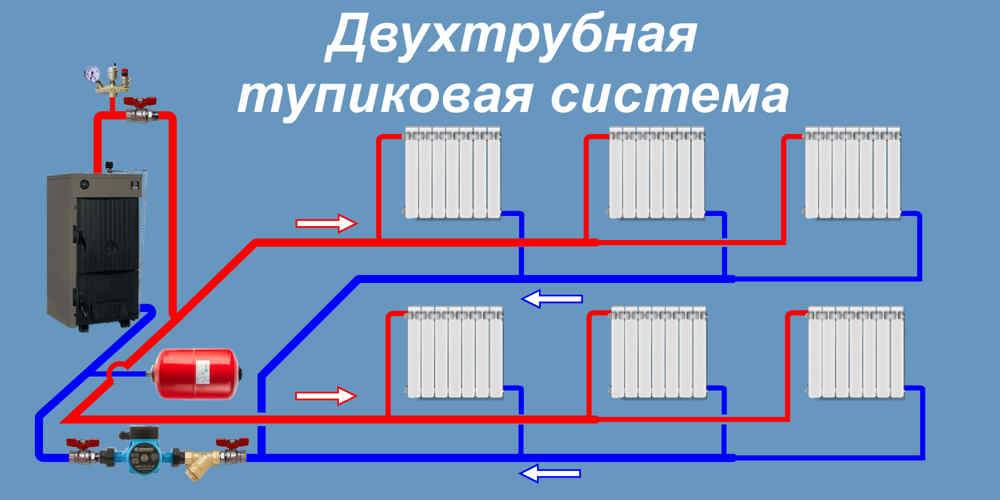
- dead-end - it is characterized by a low level of costs, ease of installation, calculations, however, in places with a low speed of water movement, stagnation zones may appear;
- passing - involves the serial connection of all radiators around the perimeter of the house, the total length of the supply, return is approximately the same, so all devices operate under equal hydraulic conditions;
- collector - the most complex scheme, but it allows you to save on pipes, provides uniform heating of the room, an attractive view of the room due to hidden wiring.
When choosing a heating scheme, professionals are increasingly recommending two-pipe systems with forced circulation.This ensures uniform distribution of heat, reduces the likelihood of freezing of individual areas on cold days.
Pipes
metal-plastic
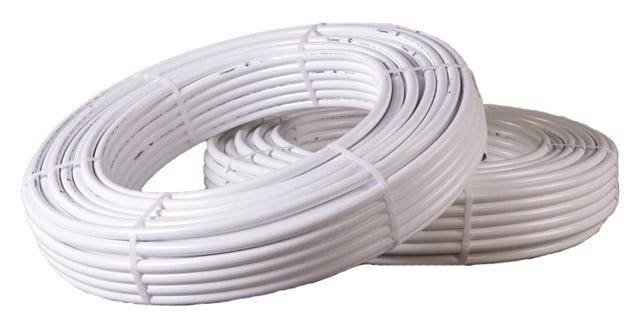 Among the advantages of this material are:
- thermal conductivity is low,
- easily repaired
- no need professional tool for installation.
The disadvantages include the following:
- connections may leak,
- leaving dents on impact.
polypropylene
 It has these strengths:
- large diameter - up to 125 mm,
- resistance to mechanical pressure,
- when the system freezes, the pipes do not become unusable,
- after soldering, there can be no liquid leakage.
However, there are also weaknesses:
- the need for expensive equipment to make the installation,
- elongate with strong heating of the coolant,
- when damaged, it is difficult to repair.
Heating batteries
- System type. The necessary criteria for a radiator also depend on whether it is autonomous or central heating. For a centralized system, it is better to take batteries that can withstand pressure surges and water of different acidity. For autonomous heating, radiators of different pressures can be used.
- Heat dissipation. According to this indicator, aluminum is in first place, then steel, and then cast iron. But it is also worth considering that, for example, the same cast iron cools down longer.
- Life time. In this parameter, cast iron radiators are in the first place, then bimetallic, steel and cast iron.
- other criteria. This includes more visible parameters - design, price, manufacturer, and so on.
coolant
- Water. Still, they use it more often. Since you do not need to buy water for heating, this is a very economical option, and it transfers heat perfectly. In addition, water does not bring environmental harm.
- Antifreeze.There is a specially made for the heating system. Although you need to pay money for it, its main advantage is that it does not freeze at low temperatures.
Types of boilers and other water heaters
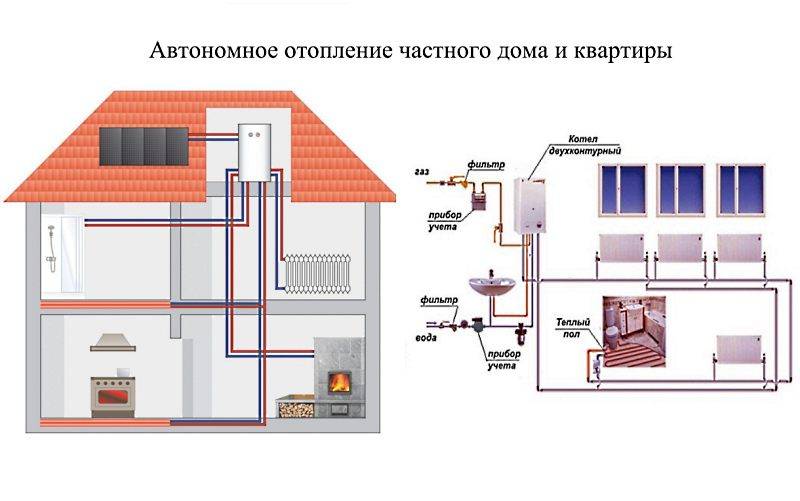
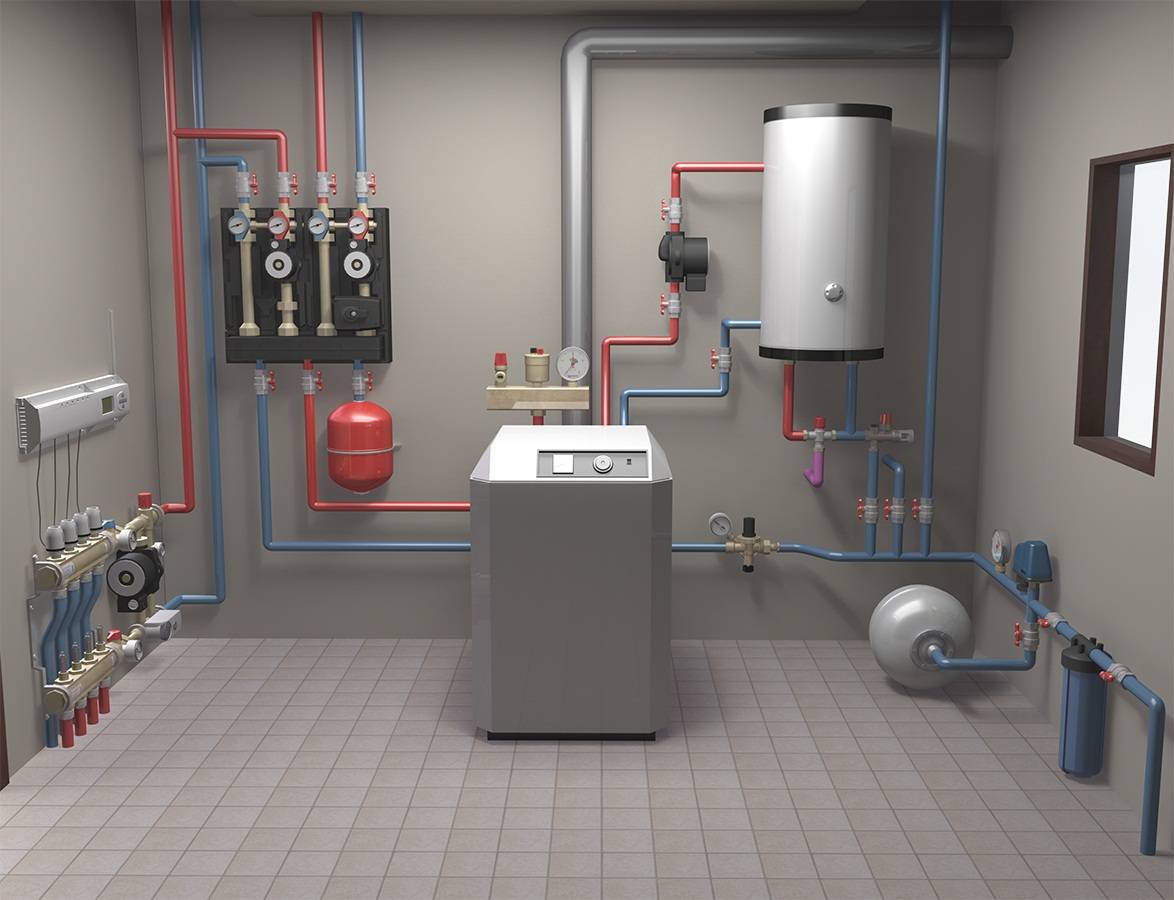
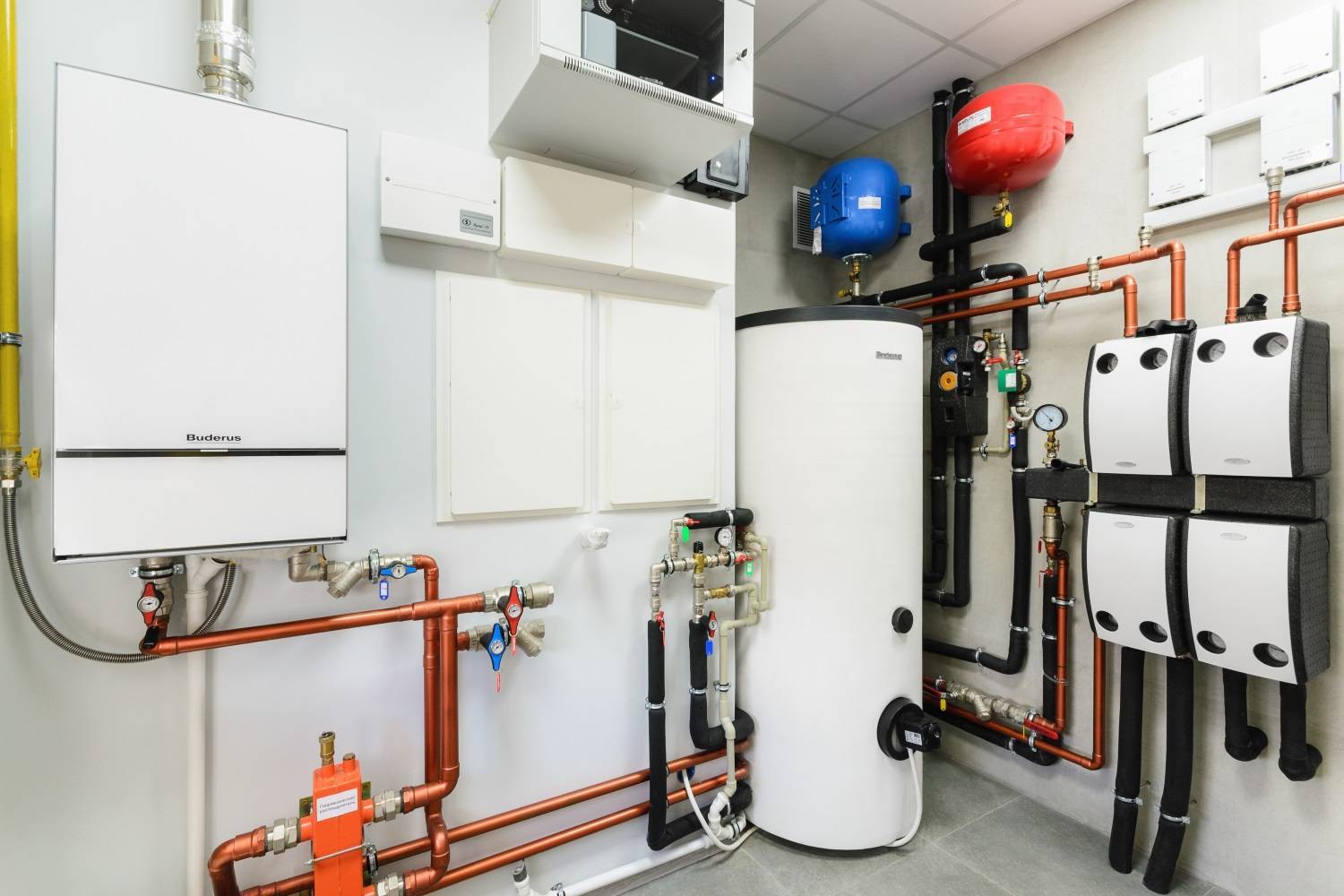
The efficiency of heating in a private house depends on the installation that heats the working fluid (water). A properly selected unit generates the amount of heat required for radiators and an indirect heating boiler (if any), saving energy.
Autonomous water system can be powered by:
- a hot water boiler that uses a certain fuel - natural gas, firewood, coal, diesel fuel;
- electric boiler;
- wood-burning stoves with a water circuit (metal or brick);
- heat pump.
Most often, boilers are used to organize heating in cottages - gas, electric and solid fuel. The latter are made only in the floor version, the rest of the heat generators - wall and stationary. Diesel units are used less often, the reason is the high price of fuel. How to choose the right domestic hot water boiler is discussed in a detailed guide.
Stove heating, combined with water registers or modern radiators, is a good solution for heating summer cottages, garages and a small residential house with an area of 50-100 m². Disadvantage - the heat exchanger placed inside the stove heats the water uncontrollably
To avoid boiling, it is important to ensure forced circulation in the system
Modern gravity system without a pumping unit, powered by the water circuit of a brick kiln
Heat pumps are not widely used in the countries of the former Soviet Union. The reasons:
- the main problem is the high cost of equipment;
- due to the cold climate, air-to-water devices are simply inefficient;
- geothermal systems "land - water" are difficult to install;
- electronic units and compressors of heat pumps are very expensive to repair and maintain.
Due to the high price, the payback period of the units exceeds 15 years. But the efficiency of installations (3-4 kW of heat per 1 kilowatt of electricity consumed) attracts craftsmen who are trying to assemble home-made analogues from old air conditioners.




How to make the simplest version of a heat pump with your own hands, see the video:
Efficient boilers for space heating
For every type of fuel, there is equipment that works best.
Condensing gas
Cheap heating in the presence of a gas main can be performed using condensing-type boilers.
Fuel economy in such a boiler is 30-35%. This is due to the double heat extraction in the heat exchanger and condenser.
We produce boilers of the following types:
- wall-mounted - for small areas of apartments, houses and cottages;
- floor - heat apartment buildings, industrial facilities, large offices;
- single-circuit - only for heating;
- double-circuit - heating and hot water.
In addition to all the advantages, the installations also have disadvantages:
- Higher price compared to equipment of outdated designs.
- The boiler must be connected to a sewerage system to drain condensate.
- The device is sensitive to air quality.
- Energy dependence.
Pyrolysis
Pyrolysis heat generators operate on solid fuel. These are relatively economical boilers for a private house.
The principle of their operation is based on the process of pyrolysis - the release of gas from wood during its smoldering. The coolant is heated by the combustion of gas that enters the chamber from the loading compartment, and the subsequent afterburning of charcoal.
Pyrolysis-type systems are made with forced ventilation, powered by an electrical network, or natural, created by a high chimney.
Before starting such a boiler, it must be preheated to + 500 ... + 800 ° C. After that, fuel is loaded, the pyrolysis mode starts, and the smoke exhauster turns on.
Black coal burns the longest in the installation - 10 hours, after it brown coal - 8 hours, hard wood - 6, soft wood - 5 hours.
solid fuel
In addition to pyrolysis systems, which cost 2-3 times more than classic ones, do not operate on damp fuel, have ash-contaminated smoke to heat the house, and use automated versions of standard solid fuel boilers.
For the correct choice of equipment, you need to determine which type of fuel is most available in the region of residence.
If there are nightly electricity tariffs, then combined systems can be used, for example, wood and electricity, coal and electricity.
To obtain hot water, you will have to purchase a double-circuit boiler or use indirect heating of a boiler connected to single-circuit equipment.
Electric boiler
Economical heating of a private house without gas at the lowest cost can be done using electric boilers.
If the power of the device is up to 9 kW, then there is no need to coordinate with electricity suppliers.
Budget equipment, which uses heating elements as a heating element, occupies 90% of the market, but is less economical and easy to use.
Modern induction-type boilers do not have a number of disadvantages (the heating element does not come into contact with water), but at the same time they take up a lot of space and have a high price.
You can save on electricity if:
- monitor the condition of the coolant;
- periodically clean the heating elements;
- use night tariffs for the cost of electricity;
- install a boiler with multi-stage power control, which works depending on weather conditions.
Comparison of costs of different heating systems
Often the choice of a particular heating system is based on the starting cost of the equipment and its subsequent installation. Based on this indicator, we obtain the following data:
-
Electricity. Initial investment up to 20,000 rubles.
-
-
solid fuel. The purchase of equipment will require from 15 to 25 thousand rubles.
-
Oil boilers. Installation will cost 40-50 thousand.
-
Gas heating with own storage. The price is 100-120 thousand rubles.
-
Centralized gas pipeline. Due to the high cost of communication and connection, the cost exceeds 300,000 rubles.




The device and elements of a single-pipe heating system
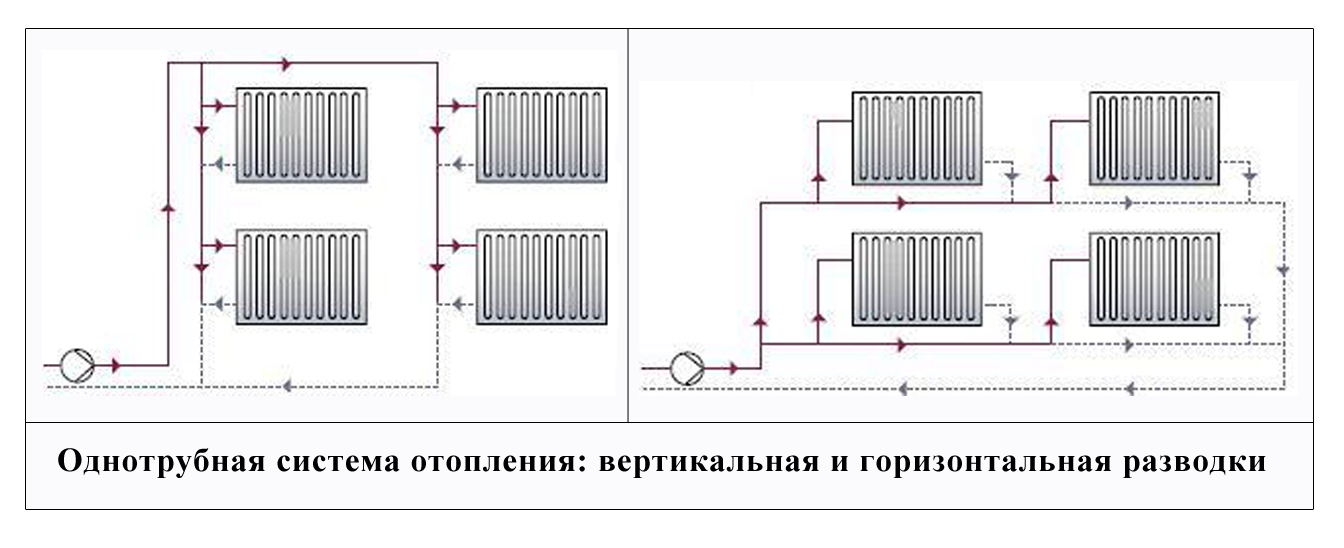
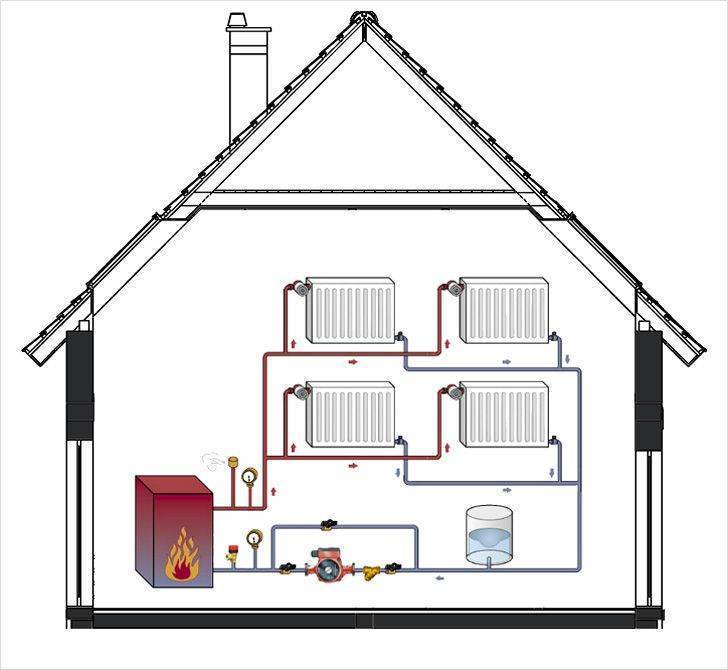
A single-pipe system, as already mentioned, is a closed circuit that includes a boiler, a main pipeline, radiators, an expansion tank, as well as elements that circulate the coolant. Circulation can be natural or forced.
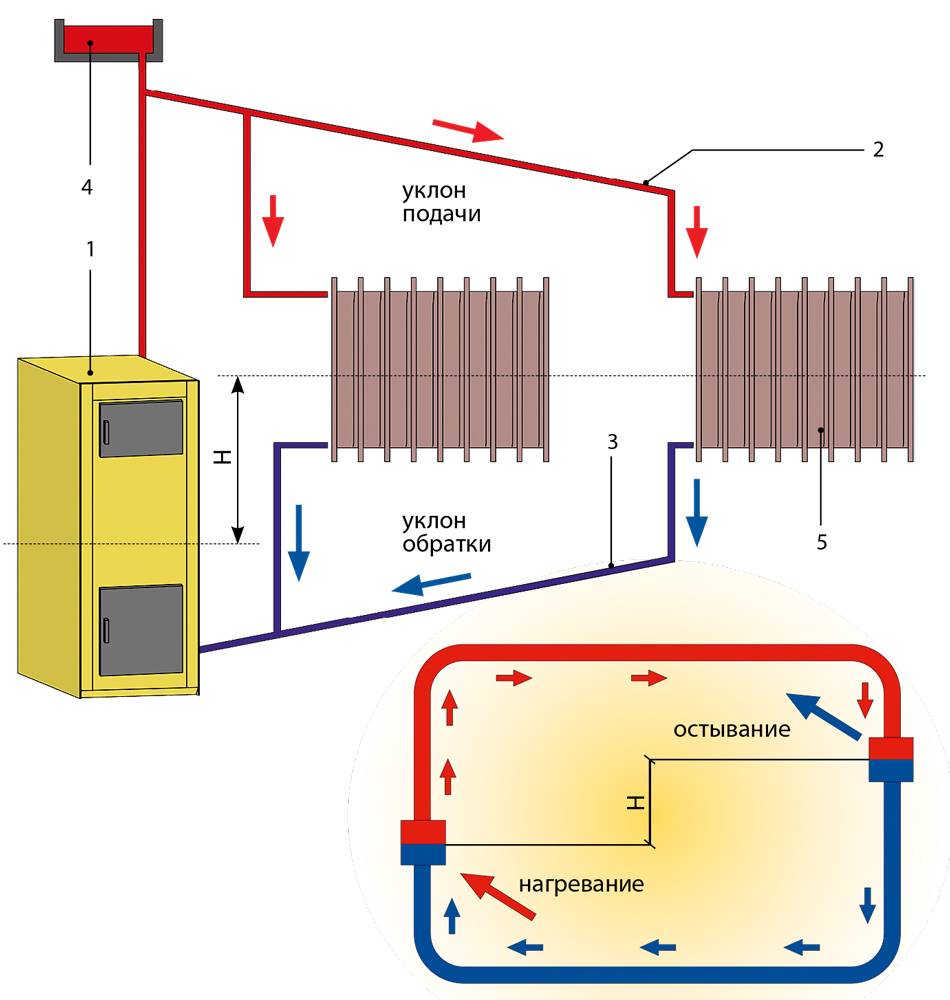
With natural circulation, the movement of the coolant is ensured by different water densities: less dense hot water, under the pressure of cooled water coming from the return circuit, is forced into the system, rises up the riser to the upper point, from where it moves along the main pipe and is disassembled through radiators and other elements of the system. The slope of the pipe must be at least 3-5 degrees. This condition cannot always be met, especially in large one-story houses with an extended heating system, because the height difference with such a slope is from 5 to 7 cm per meter of pipe length.
Forced circulation is carried out by a circulation pump, which is installed in the reverse part of the circuit right in front of the boiler inlet. With the help of a pump, pressure is created sufficient to maintain the temperature of the heating water within the established limits. The slope of the main pipe in a system with forced circulation can be much less - usually it is enough to provide a difference of 0.5 cm per 1 meter of pipe length.
Circulation pump for one-pipe heating system
To avoid stagnation of the coolant in the event of a power outage, in systems with forced circulation, an accelerating collector is installed - a pipe that raises the coolant to a height of at least one and a half meters. At the upper point of the accelerating manifold, a pipe is drained into an expansion tank, the purpose of which is to regulate the pressure in the system and exclude its emergency increase.
In modern systems, expansion tanks of a closed type are installed, excluding the contact of the coolant with air.A flexible membrane is installed inside such a tank, on one side of which air is pumped with excess pressure, on the other side, the coolant exit is provided. They can be installed anywhere in the system.
An example of connecting an expansion tank to a single-pipe heating system
Open-type expansion tanks are simpler in design, but require mandatory installation at the top of the system, in addition, the coolant in them is actively saturated with oxygen, which can lead to premature failure of steel pipes and radiators due to active corrosion.
The sequence of installation of elements is as follows:
- Heating boiler heating (gas, diesel, solid fuel, electric or combined);
- Accelerating manifold with access to the expansion tank;
- The main pipeline that bypasses all the premises of the house along a given route. First of all, it is necessary to draw a circuit to the rooms that need heating the most: a children's room, a bedroom, a bathroom, since the water temperature at the beginning of the circuit is always higher;
- Radiators installed in selected locations;
- Circulation pump immediately before the inlet of the return part of the circuit into the boiler.
Heating schemes for a private house
Water heating is considered one of the most effective solutions for a private home. It is a closed circuit with wiring. The coolant is constantly moving through the pipeline, heated by the boiler.
The system can be installed in different ways. For each specific cottage, the best heating scheme is selected at the design stage
To make the right decision, it is important to familiarize yourself with the schemes listed below, evaluate their advantages and disadvantages.
Depending on the type of movement of the coolant, there are:
- Schemes with natural circulation - the movement is carried out due to the pressure difference. Hot water is supplied through the risers, then enters the mains, radiators. When laying pipes, a slight slope is observed, about 3-5 ° С. The main advantage of such a solution is complete energy independence, a minimum of equipment in the system.
- Schemes with forced circulation - the movement of the coolant is carried out by a pump that pumps heated and sucks in cooled water. The advantage of such a system is the ability to heat rooms of any size, no need to withstand the slope. The downside is volatility.

By number, the features of connecting the risers of the connection scheme are different.
Single-pipe - the coolant is supplied to all radiators in series. The advantages of this option include ease of installation, affordable cost, low labor costs. The disadvantages are the need to use a pump, the inability to regulate the temperature in individual rooms.
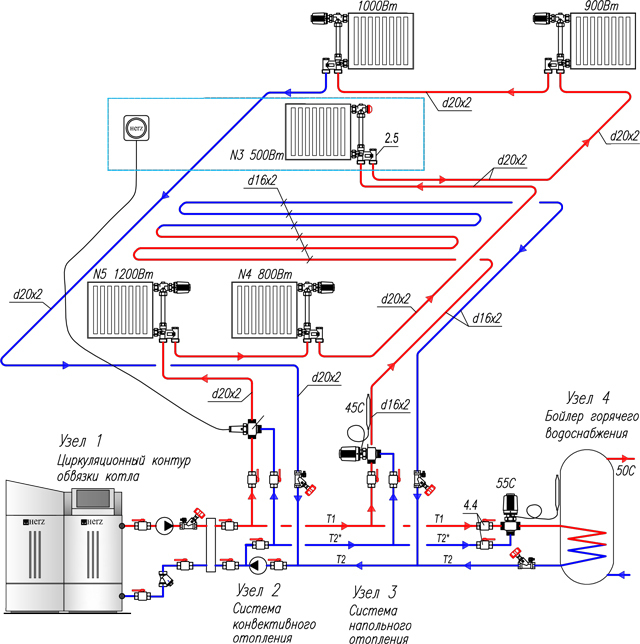
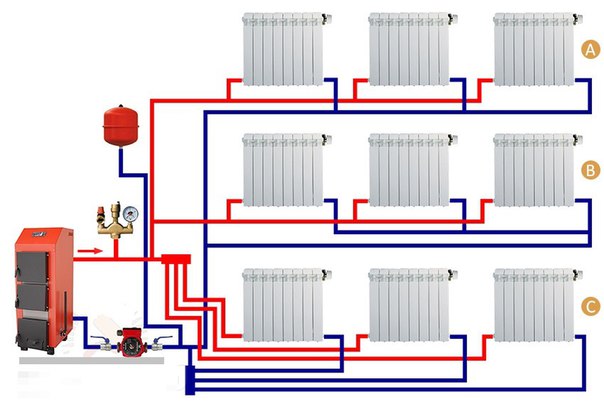


By installing a bypass pipe, stopcocks on each radiator, as well as other equipment, you can reduce the negative impact of the minuses. However, the cost of installing the system will increase.
Two-pipe vertical - a similar scheme allows you to bring a direct, return line to each battery. From the boiler can be made top or bottom wiring. Such a solution will significantly increase the cost of the heating system, but will provide the possibility of temperature control in each room.
Two-pipe horizontal - the scheme involves the parallel connection of the supply, return line, located horizontally.A similar solution is most often used for heating cottages. Hot water is supplied to all radiators almost simultaneously, which makes it easy to ensure a comfortable temperature in all rooms. If the cottage has several floors, a separate circuit is created for each.
Two-pipe horizontal schemes are divided into the following subspecies:
- dead-end - it is characterized by a low level of costs, ease of installation, calculations, however, in places with a low speed of water movement, stagnation zones may appear;
- passing - involves the serial connection of all radiators around the perimeter of the house, the total length of the supply, return is approximately the same, so all devices operate under equal hydraulic conditions;
- collector - the most complex scheme, but it allows you to save on pipes, provides uniform heating of the room, an attractive view of the room due to hidden wiring.
When choosing a heating scheme, professionals are increasingly recommending two-pipe systems with forced circulation. This ensures uniform distribution of heat, reduces the likelihood of freezing of individual areas on cold days.
Geothermal systems
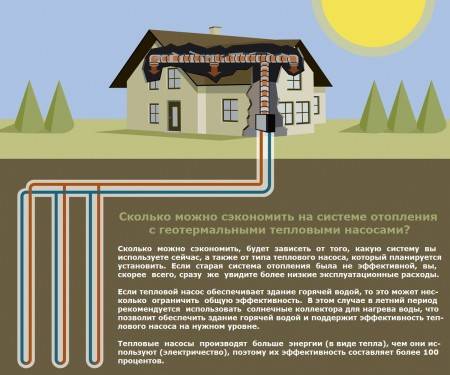
An innovation in heating a private house is the intake of heat from the ground, which is located on the adjacent plot. For this, a geothermal installation is used. Its design consists of a heat pump operating on the principle of a refrigerator, for heating only.
A shaft is being created near the house, where it is necessary to place a heat exchanger. Through it, groundwater will flow into the heat pump, give off heat, which will be used to heat the building.
When heating a country house, antifreeze is used as a coolant.For this, a special reservoir is installed in the mine.