- Electric heating option in the garage
- Advantages and disadvantages
- fan heater
- Water heating system
- Autonomous heating systems
- Gas
- Electricity
- Firewood and coal
- Working off
- Water floor equipment
- Garage heating with gas
- A word about fire safety
- Connecting electric heaters
- Heating with electricity
- fan heaters
- Infrared heaters
- Prices for fan heaters
- Convector
- Underfloor heating system
- Basic installation steps
- Work algorithm:
- No. 1. Water heating system
- Don't Forget About Fire Safety
Electric heating option in the garage
When the garage owner needs a quick heating option, the heater is powered by electricity, since in most cases garage cooperatives have access to electricity, and there are meters of used kW inside.
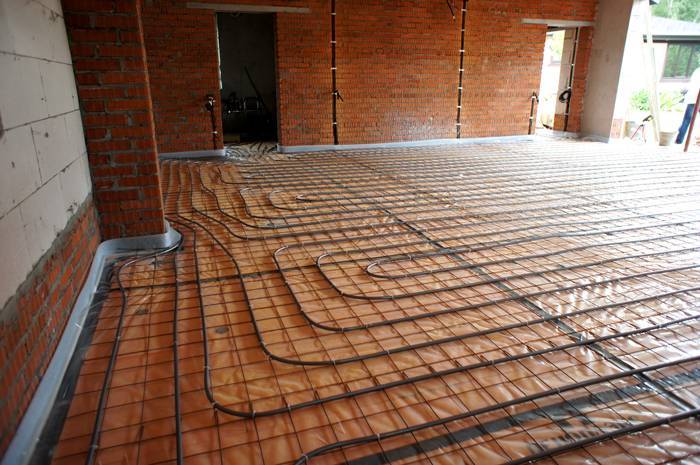
Even electric underfloor heating is installed in the garage
The option of heating the garage with electricity is the most economical way with the right choice of the required power of the equipment for the room. It also gained its popularity due to its ease of installation.
When choosing stationary heaters, they are mounted in special niches and covered with protective screens from above.Such equipment is installed strictly according to the rules and in compliance with all safety standards.
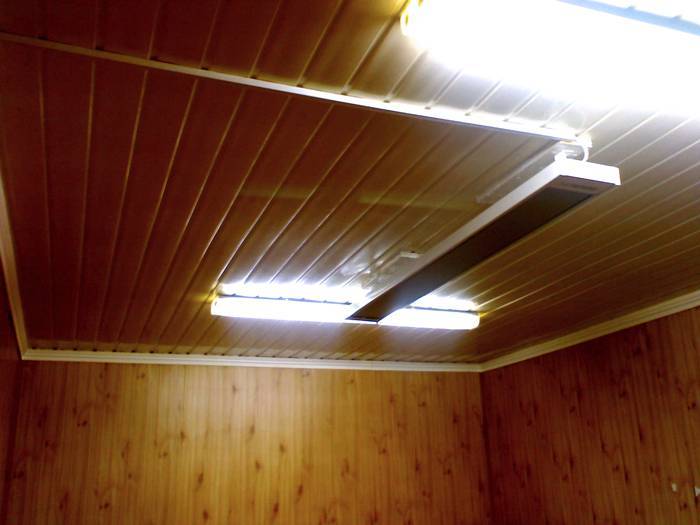
Fixed infrared electric option
Most often, it is IR heaters that are powered by the mains that are mounted, since they can be mounted on the ceiling and you do not need to monitor the temperature of the working surface so that it does not overheat. The ceiling option is an excellent solution for heating the entire room, however, it is better to collect forced ventilation in addition, since the evaporation of fuel under the influence of heat cannot be ruled out.
The advantage of such a system is that you can turn it on as needed. Minus - electricity is quite expensive in Russia.
Advantages and disadvantages
When choosing the type of heating, pay attention to the pros and cons of the chosen technology. Underfloor heating attracts because of:
- uniform heating of the floor surface. Repair work is often carried out in the garage, and it may be necessary to inspect the bottom of the car. It is convenient and not dangerous for health to lie on a warm floor;
- energy savings if gas and solid fuel boilers are used for heating;
- simple insulation of the walls and roof is enough so that in winter the temperature does not fall below 15 ° C, which is the lowest temperature limit, according to sanitary standards, for parking lots. A microclimate is created that prevents the formation of rust on the body and other breakdowns. The layer of air closest to the car warms up;
- variety of underfloor heating systems.
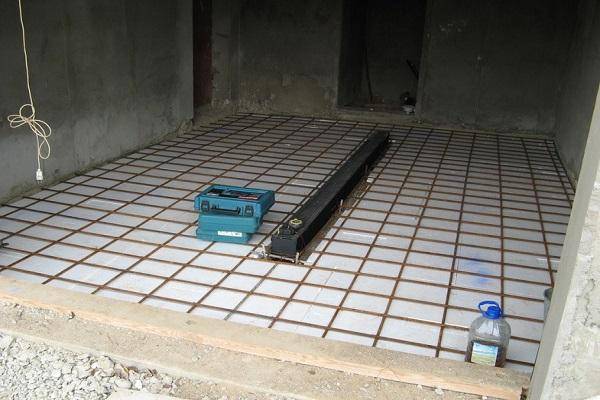
Although the warm floor maintains the temperature in the room well, it has technical disadvantages:
- load distribution - the floor in the garage is constantly under increased pressure due to the weight of the car.It is necessary to carefully calculate the load and mount it correctly so that the pressure from the wheels does not disrupt its operation;
- repair problem. The entire heating system is located under the floor, and in the event of a breakdown, it will have to be completely dismantled.
fan heater
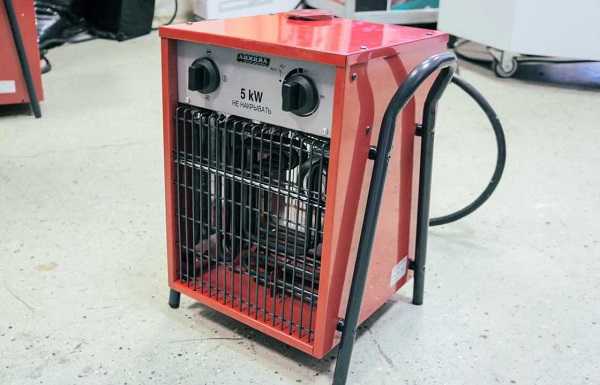
Principle of operation: a heat exchanger (heating elements or a spiral) is heated by means of electricity, the air from the room is blown into the heater by a fan, passed between the heating elements and returned to the garage already hot.
Advantages of a fan heater:
- environmental friendliness - the absence of any emissions into the surrounding space during work;
- convenience of adjusting the intensity of heating - there are switches for heating modes (turning off part of the heating elements) and fan speed;
- small dimensions and mobility - can be installed anywhere in the garage;
- the possibility of focused heating of zones or objects;
- rapid heating of the room;
- equipment with automatic shutdown devices in case of overheating or capsizing;
- the possibility of additional self-completion with an electromechanical thermostat for automatically maintaining the set temperature in the room;
- low cost of electrical appliances of small and medium power;
- ease of use and maintenance.
Like any unit, the fan heater also has disadvantages, which must be taken into account without fail:
- heating-related decrease in air humidity in the room;
- the presence of a dust accumulation factor on the heating elements, which is fraught with fire or, at least, an unpleasant smell in the garage;
- noise caused by the operation of the fan;
- increased electricity consumption.
Despite these shortcomings, the use of a fan heater is the most popular heating for a garage.
Water heating system
The device of such a system will cost more than air heating. The costs will have to be incurred for the installation of pipes and batteries, as well as the purchase of a non-freezing coolant - antifreeze. Due to the frequency of heating, it is simply unacceptable to fill the system with plain water, it can freeze on the very first cold night.

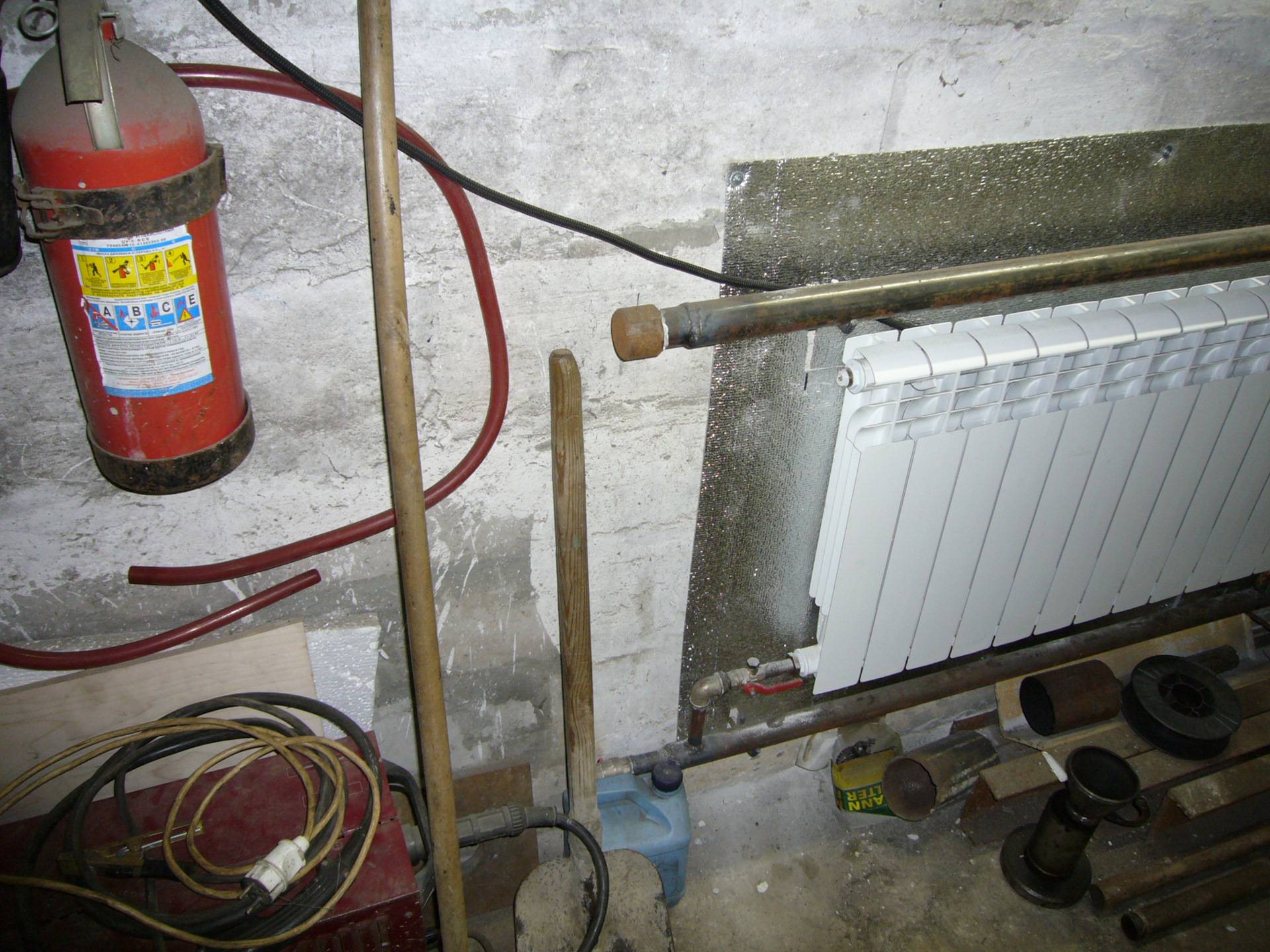
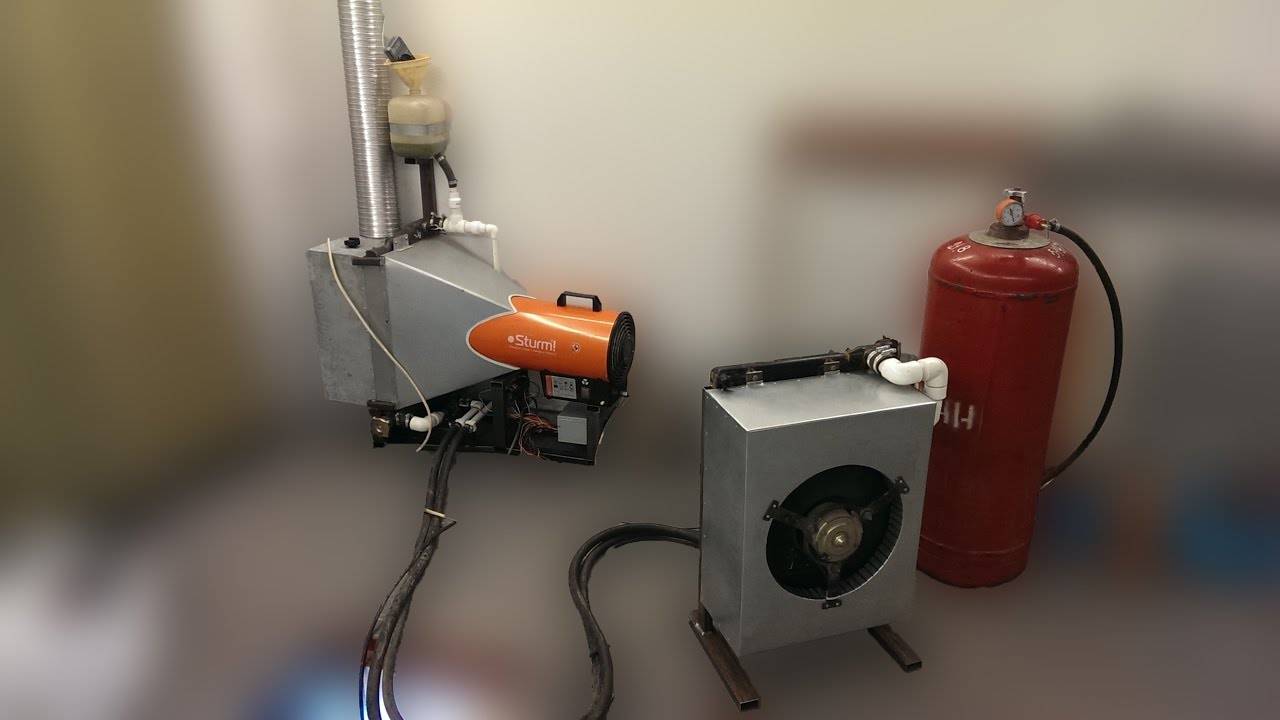

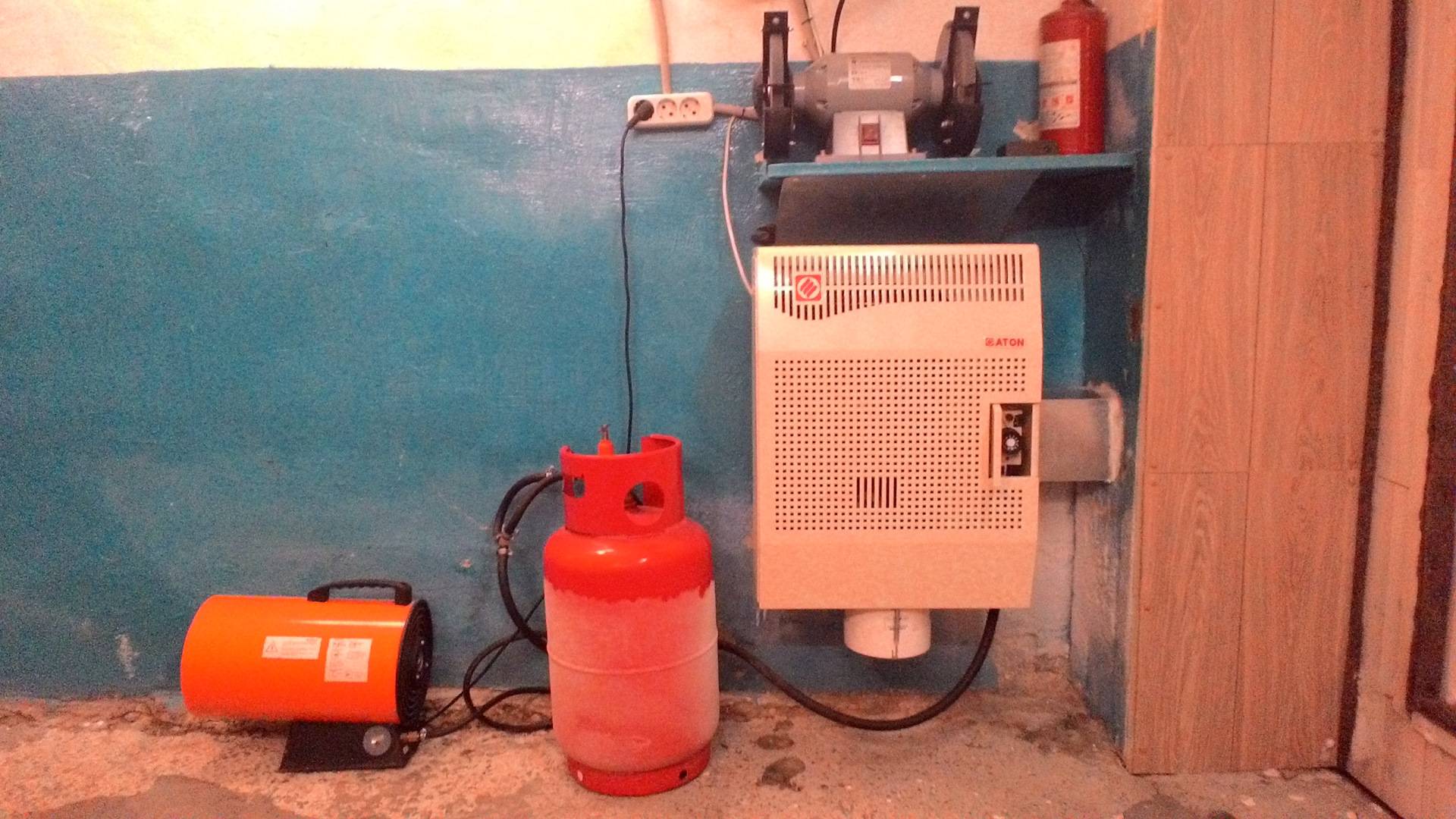

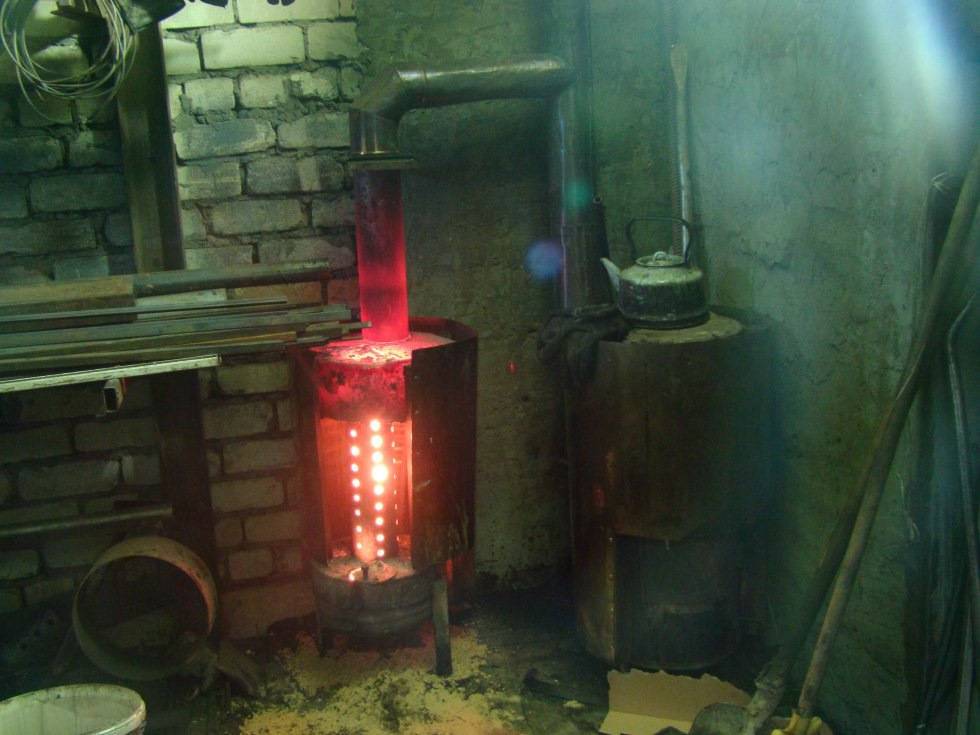

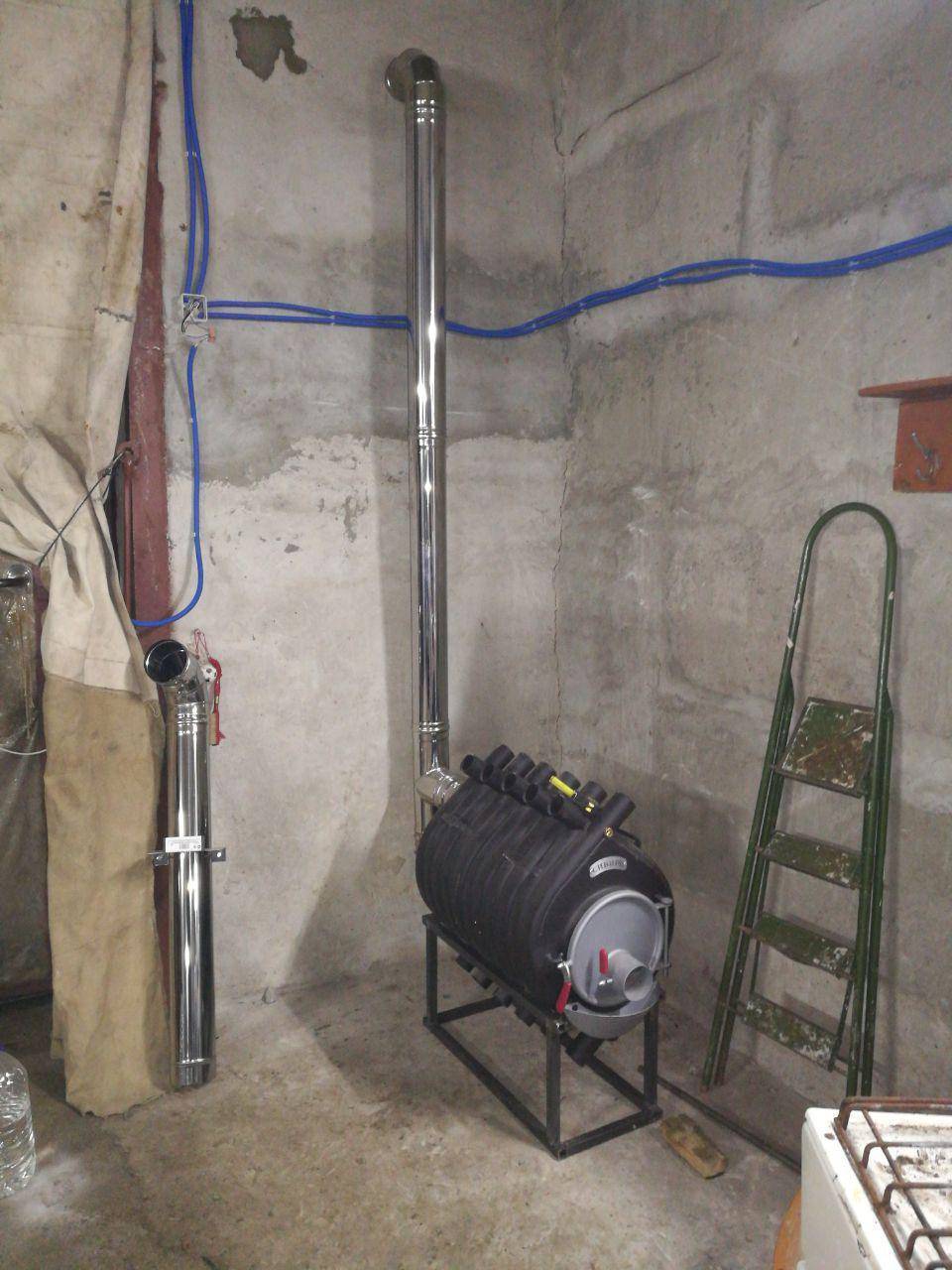

An electric boiler or a heat generator using solid or liquid fuel can be used as a heat source. The choice of energy carrier depends on what answer you gave to the questions above. But regardless of this, a water (more precisely, antifreeze) system will allow you to evenly warm up the building and maintain the required minimum temperature in it.
Note. Even after turning off the boiler, the system, and with it the garage, will cool down slowly and the next day in the morning the temperature inside will still be positive.
As for the choice of energy carrier, garage heating from electricity, solid fuel or used oil is usually used. We will not consider natural gas as a fuel, since the conditions for its supply and connection are quite complicated.
Autonomous heating systems
Let's take a closer look at advantages and disadvantages of different methods autonomous heating of the garage, which have their own characteristics and nuances that can cause a lot of problems if they are not taken into account at the design stage.
Gas
The main advantage of a gas heating system is the economic benefit. In terms of cost, gas is the cheapest fuel, outperforming both electricity and diesel.In addition, the gas generator has a fairly high efficiency - 90%.
However, it must be remembered that gas is a dangerous explosive. In no case should you install a gas heating system in a garage with your own hands. It is necessary to invite a qualified specialist who will be able to independently install and start the system, guaranteeing its complete safety during further operation.
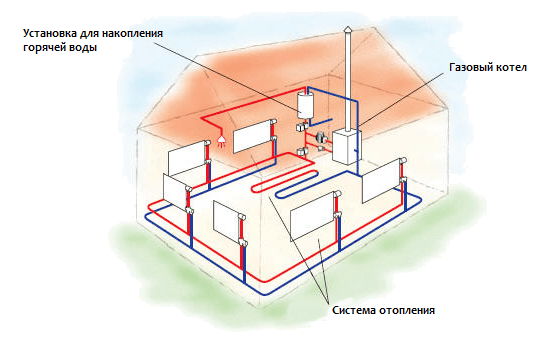
Scheme of gas heating in the garage
In addition, dubious home-made parts are prohibited - only high-quality industrial equipment should be used. There is no need to be afraid to play it safe once again - after all, it is not only about the safety of your property, but also about your life.
Despite all the above advantages, it will be impossible to organize a gas system in the garage if there is no main gas supply nearby.
Electricity
Electricity is the most accessible source of energy for conversion into heat. The ways of its use for heating the garage are varied - these are heaters, and a heat gun, and an electric boiler. If you wish, you can assemble your own design with your own hands or buy a ready-made one.
The availability of electricity and a large selection of appliances powered by it are the main advantages of this option, which is why this type of heating is so popular.
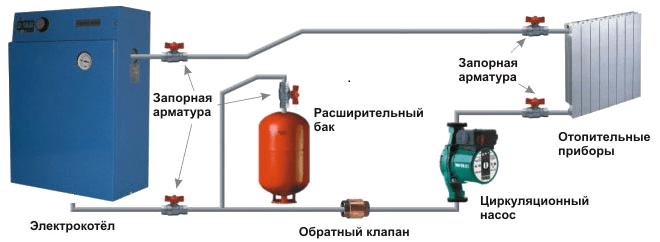
Scheme of electric heating
However, there are also disadvantages.
- Electricity costs will be higher than, for example, gas or coal;
- Cheap electrical appliances are not very reliable and often fail.
- Wiring must be made of thick cable.
Firewood and coal
If independence from centralized sources of gas and electricity is critical for you (for example, there are interruptions in one or the other), old proven tools can come to the rescue - solid fuels such as wood or coal.
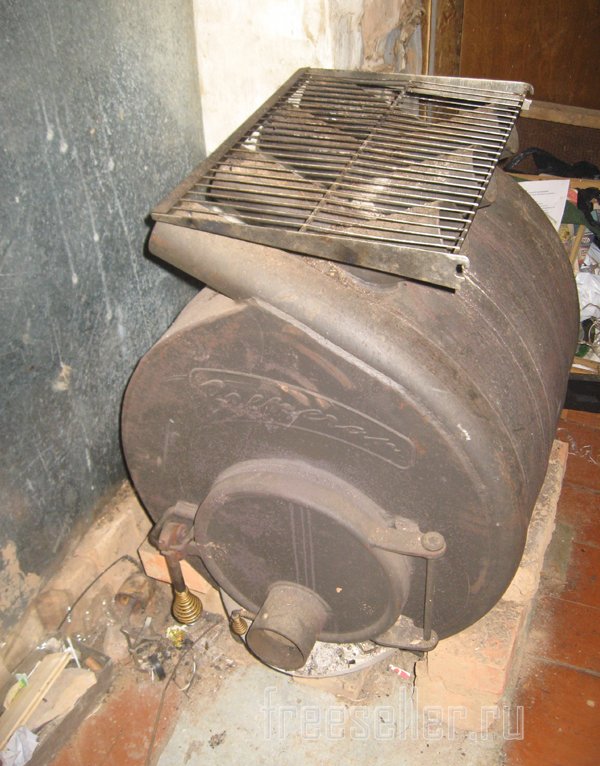
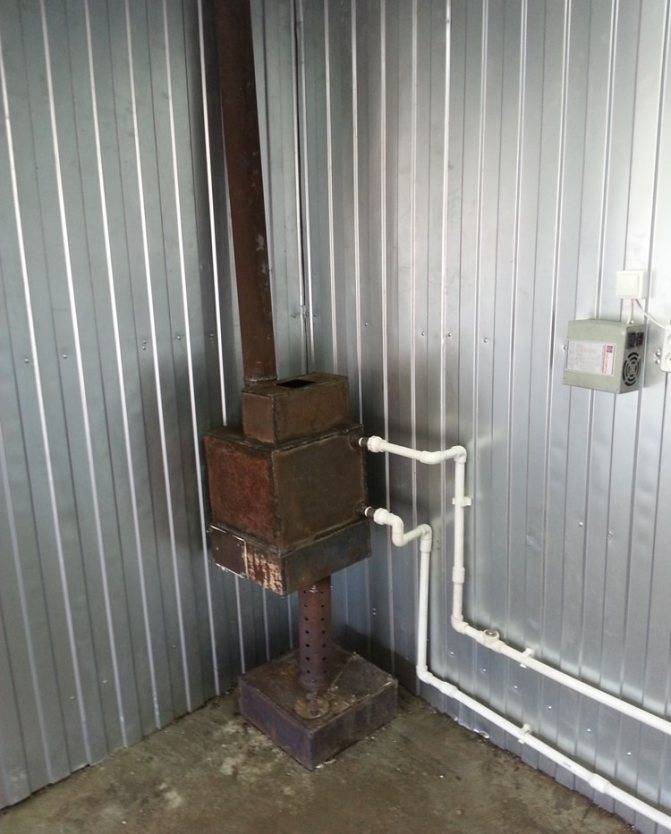
This option is very economical - it is quite possible to assemble a simple stove with your own hands. But in operation, such a stove requires special attention and care, it must be cleaned regularly, monitor its operation and remember that there should not be explosive substances in the garage. In addition, the garage must be equipped with a good ventilation system.
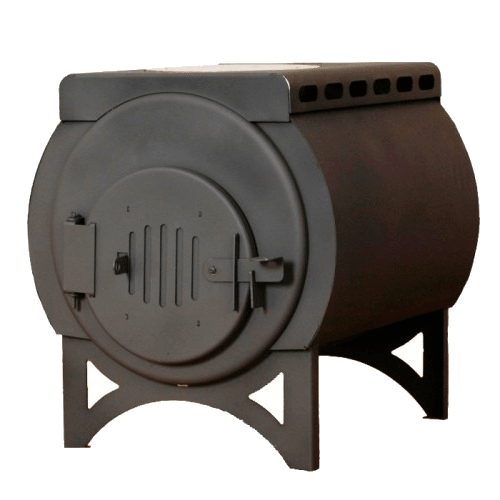
Working off
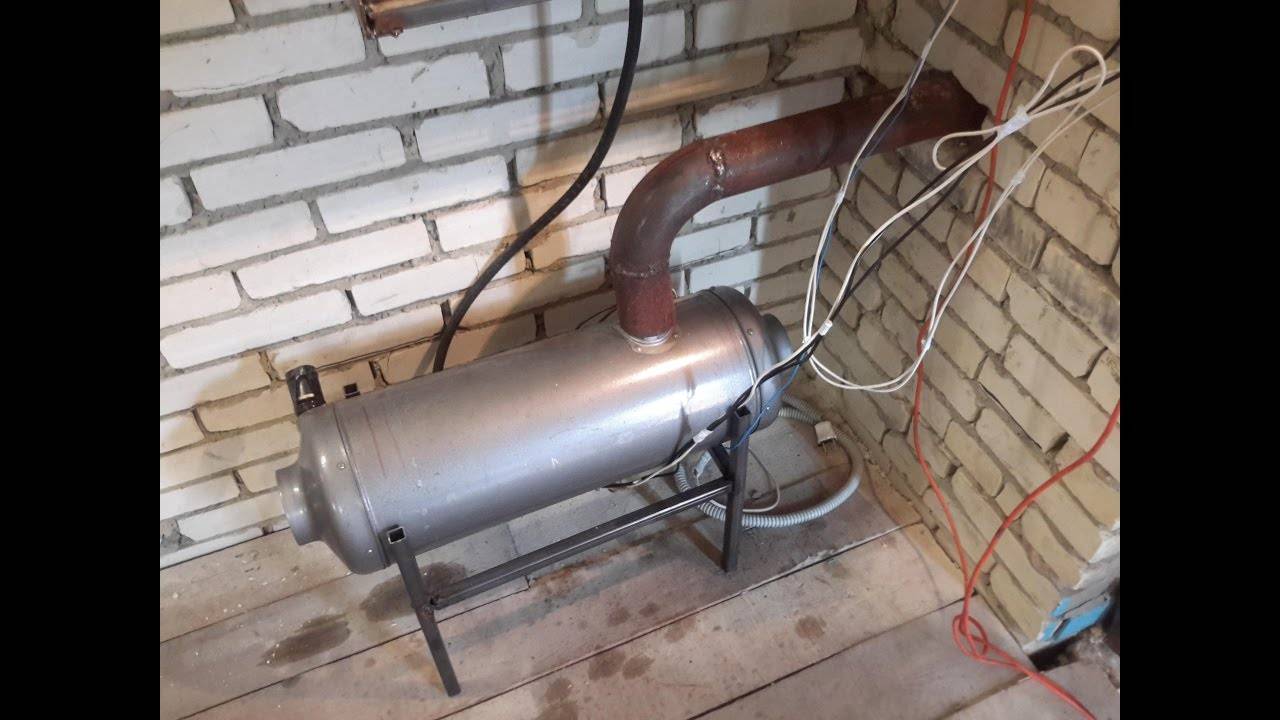
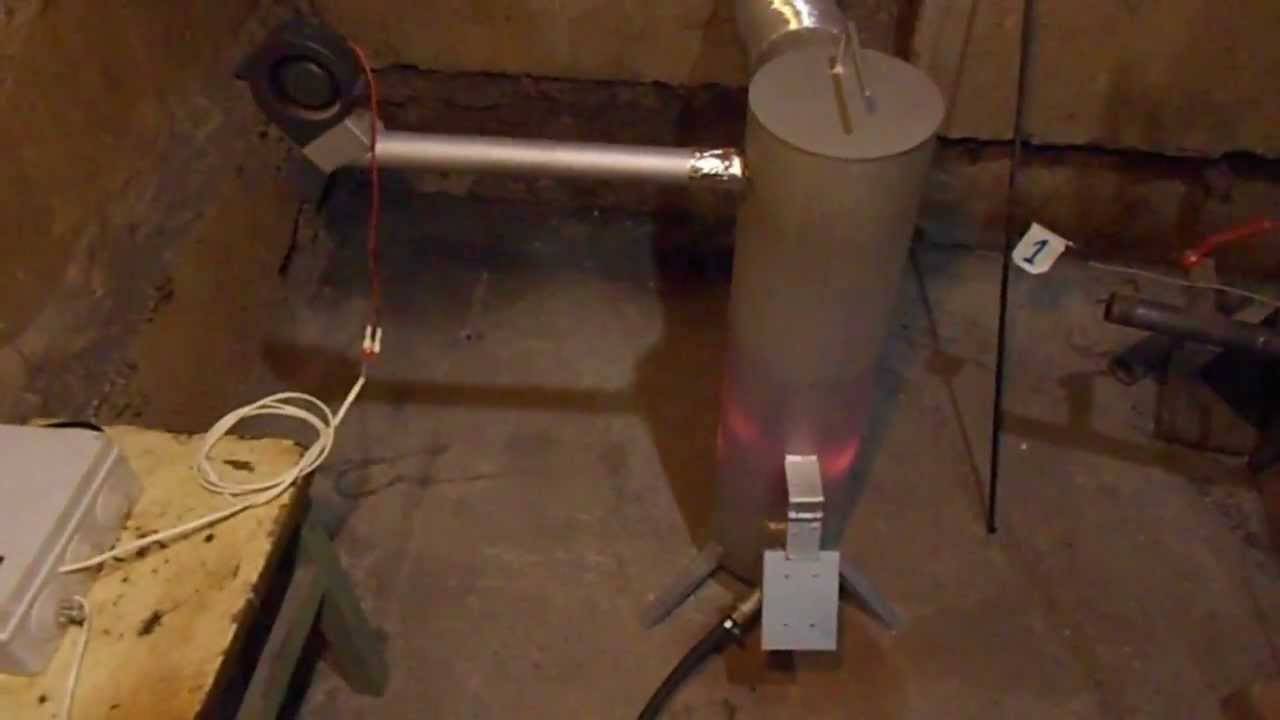
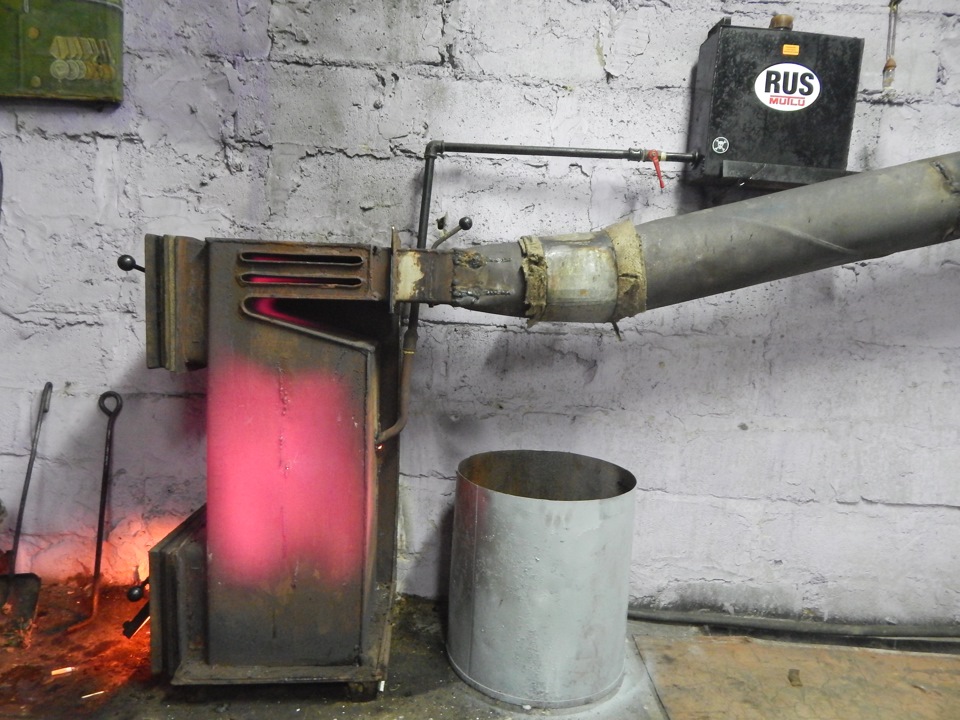
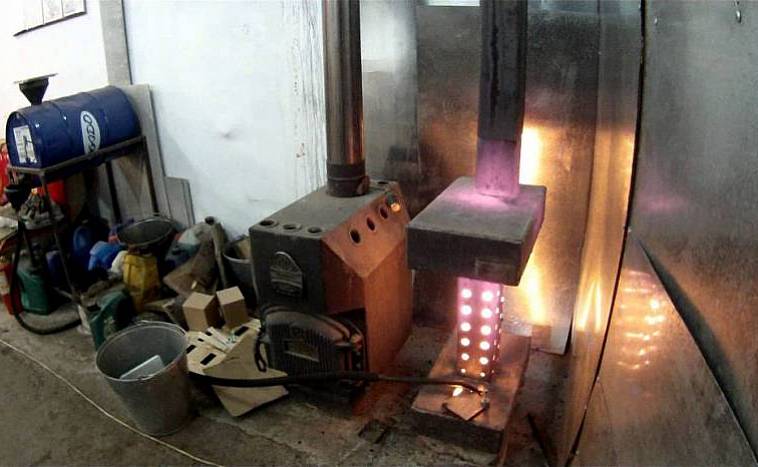
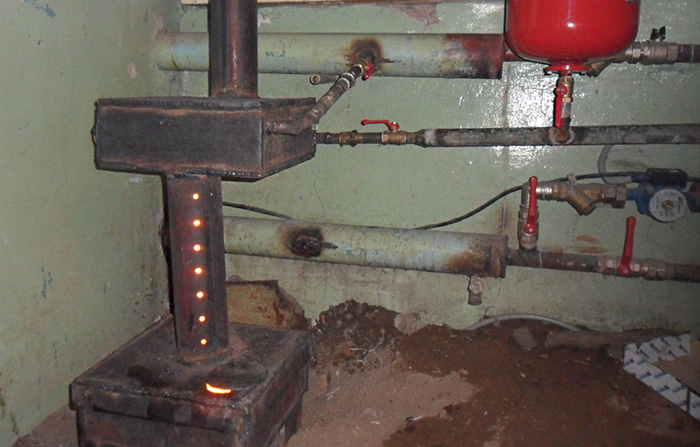
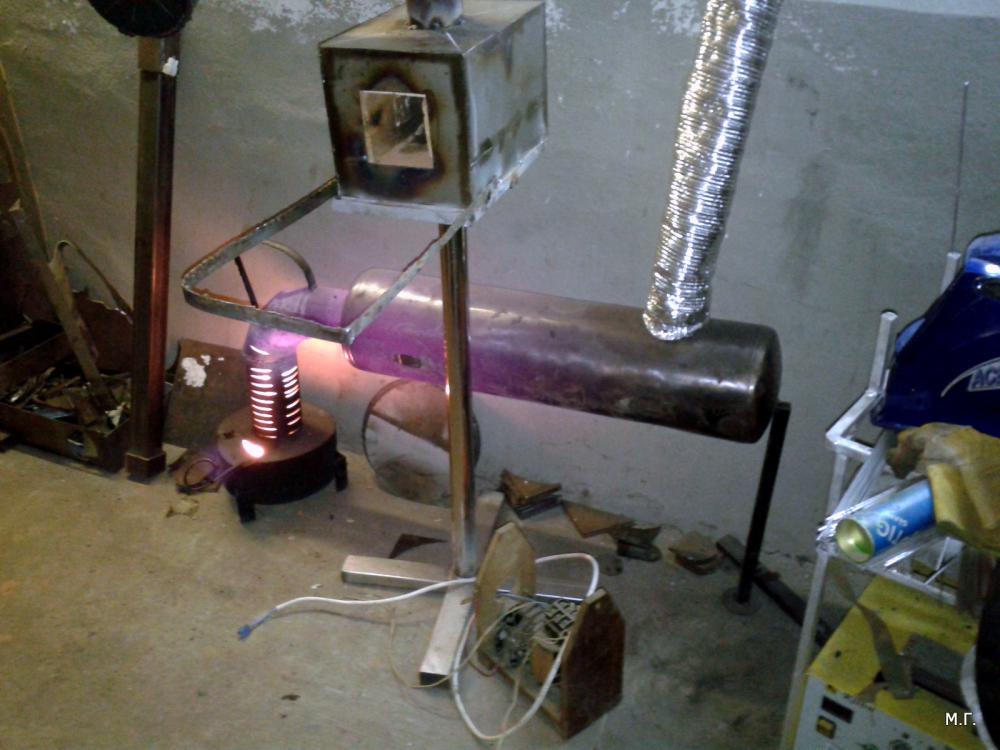
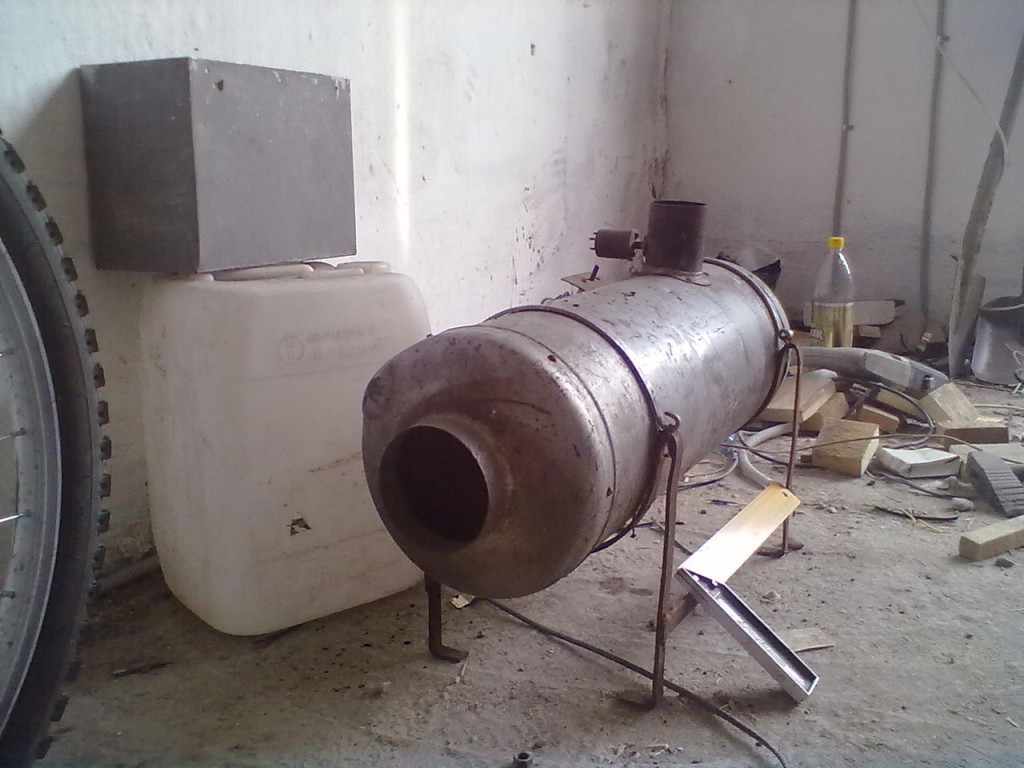
Waste engine oil can serve as fuel for heating your garage - it only needs to be cleaned and recycled in a special heat plant. This option is suitable if you have a desire to assemble such an apparatus with your own hands - it is simple and allows you to use waste materials cost-effectively.
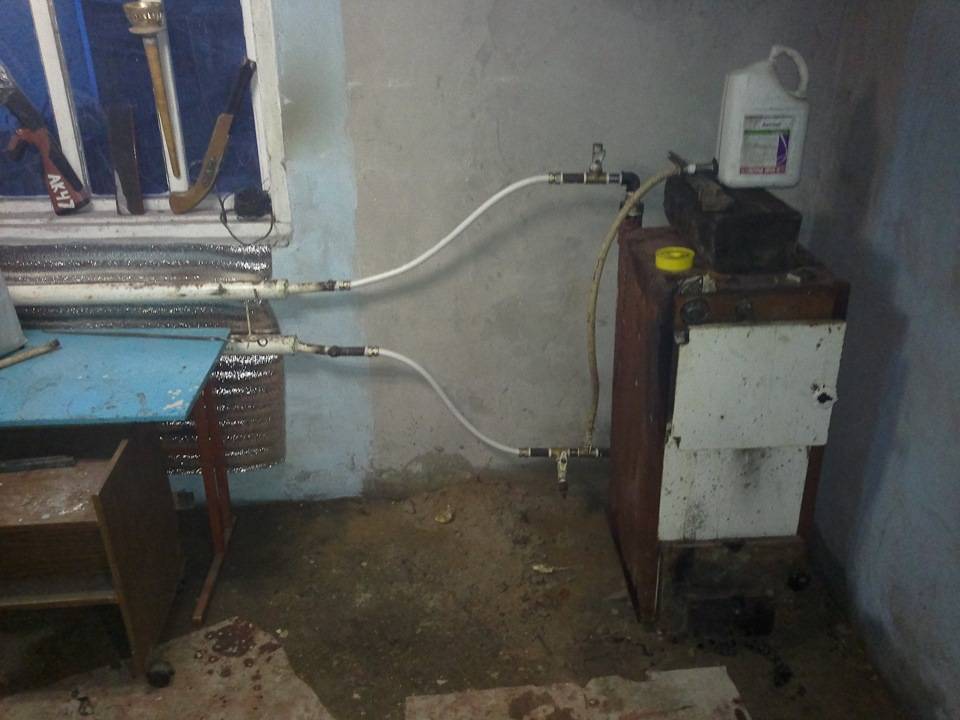


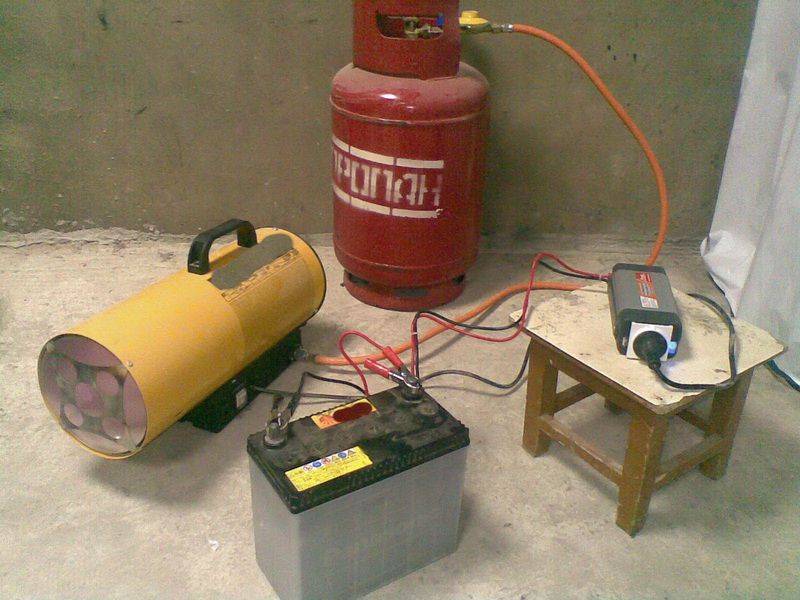
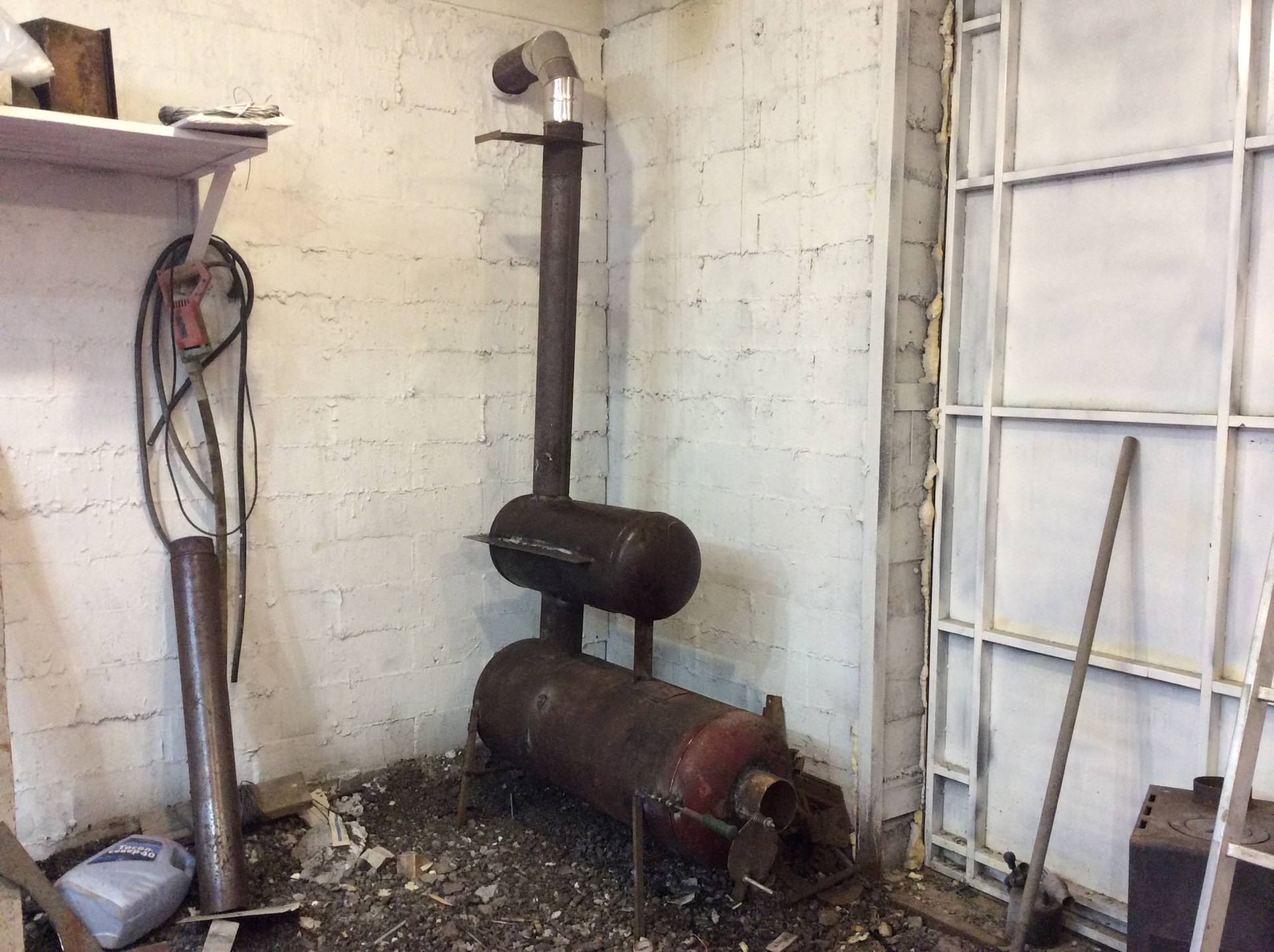
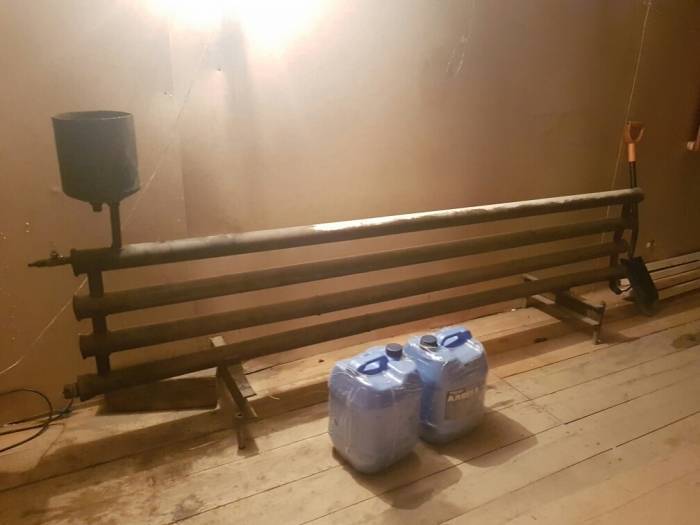
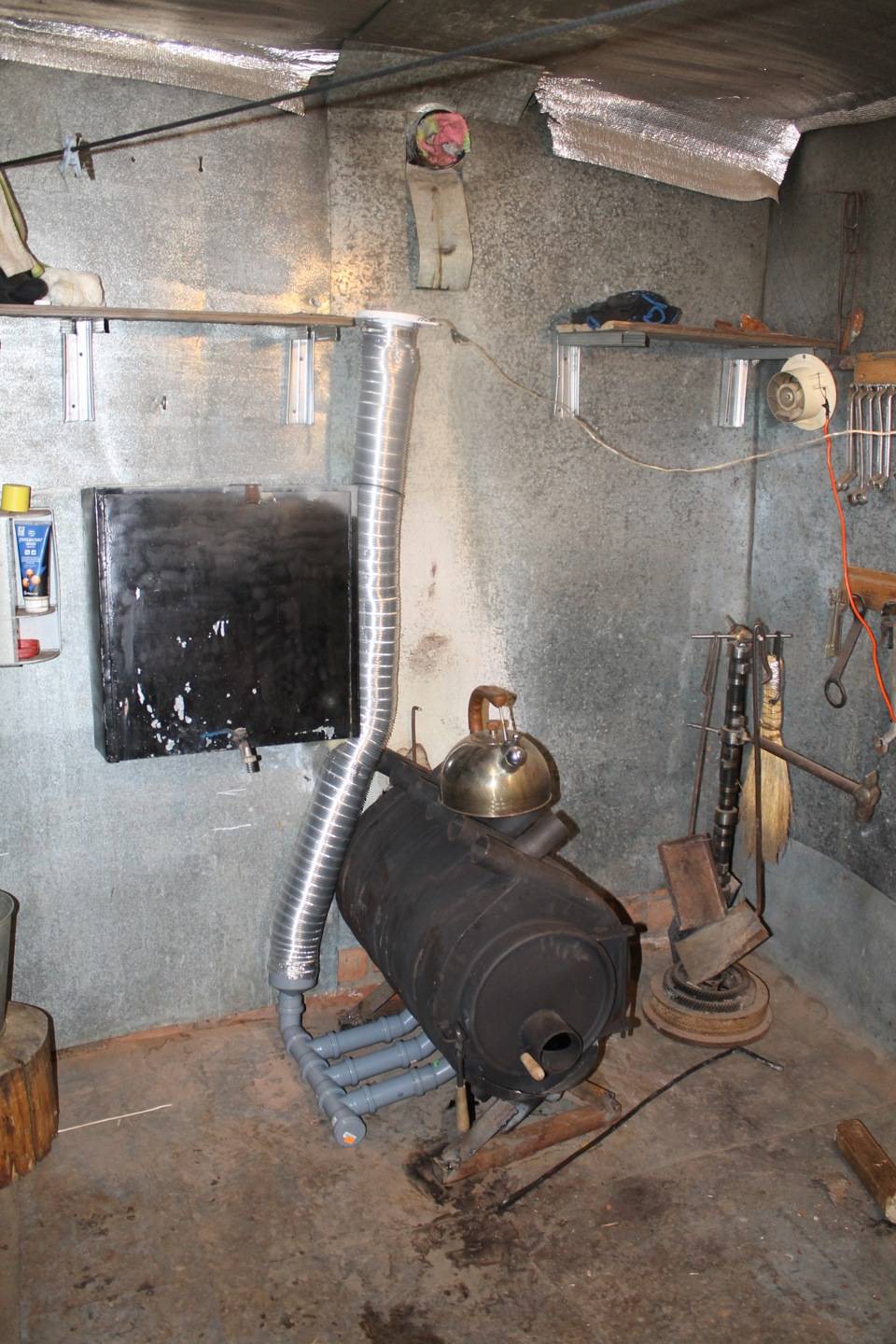

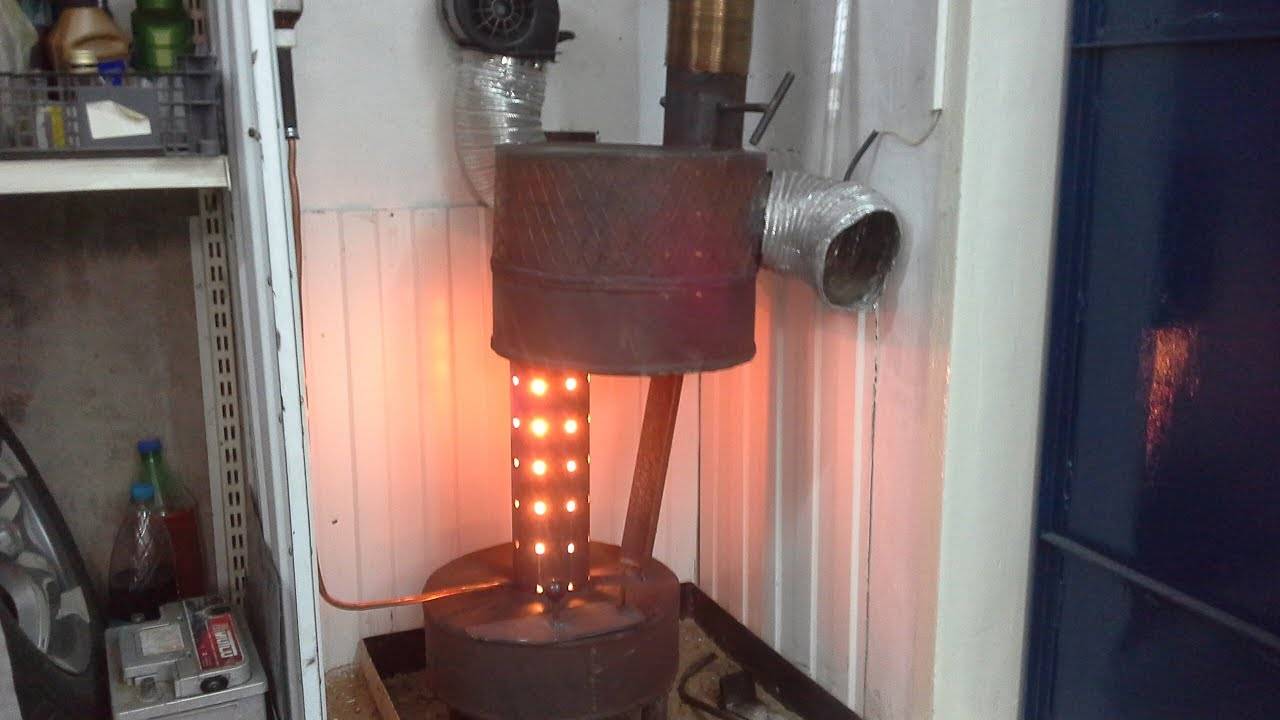
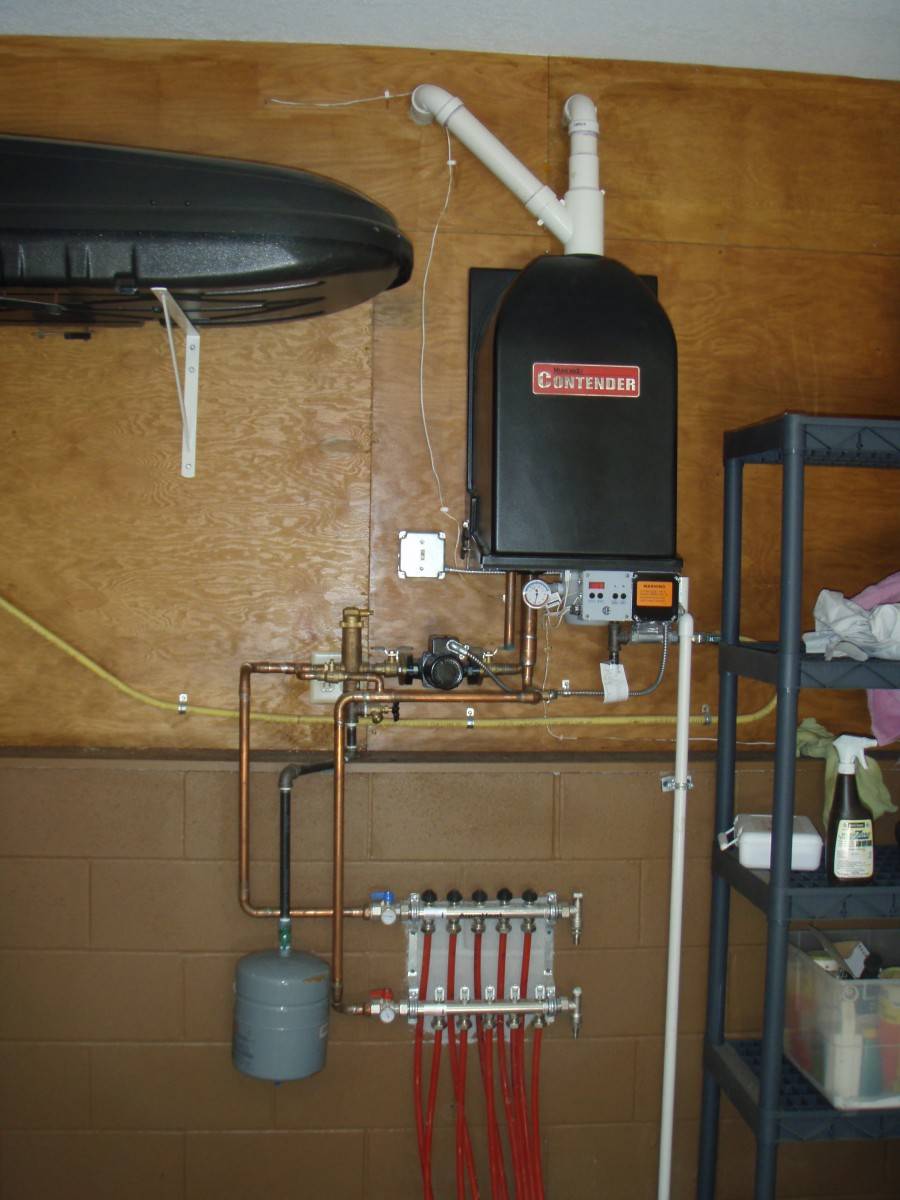
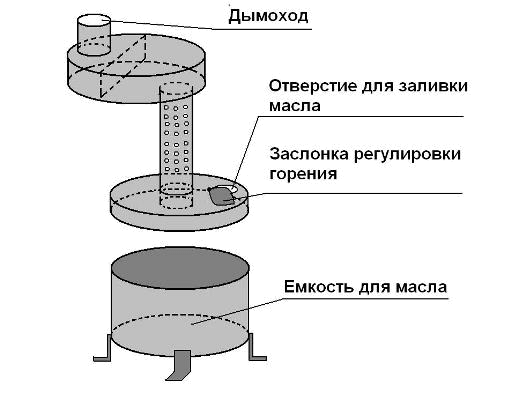
Important! Due to the fact that the used oil is not homogeneous, it can be expected that such a device will wear out soon and break down quite often.
Summarizing the above, we can summarize: the choice autonomous heating systems is a choice of balance between the cost of fuel, the cost of equipment and the complexity of operation. Electric heating for a garage is quite expensive, but perhaps the easiest to organize, gas is cheap, but installation of equipment will require significant material costs.
However, home-made heating devices using solid fuels (wood, coal) cannot be discounted in any way - sometimes, in the absence of other sources of energy, they may be the only way out.
Water floor equipment
A water heated floor, like an electric one, is created on the basis of a rough screed. If the floor is already there, then remove its top layer, remove debris and level the surface. For this type of floor, the following work is performed:
- Installation of a waterproofing layer of rolled material. Roofing material with bituminous mastic is preferred, but it can be replaced with a dense film.
- Organization of thermal insulation. Since the load on the floor is high, thin materials are taken. A foil layer is used, laying it with the glossy side up so that the heat from the pipes returns to the room, and does not go down.
- A crate is placed on plastic supports to strengthen and prevent cracking of the screed. The optimal height is 3-4 centimeters above the insulation level.
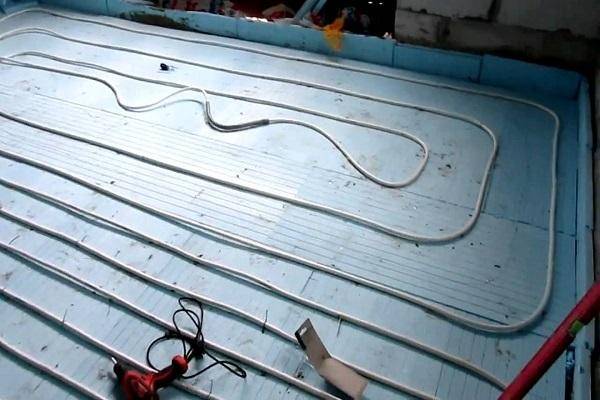
- Pipes are tied with clamps. Their wiring is possible according to the “snail” or “snake” scheme, 1 or 2 circuits can be made.
- Connection to the boiler, installation of the pump if necessary. Filling the system with water and test run.
- Filling the screed with a layer of 5 centimeters. The recommended thickness is 10-12 centimeters.
- Creating a clean floor.
When laying pipes, the minimum distance from the walls is 20 centimeters. Do not run them under cabinets and shelving. Before starting work, a drawing of the future system is made.
Garage heating with gas
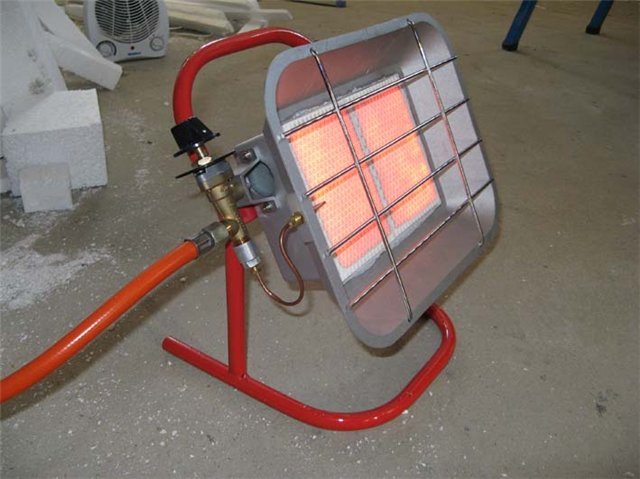
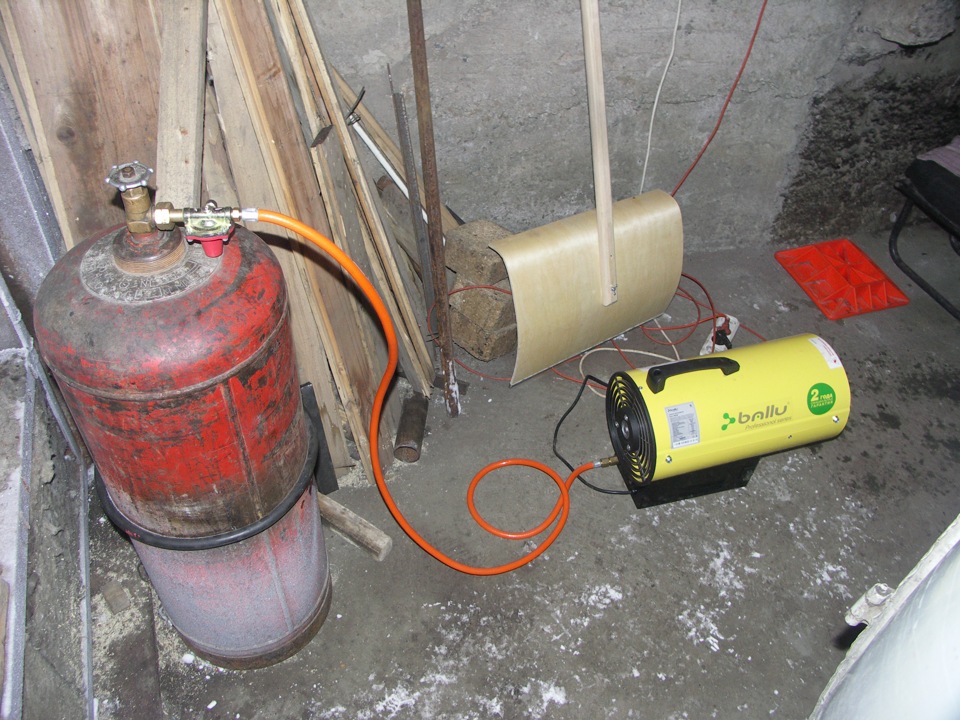
It will be very practical and very economical to use gas for heating a garage room. Together with them, special heat generators work. In this case, methane, butane or propane, classic natural gas, can be used.
To independently assemble the gas heating of the garage with your own hands, you should consider several significant features of the work:
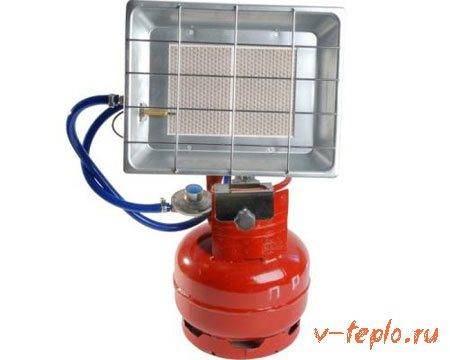
- The gas cylinder must be installed in a special, securely insulated cabinet.
- Even if the room is small, you will have to try and take a protected corner to install the required equipment.
- If the garage will be heated infrequently, other options should be considered.
One of the advantages of gas heating is the availability equipment on the market and the cost of the coolant, which is one of the cheapest types of fuel.
A word about fire safety
Equipping garage heating with your own hands, you will definitely have to take into account very important requirement to comply with all safety rules. Any equipment is a fire hazard and can cause serious consequences.
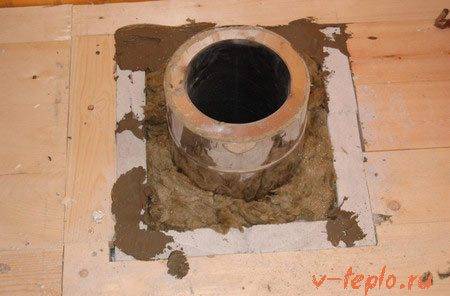
The most important requirement is the reliable protection of all nearby surfaces. This is especially important when passing through a wall or roof of a chimney.
To eliminate its contact with building structures, it is recommended to make a special sleeve based on mineral wool. Wooden or plasterboard areas will have to be protected with a metal shield. All gaps are compensated with an asbestos cord.


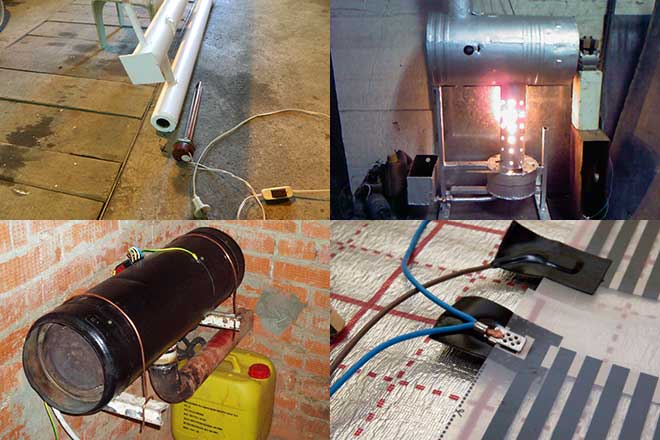

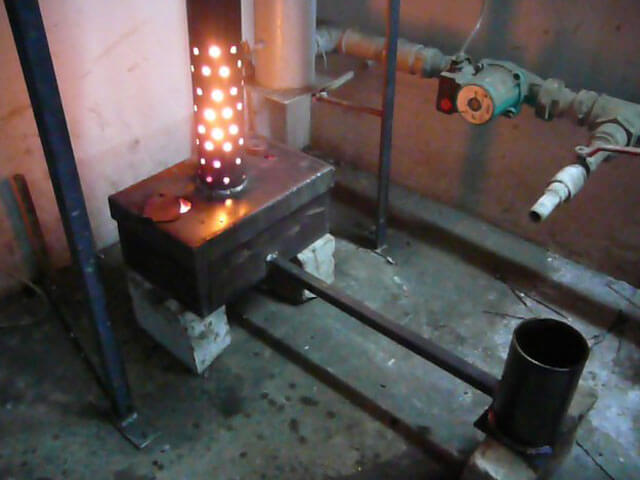
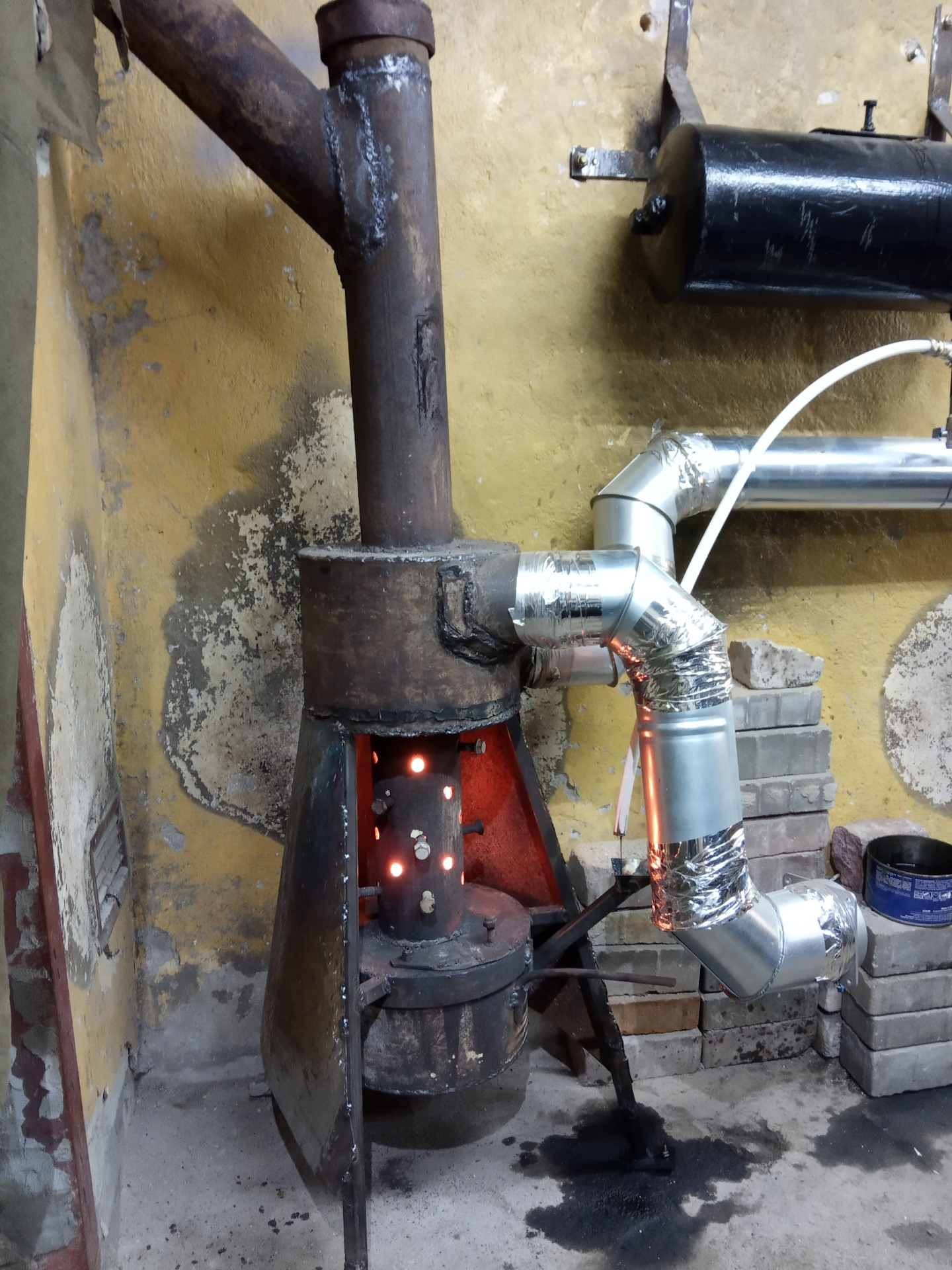

Other tips to consider:
- If heating boilers are used, it is necessary to close the draft control damper only in cases where the fuel has completely burned out and smoldered.
- Do not keep flammable substances in the garage, especially if they are located near heating equipment
- Be sure to place a fire extinguisher or other means of extinguishing fires in the room
- If the heating system is constantly running or the garage is located in the immediate vicinity of the house, it is recommended to equip a fire alarm
- Do not dry any things on heaters, especially various rags that could come into contact with flammable liquids.
- Storage of gas cylinders is allowed only above the level of the floor surface
- It is not recommended to leave the heating on at night.
Connecting electric heaters
It is most carefully and competently necessary to think over heating with electric heaters. If their power is too high, the wiring and the meter are not able to cope with the load - you will have to opt for weaker equipment. You can lay new wiring, but such a conversion of the garage will be too expensive.
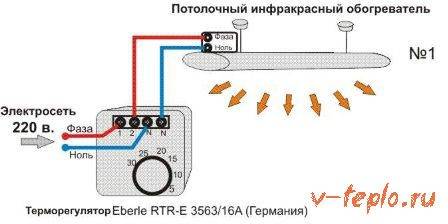
Consider some of the features of connecting electric heaters in a garage room:
- The minimum recommended wire size is 2.0 mm, with copper preferred
- It is undesirable to use a portable cable to connect electric heaters. If necessary, its length should not exceed 5 m
- Single-phase electrical wiring is able to withstand the connection of an electric heater with a power of up to 2.5 kW. Parallel connection of 2 or more devices will cause a voltage drop to 170 V, which can be very dangerous
Summing up
The arrangement of a heating system for a medium-sized garage room intended for one car starts from a modest 5-6 thousand rubles and can reach a couple of dozen. Each of its owners must evaluate the considered options based on the needs and wishes.
To reduce the cost of operating the equipment, part of the money should be spent on insulating the walls and ceiling in the room.Work should be carried out outside, otherwise the heat-insulating material may cause a fire.
It is necessary to take care of the absence of holes and cracks through which precious heat will flow. Roof insulation is best done with expanded clay, while taking care of reliable waterproofing. For walls use foam up to 10 mm thick or mineral non-combustible wool.
Heating with electricity
Heating with electricity is a simple and effective option. Does not require the arrangement of a water circuit. But electricity must be connected to the garage (in cooperatives and private houses there are no problems with this, but if the box is located in the courtyard of an apartment building and initially it was not powered, then there will be problems).
fan heaters
Household fan heater - a device consisting of a heater and a fan that blows out heated air. There are two types:
- With a spiral as a heating element. Such fan heaters are cheaper, less reliable, and burn oxygen. For their operation, normal ventilation and air exchange are required. The average cost is from 600 rubles.
- With ceramic heater. A modernized version of the previous ones, do not burn oxygen, are durable, do not heat up to a state of heat (therefore, ignition of combustible materials is unlikely). But they are more expensive and their efficiency is lower than that of fan heaters with a spiral as a heating element (by 10 - 20%). The average cost is from 800 rubles.
A fan heater is an electric heater with a fan that blows out heated air and thus cools the heating element.There are models with remote control, automatic thermostat, power regulator
Which fan heater is suitable for heating? You should focus only on the power consumption. The best option is from 2000 W * h. This is able to raise the temperature by 5 - 8 degrees in a box of 15 - 20 m² in 30 minutes after switching on.
Ceramic heaters are 10 - 20% more expensive than those that use a spiral as a heating element. But for boxing they are better, that's why they are preferred
Infrared heaters
Infrared heaters are no less efficient than fan heaters, but they consume several times less electricity. Their difference is they don't warm the air, but only emit infrared rays that heat exactly the surface on which they fall. The average price of an 800 W heater (optimal performance, it makes no sense to buy with less power) is 2800 rubles and more.
Prices for fan heaters
fan heater
Infrared heater. It does not heat up during operation, so it can be placed even close to combustible materials. This is an economical option for heating non-residential premises, but not suitable for a garage
Convector
The oil convector is the most efficient among all other variations of electric heaters. They consume a lot of electricity, but at the same time they do not make noise, they are conditionally safe (they heat up to only 70 - 80 degrees, so even combustible materials are unlikely to ignite). There are also wall-mounted variations of oil convectors that take up a minimum of space. If you need to save money, but it is impossible to equip a full-fledged solid fuel heating, then convectors are the best choice.





The average price is from 2000 thousand rubles. It is recommended to use models with power from 2000 Wh and above. It is better to choose models with a built-in thermostat or thermostat (they turn off automatically when the set temperature is reached). If you heat the room up to only 15 degrees, then the final electricity consumption will be small compared to conventional heaters.
Floor convector
Underfloor heating system
The option is economical, but the heating cables themselves are not cheap. In addition, you will need to use those that can be laid in rooms with an aggressive environment (fuel oil, gasoline, oil, solvents, antifreeze - all these substances damage the insulation of conventional cables). But the underfloor heating system can be equipped only if the following conditions are met:
- from above, the warm floor is closed with a screed or other floor material (which can withstand the weight of the car);
- the heating circuit is laid evenly throughout the room (except for the pit, if any), its installation, for example, only around the perimeter will be ineffective.
But it consumes the heating system is the least electricity. When using heaters, all the warm air accumulates under the ceiling, while the warm floor provides uniform heating of the entire internal volume of the box. And if the heating cables are hidden under the screed with a layer of 10 cm or more, then even after the heating is turned off, the room will be warm for at least 2-3 hours (while the heated floor cools down).
A prerequisite is that the floor heating system must be laid on a carefully insulated base, otherwise the heat will be spent extremely inefficiently.
Basic installation steps
When all the preparatory work has been done, and all the necessary materials have been purchased, you can proceed with the installation of water heating. To do this, it is desirable to have at least minimal locksmith skills so that the process goes faster and more successfully.
Work algorithm:
Boiler installation
It is from this important point that the wiring of water heating begins. To do this, use a fairly flat surface, preferably away from the entrance gate and the place of storage of transport
All other consumers will be connected to the boiler, and not vice versa. This device can be powered by electricity, gas or solid fuel. The main conditions are safety and economical consumption at maximum return (efficiency level).
Expansion tank installation must be performed at the highest point of the system. This will ensure good water circulation in the pipes and a quick renewal.
Installation of radiators. To do this, they must be attached with dowels, and after that mark the required dimensions of the mounting pipes.
Pipe installation is an important point
Be sure to check the joints for leaks.
You should also not ignore the necessary sealing of the joints.
The water system can be supplemented by the installation of a warm floor. This option is not cheap, even when doing it yourself
Be sure to take into account the increase in heating costs, as well as the purchase of antifreeze for heating systems, without which such a system will quickly fail.
Piping closes the loop by connecting to the boiler on the other side
After hardening of all seams and visual check of the system for possible shortcomings, it is necessary to fill the system with water and perform a test run.
Often, when you first try to install the system with your own hands, leaks may occur. This phenomenon should not be feared, it is necessary to drain the water from the system and solder the joints again in problem areas.
After several debugging of the system, you can choose a comfortable mode of operation of the boiler. Usually there is no need to constantly maintain heat, the boiler turns on only when carrying out repair or maintenance work on the car.
An example of how to make a very durable boiler in the garage.
From the point of view of safety for the boiler and consumers, it is better to keep the heating system constantly on. Many car owners do the opposite, using heating only in exceptional cases. This will help save on fuel or reduce power consumption, but may adversely affect the entire system as a whole. Even the presence of a special antifreeze in the system does not guarantee absolute insurance against freezing. A reasonable way out in this case would be to regularly turn on the system, as well as the operation of the boiler in the minimum mode.
Water garage heating is the best option for budgetary heating of this room. Having chosen a suitable model of the boiler, and having purchased everything you need, you can safely get to work. To do this, you will also need a tool and a clear "plan" of action. Fastening of consumers is carried out according to a previously developed scheme, and the main nuances and important recommendations are described in the information in this article.
No. 1. Water heating system
The water heating system is organized in the garage by analogy with residential premises.The coolant is heated in the boiler, and then it passes through pipes and radiators, evenly heating the entire garage. After the heat supply is stopped, the pipes remain heated for another couple of hours. This is the main advantage of this system.
The main disadvantage is the complexity of the organization. In addition, the water in the heating circuit may freeze, so if the system is not used in the coming days, it is better to drain the water. On the other hand, frequent water changes lead to rapid corrosion of pipes and radiators. To avoid this problem, it is better to use metal-plastic equipment. It is better not to use ordinary water in the heating system - it is replaced with antifreeze, a non-freezing coolant.
The complexity of the arrangement turns into another drawback - a high price. The most economical way to heat a garage is to connect its circuit to a domestic boiler. The cost of general heating will increase, but it will still be cheaper than organizing an independent heating system.

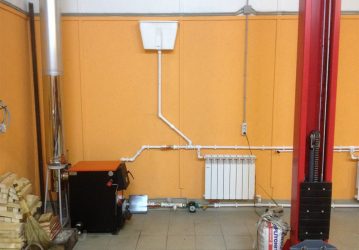
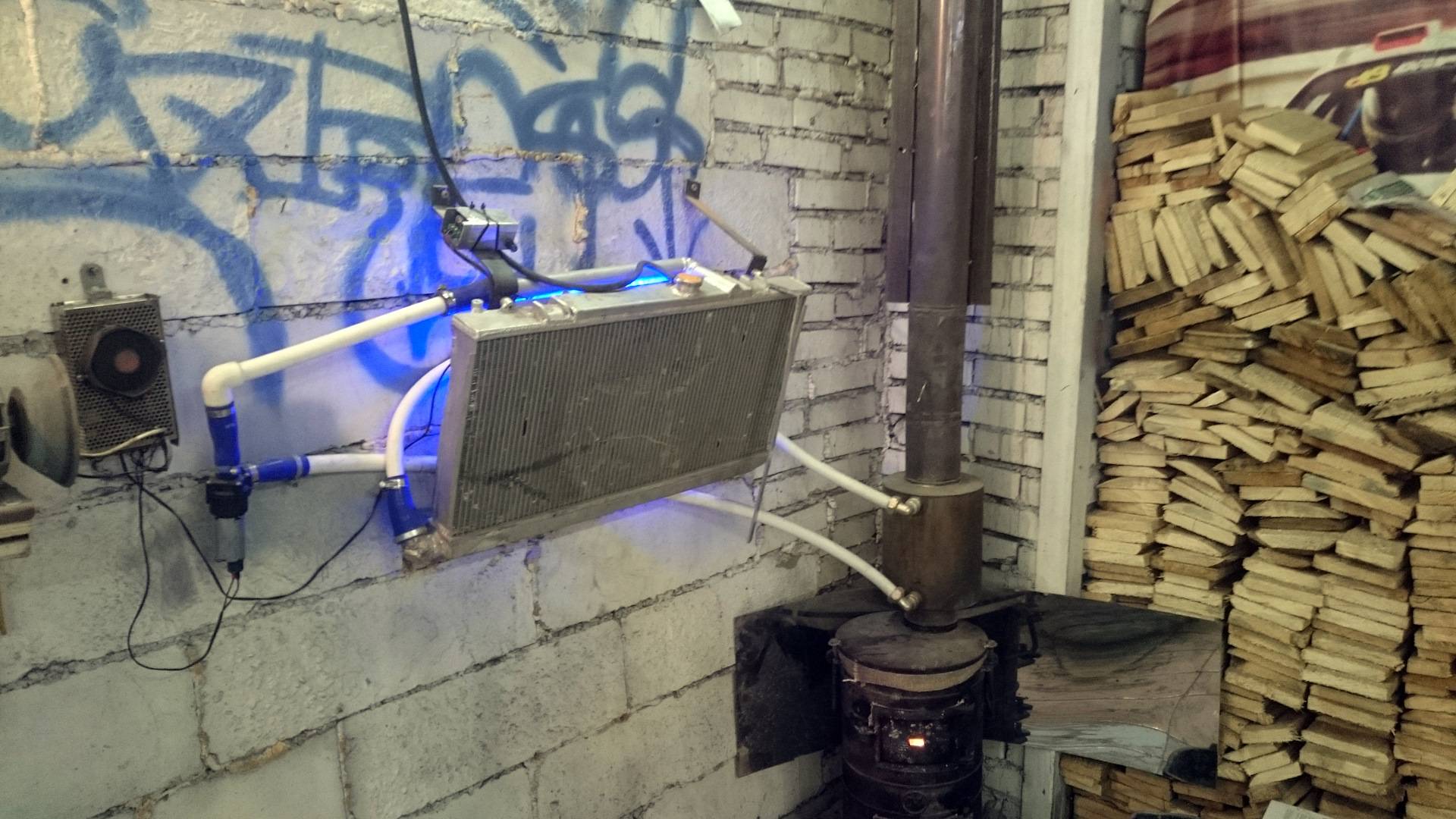


If it is not possible to connect to the home system, a separate boiler will have to be installed. It can run on different fuels. The following types of boilers are used in the garage heating system:
- an electric boiler is the easiest to install, as safe as possible, but expensive in terms of operation. Even if you are not afraid of electricity bills, you should not use such boilers in areas with frequent power outages, power surges, as well as in regions with severe windy winters, because the wires can break, which will eventually lead to freezing of water in the system. If you do not have time to drain the water in time, then the pipes may burst;
- gas boilers are extremely rarely used in garages, since not everywhere there is access to a gas pipeline. If the gas pipeline passes nearby, then you are very lucky - gas heating will be inexpensive, and in terms of operation, such systems are quite simple. The main thing, only, to follow the safety precautions;
- boilers for liquid and solid fuels. You can choose a stove for wood, coal, diesel or waste oil - it all depends on which resource is more available in your case. Solid fuel boilers require constant monitoring and frequent loading of fuel. Pyrolysis and pellet units are more convenient in this regard, but they are not cheap, the most economical option is a potbelly stove, which can also be used in a water heating system.
For all boilers, except electric, you will have to organize a chimney. In addition to the boiler, radiators, heating pipes and chimney pipes, you will need a circulation pump and an expansion tank. All this costs money, so using a water heating system only makes sense in large garages. Often such heating is done at service stations and in commercial auto repair shops. If the garage is small, then it makes no sense to organize such a complex water heating system - this is an option for more or less spacious rooms where constant heating is required.
The principle of operation of a water heating system is quite simple. The coolant heats up, passes through the pipes, gives off heat and returns to the boiler. The system can be one- or two-pipe. A single pipe system is much easier to organize and cheaper, it is best suited for a small private garage. In this case, the heated coolant sequentially enters the radiators, i.e.in the first radiator, the temperature will be higher than in the last one, where the antifreeze reaches already cooled down. A two-pipe system allows for more uniform heating, but much more materials will be needed.
Even if the garage is not attached to the house, but is located nearby, you can try to connect it to the home heating system, but there are limitations. The distance from the garage to the house should not be more than 20 m, and the pipes must be insulated with high quality.
If antifreeze is used as a coolant (a liquid that does not freeze even at -45C), then you need to work with it carefully, because it is a toxic substance that becomes even more dangerous when heated. Antifreeze is not recommended for use in two-pipe systems
The coolant is replaced every 5 years.
Don't Forget About Fire Safety
All types of equipment that are installed in garages are fire hazardous and therefore require increased attention both at the installation stage and during further operation. In this case, the primary task is the thermal protection of surfaces located next to the thermal device. At the point of smoke outlet pipes through the wall or the ceiling is made of a special sleeve of mineral wool, and the nearby plasterboard and wooden surfaces are protected with sheets of metal.
Other recommendations to consider:
- When using units with open fire, do not close the blower before the fuel burns out completely.
- It is forbidden to store flammable substances and items near the equipment that is used for heating.
- It is necessary to stock up on fire extinguishing equipment.
- In the case of building a garage next to residential buildings, it is necessary to install a fire alarm.
- Gas cylinders should only be stored above floor level.
- Turn off heating units at night.
Unfortunately, fires are not uncommon, which are caused by improperly arranged garage heating. Videos of such situations appear on the network quite often. Therefore, it is necessary to approach the issue of fire safety most responsibly. This will protect you and your property from fire.