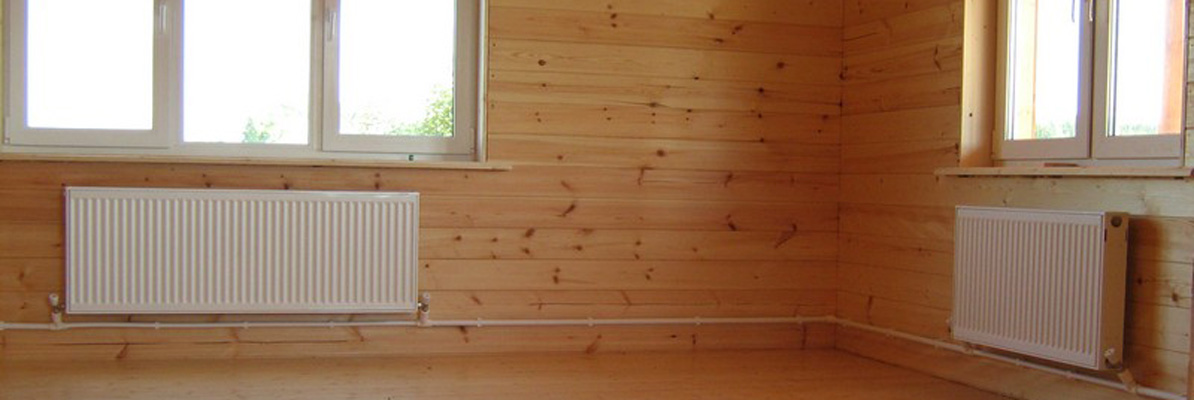
- Types of heating wooden houses
- Electric heating
- Gas heating
- Solid fuel
- oven
- liquid fuel
- infrared
- Air heating of the building
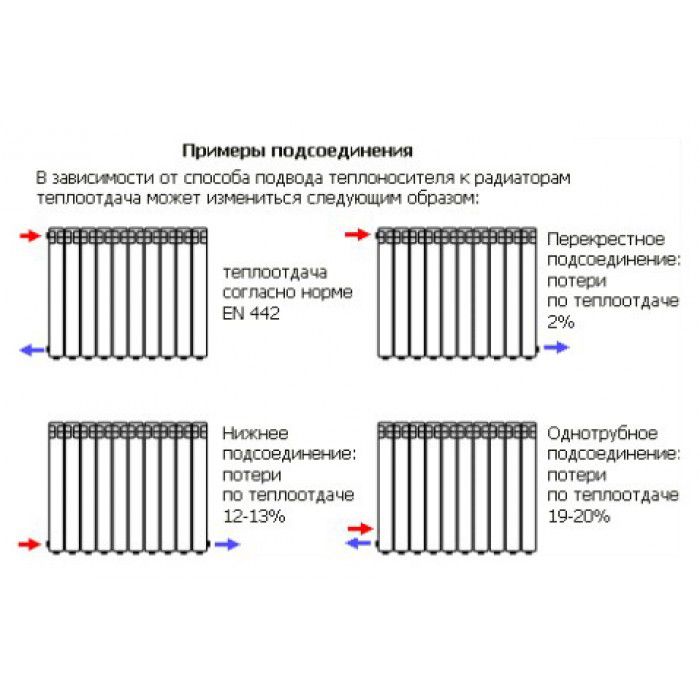
- Differences in schemes according to the method of connecting heating radiators
- Cast iron radiators
- Pipeline of the heating system
- Aluminum heating radiators
- Installation of heating systems
- Electrical system device
- Gas heating
- Solid and liquid fuel boilers
- Drawing up a heating scheme
- Installation of a one-pipe system
- The subtleties of the organization of two-pipe heating
- What the market offers
- solid fuel
- Liquid heating of a wooden house
- Peculiarities
- Electric heating
- solid fuel heating
- Water heating
- Types of heat and energy carriers for heating systems in a private house
- Classification and features of water heating with gas or electric boilers
- Heating in a private house: what is the most economical
Types of heating wooden houses
In order for a log house to be cool in summer and warm and cozy in winter, it is important to choose the right heating options based on modern heating systems.
Electric heating
Heating a wooden house by means of electric heating guarantees residents the ease of controlling appliances and the absence of harmful emissions. In addition, there is no need to build a separate boiler room and chimney.
The electrical system has virtually no flaws, but it can be affected by external factors in the form of ever-increasing resource costs and imperfect work. electrical networks with frequent voltage drops. To protect yourself from such problems, you can stock up on a generator, but in this case, the issue of savings becomes moot.
If water electric heating is used, then the risk lies in the coolant, which, if the equipment is used incorrectly, can leak or freeze.
Electric heating is provided by:
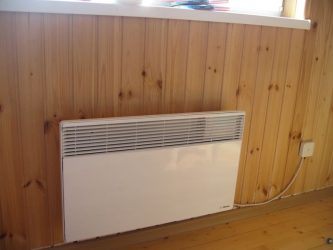
- heaters (mounted, floor, built-in - such as underfloor heating);
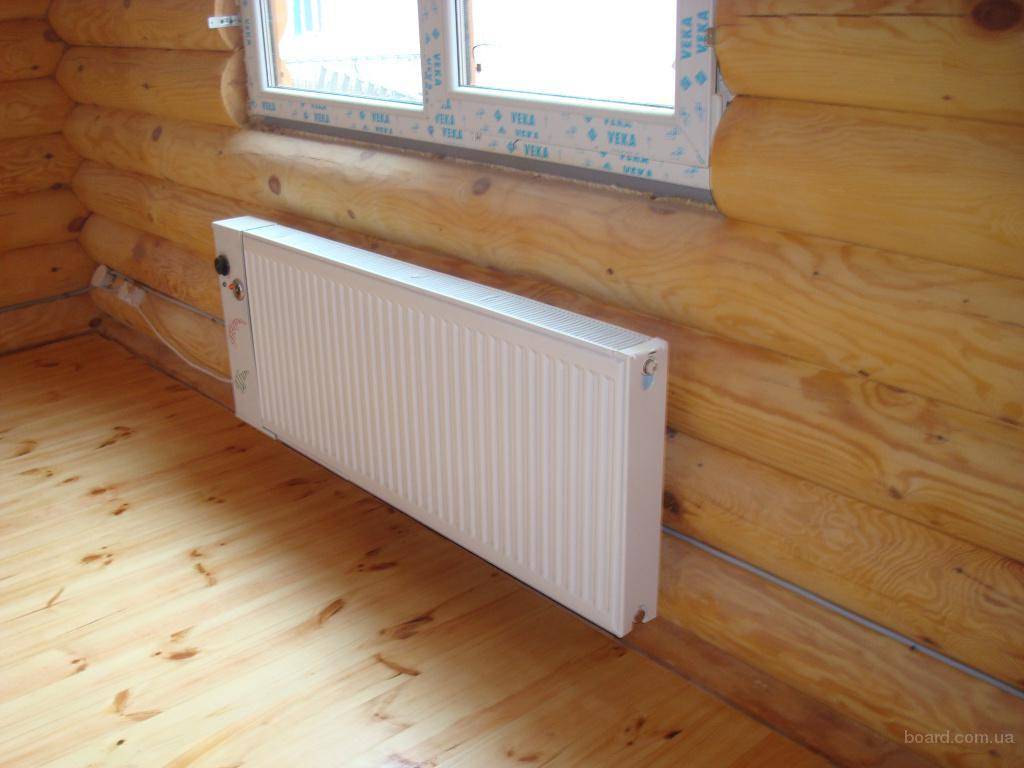
- radiators equipped with individual heating elements;
- radiator heating scheme, the "heart" of which is considered to be a heating electric boiler.
Gas heating
Gas heating in a wooden house is an easy-to-maintain and quite effective method that provides high efficiency, but at the same time requires increased attention to safety. This is especially true of wooden structures in which it is planned to install a gas boiler.
In addition, far from all suburban settlements are supplied with gas, which is also a problem that can be solved by installing a special container for storing imported gas on the site - a gas tank or by purchasing cylinders, but this will significantly increase costs.
Solid fuel
Solid fuel equipment is considered the best option for heating those houses that do not have access to a gas pipeline and where there is questionable operation of the power grid.
Such heating is efficient and less expensive than an electric unit, and also attracts by the low price of equipment and the possibility of installing all the elements with your own hands. In modern models of solid fuel boilers, components and parts are provided that improve their efficiency: for example, an automatic machine for metered supply of coal to the boiler.
For normal operation of the unit, it is necessary to install it on the ground floor or in a specially built boiler room.
The raw material for heating this type of boiler is coal, peat, firewood, sawdust or pellets. During operation, the device becomes very hot, which increases the risk of fire
In order to ensure safety, it is important that the boiler room is lined with non-combustible material. In addition, it is necessary to take care of the room intended for the storage of raw materials.
oven
Stove heating in a wooden house provides warmth and comfort. Most often, stoves of the "Swede" type are used, which combine not only the functions of heat transfer, but also equipped with a hob and an oven. If desired, such a stove is supplemented with a fireplace and sleeping places are arranged near its wall.
The disadvantage of stove heating is the likelihood of poisoning by combustion products or ignition. In addition, the stove will be able to heat a house with a square of no more than 100 square meters with wood or coal. m.
liquid fuel
Oil-fired boilers are also particularly popular in areas where other heating options are not possible.
Diesel fuel (solar oil) is used as the main raw material.The advantage of this type of heating is the low cost of raw materials, and the main disadvantage is the possibility of carbon monoxide poisoning, the occurrence of fires if safety precautions are not observed, and the need to equip special rooms.
infrared
Given the difficulties with popular heating systems, an innovative and rational heating scheme based on infrared radiation was developed.
The principle of operation of this equipment is the operation of heating elements that radiate thermal energy on the surface of a wooden house (furniture, walls, ceilings, floors), which, when heated, release heat into the air. At the same time, warm air rises and mixes with cold air, which avoids overheating and saves up to 70% of energy.
Sometimes combined types of heating are used when several types are used simultaneously. This may be heating with an electric boiler, the functions of which, in the event of a power outage, begin to be performed by a solid fuel unit.





Air heating of the building
It's another kind private house heating. Its main distinguishing feature is the absence of a coolant. The air system is designed so that air flows through heat generator, where they are heated to the desired temperature.
Further, through special air ducts, which can have a wide variety of shapes and sizes, the air masses are sent to heated rooms.
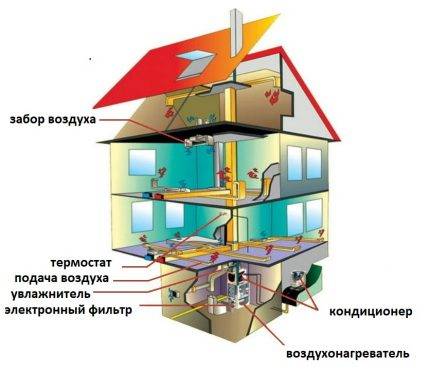 Air heating can be used to heat a private house of a large area, while it is possible to create a comfortable microclimate in each room
According to the laws of convection, heated flows rise, cooled ones move down, where holes are mounted through which air is collected and discharged to the heat generator. The cycle is repeated.
Such systems can work with forced and natural air supply. In the first case, a pump is additionally mounted, which pumps the flow inside the air ducts. In the second - the movement of air is carried out due to the temperature difference. It is clear that forced circulation systems are more efficient and powerful. We talked about the arrangement of air heating with our own hands in the next article.
Heat generators are also different. They can operate on a variety of fuels, which determines their performance. Most of all, gas, electric and solid fuel appliances are in demand. Their disadvantages and advantages are close to those water heating boilers.
The circulation of air masses inside the building can be carried out in different ways. It can be a closed cycle without adding outside air. In this case, indoor air quality is poor.
The best option is circulation with the addition of air masses from the outside. The indisputable advantage of air heating is the absence of a coolant. Thanks to this, it is possible to save the energy required for its heating.
In addition, installation of a complex system of pipes and radiators is not required, which, of course, also increases the efficiency of the system. The system does not have the risk of leaks and freezing, like its water counterpart. It is ready to work at any temperature. The living space heats up extremely quickly: literally, about half an hour passes from starting the heat generator to raising the temperature in the premises.
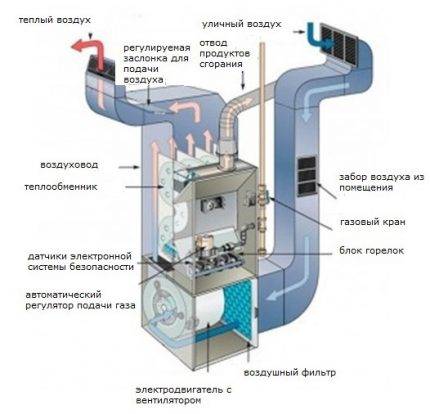 A gas heat generator is one of the possible solutions for the implementation of an air heating project for a private house. However, such systems are rarely used in practice.
Another significant plus is the possibility of combining heating air with ventilation and air conditioning. This opens up the widest possibilities for realizing the most comfortable microclimate in the building.
The air duct system in the summer can be successfully used for air conditioning. Installing additional equipment will make it possible to humidify, purify and even disinfect the air.
Air heating equipment lends itself well to automation. "Smart" control allows you to remove burdensome control over the operation of appliances from the homeowner. In addition, the system will independently select the most economical mode of operation. Air heating is very easy to install and durable. The average life of its operation is about 25 years.
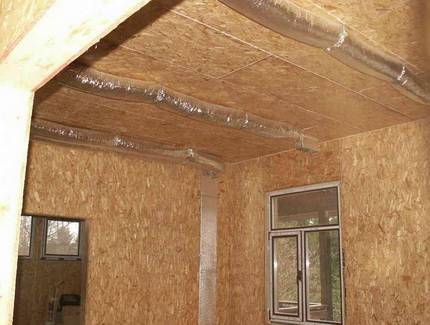
Air ducts can be installed at the construction stage of the building and hidden under the ceiling covering. These systems require high ceilings.
The advantages include the absence of pipes and radiators, which gives room for the imagination of designers decorating the interior. The cost of such a system is quite affordable for most homeowners. Moreover, it pays off quickly enough, so its demand is growing.
Air heating also has disadvantages. These include a significant difference between the temperatures in the lower and upper parts of the room. On average, it is 10 ° C, but in rooms with high ceilings it can reach up to 20 ° C.Thus, in the cold season, it will be necessary to increase the power of the heat generator.
Another disadvantage is the rather noisy operation of the equipment. True, this can be leveled by the selection of special "quiet" devices. In the absence of a filtration system at the outlets, a large amount of dust in the air may occur.
Differences in schemes according to the method of connecting heating radiators
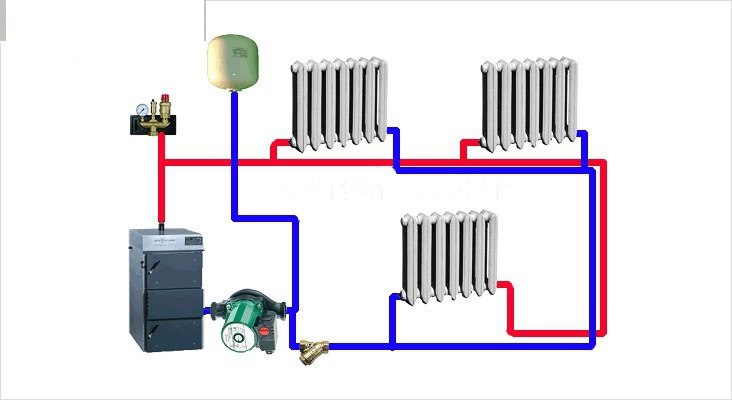
When radiators are connected in series, the coolant from the boiler first enters the first radiator, then the next, and so on. The water that has cooled down at the end is sent back to the boiler.
Such a scheme is quite simple, uses a minimum amount of material, but its effectiveness is a rather controversial point. Already cooled water will flow into the last radiator, so it is used only in small houses.
"Leningradka" is a modification of the one-pipe system discussed above. But she has one feature. Each radiator is equipped with a "bypass" pipe, which has a smaller diameter and a control valve. With it, the heating of each individual radiator is adjusted. Such a system is much more balanced than a simple one-pipe system.
Cast iron radiators
Nowadays, the oldest type of radiators, cast iron, continues to be successfully used. The main advantage of a cast-iron radiator is durability and undemanding to the quality of the coolant. If it is planned to drain the coolant from the system for the summer period, then it is imperative to install cast-iron radiators. Steel, for example, must be constantly filled with water.
Cast iron perfectly accumulates heat and has a large inertia.Even after a complete shutdown of the supply of heat carrier in the system, the heated cast-iron batteries will be warm for a long time, and, accordingly, the heating of the room will continue.


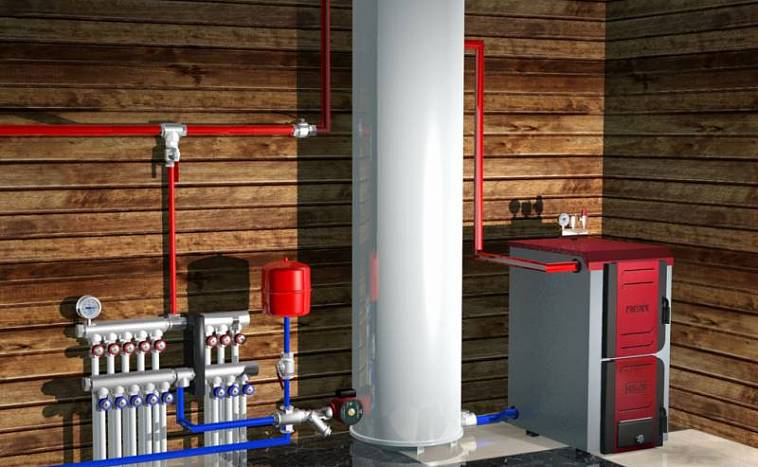
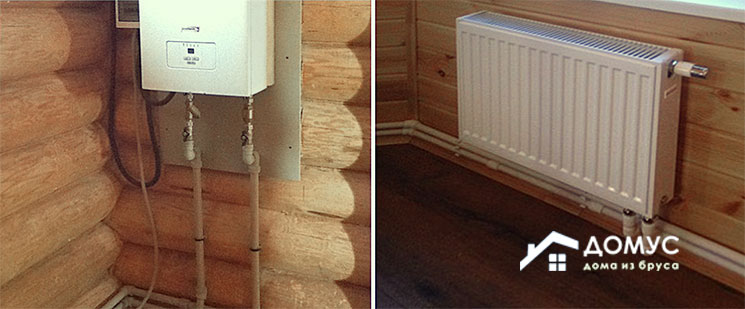


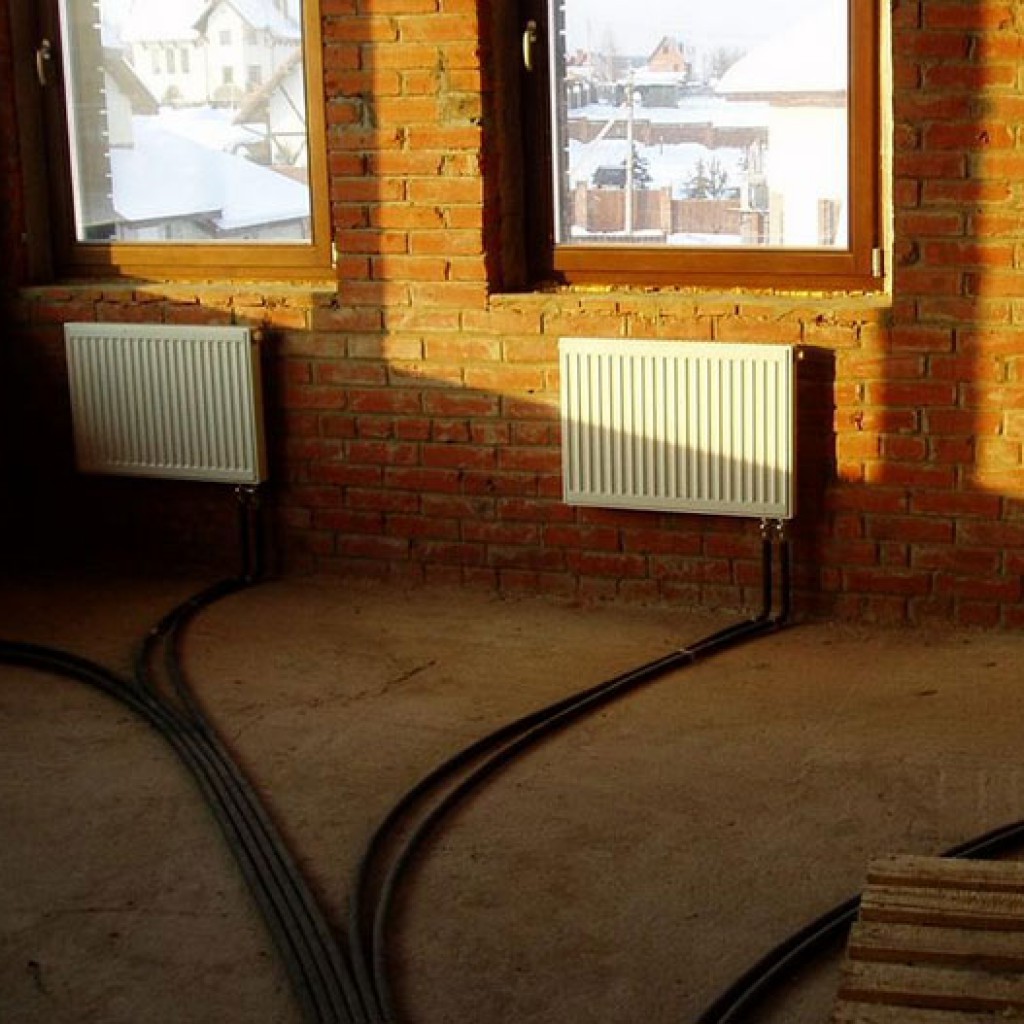


However, these classic batteries also have their drawbacks. The main one is high heating costs, because cast iron has a low thermal conductivity. In addition, cast-iron radiators weigh quite a lot. If you mount a smaller battery, then its efficiency will decrease.
Pipeline of the heating system
The main task of the pipes is to transfer the heat carrier from the boiler to the radiators. There are many types of them - they are divided into categories depending on the material.
Pipelines are:
- polymeric;
- steel;
- copper.
The latter variety is resistant to high temperatures and high pressure. Currently, copper pipes are the most reliable and safe. Thanks to this, they can be hidden in the wall. But they are quite expensive.
Now heating pipelines are most often assembled from metal-plastic or polypropylene products. They are characterized by ease of installation and resistance to corrosion. The elements are connected to each other by soldering. Their disadvantage is the low hydraulic resistance.
For the installation of a steel pipeline, it is necessary to involve a welder - it will be problematic to cope with the work on your own. In addition, such structures are prone to corrosion.
Aluminum heating radiators
Aluminum radiators have recently appeared on the market and have become popular due to their appearance. However, in addition to the beautiful appearance, they have a lot of limitations, mainly related to their characteristics.Don't hesitate to install them.
Aluminum radiators have high power and quickly heat up the room, spending much less coolant than, for example, cast iron ones. Like steel, aluminum radiators fit perfectly into any interior.
Due to its chemical properties, aluminum is afraid of an alkaline environment. Therefore, having installed aluminum radiators in your home, be prepared for the fact that you will have to constantly monitor the quality and pH of the coolant. The pH should be from 7 to 8, and even drinking water does not always have such indicators.
When installing aluminum radiators, there are other nuances, so it is better to entrust their installation to professionals.
Installation of heating systems
In order to save money, the arrangement of the heating system can be done by hand
At the same time, it is very important to take into account all the norms, rules, follow the sequence of actions, as well as fire safety techniques.
Electrical system device
Installation of a system for heating a house with electricity is considered affordable even for those who do not have practical experience. Connection of convectors, selected in terms of power according to the quadrature of the room, is carried out using a conventional socket. If there are several devices, a separate machine in the electrical panel and an individual grounded power source should be installed on each of them.
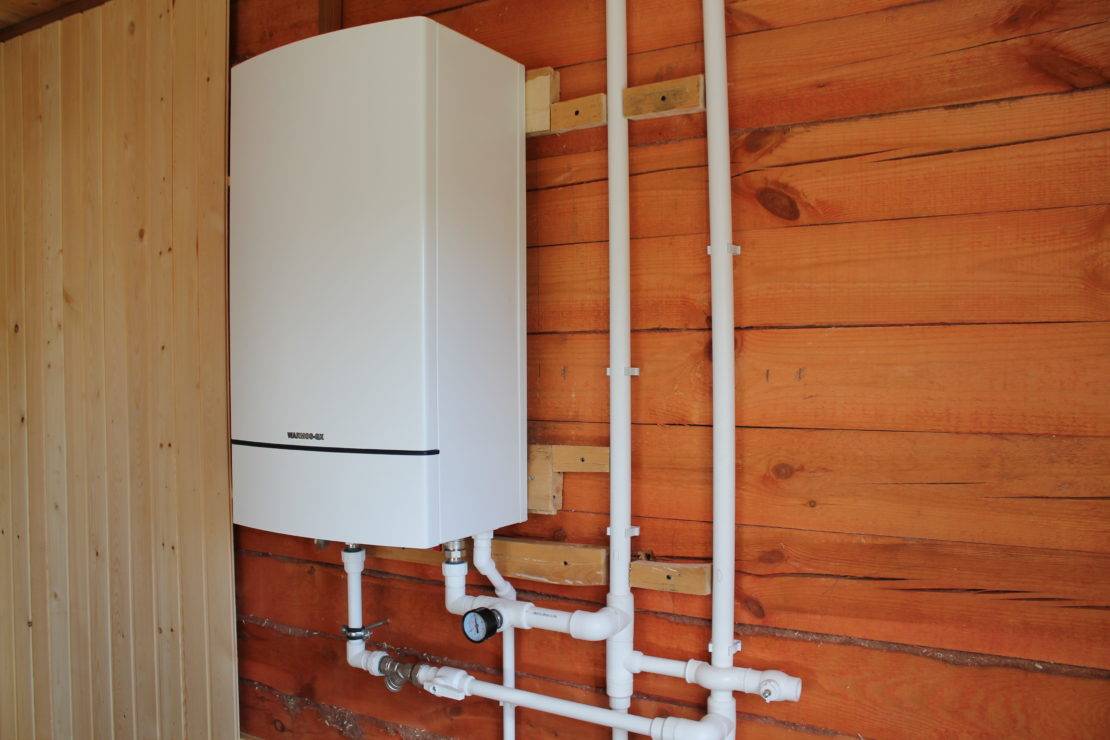
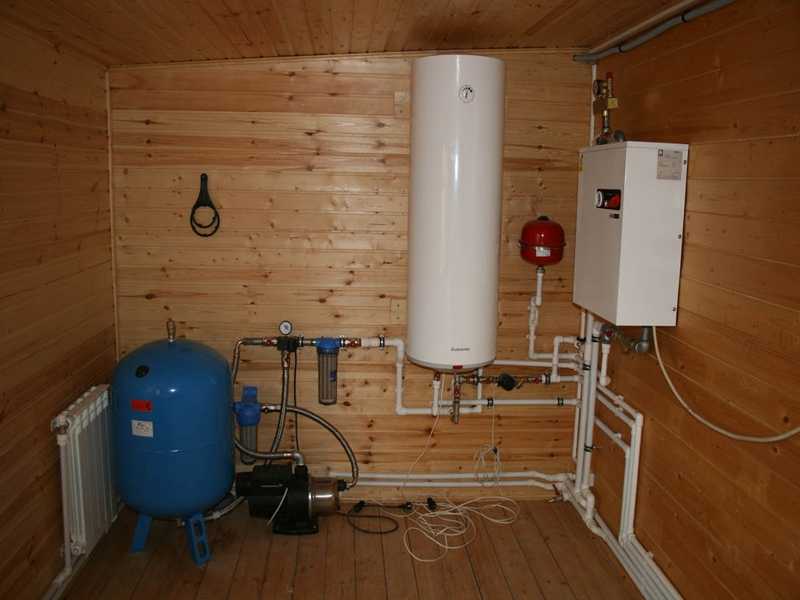
Electric boilers are installed in a place convenient for piping at home, in addition, they are fixed in the rooms bimetal radiators, aluminum or steel and install pipes with fittings.
It is desirable to make the coolant circulation system forced by installing an additional circulation pump. This will result in significant savings.A multi-tariff meter can also affect cost minimization.
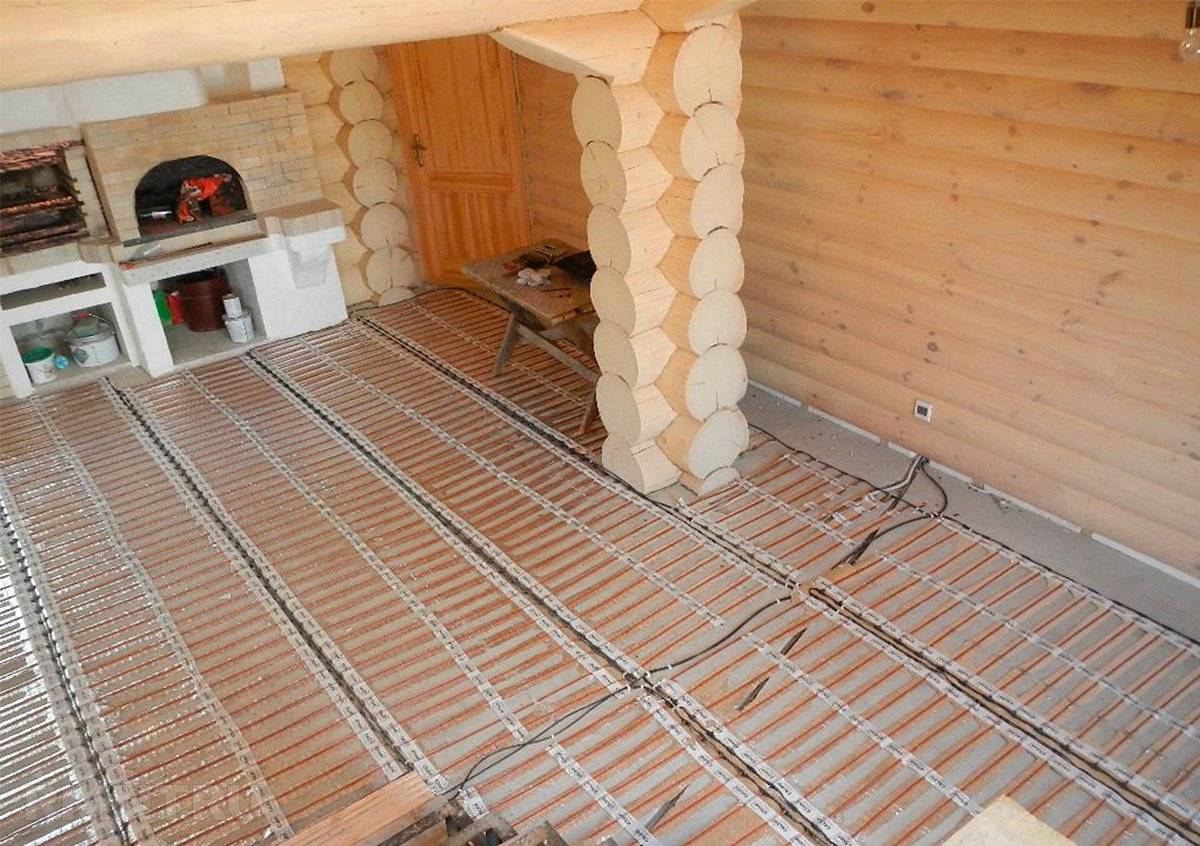
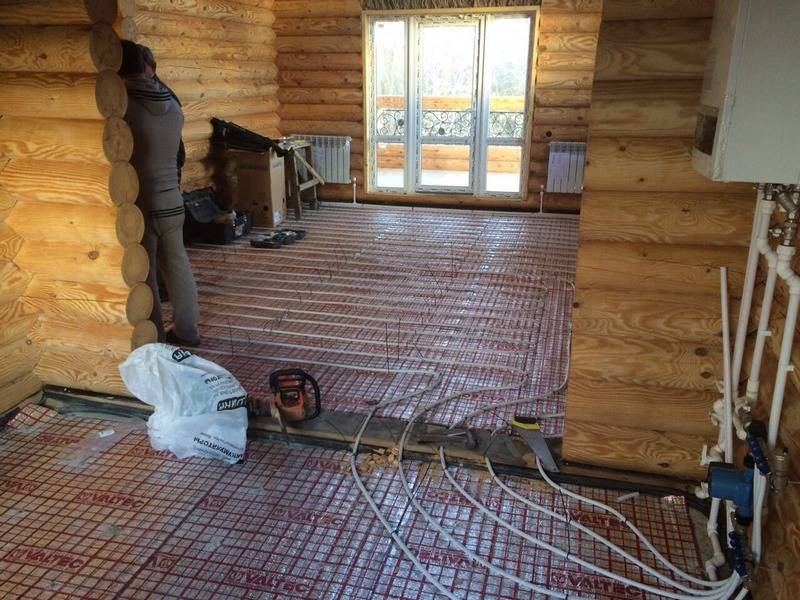
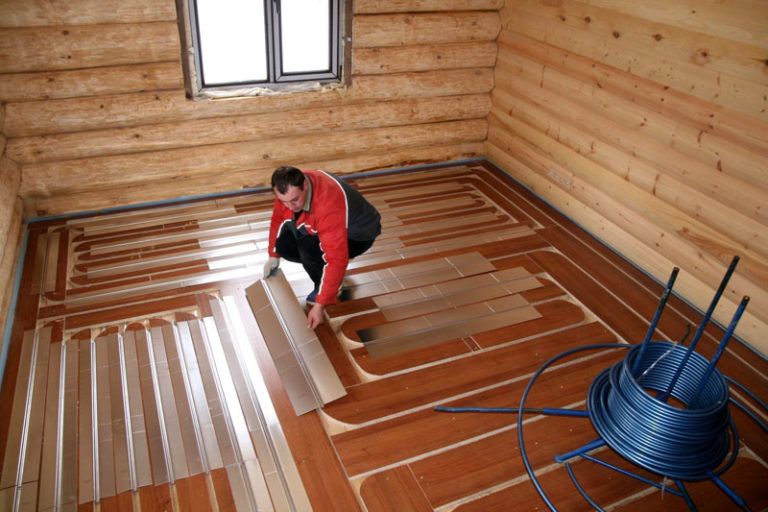
Electric heating systems also include "warm floors". They are installed under the floor surface or in a concrete screed.
It is important to provide good thermal insulation of the base under the floor, which will not allow heat to dissipate.
Gas heating
This type of heating can be carried out by installing a gas boiler (used if there is a gas main nearby) or a convector (it is advisable if the gas is imported). Boilers with electronic ignition are considered the most economical.
If the system is powered by a centralized boiler, then the coolant will circulate through pipes and radiators that provide heat to the room
At the same time, in addition to the installation of the pipeline, it is important to equip the boiler room and install a high-quality ventilation system there.
If a scheme with convection heating is chosen, then it is necessary to install pipes around the perimeter of the house, and the radiators should cut into them in parallel, and not breaking the system.
Convectors are placed in each room of the house under the window, a gas cylinder is placed nearby, and a coaxial pipe provides the removal of combustion products.
Solid and liquid fuel boilers
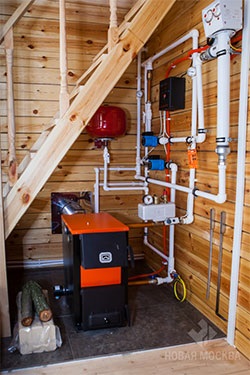
Such heating is most often used in areas where other methods of heating are not available. The installation of the boiler must be carried out in a specially designated room or on the basement floor. If you plan to install the system yourself, then it is worth considering some points:






Mandatory installation of a compensation system.
The use of high quality material (radiators and pipes).
The importance of proper connections and docking of elements, preventing leakage.
Reducing the number of risers (installation of wiring on all floors).
Important: Do not mount solid fuel boiler piping on a wooden wall!
The main thing is to do everything right when installing a heating system in a wooden house: strictly follow the instructions and adhere to safety requirements.
Drawing up a heating scheme
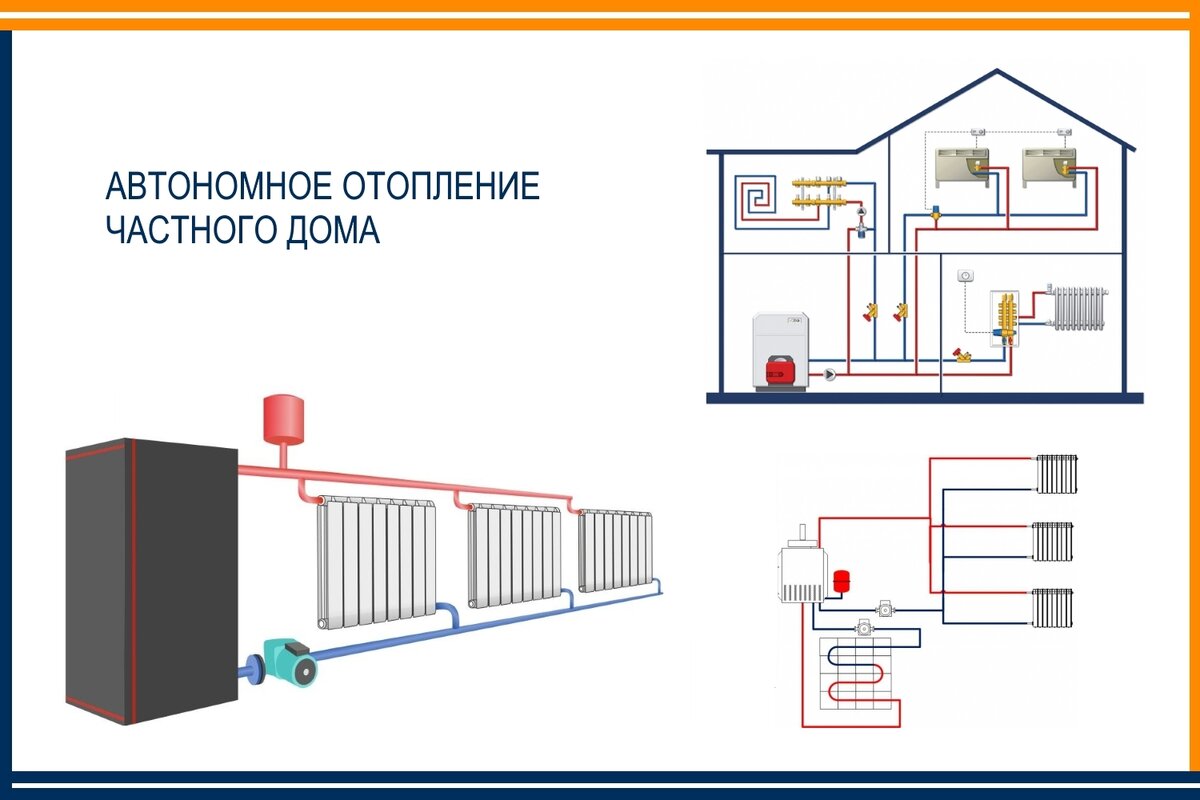
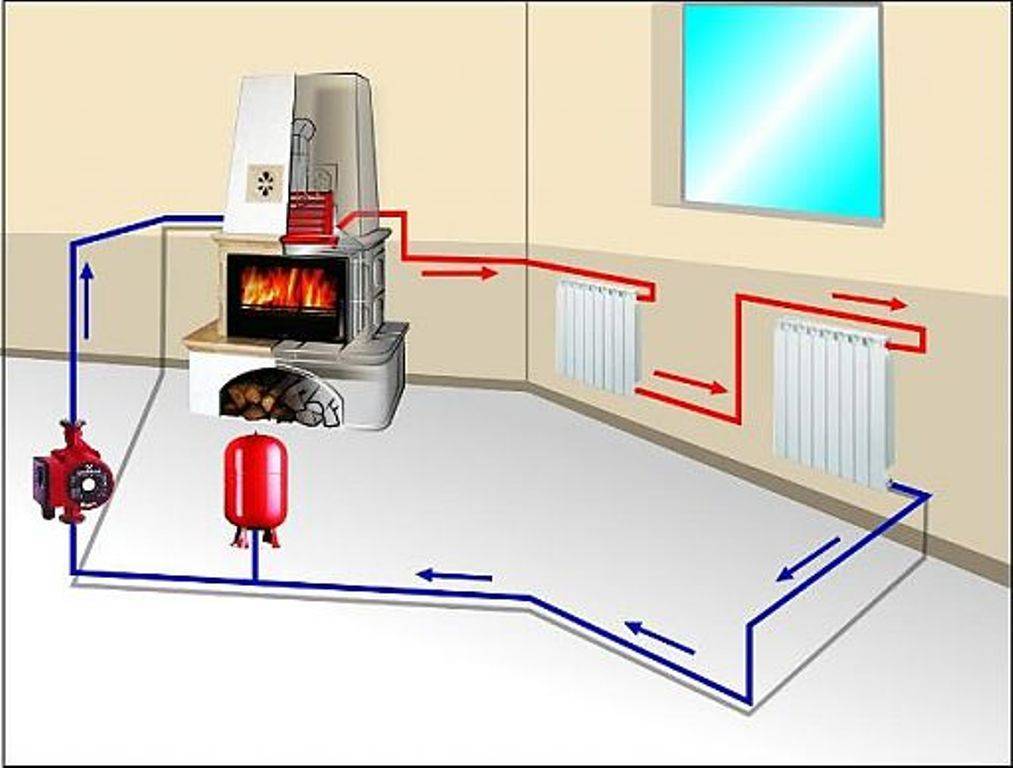
Since water is predominantly used as a heat carrier, the schemes discussed below will be based on this factor. The essence of this kind of heating system for a wooden house is that the liquid is heated in the boiler and enters the radiators through pipes, where it is cooled. Then the water returns to the heat source again.
Installation of a one-pipe system
The choice of scheme largely depends on whether a system with gravitational or forced pumping of the coolant is used. In addition, when drawing up a project, the number of contours must be taken into account.
When organizing a one-pipe system heating the building is almost impossible to regulate the temperature. It will be different anyway. The farther from the boiler, the lower the temperature
The advantage of creating a single heating circuit is the ease of installation. If you adhere to the scheme, then you can quickly cope with the work and not involve the master.
The single-pipe system allows you to save plumbing fittings. And in order to maximally equalize the temperature in the entire circuit, it is necessary to increase the number of radiator sections that are connected at the end. To speed up the water flow, it is recommended to install a pump.
A one-pipe system should only be selected if it is possible to install the boiler below the level of the radiators. Otherwise, the water will not circulate through the pipes.
The subtleties of the organization of two-pipe heating
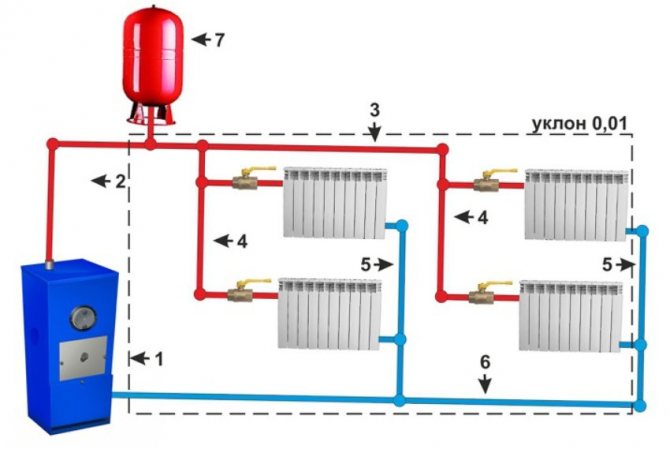
The system with two circuits allows you to maintain the same temperature in all radiators, which will favorably affect the heating efficiency. The disadvantage of this solution is a large consumption of materials.
The scheme of a two-pipe heating system at home is also suitable for heat generators that run on solid fuels. The only thing that needs to be corrected in this case is the pipeline material.
When implementing a two-pipe project, each radiator must be equipped with shut-off valves. Such elements will allow you to adjust the temperature in each room.
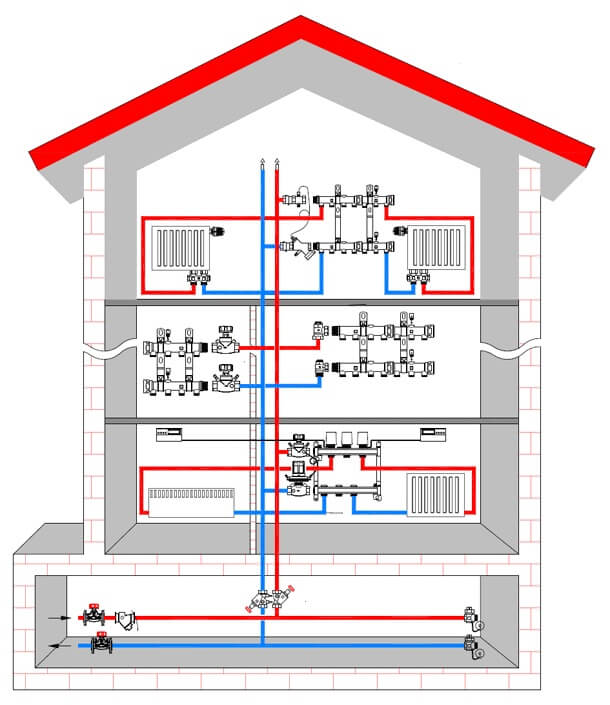
If the boiler will be installed in the basement, then the best choice is bottom wiring system (the diagram is shown below). This solution is ideal for wooden houseswhere a gas boiler is used as a heat generator.
What the market offers
solid fuel
The main advantage is autonomy. Furnaces have proven their reliability for centuries. In addition, you will like the pleasant price, always affordable. Of the minuses - long heating, low efficiency, the need to constantly throw up fuel. Unfortunately, there are areas where connection to the gas pipeline is unprofitable due to the high cost of tie-in, in some places it is impossible due to remoteness. Owners of small buildings of 3-4 rooms will be satisfied. In addition, modern designers complement their solutions with a cozy fireplace.
Solid fuel boilers are a great alternative to a stove.The principle of operation is clear to everyone - when combustible materials are burned, heat is released and the coolant is heated. Hot water is distributed through pipes and heats the rooms. It is pleasant to note a wide range of advantages, which in many respects have something in common with the furnace method of heating.
- Profitability. Inexpensive, especially if the forest is nearby.
- Ecological purity. The contents of the firebox burn completely, leaving only ash.
- Loading with firewood, sawdust, briquettes, coal, peat.
- Autonomy.
- Low equipment cost.
- Automation provides ease of control.
- The boiler room will be installed without additional approvals.
But there are also disadvantages.
- Low heat transfer, it is problematic to heat a large area housing.
- Heating occurs by inertia, like a furnace.
- Storage of fuel in a separate room.
- Cleaning soot, soot.
- Manual loading.
- Regular care.
- Additional devices are needed, for example, a heat accumulator, a forced draft device, an additional boiler.
- Chimney installation.
Liquid heating of a wooden house
To date, this option is the most common. In this case, a system of pipelines is organized through which the coolant circulates. As a heat carrier, it can use both ordinary water and specialized liquids similar to it in terms of physical and chemical properties.
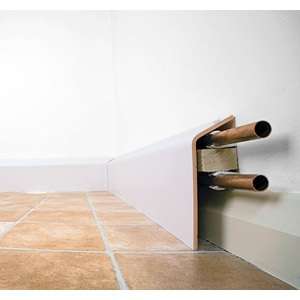
It is worth noting that the organization of such a heating system is a rather complicated process, and it is quite difficult to implement it on your own without proper experience.And, as mentioned above, the design of the heating system should be carried out at the design stage of the house (since in the future it will be necessary to destroy some structural elements, or make holes for pipes in them).


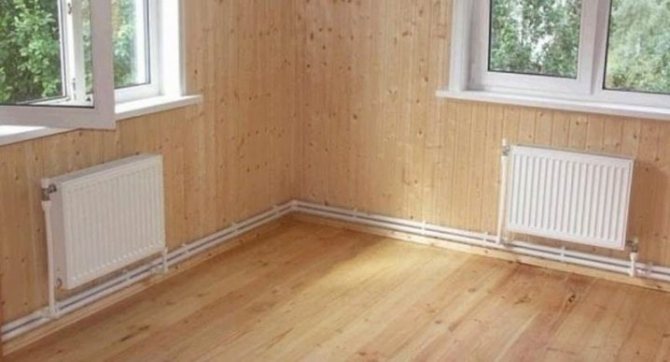

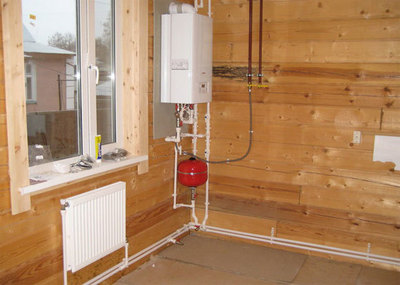
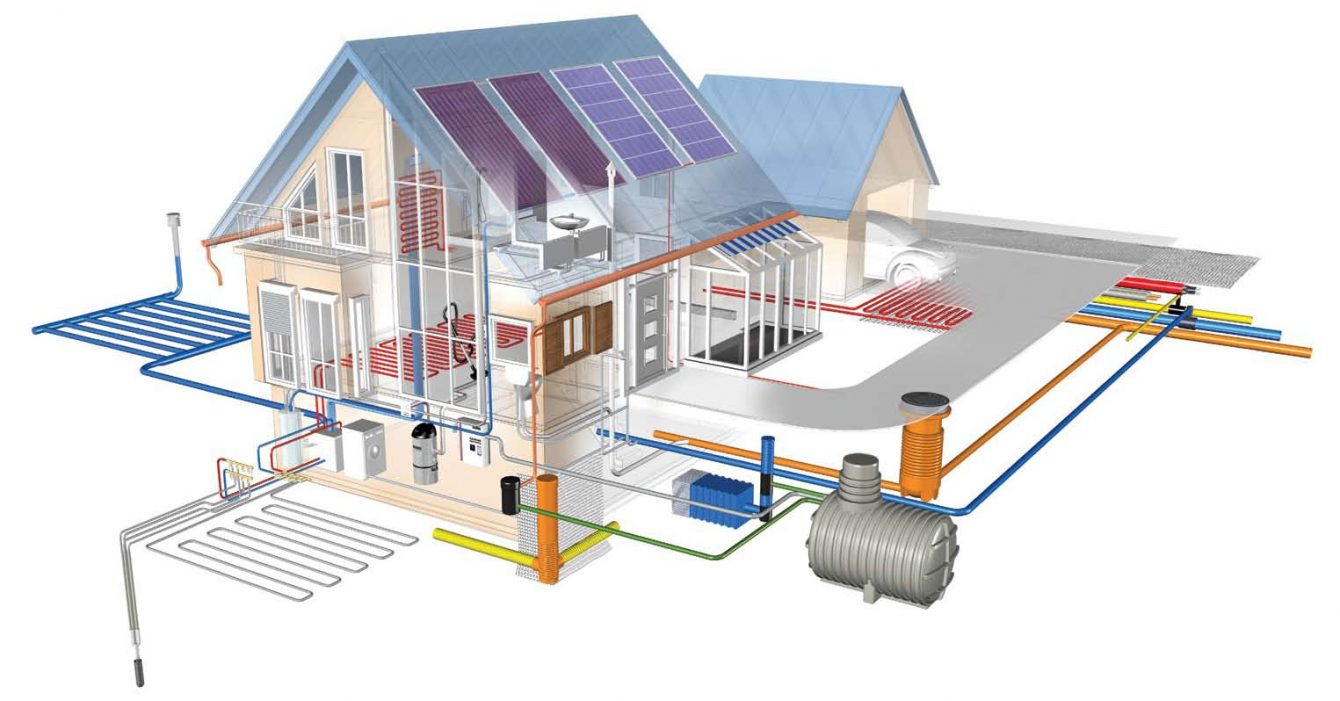


The choice of a type of system can also cause difficulties in the independent organization of such heating. Liquid heating differs in several ways:
- according to the principle of placing risers: horizontal or vertical;
- based on the methods of laying the mains of the heating system: a scheme with associated water movement, or a dead-end scheme.
As for heating the coolant, various types of boilers can be used for this. Distinguish between solid fuel boilers, gas and electric.
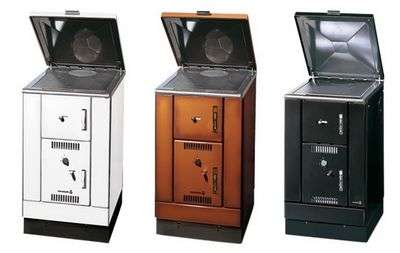
Solid fuel - the easiest option. But their operation requires great attention to the system, making sure that the fuel is always available (there is a question with the organization of fuel storage). As for gas, they work from a centralized gas supply system. As a rule, there are no problems with providing them with fuel. But in this case, when handling this equipment, it is required to adhere to certain safety measures (avoid gas leakage, etc.). As for electric boilers, their only “minus” is their rather high energy consumption. If there are power outages in the area where your house is located, it is better to stop using such boilers.
Another feature of liquid heating is the need for careful maintenance of the system. It is necessary to periodically inspect and maintain pipelines, to prevent air from entering the system.And if ordinary water is used as a coolant in the system, then in cases where you need to leave for a cold period for a long time, it will need to be drained from the system, which creates certain inconveniences.
Peculiarities
Of course, only residents of private houses can install an alternative heating system. As an alternative to gas, a water heating system is most often used. There are also other solutions, which will be discussed below. In any case, it should be noted that any alternative system will still cost the owner more profitable than a centralized option. Of course, at first, serious resources will be spent on installation and installation, but over time, this system will definitely pay for itself.
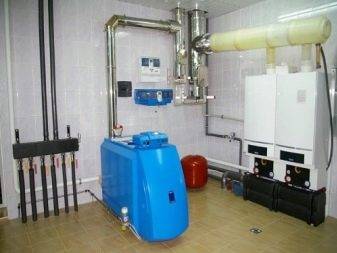
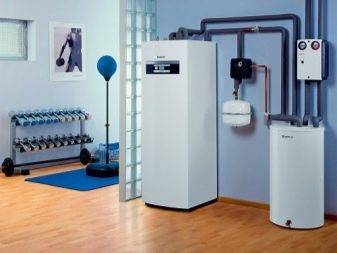
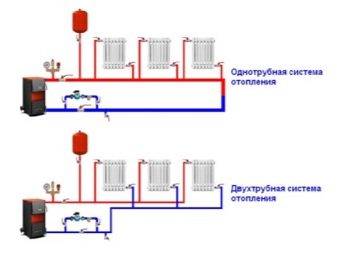
Heating mechanisms, depending on how appliances are connected to them, are divided into two categories.
- Two-pipe. The peculiarity lies in the fact that there is a connection separately to the supply and separately to the return line, and all radiators are connected to the pipes in a sequential pattern, which allows you to supply the coolant through one pipe, and to carry out its output, after it has given off heat - through another.
- Single-pipe. This option involves the connection of devices of a serial nature, due to which the supply and output of the heat carrier is carried out from one pipe.
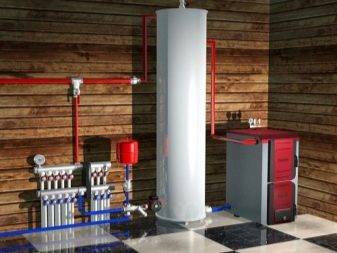
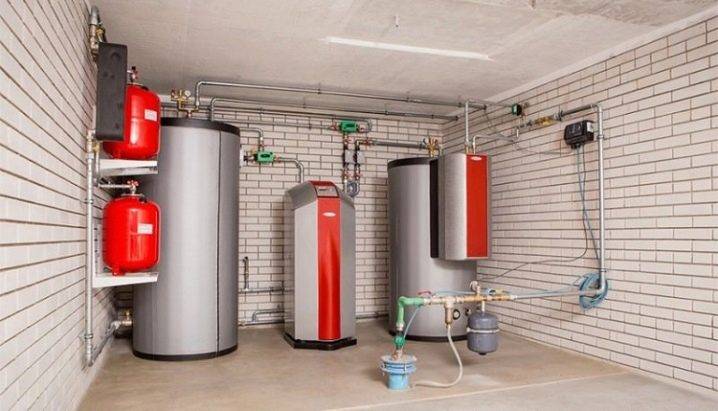
It should be noted that the listed types of heating mechanisms can be with both upper and lower wiring options. In the second case, the laying of the pipe through which the supply will go will be located on the upper side of the receiving devices, and in the first case, from below.
Electric heating
In this case, we mean the use of electric heating elements. This option for organizing heating is the easiest to implement, so you only need to decide on the installation location of the heaters and ensure their power supply from the mains.
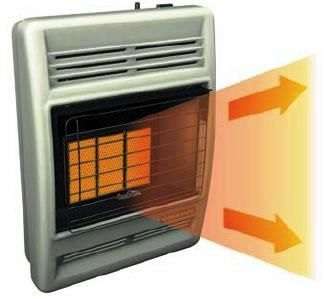
As for the types of heating elements, according to the principle of organizing heat exchange, they can be divided into two groups. The first includes heaters that provide space heating due to convection (air is heated directly from the surface and circulates throughout the entire volume of the room). The second option is to use infrared heaters.
The principle of operation of IR heaters is as follows. Infrared waves penetrate the surface of surrounding objects to a depth of about 5 mm (it all depends on the properties of the material). As a result, the object is heated, and it gives off heat to the surrounding space. In this case, uniform and efficient heating is ensured.
If you decide to use electric heating, then you should properly prepare the electrical network for this. It must be designed for the corresponding loads, have residual current devices, etc. It is also necessary to take care of the uninterrupted supply of electricity to the house if you want to always be warm.
The use of electric heating is also an increase in electricity consumption. But it is worth noting that modern electric heaters designed for organizing heating systems of this type are quite economical and have good efficiency.
solid fuel heating
Since ancient times, houses were heated by stoves or hearths.Solid fuel boilers are a modern version of that very ancient hearth. Nowadays, such boilers can work on pellets, briquettes, wood or coal - depending on the desire of the owner. Most often, pyrolysis or gas-generating boilers are used, which are characterized by an increased burning time.
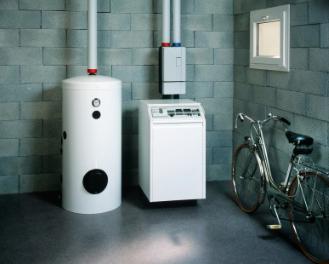
Thus, in such boilers, not only fuel burns, but also the gases that are formed during its combustion. The additional chamber, which the boilers are equipped with, takes care of the combustion of gases, thereby increasing the efficiency of the device. With this option, it is enough to lay the fuel only once a day.
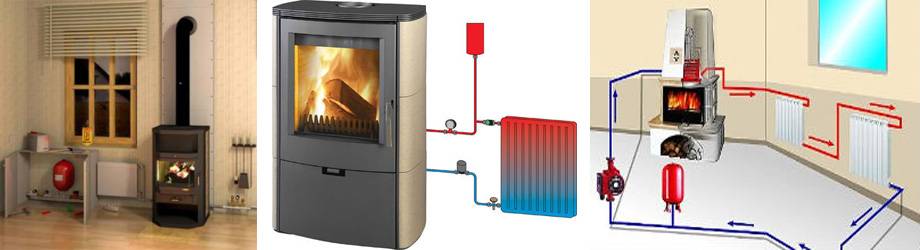

Water heating
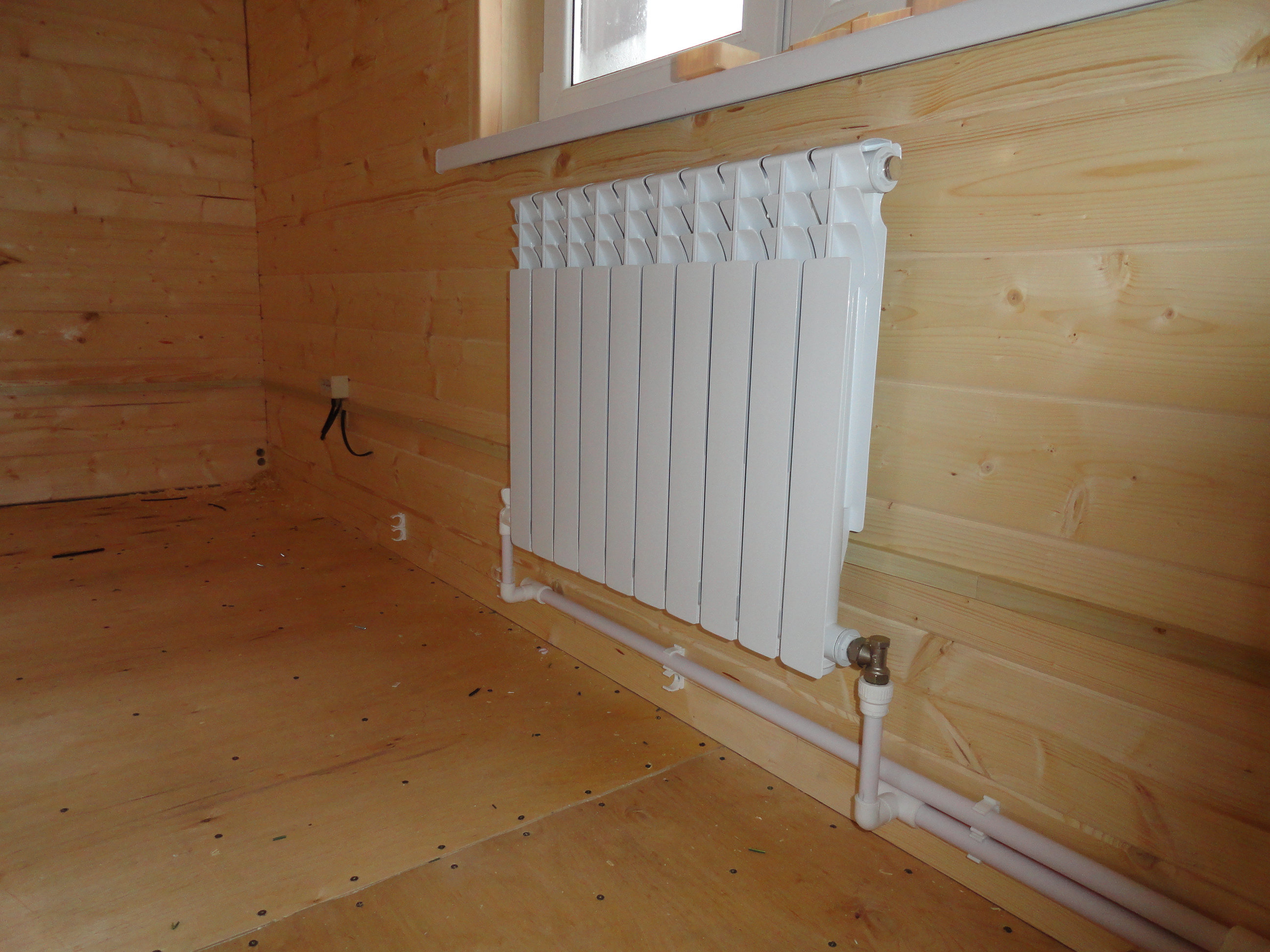
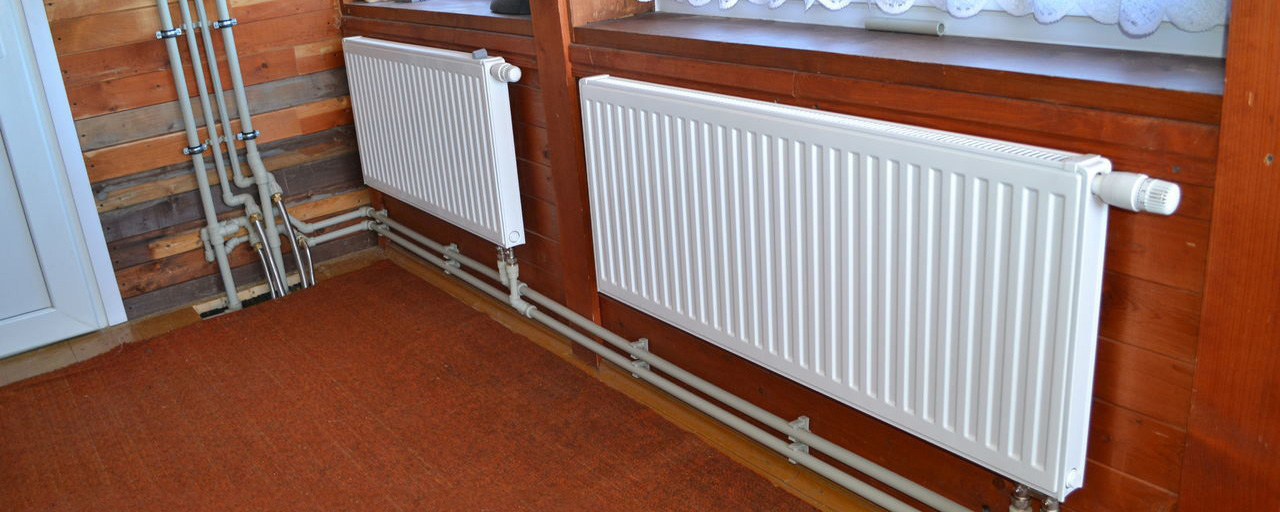
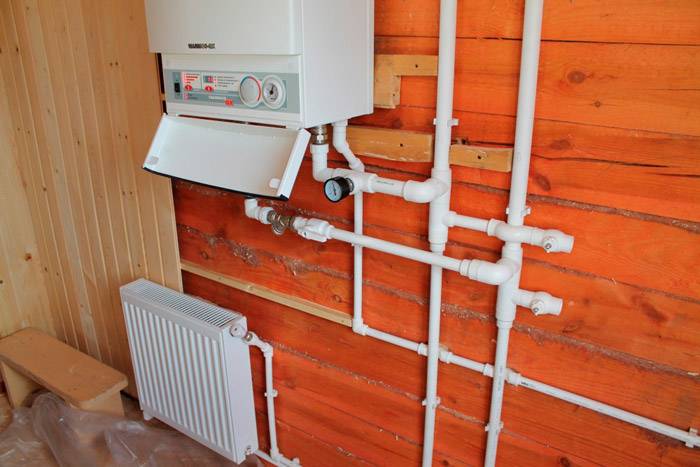
Water heating is the most common and demanded type of heating. The hardest part is piping. They can be stretched both under the floor and along the walls. It should be noted that the floor in a wooden house consists of logs. Therefore, in the case of laying pipes under the floor, cuts must be made. Outdoor pipes can ruin the walls of a building if they are placed too close to them. Therefore, the distance from the pipe to the wall must exceed 7 mm.
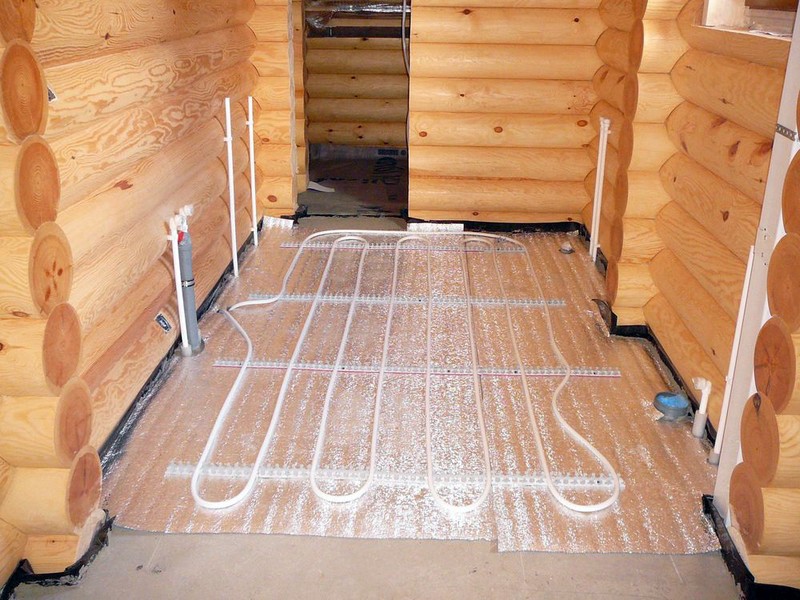
When choosing pipes, one should rely on such characteristics: durability of the material, aesthetics, strength. The most common pipes are made of reinforced propylene. However, in aesthetic terms, water is better. heating with classic copper pipes. Their installation is much more expensive and requires more scrupulousness, but due to their durability, they fully justify the effort. Also, water heating can be used as floor heating. To do this, you need to hold a metal-plastic pipe in a zigzag pattern under the floor.
Types of heat and energy carriers for heating systems in a private house
Heating in a private house according to the type of energy carrier used can be:
- Electric.
- Gas.
By type of coolant:
- Vodyanym.
- Air.
Each of the heating systems will be discussed in detail in the following sections.
Classification and features of water heating with gas or electric boilers
The classification below corresponds simultaneously to all types of boilers, for which liquid is used as a heat carrier. It can be gas, electric, solid fuel, etc. heat generators. The heating system of a private house can have two types of circulation:
- Natural (natural). It occurs due to the difference in temperature and density of the coolant in the supply and return pipelines. Hot masses of water tend upwards, while cold masses tend downwards. It must be said that such a circulation method in our time does not have the due popularity. This is explained by its shortcomings, such as the slow heating of the coolant, as well as the demands on pipeline slopes. If in any area there is the slightest counterslope, then the circulation of the working medium will be impossible. In this case, the connection of new heating devices (for example, during the completion of premises) is practically excluded, since the hydraulic balance will be disturbed. Of particular problems is the air that accumulates in pipelines and disrupts circulation for users of natural circulation systems.
- Forced. It involves the use of pumping equipment. This type is considered modern, since the use of a circulation pump solves all the possible problems that are inherent in the previous type.Installation of heating in a private house is possible even with your own hands, because you do not need to observe the slopes of the pipelines.
The heating system can be open and closed. In the first case, an open expansion tank is used, in the second, a closed one. The open type is a relic of the past and was used when using natural circulation. Open expansion tanks are bad because they allow the coolant to come into contact with the environment.
Not all materials welcome this, because it leads to corrosive processes.
As for the layout of pipelines, everything is quite simple here. You can choose for your private home diagram:
- Single pipe. In this case, the heaters are connected in series one after the other. This scheme is perfect for a one-story house.
- Two-pipe. It is characterized by the presence of two highways - supply and return. Connection of each radiator in it individually. There are options in which both pipelines are located at the top, below, or the supply is at the top, and the return is at the bottom. A two-pipe heating scheme for a private house is ideal for buildings with two or more floors.
If you have already remembered about heating devices, then you have a wide choice. It is necessary to focus on the available budget, as well as the characteristics of the system. You can purchase radiators of the following types:
- Cast iron. This is the good old classic, which we have known since the days of the Soviet Union. Its prominent representatives are cast-iron sectional radiators MS140. They are characterized by low cost, unpretentiousness to the quality of the coolant, as well as durability.But the disadvantages include their low inertia, which does not allow high-quality control of the temperature in the room.
- Aluminum. They have a high price and excellent thermal efficiency. Their use with metal pipelines is not recommended, because this can lead to oxidative reactions and a decrease in their service life.
- Steel. In second place in the price category after cast iron. There are a lot of them: panel (stamped), tubular and sectional. Their use in open heating systems is strictly not allowed, as they quickly corrode.
- Bimetallic. They are the golden mean in terms of price-quality ratio. Based on the name, you can guess that they are produced from two types of metals, steel and aluminum are used for this. An inner core is created from steel, which is located in an aluminum casing. This symbiosis allows them to be used in systems with high pressure and to achieve high heat transfer. Also, bimetallic radiators are not afraid of hydraulic shocks.
 Connecting an electric boiler
Heating in a private house: what is the most economical
What is better to choose in a private house. There are two main factors to consider here. First, the cost of equipment, installation. Second, the monthly fuel fee. Saving money will allow a critical analysis of your structure. Find out the shortcomings. Any offer will be unprofitable if the heat goes outside. Each region of the country dictates the norms for building materials, their thickness, thermal insulation. Heat loss for double-glazed windows is 25%, roofs, attics - 15%, and poor ventilation eats up to 50% of heat."Cold bridges" are formed through the metal parts that penetrate the wall. They are complemented by the ends of the slabs, slopes of doors, windows, basement walls.
Obviously, the price of the issue depends on the possible desire to combine some options. Approximately in Russia, the total cost is built taking into account the following components:
- Bake.
- Gas heating, if there is a highway nearby.
- Solid fuel boiler.
- Boiler equipment for liquid fuel.
- Electric boiler.
Solar systems and heat pumps are widely used in Western Europe, but have not yet become the most efficient for the inhabitants of our country. The cost of equipment and installation will pay off in a few years. Undoubtedly, the high cost of fuel abroad justifies significant capital investments; our fuel is cheap.
All houses are different, the best solution can be offered by specialists. In this article, we examined the possible options, evaluated the advantages, and highlighted the disadvantages. You just have to weigh all the pros and cons and compare them with your wishes in order to make the best choice.