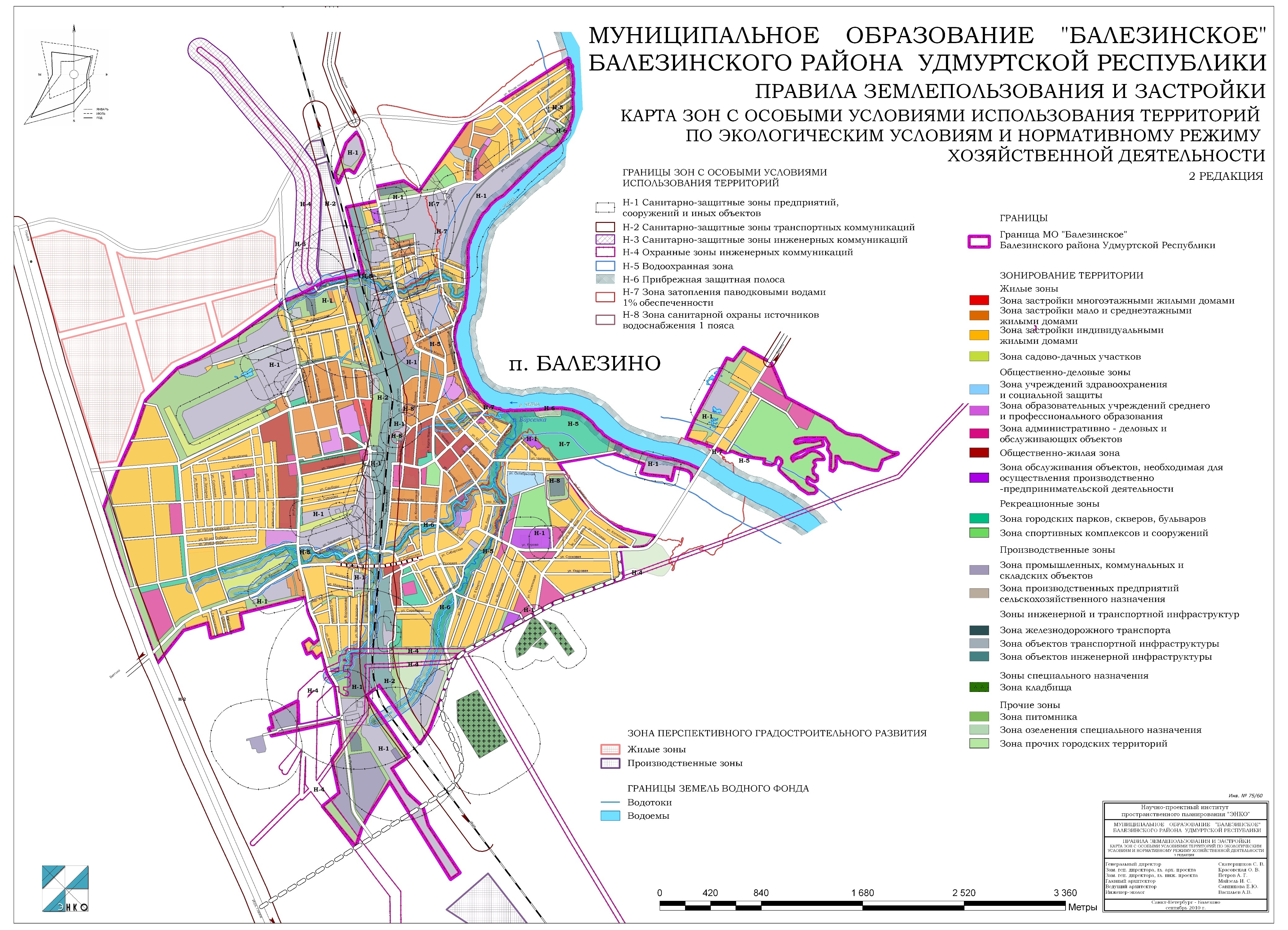
- General information about sanitary protection zones (ZSO)

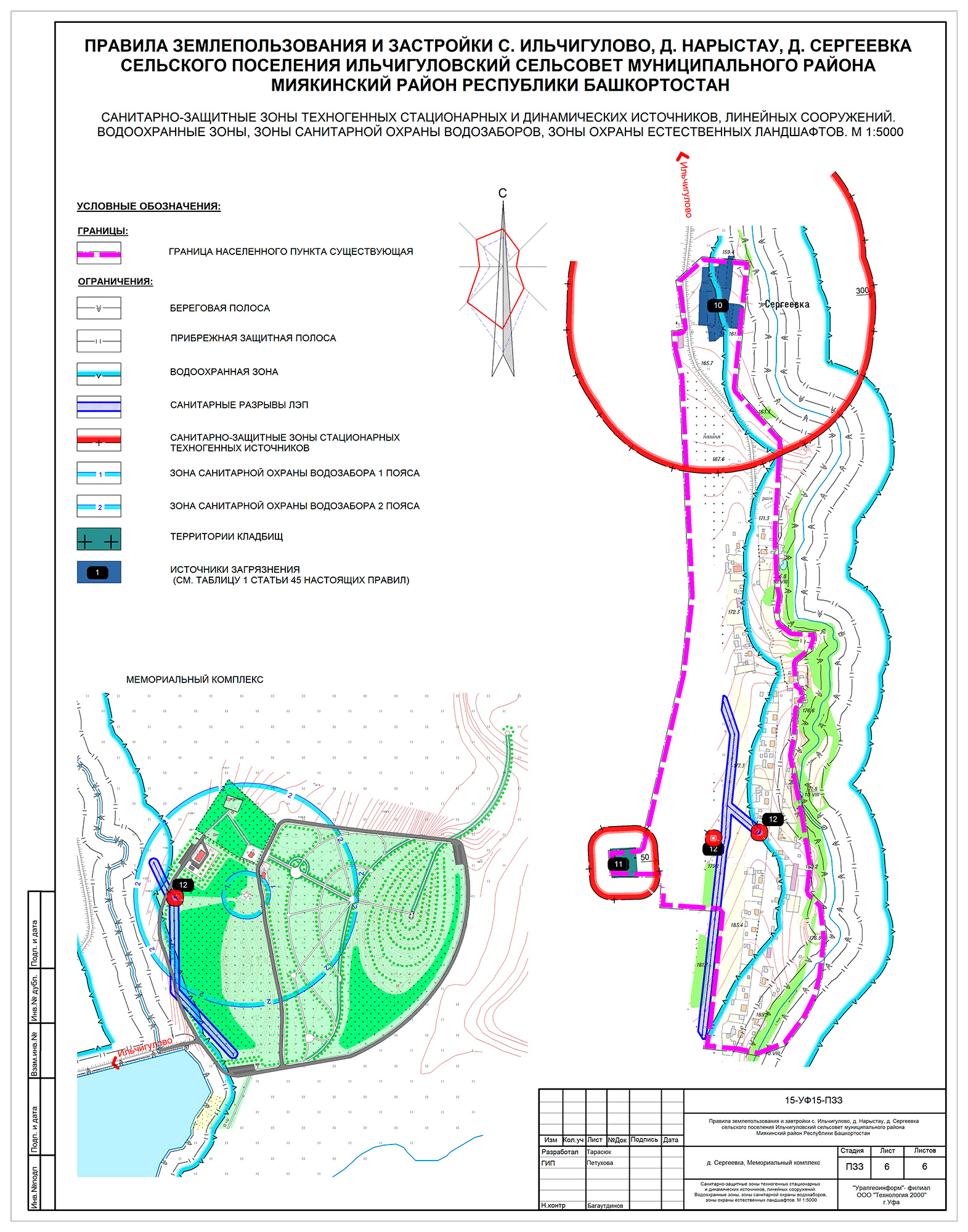
- Belt number one ZSO
- The second belt ZSO
- The third zone of the ZSO
- Gas pipeline security zone
- Registration of protected zones in the USRN
- Coastal protection zone regime
- What can be done in the coastal protective zone?
- What is forbidden to do in the coastal protective strip?
- Location of sewers to water sources
- Important nuances when arranging sewer security zones
- Protective zone of pipelines
- Urban planning Protected zones of external engineering networks
- Domestic sewer security zone
- Water supply security zone
- Security zone of heating networks
- Security zone of cables and communication networks
- Power line security zone
- Security zone of residential buildings and public buildings
- Protected zone of trees and shrubs
- Minimum distances between utilities
- 3.2. Activities on the territory of the WZO of underground water sources*
- Regulation of the laying of pipeline networks
General information about sanitary protection zones (ZSO)
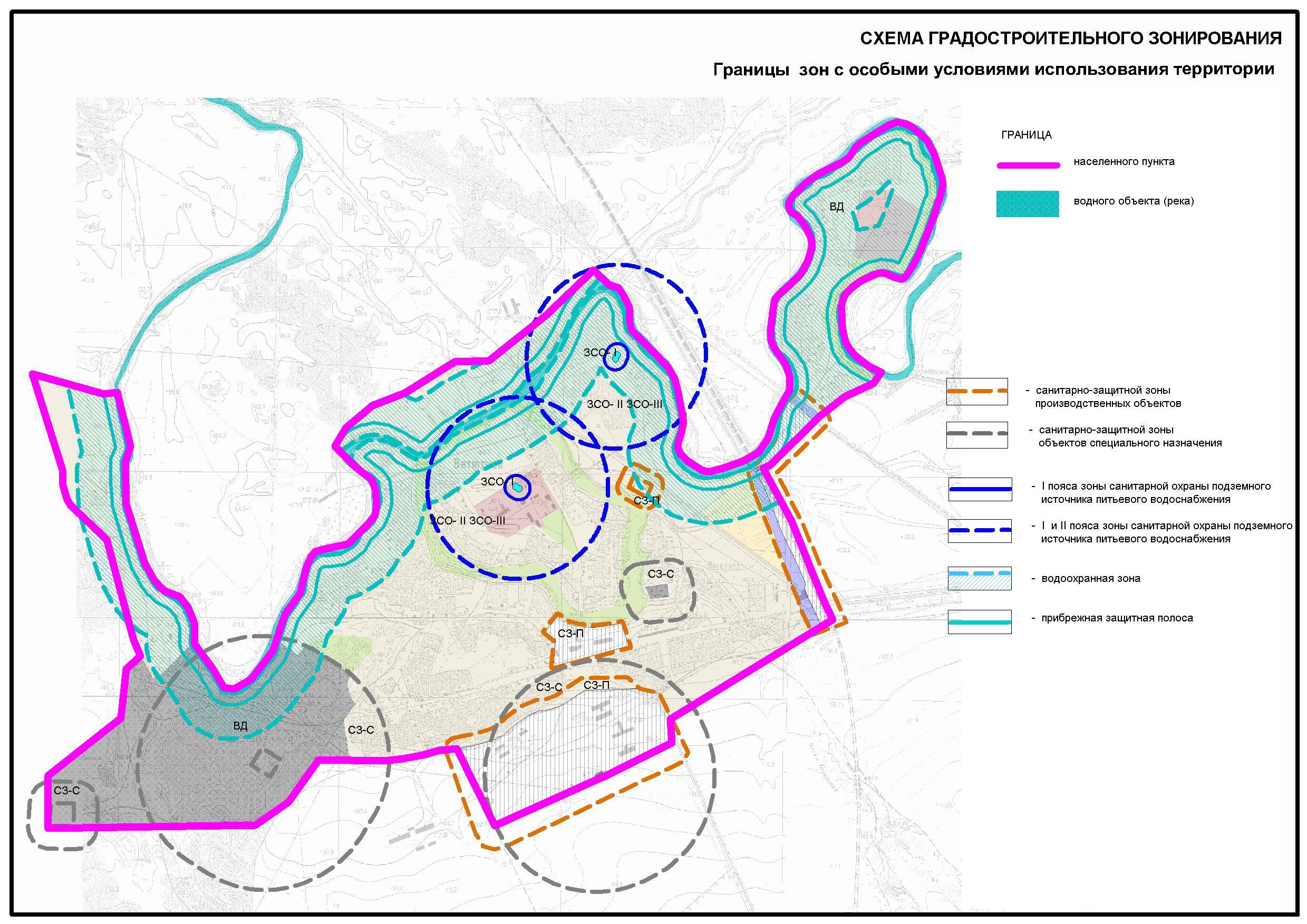
The above document defines three sanitary zones around the source of water supply.
- The first zone of strict regime.
- The second and third are considered restricted zones.
At the same time, for each belt, its own standards have been developed, that is, the size of the boundaries, the rules for operation and use for its intended purpose, a set of measures that can help improve the condition of the zone and the water source itself, and requirements to prevent their pollution.
Belt number one ZSO
This is the area around the water source, which includes facilities and water intake equipment. The purpose of creating this belt is to protect the source so that no pollution gets into it.
Fenced first zone
How are boundaries defined? It is clear that the center of the zone will be the water intake well. Distances indicated in the SanPiN document will be laid off from it in all directions.
- If a well is drilled in a site where its pollution, as well as soil pollution, is completely excluded, then the size of the boundaries is 15-25 m.
- The same distance if the water intake is located in favorable operating conditions. Hydrogeological conditions are mainly taken into account.
- If the well is protected by reliable horizons, then the distance can be increased to 30 m.
- If the horizons are not sufficiently protected, then the distance is increased to 50 m.
- If water towers are installed on the well, then the width of the belt can be 10 m. In some cases, given the design of the tower, the first belt can be excluded, because the structure itself is already the maximum protection.
- The laying of pipelines up to 1000 mm also determines the protection zone. If the pipe is laid in dry soil, then the belt is determined by 10 m, if it is wet, then 50 m.
The second belt ZSO
The second zone of sanitary protection of drinking water sources is organized to protect groundwater from the negative effects of microorganisms and chemicals.The exact distances of this zone do not exist. They are specially calculated taking into account various methods, which include analytical methods, numerical and even graphoanalytical. The calculations are based on hydrodynamic algorithms.
Fenced second zone
The essence of the calculations is that various pollution with precipitation can penetrate deep into the earth and reach the aquifer. So, the distance is determined so that these pollution do not reach this water intake layer. In fact, this will be determined by the time it takes for the water inside the reservoir to self-purify. For example, if contaminants got into the aquifer 500 m before the well, then when they reach it, they must be cleaned independently under the influence of natural factors. Groundwater has this property. This is especially true for the activity of microorganisms. They, being in the water for a long time, either die or become unable to act on the human body.
True, making such calculations, it is very difficult to determine how microorganisms will behave inside the aquifer. After all, there is always a chance that they will fall into the breed and stay there for a long time. Such processes have not been studied. Therefore, the size of the second belt of sanitary protection of water supply sources is increased by a certain amount. So to speak, organize it with a margin.
The third zone of the ZSO
Sanitary requirements for water supply are very strict, which is why the third belt is treated with great attention, because it is it that protects the aquifer from which the water is taken from the chemical impact. And here, as in the case of the second zone, the boundaries are determined on the basis of calculations. ZSO scheme
ZSO scheme
From the calculations, it becomes clear that the basis for setting the boundaries of the belt takes into account the time during which the chemicals that have entered the aquifer will reach the water well. And this time value is determined by the number - 10,000 days. A decent indicator that corresponds to the operating time of the well itself. That is, until the chemicals get to the water intake, its operation will end.
It is clear that such assumptions in the calculation of the second and third belts of sanitary protection of a water supply source are associated with the lack of knowledge of the processes occurring inside the aquifers and the rocks surrounding them. That is why the boundaries of the two zones are set approximately, but taking into account a certain margin, which gives hope that the water intake well will not be contaminated.
Gas pipeline security zone
Russian legislation distinguishes two gas pipeline security zones: the zone of gas distribution networks and the zone of main gas pipelines.
The RF LC provides for a security zone for pipelines (including gas pipelines) (clause 6, article 105 of the RF LC), as well as a zone of minimum distances to main or industrial pipelines (including gas pipelines) (clause 25, article 105 ZK RF).


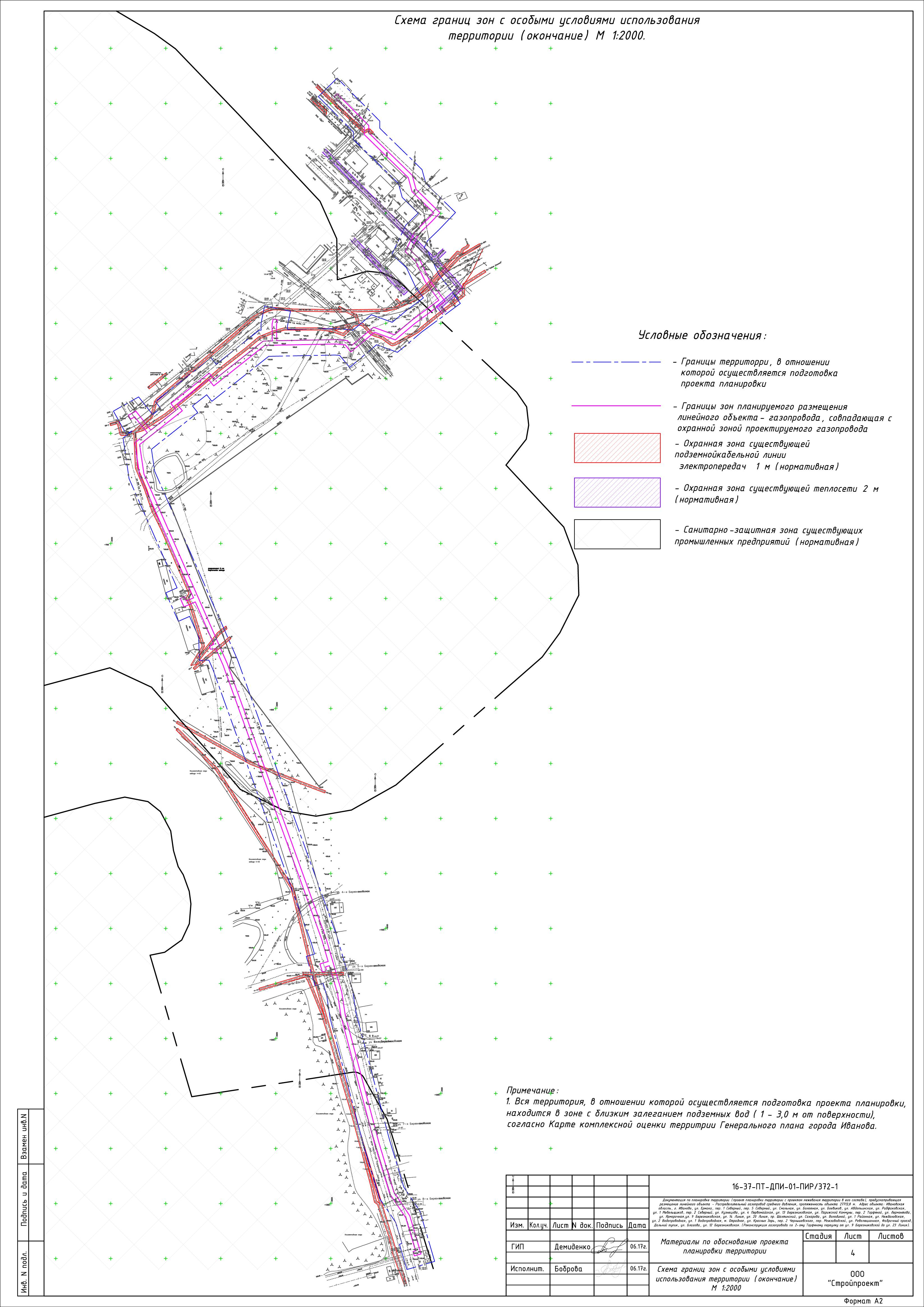


Clause 2 of the Rules for the protection of gas distribution networks, approved by Decree of the Government of the Russian Federation of November 20, 2000 N 878, establishes that these Rules are valid throughout the territory of the Russian Federation and are mandatory for legal entities and individuals who are owners, owners or users of land plots located within the security zones of gas distribution networks, or designing civil and industrial facilities, engineering, transport and social infrastructure facilities, or carrying out any economic activity within the boundaries of these land plots.
Subparagraph "e" of paragraph 3 of the Rules determines that the gas distribution network security zone is a territory with special conditions of use, established along the gas pipeline routes and around other objects of the gas distribution network in order to ensure normal conditions for its operation and exclude the possibility of its damage.
In order to prevent their damage or violation of the conditions of their normal operation, restrictions (encumbrances) are imposed on land plots included in the security zones of gas distribution networks, which prohibit the persons specified in paragraph 2 of the Rules, including: appointments; enclose and block security zones, prevent the access of personnel of operating organizations to gas distribution networks, maintenance and elimination of damage to gas distribution networks; make fire and place sources of fire; dig cellars, dig and cultivate the soil with agricultural and reclamation tools and mechanisms to a depth of more than 0.3 m (paragraph 14 of the Rules).
The procedure for protecting main gas pipelines from 20.09.2017 is regulated by the Rules for the protection of main gas pipelines, approved by Decree of the Government of the Russian Federation of 08.09.2017 N 1083. Clause 2 of the Rules establishes that the concept of "main gas pipeline" includes: the linear part of the main gas pipeline; compressor stations; gas measuring stations; gas distribution stations, units and gas reduction points; cooling stations gas; underground gas storages, including pipelines connecting underground gas storage facilities, and clause 3 of the Rules establishes security zones for gas pipeline facilities.
These Rules impose a number of obligations on the owner (or other legal owner) of the land plot on which the main gas pipeline facilities are located, and also establish prohibitions (clause 4 of the Rules) and some restrictions on the use of land plots - in particular, mining, explosive, construction, installation, land reclamation, loading and unloading and other works and activities is allowed only with the written permission of the owner of the main gas pipeline or the organization operating the main gas pipeline (clause 6 of the Rules).
The limitations established by the federal legislator on the actual use of land plots on which gas supply system facilities are located, due to the explosive and fire hazardous properties of gas transported through gas distribution networks, and the special conditions for the use of these land plots provided for in this regard and the regime for exercising economic activity on them are not aimed at only to ensure the safety of gas supply system facilities during its operation, maintenance and repair, but also to prevent accidents, disasters and other possible adverse consequences and thereby protect the life and health of citizens, to ensure their safety (Determination of the Constitutional Court of the Russian Federation of 06.10.2015 N 2318-O “On the refusal to accept for consideration the complaint of citizen Osipova Lyudmila Vladislavovna about the violation of her constitutional rights by the provisions of clause 6 of article 90 of the Land Code of the Russian Federation, part six of article 28 and part four of article 32 of the Federal of the Federal Law “On Gas Supply in the Russian Federation”).
Registration of protected zones in the USRN
The legislation considers it obligatory to register the security zones of heating networks in the Unified State Register of Real Estate (hereinafter referred to as the EGRN). This rule is regulated in Articles 7, 8 of the Federal Law "On State Registration of Real Estate" dated July 13, 2015 N 218-FZ. The sections where the pipeline passes are registered for safety.
Article 10 of this regulatory legal act establishes a list of information to be indicated in the USRN:
- attributes assigned to zones (numbers, types, indices);
- location designation;
- the official names of the government agencies that made the decision to install;
- details of orders regulating the creation of territories;
- building restrictions.
Local self-government bodies undertake the obligation to transfer information to the registration chamber on the organization of zones after the approval of orders and instructions on their creation. The owner of the land applies for the inclusion of the territory in the Rosreestr, the employees of the institution consider this issue, enter information, issue an extract from the USRN confirming the registration.
The security areas of heating networks are designed to protect against factors that negatively affect the functionality - breakdowns, accidents. If damage is caused by strangers, compensation is at their expense.
Coastal protection zone regime
What can be done in the coastal protective zone?
In general, on the territory of the coastal protective strip, you can do everything that is not prohibited. Including recreation, placement of water supply facilities, fishing and hunting facilities, water intake, port and hydraulic structures. At the same time, you need to remember why the protective strip is being installed, so you can’t litter or pollute the reservoir either.
What is forbidden to do in the coastal protective strip?
Here the list will be much longer. Firstly, all the restrictions that are fixed for the water protection zone apply to the coastal protective strip. Within the boundaries of the coastal protective strip it is prohibited:
- use of wastewater for soil fertilization;
- placement of cemeteries, animal burial grounds, dumps of various types of waste (production, toxic and poisonous substances, etc.);
- implementation of aviation pest control measures;
- place gas stations, fuel and lubricants warehouses, service stations, vehicle washes.
- movement and parking of vehicles (except for special vehicles).Movement is allowed only on roads, and parking is only allowed on roads and in equipped places with a hard surface;
- placement and use of storage facilities for pesticides and agrochemicals,
- discharge of sewage, including drainage, water;
- exploration and production of common minerals.
If there is a forest on the territory of the coastal protective strip, then it is additionally prohibited:
- clear-cutting of forest plantations;
- the use of toxic chemicals to conserve and protect forests; farming, with the exception of haymaking and beekeeping;
- creation and exploitation of forest plantations;
- placement of capital construction facilities, with the exception of facilities related to the performance of work on geological exploration and development of hydrocarbon deposits.
Additionally, it is prohibited:
- plow the land
- dump the eroded soil,
- graze cattle,
- organize children's camps and baths.
Construction on the territory of the coastal protective strip, as well as within the boundaries of the water protection zone, is not prohibited, but in this case it is necessary to equip the facilities under construction with water purification systems and waste collection. You can also read more about this in the article about water protection zones.
If these prohibitions are not followed, the police can draw up a protocol against the violator, and the environmental inspector can be held accountable. For the use of the coastal protective strip of a water body in violation of the restrictions on economic and other activities in Part 1 of Art. 8.42 of the Code of Administrative Offenses. Punishment - fine:
- for citizens - from 3000 to 5000 rubles;
- for officials - from 8,000 to 12,000 rubles;
- for legal entities - from 200,000 to 400,000 rubles.
Conclusion
Now you know exactly everything about coastal protection zones and water protection zones.This knowledge will help you properly organize your economic activities in these areas, preserve nature, and save money by spending it not on a fine, but on something more pleasant and useful.




Legislation in the Russian Federation is changing rapidly, so the information in this article could become out of date. We recommend that you contact our lawyers who will advise you free of charge. To do this, fill out the form below:
Location of sewers to water sources
For the reason that damage to sewer systems poses a significant threat to the environment, strict rules have been developed for the placement of pipelines of sewer systems in relation to reservoirs and other sources of water.
For water supply protection zones should be located at a distance:
- not less than 250m from the river;
- from the lake it should be 100m away;
- to underground sources, the sewage facility should be no closer than 50m.
At least 10 m there must be a distance from the sewer to the water supply pipeline, while the following condition must be observed: the pipe diameter must be less than a meter. If the value of this parameter is more than 1m, then the distance must be at least 20m.
If the water supply is located in soil with high humidity, then the sewerage protection zone must have a distance of at least 50 m. In this case, the size of the pipes does not matter.
Important nuances when arranging sewer security zones
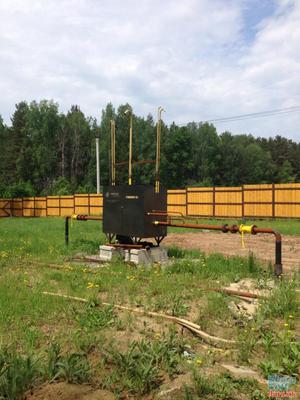 The requirements contained in the SNiP documents are of great importance not only for developers who carry out sewerage work, but also for those organizations that plan to carry out certain work in protected areas. Given the standards contained in the SNiP documents, it is necessary not to forget about the requirements that are spelled out in local acts.
Of course, when they were approved, the same SNiP standards were taken as the basis. However, they may contain certain nuances. If you do not comply with them, then for the developer this can lead to a number of unpleasant surprises.
You should also be aware that in litigation of violations committed by the implementing organization, local legislative acts will be taken into account first of all.
If the plan determines that the sewerage pipelines will pass in the immediate vicinity of any buildings, then they must be laid at a certain distance from the base of the buildings in accordance with the sanitary standards provided for by local legislation. It is possible to reduce the distance established by acts only if the performer of the work has received written consent from the owner of the building.
Protective zone of pipelines
The presence of protected zones of pipelines (gas pipelines, oil pipelines and oil product pipelines, ammonia pipelines) is regulated by clause 6 of Art. 105 ZK RF. Also, paragraph 25 of Art. 105 of the Land Code of the Russian Federation provides for the presence of zones of minimum distances to main or industrial pipelines (gas pipelines, oil pipelines and oil product pipelines, ammonia pipelines).
Protective zones of pipelines are established in accordance with paragraph.1.1 Rules for the protection of main pipelines, approved by the Ministry of Fuel and Energy of Russia on April 29, 1992, by Resolution of the Gosgortekhnadzor of Russia dated April 22, 1992 N 9, in order to ensure safety, create normal operating conditions and prevent accidents on main pipelines transporting oil, natural gas, oil products, oil and artificial hydrocarbon gases, liquefied hydrocarbon gases, unstable gasoline and condensate.
In accordance with paragraph 4.1 of the Rules, security zones are established along the routes of pipelines transporting oil, natural gas, oil products, oil and artificial hydrocarbon gases, in the form of a plot of land bounded by conditional lines passing 25 meters from the axis of the pipeline on each side.
Land plots that are included in the protected zones of pipelines are not withdrawn from land users and are used by them for agricultural and other work with mandatory compliance with the requirements of the Rules for the Protection of Main Pipelines (clause 4.2 of the Rules).
To ensure normal operating conditions and exclude the possibility of damage to main pipelines and their facilities, security zones are established around them, the size of which and the procedure for performing agricultural and other work in which are regulated by the Rules for the Protection of Main Pipelines (clause 5.6 of SP 36.13330.2012. Code of Practice. Main pipelines Updated version of SNiP 2.05.06-85 * (approved by Order of the State Construction Committee of December 25, 2012 N 108 / GS)). It should be borne in mind that in accordance with Amendment N 1 to SP 36.13330.2012 "SNiP 2.05.06-85 * Main pipelines" (approved and put into effect by Order of the Ministry of Construction of Russia dated 18.08.2016 N 580 / pr), the specified set of rules is not applies to design pipelines laid on the territory of cities and other settlements, in marine areas and fields.
The state must take into account that economic needs and even certain fundamental rights, including property rights (in this case, for objects that are within the boundaries of protected zones and may affect environmental safety), should not outweigh the interests of protecting the environment (obtaining some or benefits from the use of the security zone for personal interests in relation to utilities). The state is obliged to take the necessary steps to ensure the effectiveness of measures to protect the environment, including restricting property rights in order to prevent adverse consequences (ECHR judgment of 27.11.2007 N 21861/03 in the case of Amer v. Belgium).
In conclusion, it should be noted that a feature of protected zones is a special procedure for using a land plot, established by the legislation of the Russian Federation. Land plots within the boundaries of security zones are not withdrawn from the owners and are used by them in compliance with the special legal regime established for these land plots (limiting or prohibiting those types of activities that are incompatible with the goals of establishing zones).


Urban planning Protected zones of external engineering networks
The composition and distances from construction sites to utilities, i.e. security zones - defined in SNiP 2.07.01-89 *, the current current version of this SNiPa - SP 42.13330.2011. Actually from this SNiP it follows:
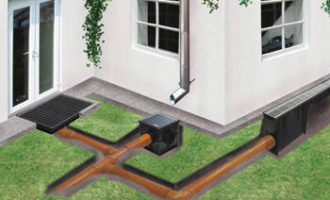
Domestic sewer security zone
Distinguish pressure and gravity sewerage.Accordingly, the security zone of a domestic pressure sewer is 5 meters from the pipe to the foundation of a building or structure.
If the sewer is gravity, then according to SNiP, the security zone will be - 3 meters.
In this case, the minimum distance from the fence or contact network supports to the sewerage system will be 3 and 1.5 meters, respectively.
Water supply security zone
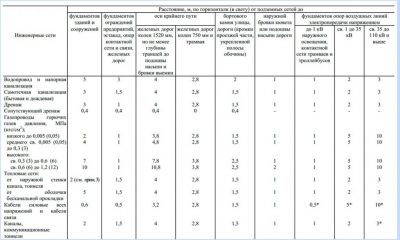
The security zone of the water supply is 5 meters from the foundation of the facility to the network. The security zone from the foundation of the fencing of enterprises, overpasses, contact network and communication supports, railways to the water supply system is 3 meters.
In addition, from SP 42.133330.2011 Table 16 (see details below), you can find the following information regarding the laying of water supply and sewer pipes:
"2. Distances from household sewerage to household and drinking water supply should be taken, m: to water supply from reinforced concrete and asbestos pipes - 5; to the water supply from cast-iron pipes with a diameter of up to 200 mm - 1.5, with a diameter of more than 200 mm - 3; to the water supply from plastic pipes - 1.5.
The distance between the sewerage and industrial water supply networks, depending on the material and diameter of the pipes, as well as on the nomenclature and characteristics of the soil, should be 1.5 m.
Security zone of heating networks
The minimum security zone of heat networks from the outer wall of the channel, tunnel, from the shell of the channelless laying, to the foundation of the building is 5 meters.
Security zone of cables and communication networks
The security zone of power cables of all voltages and communication cables from the network to the foundation of a building or structure is 0.6 m.
And here is the table itself - its first part:
Power line security zone
However, according to the same paragraph, if power lines are laid within the boundaries of settlements under the sidewalk, then:
- up to 1 kW, the permissible security zone from the outermost wires is 0.6 meters to the foundation of the building and 1 meter to the roadway.
- For lines over 1 and up to 20 kW - the security zone will be 5 meters.
According to the same annex, in places where power lines cross navigable rivers, the protection zone for them will be 100 meters. For non-navigable rivers, the protection zones do not change.
In the protected zones of power lines, a special procedure for land use is determined. Within the boundaries of the protected zones, the land is not taken away from the owner, but encumbrances are imposed on its use - do not build, store, block, do not hammer piles, do not drill pits, work using heavy equipment only in agreement with the Grid Organization, etc. P. for more details, see the resolution.
Protected zones, although determined according to the application, are ultimately established by the owner of the networks, information about them is transferred to the cadastral chamber. Paragraph 7 of the resolution states that the grid organization must, at its own expense, place information about the presence, danger, and size of security zones in these same zones - i.e. install appropriate information signs.
Security zone of residential buildings and public buildings
Also in SP 42.13330.2011, you can find a table regulating the distance from residential buildings to garages, car parks and service stations and to public buildings, including educational and preschool institutions.
Protected zone of trees and shrubs
In fact, this table should be understood exactly the opposite, since the distance from buildings to trees and shrubs (green spaces) is regulated.
It follows from it that the minimum distance from the wall of the building to the axis of the tree trunk is 5 meters.
Gas pipeline security zone
Gas pipelines are distinguished by the device (aboveground, underground) by the pressure inside the pipe (from a few kilopascals to 1.5 megapascals) and the diameter of the pipe. The distance from the gas pipeline to the building is defined in SP 62.13330.2011 in Appendix B. Here are extracts from this application for determining the security zones for underground and aboveground gas pipelines.

Minimum distances between utilities
Even in the joint venture you can find a table regulating the minimum distances between utilities. Distances between water supply and sewerage, power cables and heating networks, between storm sewers and domestic, etc.
3.2. Activities on the territory of the WZO of underground water sources*
3.2.1. Activities for the first belt
3.2.1.1. The territory of the first ZSO belt should
be planned to divert surface runoff beyond its limits, landscaped,
fenced and secured. Paths to structures must have solid
coating
_________
* Aim
measures is to preserve the constancy of the natural composition of water in
water intake by eliminating and preventing the possibility of its pollution.
3.2.1.2. Not allowed: landing of tall
trees, all types of construction not directly related to
operation, reconstruction and expansion of water supply facilities, incl.
laying of pipelines for various purposes, placement of residential and
household buildings, human habitation, the use of pesticides and
fertilizers.
3.2.1.3. Buildings must be equipped
sewerage system with wastewater discharge to the nearest household or
industrial sewerage or local wastewater treatment plants,
located outside the first zone of the ZSO, taking into account the sanitary regime on
territory of the second belt.
In exceptional cases, in the absence
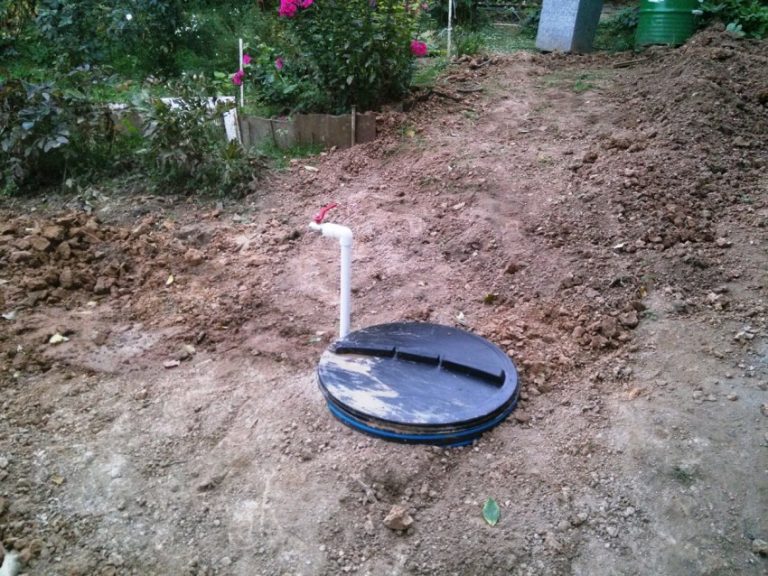
sewers should be equipped with waterproof receivers for sewage and household
waste located in places that exclude pollution of the territory of the first
ZSO belts during their export.
3.2.1.4. Waterworks,
located in the first zone of the sanitary protection zone, must be equipped with
taking into account the prevention of the possibility of contamination of drinking water through heads and
wellheads, manholes and overflow pipes of tanks and filling devices
pumps.
3.2.1.5. All water intakes must be
equipped with equipment for systematic control of compliance with the actual
flow rate during operation of the water supply system of design capacity,
provided for in its design and justification of the boundaries of the ZSO.
3.2.2. Activities for the second and third
belts
3.2.2.1. Detection, plugging or
restore all old, dormant, defective or incorrect
operating wells that pose a danger in terms of the possibility
pollution of aquifers.
3.2.2.2. Drilling new wells and new
construction associated with disturbance of the soil cover is carried out with
obligatory coordination with the center of state
sanitary and epidemiological supervision.
3.2.2.3. Prohibition of injection of waste water into
underground horizons, underground storage of solid waste and subsoil development
earth.
3.2.2.4. Warehouse Prohibition
fuels and lubricants, pesticides and mineral fertilizers, accumulators
industrial effluents, sludge storages and other objects causing danger
chemical pollution of groundwater.
The placement of such objects is allowed in
within the third zone of the ZSO only when using protected groundwater,
subject to the implementation of special measures to protect the aquifer
from pollution in the presence of the sanitary and epidemiological conclusion of the center
state sanitary and epidemiological supervision, issued taking into account
conclusions of geological control bodies.
3.2.2.5. Timely completion of the necessary
measures for the sanitary protection of surface waters that have a direct
hydrological connection with the aquifer used, in accordance with
hygienic requirements for the protection of surface waters.




3.2.3. Activities for the second belt
In addition to the activities specified in section 3.2.2,
within the second zone of the ZSO, underground water supply sources are subject to
the following additional activities.
3.2.3.1. Not allowed:
• placement of cemeteries, animal burial grounds, fields
sewage, filtration fields, manure storages, silo trenches,
livestock and poultry enterprises and other facilities,
causing the danger of microbial contamination of groundwater;
• application of fertilizers and pesticides;
• felling of the main forest and
reconstruction.
3.2.3.2. Implementation of measures for sanitary
improvement of the territory of settlements and other objects (equipment
sewerage, arrangement of waterproof cesspools, organization of drainage
surface runoff, etc.).
Regulation of the laying of pipeline networks
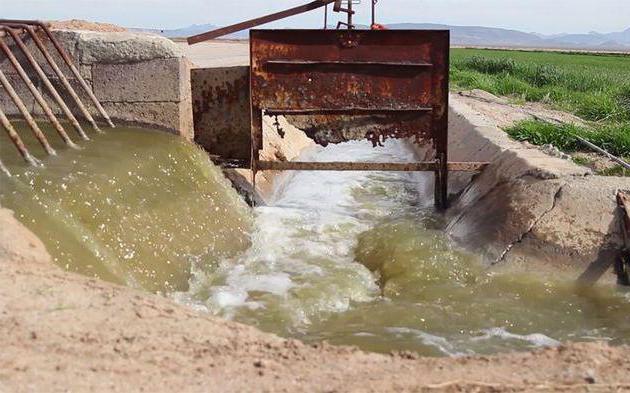
Pipelines for water supply systems are usually focused on serving a clean environment with minimal inclusion of foreign elements. Therefore, in case of compliance with sanitary and hygienic standards, the laying of water pipes is allowed in the first belt of protected areas. But, again, after a thorough study of the sources and consumers with whom he will have to work.
There are also prohibitive measures that completely exclude the organization of third-party networks within protected areas. First of all, it concerns the laying of water pipes for main networks, regardless of the purpose. The same rule applies to other communications that interact with cleaning, industrial or agricultural facilities.