

- Classification by type of action
- How to unfreeze a hole
- Prevention
- How to clean a cesspool from silt
- DIY option
- With a pump
- Varieties of funds for cesspools
- How to choose
- Some Helpful Tips
- Characteristics and types
- Causes and signs
- The reasons
- signs
- How and what bacteria purify water
- Cleanup not possible: alternative
- Sanitary standards for the construction of a septic tank
- Distance to the well
- Getting permission
Classification by type of action
Depending on the active components, there are means:
- Chemical;
- Biological.
Chemical preparations differ from biological ones in their versatility. They dissolve feces in any conditions (at any temperature and types of effluents). They are suitable for use in the cold season and any kind of septic tanks.
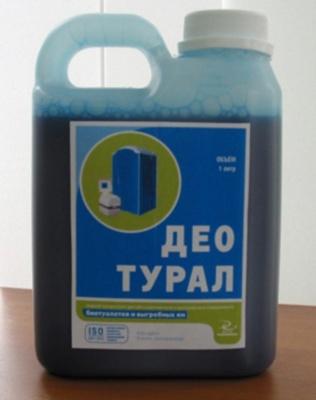 Cesspool chemical solution
They are classified according to the active components of the mixture. Now mixtures with formaldehyde, ammonium salts and nitrates are actively used. The latter are considered the safest for the environment. But quaternary ammonium compounds are the most effective - they completely neutralize the unpleasant odor from the septic tank and eliminate old feces.
 ammonium salts
These tools have their own advantages and disadvantages. Among the advantages it is worth highlighting:
- Versatility;
- Can be used in conditions of hard water, soap solutions and other additives;
- High efficiency. Preparations of this kind perfectly clean even complex blockages, dissolve perennial sediments on the walls of septic tanks and pits, and eliminate unpleasant odors in a short time.
Of the minuses:
- Low environmental friendliness. Water purified with the help of chemical elements cannot be used as technical water. In addition, chemical compounds through open septic tanks or leaky areas can soak into the ground or enter groundwater;
- Even after such cleaning, over time, it will be necessary to carry out a sewage pumping. The liquid purified by chemistry contains numerous pathogenic compounds that will negatively affect the quality of the soil. Its fertility may decrease, its structure may change. Therefore, such waters are necessarily removed from the site;
- Under the influence of some solutions, metal and plastic joints may
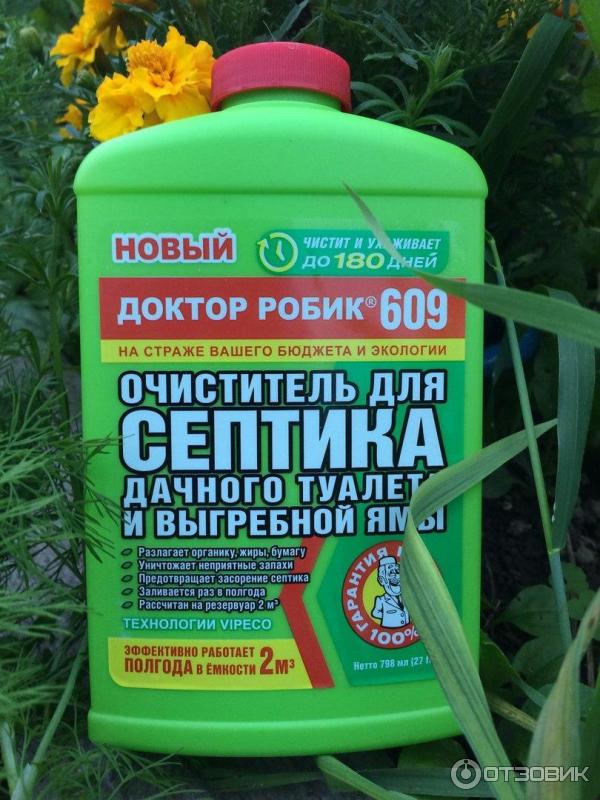
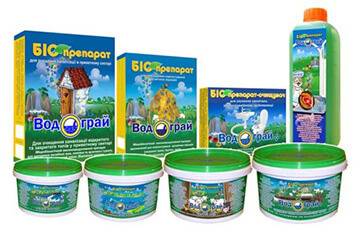
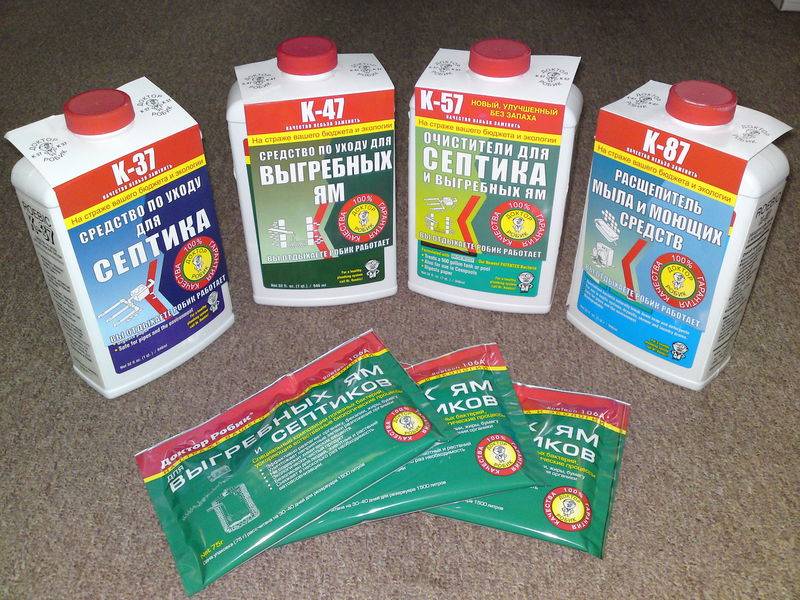
Biological cesspool cleaners are affordable and effective products for getting rid of unpleasant odors and drains. They are made up of bacteria and organic additives that serve as a habitat for microorganisms for some time. These bacteria recycle waste and are therefore completely safe to use.
Interaction between anaerobic and aerobic bacteria and air
Biological agents are also divided into:
- Anaerobic;
- Aerobic.
Related video:
Anaerobic organisms do not need oxygen. Such connections are suitable for cleaning sealed closed septic tanks, as well as pipes. Aerobic "work" only in the presence of fresh air, because.their activity directly depends on the level of oxygen in a certain environment.
 Cesspool Bacteria
Advantages of using biological additives:
- Complete elimination of unpleasant odors and old waste. Despite the fact that biological additives clean cesspools much longer than chemical compounds, they are no less effective;
- Safety. Microorganisms not only purify wastewater from solid particles and liquid residues, but also saturate them with organic substances. This allows further use of this water for irrigation of fields or fertilizers;
- Suitable for use in metal and plastic drums. Bacteria do not corrode walls and joints, are safe for rubber couplings;
- Enzyme formulations are quite affordable and are characterized by prolonged action.
Among the shortcomings are:
- Impossibility of application in a cold season. When the temperature drops below 10 degrees, the bacteria become less active, which reduces the cleaning efficiency;
- There are only a few dietary supplements that can be used to treat shower, bath or chlorinated water drains. In most cases, microorganisms react negatively to the presence of chemical impurities in the effluent. In such an environment, they stop multiplying, and in the future they simply die;
- Depending on the type of biological pit cleaner, a certain level of oxygen must be maintained. Aerobic bacteria are considered more active than aerobic bacteria, but when they are applied, a certain oxygen level inside the pit should be maintained.
Remember that when using biological additives, mineral deposits fall to the bottom of the tank.This is not sludge, but they also require disposal, otherwise, the useful volume of the tank is reduced.
How to unfreeze a hole
As a rule, the freezing of the drain pit in winter is prevented by the snow layer and the thermal insulation system, but it happens that at very low temperatures the waste freezes. What to do if the cesspool freezes in winter?
It is possible to defrost waste in a cesspool using an extension cord, copper wire, a steel rod 20-30 cm long and a gripper.
In cases where only the sewer pipe is frozen, it is wrapped with a copper conductor, which is connected to the phase wire. Under the influence of current, the thawing of the pipe will take 2-3 hours.




When the entire pit freezes, a steel rod is driven into the middle, to which a copper conductor is attached. This is followed by the phase voltage supply. In this case, the pit will thaw for at least 24 hours. After the work is completed, the voltage is first turned off, and then the rod and wires are removed.
The further functionality of the sewer system depends on how well the work will be done.
Among the most popular cleaning methods of the structure are:
- manual cleaning with a bucket that is tied to a rope;
- pumping with a fecal pump;
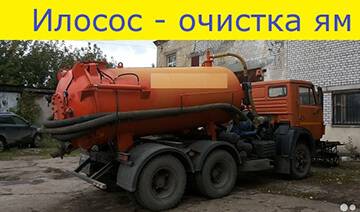
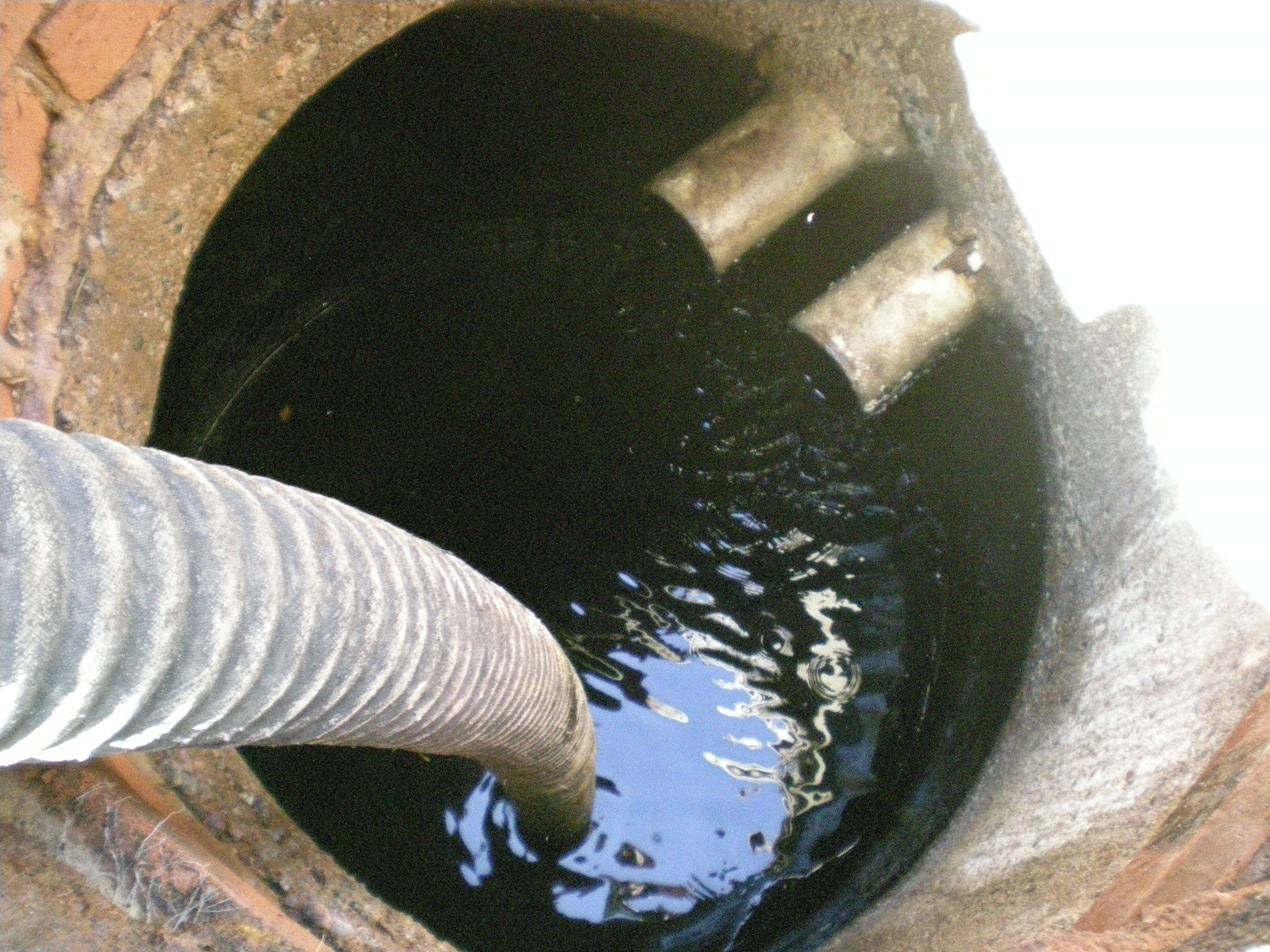
- pumping out the pit with a cesspool machine;
- biological treatment with biological preparations containing bacteria;
- chemical cleaning.
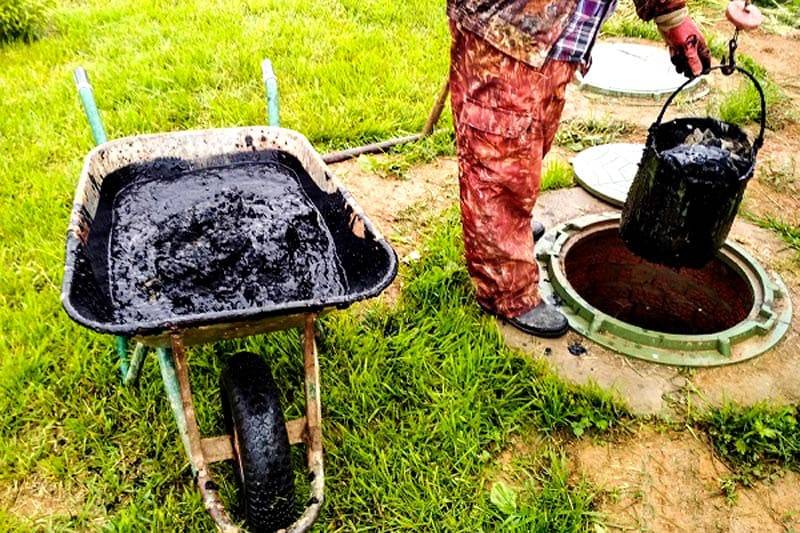
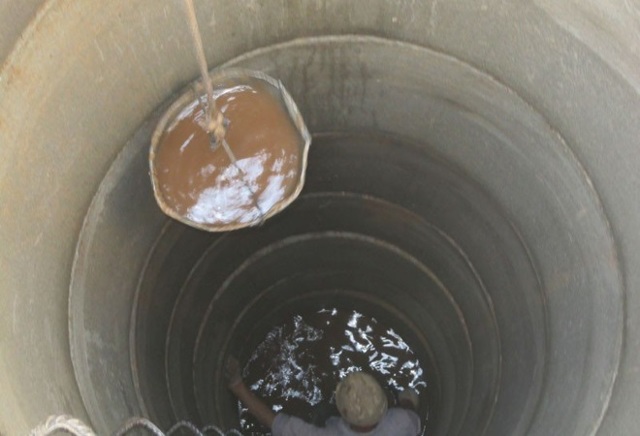
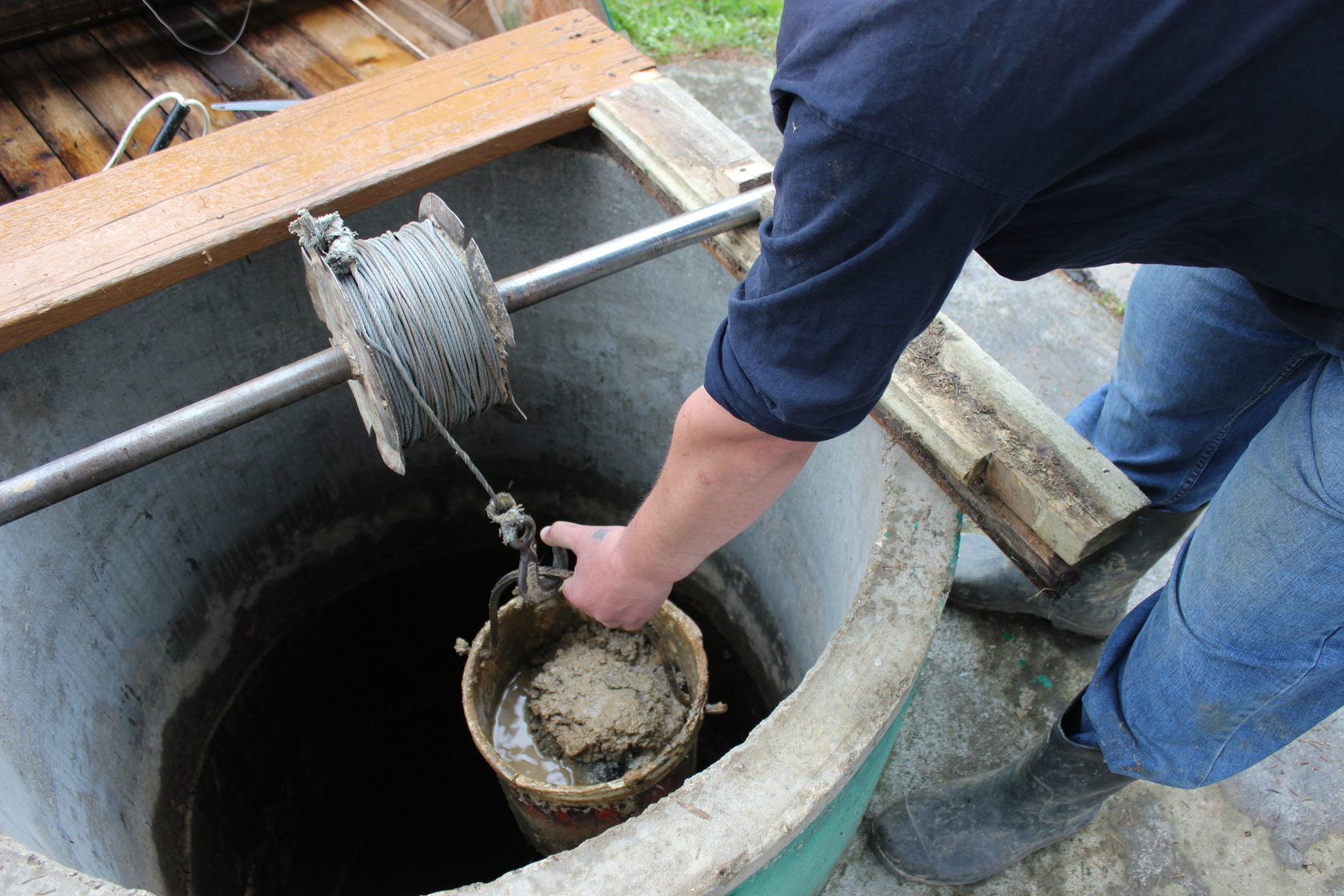
How to remove sludge from a cesspool with a bucket? To do this, it is necessary to dilute the silt itself with water, take a bucket and a rope. You tie the bucket to a rope and lower it yourself to the bottom of the pit, scoop up the waste and all the liquid, and so gradually pull it out.This is a rather unpleasant procedure, as disgusting aromas come from the device. Moreover, it is only possible if your pit is without a bottom and has a shallow depth. After completing the procedure, be sure to fill the bottom with gravel in order to facilitate subsequent cleaning of the bottom. Cleaning sludge from cesspools by hand must be carried out in a special protective suit in order to avoid the ingress of toxic gases into the body.
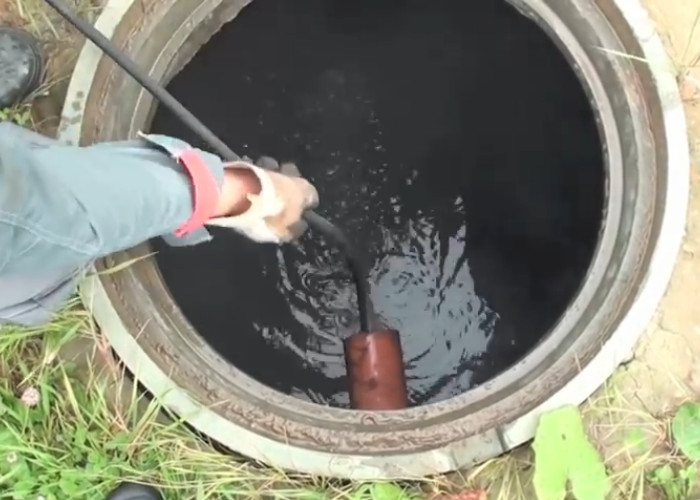
How to clean a cesspool of silt using a fecal pump? This is an automated, easy way. You will need a fecal or water pump, as well as a special sealed container for waste disposal. If you have an automatic pump, then you need to place it inside the pit, it will filter out sewage and pump it out on its own as it fills up. If semi-automatic, then you will need to control the pumping process. Liquefy the liquid before pumping it out, pump it out and dispose of the waste. Flush the hole with water and pump it out again. The fecal pump crushes large human waste.
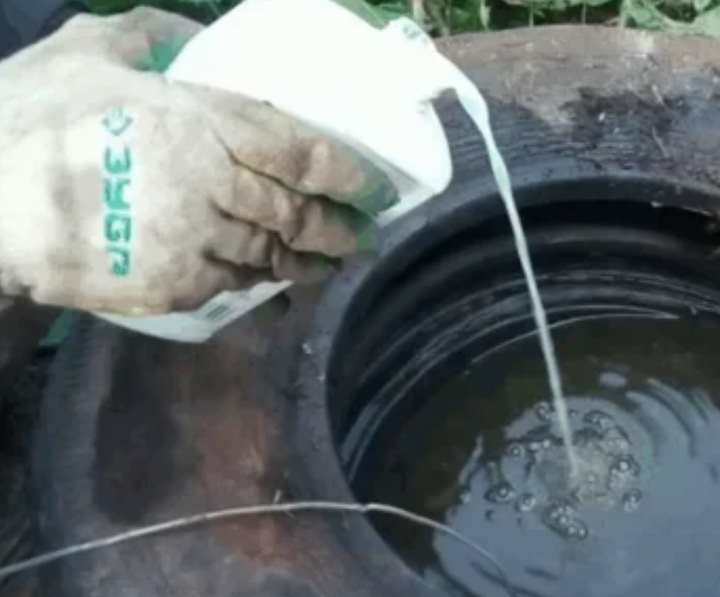
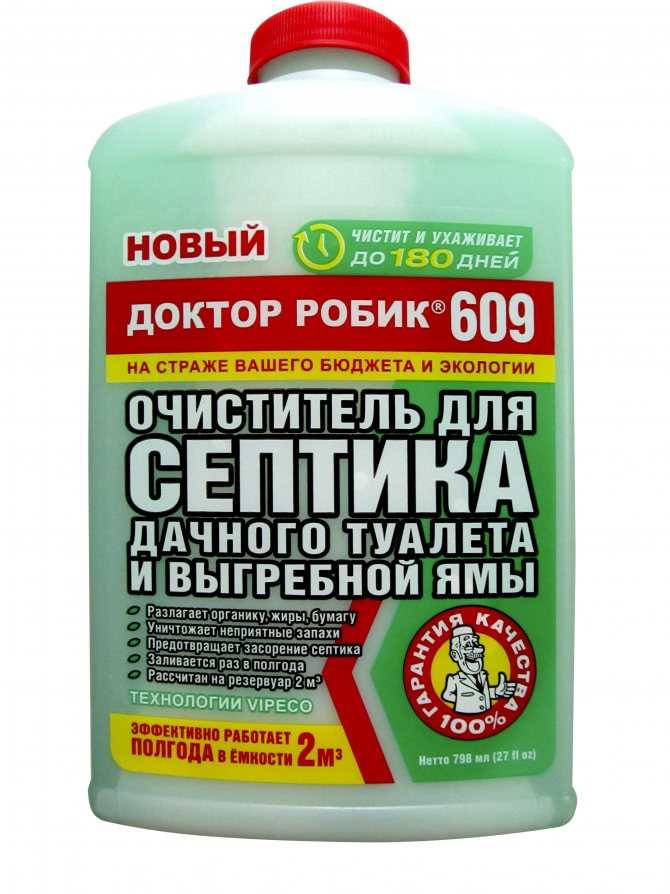
If you have sludge in the cesspool, then you can also clean it with the help of special biobacteria. There are special biological preparations for cleaning cesspools. It can be powder, liquid or tablets, all this is added inside the structure. They reduce the mass of liquid and solid household waste by 80%, moreover, they interrupt and completely remove unpleasant odors from the site, prevent the appearance of sludge, clean the sewage pipes and walls of the device from sludge.All this increases the service life of the plant. Moreover, these biological preparations are completely environmentally friendly and safe for adults, children and animals. As part of biological products there are special microorganisms (bacteria), it is they, getting into the drains, that begin to act and destroy the unpleasant odor and decompose sewage. For example, you can choose . These drugs are used in all seasons, except for winter, as they freeze and die. All features of the use of bacteria are indicated on the back of the packages with them. As a rule, you just need to throw them into the structure every 2-3 weeks and wash the device regularly with water.
How to get rid of sludge in a cesspool using chemicals? If your device is silted up in winter, then instead of biological products you need to use a chemical preparation. For example, nitrate oxidizers. They are similar in composition to nitrate fertilizer and are considered environmentally friendly. As a result, a waste product is formed from the action, which can be used for fertilizer. Formaldehyde and ammonium salts are generally strictly prohibited, as they are unsafe for humans due to toxicity.
Chemical reagents thin the sludge, eliminate unpleasant odors and reduce the volume of domestic wastewater. They work even in an aggressive environment, if there is household chemical waste.
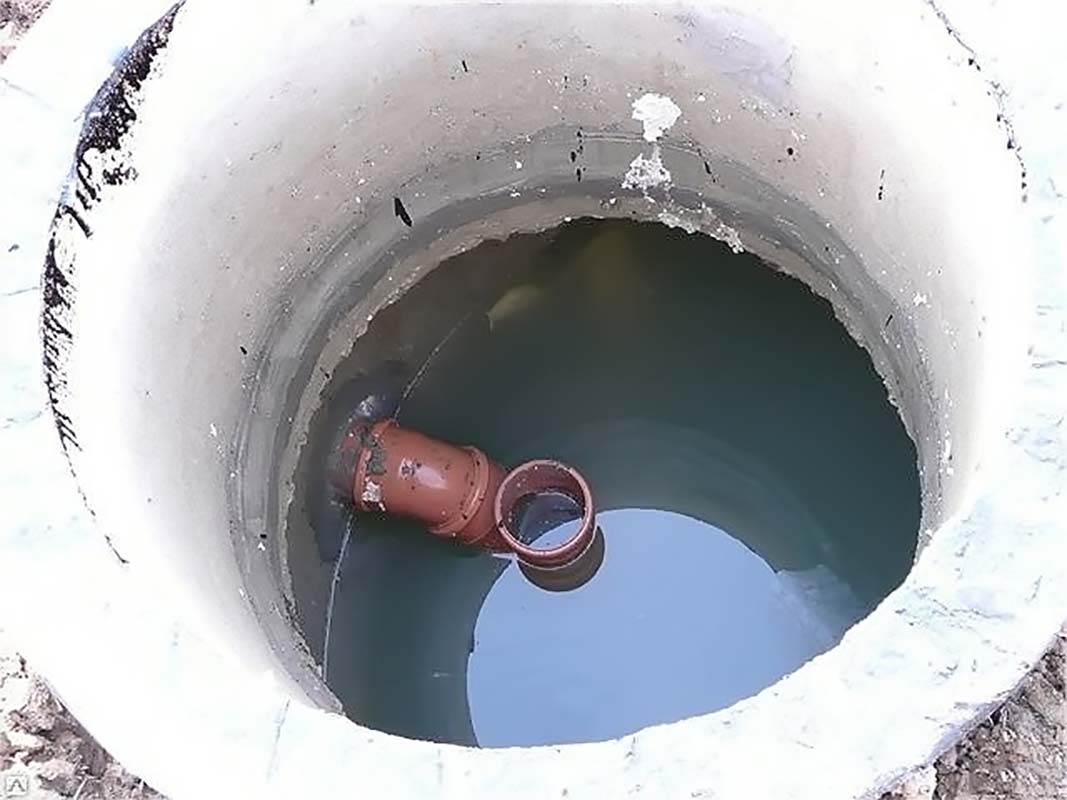
The device of the drain pit and the principles of its functioning. Reasons for the rapid filling of the tank. Ways to release the container from the contents.
Prevention
As you know, it is better not to lead to the appearance of a problem, but
take care of the condition of the house sewer pipes in your house
regularly.To do this, it is enough to use one sachet of a chemical agent.
with a frequency of 1-3 months. It can even be left overnight
time for the substance to act most effectively. Periodicity
depends on the intensity of use of the sink.
Also a good way to prevent blockages will serve
improvised substances, such as the aforementioned soda and vinegar. With serious
they cannot cope with congestion, but they can easily prevent their occurrence.
And further cleaning of the sewer from fat will become much easier.
Since grease forms a film and remains on the walls of pipelines at relatively low temperatures, so it is best to wash dishes or flush sewer pipes with hot water, this will help dissolve the grease. It is advisable to avoid getting solid food residues into the sewer, because of this it clogs many times faster.
How to clean a cesspool from silt
The presence of silt limits the flow of water from the pit in a natural way. Sediment also provokes deposits, which eventually turn into a hard crust. It will be difficult to get rid of the latter. Therefore, the contents must be eliminated, then work is carried out with a silty formation.
DIY option
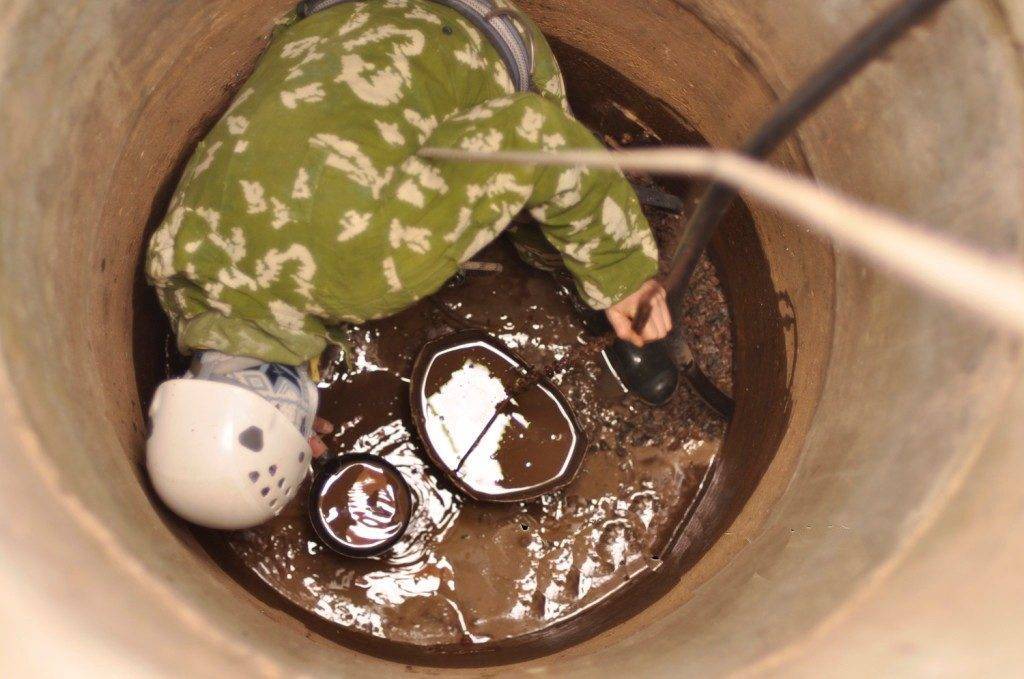
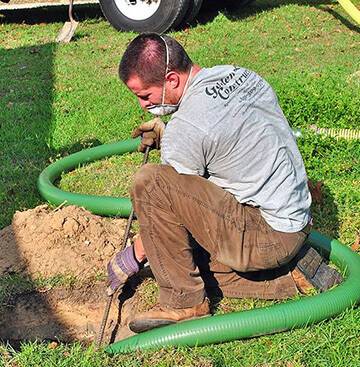
Do-it-yourself cleaning is carried out with a scraper or brush with a metal bristle. The contents are disposed of, and the bottom and walls are washed with running water. It is worth being prepared in advance for a lot of dirt




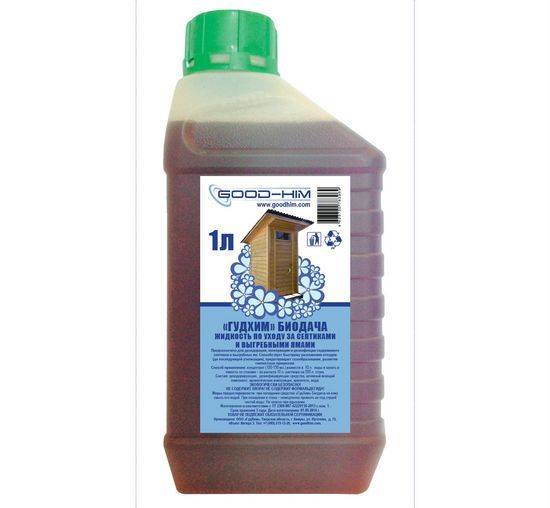

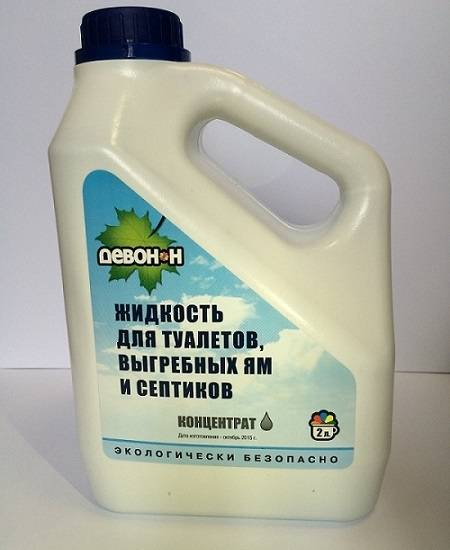

Nitrate oxidizers can help in the fight, but care must be taken with chemicals.
With a pump
Here you will need a drainage or fecal pump, a brush with metal bristles and a container to pump out the sediment. Still need a hose to transport the mass.It is connected to the installation.
The depth of its immersion depends on the type of pump: to the bottom or to the level of sewage. It is recommended to take a fecal pump with a grinder.
Liquid waste is pumped out first. Next, mechanical cleaning of the bottom and walls is carried out. The content is being pumped out again. After filling the pit with water, the procedure is repeated.
Varieties of funds for cesspools
All pit latrine cleaners are designed to perform one single task - to dissolve solid fecal matter. The result is achieved due to their specific composition, the ingredients of which are able to turn solid / dense waste into liquid. Depending on what type the funds belong to, they have a certain specificity of functioning. Their main difference lies in the components used in the production, which are biological and chemical.
Cesspool chemicals are considered universal, they can be used in absolutely any conditions, regardless of the type of effluent and temperature. Chemical components are able to dissolve everything, they can be used at any time of the year, which makes them especially in demand. All chemicals for septic tanks have the following advantages:
- universality;
- the ability to use in any solutions and hard water;
- effectiveness.
Despite the fact that such drugs have many advantages, they also have disadvantages, which primarily include a low indicator of environmental friendliness.
Biological agents have a lower cost, while their effectiveness is very acceptable. Such products can help get rid of fecal masses and antipathetic odors.The result is achieved thanks to the bacteria and organic additives included in the composition. All biological agents, in turn, are divided into aerobic, that is, those that begin to act only with the access of oxygen and anaerobic, capable of coping with their task even without air access.
Biological preparations for septic tanks are relatively slower compared to chemical ones, but in terms of efficiency they are in no way inferior to their competitors.
The main advantages of biological agents are the following:
- the ability to eliminate unpleasant odors and decompose waste, even if they are in the cesspool for a long time;
- after cleaning and filtering, drains can be used for any technical purposes and irrigation;
- drugs can be used in containers of any type, since they do not have a negative impact on their integrity;
- low cost makes such funds affordable.
As for the disadvantages of such drugs, they primarily include the inability to use in the cold season. Also, when using an aerobic composition, it is necessary to ensure the supply of oxygen, otherwise the effect cannot be achieved.
Depending on the form, the products are divided into liquid, tablet and powder.
How to choose
To achieve the maximum result from the product, before you buy it, you need to pay attention to the composition, processing period and the number of bacteria. All these features should be taken into account depending on which cesspool it is purchased for.
You also need to adhere to the following recommendations:
You need to choose a tool depending on the place that needs cleaning.
Unfortunately, not all drugs are able to cope with feces containing harmful chemicals, so it is necessary to read on the packaging for which cases the drug is intended.
Depending on the level of microorganism content, the rate of processing of feces and how often the drug will have to be used in the future is determined.
When buying, be sure to correctly calculate the volume of the drug, which depends on the volume of the latrine.
You still need to pay attention to the dry residue, the lower it is, the more effective the remedy is considered.
You should carefully read the expiration date, since it is strictly forbidden to use an expired drug, it can be not only useless, but also unsafe .. For the first time, experts recommend using a starter drug, since it is he who is able to properly prepare waste for processing
For the first time, experts recommend using a starter preparation, since it is he who is able to properly prepare waste for processing.
Some Helpful Tips
If problems with the cesspool began to occur more often, it makes sense to improve the operation of the structure in accessible ways. Some arrange a cesspool with overflow, which functions like a septic tank. To do this, next to the existing capacity, they arrange another one, approximately the same.
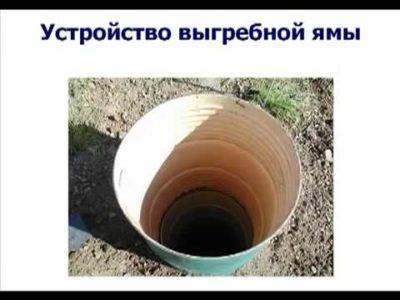

The first container must be airtight, and the second must be permeable or without a bottom. It is also possible to make the second container airtight, but then it is necessary to provide for the withdrawal of juices to the filtration field or to the drainage well.The overflow between these two departments is installed with a slight slope in the upper third of the containers.
First, the effluents will flow into the first compartment, where they will settle, solid waste will sink to the bottom, and the liquid component of the sewage content will overflow when it reaches the desired level. The second compartment will receive mainly liquid effluents, which will move faster to the filtration field for further disposal. As a result, the pit will have to be cleaned much less frequently, and the likelihood of silting the structure will noticeably decrease.
Freezing of sewer pipes occurs most often due to flaws during installation. If this happens, the pipe needs to be warmed up in order to restore the sewerage.
In winter, the drains in the cesspool can freeze, which will lead to problems in the sewerage system. To correct the situation, the frozen mass must be thawed. Traditionally, a heat gun or its homemade counterpart is used for this. In the absence of power supply, fires are made near the frozen pit, a blowtorch is used, etc.
For craftsmen who have at least a little experience with electrics, another way to defrost a cesspool is available - heating directly with an electric current. In the middle of a frozen cesspool, a metal pin is driven in approximately to the freezing depth. Then you need to take an electrical cable of a suitable length. Its end is cleaned and attached to the pin, and 220V power is supplied to the opposite end.
It may take quite a long time to completely defrost the structure, sometimes you need to wait about a day, it all depends on the size of the pit.When performing this kind of work, it is mandatory to comply with the requirements of electrical safety, for example, use protective rubber gloves, shoes, etc.
If it is not the pit that freezes, but the sewer pipe leading to it, this indicates flaws in the laying of communications, for example, the trench was not deep enough or there was no insulation. You can fix these problems in the summer, and during cold weather, you should take care of defrosting the pipes.
Electric current can also be used for this. At the end of the cable, you need to strip a segment equal to the circumference of the pipe. To calculate this value, you just need to multiply the pipe diameter by 3.14, i.e. to the number "pi". Then the protected wire is wound around the frozen pipe. Power is supplied to the cable, after a couple of hours of such heating, the contents of the pipe will melt, and the operation of the sewer system will resume.
Characteristics and types
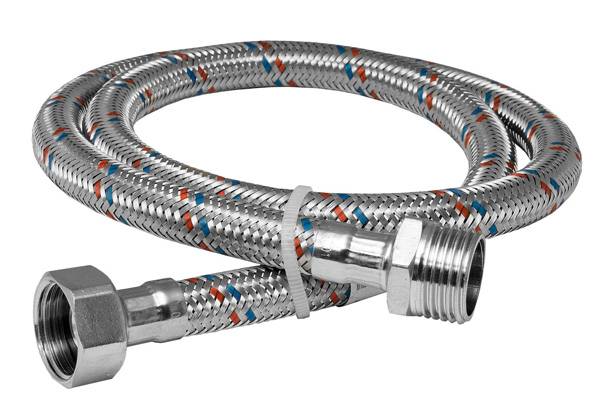
Flexible hose for plumbing is a hose of different lengths, made of non-toxic synthetic rubber. Due to the elasticity and softness of the material, it easily takes the desired position and allows installation in hard-to-reach places. To protect the flexible hose, the upper reinforcing layer is designed in the form of a braid, which is made of the following materials:
- aluminum. Such models withstand no more than +80 ° C and retain functionality for 3 years. In high humidity, aluminum braid is prone to rust.
- Of stainless steel. Thanks to this reinforcing layer, the service life of the flexible water supply is at least 10 years, and the maximum temperature of the transported medium is +95 °C.
- Nylon.Such a braid is used for the manufacture of reinforced models that can withstand temperatures up to +110 ° C and are designed for intensive use for 15 years.
Nut-nut and nut-nipple pairs are used as fasteners, which are made of brass or stainless steel. Devices with different indicators of permissible temperature differ in the color of the braid. The blue ones are used for cold water connections, and the red ones for hot water.
When choosing a water supply, you need to pay attention to its elasticity, reliability of fasteners and purpose. It is also mandatory to have a certificate that excludes the release of toxic components by rubber during operation.
Causes and signs
Before you figure out how to clean the cesspool of silt, you should understand why the pollution occurred and, of course, know how to recognize it.
The reasons
The key reason that a cesspool or septic tank is silting up is improper operation. As a result of the fact that the containers are not emptied in time, fat settles on the walls, which complicates the filtration process. This problem is especially noticeable in cesspools, since the walls of such a collector and the bottom filter drains. If problems arise with this, the user has to clean the pit much more often.


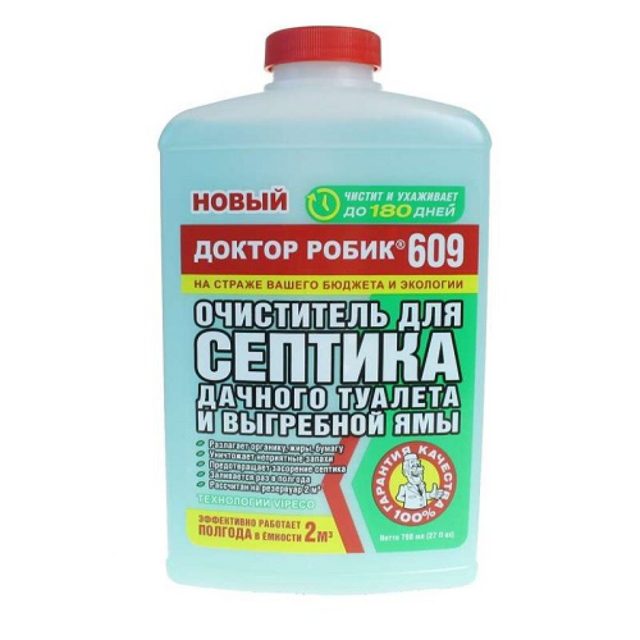

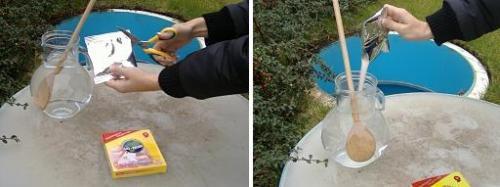

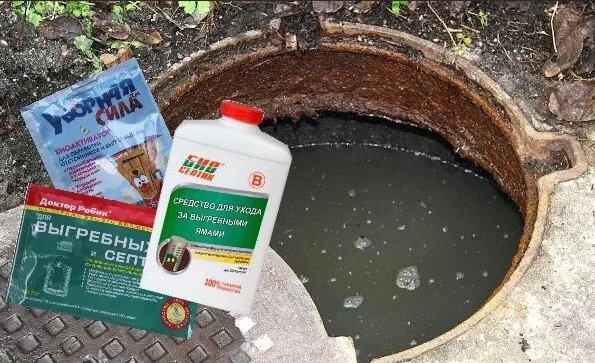
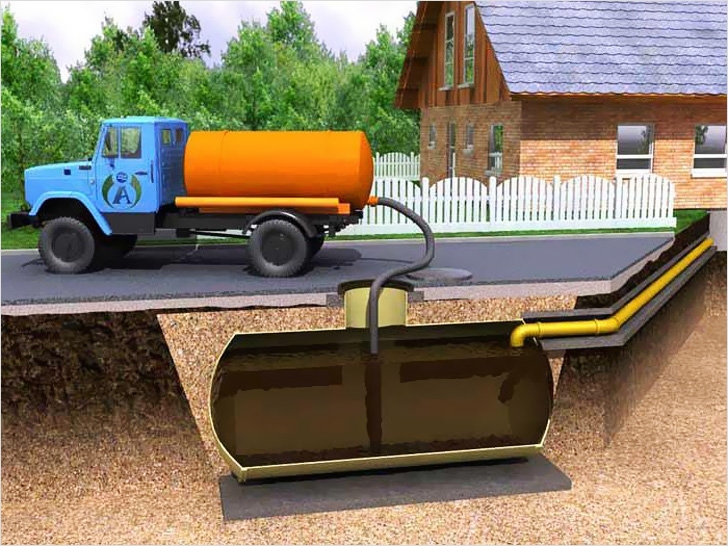
Bacteria perform very important functions, among them:
- Liquefaction of sludge, reducing its volume, this helps to prevent siltation of the walls and bottom.
- Bacteria remove bad odor.
- They clean the inside of the pipeline.
- The structure of the soil becomes porous, which helps to drain fluid from the pit.
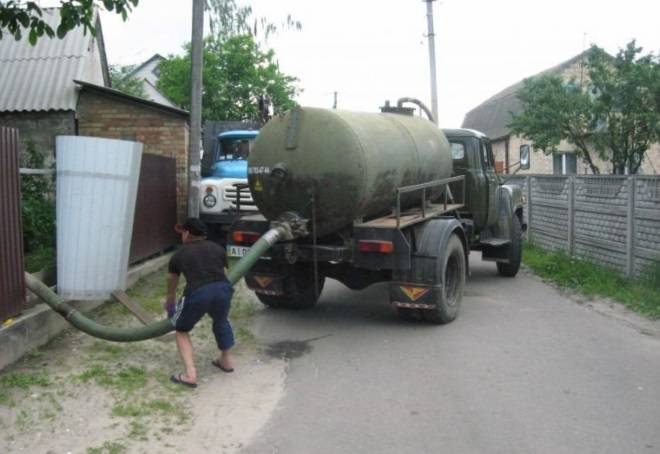
signs
To understand that the drain pit, the septic tank silted up quite easily, signs of this process:
- Reduced usable volume.
- The pit fills up much faster than before.
- Fat accumulations can be seen on the walls - this also reduces the volume, moreover, it prevents drains from passing through the walls.
- There is a sharp, unpleasant odor. Of course, the smell will be in any case, but if it “cuts the nose” too much, you should figure out what the problem is.
- A layer of silt can be seen from the inspection hatch.
The designs of the cesspool and the septic tank are different, but the latter often suffers from silting, in particular, the sewage settling chamber. A septic tank will quickly signal a problem if you regularly inspect the installation through a manhole.
How and what bacteria purify water
The use of chemicals to clean the local sewerage was actively used in ancient times. Such drugs can be used at any temperature (the main thing is that the contents of the septic tank do not freeze).
Cesspool bacteria are relatively inexpensive
They are not afraid:
- hard water;
- Impurities of chlorine;
- Other antiseptic substances.
But chemicals adversely affect both the sewer itself (especially those made of metal) and the atmosphere. Today, products based on active microscopic organisms are used for wastewater treatment.
The first group is anaerobic microorganisms, which are part of biological preparations for wastewater treatment. Their common feature is the ability to survive without oxygen. They are used as a tool for servicing sewers, septic tanks.
For microbacteria to work well, they need:
- Carbon;
- sulfates;
- Nitrates.
The second group is aerobic protozoa that require oxygen to live. Drains themselves do not contain air, so in order for bacteria to clean the water, an oxygen supply from a compressor is needed.
Cleanup not possible: alternative
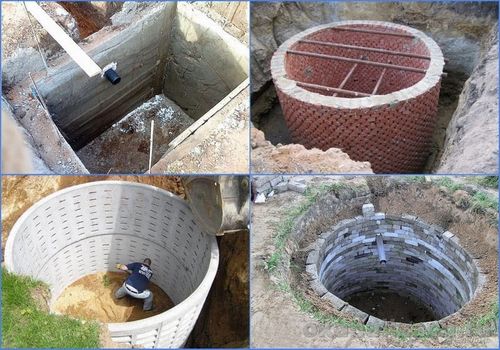
There are situations when cleaning the earthen pit of the toilet is either difficult or even impossible (the old structure is dilapidated and threatens to collapse). In this case, the more correct solution would be to dismantle the building, backfill the cesspool and move the toilet to a new location. The best backfill materials are a mixture of peat, sawdust and earth. The use of sand, construction debris, broken bricks, ash, etc. will make the area unsuitable for gardening.
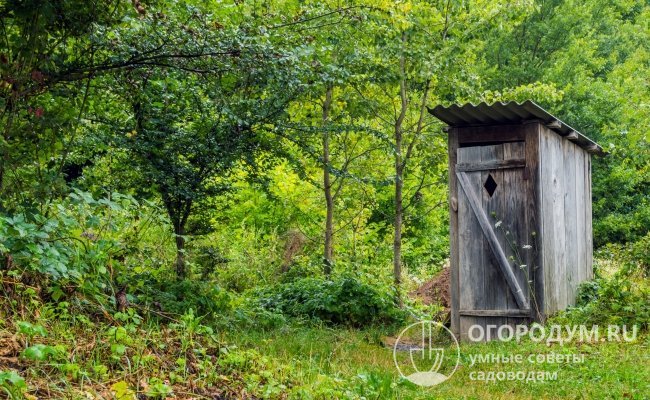 If the building is dilapidated, it is worth changing the force of habit and moving the toilet to a new location
If possible, the pit should be pre-treated with a bioactivator, then a layer of a mixture of bulk materials should be laid. Lay bundles of reeds, branches of shrubs or prunings of garden trees on it, then again a layer of bulk materials. This will prevent the danger of falling into the old hole. In a few years it will be possible to grow cultivated plants in the place of the cesspool.
Sanitary standards for the construction of a septic tank
Before choosing a place for a future sewer, you need to familiarize yourself with the sanitary standards for a septic tank. This is a list of some documents in accordance with which construction should be carried out. The main document that should be followed during the construction of such structures is SNiP 2.04.03-85. This regulatory document regulates the construction of sewers.If water is supplied to the house from a well or well, then compliance with the norms of SNiP 2.04.01-85 and 2.04.04-84 will also be required.
Sanitary standards (SanPiN 2.1.5.980-00) regulate sanitary requirements, the main task of which is to maintain the purity of water located on the surface. Since the septic tank is considered a potentially hazardous area, it is also subject to regulation by SanPiN 2.2.1 / 2.1.1.1200-03.


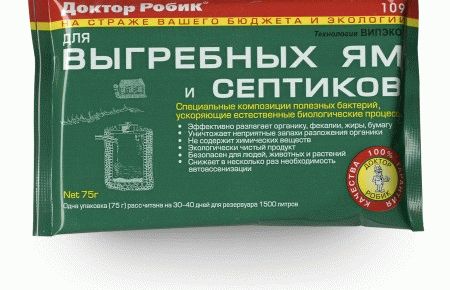



Distance to the well
Choosing a place for a treatment plant should not only be based on your own preferences, but also in compliance with standards. The fact is that in the event of an emergency, effluents can get into drinking water if a well or well is located nearby. Water pollution can cause disease or even death. Even despite the fact that modern treatment plants have strong hermetic housings, it is impossible to exclude the situation of pipe rupture or depressurization. Therefore, you should choose the maximum distance to the nearest body of water.
The regulations state that the choice of the distance from the well or well to the treatment plant will primarily be influenced by the type of soil on the site. If there are filter layers that can filter out drains in case of force majeure, then the distance can be reduced.
Getting permission
Cesspools and septic tanks can harm the environment, so they cannot be built uncontrollably. Before preparing a project, be sure to contact the SES and obtain the necessary permission. Only after it is given to you, and the project is approved, you can proceed with the construction of the structure.A permit will not be issued if the construction does not comply with the sanitary rules and building codes that are in force at the time of the creation of the project.



