
- Water filters
- Top 5 manufacturers
- Measures to prevent pollution of sources
- Filters: what is on the market and what you need
- What kind of raw water should and can be drunk?
- tap water
- bottled water
- Spring water
- Mineral water
- Features of filtering outside the city
- AquaShield
- The main signs of water pollution
- Turbidity of the water and the appearance of sediment
- Natural color change
- The appearance of a strange smell
- Unusual taste of water
- How to clean sand from well water
- Filter types
- What is dangerous calcium from tap water
- Step-by-step instructions for cleaning the well
- Well water analysis
- Well Cleaning Safety
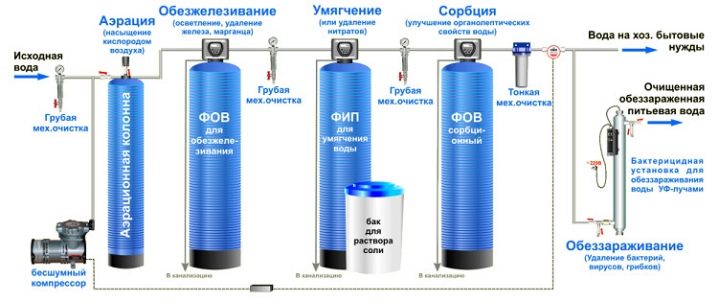
- From iron and manganese
- From lime
- From sand and clay
- From nitrates
- From bacteria and viruses
- From hydrogen sulfide
- Autonomous water supply scheme
- Surface
- Submersible
Water filters
A variety of filter modifications available for sale differ in their ability to purify water.
The first thing you should pay attention to when choosing a filter is not its appearance, but the ability to purify water in a particular case.
Well water filter
According to which method underlies the operation of the device, filters are divided into the following types:
- removing contaminants mechanically. Used to clean water from sand, soil particles and clay;
- destroying bacteria. Effectively fight microorganisms;
- eliminating unpleasant tastes and odors.
- softening well water. Their action is based on ion exchange. Salts that form plaque on household appliances and utensils are well removed from the water;
- directed against excess iron in water. The action is based on the oxidation reactions taking place in them.
Water purification system from iron pollution
The most effective filters are those that can deal with all possible contamination of water, while restoring its transparent color, eliminating odor and bringing it into line with the requirements of sanitation.
Well water filter
When choosing a filter, it is also wise to focus on how often you need to use it. If the device is purchased to purify water from a country well, provided that the visit to the dacha occurs no more than twice a month, then an inexpensive filter jug will be quite enough.
Water filter pitcher
For very dirty water, a flow-type filter should be preferred. It performs deep cleaning, which effectively removes all kinds of microorganisms, fertilizer fragments, inorganic impurities and bad odors.
Top 5 manufacturers
Several domestic and foreign manufacturers have won popularity among consumers of water filters in our country.
| Trademark | Country | System types | Note |
| Barrier | RF | Nozzles on the crane, Pitchers, Flowing under a sink. | More than 15 years in the market of goods and services. |
| Aquaphor | RF | Pitchers, Sink systems with separate faucet, Reverse osmosis, Faucet attachments. | The company is among the leaders of water filters in the world market. Year of foundation - 1992. There are patented developments. |
| Geyser | RF | Pitchers, Flow nozzles, Reverse osmosis, Main filters. | The company has existed since 1986, has its own scientific base, and conducts its own developments. Own patented advanced inventions |
| Brita | Germany | A wide range of household (starting with jugs) and professional filters | European quality from well-known manufacturers. |
| Zepter | Switzerland | Multistage filtration systems |
Measures to prevent pollution of sources
In order to carry out disinfection measures as rarely as possible, but at the same time use high-quality water, it is necessary to observe a number of measures aimed at preventing contamination of the well.
Such measures include the following:
- you can not leave the well open;
- keep a distance from the well to the sewerage and drainage system of at least 20 meters;
- securely seal the walls of the well, preventing the penetration of groundwater;
- use submersible pumps with remote injectors, this significantly reduces the number of leaks;
- comply with sanitary standards, do not drain waste into the well.
By following these simple steps, clogging and silting of the well, which are the most likely causes of water quality deterioration, will be avoided.
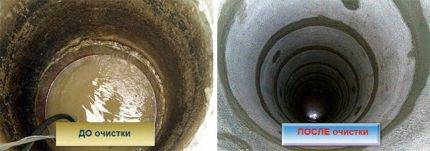 Timely preventive disinfection will allow you to keep the well in the required sanitary condition, will make it possible to safely use water from it for various household needs.
Filters: what is on the market and what you need
There are three most common types of household water filters.
The first, most common type is pitcher filters: an ordinary pitcher for 2-4 liters of water, which can be used even at home, even in the country, and change the removable cartridge in it every 2-3 months. The easiest and most budget option: a jug costs 500-1,000 rubles.


Often, when buying, the first cartridge comes with a jug. And then about once every 1.5 -2 months you need to buy a new cartridge - this is still somewhere around 200-300 rubles.
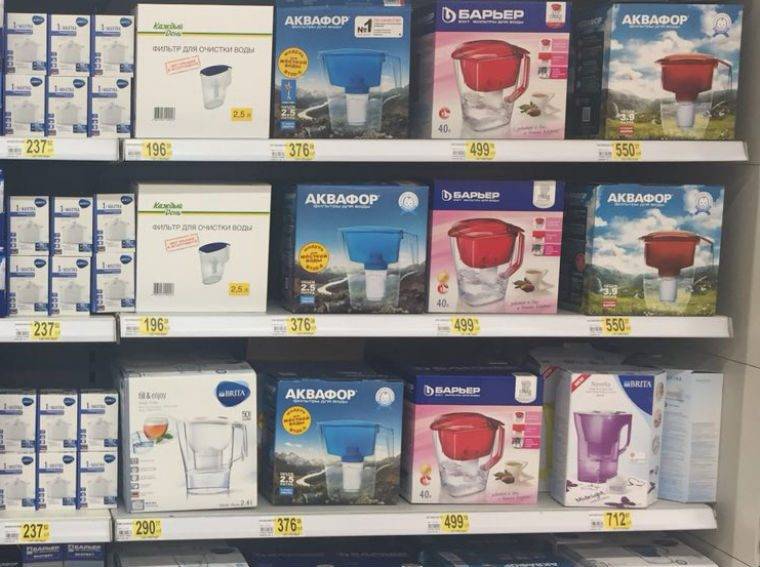
But the filter jug, for the most part, cannot “change” the hardness of the water and definitely does not remove viruses and bacteria - it is still recommended to boil the water. However, from dirt, rust, heavy metal ions, pesticides and toxins, he, of course, must purify the water.
The second type is stationary flow filters: these are systems that are installed under the sink and connected to the water supply. Clean water is discharged through a separate faucet. A flow-through sorption filter will not filter water from viruses, but it will cope well with rust and most organic pollutants.
Some flow filters (but not all!) soften the water. But there are also disadvantages: in the presence of very hard water, the softening module of such filters will have to be changed quite often. The specific frequency depends on the hardness of the water, and can range from 3 months to 1 year or 200-300 liters of water spilled through them.
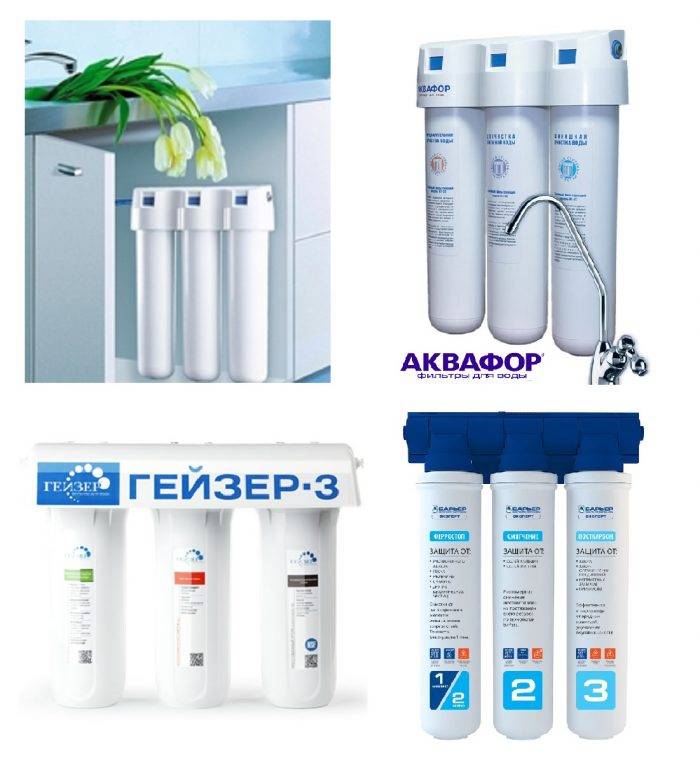
However, for the sake of health, one can agree with this need. For some models, there are cartridges with a hollow fiber membrane that cuts off up to 100% of bacteria and parasites.
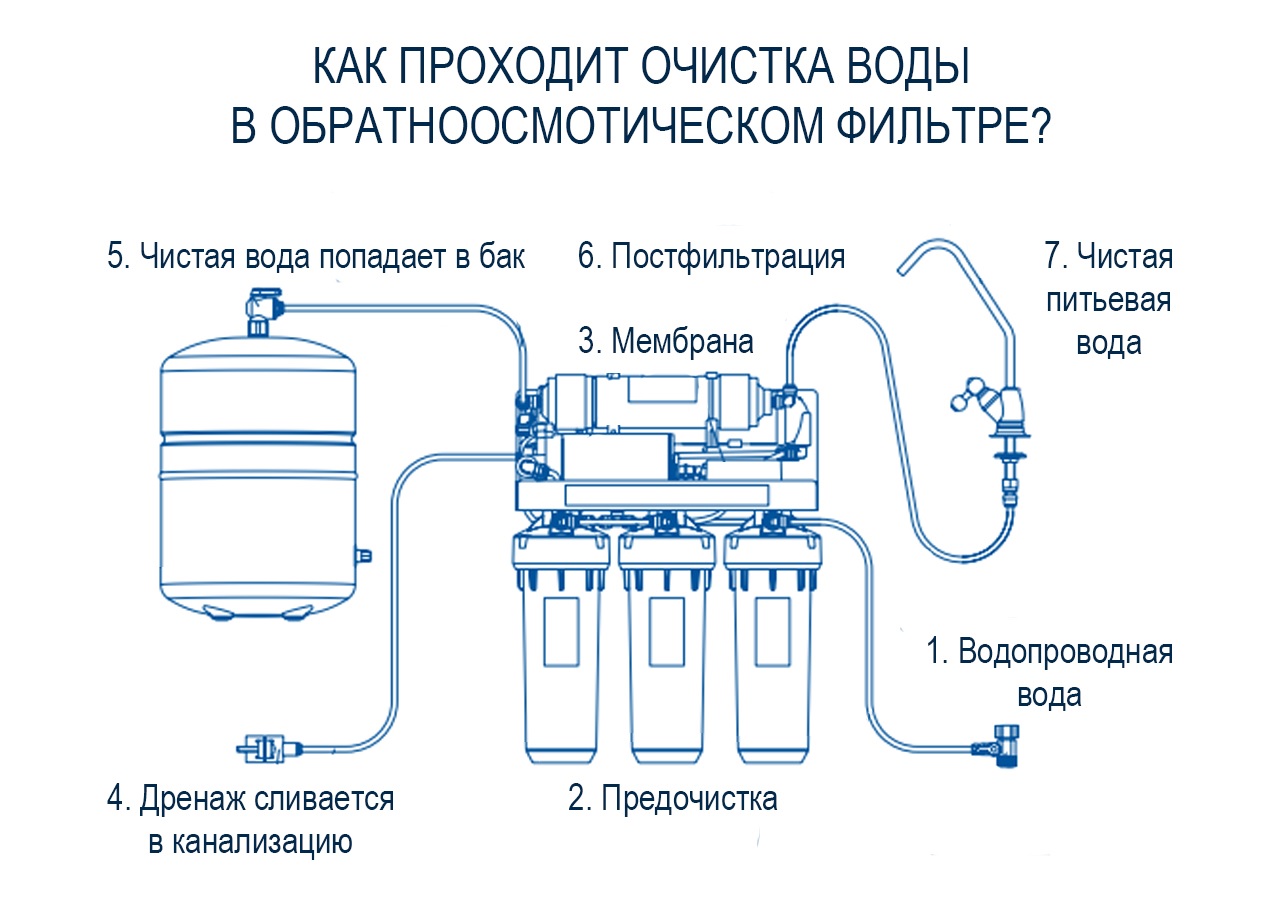
The third type - reverse osmosis filters - are the most advanced, because they purify water by 100% from rust, toxins, bacteria, heavy metals, pesticides and even viruses! It is clear that this is the most expensive, but also the most effective type of filter. The system is also installed under the sink, but it has decent dimensions, because it is difficult to work. Water under pressure enters the system: it is taken from the water supply, where there must be a pressure of at least 3 atmospheres.
Getting to the preliminary cleaning, the water is first "cleaned" from the largest fractions of dirt, like the same rust. Then - filtering in the following modules, each of which cleans at an increasingly fine level. The decisive module is a reverse osmosis membrane twisted into a roll. Passing through it under pressure, the water is cleaned of any contaminants (even small viruses) and drained into a storage tank.
As is clear from the process, water purification here is quite lengthy, which is why you need a storage tank for clean water (and this is extra space in your kitchen).
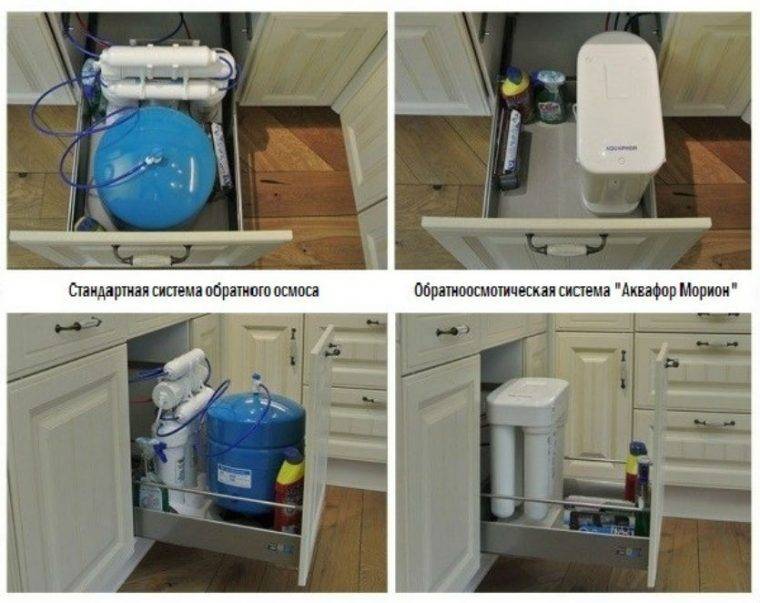 Size comparison of reverse osmosis systems
And there is another important technical "chip" that is worth remembering when choosing a particular filter. That very special membrane is cleaned of the dirt remaining on it - also with water from the water supply system, which is called drainage. This drainage water then goes to the sewer, and its consumption for the production of 1 liter of clean water is the money that you will pay at the rate.
Therefore, if you choose a reverse osmosis filter, be sure to look at the drainage water flow rate.In a good filter, up to 4 liters of drainage water goes to 1 liter of clean water. In not very good - up to 8-10 liters.
What kind of raw water should and can be drunk?
tap water
This is raw water, purified at the water utility and brought to the requirements of regulatory documents. Not the best option for health. If there is no other option, then it can be drunk after pre-treatment in one of the following ways:
- boiling with the obligatory observance of the above recommendations;
- filtering, which we will discuss below;
- settling for 2 hours and then using only the upper half of the liquid. But this method will not insure against microbes and toxic substances.
bottled water
This is raw water, industrially purified, but meeting all safety requirements. It is packaged both in large bottles and in plastic bottles, which are sold in stores. There are first and highest categories.
- First
- artificially purified water (tap, from a surface reservoir) by deep purification - Higher
- water from an artesian well, purified by gentle methods and disinfected with ultraviolet light.
How useful is it?
When properly purified, such water is really useful and safe, it does not need to be boiled before drinking. However, manufacturers often skimp on the water purification steps, resulting in a sold product that is far from what the label promises.
How to choose a reputable manufacturer:
- The longer a company is on the market, the more reliable it is;
- A reputable manufacturer does not save on packaging;
- There will always be a popular rumor about good water;
- Advice for the most demanding customers - take the purchased water to a special laboratory and check its quality and safety.
Spring water
This is natural water that has undergone natural purification through the layers of soil. Each spring is unique. As a rule, such water not only does not contain harmful impurities, but is also enriched with useful minerals during its passage through the soil. Of course, springs located near cities or within their boundaries are of little use. In Russia there are many springs protected by the state, the water from which deservedly belongs to the highest category. These bodies of water have official passports, and access to them is limited.
Spring water can also be seen in retail sales - the manufacturer packs it in the same way as bottled water. However, some of them, for the purpose of profit, sell ordinary artesian water, or even tap water, under the guise of spring water. In order not to be deceived, you should follow the recommendations regarding the choice of bottled water. Also, the specific place of water intake should be indicated on the bottle, i.e. spring.
If you yourself take water from some spring, do not forget to do it in a clean container and periodically check the quality of the water in the laboratory.
Mineral water
This is natural water with a high content of trace elements and salts from the deep layers of the soil. Mineralization of water occurs when it passes through the rocks of the soil. According to the content of salts, mineral water is divided into:
- therapeutic (mineralization >8 g/l);
- medical table (mineralization 1-8 g/l);
- canteen (mineralization less than 1 g/l).
Features of filtering outside the city
 Country houses very rarely have a central water supply, unlike city apartments.
Located in a village, town or garden society, they can only receive water from open sources or from the bowels of the earth.
The quality of such water almost everywhere does not meet sanitary standards. A precise determination of the composition can be given by chemical analysis.


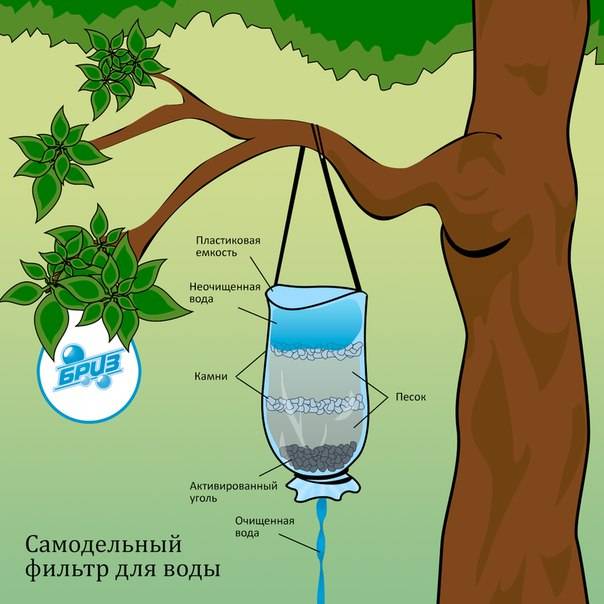

The simplest test for the presence of gross impurities can be obtained personally by conducting the following analysis:
- Collect water in a transparent plastic bottle.
- Set aside for the night.
- Consider the contents of the bottle. If a visible sediment with foreign inclusions has formed at the bottom in a few hours, such water should definitely not be used for food.
- mechanical pollution;
- industrial effluents;
- pathogens, etc.
Water from natural reservoirs requires high-quality purification. Using it without treatment can cause serious health problems.
The quality of water in the country is influenced by a large number of factors:
- depth of water intake;
- the presence near fields that are treated with pesticides, industrial facilities;
- water intake method;
- the quality of the organization of septic tanks, etc.
But even water that is obtained from a great depth does not guarantee health safety. Despite the better biological composition, and the lower content of pathological microflora, there is another problem - increased rigidity.
Advice! The presence of filters improves health safety.
AquaShield
The AquaShield filter was developed specifically to deal with hard water. The small dimensions of the device allow it to be installed in the country or private areas.The main focus of AquaShield is the fight against lime deposits on kitchen taps and protection against scale in washing machines.
Overview of the AquaShield filter
Note that the model does not filter particles, but transforms them. That is, chlorine and heavy metals no longer settle in the form of scale on the pipes and heating elements of washing machines. Therefore, it is not recommended to drink water purified by AquaShield, since harmful components remain in it. But the water treated with this filter is ideal for household needs - washing and bathing, as well as watering garden crops in the country.
The main signs of water pollution
Studies of water from a well should be carried out annually, since its composition in an underground source, depending on seasonal changes and other external factors, can change constantly.
This is especially important if the source is used only in the summer. A number of signs will indicate the need for water purification from the well
Turbidity of the water and the appearance of sediment
The opacity of the water indicates that too many silty fine particles and suspended dusty grains of sand have accumulated inside the walls of the structure. This happens if the well rings have lost their tightness due to erosion of the seams or when the elements are displaced relative to each other.
A clear sign of a violation of the tightness of the walls of the structure is clouding of the water after heavy rains. The mechanical cleaning of the shaft, supplemented by work on sealing the seams and sealing the joints, helps to eliminate the disadvantage.
Subsequently, for the prevention of pollution, cartridge or mesh filters are installed that will trap and accumulate foreign particles at the bottom of the structure.
The appearance of an oil film above the water surface indicates the presence of oil products. This may occur due to depressurization of the mine. Or for the banal reason of improper observance of cleanliness during the operation of a hydraulic structure.
Natural color change
The shade of water in the well depends on the type of pollution. A change in color to green indicates the "bloom" of water. The reason for this may be the direct sunlight entering the mine.
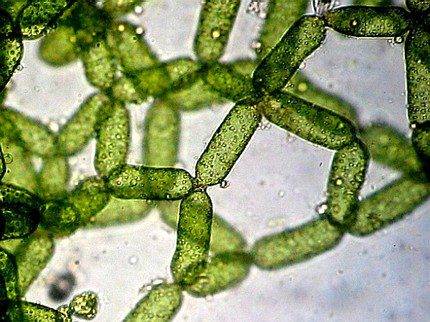
Under the influence of sunlight, microorganisms and algae begin to multiply actively, forming numerous colonies.
The problem is solved by disinfecting water using chemicals and then installing carbon filters.
Brown and yellow shades indicate that the water has a high iron content. Disinfection in this case is not effective. Only the arrangement of the water treatment system and the installation of additional filters will help solve the problem.
The black color of water acquires due to organic pollution, which, in the process of decomposition and decay, infect it. To eliminate decaying organic matter, simple disinfection of the source is no longer enough. To get water that can be consumed, you will have to perform multi-stage purification.
The appearance of a strange smell
The clayey or earthy smell is due to the presence in the liquid of organic natural compounds such as 2-methylisoborneol and geosmin. They are formed during the vital activity of soil bacteria and blue-green algae present in the water.
Mechanical cleaning of the structure helps to eliminate the cause, followed by the arrangement of household reverse osmosis and the installation of filters equipped with activated carbon.
The smell of rotten eggs has water in which sulfuric bacteria are present. They produce hydrogen sulfide.




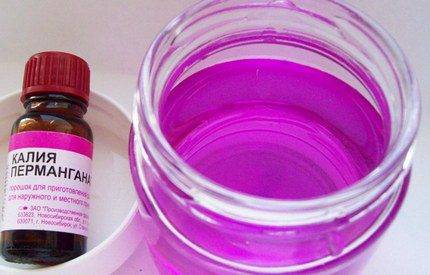
You can remove these bacteria by disinfecting the water using potassium permanganate or chlorine and then installing a filter unit.
The smell of phenol and other unnatural odors indicate that sewage and other human products most likely entered the well shaft through underground aquifers. You can solve the problem by carrying out a mechanical cleaner and installing a carbon filter.
Unusual taste of water
The salty taste appears due to the high content of salts: NaSO4, NaCl, MgSO4. You can remove it by performing additional post-treatment of water, passing it through household reverse osmosis.
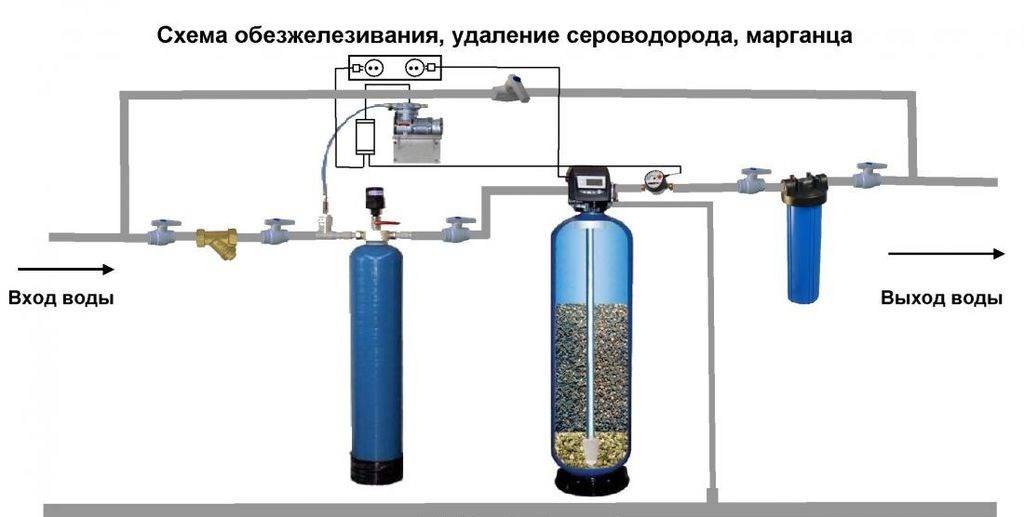
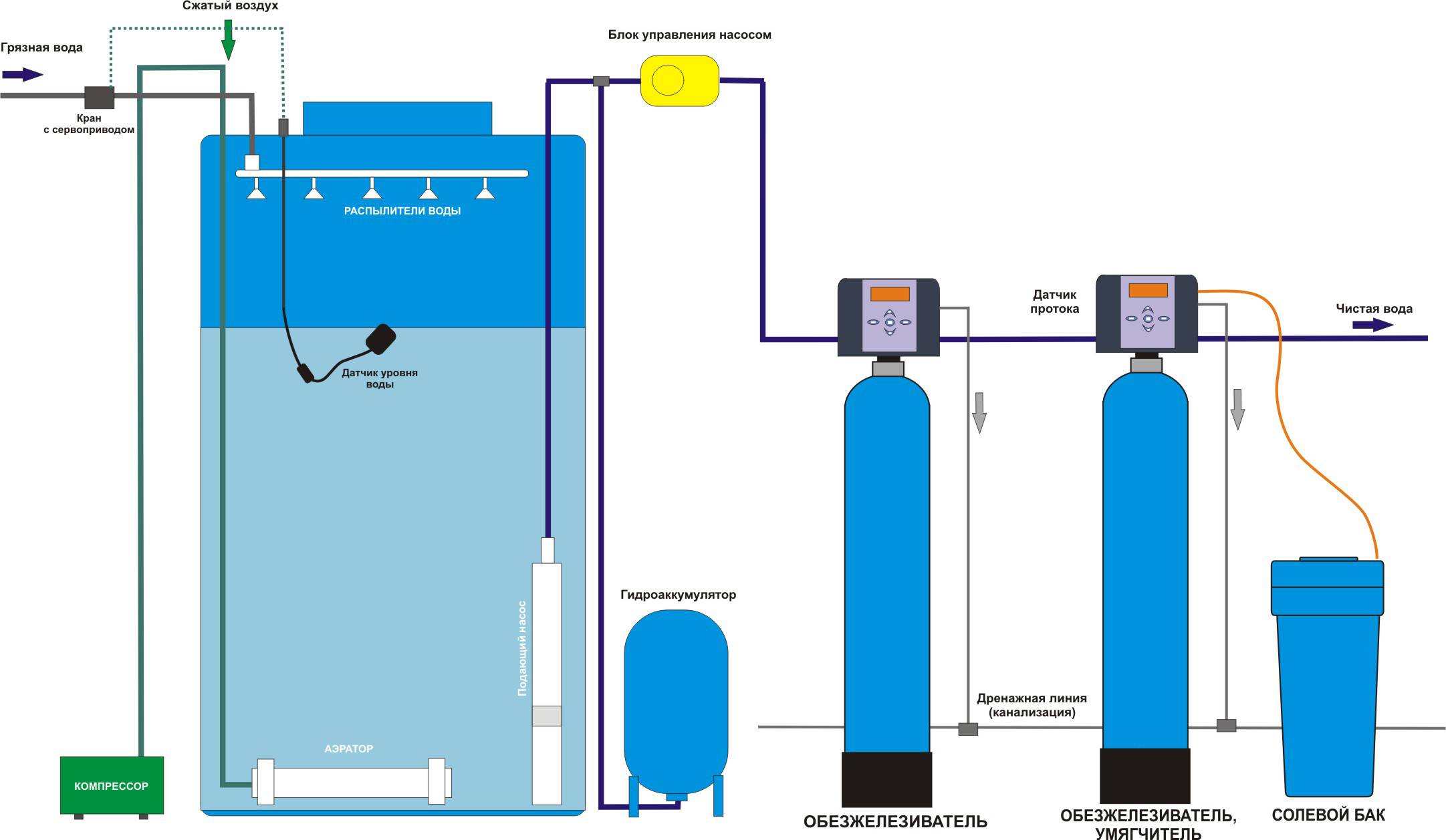
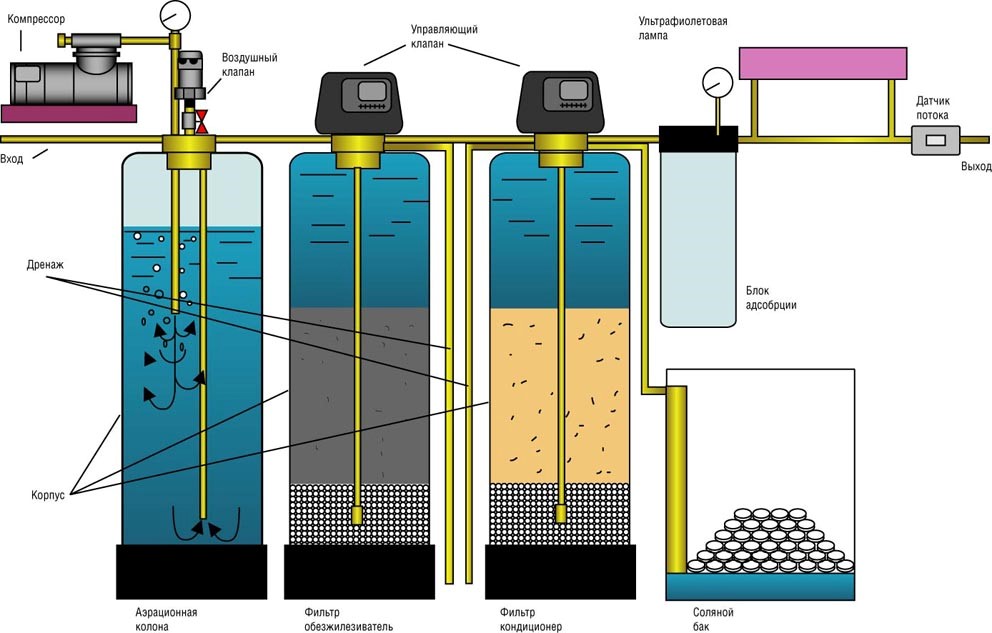
A metallic taste indicates the presence of iron in the water. Iron removal methods help to correct the situation. For example, installing a compressor that will saturate the water with oxygen, a circulation pump and an iron remover filter.
The sour taste of water, which has a blue-green tint, indicates a high content of carbon dioxide. This phenomenon occurs due to the reaction of water in contact with the copper and bronze elements of the system.
Increased hardness indicates the presence of calcium and magnesium salts in the composition of the liquid. Rigidity is not a constant value. It fluctuates depending on the season and reaches its peak in the summer.
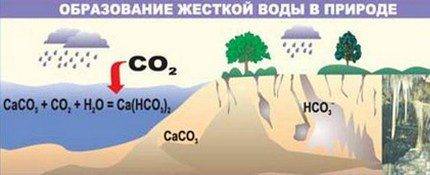
Hardness can be caused by alkaline earth metal salts, which are often found in limestone and dolomite deposits.
To correct the situation, you can install softening systems. Reagent and non-reagent filters of complex purification are capable of demineralizing and softening water.
How to clean sand from well water
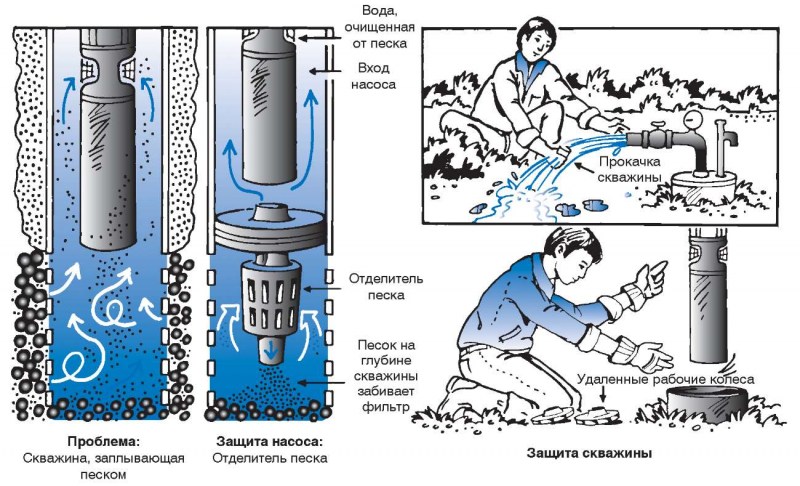
The removal of sand or particles of clay, silt, and other large particles occurs on a filter lowered into the well. This is done using simple mechanical filters - lamellar or sandy, and this stage is called the coarse cleaning stage.
If you weigh a lot, one filter is not enough: it will quickly become clogged. It is more practical to put a system with cells of different sizes. For example, water from a well enters a filter that captures particles up to 100 microns in size, then a filter with a purification rate of up to 20 microns is installed. They will remove almost all mechanical impurities.
Filter types
Coarse filters are: mesh, cassette (cartridge) or backfill. Mesh are most often placed in the well itself. They are a hollow pipe with a slightly smaller diameter than the wellbore. Holes were drilled in the walls of the pipe or slots were made (the shape of the holes depends on the soil), a wire is wound on top, and a mesh is wound along it. The mesh cell is selected depending on the type of soil in the aquifer: it must retain the bulk of the contaminants and at the same time not be clogged. At this stage, the largest impurities are retained, which, moreover, can damage the pump. But some solid particles still rise to the surface. They are removed during further purification.
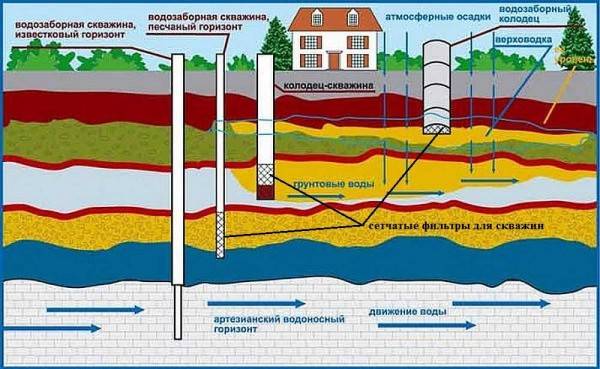
Screen filters are installed in wells. They filter out sand and other coarse impurities
Sometimes it is not possible to put a filter in the well. Then all cleaning is transferred to the surface.In this case, cassette or backfill filters are used to purify water from a well. There is a replaceable cartridge in cassettes - a system of membranes, crushed charcoal, etc. on which sand and other large contaminants settle.
Cartridges get clogged from time to time and need to be replaced. The frequency depends on the degree of water pollution and the intensity of its use. Sometimes one cartridge becomes clogged quickly. In this case, it makes sense to install two filters with different degrees of purification. For example, the first one delays particles up to 100 microns, and the one behind it is already up to 20 microns. So the water will be clean and the cartridges will have to be changed less often.
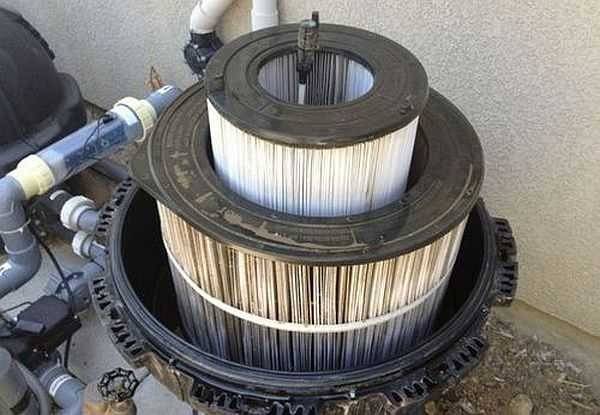
One of the types of cartridges for filtering water in a private house
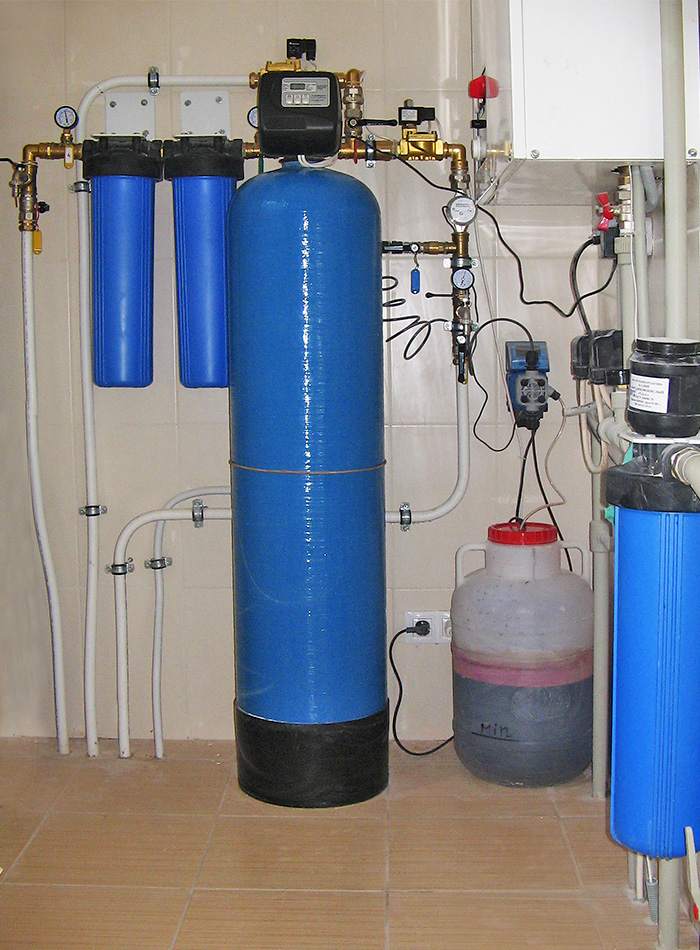
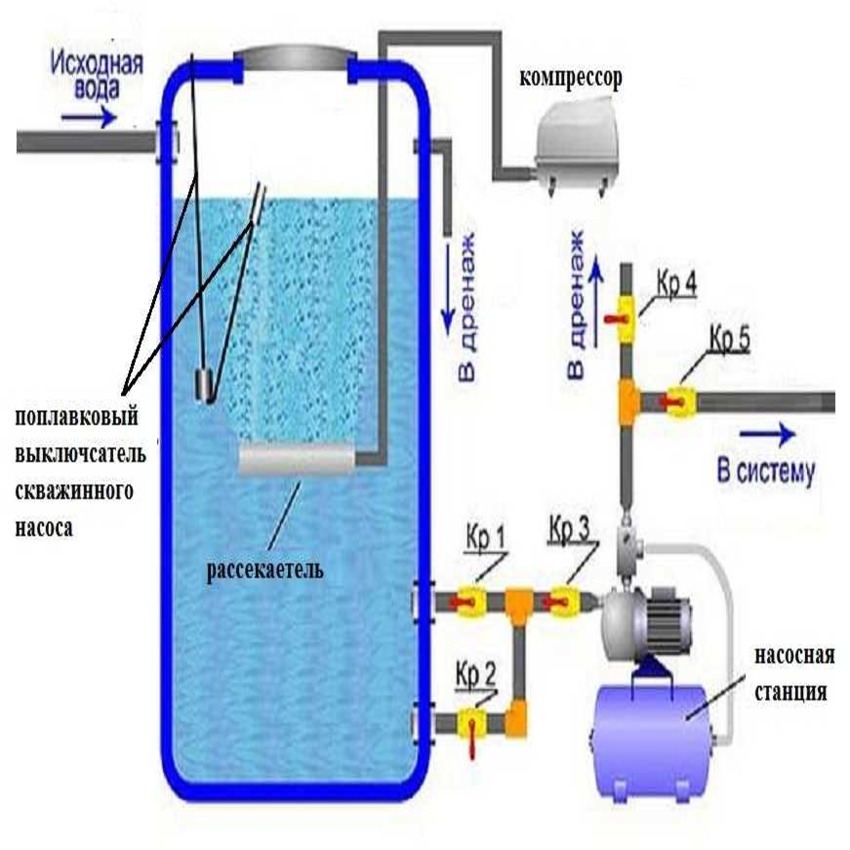
In bulk filters, loose filter material is poured into the container - sand, crushed shell, special filtrates (for example, BIRM (BIRM)). The simplest mechanical filter is a sand barrel with a flushing function. One caveat: in the presence of a large amount of dissolved iron, it is still preferable to fill in a special filtrate, it is also a catalyst that oxidizes the dissolved iron and manganese, causing them to precipitate.
Depending on the particle size of the backfill of such a filter, quite small particles can be retained. Sometimes they put two such filters in a row, only with different filling - first, water enters the one where the filtrate is large, then with a finer filling. Bulk filters for purifying water from a well are good because they require replacement of the backfill approximately every three years. And in this they differ from lamellar ones, the filter of which must be changed much more often: sometimes once a month, sometimes once every three to six.
But in order for cleaning with a back-up filter to be effective, they need periodic washing of the filtrate. This usually happens by shutting off some faucets and opening others. In this case, the water flows in the other direction, washing away the main amount of accumulated precipitation.
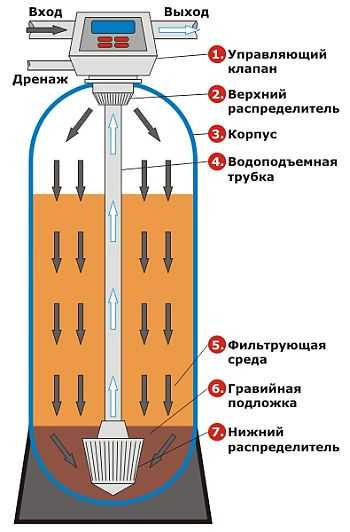
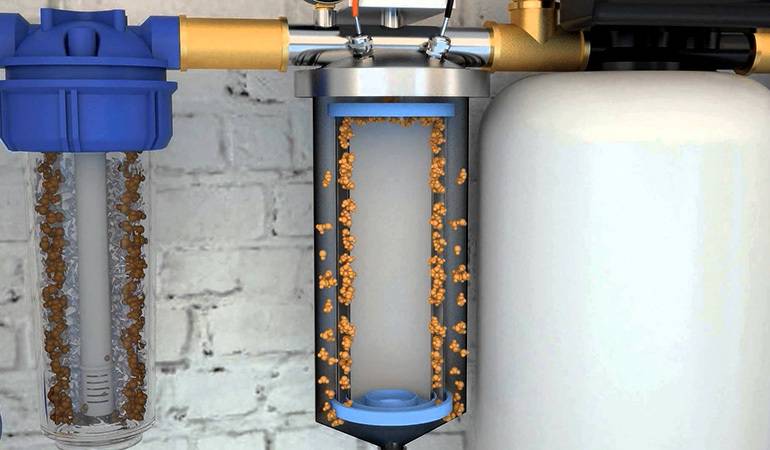
The principle of water purification in the charge filter
An example of assembling two sequential filters for water purification from coarse impurities, see the video.



What is dangerous calcium from tap water
For humans, calcium is useful for medical purposes. It is needed for proper skeletal development, hair and nail growth. But, due to the high content of calcium and magnesium in the pipeline, limescale appears, which causes irreparable harm to health. This is due to the fact that these trace elements practically do not dissolve in water and are not absorbed by the body.
The main areas of damage due to hard water:
- Gallbladder. During processing, due to the high content of calcium salts in the bile ducts, stones can form.
- Kidneys. Damage to the urinary system is similar to gallbladder problems. Due to the salts, sand appears, which later forms stones.
- GIT. Due to the fact that these trace elements are poorly processed by the body in large quantities, they can exacerbate gastritis and ulcers. In addition, poisoning is possible, which leads to nausea and vomiting.
- Joints. Hypercalcemia leads to the fact that a large amount of salts is retained in the joints. Because of this, the risk of arthritis increases significantly.
- Leather. Hard water often causes flaking and redness of the skin. There is a possibility of psoriasis and eczema.
Step-by-step instructions for cleaning the well
When cleaning up contaminants, you need to adhere to the technology. In this case, the cleaning of well water in the country can be done with your own hands, and with the same quality as if you involve a specialized team in the work. But the first step is to identify the problem and its extent.
Well water analysis
For sanitary and epidemiological examination, it is necessary to take samples and transfer them to a specialized laboratory. When choosing, you must adhere to the following rules:
- The fence is made before and after the water purification system from the well, if one is already installed and operated.
- Clean containers up to one and a half liters are used. Bottles for sugary drinks and mineral water are not suitable.
- In order for the results of the examination to be reliable before sampling, the water must be drained within a quarter of an hour.
- Washing dishes with household dishwashing detergents is also prohibited.
- The selection is carried out slowly so that oxygen does not become a catalyst for reactions, which leads to a distortion of the analysis results.
- After selection, the dishes are tightly sealed and hidden in a dark place, as light provokes changes in the composition and growth of the number of bacteria and microflora.
- Samples must be received by specialists no later than three hours after sampling. Otherwise, it can be stored for three days in the refrigerator, but without freezing.
Based on the results of the examination, a method for purifying water from a well in a country house is determined. The choice of filter depends on the verdict provided by the laboratory staff. If mechanical cleaning is required, care must be taken that the work is carried out safely.
Well Cleaning Safety
You need to worry about this even before you clean the water from the well, at the preparation stage. You cannot work on your own. An assistant will be required. The descent into the well space is carried out using a mounting belt and other equipment that guarantees safety. Electrical appliances must not be used to avoid the risk of electric shock.
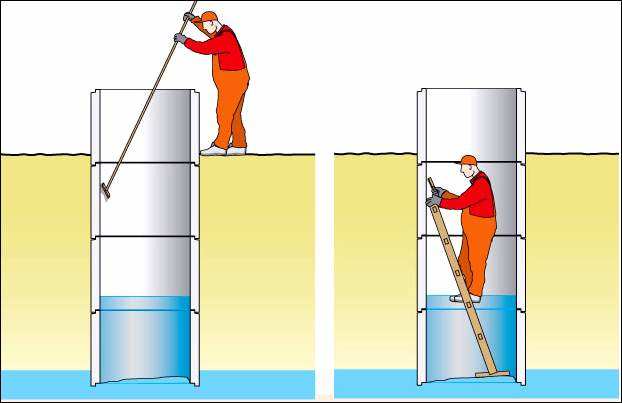
It is necessary to clean the walls of the well from plaque in a mask (respirator), gloves and closed clothing. This is to prevent bacteria from getting on the skin and mucous membranes of the mouth, eyes, etc. And if a drainage pump with a filter is used to purify water, there should be no people in the well
It is necessary to use chemical elements and hydraulic seals with caution, observing the technology. Removal of chemical elements requires a specialized approach
From iron and manganese
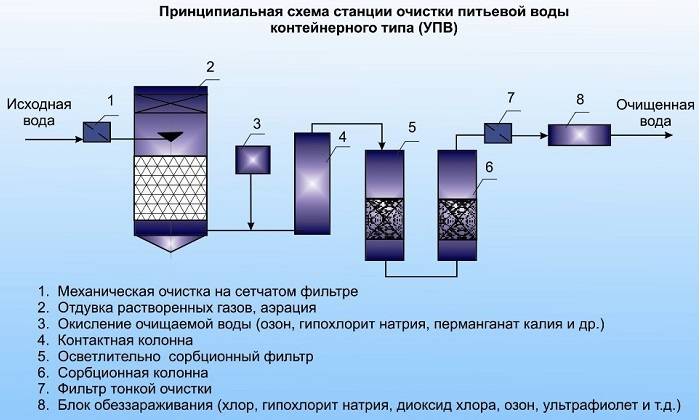
First of all, the source of the problem is identified. If the metal is initially contained in the source, water is purified from iron from the well using a special filter. Manganese can form insoluble compounds that are trapped in the filtration station media. If there are no other contaminants, removing iron from the well will be enough.
From lime
Settling is an inefficient method of solving a problem. To remove calcium salts from an aqueous solution, coagulation, boiling, and filtration are used. Specialized filtration stations trap particles from 5 microns or more. Activated carbon, quartz sand, shungite are poured into the working chamber with an automatic washing system as an absorbent.
From sand and clay
In a country house, drinking water is easy to get to. Some people forget to put pebbles on the bottom, which leads to the appearance of these contaminants.Bottom-type cleaning equipment will solve the problem, as well as screens installed on the pump intake. This equipment requires periodic cleaning. On sale there are filters with system of autocleaning.
From nitrates
The denitratizer filter is a specialized absorption equipment that captures these chemical compounds that are harmful to humans. Reverse osmosis equipment is an equally effective cleaning method. The cost of equipment is high, but the harm that nitrates can bring is so great that buying it means saving your health.
From bacteria and viruses
Antibacterial cleaning is carried out using chemical elements. The walls of the well are treated with potassium permanganate, and a solution of chlorine is introduced into the water. Naturally, after such procedures, it is necessary to allow the source to recover, and for the safe use of water for drinking, it is necessary to install a multi-stage purification system.
From hydrogen sulfide
Many do not know how to clean the water in the well from an unpleasant hydrogen sulfide odor. And it is enough to remove the silty sediment from the bottom, and clean the walls from microorganisms. Slots, cracks and holes in the walls are sealed. Tightness excludes hit of hydrogen sulfide from soil.
Autonomous water supply scheme
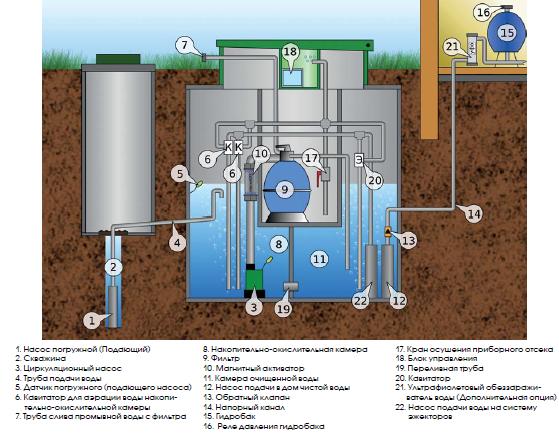
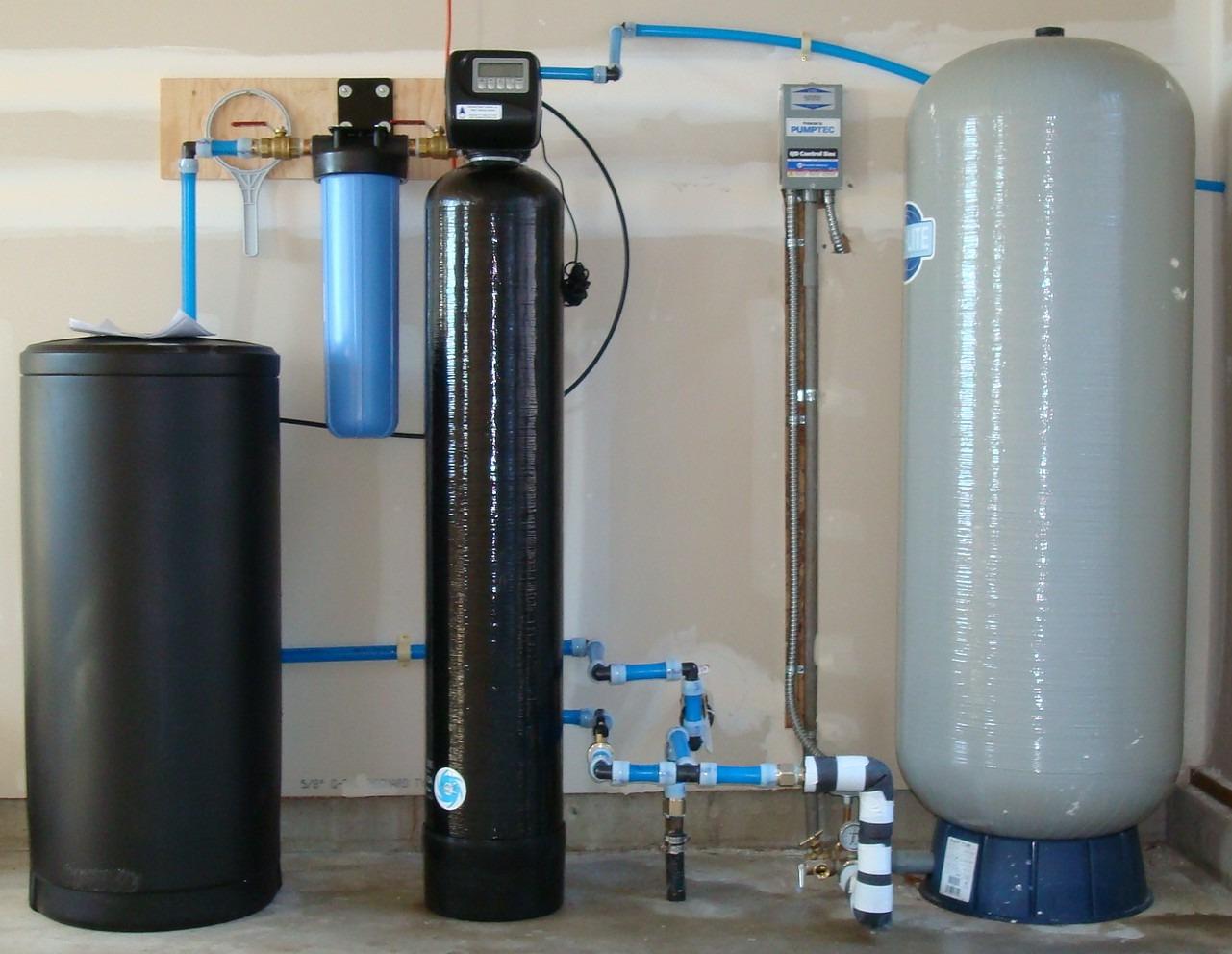
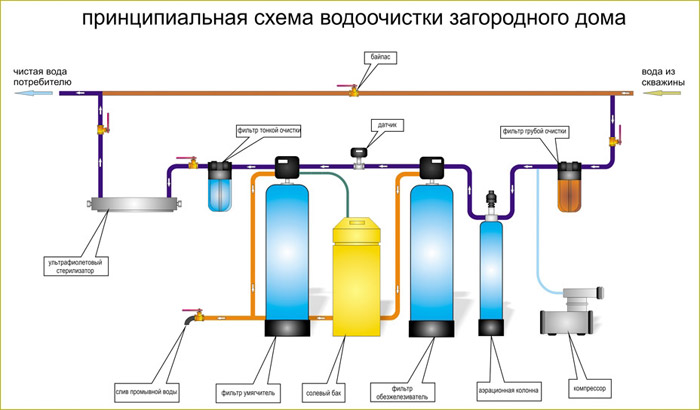
Before moving on to the topic of which water filter to choose for giving from a well, it is necessary to explain what an autonomous water supply network is. It consists of:
-
pump, with the help of water is supplied from wells in the house;
-
piping;
-
filter systems for water purification;
-
sometimes set tank, wherein collect water for reserve.
In the system of such a water supply, two types of pumping equipment are used.
Surface
They got their name only because they are installed on the surface of the well, not lowered into the water. A hose or a plastic pipe equipped with a strainer is lowered into the mine. The latter is designed to hold large undissolved particles: pebbles, organic matter, debris, sand, and so on.





Surface pump for water intake from a well
Since the water supply system is a system with constant off-season operation, it is necessary to create all conditions for the pump to be located in an insulated space. There are several options for this:
-
inside the wellwhere they build metal platform profileson which the pump is installed;
-
carry out installation of the caisson, inside which is mounted pump, part of the piping and locking fittings;
-
erected next to the hydraulic structure insulated building, which can be used additionally for domestic needs;
-
establish pump inside the house: or in a specially designated utility room, or in basement.

Scheme of an autonomous water supply system with the installation of a surface pump in the basement of the house
Submersible
From the name it becomes clear that this modification of water pumps is partially or completely immersed in water. That is, it is located inside the well, and a pipe is already being diverted from the device itself directly into the house. The design of the submersible pump already has a strainer located on the suction pipe of the unit.
These are small pumps, compact, but with a sufficiently large power that can provide water to a small country house. As for the pressure, these devices cannot boast of a large indicator.Therefore, they are used for pumping water from a shallow depth (up to 10 m), which wells possess.

Installing a submersible pump in a well



