- Installation of utilities in a turnkey private house
- Video description
- Turnkey engineering communications: work sequence
- The cost of engineering communications in a private house
- Features of water supply of individual houses
- Checking and configuring the system
- Alternative heating for a cottage or a private house
- Requirements for the installation of heating equipment
- Water heating devices
- Underfloor heating construction
- Skirting and floor convectors
- Comparison of costs of different heating systems
- Safe operation of boiler equipment
- Which internal heating system to prefer
- Video description
- Water heating
- natural circulation
- Forced movement of the coolant
- air heating
- Electrical
- What is included in a professionally designed heating system
- Video description
- Cottage engineering communications: automation and reliability
- The main elements of the water heating system
- Boiler selection by the number of circuits
- Boiler selection by type of fuel
- Boiler selection by power
- Water supply for cold and hot water, plumbing
- Services of the company "VodaPro"
- Design of the heating system of a country house
- Conclusions and useful video on the topic
- Conclusions and useful video on the topic
Installation of utilities in a turnkey private house
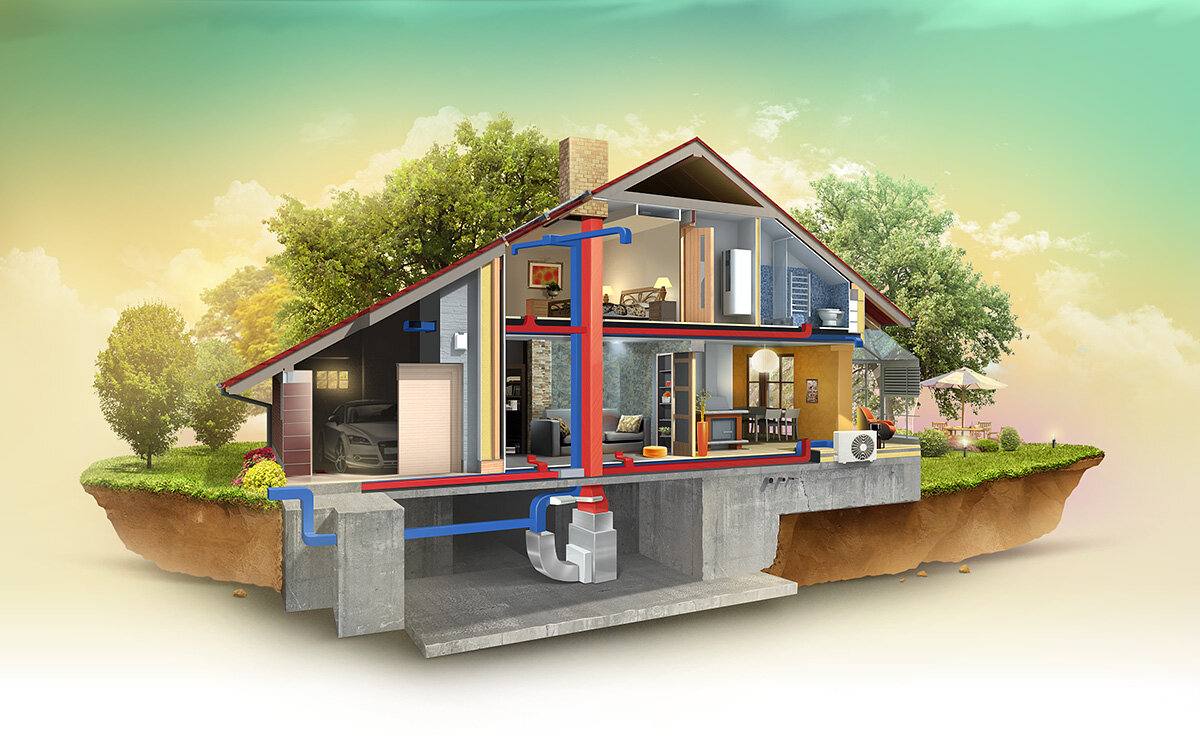
Profile construction companies offer services for the design and installation of engineering communications. The cost of engineering communications can be estimated after studying the design of the house; an integrated approach allows you to take into account all the technological nuances:
- Correct connection to existing infrastructures, taking into account their proximity and capacity.
- Design of home engineering systems with safety assessment, localization, proximity to highways and seismicity of the area.
- Design of external networks. A project is being developed for the water supply and sewerage network, the supply of electricity and gas, and the drainage system. The type of heating, the design of the boiler room, external lighting, drainage system, communication are being considered.
- Design of internal networks. The piping, electrical network, ventilation and air conditioning, filtration and purification systems are being thought out. At the request of the owners, a fire alarm and security system are added.
- Coordination. All projects are drawn up taking into account fire and sanitary standards and are checked for compliance with the rules of SNiP and GOST.
Video description
About the decisive factors when choosing communications for one house in the following video:
Turnkey engineering communications: work sequence
The company's specialists develop engineering communications based on the task and budget determined by the customer; The work goes through several stages:
- Consultation. Studying the project of the house (may require a site visit) and drawing up a technical assignment. The customer is informed about the advantages and disadvantages of various communication options; an agreement is made.
- Design.The design engineer calculates the parameters of communications, selects materials and equipment. The customer is provided with a step-by-step estimate.
- Training. Materials and equipment are assembled and delivered to the construction site. If the owner wants to replace the old system, the contract includes a clause on the dismantling of old communications.
- Mounting. The work is carried out by professional specialized installers. Each project is assigned a foreman who is responsible for the timing and quality of installation of equipment and communications.

Installing a fire safety sensor
- Commissioning works. Ready engineering communications are tested, a trial run is carried out. Owners receive instructions for use. Payment is made after the work is completed.
- Service maintenance. The company provides an official guarantee and the possibility of servicing during the warranty and post-warranty period.
The cost of engineering communications in a private house
A strong desire to save on utilities can one day paralyze life in the house, test not only comfort, but also the safety of family members. Such savings often turn into a disaster and inevitably lead to new (and very tangible) costs. The cost of laying networks depends on several components:
- features of a country house;
- the quality of the selected materials;
- experience of specialists.
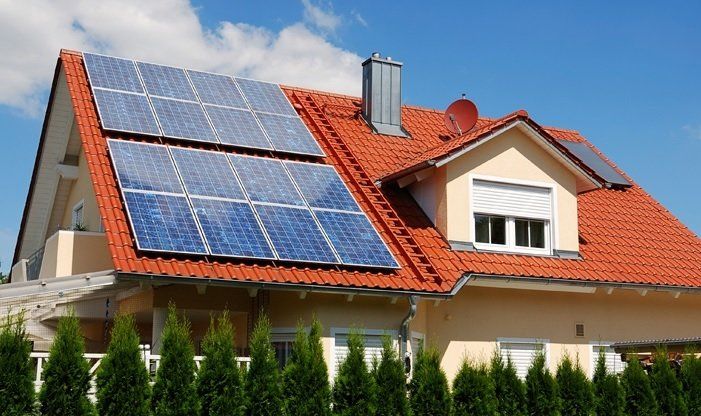
Solar panels could become part of the power supply
For a country cottage (150-200 m2), the arrangement of the installation of engineering communications, Moscow has the following prices:
- Sewerage: 60-70 thousand rubles.
- Water supply: 100-110 thousand rubles.
- Heating: 350-400 thousand rubles.
- Power supply: 150-170 thousand rubles.
Depending on the equipment and materials, communications in a turnkey private house will be invested in the price (water supply, heating and sewerage):
- Economy: from 2-2.5 thousand rubles / m2.
- Business: from 3-3.5 thousand rubles / m2.
- Premium: from 4.5-5 thousand rubles / m2.
Electric installation work:
- Economy: from 1-1.5 thousand rubles / m2.
- Business: from 1.5-1.8 thousand rubles / m2.
- Premium: from 2-2.5 thousand rubles / m2.

Sophisticated engineering communications will make life truly comfortable
The best solution for the owner of a country cottage would be to order all design and installation work in one construction company. This will save money and eliminate the need to find a contractor for each engineering system and subsequent control and coordination of work. A complex order of such complex projects guarantees high-quality execution and reliable functioning of all life support systems in your home.
Features of water supply of individual houses
Depending on the source of water supply, a private house may require the installation of a water purification and softening group. If an internal water supply is connected from city networks, then such measures are not needed. The water supply organization is obliged to ensure the supply of quality water. In this case, only problems with providing pressure and the need to install a booster pump may arise.
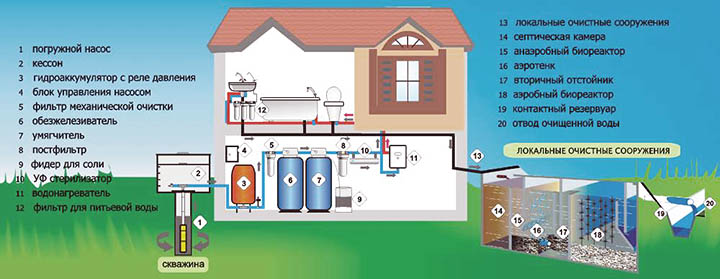
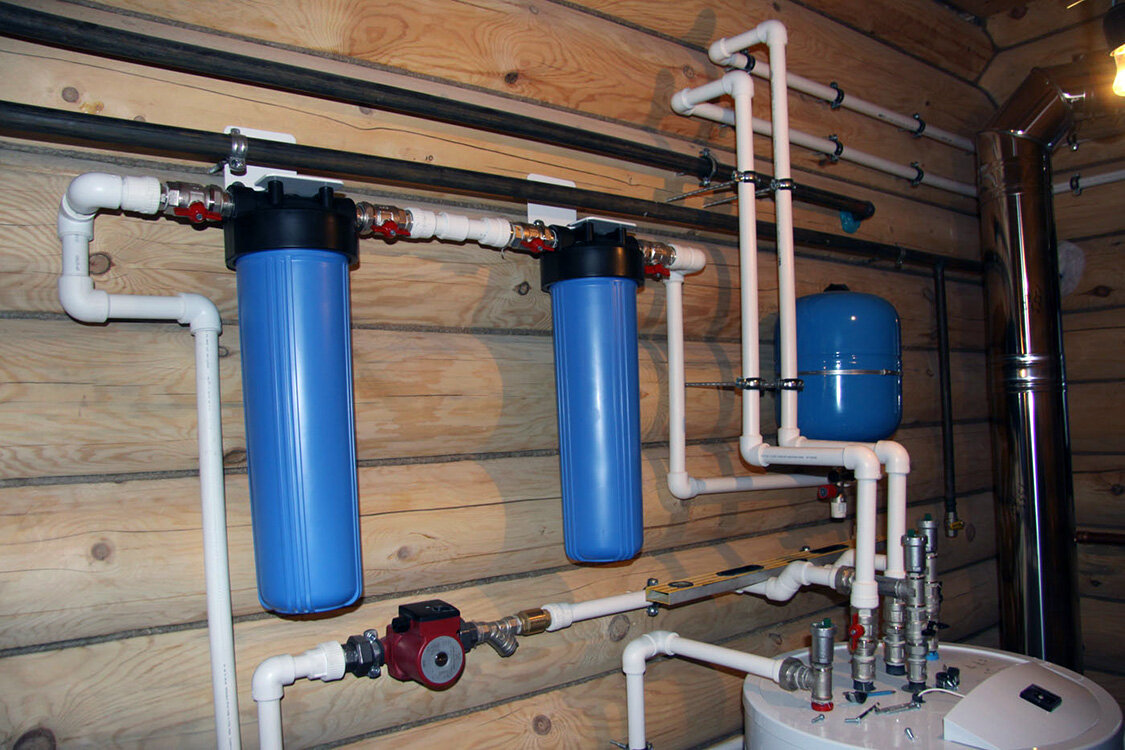
If the water comes from a well or a well, then, in most cases, it needs to be cleaned of sand and silt, as well as the removal of calcium and magnesium salts, which lead to the rapid formation of scale when heated.Sand is removed by passing water through filters of coarse and fine mechanical cleaning, and chemical salts are removed through a sodium-cationite filter filled with sulfonated coal.
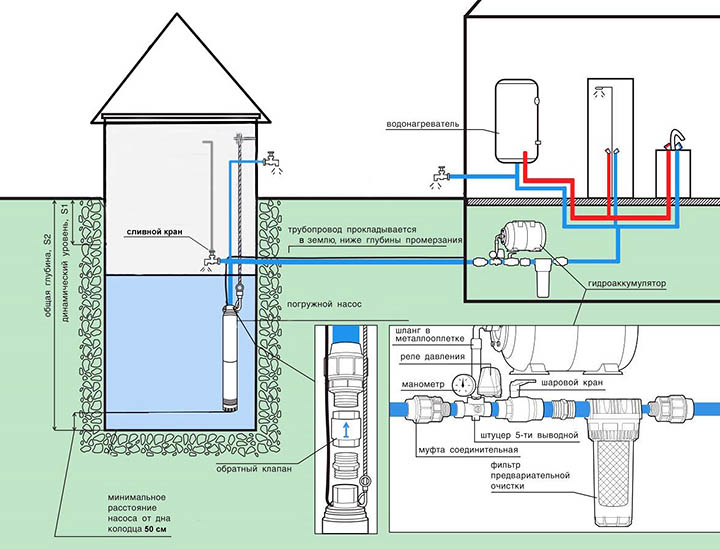
Piping wiring is recommended to be made of polypropylene pipes that are not susceptible to corrosion. This is the most inexpensive and affordable option, providing high quality and durability of the system.
Checking and configuring the system
After all the heating equipment is connected, you should make sure that the work done is correct. To do this, the system is filled with coolant, after which you need to follow it and check for leaks.
Then the boiler starts up. Heating the liquid will make it possible to finally verify the correct assembly of the circuit and the absence of any violations.
If a mistake was nevertheless made and a leak was found somewhere, then for this you need:
- drain the coolant;
- correct the defect;
- re-check.
The final stage is the sealing of the strobe, where the pipes were laid. If the installation was carried out on the floor, then the best solution is a screed. In the case when the pipeline is installed on the wall, putty or plaster is used. Next, you can do finishing work.
Alternative heating for a cottage or a private house
As alternative sources of thermal energy, heat pumps or solar collectors are most often used. The latter can also be a source of electricity. The cost of such equipment at the moment is astronomical and only owners of large, very large residential properties can afford them, where such investments will pay off in the foreseeable future.In developed countries, governments actively subsidize the use of such equipment. Well, in the former USSR, the use of heat pumps and solar collectors turns out to be much more expensive than gas, coal and even electricity.
Requirements for the installation of heating equipment
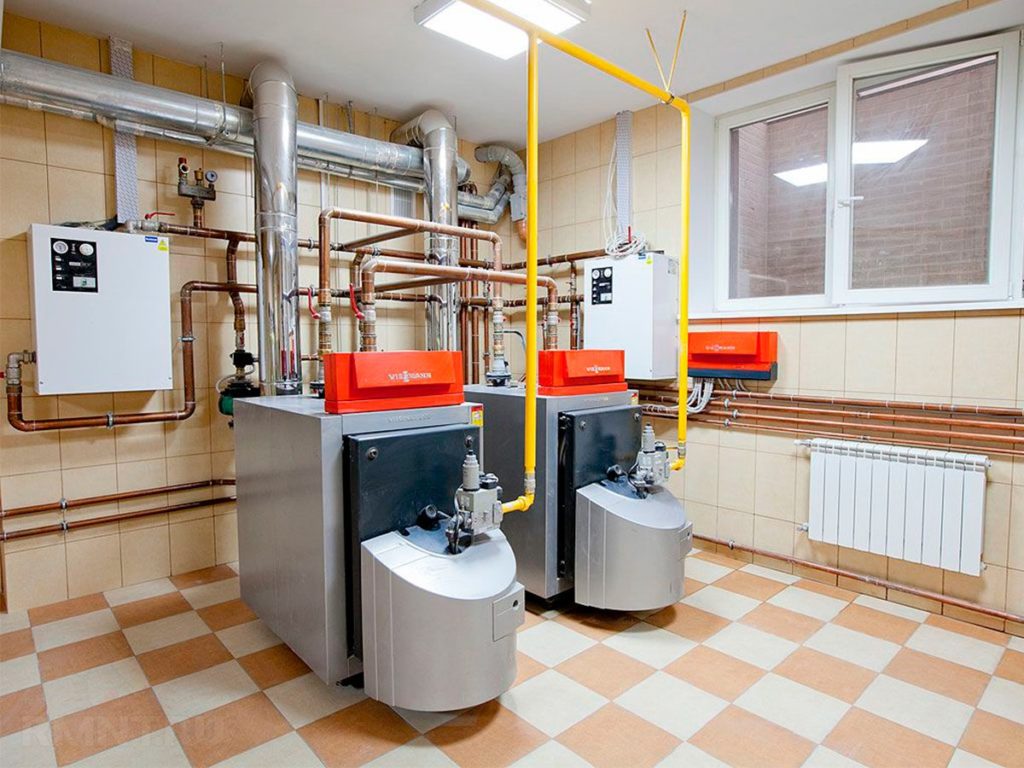
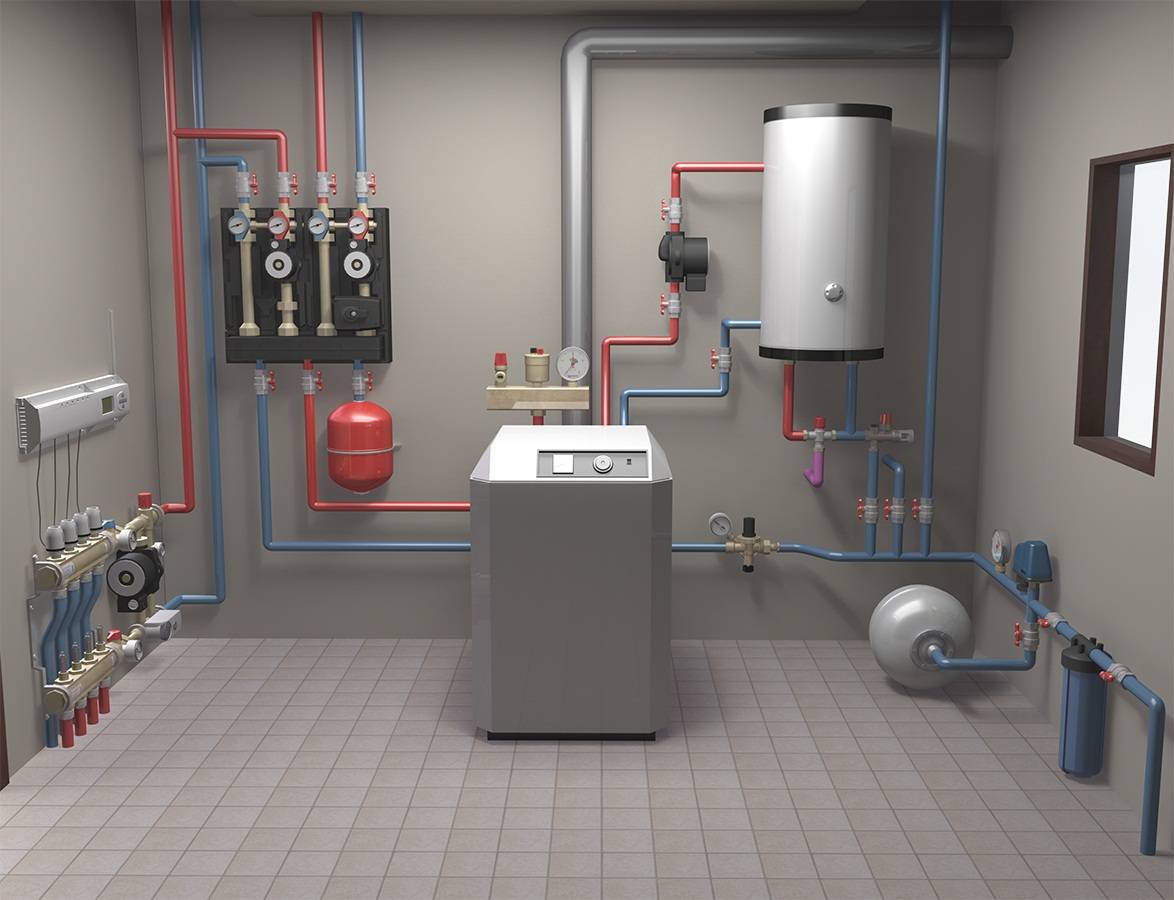
For the installation and installation of cottage heating, relatively powerful equipment is required, therefore, in order to comply with fire safety, it is necessary to equip a special boiler room. The requirements for such individual boiler rooms are not very difficult to comply with, but their violation can lead to irreparable consequences. Here is a short list of these requirements:
- The volume of the room is not less than 15m. cube
- Opening window
- The door must open outwards
- Boiler grounding
- The presence of a chimney, and ideally a supply and exhaust ventilation system
- A free area in front of the heating boiler is at least 1 sq.m.
- Non-combustible materials in the decoration of the boiler room.
Water heating devices
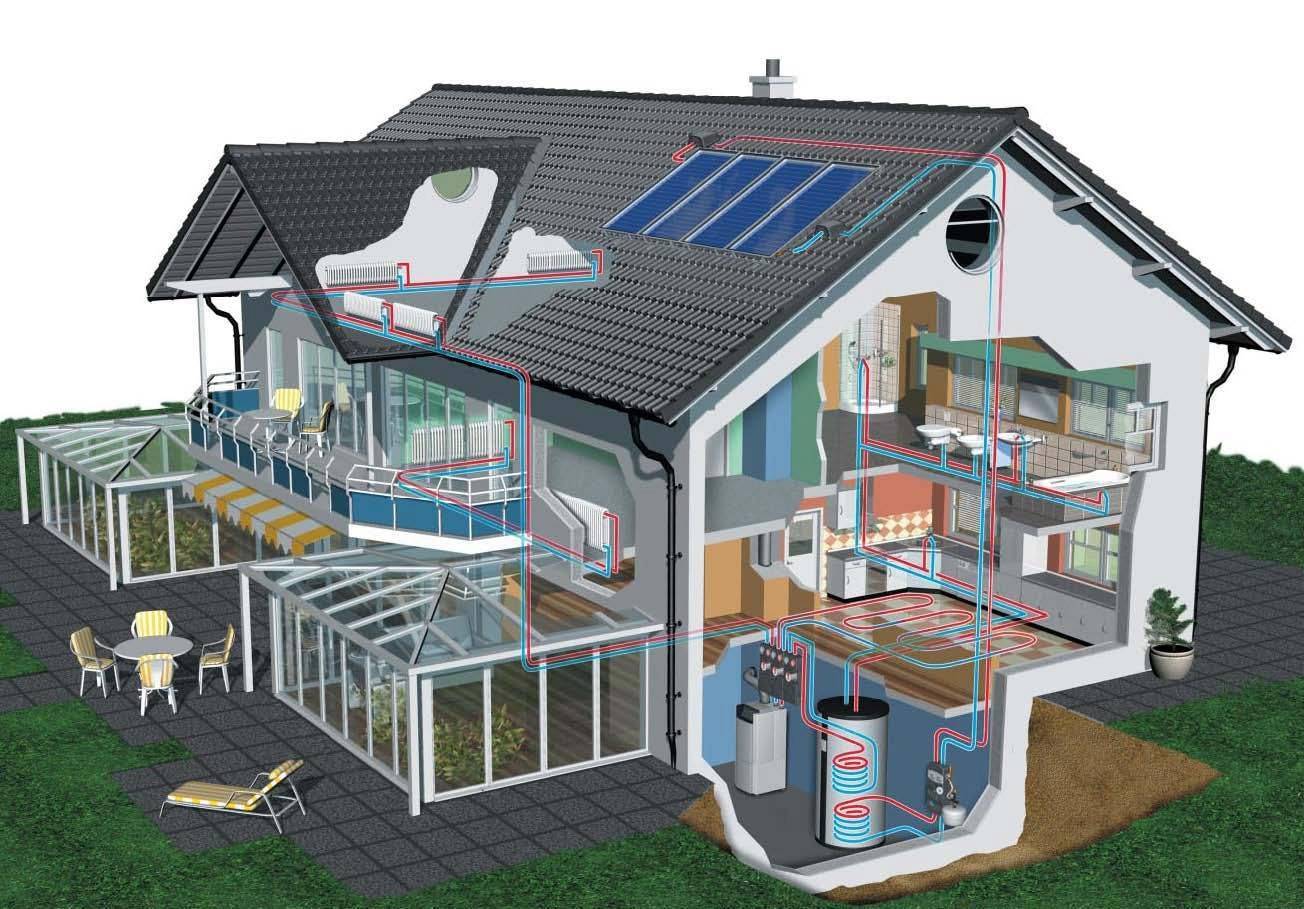
As heating elements of the premises can be:
- traditional radiators installed under window openings and near cold walls, for example, on the north side of the building;
- pipe contours of floor heating, otherwise - warm floors;
- baseboard heaters;
- floor convectors.
Water radiator heating is the most reliable and cheapest option among those listed. It is quite possible to install and connect the batteries yourself, the main thing is to choose the right number of power sections. Disadvantages - weak heating of the lower zone of the room and the location of the devices in plain sight, which is not always consistent with the interior design.




All commercially available radiators are divided into 4 groups according to the material of manufacture:
- Aluminum - sectional and monolithic. In fact, they are cast from silumin - an alloy of aluminum with silicon, they are the most effective in terms of heating rate.
- Bimetallic. A complete analogue of aluminum batteries, only a frame made of steel pipes is provided inside. Scope of application - multi-apartment high-rise buildings with central heating, where the heat carrier is supplied with a pressure of over 10 bar.
- Steel panel. Relatively cheap monolithic type radiators made of stamped metal sheets plus additional fins.
- Pig-iron sectional. Heavy, heat-intensive and expensive devices with an original design. Due to the decent weight, some models are equipped with legs - it is unrealistic to hang such an "accordion" on the wall.
In terms of demand, the leading positions are occupied by steel appliances - they are inexpensive, and in terms of heat transfer, thin metal is not much inferior to silumin. Following are aluminum, bimetallic and cast iron heaters. Choose which ones you like best.
Underfloor heating construction
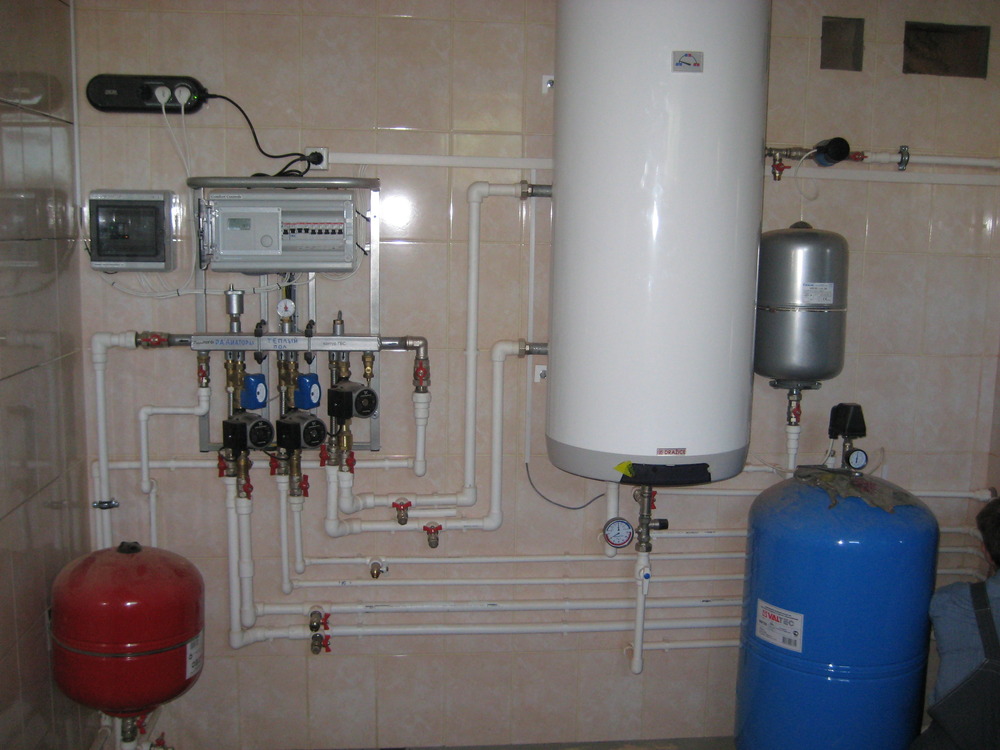
The floor heating system consists of the following elements:
- heating circuits made of metal-plastic or polyethylene pipes, filled with cement screed or laid between logs (in a wooden house);
- distribution manifold with flow meters and thermostatic valves to control the water flow in each loop;
- mixing unit - a circulation pump plus a valve (two- or three-way), maintaining the temperature of the coolant in the range of 35 ... 55 ° C.
The mixing unit and the collector are connected to the boiler by two lines - supply and return.Water heated to 60 ... 80 degrees is mixed in portions with a valve into the circuits as the circulating coolant cools down.
Underfloor heating is the most comfortable and economical way of heating, although installation costs are 2-3 times higher than the installation of a radiator network. The optimal heating option is shown in the photo - floor water circuits + batteries regulated by thermal heads.
Warm floors at the installation stage - laying pipes on top of the insulation, fastening the damper strip for subsequent pouring with cement-sand mortar
Skirting and floor convectors
Both types of heaters are similar in the design of the water heat exchanger - a copper coil with thin plates - fins. In the floor version, the heating part is closed with a decorative casing that looks like a plinth; gaps are left at the top and bottom for the passage of air.
The heat exchanger of the floor convector is installed in a housing located below the level of the finished floor. Some models are equipped with low-noise fans that increase the performance of the heater. The coolant is supplied through pipes laid in a hidden way under the screed.
The described devices successfully fit into the design of the room, and underfloor convectors are indispensable near transparent outer walls made entirely of glass. But ordinary homeowners are in no hurry to purchase these appliances, because:
- copper-aluminum radiators of convectors - not a cheap pleasure;
- for full heating of a cottage located in the middle lane, you will have to install heaters around the perimeter of all rooms;
- floor heat exchangers without fans are inefficient;
- the same products with fans emit a quiet monotonous hum.
Baseboard heating device (pictured left) and underfloor convector (right)
Comparison of costs of different heating systems
Often the choice of a particular heating system is based on the starting cost of the equipment and its subsequent installation. Based on this indicator, we obtain the following data:
- Electricity. Initial investment up to 20,000 rubles.
- solid fuel. The purchase of equipment will require from 15 to 25 thousand rubles.
- Boilers for liquid fuel. Installation will cost 40-50 thousand.
- Gas heating with own storage. The price is 100-120 thousand rubles.
- Centralized gas line. Due to the high cost of communication and connection, the cost exceeds 300,000 rubles.
Safe operation of boiler equipment
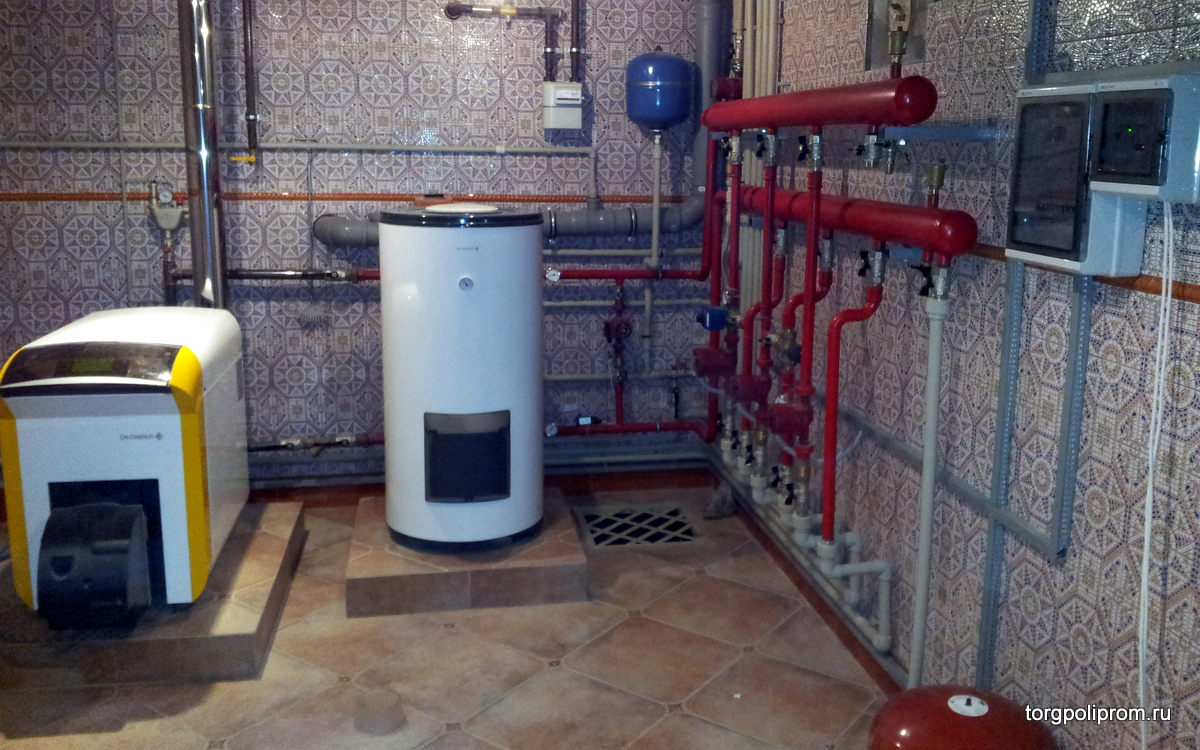
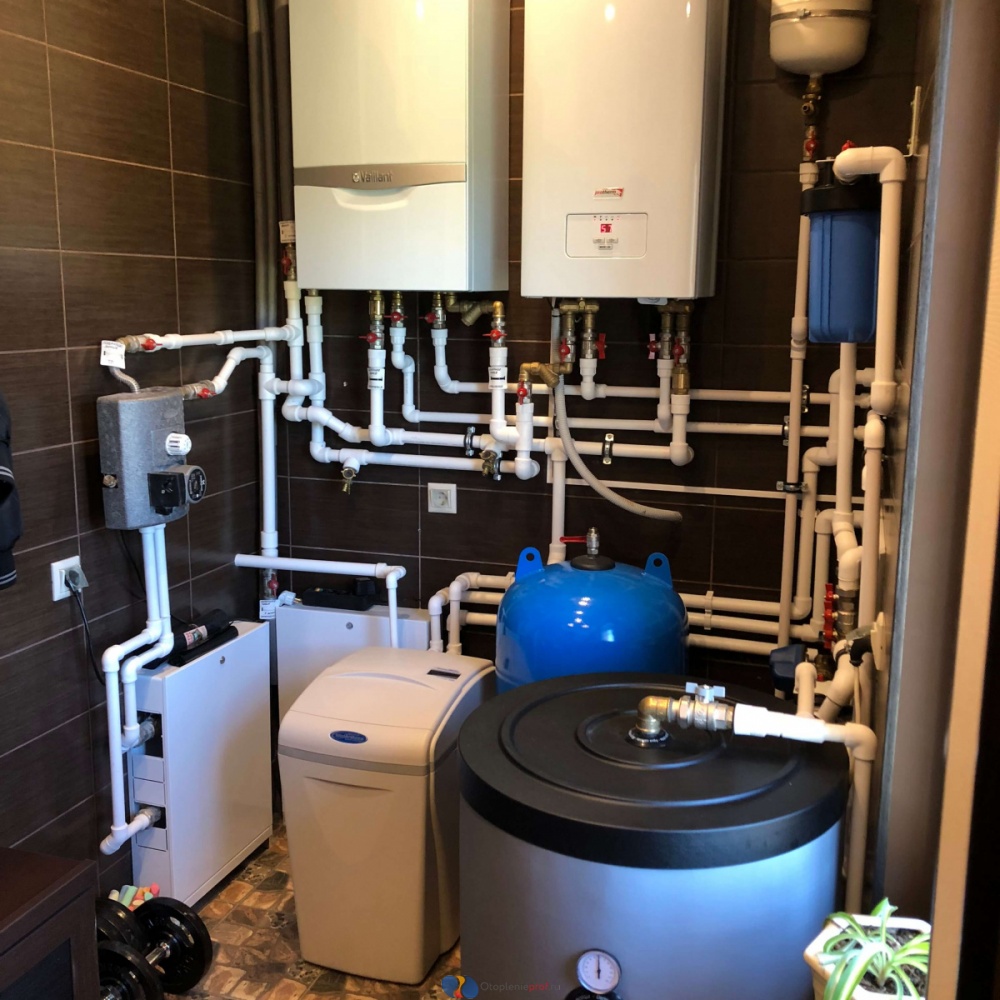
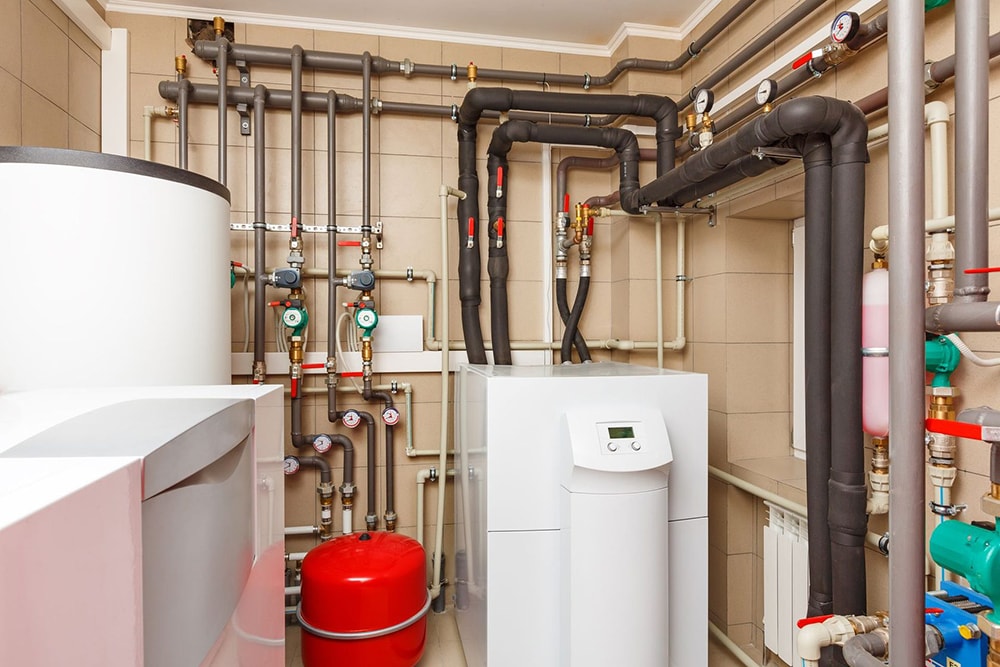
Masters, performing the installation of cottage heating, include a "safety group" in the heating system, if such devices are not provided for in the boiler design. The group for ensuring the safety of operation of boiler equipment includes the following elements:
- expansion membrane tank;
- manometer;
- safety valve;
- automatic air vents.
The manufacturer supplies the models of domestic heating boilers currently being sold with control automation, as well as an expansion tank and even a circulation pump built into the design of the unit. Modern boilers differ from previous generations in a greater degree of work automation. The operation of the equipment is much easier and safer if the boiler has a system:
- electronic ignition, endowed with a flame control function;
- protection against insufficient gas pressure in the supply line;
- protection against scale formation, as well as from freezing;
- automatic diagnostics of the unit condition;
- climate control in the room (automatic change of the boiler operation mode depending on the air temperature outside).
Which internal heating system to prefer
The heating project of a country house is based not only on the choice of the type of energy carrier and boiler, but also on the type of heat entering the room. There are several of them.
Video description
In our video, we will continue the topic of heating in the house and directly visually make a design solution for heating the house:
Water heating
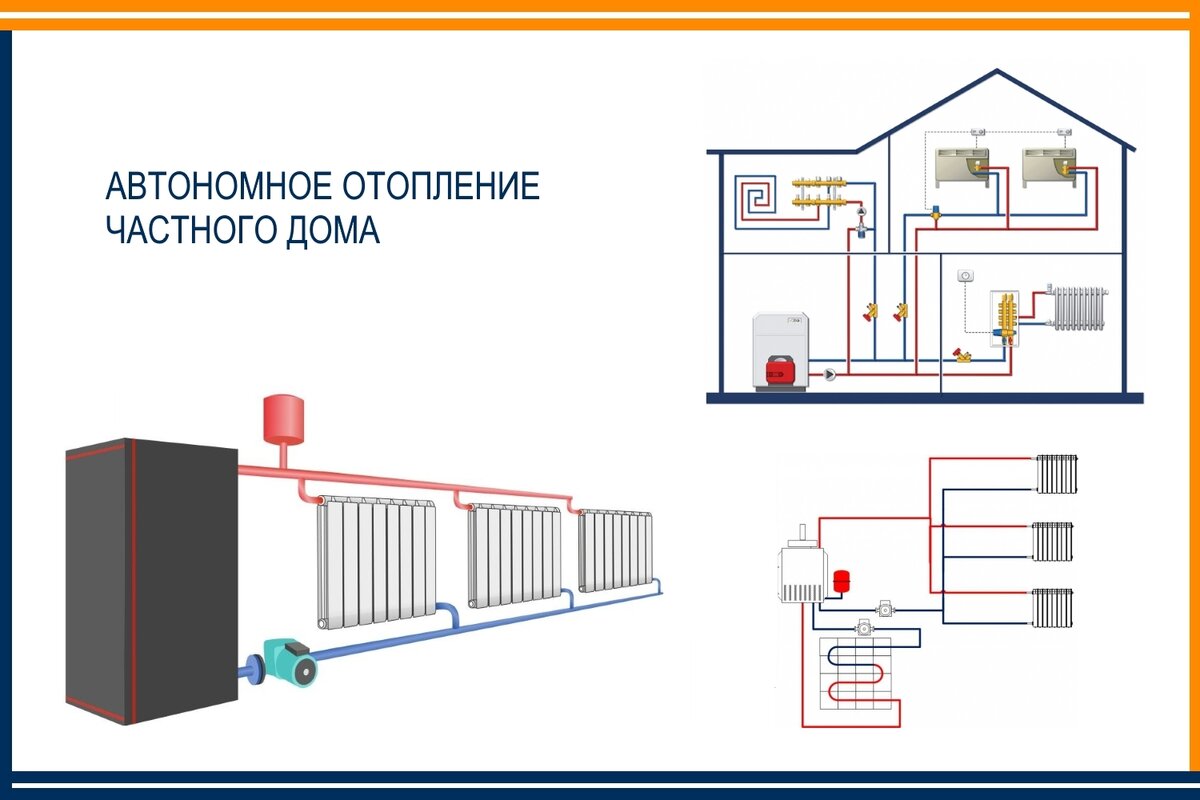
The most common, reliable and efficient heating system for most users. It is a system (closed circuit) through which hot water moves (continuously), warming the rooms. The function of the heater is performed by the boiler, to which the piping is connected, adjacent to the heating radiators. It is he who is responsible for heating the water and supplying it to each radiator.
Having given off heat, the water, already cooled, enters the boiler again, heats up to the desired temperature and repeats its technological cycle again.

General scheme of water heating
Here you can use a boiler of any type, running on any type of fuel. The water heating system is divided into two subgroups, according to the type of movement of the coolant:
natural circulation
Here, water moves through the pipeline without any compulsion from mechanical devices. This effect is achieved only through the correct installation of all components of the heating main - all pipes must be located at a certain angle of inclination. Otherwise, the system will not work.

Natural water supply through pipes to radiators
Forced movement of the coolant
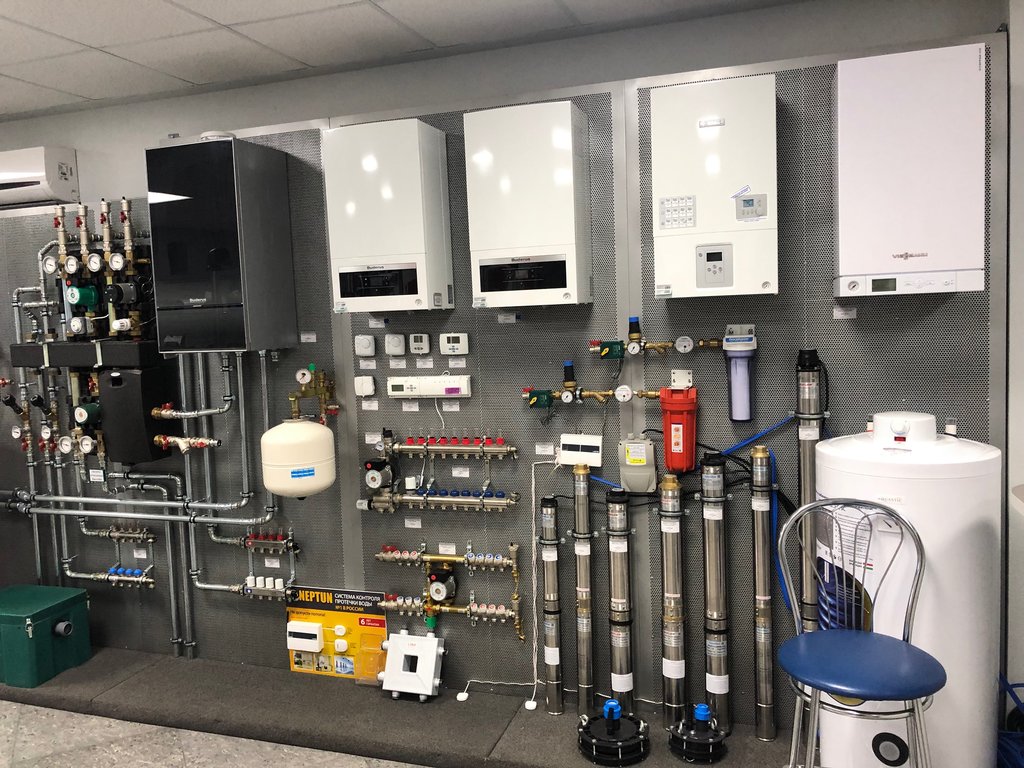
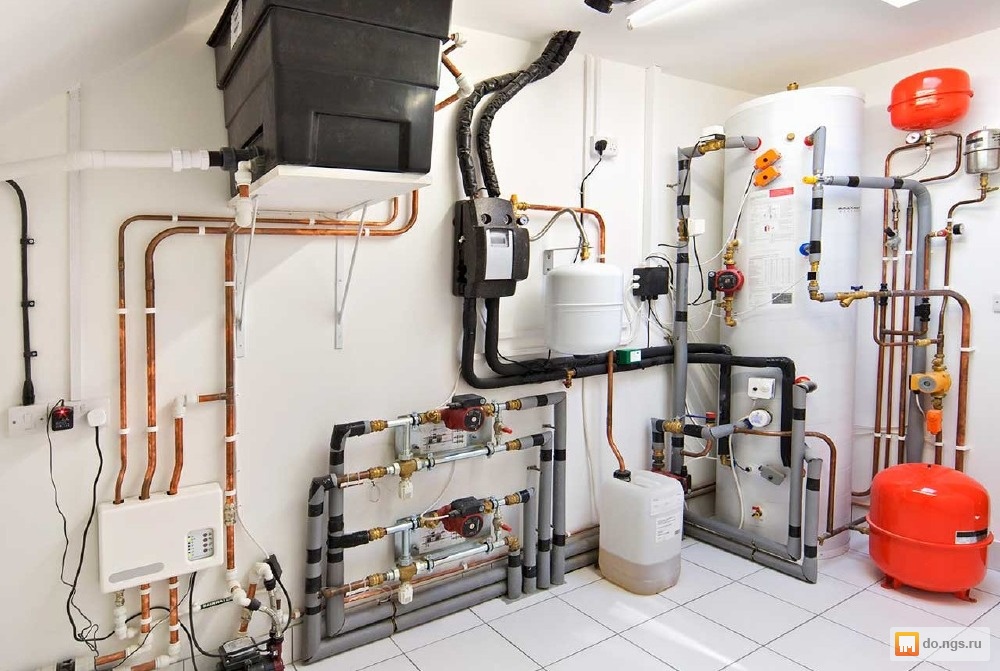
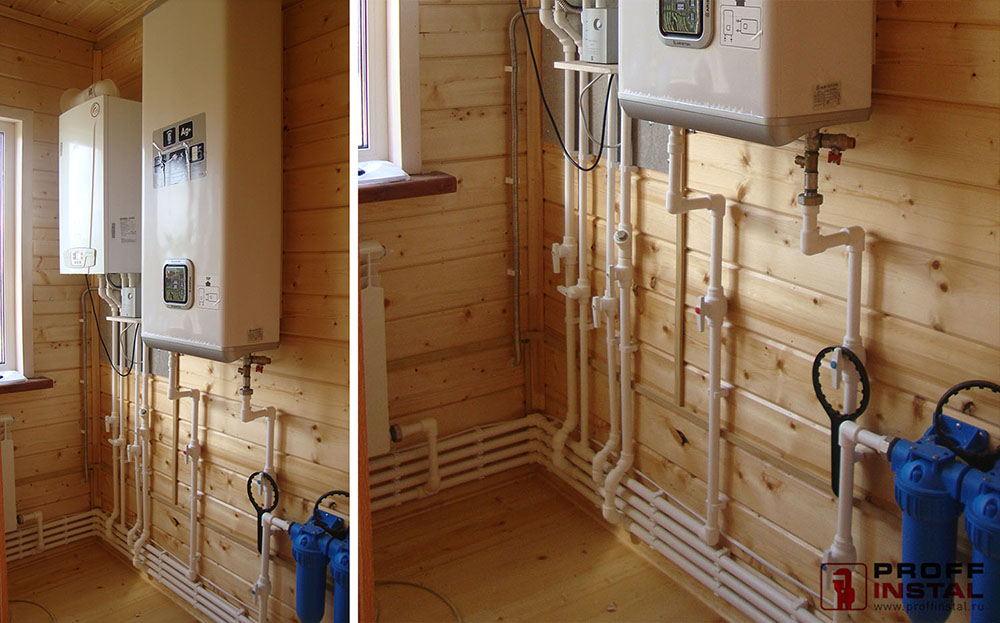
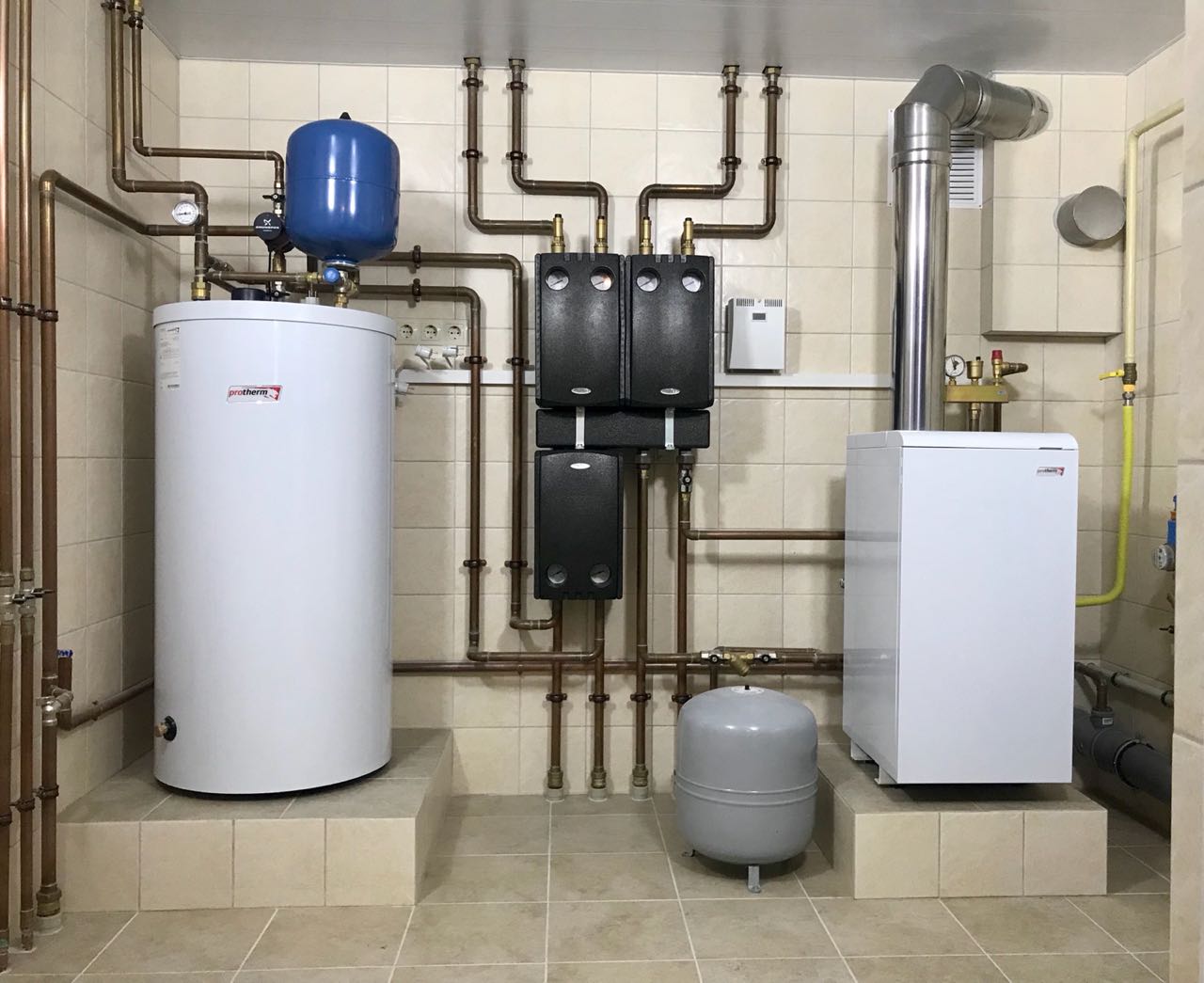
More easy to use and install. Performs the same function, but with the help of a circulation pump. Here pipes and wiring can be arranged as you like. The only requirement for this system is the installation of an additional power supply (socket) for the pump.


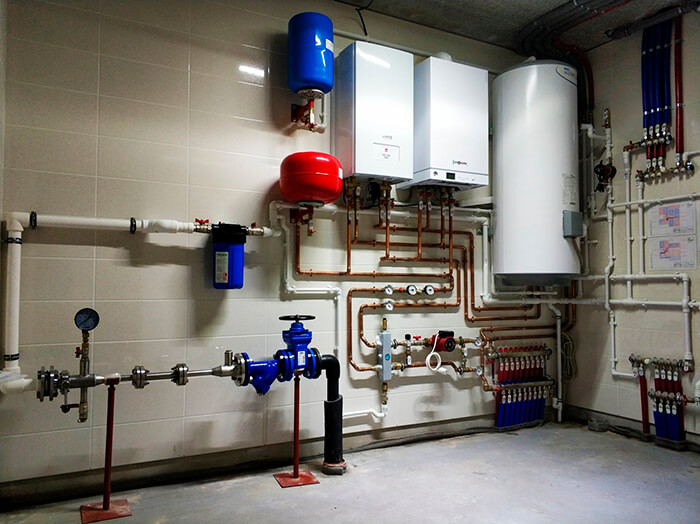

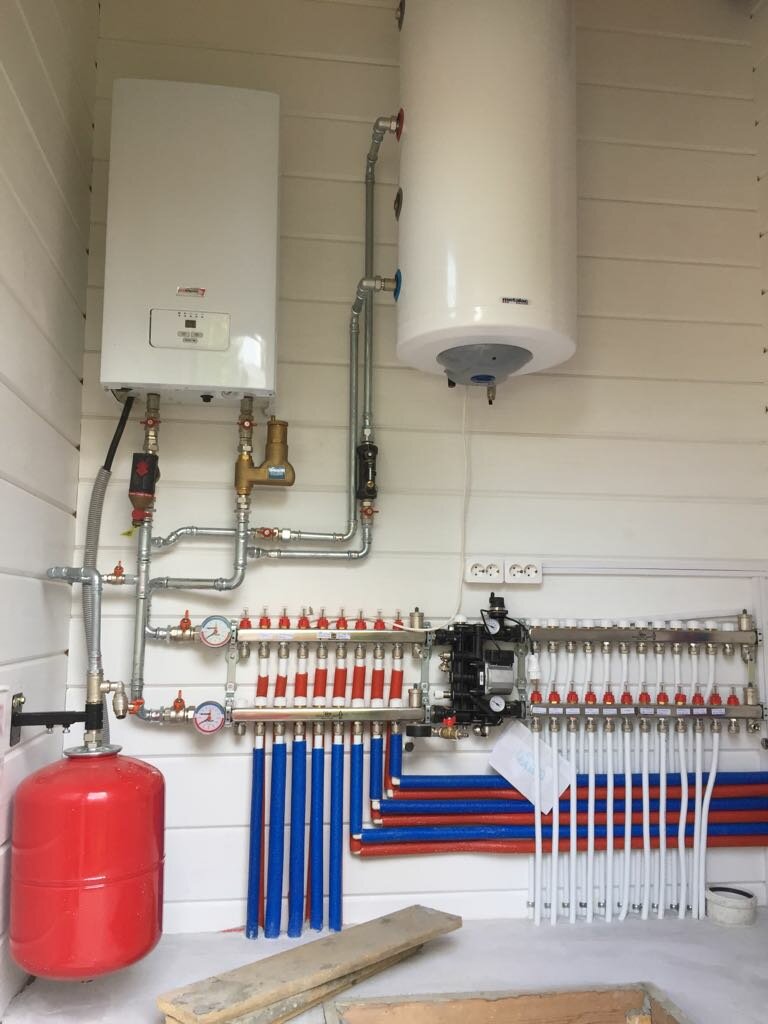

Forced hot water supply through the system
air heating
This project can only be carried out when building a house. For an already built building, the arrangement will be prohibitively expensive, since this technology provides for the arrangement of air ducts (made of metal, plastic or textile), through which the air heated by the heat generator is supplied.
It is forced and gravitational. Natural air exchange occurs according to the laws of physics - warm air rises to the top, cold air rushes down. The forced method differs from the previous one in that the air flows are moved due to the installation of ventilation equipment.

To organize air heating, it is necessary to carefully calculate the patterns of movement of warm and cold air flows.
Electrical
This technology provides for the installation:
- electric convectors;
- infrared long-wave heaters;
- underfloor heating systems.
To achieve the maximum effect, a cozy microclimate, it is recommended to combine several electrical appliances in one project to heat the house.
Such heating cannot be considered economical, payments for electricity will definitely increase. If this is not affordable, then you should choose a cheaper method of heating.

Water heating from an electric boiler
What is included in a professionally designed heating system
When ordering a project from the company's specialized specialists, the customer should receive:
- Title page with the original seal of the organization.
- An explanatory note (mandatory) to the created project.
- Communications layout plan (general).
- High-rise plan of the same layout.
- Estimate: for the project, materials, types of work and their cost.
- Specification of materials and special equipment.
- Project in the form of a detailed sketch.
- Drawing with precise detailing and dimensions of all main and additional units.
- Wiring plan for engineering communications, connection points and tie-ins.
Before creating a project, an engineer must arrive at the site, who will make the necessary measurements and draw up a preliminary drawing. After that, a contract is drawn up with the customer, all possible options are considered, taking into account the preferences and wishes of the client. Each customer has the right to demand from the design company a copy of the project in electronic form or request a copy of it in paper form.
Video description
Where mistakes can be made when organizing home heating, in detail in this video:
Turning to specialized companies, the customer not only saves money, but also receives a guarantee that his heating system will work correctly, for a long time and functionally. There will be no need to redo anything, and most importantly - not to be afraid for the life of your loved ones.
Cottage engineering communications: automation and reliability
A country house has long ceased to be a place for summer holidays. Many families live outside the city all year round, so perfect work is required from engineering systems.If electricity is lost in a city apartment for several hours in winter, it will look like an annoying nuisance that does not seriously affect anything. If this happens in a private house with autonomous communications, the plumbing, heating and sewerage systems may freeze, which can only be called a disaster.
A new generation of engineering communications in a private house has a high level of automation. They are able to work efficiently and reliably, coping with the increased demands and pressures of modern life:
- House area. In most cases, it exceeds the area of urban housing, which implies an increased engineering load.
- Number of equipment. In country cottages, not only dishwashers, jacuzzis and home theaters are installed. Often the house is decorated with an indoor swimming pool or a wellness center, and a security and fire alarm system monitors the order.

Automation greatly simplifies systems management
Increasingly, the automation of suburban housing is carried out in a complex way (the "Smart House" system), with maximum control and computer control. The equipment of the system is not cheap, but in the future it allows you to save time and money, as well as reliably solve several problems:
- Choose the optimal load with which the systems will work.
- Develop a dynamic system with the possibility of flexible management and modernization. The owners will be able to set the operating mode for alarms and CCTV cameras. It's not difficult to set up a schedule for lights, blinds, appliances, a computer, or a music center to turn on and off.
- Set up a system for preventing emergencies (turning off gas or water) and warning about danger.

The video surveillance system will allow you to look after your home from your tablet or smartphone
The main elements of the water heating system
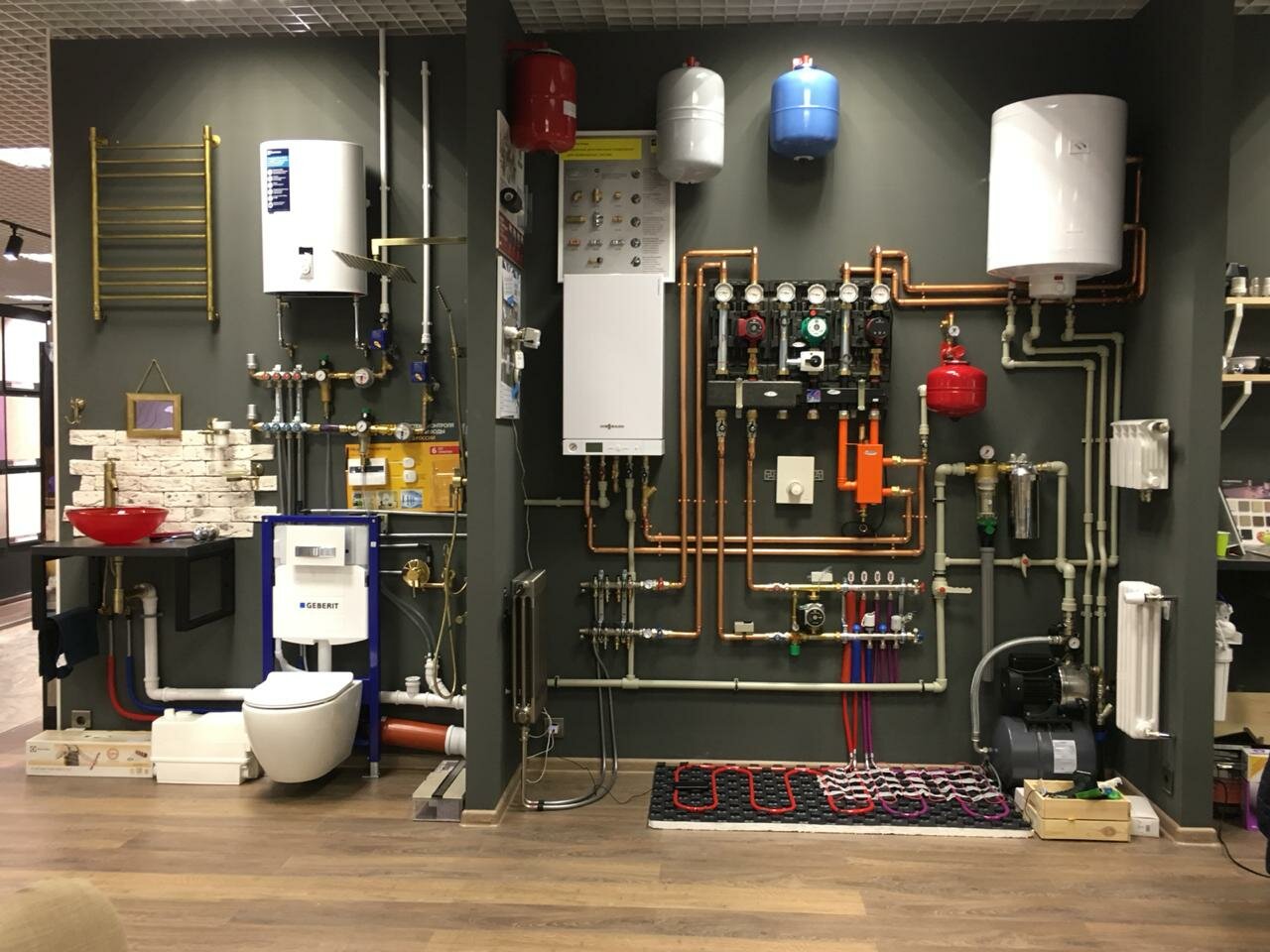
The main elements of the water heating system include:
- boiler;
- a device that supplies air to the combustion chamber;
- equipment responsible for the removal of combustion products;
- pumping units that ensure the circulation of the coolant through the heating circuit;
- pipelines and fittings (fittings, shut-off valves, etc.);
- radiators (cast iron, steel, aluminum, etc.).
Boiler selection by the number of circuits
For heating the cottage, you can choose a single-circuit or double-circuit boiler. What is the difference between these models of boiler equipment? A single-circuit boiler is designed only for heating the coolant intended for circulation through the heating system. Indirect heating boilers are connected to single-circuit models, which supply the facility with hot water for technical purposes. In dual-circuit models, the operation of the unit is provided in two directions that do not intersect with each other. One circuit is responsible only for heating, the other for hot water supply.
Boiler selection by type of fuel
The most economical and convenient type of fuel for modern boilers has always been and remains main gas. The efficiency of gas boilers is not disputed, since their efficiency is 95%, and in some models this figure goes off scale for 100%. We are talking about condensing units capable of "pulling" heat from the products of combustion, flying away in other models simply "into the pipe".
Heating a country cottage with a wall-mounted gas boiler is one of the most popular ways to heat living space in gasified regions.
However, not all territories are gasified, therefore, boiler equipment operating on solid and liquid fuels, as well as on electricity, is very popular. It is even more convenient and safer to use electric boilers for heating a cottage than gas, provided that the stable operation of the power grid is established in the region. Many owners are stopped by the cost of electricity, as well as the limitation of the rate of its release for one object. The requirement to connect an electric boiler to a three-phase network with a voltage of 380 V is also not to everyone's liking and affordability. It is possible to make electric heating of cottages more economical by using alternative sources of electricity (windmills, solar panels, etc.).
In cottages built in remote regions, cut off from gas and electric mains, liquid fuel boilers are installed. As fuel in these units, diesel fuel (diesel oil) or used oil is used, if there is a source of its constant replenishment. Solid fuel units operating on coal, wood, peat briquettes, pellets, etc. are very common.


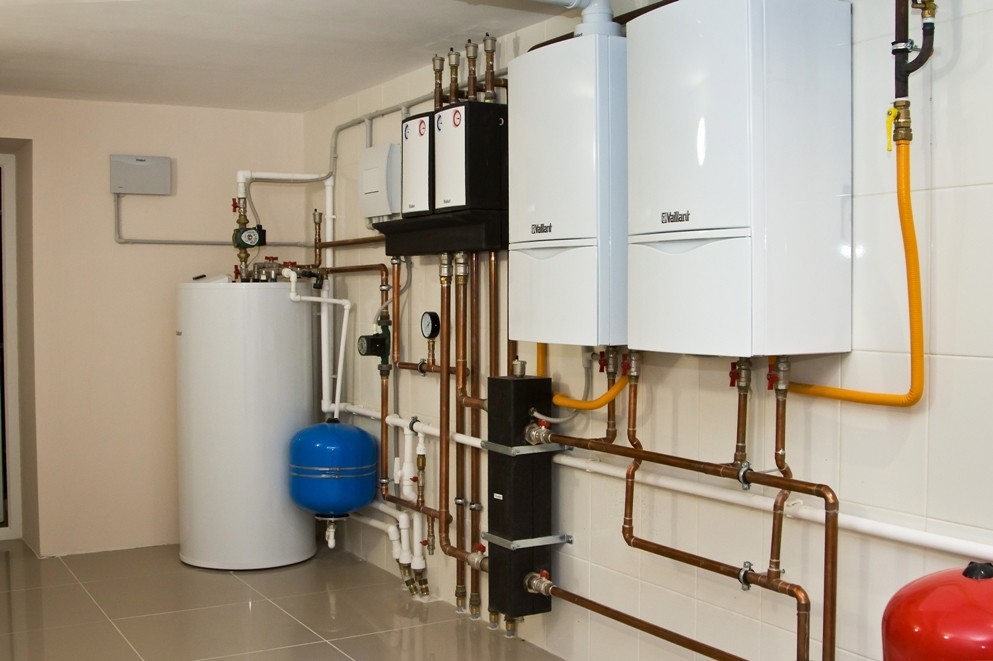


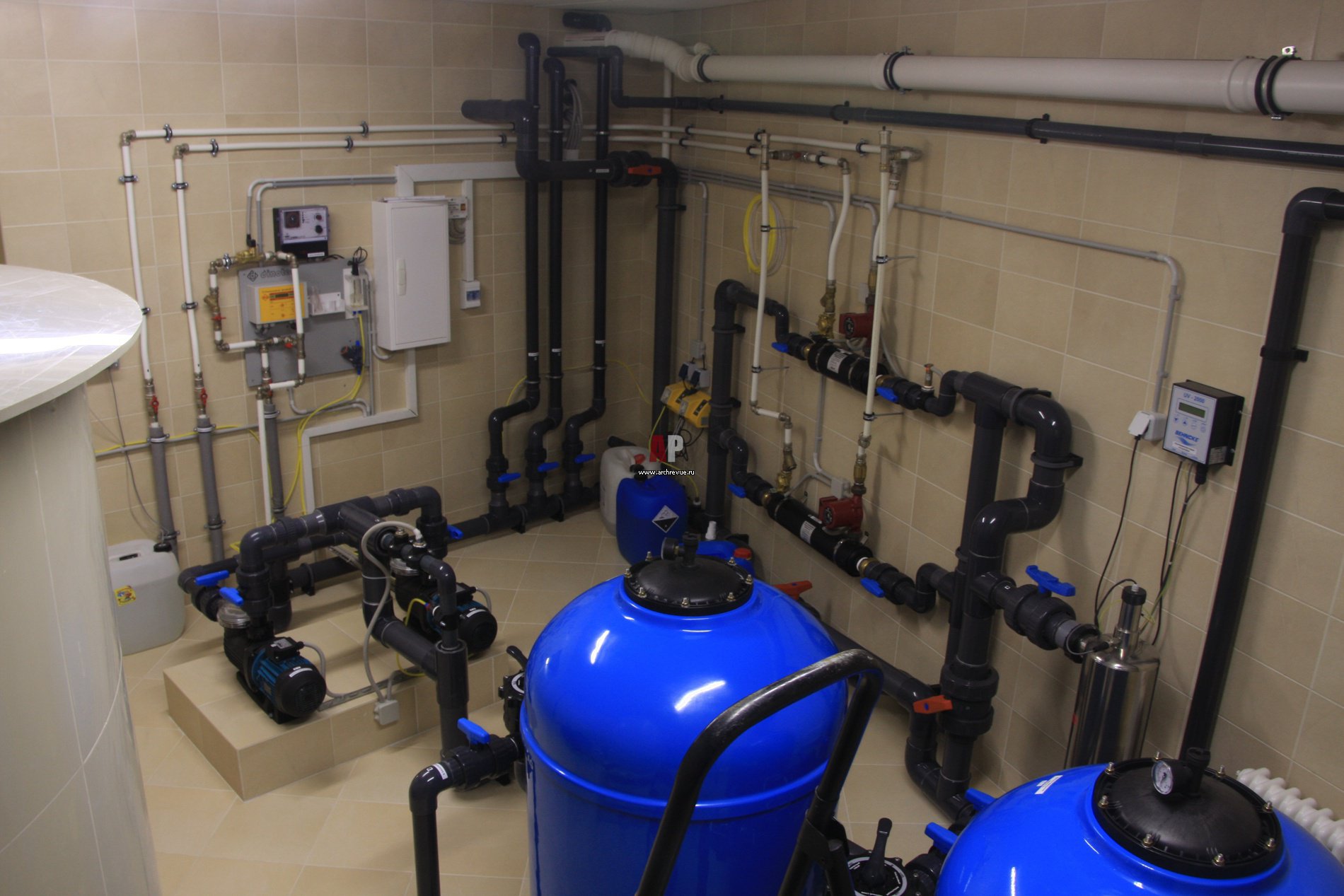
Heating a country cottage with a solid fuel boiler that runs on pellets - granulated wood pellets that have a cylindrical shape and a certain size
Boiler selection by power
Having decided on the type of boiler equipment according to the fuel criterion, they begin to select a boiler of the required power. The higher this indicator, the more expensive the model, so you should not miscalculate when determining the power of the unit purchased for a particular cottage. You can't follow the path: the less, the better.Since in this case the equipment cannot fully cope with the task of heating the entire area of a country house to a comfortable temperature.
Water supply for cold and hot water, plumbing
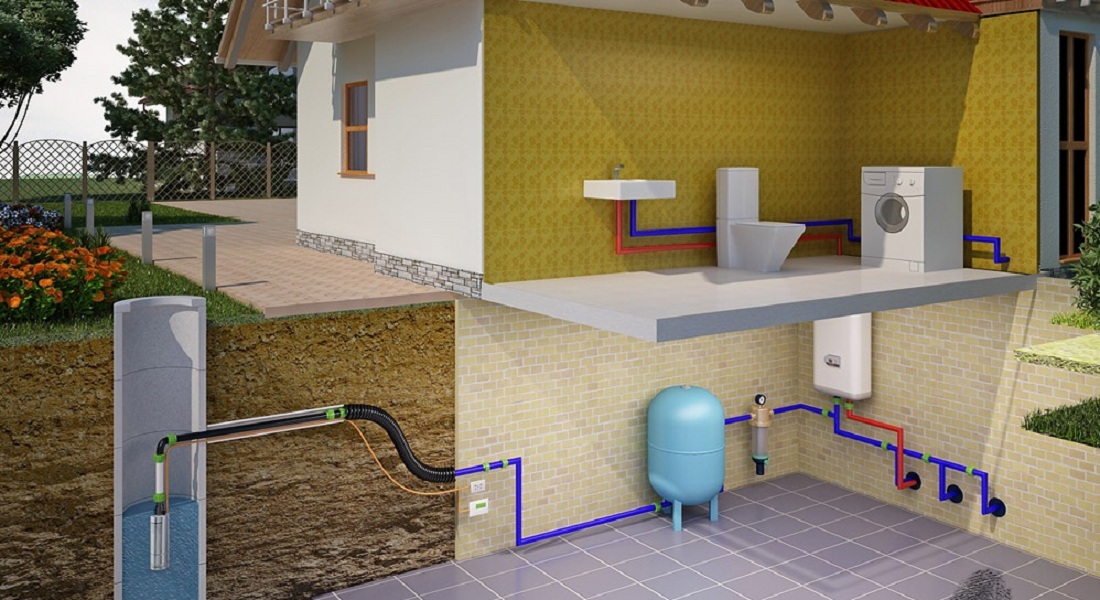
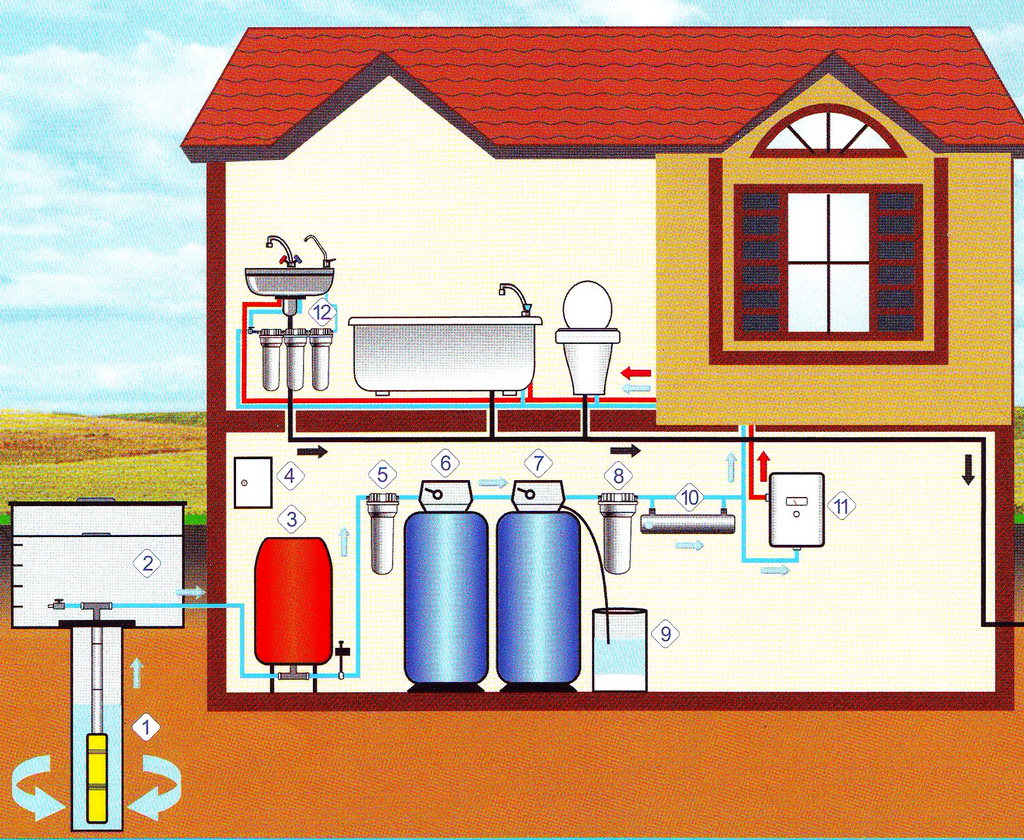
The water supply system is a set of building structures that produce water intake, purification, and supply of water to residents of settlements. The centralized water supply system includes: a water source, pumping facilities, filters, pipelines, tanks.
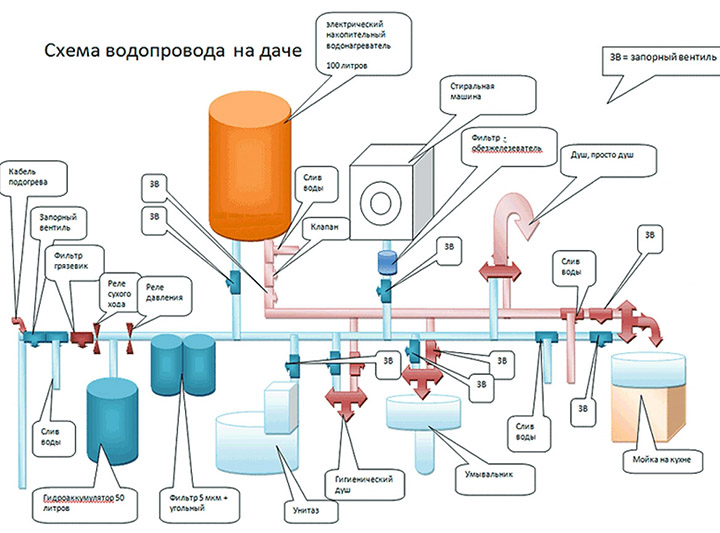
Water supply in the dwelling consists of:
- check valve;
- valves (drain, shut-off);
- filters;
- hydraulic accumulator, flexible connection to it;
- pipes;
- pressure switch;
- pressure gauge;
- collector;
- bathroom;
- tee (sink, bathroom, toilet);
- mixers;
- fuses;
- water heaters.
Important! The design of the water supply system is drawn up by the designer. Its elements will differ from the layout of the building, the method of extraction (centralized, autonomous)
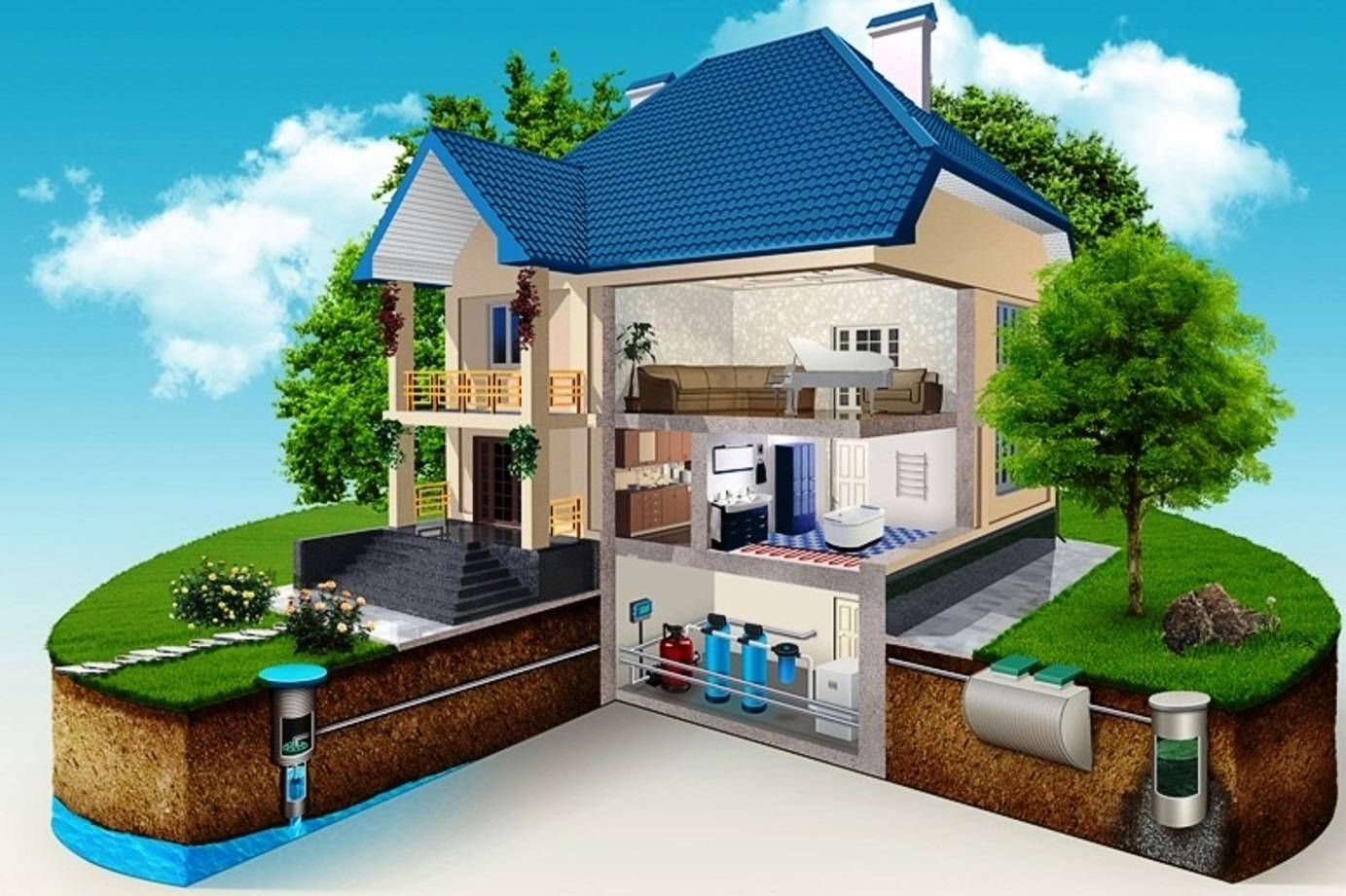
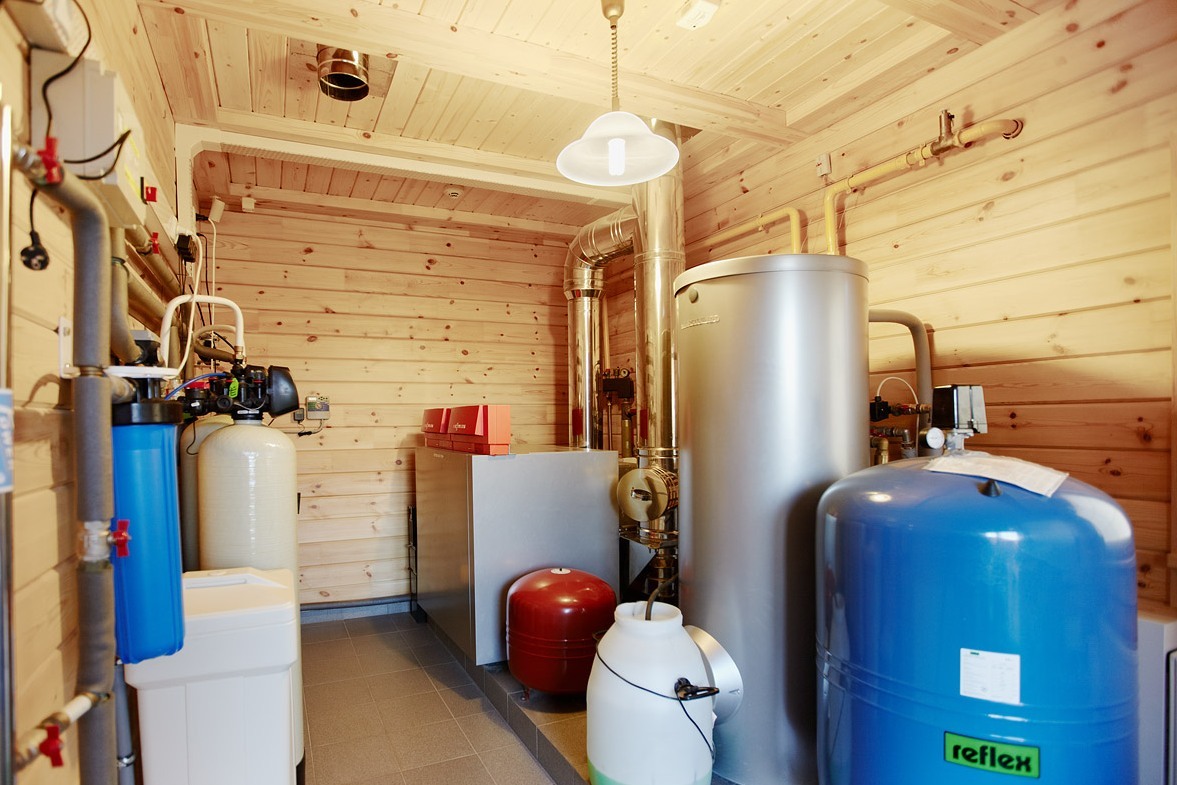
Residents of private sectors are designing a layout of an independent water supply, consisting of:
wells;
- pump;
- check valve;
- hydraulic accumulator;
- automatic pump control device;
- filters;
- water heater;
- mixers;
- bathroom.
The bathroom needs plumbing. It does not matter whether it is a centralized source or an autonomous one, the pipelines are laid in the same way.
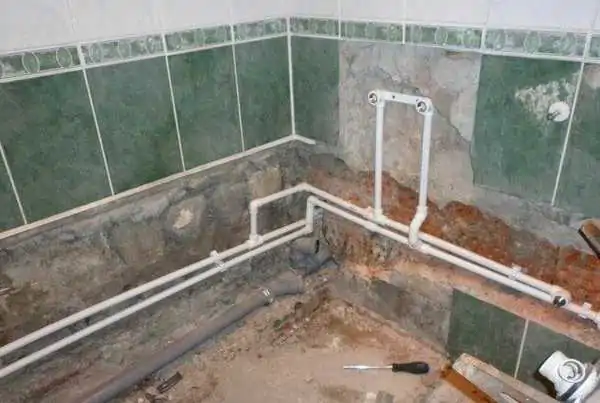
Photo 1. The process of laying a water main for a bathroom. Special channels for pipes are made in the wall.
Residents of apartments use a centralized water supply system. In private houses, internal and external work is carried out. Here you will have to invest in drilling a well and purchasing a pumping unit.Pipes run underground, take care of their insulation or increase the depth of laying. This will keep the water from freezing in winter.
Autonomous water supply includes filters. After completing external work, they proceed to supply water to the house. The essence of the installation work is the same as with the centralized one, with the exception of installations of automation for pump control station. The pump runs on electricity. Consider holding water tanks in case the power goes out.
Reference. For convenience, when carrying out repairs, it is necessary to install separate water shut-off valves for the bathroom, kitchen. In this case, draining is not performed from the entire network.
Pipes form the basis of the plumbing structure. Decide on the material you will be using. Metal is suitable for internal, external works. It is durable and relatively inexpensive. The only downside is corrosion.
Copper building materials are lighter, do not rust, withstand ultra-low and ultra-high temperatures, kill microbes; minus - high cost. Service life - more than seventy years.
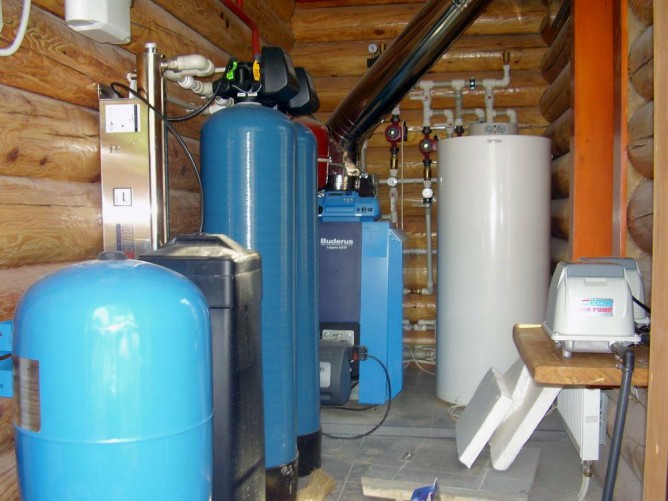
Photo 2. Plumbing using copper pipes. The construction of this material will last a very long time.
Polybutylene is used for a private house. It does not rust, tolerates low, high temperatures.
Polypropylene products are suitable for cold, hot water supply.
Metal-plastic building materials are used for indoor installations in apartments and houses. They are mounted in walls to avoid damage.
Flexible plumbing wiring is installed for sinks, washing machines.
Plastic products with careful operation will last up to 50 years.
Attention! Water mains are laid below gas and electrical communications systems. A pipe with hot water is installed above the cold
To supply hot water, consider the remoteness of the mixer from the heating device (water heater, double-circuit boiler). A pipe with cold water is connected to the heating device, two pipes running in parallel are installed in the mixers for cold and hot water supply. If the point of consumption is located very far from the boiler / boiler, a third pipe is laid to circulate water in the system.





Services of the company "VodaPro"
The VodaPro company provides a full range of services, from the design of engineering communications, the selection of the necessary equipment and the installation of heating, water supply and sewerage systems, and ending with warranty and post-warranty service. The main direction, the company considers the execution of works on a turnkey basis, but at the request of the customer, partial participation in the execution of the finished project is also possible. Diagnostics and troubleshooting of already equipped systems is also possible.
The team of professionals "VodaPro" has the qualifications and experience to solve the tasks in a high quality and in a short time.
VodaPro professionals are ready to provide the following services with high quality and in a short time: design and calculation systems of individual heating and water supply country houses and cottages; installation of a heating system; water treatment and drilling of wells for water; design and installation of sewerage and sewer systems.An individual approach to each client guarantees an effective solution while minimizing costs.
Design of the heating system of a country house
Scheme of the heating system of a two-story country house (cottage) based on a fireplace stove.
The final design involves the development of a working draft of the heating system of a private house. The drafting is carried out in the following order:
- pipeline route design;
- distribution units are placed: manifolds, shut-off valves, circuit servo drives that regulate thermal heads on radiators;
- performing a hydraulic calculation of the system to exclude temperature drops in the premises during operation, the occurrence of emergencies due to pressure drops in the heating system;
- selection of manufacturers of heating equipment;
- drawing up a specification, which indicates the cost of equipment and components used for the installation of the system;
- determination of the cost of installation work;
- execution of the drawn up project that meets the current requirements of regulatory authorities and SNiP;
- coordination of the drawn up documentation with state regulatory authorities.
The working draft of the heating system of a country house consists of an explanatory note and a graphic part. The explanatory note should include:
- description of the purpose and purpose of the completed design work;
- table of initial data;
- heat loss and temperature regimes;
- technological solution;
- list of used equipment;
- list of technical and economic indicators of the heating system;
- operating conditions;
- safety requirements.
The graphic part should include the following materials:
For owners of country houses and cottages, the issue of heating is the most important in the harsh Russian climate. As a rule, connection to the city or village heating network is not possible. The best option that will allow you to provide warmth and comfort in your country house throughout the year, even in severe frosts, will be the use of an autonomous heating system.
The heating system of a country house must be provided at the design and construction stages.
This will allow you to initially understand what power a source of heat supply will need (for example, a private boiler house), develop the most optimal heating scheme and provide for the conditions for installing a heating system during the construction of a country house or cottage (so that you do not have to resort to redevelopment and refinishing).
In an already constructed building, when wiring all the necessary communications, it will inevitably be necessary to make holes in the ceilings and walls. When choosing a floor heating boiler, a separate room should be provided - the boiler room. If the boiler room is not provided for by the project, then it is more convenient to use wall-mounted heating boilers. They can be installed in bathrooms or kitchens.
There are three main types of heating systems for a country house.
• Traditional country house heating system - a system in which the liquid heat carrier is heated in a heating boiler, after which, circulating through a system of pipelines and radiators, it gives off heat to the heated premises.
• Air heating system of a country house - in such systems air is used, which, after preheating, is supplied to the heated premises through air ducts.
• Electric heating system of a country house - heating of the premises is carried out by infrared emitters and other electrical appliances in which thermal energy is generated by electricity. These systems do not use coolant.
Air and electric heating in our country is not as in demand as in Western Europe and the USA. Therefore, we will dwell in more detail on the traditional heating system of country houses.
Traditional heating and hot water systems (hot water supply) include heating devices (heating boilers), control and shutoff valves, pipelines. The main source of heat in traditional systems are heating boilers that operate on various types of fuel. The boiler heats water (fluid coolant), which then flows through pipelines to radiators, after which the coolant gives off part of the heat to the room and returns to the boiler. The circulation of the coolant in the system is supported by circulation pumps.
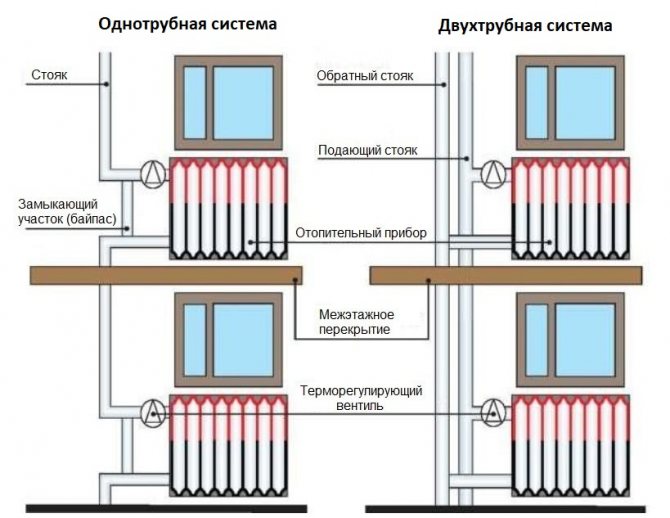
According to the method of piping, the heating of a country house is divided into:
• one-pipe heating system
• two-pipe heating system
• radiant (collector) heating system
Conclusions and useful video on the topic
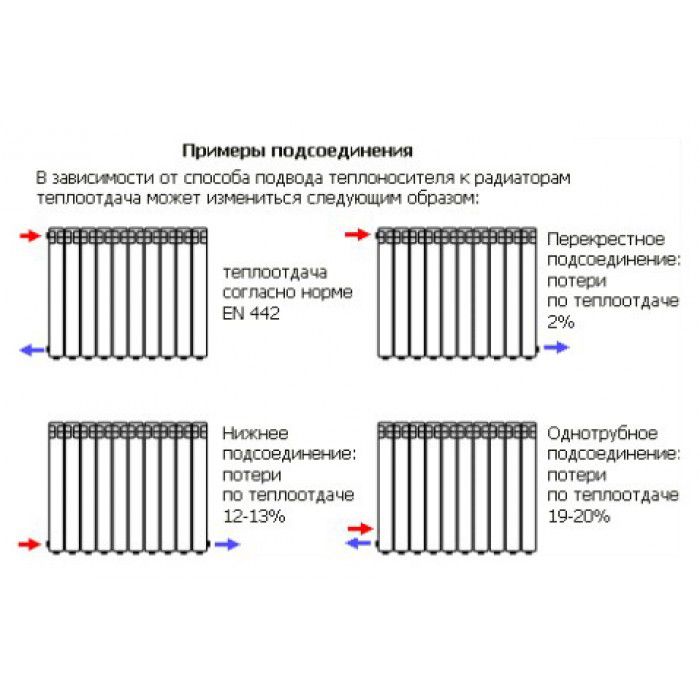
The video shows the main methods of connecting radiators, describes the advantages of each of them:



This video describes in detail all the nuances that should be considered when choosing heating pipes:
And here is a good example of designing a combined system for heating a two-story cottage:
Since the heating system of a country house must be, first of all, reliable and efficient, maximum attention should be paid to the development of the project. Any unaccounted detail can adversely affect the performance of heating. It is better to entrust the design to a professional, in order to avoid mistakes.
If you have already had to design and equip a heating system for your home on your own, and you know the subtleties that you definitely need to pay attention to, please share your knowledge and experience with our readers. Leave comments in the block below
Conclusions and useful video on the topic
Video #1 Heating of a private house with an area of 300 m2:
Video #2 Heating a large house to which a gas pipeline is not connected:
Video #3 The subtleties of arranging heating in a private house, the area of \u200b\u200bwhich is 150 m2:
Design, selection and installation of a cottage heating system are those processes that require due attention and responsible attitude. If it was decided to do everything with your own hands, then you will have to plunge headlong into the work and closely monitor all the details.
But even when the work was entrusted to professionals, you will have to control the entire process. Remember that only in this case it is possible to organize a high-quality heating system that will make a private house truly warm, cozy and, of course, safe.
Would you like to tell us about the heating scheme that you have preferred for arranging your own home? Do you have useful information worth sharing with site visitors? Please write in the block below, ask questions, post photos on the topic of the article.