
- Conservation of Topas station before the winter months
- The principle of operation of the septic tank "Topas"
- Features of the installation of a septic tank "Topas"
- Repair and maintenance: useful tips
- Installation work
- Features of maintenance of the biological treatment plant
- Maintenance and repair of Topas septic tanks: causes of malfunctions and do-it-yourself solutions
- What should not go into a septic tank
- Causes of malfunctions
- Cleaning steps
- Preventive measures
- Preservation for the winter
- On what principle does the Topas septic tank work: the main elements of the system
- Maintenance of the cleaning station - frequency and necessary actions
- How to mount a Topaz septic tank: installation instructions
- Installation of a septic tank
- Stage 1: site preparation
- Stage 2: installation of a septic tank
- Stage 3: organization of the sewer system
- Stage 4: sealing the installation
- Stage 5: providing a power source
- Stage 6: pressure normalization
- How to use the Topas septic tank in winter?
- Operating recommendations
- Topas sewer and septic service
- Mistakes
- Conclusions and useful video on the topic
Conservation of Topas station before the winter months
Preservation of the system involves several successive stages, each of which is mandatory:
- Disconnection from the mains. There is an on/off button on the body of the station. It is enough to press it.Additionally, the septic tank requires the presence of an automatic switch installed in the living room. You can turn it off.
- Disconnecting the air compressor. The process is not a problem, since the compressor is fixed with special clips in the working chamber.
- If you purchased a sewer where water is forced out, dismantle the pump.
Under no circumstances dry the chamber completely. The liquid must not fall below ¾ of the maximum possible level. Many people make a serious mistake, remembering school physics lessons and believing that in winter all the liquid in the chamber must freeze.
Nobody canceled the physical laws. But, if the chamber is completely empty, then in the spring you may encounter the unpleasant consequences of such a phenomenon as heaving of the soil. The water is drained, the chamber is empty. The soil, sagging, begins to put pressure on the walls. Result: the camera is either pushed to the surface altogether or crushed. If we talk about the fact that the water must definitely freeze, then it would not be superfluous to recall that the Topas sewer is located below the freezing level of the soil. Ice formation in such a situation is impossible.
If you are afraid that the winter will be very cold, carry out additional insulation using foam sheets. Lay it on top of the cover, but under the stone that comes with the station.
The actions and activities described above are necessary if you know for sure that in the coming months you will not live in the house or visit at least once a week. The sewer system is subject to conservation if there are no drains into it for a month or more. And the reason is not in the possible freezing of pipes, but in the death of bacteria in the absence of discharges.In the spring, when you return to the house, it turns out that the septic tank does not fulfill its function, since 99% of the microorganisms have died.
If the conservation is done properly, in the spring, as soon as discharges enter the system, bacteria will begin to multiply actively. And after a short time, the sewage system will fully restore its cleaning function. If you think that it will take a long time to restore performance, buy a small amount of bacteria. Expired kefir will be an excellent breeding ground. It is poured into the receiving chamber. And in a day or two, the septic tank will work as before.
The principle of operation of the septic tank "Topas"
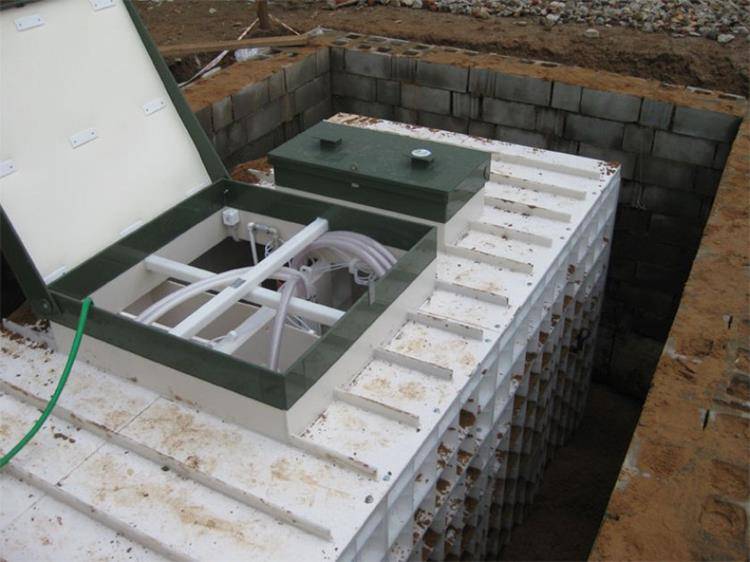
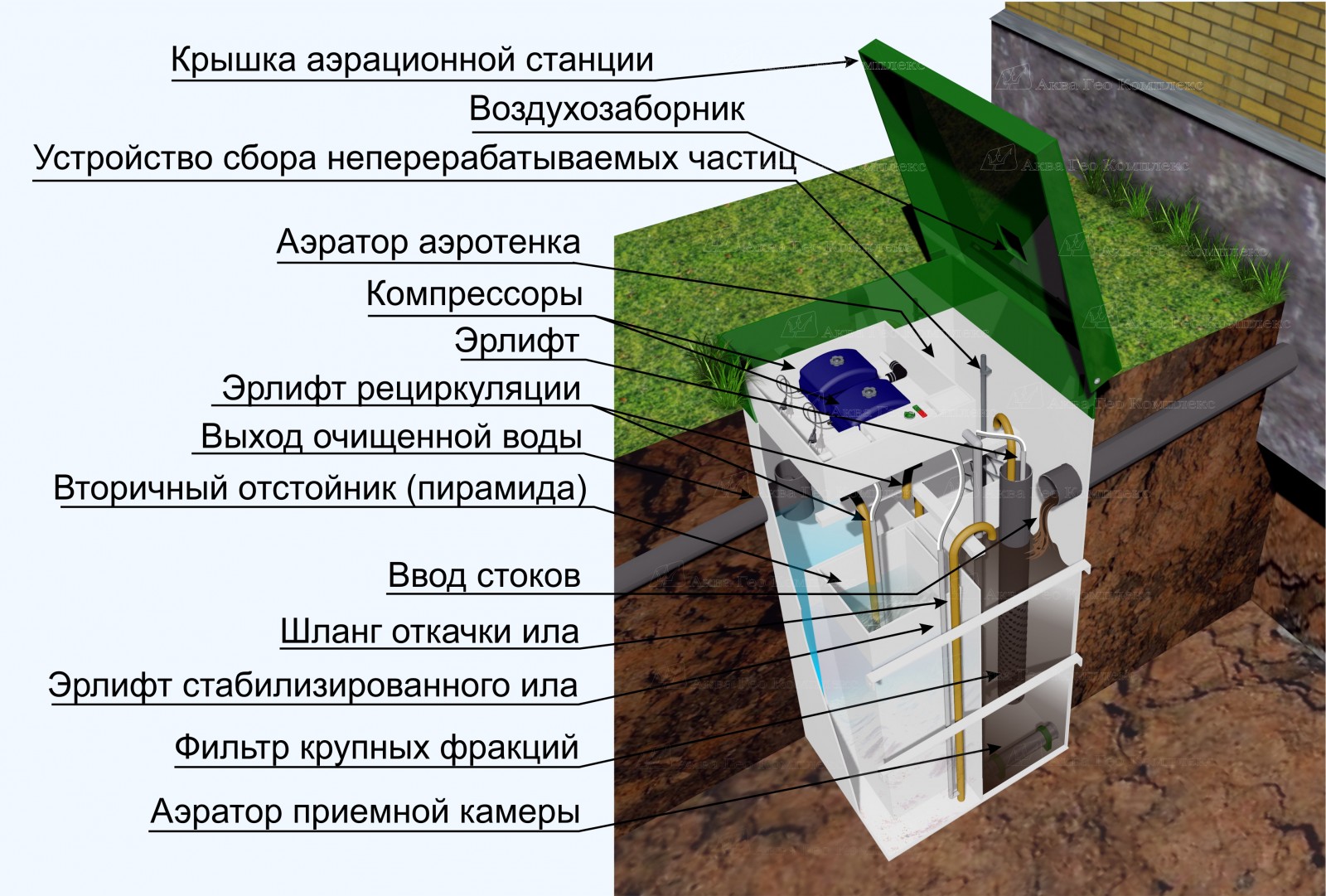
The operation of the device is not complicated. The receiving chamber receives water from the sewer. This is where large particles are removed. With the help of a jet pump (airlift), water is placed in a tank (aerotank) where active bacteria are located. They also destroy contaminants that have not been filtered out by the receiving chamber. The role of the filter is performed by silt, it absorbs all the dirt from the water. Silt with water enters the pyramid, where it settles to the bottom, and pure water moves on. It can work for a specific period of validity, and it needs to be changed periodically. Used sludge is an excellent fertilizer for the garden.
Features of the installation of a septic tank "Topas"
Installation of the system is not difficult, but the durability of the septic tank depends on the correct installation. Therefore, it is better to entrust this work to professionals. Thus, you will save time and receive a guarantee for service and repair. When carrying out installation work, you must strictly follow the instructions. Keep in mind that the dug pit should be 20 cm larger than its size.In places of bend, it is desirable to mount wells to revise the system in case of pipe blockage. They can be easily cleaned. The distance from the house to the system is no closer than 5 m. This is done in order to prevent damage to the foundation. Use materials with low thermal conductivity, such as glass wool, foam, expanded clay. Take care of reliable sealing of pipe connections. Proper installation is a guarantee of uninterrupted operation of the Topas septic tank.
Recommended reading: How to make a bioseptic tank with your own hands
If you choose a septic tank for a summer cottage, then learn that there will be few drains, and therefore it is better to install a storage system made of plastic, polyethylene or fiberglass. When it becomes necessary to pump out the septic tank, a special sensor will give a signal in advance. If you choose the right volume, you will minimize the maintenance of the storage tank. In order to avoid the formation of solid deposits, special biological products can be added. For owners of houses with large plots of land, a Topas septic tank with anaerobic digestion is suitable. These are tanks with three working chambers, inside which effluents are settled, the sediment is fermented and subsequently decomposed. If you want to shorten the cleaning time, you can use bacteria.
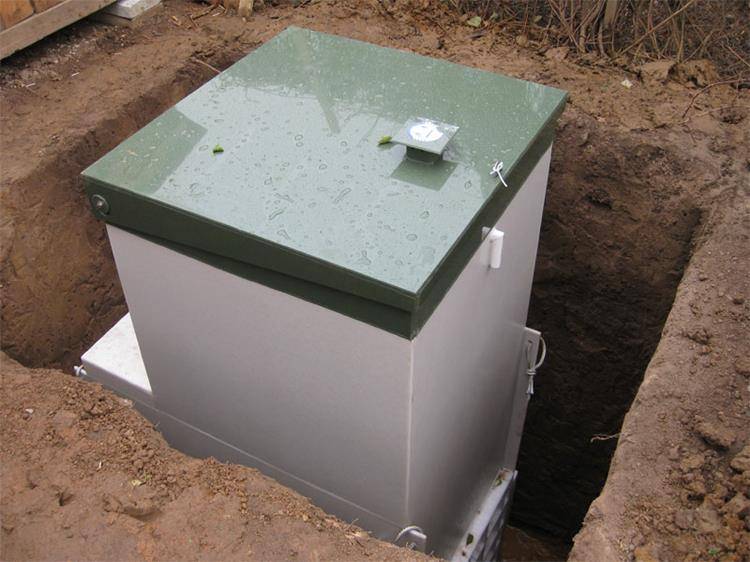
For densely populated areas with small plots of land, deep biological treatment plants are needed. Almost all Topas septic tank models are compact, have high performance with relatively low weight.
Repair and maintenance: useful tips
Any design requires systematic maintenance, and the Topas septic tank is no exception. Maintenance of the system is simple and accessible even to an inexperienced user.When developing the Topas septic tank project, it was taken into account that the owner would be able to independently:
- check the operation of the system;
- visually assess the purity of water;
- remove unnecessary sludge from the receiving chamber using an airlift or a drainage pump;
- replace the diaphragm on the compressor;
- clean the collection tank for unprocessed particles.
All these manipulations must be carried out 3-4 times a year. It is necessary to remove and clean the filters once a month, and replace the aeration elements once every 12 years.
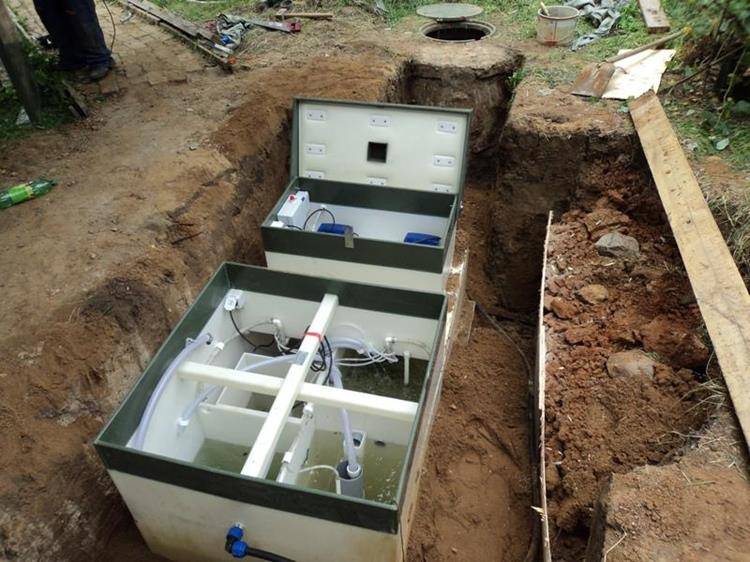
To care for the Topas septic system, it is not necessary to call a sewage truck. you can do the maintenance yourself. To remove sludge from the treatment plant, you need to remove the pumping hose, loosen the fastener, remove the plug, and only then pump it into a suitable container. Then you need to add water to the sump to a normal state.
Recommended reading: Installing a septic tank in a private house
- To avoid overflowing the septic tank in the event of a power outage, reduce the discharge of water.
- Do not use products with other antiseptics, this will lead to the death of bacteria and the loss of performance of the Topas system.
- Pump out the processed sludge in time, otherwise it will thicken and disrupt the operation of the installation.
- If all the requirements of the operating instructions for the Topas septic tank are met, the cleaning system will serve you for a long time, performing its functions with high quality.
Installation work
Topas 8 - autonomous biological wastewater treatment system
Before the preparatory and installation work themselves, it is necessary to correctly select the location of the septic tank in accordance with certain conditions:
- the distance to the treatment plant from residential buildings should be at least 5 m, but not exceed the threshold of 10-15 m;
- if the conditions of the area force you to install a septic tank further from the house, then it is recommended to install an inspection well on the external sewer pipeline;
- an inspection well will be required if the supply pipe has bends of more than 30 degrees, so it is better that the pipeline does not have turns.
Having decided on the place, you can proceed to the installation work.
Step 1. Dig a pit using equipment or manually. The width and length of the pit for the container should be approximately 50-60 cm larger than the corresponding dimensions of the septic tank. The depth of the pit is made equal to the height of the septic tank, even though a fifteen-centimeter sand layer will be poured at the bottom. After all, it is at 0.15 m that the septic tank should rise above the ground to facilitate its maintenance and prevent flooding of the station during the spring flood. If an additional concrete base is installed at the bottom, then its height must be taken into account, determining the depth of the pit.
Step 2. To prevent shedding of the pit, its walls are reinforced with formwork.
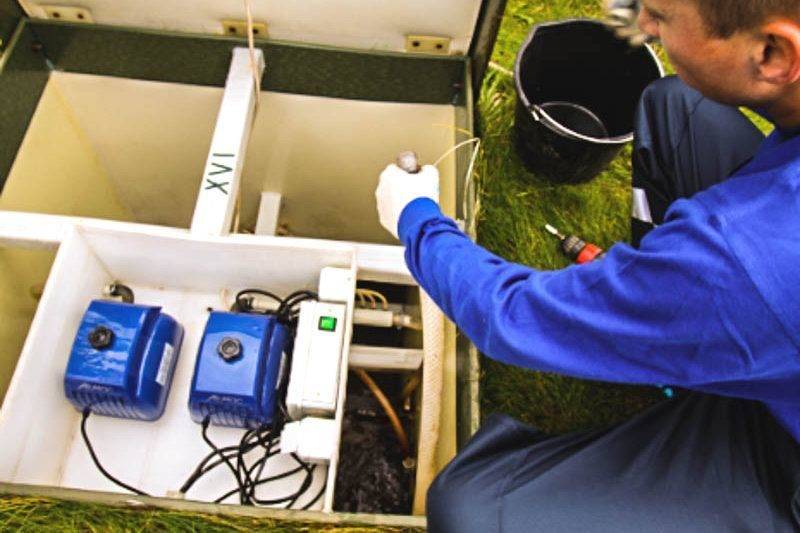
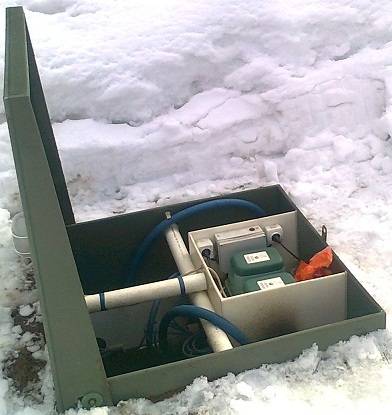
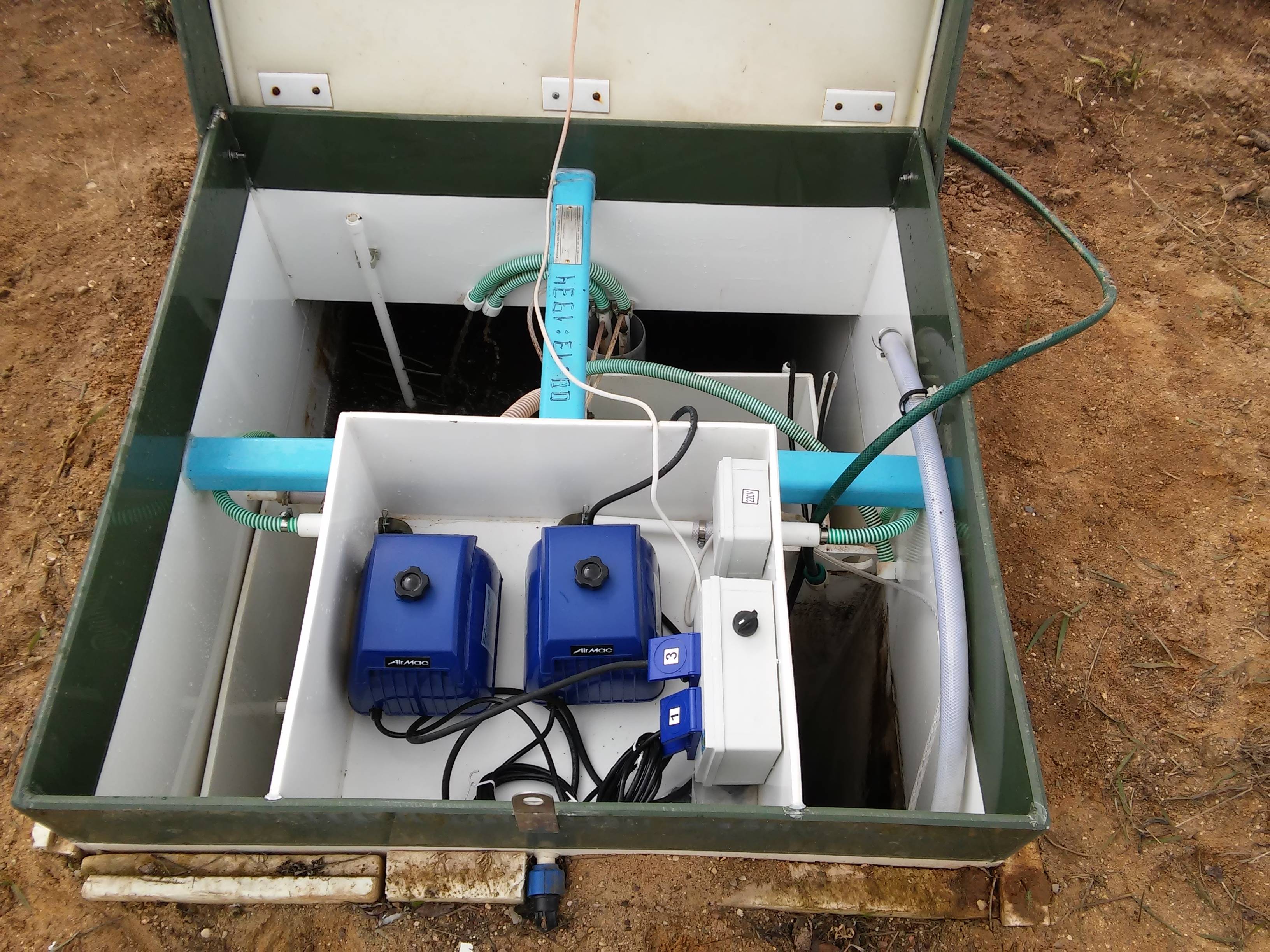
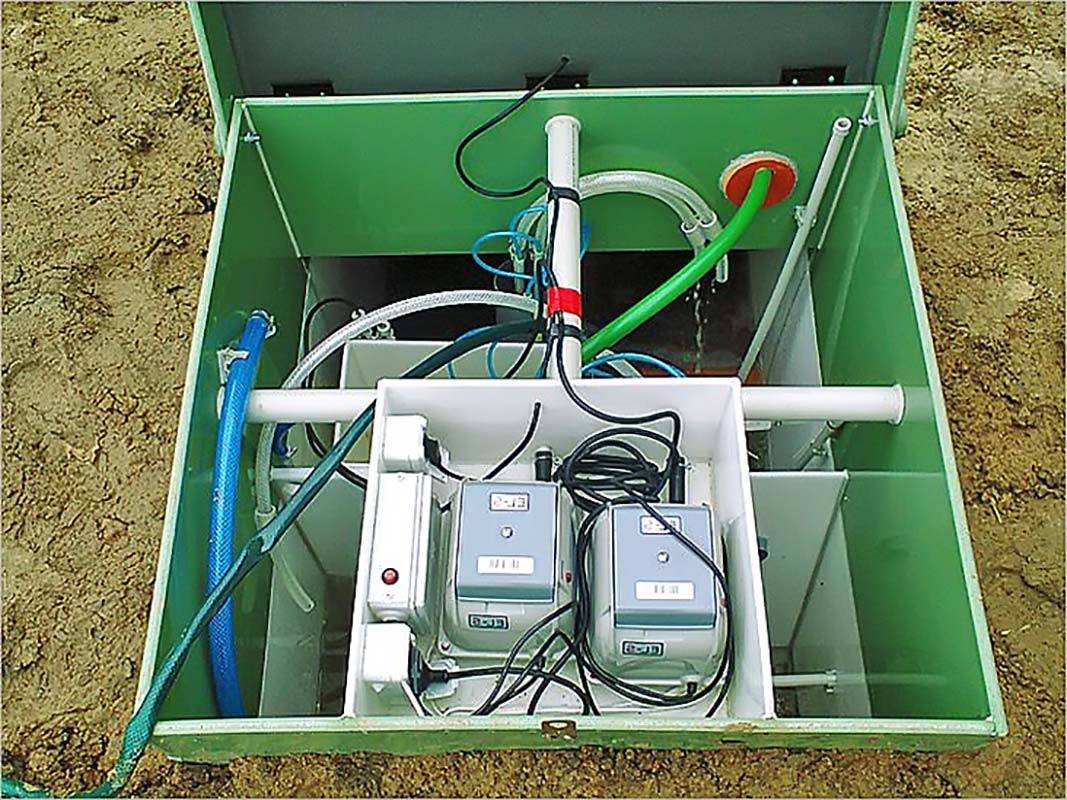
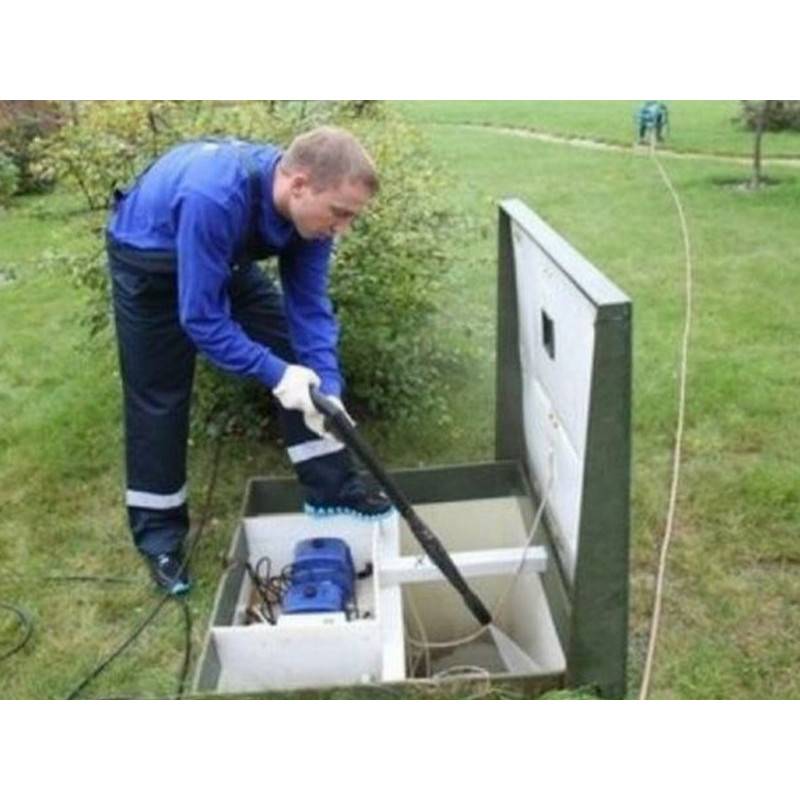
Step 3. At the bottom of the pit for the Topas septic tank, a sandy backfill 15 cm thick is made, which must be leveled to the mounting level
If the septic tank is installed in places with water-saturated soil or with a seasonal rise in GWL, then it is important to additionally fill or install a ready-made concrete base at the bottom of the pit. The septic tank is further attached to it
Sand pad alignment
Step 4 Holes for pipelines are made in the wall of the tank.
Step 5. A septic tank is released into the prepared pit.If we are talking about 5 or 8 models, then no more than 4 people should be involved to carry out all the work. To do this, they thread slings through the eyes on the stiffening ribs of the container, holding them for letting the septic tank go into the pit.
The process of releasing the septic tank into the pit
Step 6 Prepare a trench for laying a pipe from the house to the septic tank. The depth of the ditch must ensure that the pipeline passes below the zero ground temperature point typical for the winter period. If this fails, then the pipe will need to be insulated. A sand backfill is also made at the bottom of the trench, which is leveled in such a way that the laid pipe runs at a slope of 5-10 mm per linear meter.
Septic tank leveling
Step 7 Lay the supply pipe and connect it to the septic tank through the pipe inserted into the prepared hole in the wall of the container. All connections are additionally sealed with a special plastic cord that comes with the station. To do this, use a building hair dryer. At the same stage, the septic tank is connected to the power cable and compressor equipment is installed.
Step 8. Prepare a ditch for a pipe that already drains waste after cleaning into a receiving tank, pond, filtration well and other discharge points. A pipe is laid at an angle in it, if the removal of water is planned to be carried out by gravity. For forced evacuation of the liquid in the slope is not necessary. The outlet pipeline is connected to the septic tank, all connections must be tight.
Step 9. Fill the septic tank with sand or a mixture of cement and sand. At the same time, clean water is poured into the tank itself, its level should be 15-20 cm higher than the backfill level.Every 20-30 cm, the backfill is carefully rammed manually. The space between the upper 30 cm of the septic tank and the foundation pit is filled with fertile soil and the turf is laid back around to restore the landscape.
Step 10. Ditches are filled up with inlet and outlet pipes laid in them.
Features of maintenance of the biological treatment plant
The maximum level of wastewater treatment is carried out thanks to a multi-stage process, which is based on the principle of processing pollution in a natural way. The used types of bacteria, feeding on organic waste, break down the organic matter of wastewater into water, carbon dioxide, and by-products. During biological neutralization, solid particles disintegrate, fine fractions settle to the bottom of the sump, where the action of microorganisms continues. Sediment, which eventually makes up no more than 20% of the volume of incoming effluents, is pumped out.
- 3 or 4 times during the year - pumping out excess activated sludge with a regular pump;
- 3 or 4 times during the year - removal of non-recyclable particles from a special device for their collection;
- every 2 years - complete removal of sludge, subsequent washing of the chambers using clean water;
- once in a period of 2-3 years - the compressor for the topas septic tank is updated by changing the membranes, washing the filter.
Maintenance and repair of Topas septic tanks: causes of malfunctions and do-it-yourself solutions
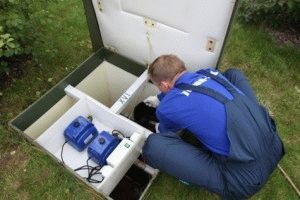
The use of local treatment facilities (septic tanks) is the key to a comfortable stay in a country house or country house. However, it is necessary to periodically carry out a preventive check of the septic tank to detect possible malfunctions and clean it from sewage waste.
To date, septic tanks of various brands are represented on the Russian market: Topol, Biotank, Triton-N, septic tanks of the Tver brand, Tank septic tanks and others. The treatment plant, the Topas septic tank, is also in great demand among consumers.
From the material of this article you will learn what should be included in the maintenance and repair of Topas septic tanks and how to perform these steps yourself.
Why is it necessary to clean the septic tank? The Topas septic tank range is a septic tank in which wastewater treatment is carried out with the help of aerobic bacteria that process waste. Cleaning the septic tank will help to avoid breakdowns and possible problems with the operation of the device.
What should not go into a septic tank

Emergency pumping of septic tanks
- alcohols, alkalis and acids, as well as other chemicals;
- antifreeze;
- products containing aggressive bacteria. These include all kinds of pickles, mushrooms and spoiled, rotting foods;
- medicines;
- non-degradable substances (sand, plastic, etc.).
Causes of malfunctions
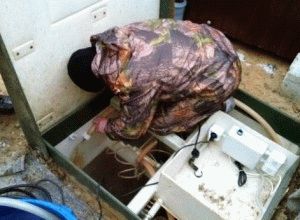
Topas autonomous sewer cleaning can be done by hand
- Since Topas is not autonomous, its use requires a constant supply of electricity. Therefore, the overflow of the septic tank becomes a common cause.
- Clogging of the septic tank with substances unsuitable for decomposition. As mentioned above, aggressive solutions that the septic tank cannot process and dispose of should not get inside.
- A malfunction of the airlift or pump sensor, untimely cleaning can lead to an unpleasant odor. This is especially dangerous because a broken pump cannot prevent the release of harmful gases that appear during the decomposition of organic compounds.
- Freezing of the septic tank pipeline in winter. Such a malfunction will lead to flooding of the septic tank, if you do not stop using it. Errors in the installation of a septic tank can also lead to freezing of water inside the structure, if the bottom of the pit for the septic tank was not perfectly aligned in advance.
- If, after cleaning, dirty water flows from the septic tank pipe, it is necessary to check all filters and partitions between the chambers for integrity.
Cleaning steps
- First of all, it is necessary to pump out sludge from the sludge chamber. To do this, you can use both a standard pump built into the design of a septic tank, and a conventional drainage pump.
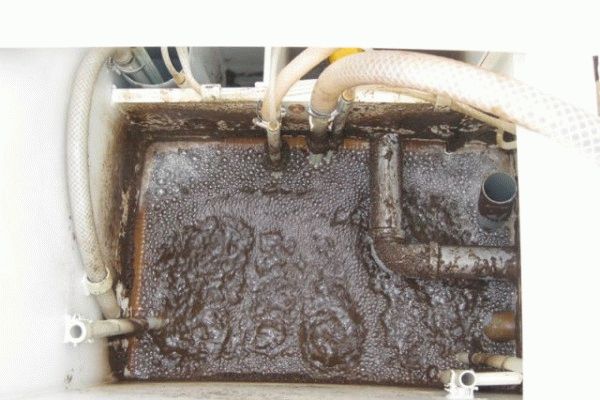
Pumping out sludge from a septic tank
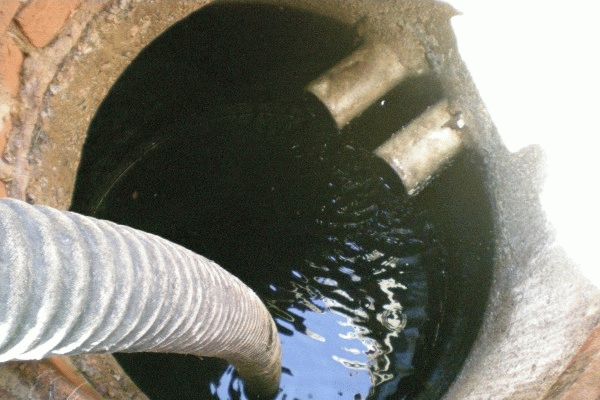
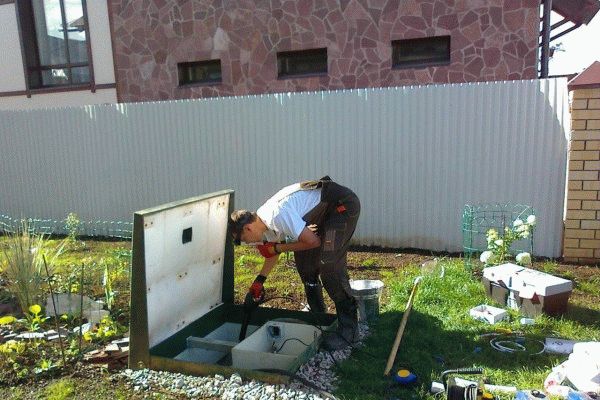
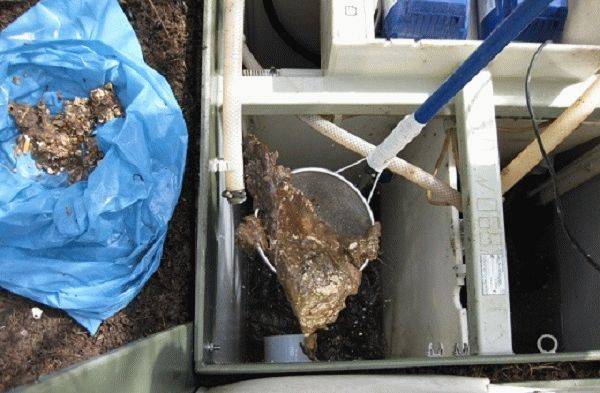
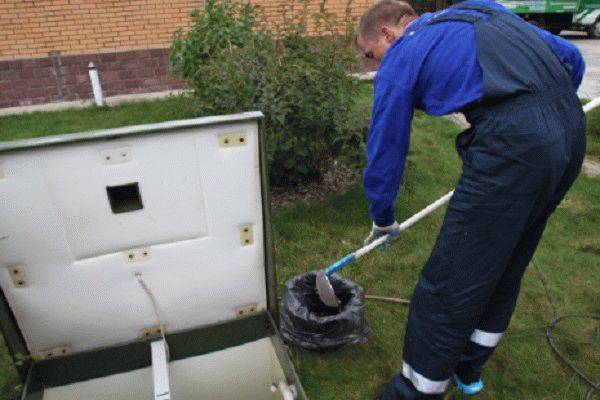
A metal shovel or net is suitable for removing mechanical debris.
Preventive measures
In order to prevent damage to the septic tank in the future, it is recommended to regularly clean the septic tank in the manner described above.
In addition, special attention should be paid to cleaning the coarse filter, where non-decomposable mechanical waste accumulates. Every 2 years it is necessary to replace the compressor membranes, which wear out rather quickly
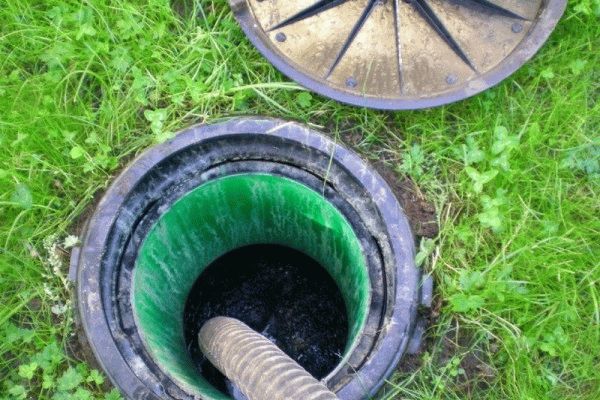
It is recommended to clean the septic tank regularly.
You can read about the main ways to clean the well with your own hands in this article.
Preservation for the winter

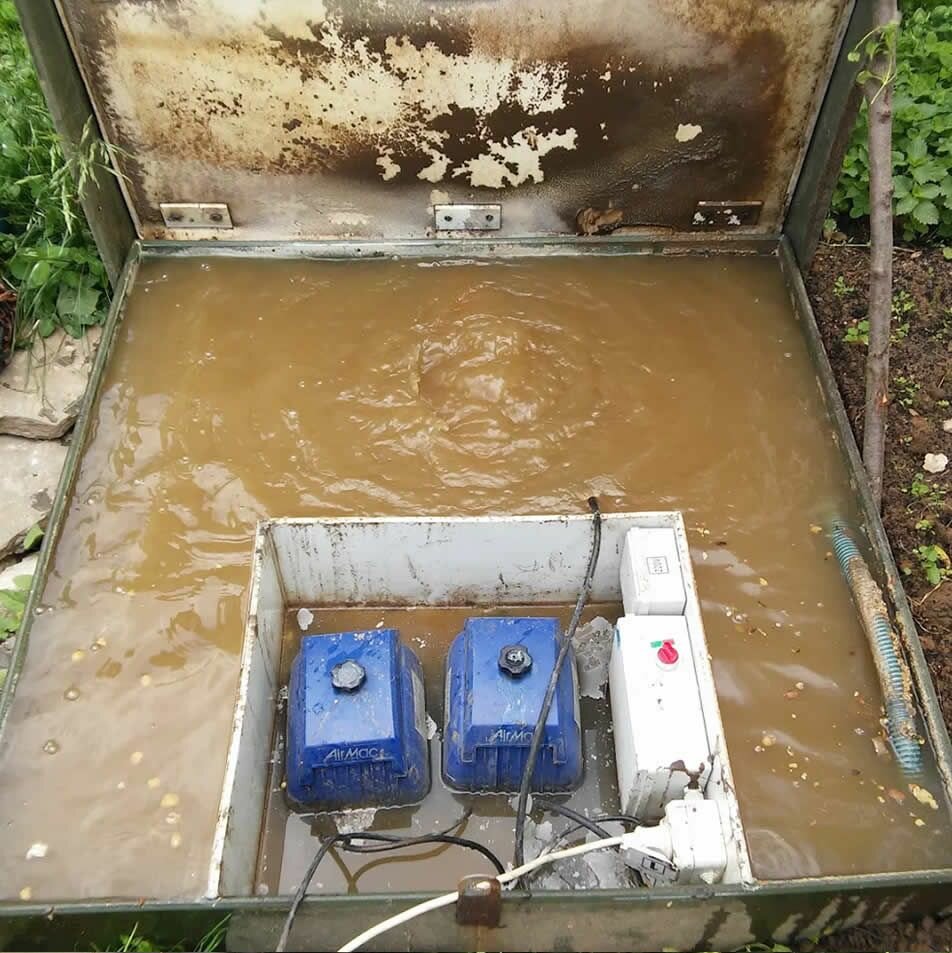
Conservation septic tank Topas for the winter
However, it should be noted that at a depth of about 2 meters (approximately this is how septic tanks are installed), the temperature usually does not fall below the limit.
The opposite effect - in the spring, when the groundwater level rises, the entire structure of the septic tank can be pushed to the surface.
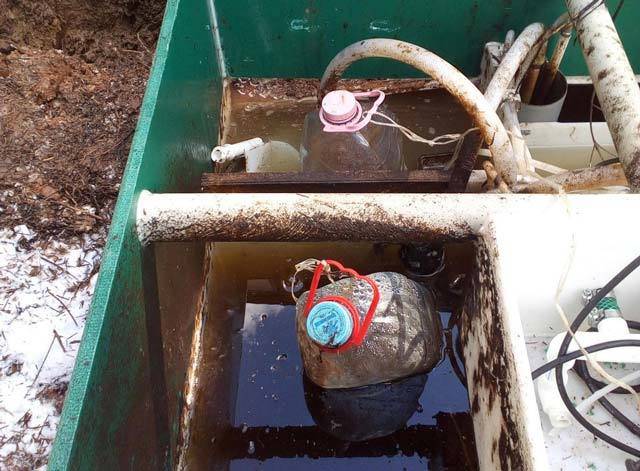
To avoid this, you need to take care in advance of making homemade floats that will not allow a light container to rise from the ground. Floats will serve as ordinary two-liter bottles filled with sand.
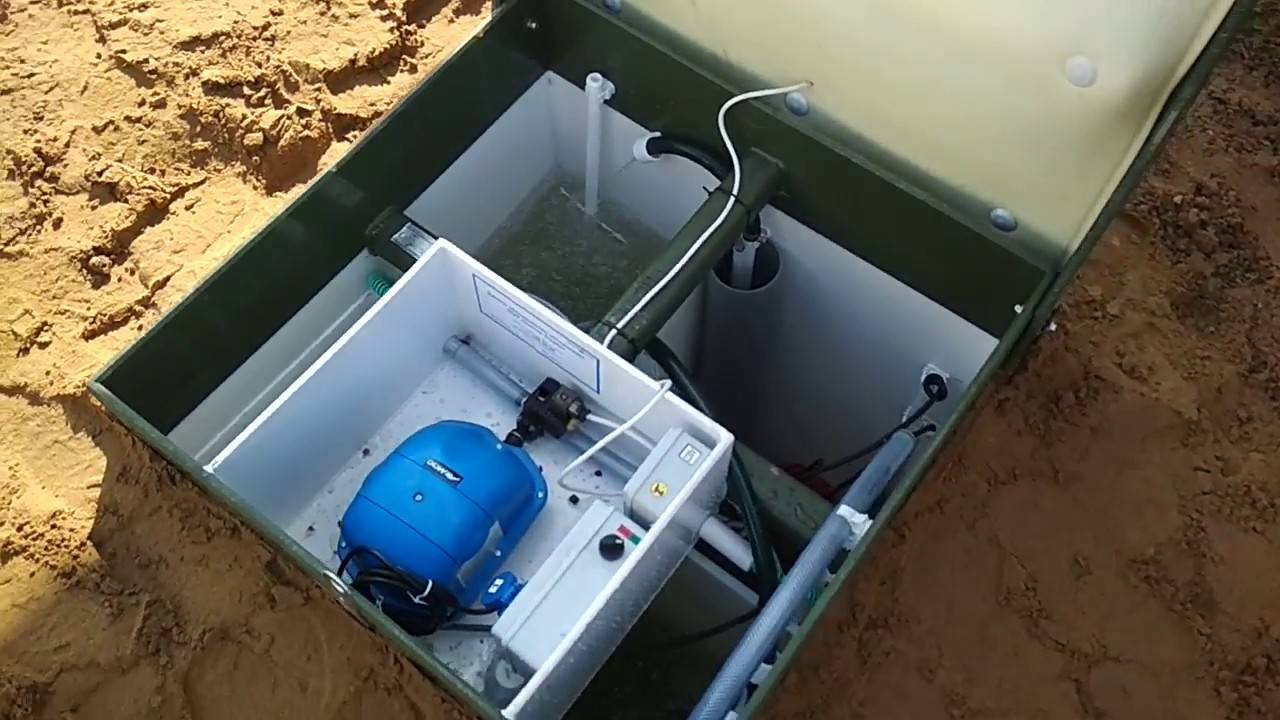
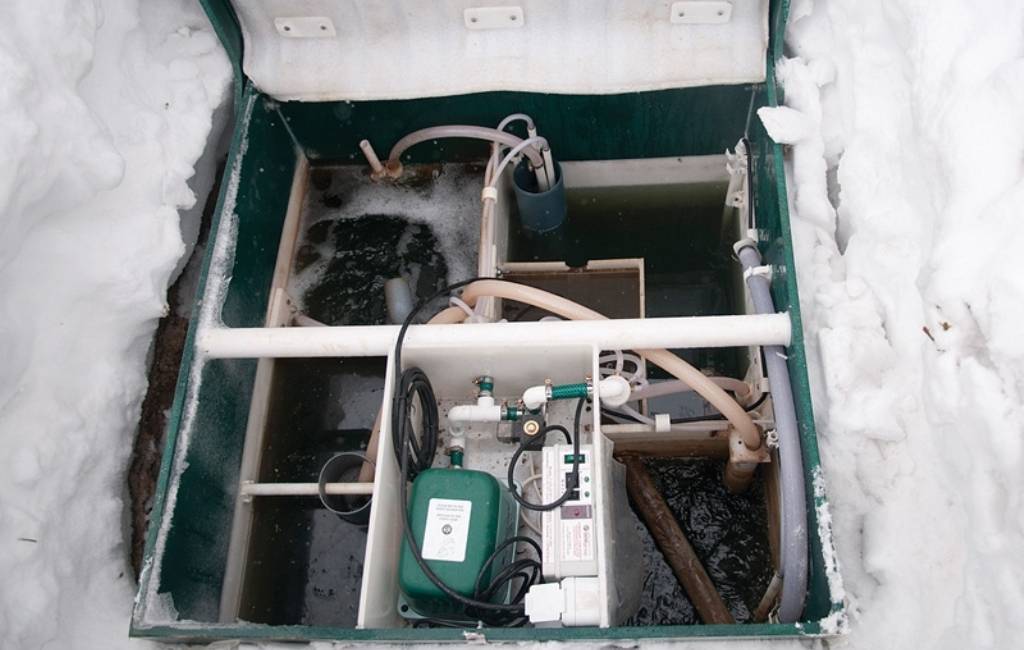
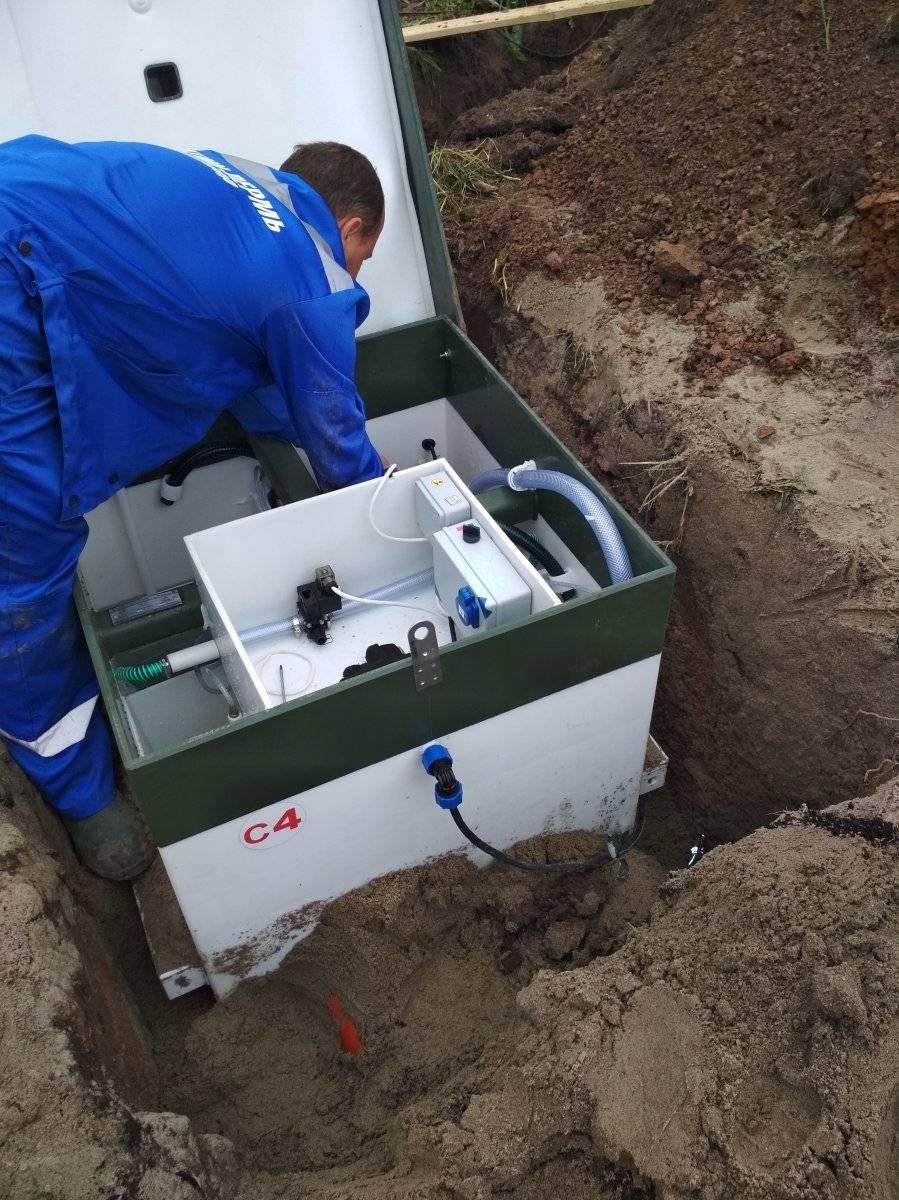
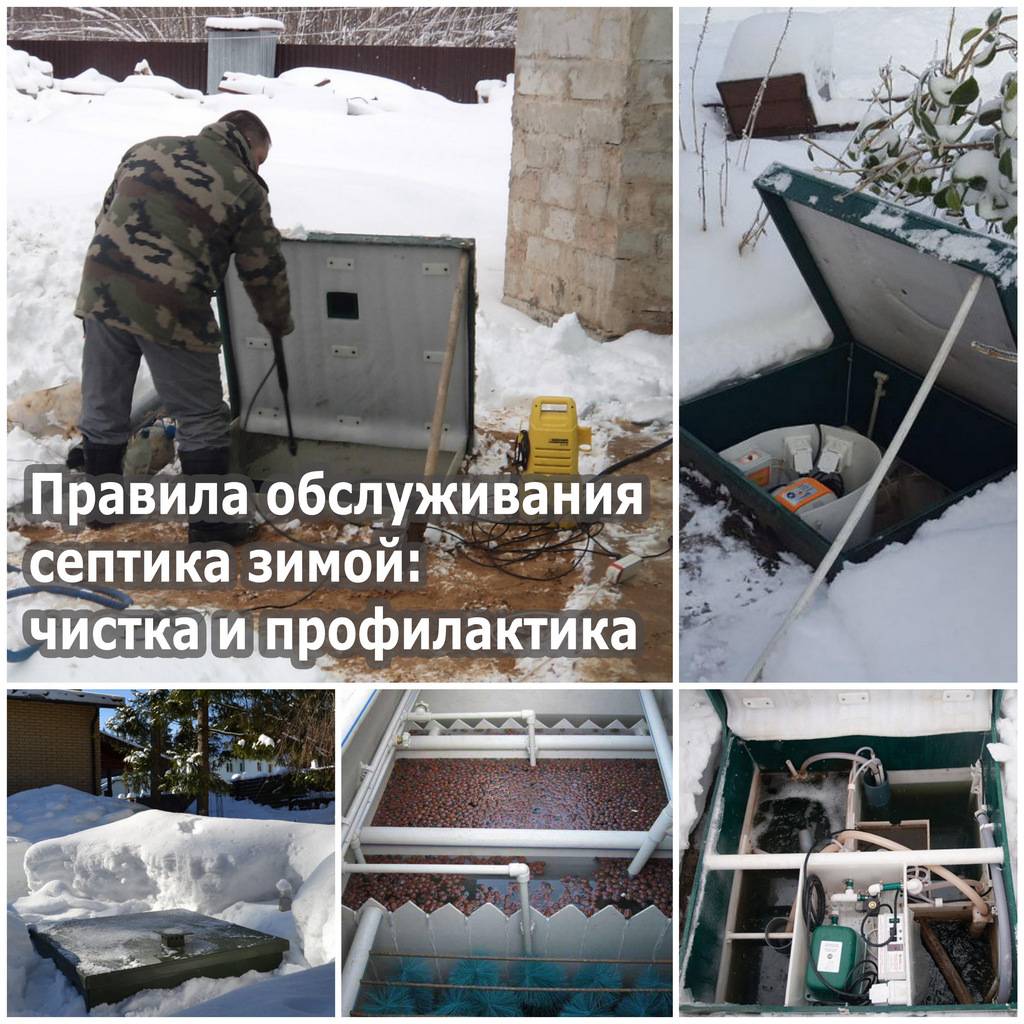
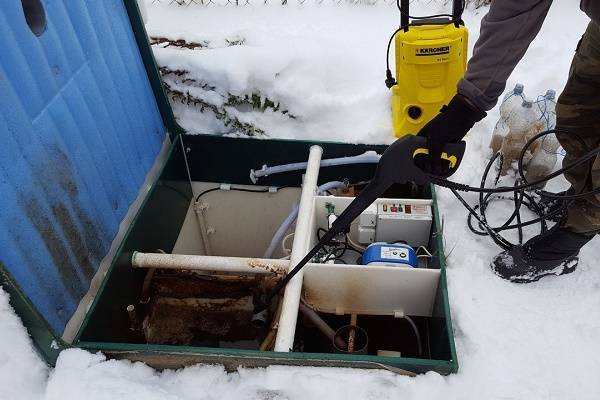
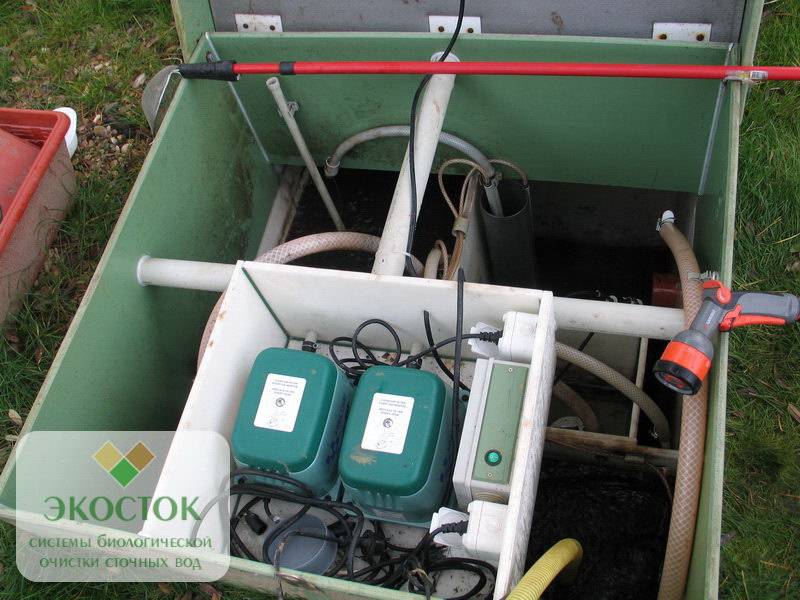
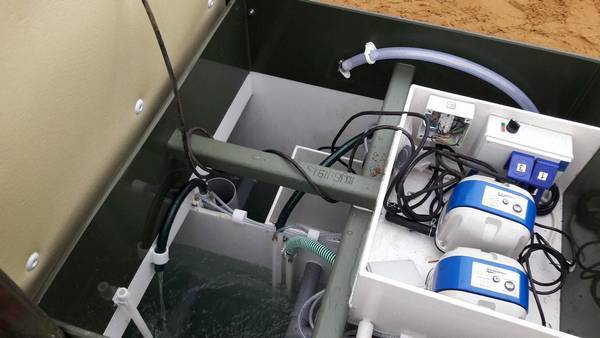
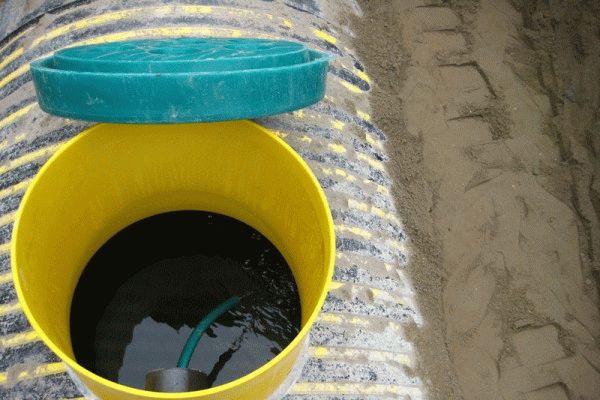
This should be the liquid level inside the septic tank in winter
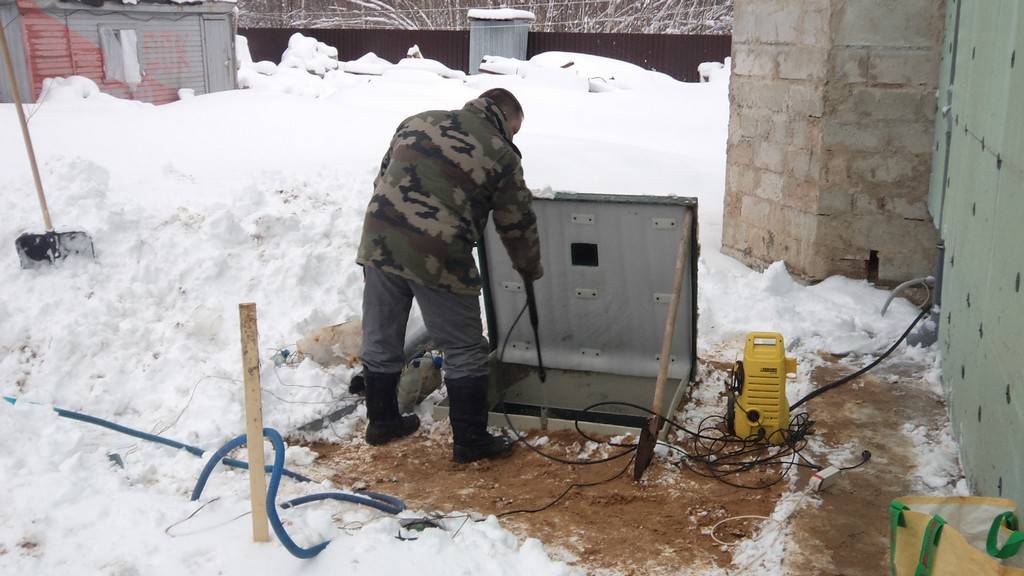
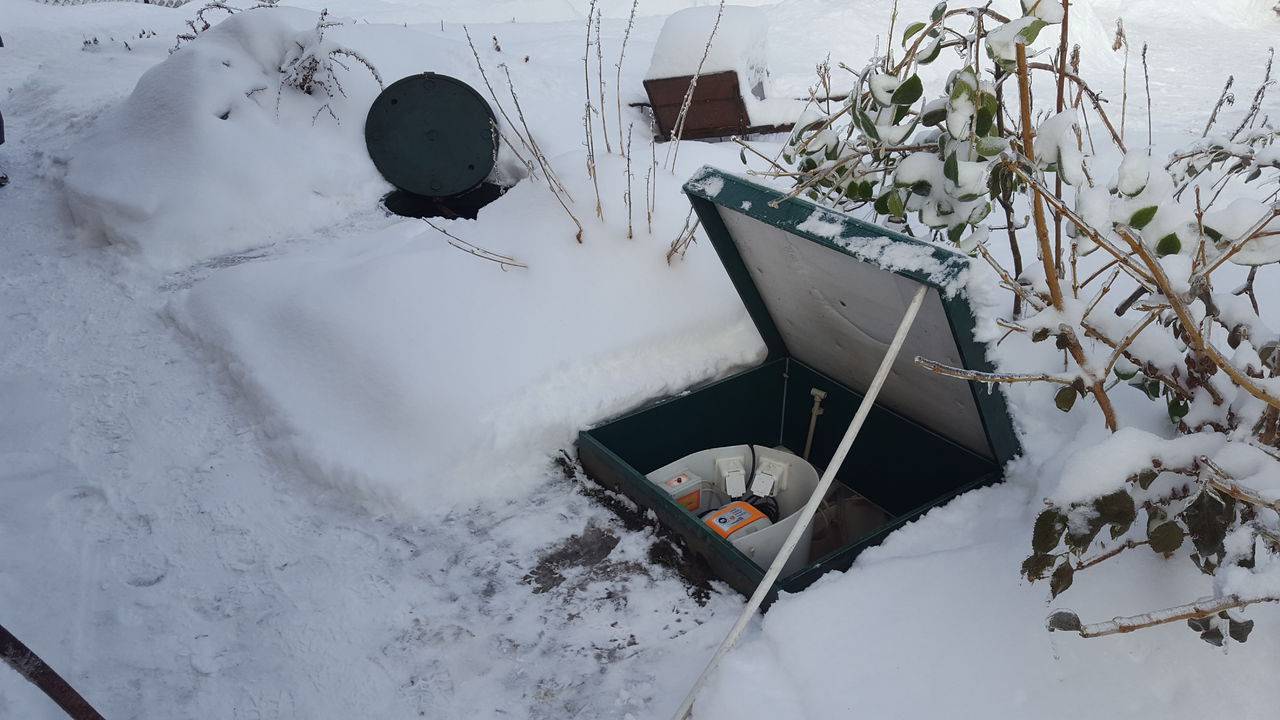
The Topas septic tank perfectly keeps working capacity at frosts down to -15 degrees. If the temperature drops below normal, so that the septic tank does not freeze, it will be enough just to insulate the lid, since the bacteria that are inside the tank maintain a higher temperature than on the surface. If everything is done correctly, it will not be difficult to defrost the Topas septic tank in the spring.
On what principle does the Topas septic tank work: the main elements of the system
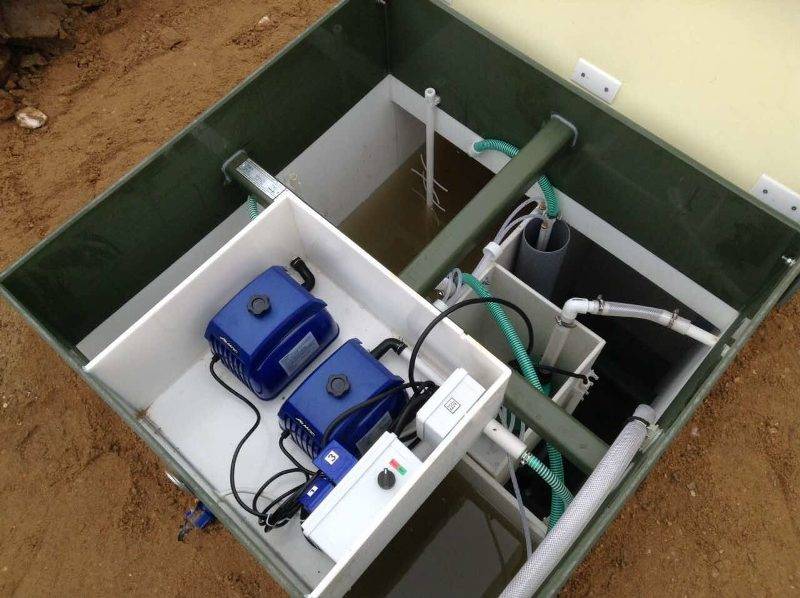
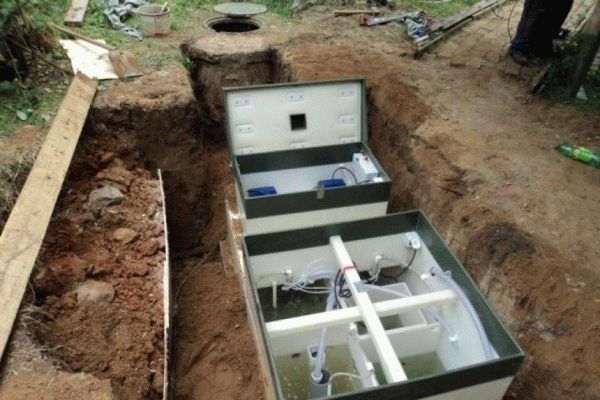
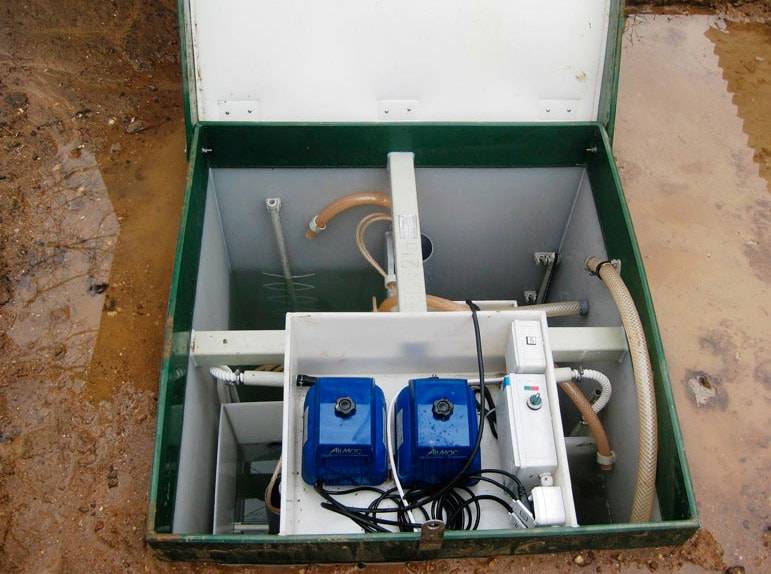
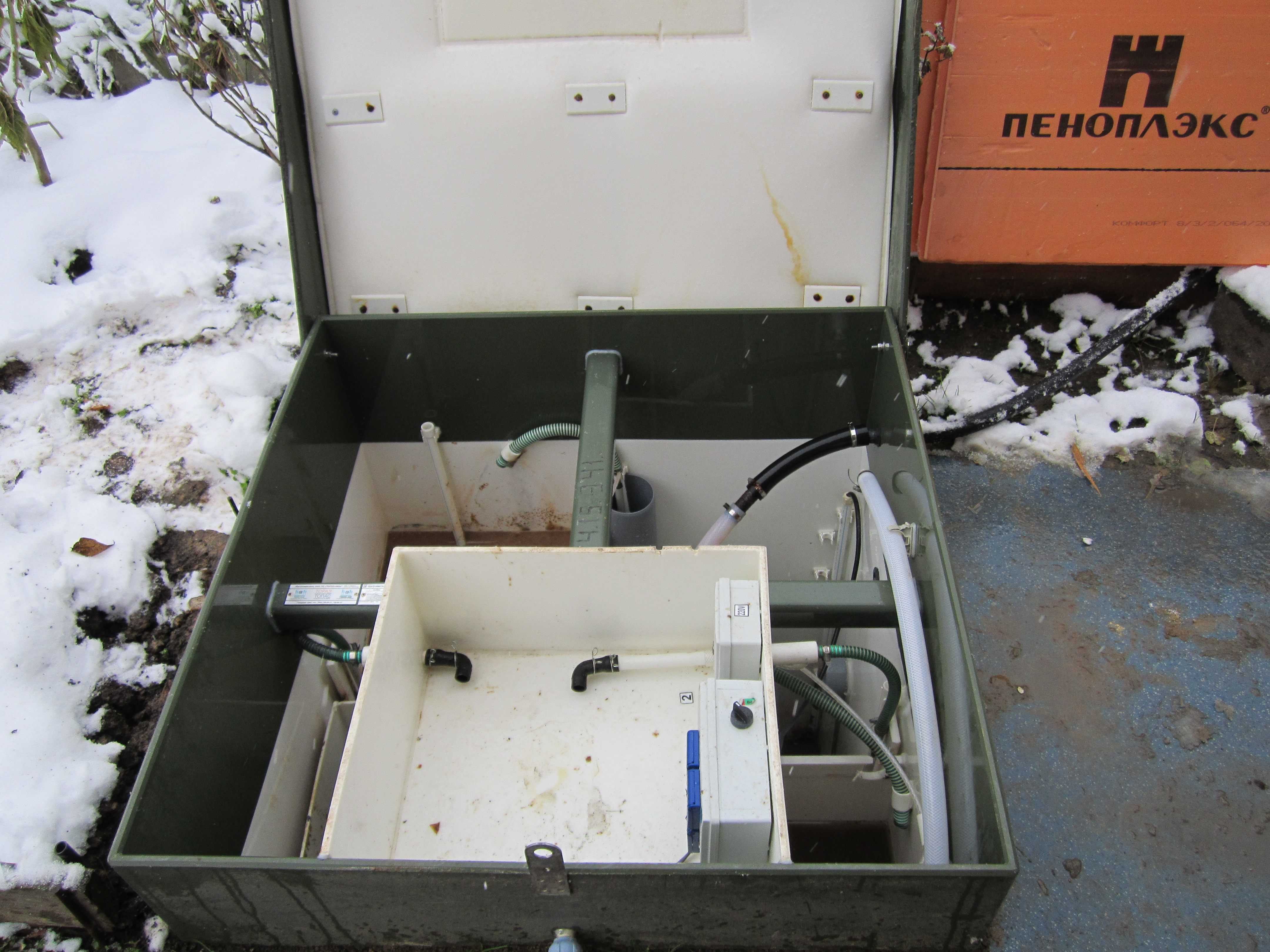
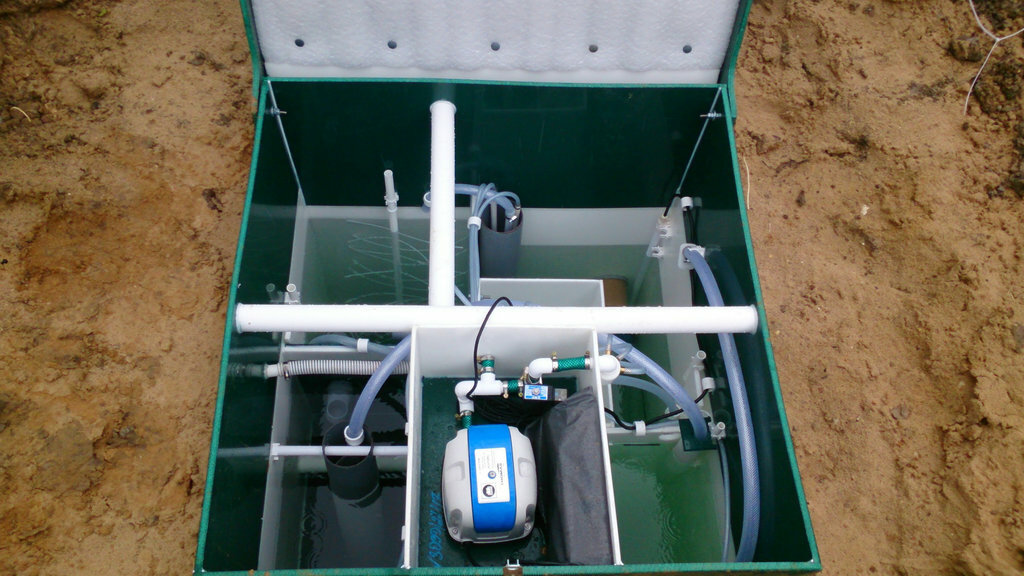
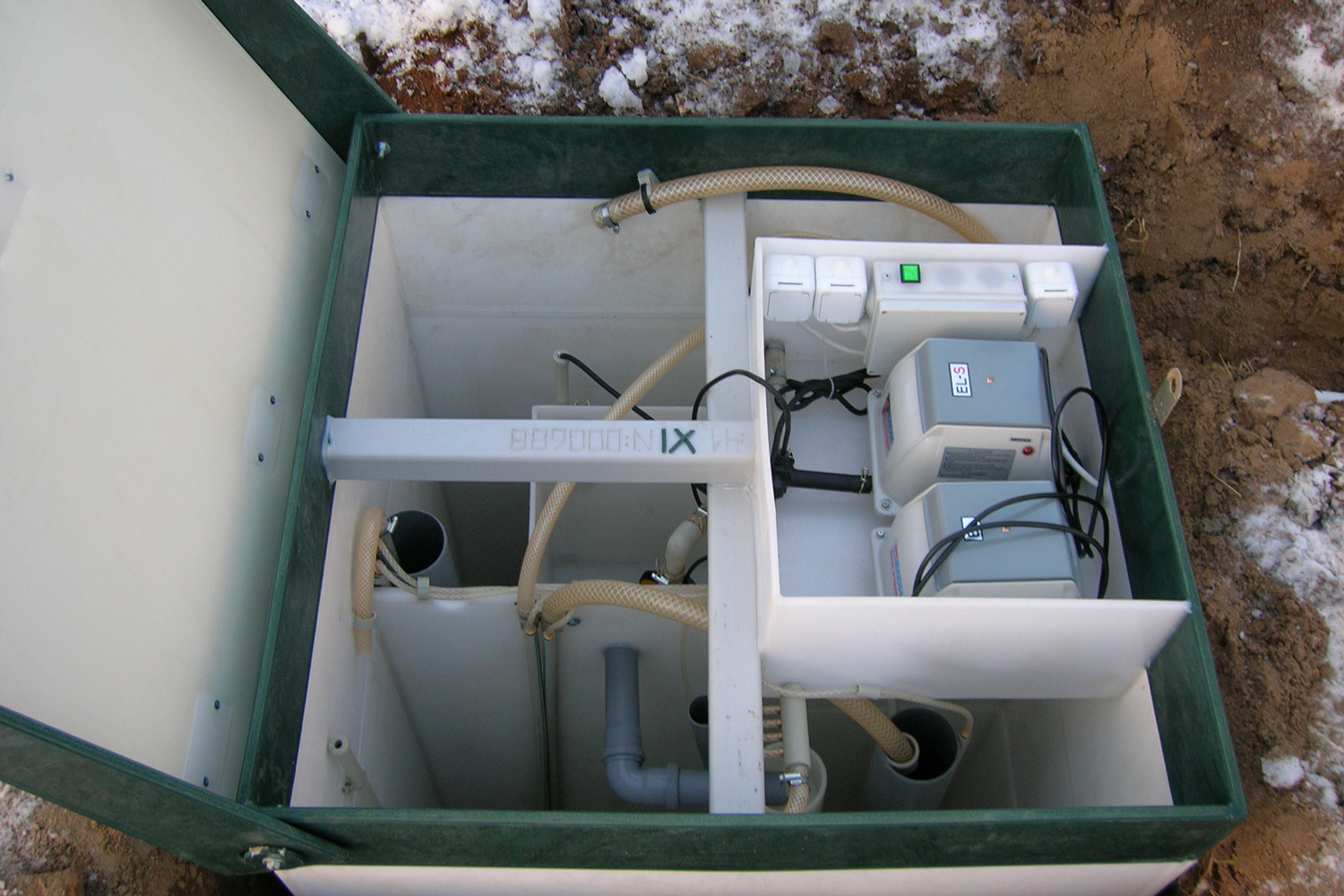
To learn more about the functionality of the Topas 5 septic tank, the principle of operation and the design of the system should be considered in detail. A cubic container with a square lid inside is divided into four sections, in which the drains settle and are cleaned. An outside air intake is provided to provide oxygen to the bacteria.
The cleaning system consists of the following elements:
- receiving chamber, where drains from the house come;
- aeration tank, where the second stage of cleaning takes place;
- airlift with a pump, thanks to which drains move between sections;
- a pyramidal chamber in which wastewater is finally cleaned;
- post-treatment chamber for the accumulation of purified liquid;
- air compressor;
- a hose that removes sludge;
outlet device for already purified water.
Maintenance of the cleaning station - frequency and necessary actions
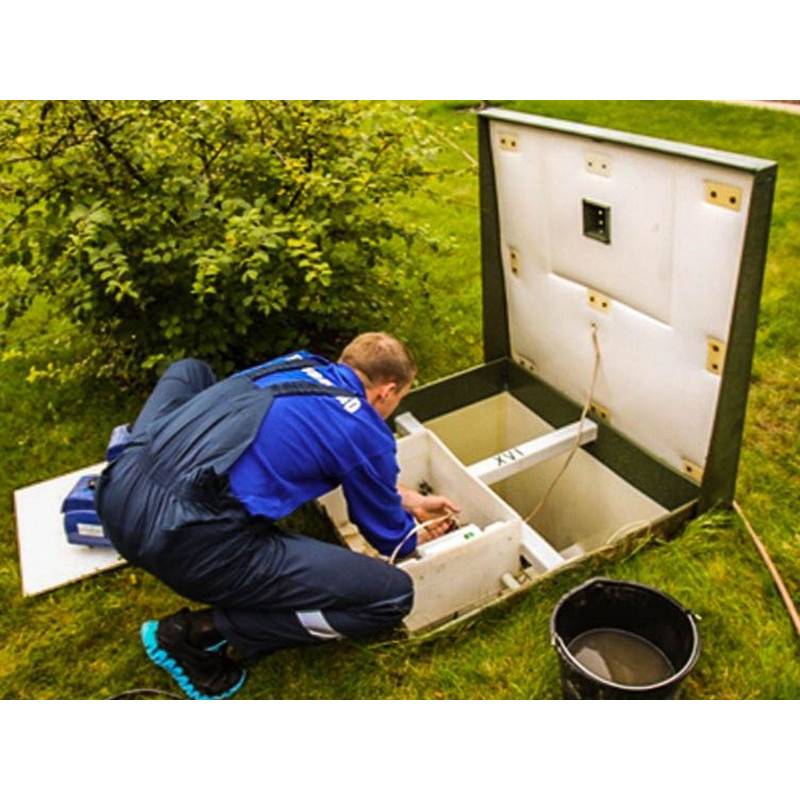
The operation of Topas provides for daily visual monitoring of the functioning of the system.To examine simple septic tanks under the brand of interest to us, it is required to remove a special mug and inspect the equipment components. If the station is equipped with light signaling equipment, there is no need for a personal inspection of the station. Automation itself will signal malfunctions.
Once a week, you need to visually monitor the quality of wastewater treatment in the septic tank. And every three months, the secondary sump is cleaned - with improvised means or special pumping equipment (mamut pump). If the productivity of Topas is more than 4 cubic meters of wastewater per day, you can call a sewage truck once a quarter. In cases where the station processes up to 3 cubic meters of polluted water per day, you just need to clean the walls of the sump with an ordinary broom. This is quite enough, since almost all the sludge in small systems leaves the stabilizer on its own by means of an airlift.
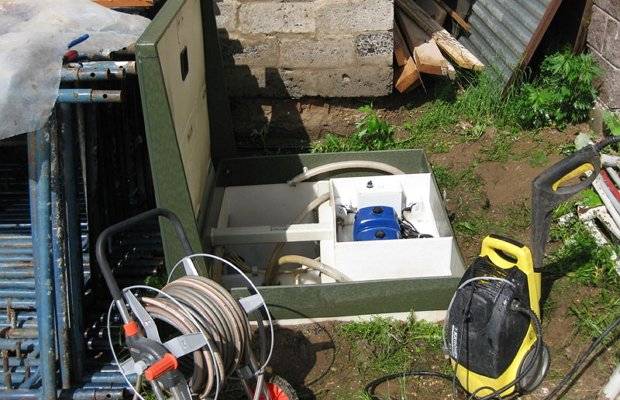
Cleaning drains in a septic tank
Every six months, you should carefully inspect the secondary sump, filtration system, airlift and Topas hair trap. If you see that the sludge has not been removed from the stabilizer, the drainage pump must be connected and the autonomous sewage system is cleaned. After 2-4 years of operation, it is recommended to perform the following actions:
- Make an audit of all screw and bolt connections available in the system. You simply need to tighten loose fasteners or replace rusted hardware.
- Check the functionality of the membrane installed on the station compressor. Professionals advise changing this element every 4 years.But if you see that the membrane is doing its job, replacing it within the specified time frame is optional.
Once every five years, a major cleaning of the septic tank is carried out. It involves the removal of accumulated mineralized sludge from the aerotank and surge tank. And every 10 years it is desirable to install new aeration elements in the system. It is necessary to do such a procedure even in cases where autonomous sewage is used quite rarely - only in summer or exclusively on weekends.
How to mount a Topaz septic tank: installation instructions
One of the best types of wastewater treatment is the Topas septic tank + instructions that describe all the installation steps, as well as operating tips. The main focus of the system is biological wastewater treatment, performed by aerobic bacteria. Forced bubble aeration is used in the installations, as a result, the chemical oxidation of wastewater increases, and the rate of reproduction of aerobic bacteria increases. As a result, sewage water is cleaned many times faster. Advantages of local treatment facilities:
- cleaning efficiency approaches 99%;
- absence of foreign odors and pathogenic microbes;
- the period of operation of the treatment septic tank Topas varies from 50 to 70 years;
- ease of daily use;
- low power consumption;
- a septic tank is installed in any soil.
Note: the numbers in the product name indicate the number of people that the selected system is capable of serving (the Topas septic tank manual talks about this).
For example: Topas 5 LONG - used when the connection height of the incoming sewer pipe is located at a depth in the range of 80-140 cm.
For clarity, let's assume the situation that there are already some communications on the site at a depth of 80 centimeters that cannot be changed, or there are plumbing units on the basement floor and it is not possible to lay a pipe at a shallower depth.
Some models have additional letter designations - Pr or Us.
Pr (forced) - forced removal of treated water. It is applied at very high level of ground waters on a site. Purified water accumulates in a special chamber and is periodically removed by a pump.
Us (reinforced) - designed for high pressure and is used if the depth of the tie-in into the Topas septic tank of the sewer pipe exceeds 140 cm.
We propose to find out what allows and what prohibits the septic topas instruction.
- dumping spoiled vegetable residues into the sewer;
- dumping sand, lime and other construction debris into the sewer. This can lead to clogging of the chambers of the Topas septic tank, since there is no way to clean it;
- discharge of non-biodegradable compounds into the sewer system (polymer films, rubber products, cigarette filters, etc.), there is a high probability of blockage of the pumps of the Topas septic tank;
- discharge into the sewer of water after passing them through a drinking water purification system using oxidizing agents, since this can lead to the death of aerobic bacteria inside the Topas septic tank and the loss of the product’s full performance for some time;
- discharge into the sewer Topas water after washing the pool filters;
- discharge of a large amount of wastewater containing bleaching chlorine-containing preparations ("Persol" or "Belizna")
- dumping into the aeration station of garbage remaining from mushrooms and berries;
- the use of nozzles with antiseptics in dispensers on the toilet;
- dumping of medicines;
- discharge into the sewerage of automotive consumables (acids, alkalis, oils, antifreeze, etc.);
- dumping of pet hair in large quantities.
- dumping toilet paper into the Topas septic tank;
- discharge of water from washing machines into the system, only in the case of using washing powders without chlorine;
- discharge into the Topas purifier of drains from the kitchen, shower and bath;
- dumping into the installation, about once a week, a small amount of cleaning products for toilets, and kitchen equipment.
Installation of a septic tank
The installation of a septic tank can be divided into six main stages, which we will consider in more detail using the Topas 5 model as an example.
Stage 1: site preparation
Topas septic tank instructions provide for installation at a distance of at least 5 meters from the foundation of the house. This recommendation is dictated by the norms of SES. After the place is determined, a pit is pulled out. Its dimensions are determined depending on the model of the septic tank. Topas 5 has dimensions of 1000x1200x1400 and for it the pit should be 1800x1800x2400. After it is dug, it is required to make a formwork.
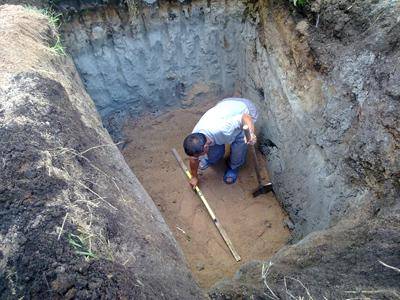
Pit preparation
Stage 2: installation of a septic tank
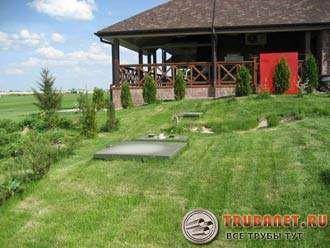
Next, in the pit, it is necessary to organize a sand cushion. To do this, its bottom is covered with sand by 15 cm. Thus, after installation, the septic tank will also rise above the soil surface by 15 cm. This is required for the convenience of operating the cleaning system in the spring season and preventing its damage. Otherwise, if the septic tank is installed flush with the ground, in the spring, during the snowmelt, the aeration station may be flooded.As a rule, water will get inside through the ventilation vents or the top cover. In this case, the compressors, and sometimes the entire system as a whole, may stop functioning.
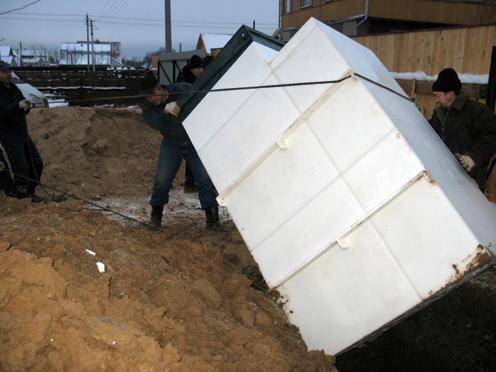
Descent of the station into the pit
Pro tip:
It is necessary to choose a model of a treatment plant taking into account the level of groundwater occurrence. If it is very close to the surface, then preference should be given to varieties marked PR. In such systems, a forced removal of treated water is provided, which is carried out by means of a built-in pump.
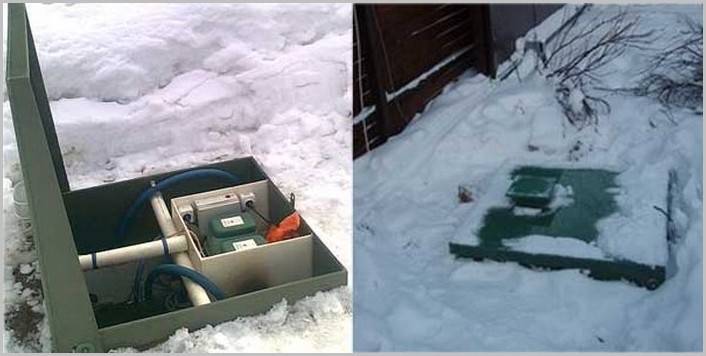
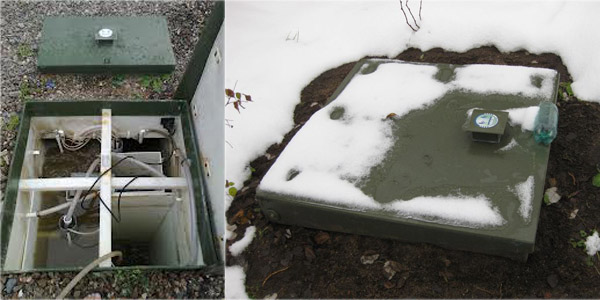
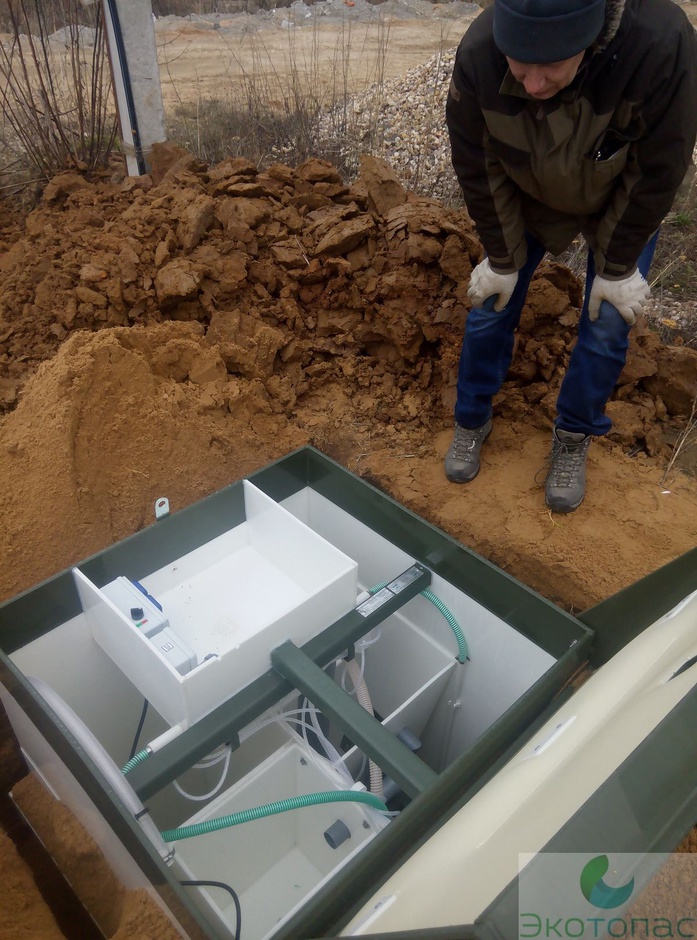
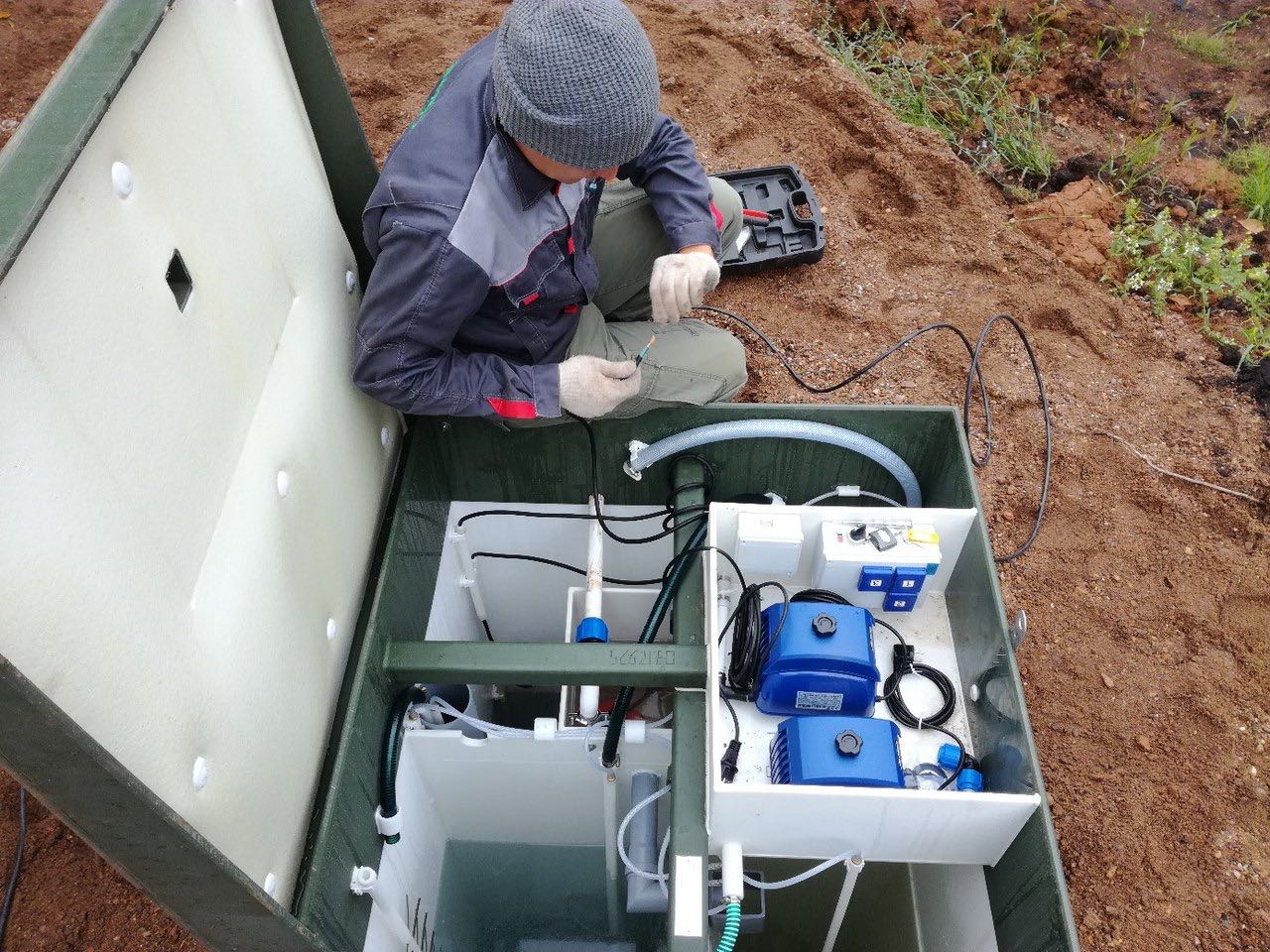
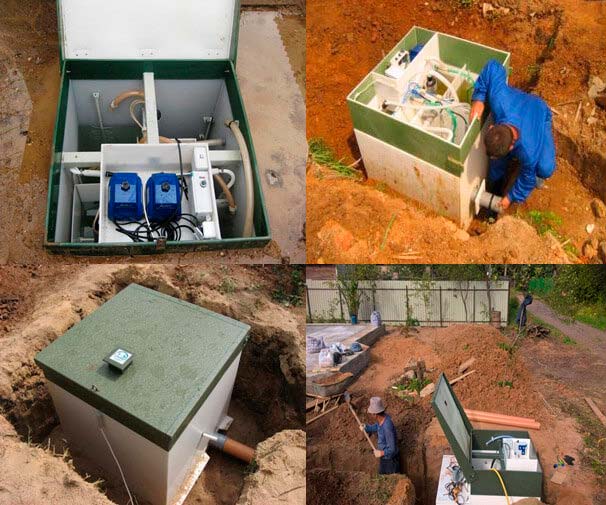
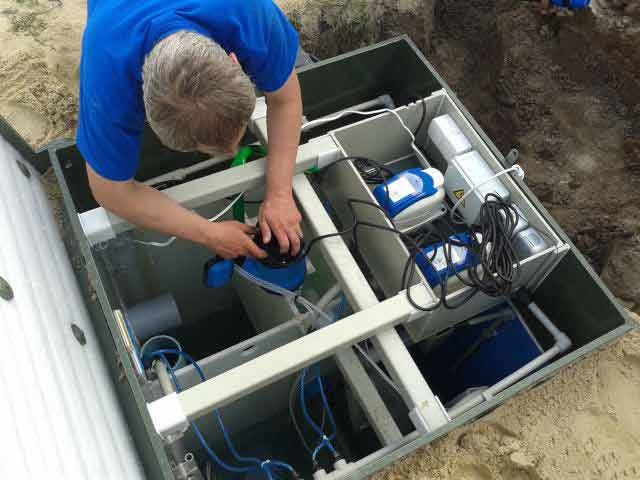
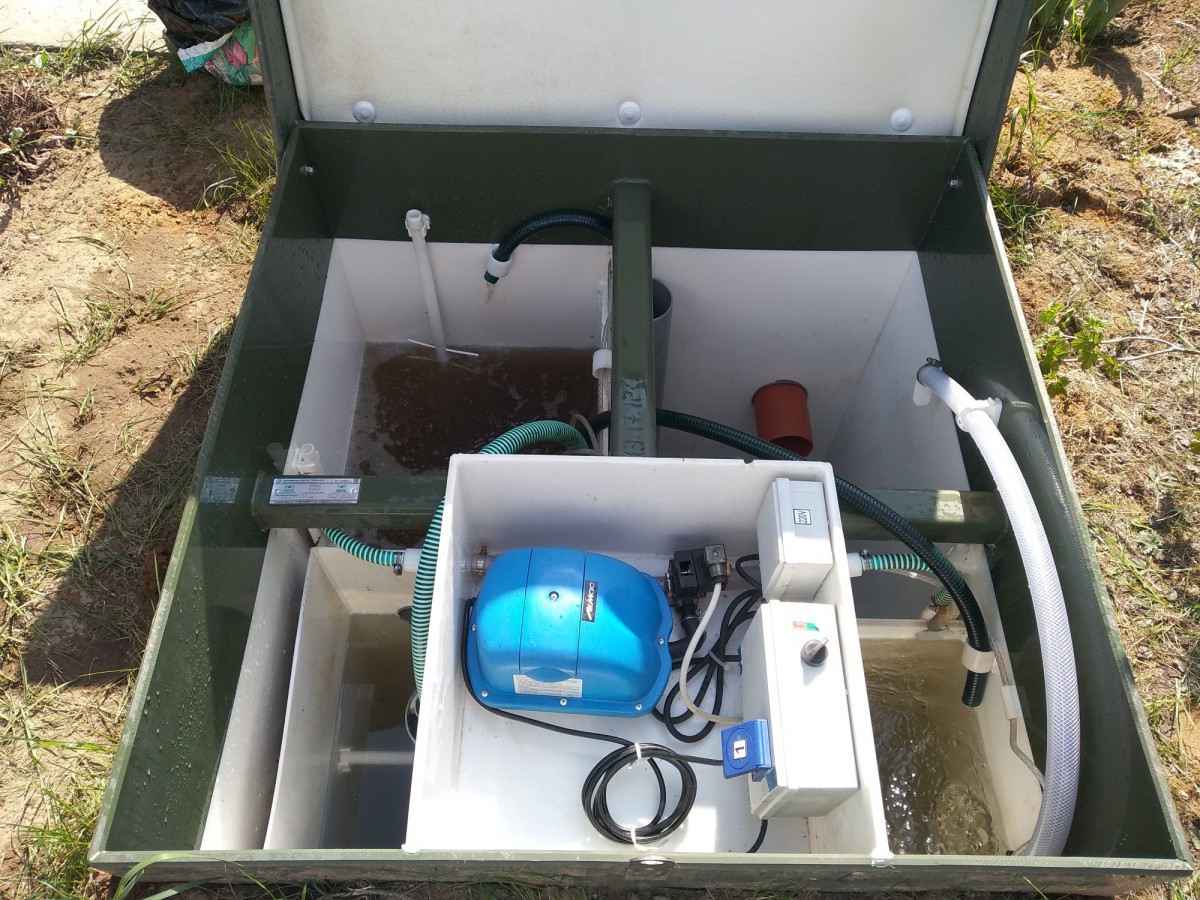
Septic tanks for the country house Topas (5 and 8) can be installed manually in the pit. No special equipment is required, unlike other models of these systems. Through special holes, which are located on the stiffeners, a rope is threaded, and the station is lowered into the pit.
Stage 3: organization of the sewer system
For the installation of the sewer system, HDPE pipes with a diameter of 110 mm are used. The depth of the tie-in level of the pipe into the septic installation is 70-80 cm relative to the upper ground level. For stations of the Long model, the depth varies from 120 to 140 cm. The slope of the sewer pipes depends on the diameter of the pipe:
- at 100 mm - 1-2 cm per meter;
- at 50 mm - 3 cm.
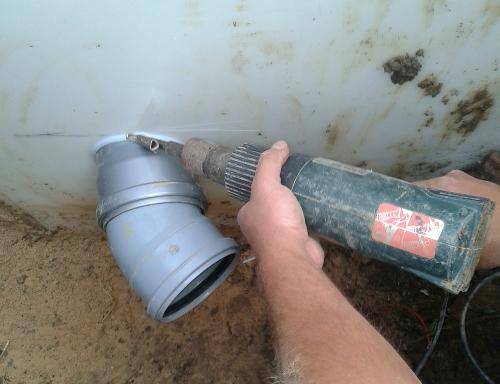
Connection of outlet and inlet lines
If the pipe insert was made at a distance of 70 cm from the top, then at a distance of 10 m from the house, the height of the pipe leaving the house should be 50 cm from the ground.
Stage 4: sealing the installation
In the outer case of the station, it is necessary to drill holes for the sewer pipe. To do this, it is recommended to use an adjustable crown (diameter 103-100 mm). In this case, the adjustment should be 105-108 mm.It is desirable to carry out sealing guided by the instructions.
The station is equipped with a special polypropylene cord, with the help of which the branch pipe placed in the hole is soldered to it. To do this, use a building hair dryer with an appropriate nozzle. After the pipe is securely attached, a sewer pipe is connected to it.
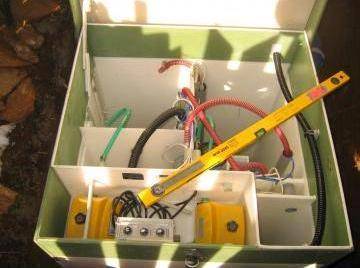
Cleaning station leveling
Pro tip:
Before sealing, it is worth leveling the installation using a building level.
Stage 5: providing a power source
Since the system is powered by electricity, the installation of the Topas septic tank provides for power supply to it. For this, a PVA cable (section 3x1.5) is used. It is placed in a corrugated pipe designed for earthworks, and placed near the sewer pipe.
The cable is brought to the unit through a special input and connected to the terminals. In the house, it is connected to the switchboard through a separate 6-16 A machine.
Stage 6: pressure normalization
The final stage is equalization of pressure on the outer surfaces of the station during its sprinkling. This is necessary in order to compensate for the pressure on her body. Filling the installation with water and sprinkling are carried out simultaneously and in the same quantities. The station is filled with water by a third and similarly by a third it is filled up. The process is repeated until the station is submerged into the ground to the required level.
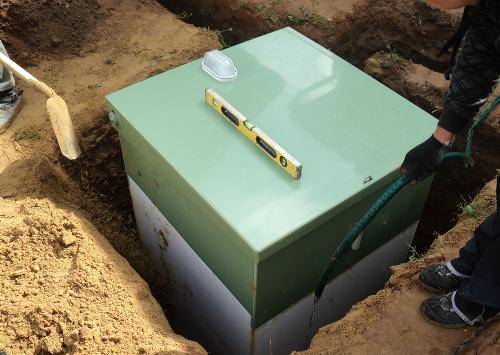
Sprinkling of the station and filling with water are carried out evenly
How to use the Topas septic tank in winter?
This device is designed in such a way that it can function with equal efficiency in both warm and cold seasons. "Topas" can work with drains that have a low temperature.
The cover of the treatment plant is equipped with heat-insulating mechanisms. Therefore, if it is -20°С outside the window and at least 1/5 of domestic wastewater enters the treatment system, you do not need to worry about the operation of your device and carry out preventive maintenance. However, if the temperature drop was sharp and the frosts promise to last a long time, the Topas manufacturer recommends providing additional insulation for the upper part of the device. But remember about the ventilation system, the air intake of which is located in the lid of the septic tank and which should not be blocked.
In addition, manufacturers warn users against opening technological hatches at temperatures below -15°C.
Be sure to keep a record of your care for the Topas WOSV. Record all service and maintenance work that you carry out. Observe the seasonal operation of the septic tank, which are listed above. Responsibility for the breakdown of the WWTP due to a violation of the maintenance algorithm falls on the shoulders of the user, not the manufacturer.
Operating recommendations
A septic tank for giving Topas involves certain operating conditions, the observance of which will increase the life of the equipment. First of all, we must not forget about the periodic pumping of sludge. If this is not done, the tank will overflow, and residual sediments will fall into the purified liquid. There must always be a certain level of water in the sump.
- The appearance of pollution and unpleasant odors. It is necessary to flush the entire device.
- If there are problems with the wiring, a short may occur in the sensor or in the compressor. A complete replacement of the wiring will help to eliminate the breakdown.
- If water leaks from the structure or, on the contrary, penetrates inside when the device is not in use, the plumbing should be checked. The problem may be a clogged pipe, a leak in the hull, or flood water. It may be necessary to repair plumbing equipment, clear blockages or pump out excess fluid.
- If the structure is flooded, the functions of the drainage device must be checked. A new pump may need to be installed.
- The activation of the emergency sensor indicates a breakdown of the airlift. In this case, it is recommended to check the station.
It is important to check the functionality of all equipment. If the design provides for 1 compressor, it must function without stopping. If there are 2 mechanisms, then one of them turns on
This is determined by the phase of the cleaning cycle. In case of device failure, system diagnostics will be required
If there are 2 mechanisms, then one of them turns on. This is determined by the phase of the cleaning cycle. In the event of device failure, system diagnostics will be required.
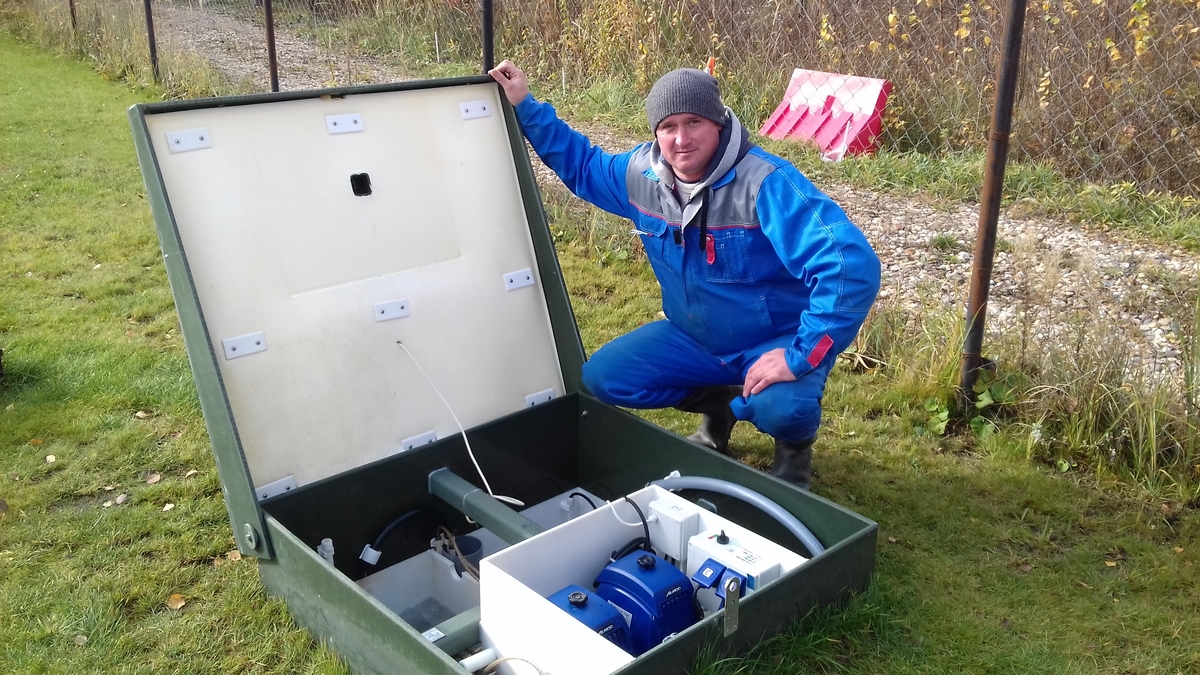
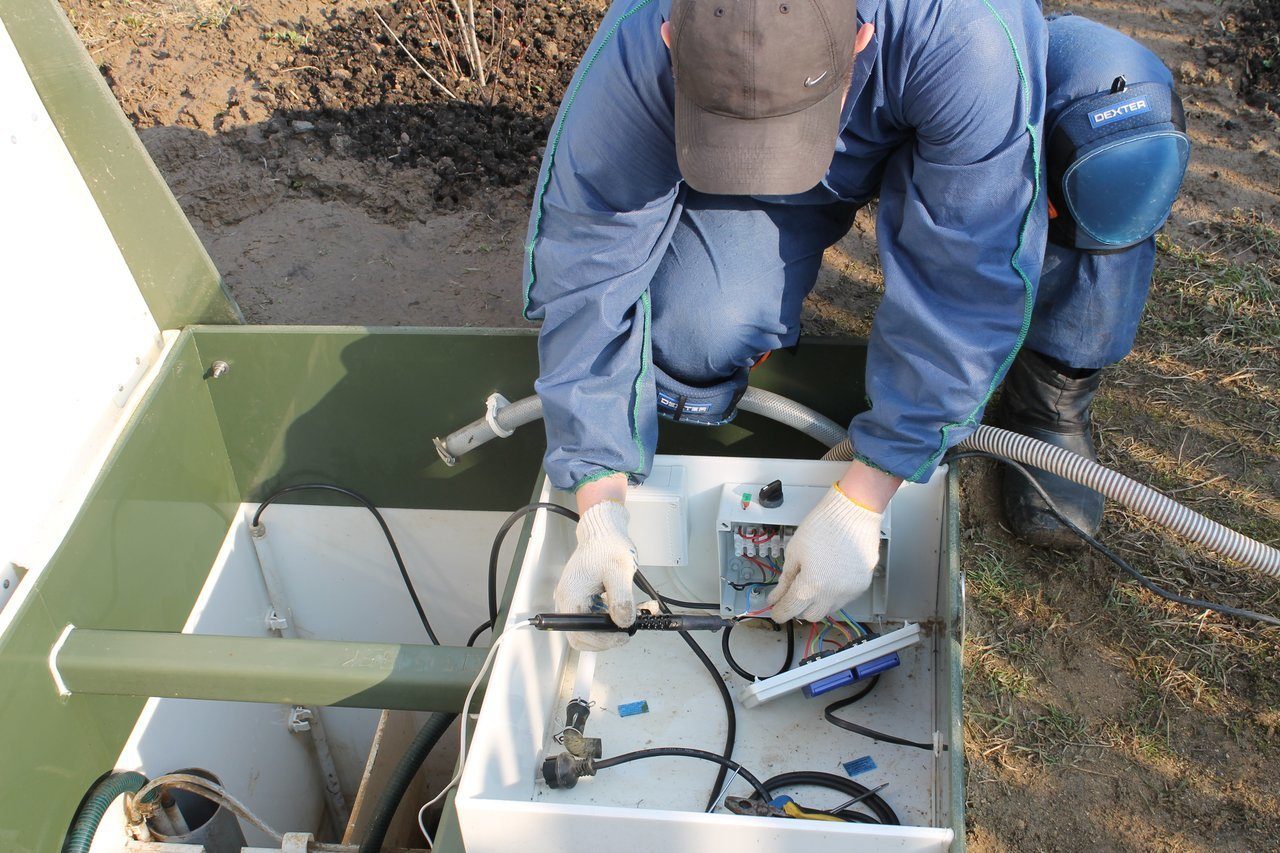
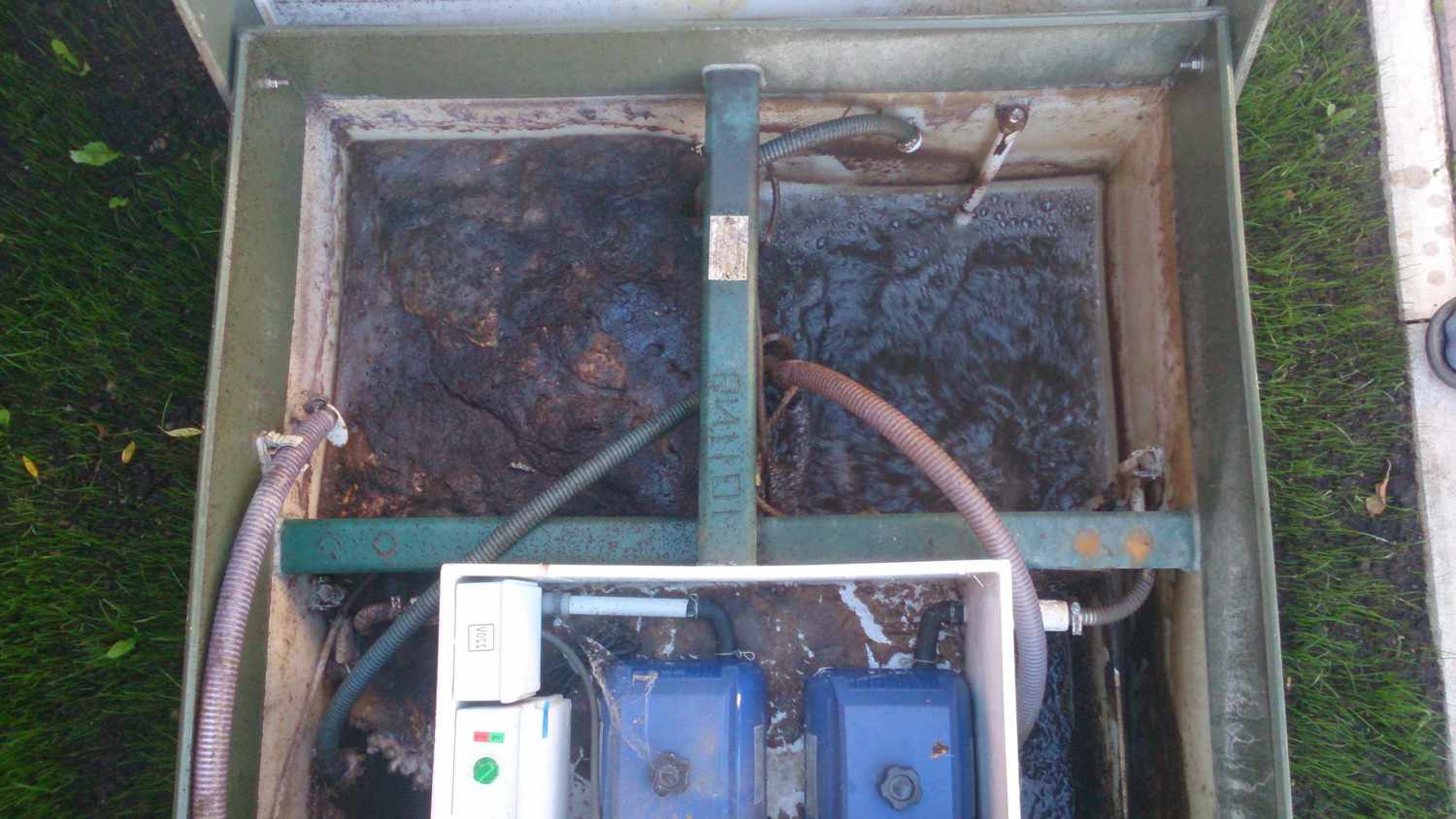
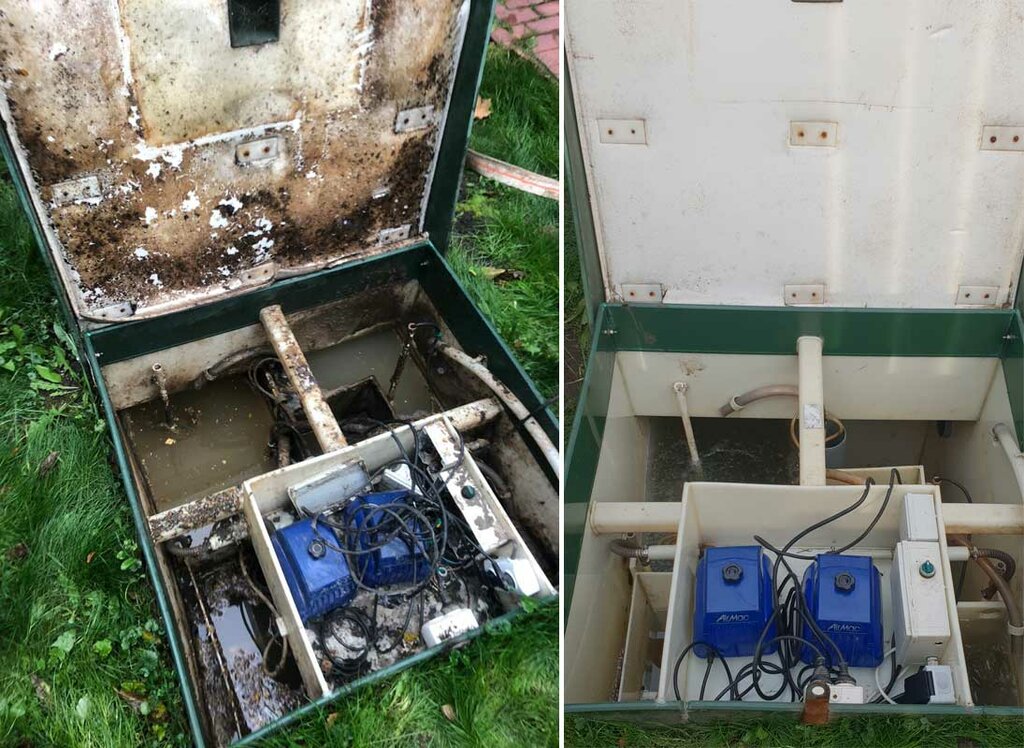
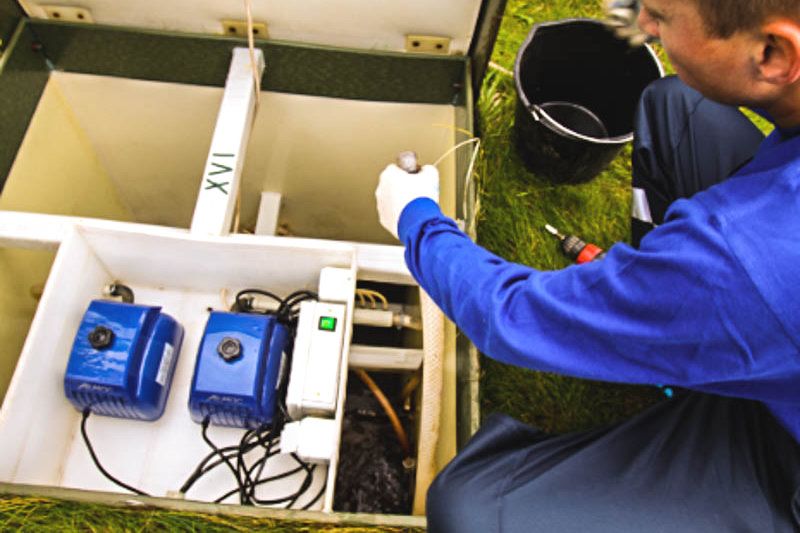
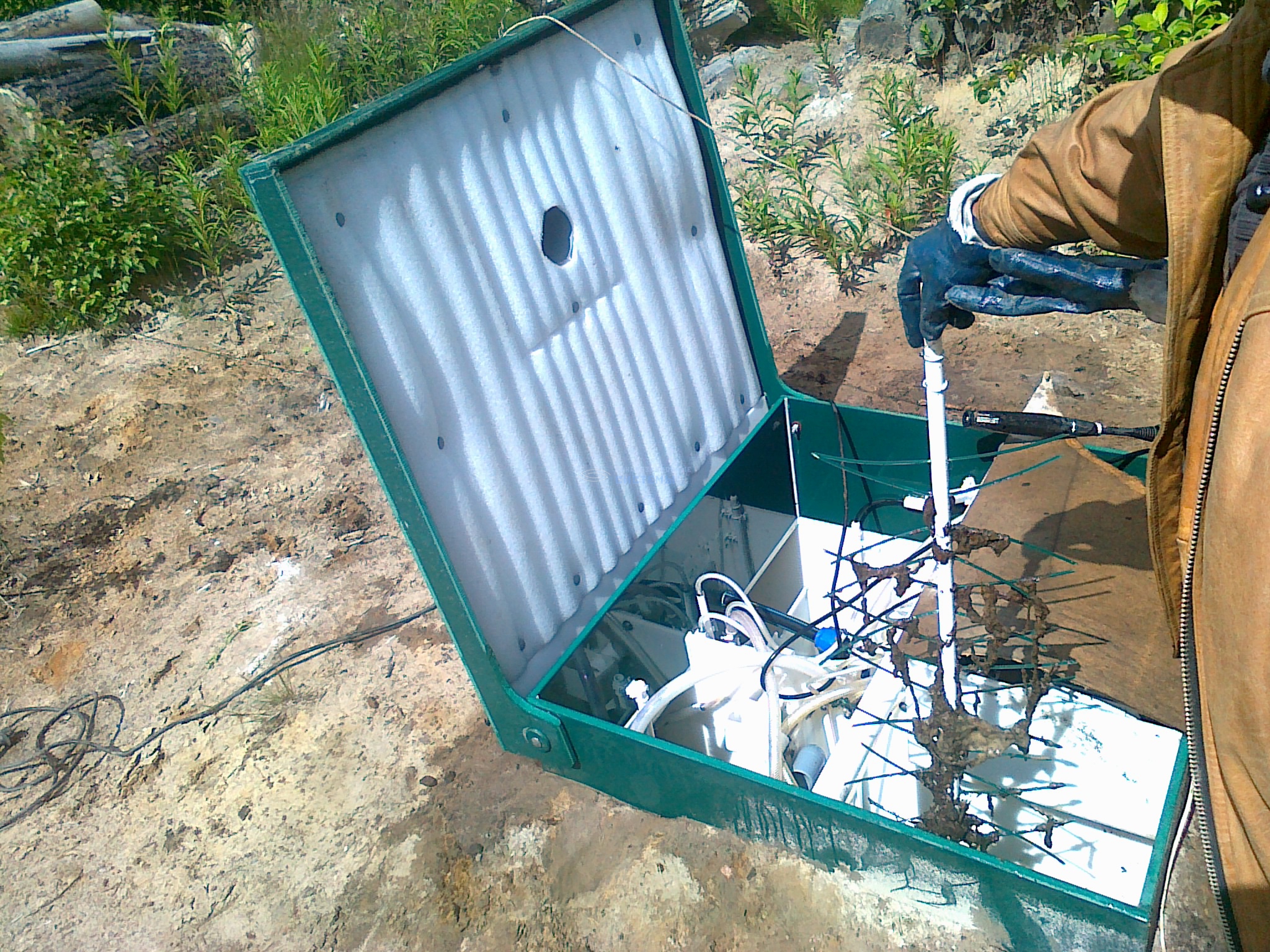
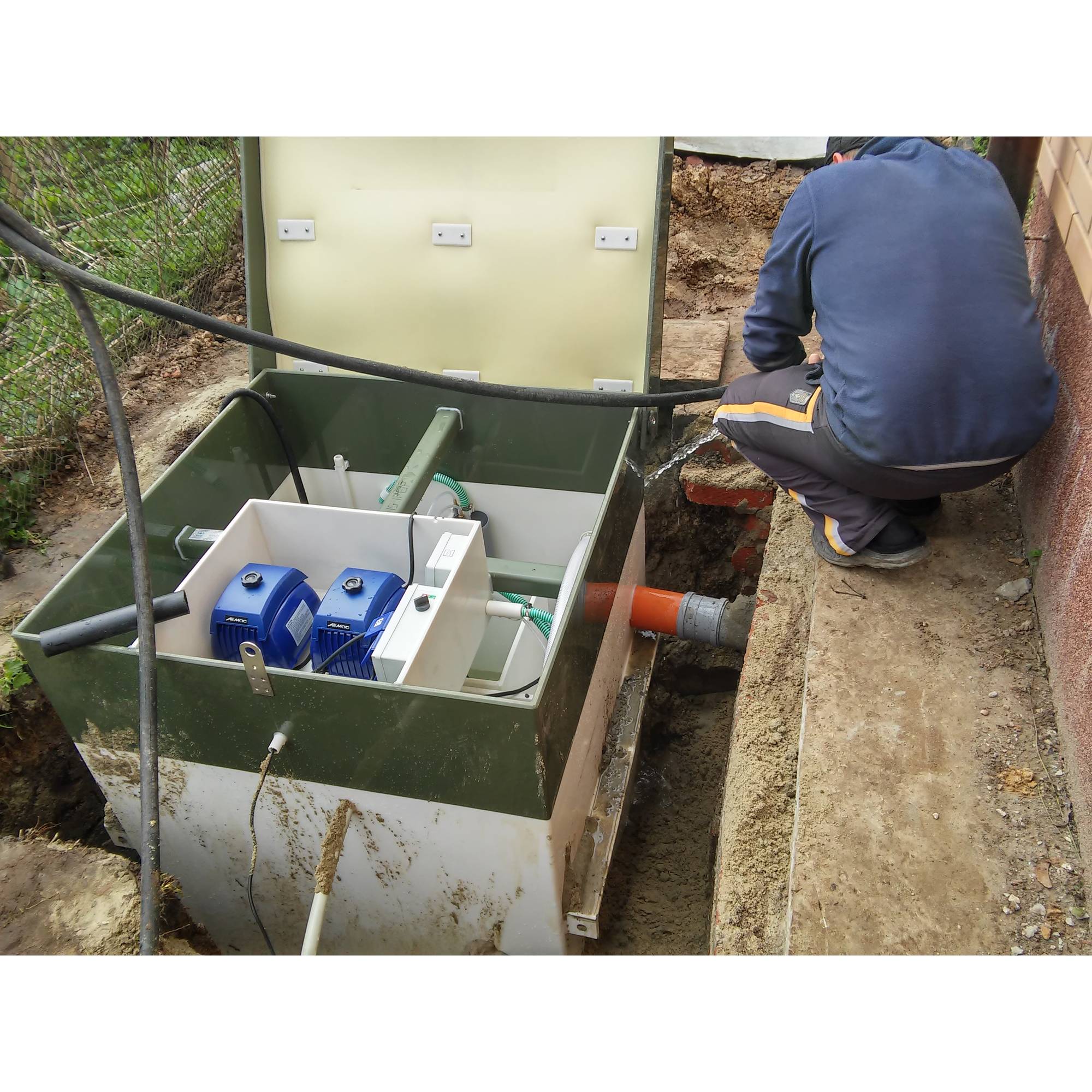
With the upper placement of the float, it should boil in some containers, and with the lower one in others. If this is not observed, you need to test the equipment. If the design is equipped with a pump for forced water drainage, it is necessary to periodically check its performance. This can be done by lifting the switch to the up position.
The device should turn on, and the water should quickly leave. It should be borne in mind that with constant power failures, the use of the station is not recommended. Since regular shutdowns can cause a breakdown of the system.
Watch the video - the principle of self-maintenance and cleaning of the Topas septic tank
Repairing the structure yourself is not recommended. This can lead to more serious damage. In some cases, it is better to turn to specialists who have special diagnostic equipment and extensive experience in this field.
Subject to the rules of operation and maintenance of the Topas septic system, it will last for many years and help to efficiently process polluted water in order to reuse it for technical needs.
Topas sewer and septic service
A properly installed and configured autonomous sewage system, as a rule, does not cause unnecessary trouble to its owner.
When developing the design of an autonomous sewage system, the designers laid down the possibility of self-maintenance of the device, without resorting to the help of specialists. To do this, just use the tips outlined in the instructions for the cleaning station. If you are a busy person and do not have free time for self-maintenance, or you are not going to delve into the intricacies of the autonomous sewage process, you can always resort to the services of our specialists.
However, recently a lot of companies have appeared on the market offering the service of autonomous sewers and septic tanks, and not all of them do it with high quality.
Calculating such organizations is not so difficult, you just need to pay attention to the details: - you are not given guarantees; - the price for service after the arrival of the master differs from that declared by phone or on the website; - the master after arrival due to insufficient qualifications cannot make repairs; - the company does not have the necessary parts and it asks to wait for their delivery; - untimely arrival at the facility or attempts to postpone the departure of a specialist; – attempts to charge extra for urgency
You will never encounter any of these negative points when ordering autonomous sewage service from Vipdom!
We guarantee: - quality service and always give a guarantee for all types of our work; - we will immediately announce the real cost for maintenance of an autonomous sewer or a septic tank, and we will also inform you about possible additional costs; - our highly qualified craftsmen can not only perform standard work, but also solve non-trivial problems that arise during the operation of autonomous sewers; – our company always has in stock the necessary spare parts and units for autonomous sewers; – we quickly go to the site and carry out all the work clearly within the agreed time frame.
We can eliminate virtually any problem that has arisen during the operation of an autonomous sewer or septic tank! But to make it clearer for you, we offer a list of works that we have to deal with: - conservation of sewage for the winter and spring re-preservation; – repair and modernization of the control unit (may be needed when the station is flooded or fails as a result of power surges); – replacement of the compressor; – replacement of the nozzle; – replacement of the electromagnetic valve; – replacement of sensors; - scheduled cleaning of autonomous sewer filters, sludge removal; – cleaning of airlifts; – cleaning of nozzles; – cleaning of the internal walls of the station;
Remember: competent and timely maintenance will allow your autonomous sewer or septic tank to last for many many years.
Mistakes
According to statistics studied by Topas manufacturers, 80% of users are satisfied with their purchase. An analysis of the dissatisfaction of the rest shows that they themselves are to blame for making serious mistakes. Self-installation and commissioning were carried out incorrectly, without taking into account the manufacturer's recommendations. As a result, the septic tank does not function properly.
Often, wanting to save money, they choose a model of lower performance. Then it turns out that the station cannot cope with the volume of effluents, which is constantly overestimated. Therefore, cleaning quality is not enough.
Conclusions and useful video on the topic
The planned cleaning of the TOPAS station is available in the video:
Video about the repair of the station after the flood:
It is quite possible to clean and repair VOC TOPAS on your own.But in order to be able to take advantage of warranty service, it is better to ask the manufacturer or seller what kind of work is allowed to be carried out by the users themselves. Otherwise, tampering with the system may void your legal rights to free service.
Do you have any questions after reading the article? Or you have already encountered a septic tank breakdown and you have something to advise our readers, please leave comments, share your experience, ask questions, and we will try to answer them promptly.



