- Drain the water heater
- Connection with two tees
- Connection with one tee
- Connection without tees
- How to save electricity with a boiler?
- Instrument selection
- Methods to reduce electricity costs
- How to turn on the water heater
- Boiler and its advantages
- 3 Trademark Ariston
- The main methods of draining
- Checking for correct operation
- Installation and connection of the boiler to the network
- Instructions
- Emptying the Termex water heater tank
- Accompanying video
- How to drain from Electrolux equipment
- Emptying the Ariston heater
- Video hint
- Proper emptying of the Gorenje boiler
- Why drain the water
- Do I need to turn off the boiler if the water is turned off
- Price
- The procedure for flushing and disassembling the boiler
Drain the water heater
Just open hot water mixer and it will not be possible to empty the boiler due to the fact that when water is consumed, the tank is simultaneously filled. Cold water pushes hot water out - that's how it works. It would seem that it is enough to turn off the tap at the inlet so that the boiler does not fill up, but no. Everything is a little more complicated.
Illustration: Artyom Kozoriz / Lifehacker
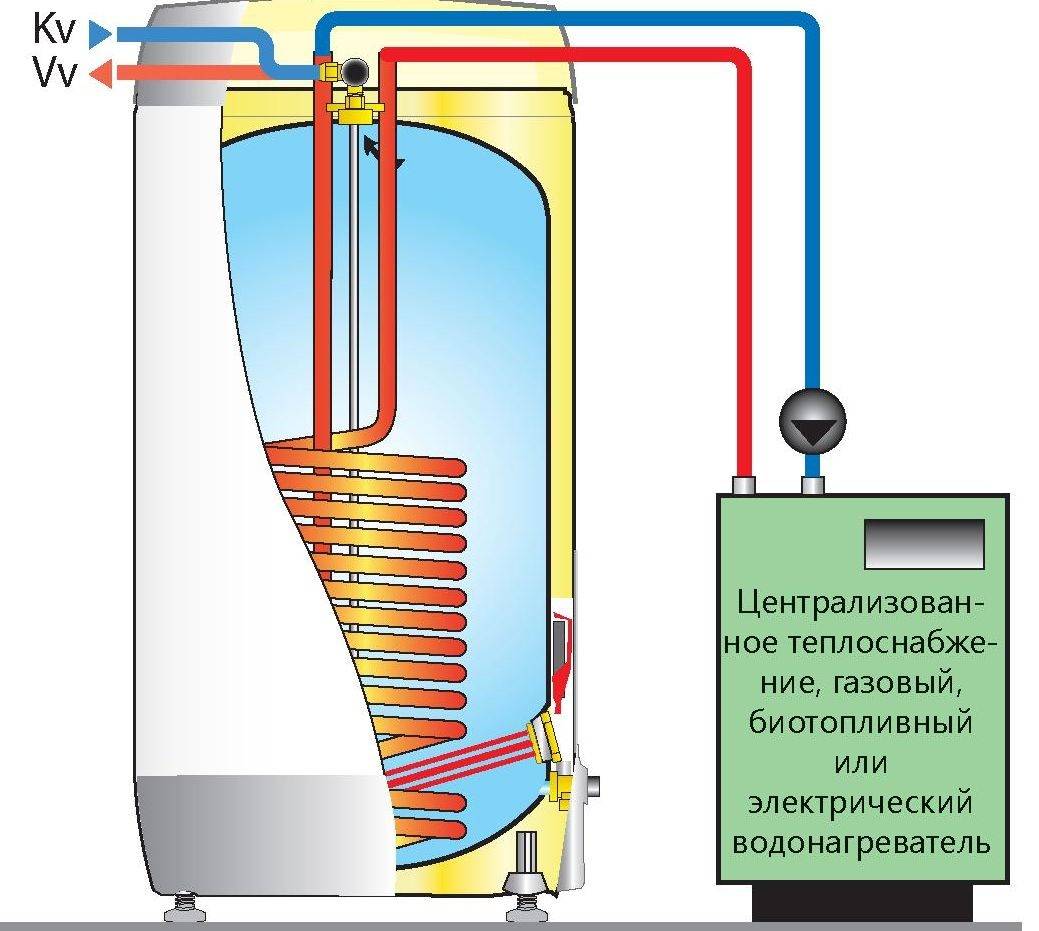
The hot water intake pipe is located at the very top of the tank, since the liquid rises when heated. The supply fitting, on the contrary, is located at the bottom - so the layers of water do not mix.Therefore, when the supply is blocked, no more than a liter will merge from the mixer.
The water can only be completely drained through the supply pipe. At the same time, it is necessary to ensure the flow of air into the tank so that a vacuum is not created there and the water drains. Depending on the type of connection, this is done in different ways: from simply opening a tap to removing fittings.
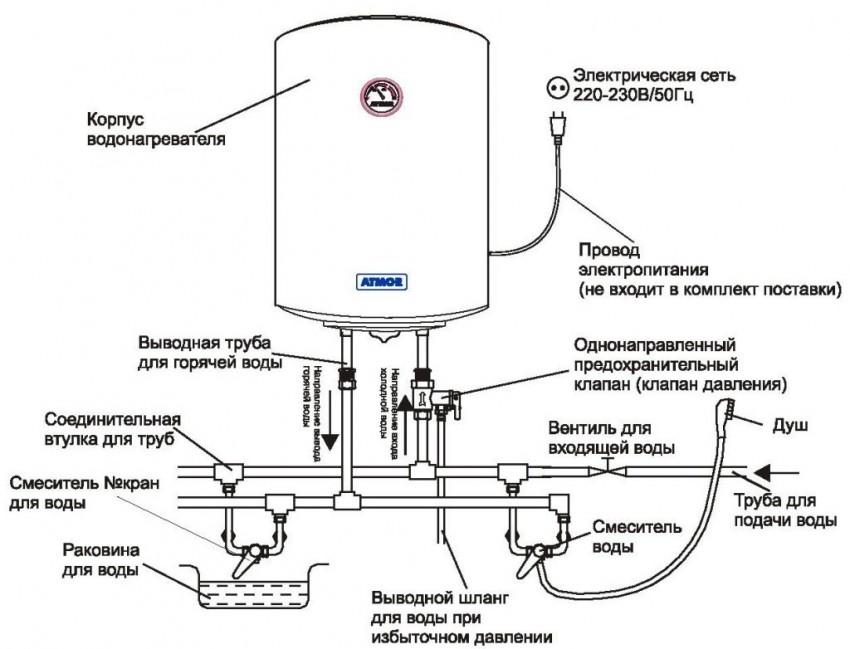
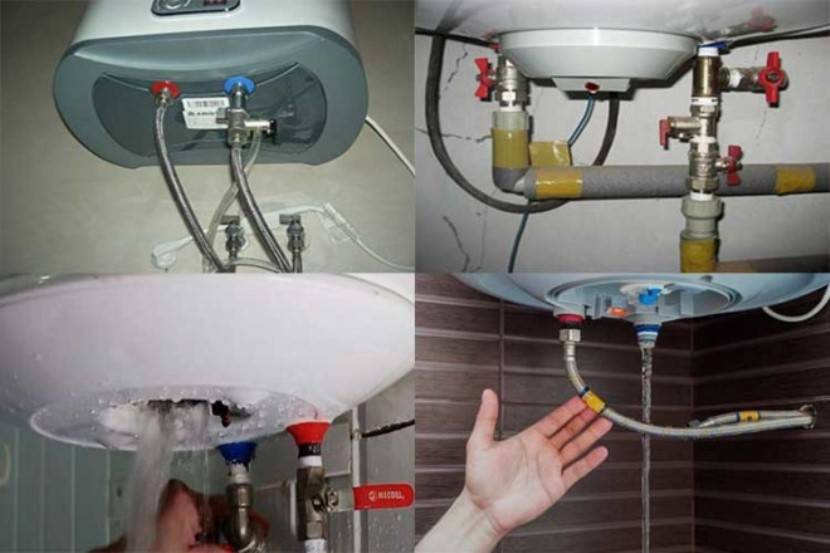
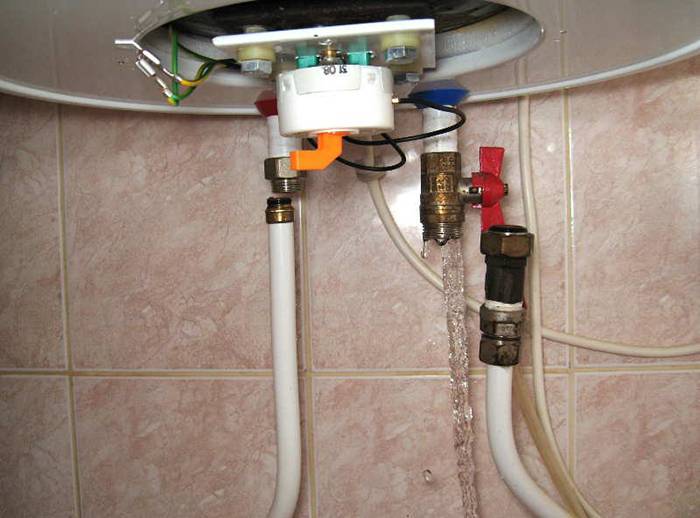
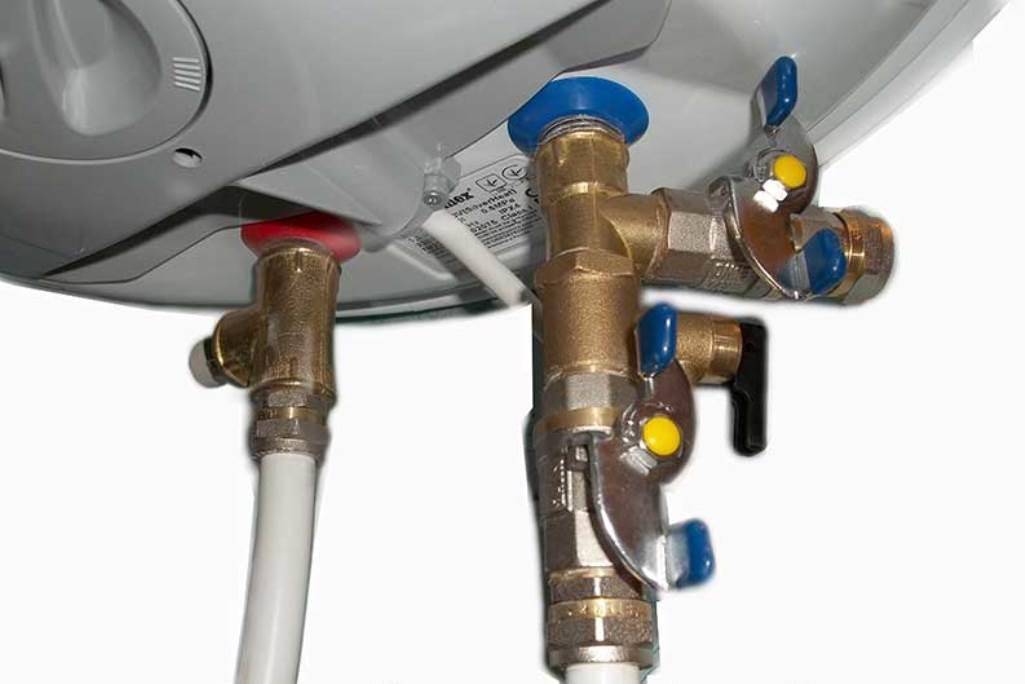
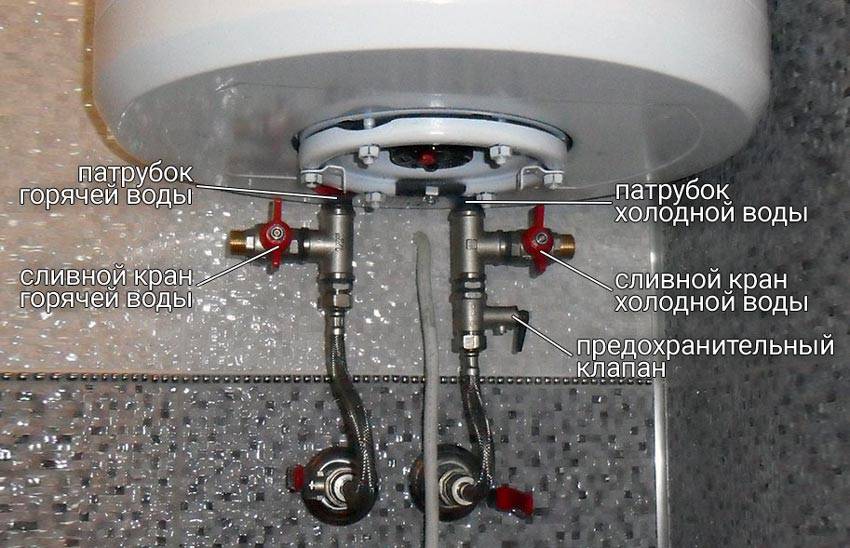
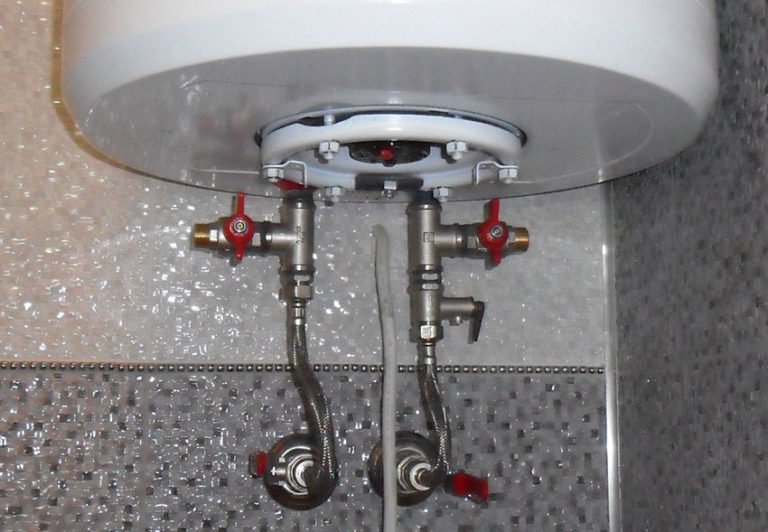
Connection with two tees
Illustration: Artyom Kozoriz / Lifehacker
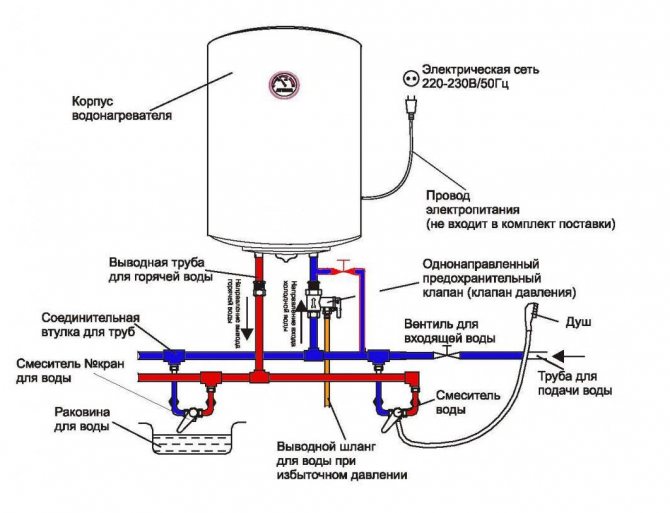
The most convenient scheme for draining. Thanks to the taps installed on the tees, it allows air to enter the tank and quickly empty it.
- Make sure that the inlet and outlet taps from the boiler are closed. If they are not there, close the valves on the risers of cold and hot water supply.
- Attach the hose to the drain tap on the tee at the water heater inlet and lower it into a basin, bucket or toilet. Open the faucet.
- Now open the tap on the tee at the exit from the boiler.
- Drain all or part of the water. If you need to pause, turn off the tap at the water heater inlet and the water will stop flowing.
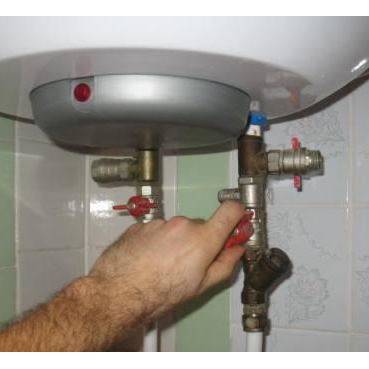
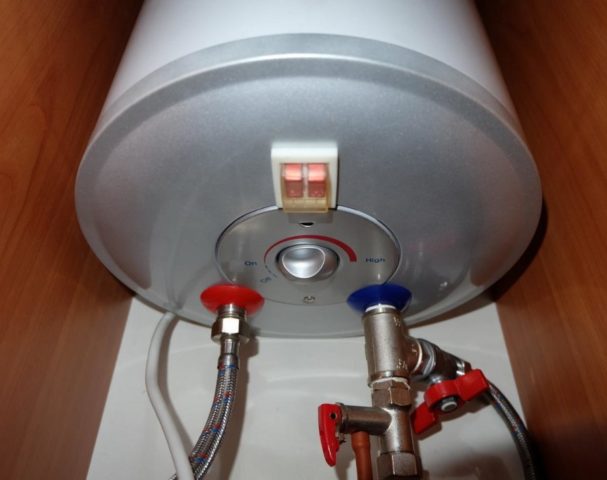
Connection with one tee
Illustration: Artyom Kozoriz / Lifehacker
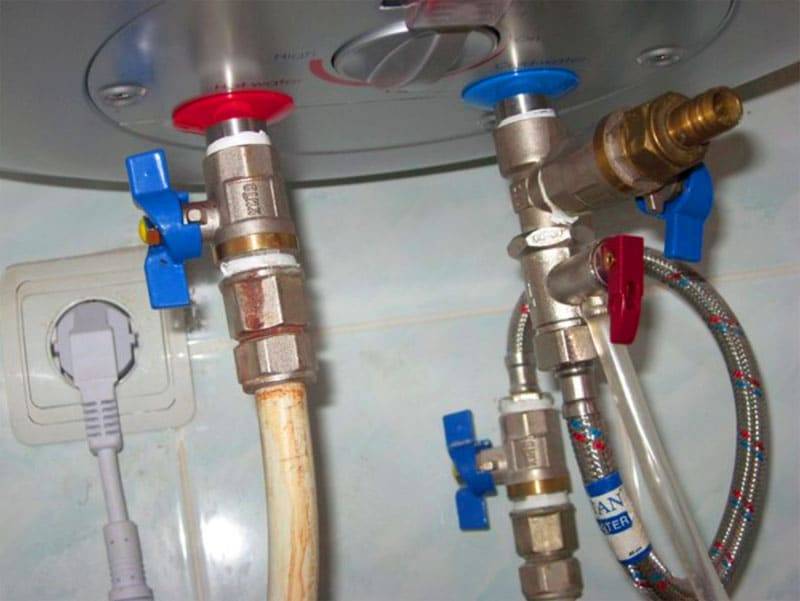
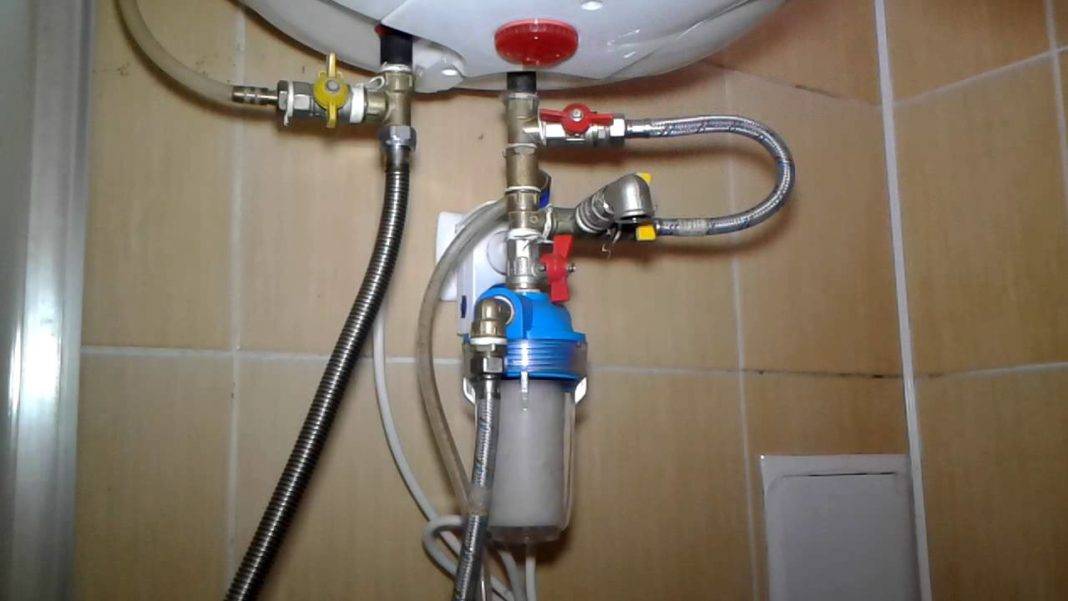
Not the worst connection option, which is still inferior in terms of convenience to the previous one. A tee with a tap is installed only at the inlet, so to drain it, you will have to let air into the tank through a mixer or by removing the pipe from the outlet fitting.
Illustration: Artyom Kozoriz / Lifehacker
There is a variation of such a scheme without a tap at the outlet of the boiler. In fact, it is no different: air is let in in the same ways.
- Check that the taps at the inlet and outlet of the water heater are closed. In their absence, close the valves on the cold water and hot water risers.
- Connect the hose to the drain cock and lower it into a bucket or basin. Open the faucet.
- On the nearest mixer, turn on hot water and wait until all or the right amount has drained.
- If the water flows poorly or does not flow at all, it means that air is supplied weakly through the mixer. In this case, remove the hose at the outlet fitting.
- To stop the water, you can turn off the drain cock or simply close the outlet with your finger.
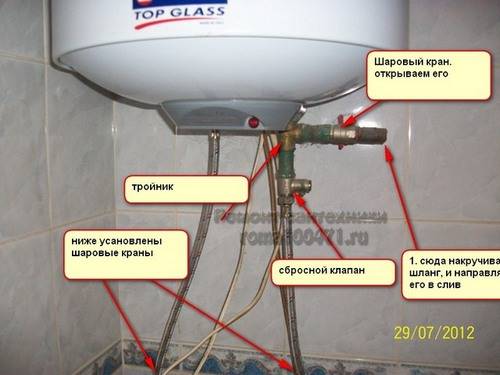
Connection without tees
Illustration: Artyom Kozoriz / Lifehacker
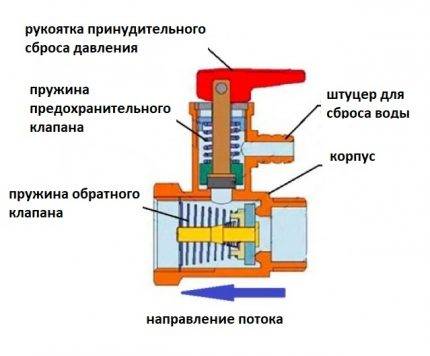
The most inconvenient piping scheme is when the water heater is connected directly without tees and taps. We only have a safety valve with a drain outlet. Through it, albeit slowly, but you can also drain the water. In extreme cases, the valve can be easily removed, and then the flow will be much greater.
- Make sure that the water in the cold and hot water risers is shut off.
- Close the tap at the boiler inlet and turn on hot water at the nearest mixer.
- Put a hose on the valve spout and lower it into a bucket or basin. Raise the valve flag.
- If the water drains very slowly or does not flow at all, remove the hose from the outlet fitting of the boiler to allow air to flow.
- If there is no flag on the valve or the water is still weak, disconnect the supply hose from the valve and insert a thin screwdriver into its body. This will lift the spring blocking the reverse flow of water, and the jet will increase significantly.
- To speed up the drain, you can simply remove the valve to completely free the inlet fitting of the water heater.
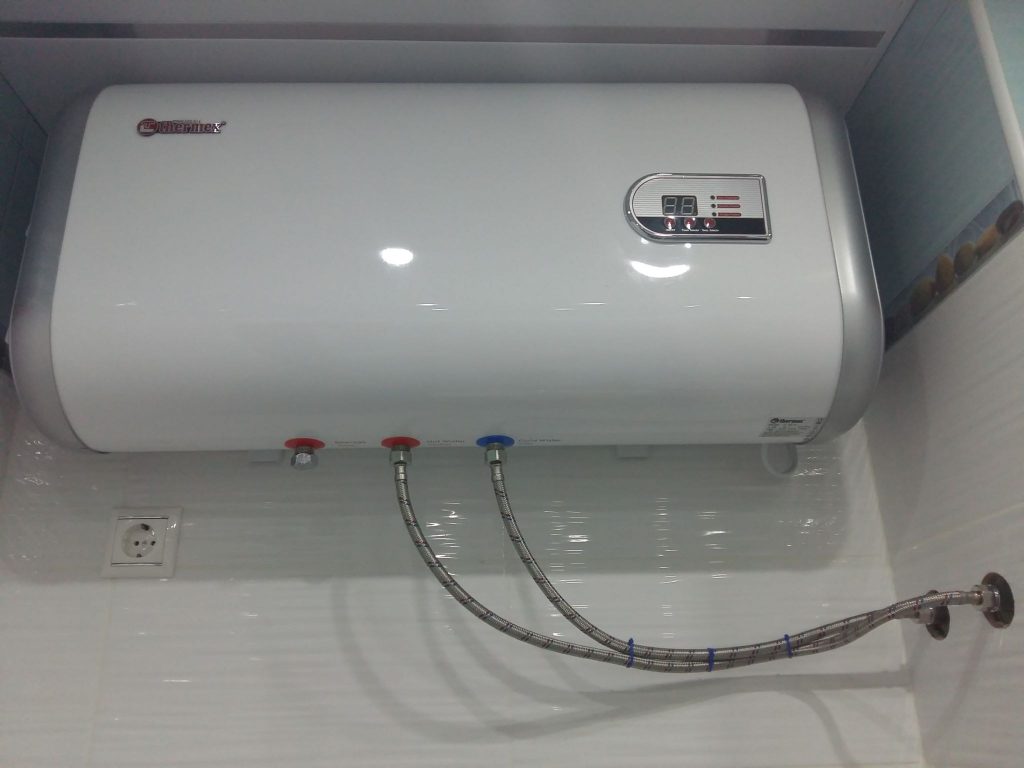
If a boiler is used in a residential area, it may sometimes be necessary to completely or partially empty it. The following are detailed algorithms for how to drain water from a Termex water heater using several methods.By following the attached instructions, everyone will be able to complete this task on their own.
Preparation for draining consists of 4 successive stages:
- It is necessary to disconnect the boiler from the power supply network (it can be output to a separate machine or simply connected to a power outlet).
- Stop the fluid supply by closing the corresponding valve.
- You need to wait for the liquid inside the appliance to cool completely, since it is extremely unsafe to drain boiling water.
- The final stage is the dismantling of the pipes on the boiler tank T
How to save electricity with a boiler?
In order to economically use the boiler, extending its life and not overpaying for electricity, you must follow the recommendations:
- for daily use of hot water, do not unplug the appliance from the mains. Less electricity will be spent on maintaining the temperature than on heating it from scratch, especially in winter, when the water can be very cold;
- if hot water is needed 1 time per day or less, then the boiler should be turned off. In this situation, the opposite is true: less electricity will be spent on heating than on maintaining the temperature;
- decent energy savings are achieved through programmable controllers installed on modern water heaters. Knowing your schedule for using water, the unit can be programmed to prepare water by a certain time;
- on simple models of boilers there is an economical mode of the regulator, indicated by the letter "E" or in another way, use it if possible.
- using a water heater for running water, do not allow it to flow aimlessly during various procedures. Heating occurs very quickly, and constantly closing the tap for 1-3 minutes, you will save a lot of electricity.
Instrument selection
How to choose the most suitable device for your apartment? Let's say you decide on the volume, deciding that 80 liters is enough for you. You need to decide what price you are willing to pay for this pleasure. Budget boilers are no worse than expensive ones. Maybe not so beautiful with less precise settings, but Ariston gives a guarantee on all its models.
Next, we define the form. It all depends on where you are going to hang it. You can take round or flat. Perhaps, if there is absolutely no free space on the walls, the only option would be a horizontal water heater.

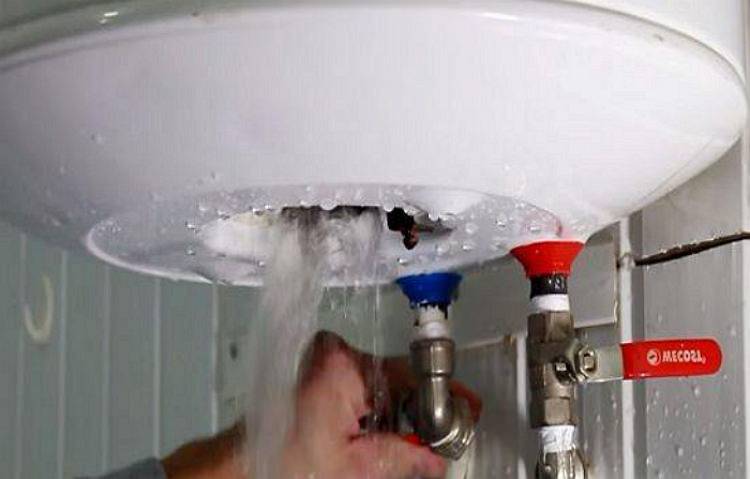




Decide on power. Ariston is economical, so it rarely puts too powerful heating elements on its products. Of course, if you want the device to heat water faster, it is better to buy a more powerful device, for example 2.5 kW.
If you want to save money, take a 1.5 or 1.2 kW device. Heating will be slower, but save on electricity. Naturally, it is necessary to do what we do with any product in the store - check its integrity with the package. Do not listen to the excuses of sellers like “the dent is small, it’s okay”, you will live with this device for a long time, demand a replacement.

Budget boilers are no worse than expensive ones. Maybe not so beautiful with less accurate settings, but Ariston gives a guarantee on all its models
Methods to reduce electricity costs
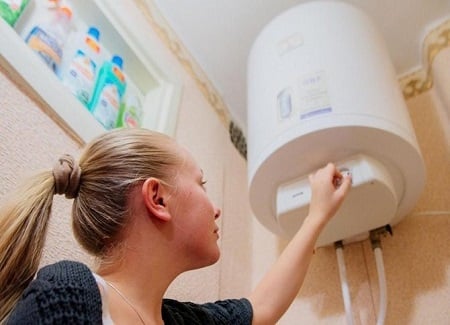
To do this, you must adhere to the following tips:
- Choose the best place for installing the boiler. After all, if too much pipeline goes to the sink or bathtub, then the heat will naturally dissipate, forcing you to spend more kilowatts.
- Select the correct operating mode for the device. To save, you need to correctly configure the active and inactive periods of the device, namely the heating element, you can save a small amount per kilowatt.
- Carry out preventive cleaning of the heating element (heating element). By cleaning it from scale, you will be able to increase the efficiency of the element, namely, to receive the same amount of heat, at a lower cost of electricity.
By adhering to all these points, you can save a small amount of electricity, which will positively affect your budget.
How to clean the boiler yourself
How to turn on the water heater
So, you are the proud owner of a home water heater. Finally, the “X” day has come, when hot water was turned off in the whole house, and you can rightfully use your new acquisition. The only problem is that you have no idea how to properly use the water heater, which buttons to press and turn the taps to make the miracle machine work.
To properly start the water heater, it is not necessary to have a specialized education, it is enough to follow a series of simple steps:
-
Step one: shut off the hot water supply in the riser pipe. To turn off the water, it is necessary to turn the valve on a special tap clockwise until it stops. The faucets themselves are located on the water pipes from the risers. This step is necessary in order to use resources more economically and use the water heater correctly. If you skip this step, your boiler will heat water for the whole house.
-
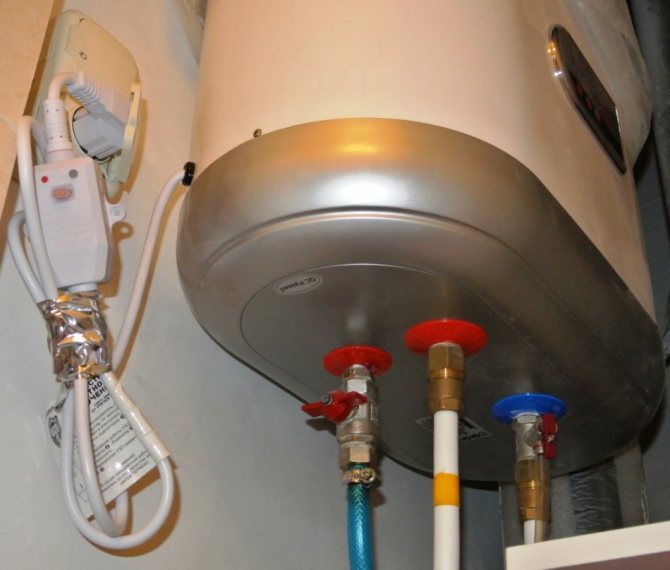
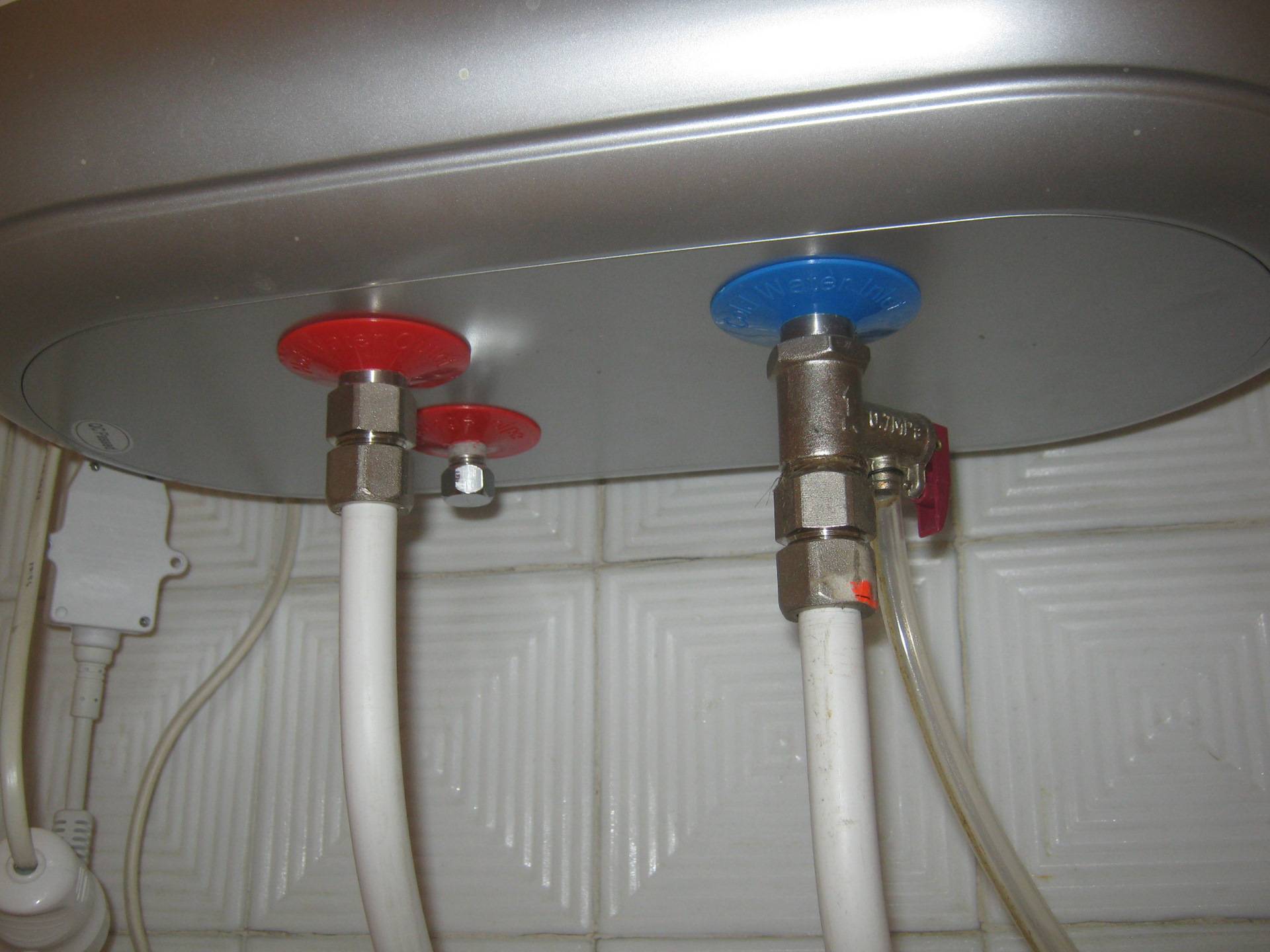
Step two: turn on hot water on the mixer. After you turn off the hot water, only cold water will remain in the common pipes.The cessation of the flow of hot water from the mixer will be evidence that you have completely cut off the supply of hot water in the common pipes. 3. Step three: open the boiler taps. When using centralized hot water supply, the boiler taps must be closed. If we look at the device of the water heater, we will find three taps there. According to the standard, the faucet on the right is responsible for the flow of cold water, the faucet on the left is responsible for hot water. The faucet above the cold water faucet is the safety valve. It is used for renovation work. In our case, we are working with the first two taps. First you need to open the tap with cold water. Thus, we will start the process of water entering the heater tank. Only then open the hot water faucet.
4. Step four: turn on hot water on the faucet. This action is necessary in order to bleed air from the heater and start the boiler. 5. Step five: connect the boiler to the mains. Do not forget to plug the power cord of the water heater into the socket, after that the power connection indicator on the control panel should light up.
In order to turn off the boiler, you must perform the same steps in reverse order:
- disconnect the heater from the mains;
- close the boiler taps through which water enters and leaves;
- restore hot water supply in the riser pipe.
To use the water heater more economically, it is recommended to disconnect the heater from the mains if you do not plan to resume its operation in the near future.
Using a water heater for water is a simple matter, but many questions can arise during the operation of the boiler.Below are the answers to the most common ones.
Boiler and its advantages
Every year in the summer, city dwellers are left without hot water for several weeks. The reason is seasonal maintenance work. Of course, this gives everyone a lot of inconvenience. In this regard, the boiler has become a fairly popular device in everyday life and households.
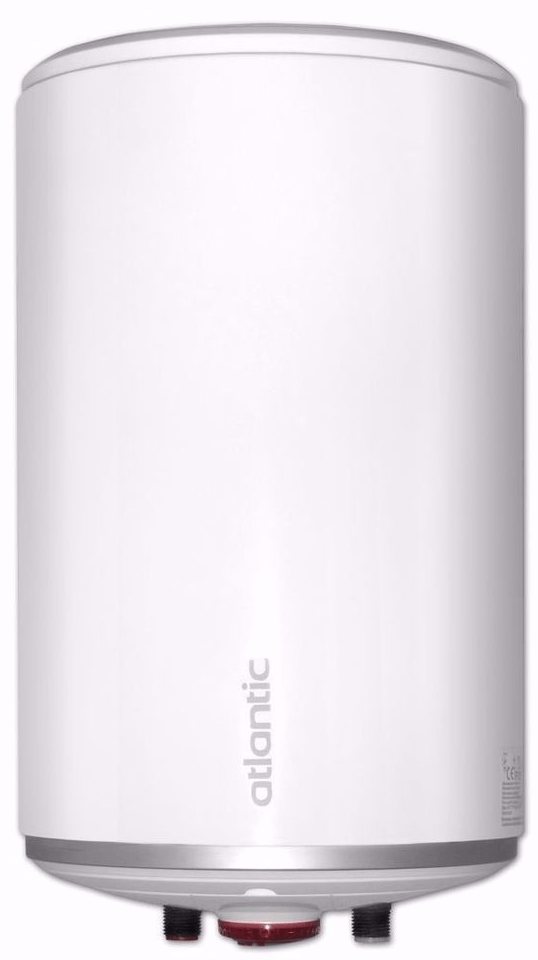
The boiler is a tank for heating water
He has many virtues. Here are just a few of them:
- Providing hot water throughout the year.
- Absolute autonomy, that is, complete independence from central heating.
- Simple installation, the absence of any special requirements in building codes and regulations (SNIPs) for its installation.
- Connection to a conventional electrical network with a voltage of 220V.



3 Trademark Ariston
Today, there are many manufacturers specializing in the manufacture of storage heaters. One of the most popular is Ariston, which produces boilers of different series:
- Slim. Compact size instruments with stainless steel and silver coating to prevent tank corrosion.
- T.I Shape. The devices have a titanium coating and a liquid crystal display. Some models are equipped with a remote control.
- Eureka. The series is distinguished by the unusual shape of the body in the form of a ball, made of heat-resistant plastic, and the presence of a tap or shower.
- Velis. Flat boilers with interchangeable color displays and control panels are characterized by double power.
- Super Glass Small. A range of compact units that can be easily mounted under or above the sink.
- Industrial. A special type of heaters intended for use in large enterprises.The devices can be wall-mounted or placed on the floor.
According to manufacturers, the life of Ariston brand boilers can reach 10 years. However, the key to such a long work is their regular descaling. Therefore, buyers who want the water heaters they purchased to serve as long as possible should know how to clean boiler Ariston from scale.
When the storage heater needs cleaning, the water heating time increases compared to that stated in the operating instructions, the temperature jumps, the device often turns on and off.
If, after turning on the heater, the tank becomes very hot or a loud hiss of water is heard from it, this is also a signal that the Ariston water heater needs to be flushed.
Even if there are no obvious signs of contamination, the water heater should be cleaned at least once every two years. Less often it is allowed to wash those devices that are used no more than 100-120 times a year.
The main methods of draining
There are several methods, here is the simplest one:
- Disconnect the unit from the network.
- Wait until the temperature of the water in the tank drops to a safe value.
- Stop the water supply to the boiler.
- Using a mixer, relieve the pressure and let the liquid out through the pipe.
- There is a faucet on the hot water pipe. It is necessary to unscrew it so that oxygen enters the container.
- Another tap is located on the pipe that supplies cold water to the boiler. It is necessary to open it and bring a drainage hose through which the liquid must enter the sewer.
- Check tank for water. If not, the procedure was successful.
Tank contamination with bacteria is not as bad as water crystallization. Modern water heaters have built-in systems for cleaning the liquid. If the problem cannot be fixed, it is better to send the boiler for repair.
Useful articles, news and reviews on our Yandex Zen channel
Checking for correct operation
Great if the water heater is connected to a separate machine. If problems arise in its operation, this will not affect the power supply of other appliances in the house.
If, after starting the heater, the machine was knocked out, you can turn it on again. If the situation repeats itself, then there are serious problems. The unit must be de-energized and the wizard should be called.
Here are a few more details to check after putting the boiler into operation:

- Check the hot water pipe for leaks. The fact is that the water heater can create more pressure than in the risers. And if the gaskets are already worn out somewhere, but have withstood the load from the central water supply, now they can give up.
- Make sure that the lamp lights up, fixing the supply of voltage to the heating element.
- Take readings of how many degrees the meter shows at the very beginning of the device’s operation, and then look at the temperature again after 20 minutes. If the data has increased, the heating element has successfully survived the rest period and heats up properly.
Due to their compact size and ease of use, instantaneous water heaters are in great demand. But you need to correctly assess your capabilities before deciding to install such a device yourself, because this process requires compliance with a number of rules. How to connect a flowing water heater: installation tips. read carefully.
You may be interested in the following information: how to drain water from a water heater and when it is necessary, read here.
Read more about connecting the water heater to the water supply and electricity supply here. And also all about choosing a place for the boiler.
Installation and connection of the boiler to the network
The package of Ariston boilers includes safety valves, brackets. Additionally, you need to purchase ball valves (for cold and hot water), as well as pressure reducer and filter. As for the eclectic system, a connection option is offered for maximum security. To do this, you need to purchase a 3-core cable, a 16-amp fuse.
It is important to choose the right place where the Ariston boiler will be installed, but the connection consists of 3 stages:
-
Wall mount or floor mount.
-
Tying and connection to the pipeline.
-
Wiring connection.
Installing the instrument
Non-capital walls cannot be used as a supporting surface: wooden, plasterboard or hollow. 2 overhead mounting plates are mounted on the wall, for which the mounting brackets of the boiler are fixed. When calculating the height of the brackets, the height to which the device must be raised in order to hook it onto the brackets is taken into account.




Boiler piping
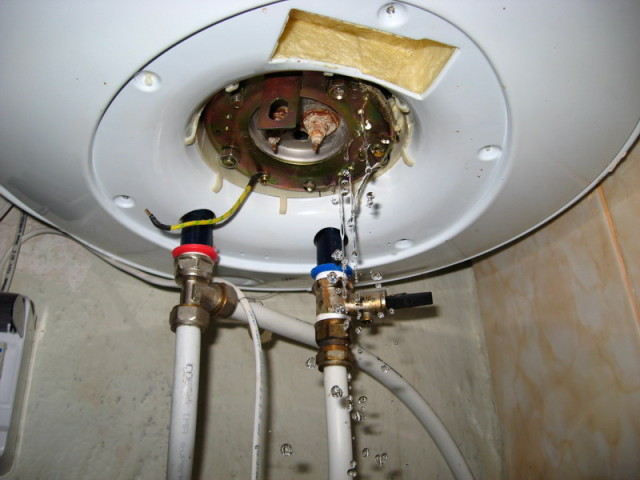
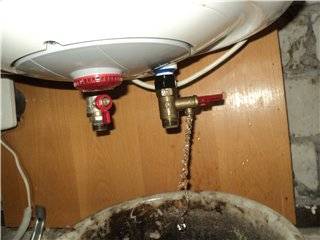
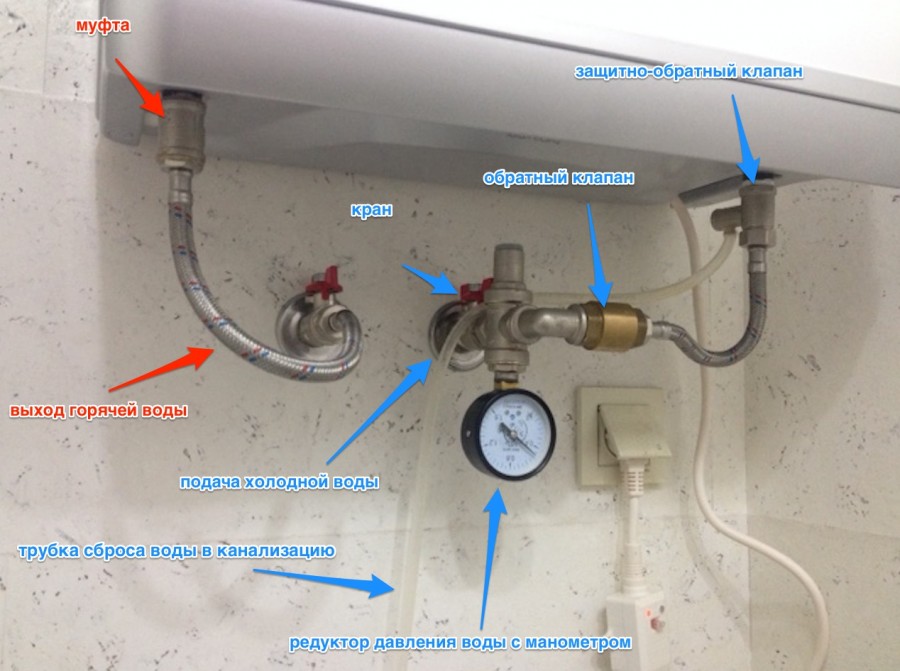
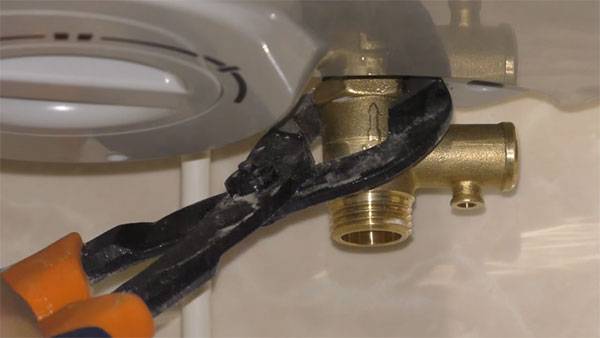
The equipment is connected to cold and hot pipeline systems. The circuit diagram of the cold water supply consists of a number of protective components, depending on the characteristics of the installation, they can be made of different materials, and the elements can be distributed over different rooms. The main thing is to follow the sequence and take into account the equipment:
-
A tee is inserted into the common water supply pipe, from where it is supposed to start the connection, and the wiring to the boiler departs from its free flange. It begins with the installation of a ball valve that shuts off the water supply to the heater.
-
Next, a coarse filter is built in.
-
If the water pressure in the pipeline is unstable or rises more than 6 bar, install a water pressure regulator in the system.
-
The remaining elements begin to be fixed from the junction on the boiler.
-
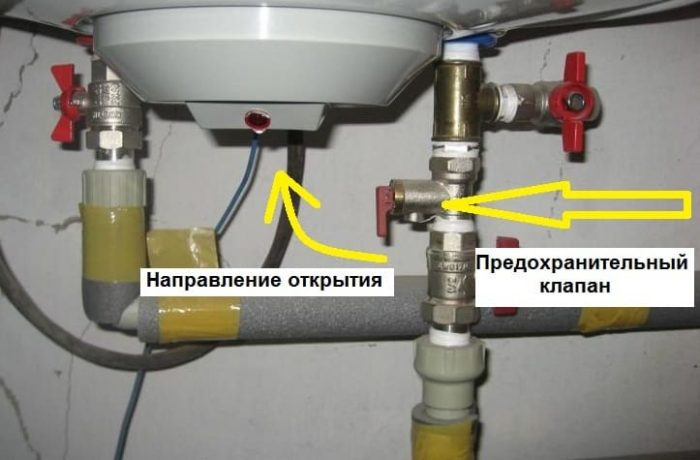
A ball valve and a tee with an outlet for an emergency drain hose are connected to the equipment.
-
Even lower there should be a protective valve, which has 2 functions: to exclude the draining of water from the tank, if it is turned off in the general water supply system, and to bleed water when the pressure in the boiler rises.
The final stage is the connection to the “hot” circuit: only a ball valve is installed on it.
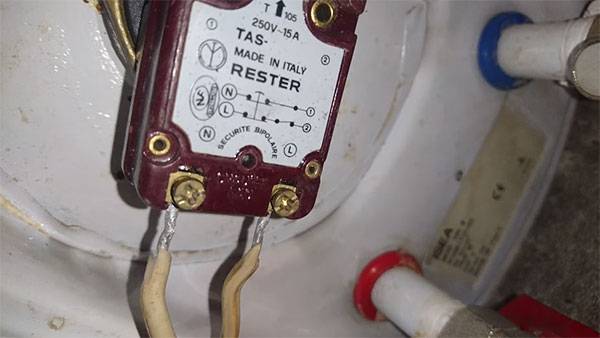
Wiring
The power range in which the boiler operates is 2.5-3.5 kW, so a separate line is allocated to prevent overheating of the network (3-core cable 2.5-3 mm). For powerful appliances, it is recommended to use a direct connection instead of the usual plug and socket contact. Schematically, it looks like this:
Instructions
Emptying the Termex water heater tank
The process of draining water from the Termex boiler consists of several stages:
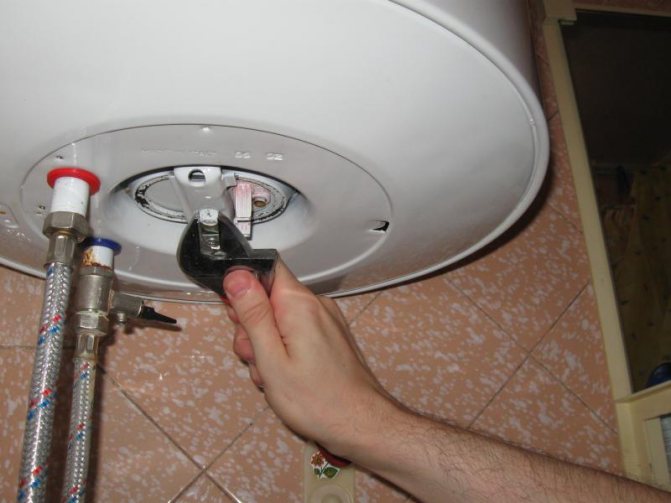
- First, prepare the necessary tools: a gas adjustable wrench and a rubber hose. Using the wrench, close the pipe for supplying cold water to the tank.
- To prevent a vacuum from forming inside the tank, open the tap on the mixer to supply hot water.
- Drain the water until the arrow on the boiler reaches zero. When this happens, close the hot water tap.
- In the place where cold water enters the tank, unscrew the check valve nut using an adjustable wrench.
- Connect the rubber hose at one end to the cold water supply pipe. Lead the other end of the hose into the sewer or into a previously prepared container. Disconnect the hot water outlet from the unit. When you do this, the water from the tank will flow through the hose.
- Loosen the nut that secures the hot water outlet. After that, air will begin to enter the boiler, and the tank will be completely emptied. It happens that water does not immediately begin to flow out of the tank, in such a case you need to blow into the hose.
- After draining the water, screw back all the unscrewed nuts.
Accompanying video
How to drain from Electrolux equipment
The advantage of Electrolux water heaters is their economical heating mode, which prevents the formation of scale on the inner surface of the tank. It is best to drain water from such boilers using a check valve, which is located on the inlet pipe. Consider the process step by step:
- First you need to shut off the supply of cold water to the tank by turning the corresponding valve.
- Then you should put a hose of a suitable diameter on the drain hole of the safety valve, and bring its other end into the prepared container or into the hole of the sewer drain.
- Then you need to open the tap for hot water on the mixer. The flag located on the side of the safety device must be raised so that water begins to flow out through the drain hole.
As with other water heaters, the Electrolux boiler must be disconnected from the power supply before starting work.
Emptying the Ariston heater
To empty the tank of the Ariston water heater, you will need not only an adjustable wrench and a hose, but also a straight screwdriver and a 4 mm hexagon. We will describe the process of emptying the tank in stages:
- After disconnecting the boiler from the mains, close the tap valve for supplying cold water to the tank.
- To equalize the pressure inside the unit, unscrew the hot water tap.
- Now you need to make sure that air gets inside the boiler. To do this, on the pipe supplying hot water from the boiler, open the tap.
- Connect a rubber hose of suitable diameter to the device, open the valve to drain the water and empty the tank completely.
Video hint
Proper emptying of the Gorenje boiler
The principle of draining water from a Gorenje water heater is similar to the cases described above, the whole process consists of the following steps:
- First, the boiler is disconnected from the power supply. Then open the valve on the hot water mixer.
- After waiting for the hot water to drain completely, a hose is connected to the cold water tap, the opposite end of which is led into the sewer drain or into any suitable container.
- By opening the drain valve and providing air to the tank, the boiler is emptied. This process takes about 10 minutes.
Water from the Gorenje heater can be drained through the safety valve. Many people use this simple method, but this process takes a very long time.



Why drain the water
If you do not drain the water from the boiler on time, the following problems will occur:
- Bacteria and pathogens (E. coli, salmonella, etc.) will start up in the water heater. This point is debatable, since microbes do not live in places with high temperatures.
- The tank will be covered with a coating that will be difficult to clean.
- Water will freeze, deformation of the boiler will begin.Due to constant pressure, hydraulic components and connections will suffer.
The first point needs to be considered in detail. The explanation is simple: when bacteria appear in the water, an unpleasant smell comes from it. Similar situations are observed in those who heat water up to 45 degrees Celsius and no more. You can do without draining the water: you need to set the maximum heating temperature. Then the bad smell will disappear.
If it was not possible to achieve the desired result, it is better to use another method: heat the tank to an extremely high temperature, repeat this procedure 4-5 times.
Other methods are ineffective, you will have to drain the water.
Some water heaters need drains by default due to the design and construction of the heating element (tubular electric heater).
Do I need to turn off the boiler if the water is turned off
In a situation where cold water is turned off when the water heater is on, only a small amount of liquid will flow out of the mixer, since there is no pressure.
If you leave the boiler on, the negative effects are minimized or completely eliminated due to the following:
- auto shutdown in case of overheating;
- the vessel is replenished automatically by the volume flowing from the disassembly point. There is no pressure, the container will not empty through the mixer, and the contents will not flow back due to the check valve. The water heater cannot remain empty, respectively, the heating element will not overheat;
- in extreme cases, at the bottom, due to the height of the inlet fitting, there is always a layer covering the heating element to protect it from dry operation.
But it is advisable to turn off the water heater from the mains if cold water is turned off so that it does not run idle and to eliminate even the slightest possibility of negative consequences.
It is impossible to use the water heater if the water and electricity are turned off, even within the limits of the balance in the tank. Internal pressure is not enough - the liquid is squeezed out by an external source of pressure, from the central water supply, which in this case is turned off.
Exceptions:
- liquid is available if the descent is made by the described methods;
- sometimes they put expansion tanks - then you can use the gradually cooling volume remaining in it.
Price
The Ariston lineup is very diverse. We also observe a wide range in terms of the cost of devices. From economy class models to very comfortable ones. Let's look at several samples from the 80 liter line, but at different prices.
Let's start with the humblest:
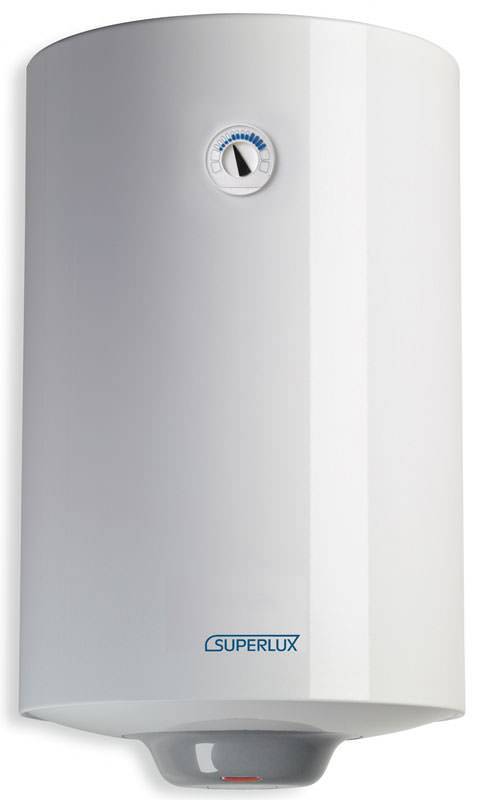
Ariston SUPERLUX NTS 80V price 5,650 rubles. Tubular heating element, maximum temperature 75 degrees, power 1.5 kW, number of heating elements - 1. Mechanical control, heating time 186 minutes. The inner coating is enamel. Maximum pressure up to 7 atmospheres.
Now consider a more expensive model:
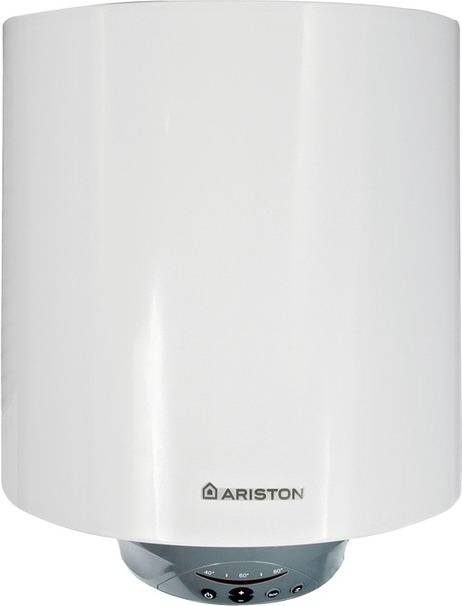
Ariston ABS PRO ECO INOX PW 80V price 11,046 rubles. Temperature up to 80 degrees. Power 4 kW. Number of heating elements - 2. Electronic control (buttons). The inner lining is stainless steel. Protection against switching on without water and overheating protection. Accelerated heating of water.
As you can see, there is a difference. Let's see an even more expensive model:
Ariston VELIS INOX 80 l price 22,990 rubles. The inner tank is stainless steel with special protection. Super fast water heating. Protection against: electric shock, switching on without water, power surge, bacteria. Ultra-precise temperature control. Automatic error diagnosis. Improved magnesium anode. Electronic control.Polyurethane foam insulation. Power 1.5 kW.





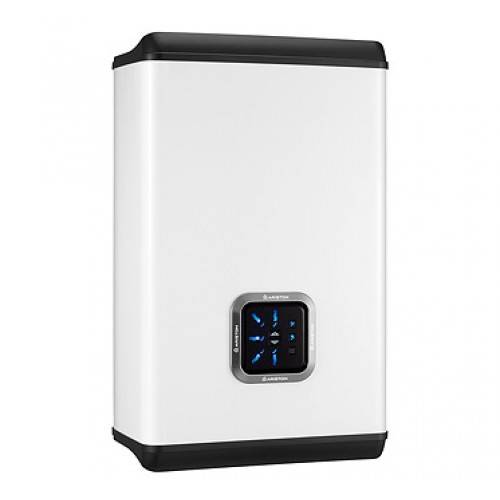
Here is such a difference. If any of the listed data is important to you, you can pay extra and buy yourself a more expensive device. If not, then the budget model is quite suitable for you.
The procedure for flushing and disassembling the boiler
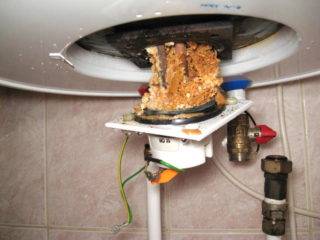 It may be necessary to clean the heating element from scale - with citric acid or special means
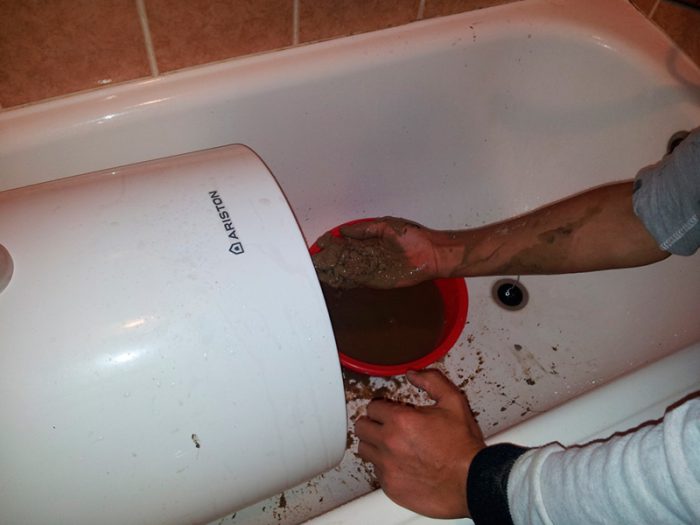
If a large amount of sediment has formed in the tank, it can be removed manually by yourself. To carry out the procedure, you need to remove the rubber gasket. It is designed to provide insulation between the tank and the flange. The gasket also needs to be thoroughly cleaned.
The walls and bottom are washed under pressure. The best way to do this is with a hose. To clean the water heating tube, connect cold water to the hot water outlet. Inside the tank, a tube designed to take hot liquid comes to the very top. As soon as water enters the tube, it is sprayed and flushes the walls. You need to run water in several stages to clean all the dirt from the bottom of the tank.
If, after cleaning, an unpleasant odor remains in the tank, you need to treat the walls with a solution of vinegar. To do this, impregnate a sponge with a solution, wind it on a long stick and wipe the insides.
The heater is also cleaned first manually. The top layer of plaque is removed with a knife, then the heating element must be soaked in citric acid to remove residues. To do this, you need a plastic bottle, a hole is made in it along a diameter that matches the heating element. Hot water and citric acid are poured into the bottle. The part is left in the resulting solution for a day. After processing, the softened layer is removed.
Once all cleaning activities are ready, the boiler must be assembled and checked for leaks. After that, you can turn on the device in the mains.