
- Recommended standards for an apartment
- Problems arising from lack/excess of moisture
- How can humidity be controlled?
- Enemies of humidity
- Interesting Facts
- Briefly about the main
- Measuring the degree of air humidity
- Special devices
- Alternative Methods
- The effect of humidity on well-being
- How to measure humidity
- Determination of humidity without devices
- measuring device
- Thermohygrometer
- Psychrometer
- Devices: hair and film
- Lowering the humidity in the room
- Norms
- What are the consequences of deviations from the norm of air humidity in the apartment
Recommended standards for an apartment
Since air humidity is an extremely important criterion for a comfortable living environment, there are special regulations that regulate its importance.
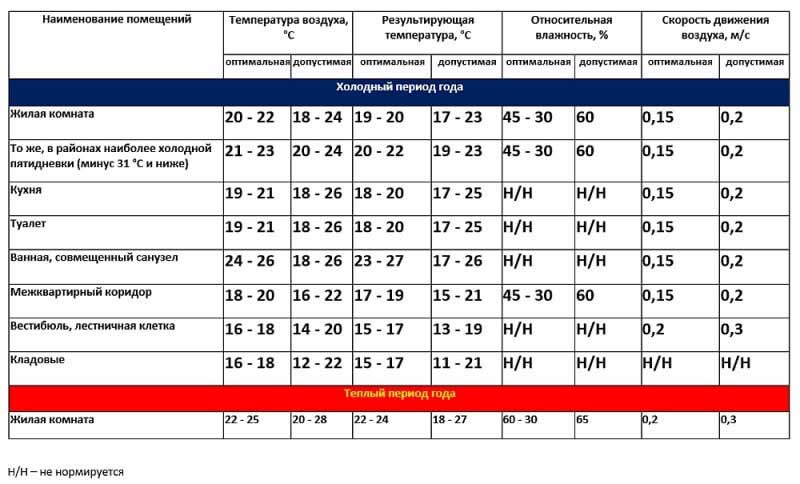
GOST 30494-96 indicates indicators of seasonal moisture content in housing stock: for summer, the boundaries of optimal air humidity are determined in the range of 30-60%, for winter - 30-45%.

The table below indicates the recommended ratio of the level of moisture content and air temperature in various residential and office premises
There is also a corresponding SNiP, according to which the rate of 40-60% applies for any time of the year.For humid areas, an indicator of 65% is allowed, and for very humid areas - 75%.
It should be noted that the standards are designed for construction organizations, most people define air with 30 percent humidity as dry.
Here are specific recommendations for the content of water vapor:
- in the bedroom;
- in the nursery;
- in the living room;
- in the office;
- in the kitchen and bathroom.
The bedroom is of great importance, since healthy sleep largely determines the state of a person and helps maintain immunity. The ideal degree of humidity for this room is 40-55%.
Experts recommend keeping the window in the bedroom always half open, which contributes to the natural regulation of humidity and hardening. An alternative option is to install a window ventilator.
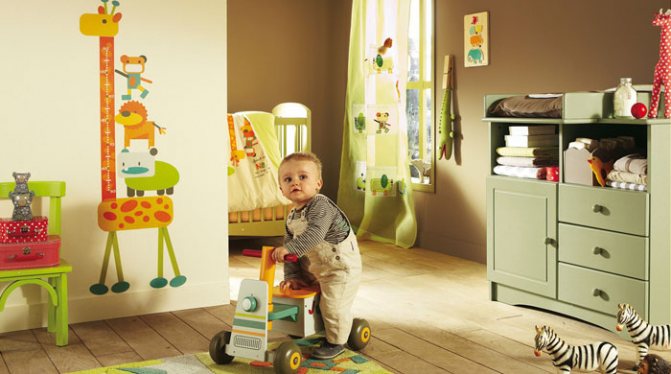
In the case of colds, it is desirable to increase the moisture level in the children's room to 70%, which will help moisturize the mucous membranes and speed up recovery.
Children's room. Here, a normal water vapor content is of paramount importance, since a fragile organism is more sensitive to heat and cold, and also more susceptible to infections. An indicator of 50-60% is considered optimal.
Insufficiently humid air dries out the nasopharynx, opening the way to colds, and is also harmful to the skin, causing peeling and even dermatitis. It should be borne in mind that the temperature in the nursery should not exceed 24ºС.
Living room. Under this room, as a rule, the most spacious room of the apartment is allocated, where the family spends several hours every day. The most comfortable level of humidity here can be considered 40-50%.
This standard ensures people's well-being, while also ensuring that electronic devices and expensive furniture, which is often installed in the living room, are in excellent condition.
Office/library. Here, a lower moisture level of 30-40% is acceptable. This is due to the fact that books and documents are usually stored in these rooms, as well as office equipment, which can be damaged by an excessive proportion of water vapor in the atmosphere.
The current humidity standards are designed only for residential premises. They do not apply to kitchens, corridors, bathrooms and other office spaces.
Kitchen and bath. The premises are characterized by an increased temperature and humidity regime, which negatively affects people's health, the state of equipment and furniture.
It is important not to forget about these zones - to bring the degree of water vapor content to 45-50%, exhaust fans are used
Problems arising from lack/excess of moisture
The humidity indicator reflects the degree of saturation of the air with water vapor. It is absolute and relative. In the first case, it is determined how many grams of moisture are contained in 1 cubic meter of air. In the second, the percentage ratio of the real amount of water in the atmosphere (absolute indicator) and the maximum possible at a given temperature is calculated.
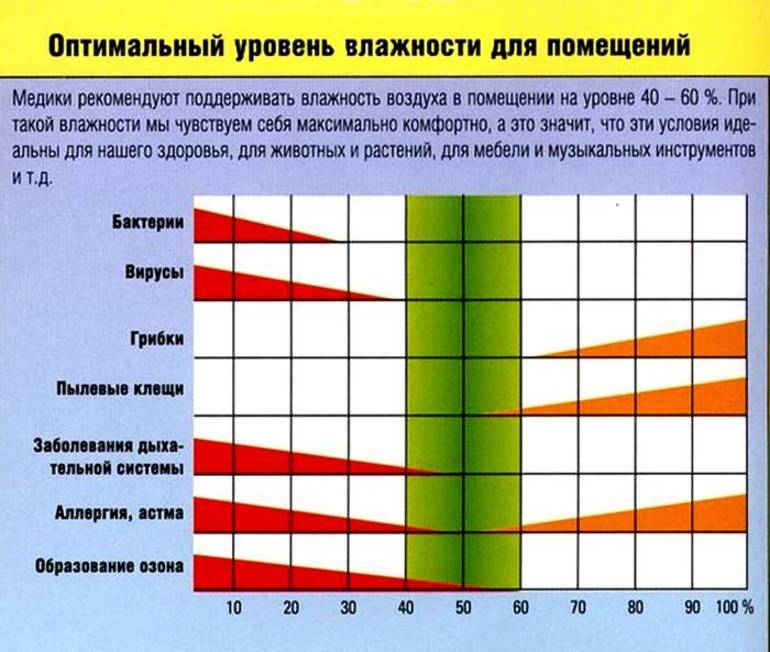


When using such a concept as the norm of humidity in an apartment, a relative indicator is implied. This parameter largely determines the comfort of the microclimate in the room. Both the person and the home environment suffer from excessive or too low humidity.
Dry indoor air provokes increased loss of moisture through the skin and respiratory tract. This can lead to such unpleasant consequences as:
- decrease in the elasticity of hair, nails and skin, accompanied by the appearance of microcracks, wrinkles, peeling, dermatitis;
- drying of the mucous membrane of the eyes, the symptoms of which are itching, redness, a feeling of "sand";
- thickening of the blood, leading to a slowdown in its circulation, weakness, headache, decreased performance, increased stress on the heart;
- an increase in the viscosity of gastric and intestinal juices, provoking a slowdown in digestion;
- drying of the mucous membranes of the respiratory tract, which results in a weakening of local immunity and an increase in the frequency of SARS;
- an increase in the amount of respiratory allergens in the atmosphere, which should normally be bound by liquid droplets.
 Excess moisture in the air creates acceptable conditions for the reproduction of mold, fungi, bacteria. As a result, homeowners may experience:
- respiratory diseases - chronic runny nose, bronchitis, asthma, allergies;
- a feeling of stuffiness or dampness in the room;
- unpleasant odor due to the multiplication of pathogenic microorganisms;
- increasing the drying time of the washed laundry.
Excessive or insufficient moisture has a bad effect on the condition of home furnishings. Plants dry out or begin to rot, wooden furniture and parquet are deformed or “shrink”, paintings fade, paper products lose their structure.
How can humidity be controlled?
It is necessary to choose methods of change depending on whether this parameter is high or low. Let's start with the first, that is, the humidity is high. What can be offered:
- organize frequent ventilation;
- install dehumidifiers;
- carry out the installation of hoods;
- constantly monitor plumbing and heating, plumbing and sewage pipes so that they are in a tight and good condition;
- use different types of heaters to heat the house;
- do not dry clothes inside.
Now about how you can increase the relative humidity:
- install an aquarium or a decorative type fountain in one of the rooms;
- use air conditioners and heaters as little as possible;
- install sprinklers, they are also humidifiers, or do it with a manual spray gun;
- more often to carry out wet cleaning;
- spread wet towels on heating radiators;
- plant as many houseplants as possible.
In the video, an allergist talks about the norms of humidity in rooms for a person:
Enemies of humidity
So, having dealt with the question of what humidity should be in a residential area, we turn to household appliances, which greatly underestimate this parameter. Let's start with the fact that all electrical appliances heat up and give off heat. And accordingly, they heat the air temperature inside the house, reducing humidity.
Especially it should be noted air conditioning, which everyone uses in the summer. Its principle of operation is based on the fact that the device takes humidity, condensing it on a heat exchanger located in the indoor unit. And this water is brought out into the street through a tray and a hose.
TVs, computers and other electrical appliances should be added here. But the most serious enemy to the humidity regime is the heating system at home. It can reduce this parameter to 20% in winter, which is already considered a critical value.
Many people try to solve this problem by ventilation.But not many people know that there is little moisture in cold air. And if you let it into the rooms, it heats up, expands and becomes dry.
In the video, a specialist talks about humidity, and how to deal with it:
Interesting Facts
It is a well-known fact that fog is 100% humidity. But this phenomenon of nature is possible only at a temperature of 0 °C. If the fog is placed in a room with a temperature regime of +22 ° C, then the humidity in such a room will be only 23%. This shows well how temperature changes humidity.
Dry air seems colder to us. And vice versa. It's all about our bodies, which sweat in hot weather. The latter is moisture, which performs the functions of thermoregulation of the body. That is, sweat makes our skin moist, thereby removing heat from its surface. The same thing happens in winter. Only in this case dry air cools the skin. Therefore, this air seems colder to us.
Note that a 2°C rise in temperature will result in a 25% decrease in humidity. Therefore, do not heat houses strongly
Room temperature, namely + 18-22 ° C - the optimal mode in which the humidity is also in perfect condition. That is, adhering to these two parameters, you can save a lot on heating your home in winter.


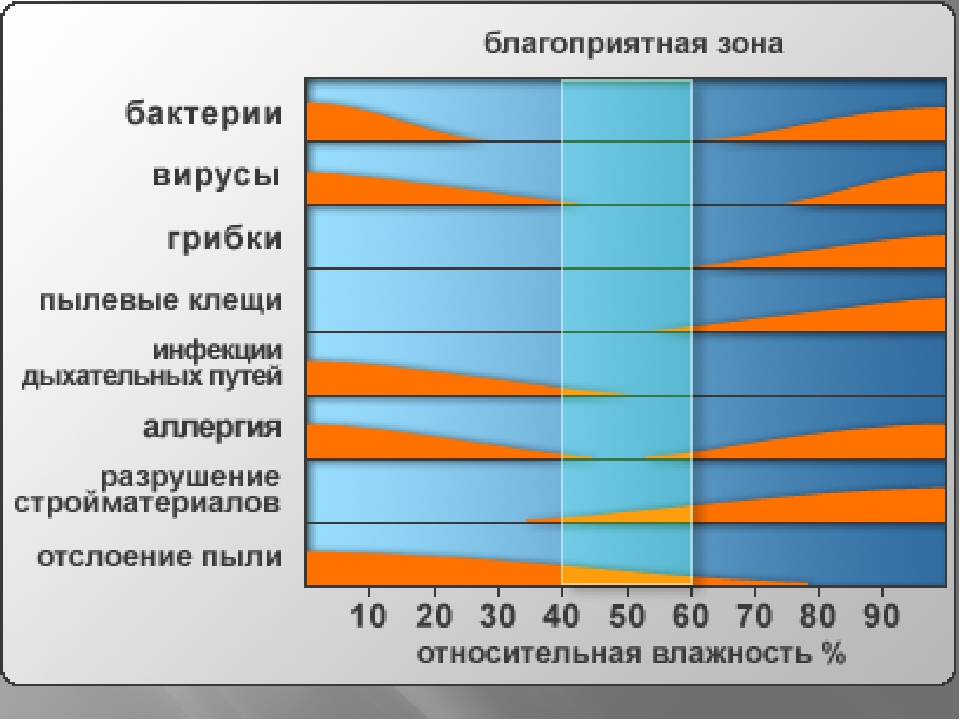

How does a person feel at different humidity levels?
Briefly about the main
The optimum air humidity in residential premises is 30-60%. In children, it is better to withstand 70%. This also applies to rooms where asthmatics and allergy sufferers live.
The simplest device that measures indoor humidity is a psychrometric hygrometer, also known as a psychrometer.
It is useless to ventilate rooms in winter to increase humidity in them. Because there is little moisture in cold air. Once inside the house, it heats up, becoming dry, which helps to reduce the humidity regime.
Humidity's biggest enemy is the heating system at home. But this indicator is also affected by all electrical household appliances.
To increase this figure, it is recommended to install household humidifiers, since they are presented in stores with a huge assortment.
Measuring the degree of air humidity
Special devices
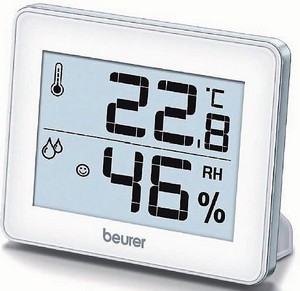 The humidity level is measured with a special instrument called a hygrometer. It shows the value of this indicator in percentage terms. The most optimal level is 40 - 60%. In such conditions, a person feels good, and flowers in the house also receive sufficient moisture, wooden furniture does not dry out.
Using a hygrometer, you can get an answer to the question - what humidity can be in the apartment with the central heating system running or the heater turned on? Typically, this figure is less than 35%.
In such situations, it is important to take appropriate measures, such as buying a humidifier
Alternative Methods
There are also alternative measurement methods, but they are not as accurate as a hygrometer. For example, you can fill a glass with water, cool it in the refrigerator for 5 hours and put it in the center of the room. After 5 minutes, you need to look at the glass:
- If the condensate that has appeared has had time to dry - the humidity is lowered, if it began to drain in trickles - this indicator is increased.
- If the walls of the glass remain foggy, we can conclude that the microclimate in the room corresponds to the “norm” value.
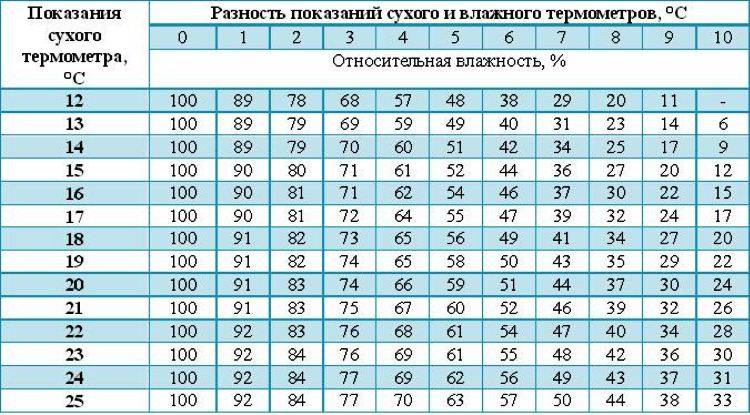
Allows you to evaluate the level of humidity in the room using a method such as the Assmann table. It is necessary to fix the value of the air temperature, which is shown by the thermometer. Then you need to wrap the thermometer in a wet cloth, wait 5 minutes and see how the temperature has changed.
The Assmann table contains a vertical column with the readings of a dry thermometer, and horizontally - the difference in indicators when measured with a wet thermometer. At the intersection of the two readings is a figure that shows what is the current humidity in the room.
The effect of humidity on well-being
It has long been noticed that people are extremely sensitive to the content of water vapor in their homes. With a low or high moisture content in the air, the inhabitants of the apartments feel uncomfortable. The most pronounced symptoms are weakness, fatigue, headache, decreased immunity.
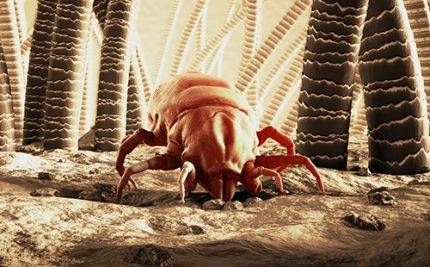 With low humidity, dust accumulates in the air. It creates conditions for the reproduction of the smallest dust mites that contribute to the development of allergies.
A dry microclimate contributes to the accumulation of static electricity, due to which the smallest dust particles accumulate in the air. This is an excellent environment for the prosperity of bacteria and microscopic organisms that cause various diseases.
In such rooms, people often experience dry skin, which leads to dermatitis, brittle hair, and the appearance of early wrinkles. Drying of the mucous membranes contributes to the development of frequent colds, as well as eye diseases.
Due to the slowdown in blood circulation, the load on the heart increases, which can lead to increased pressure, ailments of the cardiovascular system.
Humid microclimate in the house is no less dangerous. In this case, favorable conditions are formed for the prosperity of bacteria, the appearance of black mold, fungi, which organize colonies on the wet walls.
The harmful substances emitted by these unicellular creatures can lead not only to the development of allergies, but also to acute poisoning. Its first symptoms are weakness and dizziness.
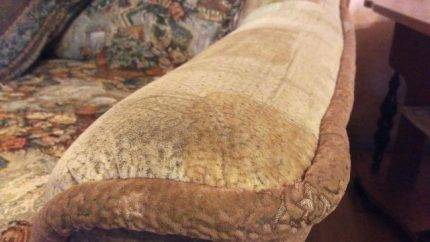 High humidity has a negative impact on people's health, as well as on the condition of furniture and household appliances, which quickly fail.
A long stay in a damp room threatens the development of all kinds of diseases - from the banal acute respiratory disease, to rheumatism and tuberculosis. With high humidity in living spaces, there is a lack of oxygen, which increases the load on the heart and leads to diseases of this important organ. It is especially dangerous if an increased rate of water vapor is combined with high air temperature, which can cause heat stroke or even a heart attack.
It is especially dangerous if an increased rate of water vapor is combined with high air temperature, which can cause heat stroke or even a heart attack.
How to measure humidity
Relative humidity in the room is measured using special instruments - hygrometers. They have a different design and principle of operation:
- Electronic. Usually combined with thermometers to simultaneously measure the temperature in the room.In them, a thin layer of electrolyte is applied to the inner plate, through which the voltage passes. The results are displayed on the dashboard.
- Mechanical. Cheaper and easier-to-use devices, however, can give a measurement error of up to 8%. They work without a power supply, are available as desktop or wall-mounted. They do not have a digital display, they are equipped with a dial and an arrow.
There are several ways to determine the saturation of air with moisture, not all of them are popular, but there are:
- Weighted or absolute. It is a device that determines relative humidity by absorbing it. With the help of special tubes with a chemical composition, he takes measurements. Do not use at home.
- Hair. This type of hygrometer is used only in laboratories, and then only because its principle of operation is based on the study of a human hair.
- Film. It also belongs to the category of laboratory instruments. The main mechanism is a special film, which, depending on the level of humidity, is stretched or, conversely, compressed. It is most effective to use it in the winter season.
- Electronic. This type of device is most often purchased for household measurements of humidity. Using it is quite simple, as the mechanism immediately displays the final measurement result on the touch screen.
- Psychometric. The most accurate type of moisture meter. Often it is purchased for work in industrial, laboratory premises. Also, many "civilian" users leave their choice on psychometric hygrometers because of their relatively low cost and extreme accuracy.
To determine the norm of air humidity in an apartment, an inexpensive mechanical hygrometer is suitable. For domestic use, certification in the metrological service is not required.
It is important to pay attention to the temperature range of use - the maximum value is 80-120 degrees. When using in a sauna or bath, you must choose the extreme option
Determination of humidity without devices
You can independently find out quite accurately the humidity in the room without having instruments. There are two options for this.
When measuring in the first way, you need to measure the air temperature in the room with a thermometer and record the readings. Then take a small piece of a cloth or bandage, wet it and wrapping the tip of the thermometer, leave it for 5 minutes.
Psychometric table for determining the relative humidity of the air
In the second case, you need to pour a glass of water and cool it in the refrigerator to + 3 ... + 5 ° C. After that, transfer the glass to a room away from heating appliances and leave for 10 minutes. We look at the glass if:



- The glass is dry. The humidity in the room is insufficient.
- There is condensation on the walls. Humidity is fine.
- Lots of condensation and leaks. The humidity is too high.
Increased condensation on a glass with drips indicates high humidity
measuring device
Today there are several types of household device for measuring air humidity in rooms or apartments. How is air humidity measured in rooms and determined? Let's take a closer look at all types of hygrometers.
Thermohygrometer
Air humidity can be measured with a thermohygrometer.Let's take a look at his work. It has a complex system, so it determines not only the level of moisture, but also the temperature value inside the room. Also, in addition, this apparatus records the values of the state of moisture and the temperature value at various points. That is, he compares the state of two indicators in the place where he is at this moment, and in the previous room.
The device for determining the humidity of the air synchronizes the values that it received at various points in the building. According to these readings, the thermohygrometer gives a total result of the humidity and temperature values. What technical characteristics does it have?
Consider the technical characteristics of the thermohygrometer. The length of the wire is 150 centimeters. The readings are displayed as percentages, the range of which is from 0 to 90. You can also purchase models of thermo-hygrometers that are wireless in stores.
These models have an additional function: when the condition of the moisture level in the room is critical, the measuring device gives a signal that notifies the owner of a bad air situation. It is convenient to use this device (devices) or a meter, measuring the humidity in the apartment.
With this hygrometer, you can measure temperature and humidity. You will literally participate in changing the home "weather".
Psychrometer
This room apparatus is fully called a psychrometric hygrometer. How to determine the humidity in the apartment using a psychrometer? They have two thermometers. One thermometer is called "dry", which performs a standard job - measuring the temperature in the room.
The other thermometer is humid because it is inside a water vessel and is wrapped in a cloth wick. It gives an indication of the temperature of the wick, which is wet. The value of this temperature is obtained by evaporation of moisture. If the humidity indicator is low, then evaporation is carried out much faster. And vice versa.
Thanks to the psychrometer, you can get the necessary information about the state of your room, that is, determine the humidity of the air. Today, a psychrometer is often used to monitor moisture content.
Devices: hair and film
The hair device for measuring the humidity of the air in the room is quite easily arranged. Why is it called that? The work of this type of hygrometer is carried out on the basis of synthetic hair, which is defatted. How to find out the humidity of the air on it? How to measure the humidity in the apartment thanks to the hair device?
From a change in the state of the air, this synthetic fat-free hair also changes its length. It is stretched between the spring and the switch end. Due to the oscillation of the synthetic hair, the arrow moves along the plate with divisions (dial), which gives the general values of the moisture level in the room. Let's discuss the "insides" of the device.
This air humidity meter has a large range of values from 0 to 100. Therefore, the information about the state of the air flow will be the most accurate. Its main feature is the simplicity of its work. They are easy to handle, so you won't have to deal with it during use. This meter can be placed on the wall in the room - it's quite convenient.Measure and find out the data on the condition of the apartment, which will always be in front of your eyes.
There is another type of hygrometer - this is a film hygrometer. How to check the humidity in the apartment with it? The film hygrometer is different, therefore, the principle of operation is different from the hair hygrometer. The main distinguishing feature of a film hygrometer is the presence of an element that is sensitive. This component in the device is an organic film. The principle of operation - the organic film can stretch, or vice versa, shrink - it depends on the state of humidity in the house. The humidity value is also displayed on the dial.
If there are relatively low temperatures in a certain humid room, then it is recommended to use a hair or film hygrometer. Other devices are simply not suitable for determining the level of humidity in the room, they are practically not used.




Lowering the humidity in the room
If the humidity level in the apartment is above the norm, you can purchase a special device - an air dryer. It drives moist air through the “evaporator”, where the temperature difference (in the device the temperature is lower than in the room) turns moisture into condensate. Drops of condensate flow into a special container. The air is heated again and enters the room. Thus, excess moisture disappears from the room.
When buying a dehumidifier, the main focus is on its performance, which is calculated in "liters per day". A household dehumidifier can absorb 12 to 300 liters of water in 24 hours
Dehumidifiers are portable and stationary. Portable can be used in different rooms. Stationary mounted in the wall and can not be moved.However, they are more efficient.
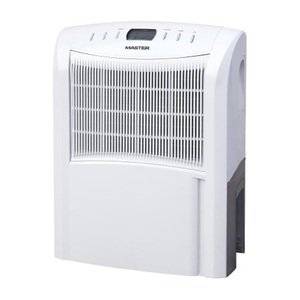
the device turns off without the participation of the owner.
In a small room, you can reduce the humidity with the help of moisture absorbers. The device includes a special tablet that adsorbs water from the air. It is designed for an area of up to 20 m² on average. The inconvenience of the absorber is that the tablet needs to be changed frequently. The advantage is in the absence of noise, compactness and price. Especially the moisture absorber is suitable for those who have humidity - a seasonal phenomenon.
Norms
What level of humidity is optimal depends on the purpose of the room in the house:
- non-residential room (dining room, living room) - 40-60%;
- bedroom of adult family members - 40-50%;
- children's bedroom - 45-60%;
- dark room, office and other similar non-residential premises - 30-40%;
- kitchen - 40-60%.
GOST has not established the optimal level of humidity for the bathroom, toilet, pantry, corridor.
Since the climatic conditions are noticeably different in summer and winter, the norm of air humidity also changes:
- warm months - 30-60%, while the permissible maximum is 65% (if the region is in a climatic zone characterized by high humidity, then the norm increases to 75%);
- cold months of the year - 30-45%, the maximum allowable level - 60%.
As a rule, household items are suitable for the same level of vapor in the air as a person, but there are some nuances. Plants are more picky and generally require more moisture in the air.
Air humidity standards for categories of objects and plants:
- antiques, furniture - 40-60%;
- books - 30-65%;
- household appliances - 45-60%;
- plants of the tropics growing in an apartment - 80-95%;
- subtropical flowers - 75-80%;
- other plants - 40-70%.
What are the consequences of deviations from the norm of air humidity in the apartment
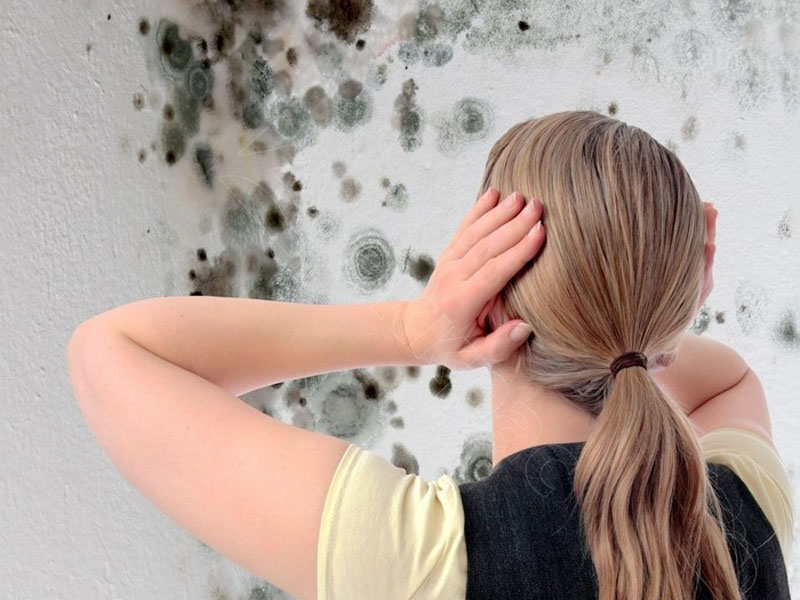 Mold is an enemy not only to repair, but also to health
It would seem that you think there is some kind of humidity there. It's not like water is constantly flowing from the ceiling, which means you can live, and don't bother too much. Yes, air humidity is an intangible value, you cannot touch it. But you can feel the consequences of its violation:
- drying of the mucous membrane - discomfort and an increase in the likelihood of diseases;
- high humidity increases the risk of bronchial diseases;
- sleep disturbance and general immunity.
These are only three consequences that follow the systematic violation of humidity in the apartment. Now is the time to remember the hateful mold that so loves to appear on walls and furniture. But what is most terrible is that there is no way to cope with it by local methods. Only the normalization of humidity. Also, do not forget about the constant temperature changes in rooms where humidity is not stabilized. And this is another unpleasant factor with which it is not easy to “get along in the neighborhood”.



