
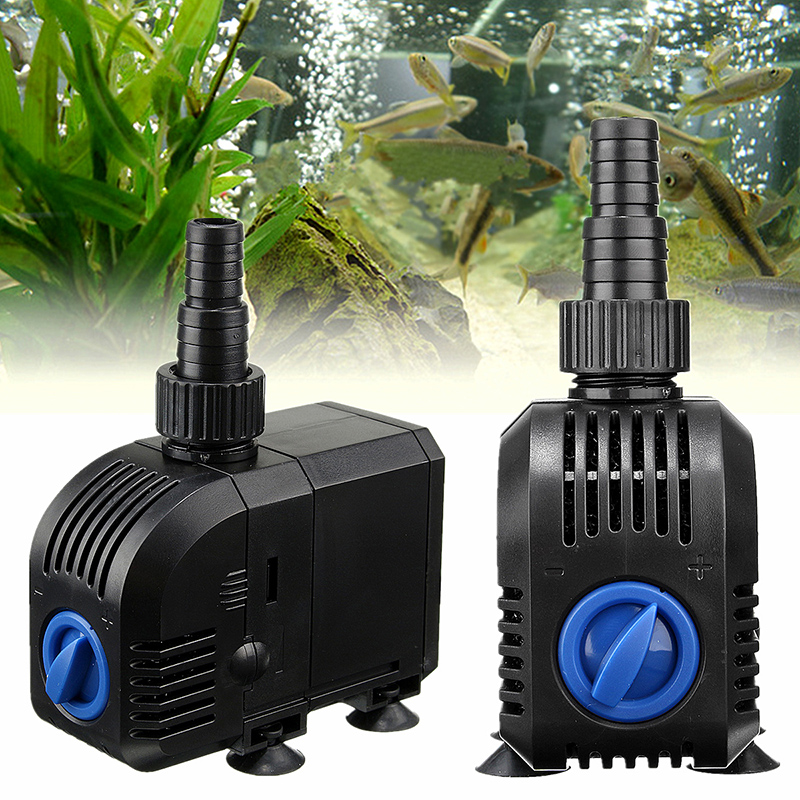
- Characteristics of surface pumps for water
- Types of pumps for waterfalls and fountains
- Submersible pumps
- Surface pumps
- Fountains and fountain installations
- Surface type units
- Self-priming appliances
- Fountain type pumps
- Pumping station
- Fountain lighting
- Fountain pump: purpose and principle of operation of the device
- Schemes and drawings
- small fountain
- Room and desktop
- Pebble
- Near the wall
- fountain cascade
- Tiffany
- Tulip
- Ring
- singing
- From a bath or other improvised materials
- Materials for creating a water pump
- Equipment types
- Characteristics of the pump for the type of fountain
Characteristics of surface pumps for water
A surface overall or mini-pump is designed to draw liquid from a source that is located at some distance from the device. Such units can also be used for pumping water from pits and basements during construction or repair and restoration work. They are often used for watering a summer cottage, for an irrigation system, or for increasing pressure in a centralized water supply network.
The surface unit can be located in the basement, which must be dry and warm, in a separate outbuilding or in a caisson near the head of the well. Its bottom should be located 0.5 m below the freezing level of the soil.
Surface pumps are capable of lifting water to a height of 7-8 m, which depends on the design of the unit. They are characterized by high power and performance. Surface pumps are small in size, which ensures ease of operation. Differ in mobility and inexpensive cost. Surface equipment can pump water from a shallow source. It is more durable due to the fact that the metal structure does not come into contact with water.
A mini-pump for pumping water 220 Volts can be supplemented with automation, which will allow it to work offline. In order for the unit to be able to lift water from a considerable depth, the pump is equipped with an external ejector.
 The surface pump for pumping water should be located at some distance from the source.
Among the shortcomings, one can single out the formation of a high level of noise during operation, a small depth of immersion and high sensitivity to pumping contaminated liquid, which will lead to rapid wear of the internal mechanism of the unit.
Note! Some models of surface pumps need to fill the line with water to start the unit.
Types of pumps for waterfalls and fountains
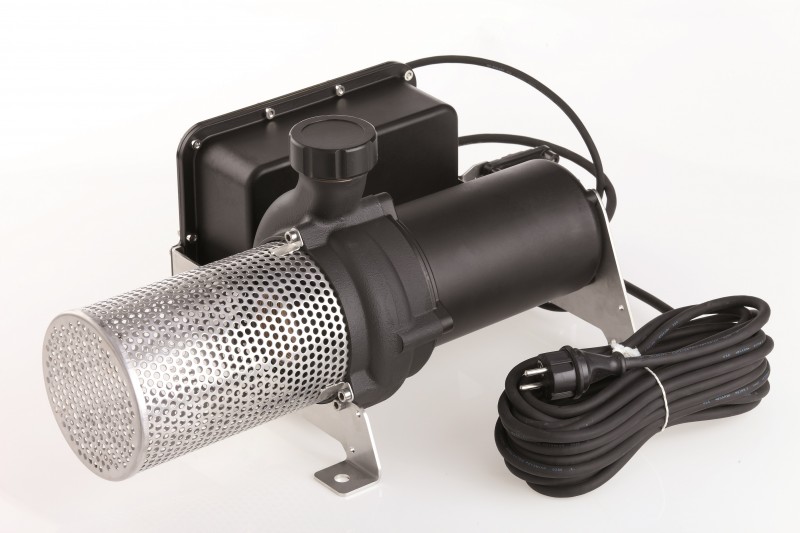
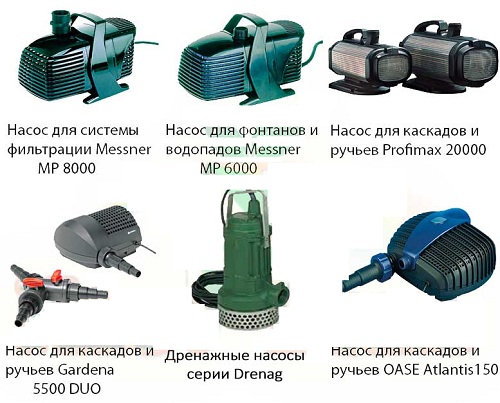
All pumps for the fountain are divided into submersible and surface. The main difference is their location. A submersible pump for a fountain is located directly in a water tank or at the bottom of an artificial reservoir. It is sewn into a waterproof case. A surface pump for a fountain is placed in the immediate vicinity of a reservoir or water structure. It is not protected from moisture, it is necessary to build a shelter from water and precipitation for it yourself.
Each type has its pros and cons.
Submersible pumps
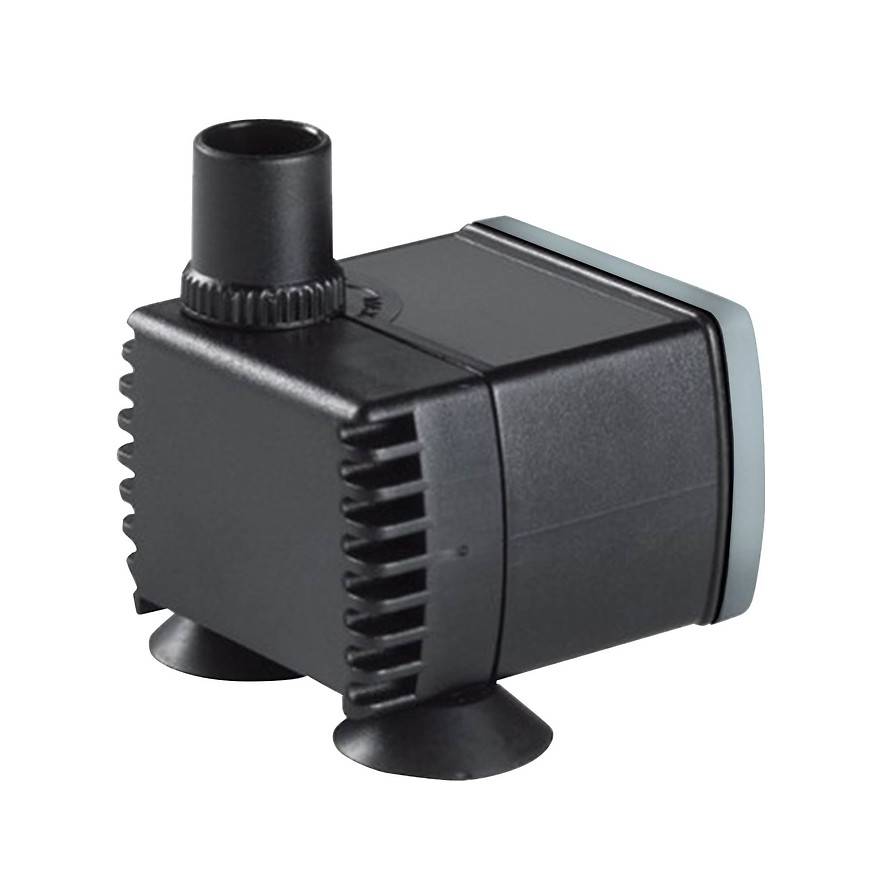
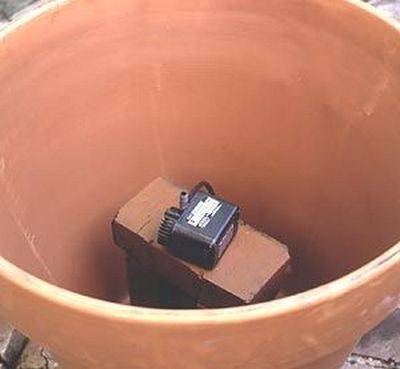 Most often these are light compact devices. If the water supply comes from the tank, they are simply installed on the bottom, where special suction cups prevent the unit from moving during operation. If the submersible pump is designed for a pond, then you need a small pedestal, which is easy to make from several bricks or a concrete elevation. The need for this is due to the fact that silt and dirt always accumulate at the bottom, clogging the filter mesh and the suction valve.
Pumps completely immersed in water are characterized by quiet operation, less energy consumption. On average, during their operation, 30% less electricity is consumed than during the operation of a surface unit. Since the nozzle is located close to the motor, power loss is minimal.
The cost of submersible structures is noticeably lower than that of surface structures.
This is especially important when building a small fountain. It is easy to install it yourself.
But the maintenance of such a pump cannot be called easy - for cleaning and repair, you need to remove all the water from the tank or drain the pond. In addition, for the winter it must be removed and put away for storage.
So, the advantages of submersible pumps:
- cheapness - models of low power are quite affordable for any summer resident;
- ease of installation - installation can be done independently;
- high efficiency - the submersible pump consumes less electricity;
- noiselessness - you can enjoy only the sound of pouring water, without being distracted by the hum of the motor;
- invisibility - when installing such a pump for a fountain, there is no need to look for a place for it, and then mask the unit;
- for small fountains or waterfalls, you can choose a compact model.
The disadvantages include:
- complexity of maintenance - in order to make repairs, you need to release water;
- the need to dismantle for the winter.
Surface pumps
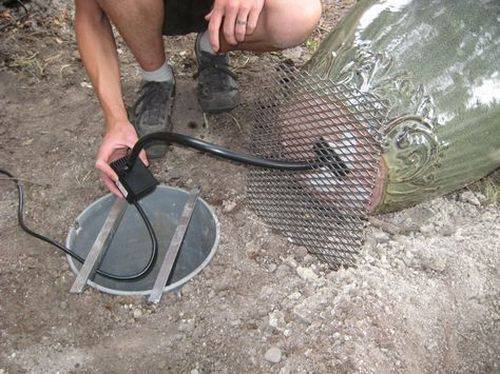 If a small fountain does not satisfy you, and you set out to create something grand, provide a pond with several fountains and waterfalls, or turn the site into a chain of hydraulic structures, you need a surface pump. It is chosen when you need to connect several objects to one pump.
Such a unit will be more bulky and expensive, it should be located in a dry, accessible place in the immediate vicinity of the reservoir, and besides, it will need to be somehow disguised so as not to spoil the landscape. But with the help of a surface pump, you can arrange a real water extravaganza for the pond.


The device will be easy to maintain, and most models do not need to be dismantled for the winter. But even if, for reasons of safety or security, it will need to be removed to the premises, this will not be difficult to do. The system is safer and easier to operate, the cables feeding the pump do not require additional protection.
Surface pumps located near artificial and natural reservoirs are less sensitive to pollution by silt, clay, and bottom organic matter. To take water into a natural or man-made reservoir, only a hose connected to a pipe is lowered. It can be equipped with a filter or a fine mesh valve.
True, the unit located on the surface needs protection from moisture and overheating in the sun, a special protective casing is needed. It will also reduce the noise emitted by the motor. Of course, you will have to disguise the structure so that it does not spoil the appearance of the site.
Advantages of surface-mounted pumps:
- ease of repair and maintenance - no need to release water from a reservoir or reservoir;
- the ability to connect multiple objects;
- less sensitive to pollution;
- Greater safety - no need for additional insulation of power cables.
Flaws:
- high cost - surface pumps are much more expensive than submersible ones;
- bulkiness;
- noise - a unit located on the surface needs additional sound insulation;
- the need for additional protection against precipitation and overheating;
- camouflage difficulties - you need to somehow fit the casing into the surrounding landscape or cover it with plants or additional structures.
Fountains and fountain installations
Fountains are designed to give the pond on the land an unusual look or murmur. There are no rules for their choice. But it should be borne in mind that the height of the jet in the fountain should not exceed the radius of the reservoir itself. Otherwise, when the wind drops, they will fly outside the fountain, forming puddles. The height of the jet is determined by the pressure, which is created by the fountain pump. There are models where this parameter is controlled by a switch or remote control.
There are two main groups of water-emitting systems:
- fountains where water plays a dominant role;
- sculptural groups, artistic design is of primary importance.
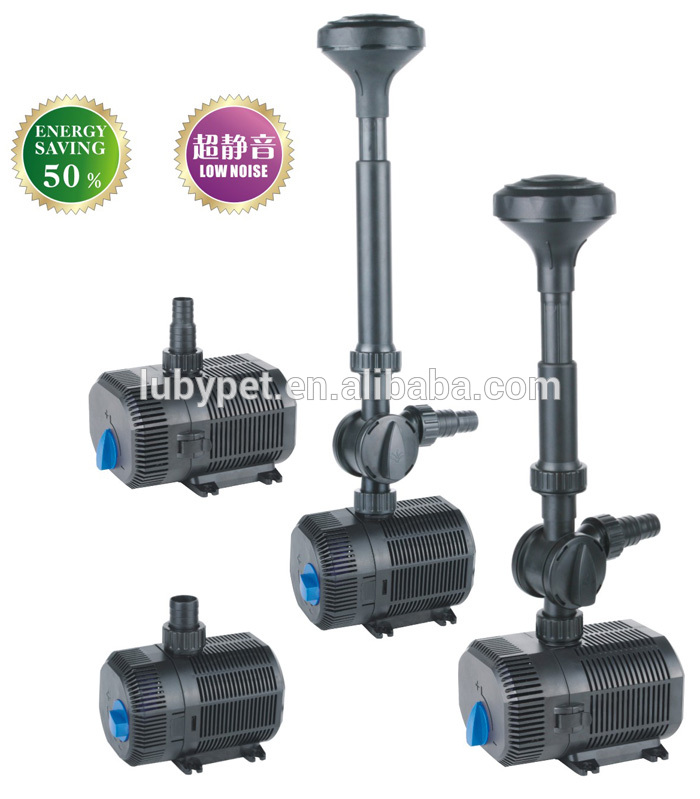
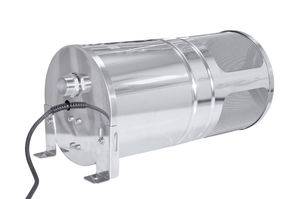 In most cases, fountains are submersible. They consist of a pump with a vertical nozzle and special nozzles that give the jet unusual shapes.There are many types of nozzles, some create a water figure in the form of a “lily”, others create a “volcano”, “geyser”.
Some nozzles are installed above water, others under water, and some require strictly defined parameters for installation.
A variety of submersible fountains are floating. A pump is installed at the bottom of the reservoir, and the nozzle is mounted on a float, and water is supplied through a flexible connection. The upper part of the structure, due to gusts of wind, moves throughout the reservoir, so the fountain constantly changes its location.
A variety of such fountains are wall-mounted. During their installation, the walls of houses, hedges and gazebos are used, along which water flows into the bowls located below. In this case, a waterfall pump is used.
Surface type units
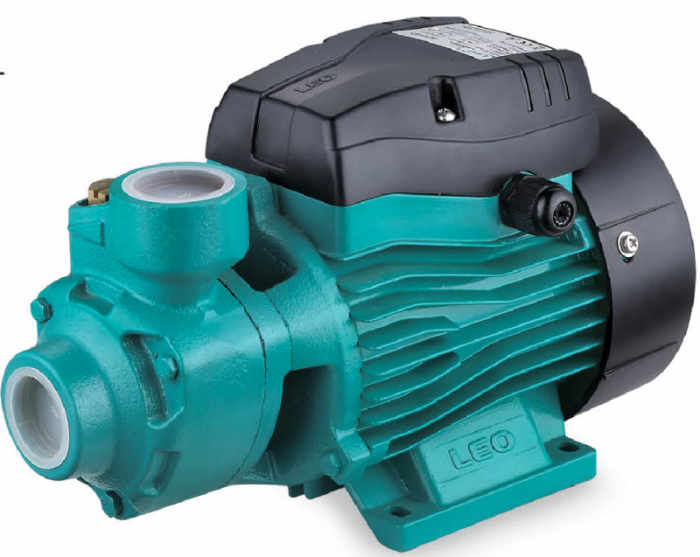
Surface-type pumps are most often used in everyday life for summer cottages, country houses and cottages. They are suitable for irrigation system, watering the garden and raising the pressure in the water supply system.
These water pumps are small in size, easy to operate and highly economical. If they are equipped with additional automation, then the devices will work as autonomous pumping stations. And when equipped with a remote ejector, the unit will be able to lift water from a considerable depth.
According to the method of transporting water and the device, such devices are divided into the following types:
- Vortex - these are units with a special shape of the impeller blades, which contributes to the characteristic rotation of water in the space between the blades. Due to the concentration of eddies in one channel, it is possible to achieve a powerful rotational movement of the flow. As a result, the pressure of such a unit is 5 times higher than that of its centrifugal counterpart.These are compact devices with an affordable price. However, they can only work with clean water environments.
- Centrifugal pumps have blades that scatter water along the walls of the working chamber. These are more massive units with silent operation.
Self-priming appliances
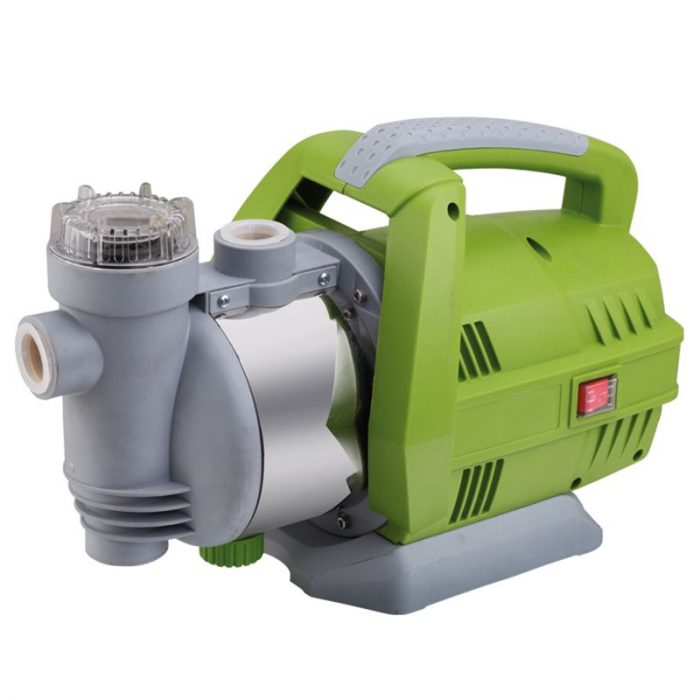
These types of pumps are highly valued for their simplicity, low maintenance and ease of use. Depending on the presence of an ejector device, the units are:
- ejectorless. Liquid is drawn into them due to the special hydraulic design of pumping equipment;
- ejector. In this device, the rise of water is carried out by forcing a vacuum in the ejector.
This equipment can be used for:
- watering the garden and garden;
- ensuring drinking and household water supply of a country house;
- for lifting liquid from clean or slightly polluted surface reservoirs, wells or wells.
The main disadvantage of non-ejector units is a small lifting height, not exceeding 9 m. However, units with an ejector can easily cope with this problem. Self-priming pumps are difficult to operate in the cold season, since all water supply mechanisms are on the surface and need to be protected from freezing.
Fountain type pumps
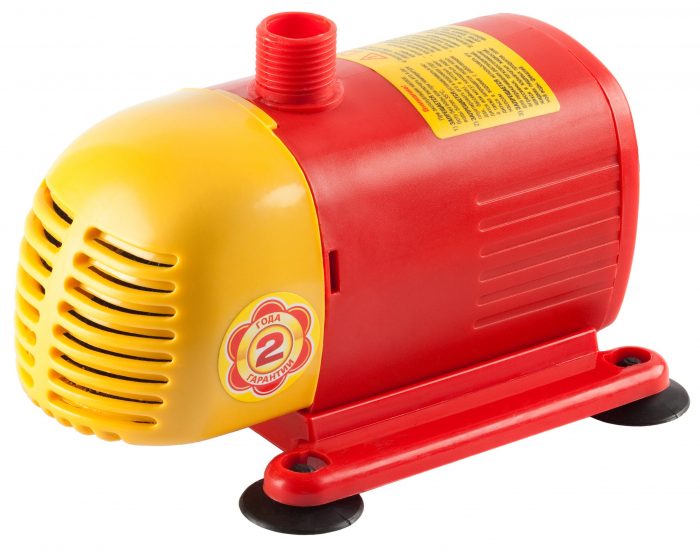
The fountain type of pumping equipment has found wide application in landscape design. With the help of such units, mini ponds, decorative ponds, streams, fountains and cascading waterfalls are equipped. Some models of such equipment are supplemented with a liquid filtration function, so they can work with sea water.
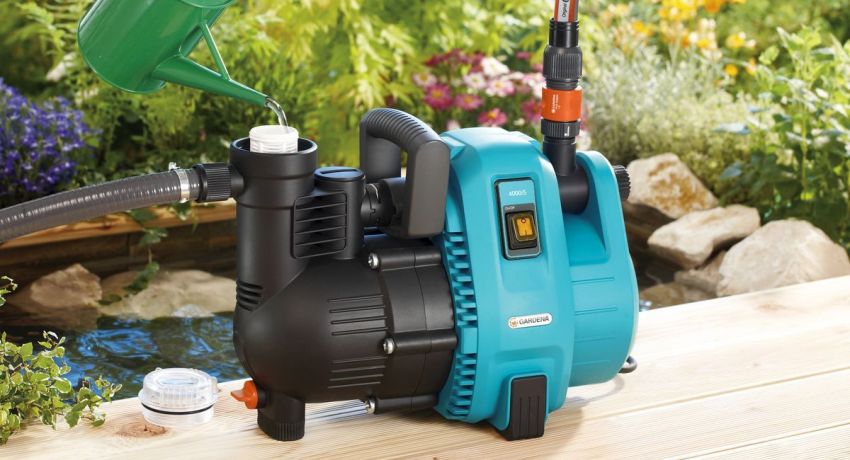


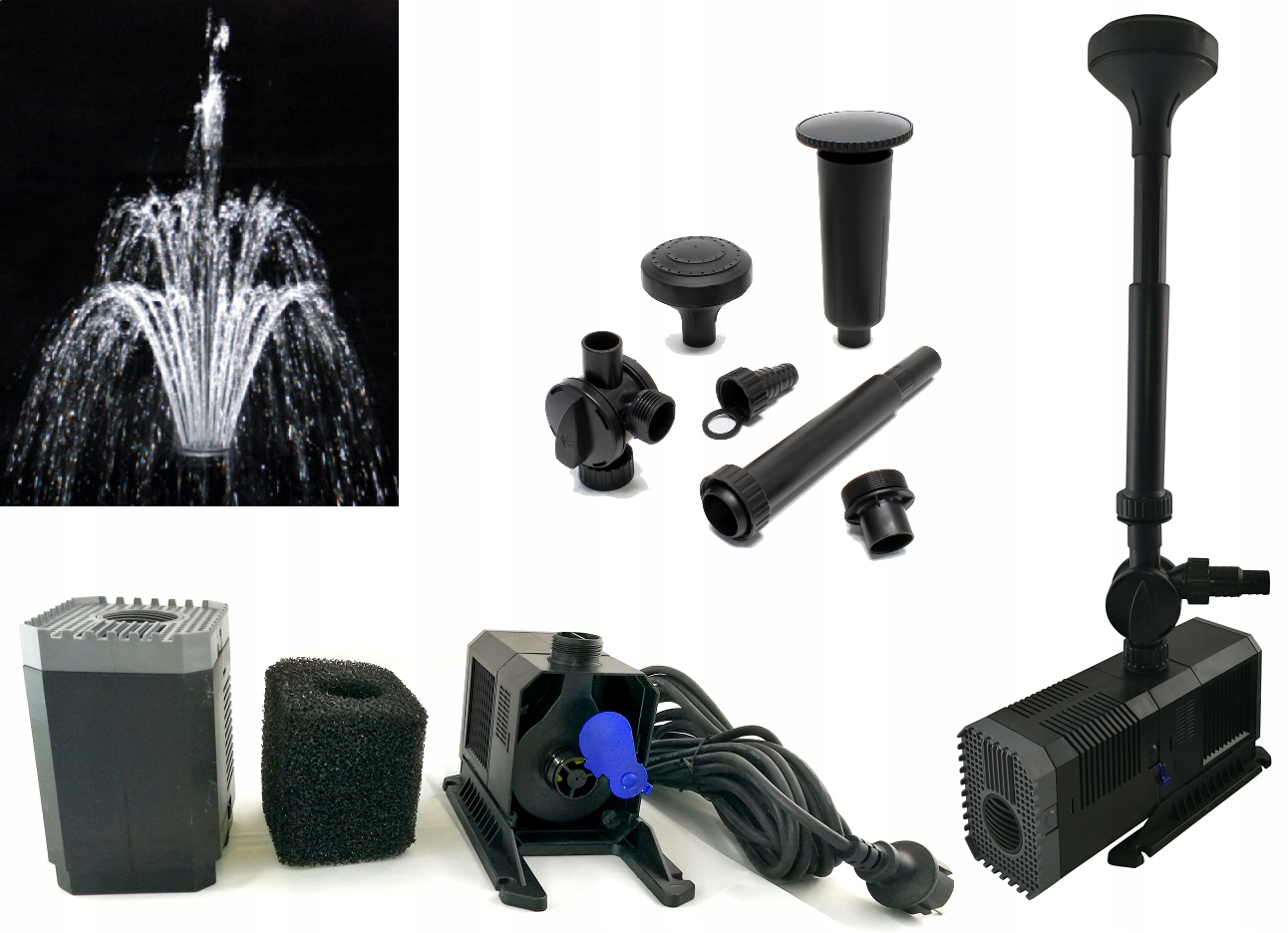

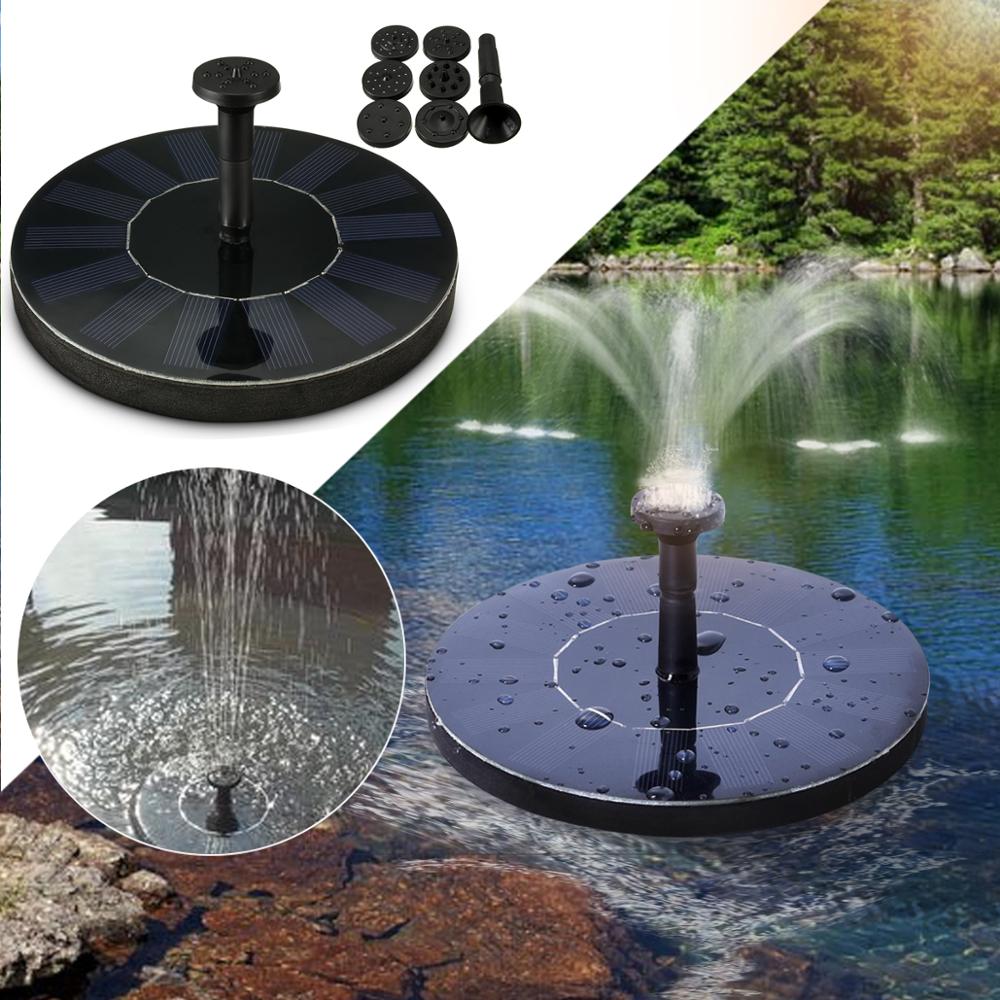


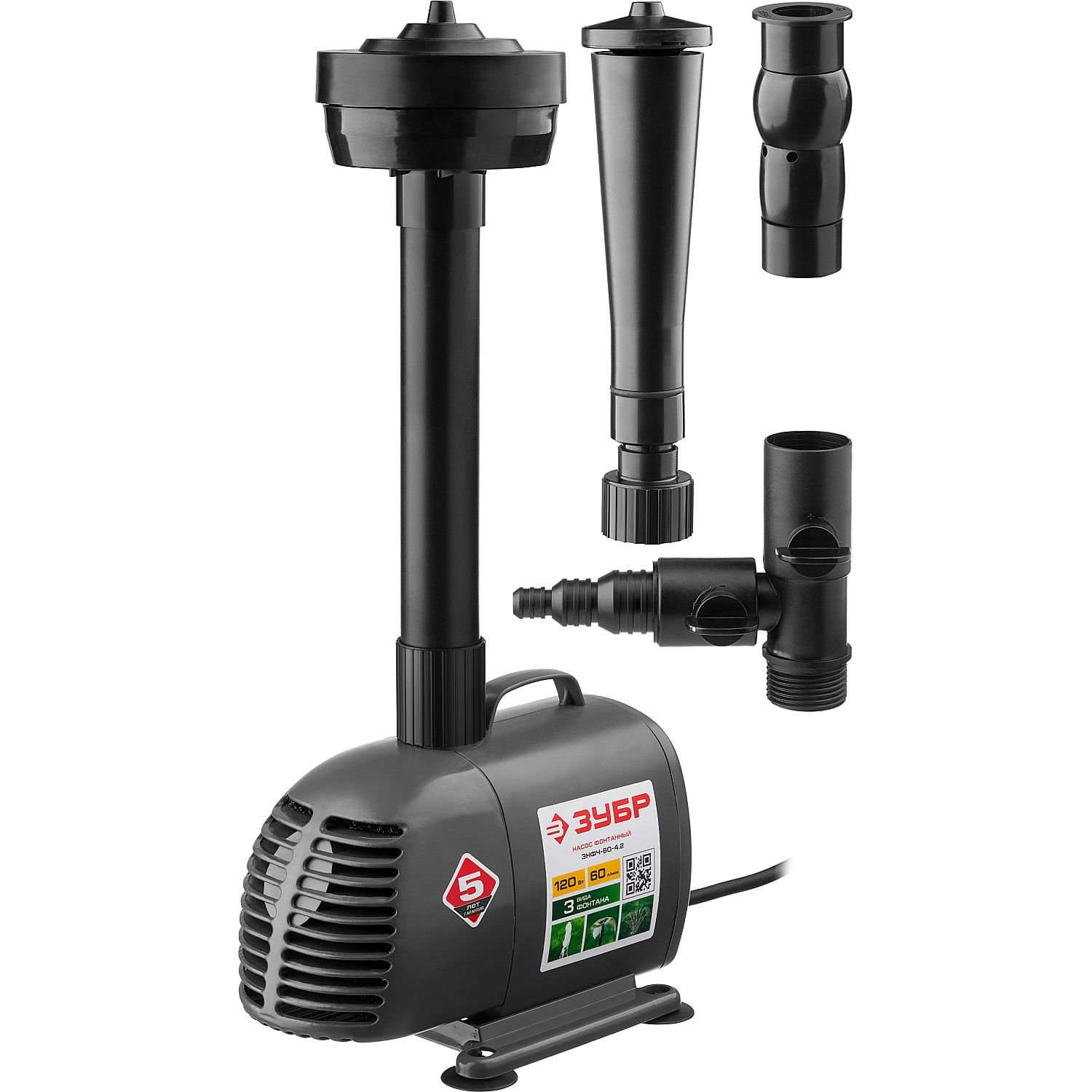
Thanks to the use of special nozzles, beautiful fountain jets can be formed.In addition, such pumping equipment can be used for irrigation of certain nearby areas.
Fountain pumps are divided into two types:
- devices installed on the bottom of the reservoir (only the nozzle is visible on the surface);
- units mounted outside the water source.
In addition, there are heavy-duty units for creating large-scale water compositions and servicing objects of a significant size, as well as low-power equipment for small reservoirs and fountain ensembles.
Pumping station

The main advantage of this device is the work in conditions of power outages. In addition, the equipment is characterized by low wear of the motor, simplicity and accessibility of operation, the ability to service several points of consumers.
The unit consists of the following parts:
- pump;
- hydraulic accumulator;
- check valve;
- control sensors.
The principle of operation of the equipment is based on the structure of a hydraulic tank, inside which there is a rubber pear, where water is pumped from a source. This pear is placed in a steel case, into which air is pumped, creating a certain pressure in the system. The pressure switch responds to a change in air pressure, which depends on the degree of filling the pear with water. As a result, the relay starts or stops the pumping equipment for pumping water into the tank.
Fountain lighting
In this area, everything has become easier with the advent of LEDs. They are powered by 12V or 24V, which is much safer than the regular mains. There are even solar-powered lamps.
Fountain lighting
Lighting can be done using waterproof LED strips or the same spotlights and lamps.To power them, you need an adapter that converts 220 V to 12 or 24 V, but they are usually sold in the same place as LEDs, so there should be no problems. Installation is simple: spotlights have mounting brackets, the tape can be “shot” from a stapler, only the brackets need to be found larger than the size of the tape: it is unnecessary to punch it so as not to violate the tightness.
There are LEDs that change color. Shades from 8 to several thousand
Fountain pump: purpose and principle of operation of the device
The pump is a special device that cyclically distills water according to the established circuit. Often this equipment is used to design decorative hydraulic structures on country estates and summer cottages.

The principle of operation of the pump is that the device creates a positive pressure that pushes water with a certain force.
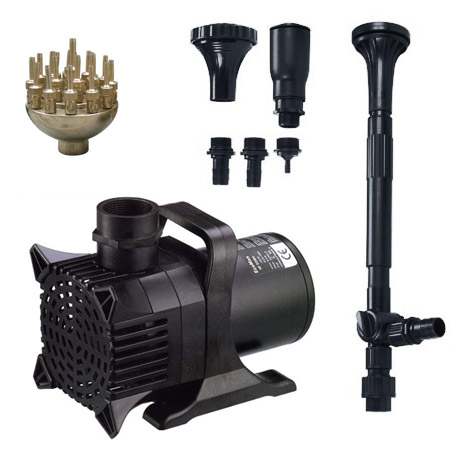
The principle of operation of a fountain with a pump is based on the creation of positive pressure, which pushes water with a certain force. The power of the unit determines the height of the ejector jet. The composition of pumping equipment for a fountain may include a different list of constituent elements, which depends on the type of device and its manufacturer. But any set consists of a rotating motor and an impeller that affect the strength of the flow.
The garden pump for the fountain has something like this:
- motor;
- motor housing;
- nozzle;
- retractable pipe;
- fluid flow regulator;
- tap for connecting a waterfall or fountain;
- pump impeller;
- fountain head;
- spray;
- grid.
The pump for a summer residence differs in mobility and a compact design.The unit is used seasonally. It does not need additional communications and copes with the movement of water without the need to connect a water supply.

Almost all pumping equipment consists of similar parts: a rotating motor and an impeller that affects the flow force
For a country house or cottage, circulating devices are installed that operate in a closed mode. Their water receiver is located below the fountain bowl. With the help of a pump, water is pumped into the pipe through various nozzles, moves up and is sprayed at a certain height. For the waterfall to work, the liquid rises from the tank, falls on the indents and returns to the tank. Such a closed water system cannot be provided without an electric pump.
Schemes and drawings
To create a design will be the necessary drawings.
small fountain
You will need a container for the accumulation of water and a pump. Various decorative details, such as stone slabs, are put on the tube coming from the pump. A hole is drilled in the center of each stone and strung on a pipe in decreasing order, forming a pyramid.

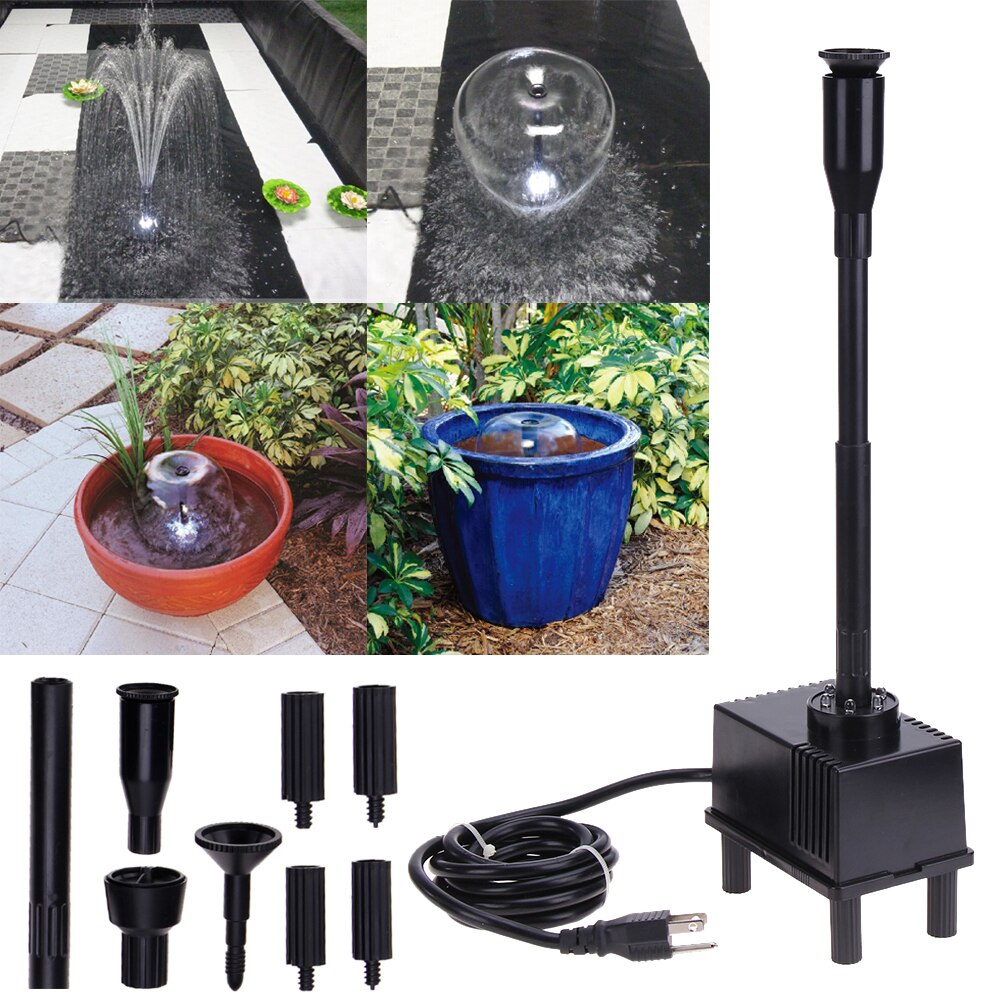


To prevent water from escaping from the tank, a drain system is provided. A pipe is inserted into the container, the free end of which is led to a suitable place.
Fountain Installation Diagram:
- They dig a hole in which they install a voluminous flower pot without holes.
- Bricks are placed on the side walls. They will give stability and strength.
- A pump with a pipe is fixed between the bricks.
- Fill the container with water.
- Holes are drilled in the center of the prepared tiles and put on the pipe.
- The free surface is covered with pebbles.
Room and desktop
Small fountains are distinguished by a low power pump.For manufacturing, you will need bamboo, which is bought at a flower shop:
- Bamboo up to 72 cm long is cut into three unequal parts. On one side of each part, an oblique cut is made.
- A pump is placed in the container, the largest piece of bamboo is put on, the other two pieces are attached to it.
- The container is decorated with sprigs of growing bamboo.
- The surface is filled with pebbles, water is poured in and the pump is turned on.
Pebble
The work involves the implementation of simple sequential actions:
- a container is placed in the recess made;
- a pump with a pipe is fixed in the center of the tank;
- the bowl is covered with a metal grate;
- then install a mesh with small cells made of strong wire;
- pebbles are laid on top of the grid.
Near the wall
The water jet coming from the wall back into the bowl looks beautiful. In the center of the bowl is a pump that pushes water through a pipe of various lengths to a given point.
fountain cascade
With this design option, water flows from one reservoir to another. The fountain is easy to make from any improvised materials. Suitable buckets, watering cans, carts. The principle of operation of such a design is simple:
- the selected containers are attached to each other so that water flows freely overflow from one container to another;
- below, under the containers, install the main, large bowl;
- a pump is attached to the main tank;
- a hose is attached to the pump, which will pump water into the uppermost container.
Tiffany
The design is a combination of a fish tail (several pipes for the exit of a jet of water) and a bell (one powerful pipe is installed in the center for the exit of water). Thick jets fall in one or more directions.
Tulip
A powerful pump with a pipe nozzle is installed in the center of the bowl.Spherical discs are placed at the upper end of the nozzle. A jet of water is supplied at a slight angle, forming a flower shape at the top.
Ring
Install a strong pipe, bent in the form of a ring. Holes are made in the pipe at an equal distance from each other. Guide nozzles are inserted into each hole.
singing
A musical fountain will decorate any landscape. The design consists of a bowl, a music control system, a water filtration system and jet height control.
From a bath or other improvised materials
Any container for the accumulation of water is chosen; it is not necessary to line the pit with a film. The main thing is that the container is free of damage, cracks and chips. An old bathtub, barrel, flower pot or basin is suitable.


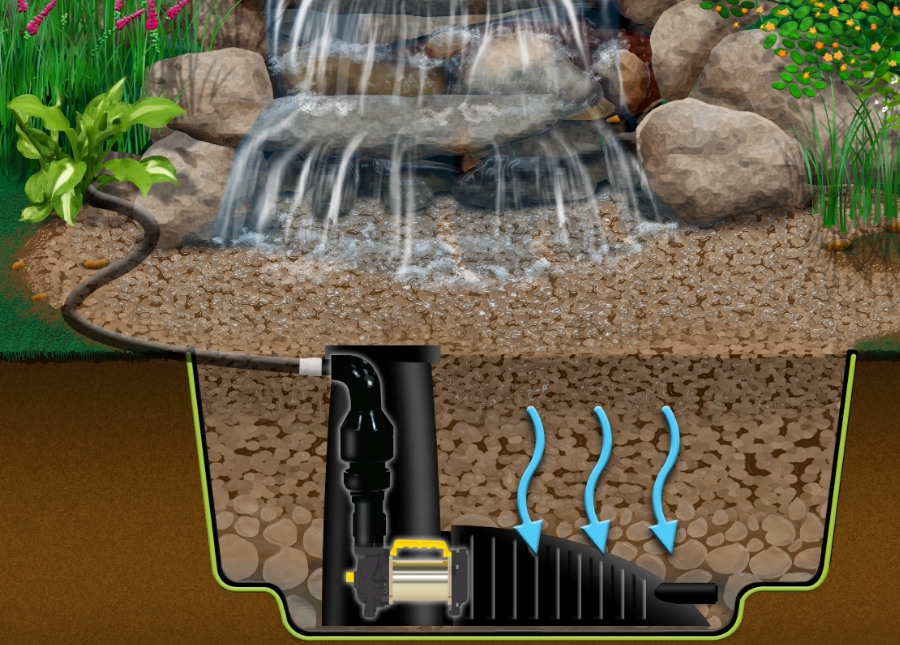


The fountain from the bathroom is made according to the following scheme:
- a bath is installed in a dug hole, hermetically sealing the drain holes;
- smooth, oval stones are laid on the bottom;
- fix the pump;
- fill the container with water.
Materials for creating a water pump
It is quite simple to design a full-fledged pump for a fountain, but it should be remembered that a self-made unit has a low power, so it is suitable for decorating small decorative bowls, sometimes for arranging pools or fountains.
It is impossible to increase the power of the pump and assemble a system capable of supplying water at an atmospheric pressure of 1 bar or more at home - it is more expedient and cheaper to purchase a ready-made design.
Before you start assembling a water pump, it is important to familiarize yourself with the principles of its operation. Typical pump for fountain consists of body shaped like a snail
It houses the motor and blades, similar to fan blades. Two pipelines are connected to the body - water is taken through one, and water is supplied through the other
A typical fountain pump consists of a body shaped like a snail. It houses the motor and blades, similar to fan blades. Two pipelines are connected to the body - water is taken through one, and water is supplied through the other.
With the help of the motor, the blades rotate, which contribute to the intake of water from the outside, pressurizing the system and supplying water to the injection line.
Due to the continuous circular rotation of the fan blades, a centrifugal force is generated, as a result of which water circulates, which is subsequently supplied under a certain pressure to the outside (+)
To create a fountain pump, you need the following items:
- micromotor;
- 3 ordinary plastic drink caps;
- 2 pens, felt-tip pens or any tubes of different diameters, made of durable and water-resistant material;
- a piece of plastic (you can take a mayonnaise lid, an unnecessary plastic card, disk, etc.);
- worm or gear;
- power unit.
The micromotor is the main element of the system. Thanks to him, the fan blades rotate. The device can be taken from a toy car, DVD player, old tape recorder, or purchased on the market.
It should be remembered that micromotors, depending on the power, have different dimensions and shapes. In this example, a device borrowed from a toy car is used.
A micromotor for the manufacture of a water pump must necessarily have wiring and a shaft, on which the gear will subsequently be attached
Depending on the size of the motor, you need to select the dimensions of the case. In our case, the case will be made of three plastic caps. If the motor is larger, then you can take a jar of shaving foam with a lid.
The case from under the pen or felt-tip pen will serve as a supply and discharge pipeline.
The back wall and blades for the pump are made of plastic, which will be mounted on a worm or gear. The mini fan will be glued onto the motor shaft, which will help rotate them when running.
As tools and auxiliary substances you will need:
- regular super glue, hot melt adhesive, or waterproof all-purpose adhesive;
- wire cutters and stripper for stripping wires;
- knife, drill or awl;
- a piece of sandpaper;
- soldering iron, metal file, jigsaw or grinder engraver with special wheels for cutting, stripping, drilling, etc.
You can choose any glue. The standard glue "Moment" has a high speed of gluing elements, while waterproof universal substances take longer to harden.
Sandpaper, tools are needed for finishing edges and surface cleaning, a knife is needed to create holes.
Equipment types
There are two types of devices for fountains - these are surface and submersible. Their main difference is in the place of installation - surface models are installed near the reservoir in a cabinet or box, submersible ones - at the bottom of a fountain or bowl on an equipped platform.


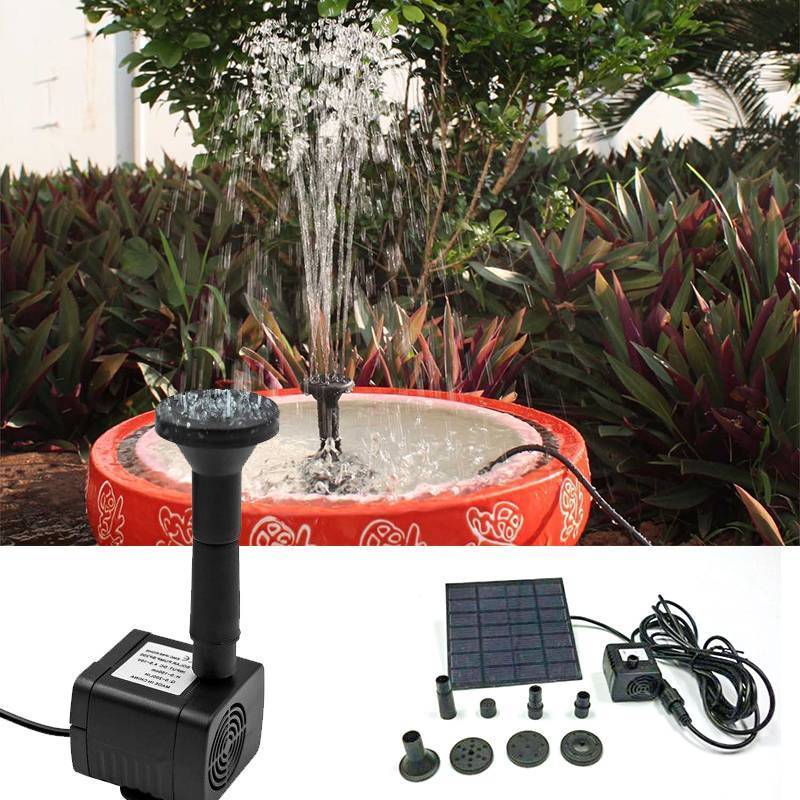


Surface devices are used for mini-fountains or cascading waterfalls. They can be used for complex multi-stage reservoirs and supply liquid to several points simultaneously.
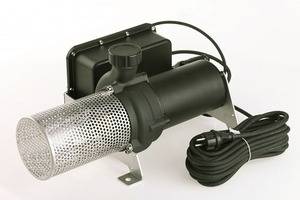
The advantage of pumps in inconspicuous and silent operation. They have a high efficiency and at the same time are economical, although they can work continuously. The lack of equipment is the need to dismantle it for the winter and the difficulty in maintenance. In addition, electrical safety must be strictly observed.
Characteristics of the pump for the type of fountain
-
Maximum head (height of water rise, in meters).
- And maximum productivity (volume of fluid pumped per hour).
For do-it-yourself geyser fountains, the first indicator (Hmax) should vary within 0.2-0.8 m. And the second (Qmax) - 2-7 m3 / h (photo 5).
For cascade structures, respectively, 0.6-3 m and 1-8 m3 / m (photo 6).
And for mini-fountains of the "bell" type - 0.3-0.9 m and 0.9-6 m3 / h (photo 7).
Do-it-yourself pump installation for a mini-fountain: instructions
If you don’t aim for something grandiose (and it’s better not to swing, without special skills and rich experience), you can quite qualitatively equip a beautiful fountain on your personal plot using the selected model of a submersible pump.
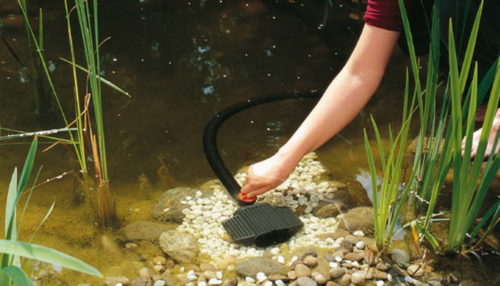
We put the fountain pump with our own hands
Do you want to install a pump yourself? Use the step by step guide:
- It will be necessary to dig a hole of the required depth - such that a waterproof tank can easily fit into it - the basis of the future mini-fountain (photo 8).
- Next, the selected and prepared tank must be firmly installed on the ground, having previously sprinkled the bottom of the pit with pebbles (photo 9).
- And then you will need to dig a special groove for the wires to the power supply source of the future hydraulic structure (it would be better to stretch the cable through a piece of plastic pipe).
- Now you need to put the pump directly into the tank.And it should lie there freely, so that in the future it would be possible to carry out maintenance of the structure and its prevention without problems (photo 10).
- In order to protect both the pump and the functioning of the structure as a whole, after the pumping mechanism is placed in the tank, the latter must be covered with a special metal (galvanized) mesh with slots for maintenance access (photo 11).
-
And you can proceed with the installation of the fountain structure itself, according to the selected project.
- - the pump itself (submersible in the described case);
-
- a simple pipeline for supplying water to a mini-fountain;
- - storage tank;
-
- and a nozzle that will give the jet a specific shape (you can buy it, or you can also make it yourself).
As a result, a beautiful hydraulic structure will clog and work uninterruptedly for a long time on your suburban area - a real fountain! And it will be especially pleasant that it was created on its own, with the investment of not only funds, working time, technical knowledge, but also creative imagination (photo 12, 13, 14).



