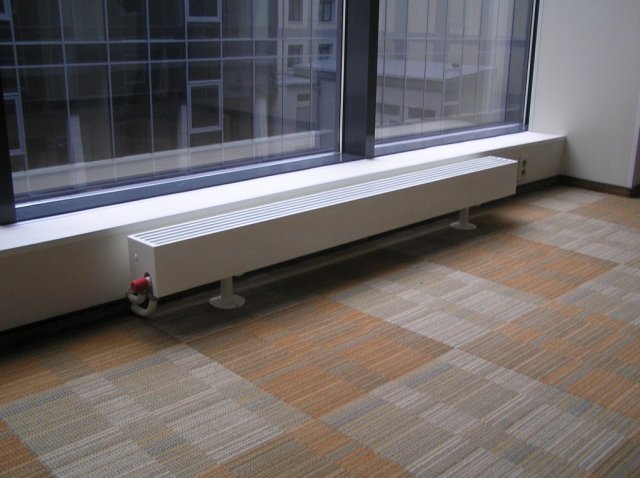
- Choosing the Right Underfloor Heating Parameters
- Width selection
- Depth selection
- Length selection
- Selection of a decorating lattice
- Rational solution: gas convector
- Advantages and disadvantages of equipment
- Construction of a gas convector
- Device Recommendations
- How to choose a convector
- Types of convectors
- Electrical
- Gas
- Water
- Thermostat
- Selection Tips
- Principle of operation
- Advantages of convectors over radiators
- Advantages and disadvantages of electric convectors
- Pros and cons
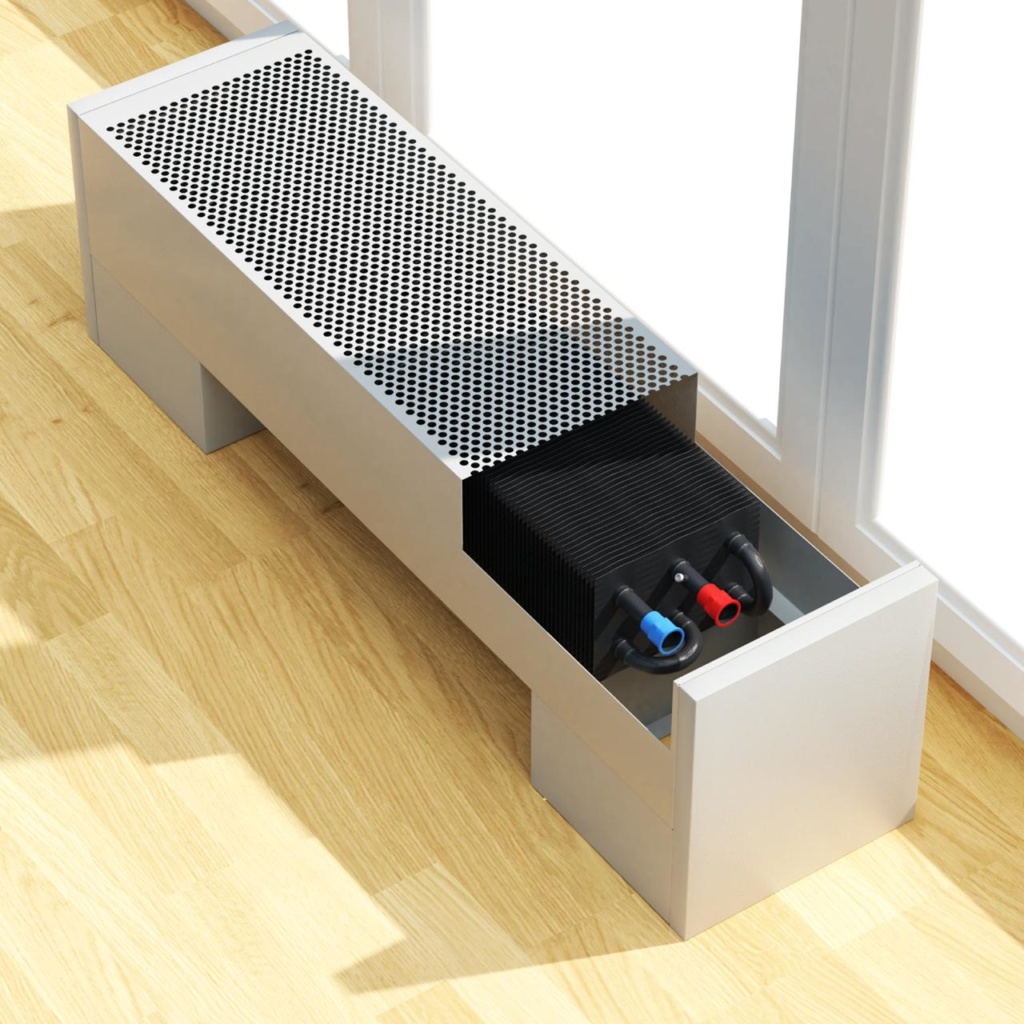
Choosing the Right Underfloor Heating Parameters
Width selection
This parameter must be selected in such a way that in the future there will be no installation questions.
It is especially necessary to pay attention to the adequacy of the indent from the panoramic windows - it should be from 5 to 15 cm. The same applies to the underground niche - the heater should not be installed "back to back", the free distance should be 5 - 10 mm
Regarding the selection in width, here in most cases the features of the panoramic window and the general design solution used in the room will play a role. Usually, heaters are limited in length, but by increasing their width it is possible to increase their power.
Depth selection
Here it is necessary to take into account the height of the screed and the structural features of the underground niche itself.The device must be installed freely, having a reserve depth of 10-20 mm for reliable fastening and free entry of fasteners.
Length selection
As a rule, the radiator is chosen in such a way that it covers the entire length of the panoramic windows or the room in general. Here one should not forget about the indentation from the walls, which should be at least 15-30 cm.
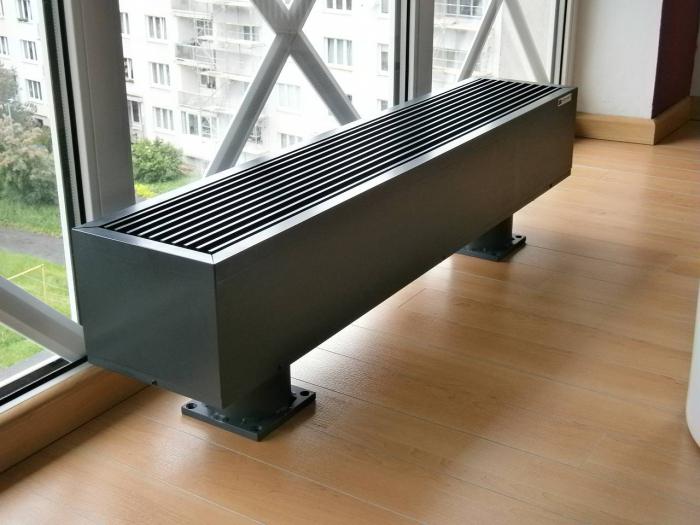
Selection of a decorating lattice
These grilles add an element of aesthetics and decoration to the overall design of the heater. Most often they are purchased separately from the main set, but expensive and well-known brands can include them immediately in the kit. The main thing is to maintain harmony with the surrounding design, i.e. to achieve a harmonious combination of slats, colors, materials used, with the environment. Nevertheless, specialist designers advise purchasing gratings produced by the same brand that made the convector itself (in order to ensure full compatibility of all parts).
Rational solution: gas convector
Gas convectors operate on natural (main) or liquefied (balloon) gas. They do not require a power source, except for those models that are equipped with a fan to improve air circulation.
But even without electricity, such devices work quietly - just the fan does not spin. Units are usually used as the main heating devices, but can also play an auxiliary role.
Gas convectors are usually chosen for private houses or outbuildings with a small total area. This is the best solution for
Advantages and disadvantages of equipment
Among the important advantages of gas convector heaters, in addition to "electronic independence", it is worth highlighting the following points:
- these devices are not afraid of frost, they can be safely left in unheated houses;
- products are safe: the gas supply in a critical situation is automatically stopped.
A significant advantage lies in the simplicity of the device, due to which the devices are quite reliable and delight with high efficiency.
The equipment also has disadvantages:
- despite their small size, gas convectors are usually difficult to successfully fit into the interior;
- you need to "hollow" the wall for a coaxial gas outlet.
A significant disadvantage is that the gas unit cannot simply be taken and “weighed” the device to another place.
Construction of a gas convector
The gas heater consists of the following units:
Metal case. It is covered with heat-resistant paint. The top and bottom are open for air circulation.
Finned heat exchanger. Heats up the air. The larger it is, the faster the temperature in the room rises.
Burner. This is where gas is burned.
combination valve. Responsible for regulating the flow of gas into the burner.
Chimney. Removes smoke from the device

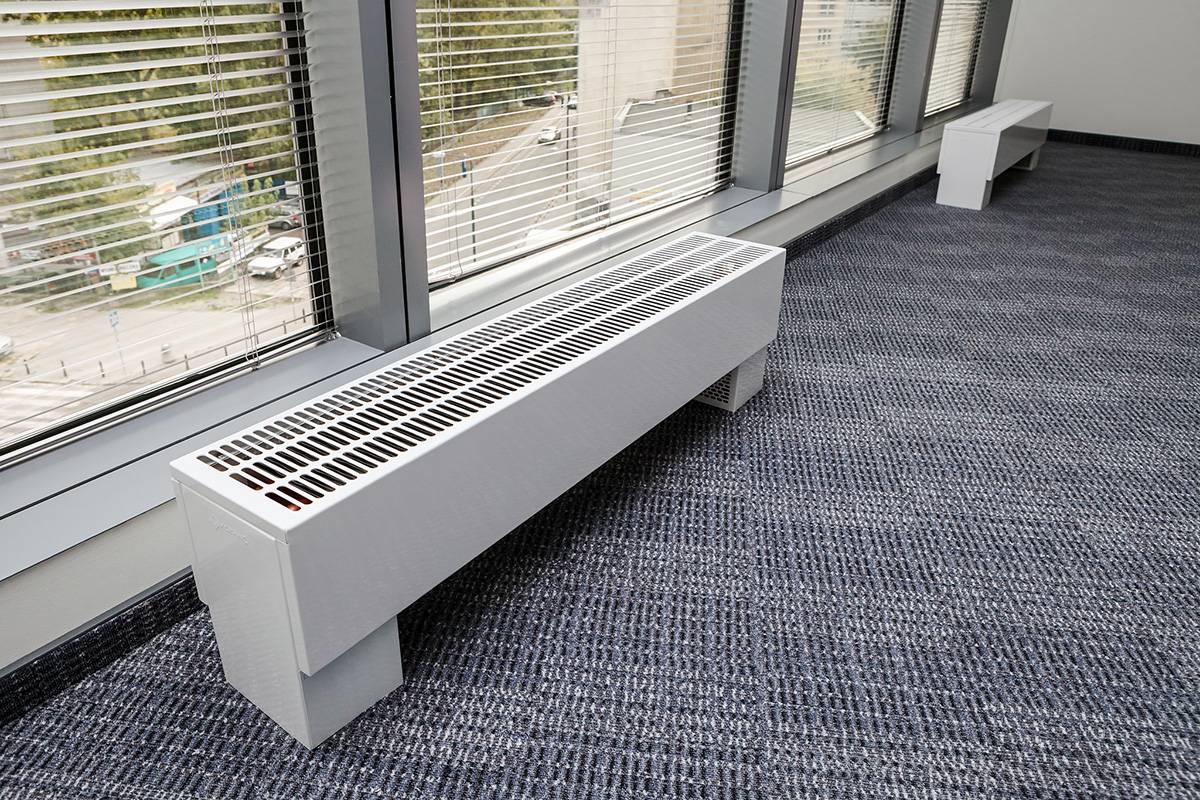

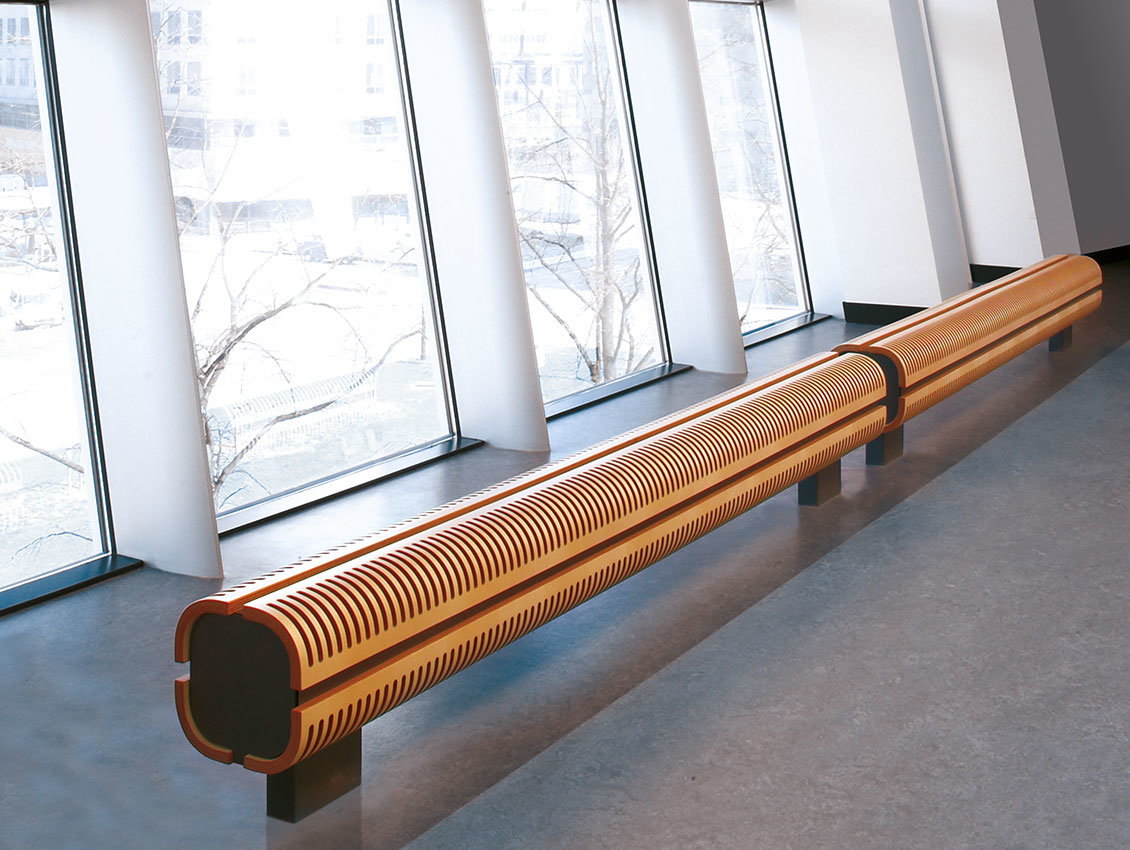


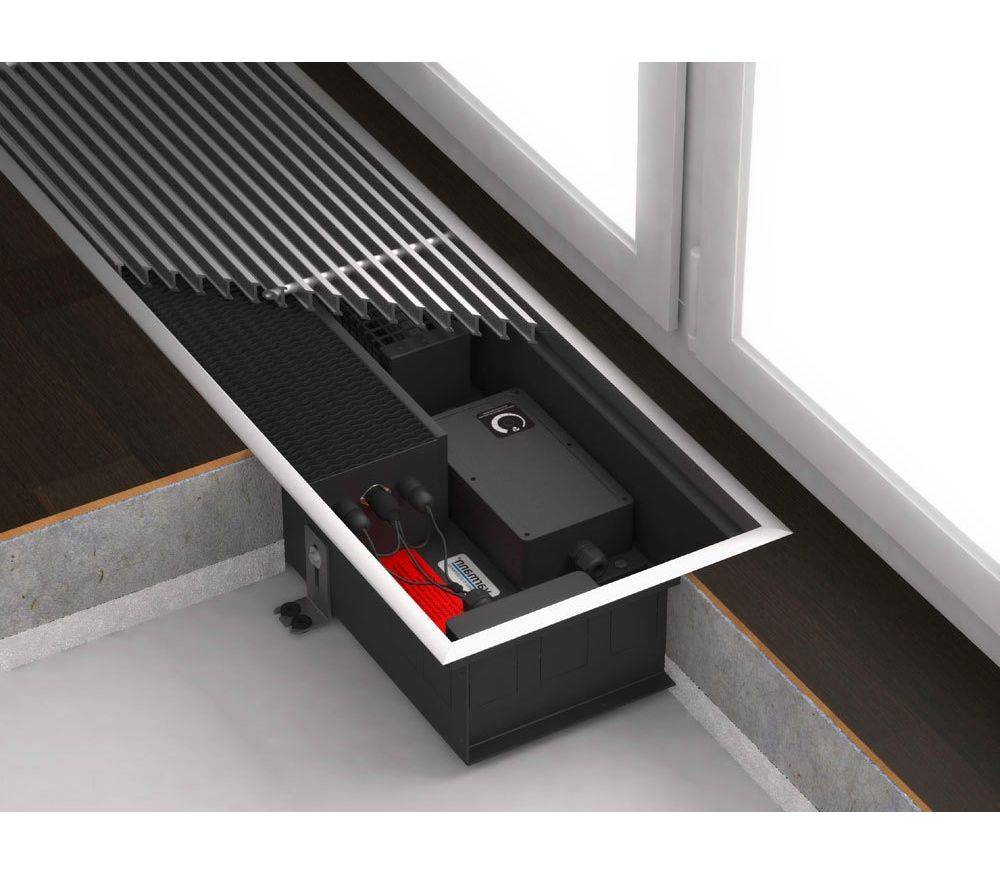

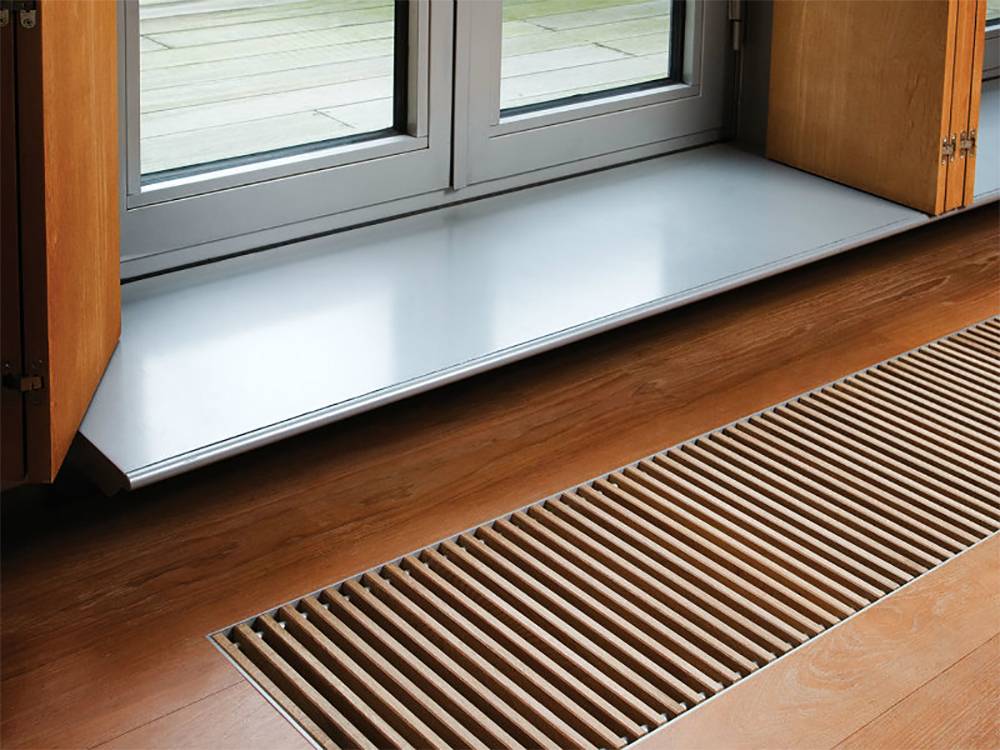
Not all manufacturers include a chimney in the scope of delivery - you should pay attention to this when choosing equipment.
Thermostat. Element for controlling the operation of the combination valve.
Automation
Shut off the gas supply in emergency situations.
Also, the gas convector can be equipped with a fan, remote control (expensive models).
It is possible to talk about the efficiency of gas convectors only if we are talking about installing one or two appliances in the house. Installing equipment in every room is a real ruin
Device Recommendations
The product must be adapted to the pressure in your gas system. The required power of the gas convector is calculated according to the well-known formula - for every 10 square meters. m of the site of the room requires 1 kW of heat. It would not be superfluous to add 1 kW to the obtained value for poor-quality insulation or old windows.
According to the mounting method, the devices can be wall-mounted and floor-mounted. The first ones are lighter and more compact, have sufficient power; it is usually recommended to opt for them.
A very important parameter when choosing a gas heater is the material from which its heat exchanger is made, it can be:
- cast iron;
- aluminum;
- steel.
The cast-iron heat exchanger evenly warms up, has a fairly high efficiency, is able to work for half a century. But since cast iron is a brittle material, under certain conditions (for example, a large temperature difference), it can burst. In addition, this design is heavy.
Aluminum heat exchangers have excellent thermal conductivity, but their heat resistance is low. The devices equipped with them have a high cost.
Steel heat exchanger is the best option. On a number of characteristics it, certainly, concedes to "competitors". But it is strong, light and cheap.
A good bonus in the design of a gas convector is the presence of a fan. It reduces the heating time of the room and reduces the risk of heat exchanger burnout, but increases the cost of equipment.
The fan significantly increases the heat output of the heater due to more intensive air supply to and from the heat exchanger
How to choose a convector
convector type. The distribution network sells several types of convectors.Some of them are powered by electricity, others convert hydrocarbon raw materials into heat, and still others effectively use hot water for heating. Electric and gas models are considered the most independent.
Power. This indicator of the heater is most often of interest to buyers
But it is important to take into account the area of \u200b\u200bthe room, the possibilities of electrical wiring, the consumption of gas or electricity by the appliance. Experts recommend starting from a simple formula when choosing
For heating 1 sq. m of housing requires 100 W of thermal energy. Therefore, for a room of 10 sq. m quite enough convector power of 1 kW. But this is an approximate calculation, it does not take into account the level of thermal insulation of the house, the thickness of the walls, the presence of drafts (in the case of a warehouse or office). If conditions worsen, another 50 W of energy should be added for each square meter.
Room type. The air temperature in different rooms is very different. The warmest are the nursery and bedroom, where many Russians would like to set the temperature at 24-28 ° C. In a room of 10 sq. m, the convector will work effectively, which is designed for a room of 13-15 sq. m. In offices, employees will feel comfortable if the air temperature fluctuates between 20-22 ° C. In this case, a less powerful heater will be required than is required in the theoretical calculation. But in the living room it is best to buy a device in which the maximum heating area corresponds to the size of the real room. It is more difficult to give advice if the convector is bought as an additional source of heat.In this case, everything depends on the capabilities of central heating.
Mounting type. Most convectors are wall or floor mounted. Each of them has its own advantages. So wall mounting allows you to save the usable area of the room and makes the device as safe as possible for humans. This is true when heating children's rooms, bathrooms or kitchens. The floor heater is convenient for its maneuverability. With wheels, even children and old people can easily drag the heater to another room.
Thermostat. To maintain a given level of heating, thermostats are installed in the convectors. There are two main types: mechanical and electronic. The mechanic is considered by many users to be an outdated option, but it is simple, reliable and cheaper. The user needs to manually set the regulator to a certain position, and the device will work within the specified limit. The electronic device works more accurately. It is suitable in cases where every degree plays an important role (pharmacies, winter gardens, warehouses).
Safety. When choosing a convector, one should not forget about safety. Both electric and gas models carry a certain threat to human health and life. Although electrical appliances are considered safer, high power can adversely affect old wiring. Options such as protection against overheating, tipping over, short circuits and moisture will not be superfluous. Gas models also carry the threat of poisoning by combustion products. All joints must be sealed to prevent an explosion of the air-gas mixture. Therefore, ventilation and the chimney must have a margin of throughput.
We have selected 20 of the best convectors for our review.All of them received approval from the expert community and domestic consumers.
Types of convectors
Electrical
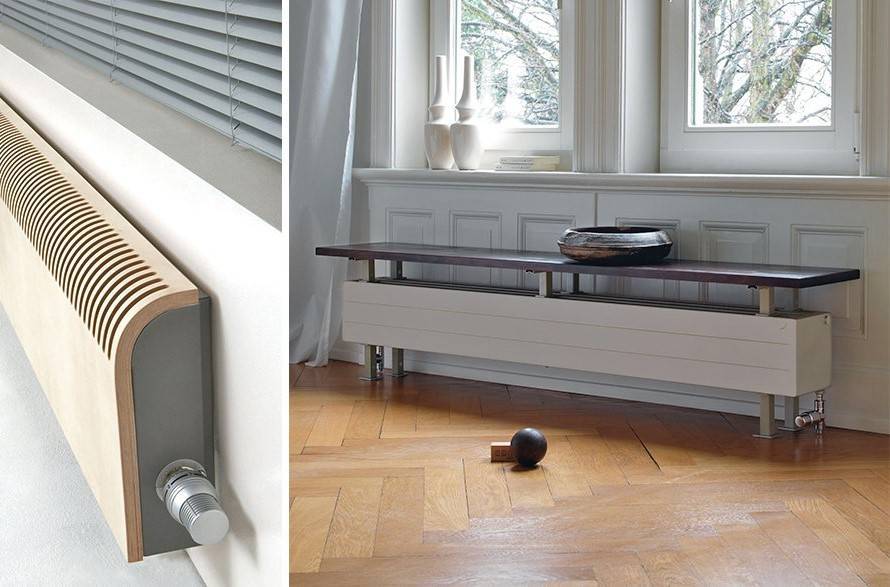
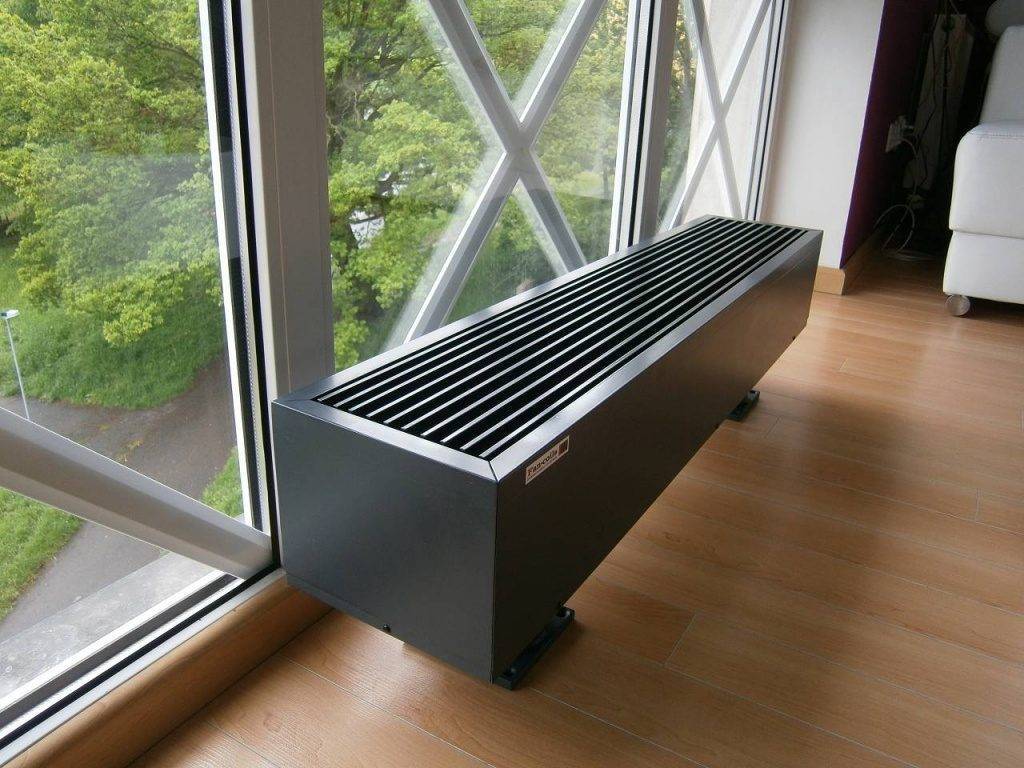
They are the most common among heating devices and have a wide range of heated areas. They differ in affordable cost and various customization options.
They are installed in children's rooms, bedrooms, offices and living rooms to maintain a comfortable temperature in combination with central heating. Without the latter, appliances are able to heat rooms on their own, but with high electricity consumption.
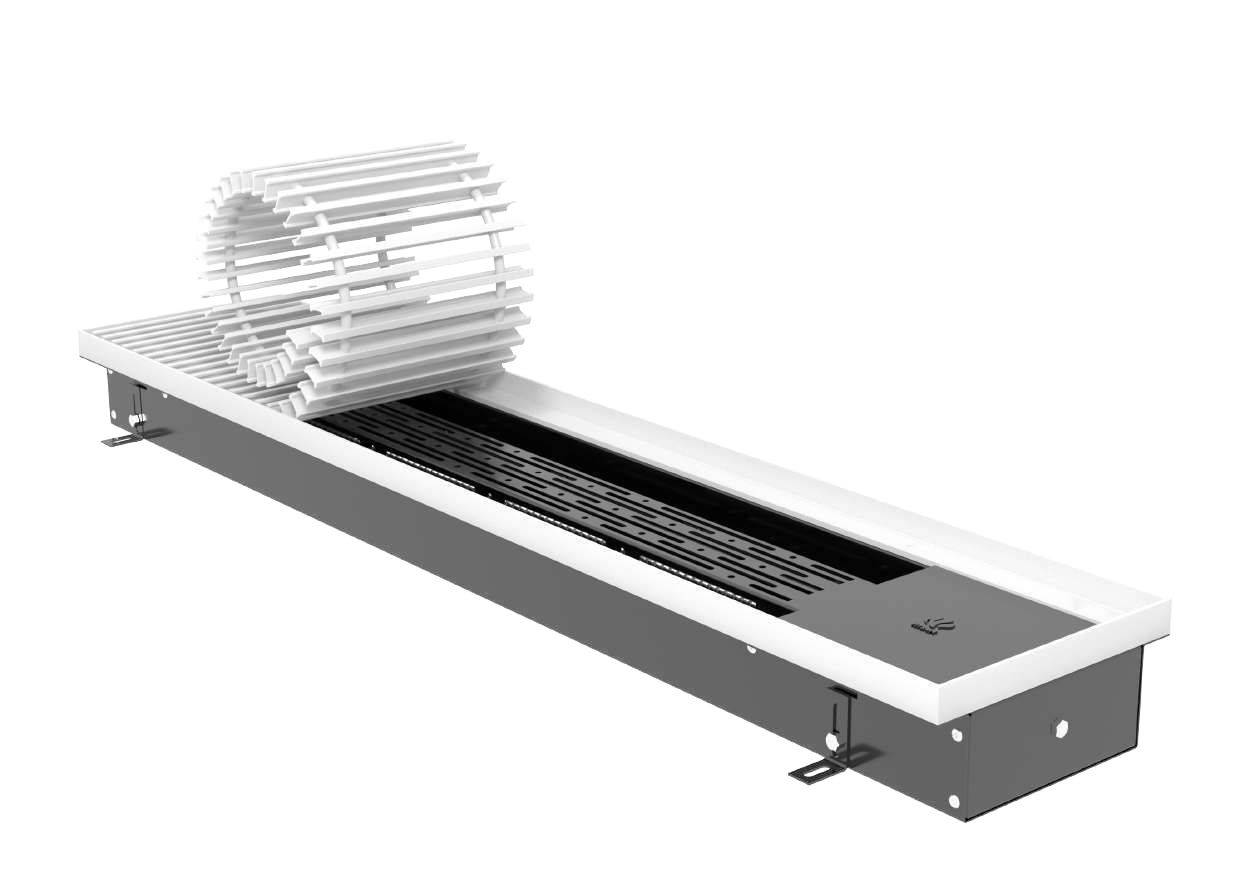
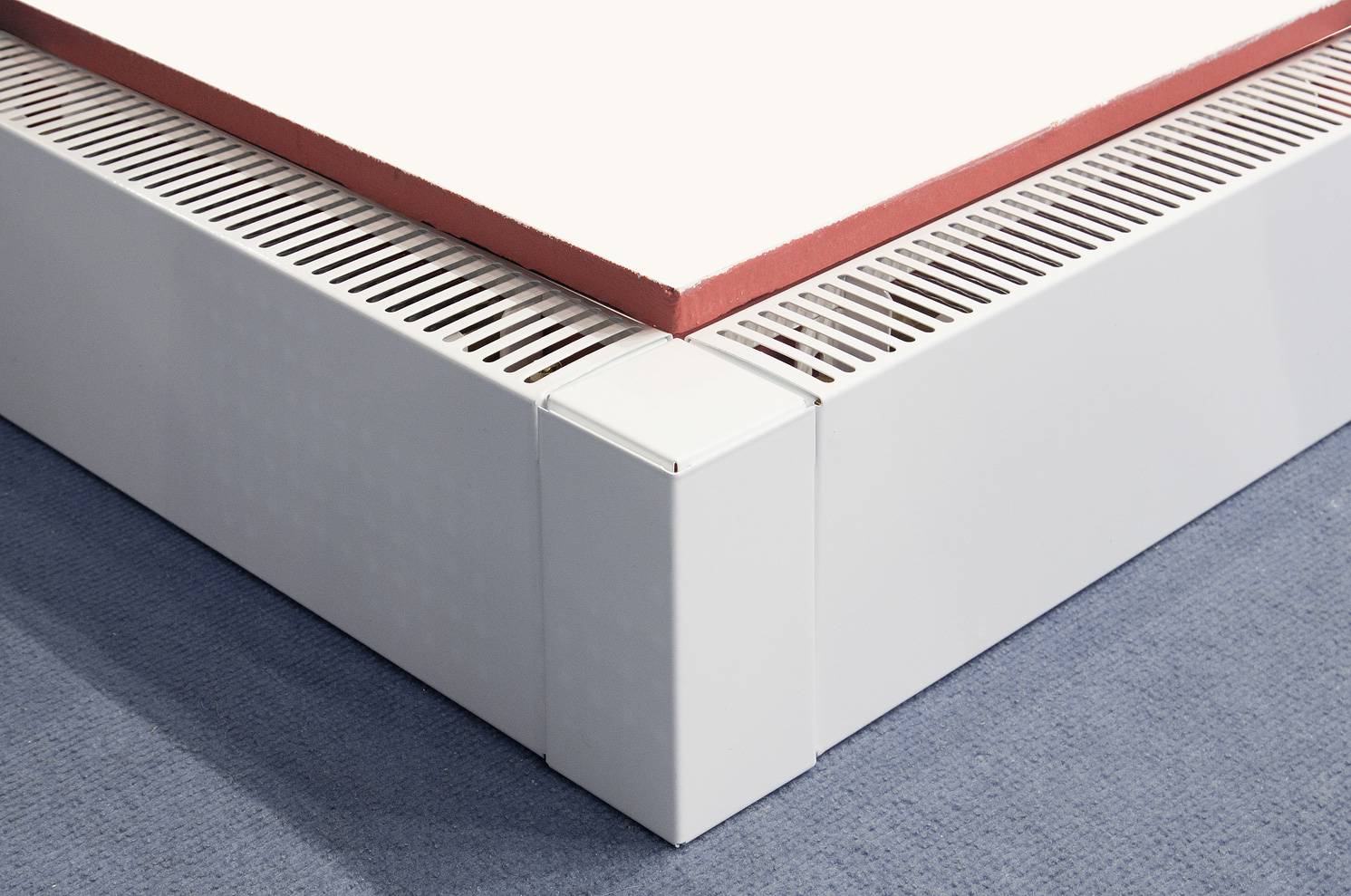

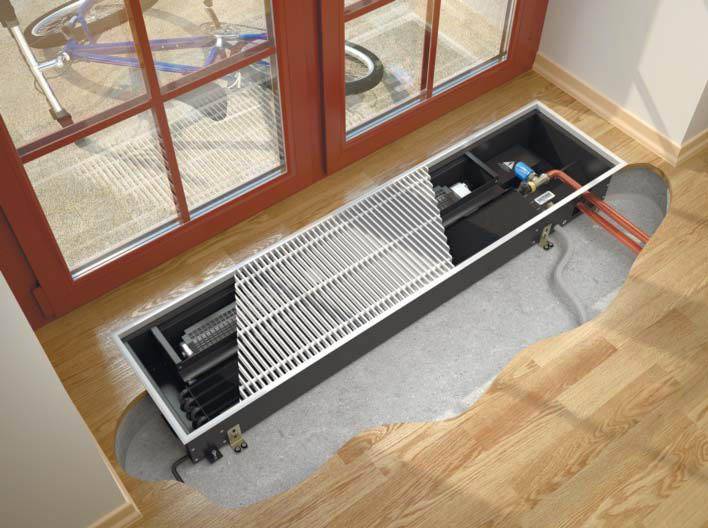


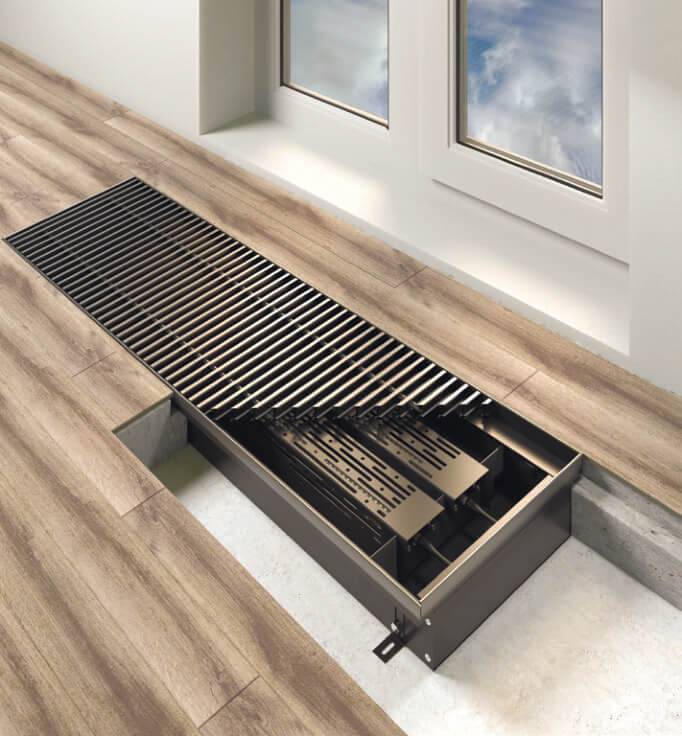
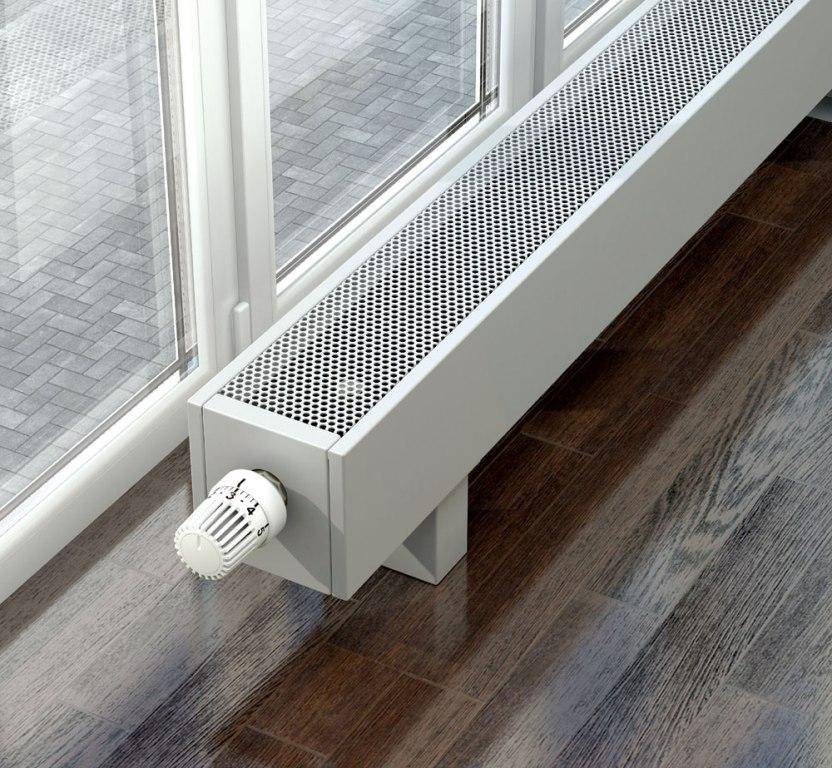
Advantages:
Flaws:
- thermostat operation is associated with clicks;
- some models have a very simple design;
- high current consumption at maximum mode for powerful devices.
Gas
Here, heating is carried out by supplying blue fuel to the burner, which acts on the heat exchanger. Hot air exits the case, and cold air enters in its place. To speed up convection, a fan is mounted in the device.
In addition to working from a gas pipeline, such a device is able to function from a cylinder. The main condition for operation is the presence of a chimney for the removal of combustion products. Such convectors are used for basic heating in private houses or apartments.
Advantages:
- by installing one device in each room, it can be used as the main heating;
- no piping required around the house;
- work on natural and liquefied gas;
- long service life;
- large heating area;
- low consumption;
- temperature adjustment from +13 to +40 degrees;
- secure wall mount.
Flaws:
- chimney installation is required;
- high price.
Water
Water convectors are powered by a liquid heat carrier and have in their device a network of gratings with laid pipes that ensure a rapid temperature transfer from water to air. To speed up the effect, fans are built into them.
The main area of use is corridors, panoramic windows, greenhouses in winter, swimming pools, shopping centers. Installation is carried out in the floor or window sill, where only the radiator grill protrudes flush with the coating.
The device does not have a heating source and is connected to a boiler or central heating.
Advantages:
- long service life;
- unpretentious design;
- indoor installation that does not take up useful space in the room;
- does not spoil nearby furniture;
- eliminates condensation on windows.
Flaws:
- a separate boiler is required;
- fast dustiness of internal elements;
- high price.
Thermostat
It is needed to maintain the exact temperature set by the user. It is enough to set the desired parameter once, and the equipment itself will regulate the work, according to the specified settings.
The most familiar and understandable mechanical thermostat. It is based on a thin plate. It is very sensitive to changes in temperature and bends in response to its increase. When the set value is reached, the electrical circuit opens and the operation stops. As soon as the plate begins to cool down and return to its original position, the energy supply is resumed.
This mechanism guarantees an accuracy of up to 1 degree. Functioning is accompanied by characteristic clicks, which is very annoying, especially at night.
The electronic element has a more complex mechanism. It allows measurements with an error of less than 0.1 degrees.It reduces energy consumption by up to 10% and there are no extraneous sounds. However, such samples are more expensive and more difficult to repair.
Selection Tips
When choosing a convector, you need to pay attention to several main factors.
- Decide on the type of convector. Gas can save a lot of money, but its initial cost is higher. Electric - this is ideal for those places where there is no gas wiring. Water is suitable as a replacement for the main heating system.
- Calculate the budget for the purchase. There are many heating devices and the price range is also very high. Much will depend on the type of heating element. Needle ones are not considered particularly reliable, but their price is much lower. Usually, heaters of the middle segment have the most necessary set of options and are highly reliable.
- Functionality. For example, an electronic regulator is more convenient, since it is able to keep exactly the set temperature. Here, too, much depends on the price. More functional devices cost more.
The main selection criteria for convenience are summarized in the table.
| Options | Values | Selection Guide |
| Power | The power of heating devices starts from 250 to 3000 W | In the case of work as an auxiliary element, it is necessary to proceed from the calculations of 25 W per square meter. As the main device, you need to consider 40 W per 1 m3 |
| Heating area | From 1 to 35 m3 | Suitable for small and medium rooms |
| Heating element | Needle, tubular, monolithic | The best option is tubular. Monolithic is considered the most worthy, but it has a high cost |
| Installation | Floor, wall | For use in one room, it is better to purchase a wall-mounted one. Floor standing is suitable in case of need for mobility |
| Control | Mechanical, electronic, touch | Each option is good in its own way. Touch is quite rare and costs a lot of money |
| Thermostat | Mechanical, electronic | The electronic version is better, as it maintains the set temperature more clearly |
| Timer | Model dependent | Availability of this option would be a big plus |
| Built-in ionizer | Model dependent | Having this option would be a big plus. |
| Remote | Model dependent | Having this option would be a big plus. |
| Rollover protection | Model dependent | A very important feature that is necessary if there are small children or animals in the house |
| Height | Up to 65 centimeters | The lower the appliance, the faster the room will warm up. |
| Length | Up to 250 centimeters | Long heaters warm the room better and more thoroughly |
Watch the video on how to choose the right convector





Principle of operation
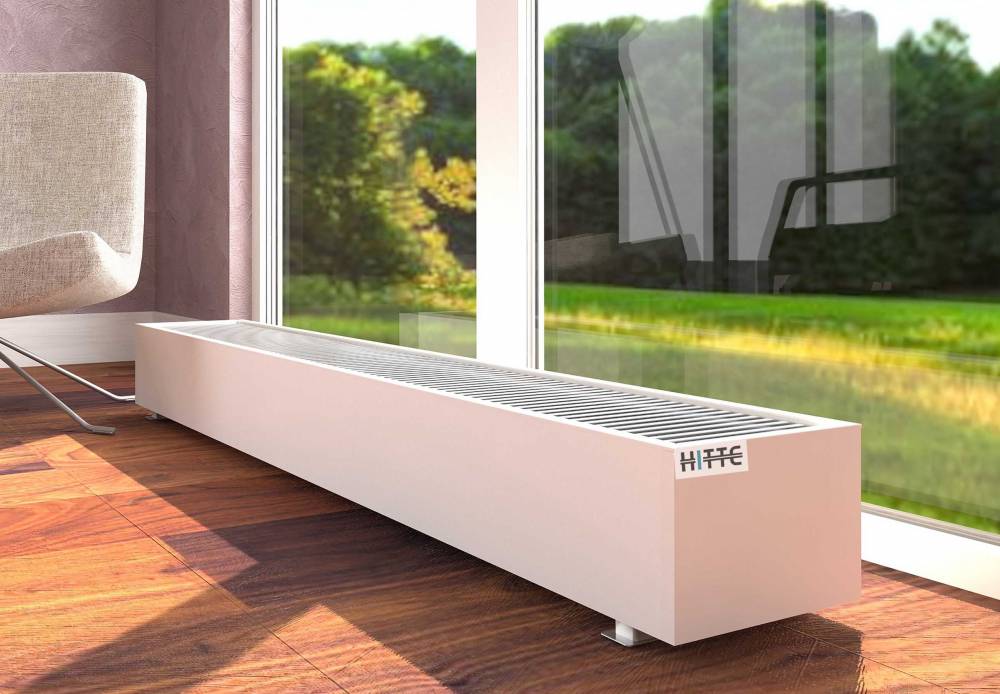
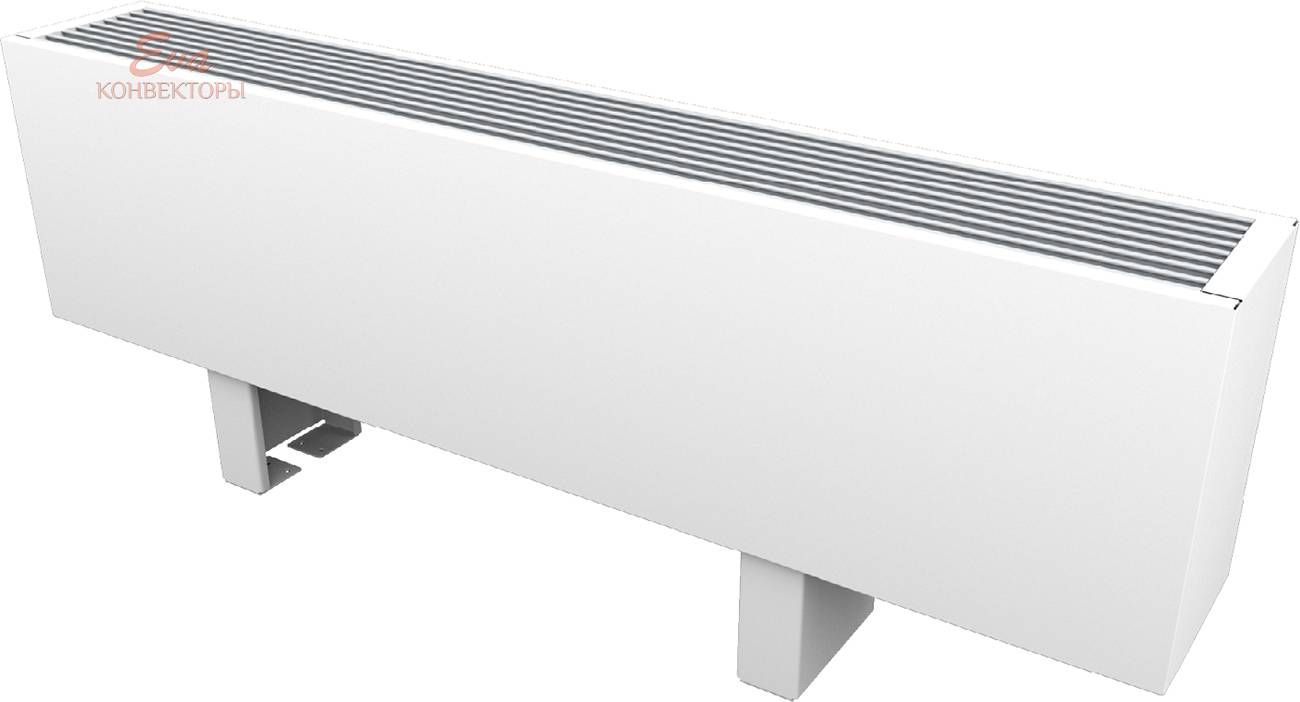
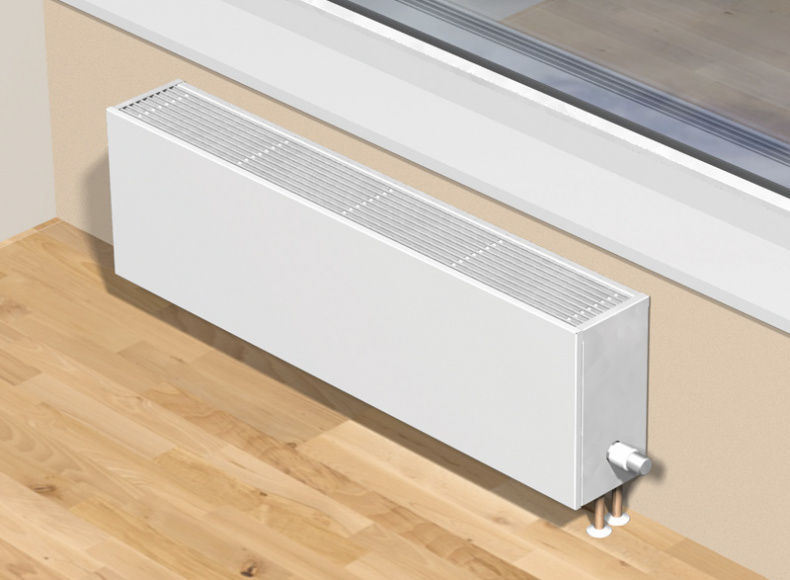
The floor water convector is one of the most popular types of heating in private homes today. Domestic and foreign manufacturers today offer a wide variety of models that differ from each other in appearance and power, but their principle of operation is the same.
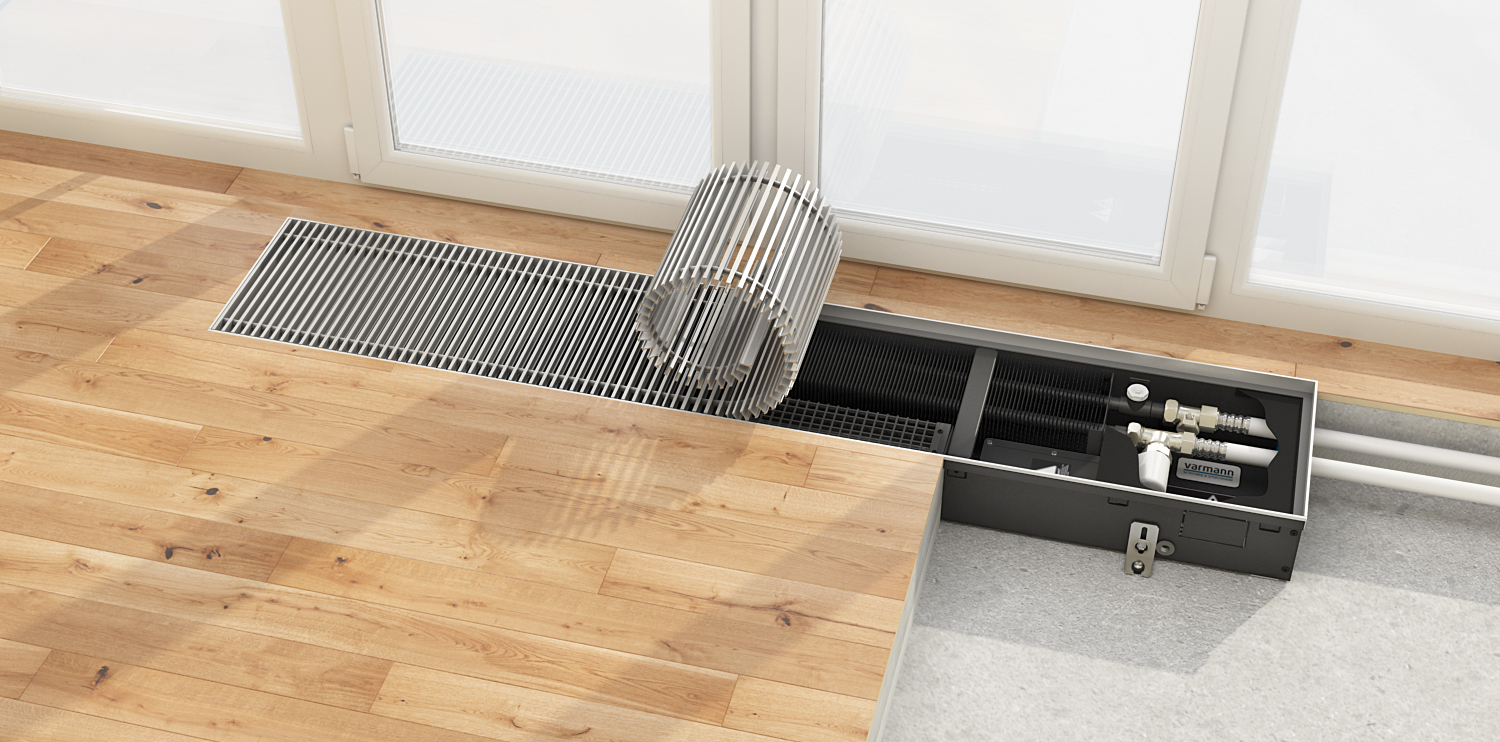
The body of the water floor convector is a galvanized rectangle. Inside it are special pipes, their number, depending on the model, can be in the range from 1 to 3. They are the heat exchangers.
Heat disperses around the room very quickly, and all thanks to the rapid spread of heated air masses.In the case of the device, special corrugated tubes are installed on its sides, it is through them that air enters the case, where it quickly heats up under the influence of the heat of the pipes. They, in turn, are heated by the warm water poured into the system.
The heated air masses enter the room through the front part of the convector, in which a special grille is installed for this purpose. That is, to put it simply, water is poured into the pipes inside the casing and when the convector is turned on, it heats up. The air inside the case warms up and goes outside, and the cold stream again enters the inside, and so on until the temperature in the room becomes the same. It is worth noting here that such a system allows you to maintain a comfortable temperature in the room not only during the heating season itself, but also in the off-season.
Full heating of the room occurs quite quickly within 15-20 minutes.
Advantages of convectors over radiators
Although the inhabitants of the CIS, for the most part, out of habit, use traditional cast-iron batteries or more modern bimetallic radiators for heating any premises, but this trend is now changing. Convectors have a list of significant advantages, which makes them a more practical solution in a number of situations.
Their main advantages are:
- Profitability - for heating identical rooms, such devices spend only a quarter of the heat energy that radiators need.
- High efficiency - in many cases, the products are able to carry out full-fledged heating of all kinds of premises at a coolant (water) temperature of 50 ° C.According to the norms, the usual radiators at the specified water temperature can heat the room well when it is only 5 ° C outside, and at -5 ° C it will already be necessary to heat the coolant to 78 ° C.
- Rapid heating of rooms - thanks to the convention, the heating of any room occurs an order of magnitude faster than when heating with batteries. Because they just radiate heat. In addition, the speed of heat propagation is facilitated by the rapid heating of the heat exchanger (pipes, fins). For example, such a procedure for these devices occurs many times faster than for cast-iron products familiar to everyone.
In addition, all convectors are easy to maintain, light weight, compact, and are famous for their high fire safety. The article recommended by us will help you get an idea of the advantages of a convector in comparison with a fan heater.
They may have the only source of possible danger - a fan. But it is not installed on all models, and is also low-voltage. Such equipment rarely becomes a source of trouble. The surface of its casing is always cool, which will prevent burns.
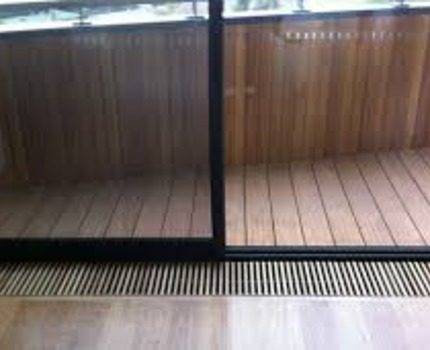
Convectors are increasingly used in apartments as main or additional heating devices. In the photo, the built-in device serves as a thermal barrier at the entrance to the balcony
Not without products and shortcomings, but their list is quite short. Thus, the convention creates air currents that contribute to greater dustiness of the premises.
And moving air masses can create a slight draft. This phenomenon is not critical, but undesirable for people suffering from various types of colds. These shortcomings are offset by an important advantage - convectors never dry the air.
The biggest disadvantage is the uneven heating of rooms with very high ceilings. The reason lies in the fact that under the action of the convention, warm air accumulates under the ceilings, and can only descend in a cooled state, which does not contribute to creating a comfortable temperature.
The same situation will arise if the heated room has ceilings of moderate height, but forced ventilation is used simultaneously with heating.
Advantages and disadvantages of electric convectors
One of the most significant advantages of electric convectors is that they are ready to work immediately upon purchase. That is, you will not need to work on a heating system project for a long time, lay pipes, purchase additional equipment in the form of heating boilers or circulation pumps. It is enough just to put the convector anywhere in the room, plug the plug into the power socket - and after a few minutes you will feel waves of warm air coming from the device. The speed of heating the room can also be called a great advantage - after all, in other heating systems, it may take a significant amount of time to heat the coolant itself.


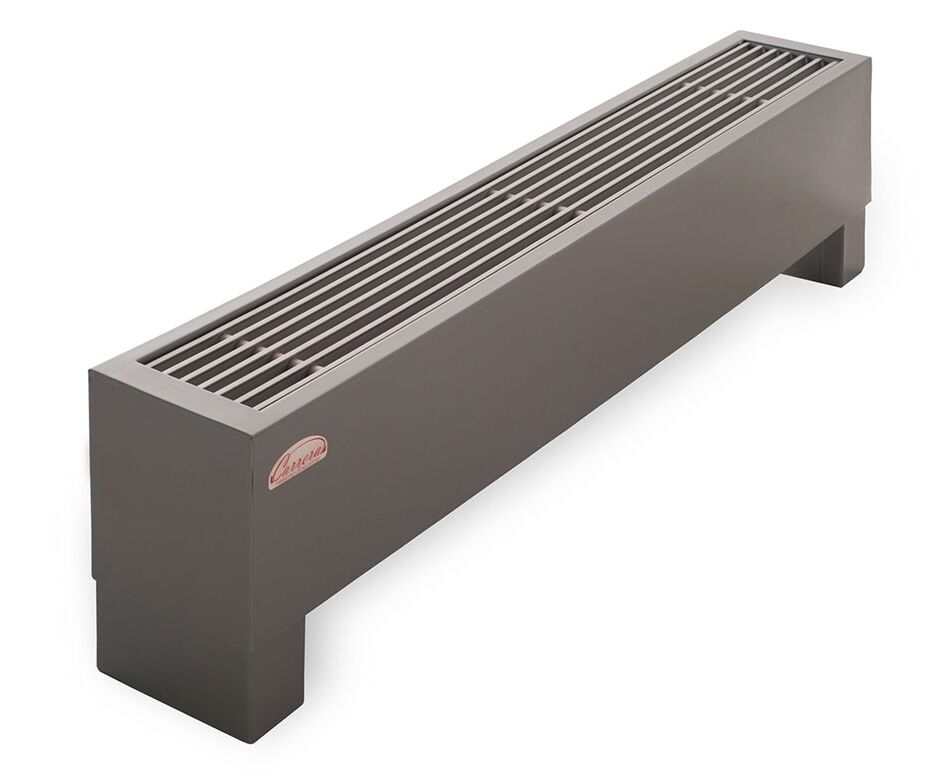


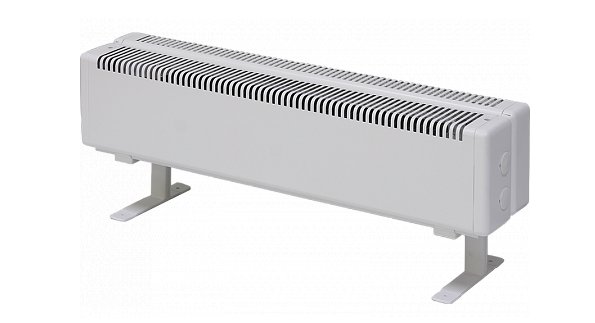
You can place electric heating converters anywhere - the main thing is that there is access to an outlet. Some models can be both installed on the floor and hung on the wall - which is especially convenient if there are small children in the house.
| Wall mounted electric convector | Floor electric convector |
Another important advantage of electric convectors is their quite affordable cost. Even if you decide to use exclusively electric heating convectors, their purchase will cost you much less than the design and installation of, say, a water heating system. In addition, electronic convectors do not require maintenance (cleaning of scale, removal of fuel combustion residues) - and this also saves money.
First of all, electric heating convectors, the technical characteristics of which are acceptable, do not dry out the air, do not burn oxygen. In addition, the device itself practically does not heat up - and, accordingly, neither you nor your loved ones will be able to get burned about it.
A significant advantage of a convector over a conventional radiator is the presence of a heating regulator. This will create the most comfortable temperature in the room. Moreover, even with continuous operation of the convector, it will not rise.
Electric convector with thermostat
All modern models of convectors are equipped with an electronic control unit. You can set a certain program for heating the air in the room in accordance with the time of day - and it will always work.
Many users call the obvious advantage of the convector its noiselessness. The only sounds that electric heating can make. convectors - barely audible clicks at the time of heating or cooling. But they are really quiet.
Another problem that makes it difficult to constantly use convectors is the rather high cost of electricity. And its consumption by this device is quite high.But it should be borne in mind that you will regularly have to spend money on the operation of any other heating system - after all, it needs fuel
Therefore, if we take into account a significant number of advantages of electronic convectors, high electricity bills do not seem to be such a big minus.
Pros and cons
Like any other heating device, the convector has its pros and cons. This applies to both technical characteristics and features of operation. Before making a purchase decision, it is worth familiarizing yourself with some of the nuances that manufacturers rarely talk about.
It is worth saying that the advantages of convector-type heaters are much greater than the disadvantages.
- Safety. This is especially valuable if there are small children or pets in the house. The surface of the convector never heats up, and when it overturns, fire and oil leakage will not occur. Many models have rollover protection and turn off automatically when dropped.
- Environmental friendliness. Convector units do not dry the air and do not burn oxygen like other types of heaters. If you want to make the atmosphere in the room more comfortable, you should choose a model with a humidifier and an air ionizer.
- Profitability. Depends on the type of heater and the heating element used in the appliance. Water appliances are considered the most economical, followed by gas appliances. Electric and infrared options should be used for periodic work.
- Ease of use. Convectors are easy to install, use and maintain. They can be attached to different surfaces (walls, ceiling), installed under a window or simply placed on the floor. They don't take up much space.Individual designer models will become a bright accent of any interior.
- Warming up It is carried out quite quickly and evenly due to the constant mixing of air in the room.
- Durability. Most devices have a 10 year warranty. In this case, the actual service life of the convector is 20-30 years. This is facilitated by the simplicity of the device.
- Silence at work.
Convector-type heaters also have some disadvantages, which would be more correctly attributed to the features of their use.
- Low heating capacity. Convectors are not suitable for the main space heating (at least in Russian latitudes). They are used for additional air heating in the presence of a central heating system or for heating small rooms.
- Raise dust particles from the floor during operation.
- The operation of electric convectors in continuous mode is not very economical. To do this, use a device with a coolant.
- Air drying. This is typical for almost any heating device. Choose water convectors or a model with a built-in humidifier.
Some of them can be mitigated by the right choice of model and the use of a certain type of convector for specific purposes. So, it is advisable to install an electric portable device in a country house, and a water one, installed under the floor, in a large living room.