- At what height to hang?
- Installation of overhead plumbing
- What material to choose?
- How to choose the right sink and manufacturer?
- Manufacturing
- Create a Sketch
- markup
- Assembling the frame
- sheathing
- Types of overhead sinks
- What materials are used for washbasins
- Overhead washbasins: description and varieties
- Countertop sink installation in kitchen and bathroom
- Cutting the tabletop along the contour
- Processing saw cut countertops with silicone
- Washbasin fixing
- Sewer connection, mixer installation
At what height to hang?
An important factor when installing a countertop sink in a bathroom is the height of its installation. Usually this indicator is chosen based on the installation height of the countertop itself, however, it can be adjusted using various sealed stands (to increase the height) or by installing the sink in the cut at a lower height.
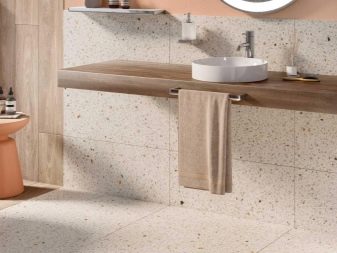

Standard bathroom cabinets are usually installed at a height of no more than 80 cm - this is the optimal height, taking into account the average human height. For taller people, top-mounted washbasins with thicker edges and a total height together with a countertop of 85 cm or more can be selected.
Fortunately, in the case of height, there are no strict dogmas here - you can choose the height of the sink installation yourself, for example, taking into account the height of your children.
Installation of overhead plumbing
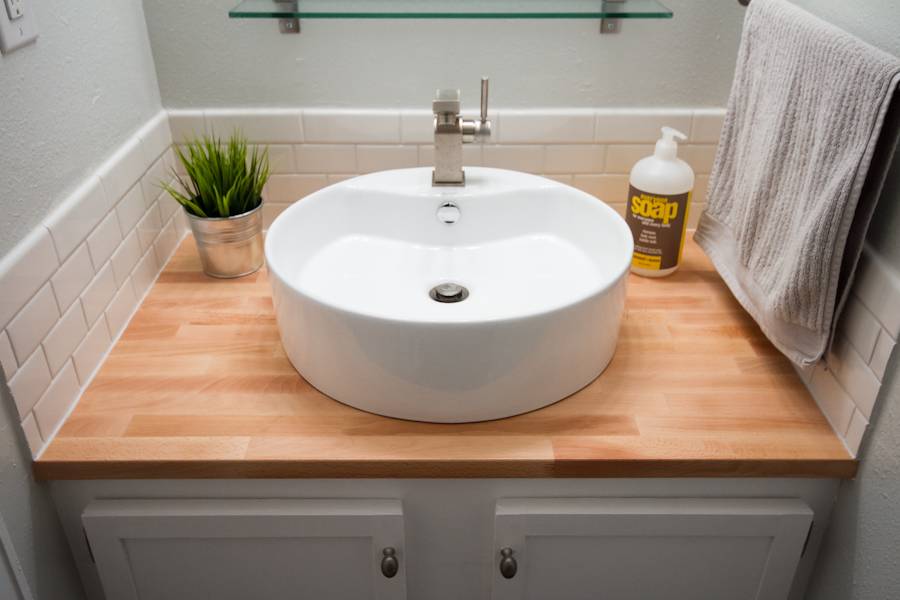
The choice of a sink model installed on or partially in the countertop directly depends on the footage of the bathroom (kitchen). If there is practically no free space, then it is better to choose a washbasin with a small bowl. And if there is enough space, then you can turn around in terms of design by choosing a large and deep alternative.
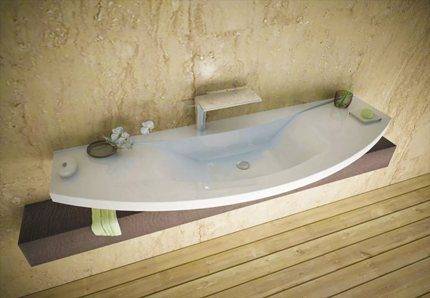
Sinks with dimensions around a meter look too bulky, it is recommended to install them only in spacious rooms, where they will look out of place
Ideally, the dimensions of the sink should be such that when washing, the elbows of the divorced hands remain within the bowl. Surface-mounted sinks with a depth of 10–12 cm are compact models. 13–20 cm are medium standard, and 20–30 cm are large washbasins. In width and length, most of these shells fit in the range from 30 to 80 cm.
The following article will acquaint you with the rules for choosing the height of the installation of the sink, and therefore the fastening of the suspended countertop, the contents of which we recommend that you familiarize yourself with.
The installation process of the overhead sink is carried out in four stages:
- Cutting a drain hole in the countertop, if the model does not require a rear or side connection.
- Installation of a drain pipe and a mixer on the washbasin (if it is installed on the body of the washstand).
- Placing the sink on the countertop and connecting the siphon.
- Connecting electricity for lighting (if necessary).
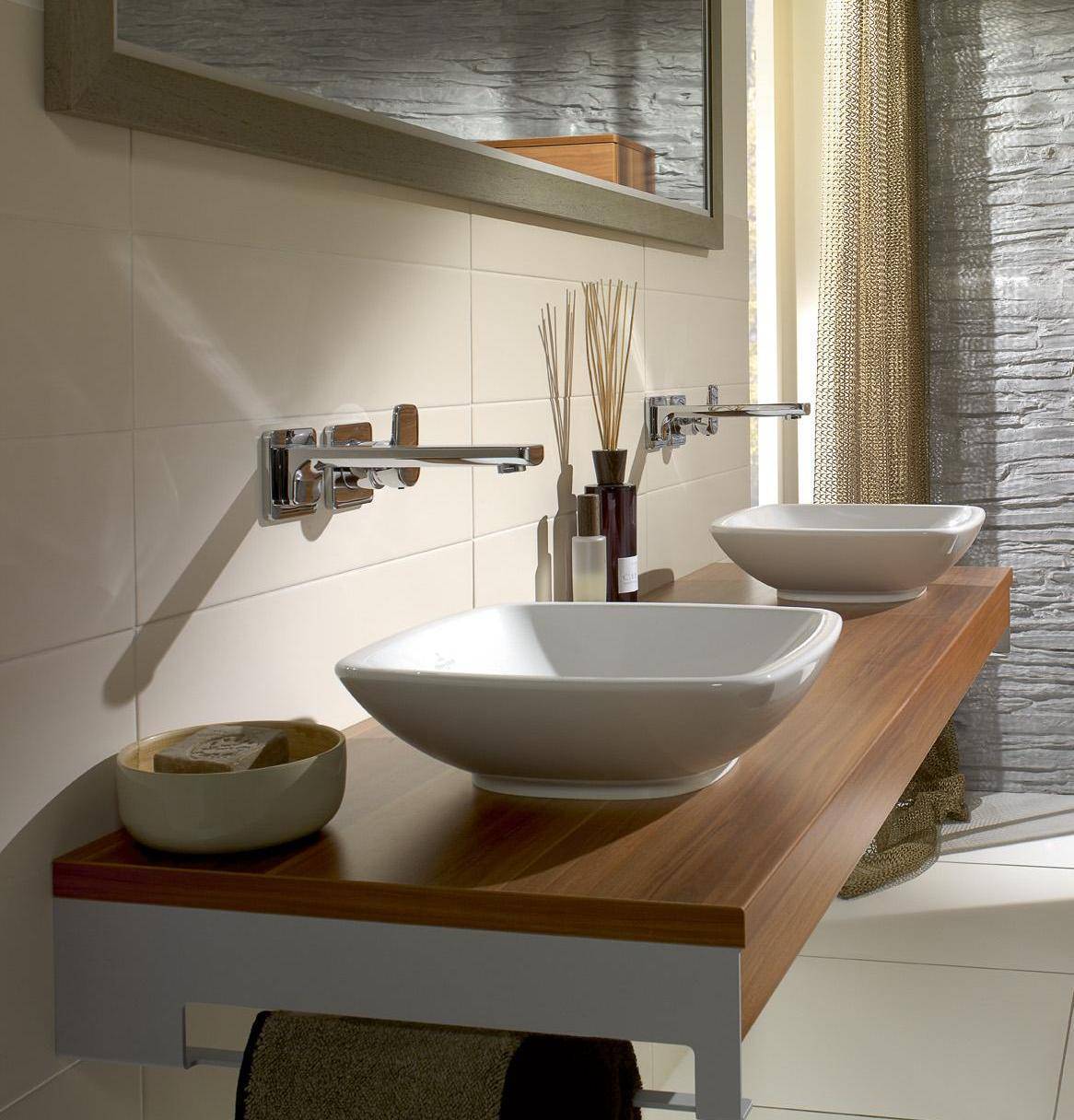
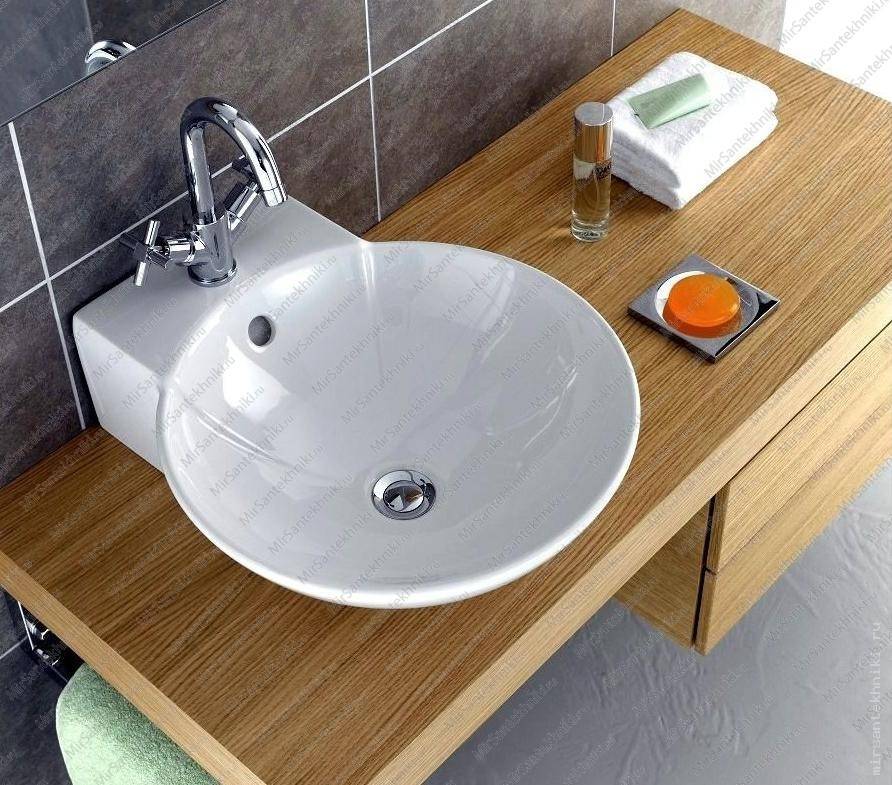
If the sink is partially recessed into the countertop, then the hole under it must completely match in shape and size with the bowl placed inside.The simplest option is a washbasin mounted on a table from above. For it, a hole must be cut small and round with a diameter of only a few centimeters under the drain pipe.
Often a set of built-in sinks comes with a stencil for cutting a hole in the countertop with your own hands. This greatly simplifies the process, it will be difficult to make a mistake with the dimensions. But in any case, it is better to measure and calculate everything several times, and only then start sawing the slab under the washbasin.
Connecting the overhead model to the water supply and sewerage should not be difficult. This is an ordinary sink, all connections are made using flexible hoses.
The main thing here is that the latter should not be visible under the tabletop if everything below remains open in the design without cabinets and doors. And all pipes must be connected using sealants.
Before the final installation of the bowl in place, the edges of the countertop, where the cut was made, are covered with silicone
This will ensure the necessary tightness so that water does not fall down under the washbasin if it is carelessly splashed out of it.
At the end of the installation, the power supply is connected and everything is checked for leaks. Models of overhead sinks with LED lighting built into the body are still exotic.
However, such novelties are found in stores more and more often. Their connection does not have any special nuances, all wire connection diagrams are given in the instructions. You just need to follow the manufacturer's instructions.




What material to choose?
Before buying, you need to pay attention not only to the type of construction, but also to the material from which the sink itself is made. It plays an important role in the quality of the whole product
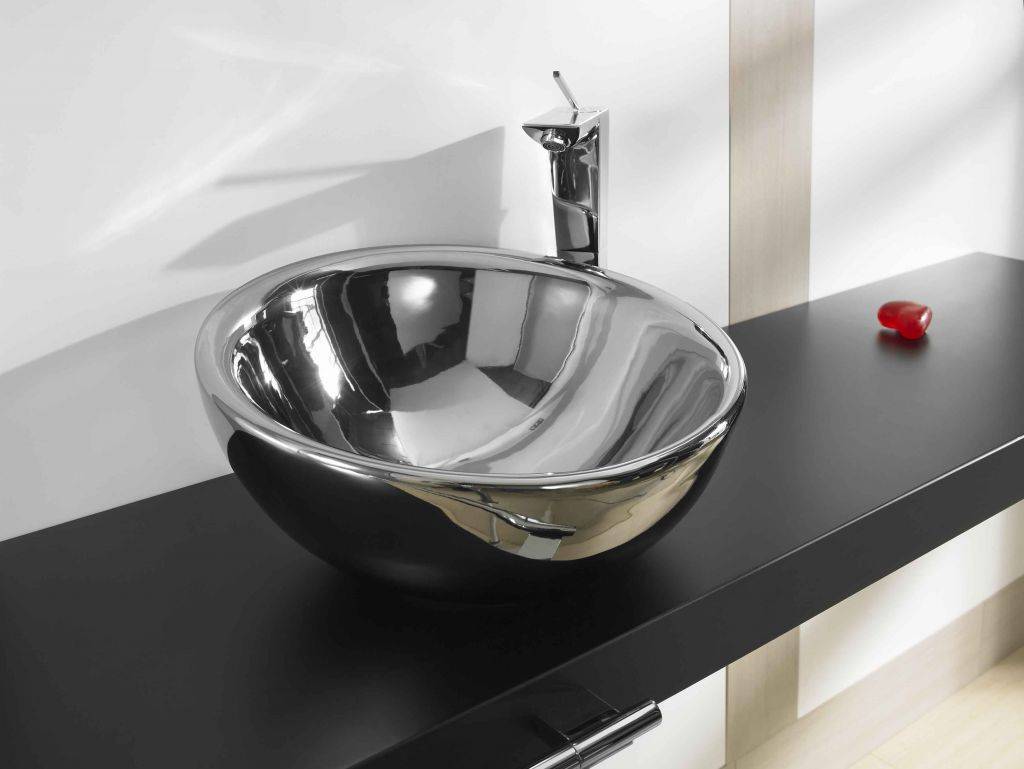
Materials used in the manufacture: stainless steel, faience, sanitary ware, porcelain, ceramics, wood, marble, glass.
In order to choose a quality product, you need to know the features, as well as the characteristics of the material from which it is made.
stainless steel
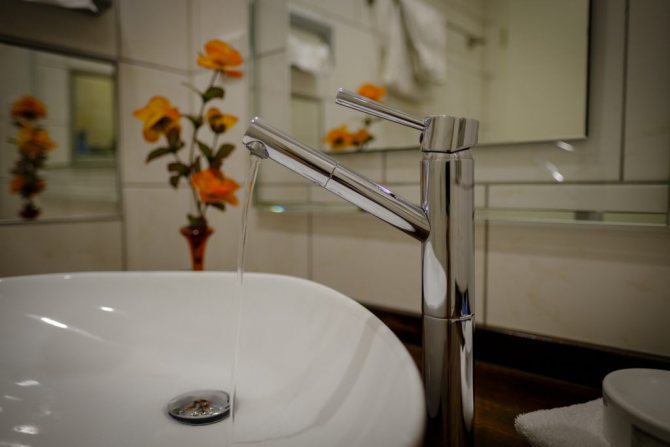
Stainless steel is often characterized as the longest lasting and strongest material, able to withstand a heavy object being dropped. However, at the same time, steel products do not fit well into a modern interior and require enameling. In addition, the ingress of water on the sink is accompanied by an unpleasant noise. Such models are more suitable for public places than for the home.
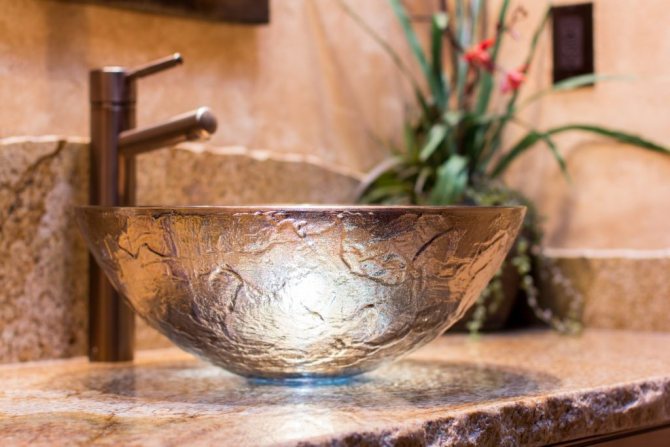
Glass
In second place in popularity are glass washbasins. They can be both smooth and with various notches that form a pattern. In 2020, glass sinks with rhinestones and precious stones have become fashionable. In the manufacture of a washbasin, additional materials are added to the glass to make the product more durable.
This model does not require complex care, however, in order to avoid streaks, there is a need for frequent washing. It is strictly forbidden to use powder cleaners when washing. You may scratch the surface. The main advantage of a glass washbasin is that it can withstand frequent temperature changes.
Faience
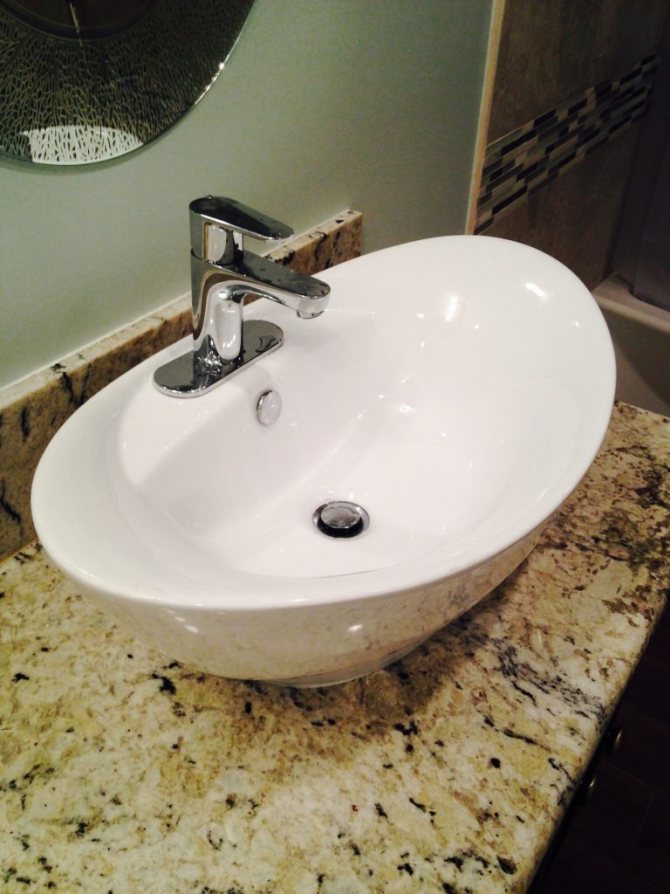
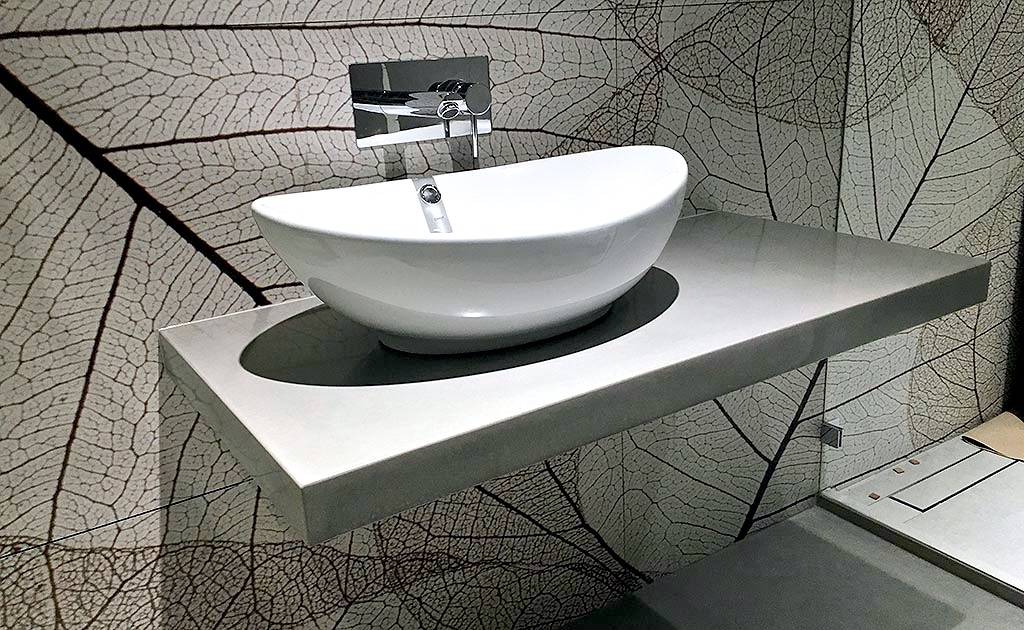
Faience is a type of porcelain. However, unlike its counterpart, it has a lower cost, therefore it is actively in demand. Outwardly, a faience washbasin looks quite stylish, but is inferior in strength to porcelain.
Sanitaryware
Sanitaryware is a type of ceramics. He, as a material for arranging a bathroom, has gained popularity relatively recently. Sanitaryware equipment is easy to clean and has a shiny surface.The material itself is made using the latest technology.
Porcelain
Porcelain sinks are distinguished not only by their high cost, but also by their durability. They are easy to wash, and with proper care, they can not lose their original appearance for many years. The main disadvantage is the fragility of porcelain. If a heavy object falls on the washbasin, a crack may appear on the surface.
Ceramics
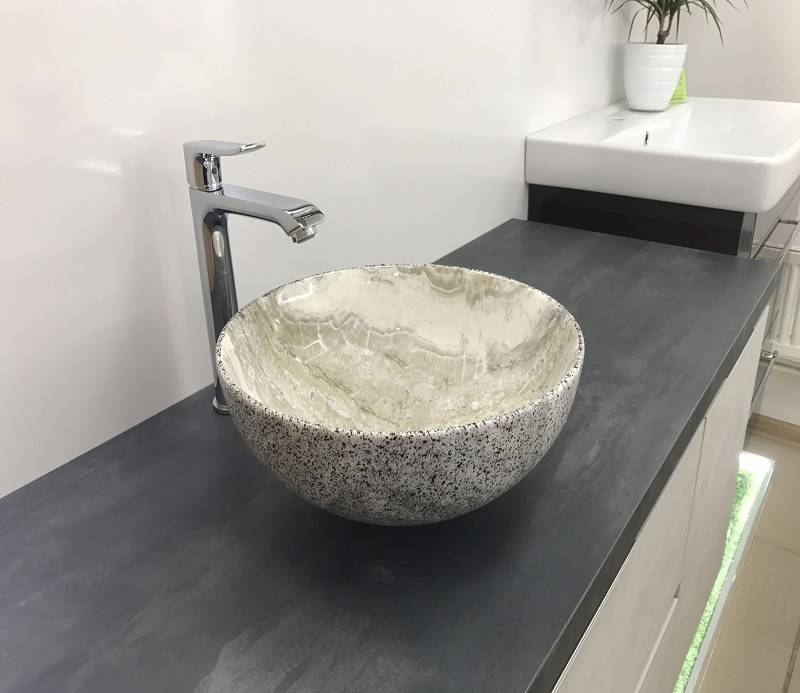
A ceramic sink is made using a special technology from clay and other minerals, where high temperature differences are involved. This material is environmentally friendly and, thanks to its smooth surface, does not require heavy washing efforts. The price of a ceramic sink is in an affordable range. However, do not forget that ceramics is a fragile material. The product may break under mechanical stress. In addition, it is heavy, so it is not recommended to use wall-hung ceramic washbasins.





Wood
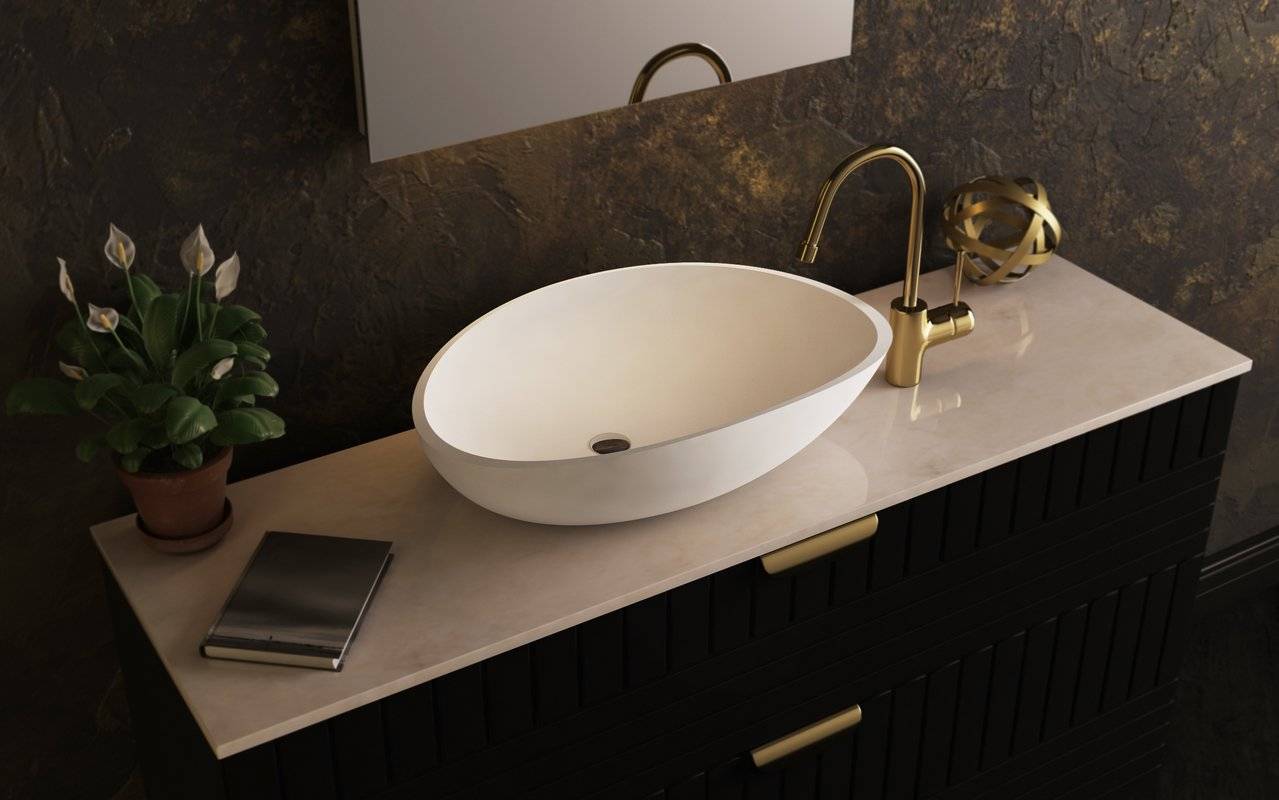
A sink made of wood material will look original and stylish, but this decor option is not cheap. A long service life will be ensured by a high-quality water-repellent solution and a varnish coating that requires additional care.
Marble
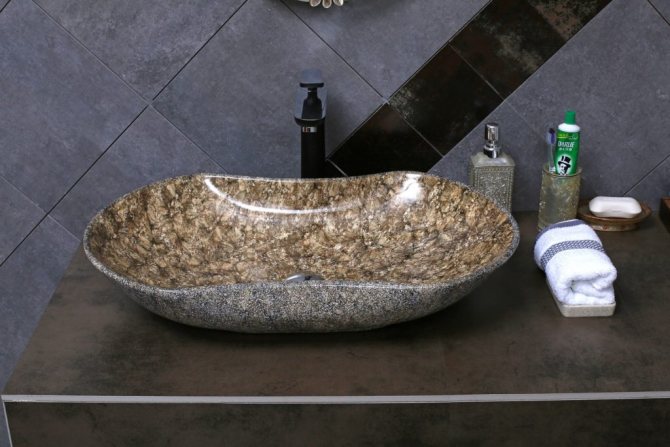
Marble sinks not only look impressive, but also have a number of advantages. For example, although a marble surface will quickly become dirty due to its porous structure, it can be polished to restore its original appearance. Such washbasins look impressive, but marble is a fragile material, so it will not withstand the fall of a heavy object on its surface. Another significant disadvantage is the high price of the product.
How to choose the right sink and manufacturer?
When planning to purchase a sink built into the countertop in the bathroom, you should be guided not only by the aesthetic parameters of the product, but also by the performance characteristics
Particular attention should be paid to the following points:
- Construction dimensions. They determine the functionality and appearance of the product. On sale are shells ranging in size from 40 to 90 cm. Models with a width of 55-60 cm are considered the best option. The depth of the bowl can vary from 48 to 61 cm.
- Fixing the bowl. The sink can be built into the countertop from above or rest only on the back, hanging with its front side over the border of the cabinet, or it can be built in from below.
- Color design. It largely depends on whether the sink fits into the interior or not. Transparent, white, plain, colored with a natural "pattern" - the choice is limited only by the preferences of the consumer and the color palette of the interior of the bathroom.
When choosing a double sink, it is important to consider the distance between the centers of the tanks, which should be at least 90 cm.
When purchasing a sink built into the countertop, you must immediately pick up a tap and other plumbing accessories for it. Please note that some models require an additional siphon.
When purchasing built-in plumbing models, preference should be given to trusted manufacturers. Trademarks that have proven themselves well in the plumbing equipment market:
- "Laufen" - an Austrian company produces luxury products that combine original design solutions and excellent quality.
- "IFO" - plumbing with a Scandinavian character, which is characterized by simplicity and elegance.
- Gustavsberg is a Swedish company that produces high-quality products, the main concept of which is functionality and style.
- "Villeroy & Boch" - high-tech and thought out to the last detail, the products of the German company are the benchmark for quality and reliability.
- "Jika" - Czech plumbing, produced under this brand, is famous for its modernity, functionality and affordable price.
Manufacturing
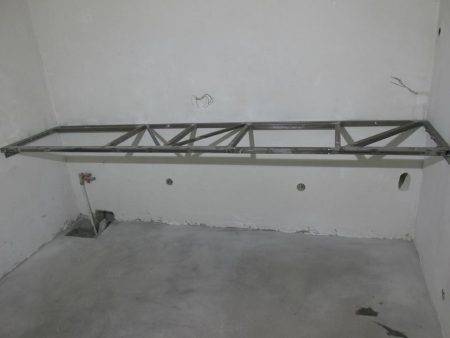
The whole process the manufacture of the countertop consists of several stages:
- creating a sketch, in the process of work, you need to decide on the shape and size of the future product;
- marking at the installation site;
- creating a framework;
- sheathing;
- execution of finishing works.
Create a Sketch
When creating a sketch of a future countertop, you need to focus not only on aesthetic appeal, but also on convenience and functionality. There are standard options:
- height - 80-110 cm;
- the distance between the plumbing elements is 70 cm or more;
- the distance from the wall to the washbasin bowl is 10 cm or more.
However, these are standard settings, so you can change them for convenience. For example, if everyone in the family is tall, then you can place the countertop at a higher height. In addition, you need to consider the need for additional details - shelves, niches, etc.
markup
After the sketch is created, and the materials are purchased, you can start marking. First of all, you need to free the installation site from unnecessary items so that nothing interferes with the work. If the countertop is not built immediately after the repair, then you need to carefully examine the finish for defects.
If they are found, then it is necessary to take measures to eliminate them (to repair potholes in the flooring, replace broken tiles, etc.). The markup is done like this:





the height of the countertop is marked and a mark is placed on the wall (if the floor is uneven, then you will first have to mark the zero level, and then measure the height of the countertop from it);
then, at the level of the height of the countertop, its length is noted;
then you need to make a projection of the future structure on the floor, measuring its length and width;
marking is done using a level, it is very important that the lines are laid strictly vertically or horizontally without distortions.
Assembling the frame
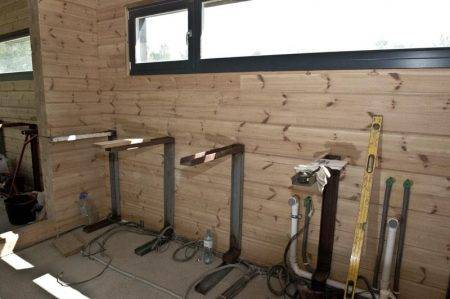
Now you need to cut the profile or timber according to the dimensions of the sketch. It is recommended to try on each part on the spot and number it so as not to confuse which one to install during the assembly process. After all the details are prepared, you can begin installation. To complete the work you will need:
- puncher or drill with an impact function to create holes in a concrete wall;
- screwdriver;
- dowels;
- self-tapping screws.
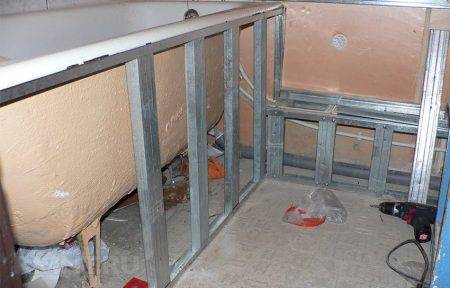
Completing of the work:
- holes are drilled in the frame elements for installing dowels in increments of 20 cm;
- the prepared part is applied to the installation site, a point is marked on the floor or wall through the hole in the part;
- holes are drilled at the marked points;
- drill holes in the walls and floor, the diameter of the hole should be 6 mm, and the depth should correspond to the length of the dowel;
- install the frame parts in place, insert the dowels and screw in the screws. During the assembly process, it is necessary to periodically check the correct installation using a level;
- to make a protruding stand, it is necessary to use two identical sections of the profile, they must be inserted one into the other and fastened with self-tapping screws. A double profile is much more reliable than a single one, so it's not worth saving;
- horizontal jumpers (stiffening ribs) are also desirable to be double. The prepared jumpers are inserted into the groove of the profile installed on the wall and fixed with self-tapping screws. To the protruding stand, the jumpers are attached through a bracket, which is easy to cut out of the profile trim;
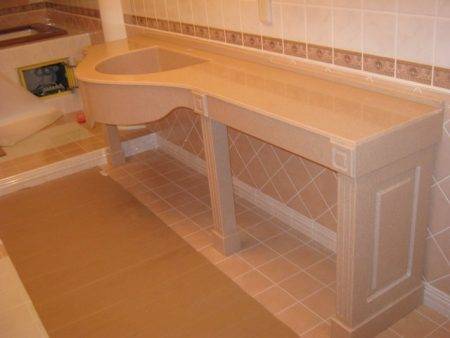
- the upper part of the frame is reinforced with stiffeners; when placing jumpers, it is necessary to leave room for installing the sink. Spacers must be made double, otherwise, the finished tabletop will sag, even with a slight load;
- the last stage of mounting the frame is the final check of the correct location of the parts using a level.
sheathing
The finished frame needs to be sheathed with GKLV. They do the job like this:
- cut blanks corresponding to the dimensions of the profile;
- the upper blank is laid in place and the contour of the shell is drawn on it according to the template. This is a very crucial moment of work, because if the hole is not cut correctly, then after installing the sink, ugly gaps will remain;
- then the cut parts are hemmed to the frame, screwing in the screws every 15 cm;
- GKLV sheathe the upper and side parts of the structure, according to the sketch. At the last stage, narrow strips are attached to cover the ends;
- cut a hole under the sink, install it;
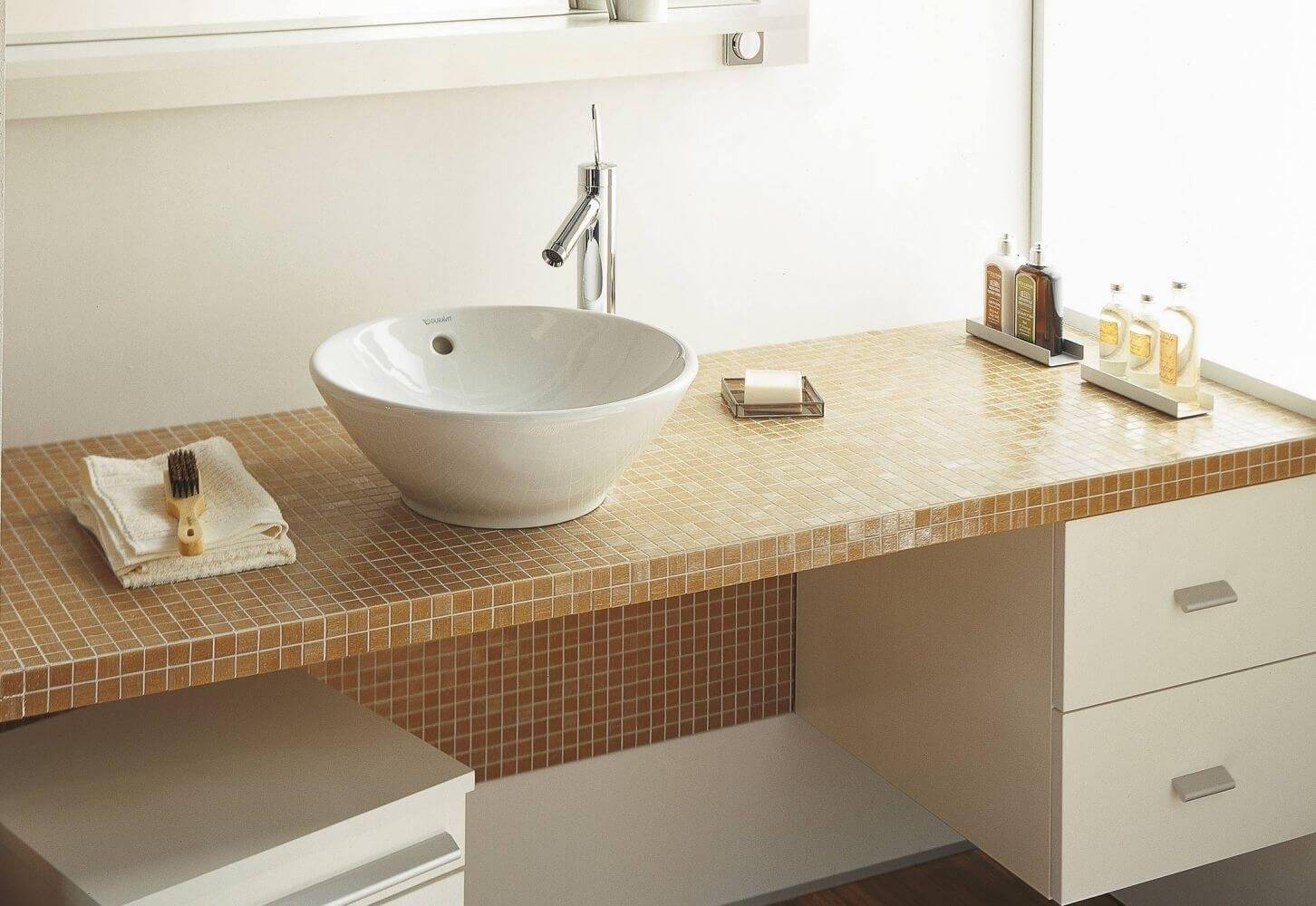
- then grout all the seams and proceed to the finish. Tiles or mosaics are used as decoration.
So, if you want to make a countertop in the bathroom, it is convenient to use moisture-resistant drywall. Working with this material is simple, but you need to be extremely careful when marking up. It is best to finish the countertop with ceramic tiles. The mosaic finish will look elegant.
Types of overhead sinks
To create a harmonious interior in which it is easy to relax or recharge your batteries, you should choose plumbing fixtures of the same style. The comfort of using this abode of purity depends on the design and functionality, color scheme. Any sink performs one function - it is used for hygiene procedures.

When choosing a sink for a bathroom, you should decide on the shape and material of the plumbing fixture. It is worth approaching this issue with all responsibility. There are many materials from which these structures are made. The most popular are:
- Ceramics has earned the love of buyers, it is the most common material used in plumbing fixtures. It is represented by porcelain and faience. These materials have a smooth surface that makes them easy to care for, ceramic products are durable and chemically resistant. But it is worth considering that they are highly fragile;
- Wood is considered the most unsuitable material for the manufacture of this kind of product, but this opinion is erroneous. There are modern technologies that allow you to create a true masterpiece that will bring elegance and charm to the bathroom. These products are durable, they are treated with special impregnations that protect the material from moisture. Look stylish and have an unlimited service life;
- Glass has been used for the production of sinks for a long time, which only washbasins you will not see from this unusual material. It is worth considering that for the manufacture of such products, tempered glass is used, which is not so easy to break, or triplex. They withstand enormous loads and temperature changes, some types of material are immune to scratches. The main minutes of glass products - they require constant care;
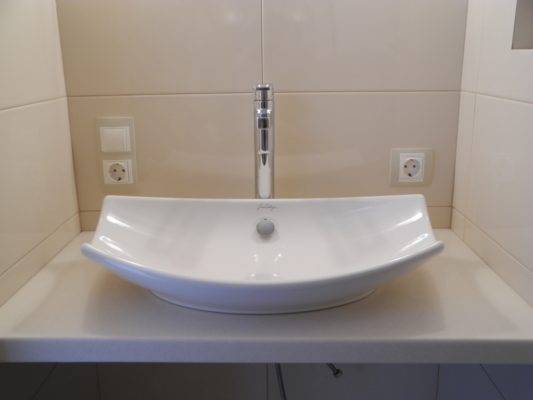
- Stone sinks allow you to create an interior that strikes with splendor and richness. Can be made from natural and artificial stone. The first option is much more expensive, artificial stone is cheaper, it perfectly imitates natural materials. These products have high wear resistance, strength and rich texture. But caring for them is difficult, they have significant weight;
- Metal is often associated with the simple and cheap washstand we are used to seeing in inexpensive places. In fact, there are models that amaze with their uniqueness; they can easily be attributed to elegant and unusual art objects. For the manufacture of sinks, steel, bronze, nickel, brass are used, materials can be matte or shiny. In any case, such a product looks elegant and respectable. The only drawback of metal structures is their noise when interacting with water.
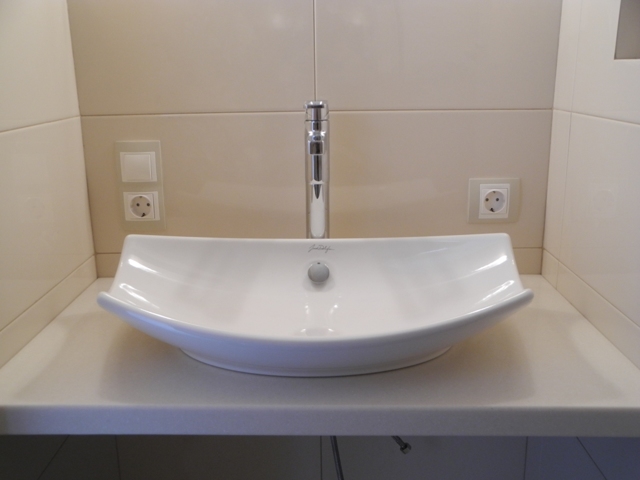
The variety of forms is also striking. What kind of sinks you will not find in stores with plumbing. Round and oval, rectangular, semicircular and corner sinks are presented to the attention of consumers, these forms are most in demand on the market. They can be made in the form of a bowl or a flower.
There are products with an exclusive design in the form of a coffee bowl or a flower bud, you can find an original solution and purchase a figure of an unusual non-standard shape, for example, there are options in the form of a bizarre blot. Problems with the choice most often arise precisely because of such a wide range of products presented to customers.
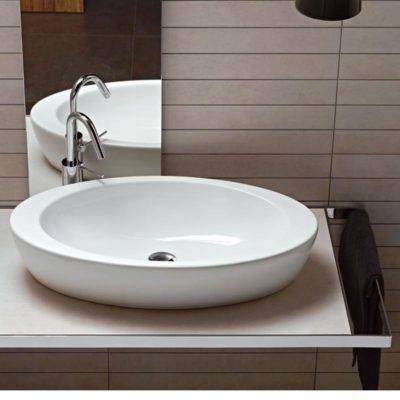
With the help of these designs, you can embody any style in design. In the corner, the round version will look harmonious, rectangular and oval products will fit perfectly on the cabinet along the wall in the center or with an offset. The main thing is to ensure free access to the sink. The size of the selected product also depends on the installation location.

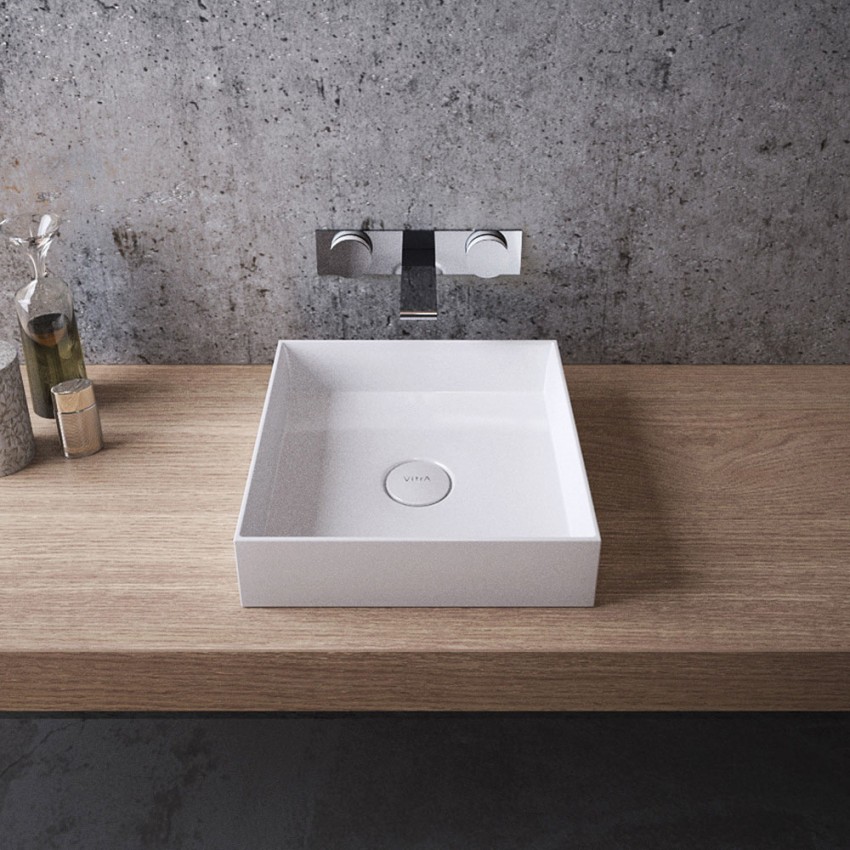


The standard dimensions of overhead washbasins are 40-55 cm wide and 12-35 cm deep - these are small items. Large sinks are 75-120 cm wide and 48-61 cm deep. Non-standard appliances are usually made to order according to individual parameters.
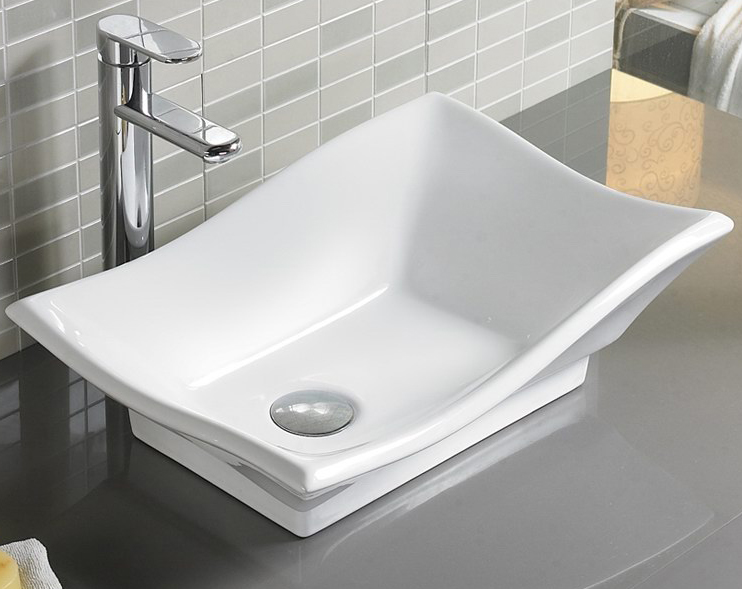
Sinks are available with or without overflow. This point should be taken into account when buying a consignment design. As a rule, the siphon comes in combination with the main element. In some cases, the siphons are equipped with a special nut, which securely fixes the structure to the surface with the help of a sealant.
What materials are used for washbasins
Nowadays, manufacturers offer a lot of interesting options for countertop sinks in the bathroom, which are made of various materials - from plastic to natural stone.
The most popular are still traditional ceramics and earthenware. The most luxurious, of course, look marble sinks, but they are available only to wealthy buyers.Read also our article Bathroom sinks: choose from a variety
Fans of original solutions can purchase glass, wood or metal washbasins. The latter are often offered in rather sophisticated forms. If a person has a desire to use an unusual wooden overhead washbasin, it is necessary to carefully check the quality of the product. The tree must be treated with a special solution.

For more than a decade, sinks made of ceramics, faience or porcelain have been deservedly popular. Such options received a lot of positive feedback during operation. In addition to high quality, ceramic, faience and porcelain washbasins have another important advantage: affordable prices. Surface-mounted sinks of this type have a very pleasant appearance and the most smooth and even surface, which is convenient and easy to care for. Read also our article Cabinets under the sink in the bathroom: choice and tips

Among the shortcomings of such a material, it is worth noting the fragility. Overhead sinks must be installed very carefully and try to avoid mechanical damage to the surface with heavy objects.
If the countertop is thin enough, you should take a closer look at the overhead acrylic washbasins. They have such an important quality as lightness. They are light in weight, but these sinks are very durable and inexpensive, so recently they have been very popular.
Nevertheless, acrylic washbasins must be used very carefully to avoid mechanical damage.
In the case when the buyer is not limited in money and wants to purchase the most durable and durable material, he can be advised a sink on a bathroom countertop made of natural stone. Such products have a lot of advantages and look luxurious and presentable. However, in this case, it must be taken into account that the overhead stone sink will be quite heavy, so the countertop must be as strong as possible.
Overhead washbasins: description and varieties
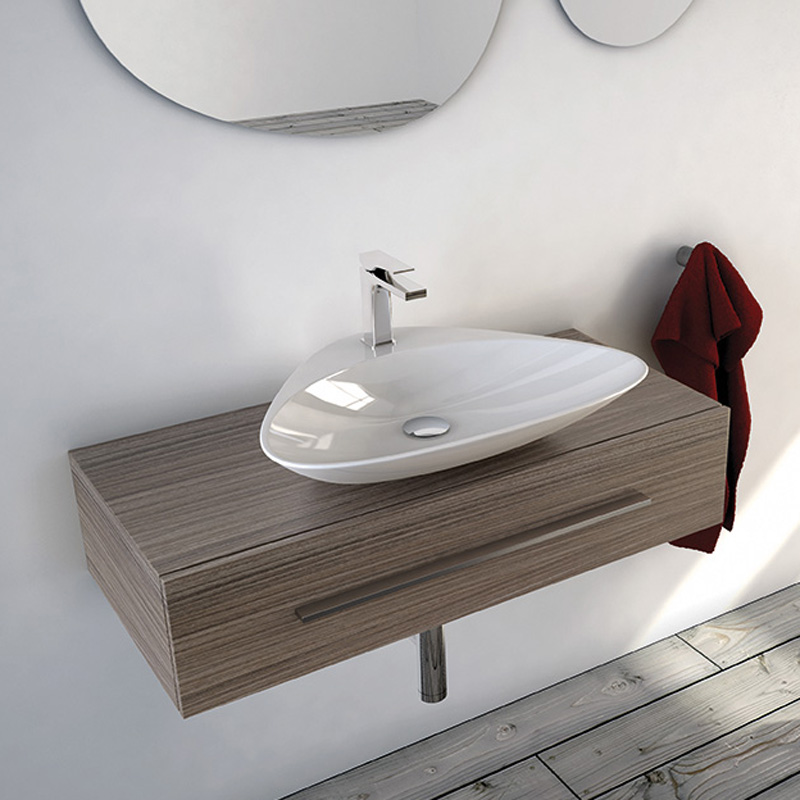
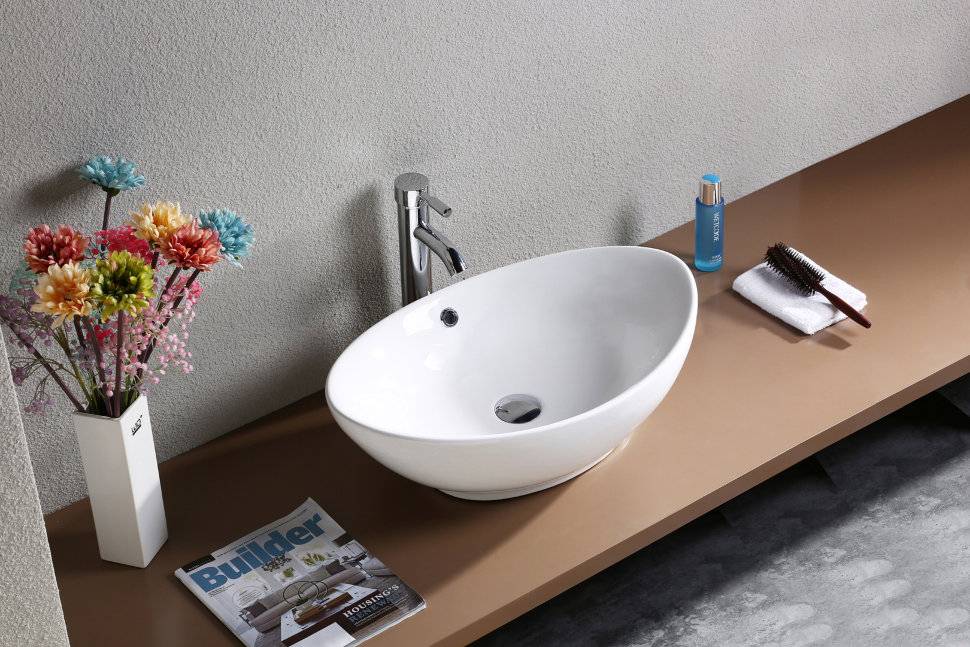
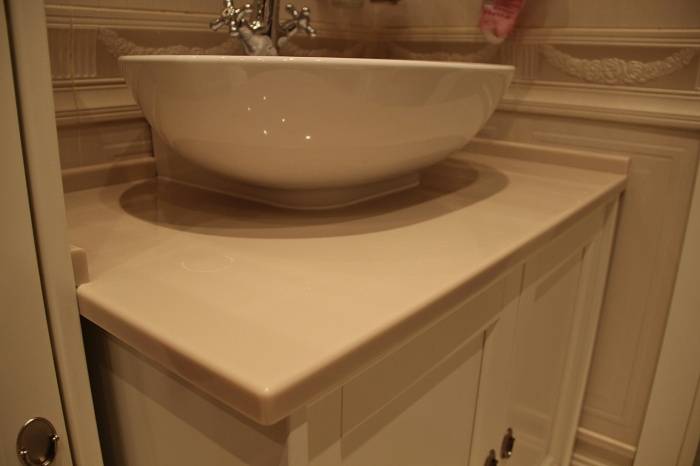
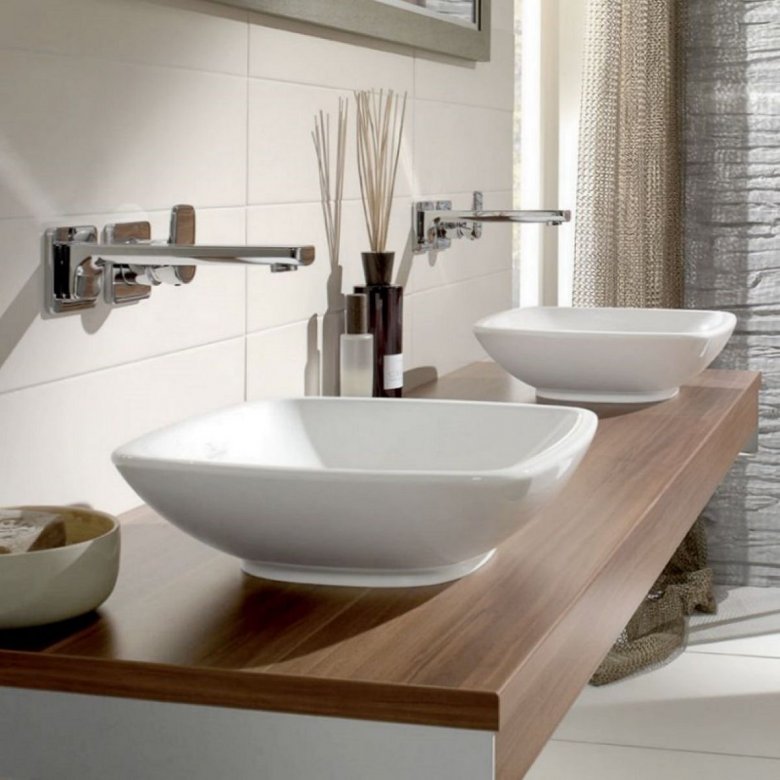
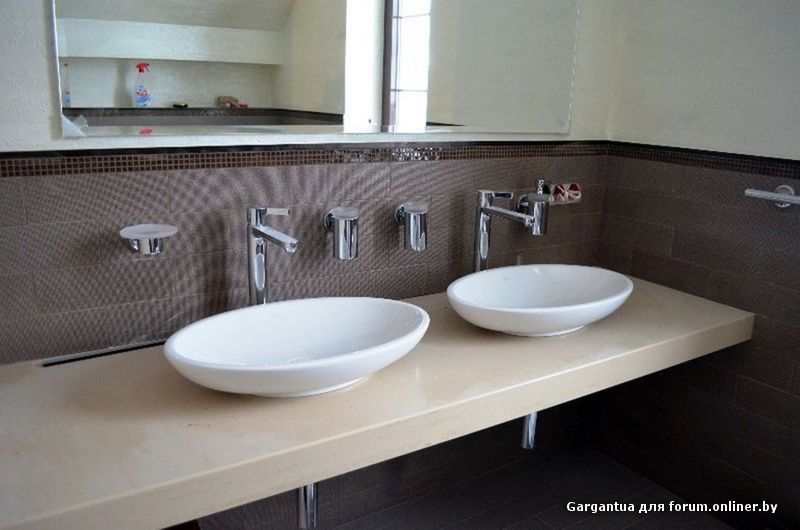
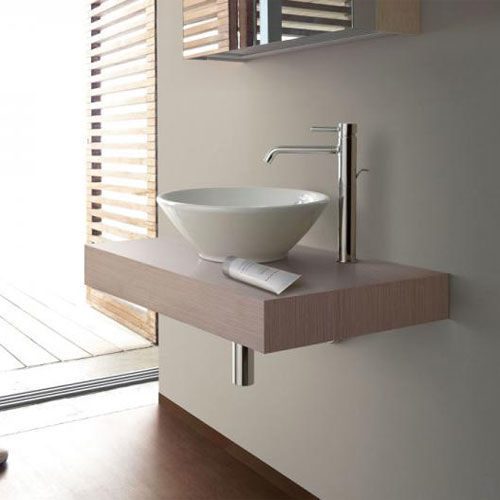
The classic bowl-shaped countertop sink is installed on a specific base in the form of a countertop. As a result, the effect is created that this is not a washbasin, but just a beautiful bowl that can be removed without any difficulty. This installation method is very convenient.
- There is free space under the table top.
- You can approach the sink from all sides, so it is convenient to use it.
- If the base of the bowl is narrowed, then the surface around it can be used as a dressing table.
- When purchasing a wall-mounted bathroom sink, it is not necessary to buy a bulky cabinet for it. Devices floating in the air with an inconspicuous drain look original and very beautiful. Making the necessary accents, they emphasize the dignity of the room. Such designs are very convenient for small areas.
- With the help of overhead washbasins, you can perfectly disguise all kinds of communications.
Countertop sink installation in kitchen and bathroom
There are several ways to install overhead sinks. It can be completely "drowned" in the cabinet, installed on top or made partially rising above the countertop. In all cases, the drain is located inside the cabinet. To perform installation work, you will need a standard set of tools:
- electric drill;
- hacksaw or jigsaw;
- screwdrivers;
- clamps;
- pliers;
- brush and spatula;
- pencil;
- level;
- rags;
- sanitary tow;
- silicone sealant.
The installation of the sink begins with the markup. Included with the sink you will find a standard template. It is used to apply the correct markup. Decide where you would like the sink to be installed.
Attention! You can not place the countertop sink right next to the wall and on the very edge. This is a safety requirement and a guarantee of your convenience!. Photo 3
Installing a sink in a countertop requires all the necessary tools and tools for installation
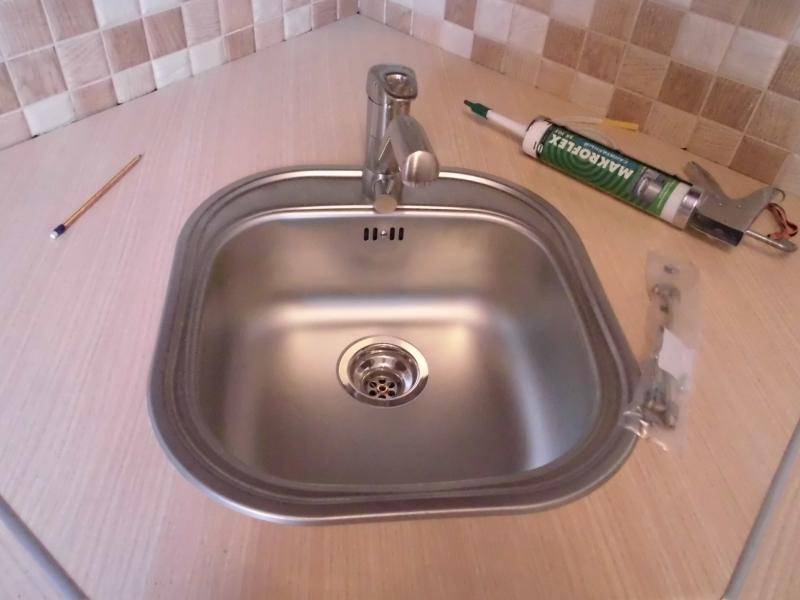 Photo 3. Installing the sink in the countertop requires all the necessary tools and tools for installation.


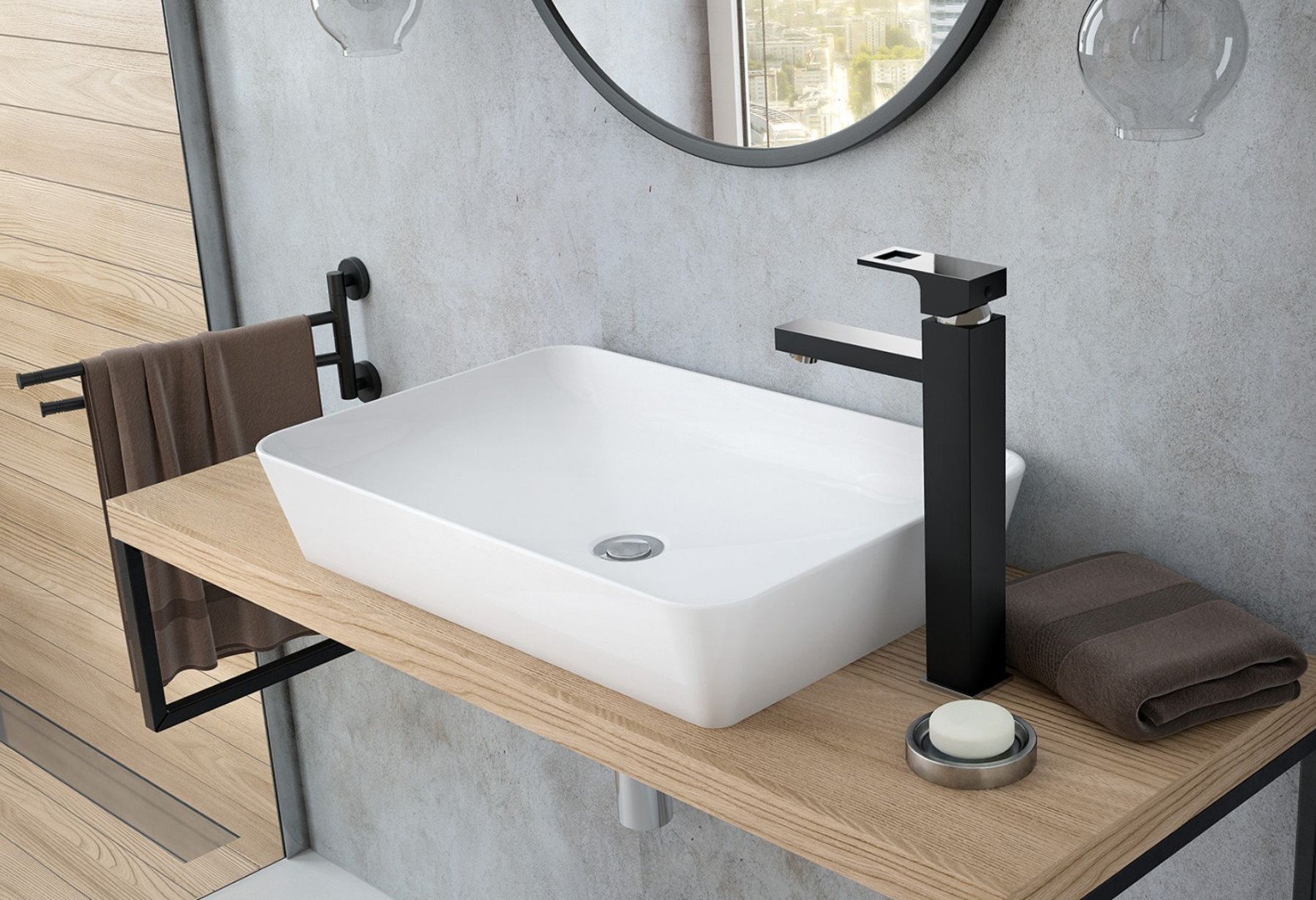




If there is no template, turn the bowl over and trace it on the countertop. To create a contour, take a simple pencil, it is easily erased and will not leave marks.
Next, measure the distance from the eyelets for fasteners to the edge of the sink. The resulting centimeters are the distance that you need to retreat from the previously outlined contour inward. Given these dimensions, we make a new markup. If the sink has a traditional shape, then simply step back from the 1.5 cm outline and draw a new smaller outline.
Cutting the tabletop along the contour
The “figure” obtained on the tabletop must be cut out. Here you will need a jigsaw or a fine-toothed hand saw. The hole for the sink cut with a jigsaw will turn out smoother. If there is no jigsaw, then to work with a hacksaw, you need to drill a hole inside the contour closer to the markup. With it, we begin to cut out the excess. Try to minimize the pressure on the countertop cover. Let the hacksaw slowly move almost on its own. Speed is your enemy here! Chips will appear.Tape the edge of the countertop with masking tape before cutting to avoid damaging the decorative finish.
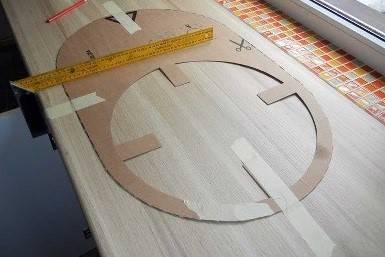 Photo 4. Marking the countertop under the sink.
Processing saw cut countertops with silicone
All end edges of the countertop must be processed. To do this, we grind them with sandpaper and a file. Then the aligned edges are treated with a sealant. This manipulation is necessary to protect the product from water and eliminate problems of "bloating" from leakage. Processing is carried out with a spatula or brush. For wooden and plastic countertops, an alcohol-based sealant is suitable.
Washbasin fixing
After the ends of the table are filled with silicone, we insert the sink. The fit must be tight. To do this, move the bowl a little. Fastening is carried out on special fasteners
Please note that when the bowl is seated, some silicone will be squeezed out. Delete it
Leave the structure to dry.
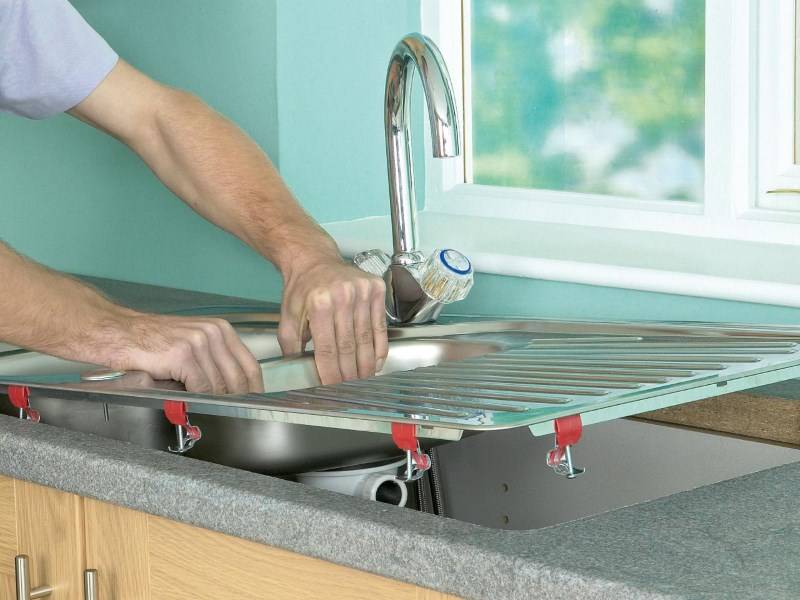 Photo 5. Installation of a surface sink.
Sewer connection, mixer installation
The installation of the mixer is carried out according to the manufacturer's instructions. When purchasing a sink, make sure that it is equipped with a faucet hole. Otherwise, you will have to do it in the canvas of the countertop. In this case, the hole is made in advance, before the installation of the sink. We install hoses in the installed mixer, and connect them to the water supply. We fix all fastening screw elements with the help of sanitary tow.
The sewer connection is also carried out according to the standard scheme. We assemble the siphon, connect it to the sink, and then to the sewer drain. We check tightness.
This instruction is universal. It is also suitable for those who are looking for how to install a sink in a countertop in the bathroom.All stages of work remain the same, with the slightest exception, waterproof materials and types of countertops are used in the work. By following all the recommendations, you will mount a sink that will retain an attractive appearance and last for several years.