Ventilation Tips
As already mentioned, ventilation in the attic of the house is necessary, so when arranging it yourself, you need to listen to the recommendations of experts:
- openings at the top joint of the roofs should be located as close as possible to the ridge:
- ventilation must be able to withstand various weather fluctuations;
- if it is planned to install spotlights under the cornices, then they should be made of plastic or aluminum. Otherwise, corrosion may begin;
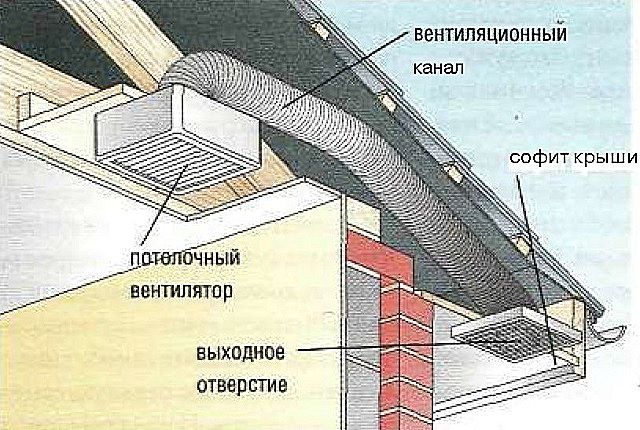
- in order to avoid the formation of frost in the attic, the air ducts are installed inside, and when arranging the holes, it is necessary to ensure that air is not trapped and clogged;
- the installed heat exchanger will prevent the appearance of condensate;
- pipes that serve for ventilation must be with gratings;
- dormer windows not only provide good ventilation, but also decorate the building.
Ventilation in the attic
Before you start equipping the attic with ventilation, you need to calculate everything well.Calculating attic ventilation is a painstaking task, but you can also do it yourself. The number and shape of the products depends on several components:
- what type of thermal insulation and waterproofing was used in the construction of the house;
- attic area;
- intensity of air intake from residential premises.
In order to prevent the formation of icing, which destroys building materials, it is necessary to provide for the ability of the eaves to heat up quickly. For this purpose, slotted holes must be well thought out.
In order for ventilation to work effectively, you need to determine the area of \u200b\u200bthe products. The starting point is the rafters. If their length is twenty meters, then for cornice ventilation, the holes should be 400 square centimeters in area. In the case when the rafters are ten meters, then the area, respectively, is 20 square centimeters.
Also in the calculations, you can build on the proportion: what 1 one square meter of ventilation openings per 500 square meters attic area, and for an attic area of 200 square meters, 0.4 square meters of holes are needed.
The diameter of the holes is taken without taking into account the width of the gratings.
Rules for drafting ventilation
The full operation of the ventilation system directly depends on the accurate calculation of technical parameters and a well-designed project for the circulation of air flows in the house.
The development of a layout for the placement of equipment and piping makes it possible to lay channels for extracting stale air into the project. In addition, it will be convenient to adjust the height of the ceilings in the rooms, taking into account the additional space for laying outgoing pipes.
The calculation of ventilation and aspiration must be carried out at the stage of architectural planning of a residential facility
If you carry out the installation of ventilation during the redevelopment / reconstruction of the building, you need to specially ditch the walls under the ventilation ducts or install massive attached shafts that do not look at all aesthetically pleasing.
It is at the stage of engineering air exchange system design define basic technical solutions:
- method of distribution of air flows in the house;
- type of ventilation and exhaust shafts;
- availability of filtration equipment.
However, when calculating the ventilation system, infiltration is not taken into account, since the contribution to the circulation of air flows is negligible. Some building materials and building envelopes can pass air without special devices.
This process is called active natural infiltration, which must be taken into account when developing a home heating scheme.
Some building materials and building envelopes can pass air without special devices. This process is called active natural infiltration, which must be taken into account when developing a home heating scheme.
There are many factors that affect the air quality in residential and utility rooms. When developing a ventilation project, in addition to the design features of a private building, various generally accepted standards and objective indicators are taken into account. Also an important role in this process is played by the personal preferences of the owner of the house and the available budget.




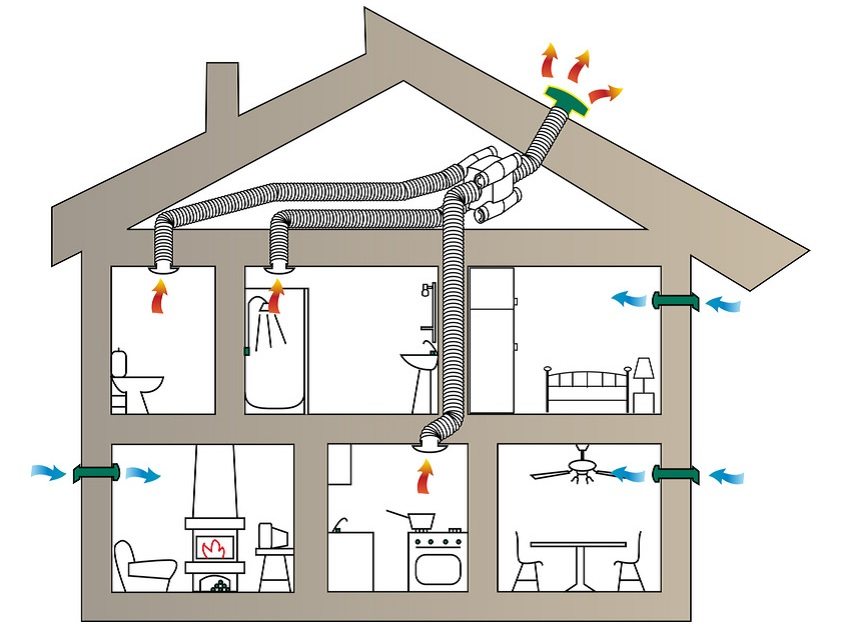

The design of ventilation systems is carried out according to the following plan:
- At the initial stage, a technical task is drawn up.
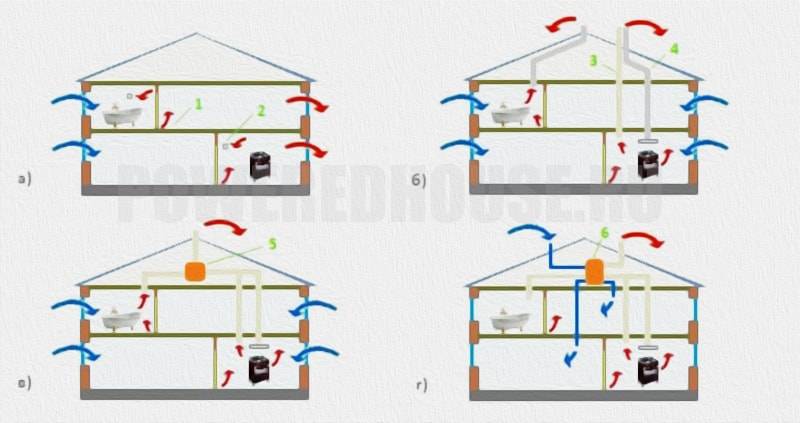
- The second step is the selection of the optimal air exchange concept in a private house.
- The next stage is the development of a scheme with the calculation of the level created by ventilation, noise, the calculation of the cross section and the selection of air ducts with the required parameters.
- The next step is to prepare the drawing for customer approval.
- The last stage is the final design and delivery of the finished ventilation scheme.
It is necessary to exclude situations when, for repair work or periodic inspection of equipment, it is necessary to dismantle parts of building structures or decorative finishes. Therefore, filters, heaters, fans and other system components are better placed in a special technical room.
This will also solve the problem of organizing effective noise isolation of an operating ventilation unit.
In the process of developing project documentation, it is necessary to additionally study the issues of future operation and maintenance of the ventilation system.
If you do not follow the templates, but develop an individual concept for arranging ventilation for a specific construction site, you can ensure a stable supply of clean air to all interior spaces and exhaust of polluted air.
When developing a ventilation scheme, you need to focus on some technical features:
- volumes of exhaust and supply air masses must be balanced;
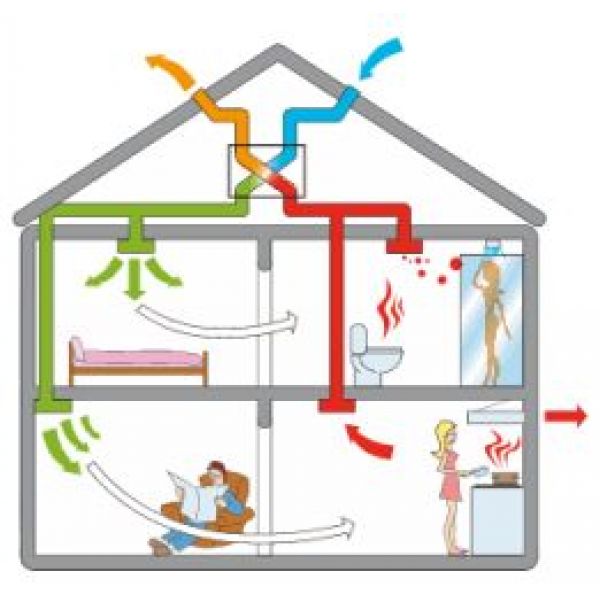
- fresh and clean air is supplied only to the living rooms, and the exhaust air is removed from the utility rooms;
- it is not allowed to combine the hood from the kitchen and the bathroom into one ventilation duct;
- the speed of the air flow in the exhaust pipes and main air ducts should not exceed 6 m/s. At the exit from the grid, the maximum indicator is 3 m / s;
- ventilation shafts that run along the street must be insulated with insulating materials at least 5 cm thick.
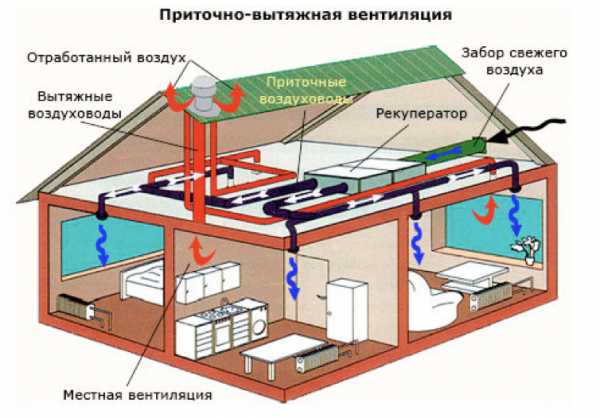
Experts recommend choosing a basic supply and exhaust scheme. Arranged ventilation of this type will effectively cope with the supply of fresh air and filtering the internal one.
The correct approach to the device for the circulation of air masses will help create a favorable and comfortable microclimate in the house.
Inclusion of the attic in the ventilation system
Arranged instead of an attic, the attic is essentially another room. Which is good from the point of view of optimizing the living space, but somewhat complicates the installation of the ventilation system in the traditional way.
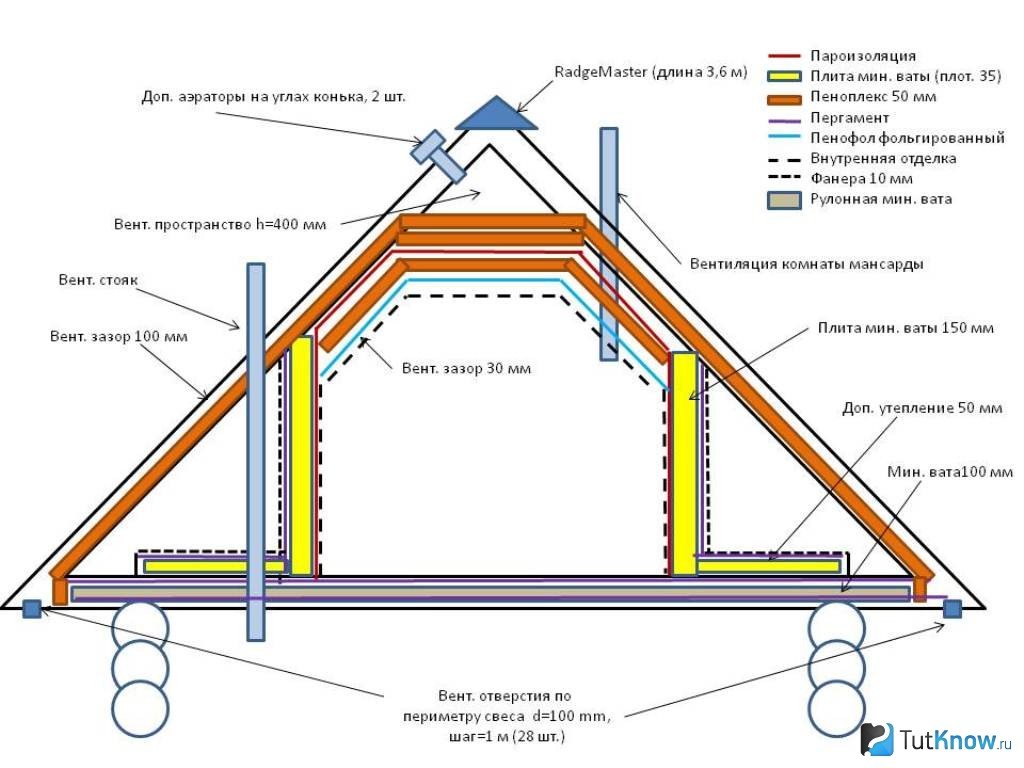
There should be a ventilated attic space between the attic and the roof. Fresh air must be allowed to circulate freely in the roofing pie and within the attic or equipped attic.
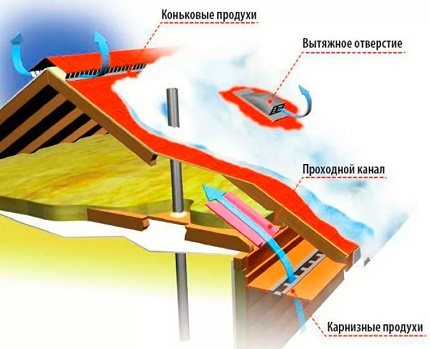
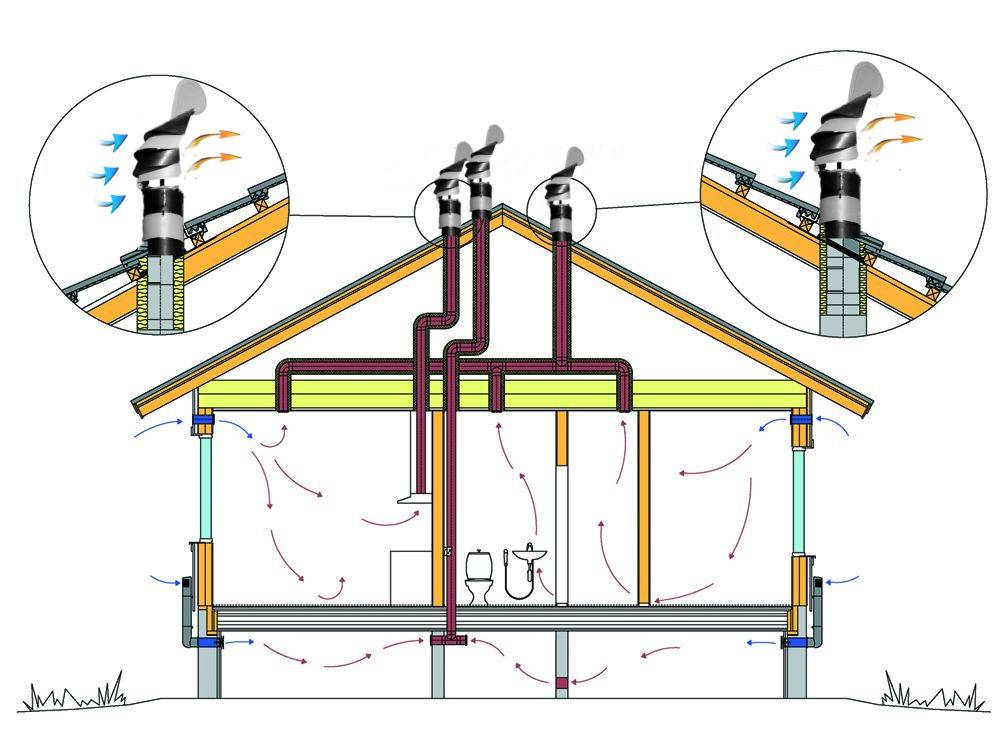
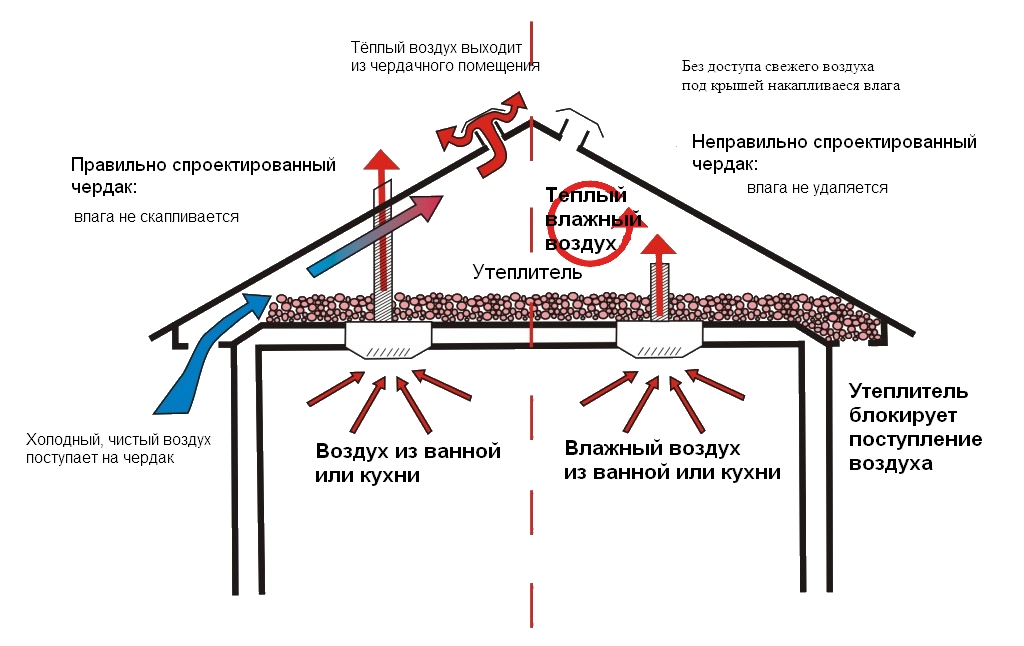
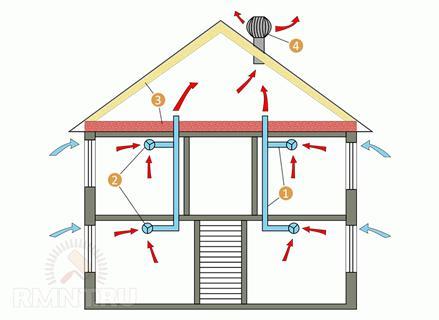
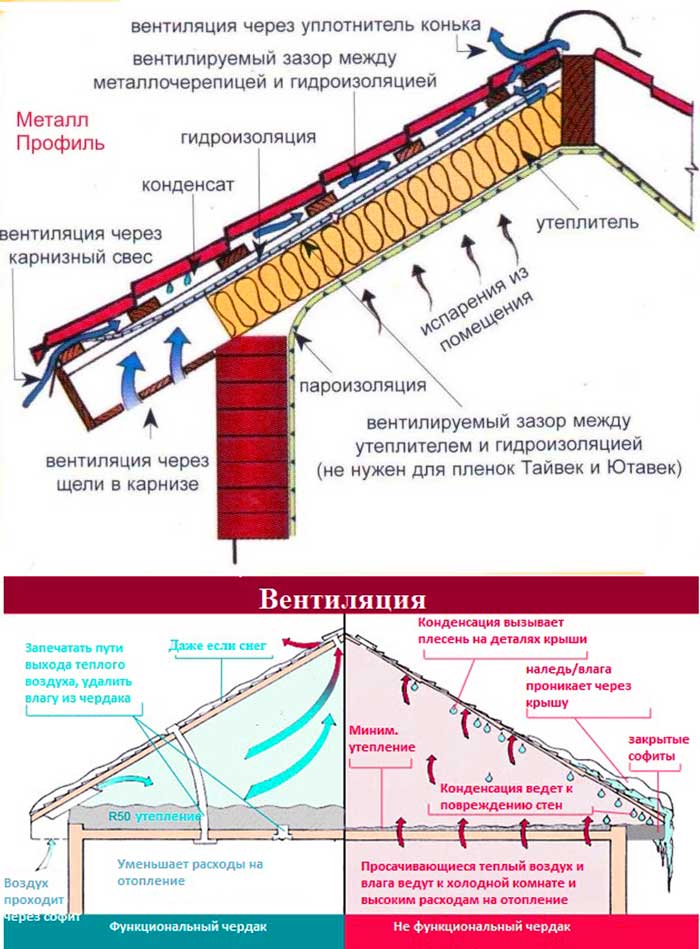
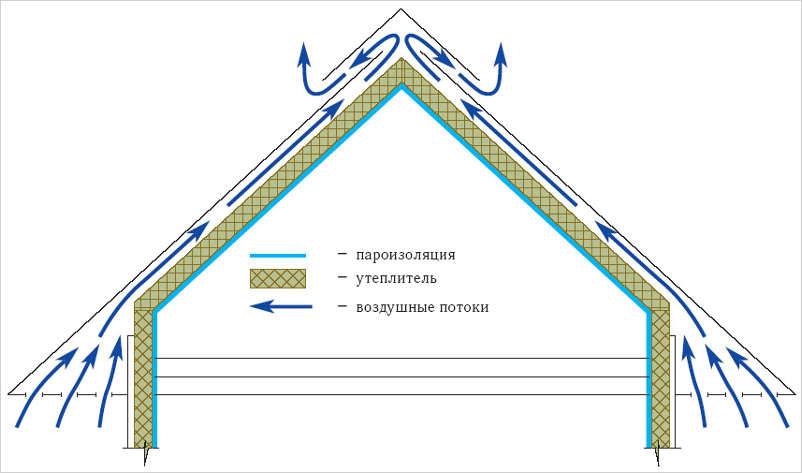
Natural ventilation occurs due to the gravitational movement of the air mass. Cold air enters from the holes under the roof ridge, warm air leaves the ridge hole, aerator
In the process of constructing a roofing pie, it is imperative to construct vents - longitudinal ventilation holes. They start from the line of the eaves, end at the line of the ridge. They are provided by mounting the battens and counter battens on the rafter legs.
In the cornice area, street air enters these ventilation ducts. In the ridge zone, the air flow exits, taking with it condensate and household fumes that have penetrated from the living quarters into the attic space.


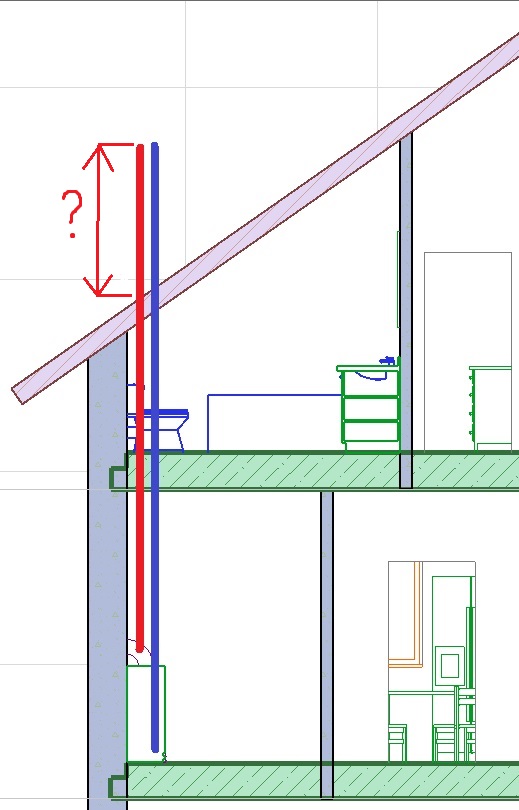
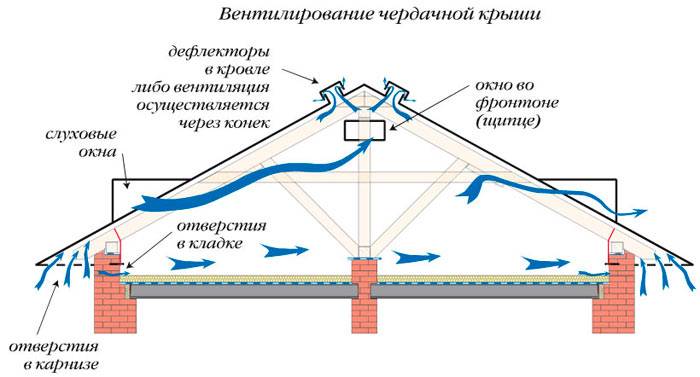


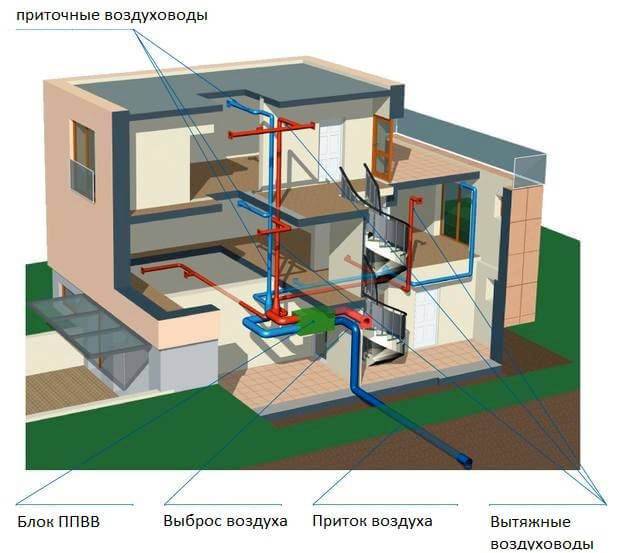


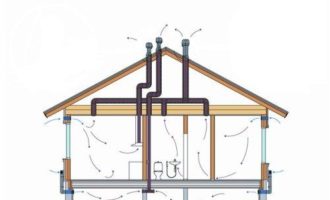
The ventilation system of the rest of the house is also displayed in the attic. Exhaust ducts and risers from the house and from the attic can be combined and connected to an aerator. However, you must be sure that the air circulation will be sufficient.
The nuances of the equipment of the air exchange system
In the organization of roof ventilation, one or more methods of organization are used. Air exchange directly depends on the characteristics of the attic, its area, shape, type of roof and building materials used.
When installing the system, it is necessary to take into account the amount of precipitation characteristic of the region. If there is a risk of ridge and hip ridges falling asleep with snow, it is better to supplement ordinary air ducts with turbine aerators that exceed the height of snow drifts
The specificity of the roof ventilation device is that it is necessary to provide two directions indirectly related to each other, these are:
- Ventilation of the roofing pie. It is needed to dry the system under the roofing: insulation laid along the slopes, rafters, battens. Provided with air and aerators.
- Removal of excess moisture from the attic space. It is required to drain the attic or attic, to form a microclimate in it, favorable for extending the life of the structure and the stay of the owners. Provided with ventilation gable windows, openings, hatches.
The roofing pie is ventilated with air ducts - longitudinal channels laid from the cornice overhang to the ridge ridge. Air ducts are formed during the laying of the battens and counter battens on the rafter legs.
In the ventilation ducts formed by the crate - the vents - the air moves from the bottom up. It is tightened in the area of the cornices and brought out in the ridge area from the side or from above
The distance created by this method allows the air flow to enter in the eaves area and exit in the ridge area, taking with it the condensate and moisture that has settled under the roof.
For roofs made of ondulin, bituminous, polymer-sand and natural tiles, aerators are additionally used, repeating the shape of the roofing material. If they do not differ in color, then they literally merge with the roof. The grate built into them allows air to move freely in the direction necessary for drying.
Aerators for tiled roofs can practically "merge" with the coating. They are used mainly on hip, semi-hip and hipped roofs, in which the ridge rib is shortened or does not exist at all.
In the case of a roof roof with corrugated steel, metal tiles and corrugated board, when installing a ventilation system for a roofing pie, it is somewhat complicated. The installation of the crate should be carried out with breaks, i.e. with additional cross channels.
If the gap in the crate is not initially observed, then side holes are drilled in the laths under the steel profiled roof. They are placed after about 30 cm. As a result, the area of \u200b\u200bthe air flow draining the insulation increases due to the movement of air not only upwards, but also sideways.
A purlin with a gap in the laying or with drilled transverse holes increases the area covered by the air flow. So the insulation of the roofing cake is washed by air currents moving both along the slopes and across
Air exchange in houses with a flat roof is distinguished by the absence of gables in which attic windows can be installed. And although there is still an attic in well-arranged flat and low-pitched roofs, they ventilate them through the ventilation holes.
The roofing pie of a flat roof is ventilated by a system of aerators, the installation step of which depends on the thickness of the insulation and the cultivated area
The space in large hip roofs is ventilated through dormer ventilation windows, in small ones through ventilation vents.
Despite the fact that the inclined ribs of the hips are equipped according to the ridge principle, they cannot provide sufficient outflow. To remove and eliminate possible stress, put aerators.


For ventilation of attic spaces and attic spaces of hip and hipped roofs, dormer windows are arranged. They can be with drop-down doors or with a fixed grid.
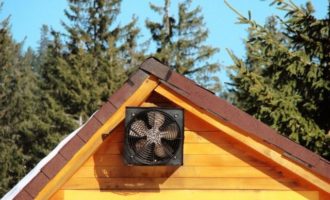
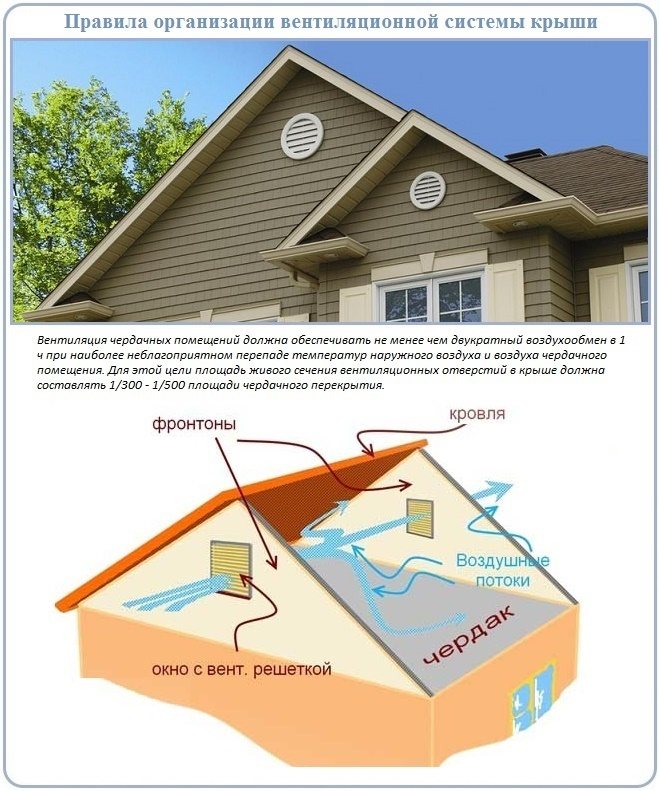
Air exchange in the attic space of a gable roof is often organized by installing ventilation holes with grilles, as well as through ventilation or dormer windows. For natural circulation of the air flow, both openings and window openings should be located on both sides.
Truths and misconceptions about attic ventilation
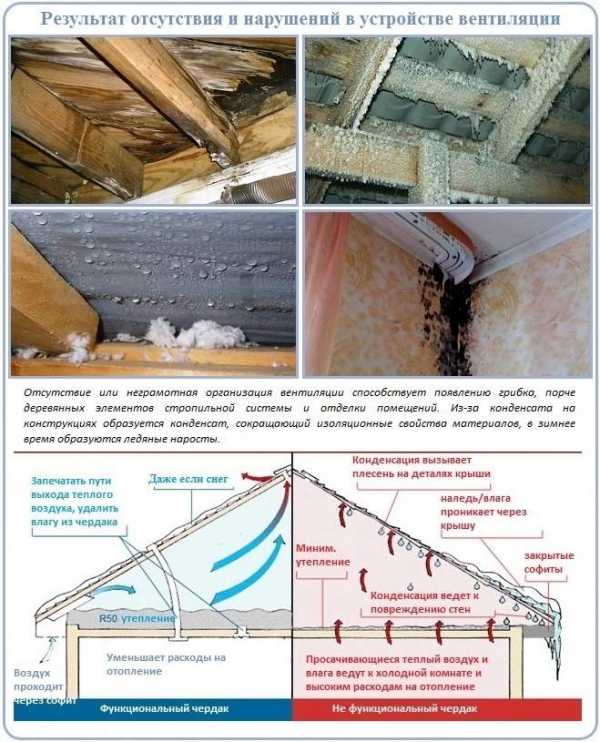
Good ventilation of the room under the roof will eliminate the appearance of condensate, which will increase the life of the truss structures, lathing and ceiling of the upper floor. In the summer, the roof overheats, but thanks to ventilation, the heat disappears without having time to penetrate into the living quarters. The roofing cake itself cools down under the influence of a draft, which favorably affects bitumen-containing materials.
In winter, snow melting on a ventilated roof occurs more evenly, since the heat coming from the house has time to be distributed without creating concentrated pockets of condensate over heated rooms. Air circulation eliminates frost on the eaves, preventing excess moisture from turning into ice growths. In addition, with the proper organization of the ventilation system, snow will not stick to the roof surface.
Owners who do not know the question make a number of errors in the ventilation device associated with common misconceptions. Many believe that airing the attic in winter contributes to the formation of significant heat loss. But in fact, the fault is not ventilation, but poor-quality thermal insulation.
A ventilated attic, located between the roof and living quarters, is an air gap that smooths out the temperature difference.
Another misconception is the assertion that the dimensions of the ventilation openings can be made any. And this is not true. If the opening area is insufficient, the ventilation effect will be reduced to zero, and a large number of them will lead to excessive heat leakage.
Ways to ventilate the attic
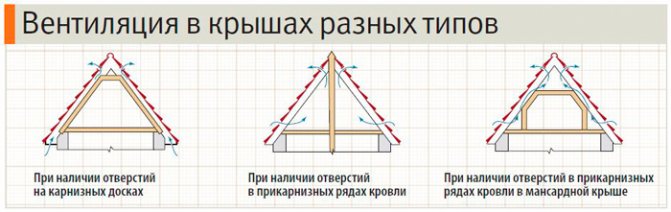
The best option for natural ventilation for a cold attic is a device on the eaves of air and holes. They are interconnected by channels through which the air flow moves.
In a house with an attic, you can arrange deflectors that create forced mechanical draft.This measure will ensure the normal functioning of the system in all weather conditions, regardless of the season.
Attic ventilation directly depends on its features:
- area of the premises;
- roof shapes;
- roof type;
- type of building materials.
For example, if ondulin or slate, metal tile is used, then a skate is arranged, which is a classic option. With a soft or ceramic roof, a special valve is used.
ventilation window
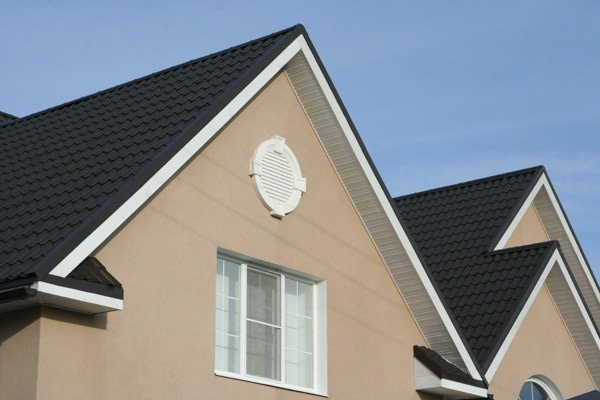
The most common way of ventilation, arranged in the attic of a private house, is to install a window. In addition to ensuring the movement of air, it is used to inspect the elements of the ventilation system and the chimney.




With a gable roof, windows are placed on the gable on both sides for better entry of cold air masses and removal of stagnant ones.
General installation rules:
- location of windows at a distance of at least 1 m from each other;
- maintaining an equal distance between the windows and the cornice, the ends of the house, the ridge;
- the general concept of the appearance of the house should be combined with the design of the window.
Dormer windows
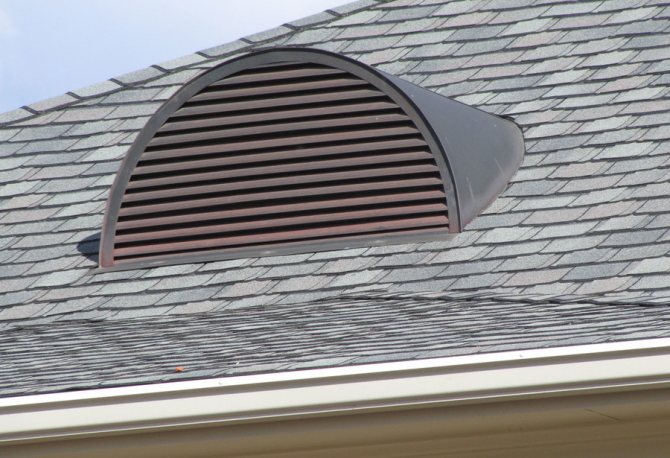
As a rule, dormer windows are used as ventilation in the attic in private houses with medium-sized rooms.
Their minimum size should be 60 × 80 cm, which helps to prevent stagnation of air in the room.
The wooden frame is attached to the rafters with the help of racks, after which the roof sheathing is carried out. The double-glazed window is inserted into it last.
There should be no gaps at the junction of the roof and the dormer window. It can not be placed near the ridge and the eaves of the roof.
Dormer windows are made in the form of a rectangle, triangle and semicircle.Windows are installed at a distance of one meter or more from each other.
The lower mark should be at a height of no more than one meter from the floor level, and the upper one - at a mark of 1.9 m.
Ventilation products
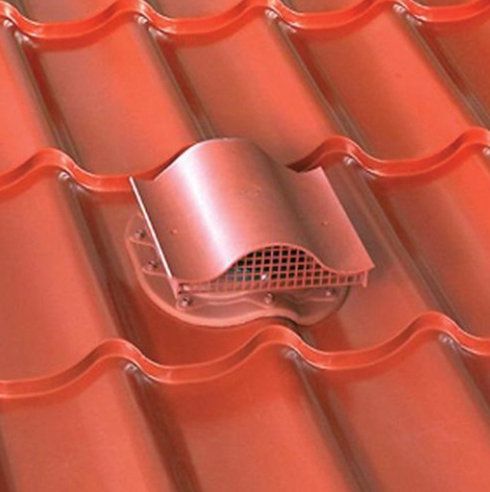
If it is not possible to install dormer windows, then, regardless of the type of attic, the ventilation method is used by means of vents closed with a mesh.
They are located on the roof of the house to ensure the normal exchange of cold and warm air.
The main types of these elements:
- slotted - located on both sides of the eaves. The gap width should be 2 cm;
- point - presented in the form of holes, the size of which in width or diameter is not more than 2.5 cm;
- ridge vents - used on roofs made of tiles. Their width should not exceed 5 cm. They are installed by retreating one row from the ridge of the house.
Aerators
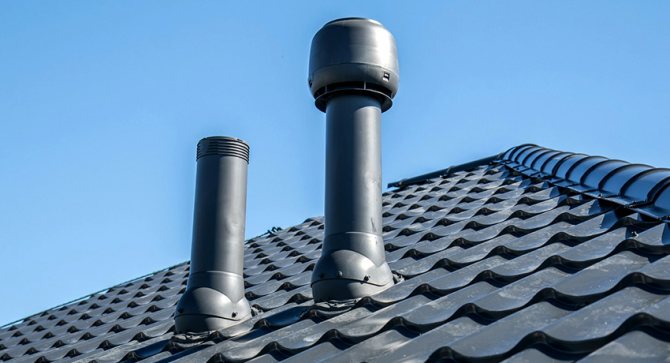
When installing ventilation in a cold attic, you can use aerators. Devices are made in the form of a pipe covered with a hat, or a plate with holes.


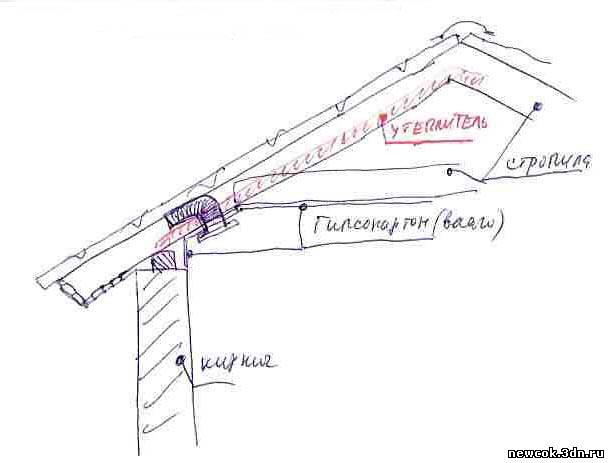


Their installation is carried out on the slope of the roof in the area of \u200b\u200bthe ridge. It is in this place that intensive air movement occurs due to the difference in temperature and atmospheric pressure.
Aerators are great for:
- with condensate that appears when the air is too humid. Thus, the appearance of dampness in the attic is prevented;
- with stagnant air, preventing it from overheating;
- with frost and icicles that form in the winter season.
This prevents premature wear of the truss structure.
The choice of the type of fixture is determined by the type of roof of the house.For example, for bituminous pavement, the best option is to install ridge aerators. For the manufacture of used plastic and galvanized metal, resistant to corrosion.