
- Initial data
- What is a mobile underfloor heating?
- How to choose a cover?
- Manufacturers (overview of models)
- Teplolux
- Sinplain
- Trio
- Ceramic tiles: dispel the myths
- Verdict - for or against?
- About underfloor heating
- Is it possible to cut underfloor heating
- exchange cable
- Reduce paving step
- Lay underfloor heating under furniture or bath
- Lay the rest of the cable in an adjacent room or on the wall
- shorten the cable
- Minuses
- Minuses
- Principle of operation
- Underfloor heating technology
- Installation of a warm water floor
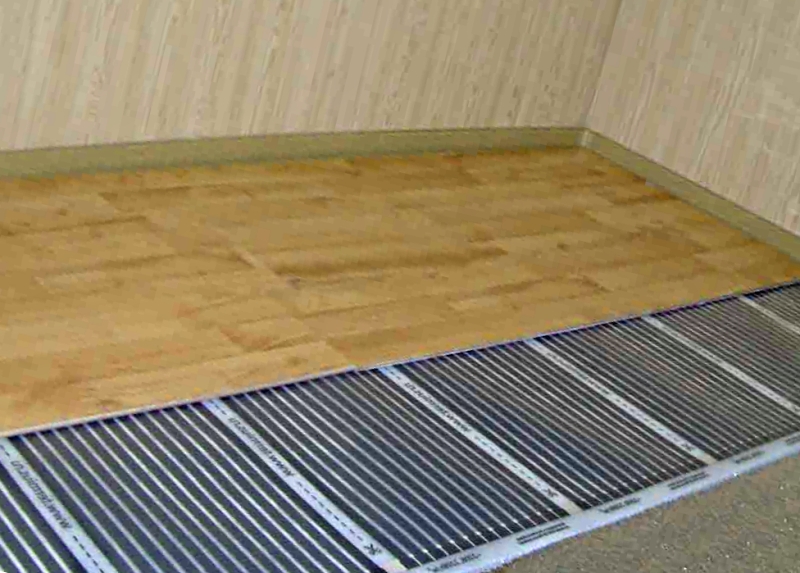
- Installation of film underfloor heating
- Infrared floor heating installation
Initial data
Both components of our question have a long history. Warm floors appeared in ancient Rome, however, they began to be widely used since the eighties of the last century, when polymer pipes were invented.
A variety of power principles for such heating systems allows them to be used both in a private house and in an apartment. The choice of device depends on the preference of the customer.
Warm floors are divided into stationary and mobile.
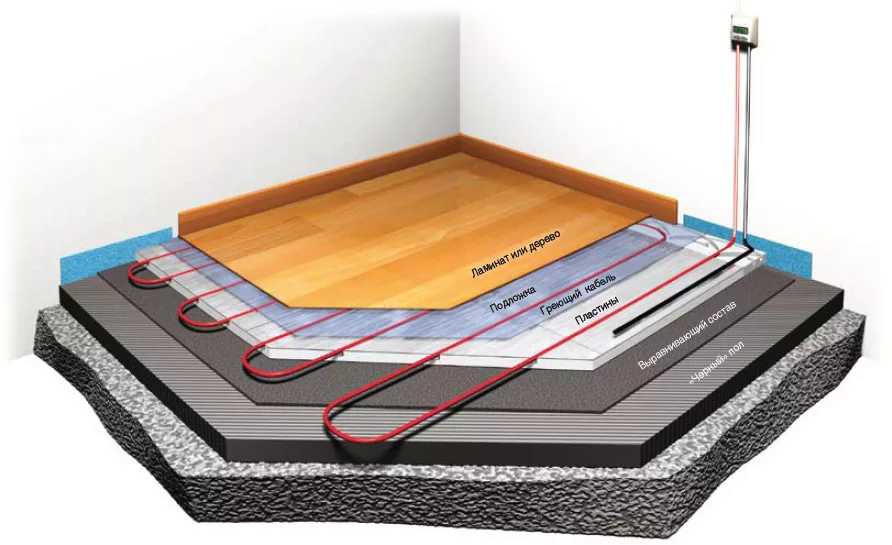
Stationary, depending on the heating element, are water, electric and infrared. Their installation requires special knowledge, preliminary preparation of the layout of the heating sections and thermostat, a flat floor surface.The role of the final element of the coating that protects the heating system from mechanical stress during operation is best handled by tiles, marble or stone.
Mobile warm floors does not require special dismantling. Are issued in the form of rugs or panels. There are infrared and resistive.
Carpets are made from artificial and natural materials, have a different pile structure, color, design and shape. With all their diversity in the house, they perform two functions:
- floor insulation;
- decor element.
The former have a dense structure, long pile, low thermal conductivity. The latter are a key detail of the interior, so the main criterion for their selection is the style of the room. To harmonize with the overall design of the house, the floor product can be made from traditional materials - wool, polyester, acrylic, cotton, linen, or from unusual ones - leather, algae, banana silk, rice.
Is it possible for the two components to fully perform their functions during operation and will be the answer to our question.
What is a mobile underfloor heating?
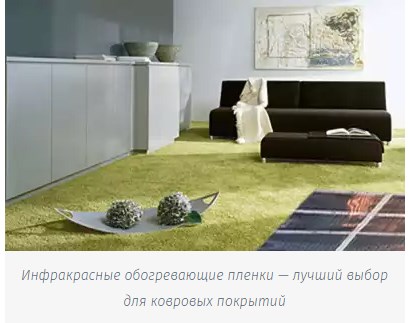
At first glance, this is a film covering or a thin mat, but, in fact, this is an electric floor heater that can be laid under any carpet. Such a heating device today has a low prevalence, as it is considered a novelty in the domestic market. Nevertheless, many have already managed to test heated mats in everyday life and understand all their advantages.
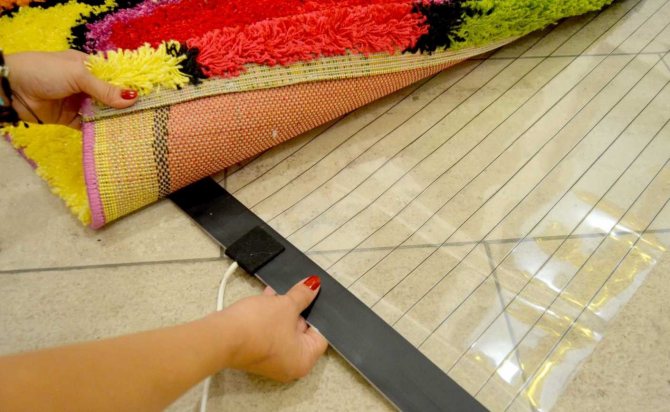
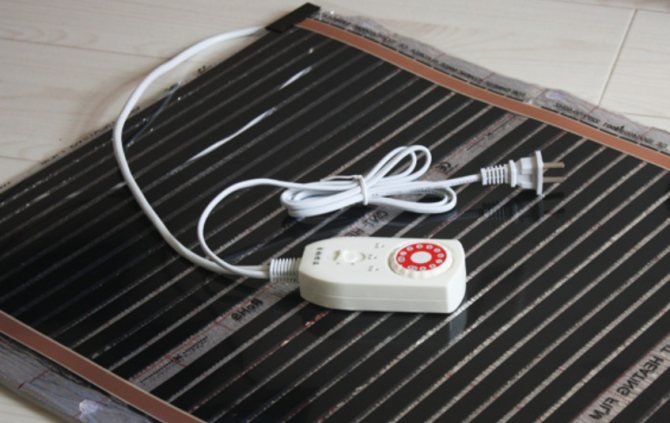
The film heater under the carpet can be used wherever there is electricity and a standard outlet: in an apartment, office, shop, and even in a garage.It has a cord for connecting to the mains, easily fits on any floor, and to prevent the mat from sliding on a smooth surface, it has special Velcro.
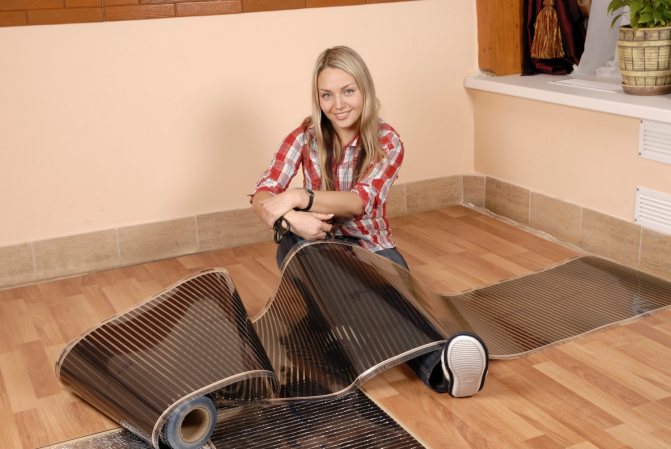
Heated film can be laid on concrete and wooden floors under:
- ordinary carpet;
- carpet and carpet;
- linoleums;
- laminate;
- thermal insulation coatings.
It is also worth noting that a warm floor can be installed even by someone who does not understand anything at all in technology. It is enough just to choose a suitable place, spread the mat and plug it into the socket through the cord. The only thing to consider is the dimensions of the carpet under which they are going to lay the nanoheater, since the latter must be completely covered.
How to choose a cover?
We summarize all of the above and answer the question - what type of finishing coating to choose? For underfloor heating on water, it is not recommended to use:
- coatings based on bamboo raw materials;
- low-quality and thick linoleum;
- classic parquet.
On floors warming up from water, you can lay a certain type of laminate or carpet
They retain heat well, but it is important to ensure that the material does not overheat. This is the best option for bedrooms and halls.
Floor coverings based on PVC can also be installed over floors. Although such materials usually do not look very presentable.
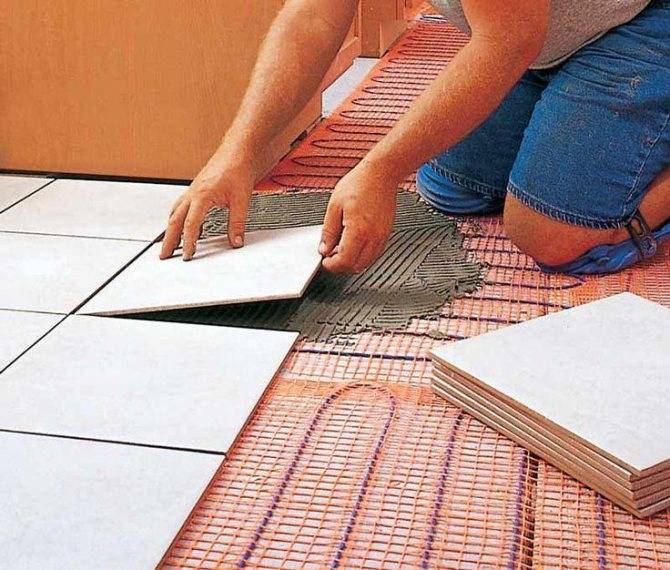


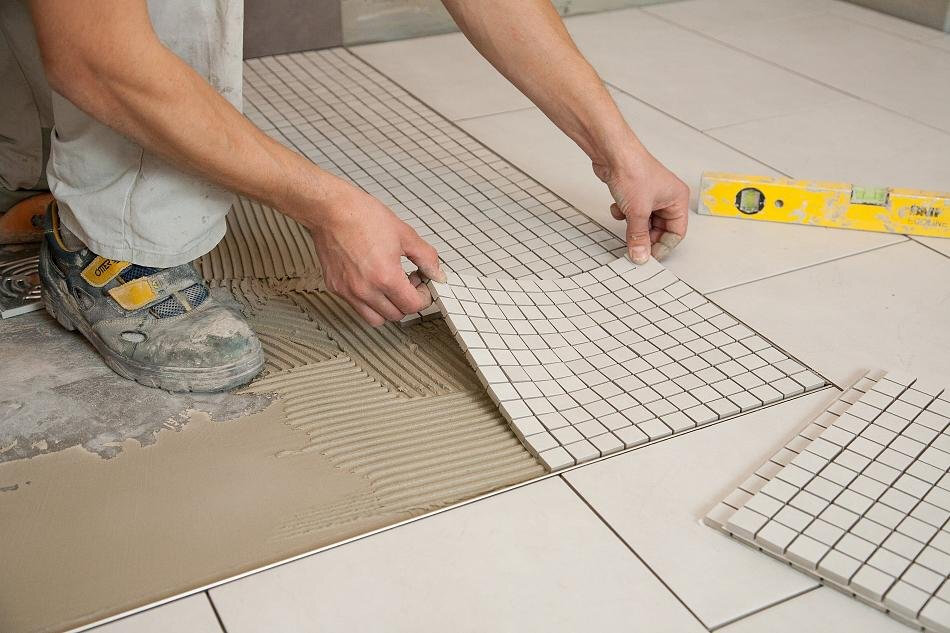
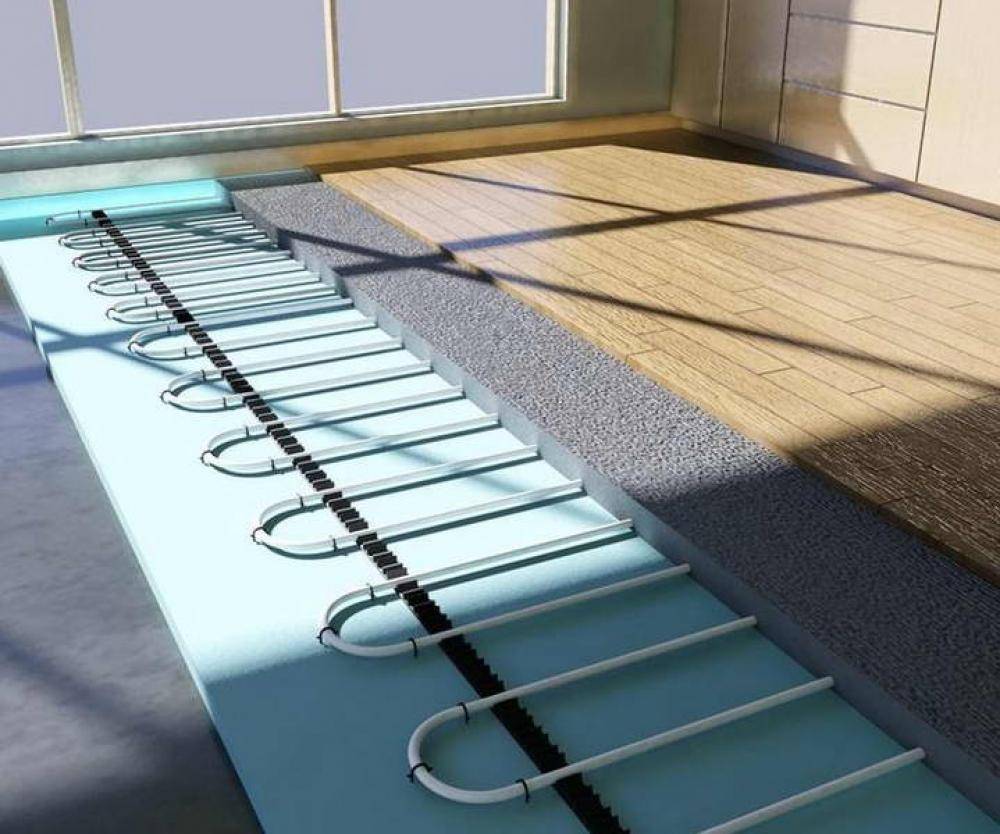
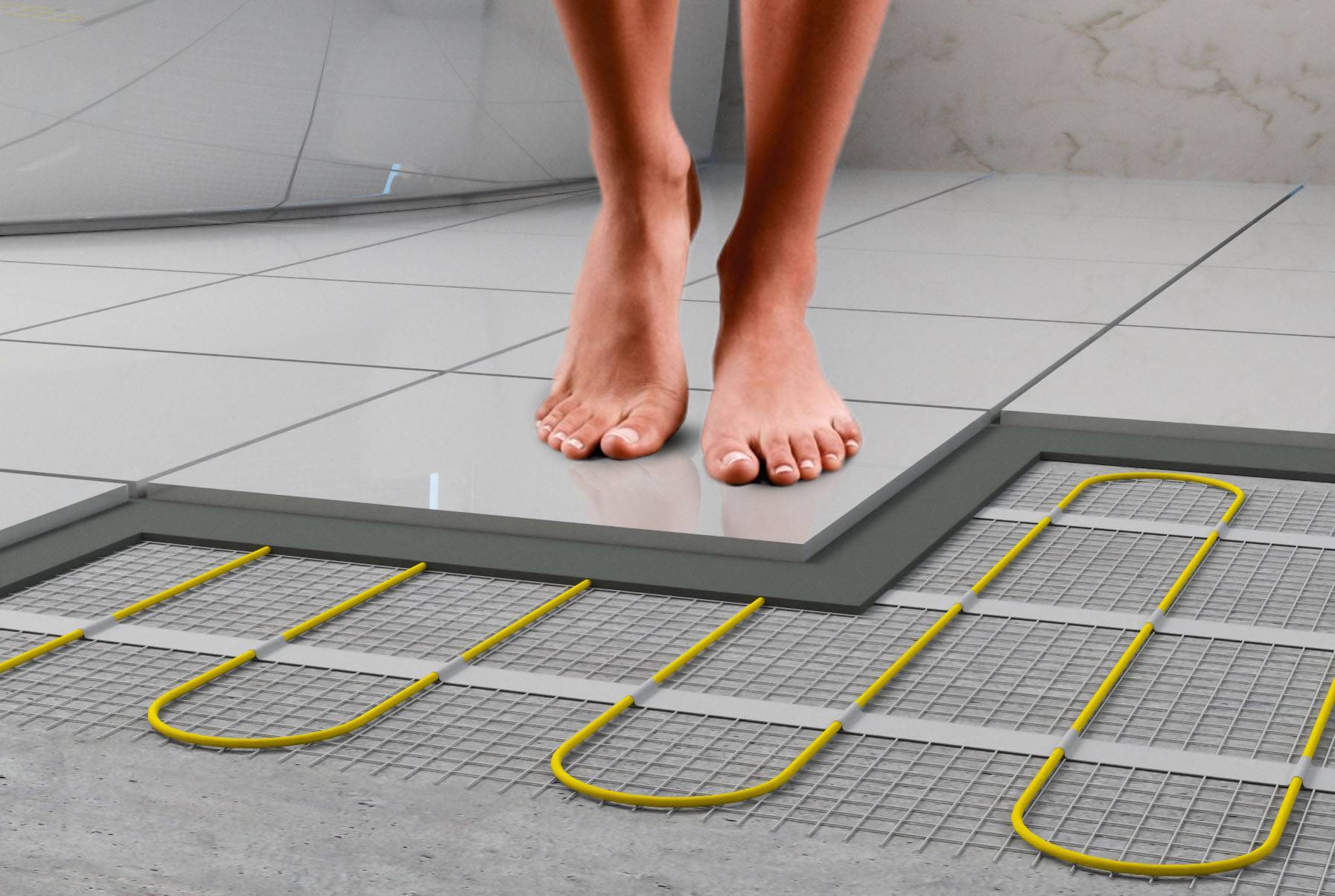
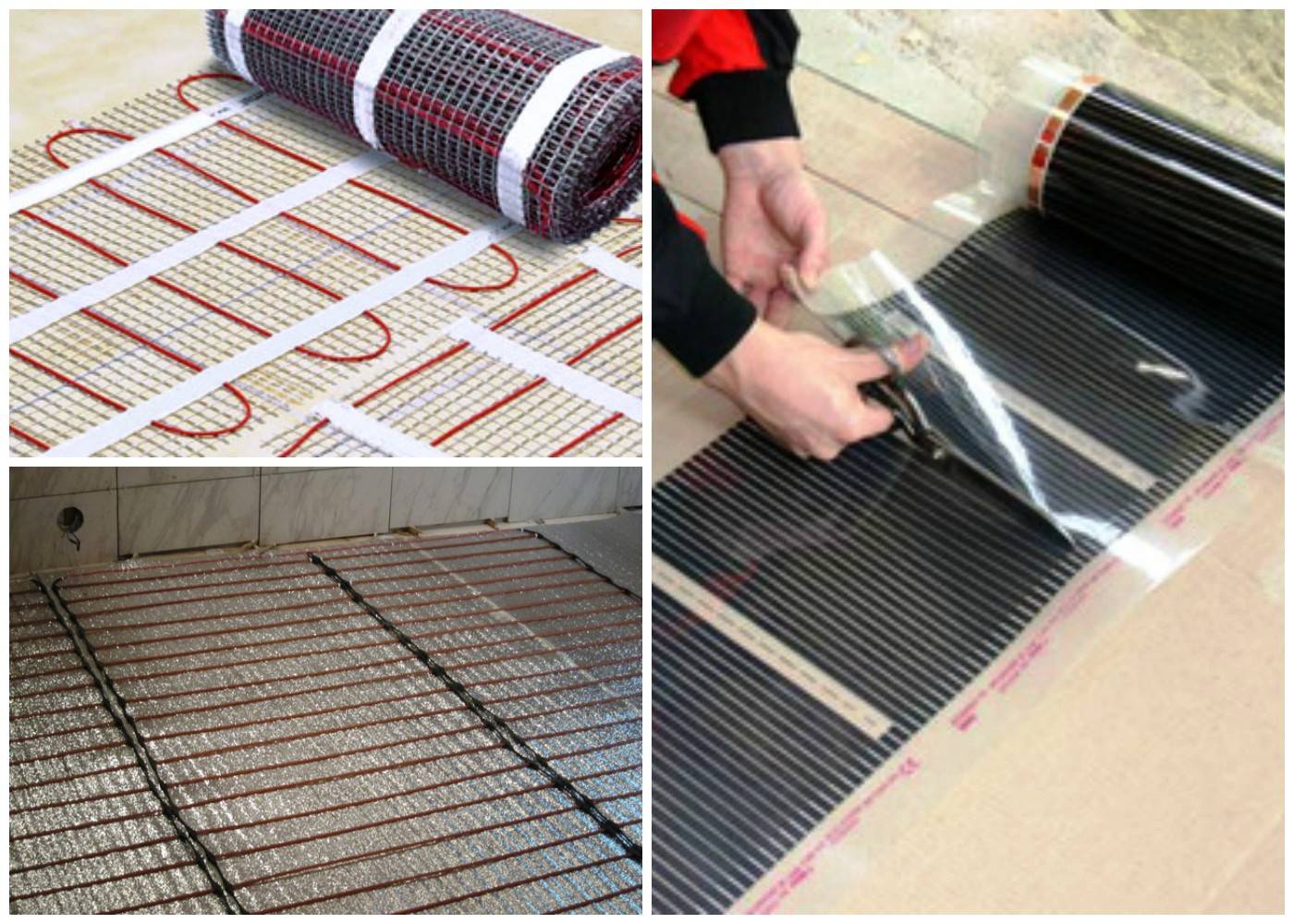


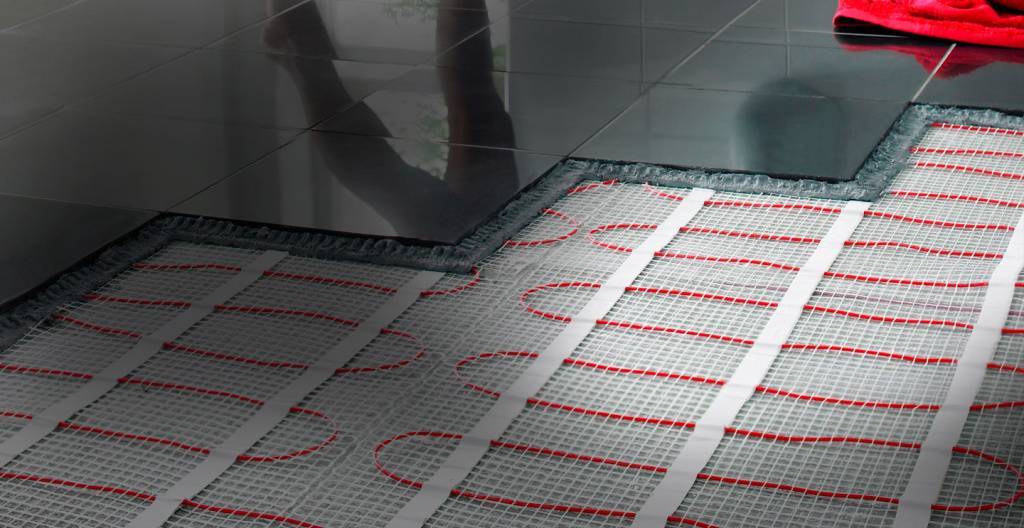
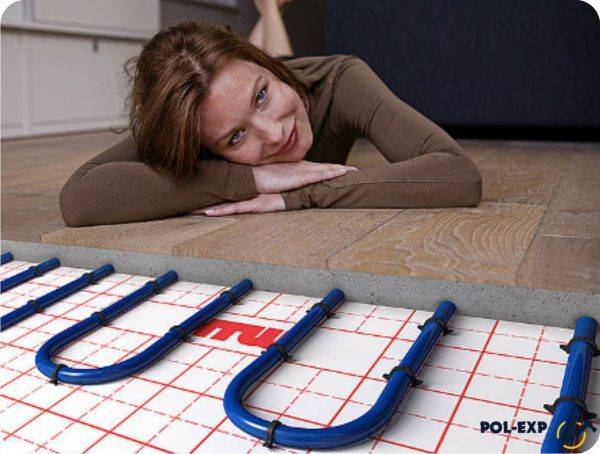
Underfloor heating under laminate
Ceramic tiles are the best option, but they won't look good in a bedroom or nursery. But in the kitchen or bathroom, it is indispensable.
In general, the choice of flooring will depend on a huge number of factors - the purpose of the room, operating conditions, the functionality of the entire heating system of a house or apartment, the strength of the coating, etc.The best option is to cover the hall and rooms with carpet or laminate, and close the warm floors with tiles in the kitchen, bathroom, bathroom and corridor.
Manufacturers (overview of models)
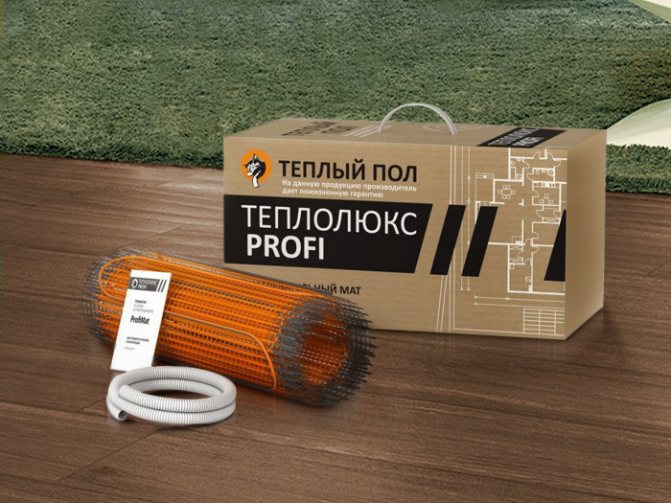
There are quite a few manufacturers of ultra-thin warm mat today, but the most popular brands are Teplolux, Sinplen and Trio. It is the products of these manufacturers that are considered the most reliable and high-quality, as evidenced by numerous reviews.
Teplolux
Teplolux brand carpet heaters are distinguished by their versatility. They can be laid on a wooden floor, parquet, laminate, under linoleum, they will work even on ceramic tiles. The thermolux manufacturer has Express models - these are, first of all, infrared warm floors under the carpet, which are mats based on artificial felt, and they are not felt at all under the carpet. They are equipped with a mounting wire 2.5 m long, have compact dimensions and are easy to clean.
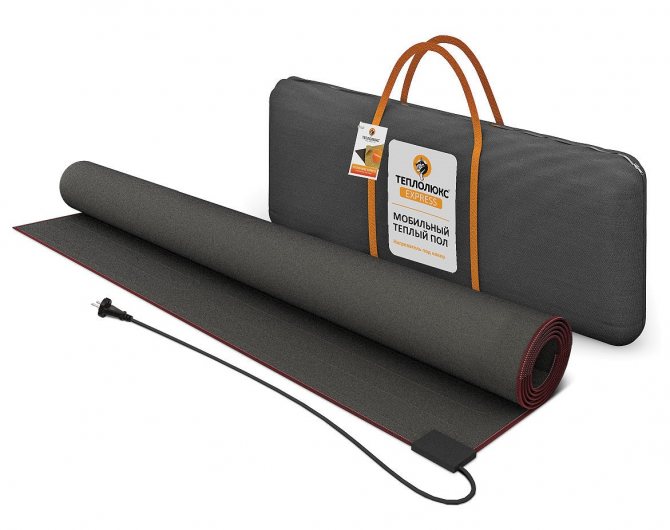
The maximum heating limit for underfloor heating Teplolux Express is 30 degrees. This is the optimal value at which you can cover the mat with a variety of types of carpets. Such a temperature will not be terrible for both models with a long pile, and wicker options made of synthetic fibers.
The express product line includes models of underfloor heating standard 280x180 cm, but there are options for both spacious and small rooms. In addition, all Teplolux products are equipped with a remote control, and there are practically no analogues to such a system.
On the video: Mobile warm floor Teplolux Express 30 s.
Related article: How to choose an anti-slip carpet underlay (types of materials)
Sinplain
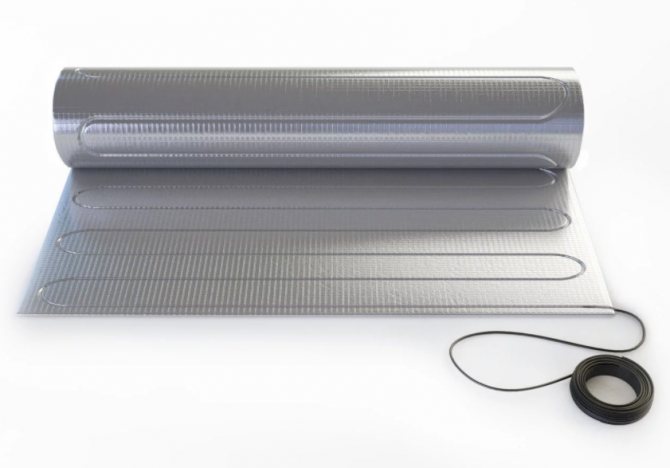
This is another popular manufacturer, whose products are in no less demand than underfloor heating from Teplolux. The thickness of the Sinplen film heater is only 0.6 cm, and this does not affect the quality of the product in any way, its efficiency is quite high. Like the above-mentioned competitor, this manufacturer offers floor heating mats in a standard size of 280x180 cm, but it is possible to make an individual order for any other sizes.
Trio
Trio is one of the first companies in Ukraine that has successfully sold its products, including long-wave infrared floor heating. This product is equipped with a 4-stage temperature control system and is made of a material resistant to mechanical damage. The heating mat is reliably protected from moisture, does not dry the air and does not leave burns when touched. Another plus is that the heating is adjustable, convenient packaging with a handle for easy transportation.
Ceramic tiles: dispel the myths
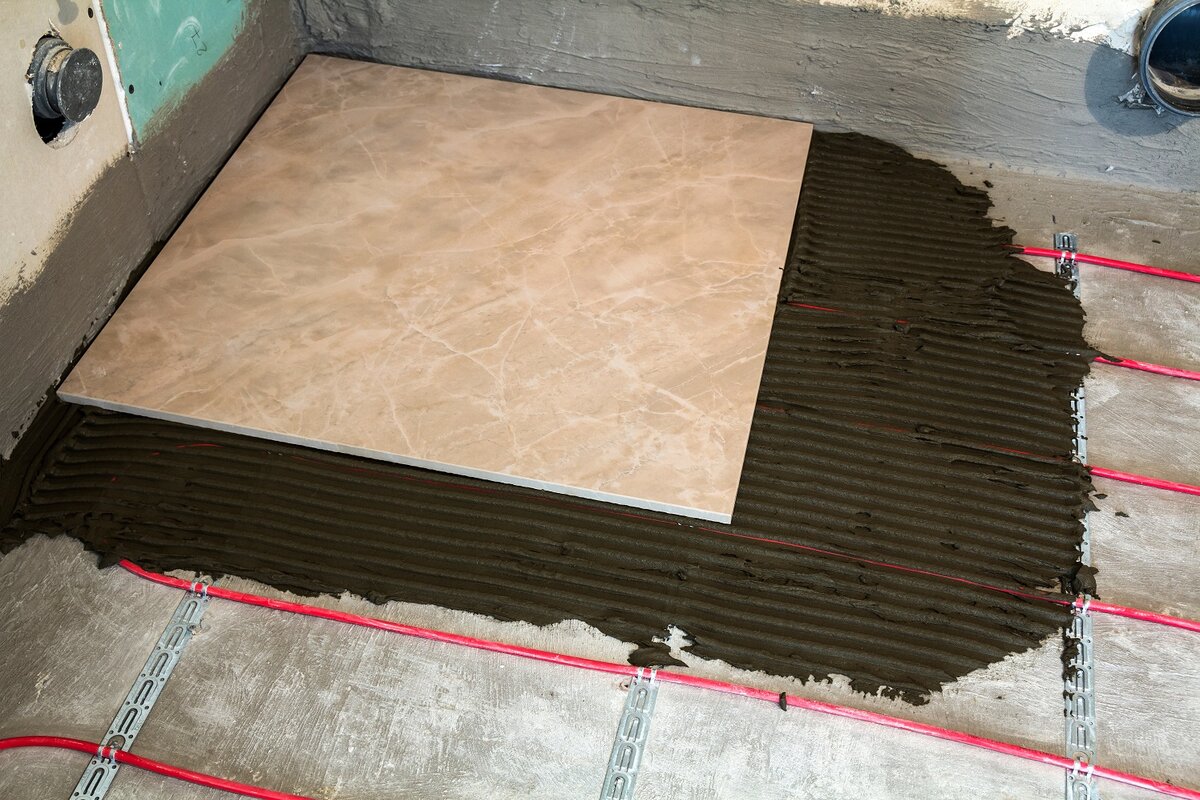
The most suitable floor covering of all existing is ceramic tile. It is almost 100% environmentally friendly and easily tolerates numerous heating-cold cycles.
But tile and porcelain stoneware also have some minus. The fact is that too tangible heat is not at all as useful for the legs as manufacturers sometimes want to imagine. Yes, for those who often get cold and get a cold from just touching the cold with their feet, this is the way out. But in the nursery it is not necessary to install it at all. After all, the younger generation is mobile, brisk and feels great at 18 ° C.But in greenhouse conditions, children get sick more often, they are irritated all the time and get tired quickly. Just do an experiment sometime.
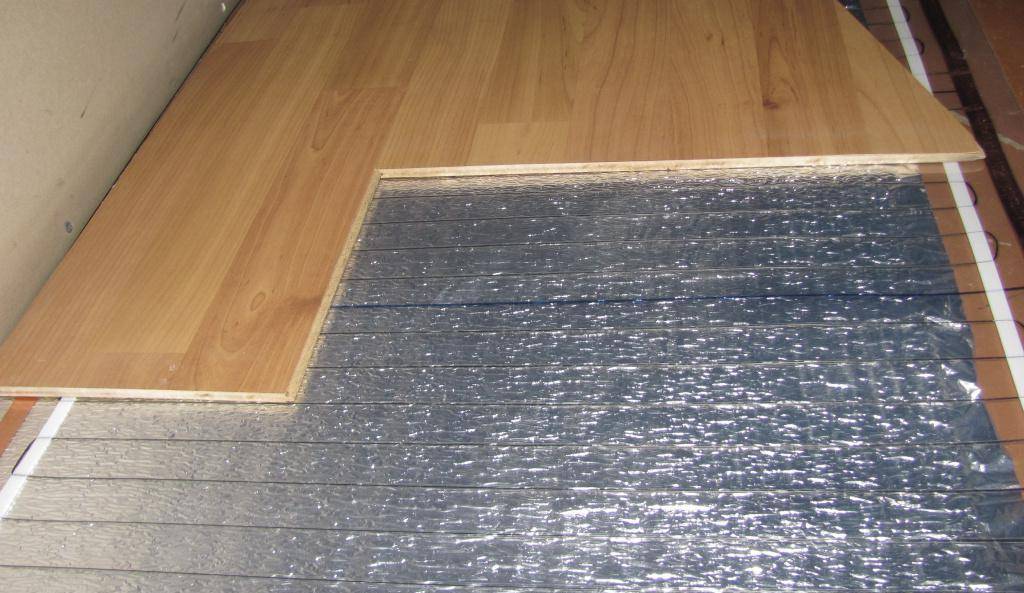
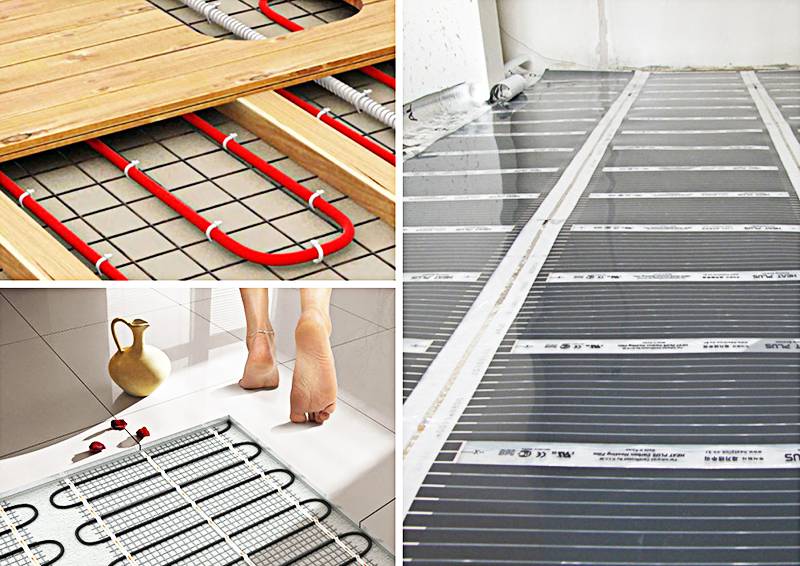
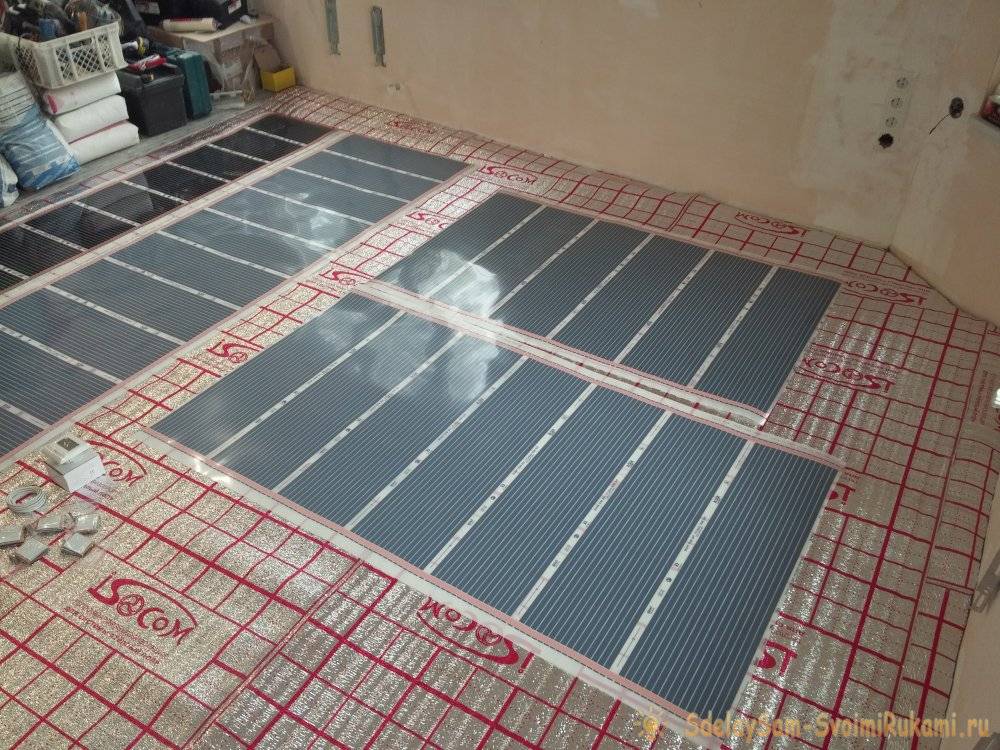
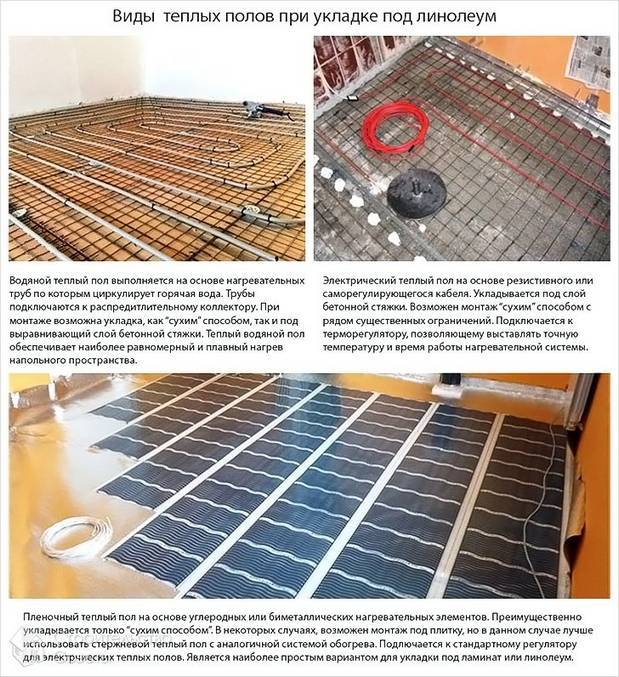
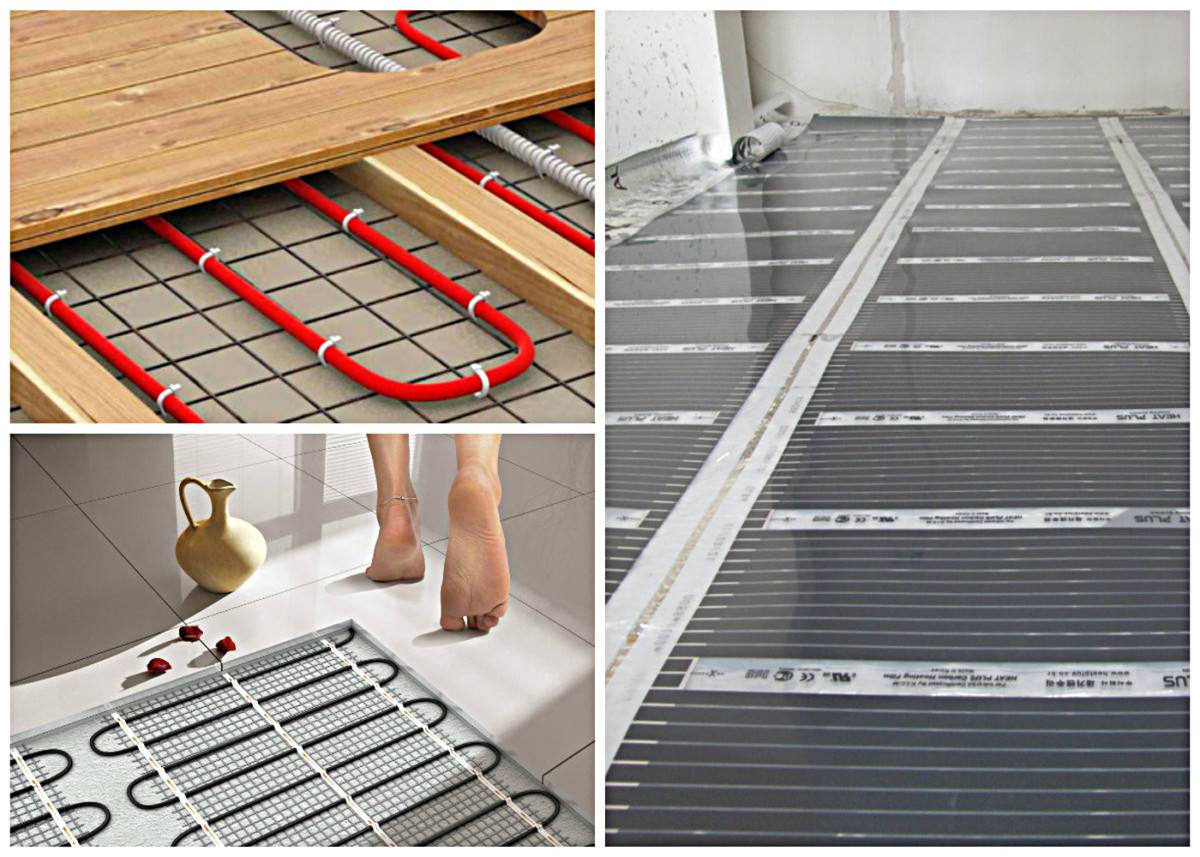

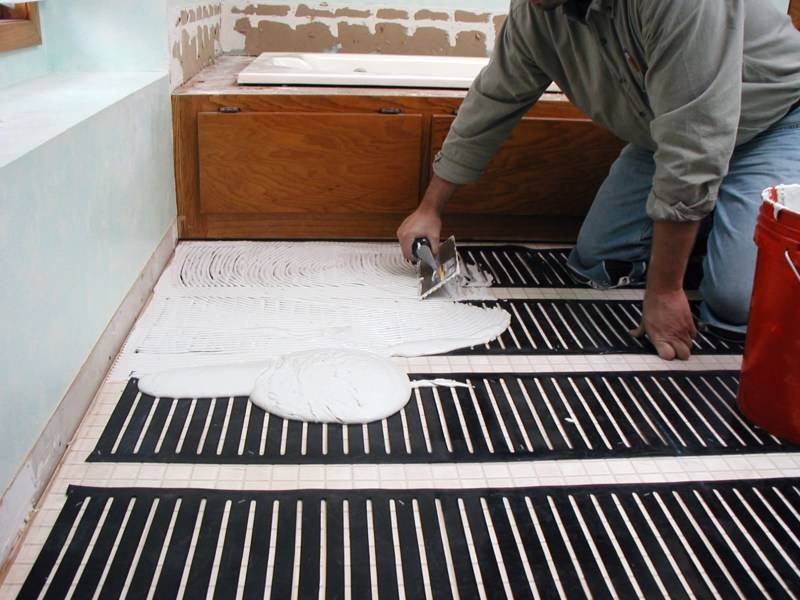

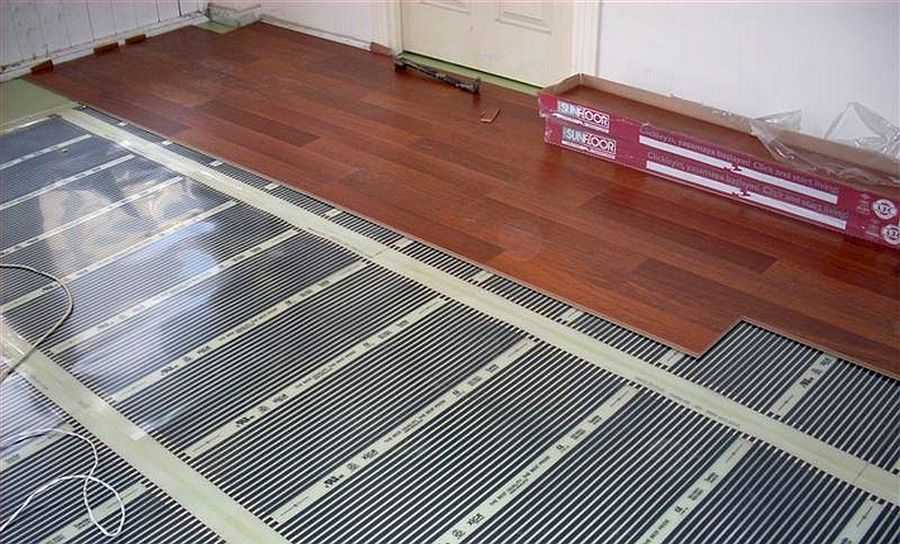

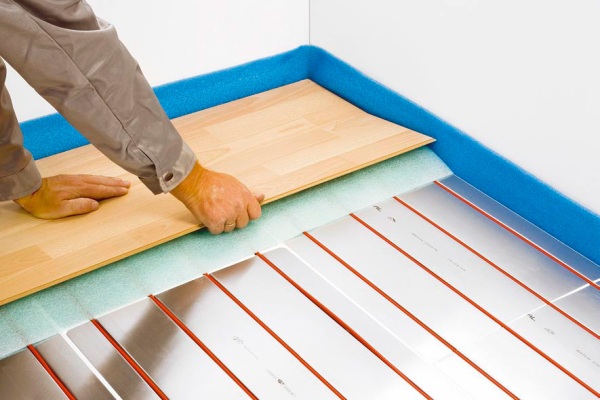
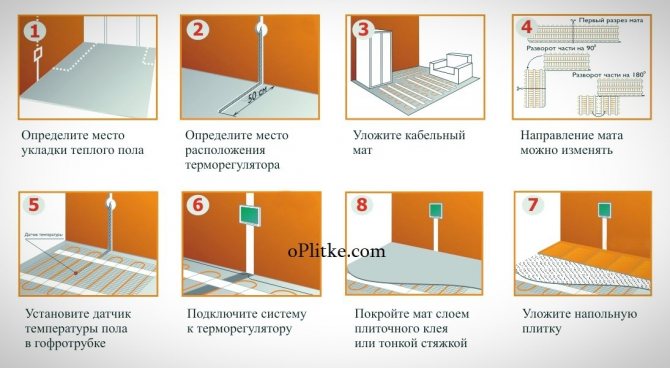
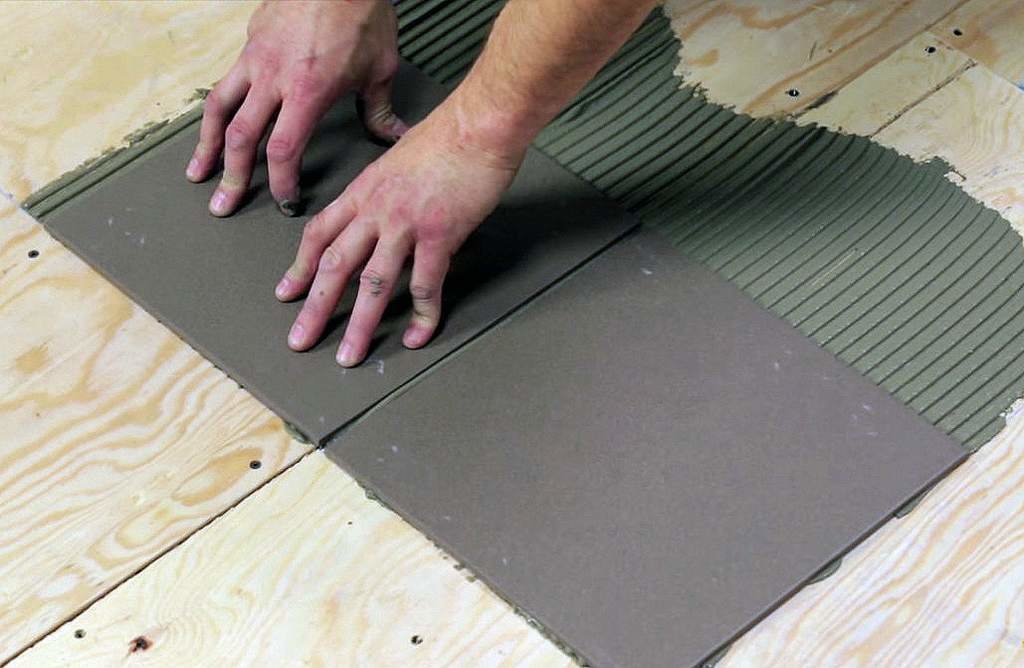
If the ceramic tile suits you the most as a covering for a warm floor, you can finish it with all the floors in the apartment. Just choose the right pattern: under a tree, a stone or a specific pattern. And here is the installation process:
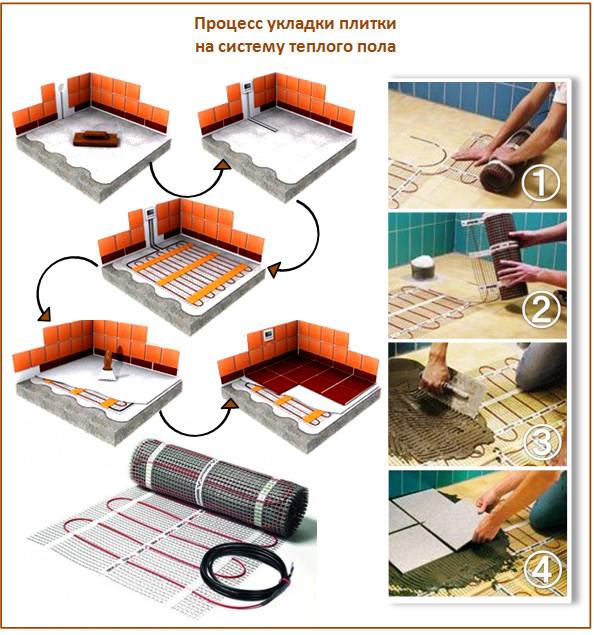
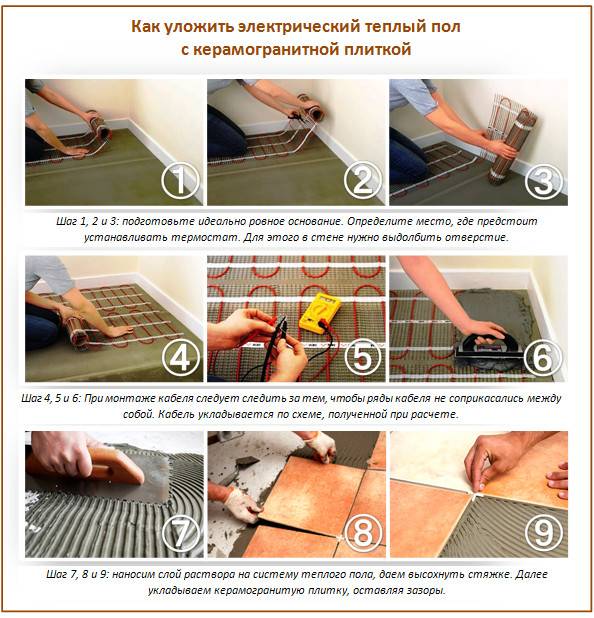
In addition, such a temperature has a beneficial effect on the reproduction of many types of bacteria, so that the microclimate will soon also not be healthy. It is not for nothing that underfloor heating is completely prohibited in preschool institutions in Canada, and in France their use is limited. That is why do not strive to make the floor exactly warm, with a temperature of 30 ° C - it is enough to make it comfortable, and a dense board will only contribute to this.
Verdict - for or against?
Undoubtedly, a mobile floor heater has many advantages and is practically free from disadvantages. It is ideal for use on winter evenings when the house is not warm enough, it will save you from such a problem as eternally icy feet, and in general, such a heated rug is necessary for every family with small children. Kids often play on the floor, and sometimes even fall asleep on it, and in order to avoid a cold, experts strongly recommend laying a mobile heater under the carpet.

In conclusion, I just want to note that, unlike a stationary underfloor heating, its mobile version can be moved from room to room or taken to the country house, work, it is completely safe, very compact and lightweight.If, in the event of a malfunction of a classic underfloor heating, you have to dismantle the floor covering, then with a mobile heater everything is much simpler - a significant savings in your finances.
If you have settled on such an option for underfloor heating, then the most important thing is to make the right choice, which largely depends on the brand. The manufacturers described above have been on the market for a long time and have established themselves as one of the best relatively high quality products.
About underfloor heating
Surprisingly, warm floors, like carpets, boast a history of several millennia. The ancient Romans came up with a system called "hyposcaustum", when the heat from the furnace in the basement through special channels in the floor and walls diverged throughout the house. Later this system was recreated by the British. In the cellars of the castles there were huge furnaces with large stones, which kept the heat longer, which was distributed through empty channels in the floor and walls. You can see the British hyposcaustum in the famous medieval castle of Malbrook.
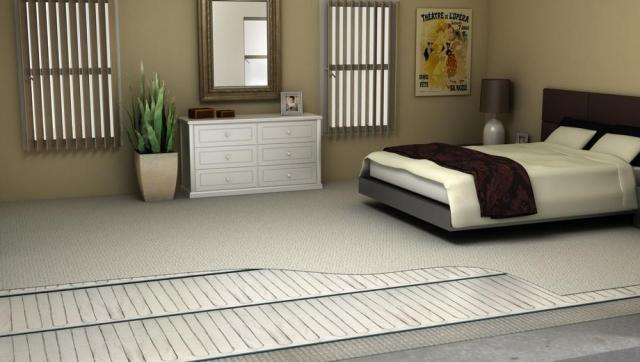
The invention of the water pump in the 20th century provided a new impetus for the improvement of underfloor heating. But the use of expensive copper pipes for hot water under the floor could be afforded by few. The situation changed in the 1980s, when economical and durable polymer pipes appeared. The revolution of a warm water floor has come true: they began to be designed and installed in houses under construction as the main source of heating. In some European countries, the rate of built houses with a warm water floor in the last decades of the twentieth century was 90%.But the peculiarity and disadvantage of the water option is that it is difficult to implement it in an already built house or apartment and is too expensive. Other technical solutions were needed. They were offered by Denmark in the form of electric underfloor heating.
The history of the invention of the electric floor began in 1942 in a workshop where irons were repaired. A year later, in 1943, a sample of an industrial heating cable appeared. Cable systems were first adapted for the needs of the street: for heating the roof, drains, pipes, ramps, and later they began to be used for floor heating. Relatively inexpensive, convenient, easy-to-install technology won more and more supporters, and the boom in popularity began about 10 years ago.
The latest achievement in the field of underfloor heating is the innovative infrared film floor. The thin laminated film consists of carbon heating elements and current-carrying strips. The principle of their action is the emission of infrared rays. The thickness of the film is only 0.4 - 0.6 mm. The infrared floor has a lot of advantages: it is suitable for most floor coverings, does not require filling with a screed, and is easy to install.
Is it possible to cut underfloor heating
01.03.2019
The error in determining the length of the heating cable (including the electric mat - and the mat is also a heating cable, only on a grid) is quite common. The linear length and area, for example, of a mat, are often confused, the features of a room with a complex configuration are not taken into account, an arithmetic error is simply allowed, etc. As a result, after a part of the heating cable is laid, it turns out that there is a lot of excess left. What to do in this case?
exchange cable
Most likely, it will not be possible to return the cable with traces of installation, because such a product can only be returned if you understood the error before the installation began. If, for example, your foreman or electrician made a mistake, then he can take too long a cable for himself for the following objects, where it is more suitable, and buy a cable or mat of the right size for you. This is one of the solutions to the problem.



Reduce paving step
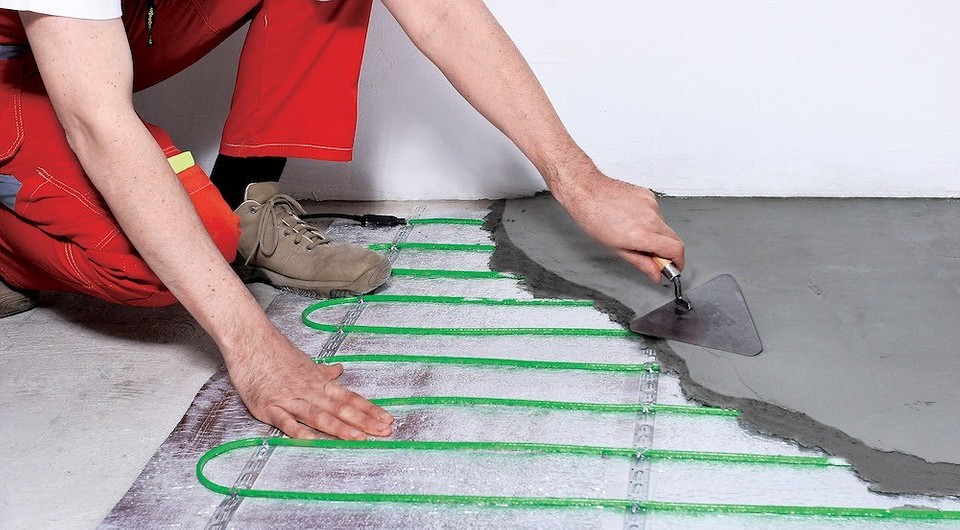
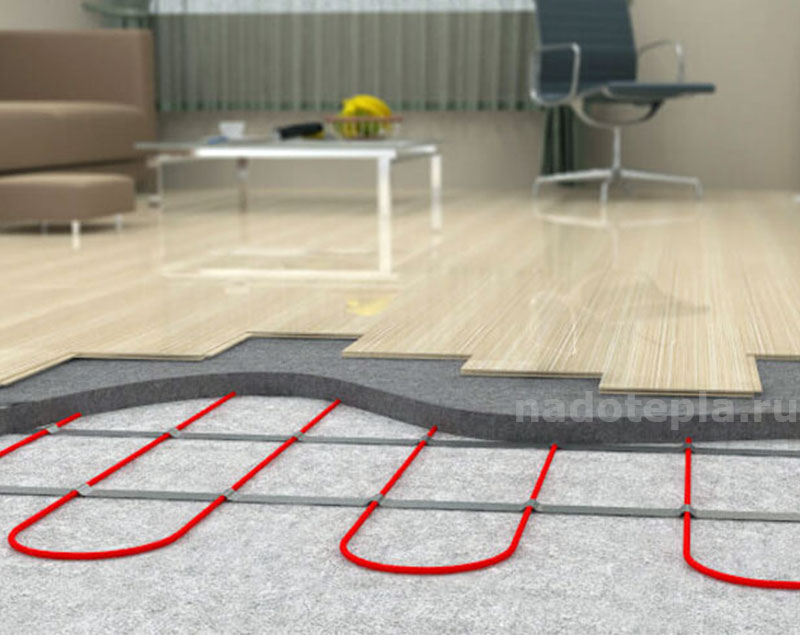
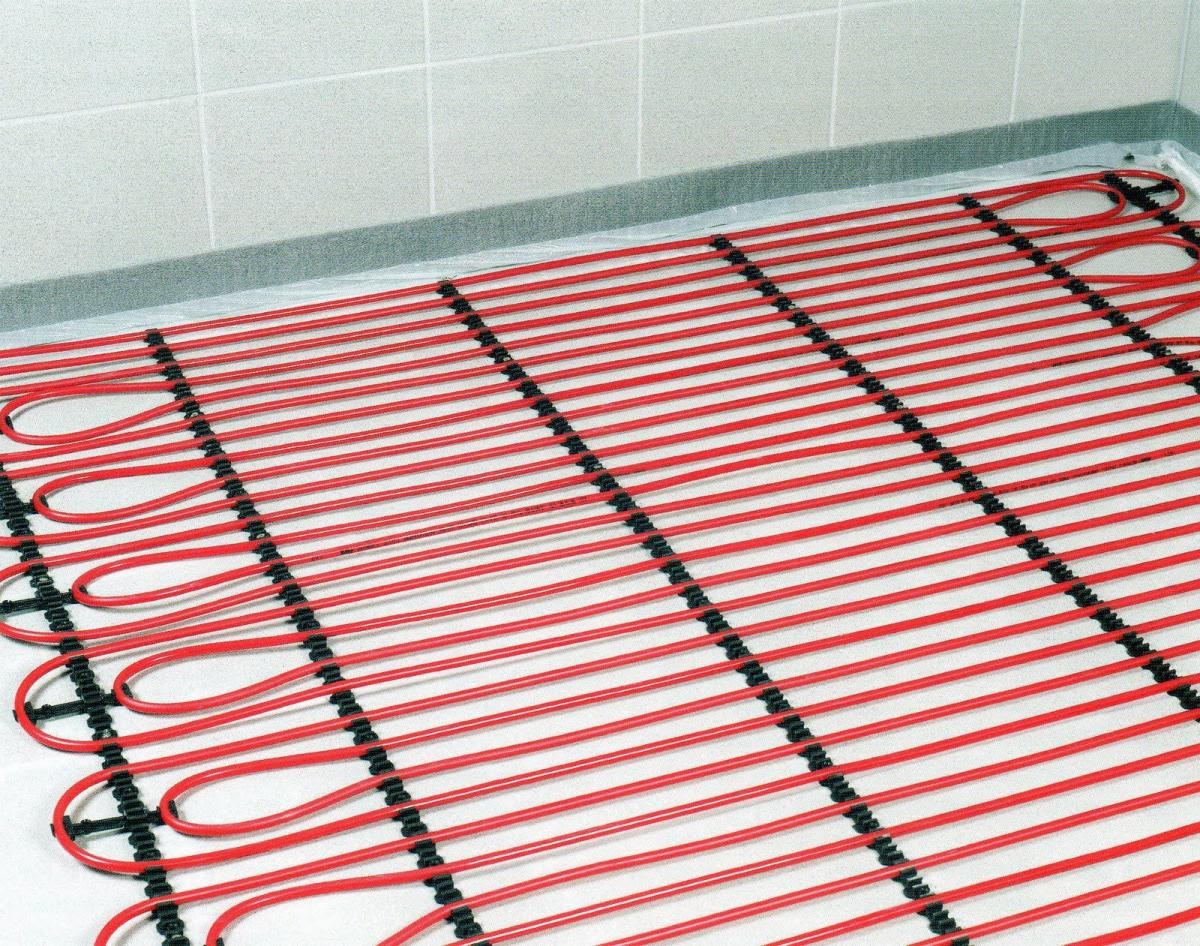
For heating mats and cables, it is possible to simply reduce the installation spacing within the limits specified by the manufacturer, i.e. reducing the distance between the turns of the cable. For example, the grid of heating mats is cut and the distance between the loops is reduced. All changes made must be documented. We recommend taking photos, and do not forget to draw a laying scheme.
Lay underfloor heating under furniture or bath
Can underfloor heating be installed under furniture, bathroom, washing machine, etc.?
Of course, there is usually no point in heating the area under the bathroom or furniture, at the same time, if there is a little cable left, then in some cases, this is acceptable. Many of the manufacturers point to this possibility, stipulating, for example, the presence of furniture legs - 10-15 cm for heat dissipation. If a warm floor is made, for example, under a washing machine or large furniture with small or no legs at all, then the cable in this place will overheat, which will reduce its service life and ultimately may cause the cable to burn out.
Is it possible to glue tiles on an OSB board?
The bathtub has the required legs.But what if you planned an apron, for example, from drywall with tiles? In this case, it is difficult to say with certainty whether proper heat dissipation will take place and whether there will be overheating. At the same time, cable repair, if it fails, is very difficult, because. you will have to disassemble the entire structure and remove the bath. In the presence of such an apron, as a rule, only a technological hole is provided, which is closed by a panel with magnets, for example, for a plumber.
Lay the rest of the cable in an adjacent room or on the wall
One solution that is used in such cases is to lay part of the cable on the floor in an adjacent room (for example, in a corridor or hallway) or even on a wall.
shorten the cable
It is usually possible to shorten the heating cable. But no more than 10% of its length. You will need special tools and materials, and the work itself must be carried out by a specialist. Foreign heating cables are designed for foreign voltage of 230-240 V. Our voltage is 220 V. With proper termination of the remaining end, the characteristics of the cable will not change significantly. But this termination must be carried out by a competent craftsman. The cost of work is 2-3 thousand rubles (price level of 2014). You can specify the cost of the arrival of the master and installation of the coupling in the Repair of underfloor heating section. When sealing, special crimp sleeves, heat-shrink sleeves and a building hair dryer are used. You should not try to do it yourself with the help of universal tools and tools, because. in this case, there is a high probability that you will have to repair this place again, and for this you will already need to remove the tiles and open the floor.
In any case, before taking any irreversible action, we recommend that you evaluate your options and consult with experts. You can just call us.
source:
Ceramic tiles for heating
Minuses
No matter how well mobile heaters under the carpet show themselves, they also have negative sides.
First, you should pay attention to the relief of the surface on which the heater is laid. If there are cavities, it will heat up unevenly.
In addition, heavy furniture should not be installed on top of the appliances, as it will transfer the heating element and disable the warm floor.
The thermostat must be provided with air access so that it does not overheat and break.
Please note that the temperature on the sensor should not be set above the recommended values.
Even if the film can be laid in rooms with high humidity, it is undesirable to subject it to a waterproofing test.
As with any electrical equipment, the operation of mobile underfloor heating panels should follow the rules. Even if the film can be laid in rooms with high humidity, it is undesirable to subject it to a waterproofing test.




Minuses
No matter how well mobile heaters under the carpet show themselves, they also have negative sides.
First, you should pay attention to the relief of the surface on which the heater is laid. If there are cavities, it will heat up unevenly.
In addition, heavy furniture should not be installed on top of the appliances, as it will transfer the heating element and disable the warm floor.
The thermostat must be provided with air access so that it does not overheat and break.
Please note that the temperature on the sensor cannot be set higher than the recommended values.
As with any electrical equipment, the operation of mobile underfloor heating panels should follow the rules. Even if the film can be laid in rooms with high humidity, it is undesirable to subject it to a waterproofing test.
Principle of operation
The IR floor is a thin film, between the layers of which carbon plates are placed. They serve as a heating element that generates heat. The device operates from the mains, heating is carried out using infrared rays measuring 10 - 20 microns.
The film quickly heats the floor, and the presence of a thermostat allows it to turn off when the desired heating level is reached, and turn on again when cooled. As a result, the device operates approximately 20 minutes per hour.
The film floor has the highest efficiency when compared with other systems. With rapid heating, electricity consumption is not significant, thus the infrared floor is considered more profitable and economical.
In addition, it does not heat the air masses in the room, but the objects in it, and they already heat the air. This allows you to create a wonderful atmosphere in the apartment, since the air does not dry out, while it is saturated negatively charged particles.
The infrared floor is perfect for different rooms, the ideal option is to lay it under the tiles in the toilet or bathroom (we suggest that you read the step-by-step instructions for installing the TC in the bathroom).
Underfloor heating technology
Regardless of the chosen type of underfloor heating, the heater installation process consists of three stages:
- Surface preparation and insulation laying;
- Installation of heating elements, connection to a power source;
- Laying the outer covering and rolling out the carpet.
Flooring is usually chosen based on the characteristics of the carpet. Most often, these are sheets of plywood, fiberboard, linoleum, any material on which carpet can be laid without risk. If you plan to fill in a water heated floor, then it is better not to lay carpet on concrete, you will need to additionally sew on fiberboard or OSB.
Installation of a warm water floor
A serious disadvantage of using hot water for underfloor heating is the need for a screed. It’s impossible to just lay a pipe, even polyethylene, on concrete and cover it with plywood, laminate or any other floor covering, even if there is carpet on top. Firstly, it will reduce heat transfer several times. The amount of heat given off by the pipe will decrease to 15-20%. Secondly, the pressure from the weight of the furniture and residents will simply crush the polyethylene pipe over time, even if the system is laid in a reinforcing pack.
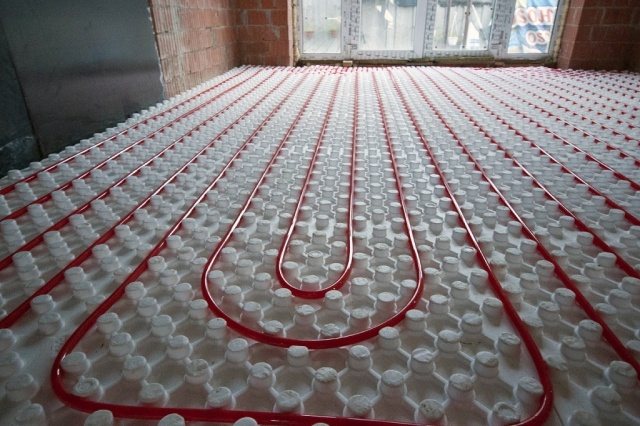
Pipes are laid on a reinforcing basis
Structurally, the installation is carried out as follows:
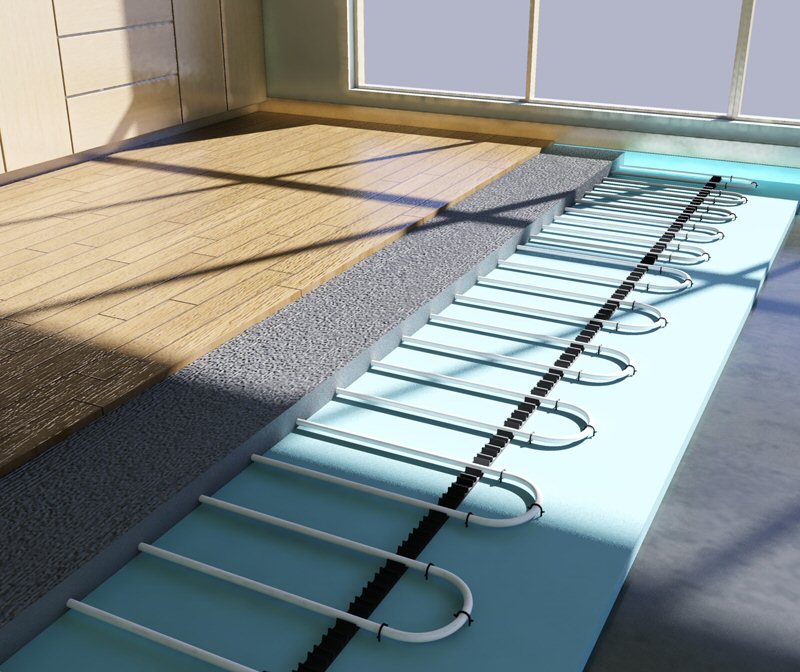
- Fiberglass reinforcement is mounted on the prepared surface;
- Further, a polyethylene pipe is laid out in a spiral or zigzag stripes;
- The input and output are connected to the heating system, or to a tank with water. After that, the tightness of the warm floor is checked at low fluid pressure;
- The laid structure is poured with a cement-sand screed.
- After the poured mixture has set, it is also checked using a vacuum or, most often, simply leaving the warm floor under cold water pressure for several hours.
Note! Experts recommend checking the condition of the base under the carpet at the beginning of each heating season.
Water leakage may be small, and the carpet material is able to slowly and imperceptibly absorb liquid, so the coating is removed and the floor inspected for cracks or wet spots. Sometimes the owners of the apartment put a plastic film under the carpet, this saves from getting wet, but seriously reduces the heat transfer of the warm floor.




Installation of film underfloor heating
Assembling a water system requires a lot of effort, but preparing a concrete base is not particularly difficult, just sweep the floor thoroughly. In the case of using a film heater, the surface is not just cleaned, it is washed and dedusted in order to surely remove “groats” and small pebbles.
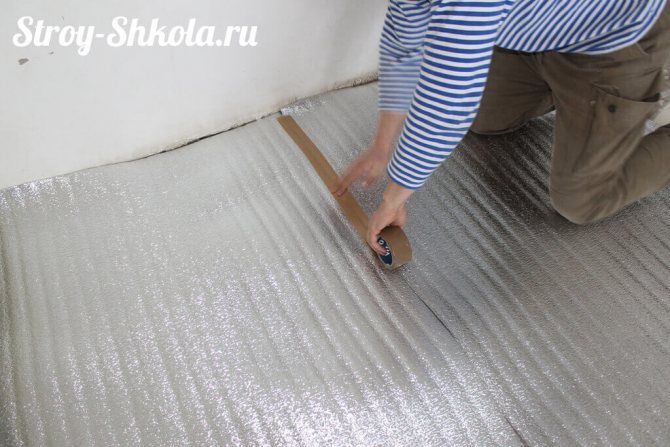
The second step is the installation of thermal insulation. Usually it is a foil insulation based on polyethylene foam. The material is rolled out in the same direction in which the carpet panel will be laid. Separate sheets are aligned and glued with ordinary tape.
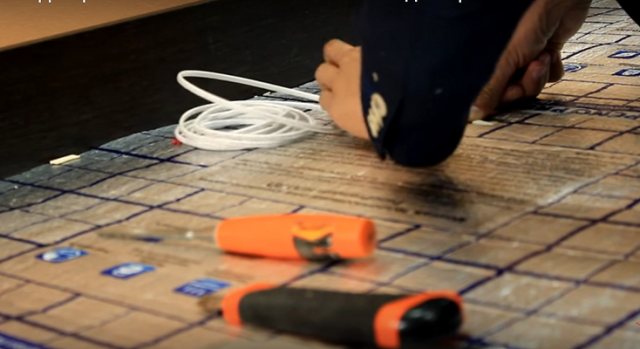
So that the wire does not stick out through the carpet, it is recessed into the substrate
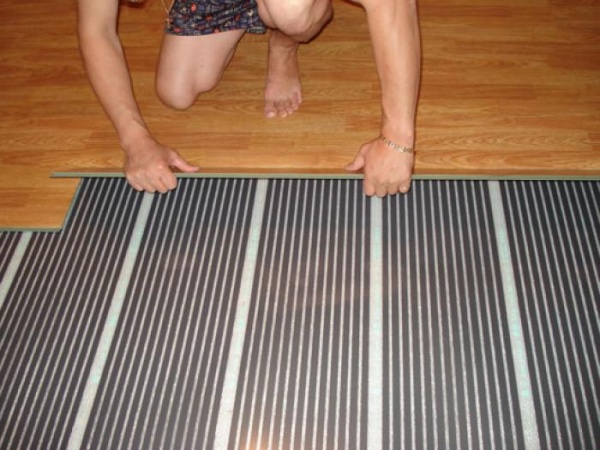
Next, you need to lay the film heater. Usually these are tapes with a width of 1 m and 0.5 m.With wide ribbons lays out the main part of the floor on which the carpet will be laid. Narrow panels fill the remaining areas, for example, at the entrance or in places where furniture is installed, where there will definitely not be carpet.
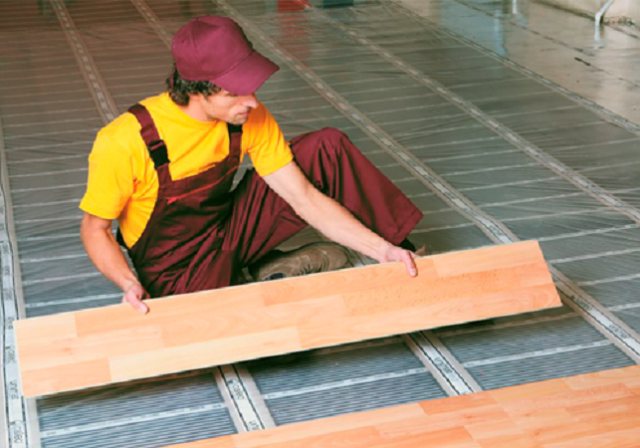
The rolled films are carefully aligned, making sure that there are no overlaps and large gaps at the joints. The material is glued to the floor with special heat-resistant stickers. They are thin and do not stick out through the carpet. To connect a warm floor, the canvas is cut off from the side of the contact track, the connectors are installed and, using special pliers, the sleeves are snapped onto the copper pads.
Each such canvas is connected by two conductors. After installing the wiring and connecting to the regulator, check the correct operation of the underfloor heating. At the same time, the temperature is set, it should be high enough for comfortable heating of the room, but not exceed the carpet resistance threshold.
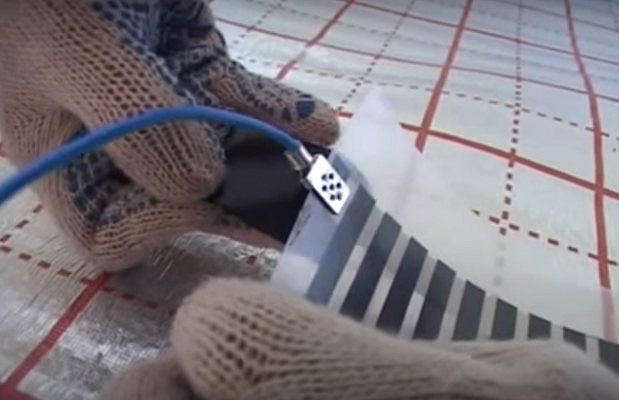
Contacts must be crimped with tongs
At the final stage, graphite heaters are covered with a plastic film, which is fixed with staples around the perimeter of the room. In order to be able to lay the carpet, overtake wood-fiber boards or linoleum.
It is necessary to lay an intermediate floor under the carpet
Infrared floor heating installation
Similar structures can be installed independently. To do this, just study the step-by-step instructions attached by the manufacturer. But first you need to purchase the necessary components, such as:
- thermostat sensor;
- additional set of wires;
- a set of infrared film, which is sold in rolls;
- in order to avoid possible heat loss, you will need a material for a heat-insulating gasket.
Step-by-step laying scheme (including on a wooden floor):
- To begin with, the surface to be used is prepared. Old material (if necessary), construction and other debris is removed. Strong irregularities are eliminated. It is necessary to level the surface if the level of difference exceeds several millimeters per meter of surface.
- A heat-insulating layer is recommended to be used to minimize heat loss. Use a material that does not conduct current (this will increase the overall level of safety). Construction tape is used to fasten sheets of material.
- A warm floor is laid under the carpet. The entire surface of the room is covered with mats, with the exception of areas where furniture will be located.
- Device connection. For this, a thermostat is connected, which is recommended to be mounted on the wall, half a meter from the floor. Wiring is laid, the connection to which is made in parallel. This entire layer is well insulated with sealants.
- The thermostat can be installed in several ways (external and internal). You can gouge the area from the floor surface to the place where it is to be installed. If the repair of the room has already been completed, you can use a plastic box in which all the wires are conveniently placed. The sensor is mounted under the film in a small recess. Once connected, the device is tested for functionality. A working system should heat the surface in five minutes. Grounding plays an important role, so all ends of the film should be glued with special tape, which is then attached to the wire.
- Installation of the insulating layer. When using carpet, a top layer of insulation is a must.For this, plywood is used, which is able to protect infrared mats from any mechanical damage, and carpet from overheating.
- Carpet installation. Before this, the material is rolled out throughout the room and left completely alone for a day. During this time, the material will straighten itself. Adhesive tape is used for fixation. You can only walk around the room the next day.



