
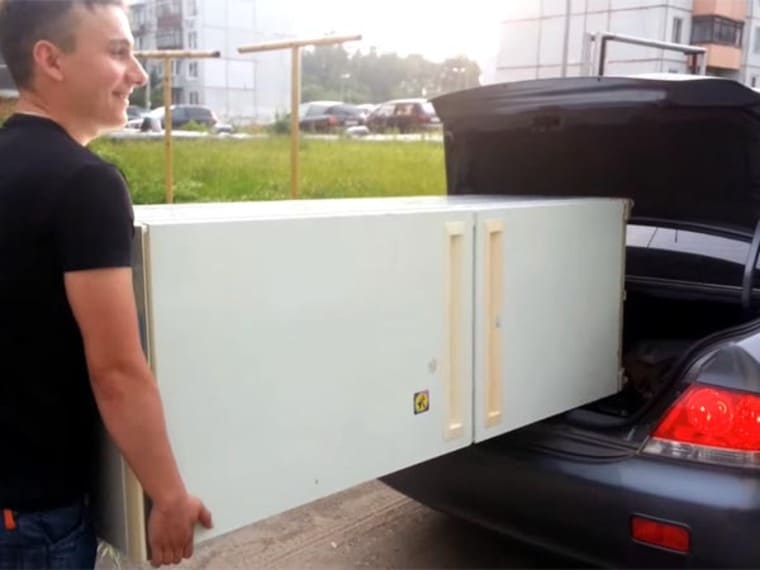
- Problems in violation of transportation rules
- Options for transporting an LG refrigerator in a car
- Carrying an LG refrigerator in a car in an upright position
- Carrying an LG refrigerator in a tilted car
- Transportation of the LG refrigerator in the car lying down
- Permissibility of transportation of the LG refrigerator in the car lying on the back wall or door
- The importance of the correct position of the refrigerator during transport
- Preparing the refrigerator for transport
- On which side to transport the refrigerator?
- Preparing to transport your Samsung refrigerator in your car
- The importance of correct posture
- How to pack?
- How to transport in the car?
Problems in violation of transportation rules
Neglecting the established rules for transporting a refrigerator, equipment owners face many unpleasant consequences. The most common reason for panic occurs when, after being installed in a new location and connected to the network, the device refuses to work or malfunctions.
Often this is due to the mixing of wear products with oil, which provokes the engine to jam in already operating units.
Also, the reason may be the fact that the oil that has spread during transportation has not yet had time to fully drain back into the compressor.In turn, it does not start without enough lubrication.
In most cases, the problem can be dealt with without loss, allowing the equipment to settle and acclimatize: 8-16 hours after horizontal transportation, 2-4 hours in warm weather and 4-6 hours in frosty winter. The longer and more difficult the path, the more time it will take for a motionless rest.
If after the specified time the refrigerator continues to work incorrectly, it makes sense to talk about more serious factors that caused the failure. One of the typical breakdowns includes freon leakage, provoked by depressurization and various mechanical damage due to improper transportation of the device.
It is defined in several ways:
- the compressor is running, but the cooling capacity of the device is noticeably reduced;
- the equipment does not turn on, but the lighting in the chamber works;
- after starting, the unit starts to function, but soon turns off;
- an audible or light indicator is triggered, signaling critical increases in temperature inside the device.
If you find similar signs, you need to find the place where the leak occurred, replace the filter drier and fill the equipment with freon. This operation is quite complicated and dangerous, so it is better not to try to handle it on your own.
The next point that can affect the operation of the refrigerator is a compressor failure. During transportation, the contacts are often broken and the springs holding the rotor fly off.
Because of this, the device may not turn on at all, one of its departments stops working, a characteristic knock of the motor appears.Since the compressor has a non-separable design and has to be replaced with a new one, it is most likely that repairs will be expensive.
Options for transporting an LG refrigerator in a car
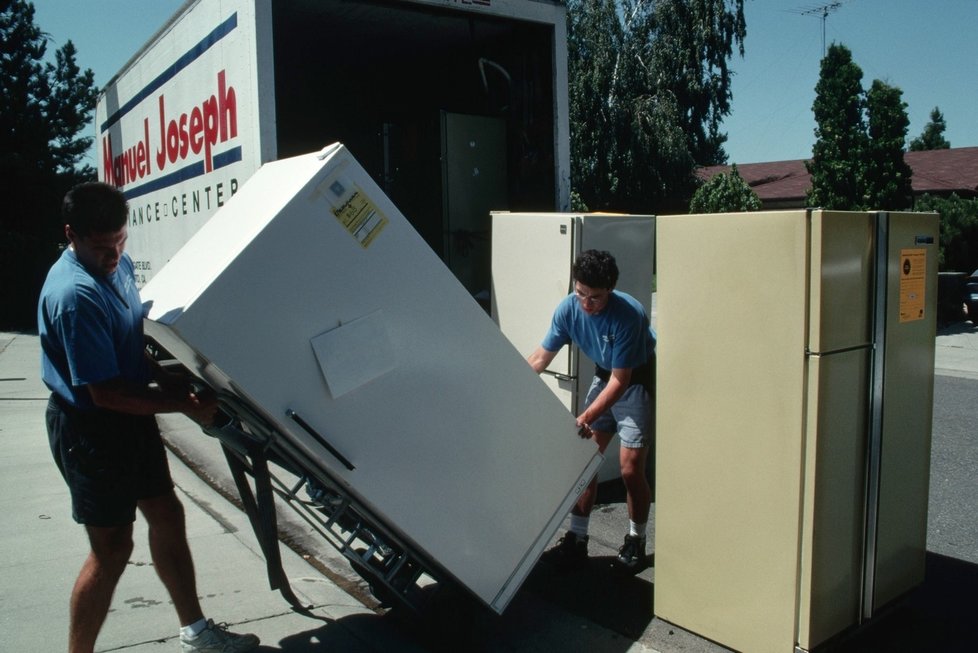
Carrying an LG refrigerator in a car in an upright position
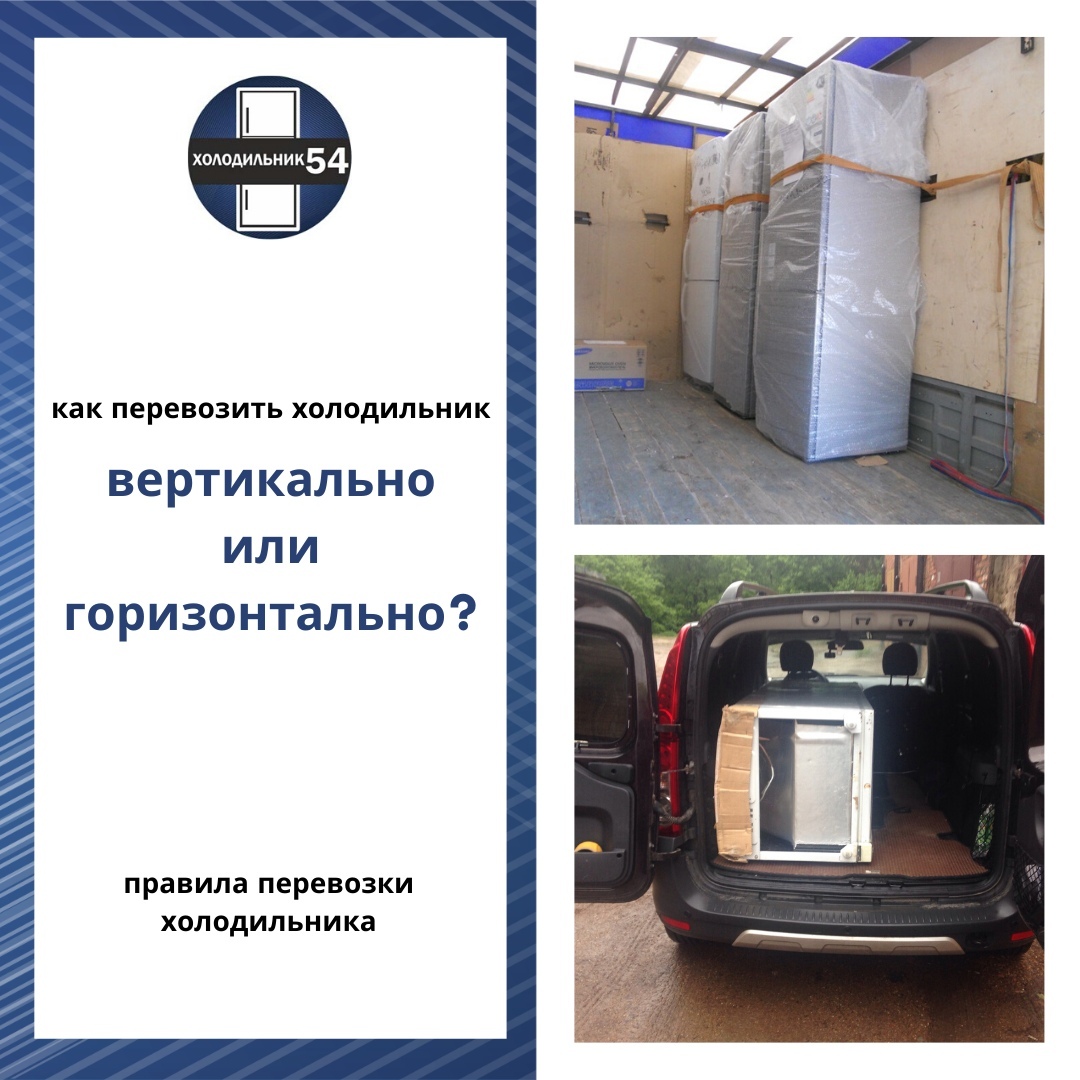
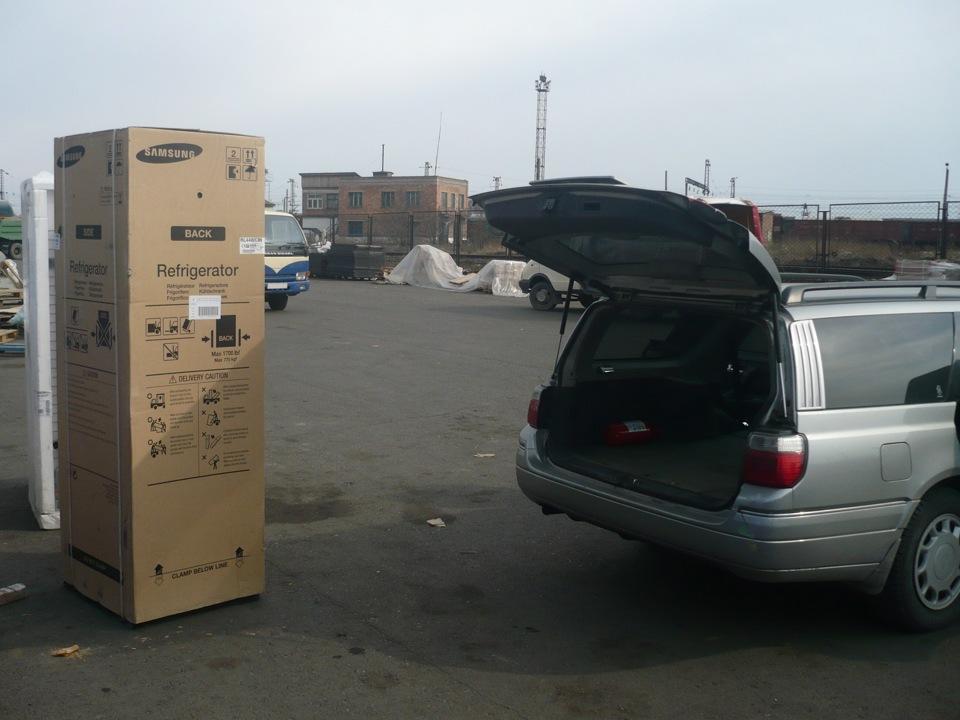
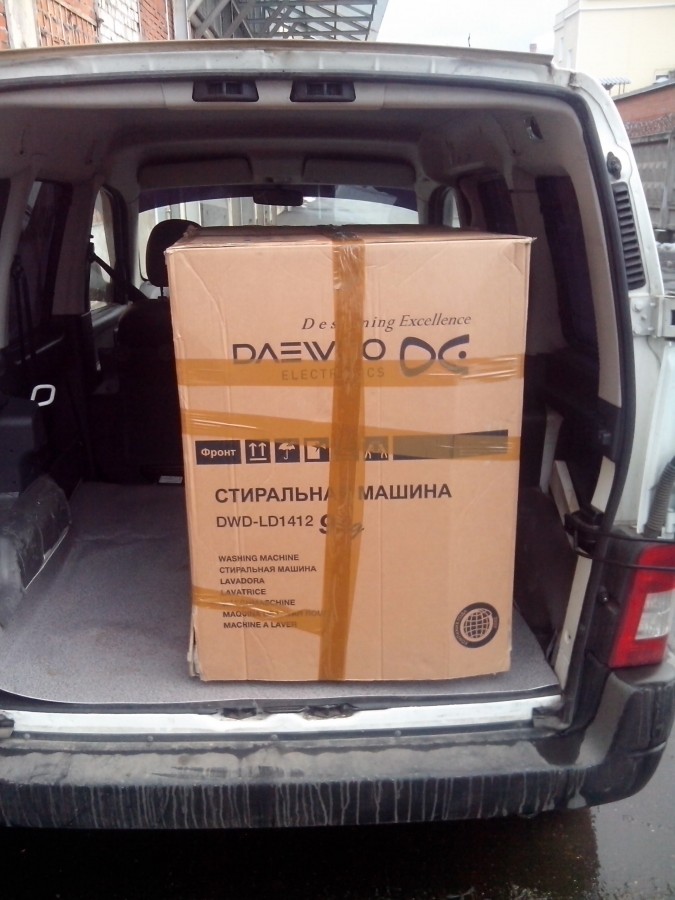
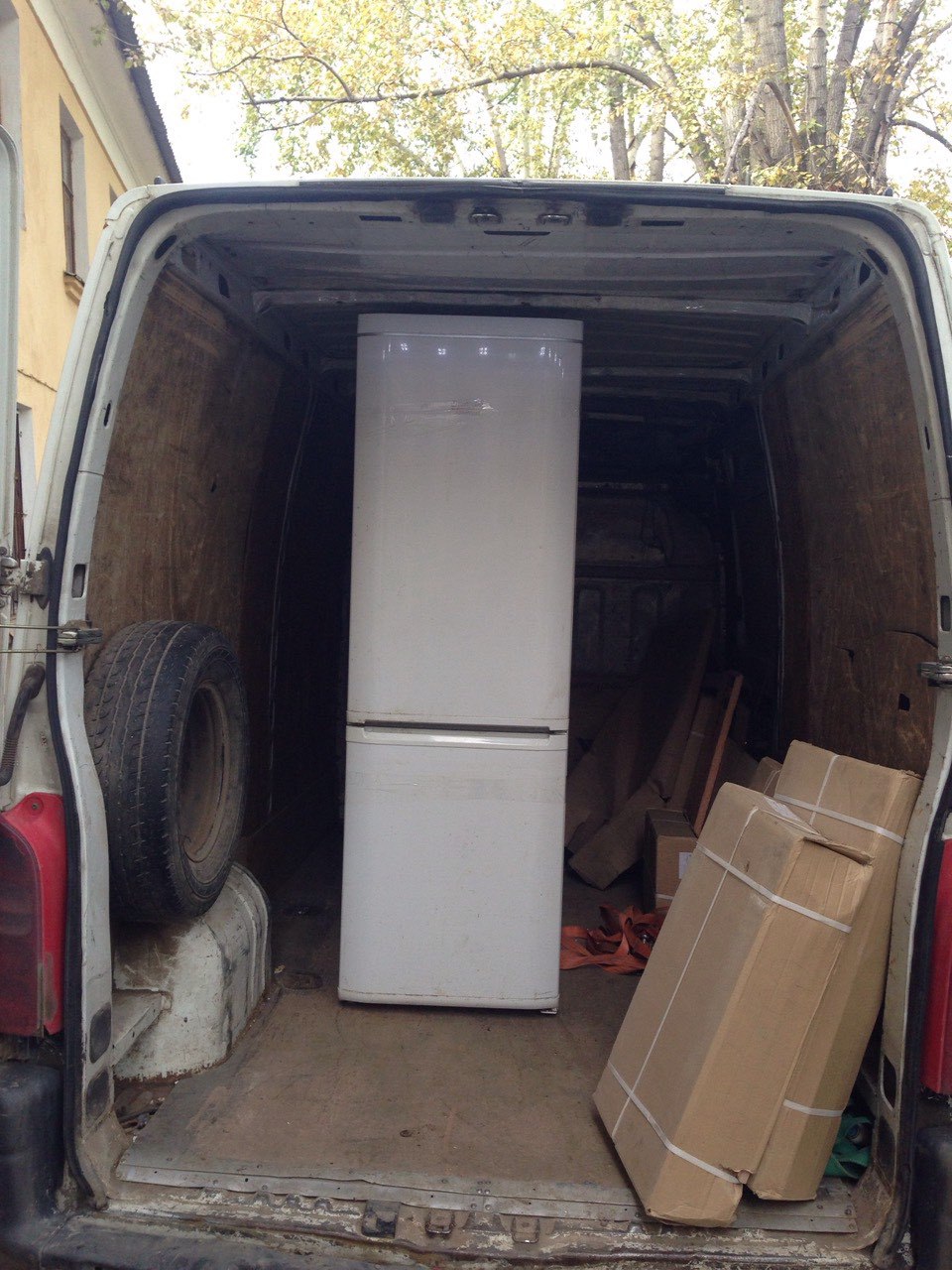
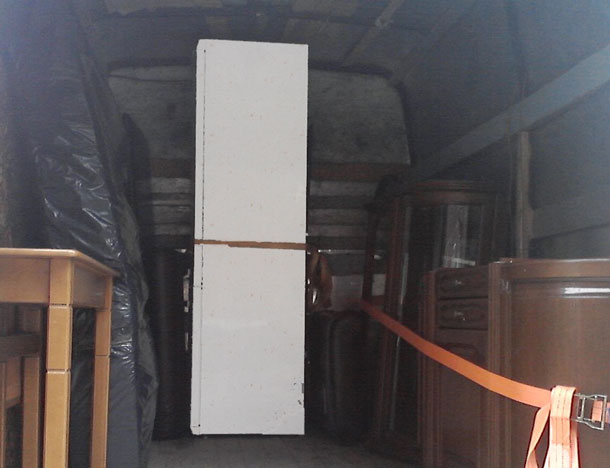
Transporting the refrigerator while standing is the most correct option, which is emphasized by manufacturers in the documentation attached to the technique. It ensures the safety of the structural components of refrigeration equipment and their normal performance in the future.
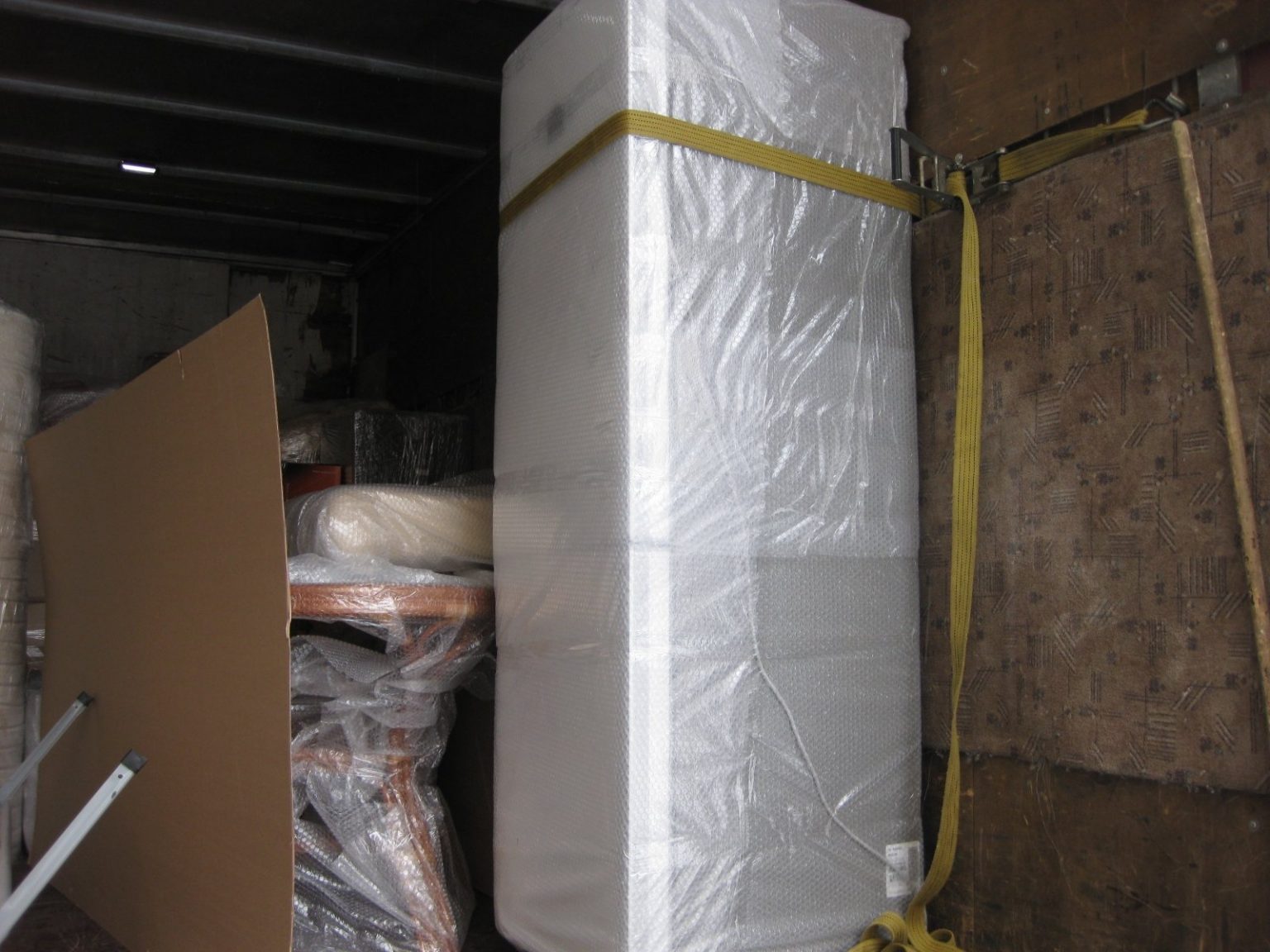
First of all, the purchased refrigerator prepared by the manufacturer for transportation is carefully transferred and put into the car. In the cabin, it is firmly fixed in the allotted place with belts and additional stops that prevent unwanted shifts during sudden braking, bumps and turns.
Once again, the reliability of the door fixing is checked
In the cabin, it is firmly fixed in the allotted place with belts and additional stops that prevent unwanted shifts during sudden braking, bumps and turns. Once again, the reliability of fixing the doors is checked.
In two-door models, adhesive tape is glued in four places. Between the floor of the cabin and the body of the device, any material at hand is laid that will perform shock-absorbing functions on the road and protect the color from damage: polystyrene foam, cardboard from old boxes, several layers of thick cloth.

Carrying an LG refrigerator in a tilted car
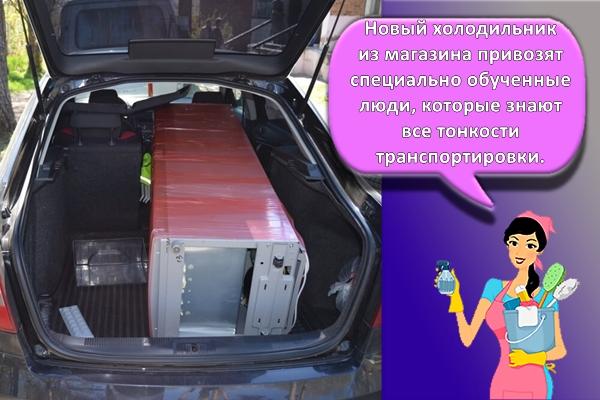
Without being able to use a car with a high van, it is difficult to transport refrigerators longer than 1.75 meters in an upright position. If the device does not fit in the cabin at full height, installation at a slight inclination is allowed. The angle of inclination should not exceed 40 degrees.
Having placed in this position, the refrigerator should be well fixed, put on the side and under it as much as possible materials that will dampen the vibration.
Drive carefully and carefully
It is important that the driver drive at minimum speed and, if possible, go around the slightest potholes and pits found on the roads.
Transportation of the LG refrigerator in the car lying down
If it is impossible for you to deliver a refrigeration unit in a vertical position, then you can minimize the damage by following a few simple rules:
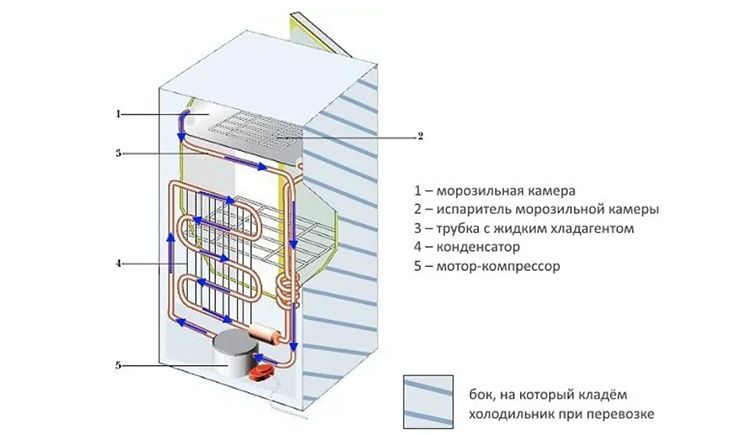
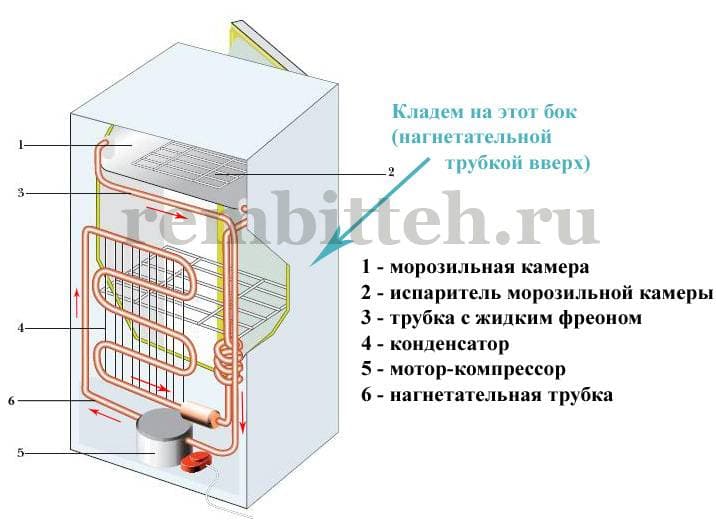
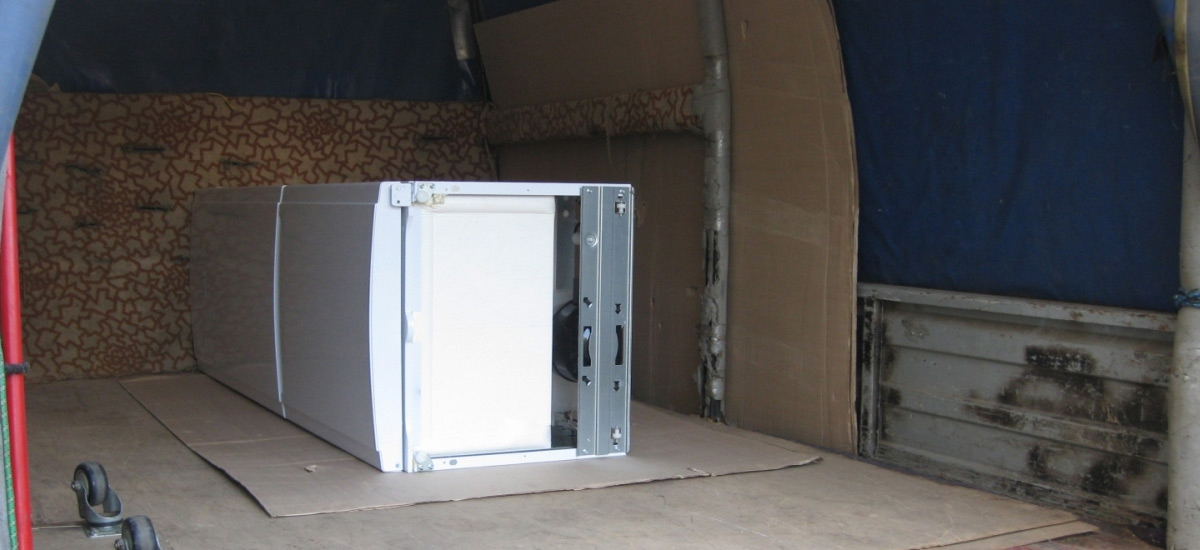
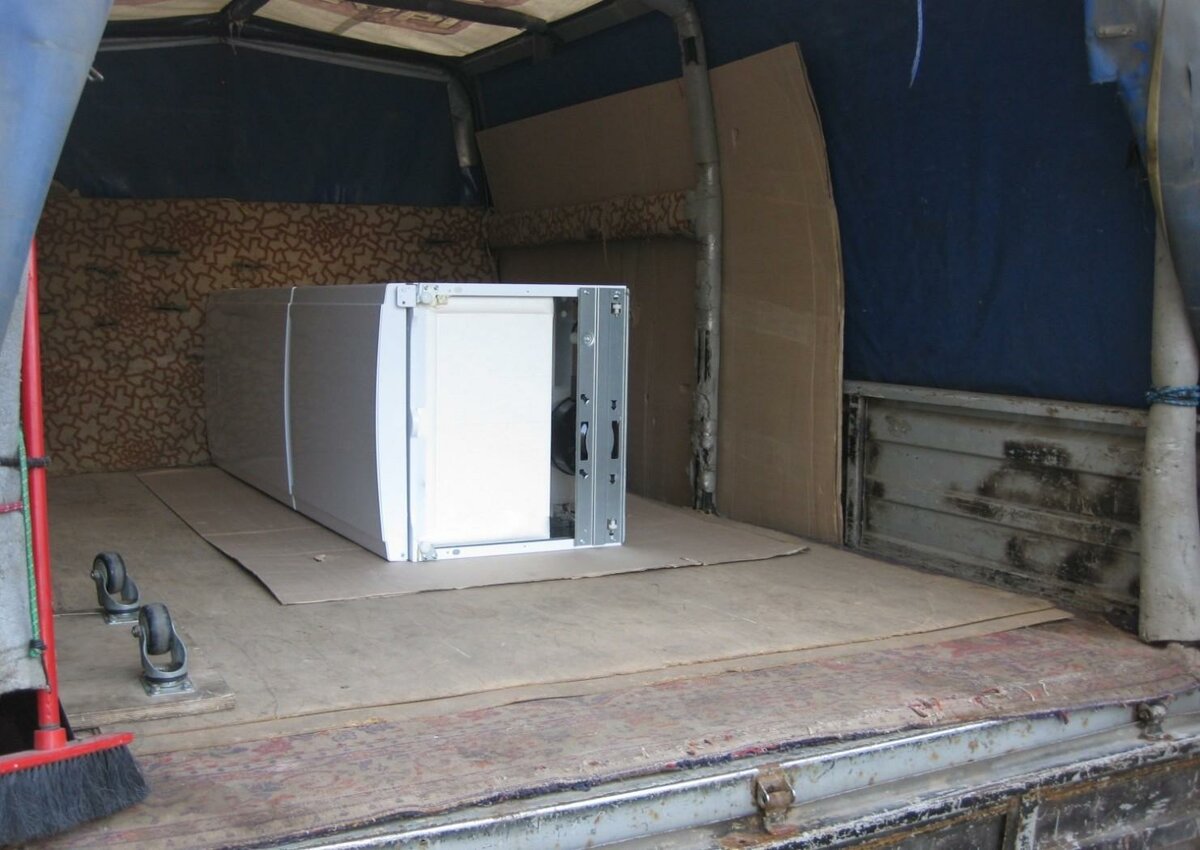
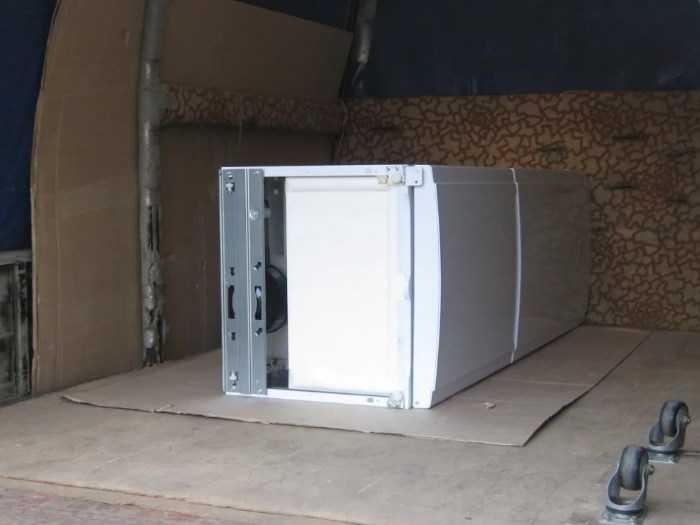
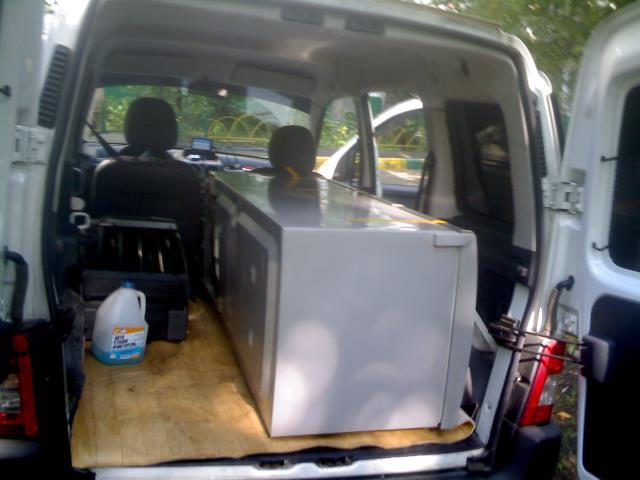
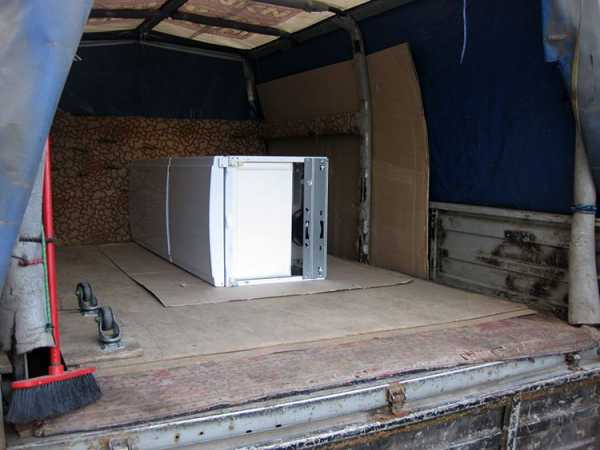
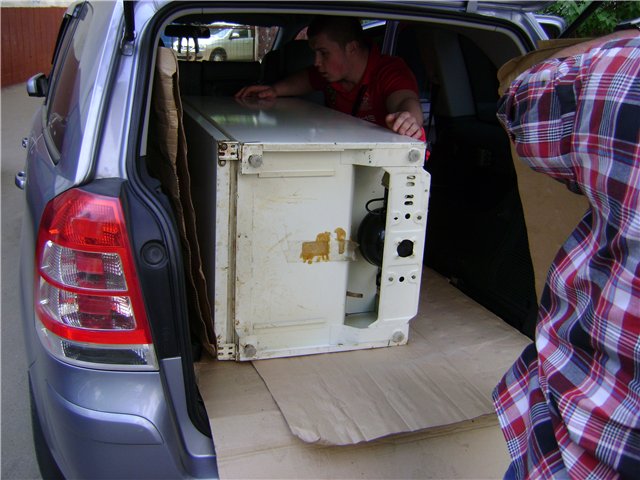
It is better if the refrigerator should lie on its side, do not put it on the back or on the door.
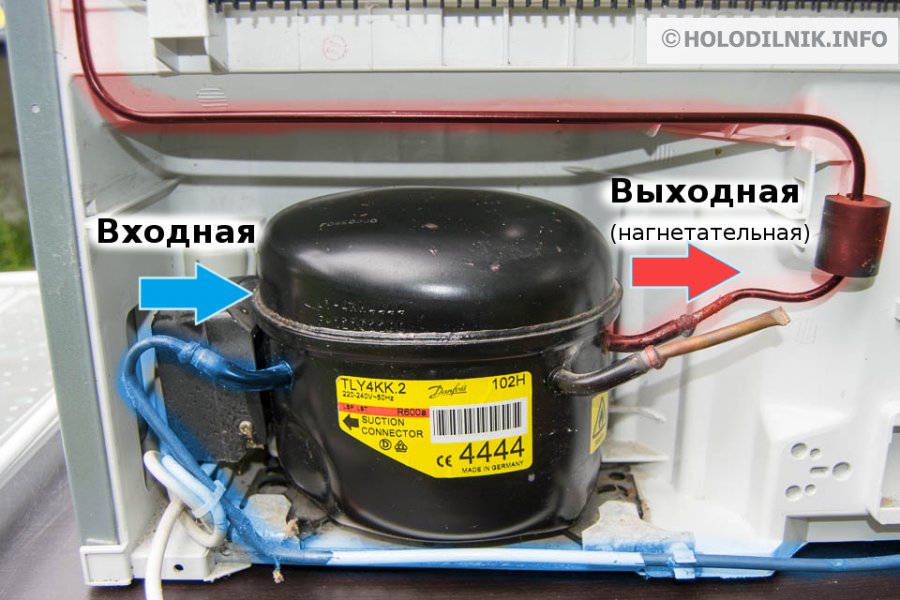
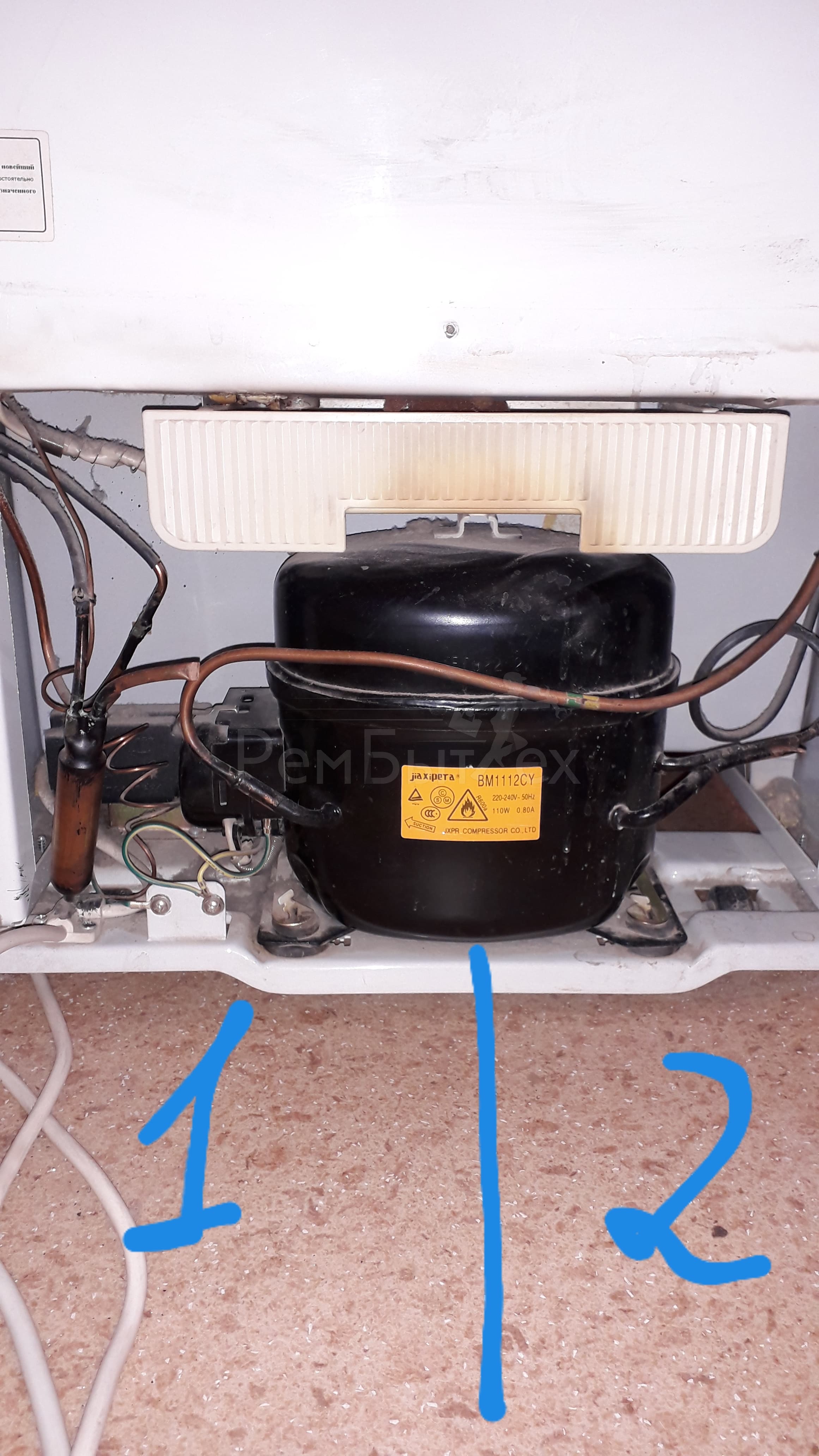
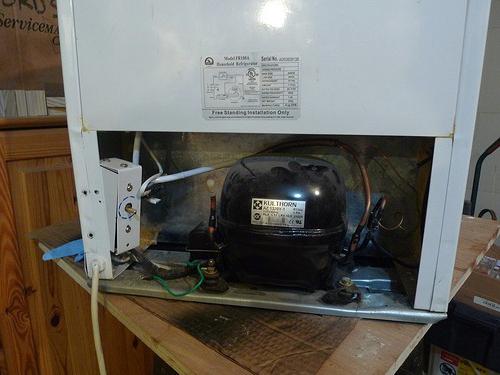
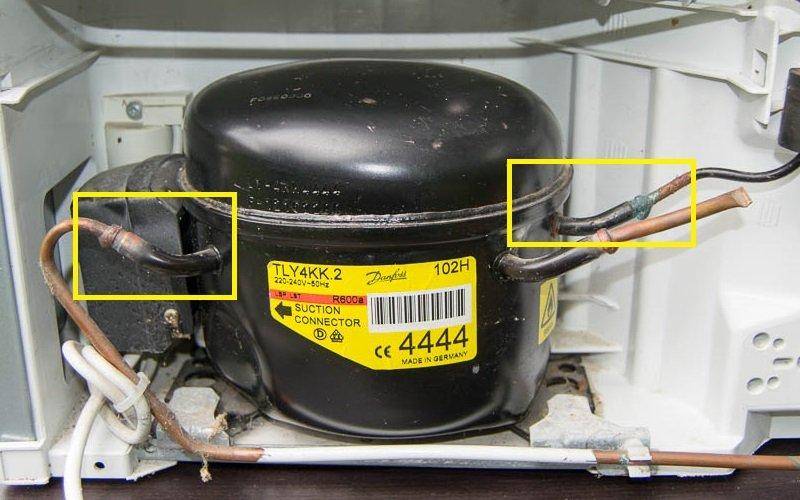
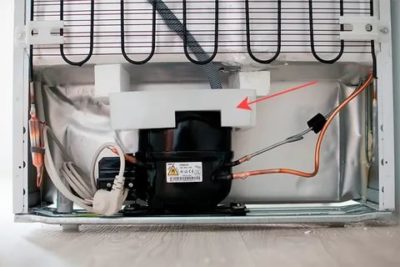
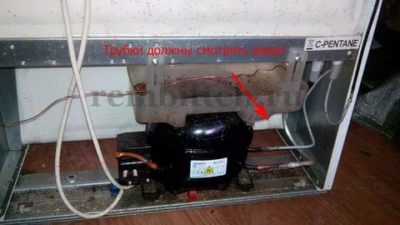
The tubes that come from the compressor should, if possible, “look up”. If the tubes are not visible or they diverge in opposite directions, transport the refrigerator on either side.
Secure the refrigerator so that it does not move from braking or unexpected turning. If you are transporting the refrigerator in a car, support it with your hand.
Do not turn on the refrigerator immediately after transportation. Put it upright and wait a few hours (preferably at least four) for the oil that has entered the tubes to run back.
If this rule is neglected, then the oil leaking into the circuit from the compressor during transportation will be driven further by the refrigerant flow when turned on, which can lead to clogging of the capillary tube and failure of the refrigerator.
Therefore, if you decide to transport the refrigerator in a horizontal position, determine which tube the freon leaves the compressor through - this must be done before proceeding with packaging.
Permissibility of transportation of the LG refrigerator in the car lying on the back wall or door
Some manufacturers allow the refrigerator to be transported on the back wall.
But if the instructions for your refrigerator do not say anything about the possibility of such transportation, then you should not rely on "maybe" - it is better to transport it on its side, following the recommendations outlined above. Transportation on the back wall is fraught with squeezing of the thermal insulation of the refrigerator under its own weight.
The importance of the correct position of the refrigerator during transport
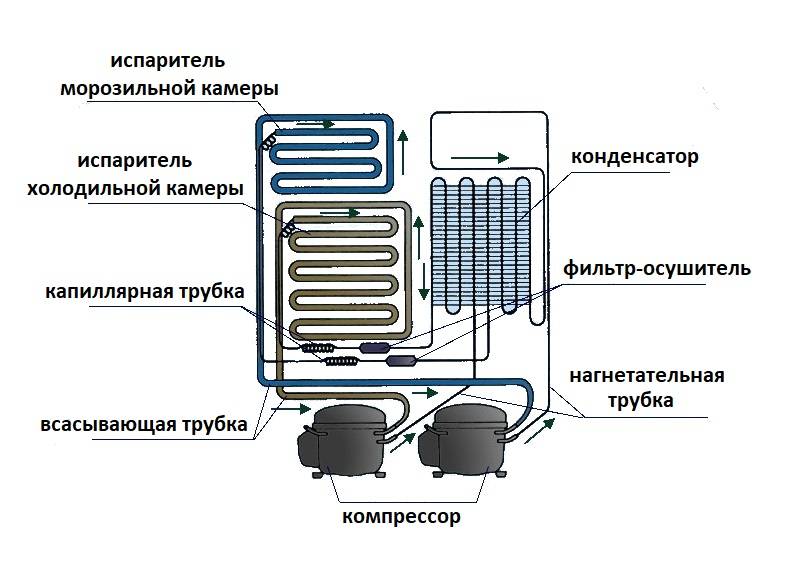
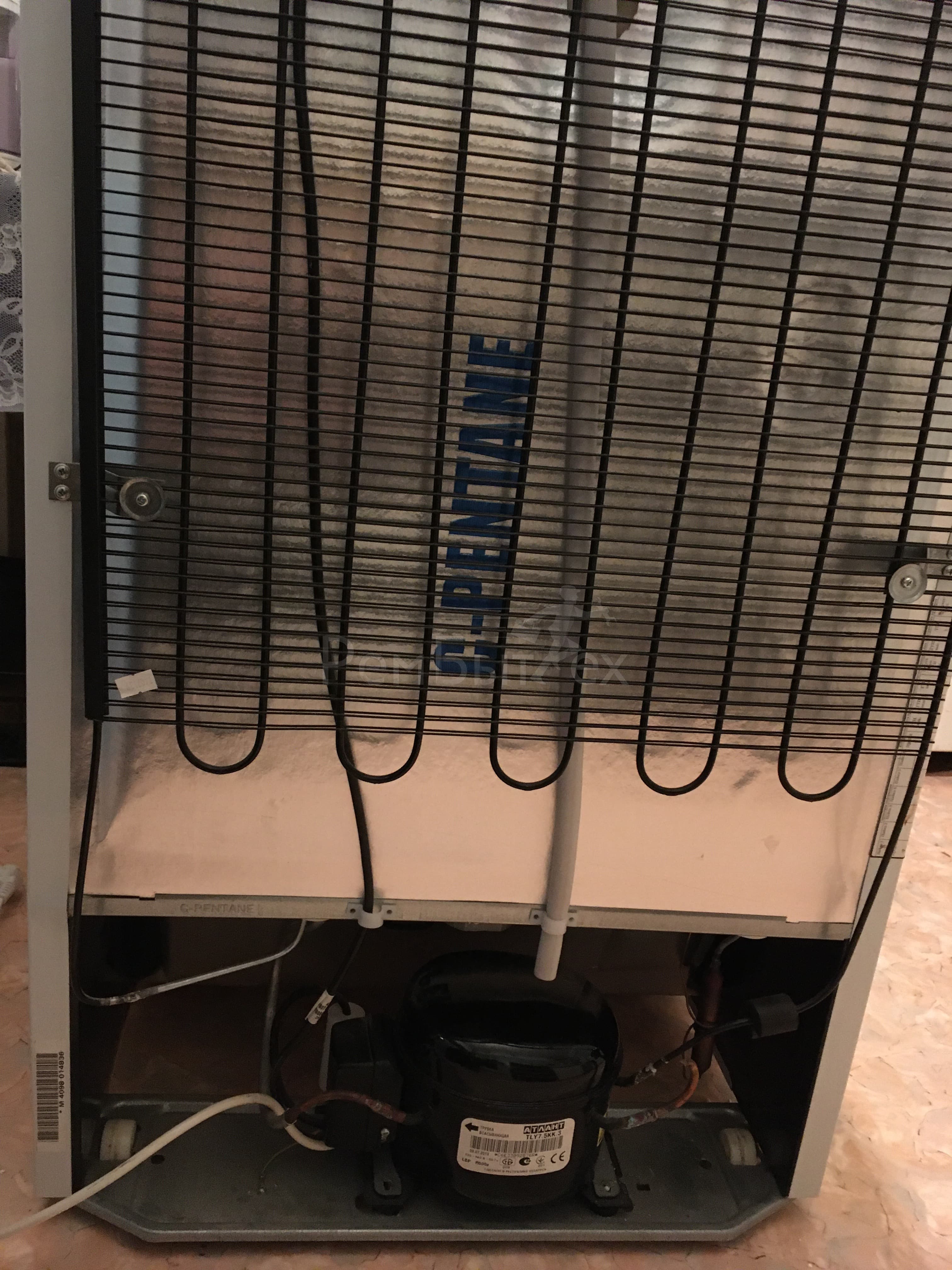
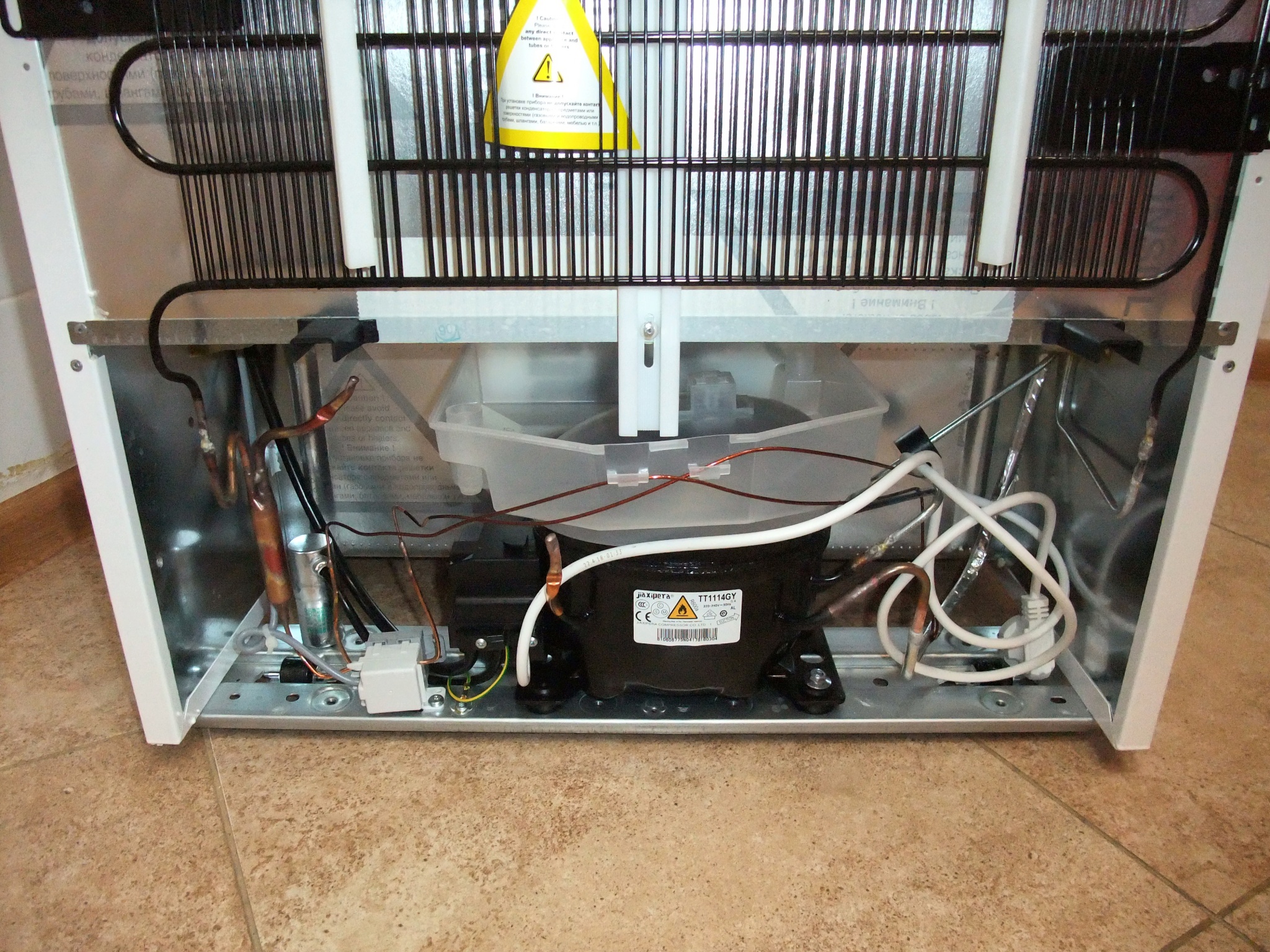
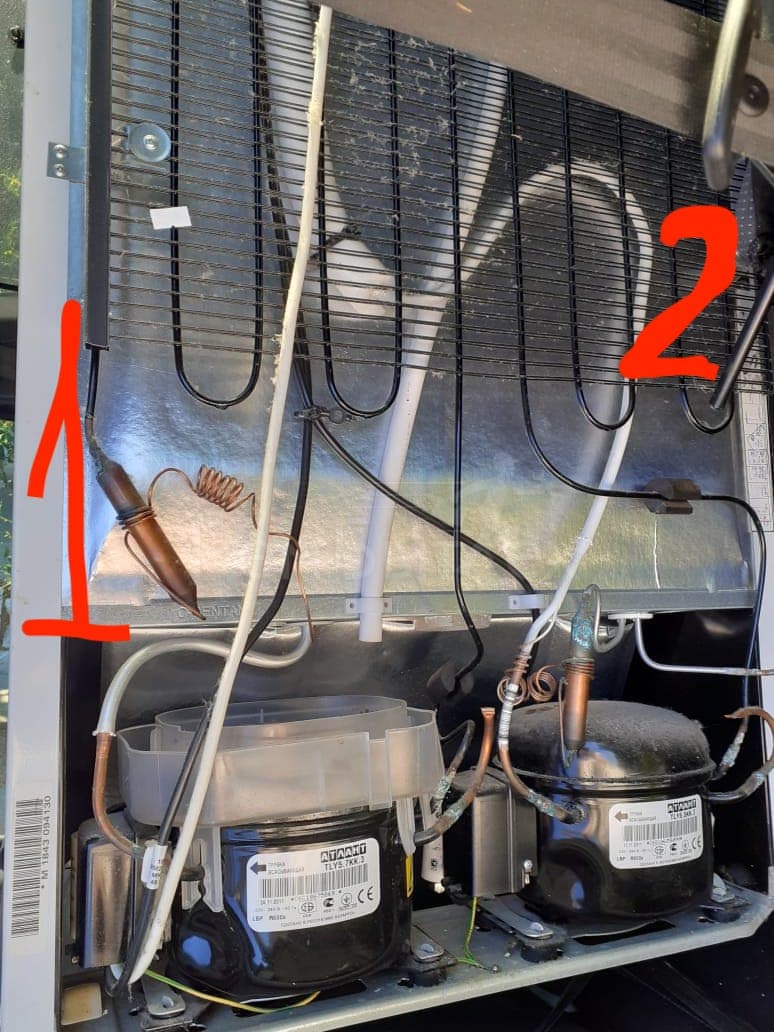
Refrigerators from different manufacturers, regardless of lg or Atlant, operate on a similar principle, their cooling system is a closed circuit, which is represented by a large number of tubes and nozzles. Conventionally, any household refrigerator consists of two units - an evaporator, which is located inside the equipment, and a condenser, fixed on the rear outer wall. In most cases, these components are made in the form of a coil, which allows for the most efficient heat transfer.
The cooling circuit of the equipment is filled with a refrigerant (in the vast majority of cases, freon gas), which constantly circulates through the nozzles and tubes, cyclically changing its state of aggregation - from liquid to gaseous and vice versa. Each of the cooling cycles follows an identical pattern:
- The refrigerant in gaseous form leaves the evaporator and is fed into the compressor of the refrigerator.
- Freon under the action of high pressure is sent by the compressor to the condenser.
- During the condensation process, the refrigerant passes into a liquid state of aggregation and cools, while heat is transferred to the surrounding air.
- Liquid freon, passing through the drying filter, goes towards the evaporator and enters it through a narrowed capillary tube.
- The pressure exerted on the freon decreases, which leads to the boiling of the gas.
- Turning into a gaseous state of aggregation, the refrigerant absorbs heat from the surrounding space inside the freezer and refrigerator compartment and evenly lowers the temperature inside them.
After completion of this cycle, the refrigerant vapor is again pumped out and the process is repeated. The main functional role in this process is assigned to the compressor. This node provides the following processes:
- pumps freon;
- maintains the required pressure indicators in the system;
- ensures uninterrupted heat transfer from the inside to the outside.
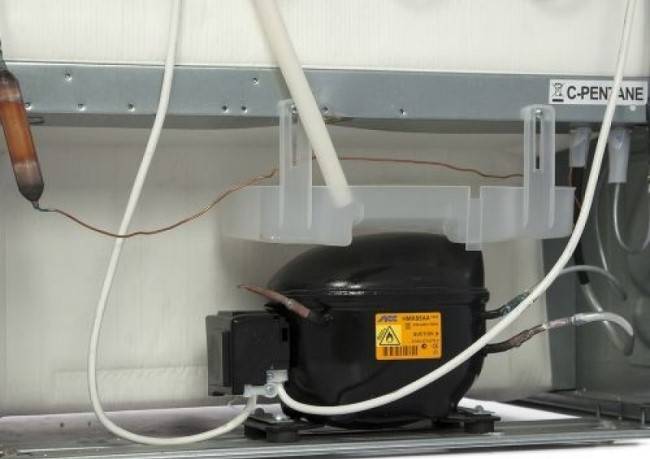
The quiet operation of the motor is a consequence of its position. The engine is suspended on the frame and buried in oil.
Any damage to the cooling circuit, separation or displacement of the compressor in relation to the suspensions, lead to serious damage to the refrigerator, which subsequently needs expensive and complex repairs. It is easiest to introduce violations into the cooling circuit of a domestic refrigerator during transportation, so the transportation process must be approached responsibly.
Preparing the refrigerator for transport
Transporting a refrigerator, like all large-sized equipment, is a rather troublesome task. And the safety of the equipment depends on how correctly this operation is performed.
If you do not yet have the opportunity to order a machine with a high body in order to transport equipment in a vertical position (standing), you need to know how to properly transport refrigeration equipment lying down.That is, in a horizontal position:
First of all, you should turn off the refrigerator from the power supply, remove all food and defrost it;
All trays, shelves and other containers should be removed from the unit and securely packed in cardboard or newspapers;
It is also very important to securely fix the door of the device, otherwise it may come off.
For these purposes, you can use plastic twine, wide tape or tie-down straps;
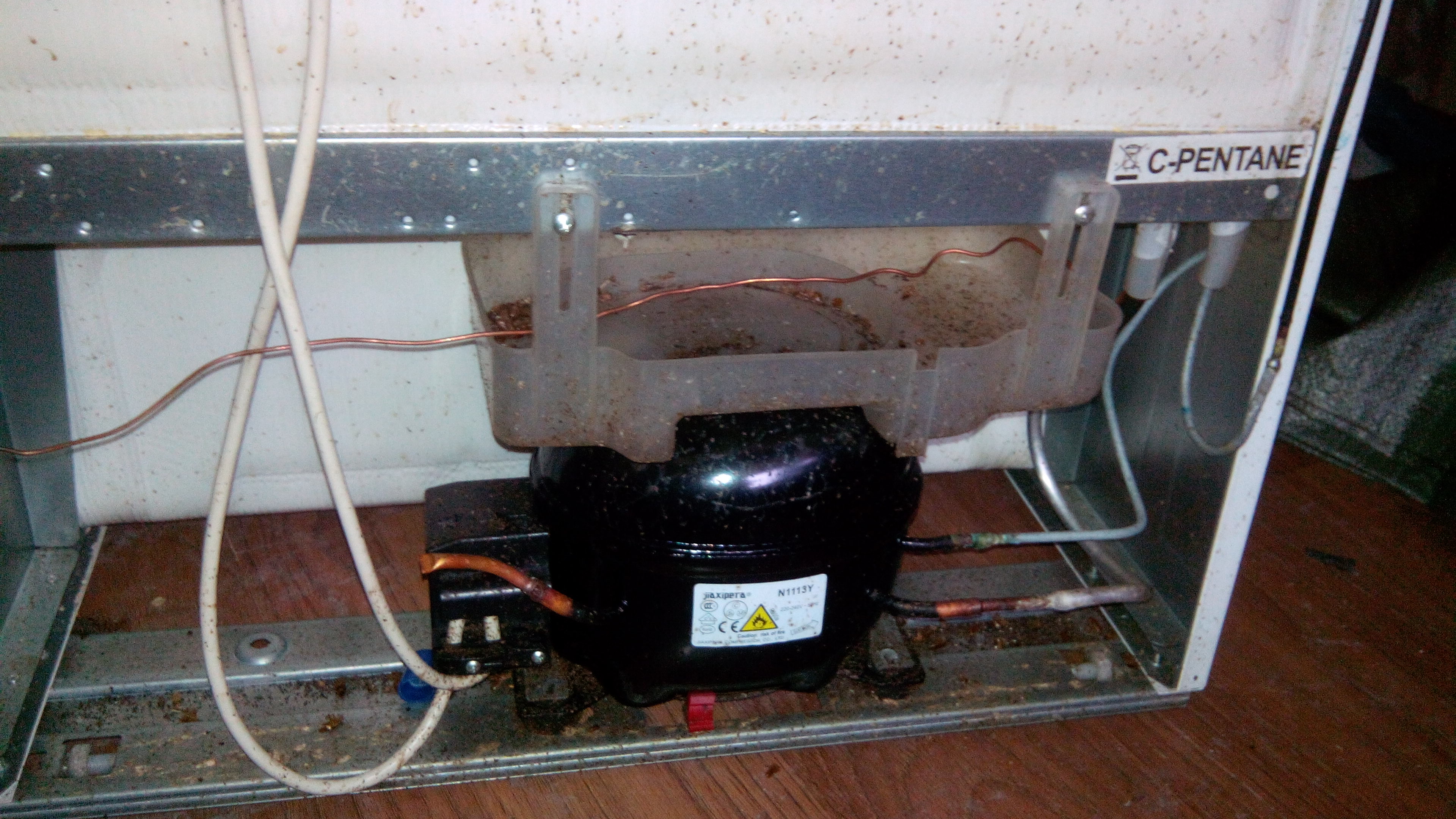
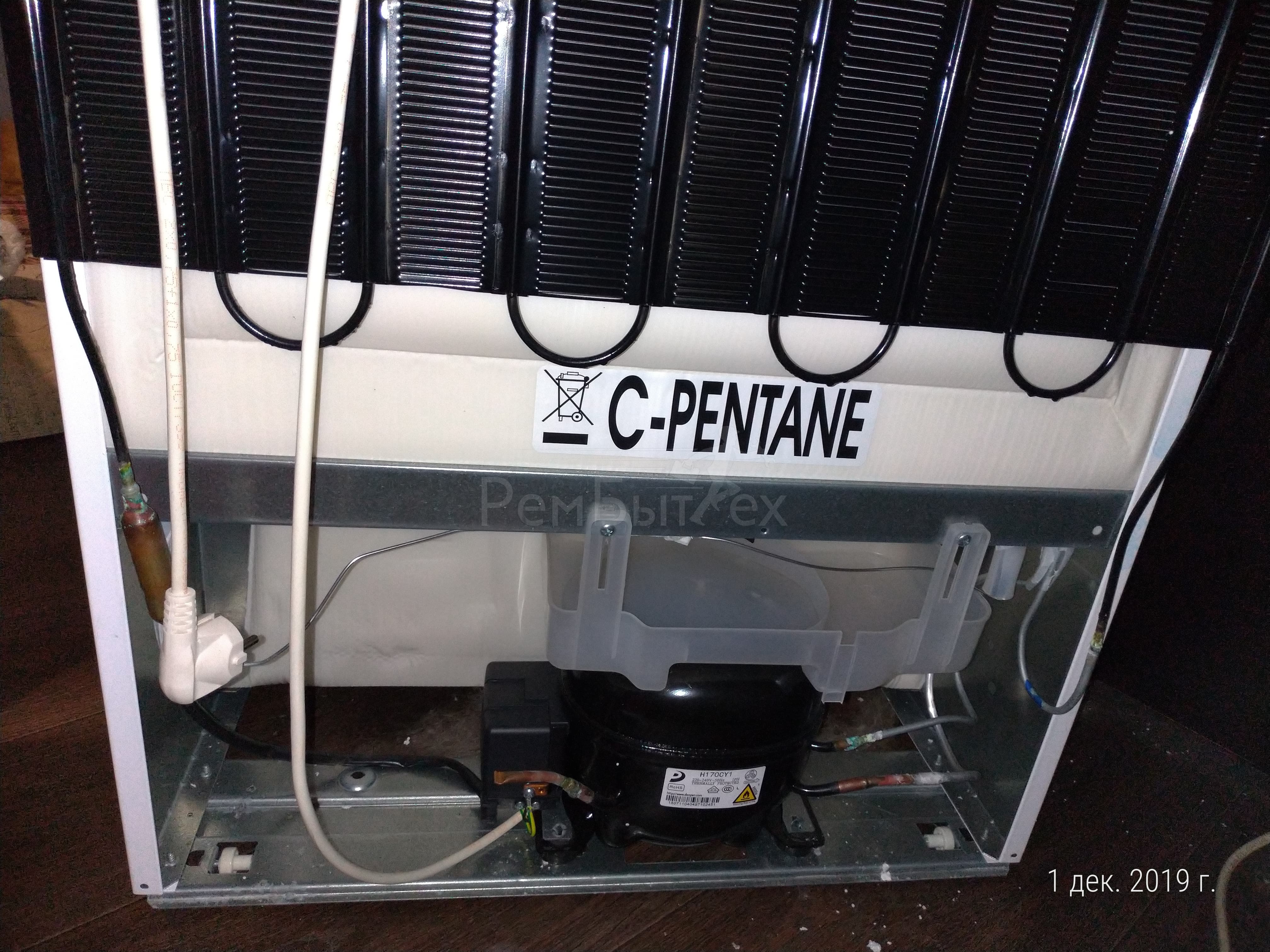
Before transporting the refrigerator, also pay attention to the compressor. Many manufacturers put special shipping bolts on the compressor that you just need to tighten.
If they are absent, then the compressor must be fixed with rubber or cardboard gaskets.
This item of household appliances must be placed in its original packaging before transportation.
However, if you throw it away or it is torn, you can use cardboard or film for these purposes. The main thing is that the case is protected from scratches and other damage.
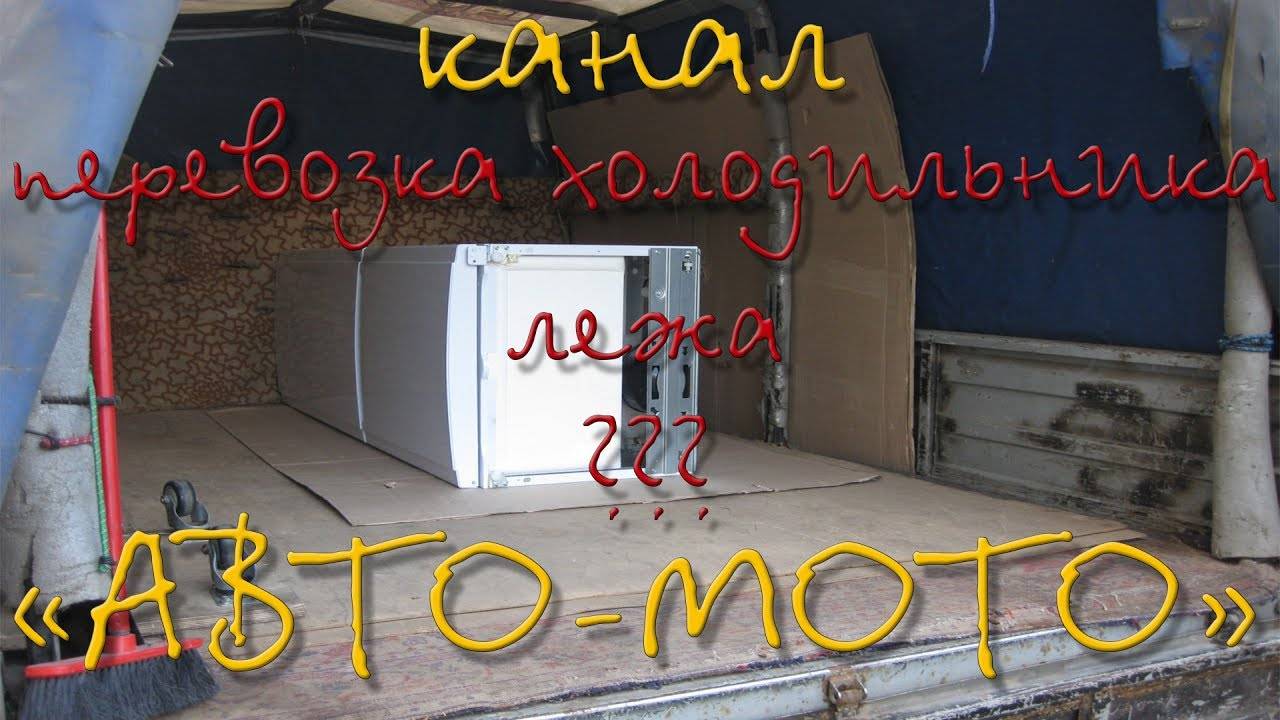
Now you need to properly prepare the vehicle itself, in which such cold equipment will be transported, lying (on its side). Most often, transportation teams use the Gazelle truck for these purposes. The floor of the body should be covered with an old blanket or cardboard should be laid in several layers. The unit itself must be positioned lying on its side, so that the door hinges are on top, not below.
If it is required to transport a Soviet-style refrigerator, the compressor must be securely fixed in a horizontal position using specially designed transport bolts. It does not matter how far the transport is carried out.
Special attention during such an event should be paid to fixing the device inside the body. With poor fixation, in the event of unexpected braking, the refrigerator may hit the car body and be damaged
Which of course is highly undesirable.
On which side to transport the refrigerator?
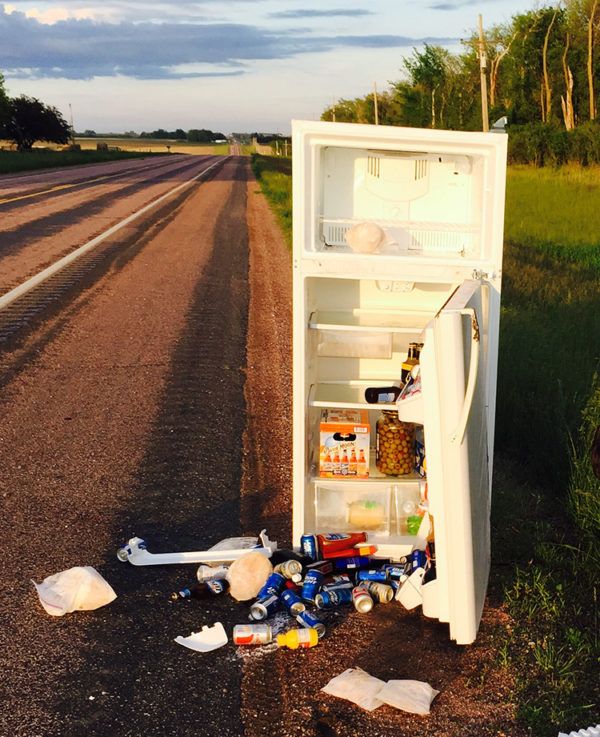
So, how to properly transport the refrigerator so as not to spoil it? Under no circumstances should the appliance be placed on its back or on the door during transport. If the device lies on the back wall, then during transportation you will almost certainly damage the evaporator, a very fragile part. What will happen to freon after that? Most likely, it will evaporate from the cooling system through the evaporator cracks once and for all. Transportation on the door is fraught with damage to this very door. Not only are scratches and dents unlikely to greatly decorate the case, damage to the door, even a bend imperceptible to the eye, can lead to a significant loss of tightness of the refrigerating chamber. And this leads, at least, to a noticeable decrease in work efficiency. Simply put, freezing will be worse, and no frost know system will help.

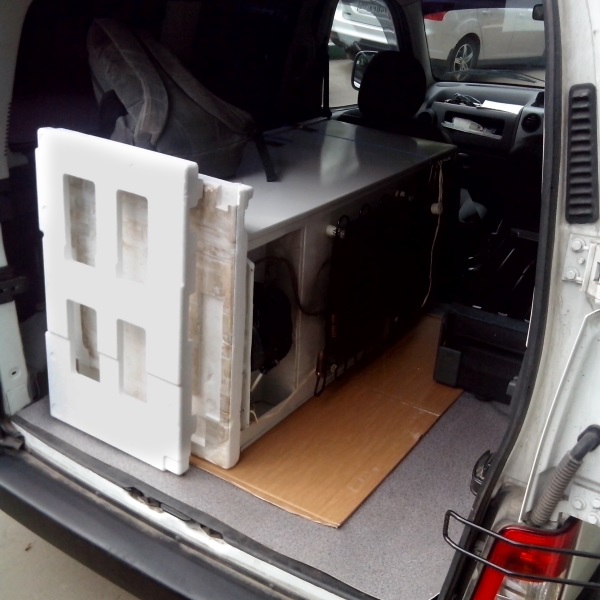
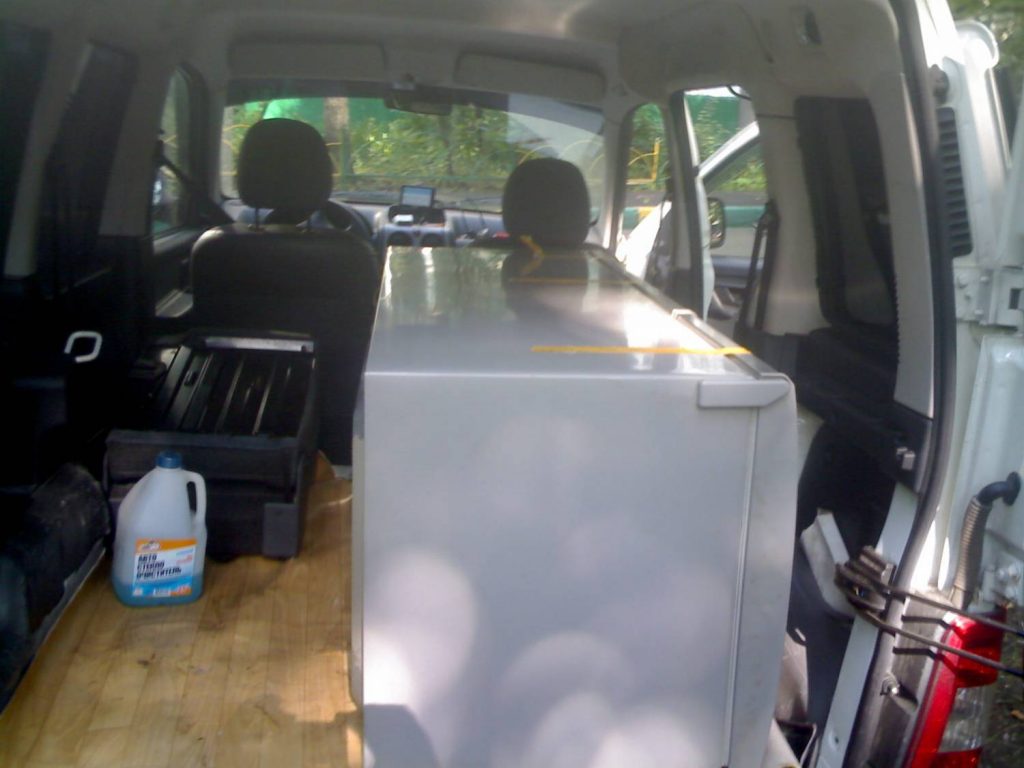
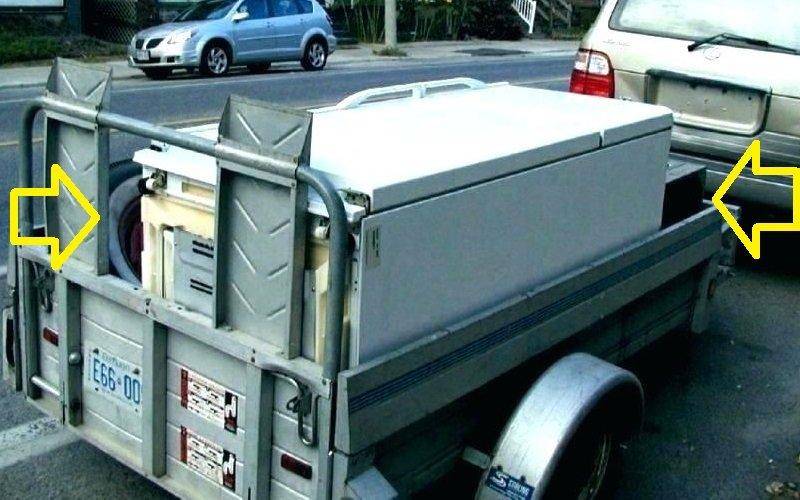
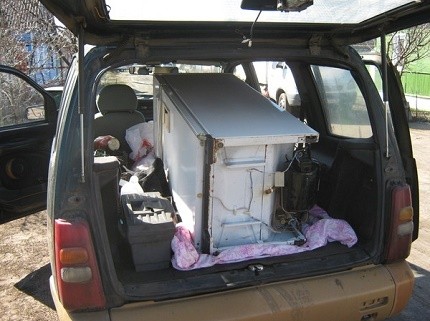
Instagram @fridges_of_slough_county
Small refrigerators can be transported in a spacious passenger car. With side-by-side models, this number will not work.
And further. In most models, the compressor - a fairly massive unit - is attached to the housing on springs to compensate for vibration. When transported on its side and strong shaking, the springs may not withstand, come off, the compressor may hit the housing.Therefore, some manufacturers recommend additional fastening of the compressor for transportation, for example, using special fixing bolts (a similar system is also used to fix the drum in washing machines). Therefore, ensure that the fixing bolts are stored after purchasing and unpacking the equipment, they may come in handy in the future. If locking mechanisms are not provided, try to fix the compressor yourself as securely as possible. Place a piece of wood or foam under it, wrap it with construction tape, in general, immobilize it as best as possible.
If you are transporting a refrigerator when moving from apartment to apartment within the same city, you need to clearly plan and think over the route for moving the cargo, especially when it comes to volumetric models such as Side-by-Side. Such giants will not go through every door, they will fit only in a freight elevator. Yes, and not on any staircase with them will turn around. Therefore, check and make sure that the equipment goes everywhere in width and height, and you have enough strength to move it from place to place without help.
Instagram @antje738
Do not forget that loading and unloading operations also require accuracy and some effort.
Preparing to transport your Samsung refrigerator in your car
If there is a choice to move such a technique in a lying position or "standing", it is recommended to choose an upright position. This is especially true for the transportation of refrigerators with No frost ("No Frost") cooling. However, it is often not possible to transport equipment in this way. For proper transportation by car or truck, several conditions must be met.
Determination of the correct position. If you have to transport refrigeration equipment lying in a car, then you need to take into account that it is strictly forbidden to lay it on the back side, where the condenser is located outside, on the floor of the cargo compartment, because. it could damage it. In addition, you do not need to lay it on the door. Such placement usually results in damage to seals and fasteners, as well as refrigerant leaks. Thus, the device can only be transported on the side, but not on any, but on the one where the injection tube does not pass - this part must be on top. The easiest way to find out the location of the tube is from the instruction manual for the equipment. If this information is not there, then you can determine this by touch during the operation of the device - the tube located at the back will be the hottest.
Fixing the compressor. An important condition for the transportation of refrigeration equipment is the need to secure the compressor of the transported equipment so that it does not sway when moving. Failure to do so may result in equipment failure. Fixation of this unit is carried out using spacers, which are included in the delivery. If there are none (for example, they were thrown away when installing the device), then you will have to fix the unit by filling the empty space around it with crumpled paper sheets or something similar. After this procedure, the equipment can be transported.
Refrigerator defrosting. One of the mandatory stages in the preparation of refrigeration equipment for transportation is its complete defrosting.
And it doesn't matter if transportation is being prepared over long distances, or equipment needs to be transported to a neighboring street - in any case, defrosting must be carried out, otherwise individual components of the equipment may be damaged during movement.
Remove all removable items. When deciding how to transport a refrigerator lying down, you need to remember to remove all removable elements from it (shelves, drawers, etc.) - for some reason, this moment is often forgotten
All these elements, if not removed in advance, experience significant vibrations during transportation, which can damage the internal surface of the equipment or be damaged themselves. Sometimes some elements cannot be removed, but at the same time they are not fixed rigidly in the refrigerator compartment, but are partially extended or opened. In this case, it is recommended to fix them with masking tape, which does not leave marks on the surface.
Fasten the door. In order to properly transport the refrigerator on a truck or car, it is also necessary to securely fix its door. This is easy to do with the same masking tape. If this condition is not met, when moving from vibration, the door may spontaneously swing open, which often leads to the appearance of dents, chipped paint and other troubles on it.
The importance of correct posture
Refrigeration equipment of different brands works on a similar principle. The cooling system is a closed circuit consisting of many thin tubes.
Conventionally, it is divided into two parts: the evaporator, located inside, and the condenser, installed on the outer rear wall.Basically, these components are implemented in the form of a coil, which contributes to the efficient absorption and release of heat.
In order not to damage the main components and significant working parts of the refrigerator during transportation, it is better to familiarize yourself with their location and system design in advance.
The working system of the refrigerator is filled with freon, which continuously moves through the tubes, alternately changing its state of aggregation.
Refrigeration cycles follow the same pattern:
- gaseous refrigerant is pumped out of the evaporator and enters the compressor;
- the substance is compressed and sent to the condenser under high pressure;
- during condensation, freon turns into a liquid and cools, giving off heat to the environment;
- the liquid passes through the filter-drier and is directed towards the evaporator, entering it through a narrowed capillary tube;
- the pressure of the refrigerant drops, causing it to boil;
- evaporating into gas, freon absorbs heat from the internal chambers, evenly cooling the space.
Then the freon vapor is pumped out again and the cycle repeats. The role of the main functional element in the process belongs to the compressor.
It pumps the refrigerant, creates the necessary pressure in each part of the system and is responsible for the uninterrupted transfer of heat from inside the device to the outside.
Stable and quiet operation of the motor is maintained by hanging on the frame and immersed in oil.
The compressor is housed in a metal casing and installed at the rear of the equipment between the condenser and evaporator.In modern modifications, it is almost invisible, as the manufacturer hides the device behind the wall
Any damage to the pipe system, displacement or separation of the compressor from the hangers leads to major breakdowns that require complex repairs.
The easiest way to disrupt the normal functioning of the cooling system is when transporting the product. That is why it is necessary to approach this issue with maximum responsibility.



All the most serious damage to the working units of the refrigerator is caused mainly during transportation. After installation of the unit, mechanical influences are prevented by the housing
How to pack?
To properly and safely transport the refrigerator lying down, you will need:
- factory packaging (if preserved) or bubble wrap packaging - it can be purchased at a hypermarket;
- packaging of masking tape - it is convenient to tear it off with your hands, which saves time;
- scissors - cut off the film;
- newspapers - usually there are a lot of them and they are laid out for free in mailboxes as advertising;
- factory transport spacers for fixing the compressor or screws;
- paper towels or absorbent wipes;
- pieces of cardboard, rags or old blankets.
Without packaging, you will not transport the refrigerator correctly!
Your actions, including if you are transporting the refrigerator in a horizontal position:
One day before:
You need to carefully and carefully pack your unit to reduce the risk of breakage:
- Find the instructions for your refrigerator and see the layout of the rear circuit.
- Determine the injection tube when the device is running. Do it manually or check the instructions.
- Prepare factory packaging or packing materials
- Disconnect the refrigerator from the mains, remove the food.
- Defrost the device, drain the water, rinse the shelves. To save time, use paper towels or paper towels to absorb moisture. After wiping, dry it open anyway.
- Remove everything that is removed - containers, grates, shelves, doors, glass. Wrap glass with bubble wrap. Doors that could not be removed, for example, from a freezer, should be fixed with adhesive tape. Nothing should be opened or moved inside the refrigerator.
- Fix the position of the compressor with factory transport braces or screws. If they are not available, crumple up sheets of newspaper and arrange them so that the compressor and other moving parts of the circuit are immobilized. Fix the position with tape, if necessary, wrap around the refrigerator.
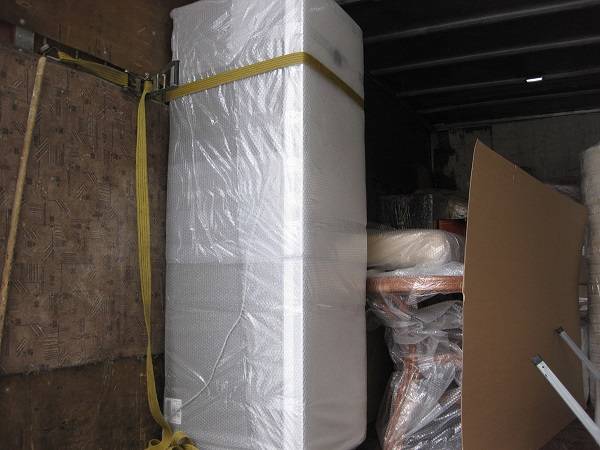
- Wrap the entire refrigerator with several layers of bubble wrap, fix it with tape.
It's great if the original packaging is preserved - it is difficult to achieve the preserved properties of polystyrene from other materials. In addition, in modern models, it indicates the side on which it is allowed to put the device.
Tip: if it is not possible to get a pimply film, wrap the refrigerator with several layers of textiles, a layer of cardboard, followed by fixation with adhesive tape. This measure will prevent scratches and chipping of the coating on the surface of the device.
If you are buying a used refrigerator, ask for the model name, look at the instructions. Find out if the refrigerator is washed, ask to fix the compressor. It should be understood that refrigerators are usually sold by hand for self-delivery, so as soon as you give the money back, the former owner will not care how you transport your refrigerator - even with a freezer down the stairs.And it will not work to complain about the performance: the refrigerator could be quite working before transportation, which caused its malfunction.
On the day of transport:
The removal of the refrigerator from the entrance should be carried out on the correct side, and the side along which the discharge tube passes should be the top one. When moving down stairs, the compressor must be at the bottom while maintaining a generally horizontal position.
The same conditions must be met when bringing the refrigerator into the entrance in order to maintain its working condition.
How to transport in the car?
Ideally, if the rented gazelle is equipped with clamps and stops, and the height of the side allows you to transport the refrigerator vertically. When transported horizontally on the correctly defined side, the refrigerator will still need to be fixed. If you are carrying it along with other things, place bales of textiles on the sides of the device or support it with upholstered furniture.
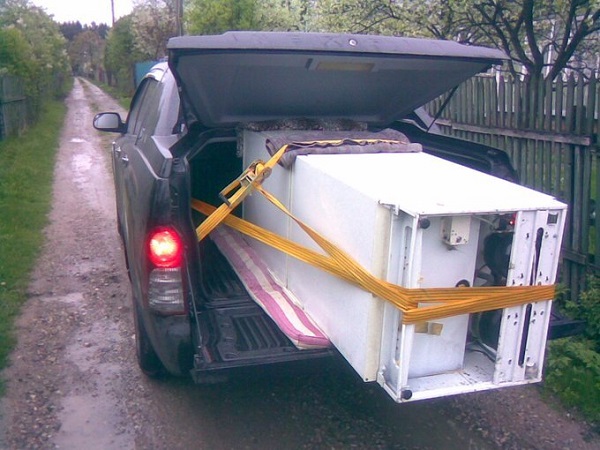
When transporting a short distance of a couple of blocks at a low speed (40-60 km / h), the refrigerator can not be fixed on a flat road: it has a large mass and is therefore inert. In all other cases - when transporting significant distances with unpredictable road topography and traffic congestion - find a way to do it.

Place several layers of cardboard or soft foam material, such as isolon, on the bottom of the box before transport.



