
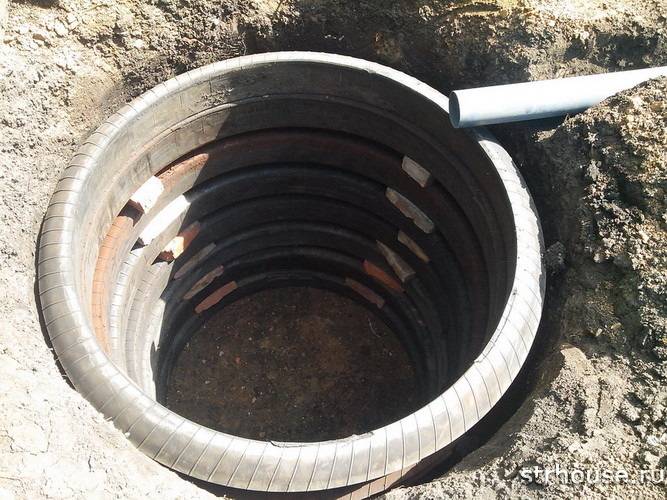
- Requirements for the location and required volumes of sedimentation tanks
- Arrangement of a brick cesspool
- Advantages and disadvantages
- Methods for repairing a drain hole
- If the subsidence does not stop
- Fixation of the lower ring
- If there is a gap between the rings
- We continue the arrangement
- How to prepare a concrete solution?
- Do-it-yourself cesspool of concrete rings - construction technology
- Hermetic cesspool of concrete rings
- How to clean a cesspool
- How to make a drain hole
- The volume and depth of the cesspool
- Project preparation
- Material calculation
- Drawing
- Required Tools
Requirements for the location and required volumes of sedimentation tanks
When constructing sedimentation tanks from concrete rings with your own hands, it is necessary to comply with the following sanitary standards and building rules for their location on the site:
- the minimum distance to a residential building and outbuildings is 5 m;
- removal of the waste collector from the source of water supply is taken depending on the soils at the base of the pit:
- clayey - ≥ 20 m;
- loam - ≥ 30 m;
- sandy - ≥ 50 m;
Sewage pits should be placed below the slope from the water intakes, this is guaranteed to prevent water pollution;
- distance from neighboring sites is assumed to be ≥ 3 m;
- the chosen place for cesspools should provide convenient access for the sewer truck.
The required tank volumes depend on the following factors:
- the number of permanent residents in the house;
- availability of washing machines and dishwashers, how often they are used;
- number of taps in use.
For the construction of settling tanks of the required size, it is possible to increase the number of product frames or their diameter, as well as provide for the layout of several tanks.
Arrangement of a brick cesspool
When choosing a place, it is recommended to take into account the same parameters as for other species:
- as far as possible from any buildings;
- take into account the direction of groundwater flow;
- provide access for the sewer.
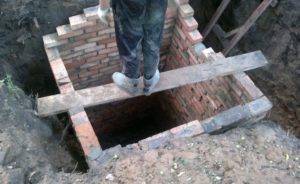 Sizes are always an individual choice. There is no doubt that a deeper device will require less frequent cleaning, but one should never forget the level of groundwater. Closer than 30 cm to them, you can not place the bottom.
How to make a cesspool if the water is close to its location?
In this case, there is simply no alternative to the sealed type of device. In the case of a shallow depth, you can increase the length dimensions or use a multi-tank design. But it is not recommended to dig more than 3 meters even in dry ground.
The standard option for a residential building with 4-5 people living in it is a depth and diameter of 3 meters.
Buy only red ceramic bricks. Silicate and cinder blocks will get wet pretty quickly and will be unusable. The best material is burnt brick, rejected for construction because of its irregular shape.
The construction process consists of several main stages:
- Digging a pit is the most time-consuming procedure. With manual work, two people can dig a 1.5x3 m hole in sandy soil within a couple of days. But clay soil will cause a lot of difficulties and will require the use of hired workers or an excavator. The shape for the pit is usually chosen in the form of a glass with a slight expansion towards the top, giving additional reliability.
- The foundation should begin with the process of backfilling the soil with gravel and sand. This layer is poured with concrete with preliminary laying of reinforcement. Usually the thickness of this layer is 15-20 cm and depends on the diameter of the pit.
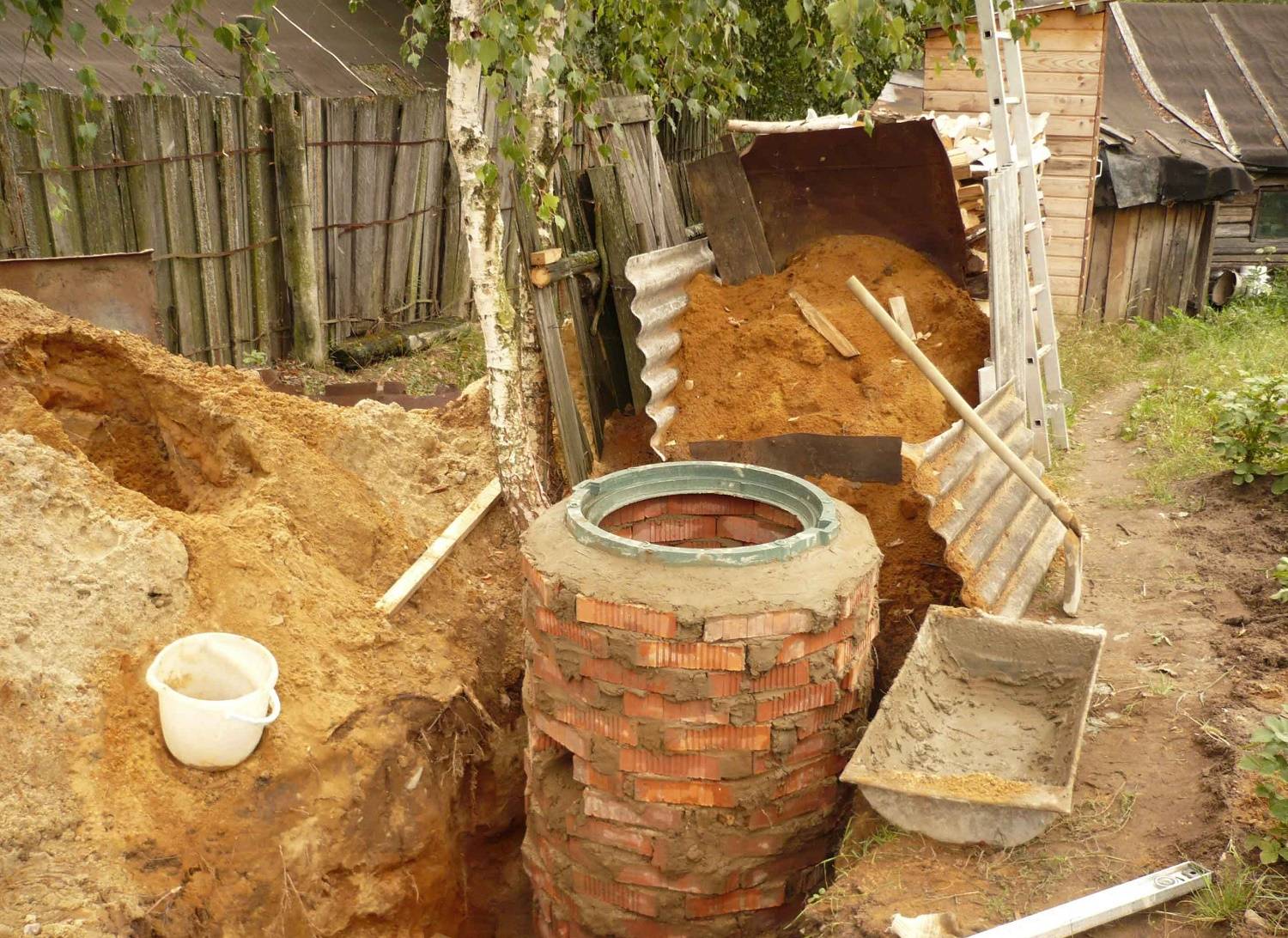
- Wall laying is done in half a brick with a size, and in brick - with a large diameter. The proportion of cement and sand in the mortar is usually 1:3 and 1:4. After completion of this stage, bituminous mastic is applied to the walls.
- A ready-made pancake with a hatch hole of the appropriate size is used, as well as a self-poured lid.
- In conclusion, the overlap is covered with a layer of earth with the location of the manhole cover slightly above the ground level.
Video of the arrangement of the cesspool brick pits:
Over time, any structure becomes clogged. Various methods are used for cleaning. Biologics for latrines remain one of the best methods to ensure accelerated degradation of waste and increase the life of such sewer systems.
Advantages and disadvantages
The main advantage of a cesspool with overflow is the absence of the need for frequent cleaning with sewage equipment. In addition, settled water can be used for technical purposes: for watering the garden, fertilizing the land.
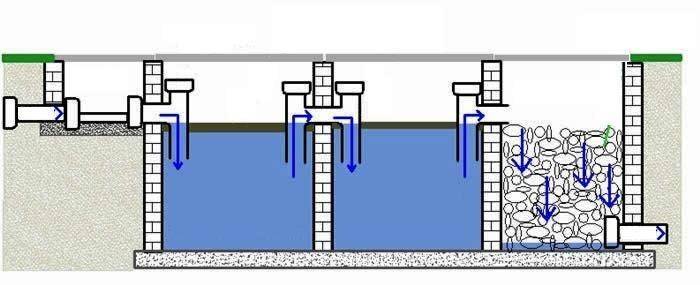 The principle of operation of the pit with overflow
Advantages of arranging an overflow cesspool:
- cleaning efficiency.The waste liquid goes through several stages of purification in the draft tank, sump and final or filter;
- High performance. Such structures are equipped with at least 2 cubic meters. The throughput of such a pit is maintained from 0.2 cubic meters per hour to 0.5;
- Saving money on sewage services. Due to the multi-stage treatment, solid waste is screened out in the first, draft tank, and liquid waste flows into the subsequent ones. This prevents overflow of the drain and the formation of hardened masses;
- Almost complete absence of stench.
At the same time, this design of the sump has some disadvantages. Of the minuses, it is worth highlighting:
- The relative complexity of the arrangement. An important role in the operation of the system is played by the angle at which the pipes are connected, the position of the tanks relative to each other and other features;
- Expensive arrangement. You will need to equip at least 2 independent wells, this doubles the cost of building an overflow cesspool relative to a conventional drain.
Methods for repairing a drain hole
First of all, to start repair work, it would be best to call professional vacuum cleaners. Of course, you can use a fecal pump to clean the tank yourself. But in the absence of such equipment, the help of sewers will come in handy. And the hardened sediment that has stuck to the bottom can be cleaned on its own, with the help of shovels. The following are tips and step-by-step recommendations for repairs.




If the subsidence does not stop
If the fact of subsidence is a regular event, then the most effective solution will be the following: disassemble the structure and solve the problem of the bottom device.Most likely the reason is that before the installation of concrete rings, the base was not rammed and compacted.
The walkthrough is as follows:
- The drive is dug out from all sides.
- The seams are embroidered, and the concrete rings rise to the surface.
- The state of the bottom of the pit is assessed.
- A concrete slab is being installed.
- The reservoir is being rebuilt.
It is also best to dig a reservoir with simple shovels, without the use of third-party equipment. But in order to dismantle heavy concrete rings, you will have to hire a crane to help.
If the pit left by concrete rings almost immediately began to fill with sewage, this means that repairs are impossible. The only right decision would be to move the cesspool to another point and re-arrange the cesspool, taking into account the mistakes made earlier. In other words, the bottom will either need to be well tamped or reinforced with a cement mixture. Otherwise, the instability of the soil layers will one day again lead to the same consequences.
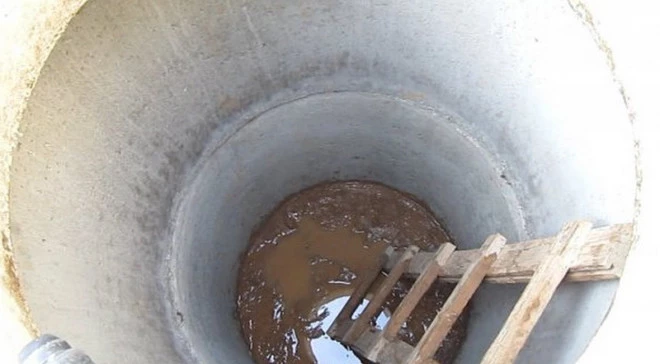
Only by opening the visibility to the bottom of the structure, it will be possible to understand with accuracy what the cause of the "malfunction" is. Usually these are violations in the device of the bottom of the pit. It will need to be leveled and strengthened.
First repair method:
Sand must be poured and compacted on a flat base. Add gravel or crushed stone. It is noteworthy that the thickness of one layer should be approximately 15-20 centimeters. Next, you need to put the concrete bottom on the already even layers.
Second method:
The bottom of the pit is easy to reinforce with a reinforcing mesh with the following parameters:
- the diameter of the rods is not less than 1 cm;
- cell size - no more than 20 cm.
The mesh must be filled with a cement mixture with the addition of a plasticizer, which will add such a necessary strength. The design should dry for at least a week. Everything else depends on the weather.
When constructing the tank again, it is important not to forget to seal the joints and waterproof the rings.
Fixation of the lower ring
Rarely needed. Usually in cases where the base was completed without any errors, but the lower ring continues to move and needs to be fixed. This can be done by pouring cement. If subsidence continues, then the lower ring must be stopped by means of auxiliary elements.


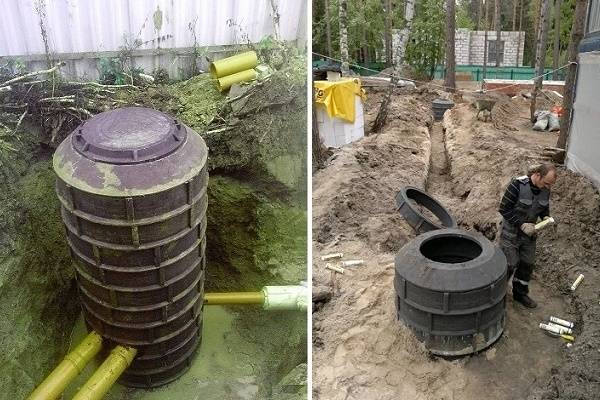
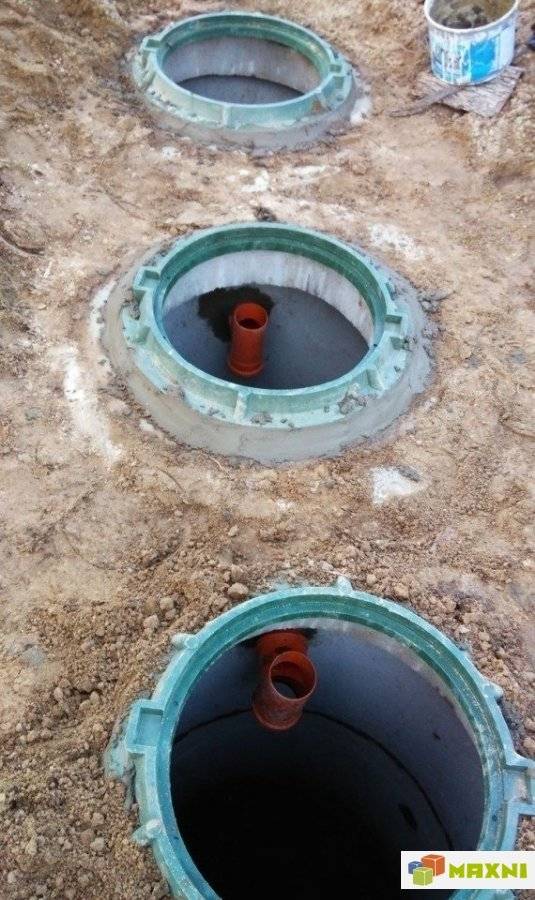
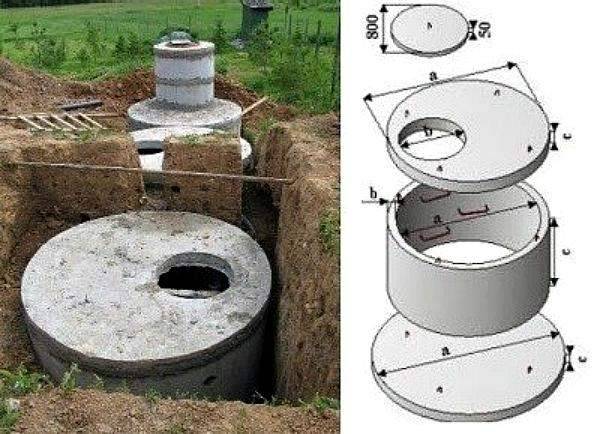
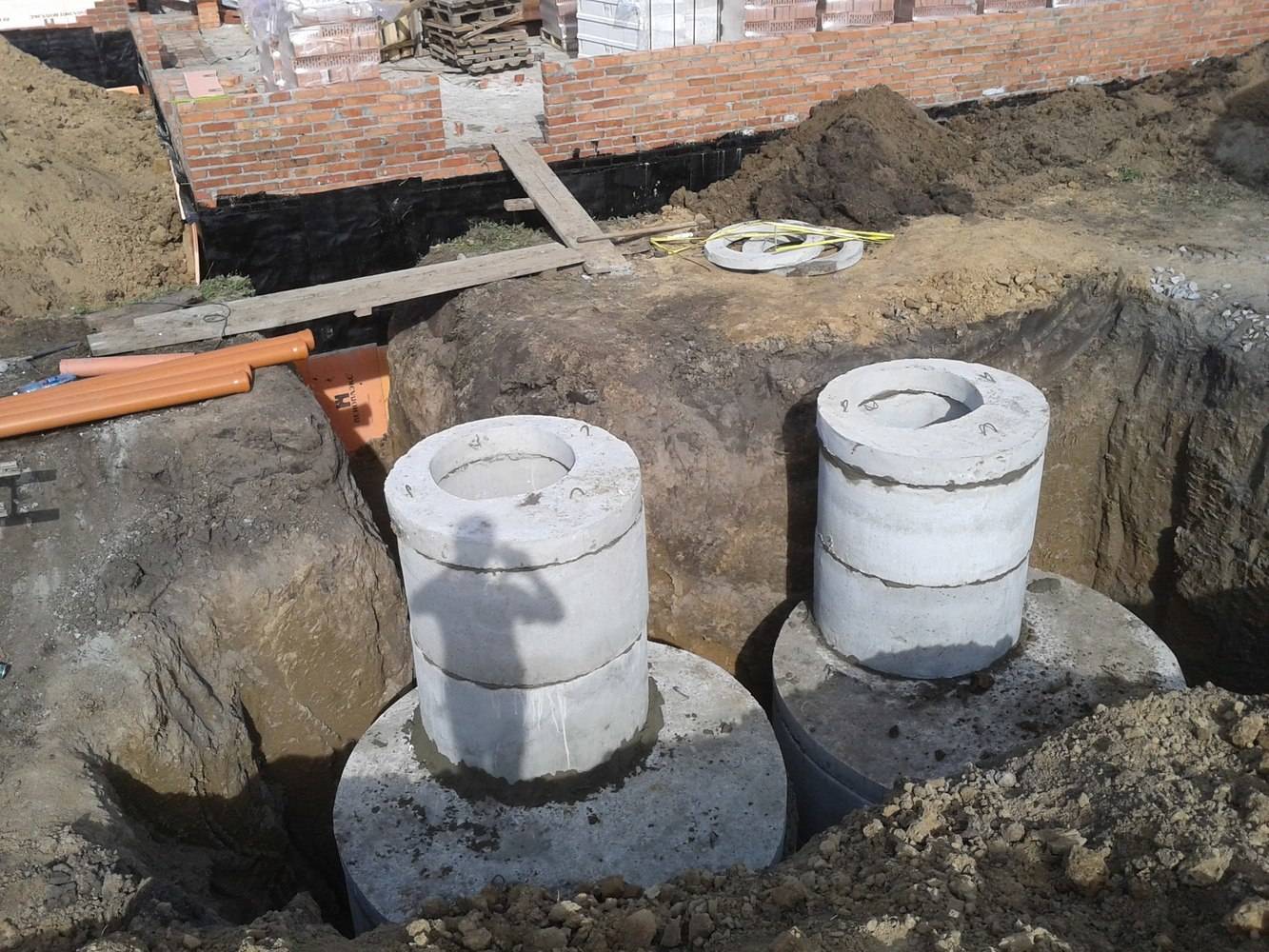
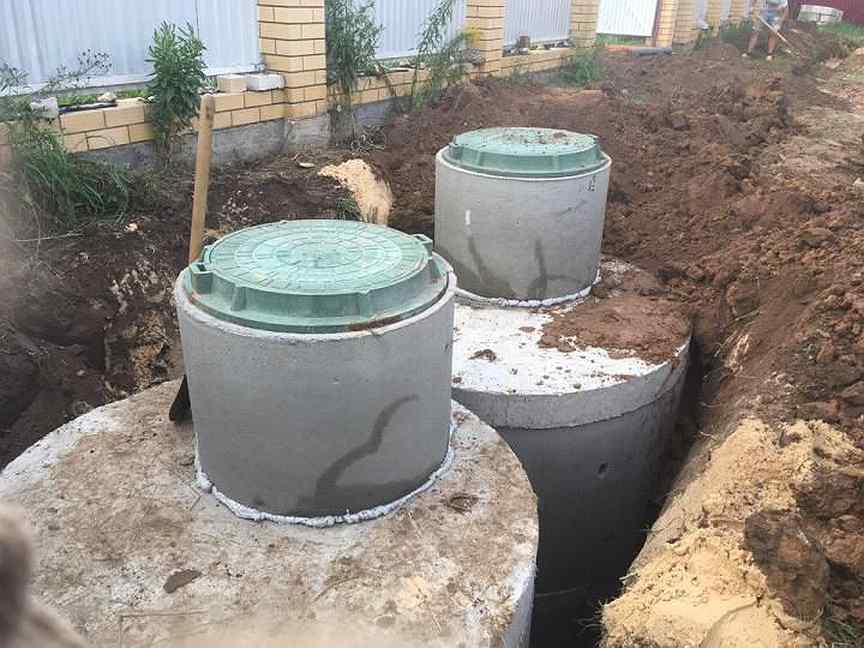
The easiest option is to cut pipes into the walls of the ring to strengthen it in the soil. They will serve as a completely reliable insurance.
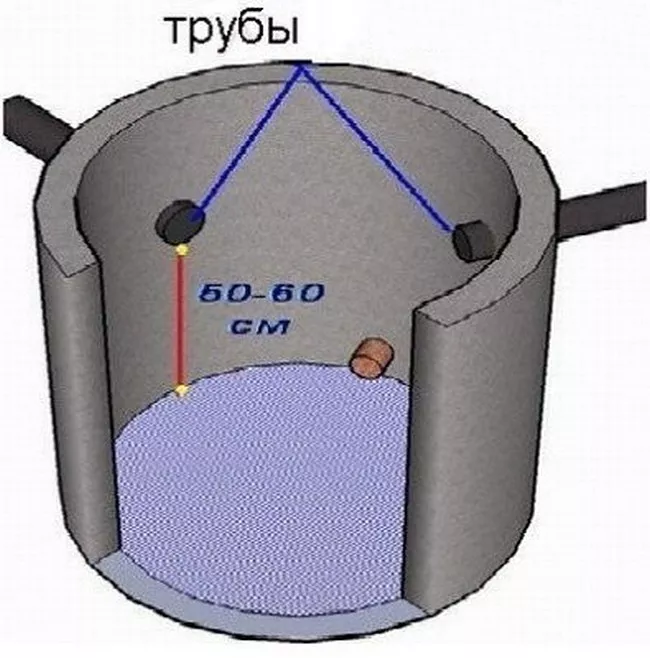
For this you need:
- Make up to six holes in the walls of the lower ring.
- Fix pipes in them, the diameter of which will be at least five centimeters.
- Each cavity must be filled with cement to protect the tank from sewage intrusion.
If the soil is not dense enough, and for this reason it will not work to drive in pipes, you can fix it with a mixture of sand and gravel with the addition of dry cement.
If there is a gap between the rings
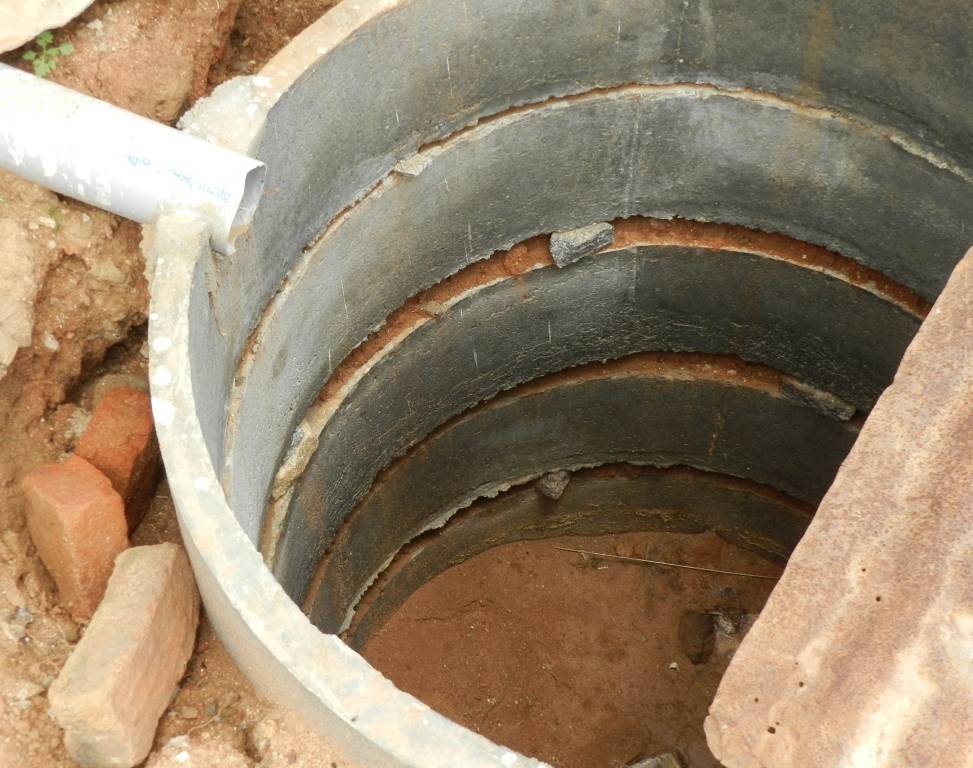
When they sank drain hole rings, and a void has formed between them, you first need to understand whether the rings sag further or not. If the movement does not stop, then, as described earlier, it is required to disassemble the pit, strengthen the bottom and assemble the pit again. If the movement is completed, you can choose from the options how to make repairs. There are only two ways.
The first:
- Disassemble the structure to the point of damage.
- Remount rings.
- Fasten with staples and seal.
Second: just close the gap with brickwork (nothing needs to be disassembled).
- Bricks must be laid in a standard way and fastened with cement mortar.
- To strengthen the masonry, it is recommended to use plaster or bituminous waterproof mastic.
- Waterproofing will become more effective if the coating is done on the outside too.
Upon completion of the work, it is necessary to check the reliability of the structure and then see if it starts to sag again. If the second option did not help, then the only way out would be to disassemble and carry out a full repair with additional fixation and strengthening of the bottom.
We continue the arrangement
Liquid glass is considered the most effective means of insulation, which can be added to the concrete solution and applied to the joints of the rings.
- on the bottom ring, the next one is installed. With a diameter of 1.5 to 2 meters, two rings will be enough;
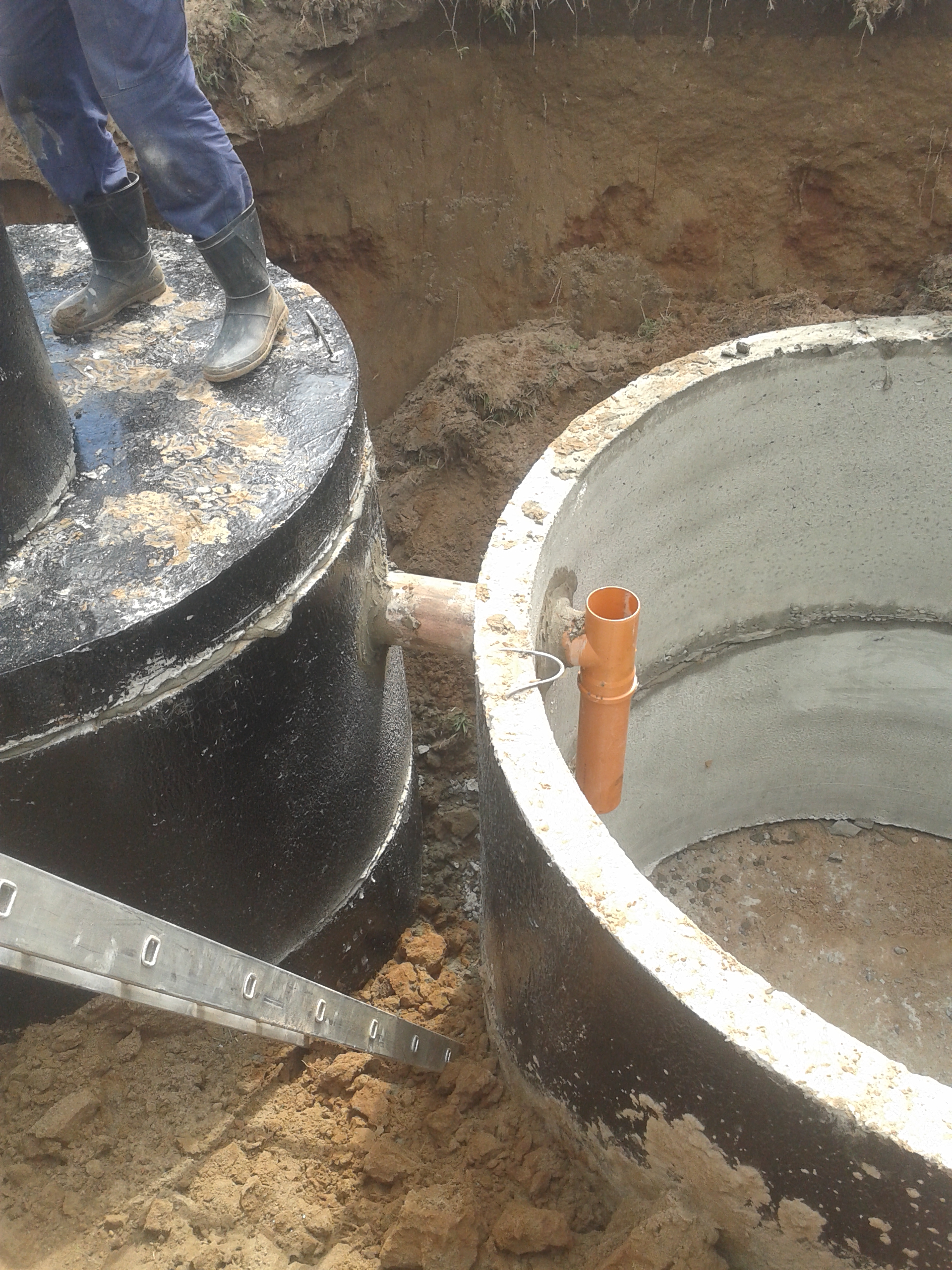
- if you want the drain pit to work, performing the functions of a septic tank, then for this you need to equip another pit of greater depth next to it. There is no need to fill the bottom of the second drain pit, just lower the rings. Holes are made in the upper ring and pipes are laid to carry out the overflow of liquid from one drain pit to another.
To improve the functionality of the cesspool, special biological preparations can be used. They help to carry out wastewater treatment quite well. Water after cleaning with preparations will be poured into a nearby hole, and then absorbed into the soil. Such water is purified by about 98% and does not pose a threat to the environment.
At the end of the installation of the rings, you can proceed to the withdrawal of the drain pipes.Do not forget about observance of the slope, its angle should be approximately 15 degrees. The diameter of the drain pipes is 15 cm. After the pipes are removed, a control drain is made. After checking, you can fill the trenches with earth.
Do not forget that ventilation in the cesspool is required. Ready-made pit rings usually already have them.
It will be nice if you carry out additional waterproofing before filling the hole. The earth is filled up first, along the outer side of the rings. Only a hatch should remain on the surface of the soil.
Now you can use the drain pit, but do not forget about the periodic pumping of the contents, or the use of biological means to clean cesspools.
How to prepare a concrete solution?
The strip foundation is always poured in one sitting. First, you assemble the traditional wooden formwork, reinforcing and reinforcing. For better adhesion, metal rods can be tied together with wire.
- We make laying on broken pieces of brick or pebbles. Laying reinforcement on the ground is highly discouraged. Only sand-cement mixture.
- To knead the mortar, take cement, sand and gravel in a ratio of 1:2:3. We take the required amount of water by eye. The output should be not too liquid, but not a thick mass. The pebble thrown into it should be completely immersed.
- When pouring, the solution is bayoneted to avoid the appearance of bubbles. Any residual air is unacceptable, as they adversely affect the strength of the monolith. Approximately 7-9 days you will have to wait until the site is completely dry.
- If work is carried out in hot weather, the concrete surface is moistened with water.This will help prevent cracking and make it stronger. Of course, if a ready-made reinforced concrete ring is used during installation, there is no need to equip the site.
Do-it-yourself cesspool of concrete rings - construction technology
In this lesson, we will learn how to make a cesspool of concrete rings with our own hands and take a closer look at the options for creating a cesspool in your home. It is worth noting that a pit of concrete rings can be made in various ways, the first is to fill the bottom with concrete mortar and thereby create an airtight structure, and the second way is to create a bottom from bulk materials, thereby making a septic tank system.
Cesspool of concrete rings
Hermetic cesspool of concrete rings
A cesspool made of concrete rings with the function of a sealed cesspool is an absolute plus for the soil and for the plants that grow nearby. But making a sealed cesspool, you directly depend on the arrival of a sewage machine, which once a month pumps out liquid from your cesspool. Of course, if your family consists of only a few people and in winter or summer you do not use a summer house or a country house, then it is quite important to build an airtight cesspool, because the fee for cleaning the cesspool is minimized and calls to them are made very rarely .


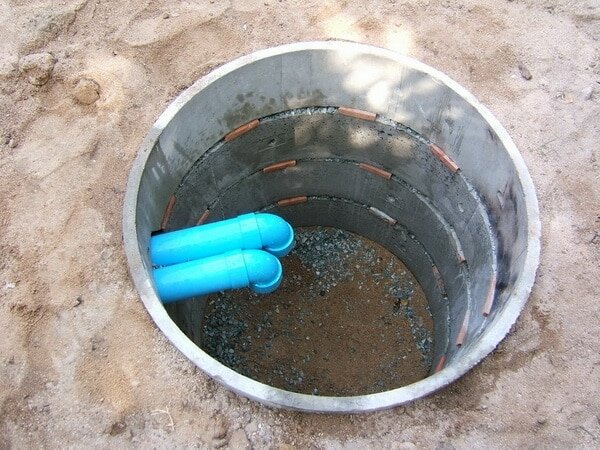

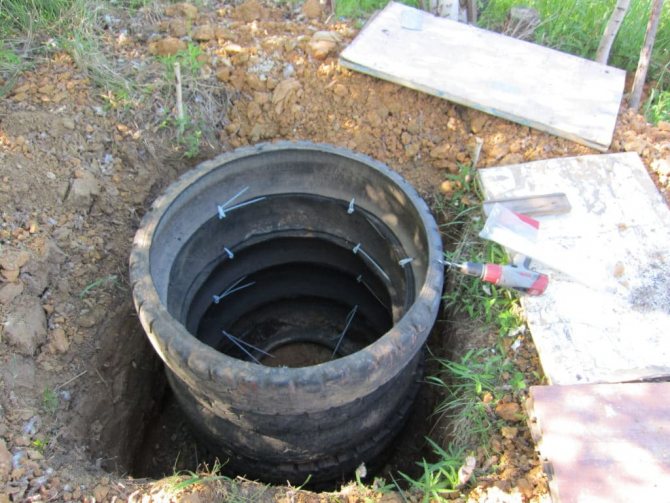

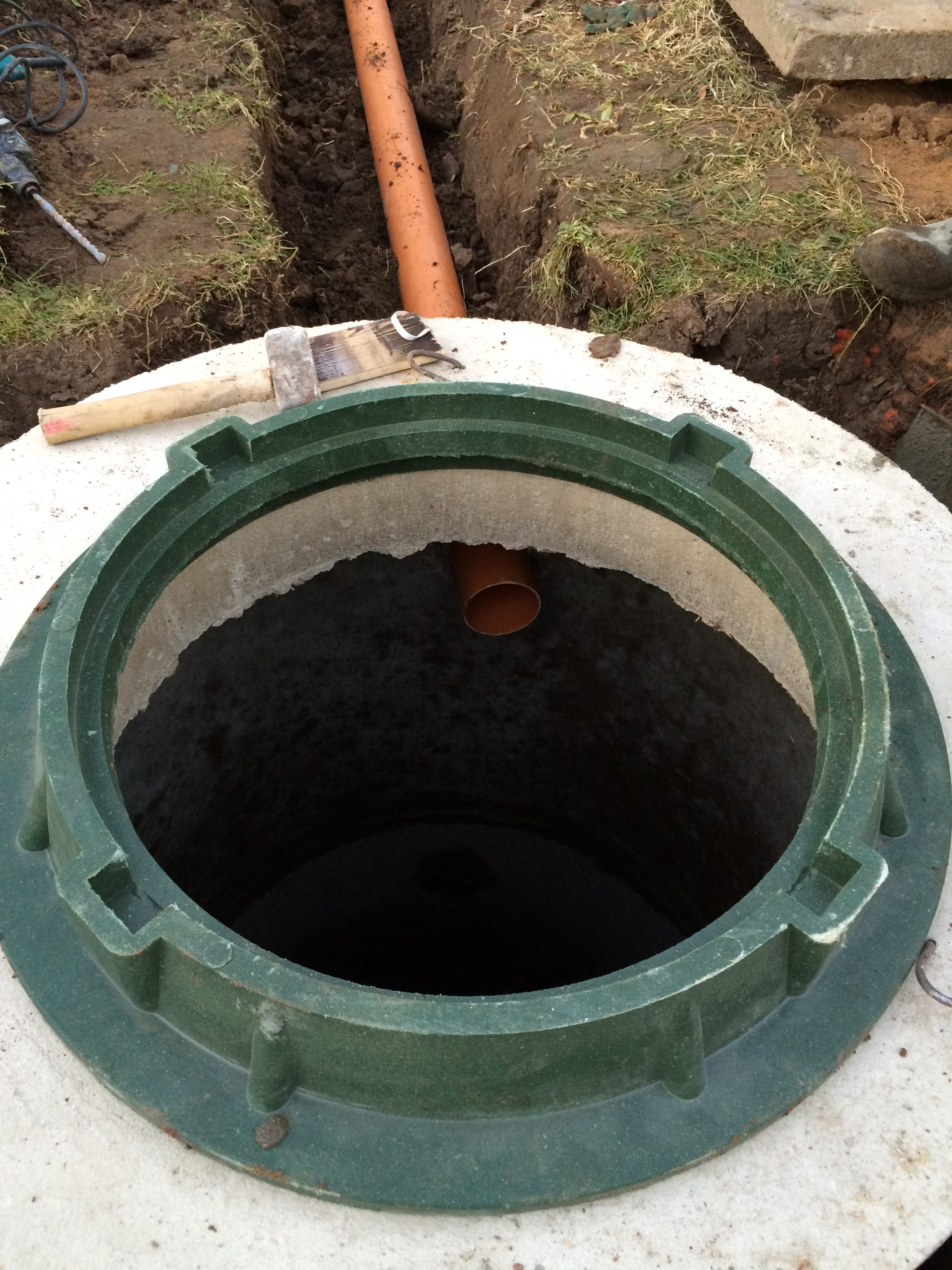
And of course, one of the main advantages of a sealed cesspool is the clean water of the well, which is located on your site. Because it is a leaky cesspool that is the main source of infection, which is carried in groundwater from a cesspool and can get into your well.Of course, seasoned builders will say if you build a cesspool 15-20 meters from the well, then your water is not afraid of pollution, but practice shows that this information is not always reliable, besides, there are also neighbors who also have cesspools , and the deposits and circulation of groundwater are a very difficult task to analyze.
To summarize, if you have a small family and you don’t get out into nature so often, then an airtight pit made of concrete rings is the choice you need.
Rules for arranging a cesspool
- The cesspool should be located 15-20 meters from the well.
- About 10 meters from the country house.
- 4 meters from the fence.
- The depth of the cesspool should be no more than 5 meters.
So, after the pit of the depth we need is ready, the moment comes for the installation of concrete rings. If you are not familiar with how to dig a hole, we advise you to look at this article. After the concrete rings are lowered, there comes a moment when it is necessary to hermetically insulate the base of the well and directly the joints between the rings, the isolation process can be done using concrete or resin mixtures, which you can either prepare yourself for this, you need to melt the asbestos (at the stake) in a bucket and fill the seams between the rings with it, but it will be extremely inconvenient to fill it without a special pump, so we still recommend using cement.
Next, it is necessary to cover the bottom surface of the pit with reinforced concrete slabs to ensure the safe access of this very machine for pumping out waste.
Scheme of a pit made of concrete rings
Cesspool with drainage system
A cesspool with a drainage system used to be very popular, partly due to the fact that the sewer was not in every house and simply the water resources that the family used during the year managed to go into the ground and simply simply disposed of naturally mixed with groundwater. But the consumption of water resources is growing, and with it, human needs are growing, which is why a cesspool with a drainage system simply simply cannot cope with a large amount of plums accumulated throughout the year, or even several months.
But it is worth noting that a cesspool can also be made with a drainage system by filling bulk materials at its bottom, and not pouring concrete. Then part of the water will go into the ground, and provided that the pit is filled, it will be possible to call a sewage truck. As a result, it will be cheaper to collect and pump out water, because less water will have to be pumped out.
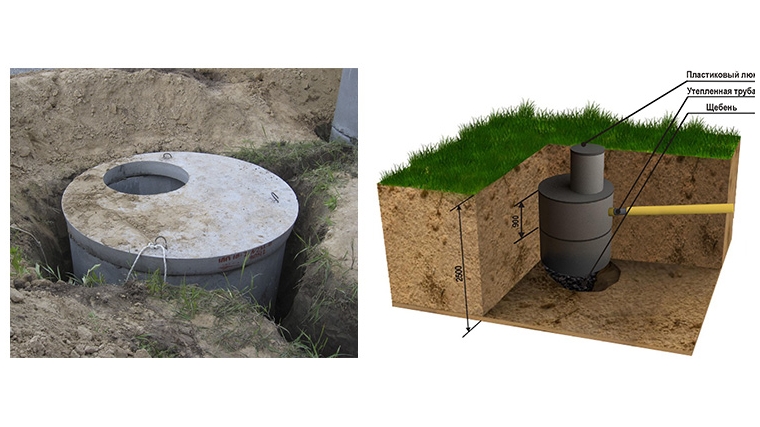
As for the construction of this structure, the work essentially remains the same, the only thing that really changes is the pillow that we will make, at the bottom it consists of:
- Sand layer.
- A layer of rubble.
- And thermal bonded geotextiles.
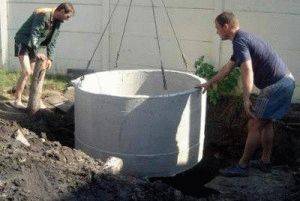
The process of installing concrete rings in a cesspool
How to clean a cesspool
The most efficient and fastest option is a sewage truck. True, he does not reach all the dachas, so the owners of suburban real estate organize the pumping themselves. There are two options here:
- By hand, using a bucket and rope. The method is unpleasant, dirty and long.
- With the help of a fecal pump, since such equipment is now sold in all hardware stores. Plus, the range of pumping equipment is very wide both in terms of price and performance.
Both options for cleaning cesspools require the presence of another element, namely a barrel or any other container where sewer waste will be drained. After that, they are taken out of the village to places for special disposal. That is, you can’t just take the dirt into the forest and bury it there.

Cleaning the cesspool by hand with buckets
How to make a drain hole
In the absence of a centralized sewerage system in many private houses, there is a need for a drain pit.
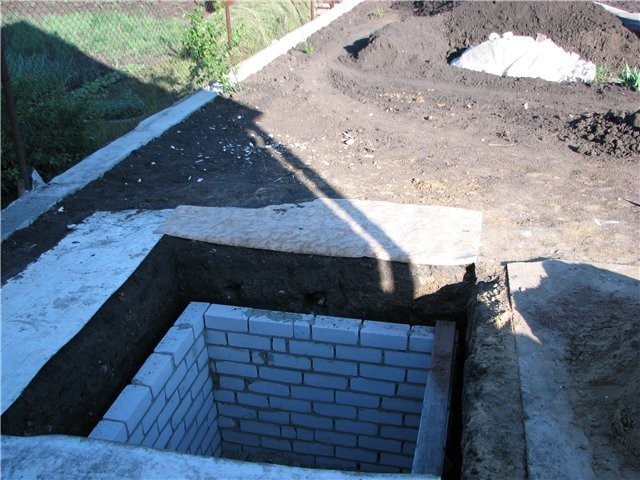
If a centralized sewage system does not pass in a private house, then a way out of this situation can be found by pulling out a drain hole. The size of such a pit is selected depending on the number of people living in the house.


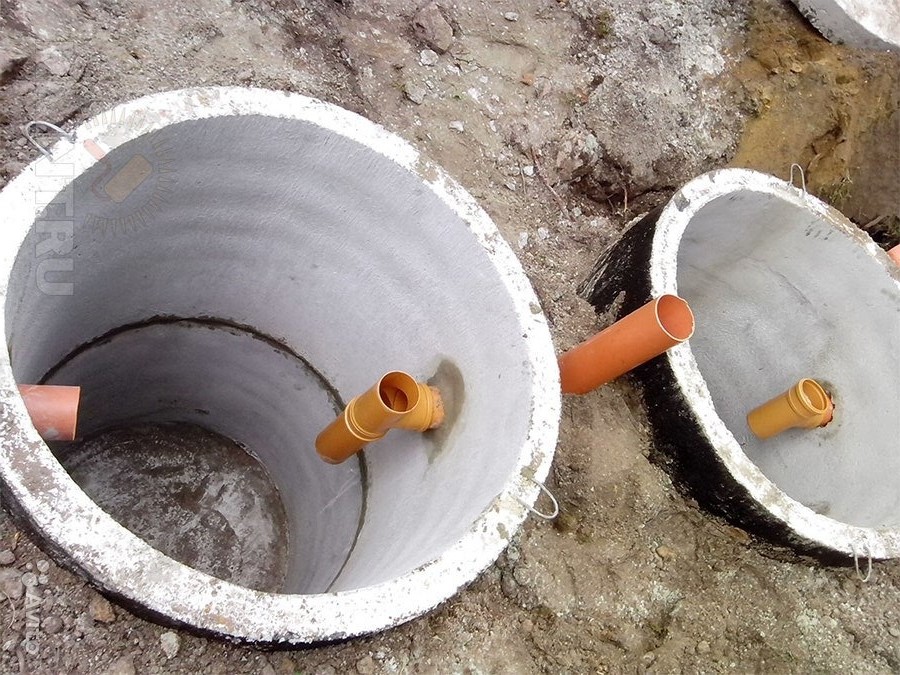


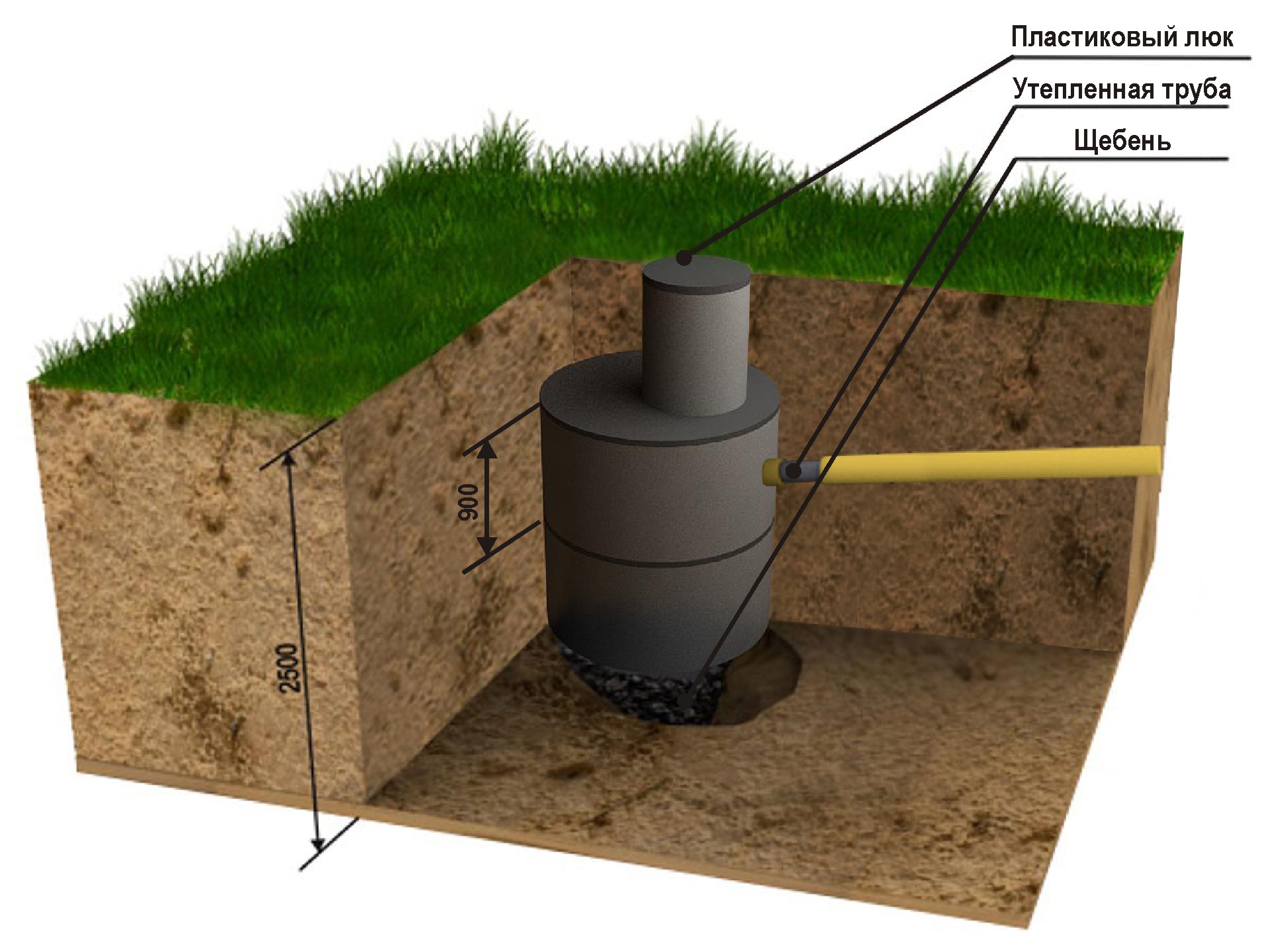

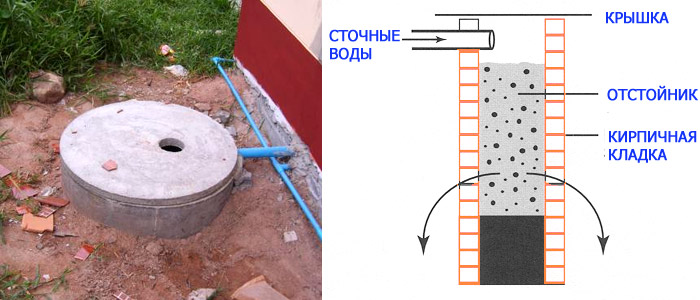
The volume of such a pit directly depends on how many people permanently live in the house. A cesspool made of concrete rings is one of the most popular options.
Some experts claim that the service life of a cesspool made of concrete rings reaches a hundred years. We can agree with this statement, since the concrete rings used in its construction have a fairly high strength. Concrete is not harmed by the impact of decay processes, even with prolonged exposure, its strength properties remain unchanged for many years.
The volume and depth of the cesspool
A standard cesspool consists of 2-3 concrete rings. The volume of one ring with a diameter of 1.5 m and a height of 1 m is 1.5 cubic meters. m. Thus, the cesspool, consisting of 3 rings, will have a volume of 4.5 cubic meters. m. With permanent residence in the house of a family of 3-4 people, it will need to be pumped out 3-4 times a year.
The depth of the pit depends on the level of groundwater passage (but not more than 3 m). This depth is enough for the sewer machine to completely pump it out to the very bottom. You should not bury the storage tank even to a shallow depth, since when the soil freezes and swells, it will simply be squeezed out of the ground.
Advice. With a high rise in groundwater and the impossibility of laying a cesspool to a great depth, rings of a larger diameter are selected to ensure a sufficient volume of the pit.
Project preparation
Even the simplest design of a septic tank or cesspool requires calculations, because the size of the structure depends on the daily amount of wastewater and other conditions. Only correct design will give confidence in the efficiency and reliability of the structure, and pre-drawn drawings will help to avoid errors in work.
Material calculation
The calculation of the number of rings is based on the volume of effluents, which, in turn, is determined on the basis of the amount of water consumed by the family. In your research, you can use the average data on water consumption per person in the amount of 200 liters per day, or resort to the help of special tables.
The dependence of the volume of the septic tank on the number of family members
To calculate the size of the receiving tank, the amount of wastewater per day is multiplied by three. Based on this value, the number of concrete rings and their size are determined. For example, a family of 3 would require a 1.8cc primary chamber. m. (600 liters per day times 3). For this, two standard rings with a diameter of 1 m and a height of 0.9 m will be enough. If 8 people live in the country house, then you will need a tank of 4.8 cubic meters. m, which is about seven reinforced concrete products.Of course, no one will build a seven-meter-deep septic tank. In this case, take three rings with a diameter of 1.5 meters.
When calculating, you can use tables of dimensions of standard reinforced concrete structures and formulas for determining the volume of a cylinder. For the most common rings with a diameter of 1000, 1500 and 2000 cm and a height of 0.9 m, the internal volume is:
- KS-10.9 - 0.7 cu. m;
- KS-15.9 - 1.6 cu. m;
- KS-20.9 - 2.8 cubic meters. m.
In the marking, the letters denote the “wall ring”, the first two digits are the diameter in decimeters, and the third is the height in tenths of a meter.
The minimum size of the post-treatment chamber should be at least 1/3 of the total volume of the septic tank
The size of the post-treatment chamber is calculated based on the fact that the first chamber occupies 2/3 of the volume of the septic tank, and the second - the remaining third. If we apply these ratios to our example of a treatment system for 8 people, then the second tank should have a volume of 2.4 cubic meters. m. This means that you can install 3 - 4 concrete elements KS-10.9 with a diameter of 100 cm.
When calculating the amount of materials, it is necessary to take into account the depth of the drain line, taking the entry point of the pipe into the septic tank as the upper level of the receiving chamber. The size of the structure is increased by an amount sufficient to ensure that the floor slab is 5–10 cm above the surface of the site. To do this, use one or two standard rings, and if necessary, supplement them with additional elements. If this is not possible, or after the construction of the cottage there is a red brick left, then the upper part of the septic tank chambers is built from it.
Drawing
Before starting earthworks, a detailed drawing of the structure is drawn up, indicating the depth, points of entry and exit of pipelines, levels of the overflow system.Since the distance from the surface of the site to the lowest point of the sewer line depends on the degree of freezing of the soil, these values differ depending on the region and soil composition. In addition, it is imperative to consult with local experts about the groundwater level in the area, to which there should be a gap of at least 1 m from the bottom of the septic tank. Depending on this, a decision is made to increase the diameter of the chambers, which will lead to a decrease in the height of the tanks. Drawings and diagrams can help in the process of work, you can be guided by them when drawing up your own design of treatment facilities.





Required Tools
The upcoming earthwork, installation and waterproofing works require the preparation of the following tools and materials:
- bayonet and shovel shovels;
- construction stretcher or wheelbarrow;
- solution containers;
- concrete mixer;
- perforator or impact drill with a nozzle for concrete;
- level and plumb;
- roulette;
- concrete rings, floor slabs and bottoms, hatches;
- pieces of pipes for the overflow system;
- bituminous waterproofing;
- sand and cement;
- rubble.
If it is not possible to use lower rings with a bottom (glass rings) or floor slabs and bases, then you will have to make these concrete products yourself. To do this, you will additionally need steel bars and reinforcement to reinforce the structure, as well as long corners or channels as supports for the upper plates. In addition, you need to take care of the formwork boards and the plastic film used for waterproofing.



