- How can I put a refrigerator next to a gas stove
- Thermal insulation material
- Chipboard
- Washing next to the stove: the pros
- Why you shouldn't place them side by side
- What are the alternatives for refrigerator placement?
- Protective screen made of simple chipboard
- Protective screen with tiles
- Protective screen with foil, mirror or glass
- Regulatory preparation
- Place for installation of a gas boiler
- Installation standards according to SNiP
- Is it possible to put a refrigerator next to a gas pipe, what will a specialist say
- The principle of operation of the refrigerator and risk factors
- Is it possible to put a refrigerator next to a gas pipe - the answer of a specialist
- Why You Shouldn't Place Your Refrigerator Next to the Stove
- Gas stove and refrigerator
- Electric stove and refrigerator
- Way out
- Stove next to fridge
- Why not put a refrigerator next to the stove?
How can I put a refrigerator next to a gas stove
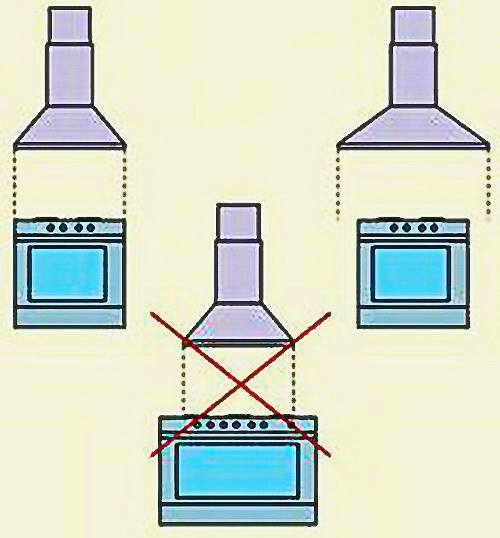
In fact, it doesn’t matter whether you have a gas or electric stove, heating from one or the other is harmful to technology. Therefore, it is better to comply with the norm: the minimum distance between the stove and the refrigerator should be about 30-50 centimeters - this is the size of an ordinary kitchen cabinet.Of course, the larger this gap, the better, so if possible, put the equipment further away from each other.
If the layout of the kitchen does not involve different placement options, you will have to think about how to separate the refrigerator from the gas stove. A screen can help with this - a material laid between the tile and the wall of the device. The screen will solve the problem of how to protect the refrigerator from the stove and greasy splashes when cooking on it.
Thermal insulation material
One of the most budgetary options for protecting the unit is to stick Fomisol or Isolon PPE thermal insulation material on it. Unfold it and carefully place it on the wall of the device. To simplify the task, buy self-adhesive material right away. There is a minus: the upper part will still heat up a little. But if you have a hood and you constantly use it when cooking, then this minus is not terrible.
Chipboard
Another cheap option is to put a chipboard panel between. It can be ordered in the desired color from the same company as the kitchen, so that the protective element is no different from the headset. Please note that chipboard is not a very durable material, it is afraid of moisture and heat. Therefore, the service life may not be very long. After a few years, you can just buy another one of the same panel, it's not so expensive.
Washing next to the stove: the pros
1. Everything is at hand. The closer the main components of the kitchen are located, the less you get tired. When preparing something complex, we take a huge number of steps. We can say that we go a long way. An ergonomic kitchen is one in which the owners have to make as few extra gestures as possible.
He poured water into a container - and immediately on the stove. He took the pot of pasta off the heat and immediately poured the boiling water into the sink.No need to cross the kitchen with red-hot dishes in your hands.
2. Control over the cooking process. While you wash and clean something, the stove is always in sight. If something starts to run away or burn - you're right there. Reduce the fire, remove the lid, stir the food - everything is done instantly and on time, because you are in close proximity.
By the way, from a security point of view, this is also a plus. If you often have to stand with your back to the stove on which something is being prepared, there is a risk of missing the moment of ignition.
3. Convenience in cleanliness. The stove, the wall above it and the hood are the most difficult places in the kitchen, subject to the greatest pollution. You have to wash them often, sometimes making an effort. The proximity of water, of course, facilitates this process.
Why you shouldn't place them side by side
In the instructions from the manufacturer, to the question of whether it is possible to put a refrigerator near the radiator, a clear answer is given: it is impossible. There are a number of technical and practical reasons for this.
Nearby cooling household appliances and devices for space heating can lead to equipment breakdown, even if the heating season in your area lasts only a couple of months. The radiator at this time will strongly heat the back wall of the device, which is responsible for cooling. Due to a significant overload, the compressor will work at its limit and consume too much electricity to maintain the required temperature inside the chambers. And in the end it will contribute to the breakdown.
Some devices do not have a constant cooling function: the motor turns on periodically and maintains the required temperature. In case of overheating, he will have to do this much more often.Other devices are simply not capable of working with such power, so they will not last long under such conditions, and during this period they will not be able to store food in the freezer and common chambers.
What are the alternatives for refrigerator placement?
You can still place two kitchen appliances close to each other. To do this, a screen is placed between them. The partition is selected so that it has thermal insulation properties and is easy to clean.
Protective screen made of simple chipboard
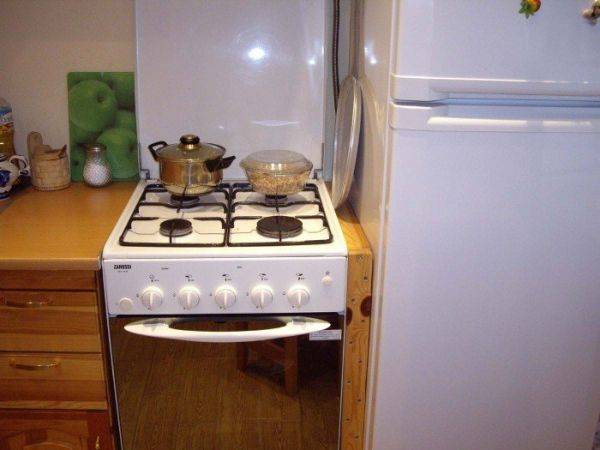
The simplest screen protector. Chipboard has a relatively low thermal conductivity, and laminated is also easy to keep clean.
The main task will be to choose or cut a sheet of specified dimensions. The side edge, in order to prevent staining of the material of the plate, is better to decorate with a thermo-adhesive decorative tape.

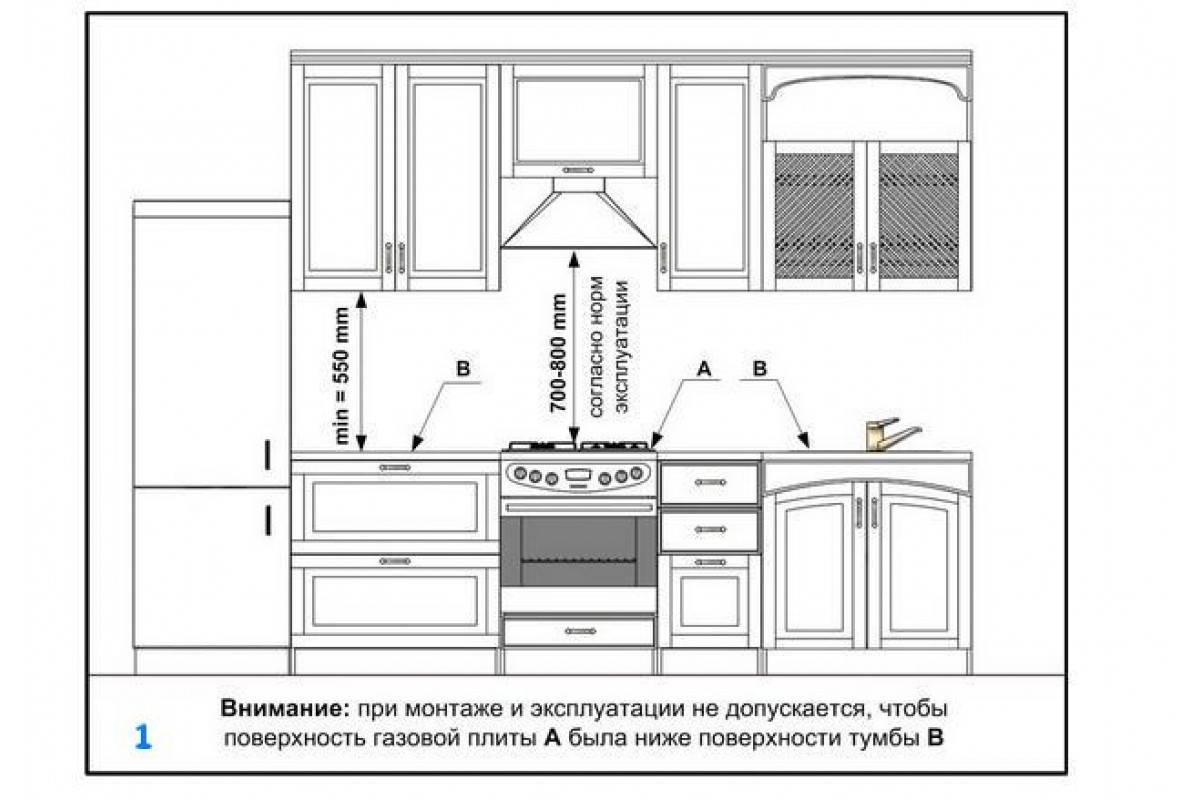

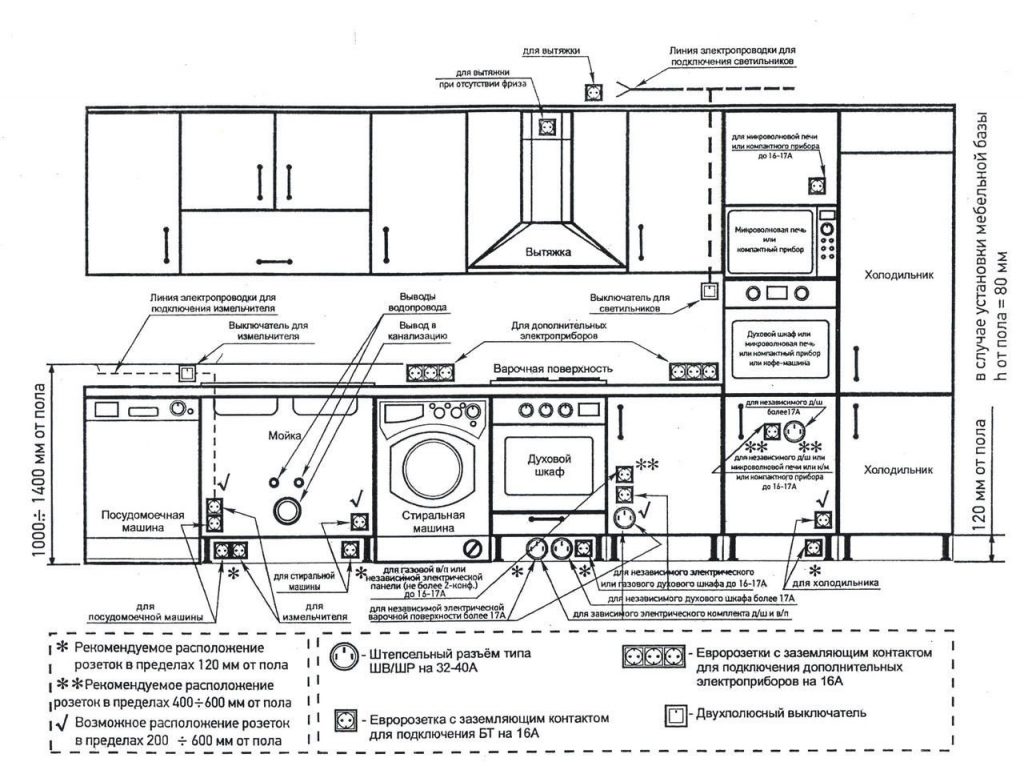
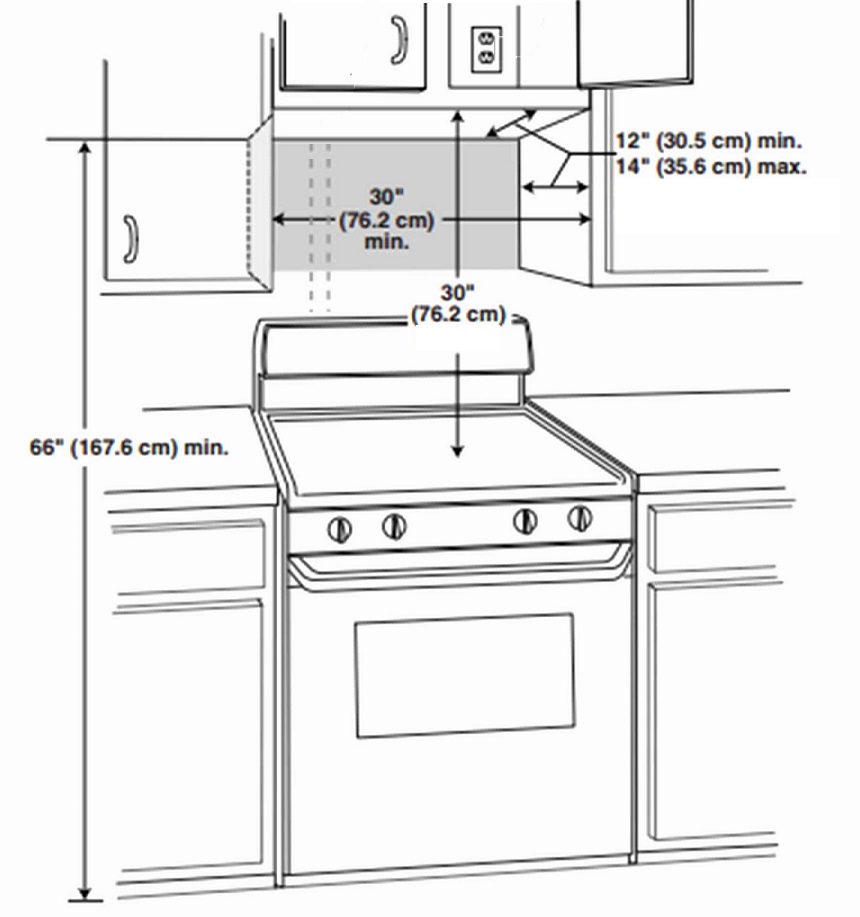


These are sold in hardware stores. In order not to spoil the interior, it is better to choose a sheet finish that is in harmony in color and texture.
Protective screen with tiles
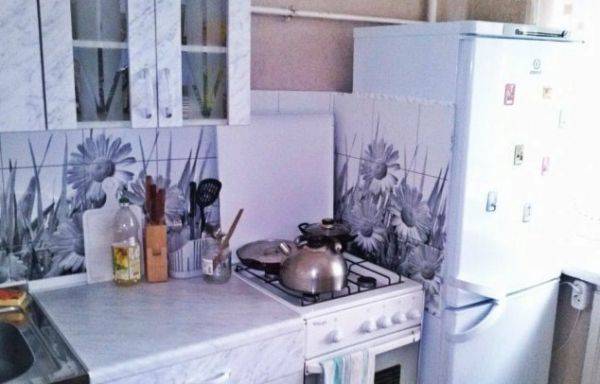
A more advanced variety is thermal protection. Ceramics are perfectly washable, and glued to chipboard, OSB or drywall provide additional protection against temperature.
Another plus: the tile looks organic in the kitchen and it is easier to choose it for the situation.
After sticking to the sheet, it is extremely important to carefully cover the joints between the individual plates, otherwise moisture will penetrate between them, slowly destroying the base.
Protective screen with foil, mirror or glass
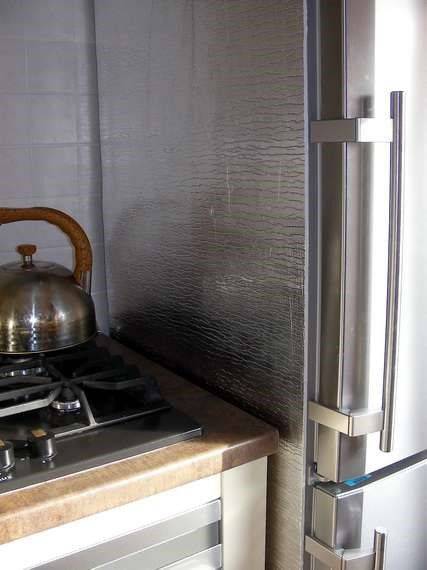
A luxurious, one might say royal way to protect the refrigerator from heating with a stove is to install a screen with a mirror. It does the best job of being an insulating layer by simply reflecting all the heat back.An excessively glaring surface can be additionally covered with frosted or corrugated glass.
There is a less effective, but much more inexpensive option - using foil instead of a mirror as insulation from thermal effects. The only serious drawback of this method is the low aesthetics of the resulting surface. However, if decorative glass is used here too, placing it in front of the foil, this drawback is leveled.
Regulatory preparation
To do without problems, study the relevant document - SNiP 2.04.08-87 *. Be sure to arrange in the room where the stove stands, natural supply and exhaust ventilation (for organizing air exchange). This means that it is impossible to equip a room in a room without a window with working windows, as well as without a ventilation duct with a satisfactory exhaust.
It is unacceptable to cut off the stopcock pipe, this is an integral element of the gas system. It is impossible to replace even a flexible piping on your own, and even more so to organize the movement or extension of pipes. This is done only by a gas service employee.
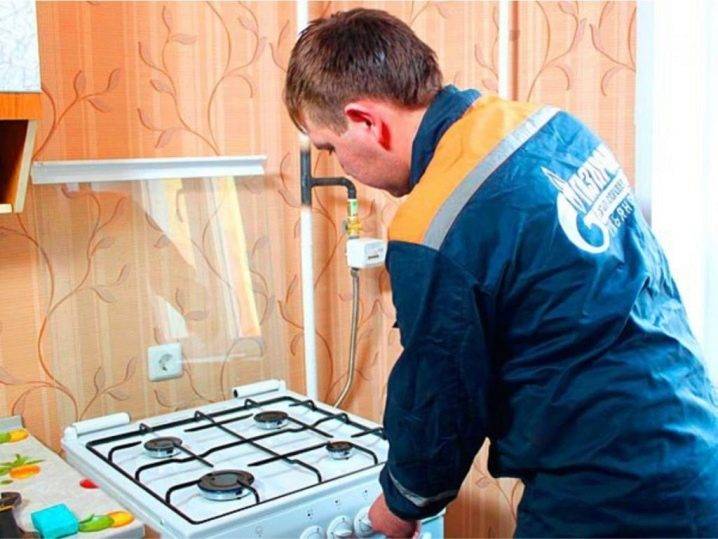
But at the stage of negotiating with specialists, specify what you need to purchase for the transfer. A bellows hose may be required. The installers will bring the metal pipes themselves, but their cost is included in the estimate for the transfer of the plate. If you free the kitchen from excess furniture and items that interfere with the dismantling process in advance, it will be easier for the craftsmen to work. They usually announce all requirements before coming to the house.
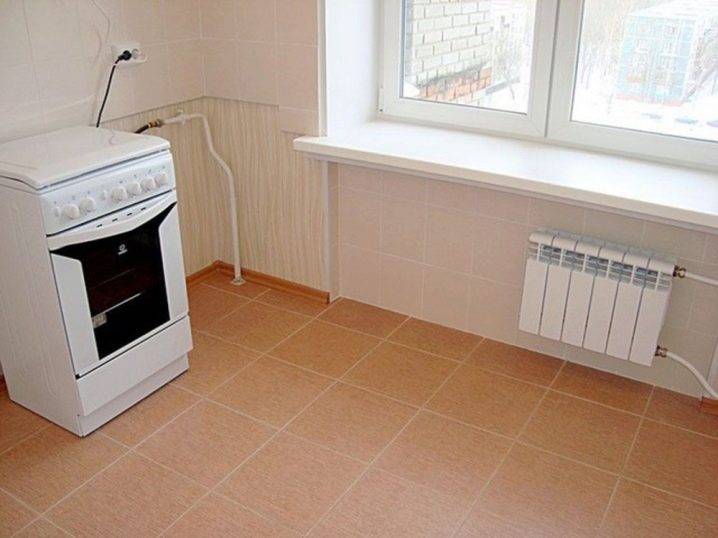
The appearance of flexible long gas lines has led to the fact that the internal gas pipeline has become much less likely to be moved.But the question is still unique, and representatives of the gas service regularly encounter such requests. If you need such a service, do not even think about unauthorized actions - at least it can result in a fine. But the situation can lead to tragedy, which is much more dangerous.
Place for installation of a gas boiler
Speaking specifically about apartments, they install gas boilers in them mostly in the kitchens. There are all the necessary communications: water supply, gas, there is a window and an extractor hood. It remains only to determine a suitable place for the boiler. For such an installation, wall-mounted (mounted) boilers are used. They are mounted on several hooks attached to the walls (they usually come with the kit).
As for installation in other rooms of an apartment or house, as a rule, none of them meets the requirements. For example, the bathroom does not have a window with natural light, the corridor usually does not fit in size - there are not enough tolerances from the corners or to the opposite wall, there is usually no ventilation at all or it is not enough. With pantries the same trouble - there is no ventilation and windows, there is not enough volume.
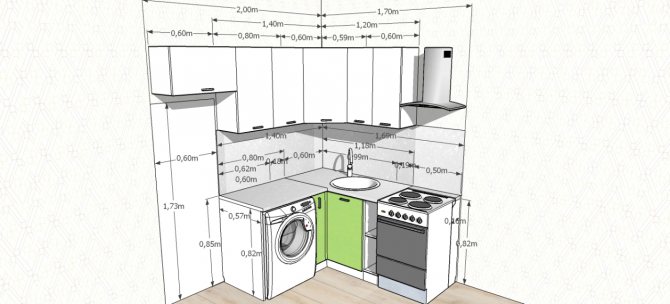


The exact distance from walls and other objects is indicated in the boiler operating instructions.
If there are stairs to the second floor in the house, the owners often want to put the boiler under the stairs or in this room. In terms of volume, it usually passes, and ventilation will have to be made very powerful - the volume is considered to be in two levels and it is necessary to ensure its triple exchange. This will require several pipes (three or more) of a very large cross section (at least 200 mm).
After you have decided on the room for the installation of a gas boiler, it remains to find a place for it.It is selected based on the type of boiler (wall or floor) and the requirements of the manufacturer. The data sheet usually details the distances from the wall to the right / left, the installation height relative to the floor and ceiling, as well as the distance from the front surface to the opposite wall. These may vary from manufacturer to manufacturer, so read the manual carefully.
Installation standards according to SNiP
In the absence of such recommendations in the equipment passport, the installation of a gas boiler can be carried out according to the recommendations of SNiP 42-101-2003 p 6.23. It says:
- Gas boilers can be installed on fireproof walls at a distance of at least 2 cm from it.
- If the wall is slow-burning or combustible (wooden, frame, etc.), it must be protected by fireproof material. This may be a three-millimeter sheet of asbestos, on top of which a sheet of metal is fixed. Plastering with a layer of at least 3 cm is also considered as protection. In this case, the boiler must be hung at a distance of 3 cm. The dimensions of the fireproof material must exceed the dimensions of the boiler by 10 cm from the sides and bottom, and from above must be 70 cm more.
Questions may arise regarding the asbestos sheet: today it is recognized as a material hazardous to health. You can replace it with a layer of mineral wool cardboard. And keep in mind that ceramic tiles are also considered a fireproof base, even if they are laid on wooden walls: a layer of glue and ceramics just give the required fire resistance.
A gas boiler can be hung on wooden walls only if there is a non-combustible substrate
The installation of a gas boiler relative to the side walls is also regulated. If the wall is non-combustible, the distance cannot be less than 10 cm.For combustible and slow-burning, this distance is 25 cm (without additional protection).
If a floor standing gas boiler is installed, the base must be non-combustible. A non-combustible stand is made on a wooden floor. It must provide a fire resistance limit of 0.75 hours (45 minutes). This is either bricks laid on a spoon (1/4 of a brick), or thick ceramic floor tiles that are laid on top of an asbestos sheet fixed to a metal sheet. The dimensions of the non-combustible base are 10 cm larger than the dimensions of the installed boiler.
Is it possible to put a refrigerator next to a gas pipe, what will a specialist say
It is well known that the refrigerator is not recommended to be placed next to objects that emit heat: radiators, ovens and hobs. It is clear that if there is a gas stove in the kitchen, the refrigerator should be located at a remote distance from it, but is it possible to put fridge next to gas pipe?
To answer this question, one should consider the risk factors that arise during the operation of the refrigerator and correlate their danger when exposed to the gas pipeline.
The principle of operation of the refrigerator and risk factors
The refrigerator works due to the selection of heat from the refrigeration chamber by the cold liquid refrigerant (freon) passing through it, which evaporates when thermal energy is taken. Following then through the condenser system of the refrigerator in the form of a thin serpentine tube on the back wall, the gaseous freon is cooled, giving off heat to the environment.
The refrigerant enters the compressor in the form of condensate, after which it is compressed (at the same time its temperature drops below zero) and is fed into the refrigeration chamber in a liquid state.
The compressor itself is powered by an alternating current and is an electric motor, on the shaft of which there is a special type of nozzle that compresses the freon condensate entering the working chamber.
Thus, there are two factors that pose some risk during operation of the refrigerator: the warm surface of the condenser coil on the back wall and the electrical supply of the compressor.
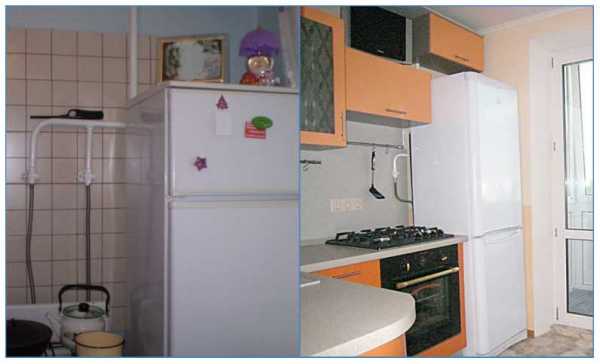
Rice. 1 Refrigerator in the kitchen - location examples
Is it possible to put a refrigerator next to a gas pipe - the answer of a specialist
The temperature at the back of the refrigerator, if it is impossible to measure, can be calculated in a simple way: it consists of the sum of the room temperature and the difference between the ambient temperature and the air in the refrigerator compartment. Thus, with the warmest air in the kitchen at 25 degrees, this value will not exceed 55 - 58 degrees (in practice, taking into account losses, 50 degrees is the maximum value).


Given that the back wall of the refrigerator is usually located at a minimum distance of 20 - 30 mm. from the pipe, this factor will not affect the gas pipeline system in any way, even if it is tightly connected to the pipe and the temperature is several times higher.
The second risk factor is the presence in the area of the gas pipe of the electric power cable of the compressor with an alternating voltage of 220 volts. Here, it may seem to an ignorant person that if a cable breaks or other malfunctions, a current will enter the pipe, a spark will flare up and an explosion will occur. This assumption is unfounded for the following reasons:
- The pipes of the gas pipeline are made of metal and go into the ground, therefore, when in contact with the electric drive, the phase will be grounded, and if the machine does not turn off the electricity in the apartment, the gas pipe will in any case be de-energized due to grounding.
- If the underwater hose is made of rubber and cannot be grounded, and the contact of the bare electrical wire from the refrigerator occurred in the area of the stove, then in this case the current will go to the ground bus. The fact is that modern gas stoves are connected to a power source through sockets with three connectors with a protective neutral wire.
- If the gas stove is in good working order, and the connections in the underwater hoses are securely insulated and do not allow gas to pass through, there is no danger even if there is a break in the refrigerator’s electrical wire, except for electric shock to the owners themselves.
The answer to the question of whether it is possible to put a refrigerator next to a gas pipe will be the following statement: the refrigerator can be located without any fear next to the gas pipe at the very minimum distance (20 - 30 mm is enough), the main condition for this is ease of access to the valve valve gas shutoff.
Why You Shouldn't Place Your Refrigerator Next to the Stove
When arranging appliances in the kitchen, you should think not only about the harmony of the interior, but also about the shortcomings of the proximity of the refrigerator and heating appliances.
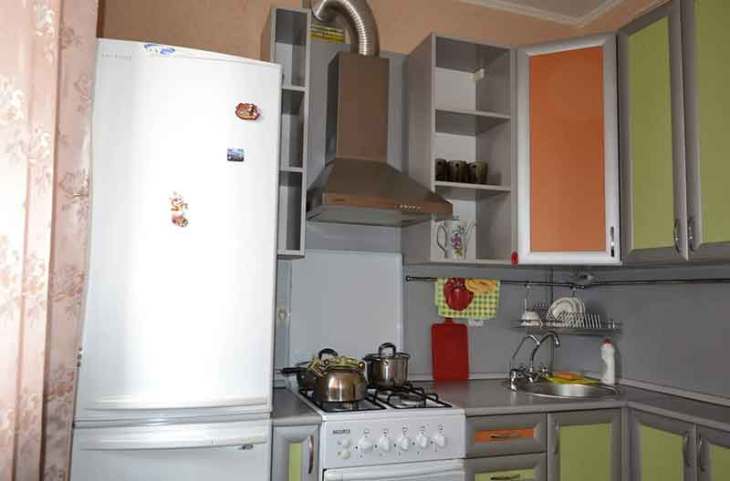
Gas stove and refrigerator
When it comes to arranging kitchen appliances, many people wonder if refrigerators can be placed next to gas stoves. If the kitchen is small, it can be problematic to place a large refrigerator on it.And compliance with all installation requirements sometimes becomes an almost impossible task.
It is a mistake to think that the only consequence that the proximity of the refrigerator and stove entails is poor cooling of food. It seems to many that the situation can be corrected by setting the maximum cooling mode in the device. In fact, the warmer it is, the more actively the engine removes heated air from the compartments. Thus, a unit with sufficient power will continue to successfully cope with its task. But the intensive load will not be reflected in the state of its compressor in the best way.
Normally, the refrigerator motor turns on and off at regular intervals. When the temperature in the external environment rises, the engine is forced to work for wear. At the same time, the life of the appliance is significantly reduced, especially if family members actively use the stove.
In addition, the answer to the question of whether it is possible to put a refrigerator next to a gas stove in the kitchen will become obvious after the electricity bills come. Having increased the intensity of its work by 5-6 times, the refrigerator begins to consume much more electricity.
Unstable cooling negatively affects the microclimate in the unit chamber. Products placed on the shelves begin to be covered with a thin ice crust. As a result, food spoils or becomes tasteless. Ice formation is especially active in the freezer, so it will have to be defrosted more often than usual.
Electric stove and refrigerator
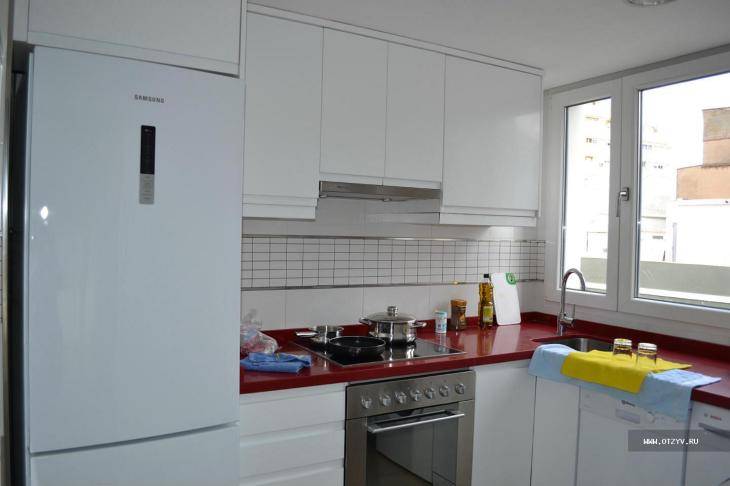
Electric and induction hobs heat nearby surfaces less than gas hobs. Despite this, they should not be placed close to the refrigerator.In addition to the load on the engine of the unit, you may encounter the following unpleasant moments:
- if the walls of the refrigerator case are not metal, yellow marks will appear at the points of contact with the stove;
- rubber seal, device handles and plastic edging may crack or melt;
- loading and unloading products is not as convenient as if the equipment were shared by a table;
- the handles of the dishes will rest against the wall of the unit or take up space in the aisle.
It should also be remembered that some models have a grill for air circulation located on the side. It is this part of the body that accounts for the bulk of the heat. Such an impact threatens to break the refrigerator.
Way out
If in the kitchen the only possible place is near the heating system, care should be taken to protect the appliance and extend its service life. There are a few points that must be followed in order for the instrument to stand next to the battery:
- In no case should the rear wall be placed close to a heat source;
- It is desirable that the battery occupies only part of the side wall, for the normal functioning of the appliance;
- Make a partition or screen, place the foil on top, and put it between the battery and the refrigerator. This will help insulate the heat. You can use self-adhesive penofol on the side wall of the appliance. The foil serves to reflect heat flows, the penofol serves to absorb heat.
Stove next to fridge
The stove is the most dangerous neighbor for the refrigerator, especially if it is gas. Ideally, these two antipodes should be placed as far apart as possible. For this, in addition to the main reason (the harm of heat), there are a couple more arguments "against":
- The refrigerator is intensively dirty with splashes of fat during cooking;
- If the stove is next to the refrigerator, then pans with handles and large pots do not fit on the burners closest to it.
What distance should be between the stove and the refrigerator? It is best to learn these standards from the instructions for a particular refrigerator model, since the recommendations of different manufacturers are slightly different. For example:
- Bosch allows you to put the refrigerator next to a gas stove at a distance of 30 cm, and next to an electric stove or hob - at a distance of at least 3 cm.
- Zanussi recommends placing the refrigerator next to the gas stove at a distance of at least 50 cm. Electric stoves and hobs can be placed at a distance of 5 cm.
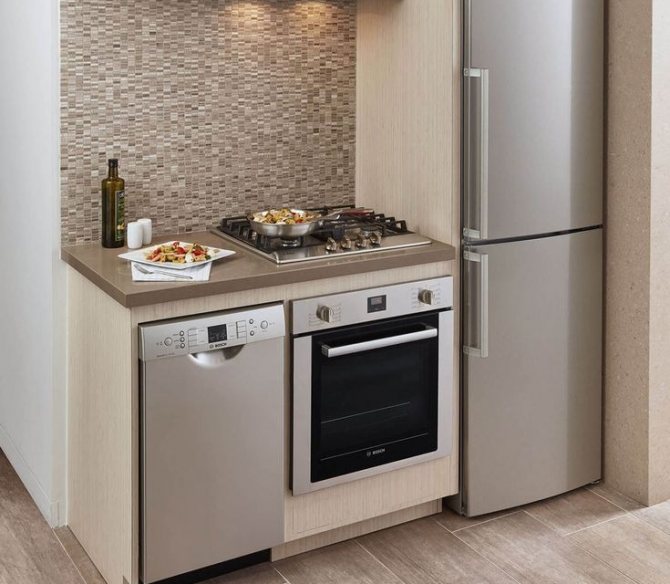
The recommended option for the coexistence of a refrigerator and stove is shown in the photo below.
Built-in refrigerator next to the gas stove at a distance of 40 cm
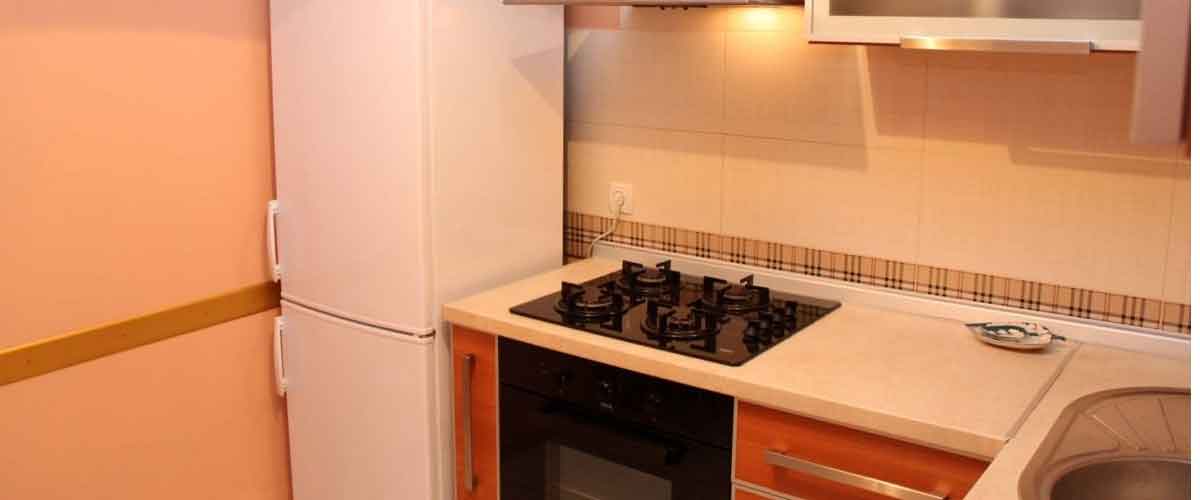
But, as practice shows, in very small kitchens, for example, in "Khrushchev", it is difficult or even impossible to maintain the correct gaps. Therefore, many landlords place the stove and refrigerator close to each other. Here are some photo examples of such kitchens.


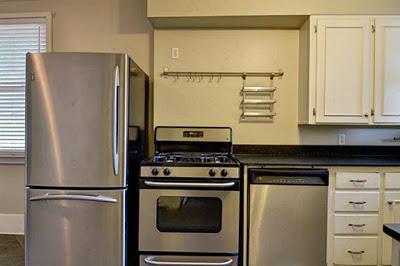


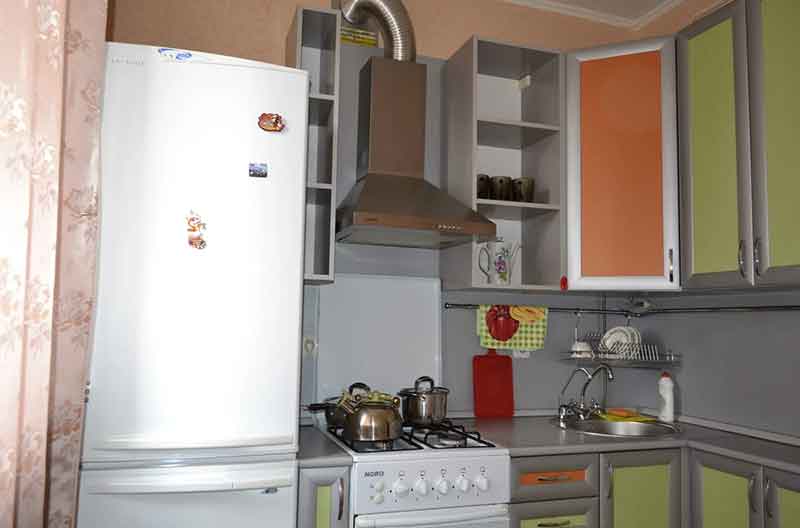
Refrigerator next to gas stove and oven
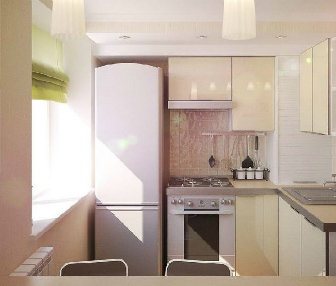
Refrigerator next to a gas stove in the interior of a small kitchen in Khrushchev
Built-in refrigerator next to a gas mini-stove in the interior of a redesigned kitchen-living room in Khrushchev
Refrigerator next to the hob
So, what if the kitchen is very small and creating even a 3 cm gap seems impossible? We offer the following 6 solutions that will help solve the problem in a complex or by themselves:
- Stick a heat-insulating material on the refrigerator wall, for example, Fomisol or Isolon PPE. This method is the simplest, budgetary and at the same time effective - the refrigerator can even coexist with a gas stove. All you need to do is: cut the material and glue it carefully (it is desirable that the material is self-adhesive). An important nuance: the upper part of the refrigerator wall will continue to heat up a little, as heat tends to rise up. But this problem is also easily solved if you always use the hood (read about it below).
An example of the thermal insulation of a refrigerator next to the stove
- Use a powerful extractor. It captures most of the convective flows from the stove and thereby significantly reduces the heating of the refrigerator.
- Install the refrigerator in the box. So the frame of the box will play the role of a barrier and take over the "heat stroke". In addition, it will protect the refrigerator body from splashes of grease and dirt. For the best result, it is still worth gluing a layer of thermal insulation on the refrigerator.
- Put a partition or screen between the refrigerator and the stove. The benefits of this method are still the same - protection from dirt and the creation of a barrier against heat. What can a screen or partition be made of? MDF panels, plywood, drywall, tempered glass (in combination with thermal insulation) are suitable. Here are a couple of photo examples.
- Replace full-sized appliances and sinks with smaller versions. This will allow you to win precious centimeters and put the refrigerator and stove not back to back. Here's what you can do:
Replace the standard stove with a mini-stove with two burners. So you can increase the distance between the refrigerator and the stove to 15-25 centimeters. As practice shows, two burners for an average family of 4 people are enough for 100%.
- Place a narrow refrigerator (up to 55 cm wide). Even a couple of freed centimeters will improve the situation.
- Choose a small sink. Yes, it is not very convenient, but it is quite viable, especially if you have a dishwasher. By the way, sometimes you can carve out a small distance between the stove and the refrigerator by moving the sink.
- In the end, the refrigerator can be taken out into the hallway or adjacent living room.
Why not put a refrigerator next to the stove?
There are a lot of arguments against, ranging from the usual loss of comfort to the premature failure of the refrigerator.
Moreover, we draw your attention to the fact that there is no difference whether to put a refrigerator next to a gas stove or an electric one. The sides of them are heated in the same way, especially when it comes to a working oven
But let's go in order.
The heat from the stove makes the refrigerator work at its limit
Some people think that the proximity to a hot stove can lead to the fact that the compartment in the refrigerator will not cool very well, and that's all. Rather, temporarily heat up from the heat. That is, it is worth a little wind up and the problem will be solved.


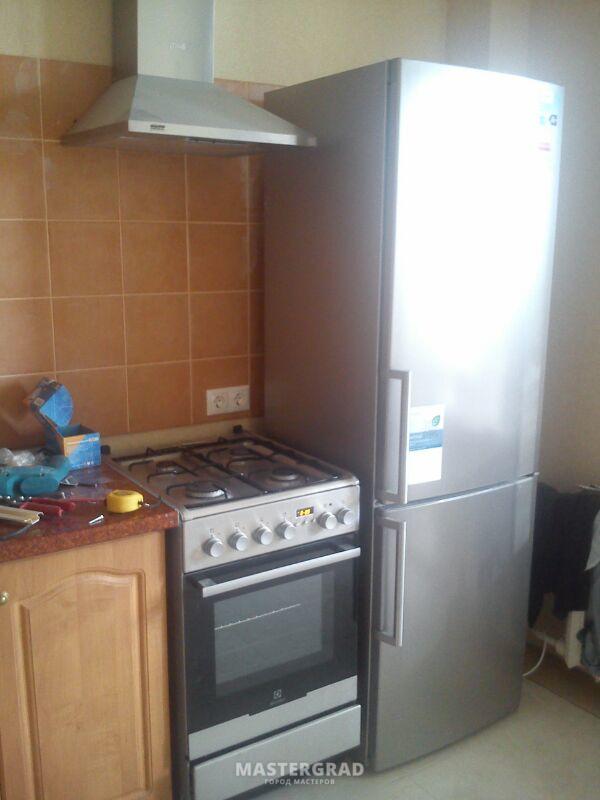
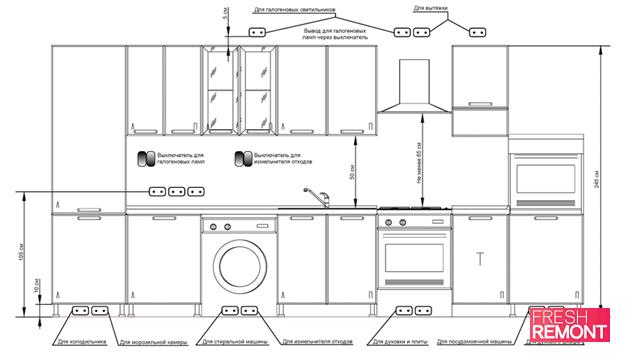




But, everything is not so simple. Everything is just the opposite. The warmer it is around, the more intense the compressor catches up with cold ... And the optimum temperature will not drop in the refrigerator, no. Only now, for the technology itself, this state of affairs is completely unhelpful.
The refrigerator is designed for certain intervals of automatic switching on of the compressor.But when the temperature rises from the outside, the compressor is forced to work simply for wear and tear in order to maintain the desired temperature.
Naturally, the life of the equipment, in this case, is many times reduced. Especially if you have a large family and the stove works very often. Heat the same kettle five times a day, cook some soup, heat up some dish ...
And, even if you just fried an egg, the sidewall of the stove does not heat up and cool down as quickly as it seems. Heat, accordingly, first of all gets to the adjacent side of the refrigerator and keeps the elevated temperature for a long time.
And the compressor turns on, turns on, without breaks for lunch and dinner. And even without the breaks.
However, this is all written in the instructions for the refrigerator. But, if you do not believe, you can ask any workshop and the answer of a specialist will be unequivocal: you should not do this.
Although, if you are so rich that you change refrigerators like gloves, then why not? The compressor will “fly” in five years (or even a little earlier) - buy new equipment, and that’s it.