
- Dry, bad, evil
- The choice of water for the steam device
- The use of aromatic oils in a humidifier
- How to add oil to a humidifier?
- Which humidifier to choose?
- Water for ultrasonic models
- Harm of humidifiers
- What humidifiers can or cannot add essential oils to?
- Types of humidifiers and their functioning
- Type #1 - steam humidifiers
- Type #2 - cold type humidifiers
- View #3 - ultrasonic humidifiers
- Air humidity and its meaning
- The principle of operation of the humidifier
- Adiabatic Humidifier
- ultrasonic machine
- steam appliance
- Spray Humidifier
- air wash
- Popular fragrances for humidifiers
- Conclusions and useful video on the topic
Dry, bad, evil
Every autumn, millions of Russian apartments turn into a kind of desert: it becomes hot and dry in them.
Saving people from the cold, batteries and radiators adversely affect the condition of their skin, hair, and make them more susceptible to respiratory diseases and viruses.
“Our skin is already tortured with scrubs, shower gels, washcloths,” says dermatologist and dermatocosmetologist Zoya Konstantinova.- We try to wash ourselves better, washing off the natural lipid film, the skin is dehydrated from this. And dry air in the apartment and frost on the street exacerbate the situation. The skin dries, becomes covered with cracks, then they begin to itch, bleed. A person constantly feels tightness of the skin, his eyes itch. Hair also suffers from dehydration, a sure sign of this is electrification when you take off your hat, and your hair rises up like a ball. As a result, due to dry air, the skin ages faster, the hair breaks, splits, and becomes dull.
Dry air in the room affects not only the appearance. Infections spread faster in it, the protective barriers of the body are destroyed.
“The mucous membranes of the upper respiratory tract, which protect the body from infections and bacteria and moisturize the inhaled air, dry up, the risk of getting sick increases,” explains infectious disease doctor Ilya Akinfeev. - In rooms with dry air, young children are more likely to get sick, because they lose moisture faster. Because of the overdried mucous membrane in the nose, nosebleeds occur. Therefore, the air in the home must be humidified.
But even a century ago, not dry, but humid air was considered unfavorable: it was he, in combination with cold, that was detrimental to patients with consumption. Why is it useful now? Ilya Akinfeev clarifies that excessive humidity, above 55%, is really no less harmful than dry air.
“With high humidity, the number of bacteria in the air rises, there is a risk of mold development, therefore it is also impossible to moisten thoughtlessly and too much, to make a room look like a Turkish bath,” says the infectious disease specialist.- It is necessary that the level of 45-50% be in the bedroom and children, it can be maintained with the help of technology, it is better to choose devices on which you can adjust these values
At the same time, it is important to regularly ventilate the room, especially if someone is sick in the house - ventilation reduces the concentration of viruses in the air.
The choice of water for the steam device
Steam humidifiers are considered the most unpretentious devices in relation to the water that is used in the course of their operation. Since the end result of the action of such an evaporator is the vapor that we inhale, the nature of the water component is of no fundamental importance.
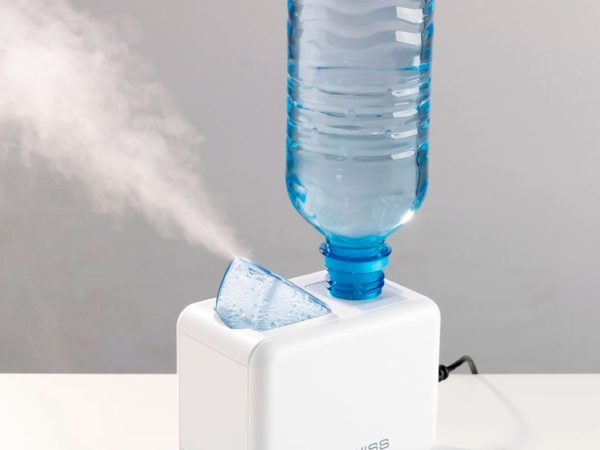
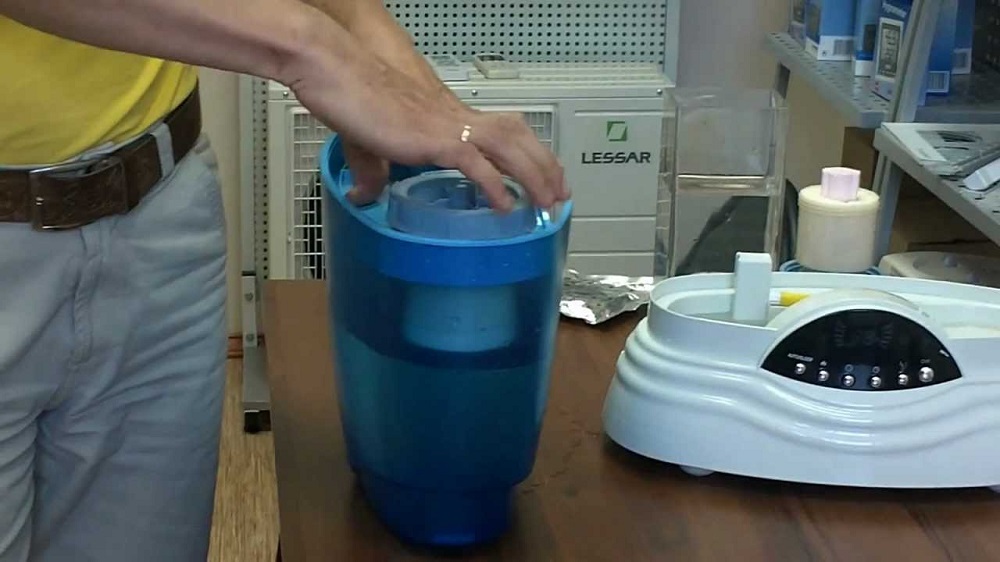
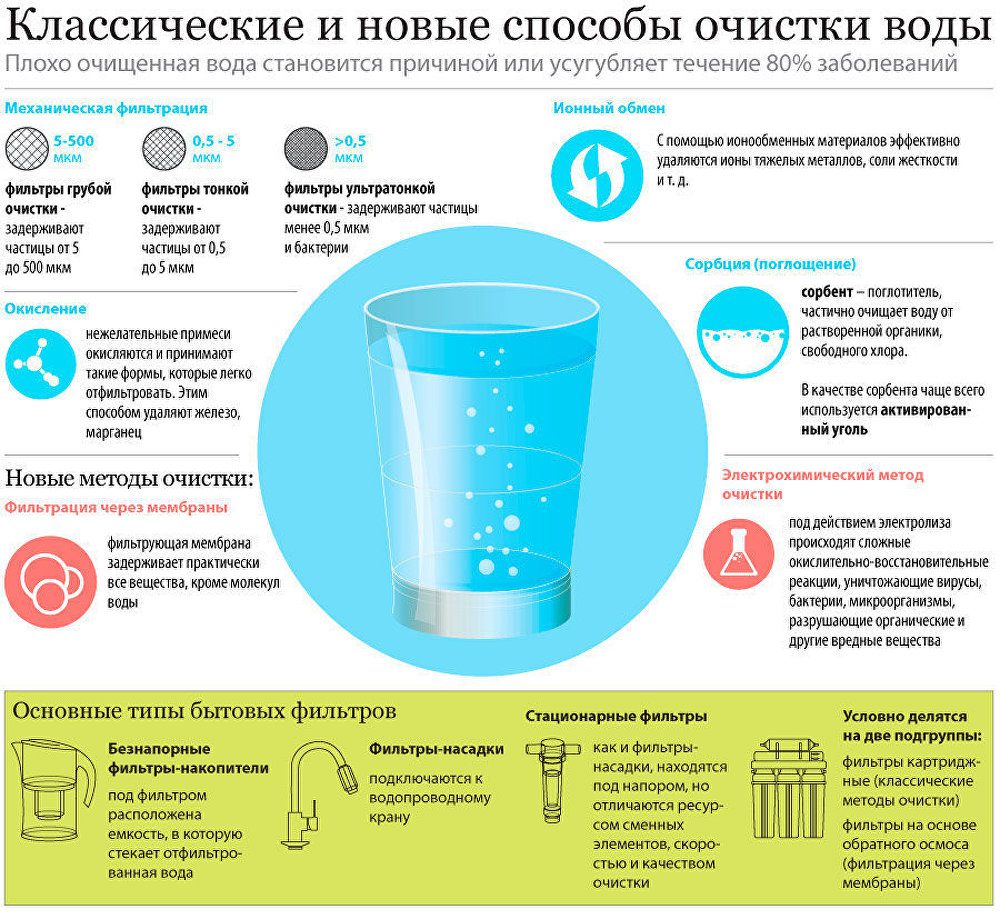
An exception, perhaps, is the case when tap water is of very poor quality. Then it is imperative to use filters to purify it. If this is not done, then the resulting precipitate will negatively affect the operation of the device, which you turn on regularly, and it will quickly fail.
The use of aromatic oils in a humidifier
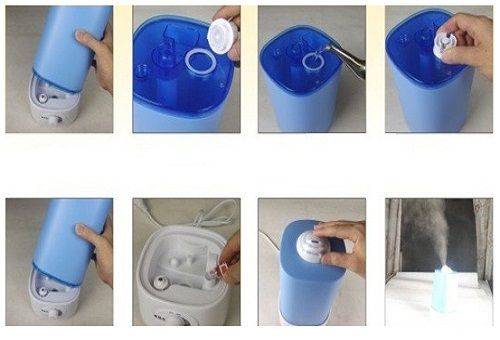
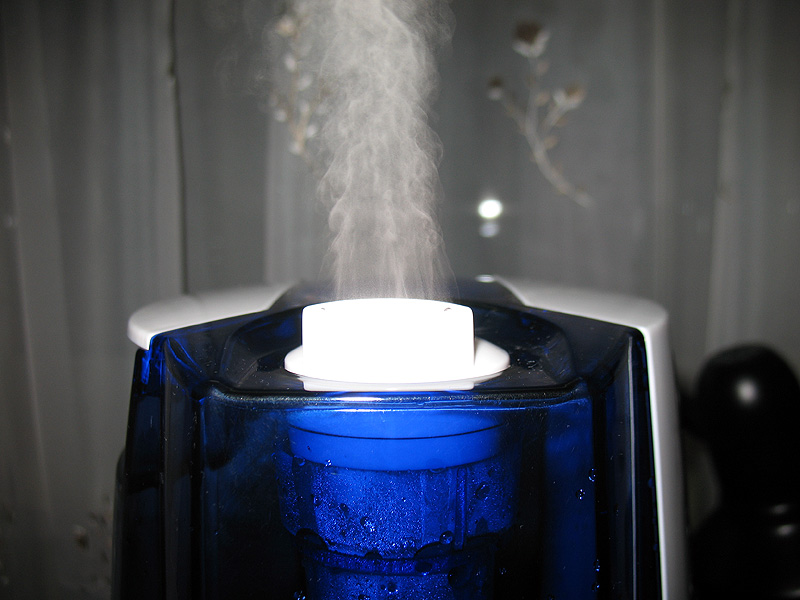
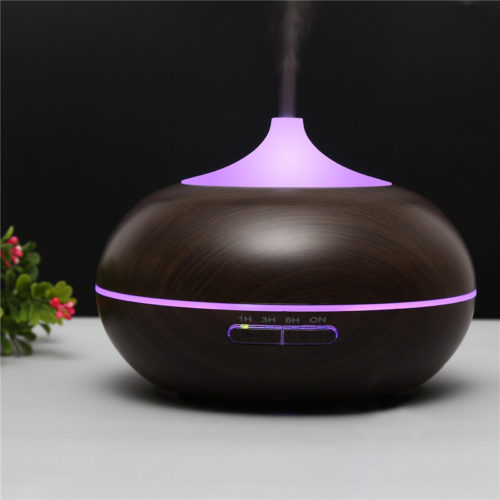
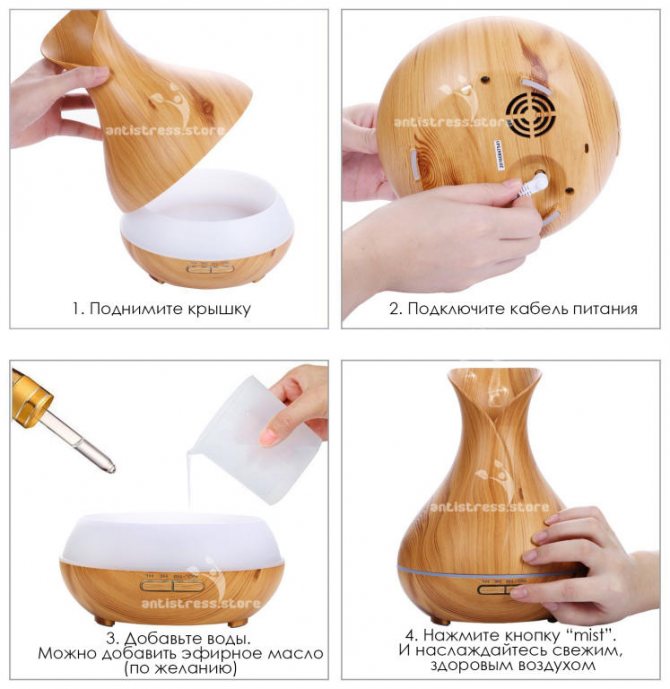
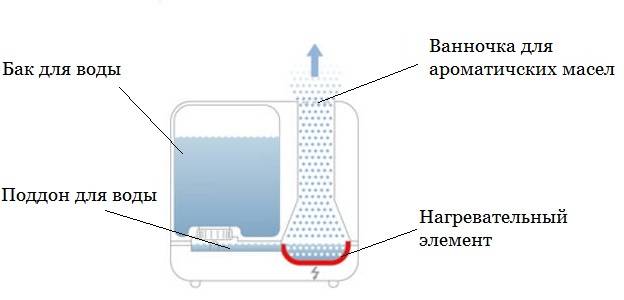
You can use essential oils or special solutions for aromatization only in those humidifiers in which this option is provided constructively, which is usually written both on the packaging and in the instructions. Humidifiers with the "aromatization" option have a special tray for oils. It is strictly forbidden to add foreign substances to the container with water. The presence of aromatization does not depend on the type of humidifier. It may or may not be in any type of device: steam, ultrasonic or "cold".
It is important to use substances that are in principle intended for aromatherapy, of high quality. General rules for dosage - 5 drops per 15 squares of area
Overdose can cause side effects: allergies, dizziness and migraine attack, nausea.

Use aromatic oils in a humidifier with caution.
Do not use fragrances every time you turn on the humidifier. The first time, aromatic oils are added for an hour, no more, and the reaction of the body is monitored. If everything is in order, the time can be increased. If problems arise, flavors should be discarded.



You can read more about scented humidifiers here.
How to add oil to a humidifier?
Aromatic oils can not be added to all humidifiers. Do not pour oil directly into the spray tank under any circumstances. The device must support the function of aromatherapy and have a special compartment into which essential oils are added and specific formulations are poured.
These devices include:
- steam humidifiers;
- ultrasonic models;
- washing devices.
Their design has a special cassette or container. It is there that oil is poured, which during the operation of the humidifier is sprayed in parallel with water. All aromatic oils poured into the spray unit must be of high quality and original.
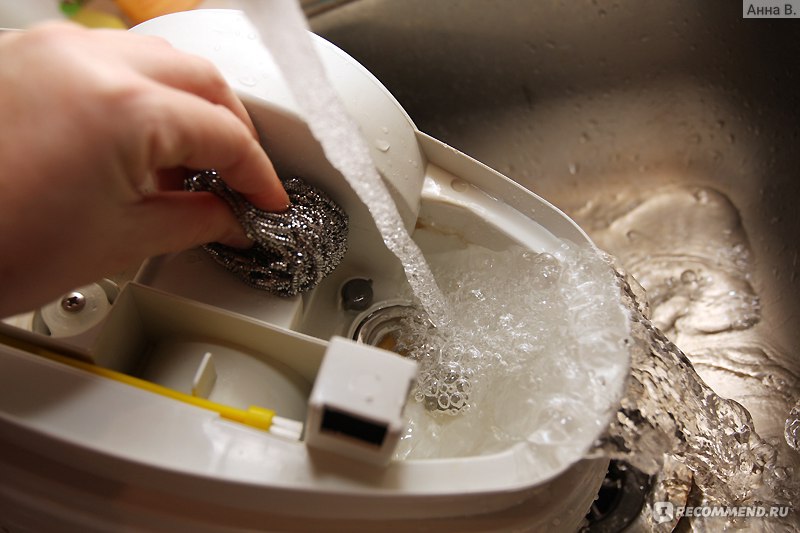
After each procedure, you need to rinse the device well (including cassettes for aroma oils) so that different oily liquids do not mix with each other
The amount of essential oil used depends on the area of the room. Experts recommend applying no more than 5 drops for every 15 sq.m. area. If these proportions are violated, all the benefits of aromatherapy disappear, headaches, allergic reactions and bouts of nausea may occur.
As for the duration of the procedure, an air humidifier with essential oils should not work like a regular car wash. At the first application, it is better to turn off the device after half an hour or an hour of aromatherapy and look at your condition.
In case of dizziness or increased blood pressure, the duration of the session should be reduced.
Which humidifier to choose?
Currently, there are three categories of household appliances on the market:
- mechanical humidifiers (cold steam),
- steam humidifiers,
- ultrasonic humidifiers.
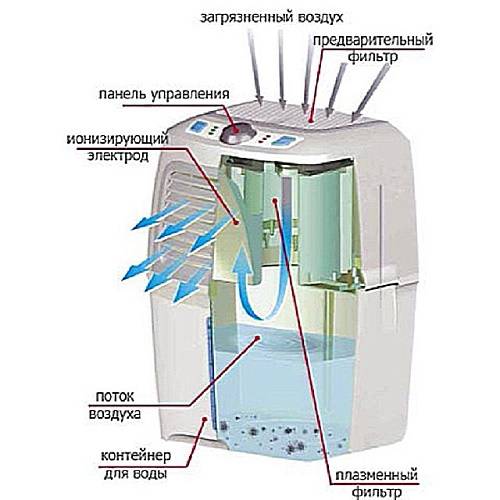
Mechanical humidifiers also perform the function of air purification. The principle is that water from a special container enters a system of cartridges, through which, together with the air flow, it exits in the form of steam. Thus, both cleaning and moisturizing are carried out at the same time. This technology requires periodic replacement of cartridges, which implies some costs. In addition, during operation, it makes a decent noise, which excludes the possibility of using it at night, for example, in the bedroom.
Steam humidifiers work on the principle of an electric kettle: water is brought to a boil and then evaporated. It cannot be left unattended in a room where children or pets are located, since the temperature of the outgoing steam is high and is 50-60 C. Sometimes there is a medical nozzle for inhalation in the kit. It should be noted that the power consumption of such a model is several times higher than that of others.
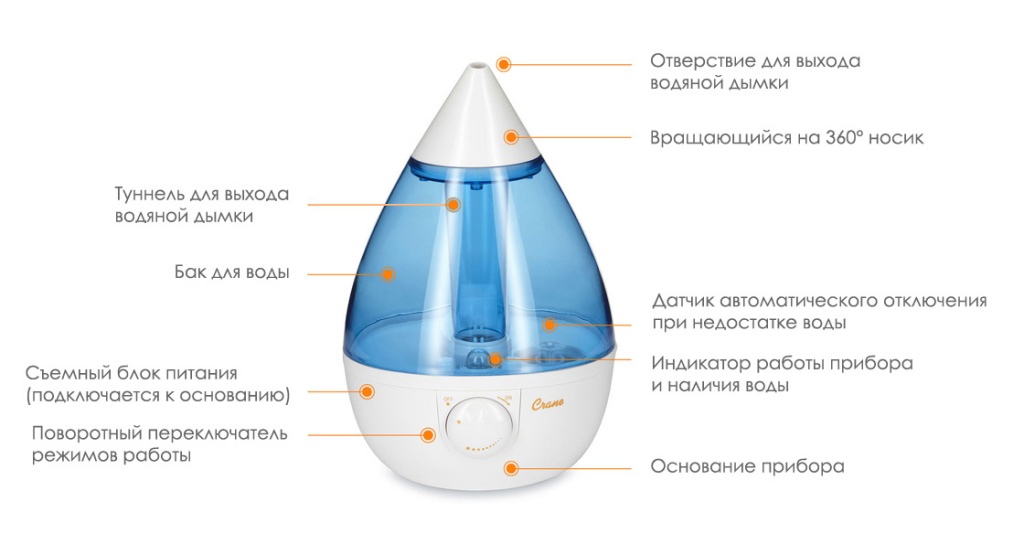
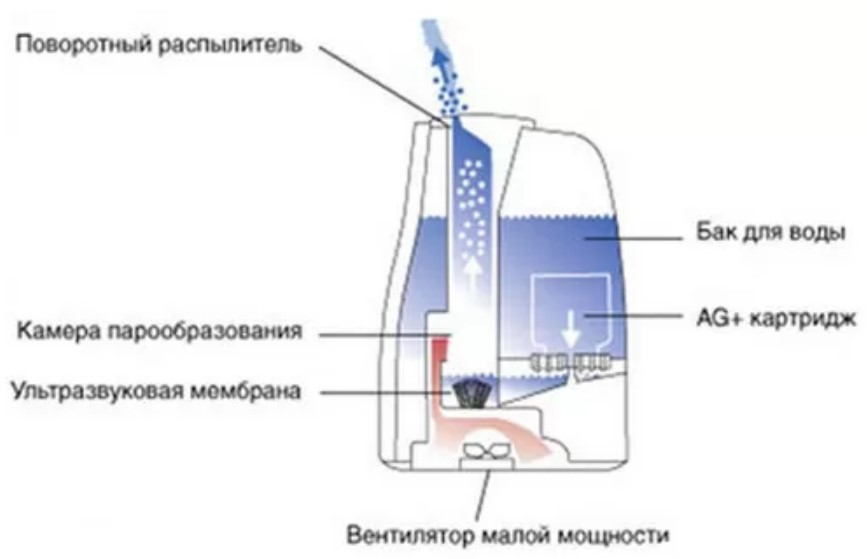
An ultrasonic humidifier is the best option for use in an apartment.The built-in illumination of the water tank allows the use in night light mode, for example, in a nursery. The auto-off feature will stop the appliance when the water runs out. The technology is quite simple, water from the tank enters the ultrasonic plate, which, using high-frequency vibration, breaks the liquid into tiny particles. Such a model practically does not make noise, which is undoubtedly a big plus. Maintenance is quite simple, just wash the components and periodically clean the ultrasonic element, which over time can become covered with a white coating, similar to the heating element of a kettle.
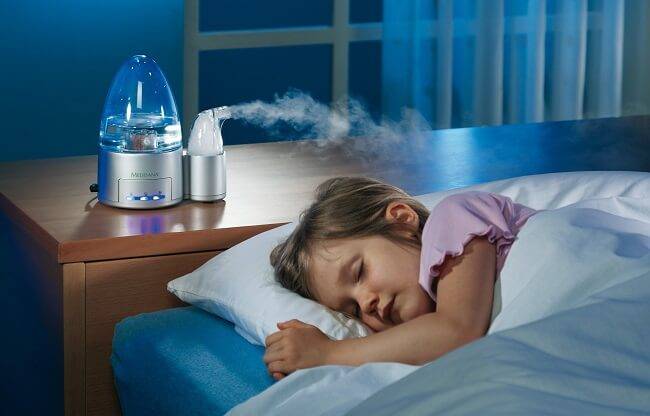
The market offers dozens of models of different types and volumes: from simple household to serious devices with various functions. Now it's easy to choose the humidifier that you need. When buying, be sure to consider the capacity of the tank: 3-4 liters are enough for 10-12 hours of operation. Many models are equipped with a built-in hygrometer. However, their measurements are not always accurate as they are made in the immediate vicinity of the steam flow. Here you can focus on your feelings. Lost the feeling of discomfort when breathing? You have reached the desired level of humidity!
Water for ultrasonic models
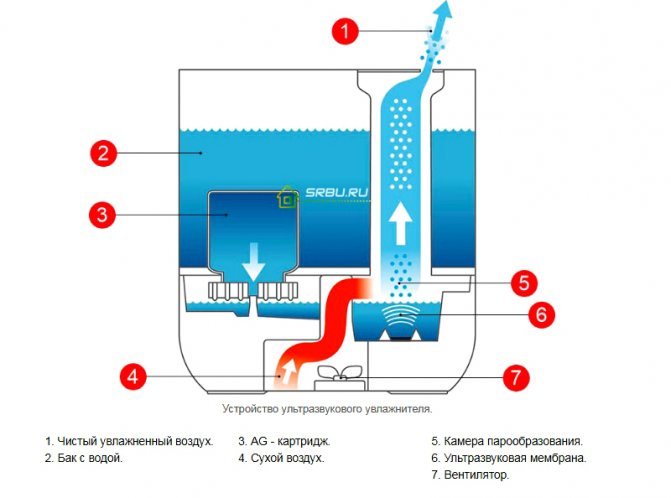
Ultrasonic humidifiers are the most demanding of all types, but they are also the most advanced and productive. The principle of operation of such devices is reduced to the conversion of electromagnetic frequencies into mechanical vibrations. Oscillations of the included device form waves of different pressure. As a result, already at the most ordinary temperature, the liquid begins to boil, while fine particles are thrown into the air.With the help of the air flow formed through the action of the fan, the particles are carried around the room, creating steam.
The process, as you can see, is quite complicated, and therefore the requirements for the water involved in it are very high.
If you are not ready to provide the device with water of the required quality, then it is better to refuse to purchase such a device in favor of another one that is more affordable to maintain.



Harm of humidifiers
Along with a large number of positive qualities, there are a number of disadvantages, as a result of which humidifiers can be harmful. Each of the above types of devices has its own weaknesses.
- The danger of steam devices is that during operation, superheated steam is released, contact with which can cause skin burns. In addition to this, along with the saturation of the atmosphere with moisture, its simultaneous heating occurs. This disadvantage is especially noticeable in the summer months, when the temperature is already high. This type of device is very dangerous for small children.
- Using ultrasonic devices, you need to fill in distilled water. The use of an unpurified liquid will lead to the fact that the elements dissolved in it, including harmful ones, will be in the atmosphere, and then in the lungs of people living in the room. With prolonged use, plaque may appear on pieces of furniture. Therefore, such devices require pouring only highly purified water.
- The harm of an evaporative type air humidifier is that during operation, a microflora harmful to the human body can develop on the evaporative element, which spreads with the flow and enters the respiratory tract, causing an additional risk of disease.
In order to ensure comfortable conditions in the room, it is necessary to use these devices correctly. Violation of the rules of operation, untimely replacement of consumables, can lead to the fact that instead of good humidifiers will bring harm.
What humidifiers can or cannot add essential oils to?
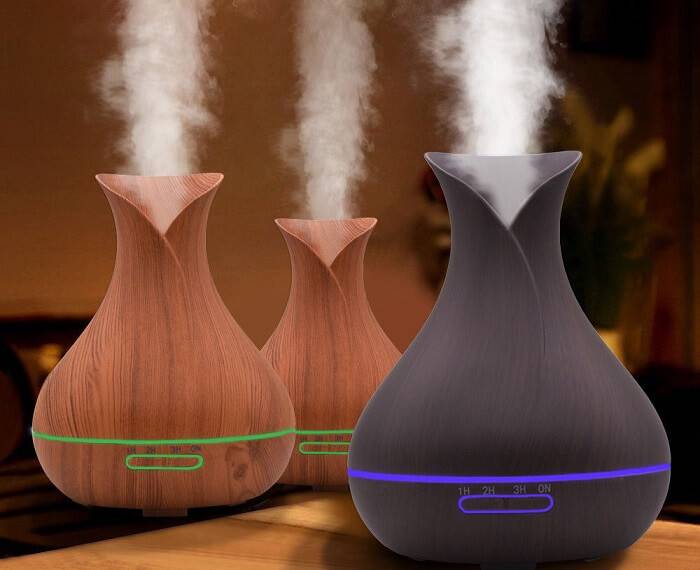
Not all such equipment is suitable for aromatization of spaces. For this purpose, a special function must be provided in the device. It is equipped with steam, ultrasonic models and devices with the option of washing.
Such devices have a simple principle of operation. Their design includes a special cassette (capsule) or container for oil concentrates. During operation, the device sprays both water and essential oils, saturating the spaces not only with life-giving moisture, but also with pleasant smells with phytoncides.
Simultaneous evaporation of concentrate particles and water aerosol creates powerful preventive, curative and relaxing effects. In humidifiers with a washing option, liquids with essential water-soluble oils can be dosed.
It is strongly not recommended to use oil essences in the air conditioner without the appropriate function. The device simply will not be able to spray them and the substances will settle in the water tank. This will lead to negative consequences:
- the device creates an environment for the development of harmful bacteria;
- filters and membranes will become contaminated, the purification of which is very difficult;
- the period of effective and trouble-free operation of the device will be significantly reduced.
In conclusion, the following should be noted. If the device does not have a fragrance option, you do not need to use concentrated products.Essential oils can be added to air humidifiers only in the dosage recommended by the manufacturer - no more than 5 drops for every 15 sq. m. area.
If the optimal proportions are violated, a healthy and pleasant smell can easily turn into a dangerous one - it will cause nausea, headaches, and an allergic reaction. In order for the spraying of oil molecules to occur evenly, the device must be placed at a height of no more than 1 meter from the floor.
It should be installed on a flat surface and in an impassable area. This will prevent accidental tipping. Vapors coming out of the machine must not come into contact with indoor flora, wooden furniture and decor items. To avoid the appearance of white marks on surfaces, it is better to fill the device with purified water.
Do not forget that only original oils should be used for adding to air humidifiers, the quality and useful properties of which you are sure of. After each procedure, it is desirable to thoroughly clean and rinse the apparatus. Follow the recommendations prescribed in the instructions, and then useful aromas will fill your space with a unique atmosphere of harmony, warmth and tranquility.
Types of humidifiers and their functioning
Manufacturers offer extremely ergonomic and functional models that work on slightly different principles. What exactly needs to be poured into the humidifier depends fundamentally on the type of equipment. There are several types of such devices on the market today.
Type #1 - steam humidifiers
Steam humidifiers evaporate water through natural heating processes.The liquid is brought to a boil, after which it is converted into steam.
These are the most effective models, however, they are not without certain drawbacks, among which are:
- high power consumption;
- the need to control the level of moisture.
However, some modifications can even be used as an inhaler if a special nozzle is provided in the kit.
A significant advantage of such a humidifier is the low demands of the device on water quality, since any pure liquid is suitable for it: artesian, spring, demineralized or distilled. However, it is worth remembering that the generated steam will be inhaled by people, so you should not pour plain water from the public water supply into the humidifier.
Type #2 - cold type humidifiers
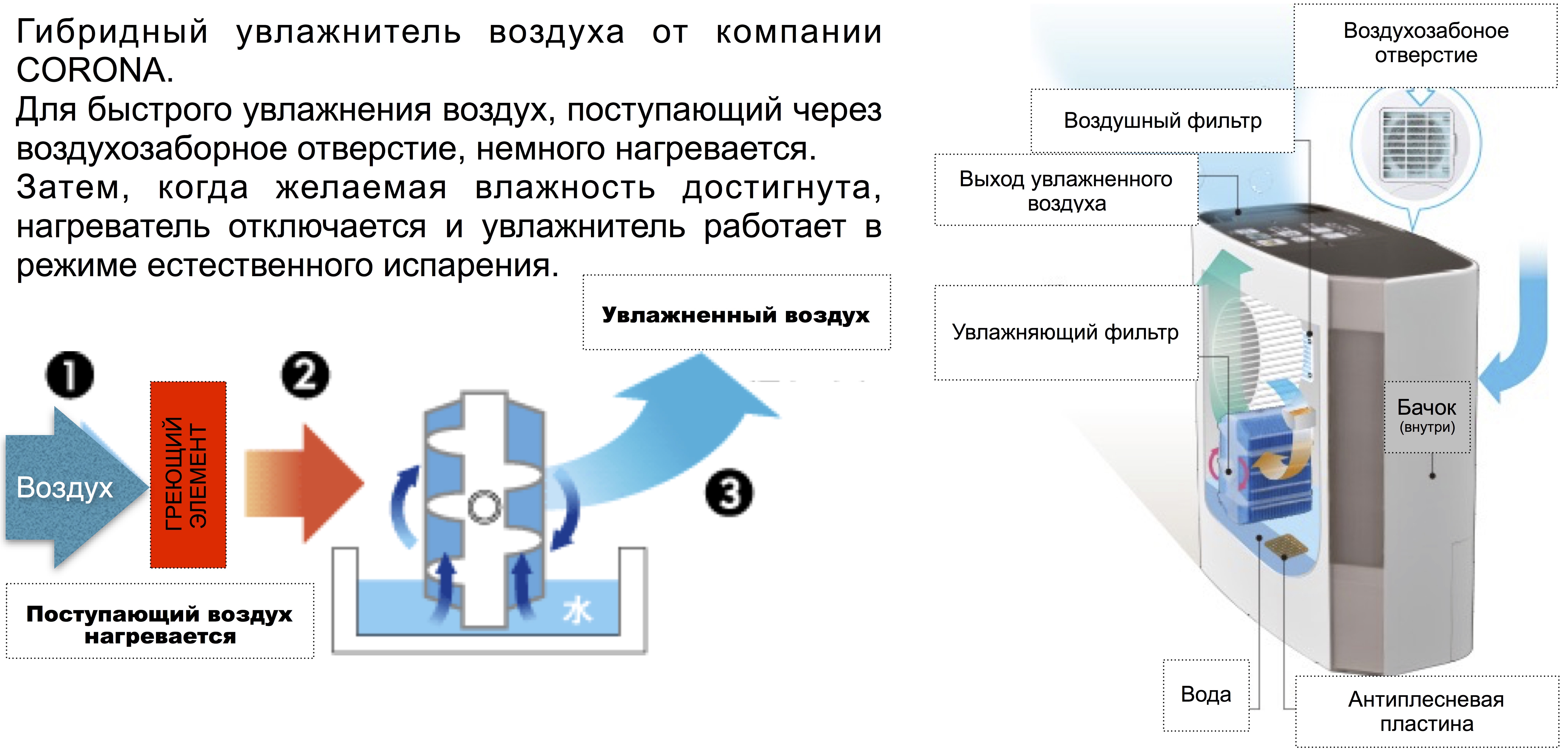
Traditional cold-type humidifiers need special cartridges that saturate the blown air with the necessary moisture. Such models are filled with liquid, which the built-in fan drives through the cleaning unit.
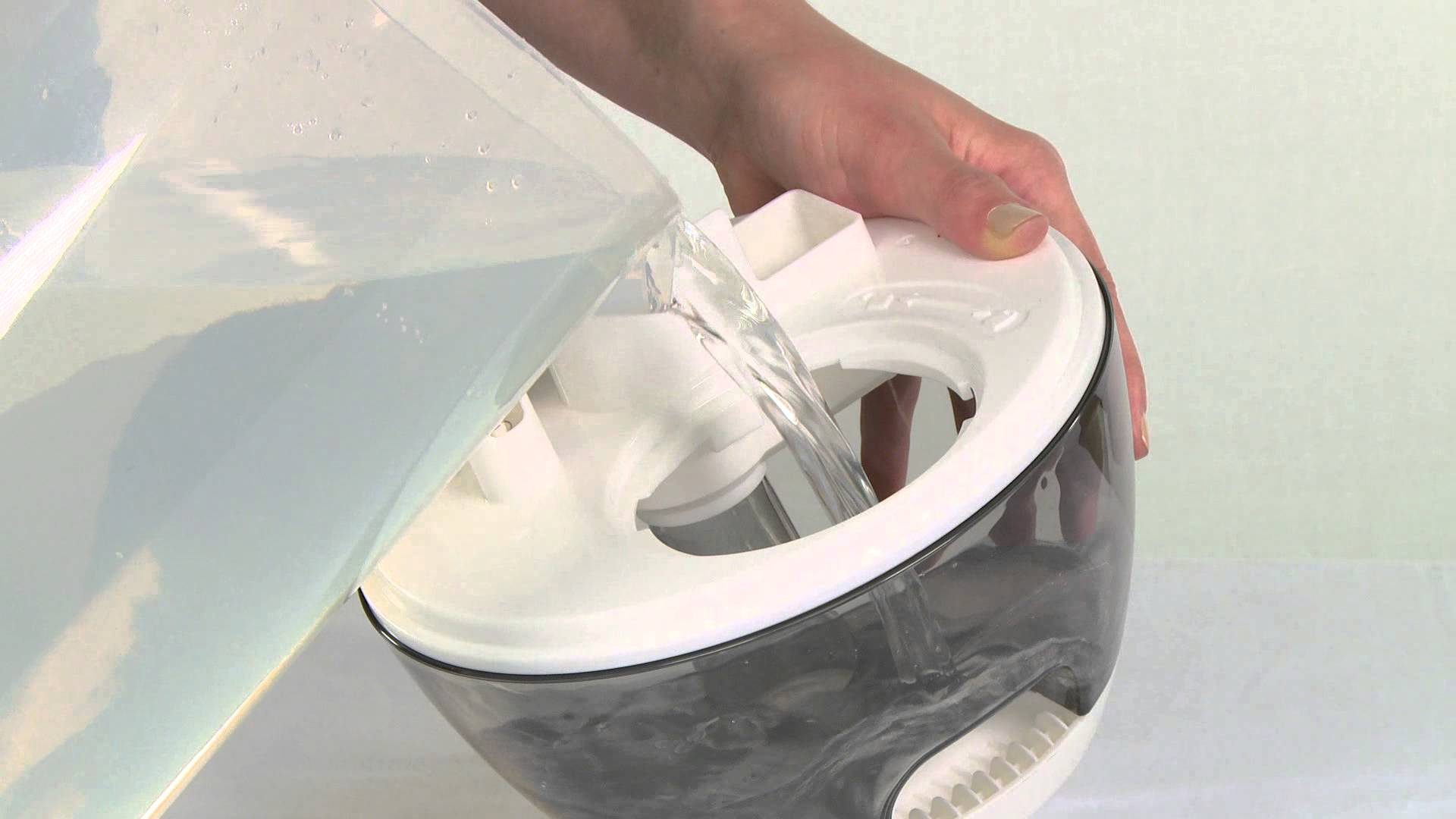

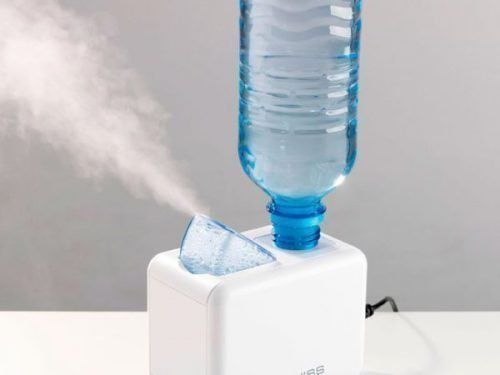


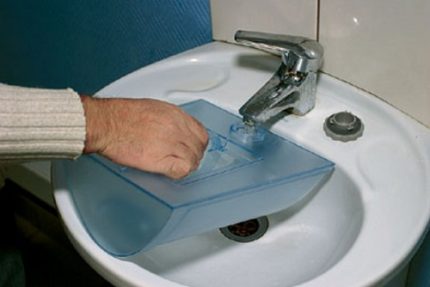

Cartridges are extremely prone to clogging, so distilled water, devoid of any impurities, must be used for them.
However, the cartridge still requires regular replacement: on average, it is updated at least once a quarter. If you do not use a distillate, the cartridge will partially remove impurities from heavy metal salts and make the water softer, but it will quickly become unusable.
View #3 - ultrasonic humidifiers
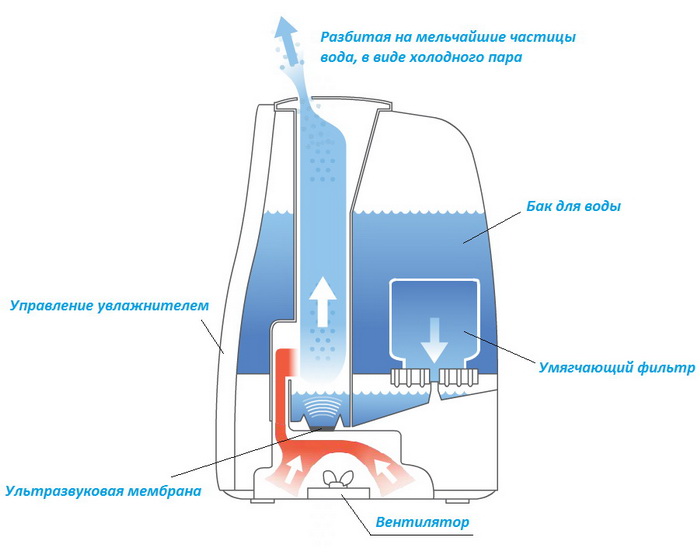
Ultrasonic models produce moisture due to mechanical vibrations on a special membrane. The water entering this assembly is broken up into finely dispersed particles, which are carried away by the airflow generated by the fan.The process is carried out without heating, however, along with water, any impurities contained in the liquid are split into fractions.
Therefore, although the ultrasonic humidifier is extremely convenient and productive, the device remains the most sensitive to water quality. Only distillate is suitable for him, which does not contain any minerals or unwanted metals.
We examined in more detail the features of ultrasonic humidifiers, their pros and cons in this material.
The most primitive and undemanding to water are spray humidifiers, which simply spray the smallest drops of water into the air. Any purified water is suitable for them, but do not forget about its characteristics, since microdroplets will enter the lungs.
Another type of humidifier is an air purifier. We talked more about humidifiers-purifiers in our next article.
Air humidity and its meaning
One of the most important parameters of air that ensures a comfortable stay in the room is relative humidity.
According to the standard, the value of this indicator should be 30-45% in winter, and be within 30-60% in summer.
At the same time, doctors recommend indicators of relative humidity of the order of 40 ... 60% for any time of the year, and for children from 50 to 60%. The famous pediatrician Komarovsky strongly advises when a child has a cold to increase the humidity value to 70%.
It is difficult to provide such indicators of humidity, especially with stable operation of heating equipment in winter. Therefore, special devices for humidifying the air are used for this. And during their operation, the problem arises of what kind of water to pour into the humidifier for its effective operation.
The quality of such water is extremely important for people. Vapors of this water directly enter the lungs
Water parameters also directly affect the efficiency, reliability, and durability of the humidifier itself.
Attention. Incorrect water preparation is indicated by:
- changed color of water;
- white coating on various surfaces of the room;
- lime deposits on the heaters of the device;
- green plaque in the tank;
- musty smell.
Steam humidifiers are quite unpretentious to the quality of the poured water. The performance of this type of device will provide any clean water. However, given that the water for the humidifier in the form of steam will be inhaled by the owners of the equipment, it is worth using special filters to remove chlorine and other impurities. It is useful to reduce the water hardness level to protect the heating element from scale.


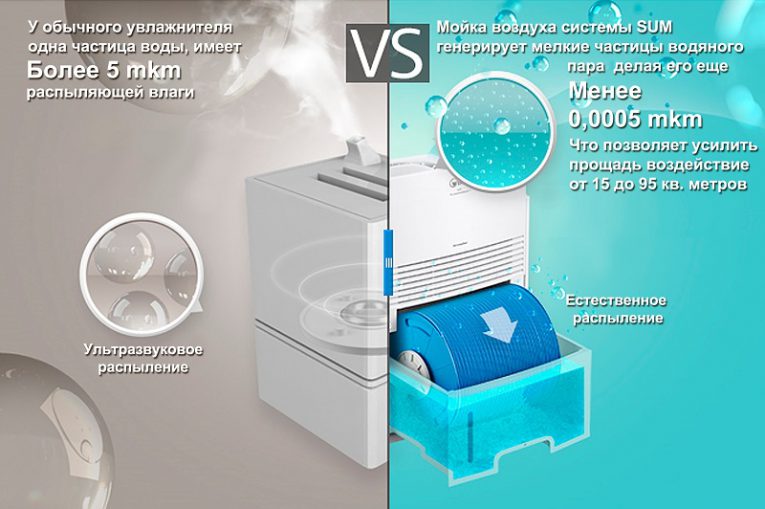



Cold-type humidifiers are based on the use of special cartridges that saturate the air blown through them with moisture. Such cartridges are quite sensitive to the quality of water, which is best subjected to distillation. Or at least good filtering.
The spray models that spray finely dispersed drops are the least sensitive to water quality. For the device itself, tap water is quite suitable. But it is advisable to first pass it through a conventional filter to remove chlorine.
The most important solution to the problem of which water to use for a humidifier is for ultrasonic models. Such humidifiers create water vapor when ultrasonic waves are applied to water. However, in this case, the mineral impurities contained in the water undergo a finely dispersed transformation.It is they who create a white coating on things and surfaces of the room. They should also be prevented from entering the lungs. Therefore, ultrasonic humidifiers necessarily need distilled water, devoid of mineral impurities.
The principle of operation of the humidifier
There are three types of humidifiers used in everyday life:
- traditional or cold type;
- ultrasonic;
- steam.
All of them are based on the evaporation of water in one way or another. Humidifiers are also used for industrial purposes, but the principle of their operation is based on spraying fine liquid particles into the atmosphere. Also popular are devices that, in addition to humidification, also purify the air masses - air washers. About all these varieties: differences in the principle of operation and, accordingly, the requirements for the water used - further.
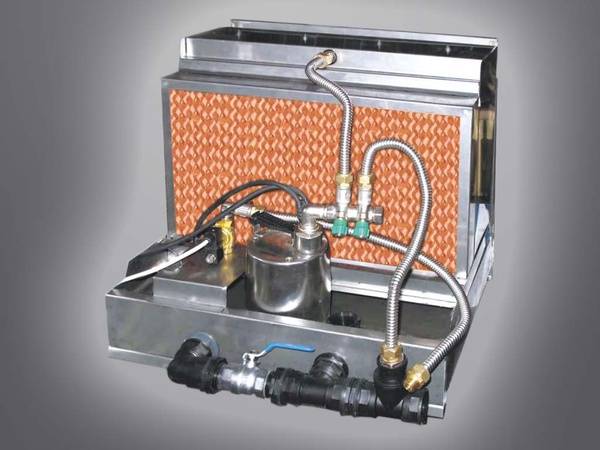
Adiabatic Humidifier
In a traditional (adiabatic) humidifier, water is poured into tanks, from which it is evenly supplied to the tray, where it impregnates the evaporative elements with replaceable cartridges. The simplest replacement parts are paper, while the more expensive ones are made of plastic. The air driven by the fan passes through the holes in the body of the device and is humidified, while dust and dirt remain in the paper or plastic of the replaceable element. The degree of water evaporation depends on the humidity in the room and rises to a certain level, which is the lowest in comparison with other humidifiers.
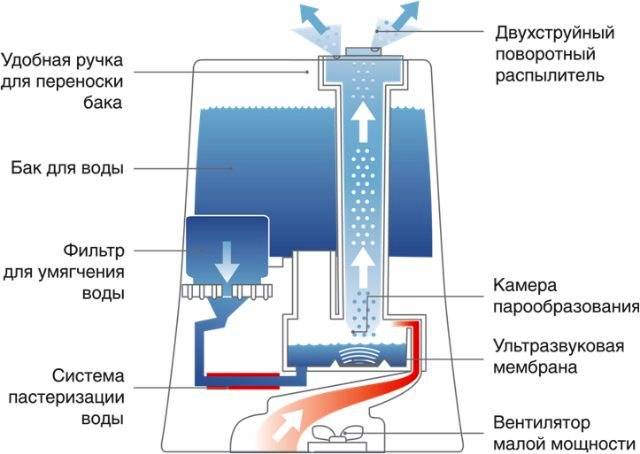
ultrasonic machine
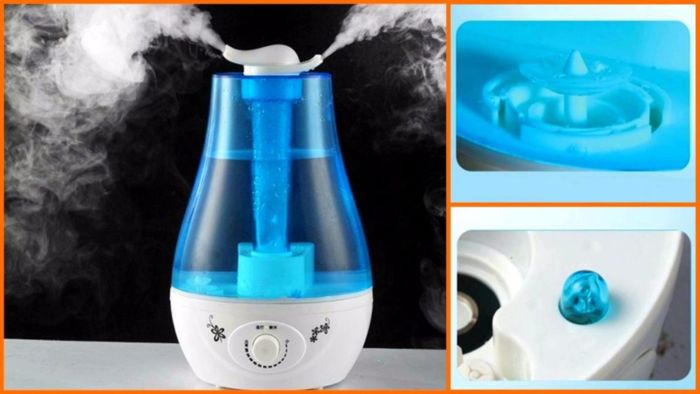
The principle of operation of the ultrasonic unit is based on high-frequency air vibrations. Water is poured into a tank, from which it is supplied to a plate vibrating at a high frequency.Air is forced into the chamber of the device by means of a fan and humidified by a liquid sprayed under the action of vibration. The release of enriched air (similar to fog) into the external environment is carried out to the farthest distance using a spray nozzle.
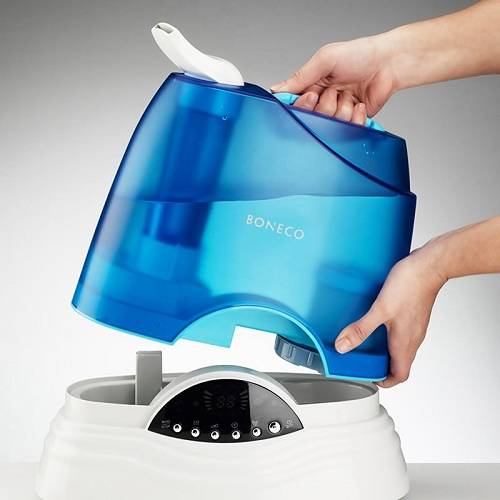
steam appliance
The steam humidifier uses the principle of heating the liquid to the vaporization temperature. Water from the tank is dosed into the compartment with the heating element, where it evaporates. Heating is produced by using two electrodes, the action of which is interrupted in the absence of liquid. Therefore, if the device is turned on without water, this will not lead to damage. The maximum degree of air humidification is the highest, and it is controlled by a hydrostat.
Spray Humidifier
To solve industrial problems, spray-type installations or atomizers are used. The performance of such a product reaches 230 liters per hour, and the principle of operation is based not on evaporation, as in household appliances, but on spraying liquid to the state of a fine suspension with droplets 5-8 microns in size. The splitting occurs under high pressure. Thus, the water passing through the micro-holes in the nozzles reaches the smallest possible size and is sprayed throughout the room.
air wash
A hybrid of a humidifier and a purifier is an air washer. It performs both functions, releasing high quality air. However, the disadvantage of such a device is its low productivity. Thus, air humidification occurs several times slower. One of the most successful installations of this type is the Bork q700.
Popular fragrances for humidifiers
What essential oil can be added to a humidifier? There are many extracts used for aromatherapy: from the extract of the well-known chamomile to the essence of Asian bergamot:
- Orange. Orange oil can improve mood, it gives vigor, removes anxiety and relieves insomnia. Also, the rich aroma of citrus fruits stabilizes the work of the heart and improves digestion.
- Basil extract is a strong antispasmodic, antibacterial, sedative. Basil can be combined with eucalyptus to increase antimicrobial activity.
- Bergamot. Bergamot oil is a powerful antifungal agent, and it also reduces fever, improves appetite, and encourages creativity.
- Eucalyptus. Phytoncides contained in eucalyptus provide a strong antiviral, antimicrobial effect. Also, oil can be added to a humidifier to repel various insects.
- Tea tree essential oil - has antifungal, antiviral, antimicrobial action. Moreover, aroma oil actively fights against sinusitis, asthma and bronchitis.
- Lemon. The slightly tart, sweet-sour aroma of this citrus is an excellent antiviral agent. Just a few drops of lemon flavor added to a humidifier will relieve migraines, flu and other viral illnesses.
- Lavender oil calms, relieves insomnia, headaches, depression, and also helps to cope with nervous exhaustion.
- Chamomile. Known for its calming, relaxing, anti-stress effect. In addition, chamomile extract can be used to normalize digestion.
- Clove has a strong antibacterial effect.The spice is often used to get rid of a wet cough, as it has a strong expectorant effect.
- camphor oil. It is famous for its anti-inflammatory and bactericidal properties, and camphor also has a slight analgesic effect.
- Yarrow. An excellent inhibitor of inflammatory manifestations, i.e. yarrow slows down the spread of infection in the body.
- Anise - has expectorant, antiseptic and antispasmodic properties.
- Juniper essential extract is a natural antibiotic, so it actively fights inflammation of the lungs and bronchi. Aroma oil also copes with apathy, relieves fears, cleanses blood vessels and normalizes blood pressure.
- Peppermint. The fresh minty smell relieves the symptoms of colds, thanks to its sedative and antiseptic properties.
- Pine aroma oil is an effective remedy for colds. Fresh coniferous smell restores lung cells, so it is used to prevent viral diseases.
- Fir - has a pronounced anti-cold effect. Fir is often mixed with various extracts.
- Aromatherapy using sage helps to restore the voice, stabilizes the emotional background, removes depression, heals purulent pathologies on the skin, activates blood microcirculation and increases blood pressure.
Conclusions and useful video on the topic
Analysis of humidity indicators in different conditions. Demonstration of the device and the principle of operation of different types of humidifiers:




Causes of breakdowns of humidifiers. What happens to the board when permanent condensate appears:
The example of an aquarium test shows the determination of water hardness.
The main purpose of a humidifier is to increase the humidity in the air. It can also perform additional functions, but this will definitely be indicated in the characteristics of the device.
To avoid problems with the device, you must adhere to the manufacturer's clear recommendations for the selected model. If the instructions say "use only clean water," then you should do so. If there are no direct prohibitions on the use of additives or there is a capsule in the design, you can experiment with salt.



