- How to prevent in the future
- How to prevent its occurrence?
- Install a "double" tank
- Check ventilation regularly
- Types of drain tank
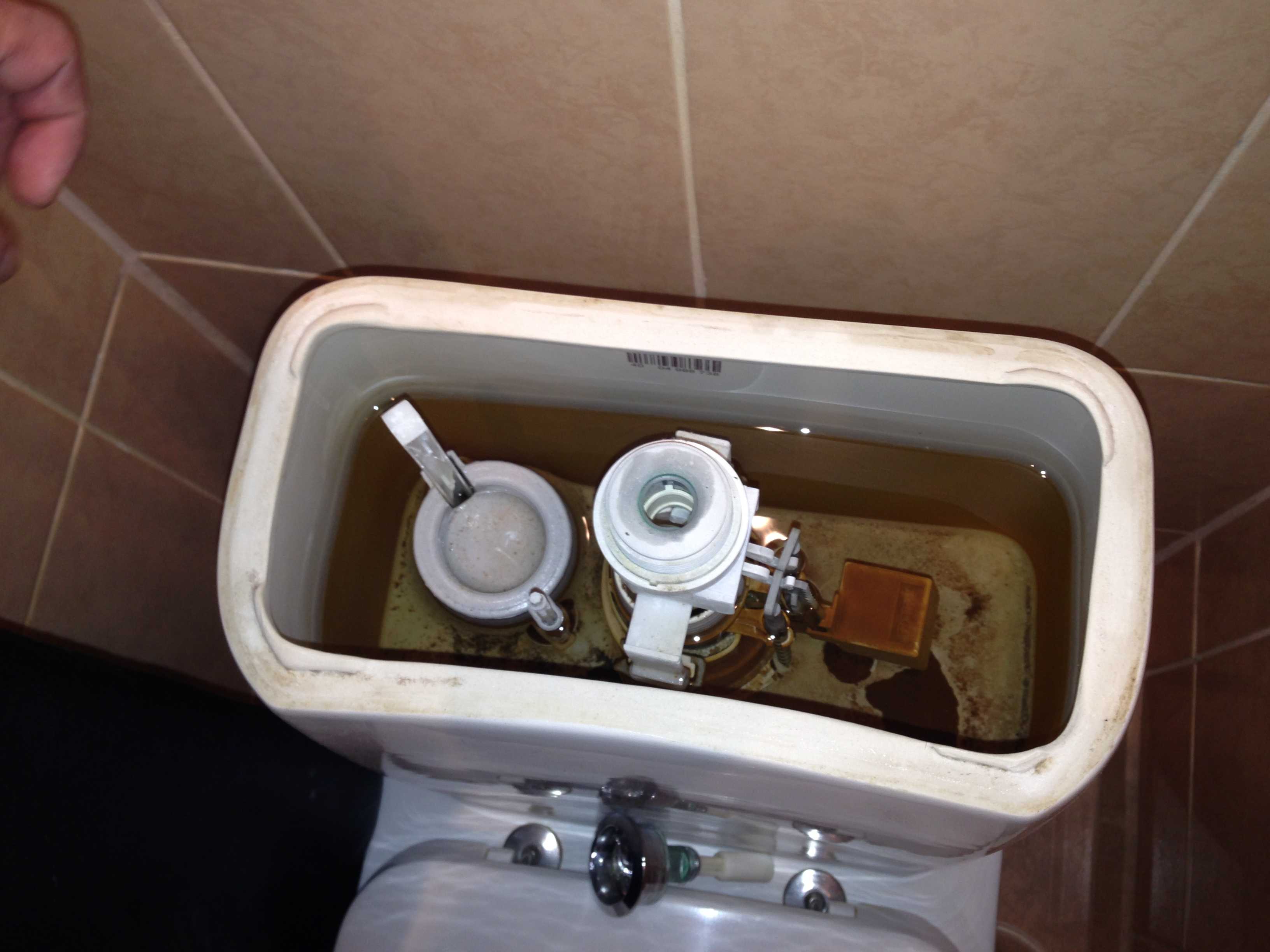
- The internal device of the drain tank
- The purpose of the float
- overflow
- Inlet
- Release (drain)
- Siphon tank
- Causes of condensation
- How to eliminate fogging?
- Setting the drain mechanism
- Reducing the volume of drained water
- Elimination of temperature difference
- Air dryer installation
- Creation of high-quality ventilation
- Installation of a special tank
- Internal thermal insulation
- How to get rid of the problem
- Change of microclimate
- Rise in water temperature
- Tank modernization
- Types of fittings for flush cisterns
- Separate and combined options
- Materials for the manufacture of devices
- Place of water supply
- Probable causes of a toilet leak from below - we carry out diagnostics
How to prevent in the future
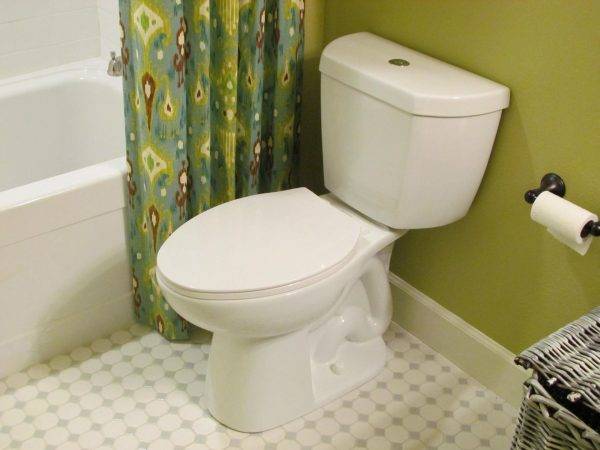 Leaking toilet brings high humidity, persistent background noise, trouble with neighbors, and high utility bills
To use plumbing for a long time and not resort to constant repairs, you should:
- periodically check all joints and connections, as well as the condition of the pipes and rubber seals;
- carefully use the levers and flush buttons, avoid sudden pressing;
- it is recommended to install cleaning filters to prevent unnecessary impurities and particles from entering the drain tank that clog the system;
- choose high-quality components when replacing failed toilet elements.
Buying plumbing fixtures from reliable manufacturers, timely periodic inspection of the drain system and parts, as well as contacting the help of professional plumbing workers will save you from such trouble as a leaking toilet.
How to prevent its occurrence?
There are several relevant recommendations to eliminate the appearance of unwanted drops. For example:
- monitor ventilation: clean in a timely manner, check the quality of work with a match or a lighter;
- often ventilate the room, try not to dry things in the house with the windows closed;
- monitor the condition of the plumbing: if the drain button sinks, fix the problem;
- avoid a large jump in temperature: install the toilet further from the heaters;
- reduce the water supply.
If you plan to make repairs to the entire room, it is advisable to replace the ordinary toilet with the “no tears” option. Then you don’t have to spend money on buying an additional tank, sealant and worry about the flood from your neighbors.
Install a "double" tank
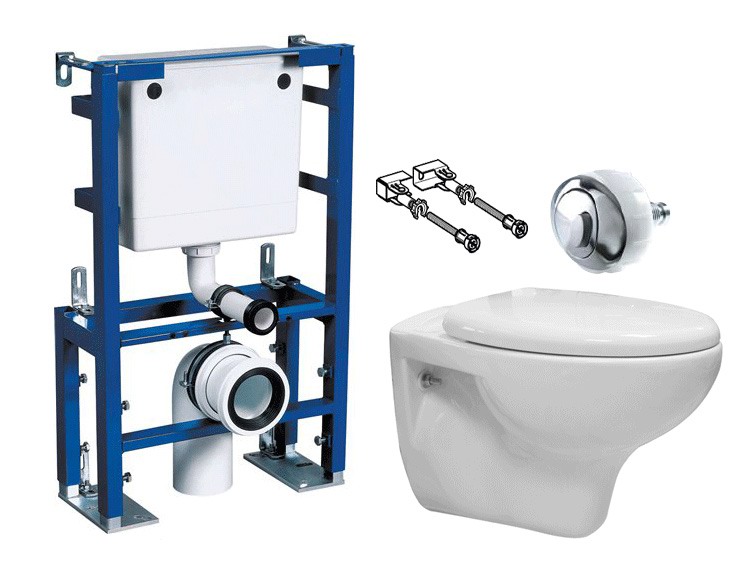
Installation of a double tank does not require special knowledge and a lot of time. Experts have identified step-by-step instructions that allow you to upgrade on your own. Moments:
- Just unscrewing a single button and screwing on a two-standard one will not work. You will have to change all the fittings.
- The cost of a two-mode drain mechanism will fully pay off with the absence of smudges and water savings.It will be consumed in two modes - "semi-drain" and "standard". Half drain allows you to mix cold water with the one that has already warmed up.
Stages:
after buying a new mechanism, the water supply is shut off;
the rest of the water is drained from the tank;
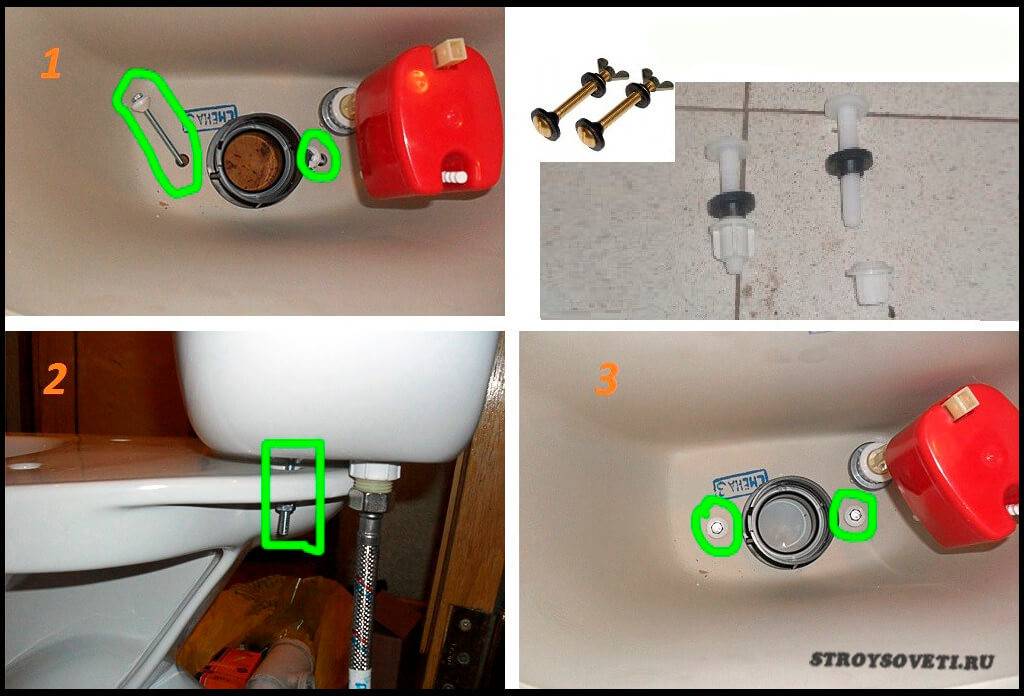
old fittings are dismantled;
the entire tank is removed;
a new system is installed;
then the tank is again installed in its place
Particular attention is paid to the "lambs". With the help of them, you can properly fix the tank, because even a minimal deviation can cause noise or leakage.
At the end, a double button is twisted and a valve for water supply opens. The whole procedure will take only 20-30 minutes.
Check ventilation regularly
Faced with the problem of ventilation, experts recommend paying attention to the entire microclimate in rooms and non-residential premises. As an alternative to an automatic system that intersects with light, we can highlight:
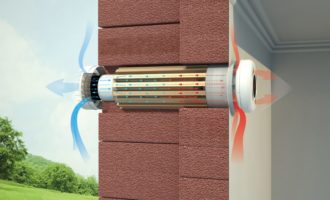
- Installation of holes in doorways. To make them look natural, you can insert a grid or special caps with a filter mesh into them, which will eliminate the transfer of dust and small particles due to the formation of air flow.
- There are special air dryers that are installed in the ventilation hole.
- Salt can be a budget option. By placing a small amount of scented bath salt in all rooms, you can partially get rid of excess moisture.
The reason for the accumulation of condensate can be hidden not only in a plumbing malfunction. Often the problem is initiated by neighbors who regularly heat other citizens. For example, when installing stretch ceilings, you may encounter the fact that the neighbor will simply hide the fact that there was a leak.An unpleasant smell of mustiness and dampness for no apparent reason can be the first call for checking the walls.
The second popular problem is the violation of the tightness of the pipes. Even the PFC system, which ranks highly in products related to plumbing engineering, has its own lifespan.
The third reason may lie in the eyeliner itself, which quickly fails due to impurities in the water.
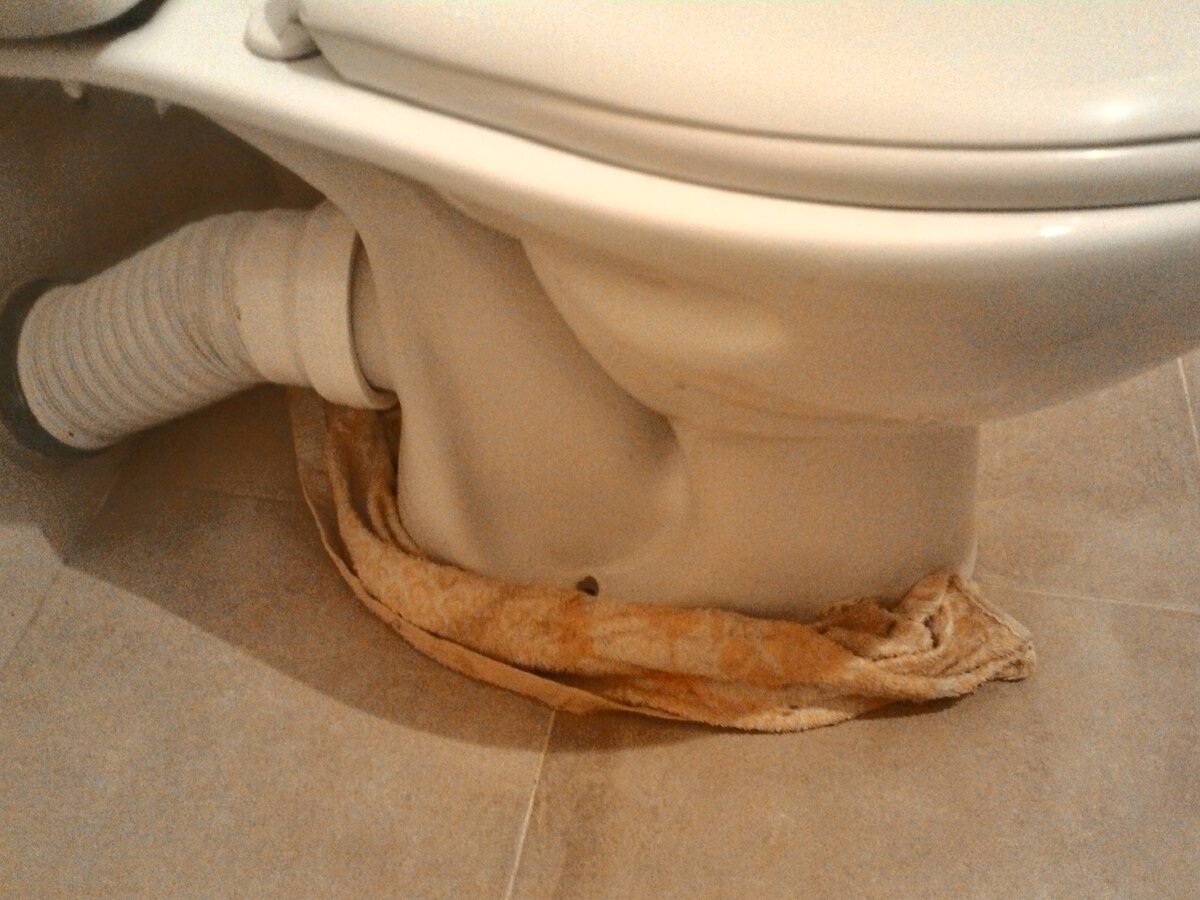
Any repair should begin with an analysis of the situation. Putting a rag under the tank or regularly removing drops from the surface of the tile is not an option. Neglect can lead to poor health and unnecessary costs for finishing the entire room.





Types of drain tank
Toilet bowls are divided into several types. Types differ in the type of escapement device, in the material of manufacture and in the method of installation.
According to the location of the trigger lever of the tank:
top; side
According to the material from which the tank is made:
- plastic;
- ceramic;
- cast iron.
By installation method:
- wall installation;
- installation on the toilet shelf;
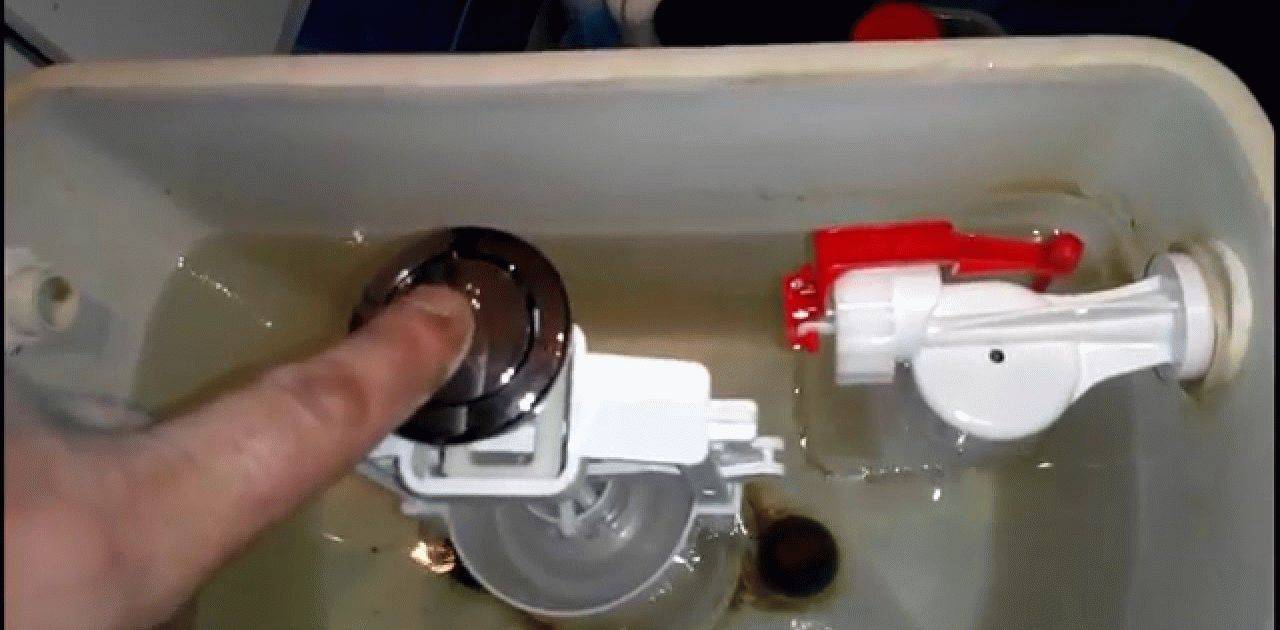
Each type of flush tank has an internal device that performs the work of filling water into the tank, adjusting the rate of water in it and flushing.
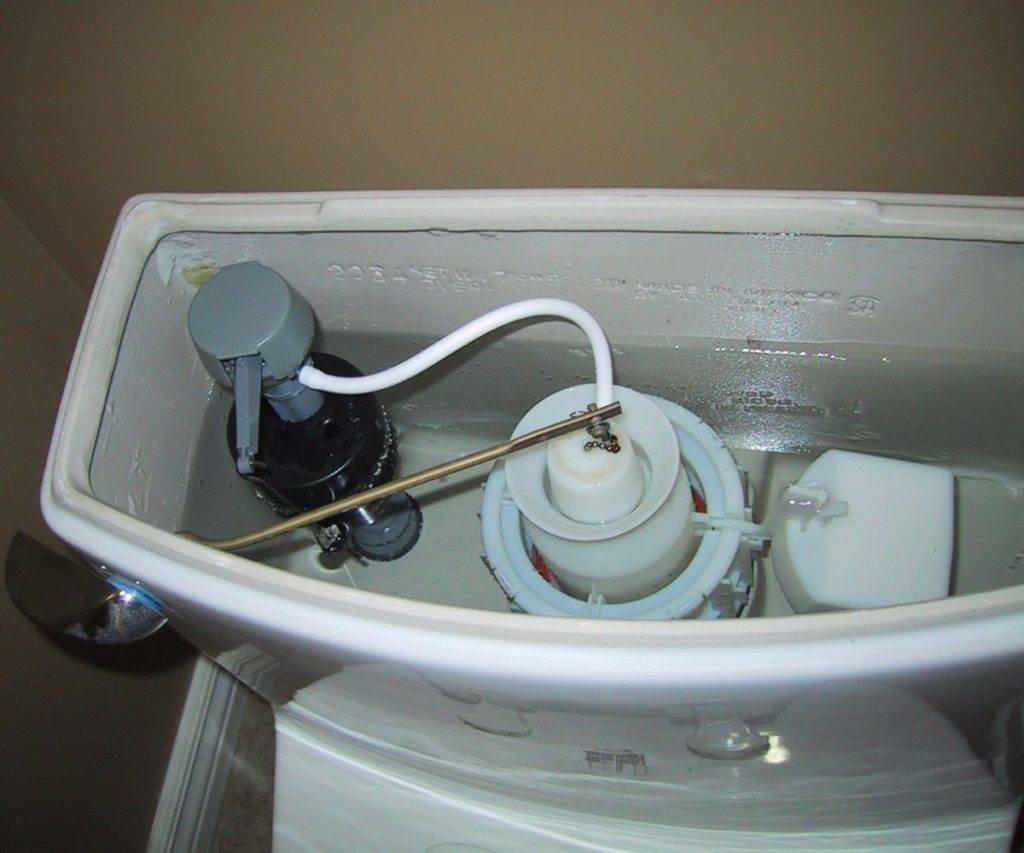
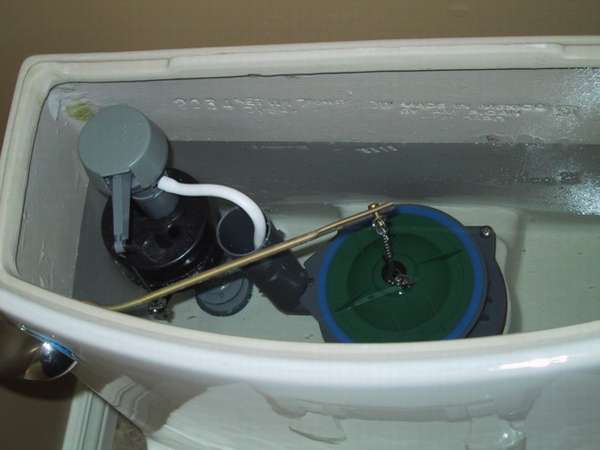
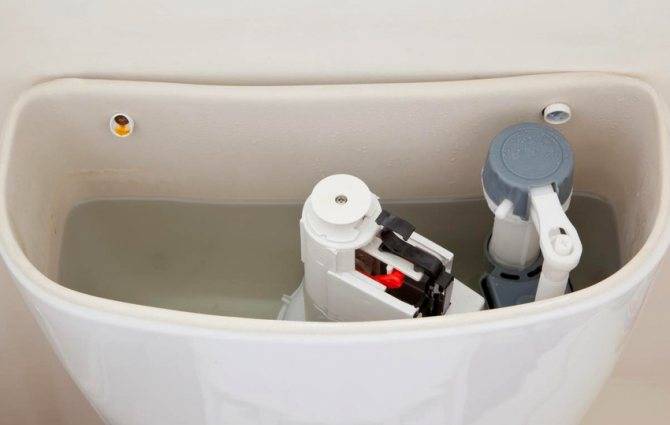
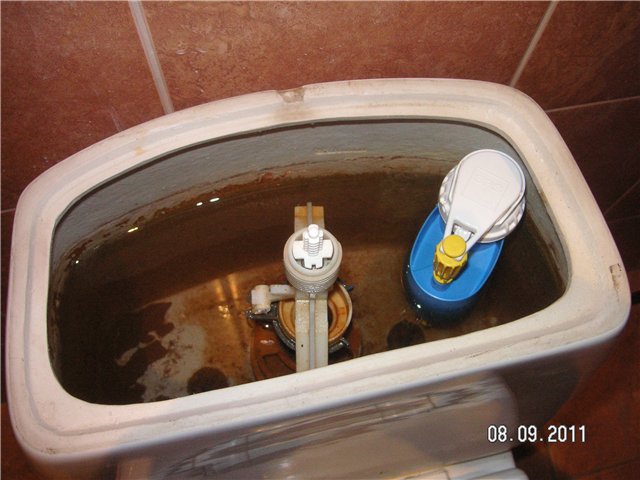
The device of a ceramic drain tank consists of:
- filling valve;
- overflow;
- drain valve.
toilet cistern device
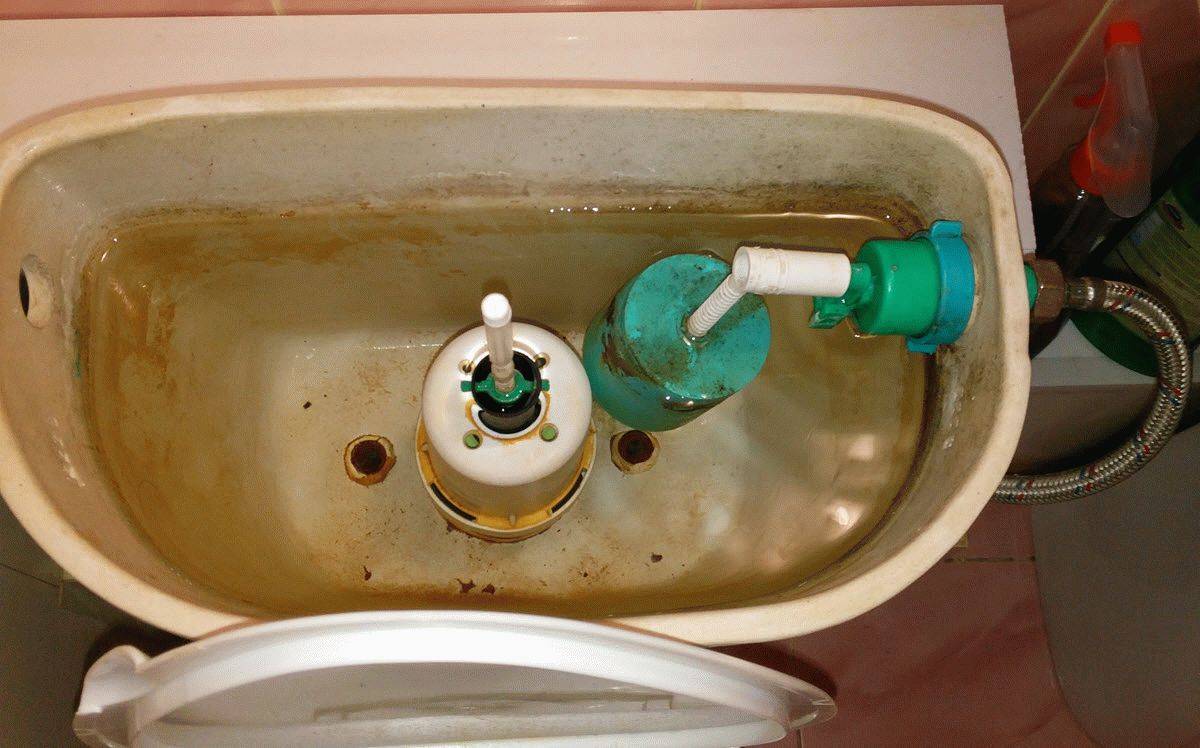
The internal device of the drain tank
The purpose of the toilet cistern and its internal structure is the implementation of work:
- for filling water into a tank,
- adjusting the rate of water in it
- and the implementation of the flush itself
The purpose of the float
A float emerges from the water.
The purpose of the float ball valve is directed to:
- for supplying water to the tank,
- its dosage and rate.
The principle of operation of the float valve is that when there is enough water in the tank, the float pops up, setting in motion a special plug with a lever, which blocks the access of water to the tank.
overflow
The overflow is responsible for directing excess water into the toilet. It is needed so that the tank does not overflow, and water does not pour over its edge. This mechanism is usually made in the form of a small plastic tube and is located in the center of the tank. That is why, if the water level in the toilet bowl is not properly adjusted, water constantly leaks into the bowl.
Inlet
The design of the filling fittings includes an inlet valve 5 of the rod type. Its operation is controlled by the float of the toilet bowl 3, acting on the cut-off rod through a brass rocker. A similar system is called a float valve and is still used in a slightly modified form.
Figure 2
Figure 3 will help you better understand the operation of the filling unit. It shows the water level 1 after the storage tank has been emptied, after which the float mechanism 2 (including the rocker arm or spoke lever 3) is in the lower position. The upper part of the rocker arm 3, located in the body of the faucet (valve) 4, shifted the pusher rod 5 with an elastic gasket 6 to the left, which activated the water supply through the inlet 8 and inlet 10. As the container is filled, the lower end of the lever moves up, and its upper arm accordingly shifts the pusher to the right and gradually closes the spout opening, pressing gasket 6 towards it.
The faucet is fixed on the wall of the tank with a fixing nut 9 from the outside.The threaded connection of the tap is sealed with a rubber gasket 7 from the inside. To dampen the noise of the falling jet 11, a tube of a suitable diameter is additionally put on the outlet fitting of the inlet valve, lowering its lower end below the minimum water level.
Figure 3
Release (drain)
Adjusting the toilet cistern cannot be complete without adjusting the outlet and overflow units. Their schemes are shown in figure (diagram) 2 - plumbing fixtures with lever-type drain mechanisms. But, despite the similar types of drives (rocker 4), they have fundamental differences in the principles of operation.
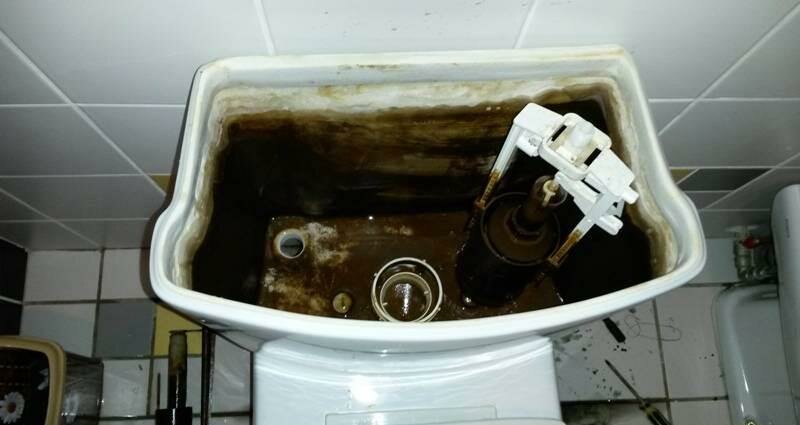



Siphon tank
Figure 2a shows a drain system using siphon chamber 1. The curved cavity solves two problems at once:
Serves as a fixed height overflow.
- The liquid level in the right receiving part of the siphon cavity always corresponds to the adjusted water level in the tank, it cannot be higher than the dividing wall. If the toilet float 3 is set incorrectly - it does not have time to close the inlet valve 5, then the liquid flows into the left side of the siphon (air) and flows out through the flush pipe.
- Supports (automates) the release of liquid, allowing you to release the handle 6 immediately after activation. At the beginning of the flush cycle, water rushes down under the raised valve 2. When it is in the lower position, the flow continues through the curved siphon tube due to the vacuum created by the flow falling at high speed in the vertical flush pipe. An effective pressure drop caused by a moving liquid is only possible with a sufficiently high placement of the sanitary cistern.
Sanitary fixtures made according to scheme 2a no longer meet modern aesthetic requirements. At the same time, they are characterized by too large and unregulated water consumption.
Causes of condensation
If water drops are constantly forming on the cistern of your toilet, the first thing you need to do is to identify the cause of their appearance.
A common cause of condensation in the toilet is a high humidity level in the room. To normalize this indicator, it is necessary to identify the cause of the increase in humidity.
Dry indoor air has a negative effect on human health, but high humidity also leads to bad consequences. This can cause fogging of the tank, walls and floor.
High humidity in the bathroom can be caused by various reasons:
- The apartment or house has a large aquarium or a lot of vegetation that requires constant watering. In these cases, the problem can be solved by installing air dryers.
- Washing and drying clothes are carried out in significant volumes, which is more often observed in large families. It is recommended to hang the washed laundry on the balcony or in the yard.
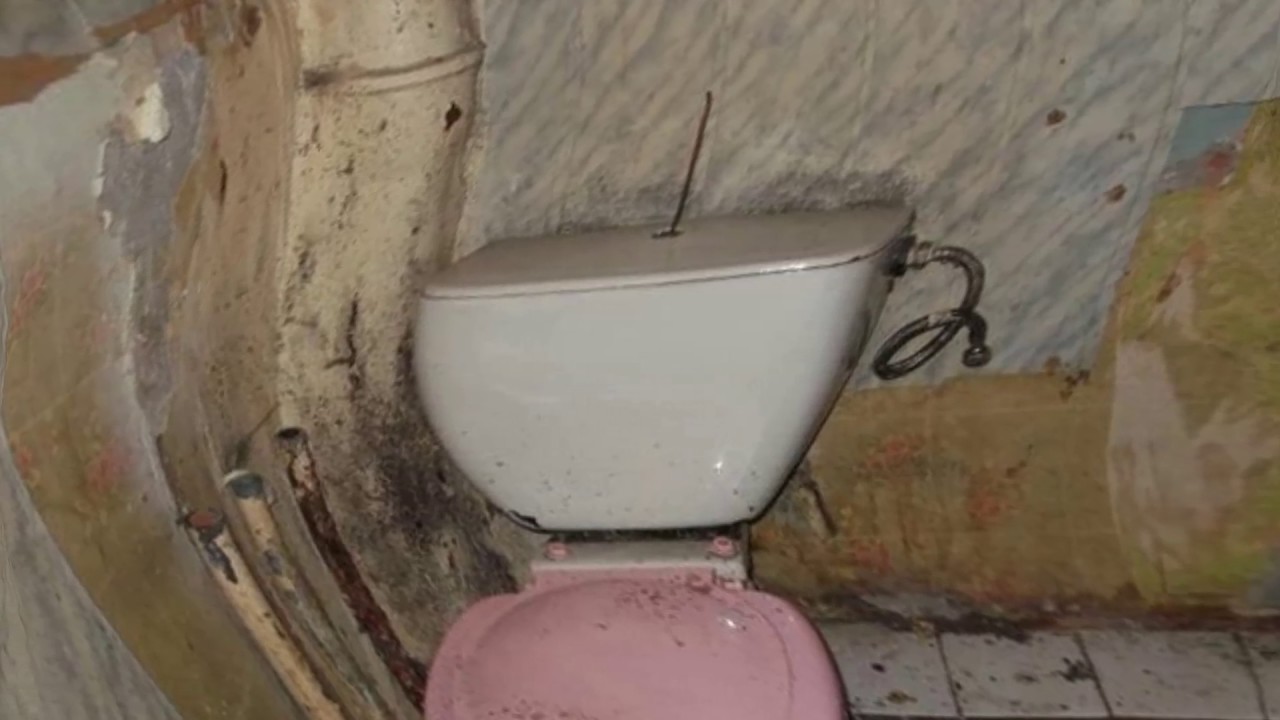
- Moisture can settle on the cistern and bathroom wall surfaces due to leaking sewer pipes or connections. We urgently need to identify and fix the plumbing problem.
- Insufficient ventilation does not perform its functions, as a result of which the room cannot dry out quickly.
- Due to a breakdown of the valves in the tank, cold water can constantly flow, which does not have time to reach room temperature and causes condensation to appear on the walls of the plumbing.
Condensation forms on the tank of sanitary equipment due to the fact that the air temperature in the room differs from the temperature of the water in the toilet bowl by about 15 degrees. Therefore, the outer surface of the tank begins to fog up.
Since water enters the toilet from an underground or outdoor water supply system, its temperature depends on the external weather conditions.
In winter, the heating season begins, during which the room heats up. During this period, there is the greatest difference in air temperature in the bathroom and water in the toilet.
The laws of physics will help to identify the source of the malfunction. As you know, warm air currents, in contact with cold water (in the drain tank), are converted into moisture droplets. You can stop the formation of condensate on the tank with a more detailed study of the possible causes of this phenomenon and ways to eliminate them.
How to eliminate fogging?
In the main, the elimination of either high humidity in the room, or the elimination of temperature differences can help. You can remove condensate from the toilet bowl by one or more of the following actions.
Setting the drain mechanism
For starters, you can try to repair / adjust the drain system. The accumulation of water on the walls of the tank can be caused precisely by a malfunction of this unit. If the drain valve is not firmly seated, water can constantly go into the toilet. The tank in this case will be continuously filled and cooled. In such a situation, the volume of condensing liquid can reach 1-2 liters per day.
The fight against perspiration will be more effective if you start by repairing drain and shutoff valves.You should check the performance of all nodes and, if necessary, replace with a new one. To quickly deal with the repair, we advise you to see how the toilet is arranged.
Before installing a new mechanism, you need to check for lime deposits on the drain hole. If necessary, remove them and replace the rubber seals. To avoid deformation of the sealing gaskets, it is recommended to tighten the nuts not with keys, but with your hands, but with the maximum possible force.
Reducing the volume of drained water
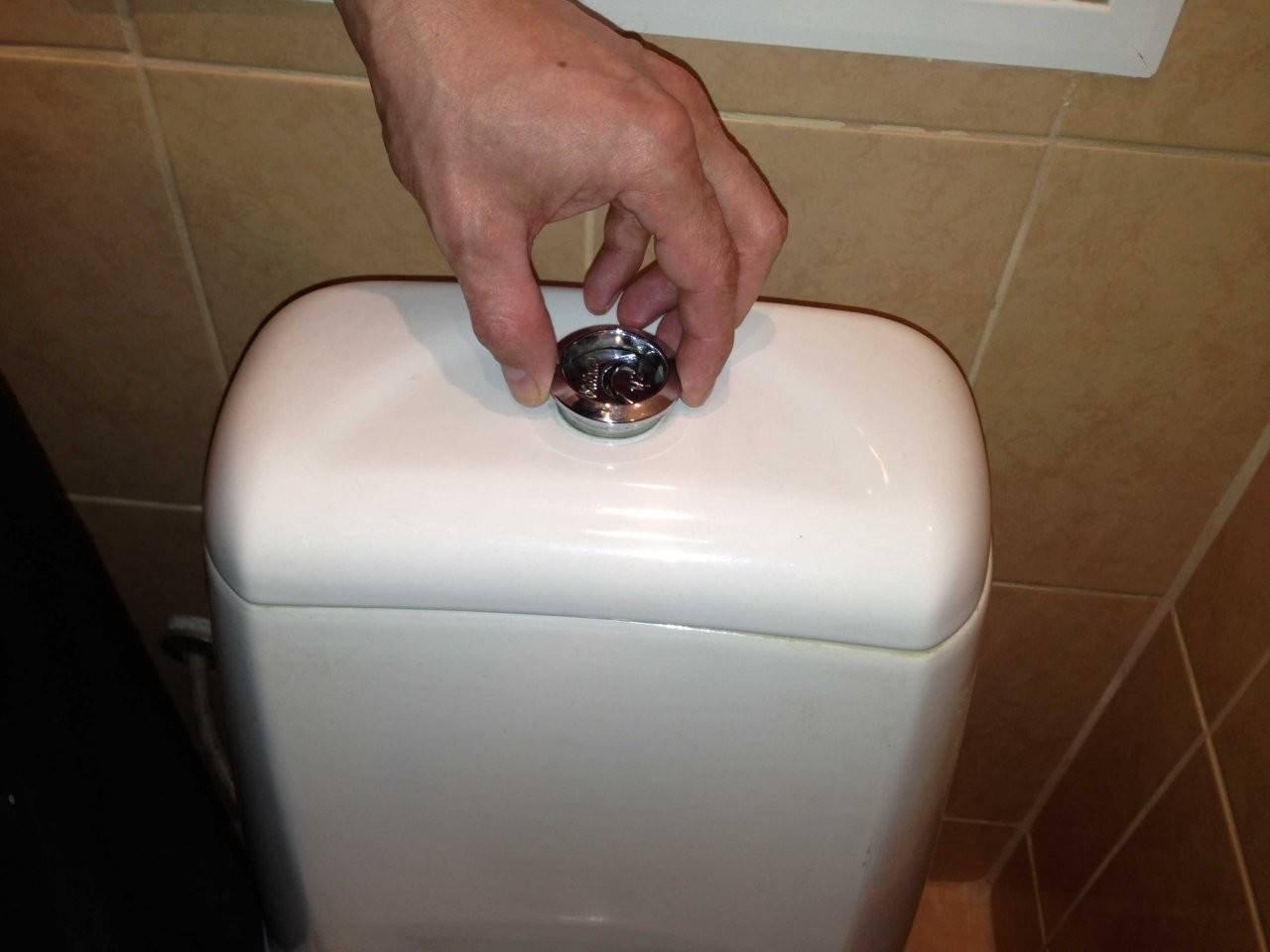
You can try to overcome the condensate on the drain tank by reducing the volume of the drain. Of course, with a large number of residents and continuous use of the bathroom, this will be difficult to achieve. However, the amount of drained water should be kept as low as possible. To do this, you can use the half-descent button. In the absence of such a system, it is recommended to replace the outdated device with a modern one. It will help to get rid of condensate and save a certain amount of water.
Elimination of temperature difference
Condensate formations can be combated by heating the accumulating water. If the supplied water is the same temperature as the air in the room, then drops will not accumulate on the surface of the tank. This can be done by connecting a system with instantaneous water heating, which has a thermostat, and creating proper thermal insulation of pipelines. The temperature can be set between 20-25°C.


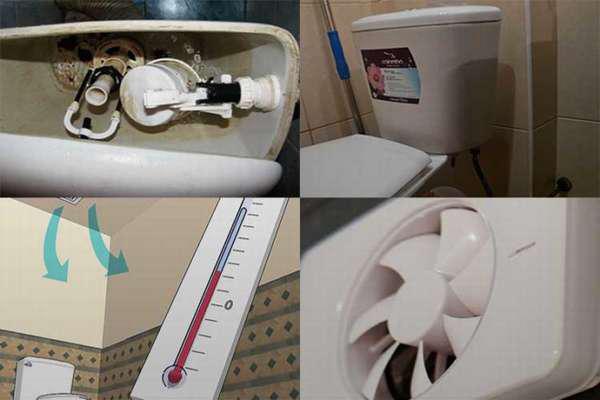



On the other hand, you can lower the air temperature in the bathroom. But not everyone will like this plan of action.
Air dryer installation
The device must be selected in accordance with the level of humidity, area of \u200b\u200bthe room and your budget.Based on the principle of action, 2 types can be distinguished:
- Absorption - a container filled with an absorbent substance that perfectly absorbs moisture. Silica gel is often used.
- Condensation - cools the air, and excess moisture condenses and settles inside the device.
Creation of high-quality ventilation
Protecting the tank from condensation must begin with good ventilation. Not infrequently, during repairs in a private house / apartment, the ventilation openings are closed or they simply do not undergo maintenance. However, this is a significant error, since it is she who is able to completely eliminate problems with fogging of the toilet bowl.
Checking the operation of ventilation can be carried out very simply: just bring a sheet of paper to the hole or bring a lit match and put it out. If sufficient draft is observed, the hood is functioning normally. If there is no draft at all or it is weak, then the ventilation ducts should be cleaned.
One of the easiest ways to solve the problem is to install forced ventilation.
Installation of a special tank
Modern technologies have long begun to solve the problem under consideration. One of them is a toilet with a double tank. The modification looks like this - a plastic tank inside, and outside - a familiar ceramic casing. A gap is created between the ceramic and plastic containers, which ensures that the water temperature is maintained at the same values as room temperature. Installation of such a system can unequivocally solve all issues with the deposition of condensate.
However, such double tanks have one significant drawback - a high price.
Internal thermal insulation
Buying an expensive cistern / toilet bowl is not always advisable.You can solve the problem yourself. For this, polyethylene foam is placed inside the tank. Due to such thermal insulation, it is possible to reduce the temperature difference several times and eliminate drops.
Naturally, the situation with the condensate on the tank needs to be corrected. Otherwise, the consequences may be unfortunate. If you approach the solution comprehensively, then the situation will definitely improve.
How to get rid of the problem
After detecting a precipitate, it is recommended to study the information on how to get rid of it. There are several ways to fix the problem, depending on why condensate is collected on the toilet bowl in a particular case.
Change of microclimate
If the reason for the increase in moisture was a malfunction of ventilation, it will be necessary to get rid of violations of the microclimate of the room, in particular, the use of specialized devices.
Let's determine what needs to be done if the condensate on the toilet cistern occurs due to problems with the microclimate:
take care of forced ventilation of the room. If there is a small gap under the door, then air will flow through it. If it is missing, it is recommended to checking the operation of the ventilation duct (this is easy to do with a match or a lighter). In the absence of sufficient draft, it is necessary to clean the ventilation shaft. If this does not help, you will need to install an exhaust ventilation device. When choosing such a device, it is advisable to focus on the type of toilet. If it is combined, then you should opt for a fan model with improved protection against moisture and water splashes;
Install an air dryer. This device will collect water molecules in the air and localize them in a separate container.The device operates on the basis of the indicators of the built-in hygrometer. When choosing, consider the size of the bathroom.
Such actions in most cases lead to the prevention of a situation where condensate accumulates on the toilet bowl.
Rise in water temperature
As mentioned above, the precipitate is formed due to a temperature difference of about 15 degrees between the water in the tank and the temperature in the room. Therefore, in order to get rid of sediment, it is necessary to minimize the difference by raising the temperature of the working fluid in the tank.


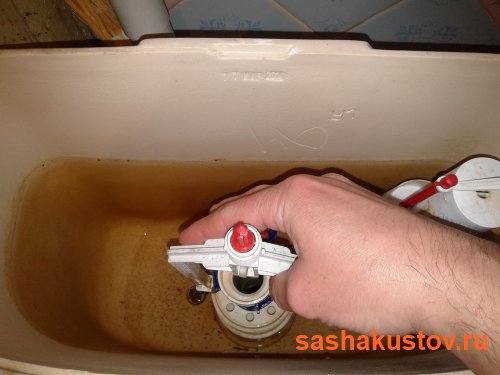

Let's determine what needs to be done if condensate collects on the toilet bowl due to this reason:
- insulate the pipeline (this will increase the temperature in the pipes by several degrees). Ready-made material for this is sold in many hardware stores;
- connect the hot water supply to the tank instead of the cold water supply. However, it is advisable to do this only in the absence of an appropriate meter, otherwise the cost of water consumption will be very high;
- install a boiler system;
- create a heat exchanger using a thermal apartment riser;
- install a half-drain system that will ensure dilution with cold water already heated.
Tank modernization
How to deal with condensation on the toilet bowl:
- insulation of the tank from the inside;
- placed inside a special plastic tank. The distance between the inserted plastic container and the tank should be 2-3 mm. Silicone or rubber gaskets are installed in a small gap.
- dismantling the toilet and installing a more modern model, the tank of which is protected from condensation. In such models, a double tank with a plastic and faience container is installed.This option is the most expensive, but the cost is the only drawback of such toilets.
Internal insulation of the tank is carried out using foam, tepofol, foamed polyethylene and other heat-insulating materials
It is important to completely shut off the water before starting the procedure and cleanly remove the remaining liquid from the tank. The procedure may also require glue and sealant. When choosing a material, it is recommended to purchase a layer with a thickness of up to 1 cm so that the working volume of the tank does not decrease
After gluing the insulation, it is necessary to treat the joints with a sealant. When it hardens, you can cut holes for installing plumbing fittings
When choosing a material, it is recommended to purchase a layer with a thickness of up to 1 cm so that the working volume of the tank does not decrease. After gluing the insulation, it is necessary to treat the joints with a sealant. When it hardens, you can cut holes for installing plumbing fittings.
For insulation, in some cases, foam is used. It has excellent thermal insulation properties, but involves a more complex process. It is advisable to apply the foam in 4 stages to ensure uniformity.
Then you will need to wait a while until it is completely hardened, after which you can cut off the excess part. For high-quality insulation, a layer one centimeter thick is sufficient.
Types of fittings for flush cisterns
The principle of operation of a conventional tank is not complicated: it has a hole through which water enters and a place where water is discharged into the toilet. The first is closed by a special valve, the second - by a damper.When you press the lever or button, the damper rises, and the water, in whole or in part, enters the toilet, and then into the sewer.
After that, the damper returns to its place and closes the drain point. Immediately after this, the drain valve mechanism is activated, which opens the hole for water to enter. The tank is filled to a certain level, after which the inlet is blocked. The supply and shutoff of water are regulated by a special valve.
A cistern fitting is a simple mechanical device that draws water into a sanitary container and drains it when a lever or button is pressed.
There are separate and combined designs of fittings that collect the volume of water necessary for flushing and drain it after activating the flushing device.
Separate and combined options
The separate version has been used for many decades. It is considered cheaper and easier to repair and set up. With this design, the filling valve and the damper are installed separately, they are not connected to each other.
The shut-off valve for the tank is designed in such a way that it is easy to install, dismantle or change its height.
To control the inflow and outflow of water, a float sensor is used, in the role of which even a piece of ordinary foam is sometimes used. In addition to a mechanical damper, an air valve can be used for the drain hole.
A rope or chain can be used as a lever to raise the damper or open the valve. This is a typical option for models made in retro style, when the tank is placed quite high.
In compact toilet models, control is most often carried out using a button that needs to be pressed. For those with special needs, a foot pedal may be installed, but this is a rare option.
In recent years, models with a double button have been very popular, which allow you to empty the tank not only completely, but also halfway to save some of the water.
The separate version of the fittings is convenient in that you can repair and adjust individual parts of the system separately.
Combined type fittings are used in high-end plumbing, here the drain and inlet of water are connected into a common system. This option is considered more reliable, convenient and expensive. If this mechanism breaks, the system will need to be completely dismantled for repair. The setup can also be a little tricky.

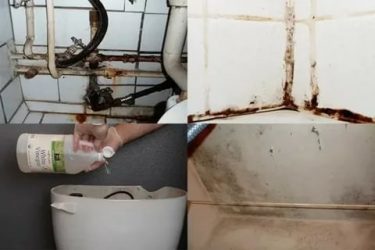
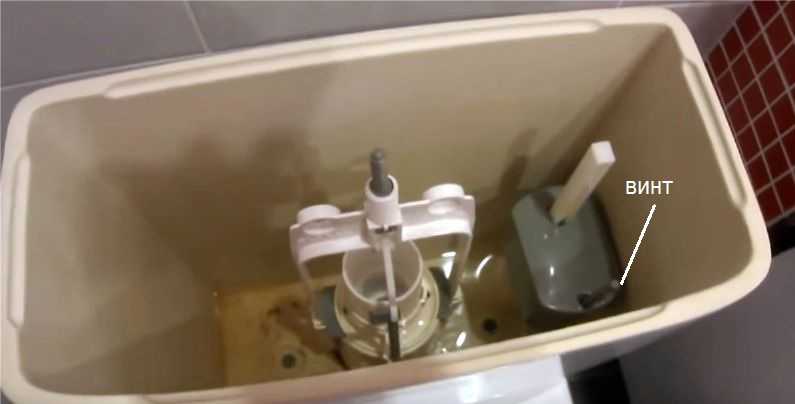


The fittings for the toilet cistern with side and bottom water supply are different in design, but the principles of setting up and repairing them are very similar
Materials for the manufacture of devices
Most often, toilet fittings are made of polymeric materials. Usually, the more expensive such a system is, the more reliable it is, but this method does not give clear guarantees. There are fakes of well-known brands, and quite reliable and inexpensive domestic products. An ordinary buyer can only try to find a good seller and hope for good luck.
Fittings made of bronze and brass alloys are considered much more reliable, and it is much more difficult to fake such devices. But the cost of these mechanisms will be much higher than that of plastic products.
Metal filling is usually used in high-end plumbing.With proper configuration and installation, such a mechanism functions smoothly for many years.
In bottom-fed toilets, the inlet and shut-off valve are very close. When adjusting the valve, make sure that the moving parts do not touch.
Place of water supply
An important point is the place where water enters the toilet. It can be carried out from the side or from below. When water is poured from the side hole, it produces a certain amount of noise, which is not always pleasant for others.
If the water comes from below, it happens almost silently. The lower water supply to the tank is more typical for new models released abroad.
But traditional cisterns of domestic production usually have a lateral water supply. The advantage of this option is the relatively low cost. The installation is also different. The elements of the lower water supply can be installed in the tank even before its installation. But the side feed is mounted only after the tank is installed on the toilet bowl.
To replace the fittings, they are selected taking into account the option of supplying water to the sanitary tank, it can be side or bottom
Probable causes of a toilet leak from below - we carry out diagnostics
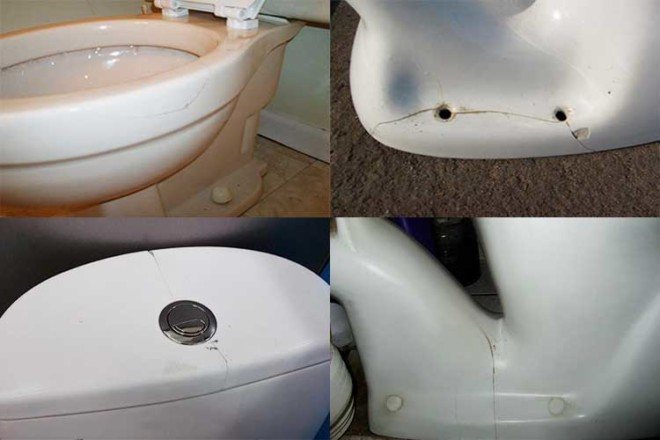
Even if the water only oozes a little, you can not leave the problem unattended. Such a defect is not only constant dampness in the bathroom, but also the danger of a more serious leak, which can happen at any moment. And this can end not only with a large bill for water, but also with repairs from the neighbors below.
Understanding the problem:
- To get started, arm yourself with a flashlight and a paper towel.
- Carefully inspect the toilet bowl, base, socket, hose, joints.If it is not visible to the eyes, apply a paper towel, wet spots will become an indicator.
What an inspection can show:
- Damage to the toilet itself (in its faience part).
- Joints, junctions (pipes with a toilet bowl, a flexible hose or a tank with inlet fittings, a bowl and a tank, etc.).
When you understand where the water oozes, you need to understand whether you can solve the problem yourself.