
- LED lamps - device features
- Why is the off energy-saving lamp blinking
- Illumination on the switch
- Wiring problems
- Poor quality lamp
- Why is the lamp glowing or flashing
- shunt resistor
- Features of LED Lamp
- The effect of a burning light bulb after turning off
- The main causes of the problem
- Contact oxidation
- Insert loosening
- Lamp power mismatch with contacts
- Poor quality of contacts and plates
- Other causes of contact failure
- Old electrical wiring
- Malfunctions in the power supply system
- Illuminated switch
- How to eliminate
- Removing the LED (neon) indicator
- Installing an additional resistance (shunt resistor)
- Using an incandescent lamp as a shunt
- What problems does induced voltage create?
- Features of disassembling the device and cleaning contacts
- If the LED light becomes dim
- The LED lamp began to shine dimly due to low voltage
- Natural degradation process of LEDs
- The LED lamp is dimly lit due to incorrect power selection
- Luminaire with incorrect assembly or low-quality components
- Independent search for the cause of the malfunction
- Flashing in the open state of the switch
- The main reasons for working in emergency mode
- Flickering due to switch backlight
- Flashing due to mains voltage
- Presence of current leakage
- Problem created by wiring
- Bad socket
- Through switch
LED lamps - device features
LED bulbs are very popular and in demand, they are gradually replacing similar devices with an incandescent filament from the market. Despite the significant cost, many apartment owners tend to purchase diode lamps, since they have a significantly longer service life, efficiency and reliability.
Compared to incandescent lamps, the design of diode devices is somewhat more complicated. Let's highlight the main elements and describe their purpose:
- Base - made of brass and plated with nickel, which prevents corrosion and promotes reliable contact with the cartridge.
- The polymeric base of the base part is coated with polyethylene terephthalate to protect the instrument case from electric shock.
- Driver - is performed according to the scheme of a galvanically isolated modulator of an electric current stabilizer. The main purpose of the driver is to ensure stable, uninterrupted operation even during mains voltage fluctuations.
- The radiator is made from anodized aluminum alloy. It is required for the effective removal of thermal energy from the remaining elements of the light bulb.
- An aluminum printed circuit board on a heat-conducting mass guarantees the necessary temperature conditions for the operation of the chips by removing heat to the heatsink directly from the chips.
- Chips - in fact, this is the lighting mechanism, in other words - diodes.
- The diffuser is a glass hemisphere, the level of light dispersion of which tends to a maximum.
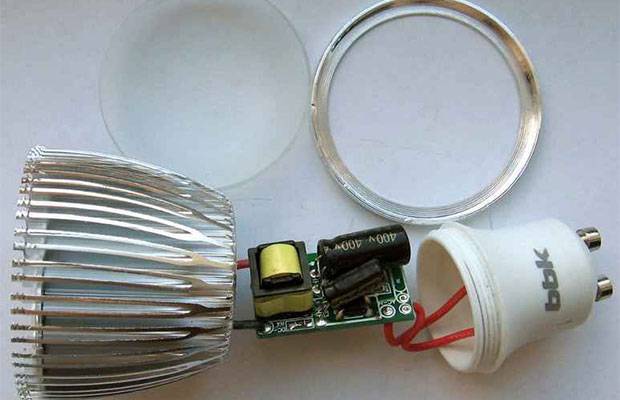
LED lamp device
The principle of operation of LED lamps for a simple layman is rather complicated and confusing. In short, the glow occurs as a result of the release of photons due to the constant change and recombination of electrons, followed by a transition to other energy layers. The uninterrupted flow of the process is ensured by the semiconductor materials of the chips. To ensure optimal operating conditions for the entire device as a whole, various resistors or current-limiting mechanisms are used.
Some manufacturers today are trying to introduce improved technologies for creating a glow, in particular, they use special diode bridges. The cost of such light bulbs is slightly higher compared to other LEDs, but the quality is fully consistent with the price.
And this is interesting!

* Up to 50% discount for our readers! The offer is limited.
Why is the off energy-saving lamp blinking
The backlight flashes if the accumulated charge is not enough
The most common and frightening disadvantage of using LEDs is that the energy-saving lamp flickers when the power is off. This "non-standard" behavior is due to three main reasons. To fix the problem, you need to understand which one is taking place.
Illumination on the switch
Switches and switches are often decorated with multi-colored lighting. They use a small LED or bulb with neon filler, which add functionality and convenience - the mechanism is easier to find in the dark if there is additional illumination.But there was a problem with flickering - a current charge accumulates on the capacitor, which causes a reaction in the dark.
The scheme of work is as follows:
- At the moment of closing the circuit, electricity is redirected to the lamp in full.
- After the contacts are disconnected, the current flows to the backlight LED, but a small part accumulates on the bulb capacitor.
- If there is enough accumulated, after switching on the fluorescent lamp starts flashing.
- The cycle can be repeated as long as electricity is supplied and the parts remain operational.
Wiring problems
Wiring check
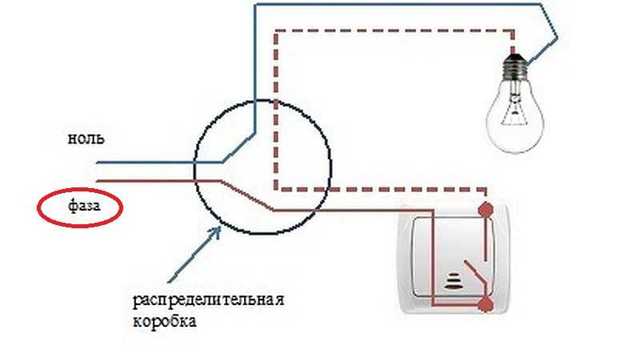
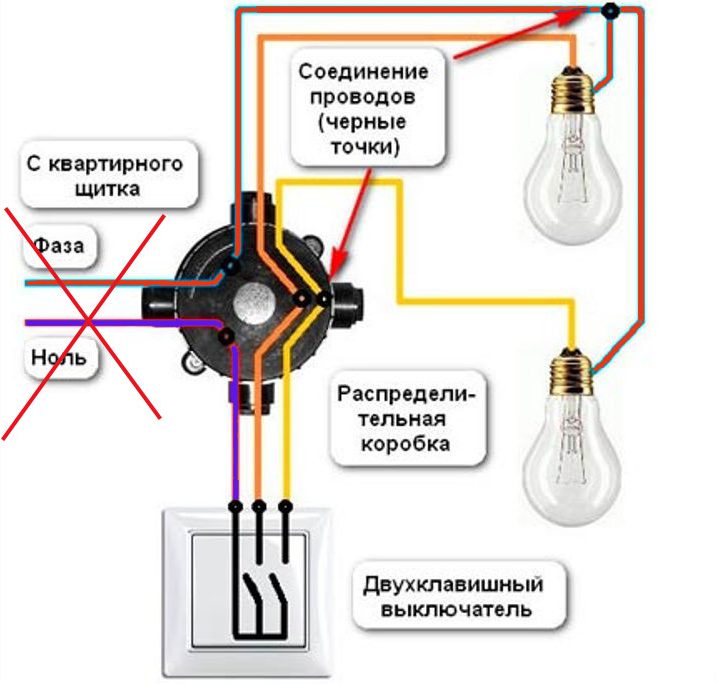
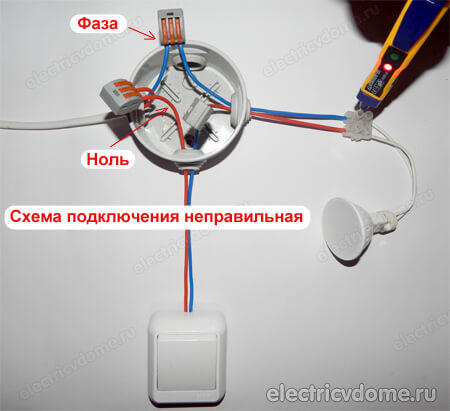
Another reason is a malfunction that occurred with the wiring. At the same time, the sources do not matter - outdated equipment, violation of the integrity of the wires, wiring errors. A common option is incorrect opening of the circuit to zero, and not to phase. The correctness of the connection is checked by the master. You can conduct a study yourself, but you will need certain knowledge and equipment for measuring voltage (a special pointer or electrical clamps).
When working, it is important to consider the general condition of the wiring. Compliance with safety rules and requirements is mandatory
Poor quality lamp
When buying a lamp, you need to check for integrity and performance.
In most cases, the cause of the problem is cheap or faulty equipment - lamps, fixtures, sconces, chandeliers. Wanting to save money, buyers purchase devices of dubious quality at the lowest prices. Most of these devices do not comply with current standards and GOSTs. When buying, consider the following points:
- the integrity of the package;
- reputation of the manufacturer and seller;
- performance check prior to purchase.
For residential premises, warm, calm light is chosen, and for non-residential premises, cold daylight is chosen. Preference is given to compact fluorescent devices, but the final choice is made based on the specific situation.
Why is the lamp glowing or flashing
One of the most common causes is the backlight on the switch. LEDs are sensitive to
ultra-low currents and pickups, and the illuminated switch elements pass weak currents, even if
off state. The second, also very common reason is that the switch opens zero instead of phase.
Broken zero, as a rule, has a capacitive connection with the surrounding wiring and due to this,
parasitic currents occur.
The situation when the switch breaks zero is ubiquitous in Soviet-era wiring.
This phenomenon is so common that sometimes it seems as if it was done on purpose. Let me remind you
in the "correct" wiring, the switch should break the phase. Broken zero, by the way, makes
glow indicator screwdriver attached to it. Similar to an indicator screwdriver, sometimes a light bulb
fractions of a milliamp are enough for a faint glow.
Why are some lamps dimly lit, while others flicker? This is usually due to the design
lamp driver, which is hidden in the base. It is believed that a flashing lamp has a better driver,
and the "smoldering" one is cheaper. It is difficult to say about reliability here, both of them burn out.
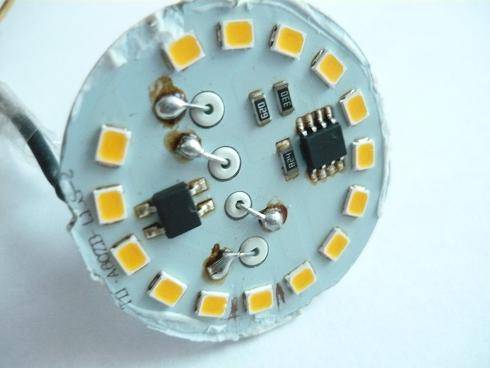
shunt resistor
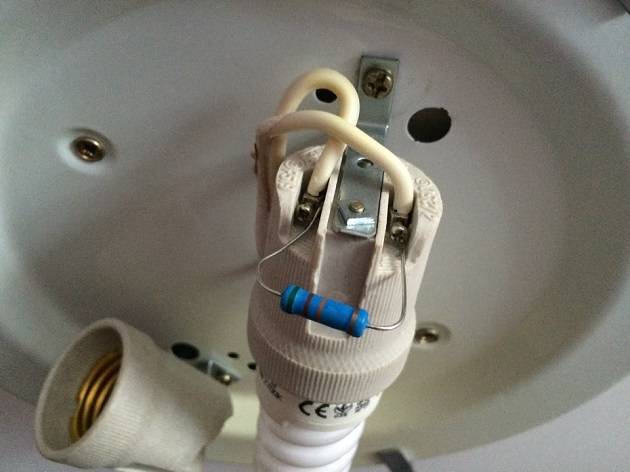
You can fight flashing by shunting the circuit with a certain resistance. To do this, take a resistor with a resistance of 1mΩ and a power of 0.5 to 2W.


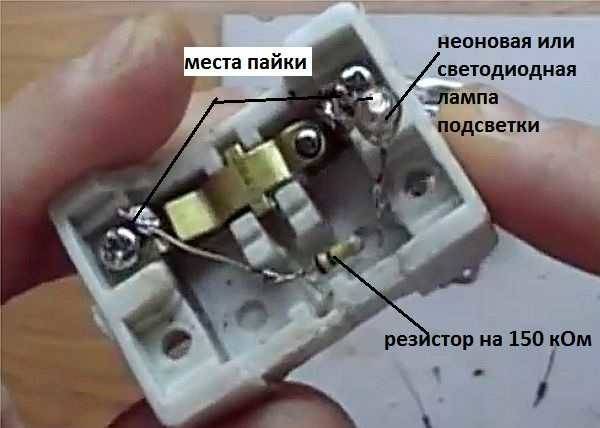



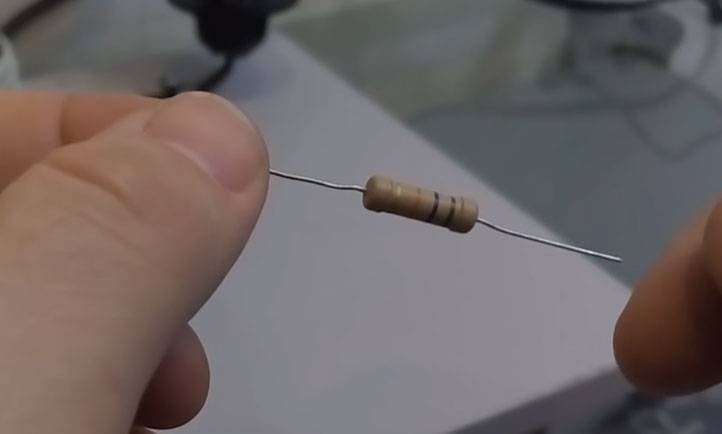

After that, your lamp will stop blinking.
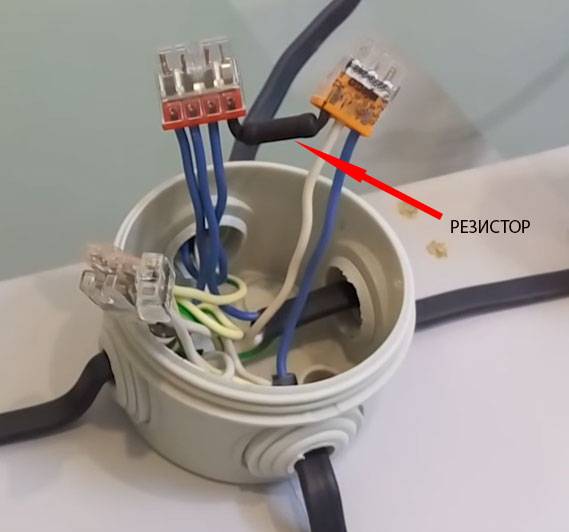
If your junction box is hidden and there is no access to it (although this is already a violation), or there is no free space in it, then the resistor can be soldered directly to the phase and neutral wire of the chandelier. Then hide the ends in the terminal block.
The method has a big disadvantage.
In addition, modern electronic meters in an apartment will take into account the energy consumption for heating resistance, and you will ultimately pay not only for lighting, but also for this “upgrade”.
Features of LED Lamp
The design of a lamp of this type is more complicated than that of an analogue with an incandescent filament. The principle of operation is based on the recombination of electrons and holes with transfer to another energy level, resulting in a glow, which is a consequence of the release of photons.
These processes are facilitated by the use of certain LED semiconductor materials.
To understand why LED lamps are on when the light is off, you need to look into its structure. The stores offer illuminators of different sizes and shapes. The internal structure is also different.
Probably, everyone noticed big differences in the price category of this product, from 100 rubles to a thousand. It is the features of the device that determine such a wide range.
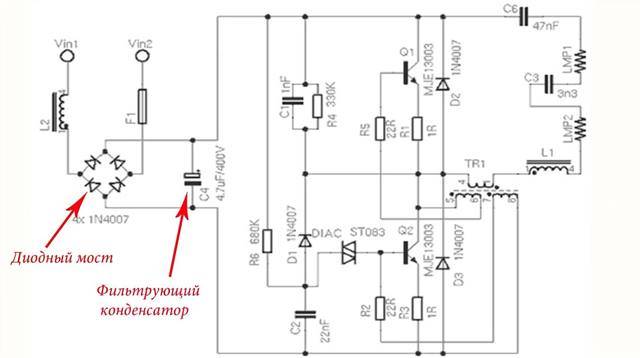
A current-limiting element is used to ensure acceptable operating conditions for the lamp. In simpler circuits, a resistor is used for this purpose.
Higher quality light sources operate on a different principle: the circuit is based on a diode bridge that rectifies the mains voltage and supplies it to the LEDs connected in series.
One of the main differences between modern lighting and conventional incandescent lighting is a constant current supply, such circuits are called rectified.
- The LED lamp has the following components:
- glass diffuser;
- a board with diodes attached to it;
- radiator;
- ballast with capacitor;
- plinth.
A capacitor that converts and stores energy is located on the driver. Then the current is fed through the circuit to the board, from it to the chips and diodes. A high quality LED lamp has a slightly different principle of operation.
The basis is a diode bridge, it supplies energy to the LEDs in series connection. Such sources will not bother with a dim glow after the switch is turned off.
Do not confuse an LED lamp with a fluorescent lamp. It is luminescent light emitters that are called energy-saving. Most often, they can be distinguished by spiral flasks. They gradually gain light when turned on, and there are no problems with glowing when the switch is off.
The effect of a burning light bulb after turning off
For those who have a slight night glow that does not cause discomfort, another question arises, but is it safe? And how does this affect energy consumption? There is no danger in smoldering light. The lamp will not burst in the middle of the night, will not crack. Burnout is possible, but it is extremely rare.
The main disadvantage of the fact that LED bulbs glow when the switch is off is the illuminator's rapid depletion. The fact is that the circuit is designed for a certain number of start-ups and burning time. Therefore, after two months of almost continuous glow, the light bulb becomes unusable.
So that in the future the problem of smoldering light does not bother, you need to choose the right lighting fixtures and switches.First of all, you should focus on well-known and trusted manufacturers.
Pay attention to the proportionality of the power and the radiator of the light emitter. If the radiator is small, and the production of light is quite powerful, then you should not take this one. Preference should be given to aluminum radiators
If the question is not fundamental, then it is better to take the switch without backlight
Preference should be given to aluminum radiators. If the question is not fundamental, then it is better to take the switch without backlight.
The main causes of the problem
Loose or oxidized contacts can cause crackling when the switch is turned on.
The crackle may resemble a hum or buzz. There are several reasons for a breakdown.
Contact oxidation
If the contacts of the device are overgrown with soot or oxidized, an electric arc occurs at the moment of their approach. The cause of sparking is complicated by the size of the soot. When processes form on the end plates, the wiring may catch fire, i.e., the contacts will close.



Insert loosening
The spring, which presses the contact at the moment of switching on, weakens - the characteristic sharp and clear click is no longer heard. The problem is indicated by the soft turning on of the device and the need to press the button for the light to appear. The danger is that the switch sparks constantly, causing fire risks.
Lamp power mismatch with contacts
A halogen lamp or high power LED source puts stress on the contacts. The easiest way to resolve the issue is to replace the switch with one that matches the lighting power.
Poor quality of contacts and plates
A breakdown characteristic of budget models.The button works on the principle of soft start, which, in combination with low-power machines, provokes sparking.
Other causes of contact failure
High humidity provokes oxidation of the switch contacts
Factors that provoke sparks and switch crackles also include:
- high humidity - activates the oxidation reaction;
- incorrect or unstable connection of cores;
- increased load on the contacts - there is a buzz;
- constant voltage fluctuations.
Broken contacts will lead to failure of household appliances.
This is interesting: Replacing halogen lamps with LED in the bathroom
Old electrical wiring
After you are convinced of the normal power supply and the serviceability of the installed lighting fixtures, you can begin to check the electrical wiring for quality and integrity. In the houses of the old stock, shrinkage and partial destruction are observed, which can violate the integrity of the electrical wiring.
As a result, temporary wear and damage to the contact connections of the supply cables in the junction boxes occurs. If during a visual inspection a weak contact was found on the twist, then it must be re-tightened.
If it is burnt, you can not do without cleaning. In the normal state of the junction boxes, you need to check the connection points of the electrical wires in the switchboard to the auto switch and the zero bar.
Malfunctions of electrical wiring are less often observed. Fragile aluminum wires tend to break when bent.During installation, the cable core may be broken, as a result of which, under the influence of an electrical load, the wiring will heat up, which can cause a fire or a short circuit. You can solve the problem by replacing the electrical cable in the faulty section of the electrical circuit.
If it is impossible to replace the electrical cable, electricians use a bolted connection at the point of rupture. Experts in the field of electricians do not recommend partial replacement of the electrical wiring by extending the wire.
This type of repair is allowed with low power lighting. In this case, connecting the socket to the lighting device is not recommended.
Malfunctions in the power supply system
If the light is flashing in an apartment or house, you must first check the quality of the power supply to the room. The source of flickering lighting can be an instability in the mains, which creates a changing value. Also, flickering can be the result of a lamp failure or other household electrical appliance that has been adversely affected by a voltage drop.
If the voltage drops are not constant, but short-term, this will not cause much harm to electrical household devices with installed protection. But it should be borne in mind that as a result of a powerful power surge, there is a possibility of emergency situations in the power grid.
Most often, the flashing of the light occurs due to a violation of the contact of the connection of the zero carrier conductor on the support of overhead lines.The lighting ripple lasts the entire period until the contact disappears, as a result of which the load asymmetry causes a phase imbalance. The skew is directly proportional to the difference in the loads of each phase, as indicated by the increased or decreased voltage of different lines.
Property owners should take into account that household appliances without installed protection against power surges and unplanned shutdowns can fail
It is important to take into account that some household electrical devices are not initially designed to work with reduced voltage, which affects the characteristics and functionality of the devices.
Illuminated switch
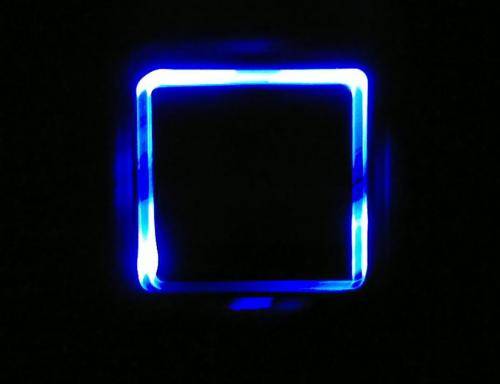
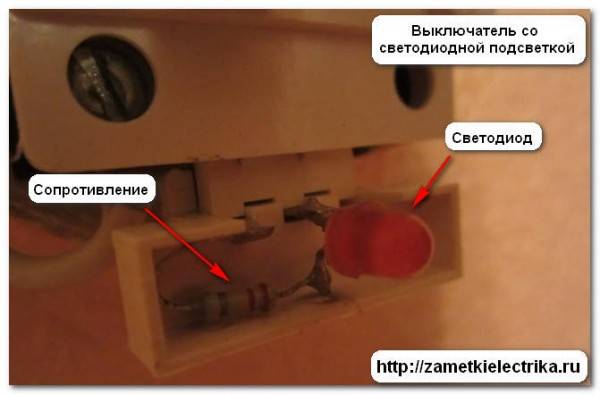
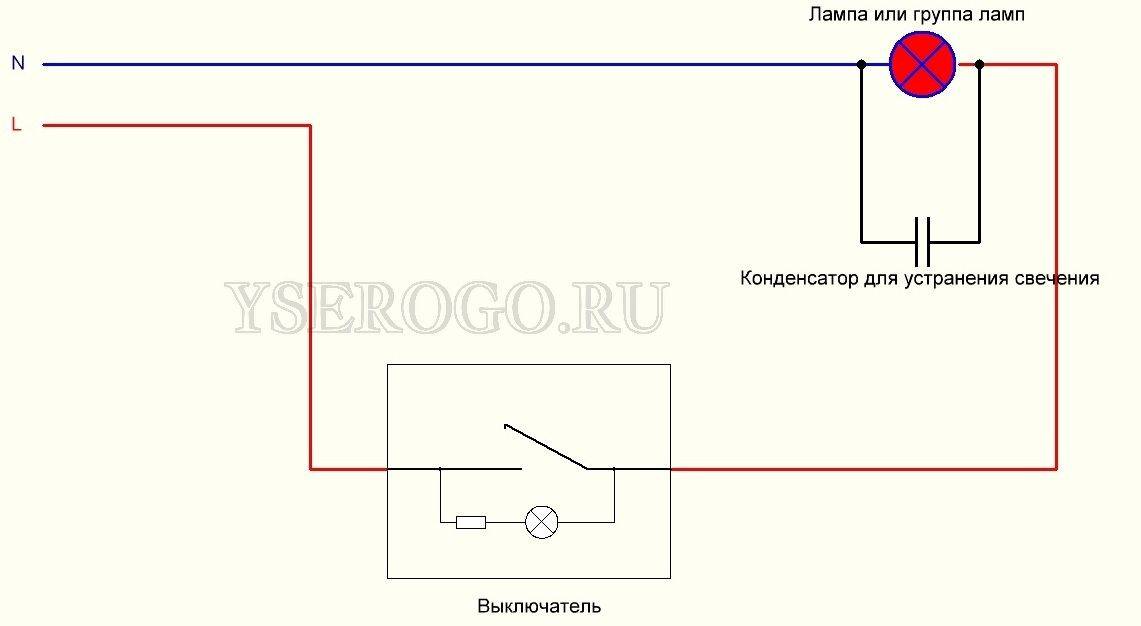
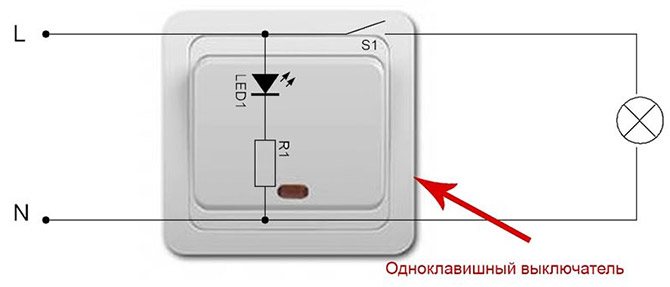
Most modern switches often have neon or LED lighting with a resistor that serves as an indicator to indicate that the switch is off at night. Of course, they help to find the switch in the dark, but in combination with this, they negatively affect the start of the light bulb with LEDs, thereby reducing its service life by 20–30%.
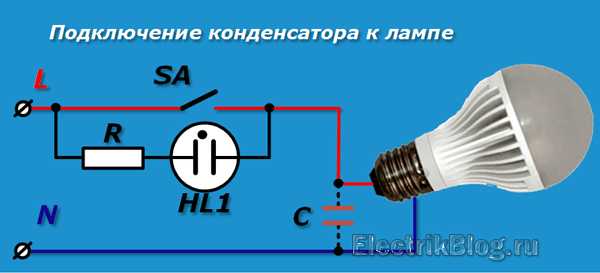
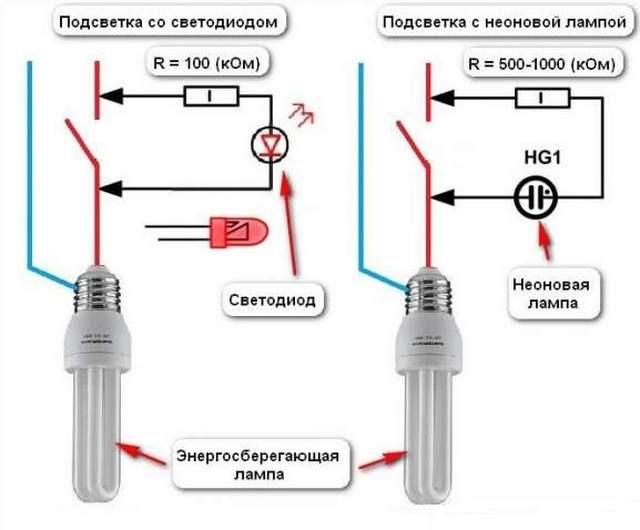
The fact is that when using a backlit switch, in fact, such an electrical circuit is obtained as shown in the figure below. Due to the fact that the LED lamp has a diode bridge with a capacitor at the input, a current will flow through the backlight circuit, gradually charging this input capacitor. Having charged enough to start the driver, the capacitor gives off the accumulated energy further to the lamp driver, starting its glow. Almost immediately, the glow stops, since the charge accumulates small, due to the insignificance of the backlight current of the switch.Then the process of charging the input capacitor is repeated again. Visually, this repeating process looks like a blink.
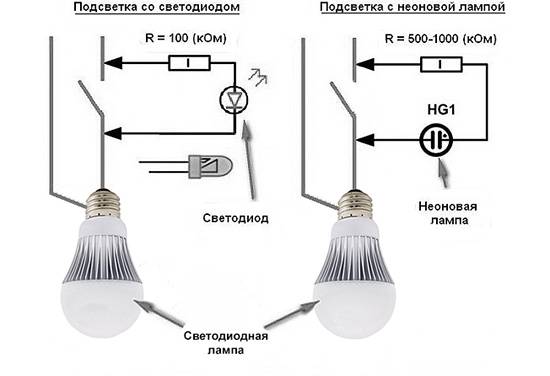
In addition to flicker, this negative factor significantly reduces the life of the bulb, since neither the electrolytic capacitor nor the driver is designed for such an operation (except when using light sources specially designed for this purpose).
How to eliminate
You can deal with the problem in 4 different ways:
- Use an anti-flicker LED lamp;
- Install additional protection on the lamp, the so-called protection device against spontaneous switching on;
- Remove (turn off) the switch LED indicator;
- Install a shunt resistance (it can be an incandescent lamp).
If the 1st and 2nd methods do not require additional comments, then the 3rd and 4th methods should be considered in more detail.
Removing the LED (neon) indicator
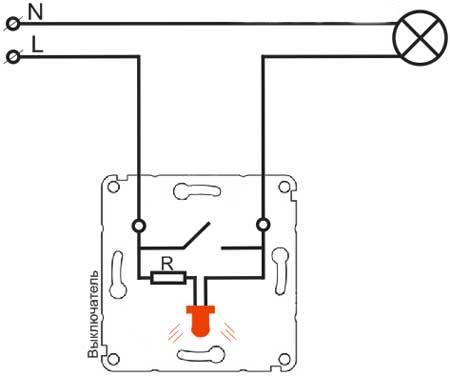
Depending on the design, in order to get rid of the blinking of LED bulbs, it is necessary:
- Turn off the circuit breaker that powers the lighting circuits;
- Check the absence of voltage;
- Get the switch mechanism;
- Remove the indicator by disconnecting its tips from the lighting circuits;
- Install it in place and check the operation of the LED lamp in the on state.
There are also situations in which the design of the switch does not allow the removal of the indicator. In such cases, the following method will help you.




Installing an additional resistance (shunt resistor)
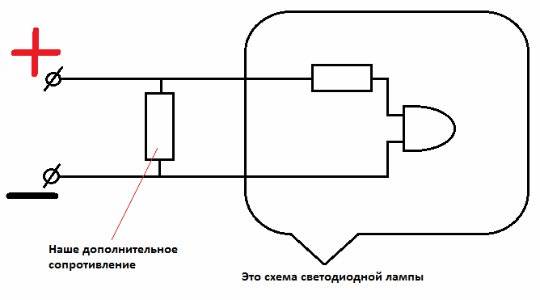
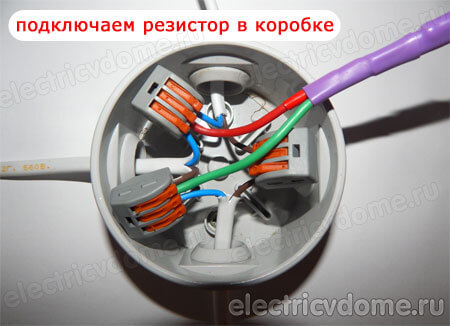
If the lamp flashes even after you have removed the indicator, then you need to solder a shunt resistor.
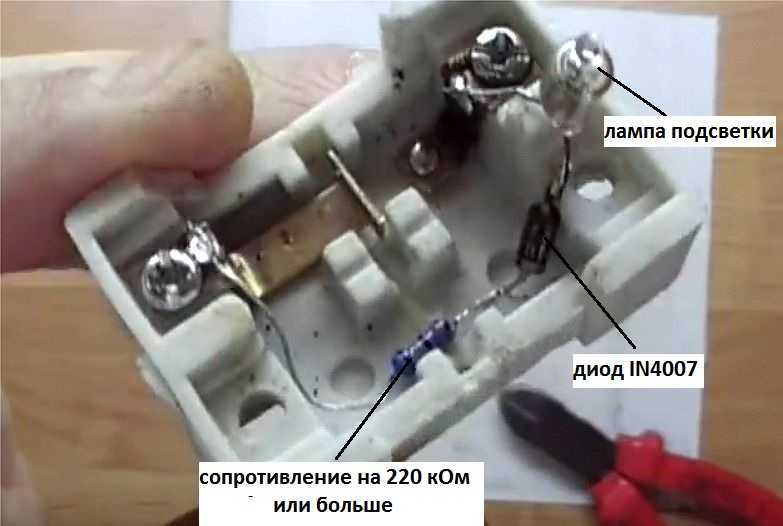
A shunt (shunt resistance) is a powerful resistor that dampens the potential difference (voltage) that occurs at the terminals of the LED lamp. When the switch is off.
In most cases, its characteristics are as follows: power - 2 W, resistance - 50 ohms.
Also, the disadvantages of this method include the release of more heat on the resistance, as a result of which, when the switch is turned off, there is a possibility of fire. To do this, the shunt must either be additionally protected with heat shrink and installed in a fire-resistant junction box or mounted parallel to the LED lamp in the lamp socket.
Using an incandescent lamp as a shunt
If the lamp blinks after turning off, then another simplest way to fix this problem is to install the most ordinary incandescent lamp in a free socket of a lamp or chandelier.
In this case, the filament of the incandescent lamp serves as a shunt, as a result of which the lamp stops flashing. For these purposes, a low-power incandescent lamp of 25-40 watts is ideal.
However, this option is quite rare, because when the lighting is turned on, such lamps consume quite a lot of electricity, which is in no way compatible with the LED lamps used.
What problems does induced voltage create?
The term induced voltage is used to define the potential of electrical energy transferred by electromagnetic conversion from live power equipment to a closed circuit.
A discharge current begins to flow in it.I drew these processes with a simplified picture, showing the electromagnetic transformation with the symbol of a transformer.
Walking on a bicycle helped me to feel what it is. In wet weather, I returned along a well-tested track. On it, the highway intersects with the existing 330 kV overhead power line.
Up to this point, I had driven many times in dry weather without any sensations, and the humidity played a cruel joke: a small but quite noticeable discharge had to be felt with my whole body.
Similarly, power wires placed in parallel or adjacent to lighting circuits can induce extra voltage to the LEDs.
Under the action of the applied potential, they will flicker. In this situation, shielding, as a special case, can save.
However, it is better to exclude interference at the design stage in advance, to prevent the close laying of high-voltage circuits, the operation of powerful loads such as welding machines and similar devices.
Features of disassembling the device and cleaning contacts
If the dimmer switch for the light line shorts when turned on, you need to disassemble and clean the contacts. Work is carried out as follows:
- Removing the adjustment knob. You will need to remove semicircular parts or slots. Hold the body with one hand, and gently pull the handle with the other.
- Removing the mounting locknut or screws. Work with a screwdriver, turning it counterclockwise.
- Removing the plastic trim and frame.
- Loosening of the internal fasteners of the dimmer mechanism.
- Removing the switch from the socket.
Contacts have the form of hemispheres. If soot is found, clean the elements to a shine with sandpaper.If the carbon deposits are not completely removed, the contacts are cleaned with a screwdriver tip.
Before fully assembling the case, it is better to see if the cores are tightly tightened.
If the LED light becomes dim
The situation when the LED lamp shines dimly often comes as a surprise to consumers. They purchased an advanced technology light source and expected it to produce a bright and powerful beam of light. We will look at the main reasons why the LED light is less bright than expected and suggest ways to change this.
The LED lamp began to shine dimly due to low voltage
The first thing to check in search of an answer to why the LED lamp is dimly lit is whether the voltage level in the network is sufficient. The lighting device is powered by AC, so when the voltage drops, even a high-quality lamp with a good shelf life does not shine at full strength.
It is easy to check this - just connect another device to the AC mains. If this LED lamp also began to shine dimly, then the reason is low voltage. This problem is typical for suburban housing. They solve it by installing a stabilizer on the light and sockets.
Natural degradation process of LEDs
Any LED lamp or LED luminaire with a built-in light module starts to shine less brightly at some point.
This is due to the degradation of LEDs - a natural process when the elements technically cannot work at full capacity.
This is verified using information on the product packaging, where the manufacturer indicates the period of probable degradation of LED components.If the period coincides with the period when the lamp began to shine dimly, it needs to be replaced.
The LED lamp is dimly lit due to incorrect power selection
This happens when replacing an old lamp in a luminaire with an LED light source, but with the wrong power selection.
Like other light sources, the LED lamp is matched to the lighting device according to the manufacturer's recommendations. If the LED lamp is dimly lit and the lamp was recently installed, you need to check the information on the device.




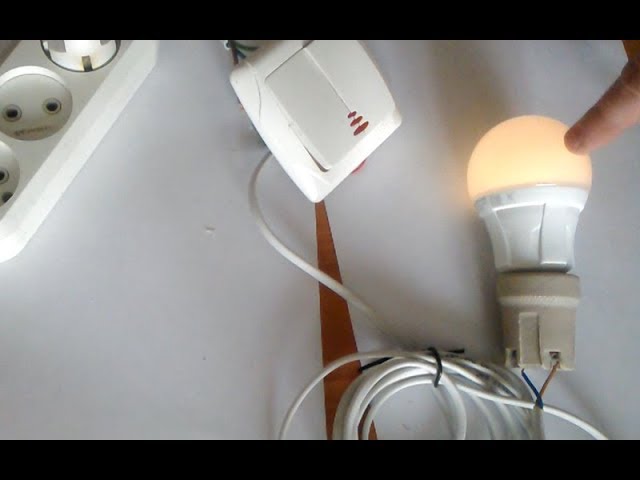


This problem is solved by replacing the LED lamp with a similar one, but with the correct characteristics.
Luminaire with incorrect assembly or low-quality components
If the mains voltage is correct, the lamp power is selected correctly, and it is too early to talk about the natural degradation of LEDs, most likely, the problem is in the quality of lighting products.
Therefore, when buying an LED lamp or light source, it is important to pay attention to products from trusted manufacturers - for example, LED lamps from Arlight. They are manufactured in accordance with international standards, certified and have a warranty period.
They are manufactured in accordance with international standards, certified and have a warranty period.
They are manufactured in accordance with international standards, certified and have a warranty period.
Independent search for the cause of the malfunction
If the energy-saving lamp used in a lamp or other product starts blinking, then you need to start fixing the problem immediately. Since each lighting device has a resource limit on the number of inclusions.
That is, each such cycle reduces the operating time, and if they are repeated often, then in just a few days the service life will be reduced by many months, or even years. In addition, as mentioned above, with faulty wiring, there may be a threat to the health of the owner of the home, his family, friends, which should not be allowed.
Troubleshooting should be performed only by a trained master, and with a special tool in compliance with all safety measures provided for by the governing documents
You should start the troubleshooting procedure with the simplest methods that do not require costs. And if they do not give a result, then move on to more complex ones.
So, first of all, you need to check the performance of the light bulb itself. Why can it be rearranged to another place, tested with neighbors, acquaintances. If the blinking continues, then you just need to replace the lighting device.
When, after installing the lamp in a new location, the malfunction does not appear, then the switch should be replaced. In order not to waste money, you can take it for testing from another place and, preferably, that it be without a backlight. When the cause is identified, you should simply buy and install a new switch.
If this does not work, then the owner of the premises should look for a problem in the wiring.
But when doing any electrical work, it is important to remember that they are all potentially dangerous. Therefore, it is necessary to comply with measures to prevent and prevent risky situations, have sufficient skills and have the appropriate tool.To find out the reason for the glow of the LEDs after turning off the power, the information in the following article will help, which analyzes all the options for the occurrence of such situations, as well as ways to eliminate and prevent them
To find out the reason for the glow of the LEDs after turning off the power, the information in the following article will help, which analyzes all the options for the occurrence of such situations, as well as ways to eliminate and prevent them.
This is interesting: How to find broken wire in a concrete wall? (video)
Flashing in the open state of the switch
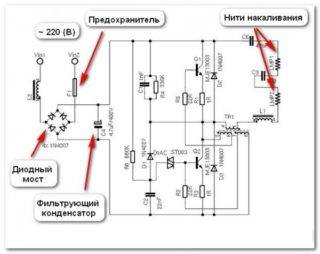 Scheme of an energy-saving lamp
The LED luminaire is equipped with electronic converters and diodes connected to its outputs. When voltage is applied to the circuit, it is converted to the desired value with further supply to the LEDs.
If the electrical circuit does not provide a transformerless power supply, impulse noise is not eliminated, and there is no galvanic connection from the lines. Without an electrolytic capacitor, it is also impossible to smooth out ripples.
Additional circuits are connected to the sensor contacts - backlights, current limits. When changing the position of the contact group of the switch or relay, the lamp is constantly energized. The normally closed state of the contacts contributes to the supply of a voltage of 220 V to the light source. In the normally open position, the current of the backlight or the spark-extinguishing circuit is supplied to it. They cause the blinking effect.
The main reasons for working in emergency mode
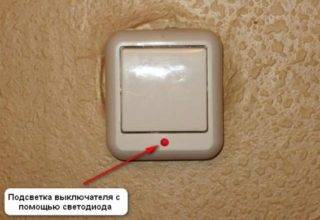 The backlight mode of the switch may cause the LED light to flash.
To power the household network, alternating current is used.In this case, the LED, equipped with a rectifier with a filter, will remain intact. When voltage builds up, flashing is observed.




The phenomenon may have another reason:
- Wrong wiring diagram. Zero goes to the switch, phase - to the lamp, zero is grounded.
- The presence of a backlight mode on the switch.
- The proximity of equipment with a strong magnetic field - a radio station, a large TV, cell towers.
- Laying wiring inside a damp wall.
- The presence of several cables in the strobe.
Flickering due to switch backlight
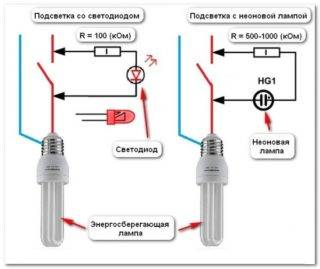 Wiring diagram for LED and neon lights
The backlight of the ceiling lamp, combined with the brightness indicator, provokes flashes of the diode power. To understand the reason, you need to understand the design of the device.
The backlight has resistors and diodes, so there is no break in contacts when turned off. The resistor passes a small amount of current, accumulates it in the capacitor. After overflow, residual currents enter the lighting fixture. The amount of current is not enough to turn on, so the lamp blinks periodically.
Flashing due to mains voltage
A common cause of a malfunction is low voltage settings. The voltage of 220 V is not enough for a high-quality glow source with a built-in driver. The phenomenon is typical for lamps connected via a dimmer. Without support for this parameter, the dimmer will not work at full power, flickering will appear. The problem can be solved by adjusting the rating or installing a stabilizer.
Only lamps rated at 180-250 V will work without blinking.
Presence of current leakage
The rectifier at the driver input is implemented as a diode bridge with a filtering capacitor.During operation, it remains current for charging. After a sufficient amount has accumulated, the excess begins to spread, causing outbreaks. Leakage also occurs through poor-quality insulation of conductors directed to the switch. The flow of a small current leads to flickering, melting of the wiring, emergency situations.
Problem created by wiring
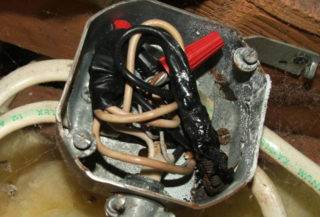 Bad wiring is one of the reasons for the light bulb to flash when the switch is off.
When the LED lamp flashes in the off state, the problem may be in the quality of the wiring diagram. When arranging the lighting line, the phase from the box is fed to the switch, zero - to the lamp. In a confused position, the capacitor is continuously charged and the off LED blinks.
If the scheme is followed, a flashing lamp indicates the induced voltage. There may be other cables along with the lighting fixture wires. To get rid of the phenomenon, you need to completely change the wiring.
If the house is located in a damp area, an RCD is installed to protect against flicker.
Bad socket
In this case, it is necessary first of all to check the serviceability of the lighting device used by connecting it to a working outlet. If the lamp stops blinking, then the original socket is faulty. If the result is negative, it is necessary to check the disconnecting equipment of the lamp. The audit is carried out according to the following principle:
The voltage on the line is removed in order to carry out repair work.
Tightening screws are allowed to hold the wires in the junction box.
A visual inspection is carried out, paying particular attention to the condition of the electrical wires.
If no signs of blinking light are detected, the tightening bolts are tightened to ensure reliable contact.
In case of unsatisfactory and unstable operation of the socket, it must be removed or replaced with a new one.
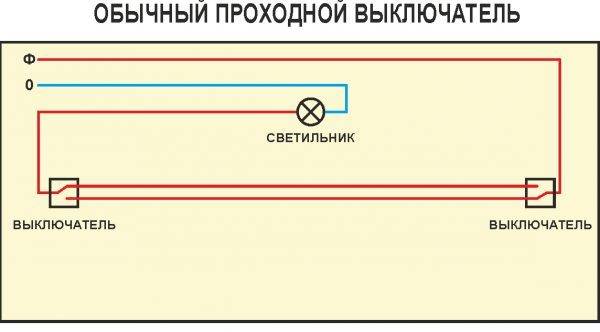
Through switch
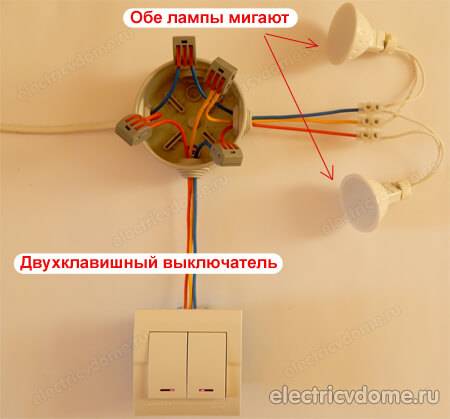
You can also use the pass-through switch instead of the usual one. In this case, the light will be on in one position, and the backlight in the second. The light bulb will also not blink.
And already no tips will make her light up. True, here you also need to start a neutral conductor on the switch. But this method allows you to get rid of flashing, even when the backlight is not the cause! (this is discussed below).
If you are not very bothered by the additional costs associated with buying a pass-through switch, and you do not want to get into the jungle with the choice of suitable resistors and capacitors, then this method is the most optimal.



