
- How to remove stains on the ceiling with a chemical method
- Repair of plastered walls
- Removing yellow stains after flooding
- We eliminate yellowness
- Painting or whitewashing
- Chemical processing
- mechanical cleaning
- Overhaul
- Should know
- Choice of funds: folk recipes for removing stains after flooding
- Lime, paint, bleach
- grass
- Whitening paste
- Primer, putty, plaster
- Mechanical ceiling cleaning
- 5 miracle ways to get rid of yellowness
- Method number 1
- №2
- №3
- №4
- №5
- How to remove yellow spots after flooding
- Ways to remove stains from a regular ceiling
- Cleaning stretch and suspended ceilings
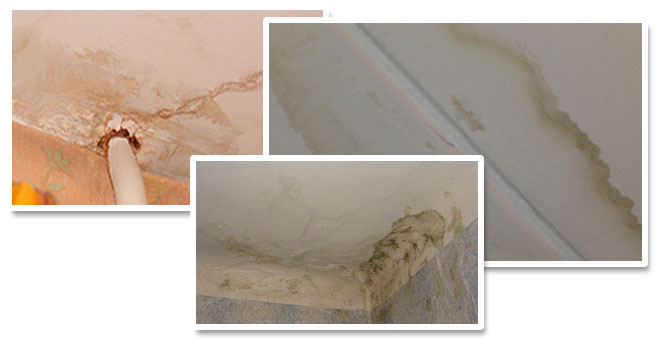
How to remove stains on the ceiling with a chemical method
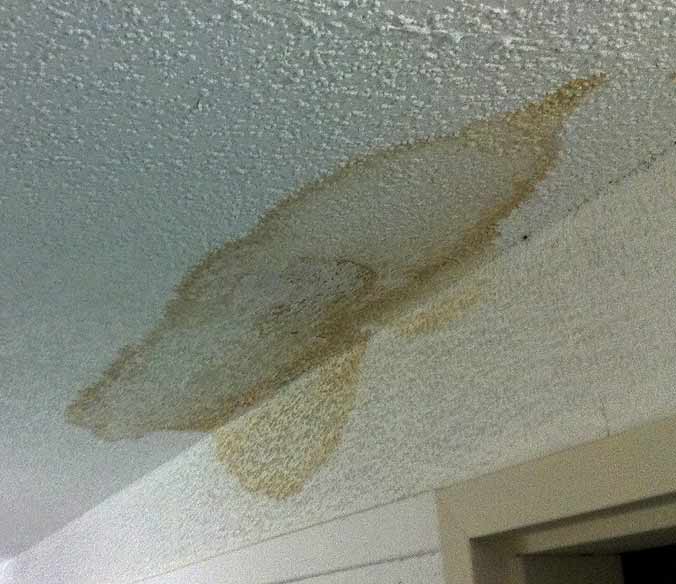
If there is high-quality waterproofing of the floor in the apartment from above and if the flooding was eliminated as soon as possible, then it will be easier to solve the problem with damage to the ceiling. The thing is that under these conditions the risk of damage to the finish is not so high. That is why there is a possibility that from the damage there will be only red spots on the ceiling and characteristic stains.
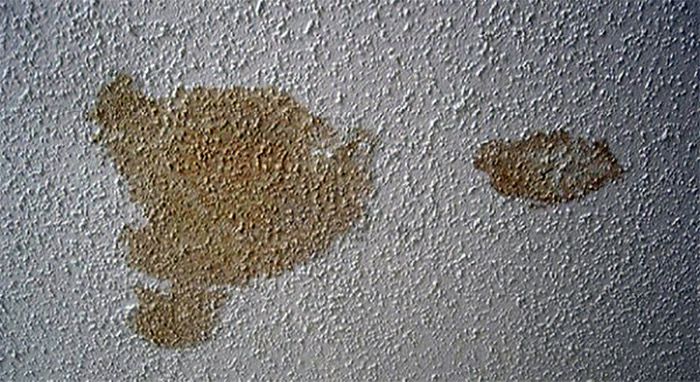
You need to understand that washing the ceiling from stains is not one operation, but a whole range of activities.The problem is that the characteristic yellow spots that appear on the ceiling after flooding are not uniform damage, so it will not work to find a universal solution to this problem. When deciding how to fix a leak on the ceiling, it should be borne in mind that the mechanical repair method is more effective, but with the help of chemistry, you can achieve the right result.
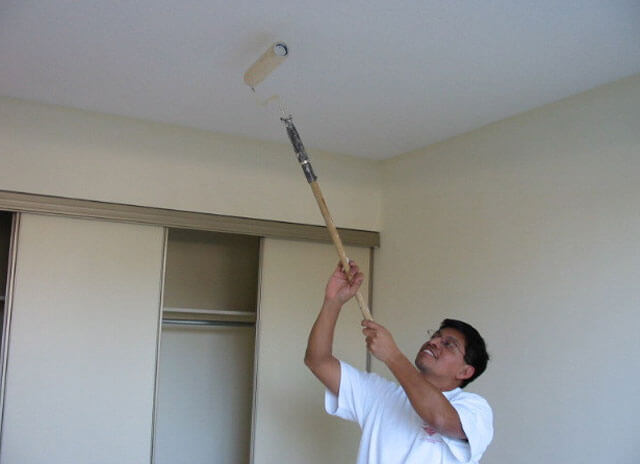
The technology for removing stains on the ceiling by a chemical method consists of the following steps:
- Before you clean the leaks on the ceiling, you need to remove a layer of paint from the surface of the ceiling. Since the ceiling is already wet, this operation will require minimal effort. It is not worth hoping that the wet paint is not damaged - its structure is guaranteed to be destroyed when exposed to water, and in the future the coating will simply peel off, so it will be much more reliable to completely renew it.
- The dried ceiling must be degreased in order to remove various oils from the surface that have fallen into the ceiling along with water. For this operation, you can use any suitable composition - for example, a nitro solvent. Degreasing will make it possible to remove contamination on all layers of the structure, and not just on its surface. A clean rag cut is quite suitable as a tool for applying the solvent.
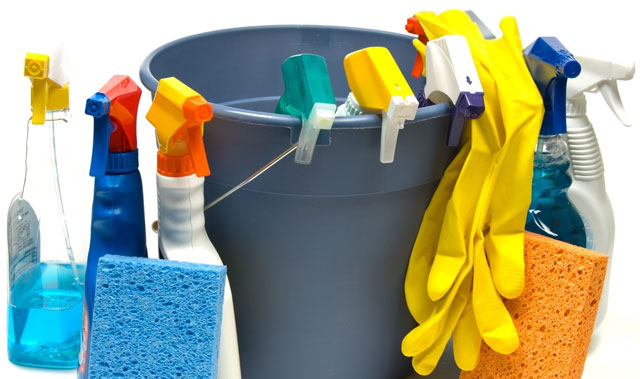
- Further, the prepared ceiling must be rid of coloring pigments, due to which smudges appear on the ceiling. Any household chemicals intended for cleaning will do. The main condition is that the composition of the substance must contain chlorine. Since chemistry discolors any colors, care must be taken before work that the floor is not damaged due to the product dripping down. The ceiling is cleaned with a sponge.It is not worth keeping a sponge soaked in bleach in one area for too long - as a result, putty may begin to crumble, and the ceiling finish will have to be updated.
- At some point in the work, the stain will stop losing color. As soon as this happens, you will need to stop the operation and leave the ceiling in a soaked state for about an hour - thanks to this, the chlorine will finish interacting with the stain. This is an important point to consider before whitening the yellow spots on the ceiling.
- After an hour, the ceiling can be washed further, but this time you need to use ordinary detergents - for example, laundry soap or washing powder. This operation allows you to solve two problems at once - firstly, to remove all ordinary pollution from the ceiling, and secondly, to wash the chlorine remaining on the ceiling.
- The last stage of work is washing the ceiling with clean water. As a tool, you can use a sponge or a piece of foam rubber. At this stage, it is necessary to completely remove all detergent residues from the ceiling surface.
Of course, the result of cleaning the ceiling will not be immediately noticeable. It will take a couple of days for the structure to dry completely. In addition, the likelihood of complete removal of yellow spots using a chemical method is minimal, at least in one step. However, if you mask the damaged area with paint of the right color, then you can postpone more radical methods until the next full repair. That is why it is necessary, before painting over a leak on the ceiling, to choose the right paint - even a temporary solution must be of sufficient quality.
Repair of plastered walls
This type is found most often in apartments and houses.Repair of the ceiling after flooding most often has to be done by residents of the upper floors, private houses with an unreliable roof and those who are flooded by neighbors. Let the room dry thoroughly before repairing. Therefore, you will have to endure the presence of stains and stains on the walls for some time. To make the room dry faster, you can additionally warm it up or dry the drips with a building hair dryer. But first you need to remove the exfoliated putty and paint. It is no longer recoverable.
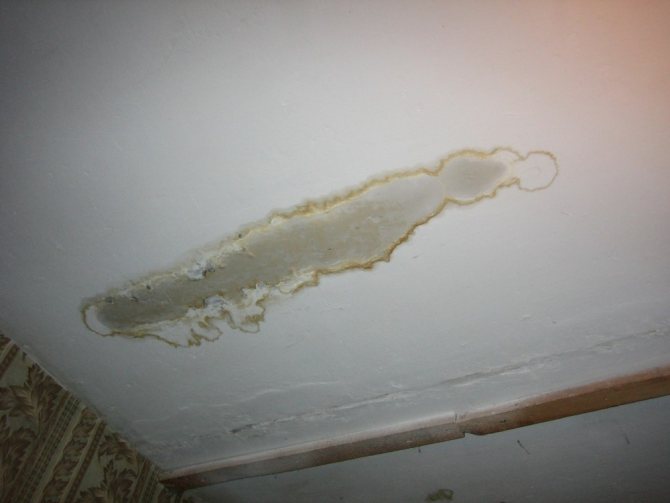
Tip: you need to clean the wall from wet putty with rubber gloves with a special spatula with an insulated handle, since wet material can conduct electricity. But it is best to de-energize the room before cleaning, and carry out work with a flashlight.
When the preparatory work is completed, and the surface is completely dry, proceed to repair. The cleaned surface is primed and allowed to dry. After applying a layer of putty. When it has dried, it is treated with a special grater or sandpaper. You need to wipe not only the freshly putty place, but also the border of the untouched ceiling. The appeared dust is removed with a vacuum cleaner and a rag. Carry out another priming and puttying of the surface. When you managed to level the treated area with the main ceiling, you can start painting. So that the treated area does not differ in color, it is pre-stained. Then paint the entire ceiling.
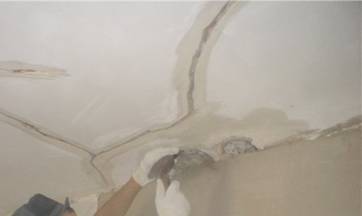
Note: the described process is quite laborious, but if you just paint over the flooded area, it will collapse over time.
Removing yellow stains after flooding
The first thing to do if you are flooded is to turn off the electricity in the shield. You don't know how far the water is from the wiring.After that, proceed to the removal of yellowness.
The first method that can be used is the mechanical removal of stains. This option does not require the use of chemicals and is completely safe. You will have to clean off the paint, putty, remove wet plaster with a spatula. All damaged surfaces should be thoroughly cleaned.
After cleaning, you need to wait a bit until the ceiling dries completely. After that, a primer is applied and the ceiling is covered with a finishing putty. All defects on the putty are polished with sandpaper. It remains only to repaint the dried ceiling.
If you plan to whitewash the ceiling, it is best to apply two coats of whitewash after the flood. You can just whiten the yellow spot in two layers, but only if it is small.

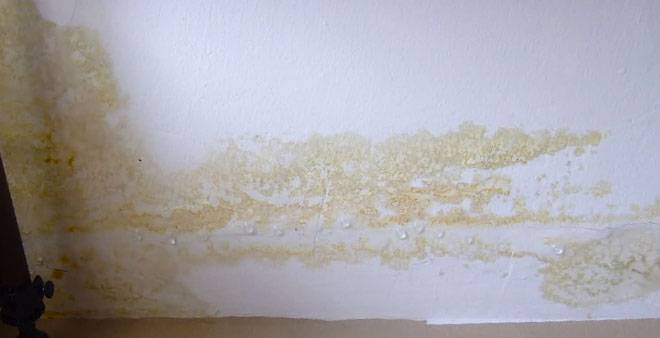

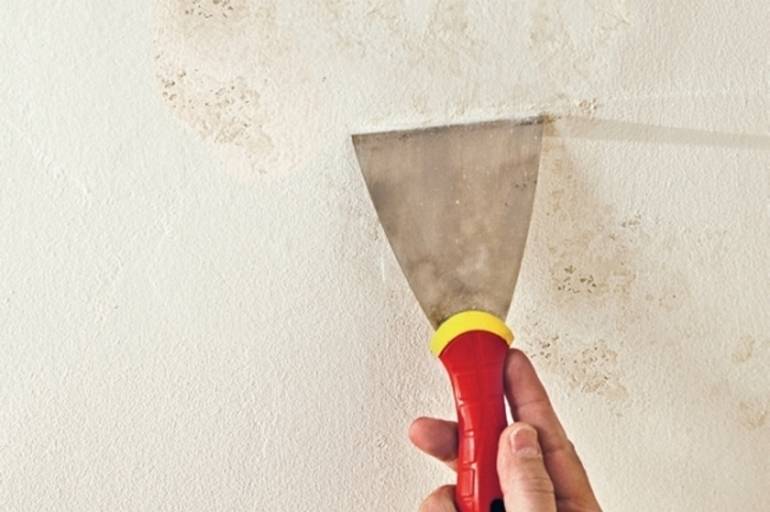
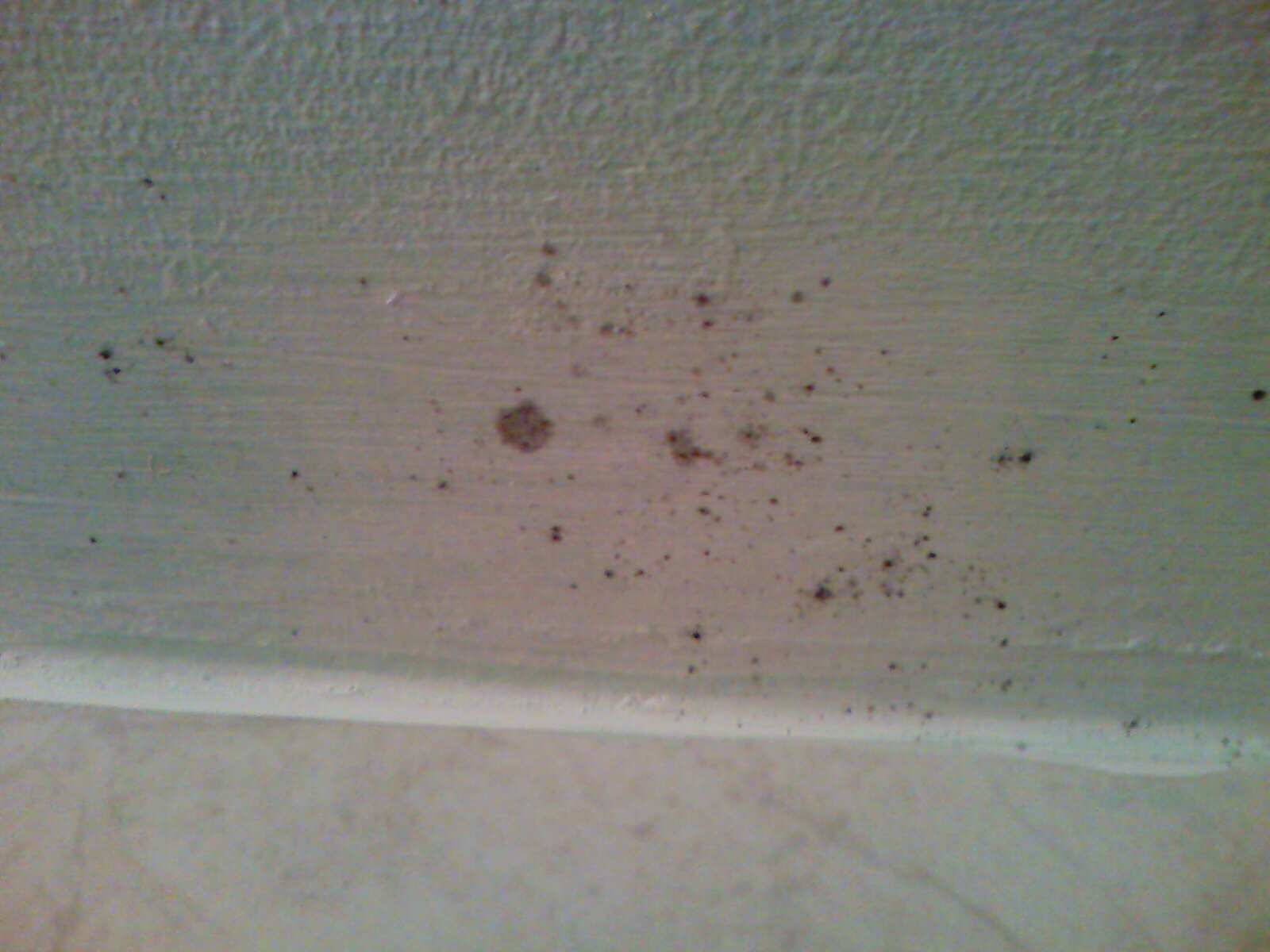

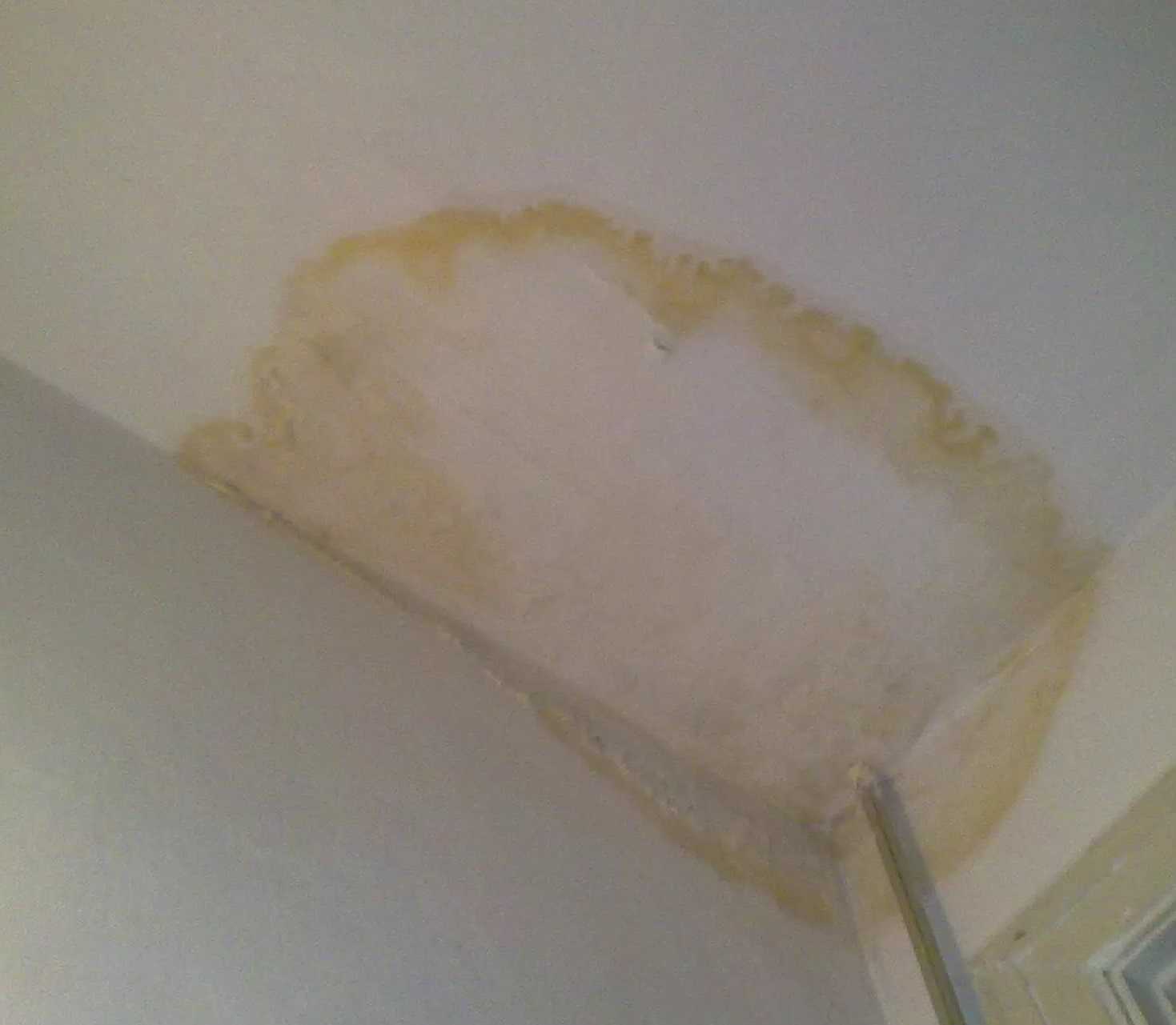
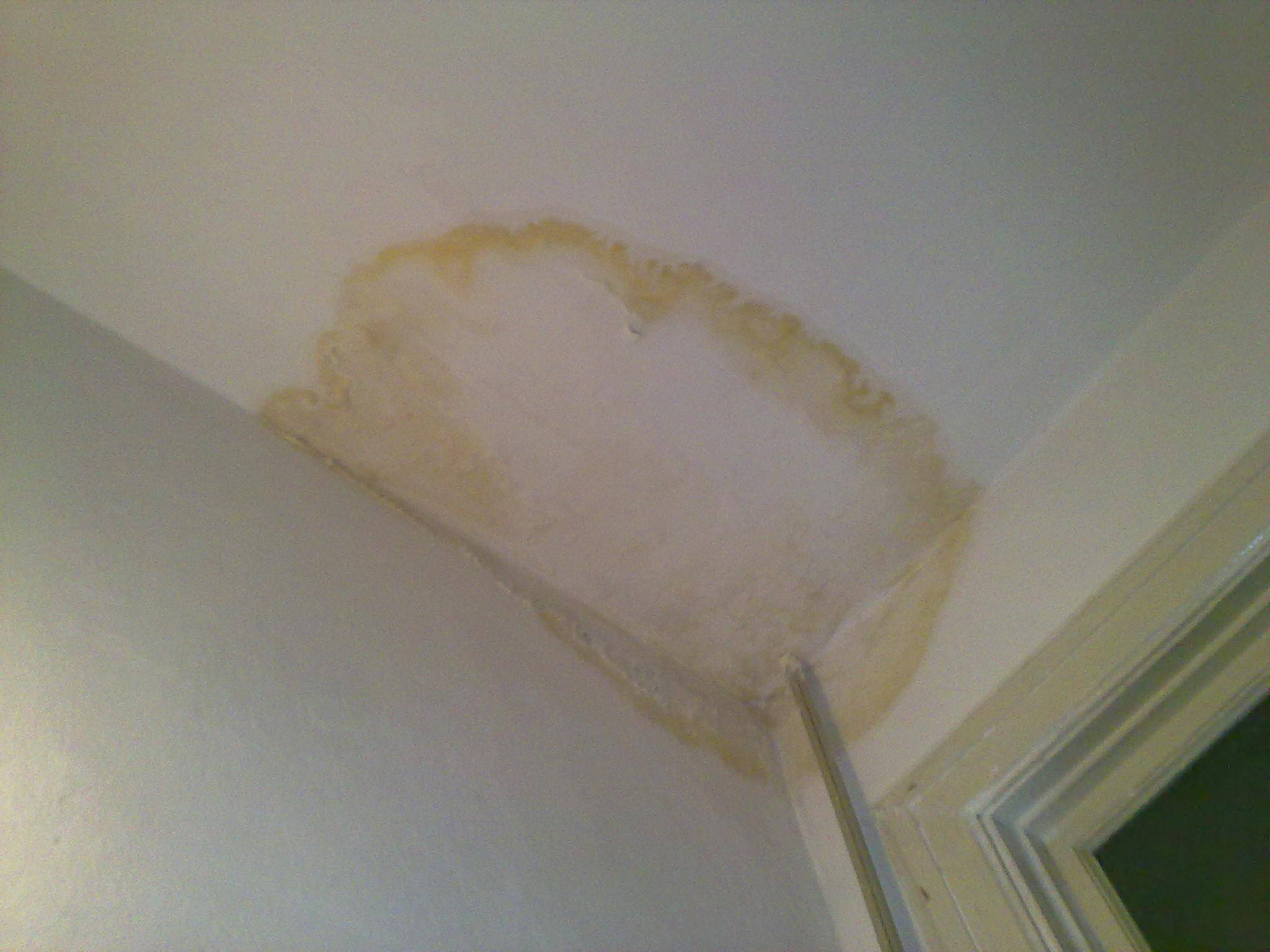
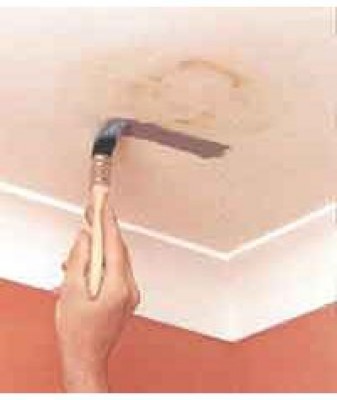
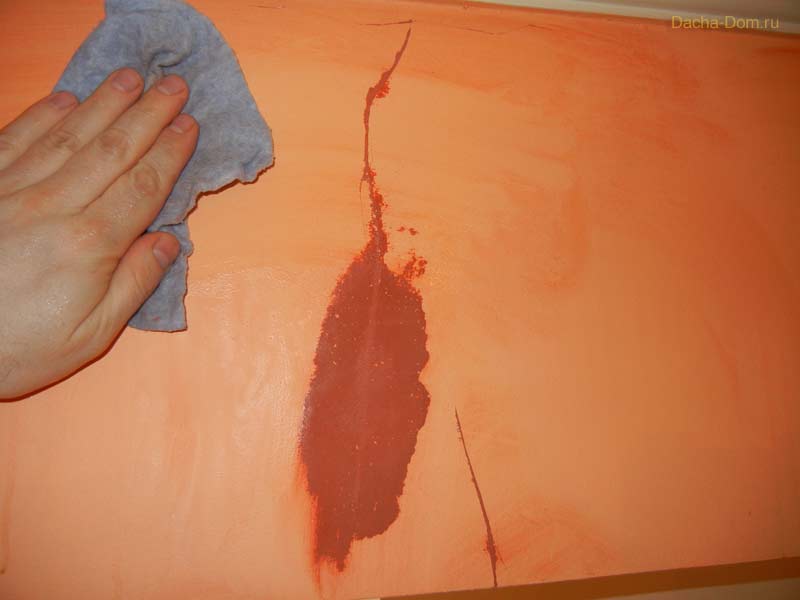
You can remove yellow stains with bleach. You can use whiteness or any other product that contains chlorine. Many even use the duckling toilet product.
In order to remove yellow stains with bleach, you must:
- Clean the surface of damaged finishing materials with a spatula.
- Pour whiteness into a container, prepare sponges.
- With a sponge soaked in bleach, you should carefully wipe off the yellowness, moving from the edges of the stain to its center.
- When the sponge turns red, it needs to be washed or changed.
- When the ceiling dries after processing, you can begin finishing work.
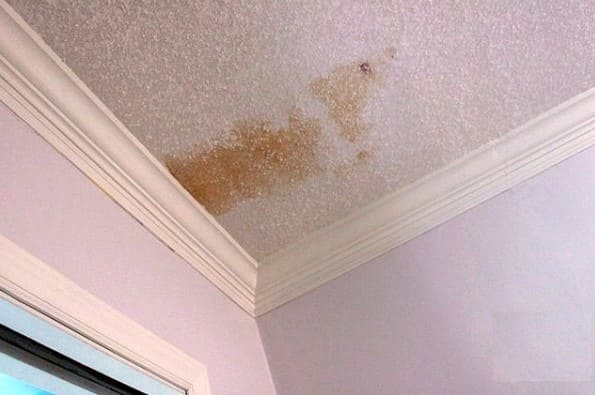
We eliminate yellowness
Before proceeding with the elimination of traces of the flood on the ceiling, it is necessary first of all to assess the extent of the disaster. The choice of future works depends on this.
To restore small areas, it is enough to clean and whitewash them.If the flood destroyed most of the ceiling, then, most likely, a major overhaul is indispensable.
Painting or whitewashing
The easiest way to eliminate flood marks on the ceiling is to paint over or whitewash the yellow streaks.
In order for a new layer of paint to lie flat, certain rules must be observed:
- Surface preparation. To do this, carefully peel off the old layer of decorative coating.
In order for the whitewash not to crumble, but to be removed in a whole layer, the spots of smudges are treated with an adhesive composition of brewed flour (3 tablespoons of flour must be taken for 6 liters).
- Ceiling primer. This simple rule provides the best adhesion of fresh whitewash to the worm surface.
- We apply water-based paint or lime composition. It is better to choose a new paint that is thick and dense in consistency so that yellow streaks do not appear on the freshly painted surface of the ceiling.
The staining method is effective in case the flood area is small, the plaster layer is not destroyed by water.
Chemical processing
Slight traces of the flood on the ceiling can be removed using a treatment with chlorine-containing products.
How it's done:
- The place of the flood is carefully cleaned with a wide metal spatula.
- Whiteness (as an option, you can use bleach, toilet bowl cleaner) is poured into a glass container.
- Protecting hands with rubber gloves, moisten a soft sponge in a chlorine-containing agent, after which it is applied to the yellow spot. Thus, gently blotting, the entire surface of the yellow stains is processed. After the Whiteness dries, the yellow spot will begin to lighten. Processing is carried out several times, until the traces of the flood are completely eliminated.
- The entire surface of the ceiling is covered with a fresh layer of whitewash or paint.
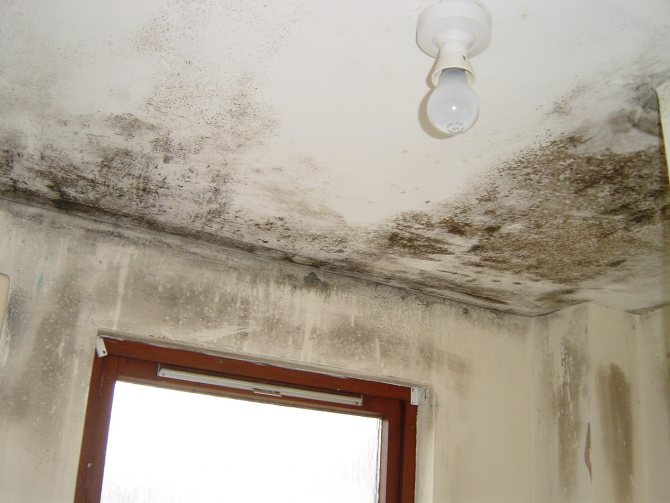
Work with bleach or Whiteness can only be carried out in a well-ventilated area, with open windows. Otherwise, the risks of poisoning with poisonous chlorine fumes are high.
mechanical cleaning
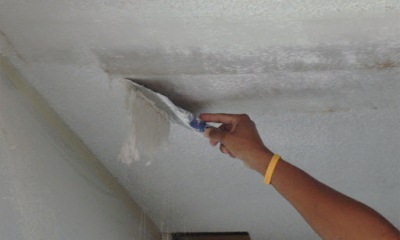 The most common way to eliminate yellow flood stains on the ceiling is mechanical cleaning:
- the traces of the flood are carefully cleaned with a metal spatula;
- if necessary, the cleaned surface is covered with a thin layer of finishing putty;
- the prepared ceiling is primed and covered with a layer of paint or whitewash.
Before applying the paint, the primer layer must dry well. Otherwise, there are high risks of delamination of materials applied to the ceiling.
Overhaul
In the case when water has destroyed not only the upper decorative layer, but also touched a deeper layer of plaster, it will be possible to restore the original appearance of the ceiling only by a major overhaul.
The final result of the work directly depends on the observance of a clear sequence of actions:
- Remove old paint and a layer of damp plaster from a wet surface with a spatula. It is convenient to carry out preparatory work using a wide spatula. If during the stripping process the bare reinforcement was opened, it is also cleaned, covered with two layers of paint.
- After waiting for some time (the cleaned surface must dry), the draft ceiling is treated with a deep penetration primer. This will help degrease the surface and prepare them for the subsequent application of a new finish.
- A finishing putty is applied to the prepared surface, the layer is leveled and left until the material has completely set with the surface.
- The dried layer of plaster is cleaned with sandpaper and coated with a primer.
- Using a roller or brush, the ceiling is covered with whitewash or paint.
In order to avoid color differences between the new and old whitewash, the ceiling is painted in two layers.
Should know
When spots appear on the ceiling, the most important thing is find their cause
. Because if you think that your neighbor is heating you, but in fact the leak is caused by a burst of pipes in the interfloor ceiling, no cleaning and finishing work will help you until the representatives of the housing office repair the pipes.
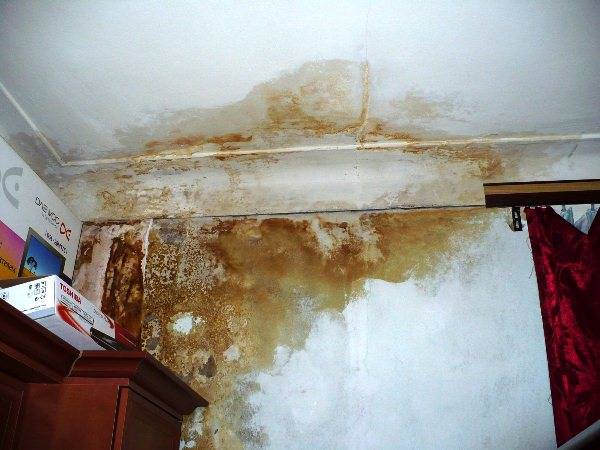
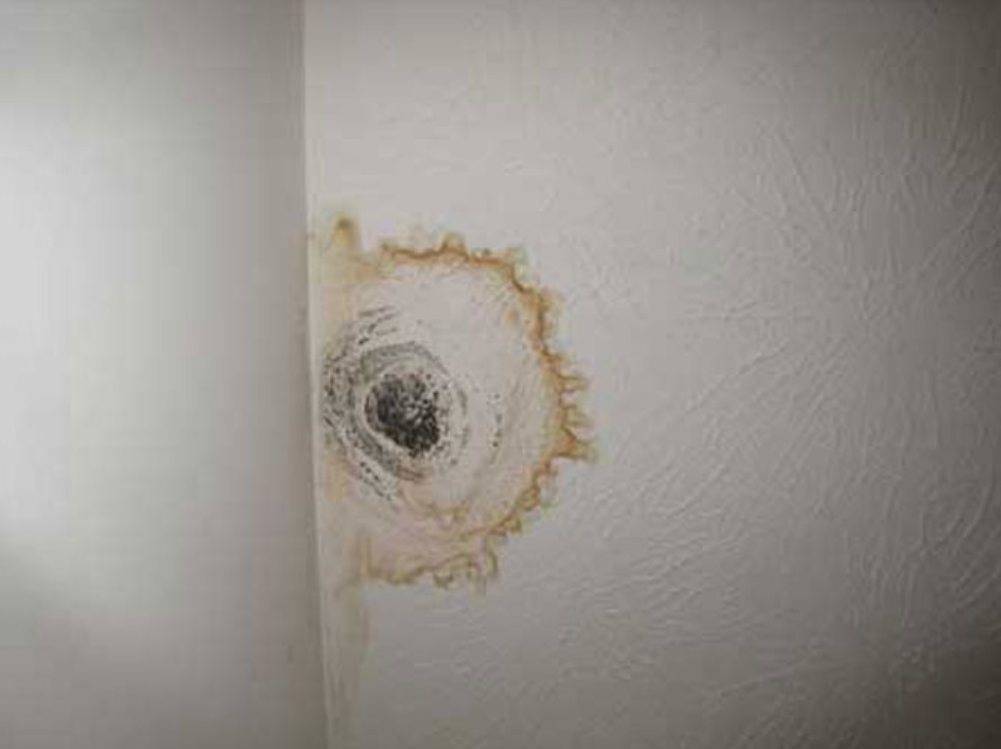

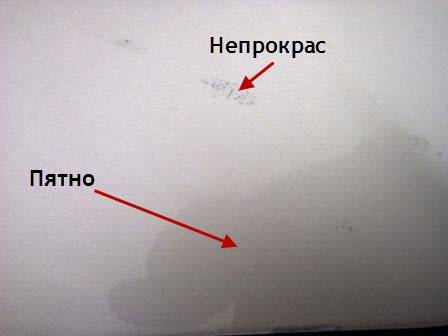


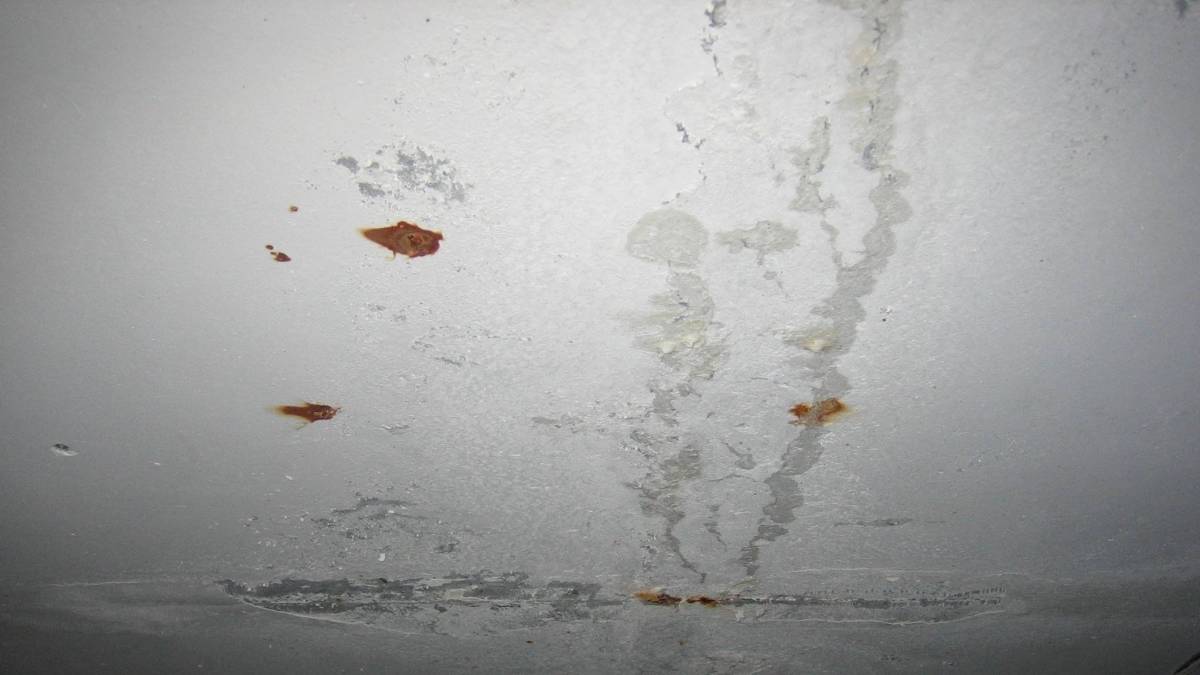
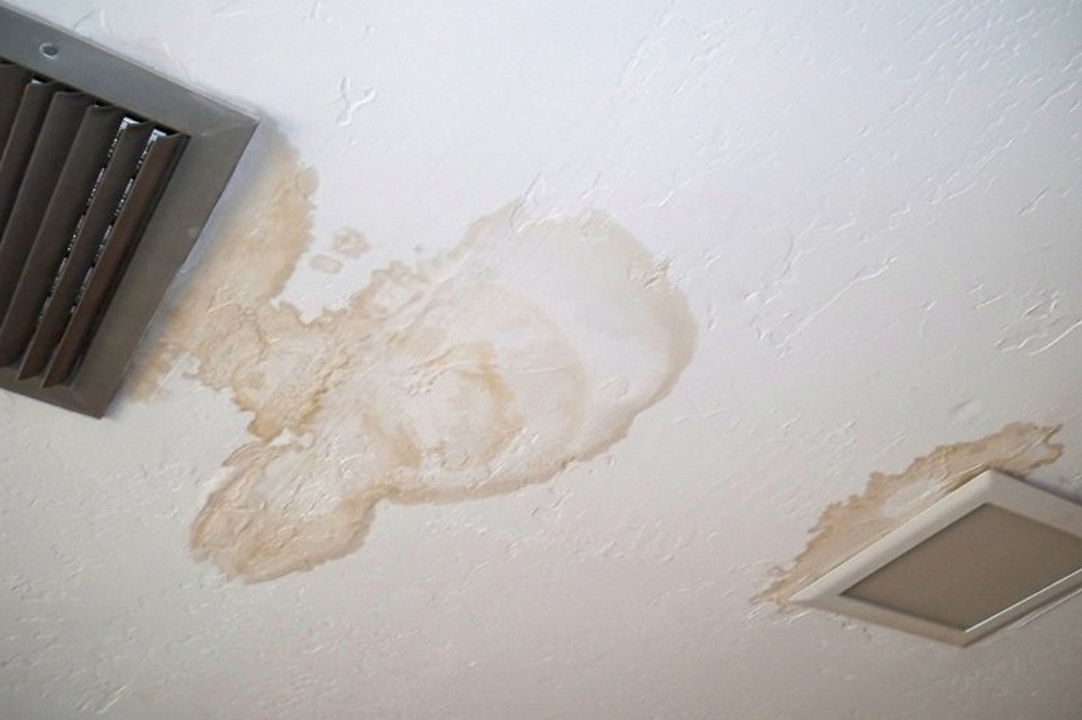

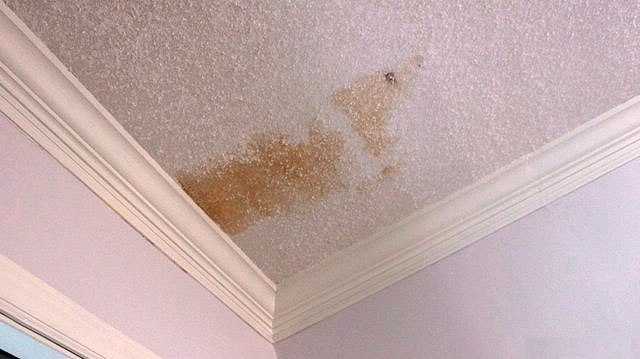
The most sophisticated interior of the room loses its appearance when yellow spots appear on the light background of the ceiling. Usually their appearance is associated with water leakage through the ceiling as a result of some kind of accident. Neighbors sometimes heat in apartment buildings, and in private roofing, over time, it loses its tightness. Since most people are not interested in causes, but in eliminating the consequences, it is worth considering in detail how to get rid of yellow spots. on the ceiling of the room.
Choice of funds: folk recipes for removing stains after flooding
In order to qualitatively remove yellow spots on the ceiling after flooding, one should assess the complexity of the smudge in terms of color, size and intensity of damage to the ceiling.
Lime, paint, bleach
If the speck is small, you can get rid of it in low-cost, not time-consuming ways:
- applying a new layer of water-based, latex paint or whitewash;
- bleaching stains with chlorine-containing compounds;
- using hydrogen peroxide.
If there is no fungal infection left during the flow of the ceiling or roof, the surface can be washed with water, sanded and applied with the coating you like. Lime or paint is recommended to choose a thick and dense structure, so as not to paint several times.
Liquid and gel products, such as Belizna, Domestos, Comet, ACE stain removers, BOS also have a disinfecting effect. Due to their high toxicity, it is necessary to work with them only in protective equipment: rubber gloves and a bandage.
Peroxide can be used to remove stains. Tablets should be dissolved in water or purchased ready-made solution in the pharmacy network.
grass
Instead of chlorine-based toxic chemicals, you can use DIY solutions. One of them is vitriol primer, which is popularly called grass.
The recipe is this:
- Dilute 250 g of vitriol in 1 liter of water.
- In a separate container, dissolve bone meal at the rate of 250 g per liter of water.
- Add 40 g of drying oil and 250 g of laundry soap shavings to the adhesive solution.
- Carefully combine both compositions.
Whitening paste
Acidic substances well remove any pollution, including yellowness on the ceiling. Here's what to do:
- Mix 1 part concentrated citric acid with 2 parts crushed chalk.
- Add glycerin and water until a thin slurry is formed.
- Apply the mixture to the dirty spot on the ceiling and soak for an hour.
- Wash off with clean cold water.
Primer, putty, plaster
If the bay area is large, it is not advisable to remove it with bleaches and paint over it. In this case, you need to remove the plaster from the place of the flood up to the concrete wall or drywall. The next step is to apply a primer and let dry.Then putty the ceiling.
Rub the dried surface, leveling the irregularities with fine sandpaper. Next, cover with water-based or other selected paint, whitewash or stick decorative tiles.
Mechanical ceiling cleaning
This method works well for typical whitewashed concrete ceilings.
IMPORTANT! If the sections of the walls where the electrical wires pass get wet, be sure to turn off the electricity for the duration of the work.
- First of all, it is necessary to completely clean all the damage with a spatula. Even where the spots are not visible, but the plaster partially peels off from getting wet, do a high-quality cleaning, right up to the concrete floor itself.
- Next, you need to go over the places of stripping with a damp sponge. When the ceiling dries, treat the problem areas with a deep penetration primer.
Tip: sometimes it happens that when removing a layer of plaster, steel reinforcement may be exposed on a concrete ceiling. In this case, it is necessary to use a hammer to remove parts of the concrete with traces of rust and those that have lost adhesion to the reinforcement. Next, you need to clean the metal itself with coarse sandpaper or a steel brush and additionally paint it with at least two layers of paint, preferably with a rust converter. All subsequent work is carried out after the final drying of the paint.

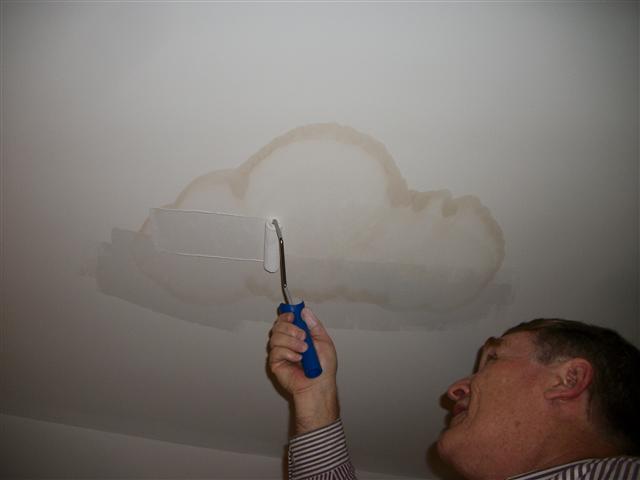

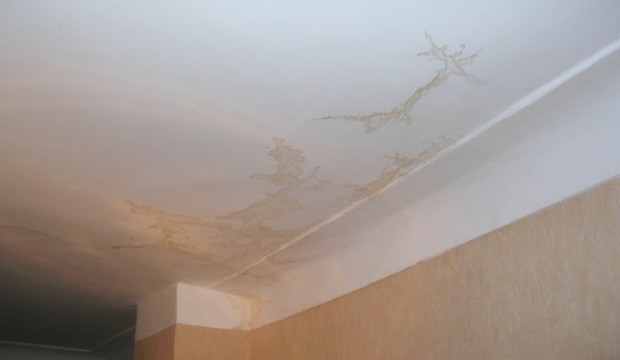

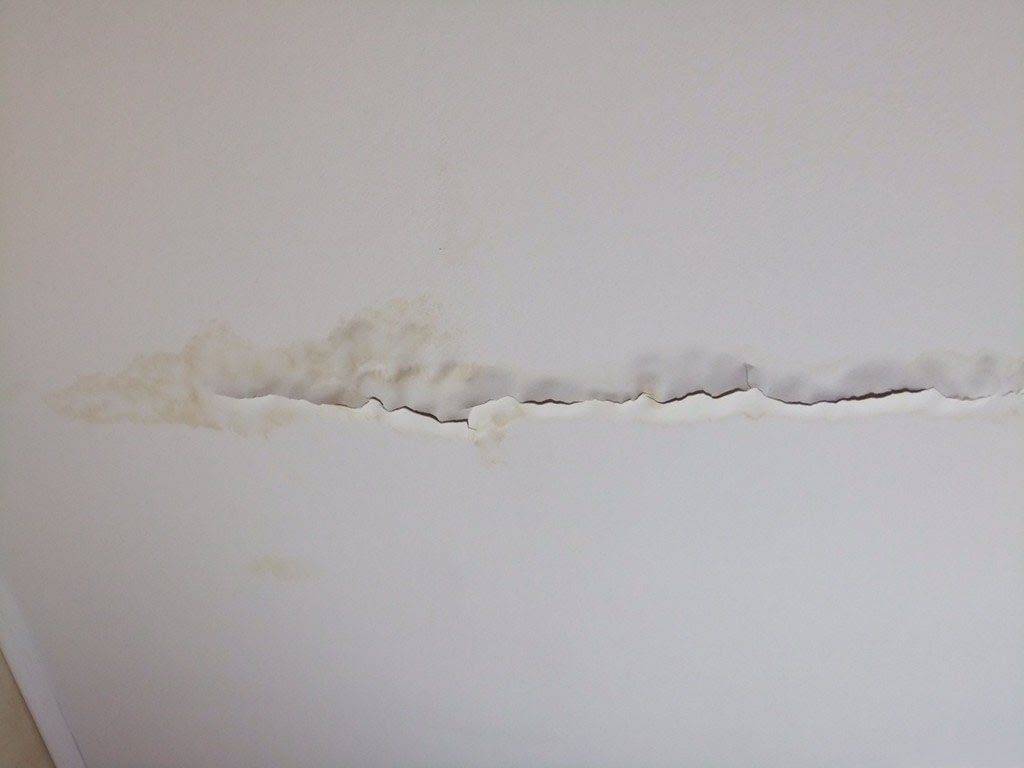

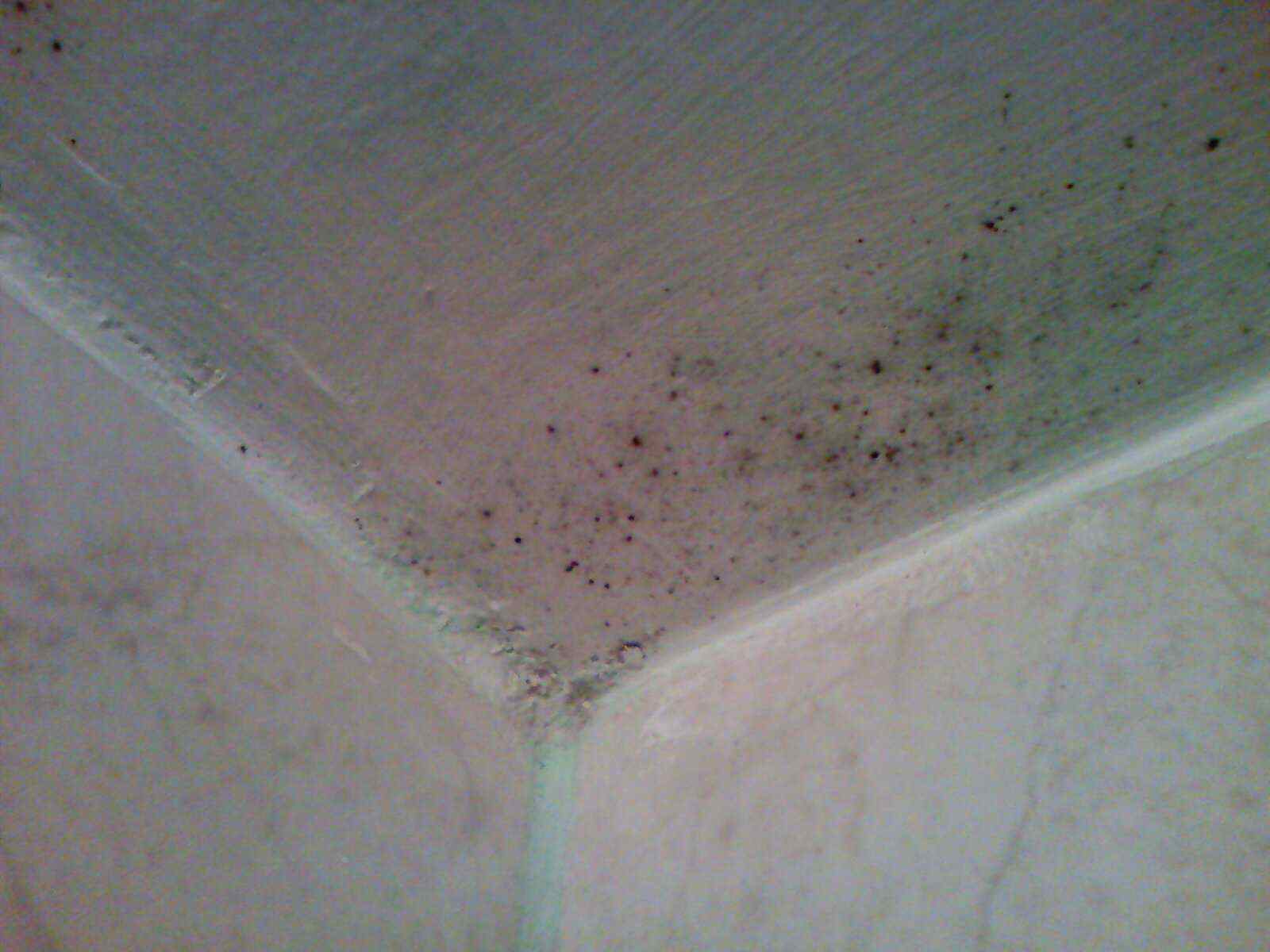

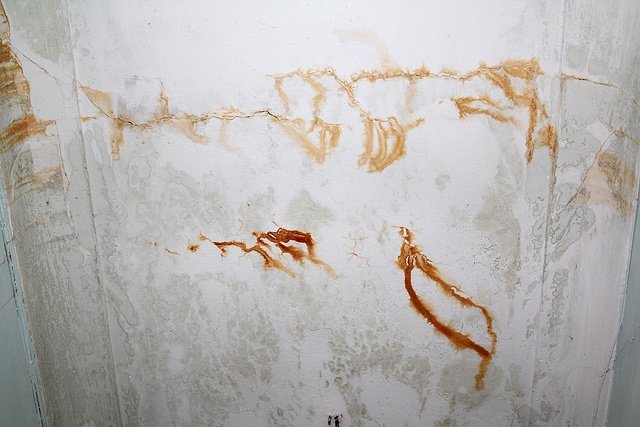
For the subsequent sealing of cracks and potholes, use suitable cement-based mixtures. After they dry, putty the treated area of \u200b\u200bthe ceiling with gypsum putty. To even out the dried putty layer, it is cleaned with fine sandpaper and then, if necessary, an additional finishing layer is applied.
If you are going to paint your ceiling, treat the area with a primer before applying the paint.
It is also important to understand that a freshly painted coat is likely to be noticeably different from the old one. In this case, you will have to paint the ceiling completely.
Such a detail must be taken into account when buying the necessary color scheme.
To bring the problem area on a whitewashed ceiling into proper shape, use a chalk solution of the desired consistency and a spray.
5 miracle ways to get rid of yellowness
How to remove yellow spots on the ceiling? To choose the most effective method, you need to understand the reason for the appearance of unwanted divorces. To do this, become "your own expert" and correctly assess the situation, understanding where the legs grow from the spots.
Did you find out? Then, based on the identified reason, arm yourself with one of the proposed methods. By the way, before that, do everything to eliminate the growth point of the problem.
Method number 1
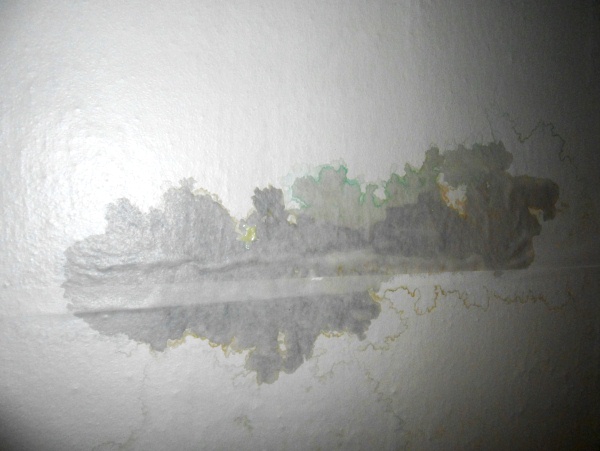
- We take a container and pour the chlorine solution there, after putting gloves on our hands to protect the skin;
- after that we take a sponge and place it in the solution, waiting for the moment until it is well saturated;
- we climb onto a chair or stepladder and apply this piece of impregnated foam rubber to the place on the ceiling that needs updating; hold for a few seconds;
- repeat these steps 4-5 times, and then wet the foam again in the prepared solution to refresh it.
Important!
It must be said that this method is very laborious. It will take a lot of time and patience to turn a yellow spot into white using this method.
But if everything goes well, all efforts will be justified, and you will not look for something to whiten the yellow spots on the ceiling and hide this nasty yellowness.
№2
It is also not quite simple, but effective, designed to get rid of oil stains:
- first, prepare the problem area by thoroughly cleaning it of dirt;
- then proceed to priming;
- primed, wait until the area dries;
- when everything is dry, you can paint over this area. For this procedure, we take water-based paint, a roller (or even better - a brush - to achieve a greater effect) and begin to paint over the stain. Well, carefully, to completely hide the problems;
- after that there will be two options: either the spot disappears, or it still remains visible. In the second case, you should simply paint over the stubborn spot again.
№3
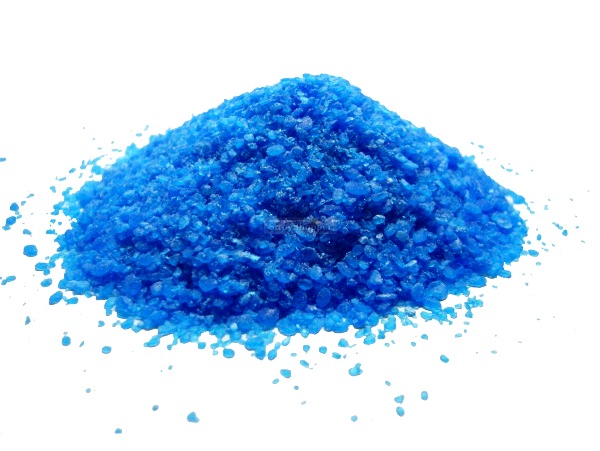
The method will help those who have begun the fight against rust spots. Those need to arm themselves with a vitriol primer, which you can do yourself.
In this case, you need to be guided by the following algorithm:
- copper sulfate and 1 liter of water are mixed;
- grate laundry soap (25 g);
- in a separate container, dissolve the bone glue and mix it with the prepared household soap;
- take 40 g of drying oil and mix it into the solution;
- we mix everything and introduce the liquid (in a ratio of one to ten);
- the next step is directly treating the stain with the resulting mixture;
- jam until the treated area is completely dry;
- after that we use a hydrophobic putty, applying it to the rehabilitated place;
- one or even better - we wait two days for everything to dry;
- after we cover with an acrylic primer;
- Another stage is enamel staining. After it, we also wait until it dries completely;
- the final step is to apply the paint with which the affected ceiling was painted.
№4
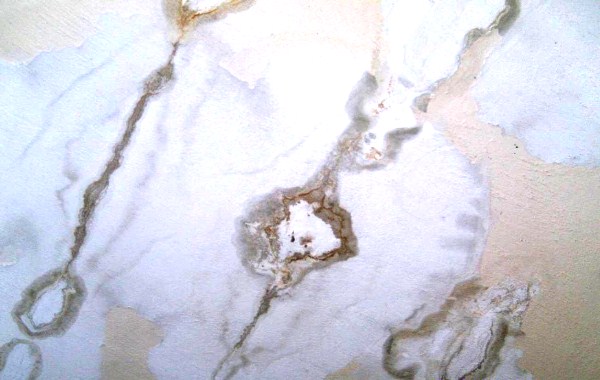
It works against stains caused by smoke and soot.
Here is the essence of it:
- we arm ourselves with sodium orthophosphate (we take 1 tablespoon) and ordinary warm water (about 3.5 liters);
- find a good porous sponge and dip it into the solution;
- we process the stain with the so-called crushing movements;
- we work in this way until the problem disappears.
Another step may be the use of an oil primer. It is useful in a situation in which the stain has not disappeared.
№5
Here is how to proceed in this case:
- take oil paint and cover the area with several layers;
- if gloss appears, don't worry. Another layer of paint will come to the rescue, but only the one in which the ceiling was originally painted;
- Did you see color shifts? It's not a problem either. Do not be lazy and carry out these procedures on the entire ceiling (not particularly zealous, covering with one layer).
How to remove yellow spots after flooding
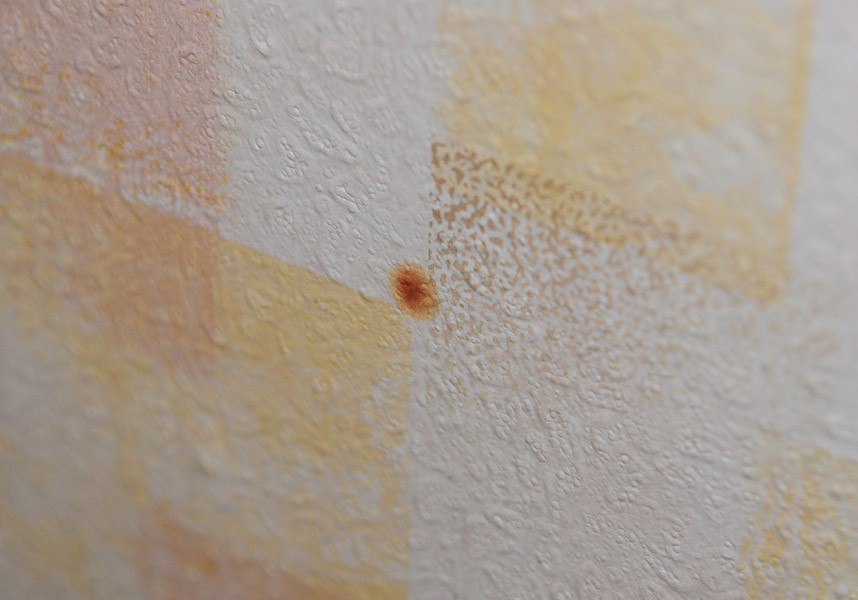
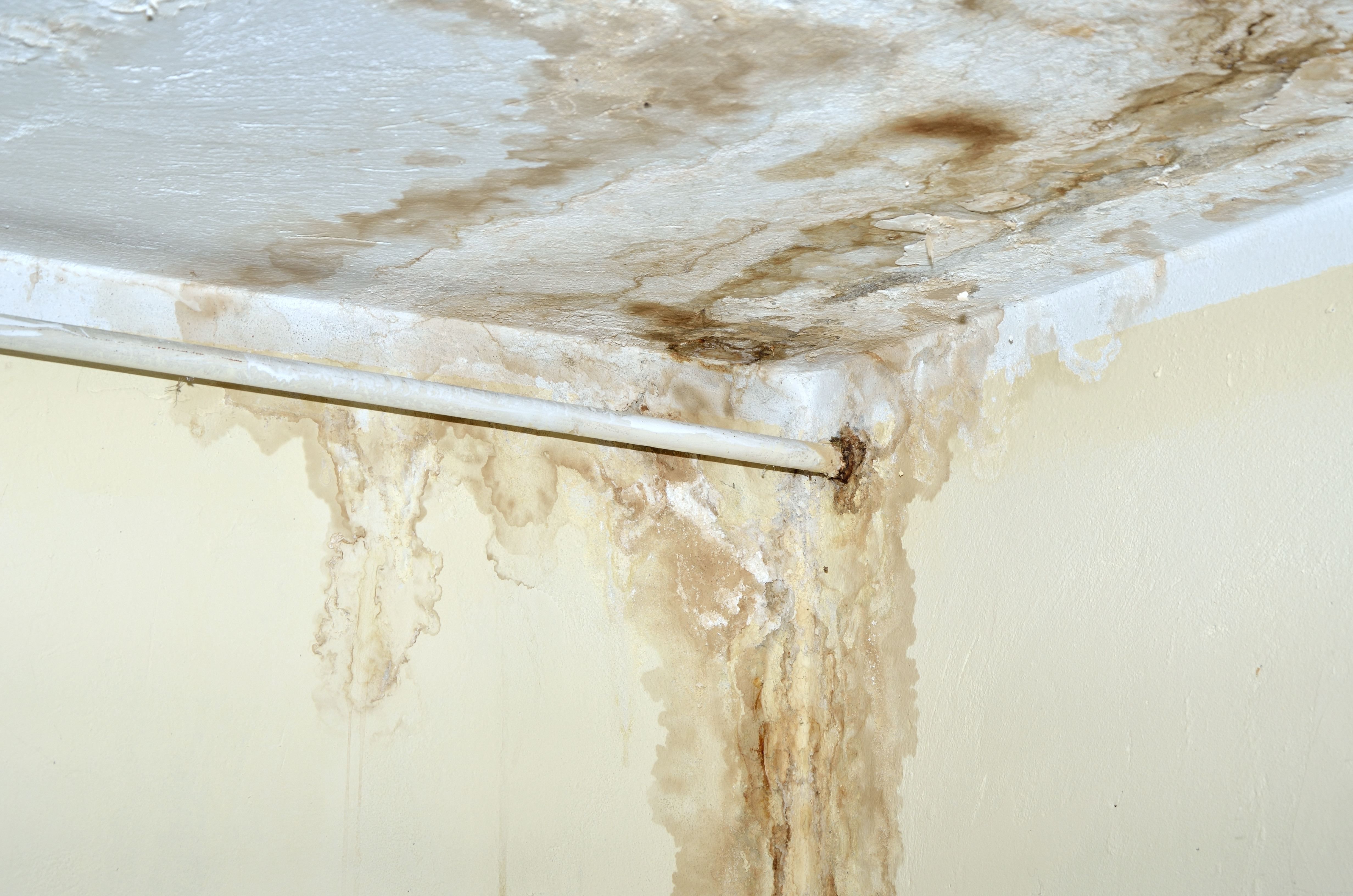
Traces of flooding spoil not only the appearance of the ceiling, but also the interior of the room as a whole. Even some time after the incident, the repaired streak can grow and show up intensely on the surface. This is due to the moisture that remains in the interfloor ceilings. Until they dry out, no restoration measures will lead to the desired results.






Ways to remove stains from a regular ceiling
Before we eliminate pollution, we will decide on the method.
The most common method is mechanical. The sequence of actions is as follows:
- Using a spatula, remove paint, plaster and putty from the surface.
- Wipe the area with a damp cloth.
- Wait for drying.
- Apply a deep penetration primer with a roller.
- Take the finishing putty and treat the surface using a spatula.
- Sandpaper to eliminate irregularities.
- Reprime.
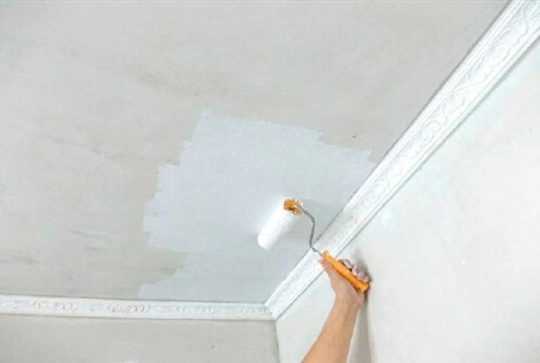
- Paint the ceiling with a brush or roller.
It is quite difficult to choose paint for a separate area so that the shade matches the main color of the ceiling. Therefore, it is recommended to treat the entire surface by applying two layers of a new coating.
Similarly, whitewash is applied after preparation.
You can remove yellow spots with the help of chlorine-containing products. This will require:
- white or similar liquid;
- old clothes;
- rubber gloves;
- container for diluting the product;
- foam sponges.
Before removing stains, clean paint and plaster from the ceiling. Then put on gloves, pour the whiteness into the prepared container and moisten the sponge in the liquid.
Treat the stain as follows:
- Apply the sponge to the contaminated surface.
- Leave 5 seconds in one place.
- Re-wet the sponge with the solution.
- Repeat steps to treat the rest of the stain area.
Replace the foam rubber when it turns red, and continue processing the contaminated area until it is as bright as possible.
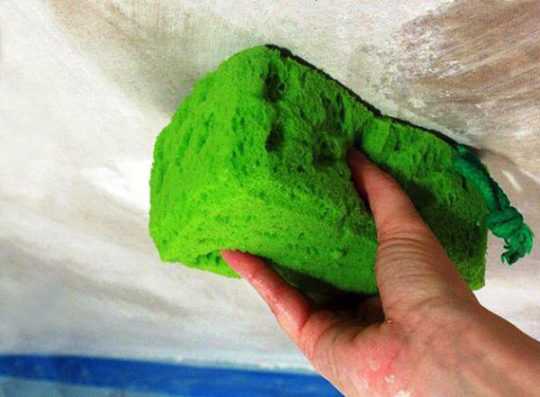
Before finally removing yellow spots with finishing materials, dry the ceiling.
Similarly, a solution of 3% hydrochloric acid is used, which needs to be slightly heated.
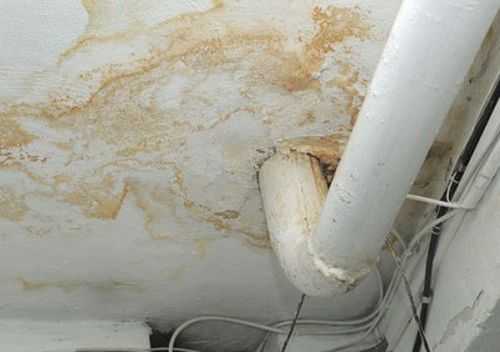
If the water has touched the pipes in the floors, the spots may not be yellow, but rusty. Removing the latter is much more difficult. This will require:
- Mix 250 g.copper sulfate with soap shavings and bone glue in equal proportions.
- Add 40 g of drying oil.
- Clean all layers of finishing materials.
- Walk over the stain with a roller dipped in the mixture.
Oil paint method:
- Treat the contaminated area with copper sulfate.
- Prime and apply putty.
- Paint over.
Cleaning stretch and suspended ceilings
Yellow spots on PVC or drywall structures are formed only in case of severe leakage. Advice on elimination of traces of the flood is given by the installer, taking into account the characteristics of the material from which the canvas is made.
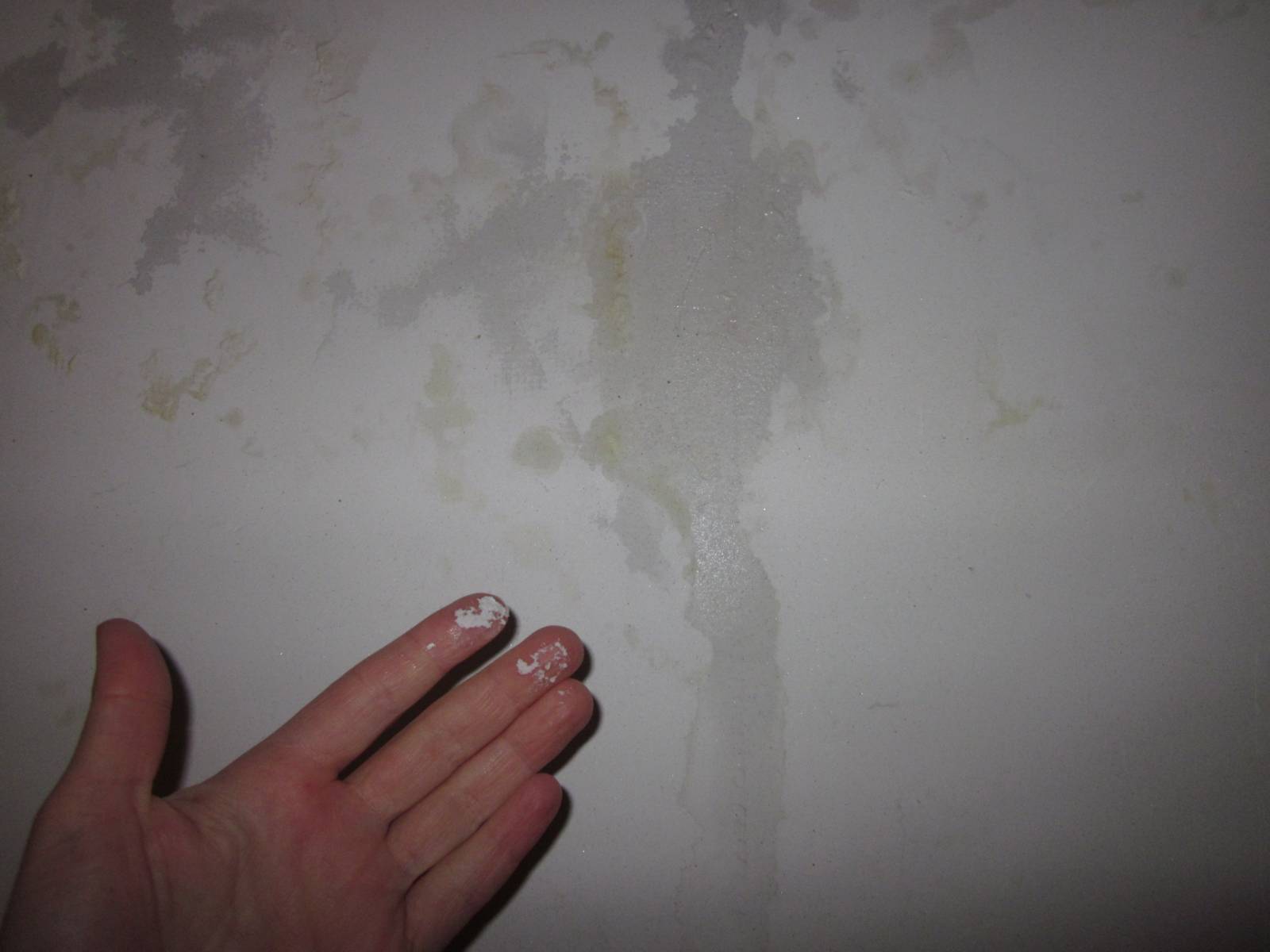
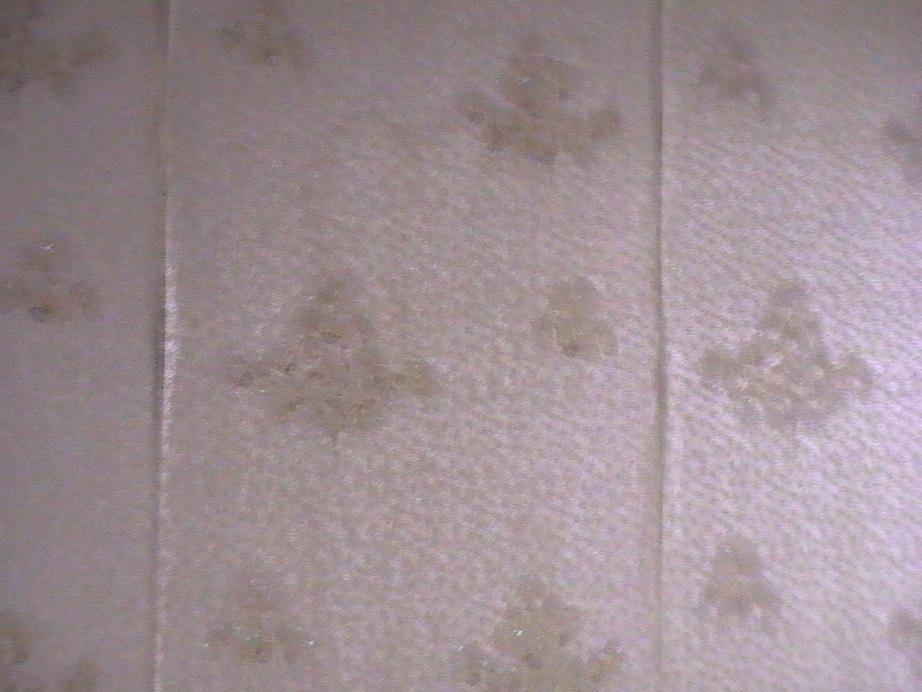



Fabric varieties are subject to staining at least 10 times. If PVC material is used, then soap essence or dish gel helps to remove traces of flooding.
The most persistent stains are treated with a 5% solution of soda ash. His applied to contaminated area and after drying, wash off with water. The procedure is repeated until the spots disappear.
The plasterboard ceiling is also prone to flooding, and this material tolerates leaks worse - it turns yellow and deforms.
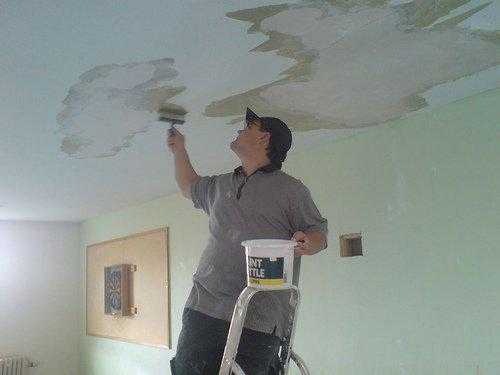
The flooded area is determined by ear when tapping. If water has accumulated on top, the ceiling is pierced with a screwdriver or similar tool in several places.
Often the entire sheet must be replaced, because the material is saturated with moisture.
If the wetting is insignificant, then the electricity is first turned off, and then the spot lamps are removed from the flooded area. Then leave the ceiling to dry completely. The spot is painted over.
With average wetting, when water drips, after turning off the power supply, spot lamps and metal fittings of lamps are removed. Then holes are made in the drywall sheet for air circulation.After drying, the holes are filled with acrylic silicone, and the stains are painted over.
With a strong flooding of the ceiling, the electricity is turned off, through holes are made in the GKL. Spacers help avoid sagging. Dry with a heat gun. If the drywall is not deformed, then the sheets can not be changed.
The easiest way to remove stains from the ceiling, trimmed with PVC panels. The answer to the question of how to get rid of divorce does not require special knowledge. It is enough to walk with a damp cloth over the surface.



