
- How to assemble plumbing
- Summer plumbing in the country
- Self-assembly
- Instructions for arranging a stationary system with pumping equipment
- Plan development
- Digging trenches for the pipeline
- Pipe connection
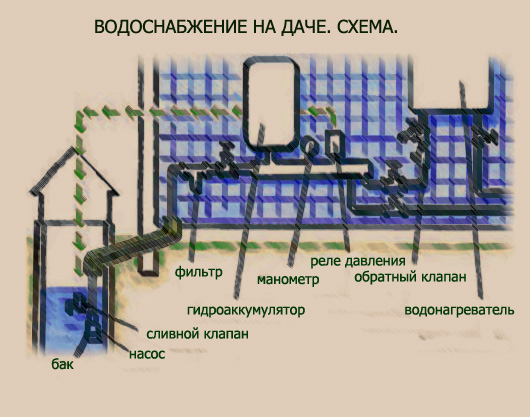
- Connecting pumping equipment
- Choosing a water source in the country
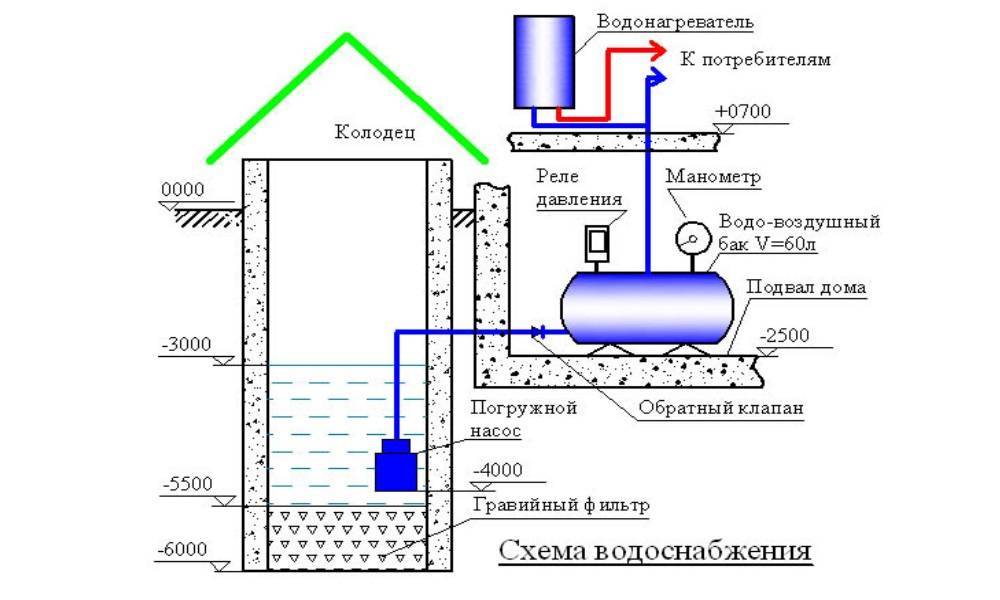
- Plumbing from a well
- water well
- We connect to the central water supply
- Summer and winter plumbing
- Summer option
- Winter option
- Installation options
- Mounting types
- Surface - for summer plumbing
- capital system
- Warming of the water supply system
How to assemble plumbing
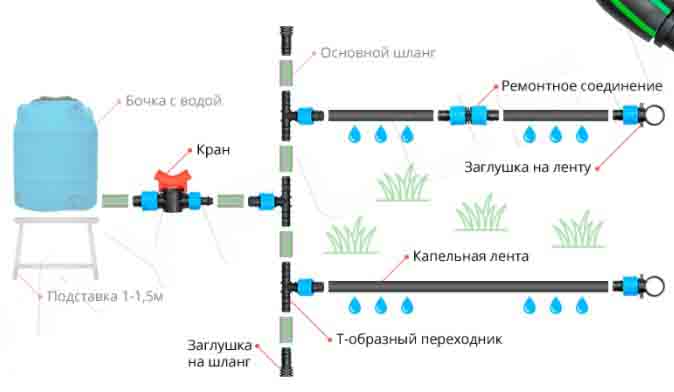
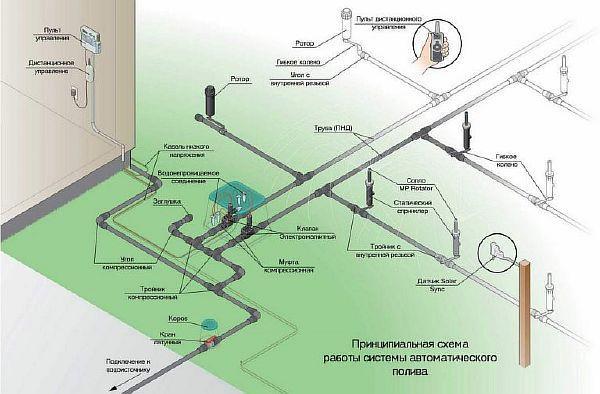
When collecting water supply in the country with your own hands, you need to decide in which parts of the site you need wiring. The fact that water should be supplied to the house is self-evident. But in addition to distributing the water supply around the house, it is necessary to lay pipes for irrigation in key places of the site, put taps on them. If necessary, connect a hose to them and, shifting it from place to place or installing a sprinkler, water the nearby beds.
How to bring water into the house, read here, and how the plumbing should be done in the summer cottage with our own hands, we'll talk further. It is best to draw the plan to scale. If you already have beds, you can easily determine where you need to deliver water.It is better to make several points of water intake: long hoses are inconvenient and difficult to carry, and having the ability to connect several at the same time, you can handle watering faster.
The tap in the system must be at the exit of the house and before the first branch
When drawing up a diagram, do not forget about the need to install taps on the main line: at the cut after the outlet is still in the house, and then, on the site, before the first branch. It is desirable to install cranes further on the highway: in this way it will be possible to turn off the emergency section in case of problems.
Even if summer water supply will be equipped, you will need to drain the water from the pipes so that when it freezes, it does not break them. To do this, you need a drain valve at the lowest point. That's when it will be possible to close the tap in the house, and drain all the water, protecting the water supply from damage in the winter. This is not necessary if the country water supply pipes are made of polyethylene pipes (HDPE).
After drawing the diagram, count the pipe footage, draw and consider what fittings are needed - tees, angles, taps, couplings, adapters, etc.
In order to correctly calculate the material and make the correct layout of the water supply in the country with your own hands, first draw a plan where you can calculate the footage and the number of fittings
Then you need to decide on the mode of use. There are two options: summer and winter plumbing. They differ in the depth to which the pipes are buried. If you have an all-weather dacha, then you will have to lay an insulated water supply in the dacha itself or bury it below the freezing depth. For wiring irrigation pipes in the country, it is more rational to use the summer version of the water supply. You will only need a winter one if you have a greenhouse equipped.Then the section of the water supply to the greenhouse will need to be equipped in a serious way: dig a good ditch and lay insulated pipes.
Summer plumbing in the country
Depending on which pipes you will use, they can be left at the top, or they can be laid in shallow ditches. Installing a country water supply underground will take more time, but it is more reliable.
Do-it-yourself surface wiring for irrigation in the country is done quickly, but the pipes lying on the surface can be damaged
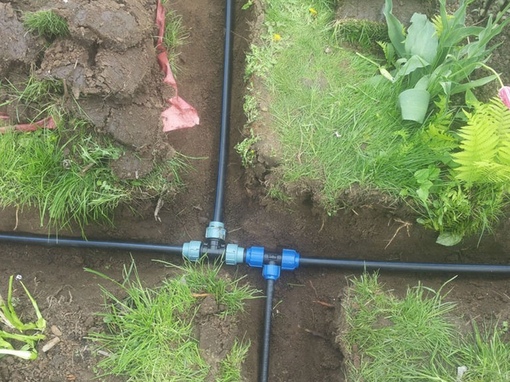
Having decided whether you need trenches or not, and having dug them out, if you have chosen an underground option, the pipes are stretched and laid out over the site. So once again the correctness of the calculations is checked. Then you assemble the system. The final stage - testing - turn on the pump and check the quality of the joints.
Before starting the installation of the water supply at the summer cottage, the pipes are laid out in the right places
Winter water supply differs from flight water supply in that the areas that will be operated in the cold season must be guaranteed to be protected from freezing. They can be laid in trenches below freezing depth and/or insulated and/or heated with heating cables.
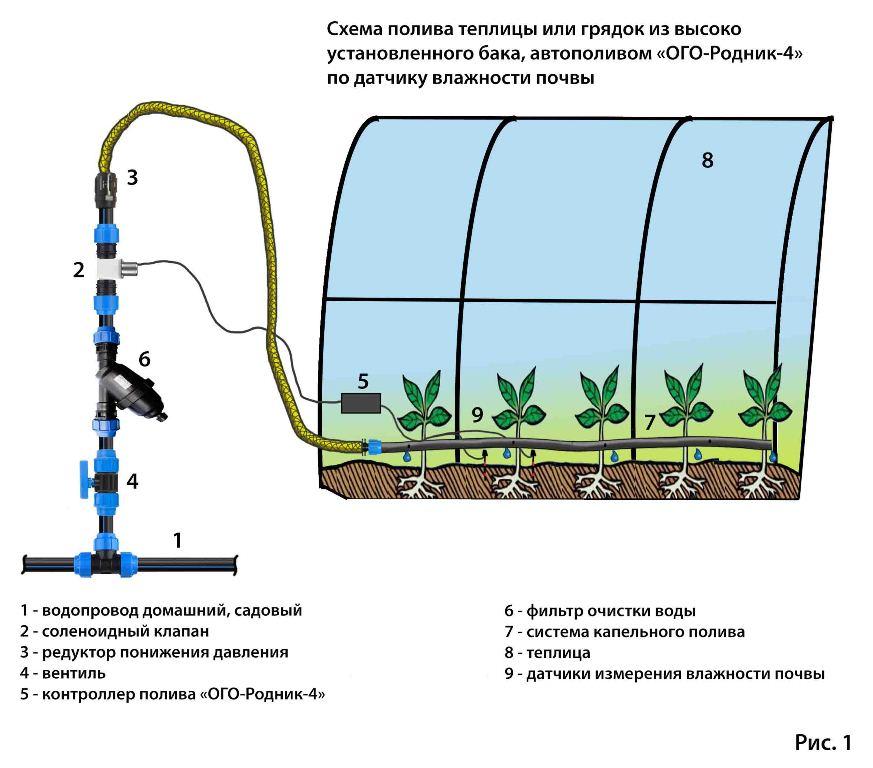
You can read about the organization of automatic watering here.
Self-assembly
For the installation of polyethylene pipes, specialized skills and abilities are not required, so even a person who is not versed in construction can handle it. For this you need to prepare:
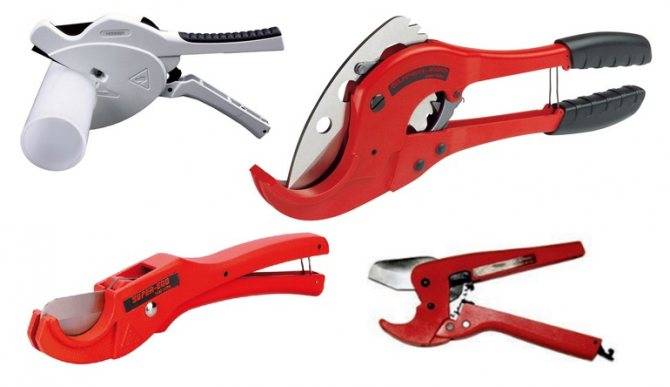
- scissors for cutting pipes (alternatively, a grinder is suitable);
- to assemble the pipeline with a press fitting, an additional crimping device is required;
- a puncher that will be used to create passages through walls;
- a pair of wrenches;
- round file;
- calibrator.
First you need to choose a site for laying, pipe diameters and draw-off points. If the design measures were carried out correctly, you can save a lot on components and consumables. Preparation involves collecting tools and materials, cutting pipe blanks, removing burrs and cleaning surfaces from chips and dirt.


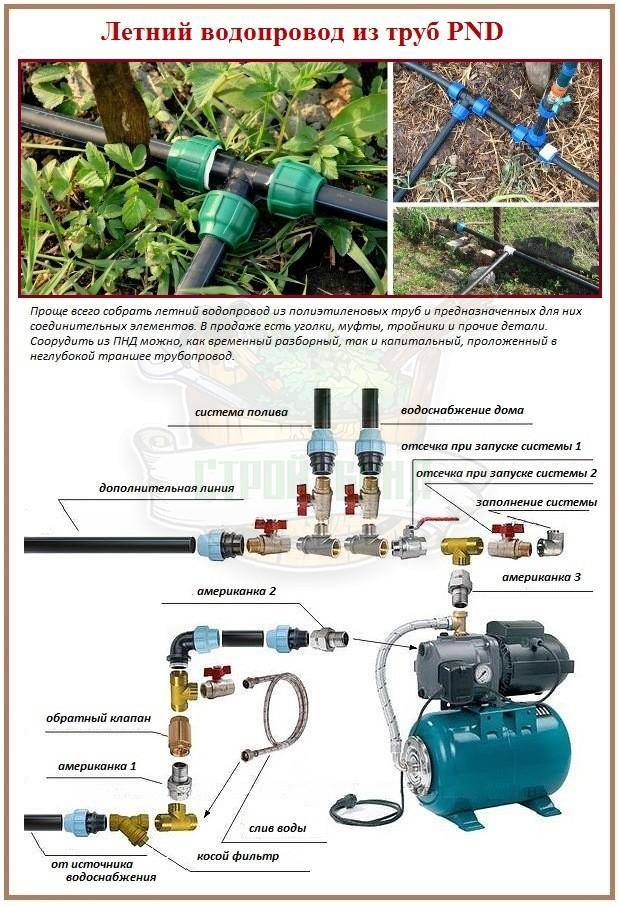

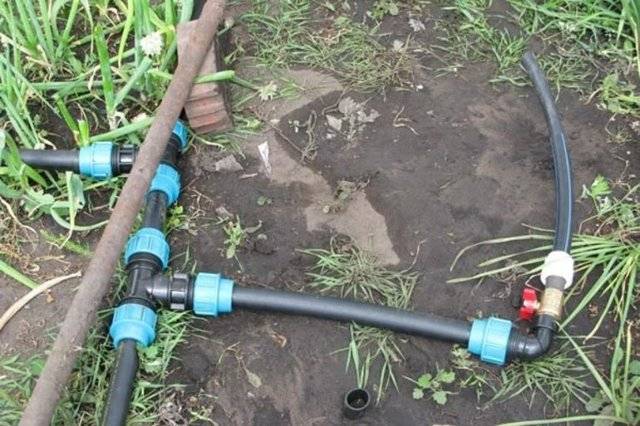

The installation of compression fittings is carried out according to the following scheme: first, a compression nut is put on the pipe, after which its end part is placed in the fitting, the nut is screwed on by hand. After that, the body of the connecting part is clamped with a key, and the nut is tightened.
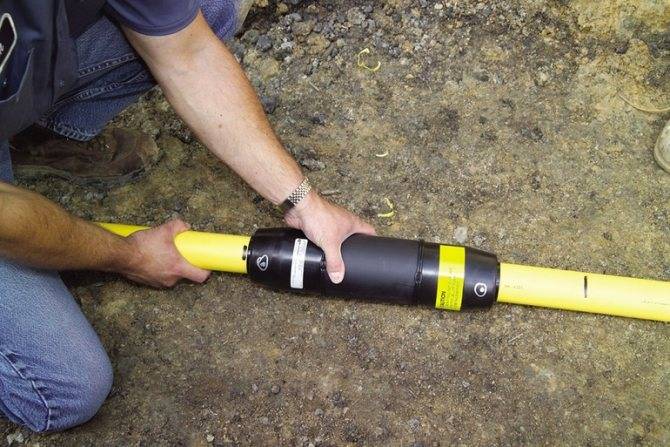
Installation using press fittings is carried out in several stages:
- to begin with, a press sleeve is mounted on the end of the tubular product;
- a sealing ring is placed in the inner part of the pipe;
- the press sleeve is firmly clamped to the full stop.
Instructions for arranging a stationary system with pumping equipment
Plan development
Since the pipeline is planned to be located for a long period, the number of necessary parts and their location on the site should be carefully calculated. You also need to carefully measure the length of the future pipeline, so as not to be mistaken with the footage and the number of fittings. For convenience, mentally divide the site into separate zones and estimate how many water points will be needed for each of the sections and how many meters of flexible hose may be required.
Digging trenches for the pipeline
Due to the fact that the ditch will require a very shallow one (about 70-80 cm), only a shovel is required to dig it.It is better to remove large sharp rocky attachments so as not to subsequently damage the pipeline during installation. Ideally, the fewer bends the trench (and, accordingly, the pipeline) has, the more efficient the water supply will work.
Pipe connection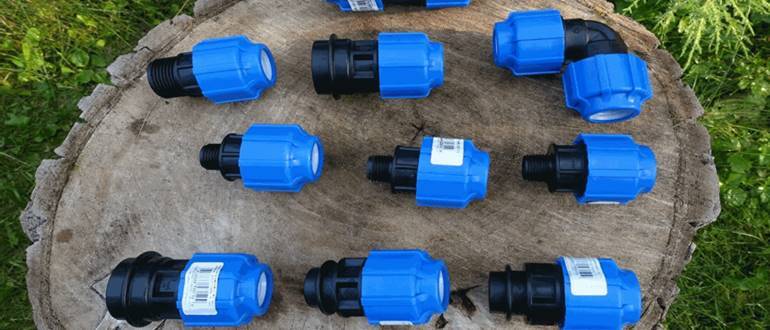
Polypropylene pipe sections can be connected in two ways: by welding or by fittings. The first method is more difficult, but will provide greater integrity and tightness of the system. It is worth noting that it is better to take a segment with a diameter of 2-2.5 cm as the main central pipe, while a diameter of 1-2 cm is suitable for the "side" pipes. A special soldering iron is required for soldering polypropylene. After assembling the pipeline, before backfilling it, you need to check its operation.
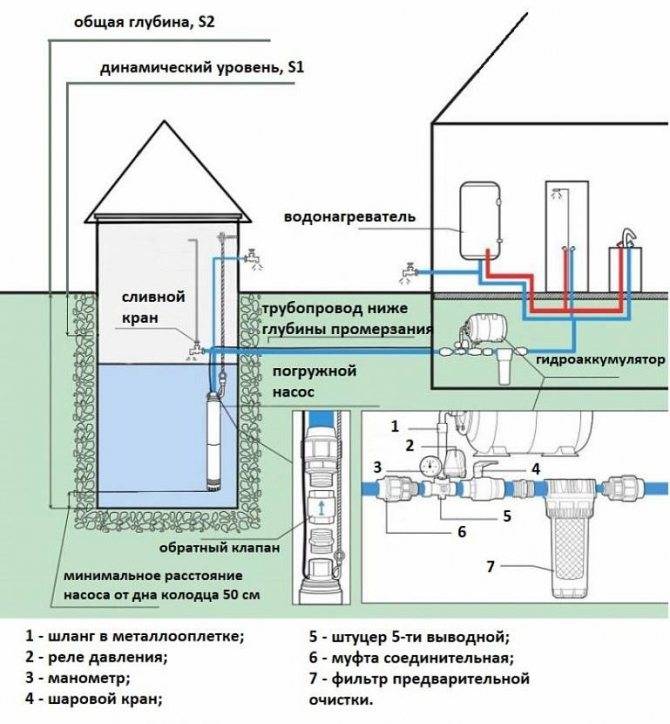
Connecting pumping equipment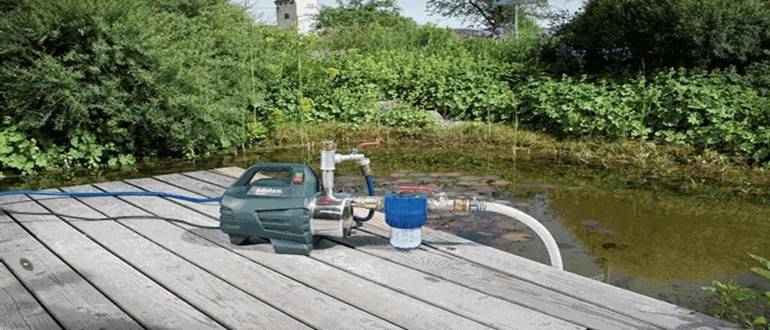
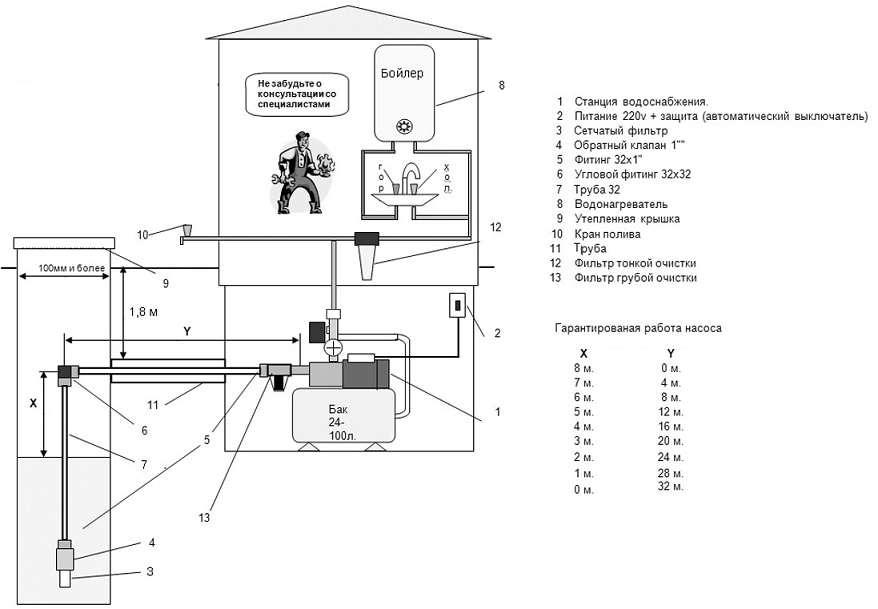
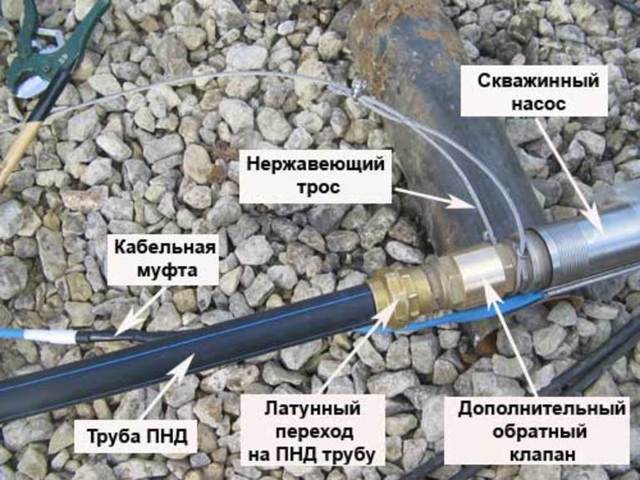
The pump must be selected depending on the conditions in which it will work and depending on the source of water supply.
After a complete check of the system's performance and its tightness, the pipeline can be covered with soil. It is worth remembering that before the onset of frost, all water from the system must be drained.
Based on the foregoing, it becomes clear that the summer water supply system It is quite simple and will be within the power of everyone.
Choosing a water source in the country
The device of any water supply begins with the choice of a source of water supply. Although the choice is usually not great. It can be a centralized water supply system, a well or a well.
From where the water will come from, not only its quality depends, but also the methods of constructing the entire plumbing system, its technical complexity and cost.
- The device at the dacha of its own water supply system will save you from a lot of problems inherent in unorganized country life.
- The water supply system will be able to provide summer residents with both cold and hot water, and will not allow them to forget about the achievements of civilization far from the city.
- The water supply system laid along the summer cottage will provide an opportunity to quickly and easily fill the containers in the bath and shower.
- This is the easiest and least time-consuming way to get water for watering green spaces and caring for a summer cottage.
- A do-it-yourself water supply system will help fill the pool without difficulty and unnecessary expenses and change the water in it if necessary.
- The owner of the water supply system arranged on the site will not need to think about supplying water to fountains and waterfalls.
- Country water supply will provide an opportunity to arrange as many points of water intake as the owners need. For example, to build a washbasin on the street for washing the hands and shoes of enthusiastic gardeners.
- Near the summer kitchen or area with a barbecue oven, it will be convenient to arrange a separate sink so as not to constantly carry products for washing into the house.
Plumbing from a well
The simplest "old-fashioned" method is to dig a well. Its depth depends on the occurrence of the aquifer - up to 10 - 20 meters, as a rule. Of course, you can use such water only if filters are installed. Well water is often contaminated with nitrates and heavy metals.
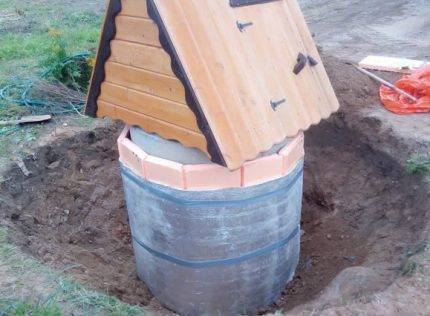
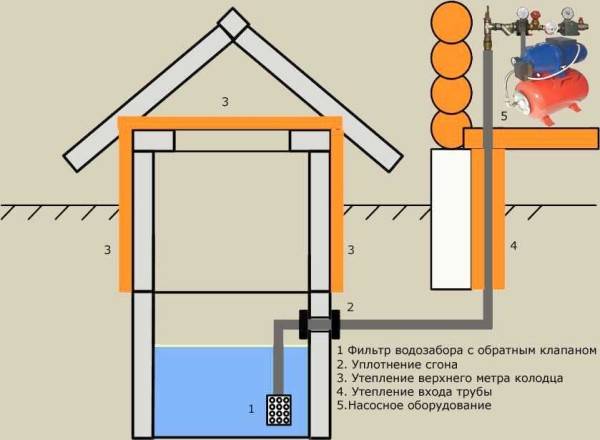
The well must be insulated. They do this to a depth that exceeds the mark of seasonal freezing in the region by 20 cm. They use foam plastic, which covers its entire above-ground part. They also insulate the pipe that connects the well to the pumping equipment
water well
The best option is to equip a well. Here you can’t do without special equipment - you can’t drill a well with a shovel. The main advantage of such a source of water supply is the purity of the water.
The depth of the well for a private house starts from 15 m. With such a depth, the water is not polluted by nitrate fertilizers, domestic sewage and other agricultural waste.
It is important to take into account the presence of iron or hydrogen sulfide in the water. If such impurities are present, water can only be used if it is well filtered. Drilling a well will cost much more than digging a well, and it’s not easy to maintain it: constant cleaning, prevention, flushing
But 1.5 cubic meters per hour, which can be lifted from the well, provide an almost unlimited consumption of clean and fresh water.
Drilling a well will cost much more than digging a well, and it is not easy to maintain it: constant cleaning, prevention, flushing. But 1.5 cubic meters per hour, which can be lifted from the well, provide an almost unlimited consumption of clean and fresh water.




We connect to the central water supply
If there is a centralized water supply near your site, you can connect to it. Among the advantages of this option are a constant pressure and water purification. However, in practice, the pressure often does not meet the standards, and there is nothing to say about cleaning.
In addition, simply connecting to the pipeline will not work for you - this is illegal.You will have to write an application to the water utility, provide a site plan with all communications, draw up project documentation and obtain permission from the sanitary and epidemiological station. The whole procedure stretches for several months and flies a pretty penny.
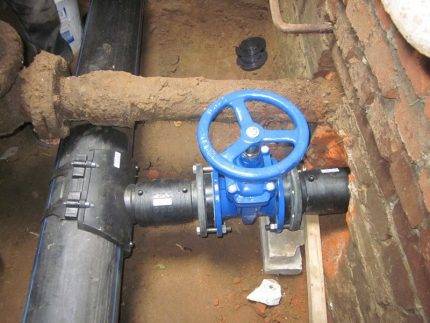
A plumber from a water utility who has a permit for such work should connect your site to the central water supply. Unauthorized use of water is prohibited
Summer and winter plumbing
Previously, you most likely heard such definitions as summer and winter plumbing systems. Study the main properties of these options, it is quite possible that even the simplest summer option will be able to satisfy your needs. Otherwise, you can immediately proceed to the study of the following sections of the manual on the arrangement of a full-fledged water supply.
Summer option
Summer plumbing in the country
The features of such a water supply system are clear from its name - the operation of such a system is possible only in the warm period. There are stationary and collapsible modifications of the system.
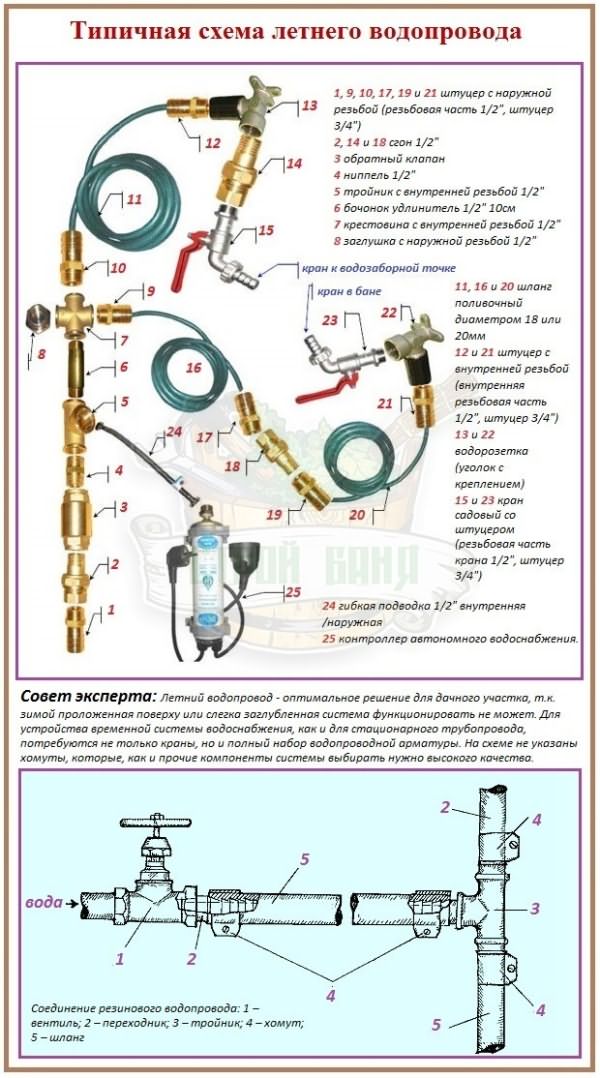
The collapsible summer water supply system has a very simple design: it is enough to connect the hoses to a pump of suitable parameters and lay them on the soil surface so that they do not interfere with normal movement around the summer cottage.
Summer plumbing in the country
Silicone and rubber hoses are suitable for arranging the system. The connection is made using special adapters. Also in specialized stores are available more modern products for connecting hoses - latches. One side of such a latch is equipped with a spring-loaded connector, and on the other side there is a “ruff”. With the help of such latches, hoses are connected quickly, reliably and simply.
Most often, such a collapsible system is used for irrigation. It is pointless to organize on its basis a full-fledged water supply to solve domestic needs.
Piping for summer plumbing
The laying of a stationary summer water supply is carried out underground. Flexible hoses are not suitable for arranging such a system. The best option is plastic pipes.
Pipes of stationary seasonal water supply are laid at a meter depth. After the end of the season, water must be pumped out of the pipes, otherwise, with the advent of cold weather, it will freeze and ruin the pipeline.
In view of this, the pipes must be laid with a slope towards the drain valve. Directly the valve is mounted near the water source.
Winter option
Such water supply can be used throughout the year.
Plumbing in the country
Pipes made of polyethylene and polypropylene are suitable for arranging the system. The former are sold at a lower price and are mounted without the use of special tools. The latter are somewhat more expensive and require the use of a pipe soldering iron during installation. However, in the end, you will spend more money on additional parts for mounting pipes based on polyethylene than on additional products used in the installation of polypropylene pipes.



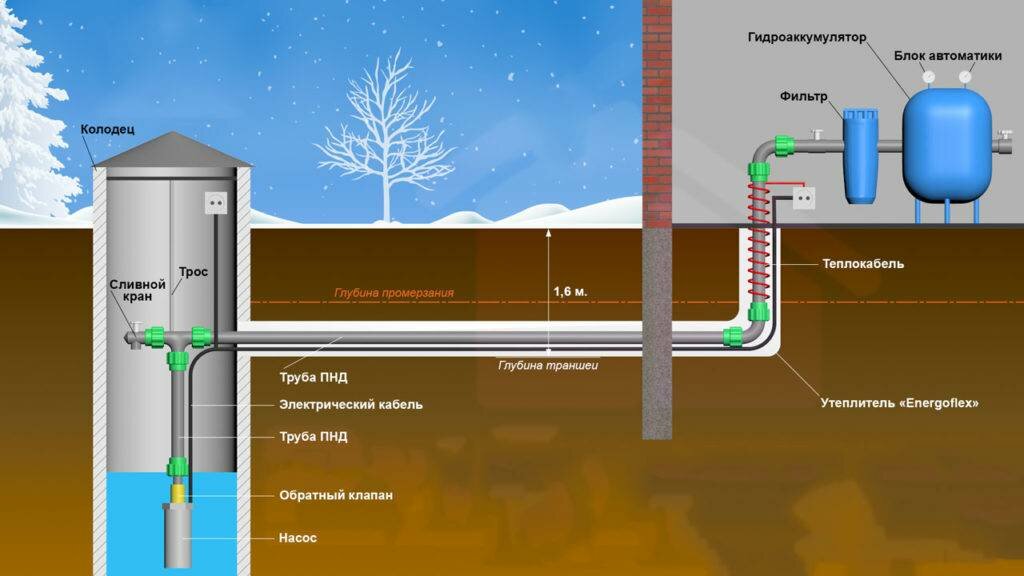
Water pipes are laid with a slight slope towards the source of water supply. The pipeline should run 200-250 mm below the freezing point of the soil.
Pipe slope
There is also an option with pipe laying at a depth of 300 mm. In this case, additional insulation of the pipeline is mandatory. Foamed polyethylene perfectly copes with the functions of thermal insulation. There are special products of a cylindrical shape.It is enough to simply put such rounded polypropylene on the pipe and as a result the product will be reliably protected from cold and other adverse effects.
Not only winter water pipes, but also a source of water need additional insulation.
Polystyrene "shell" for pipe insulation
For example, well for the winter insulated and covered with snow. These measures will be enough to ensure the protection of the structure from the cold.
Well insulation
Surface pumping equipment, if used, is equipped with a caisson. The caisson is a pit with additional insulation, equipped next to a water supply source equipped with a pump.
Caisson
The installation of automatic pumping stations can only be carried out in a room where the air temperature does not drop to negative levels even in the most severe frosts.
Typical device of a pumping stationInsulation of sewer pipes
Next, we will consider the procedure for arranging a full-fledged water supply, which can be used at any time of the year.
Piping, boiler and expansion tank
Installation options
It is possible to mount the pipeline using HDPE pipes using one-piece or detachable technology. The choice of method depends on the desired tightness and diameter of tubular products. Welding is applicable only for pipes whose walls have a minimum thickness of 3 mm. This is a cheap and popular joining technique. Used for products with a diameter of 50 mm.One-piece type connections are used in places where it is necessary to ensure maximum tightness (gas pipelines, water supply, and so on) and on impressive diameters.
The soldering procedure is as follows:
- tubular products are cut and cleaned;
- after that they are placed in the clutch;
- the coupling is connected to the welding equipment and warmed up, after which the outer part of the pipe and the inner surface of the coupling are soldered to each other.
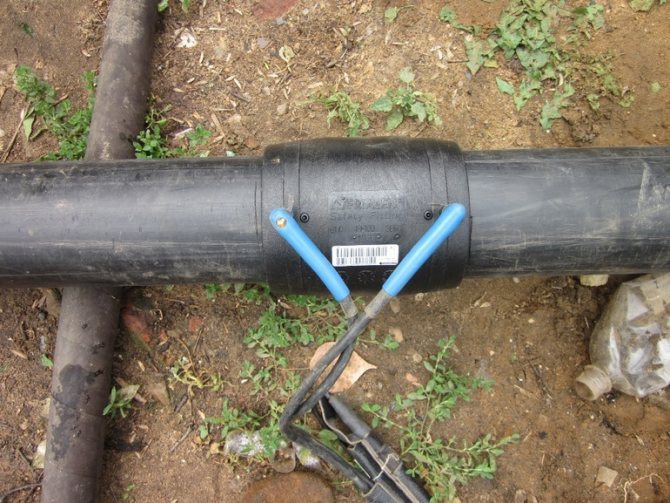
When using fittings, keep in mind that they come in several types. The most reliable of them:
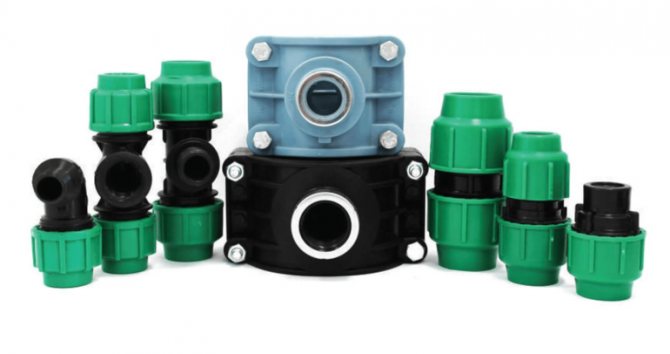
- push fittings;
- press fittings;
- compression models.
Press fittings include in their design a body, a press sleeve, a seal and an emphasis in the form of rings. When using this connecting part, a one-piece connection is obtained, which has excellent tightness and high reliability. Most often, this technology is used for the installation of underfloor heating and gas pipelines.



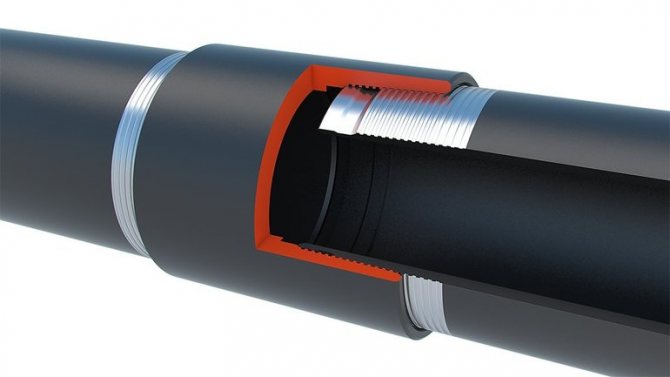
Push fittings are a novelty in the construction market. With their help, you can collect plumbing with your bare hands. However, they are prohibited from being used for the construction of closed systems and gas pipelines. In addition, push fittings are expensive.
Installation of HDPE pipes and HDPE fittings is a popular and very correct solution. This job does not require tools and a lot of time. Special equipment for the installation of HDPE products is not required in the case of using a coupling.
The choice of a particular method of joining the pipeline depends on a large number of factors. In suburban areas, in city apartments and country houses, pipes with a diameter of not more than 50 mm are installed.
Mounting types
Each method has its pros and cons.
Surface - for summer plumbing
Connection with split fitting
Ground laying is intended directly for summer cottages in order to timely water your garden, shrubs and trees. It is also possible to supply water to auxiliary buildings - sauna, utility block, summer house.
The summer water supply scheme in the country house repeats the layout of the underground one, but is as convenient as possible for repair, disassembly, and alteration if necessary. It can be dismantled for the winter period or in case of redevelopment of your summer cottage.
If necessary, within half an hour you can easily redo the correct interchange and the location of the water supply on the site.
Summer or, as they say, temporary water supply, many people mount according to the principle, as they could, so they assembled or blinded from what was, directly at the location.
It is preferable to draw up a scheme in advance if the site is planned by zones. In the drawing, the first thing to note is the main consumers of water - the house, the shower, the trees, the hedge, the points where the taps will be located.
Pipes must be placed at an angle directed towards the consumer, since a drain valve is installed at the lowest point.
capital system
underground installation
A system designed for a year-round home will require much more time to think through the design and carry out earthworks. The principle of assembling a country water supply from HDPE pipes in this case must be changed, since additional compressor equipment and a closed location method will be installed.
In this case, it is necessary to provide a minimum of underground connections, which will be difficult to reach in case of a malfunction, but it is better to exclude them.Pipes should be located below the freezing of the soil by about 2-3 meters.
Warming of the water supply system
The depth of freezing is different in all regions, so it is necessary to proceed from climate conditions. To prevent rupture of HDPE pipes during fluctuations in external temperatures, it is recommended to take care of insulation.
HDPE pipe in the "shell" of insulation
For insulation use:
- Basalt heaters are sold in the form of cylindrical modules of a certain length.
- Fiberglass in rolls. Additional waterproofing is needed, roofing material is most often used.
- Styrofoam. Collapsible cylindrical modules, consisting of two halves, which can be used repeatedly.
Water under high pressure does not freeze. If a receiver is built into the system, there is no need for additional thermal insulation. Most do this procedure just for their peace of mind.




![[instruction] do-it-yourself toilet installation | video](https://fix.housecope.com/wp-content/uploads/e/0/5/e05c3aaa569c15a65a76abf551b1139c.jpg)