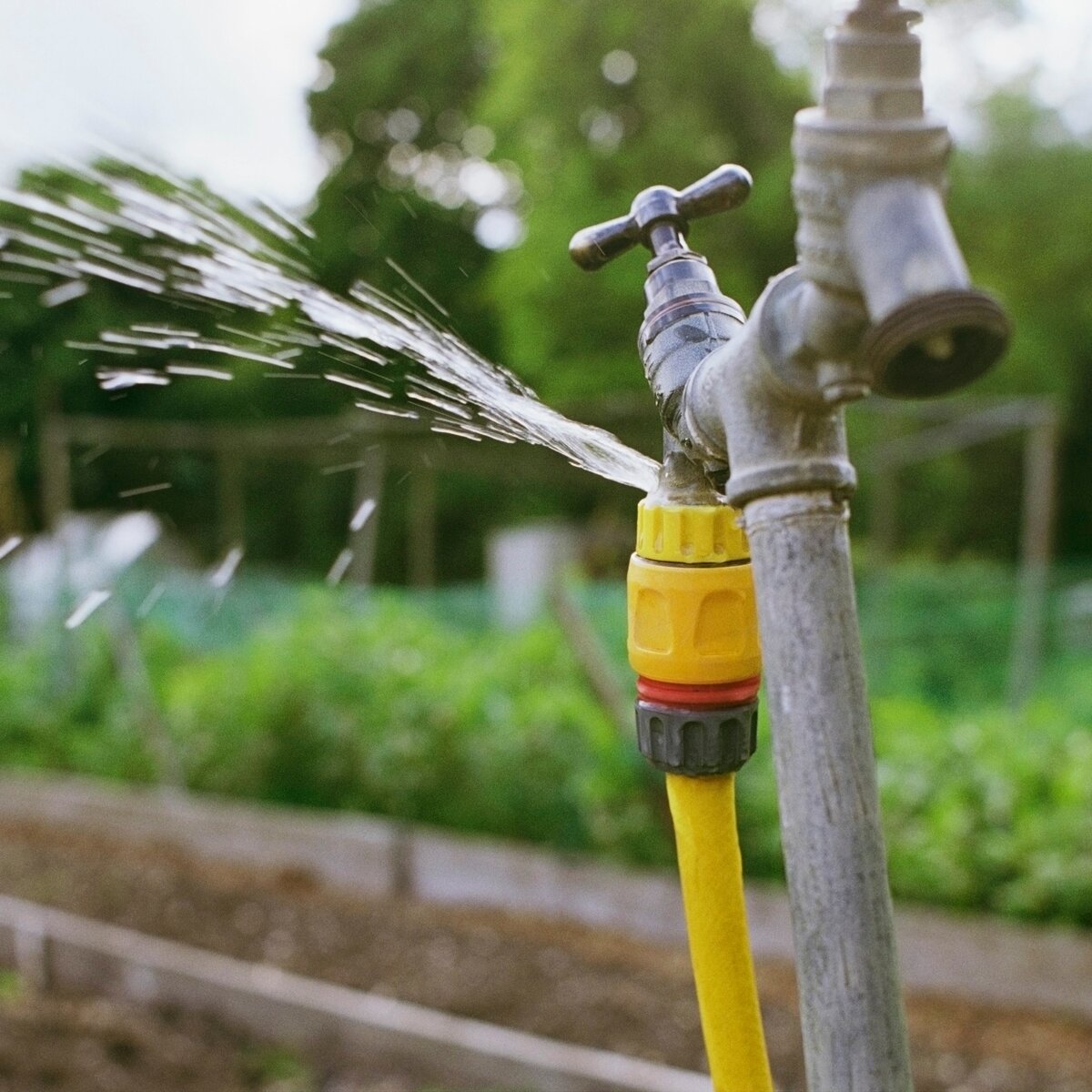
- Pipeline insulation
- Insulation for water pipes
- Heating
- Internal additions
- Laying a water pipe from HDPE pipes in the ground, technology
- Basic summer water supply schemes
- Demountable surface system
- Stationary underground utilities
- How to assemble plumbing
- Summer plumbing in the country
- Sources
- Advantages of autonomous water supply
- Sources
- Well
- Well on the sand
- Artesian well
- Capacity
- pressure
- Volume
- Connection to an external water supply
- Connection to internal water supply
- Why water supply from a well is beneficial
- Flaws
- Wiring
- System installation
- Conclusions and useful video on the topic
Pipeline insulation
When laying a winter water supply from your own water intake in the form of a well or a well, a trench half a meter deep will suffice. The pipeline should be placed in it in an insulated form.
To do this, at the bottom of the ditch made of bricks or other building materials, a gutter is laid out, where the water supply is placed, wrapped in special building thermal insulation.
From above, the gutter is covered with building material and covered with soil. It is necessary to provide waterproofing of the gutter, which will increase the life of the water supply system. Annual plants are planted at this place, allowing, if necessary, to open access to the gutter.
There are two main types of heaters:
- special factory heat-insulating products for pipes, corresponding to their diameter;
- insulating material produced in tapes or layers, which is used when wrapping the surface of pipes.
Insulation for water pipes
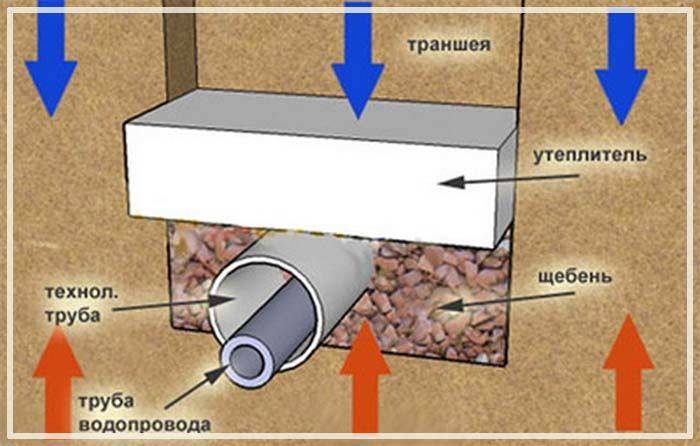
In the northern latitudes of our country, insulation of external pipelines is a necessity, which makes it possible to avoid their freezing.
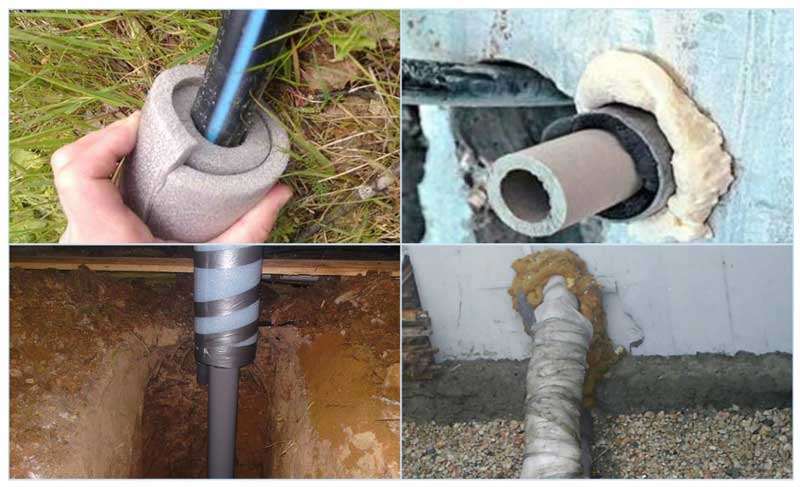
For high-quality thermal insulation materials are used:
- expanded polystyrene, consisting of granules fused into a single layer, which has excellent thermal insulation characteristics;
- extruded polystyrene makes it possible to insulate the pipe and not let moisture through to it, it is one of the highest quality materials;
- polystyrene foam has good thermal insulation ability, but is considered fragile, afraid of mechanical pressure;
- polyurethane foam is most often used in pipeline insulation work;
- foamed polyethylene is in sufficient demand;
- glass wool is well suited for pipeline insulation, however, it requires compliance with safety regulations when laying it;
- stone wool has suitable thermal insulation characteristics, however, it is used in dry environments.
Before choosing the right material, it is necessary to review its performance characteristics and compare them with the plumbing environment.
It is important to create a microclimate that will contribute to the long-term operation of the insulating material, which will favorably affect the performance of the entire plumbing system.
Heating
When planning winter plumbing, it is important to understand that thermal insulation helps to retain heat and reduce the cooling process of the liquid, but it is not able to raise the temperature in the pipeline. In severe frosts, it may not be enough
To solve this problem: This allows you to independently make a device for heating water and turn it on when the temperature drops significantly.
- a special cable is used that heats the pipe through which water is transmitted;
- depending on the choice, it can be laid along the pipeline or wrapped around it;
- to guarantee it is installed under thermal insulation, thus saving electricity;
- it is activated only in cases of emergency.
Artificial heating of the pipeline is a great help during its laying and operation in the harsh conditions of the Russian winter. Thanks to him, it is possible to transport water at significant sub-zero temperatures without worrying about the state of the system.
Internal additions
The use of running water now does not want to be imagined without hot water. Therefore, after the water supply system in the country house is built, you can take care of heating the water. Usually, electric or gas heating boilers are installed for this. It is more efficient to use the first option, because you can choose the tank capacity based on the needs of the family.
The second option is cheaper, though it requires installation only by specialists. It is good if the pipes are polypropylene. They are more resistant to high temperatures, which means that they will not soon require replacement from such loads.
If you plan to live in the country for a long time, then the best option would be a double-circuit gas boiler, which will provide both heating and warm water.
Installing water supply for a country house is not an easy task, but it is quite feasible. With a competent approach, following all the instructions and experience, this will not cause difficulties.



Laying a water pipe from HDPE pipes in the ground, technology
Installation is not recommended at temperatures below plus 5 degrees.
Scope of work:
A layout of the distribution of the water supply network at the summer cottage is preliminarily drawn up, indicating the entrance to the house and the locations of the water distribution points
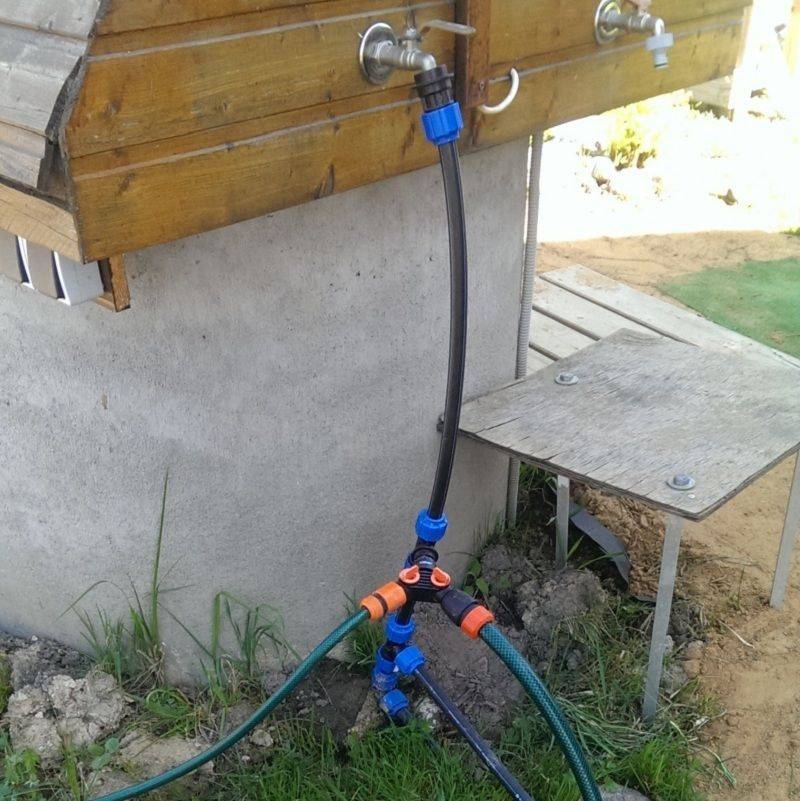
It is important to ensure convenient access of water to each of the desired zones. Depending on the area of the site, ≥ 5 pipe outlets are provided, to which rubber hoses of short length are attached, long ones will be difficult and inconvenient to carry
The diagram shows the installation locations of cranes with the calculation of the possibility of shutting down individual emergency sections. The diagram indicates the distance from buildings and other permanent landmarks to easily determine the location of the network in the future if the need arises.
Calculation of the required pipe footage, the number of fittings, tees, angles, adapters, couplings and taps.
What HDPE pipe to use for underground water supply? Recommended variant PN10, available in black with blue stripes applied.
Development of soil in trenches deeper than the depth of seasonal soil freezing in your area ≥ 20 cm, for the central regions of Russia 1.6 m is enough.Trenches are dug narrow (about 50 cm), they should not pass under existing and planned buildings, as well as cross other engineering communications. If it is impossible to develop to the required depth, the pipelines will have to be insulated, although the water supply will not break, but the frozen areas create traffic jams that interfere with the supply of water. Reliable protection against freezing - polyurethane foam shells. Water conduits entering the house are placed at the same depth as in other trenches. Installation of HDPE pipes vertically is carried out only inside the building.
The bottom of the trench is compacted with rammers, geotextiles are laid on top with a slight overlap on the walls and a 10 cm sand cushion is arranged, which will protect the products from deformation.
Layout along trenches with a check for compliance with a sufficient number. The supply pipes from the source of water supply are selected with a diameter of 40 mm, for the distribution network - 20 mm.
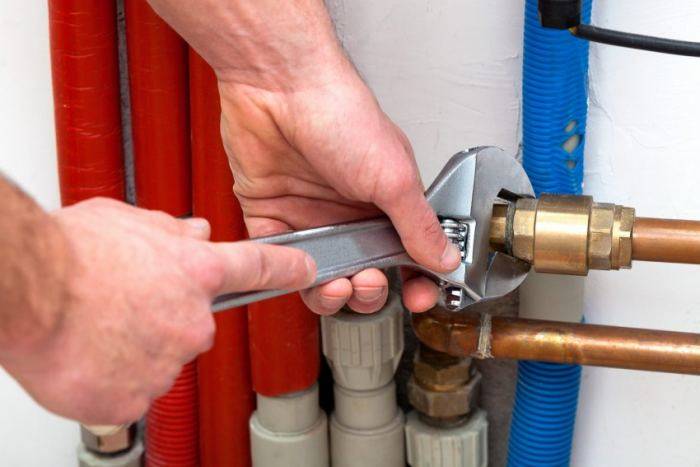
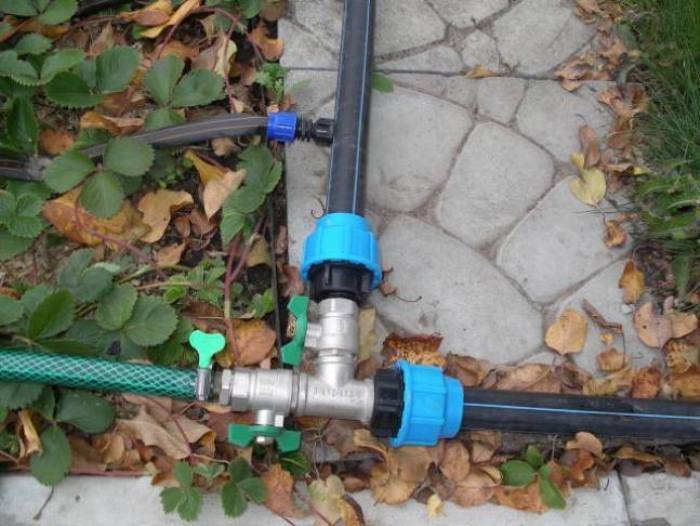
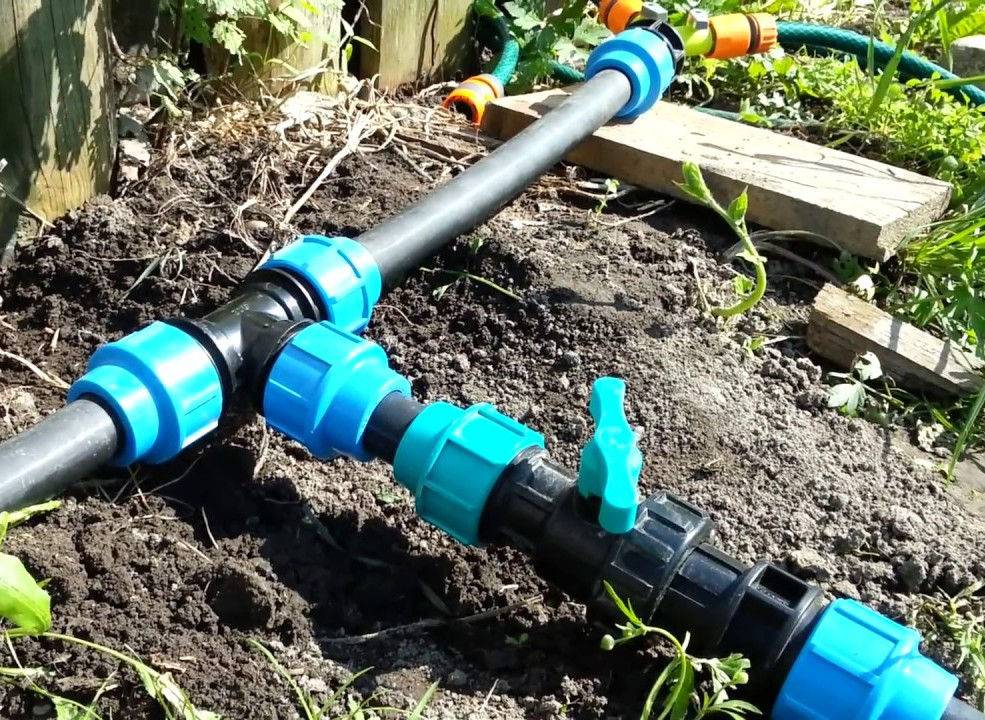
Connection of HDPE pipes and installation of taps. The connection is of two types: detachable and one-piece. For the first type, the following types of couplings are used:
compression, with internal or external thread;
connecting, used for the same diameters;
reducing, used to connect pipelines of different sections.
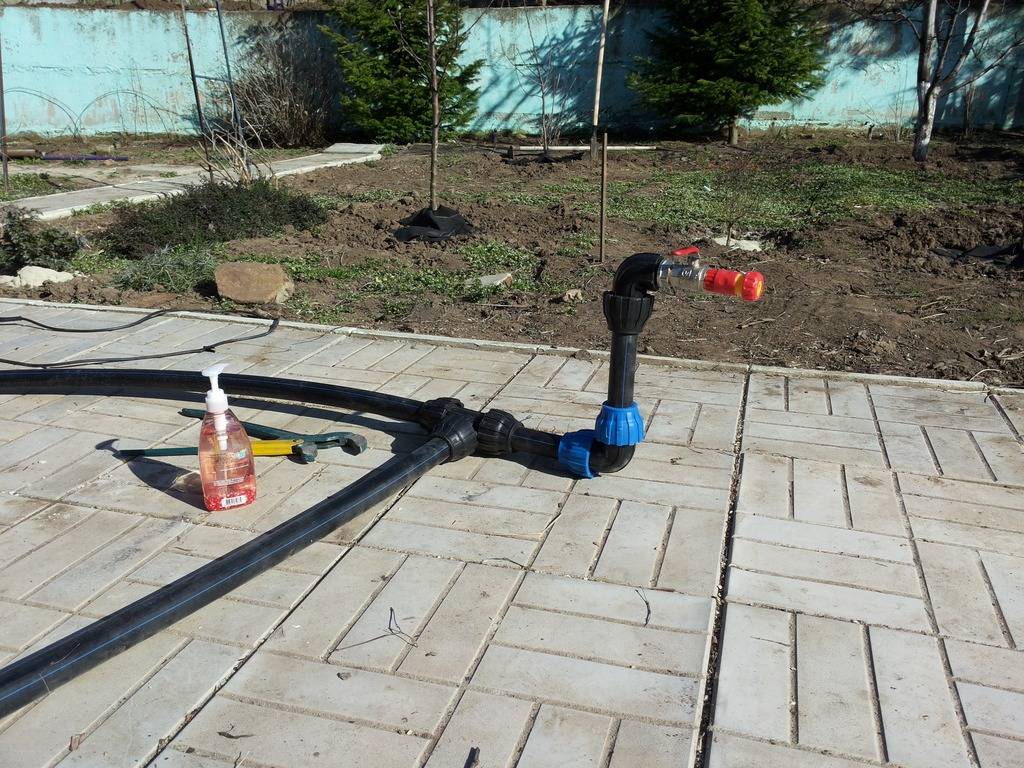
The method is simple and fast to perform. Consists of the following operations:
at the end of the elements, the depth of entry into the fitting is marked with a marker;
the chamfer is carefully removed, you can use a regular construction knife or a special chamfer;
inserting the pipe into the fitting, to facilitate the pipe end is lubricated with liquid soap or silicone grease;
screwing the nut by hand without the use of tools with which it is easy to tighten it, which is unacceptable.
The second type is performed by butt welding HDPE pipes or electric couplings, it is recommended when passing water under pressure. Docking in the first way is performed using special soldering irons for polymers, which are inexpensive. Execution steps:
the ends of the elements to be welded are cleaned, cut evenly, clamped in hardware clamps and centered;
parts are heated to their melting temperatures;
removing the soldering iron and connecting the ends of the elements;
cooling of the resulting seam.
Coupling with electric coils is easier, but they are expensive. When voltage is applied to the spirals, the elements to be connected are welded to the walls of the coupling.
The decision on how to connect HDPE pipes depends on the operating conditions of the pipelines, but permanent connections are recommended for underground installation.
Checking the tightness of the pipeline.
Trench backfill. The pipeline is covered with 10 layers of sand with compaction on the sides; it is unacceptable to compact the sand over the conduit. Further backfilling is carried out with previously excavated soil.
Above-ground laying is easier and faster to perform, but it will interfere with the movement of garden equipment and even the passage of people. To protect against the damaging effects of ultraviolet rays, it is recommended to cover the conduit with a thin layer of soil or cover it with protective screens. For the winter, pipelines laid on top, it is advisable to disassemble and clean in utility rooms.
Basic summer water supply schemes
Specific construction activities (for example, the need to dig a trench), pipe installation methods, the choice of technical equipment, etc. depend on the choice of the scheme.We must not forget that summer improvement includes communications leading to a summer kitchen, beds or garden plantings - places that are not included in the winter water supply project.
All varieties of seasonal systems can be divided into two categories: collapsible (removable) and permanent (stationary).
Demountable surface system
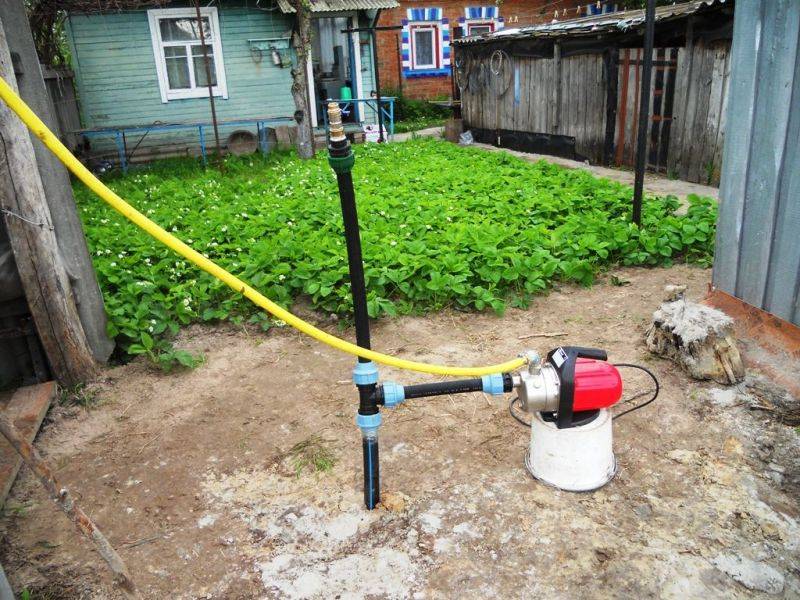
This design can be safely called ground, since all its parts lie on the surface of the earth. In some cases (for example, due to terrain features), pipes and hoses have to be raised above the ground.
The longest part of the system consists of interconnected pipes or hoses made of elastic materials that can withstand exposure to bad weather and ultraviolet radiation. To connect individual segments, steel or plastic fittings, coupling fasteners, adapters, tees are used.
Temporary and stationary irrigation systems include the installation of hydrants and a variety of watering equipment: hoses, sprinklers, sprayers. The difference is only in the underground or ground communications
Given the demand for collapsible structures, plastic pipe manufacturers began to produce products with snap fasteners, which are fixed with a slight pressure. During disassembly, cutting at the joints is not required - the sleeves are removed as easily as they are put on.
The advantages of the temporary system are obvious:
- simple, quick installation and dismantling that do not require special knowledge;
- lack of earthworks;
- the possibility of prompt repair of malfunctions and elimination of leaks, since the entire system is in sight;
- low total cost of pipes, hoses and pumping equipment.
The main disadvantage is the need for assembly and dismantling, which are mandatory at the beginning and end of the season, but difficulties arise only for the first time. Re-installation is much easier and faster.
One of the popular options for summer water supply for watering the garden is a drip system, consisting of a set of elastic hoses with small holes that dose moisture to the roots of the plant.
When laying ground communications, it is necessary to monitor their location relative to footpaths, playgrounds, places for outdoor activities, as pipes can interfere with movement, and people, in turn, can accidentally damage the pipeline.
And another unpleasant moment is the risk of losing convenient equipment. Try to position the net so that it is not visible from the road or neighboring property.
Stationary underground utilities
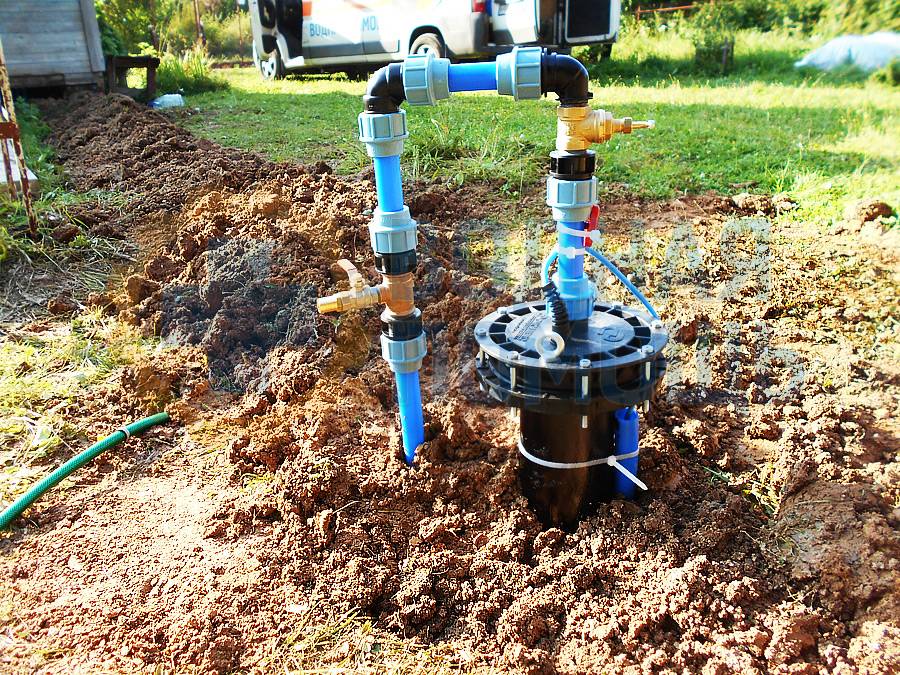
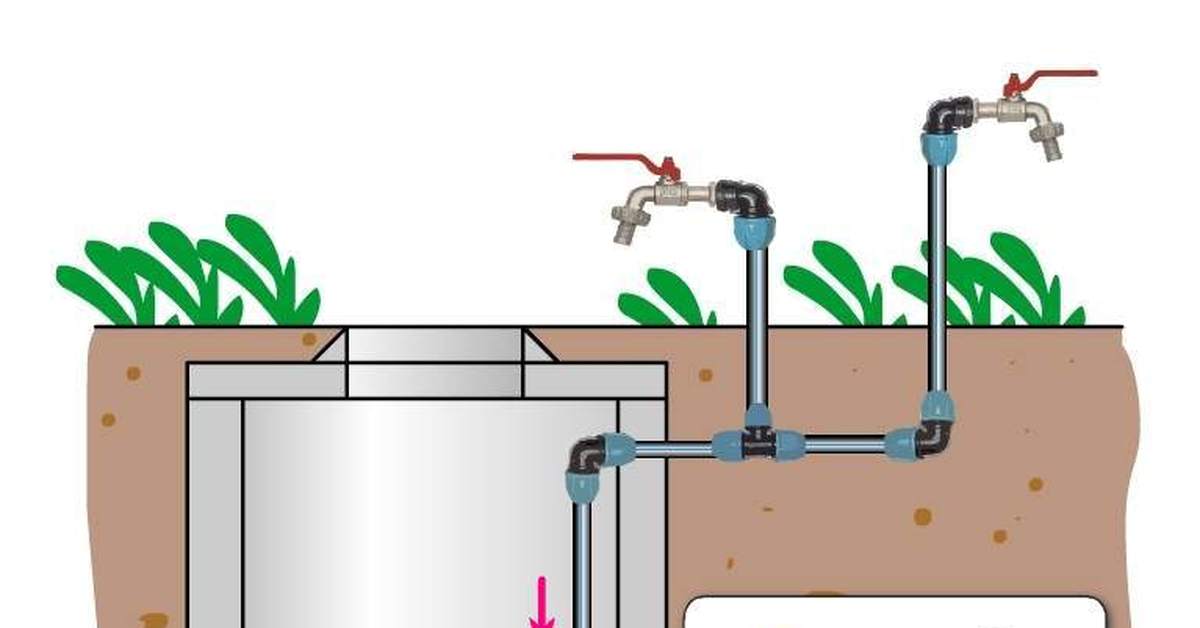
Everyone who is not interested in the hassle of assembling and disassembling chooses a permanent option - a water pipe buried in a trench at a shallow depth (0.5 m - 0.8 m). There is no goal to protect the structure from the effects of winter frosts, since at the end of the season the water is drained through special taps installed at the lowest points. For this, pipes are laid with an inclination towards the source.
Ideally, during the drain, the water should go back into the well or into the drain hole equipped near it. If you forget about the drain procedure, in the spring you can run into trouble - water frozen in frost will break pipes and joints, and the water supply system will have to be changed completely.
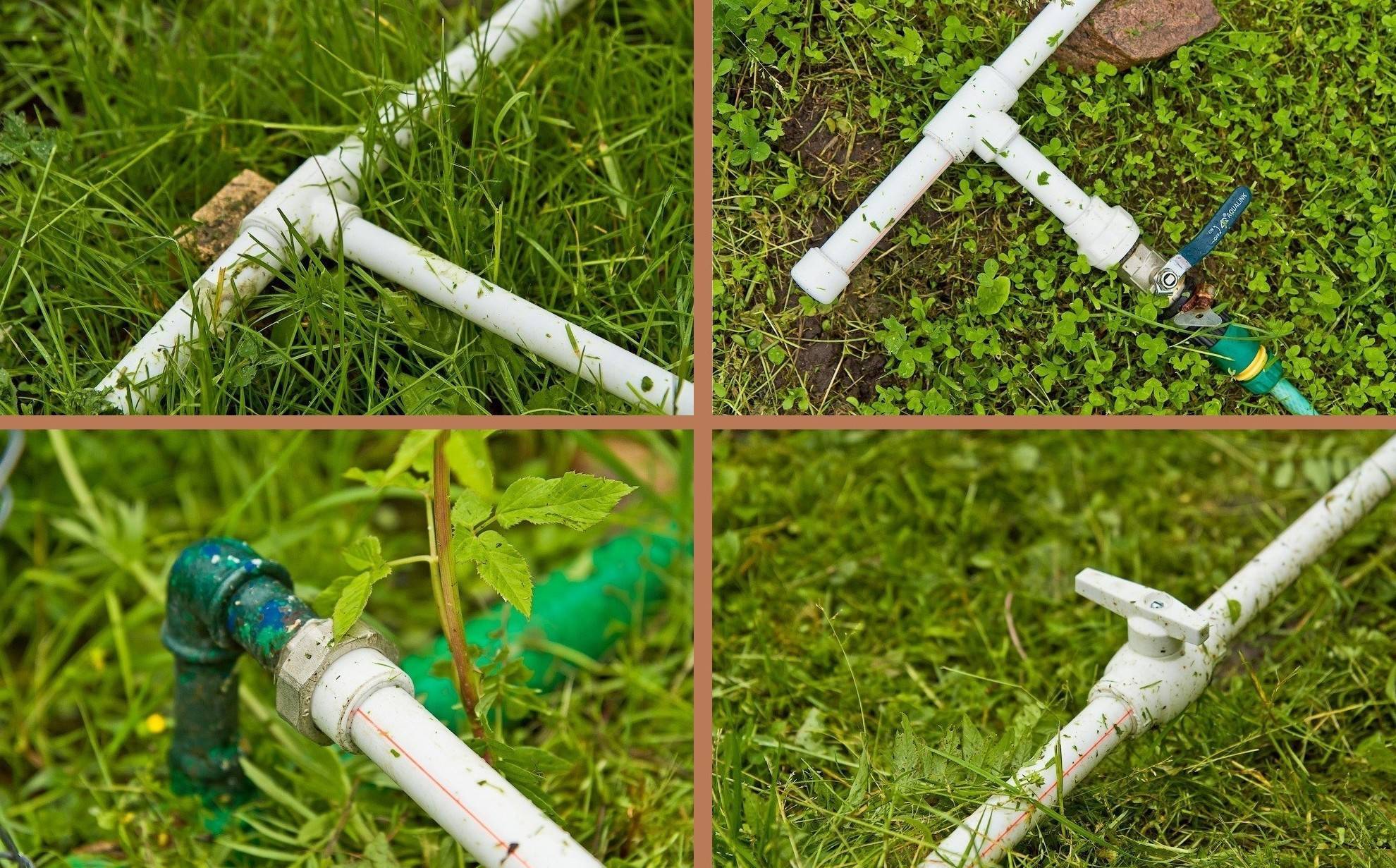
To connect polypropylene pipes, welding with a special apparatus or fittings is used.In difficult areas, if bending is required, thick-walled flexible hoses can be used (they are intended for indoor use, therefore, to perform "street" functions, elastic fragments must be protected from moisture and insulated).
For welding polypropylene pipes, a special soldering iron is used - a device with heating elements and welding nozzles. Tight connection is possible when the working elements are heated to a temperature of +260ºС
Advantages of a stationary design:
- pipe laying and equipment installation is carried out once, only consumables (gaskets, filters) are subject to replacement;
- communications do not interfere with the movement of vehicles and people around the site, in addition, the soil is additional protection for them;
- underground pipes are difficult to steal;
- if necessary, the conservation process is fast enough.
The only disadvantage of the underground network is additional work, respectively, increased costs. If you rent equipment or invite a team of workers to dig a trench, even more money will be spent.
How to assemble plumbing
When collecting water supply in the country with your own hands, you need to decide in which parts of the site you need wiring. The fact that water should be supplied to the house is self-evident. But in addition to distributing the water supply around the house, it is necessary to lay pipes for irrigation in key places of the site, put taps on them. If necessary, connect a hose to them and, shifting it from place to place or installing a sprinkler, water the nearby beds.


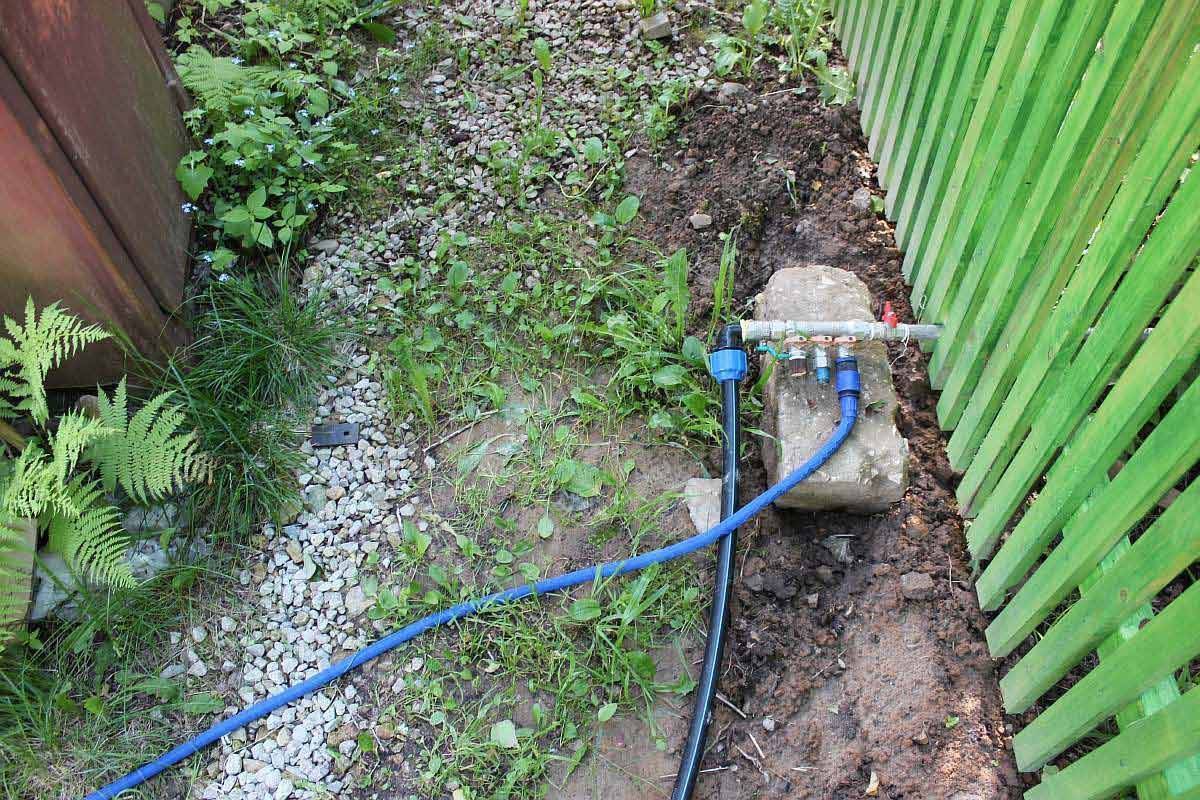

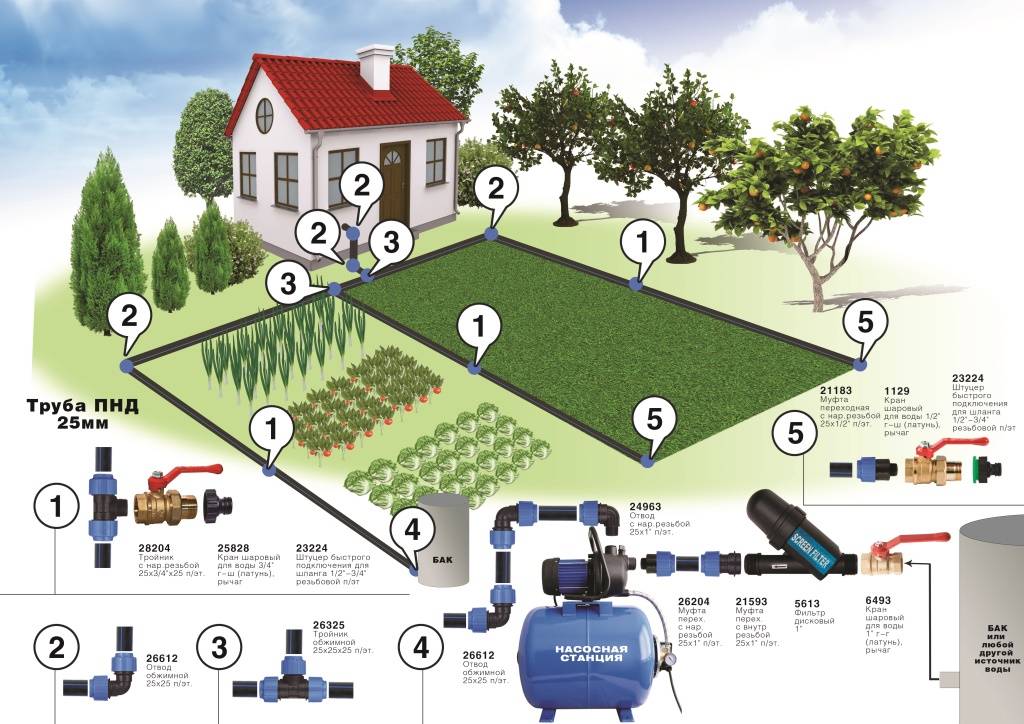

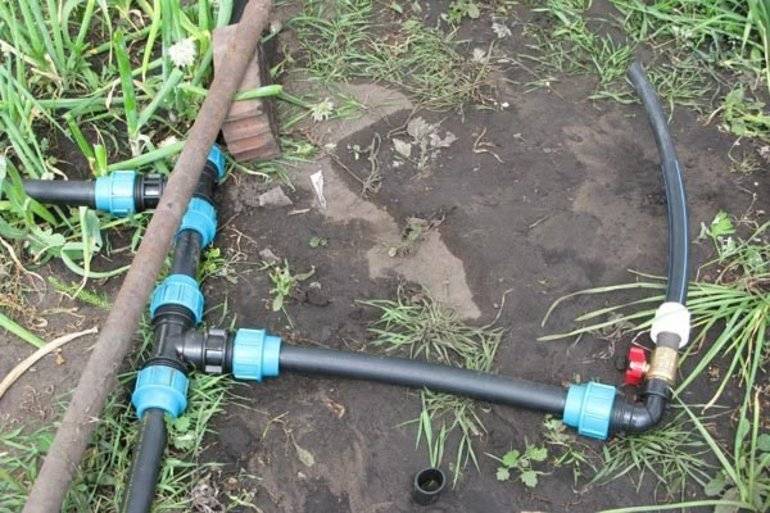
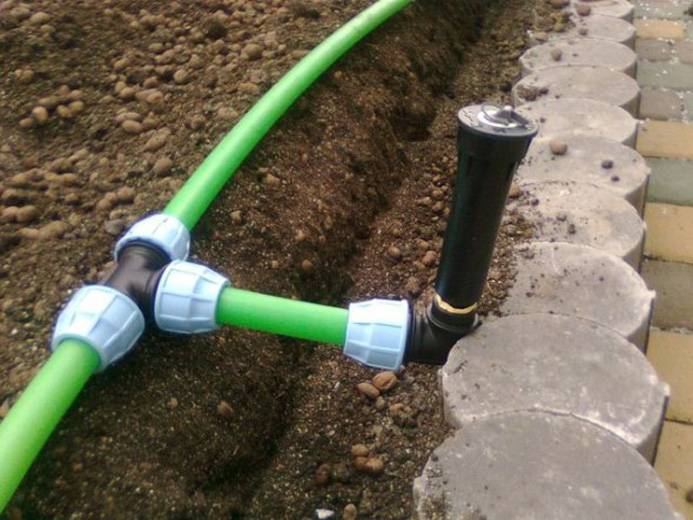
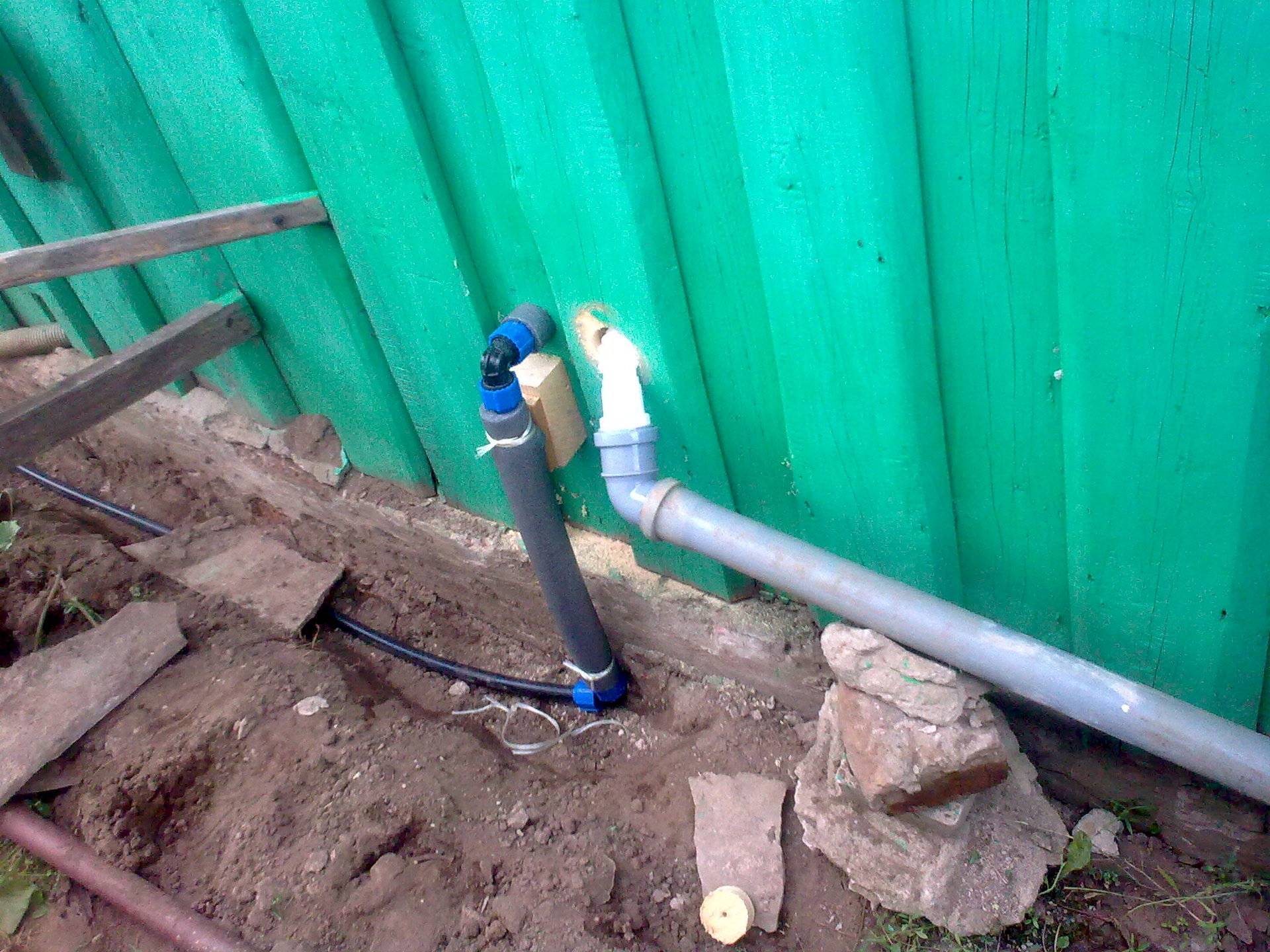
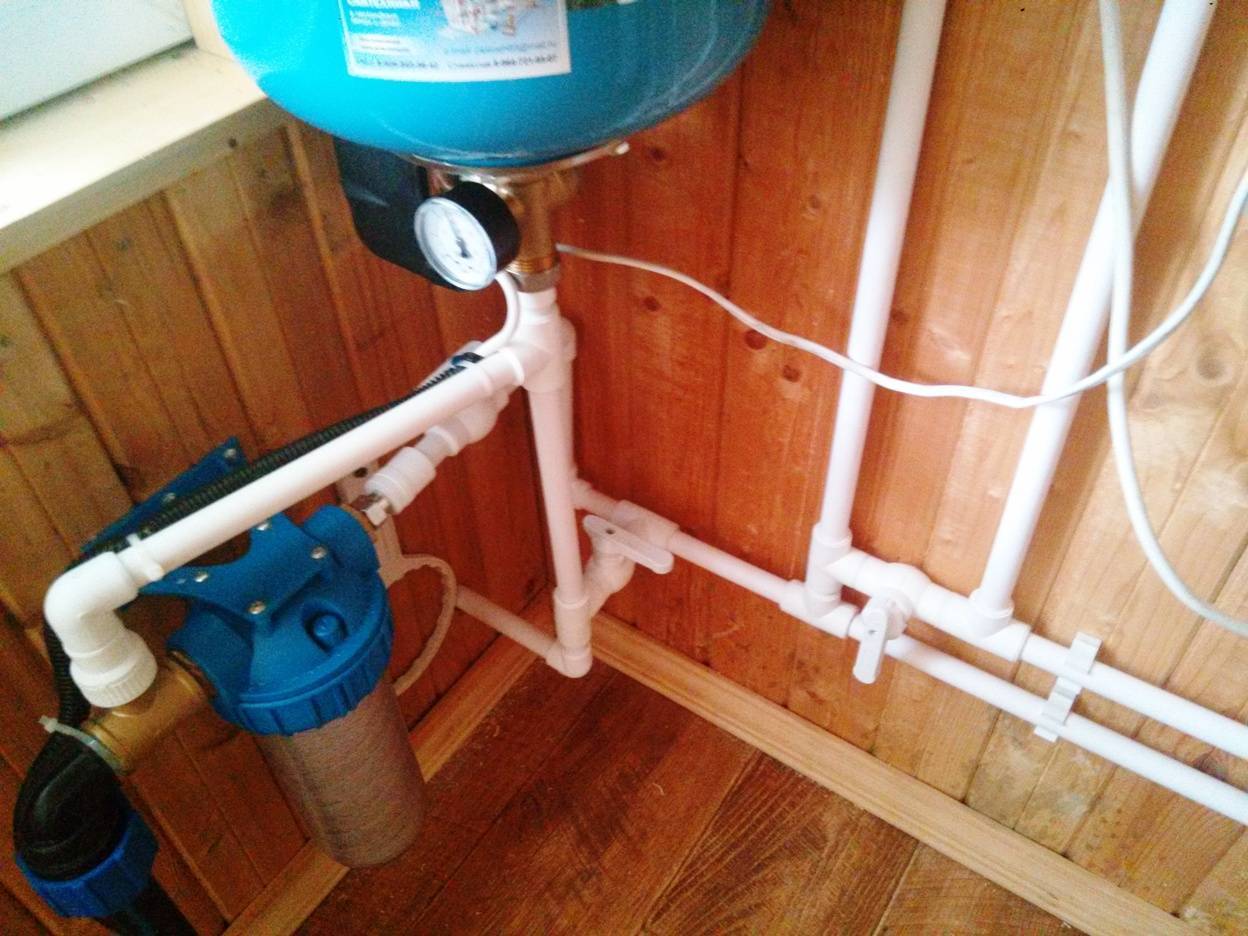
How to bring water into the house, read here, and how the plumbing should be done in the summer cottage with our own hands, we'll talk further. It is best to draw the plan to scale.If you already have beds, you can easily determine where you need to deliver water. It is better to make several points of water intake: long hoses are inconvenient and difficult to carry, and having the ability to connect several at the same time, you can handle watering faster.
The tap in the system must be at the exit of the house and before the first branch
When drawing up a diagram, do not forget about the need to install taps on the main line: at the cut after the outlet is still in the house, and then, on the site, before the first branch. It is desirable to install cranes further on the highway: in this way it will be possible to turn off the emergency section in case of problems.
Even if summer water supply will be equipped, you will need to drain the water from the pipes so that when it freezes, it does not break them. To do this, you need a drain valve at the lowest point. That's when it will be possible to close the tap in the house, and drain all the water, protecting the water supply from damage in the winter. This is not necessary if the country water supply pipes are made of polyethylene pipes (HDPE).
After drawing the diagram, count the pipe footage, draw and consider what fittings are needed - tees, angles, taps, couplings, adapters, etc.
In order to correctly calculate the material and make the correct layout of the water supply in the country with your own hands, first draw a plan where you can calculate the footage and the number of fittings
Then you need to decide on the mode of use. There are two options: summer and winter plumbing. They differ in the depth to which the pipes are buried. If you have an all-weather dacha, then you will have to lay an insulated water supply in the dacha itself or bury it below the freezing depth.For wiring irrigation pipes in the country, it is more rational to use the summer version of the water supply. You will only need a winter one if you have a greenhouse equipped. Then the section of the water supply to the greenhouse will need to be equipped in a serious way: dig a good ditch and lay insulated pipes.
Summer plumbing in the country
Depending on which pipes you will use, they can be left at the top, or they can be laid in shallow ditches. Installing a country water supply underground will take more time, but it is more reliable.
Do-it-yourself surface wiring for irrigation in the country is done quickly, but the pipes lying on the surface can be damaged
Having decided whether you need trenches or not, and having dug them out, if you have chosen an underground option, the pipes are stretched and laid out over the site. So once again the correctness of the calculations is checked. Then you assemble the system. The final stage - testing - turn on the pump and check the quality of the joints.
Before starting the installation of the water supply at the summer cottage, the pipes are laid out in the right places
Winter water supply differs from flight water supply in that the areas that will be operated in the cold season must be guaranteed to be protected from freezing. They can be laid in trenches below freezing depth and/or insulated and/or heated with heating cables.
You can read about the organization of automatic watering here.
Sources
- Where to get water in the summer cottage?
Its sources may be:
- Stationary water supply;
- Summer water supply to the dacha will provide water supply for irrigation. As a rule, water is supplied to it according to the schedule. For uninterrupted water supply, it is necessary to create an autonomous supply of water in a reserve tank;
Plumbing for irrigation in a garden partnership
- Your own well or well can provide you with non-potable water, and in some cases - drinking quality;
- Finally, no one canceled the use of imported water. As in the case of a summer water supply system, the task is to organize the storage of a sufficiently large amount of water and its supply to the water supply system with excessive pressure.
Drinking water delivery tanks
Advantages of autonomous water supply
Residents of megacities who are not puzzled by the problem of private water supply may be surprised to learn that the well water supply system has many advantages.
The largest is contained as a liquid. It has almost spring purity - in its composition there are no such harmful impurities as chlorine or rust.
The second plus concerns saving the family budget - you freely use natural resources without paying monthly receipts.
And another nice bonus is the control over the operation of the system. For example, you can independently regulate the pressure or lay pipelines to a garden plot or flower garden.
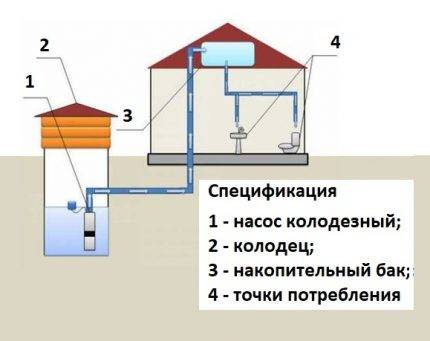 The simplest scheme for supplying water from a well shows the installation location of the storage tank: it is mounted in the upper part of the house, under the roof
Many doubt the feasibility of installing a water supply system from a well to a house, arguing that a water supply system with a well would be much more efficient.
Perhaps, but having a strong, deep well with a sufficient water level in the summer cottage, there is no need to drill a well for the following reasons:
- registration of permits for an artesian well, drawing up a project and drilling work take a lot of time;
- the cost is high and not suitable for everyone (about 130 thousand rubles per well up to 30 m);
- the arrangement of the well system is a little easier (especially the summer version);
- the presence of a well does not require permits from state authorities.
If minor repairs or cleaning from silting are required, much less effort and money will be spent on it than on cleaning the well.
In case of temporary power outages, there is always a fallback option - a bucket on a rope or a special lifting mechanism (a narrow wellbore does not allow the use of improvised devices).
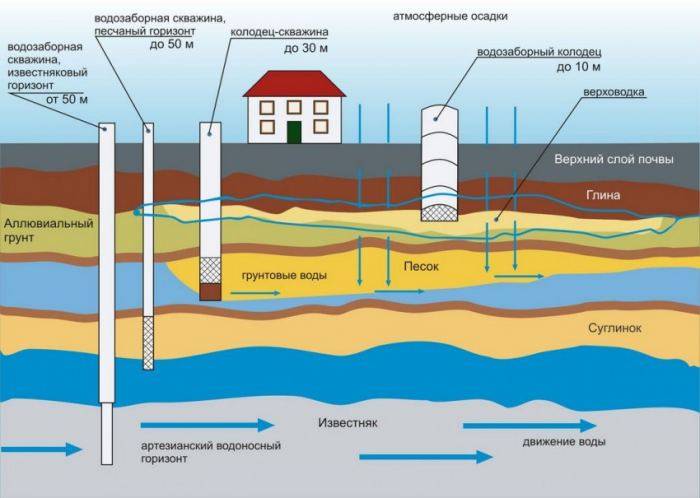
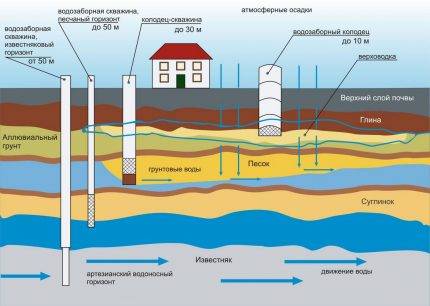 The device of a well or an artesian well depends not only on the desire of the homeowners, but also on the depth of the aquifers, as well as on the composition of the soil
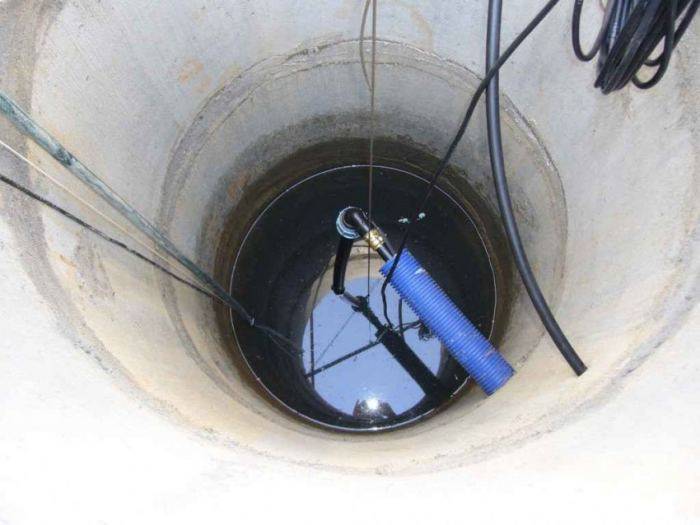
There are also a number of difficulties, but they are solvable. For example, an old wooden structure becomes unusable over time - it is better to replace it with concrete rings.
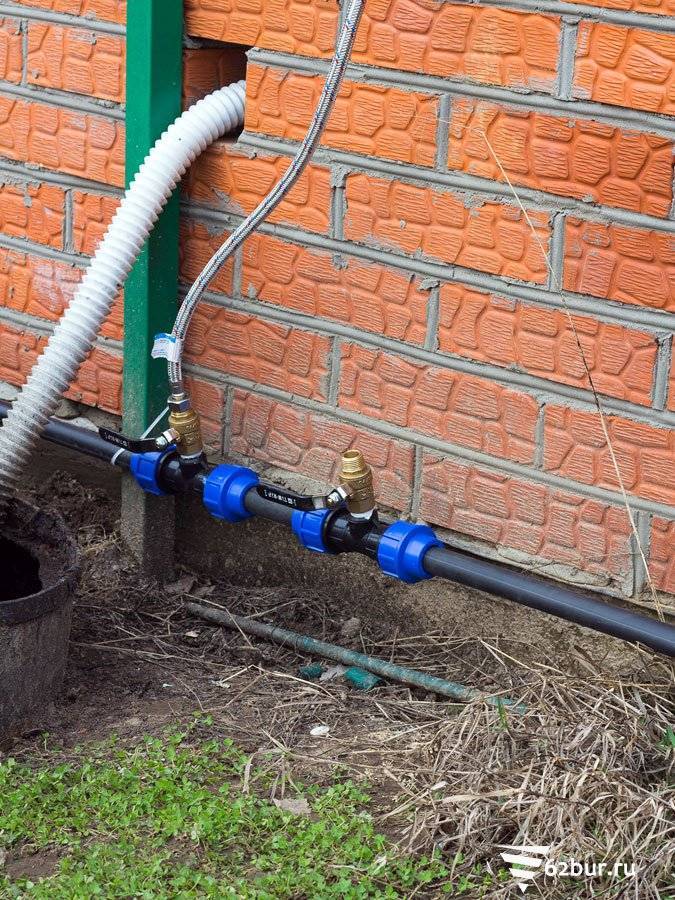

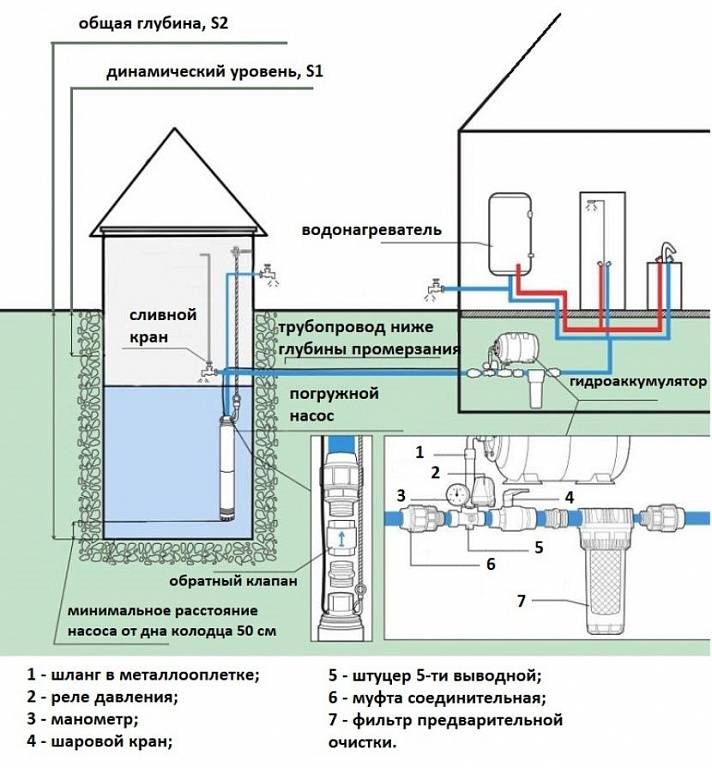

If the structure has lost its tightness and lets in the perch and domestic drains, it is necessary to make a major seal of the seams on both sides, internal and external.
Sources
The issue of installing a water source is the most important in the whole process. Fortunately, there are only three main options, which means you can not be afraid that the choice of system will be wrong.
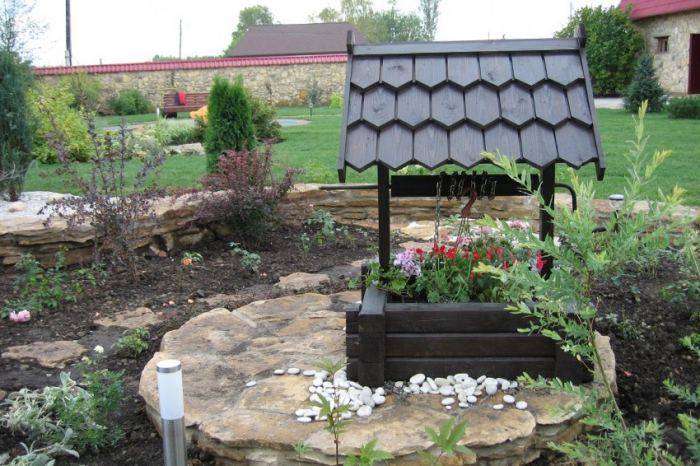
Well
In order to build and use it, no documents are needed. Water from it can be pumped manually, which will be a big plus if there are frequent problems with electricity.
Well on the sand
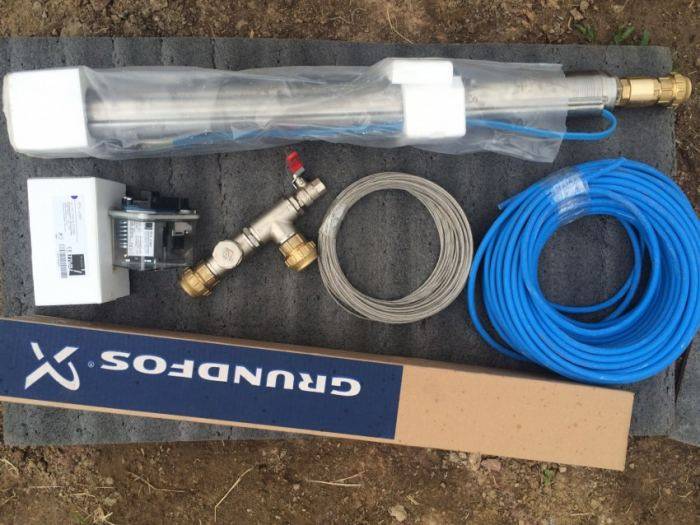
If the aquifer does not lie deep, then drilling a well can do without large equipment. For such a well, the strongest filtration system is needed. Such wells will produce water for about 8 years.
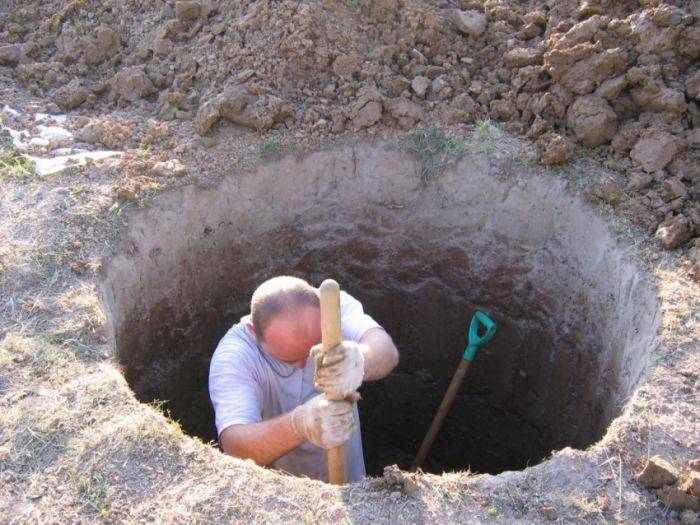
Artesian well
It will take water where pollution from the surface will not fall. The productivity is so high that one well can be used for several sites.
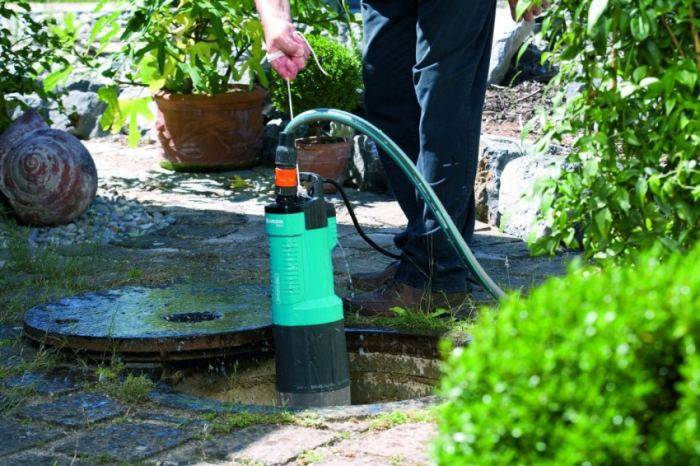
Capacity
- How to organize the simplest water supply of a summer residence with minimal costs?
From pressure tank. It can be filled with:
- From the summer water supply when it is turned on;
- From an open reservoir or well using a manually connected pump;
- Imported water.
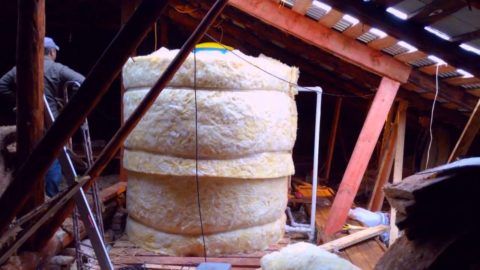
Pressure tank in the attic
The advantage of a water supply scheme with a pressure tank and gravity water supply is that it is completely independent of electricity. Alas, power outages are not uncommon in garden cooperatives.
pressure
- At what height should the container be installed?
For the operation of household appliances (water heaters, washing machines, etc.), a pressure of at least three meters is needed. The same pressure is needed to take a shower with minimal comfort. Faucets with a spout without an aerator and toilet cisterns are able to work at any pressure other than zero.
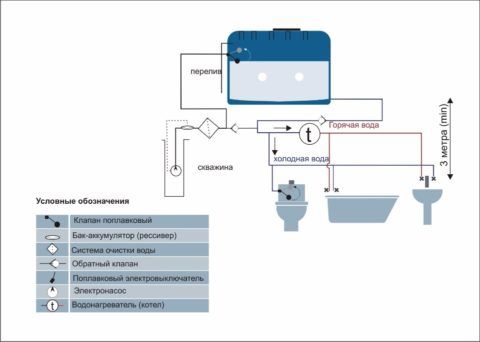
Reasonable minimum pressure - 3 meters
Volume
- How to calculate the required volume of capacity?
It is equal to the product of daily water consumption and the maximum duration of interruptions in its supply. For a rough calculation of the first parameter, you can use the sanitary norm (in the presence of hot water - 200 liters per person per day). Let's say, when water is supplied for irrigation twice a week and two residents, the minimum tank size is 200x2x4 = 1600 liters.
Water consumption rates
Connection to an external water supply
- How to ensure automatic filling of the tank from the summer water supply?
The instruction is quite obvious: to do this, it is enough to bring water to the tank and install a float valve in its wall.
With a tank volume up to cubic meters, a 1/2-inch toilet cistern valve can be used. The approximate flow rate of water through it at standard pressure is about a cubic meter per hour. If the tank is larger than a cubic meter, it is worth purchasing a larger valve (DN 20 or DN 25).
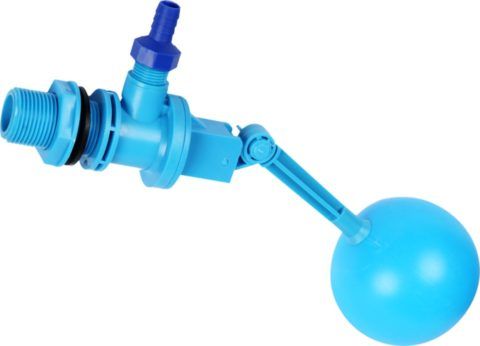
Tank filling valve
Connection to internal water supply
- Do I need some fittings between the tank and the internal water supply?
Crane only. By closing it, you drain the water supply to repair the faucet or fittings of the drain tank without draining the contents of the container.


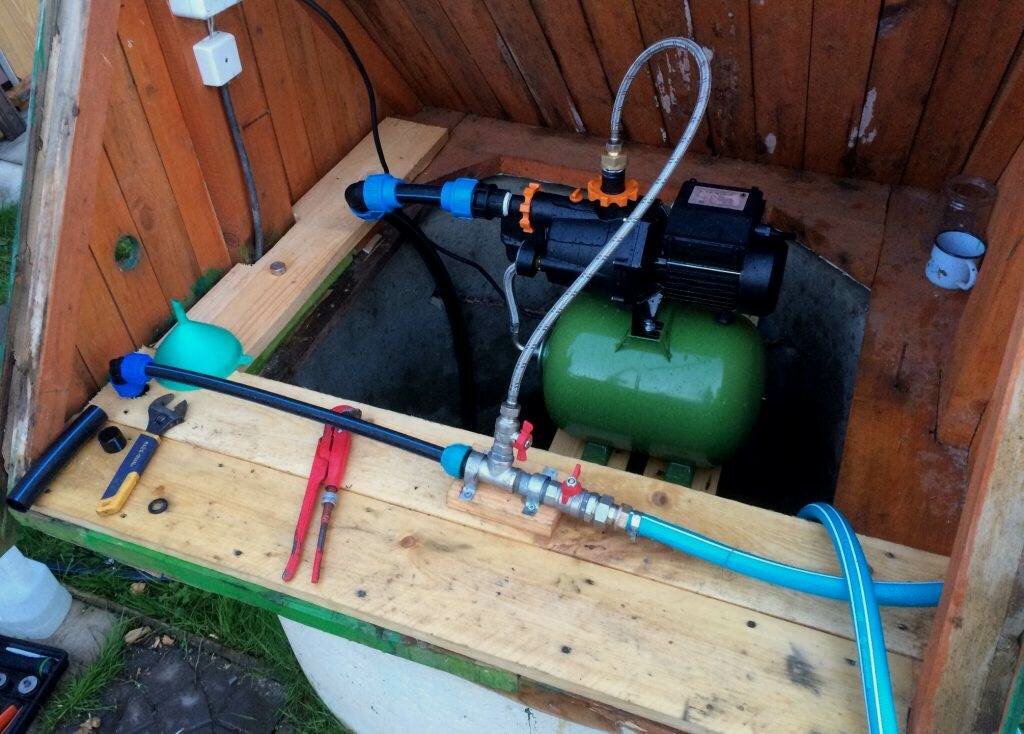


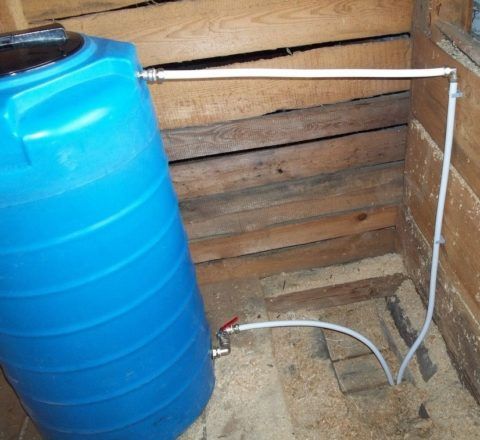
The tap will allow you to dump water from the water supply, keeping it in a container
Why water supply from a well is beneficial
The dacha is not just a country estate. We go to the dacha to relax from the bustle of the city, but this vacation should be comfortable and enjoyable. The lack of familiar amenities will not confuse the harsh hunters and fishermen, but the city dweller in the fifth generation can be confusing and noticeably spoil the mood. For example, the lack of water in the house is unlikely to add positive emotions to the summer resident. However, this issue is quite simple to solve by equipping the water supply in the country from the well. Such a system is relatively simple and does not require large investments.
Water supply from a well has a number of advantages over water supply from a centralized main:
- Water is always at your fingertips. It will not be turned off at the most inopportune moment;
- Water extracted from underground reservoirs is much cleaner than tap water. No rust or bleach;
- This water will get you much cheaper! No utility bills, except for electricity;
- The operation of the system, and hence the cost of electricity for the pump, you control yourself. It is necessary - they turned on the system, it is not necessary - they turned it off;
- The force of pressure and the scheme of laying pipes in the summer cottage - depend solely on your decision.

The quality of the plumbing system for the most part depends on competent design
A well can serve as an alternative to water supply from a well. But, for a number of parameters, such a system is less profitable:
- To drill a well, official permission from the authorities is required. Hello bureaucracy!
- Exploration of the site and preparation of the project can stretch for an impressive period.
- Drilling work will significantly hit the budget.
- If the electricity goes out, the cottage will be left without water. And from the well, in extreme cases, you can always draw water with a simple bucket.
Before starting work, it is better to replace the wooden frame of the well with concrete rings, and also seal the seams. This will ensure the isolation of well water from the ingress of household, sewerage and perched water.
Flaws
Ground water can get into drinking water. However, this happens only with an unreliable arrangement of the structure and non-compliance with all the rules;
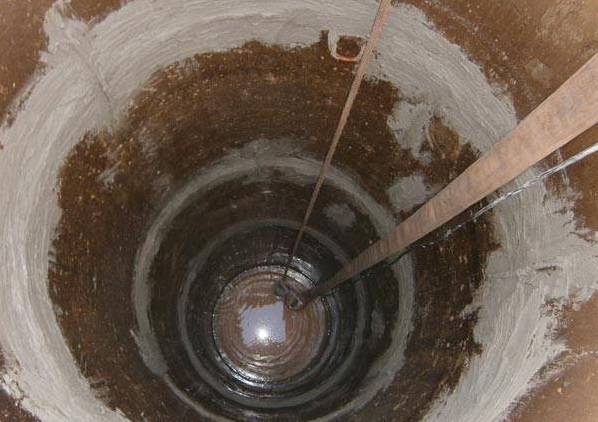
If the well is improperly constructed, groundwater with impurities will enter the drinking water
For the device of the well, you will have to dig a deep hole: about 4-5 meters. Because of this, a large amount of soil will have to be removed;
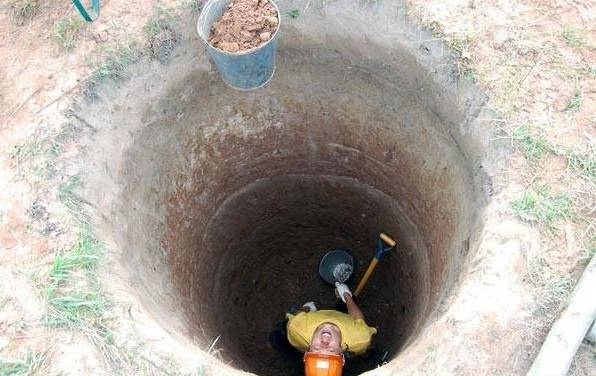
Often, to get to the aquifer, you have to dig very deep wells.
For the water supply system, you need to carefully select a site in the yard. It should be located more than 50 meters away from toilets, pit latrines and similar facilities where contaminated fluid and faeces are present.
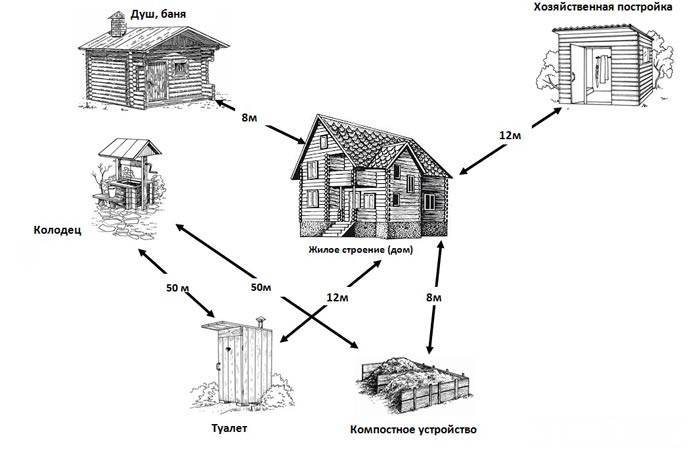
Requirements for minimum distances between different buildings
As we can see, do-it-yourself plumbing in a country house from a well has certain pros and cons. After analyzing them, you decide how expedient it is to make such a system in a summer cottage.
Wiring
- What is the best way to dilute water - in series (with a common supply for all devices) or through a collector?
Collector wiring gives a tangible advantage in a house with a large number of permanent residents. It lies in the fact that a tap that is open to failure does not cause an instantaneous pressure drop in the entire water supply system and a change in water temperature at the mixer spout.
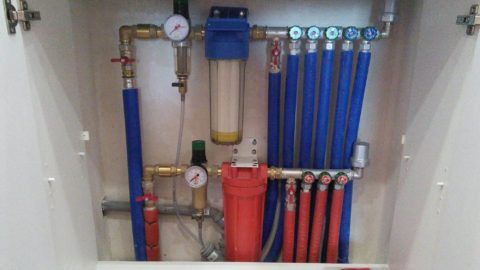
In the photo - a manifold cabinet for the water supply of the cottage
Tee (serial) wiring also has convincing advantages:
- It is much cheaper than radiation;
- It can be done after construction is completed. Collector wiring is usually made hidden, which involves the installation of a water supply system at the construction or overhaul stage;
- It is much easier to connect a new plumbing fixture to it.

Open tee
System installation
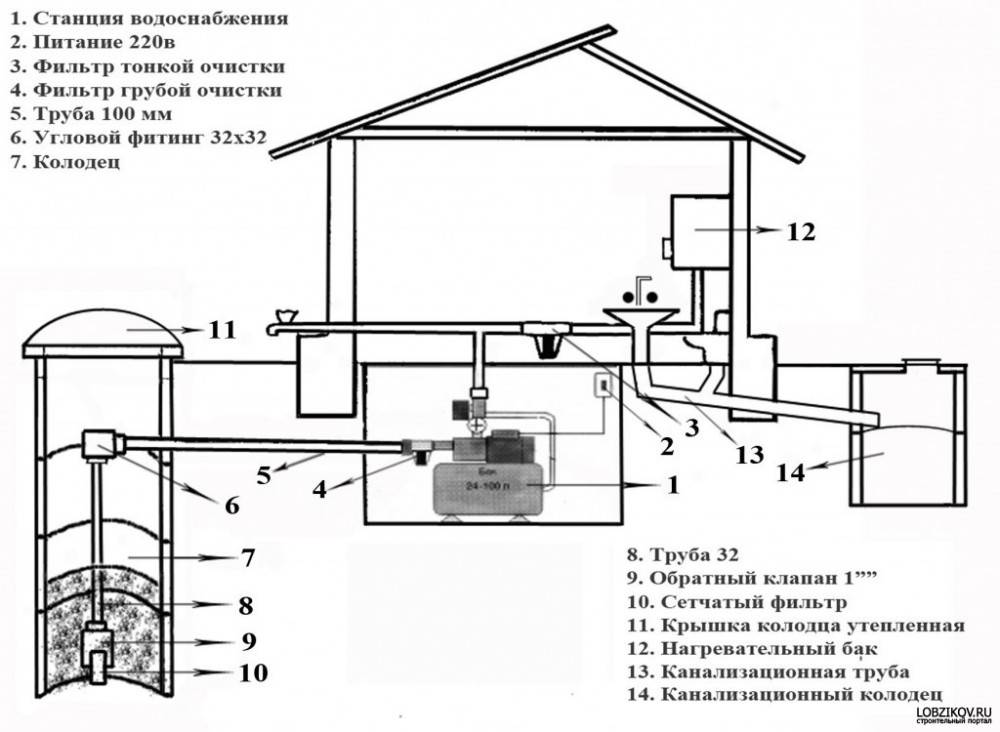
The water supply system in the country is impossible without laying pipes along the section that are directed to the prepared collector at a slope to the source, valves are mounted there, and then pipes of smaller diameter are connected that lead to the points. To create a wiring, pipes from various materials can be used. For hot liquid, a boiler / water heater is used, which are also connected to the collector, but from the other side.


In addition to the water supply system, it is necessary to consider a wastewater drainage system. Previously, cesspools were used, requiring periodic cleaning.Today, a septic tank is offered: it purifies the water in stages in sealed chambers, except for the last one. The simplest option is a septic tank of several rings. The essence of the system is that it cleans wastewater from solid particles and drains it into water into the ground. When using special tools, cleaning is better. The system is cleaned once every few years.

Special pumps are also used for septic tanks.
At each dacha, you can equip a high-quality and durable water supply system of a summer or winter type. To create it, pipes from various materials are used, and the basis of the water supply system is a source and a pump. The source can be a well, spring, well. In some cases, it is possible to connect to the water supply
Before buying a pump, it is necessary to take into account its characteristics and capabilities, attention is paid to its lifting capacity, the distribution of liquid among consumers. One of the important points is the source of water, which also affects the choice of device.

Plumbing design is best done at the planning stage of the house.
Conclusions and useful video on the topic
Overview of the water supply system for summer use:
Budget option for arranging an irrigation system:
Recommendations for installing a pumping station:
As you can see, the device of a stationary summer water supply system resembles the equipment of a permanent water supply system. It can be done on your own or with the help of experienced plumbers.
After installation, do not forget about the need for maintenance: the mandatory draining of water during winter storage, as well as regular checks of the tightness of pipes and the operation of pumping equipment.