- Methods for arranging winter plumbing
- Method number 1 - below the freezing depth
- Method number 2 - warming the water supply
- water intake
- Centralized water supply
- Well
- Well
- Scheme of a country well water supply
- External and internal plumbing
- Sources of water supply
- How to get good water pressure?
- Sources of water supply
- Centralized water supply
- Plumbing from a well
- Water supply from a well
- What is an autonomous water supply
- Final stage
- Laying pipes below freezing depth
- Features of the summer water supply
- Station connection
- Video description
- System arrangement
- System installation
- Conclusion
- Insulation of the well and pipeline, backfilling
Methods for arranging winter plumbing
For a water supply system that will perform its main function - water supply all year round, you must choose one of two options:
- Lay the water supply in such a way that the pipes run below the freezing depth of the soil.
- Lay pipes above the freezing horizon, but at the same time insulating them.
Both methods have their advantages and disadvantages. Let's consider them in more detail.
Method number 1 - below the freezing depth
This method is advisable to use in the case when the freezing depth is not more than 150 cm.In this case, the value of the freezing depth is determined based on data for the last 10 years.
It is also worth considering that very cold winters occasionally occur when the ground freezes below. Based on this, it becomes clear that pipes should be laid to a depth equal to the depth of soil freezing in the region plus 20 - 30 cm.
The water supply system begins with digging a trench of the required depth from the well to the entry point of the water supply into the house.
At the bottom of the trench, sand is poured with a layer of 10 cm and water pipes are laid. The trench is covered with earth, the soil at the place of filling is compacted.
Despite the fact that this is the easiest and most inexpensive way to create a winter water supply from a well, there is a problem with the choice of pipes: polyethylene pipes will not work here, because. will not withstand the mass of soil pressing from above, and metal pipes (steel) will corrode.
The problem can be solved by treating the pipes with an anti-corrosion compound before laying.
For laying pipelines at great depths, thick-walled polyethylene pipes can be used, but they must be laid in a protective corrugated casing
In addition to the problem with the choice of pipes, this method of arranging a winter water supply has several more disadvantages:
- when carrying out repair work, there is a need for a large amount of earthwork;
- difficulty in finding a damaged section of the pipeline;
- the likelihood of freezing and rupture of pipes in the water supply system in case of insufficient deepening of the water supply system.
In order to reduce the number of accidents on the water supply to a minimum, it is recommended to make as few pipe joints as possible, because. it is at the joints that leaks most often occur.
Also, when installing a winter water supply system below the level of seasonal freezing, it is necessary to carefully monitor the tightness at the junction of the water supply pipes to the well.
When laying the pipeline below the level of seasonal freezing, the trench is deepened by 20 - 30 cm to ensure the formation of a sand cushion of 15 cm and lay pipes at the required depth
Method number 2 - warming the water supply
With this method, the water supply is buried to a depth of 40-60 cm, but the pipes are laid insulated in the trench.
For the northern regions, it would be advisable to line the trench with bricks or cellular concrete blocks to increase heat conservation.
Of course, this will significantly increase the cost of building a winter water supply, but it gives a 100% guarantee against freezing.
From above, such a trench is covered with concrete slabs and covered with soil. Pipes for the installation of insulated water pipes are usually used the most common: low-pressure polymers and a suitable diameter.
What heater to use? There are two options here:
- rigid heat-saving shells made of foam plastic or extruded polystyrene foam (“shell”);
- soft heat-insulating materials (foamed polyethylene options, mineral and basalt wool with external water-repellent protection).
When choosing a heat-insulating material for pipes, it is necessary to pay attention not only to its cost and ease of use, but also to its physical properties. For example, mineral wool is an inexpensive and easy-to-install insulation, but it has high water-absorbing properties, which means that it must be used with a mandatory vapor barrier layer.
For example, mineral wool is an inexpensive and easy-to-install insulation, but it has high water-absorbing properties, which means that it must be used with a mandatory vapor barrier layer.
Basalt wool based on sedimentary rocks is a rather heavy insulation that cannot be used for pipes of small diameter.
The choice of insulation should be made based on local conditions: soil moisture, freezing depth, and also taking into account the diameter and type of pipes
To backfill a trench with insulated pipes, it is best to use not excavated soil, but crushed stone or expanded clay.
These materials have a lower coefficient of thermal conductivity than soil, and therefore will provide longer heat retention.
water intake
One of the most important issues that needs to be resolved before doing the plumbing in the country with your own hands is where the water will flow into the system. There are three standard water intake options - centralized water supply, a well, a well, each of them has its own nuances, advantages and disadvantages.
Centralized water supply
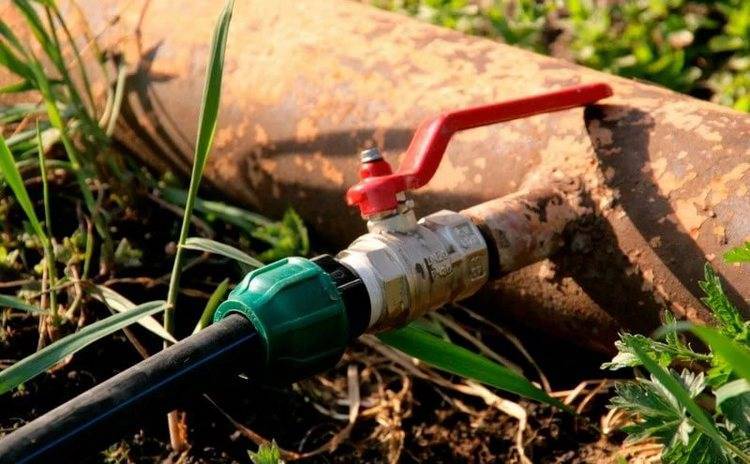
But in this case you yourself will have to install the wiring only at home. You don’t have to worry about pipe repairs, pressure drops, a global water purification system - home filters are enough. But, again, the owner will have to pay for water consumption and discharge according to the meters.




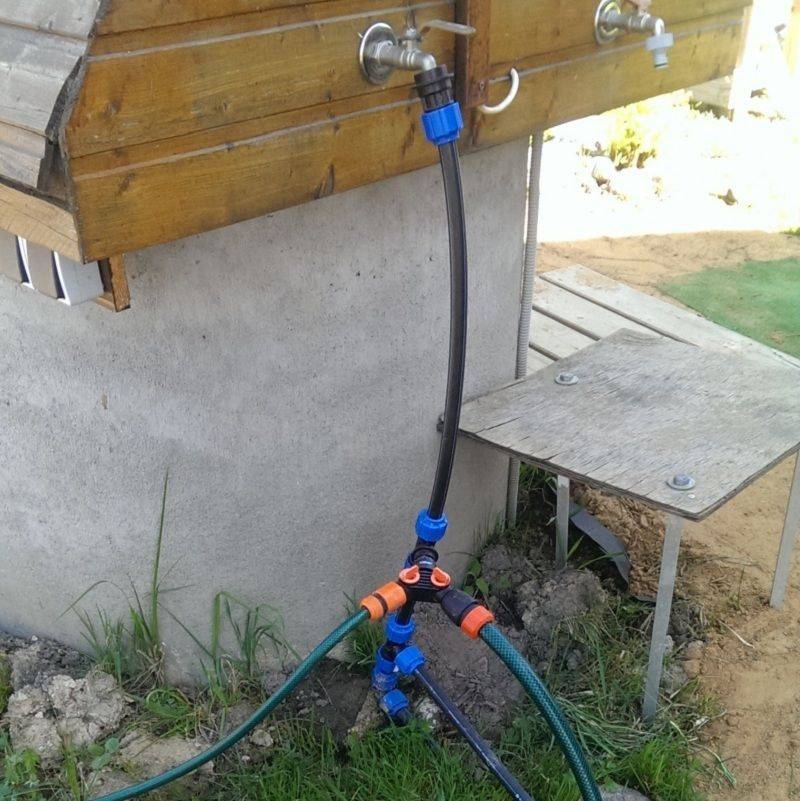
Well
Do-it-yourself plumbing in a country house from a well is perhaps the simplest arrangement scheme. There are wells in many areas, and if not, then digging and installing it is not a problem, moreover, it will not require large financial and time costs.Usually this option is suitable in areas where the depth of groundwater does not exceed ten meters.
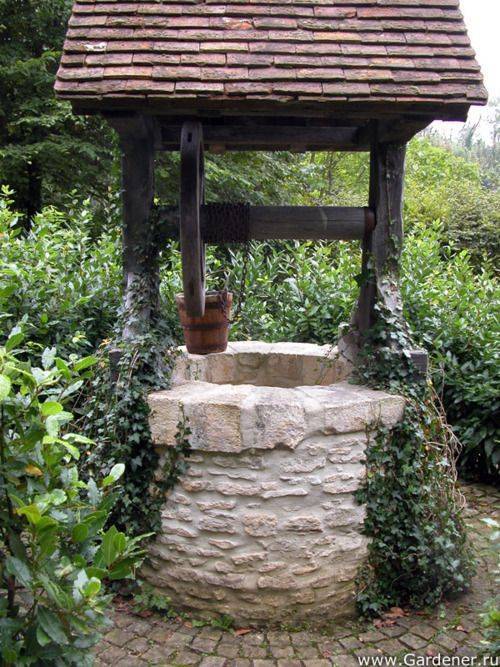
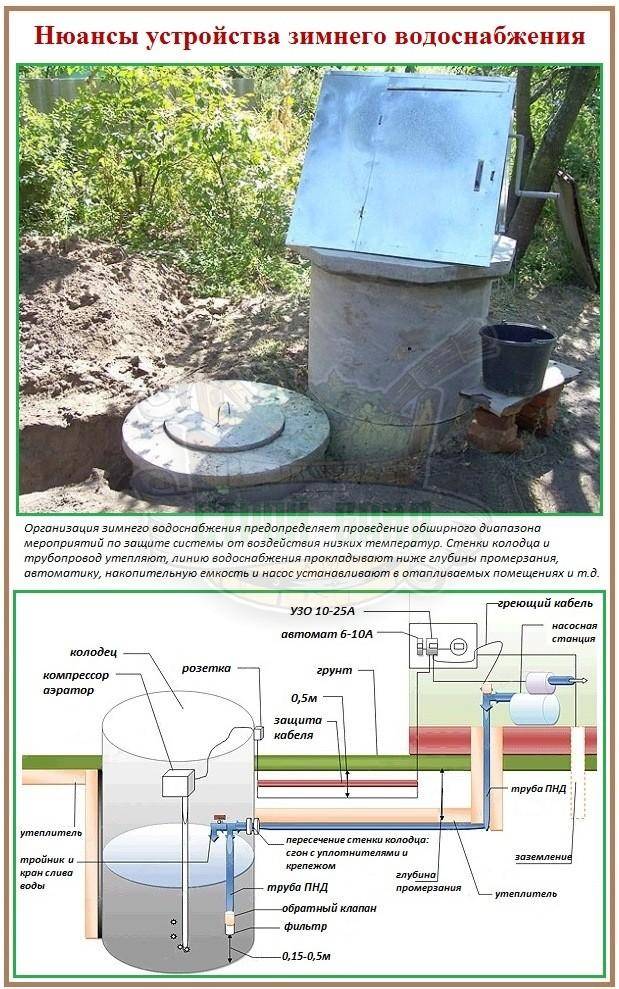
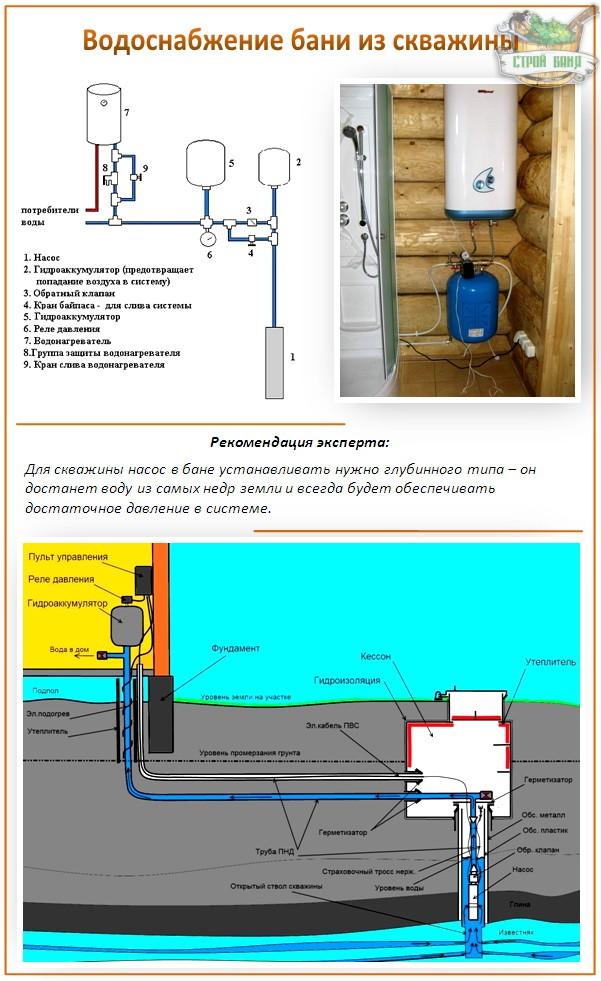
However, care must be taken to insulate the well itself and the pump. For the first, foam, polyethylene foam and other insulating materials are used. As for the pump, to protect it in winter you will need a caisson - an external pit, warm at the same time.
For all the simplicity of the country water supply from the well, it also has disadvantages. So, the water in the well is most often polluted, so if the water is used not only for domestic, but also for drinking needs, you should take care of a high-quality filtration system. In addition, with a large flow of water, not every well will be able to cover it. For example, if daily watering of the site is required, water supply to the house, baths, washing, filling the pool.
Well
Own well on the site - a great option to solve the problem with water. It is possible to equip and plumbing on dacha from a well. Thus, water is taken that lies lower than that which enters the wells. It is usually cleaner. To install a water supply system in a country house from a well, you will need a submersible pump - the equipment is more expensive and complex than surface.
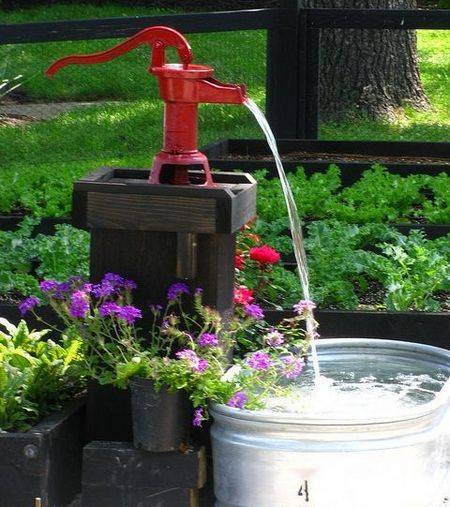
A well, especially equipped without the help of specialists, can often upset with problems. You can learn more about the reasons for its failure in work here.
However, water supply from a well is for centuries. With proper operation, the design will last for many years and will provide liquid for the whole family, personal plot, outbuildings.
To protect the water in the well from freezing in winter, a coffered well made of brick, concrete or other materials is installed.You can read more about warming water sources in winter here.
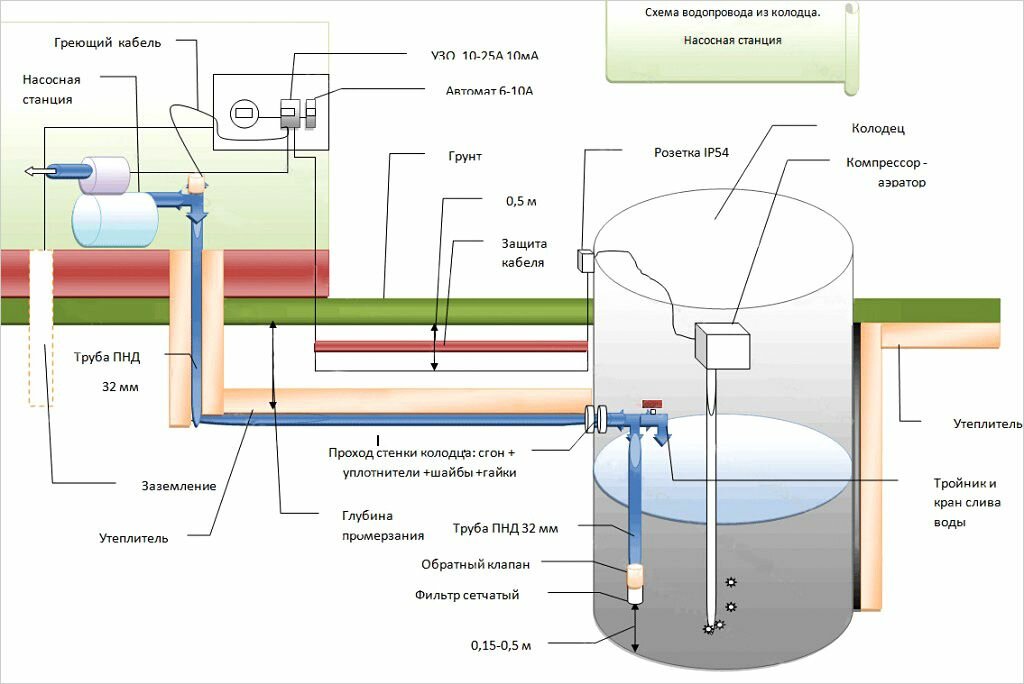
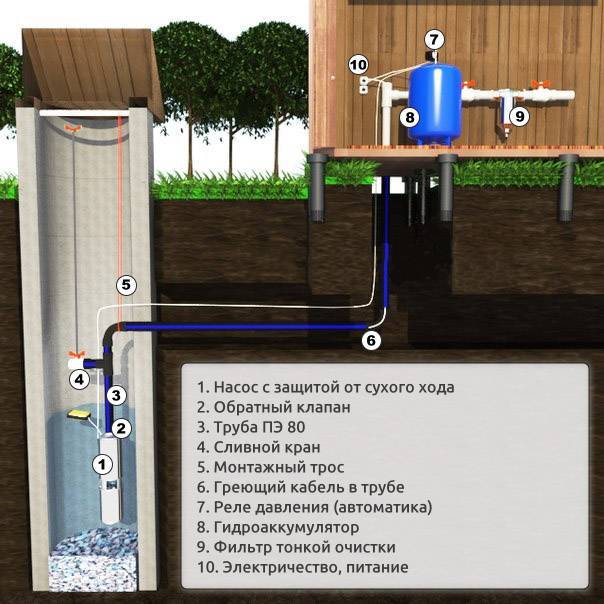
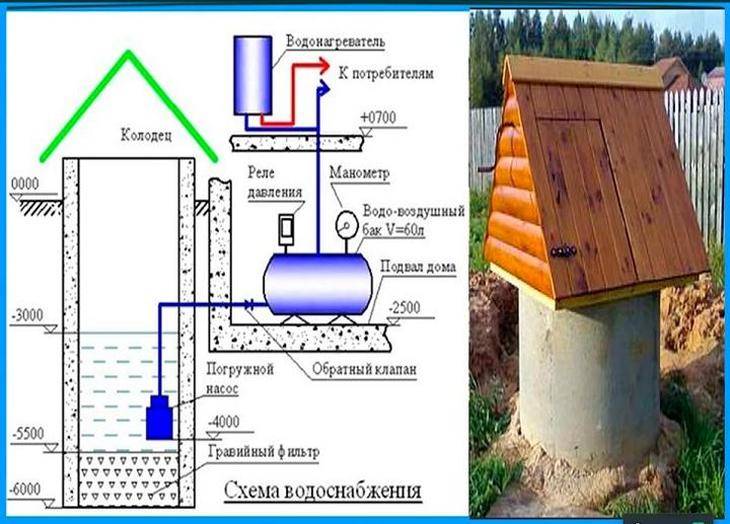
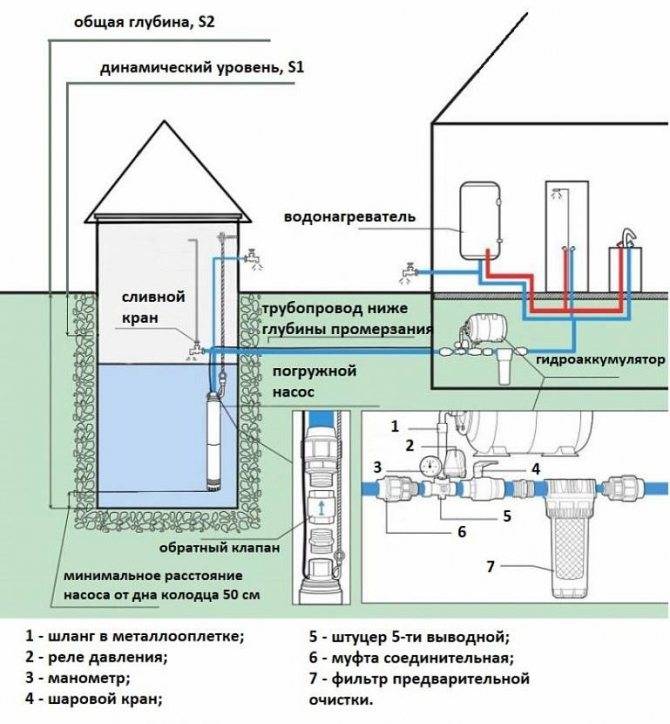
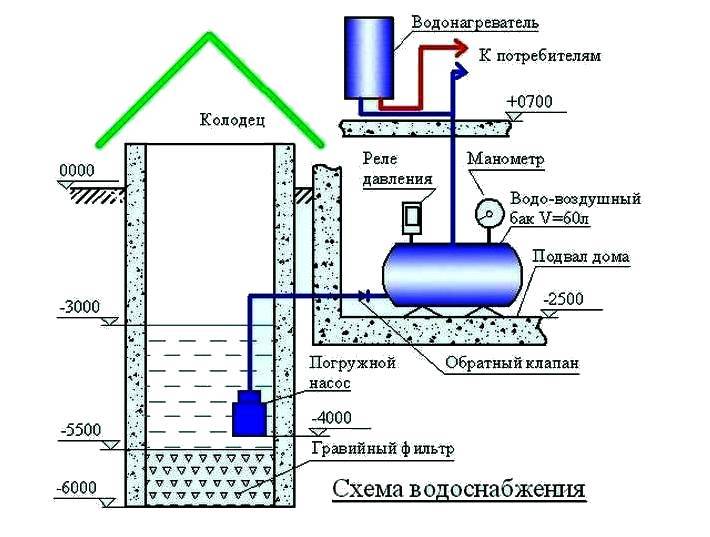
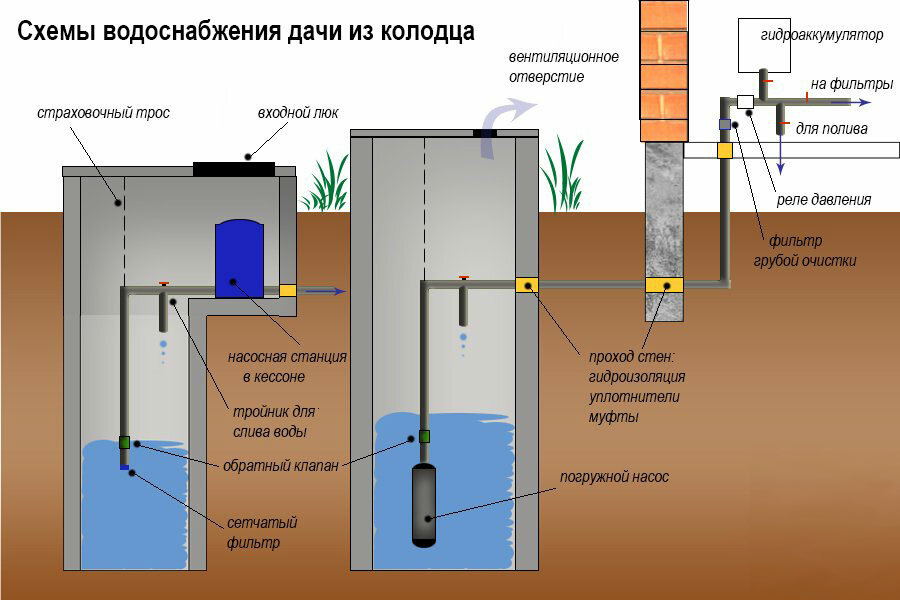
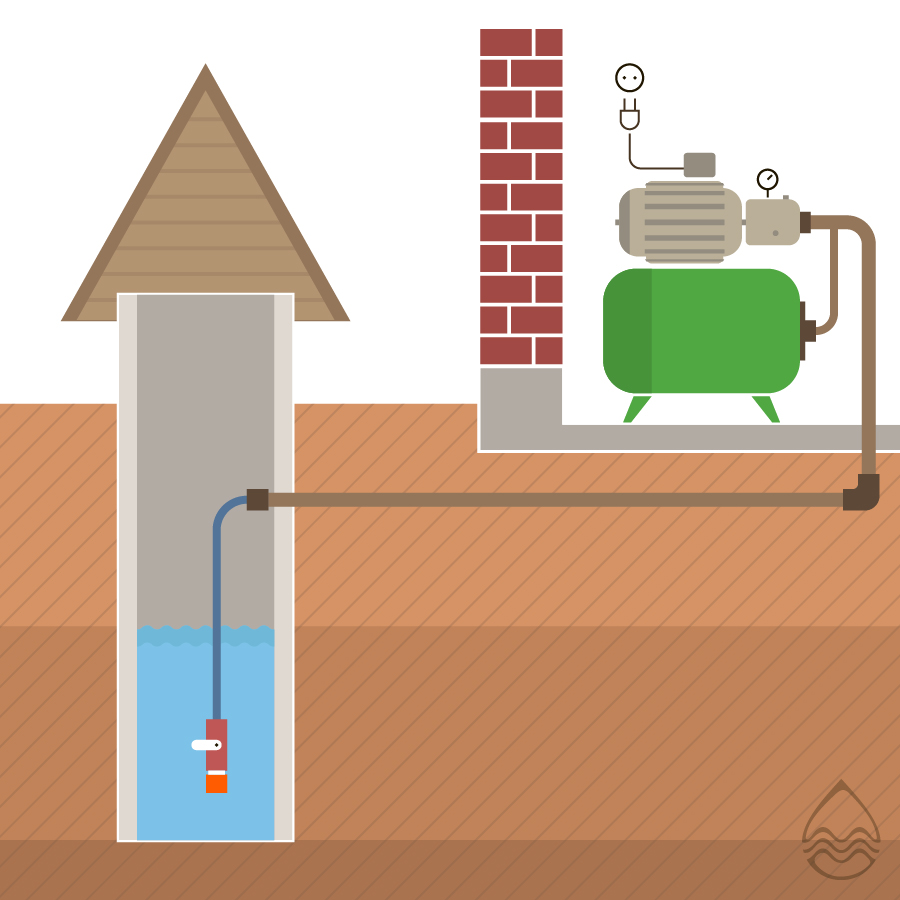
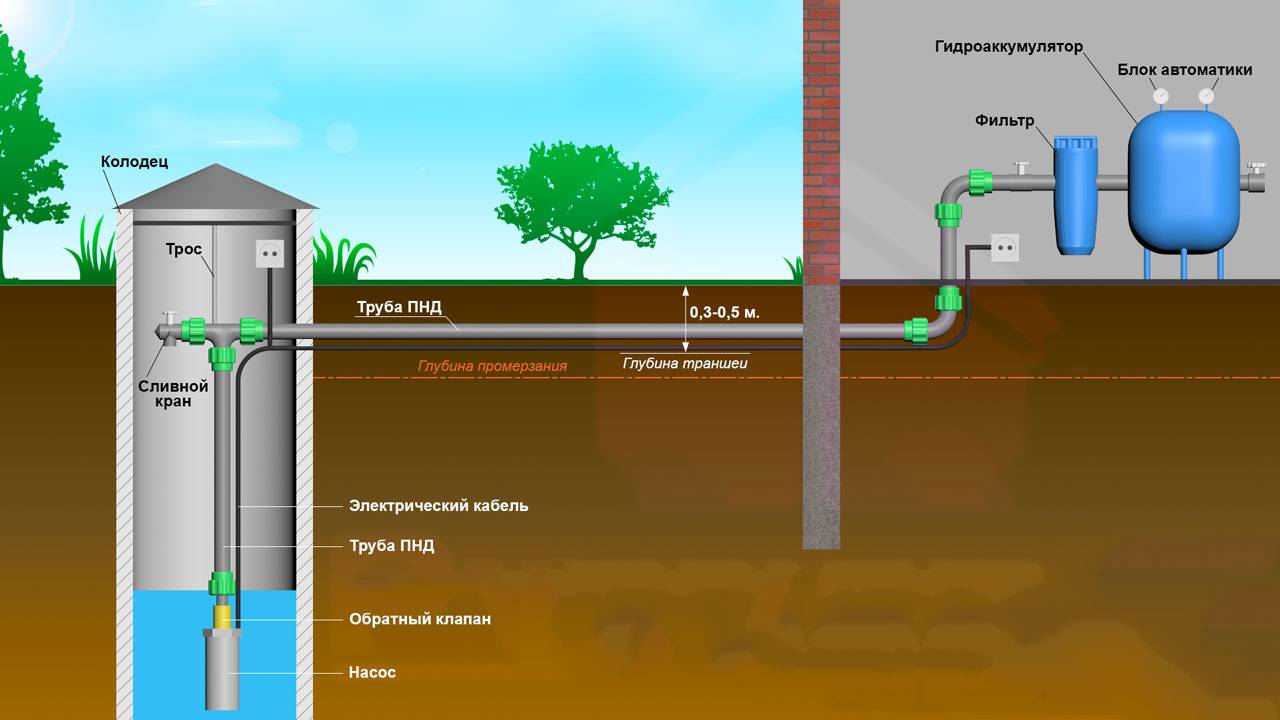
Scheme of a country well water supply
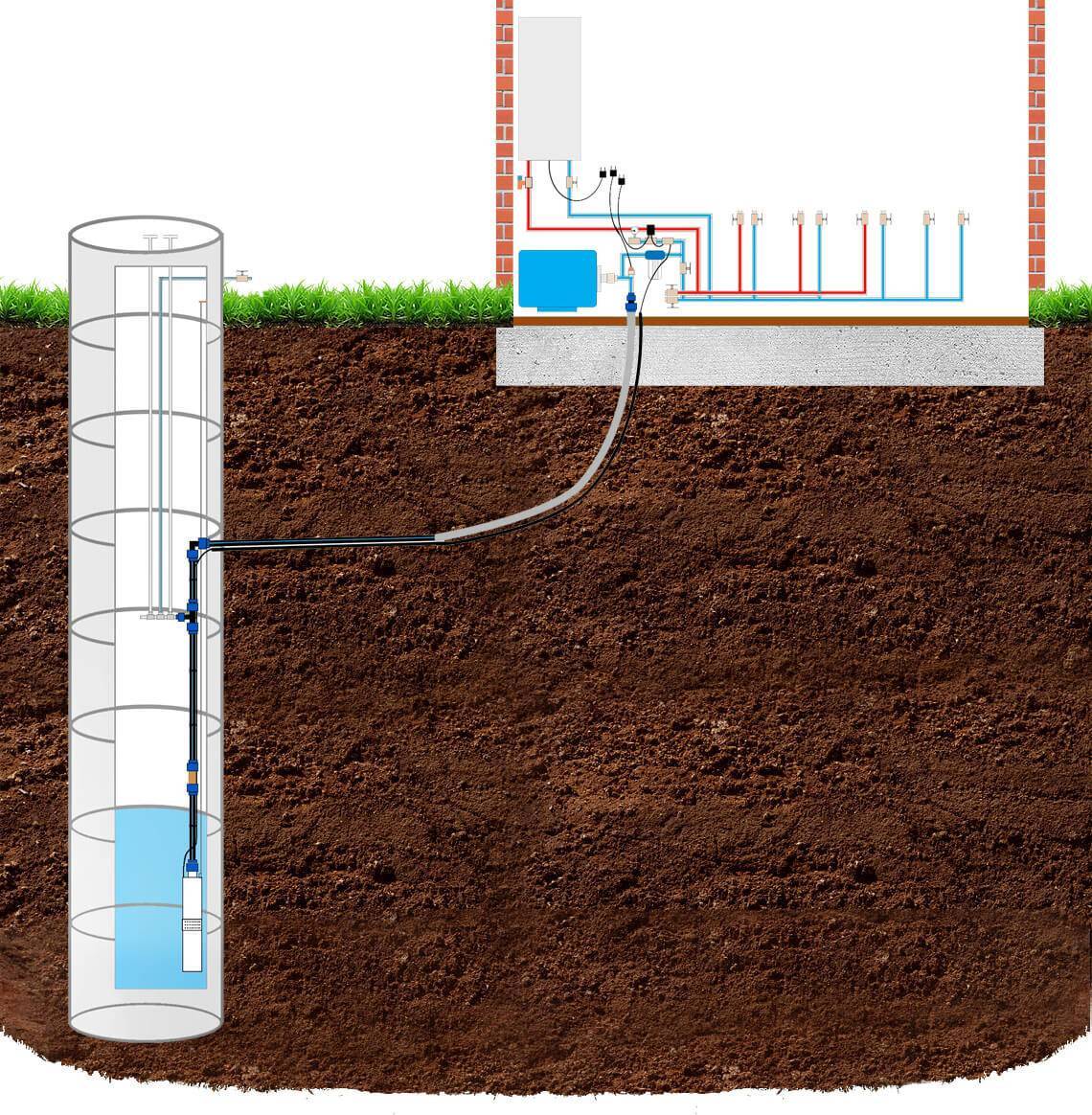
To present the scope of work, we will analyze the scheme of autonomous water supply throughout - from the source to the points of water use.
The main mechanism for pumping water is a submersible or surface pump. The submersible option is at a sufficient depth, but not at the very bottom (no closer than 50 cm).
It is hung on a strong cable, to which an electric cable is also attached. In addition to the electric wire, a pipe is connected to the pump, through which water enters the house.
The pump and house equipment are connected by means of pipes. The shorter the distance between the extreme points, the higher the performance of the pumping station
Inside the residential building, wiring is installed so that water flows to various points. The “heart” of the system is the boiler room, where a hydraulic accumulator and a heating boiler are usually installed.
The hydraulic accumulator controls the water pressure, with the help of a relay it balances the pressure and protects the structure from water hammer. The indicators can be monitored on the manometer. For conservation, a drain valve is provided, mounted at the lowest point.
Communications depart from the broiler room to water intake points - to the kitchen, to the shower room, etc. In buildings with permanent residence, a heating boiler is installed that heats water for use and heating systems.
There are many options for building circuits, their assembly depends on the needs of homeowners. Having drawn up a diagram, it is easy to calculate the cost of technical equipment and building material.
External and internal plumbing
If the choice between the storage tank and the pumping station is made, it's time to start performing the necessary set of works. Regardless of the system chosen, it is necessary to carry out the installation of the plumbing system, namely its external and internal parts.
Outside, a trench should be dug in such a way that the pipe runs below the freezing level of the soil in this particular area. At the same time, a slope of 3 cm is observed for each meter of the highway.
To insulate a water pipe located above ground level, you can use both ordinary mineral wool and modern heat-insulating materials.
The pipe in the area above the freezing horizon before entering the house must be insulated. In cases where the pipeline is laid above the seasonal freezing horizon, the problem is solved with the help of a heating cable. It is convenient to place the electric cable of the pump in the trench under the pipeline. If its length is not enough, the cable can be “stretched”.
But it is best to entrust this operation to an experienced electrician, since in the event of a breakdown, you will have to carry out large-scale earthworks or even completely replace part of the damaged equipment.
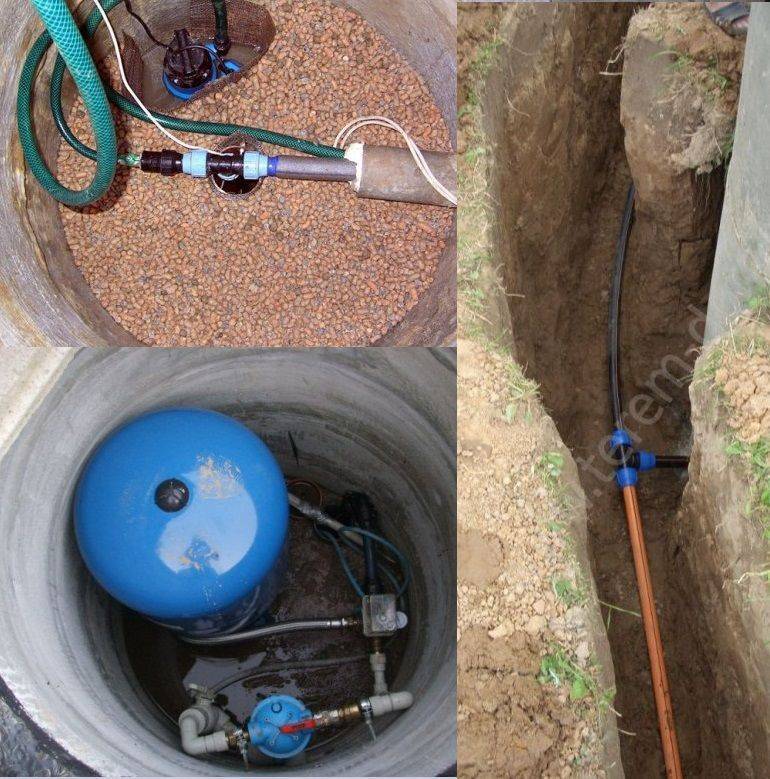
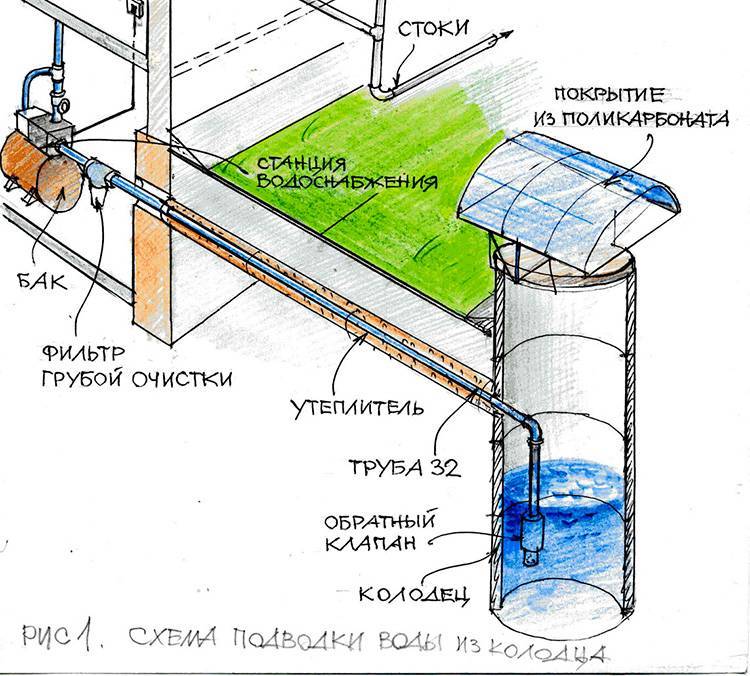
For outdoor plumbing, plastic pipes are quite suitable. A trench is brought to the well, a hole is made in its wall through which a pipe is inserted. The pipeline branch inside the well is increased with the help of fittings, which at the same time will provide the cross section necessary for a stable flow of water.
If a submersible pump is included in the water supply scheme, it is attached to the edge of the pipe and lowered into the well. If a pumping station will pump water, the edge of the pipe is equipped with a filter and a check valve.
The distance between the bottom of the well and the lowest point of the pumping system must be at least a meter so that grains of sand stirred up by the operation of the machine do not fall into it.
The hole around the pipe inlet is carefully sealed with cement mortar. To prevent sand and dirt from entering the system, a regular mesh filter is placed at the lower end of the pipe.
For laying the outer part of the water supply, a trench of sufficient depth should be dug to prevent the pipes from freezing in winter.
A long pin is driven into the bottom of the well. A pipe is attached to it to securely fix its position. The other end of the pipe is connected to a hydraulic accumulator or storage tank, depending on the type of system chosen.
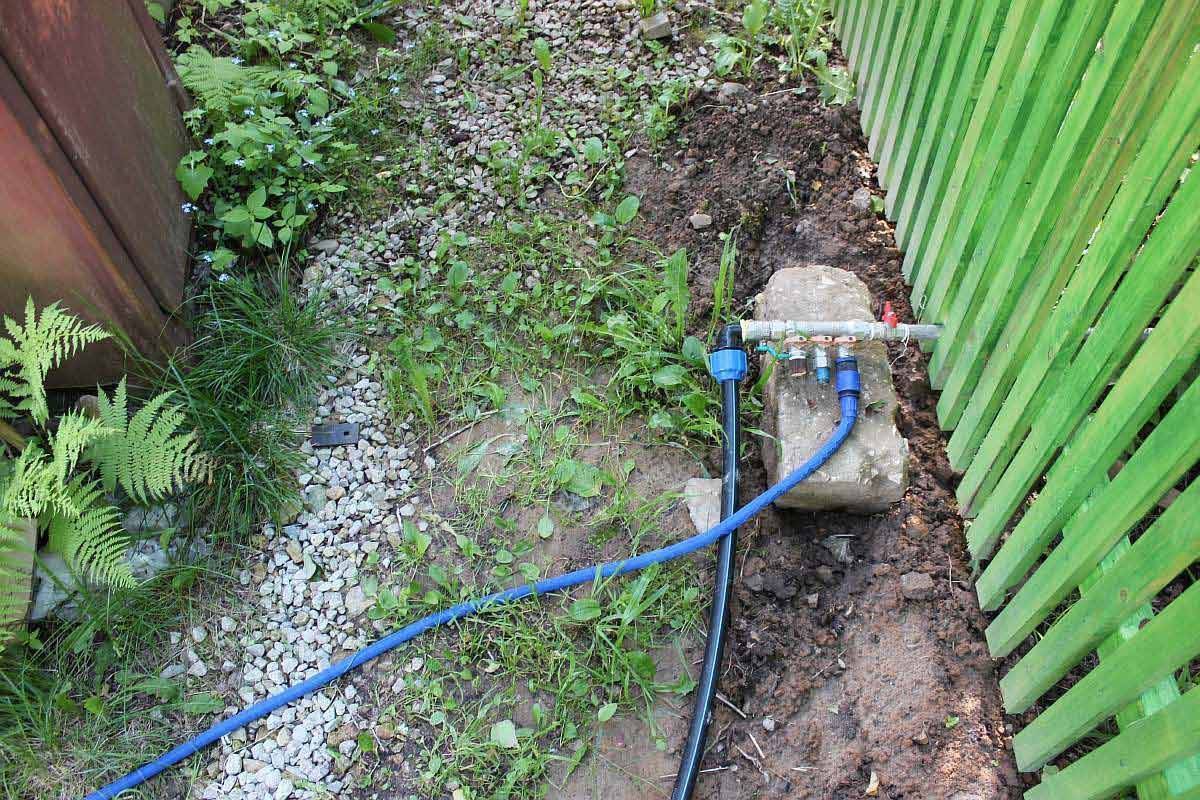



After the trench is dug in, a clay lock should be installed around the well with the following parameters: depth - 40-50 cm, radius - about 150 cm. The lock will protect the well from the penetration of melt and groundwater.
Water supply is introduced into the house in such a way that this place is hidden under the floor. To do this, it is necessary to partially excavate the foundation in order to make a hole in it.
Installation of an internal water supply can be done from metal pipes, but the owners of country houses almost always choose modern plastic structures. They weigh lighter and are easier to install.
A soldering iron for PVC pipes is needed, with which the ends of the pipes are heated and securely connected. Even a beginner can perform such soldering on their own, however, you should familiarize yourself with common mistakes when soldering PVC pipes in order to ensure a really reliable connection.
Here are some helpful rules:
- soldering work should be carried out in a clean room;
- joints, as well as pipes as a whole, should be thoroughly cleaned of any contamination;
- any moisture from the outer and inner parts of the pipes must be carefully removed;
- do not keep the pipes on the soldering iron for a long time to avoid overheating;
- heated pipes should be immediately connected and held in the correct position for several seconds to prevent deformation at the junction;
- possible sagging and excess material is best removed after the pipes have cooled.
If these rules are observed, a really reliable and durable connection is obtained. If the soldering is poor quality, soon such a connection may leak, which will lead to the need for large-scale repair work.
Sources of water supply
It is very important to make the right decision when choosing a water source so that it is convenient, and the water is as clean and safe as possible.
- Well. A simple, well-known, inexpensive and old option for providing water. You can equip it only if there is a suitable layer of water. It should be at a depth of up to 15m. The well can provide water for up to 50 years, it is possible to get it even without electricity. However, the well requires periodic cleaning, dirty water from the surface gets into it, therefore, high-quality insulation of all joints is necessary.
- Well. There are several types of wells. The first - "on the sand", takes water from the upper layers, a depth of up to 50 m, a reserve of up to 500 l / h, it will last about five years. Filters are often clogged, if there is an underground river, then the filters do not clog, the system will last at least 20 years, and the source is inexhaustible. The second - "artesian", supplies water from layers located at a depth of up to 1000 m and even more.The water is clean, the supply can be from 1500 l / h and not even limited.
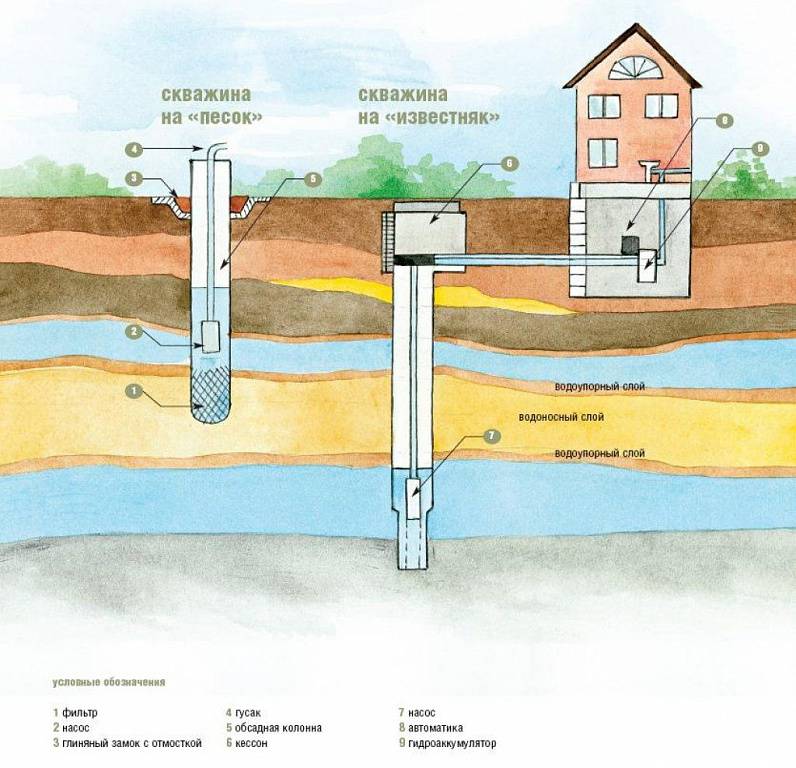
Two schemes for arranging a well to provide water at home
In private houses, they are rarely made with a maximum depth of up to 135 m, since wells require special permission and rather expensive registration, and the arrangement itself can take up to a month. The advantages of such wells include the fact that ground or upland waters do not enter them, the service life is about 50 years. The downside is the need to carry out a series of calculations in order to choose the right equipment.
- Spring. In some areas there are springs used to provide high quality, clean water. The peculiarity of such a source is its almost inexhaustible supply of water and good performance, however, they are very rare.
- Central water supply. If there is a central highway nearby, then you can connect to it. This will provide sufficient water pressure, but it will not always be a good cleaning. To connect, you need to submit an application, a project and obtain permission from the sanitary and epidemiological station. This may take several months and will be quite expensive, and these will not be one-time expenses - you will have to pay for the used water, as in an apartment. All connection work is carried out only by employees of the water utility.

Centralized water supply can be convenient, but periodically you will have to pass controllers to the counters
Given all the features of each option, most owners of summer cottages, residents of the private sector choose to drill a well.
How to get good water pressure?
Using some installation tricks, you can achieve higher performance of the water supply system.
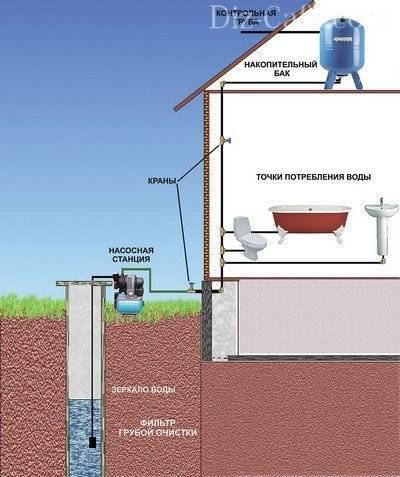
For example, in order to stabilize the pressure in the pipes and provide the necessary water pressure, a hydraulic accumulator or storage tank is installed in the upper part of the house, for example, in the attic. The pump must be powerful enough, protected from a decrease in pressure in the network.
Scheme of water supply of a country house using a storage tank installed in the attic. Water supply to the house is carried out using a submersible pump
To ensure that there is enough water for everyone, you should choose a tank of sufficient volume. When calculating, the amount of daily water consumption per 1 person is used, which is equal to an average of 50 liters (with permanent residence).
The water supply device, on the contrary, is mounted in the lower part of the building - in the basement or basement, so that it is more convenient to conduct communications to the pumping equipment located in the well.
Sources of water supply
Depending on the nature of the source of water supply, the method of installing the water supply system will differ. Below we will take a closer look at the most popular options.
Centralized water supply
This option is the easiest, so even an inexperienced builder can handle it. However, it is only possible if the water pressure in the pipes is quite strong, otherwise you will need to buy a pump or consider alternative options for providing water to the house.
To create a centralized water supply, pipes and accessories for their connection - fittings are used. Laying is carried out according to a fairly simple scheme and does not require special skills from the worker. You only need to dig a trench, put pipes in it and bring them to the central highway.
Plumbing from a well
If there is a well on your site, it would be blasphemy not to use it "to its fullest" and not to make a source of water supply. If there is no well, it is not so difficult to make it. To dig a mine, you will need a couple of assistants and a little theoretical knowledge.
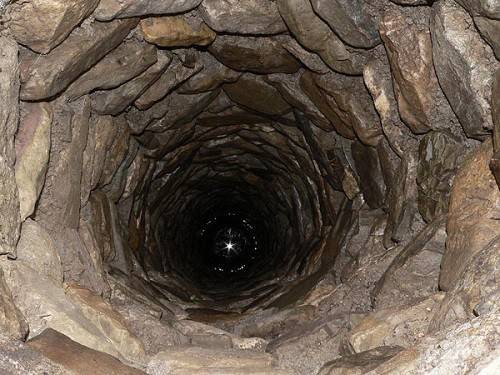
The most important thing is to find out the depth of groundwater - it should be no more than 10 m. Plumbing in a country house from a well has a lot of advantages, the main of which is that you can independently repair and maintain the system without calling specialists. Plus, the maintenance and care of such a water supply system requires minimal effort and cost.
Among the shortcomings, limited water consumption can be distinguished, so if a family of 3-4 people lives in the country house, something more than an ordinary well will be required. Before starting work, you should carefully weigh all the factors and calculate how much water you will have enough on average for a comfortable stay, and whether the well can provide you with the required volume. If there is not enough water, it may make sense to deepen the mine or use another source.
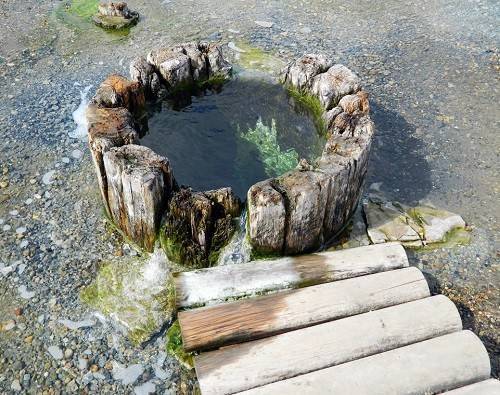
In order to make a source from a well, you need to purchase a good surface pump. Deep in this case, it is irrational to use, but it will come in handy for another source - a well.
Water supply from a well
If the groundwater in your area lies at a depth of more than 10 m, it is best to drill a well, which will require some costs, since drilling services cost decent money. However, this amount will pay off in the near future, as you will use your water, clean and healthy.Thus, you will benefit not only financially, but also provide your family with a healthy drink, rich in natural trace elements.



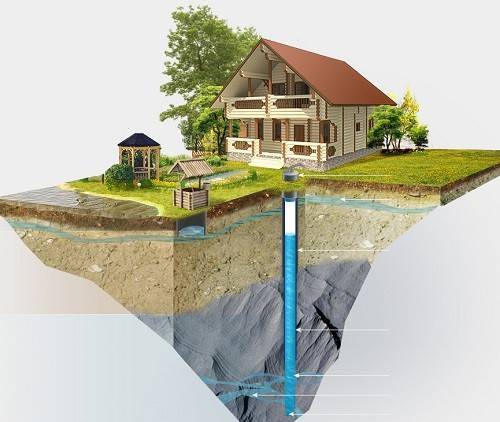
Since drilling and maintaining a well is quite expensive, it makes sense to discuss this issue with neighbors in order to pay for work in pool for 2-3 houses. You will also need a special borehole or deep-well pump.
What is an autonomous water supply
When you were able to clearly answer all the questions above and made a rough plan of action, you need to figure out what constituent engineering elements the plumbing consists of. In fact, these are the pipes themselves, as well as the mechanisms for their injection to the surface:
Pipes of different diameters
Cranes and fittings (connecting parts) for the installation of pipes as a whole
Mechanisms for pumping water various types of pumps (their choice mainly depends on the required volumes of water supply
Electric motors for pumps
If it is necessary to heat water (for using it at home) - water heaters
Filters for mechanical (coarse) and deep water purification (you can’t do without them if the water is used for drinking purposes)
You will also need working tools and materials for attaching pipes to surfaces, additional protection (insulation) of pipes for using them in the winter.
In general, do-it-yourself country water supply from a well as a single system should look like this.
A schematic diagram of the system looks something like this
Final stage
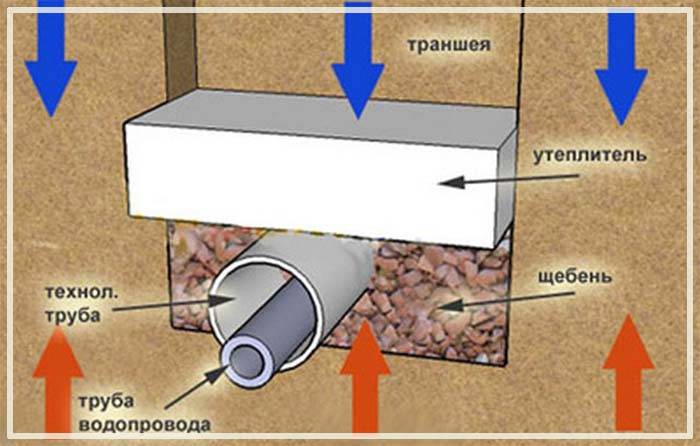
An example of additional insulation of the pipeline with foam plastic and expanded clay
After assembling and connecting all the elements of the system, they are tested. If everything works properly, you can proceed to the final stage of the assembly.Since our water supply will be operated in the winter, all pipes must be well insulated. To do this, do the following:


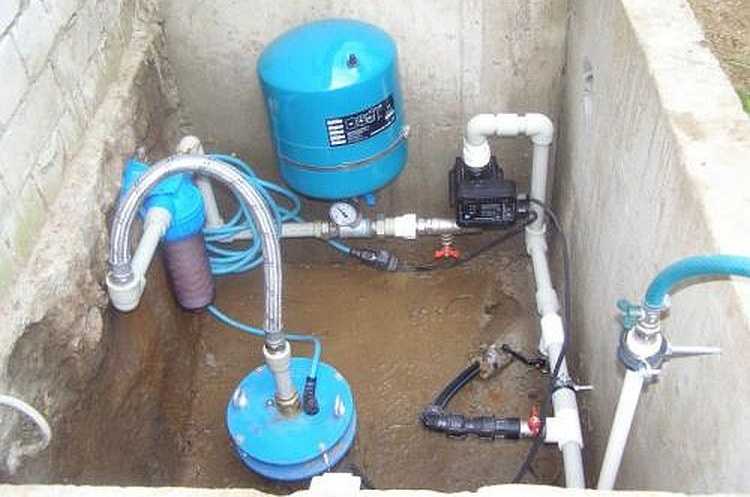


- Pipes in trenches are carefully wrapped with geotextiles.
- If the trenches were dug below the freezing mark, then it is enough to fill the hole with sand and lightly tamp. From above, everything is covered with soil.
- When digging a trench above the freezing mark, a heat-insulating material is used to backfill pipes - expanded clay, slag, foam plastic chips. At the same time, on top of the pipes, this material should give a layer of at least 20-30 cm. Then everything is also covered with soil.
- If the system provides for manholes, then hatches are installed on them.
Video instruction on how to make plumbing from a well or well that will work in summer and winter:
Laying pipes below freezing depth
This method is advisable to use if in winter the soil freezes no deeper than 170 cm. A trench is dug from a well or well, the bottom of which is 10-20 cm below this value. Sand (10-15 cm) is poured to the bottom, the pipes are laid in a protective casing (corrugated sleeve), then they are covered with earth.
In order not to have to insulate the water supply on the street in frosts, it is better to do this in advance
This is the easiest way to make winter plumbing in the country, but it is not the best, although it is the cheapest. Its main drawback is that if repairs are needed, you will have to dig again, and to the full depth. And since it is difficult to determine the place of a leak with this method of laying a water pipe, there will be a lot of work.
In order to have as few repairs as possible, there should be as few pipe connections as possible. Ideally, they should not be at all.If the distance from the water source to the cottage is greater, make the connections carefully, achieving perfect tightness. It is the joints that leak most often.
The choice of material for pipes in this case is not an easy task. On the one hand, a solid mass presses from above, therefore, a strong material is needed, and this is steel. But steel laid in the ground will actively corrode, especially if the groundwater is high. The problem can be solved by well primed and painted over the entire surface of the pipes. Moreover, it is desirable to use thick-walled ones - they will last longer.
The second option is polymer or metal-polymer pipes. They are not subject to corrosion, but they must be protected from pressure - they must be placed in a protective corrugated sleeve.
Even if the ditch was dug below the freezing level, it is better to insulate the pipes anyway
One more moment. The depth of soil freezing in the region is determined over the past 10 years - its average indicators are calculated. But firstly, very cold and little snow winters occur periodically, and the ground freezes deeper. Secondly, this value is the average for the region and does not take into account the conditions of the site. Perhaps it is on your piece that freezing can be greater. All this is said to the fact that when laying pipes, it is still better to insulate them, lay sheets of foam or polystyrene foam on top, as in the photo on the right, or lay them in thermal insulation, as on the left.
You may be interested in reading "How to do automatic watering".
Features of the summer water supply
This is the simplest option, familiar to every summer resident. You can assemble it alone, it will not take much time.As a rule, a rubber hose is connected to a special branch pipe coming from a central source. The pressure is regulated by a tap and, in the old fashioned way, by narrowing / expanding the hose itself.
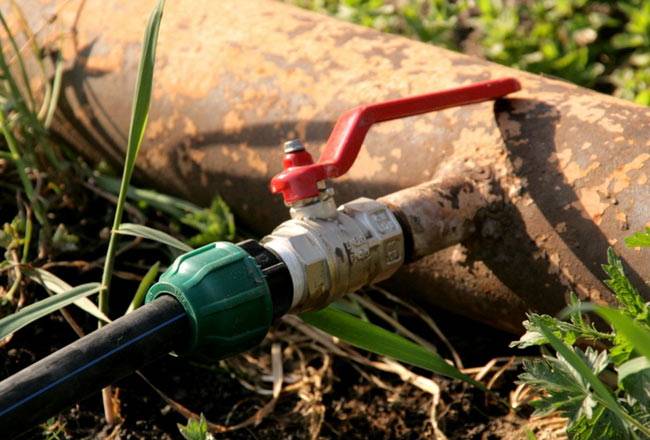
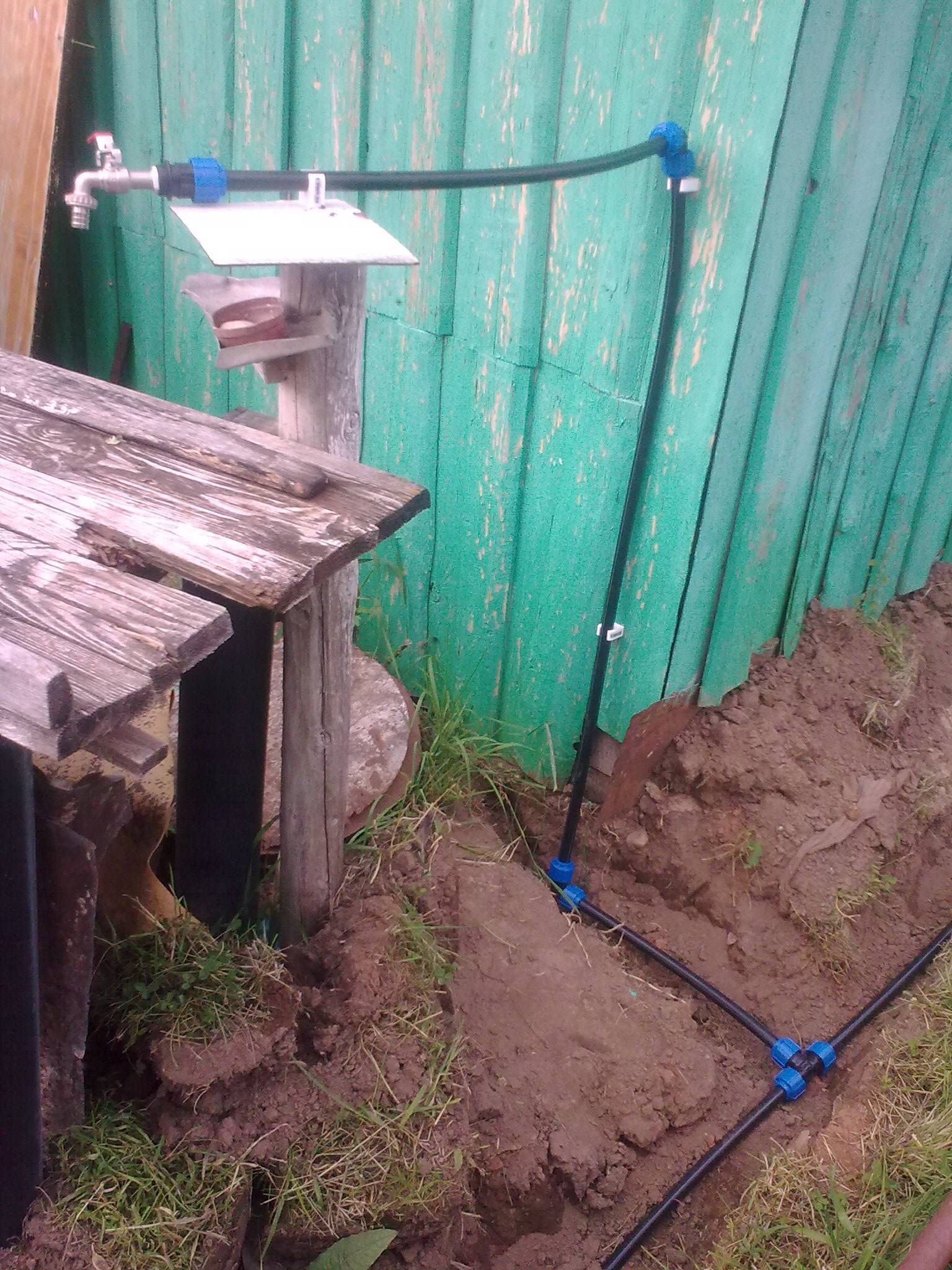
Often summer residents are connected to the main pipe not with rubber hoses, but with their own plastic pipes, which are pulled along the entire site in previously dug recesses. Special racks are also created from vertically arranged pipes near those parts of the site that need additional watering (for example, near greenhouses).
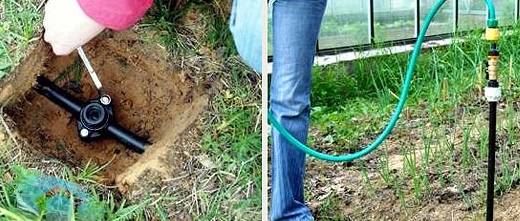
For branching pipes, special nozzles are used. which allow you to cover almost the entire area of the garden, if the pressure in the source allows.
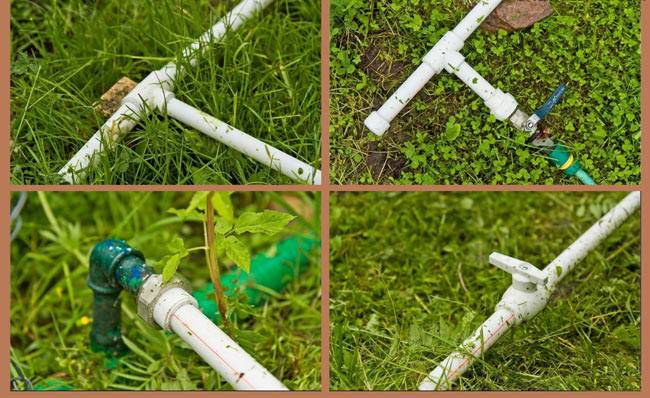
Station connection
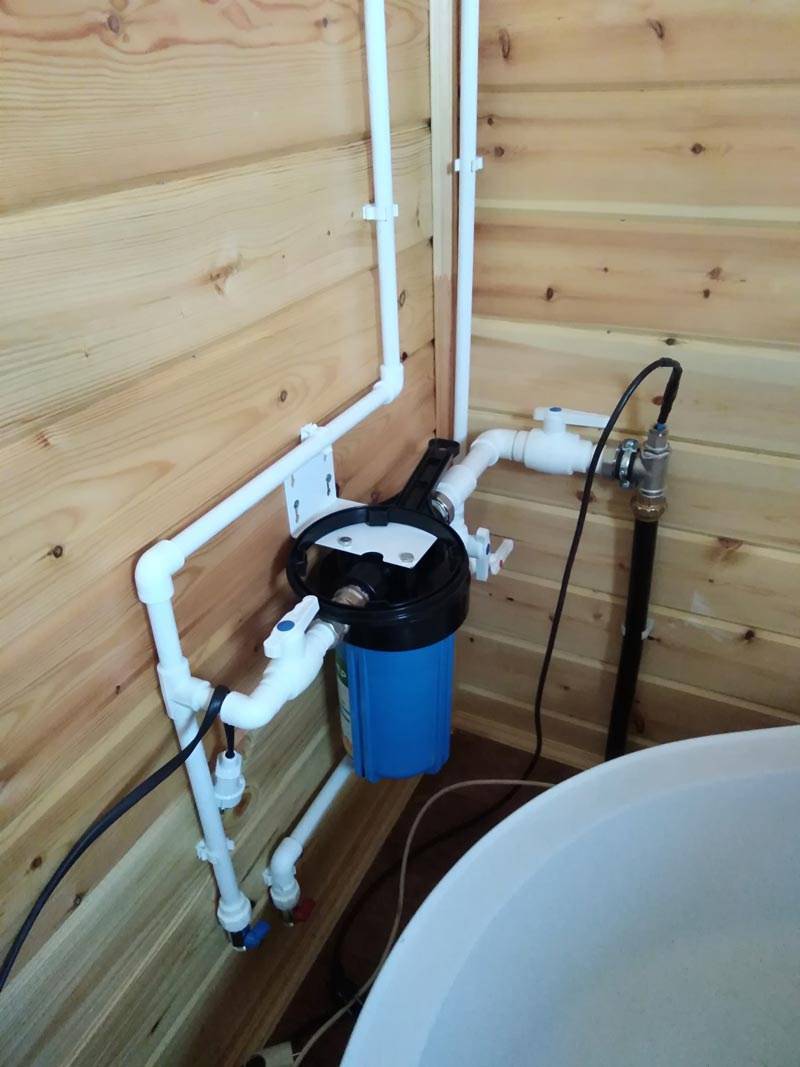
The pump connection is carried out in the caisson or building. A valve is placed in the caisson, and other elements are placed in the room. When using a well near the house, a station with a low suction head can be used, but only if there is a sufficient level in the well. For distant and deep wells, a pump with an external ejector is required, it is immersed in the well, and the station itself is located in a building that is heated, even in the coldest temperatures not lower than +2 ° C. Before entering the pump, a drain cock, valve, filter is placed, after - a filter, a hydraulic accumulator, water treatment systems.
Video description
How the pumping station is connected is shown in the following video:
System arrangement
The implementation of the system begins with the development of the source, the installation of all necessary equipment.
The water supply of the country house from the well is carried out with the preparation of trenches, a certain slope is made, it is directed to the source. Be sure to fill up the bottom of the pit 15 cm of any sand.It is necessary to avoid possible bends and do everything in a straight line. To prevent the pipeline from freezing in cold weather, it is located below the freezing point of the earth. If the pipe is laid higher, then a high-quality insulation is used. Pipes with a diameter of 32 mm from various materials can be installed, the main thing is that they do not crack from frost, a drain valve is installed at the turn to the well. In the 2nd ring of the well itself, a hole is made for a pipe that is immersed in water. The pipe is located no closer than 30 cm to the bottom, a mesh filter is placed inside, the pipe itself is attached to a pin driven into the bottom. The hole is waterproofed in the ring, along the perimeter there is a clay castle: its layer should be 40 cm at a distance of 1.5 m, the pipe is covered with a 15 cm layer of sand, then soil.

Regardless of the source of water used, the piping scheme around the house will be quite complex and must be carefully calculated.
System installation
The water supply system in the country is impossible without laying pipes along the section that are directed to the prepared collector at a slope to the source, valves are mounted there, and then pipes of smaller diameter are connected that lead to the points. To create a wiring, pipes from various materials can be used. For hot liquid, a boiler / water heater is used, which are also connected to the collector, but from the other side.
In addition to the water supply system, it is necessary to consider a wastewater drainage system. Previously, cesspools were used, requiring periodic cleaning. Today, a septic tank is offered: it purifies the water in stages in sealed chambers, except for the last one. The simplest option is a septic tank of several rings.The essence of the system is that it cleans wastewater from solid particles and drains it into water into the ground. When using special tools, cleaning is better. The system is cleaned once every few years.

Special pumps are also used for septic tanks.
At each dacha, you can equip a high-quality and durable water supply system of a summer or winter type. To create it, pipes from various materials are used, and the basis of the water supply system is a source and a pump. The source can be a well, spring, well. In some cases, it is possible to connect to the water supply


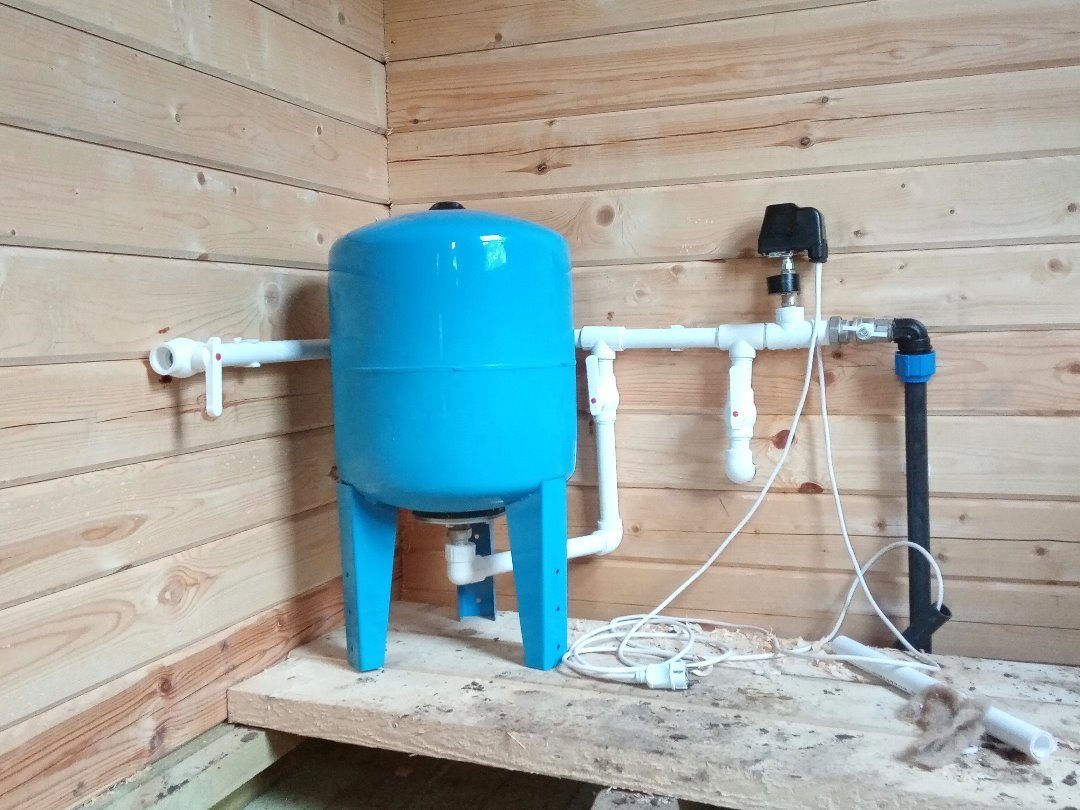


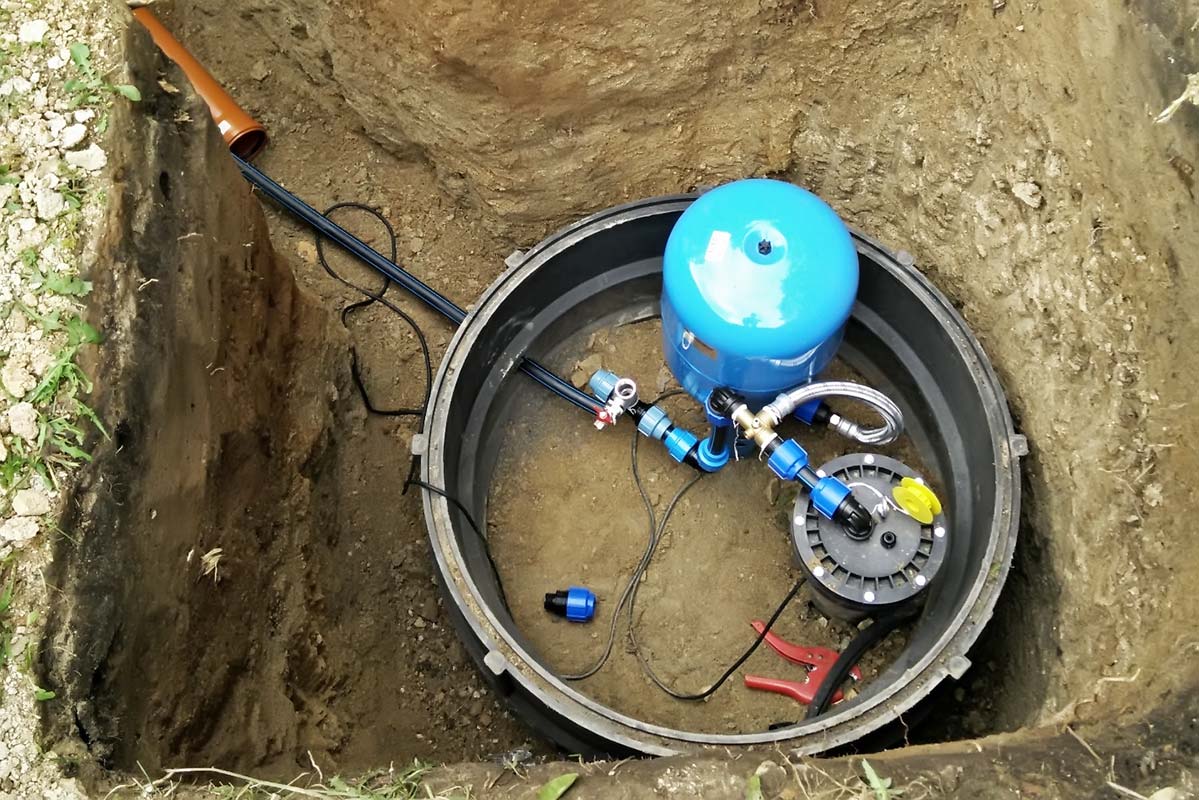
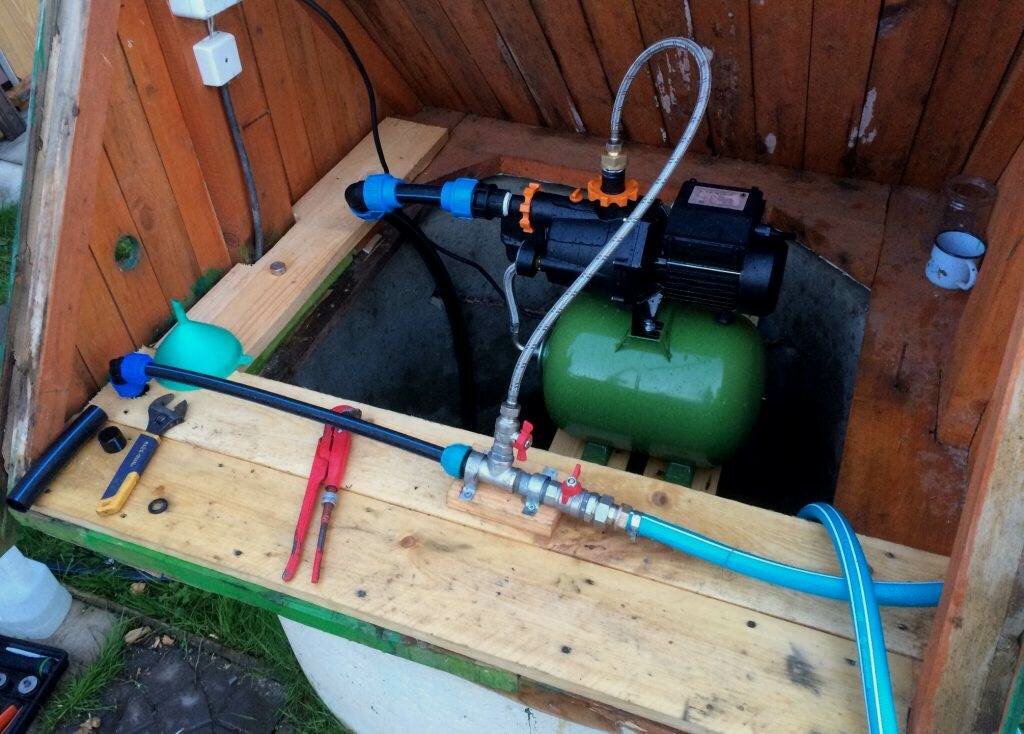
Before buying a pump, it is necessary to take into account its characteristics and capabilities, attention is paid to its lifting capacity, the distribution of liquid among consumers. One of the important points is the source of water, which also affects the choice of device.

Plumbing design is best done at the planning stage of the house.
Conclusion
Remember that working with specialists is very important and essential. They will help to correctly calculate the required materials and features of the source.
This is the only way to guarantee a high-quality and constant supply of water and avoid miscalculations
Specialists pay special attention to the choice of a pumping station, because it is bought for a long time and should work almost around the clock and without interruption. If you think through all the nuances well, then the houses in the summer cottage will be provided with a year-round supply of clean water.
Insulation of the well and pipeline, backfilling
Now that the passage of the highway through the territory of the site is completed, and the end of the pipe is lowered to the water in the well, you can proceed to the insulation measures.
First, from the bottom line of freezing to the main surface of the soil, insulation material is fixed or sprayed around the walls of the well - it can be polystyrene foam, polyurethane foam (spraying), polyethylene foam. Less often - mineral wool, since it is not all right with moisture resistance. We will have to provide for waterproofing also separately for the insulation, and this is extra hassle and costs.
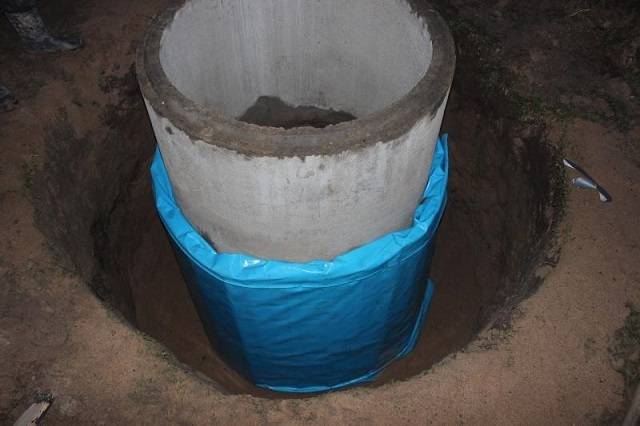 Insulation of the well to the level of soil freezing.
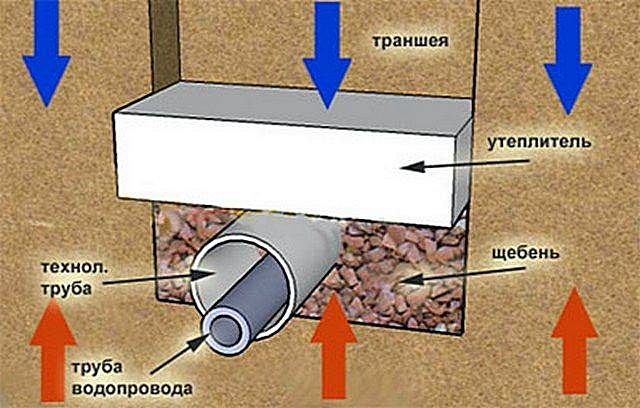 Insulation of a water pipe in a ditch using a Styrofoam panel.
- In cold regions, it is desirable to equip additional insulation by laying a layer of insulation material on top of the pipeline - this can be a 100 mm thick polystyrene foam panel. The material is inexpensive, and such a measure will protect the water supply in case of some abnormal frost.
- After carrying out the insulation, the backfilling of the previously selected soil around the well and ditch continues. For backfilling, a sand-gravel mixture is also widely used, which is recommended to pre-backfill the trench before laying the soil there.
The backfill will inevitably shrink over time, so do not rush into concreting the blind areas - it is better to do this in a few months.
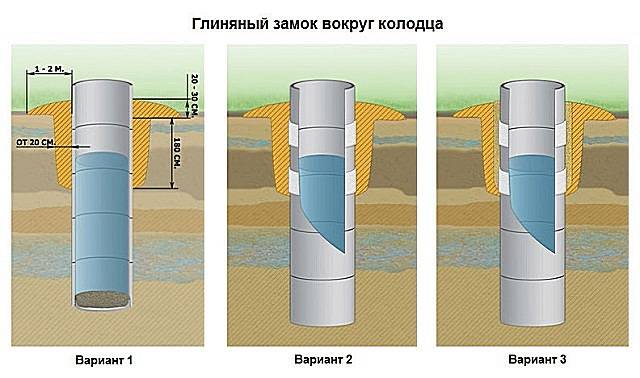 Options for arranging a clay "castle" around the well.
One of the effective ways to additionally waterproof the external walls of the well is to create a clay "castle", which is able to protect the area around the walls of the mine from the effects of precipitation.
The clay gate is equipped at the stage of backfilling the sand-gravel mixture and soil into the space around the well after its waterproofing and insulation. The recommended dimensions for this compacted clay layer are well illustrated in the diagram above.
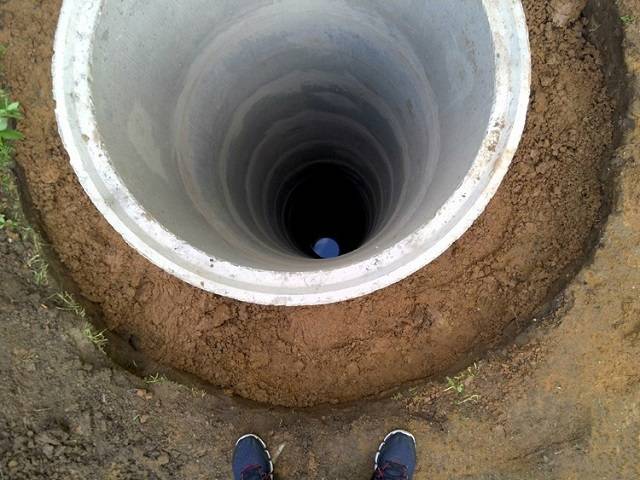 Laying a clay castle around the well.
In this case, concrete blind areas are arranged on top of the clay castle.