- How to assemble plumbing
- Summer plumbing in the country
- Kinds
- Installation of equipment
- Device
- How to install a plumbing system for permanent work
- Mine preparation
- The choice of pipes for seasonal water supply
- Steel pipes
- Pipes made of polymeric materials
- Polypropylene pipes
- LDPE pipes
- Metal-plastic pipes
- Do-it-yourself summer water supply in the country - stages of installation work
- Final stage
- Summer and winter plumbing
- Summer option
- Winter option
How to assemble plumbing
When collecting water supply in the country with your own hands, you need to decide in which parts of the site you need wiring. The fact that water should be supplied to the house is self-evident. But in addition to distributing the water supply around the house, it is necessary to lay pipes for irrigation in key places of the site, put taps on them. If necessary, connect a hose to them and, shifting it from place to place or installing a sprinkler, water the nearby beds.
The tap in the system must be at the exit of the house and before the first branch
When drawing up a diagram, do not forget about the need to install taps on the main line: at the cut after the outlet is still in the house, and then, on the site, before the first branch. It is desirable to install cranes further on the highway: in this way it will be possible to turn off the emergency section in case of problems.
Even if summer water supply will be equipped, you will need to drain the water from the pipes so that when it freezes, it does not break them. To do this, you need a drain valve at the lowest point. That's when it will be possible to close the tap in the house, and drain all the water, protecting the water supply from damage in the winter. This is not necessary if the country water supply pipes are made of polyethylene pipes (HDPE).
After drawing the diagram, count the pipe footage, draw and consider what fittings are needed - tees, angles, taps, couplings, adapters, etc.
In order to correctly calculate the material and make the correct layout of the water supply in the country with your own hands, first draw a plan where you can calculate the footage and the number of fittings
Then you need to decide on the mode of use. There are two options: summer and winter plumbing. They differ in the depth to which the pipes are buried. If you have an all-weather dacha, then you will have to lay an insulated water supply in the dacha itself or bury it below the freezing depth. For wiring irrigation pipes in the country, it is more rational to use the summer version of the water supply. You will only need a winter one if you have a greenhouse equipped. Then the section of the water supply to the greenhouse will need to be equipped in a serious way: dig a good ditch and lay insulated pipes.
Summer plumbing in the country
Depending on which pipes you will use, they can be left at the top, or they can be laid in shallow ditches. Installing a country water supply underground will take more time, but it is more reliable.
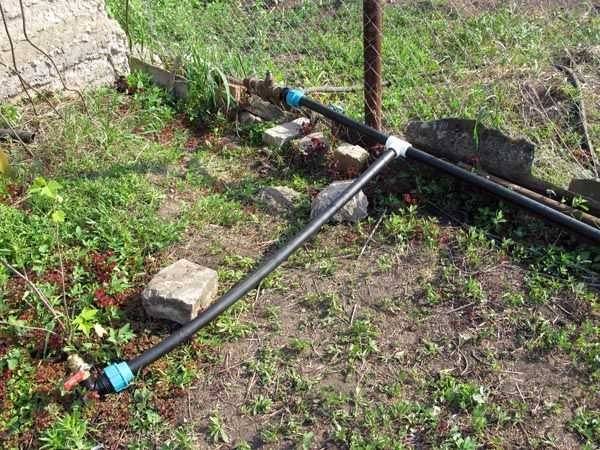
Do-it-yourself surface wiring for irrigation in the country is done quickly, but the pipes lying on the surface can be damaged
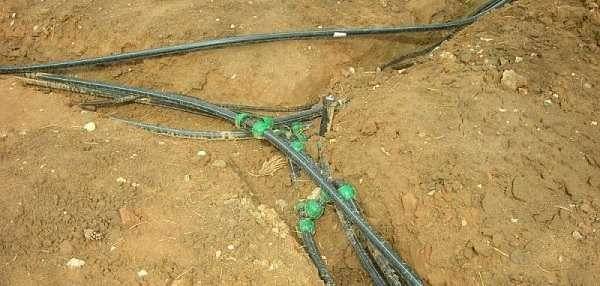
Having decided whether you need trenches or not, and having dug them out, if you have chosen an underground option, the pipes are stretched and laid out over the site. So once again the correctness of the calculations is checked. Then you assemble the system. The final stage - testing - turn on the pump and check the quality of the joints.
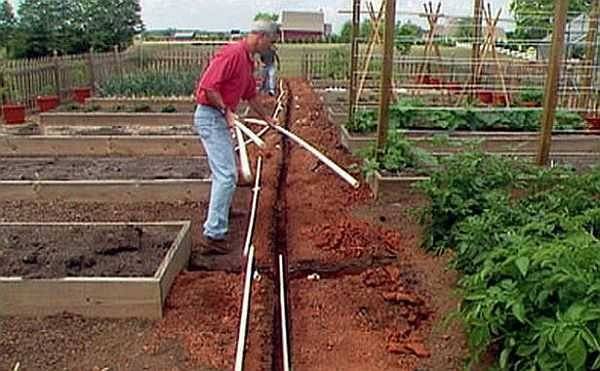
Before starting the installation of the water supply at the summer cottage, the pipes are laid out in the right places
Winter water supply differs from flight water supply in that the areas that will be operated in the cold season must be guaranteed to be protected from freezing. They can be laid in trenches below freezing depth and/or insulated and/or heated with heating cables.
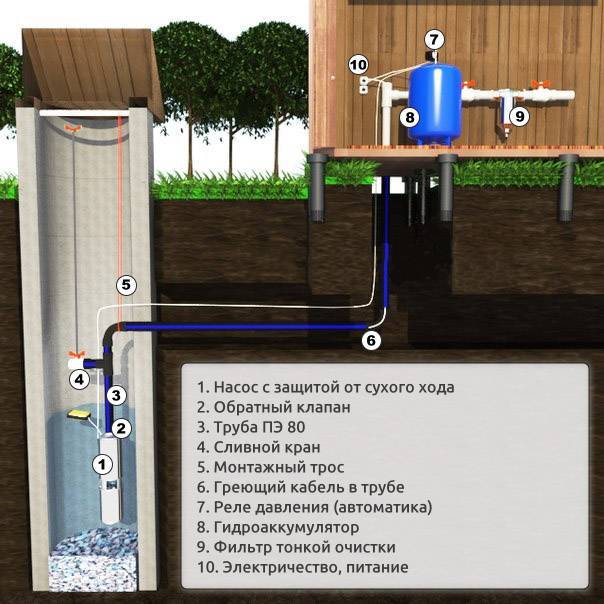
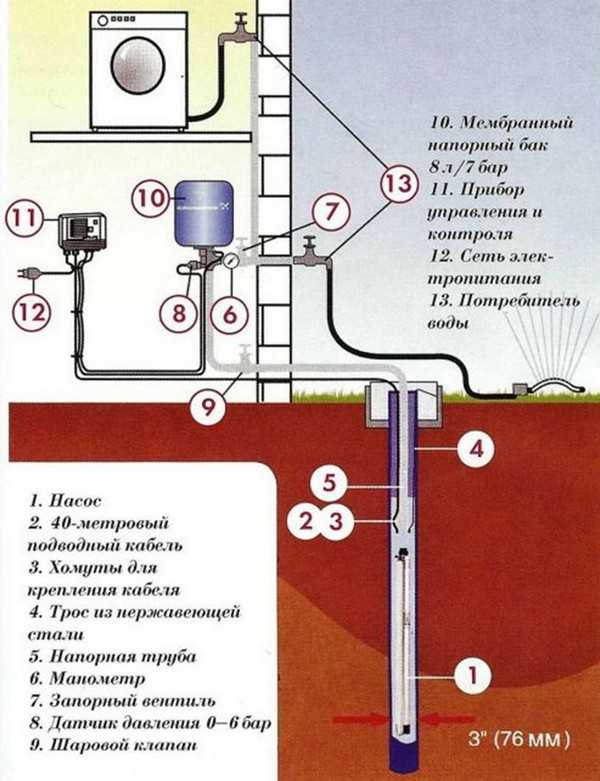

Kinds
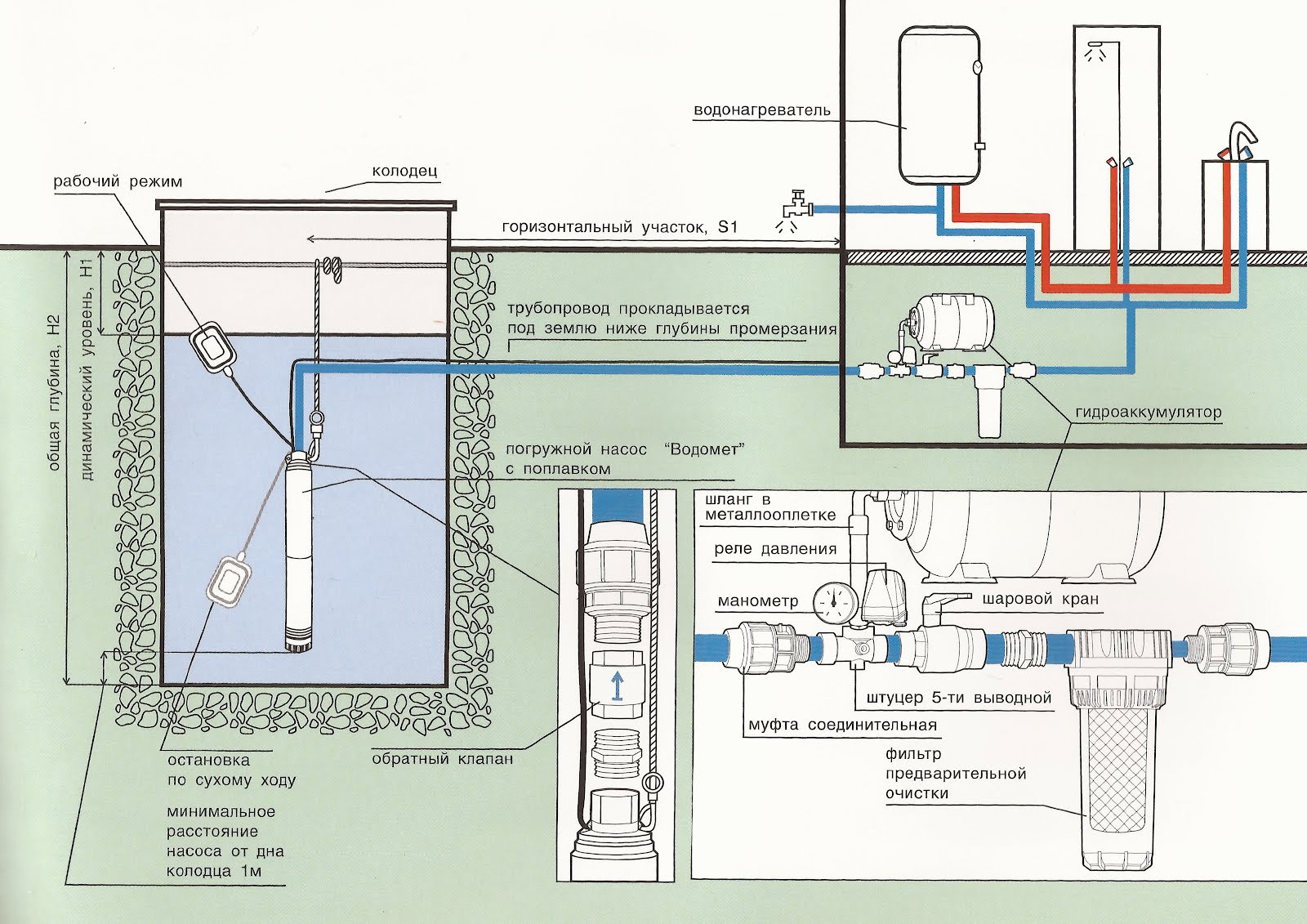
A pipeline connected from a well to a private house or cottage does not differ much from other autonomous systems.
It includes:
- well as a source;
- pump;
- storage capacity;
- external plumbing;
- water treatment system;
- internal plumbing;
- control automation.
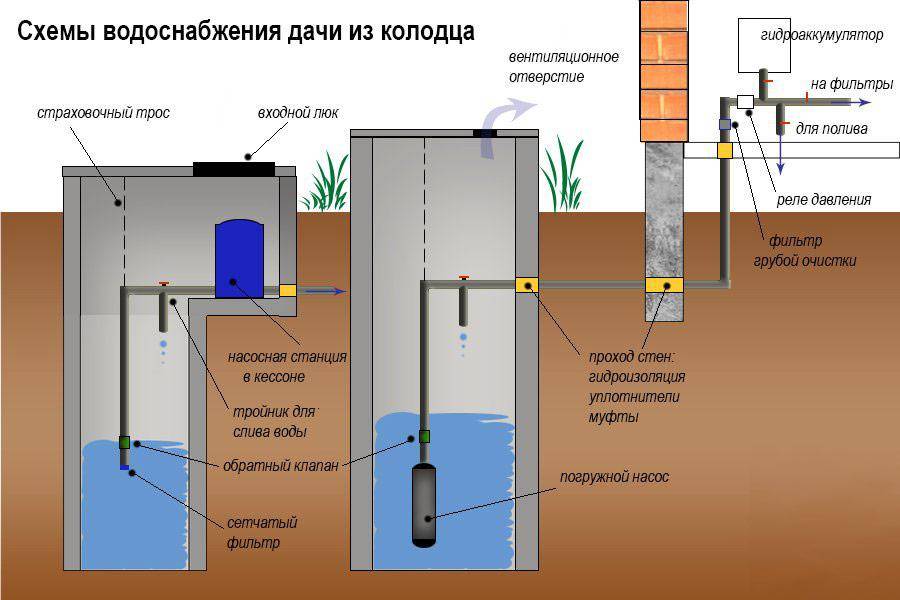
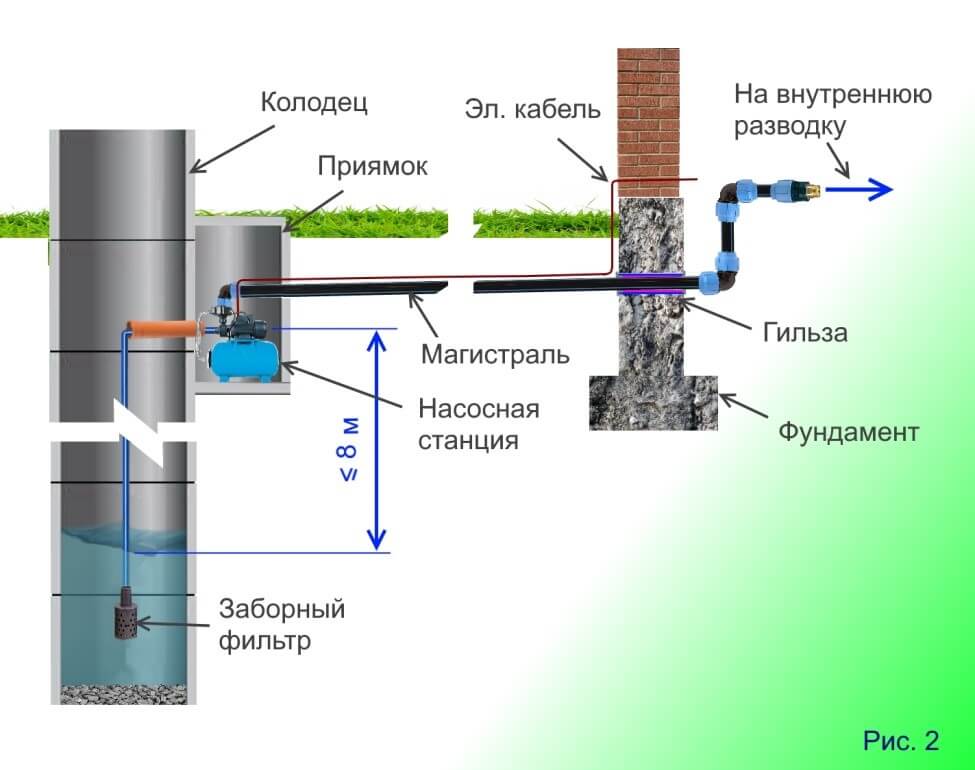
As for surface pumps, it is best to install them if the height of the water in the well does not exceed 9 meters. Care must be taken to adhere to these standards so as not to reduce the performance of the equipment. There is also a water temperature limit. Basically, it should reach at least 4 degrees Celsius. It follows from this that the surface pump is most often included in the composition of the summer, and not the winter, water supply of the summer cottage. Or you can install such a system already in the basement of the house. But with such an installation, the well should be located at a distance of about 12 meters from the building, which will be provided with water.
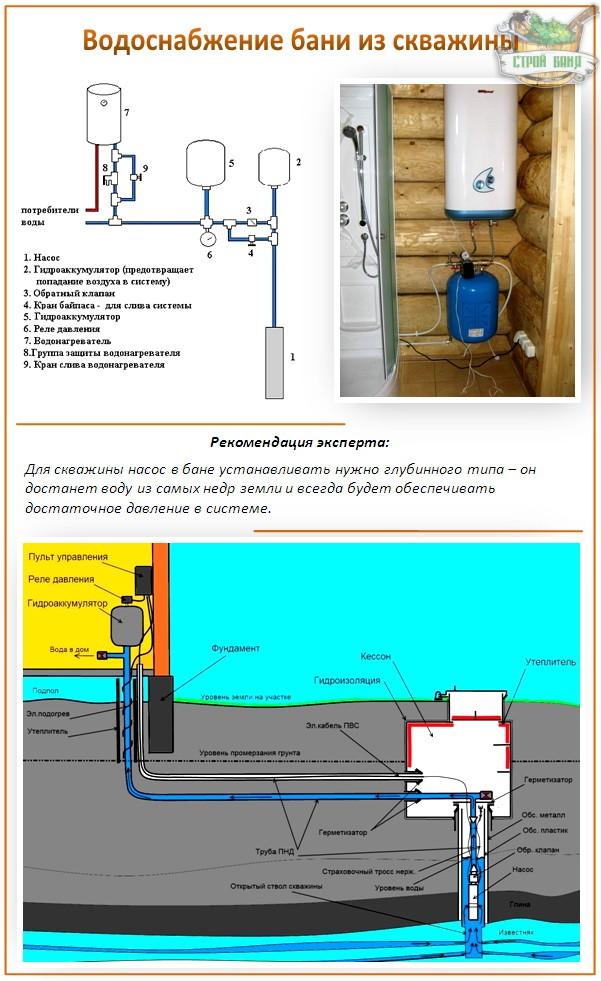
Submersible pumps can lift water to a height of about 100 meters.This does not mean that the source can be so much in depth. This indicates that such a distance is required for the liquid to reach the storage tank. Thanks to this, the container can be installed even in the attic of a relatively small building. When mounting such productive equipment, there is immediately no need to install a separate pump for water supply. The well in this case acts as a universal source, since it also allows the use of borehole pumps. They are much smaller in diameter and much longer in length than their counterparts.
The accumulator is an integral element of the water supply system, regardless of the type of pump that will be used. Since it is here that sensors and an automatic system will be installed that will control the on and off of the pump itself. The capacity of the accumulator is small and averages from 20 to 50 liters. This container is not for a water reserve and performs several important functions at once. The water in the accumulator will keep the system running.
Also, the presence of a container minimizes the likelihood that a water hammer can occur in the system.
When choosing a hydroaccumulator model, you need to take into account the approximate amount of water that you plan to use daily.
In addition, the area of \u200b\u200bthe room where the unit will be located will be important. This will depend on the size of the battery and the type of installation.
This will depend on the size of the battery and the type of installation.
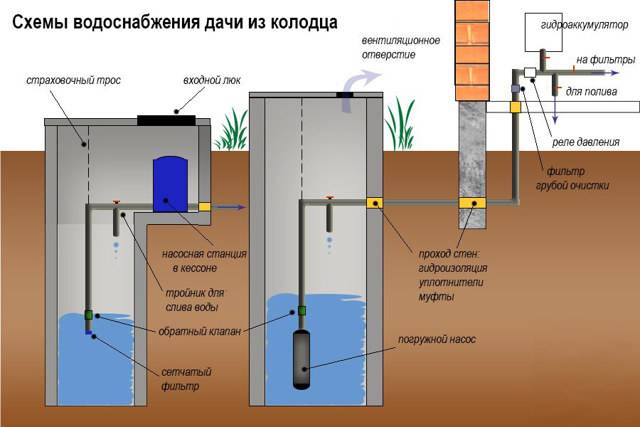
Depending on whether you live in this room all year round or use it as a summer cottage for the season, the method of laying the outer part of the water supply depends. If you come to the house only during the season, then you can safely choose the summer pipeline scheme. In this case, it is best to install a surface pump. Experts recommend mounting it under a canopy to protect it from rain and strong sun - so that it is never wet. The pipes themselves, going from the pump to the building, can be laid very easily by digging small trenches and setting the pipes to the optimum depth.
In another case, the pipes can not be buried, but left on the surface so that they do not interfere. But only after the end of the warm months they will have to be disassembled and cleaned indoors for the winter. Also, the pipe can be brought into the room through the base or simply through the wall. This summer option will simplify the work, because then you do not have to make a hole in the foundation of the building.
Installation of equipment
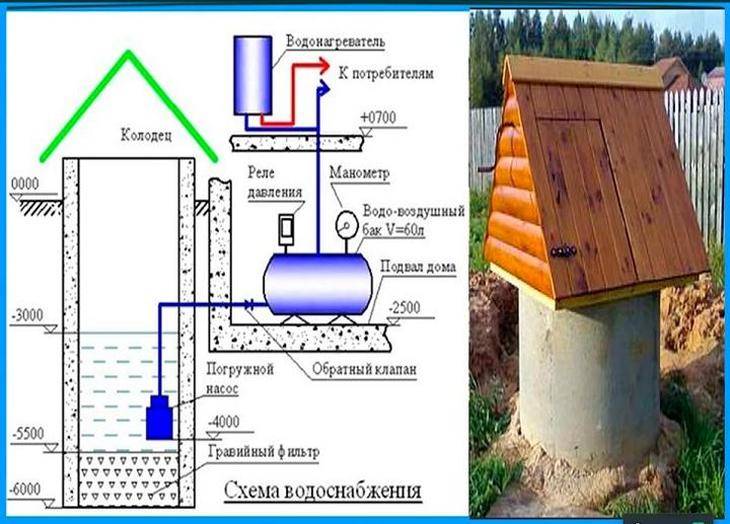
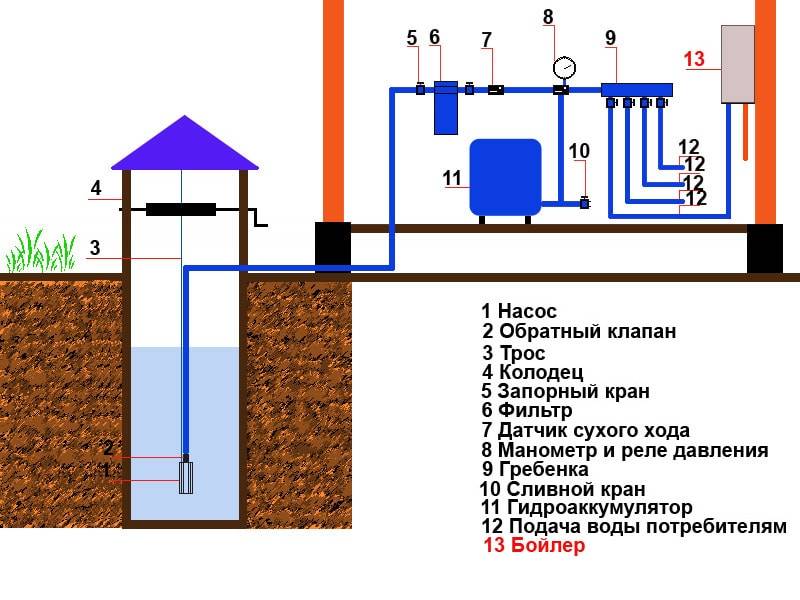
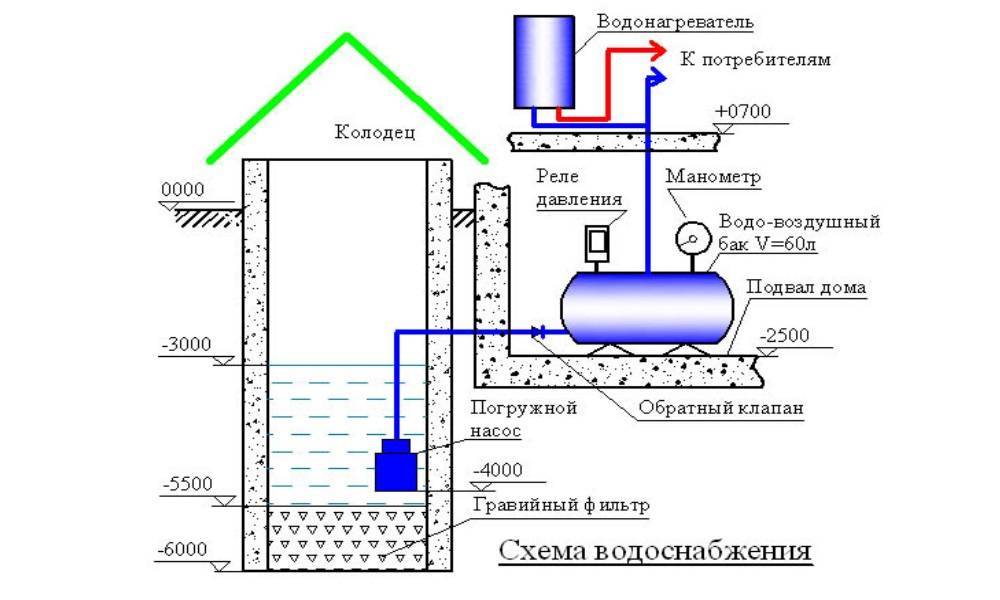
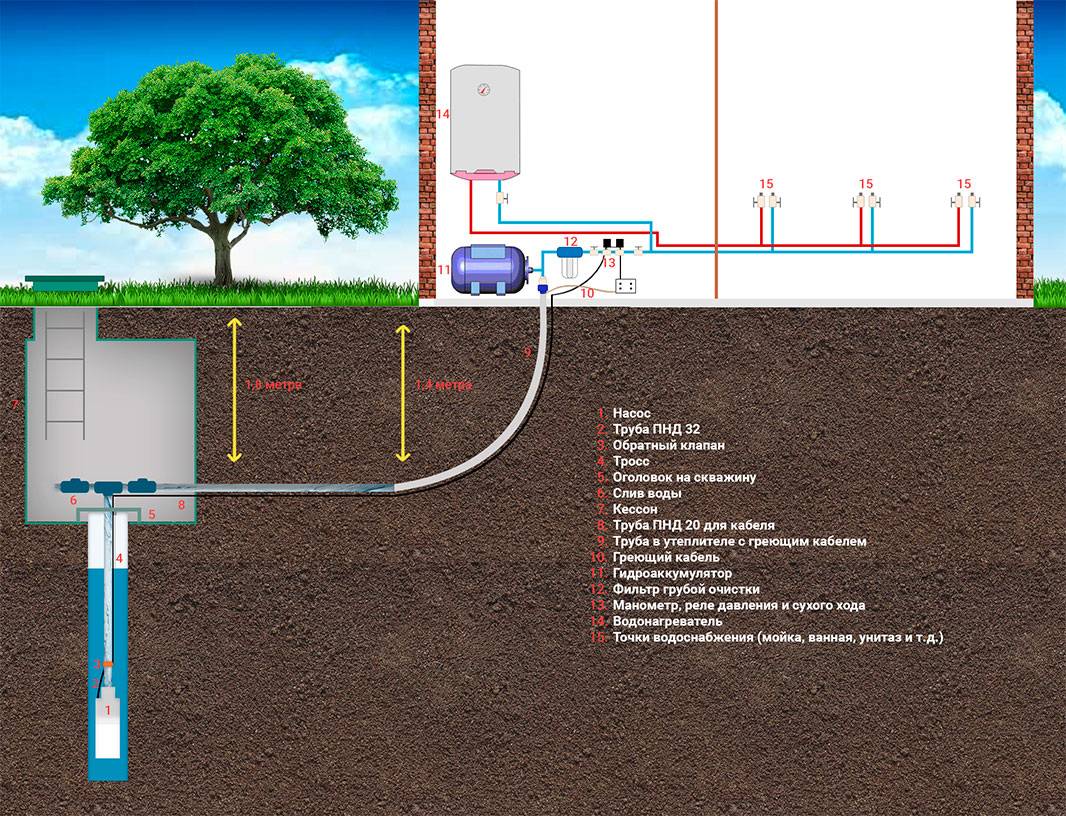
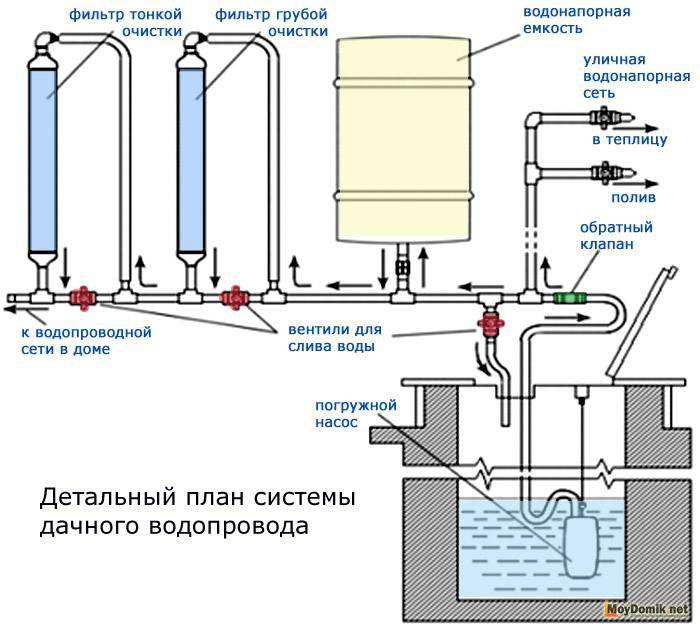
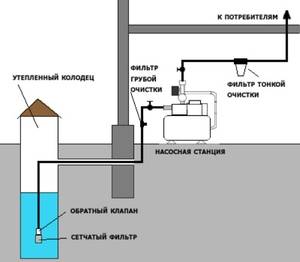 Having become acquainted with the scheme presented above for conducting water in the country with their own hands, now it has become clear to everyone that the process of building a water supply system in a suburban area begins with a source and its equipment. Pumping equipment is lowered into the source already completely ready for work. That is, the pump gets there already with a part of the pipeline, which is fixed on the check valve with a nipple. Next, we will consider in detail the device at the dacha of the hot and cold water supply system.
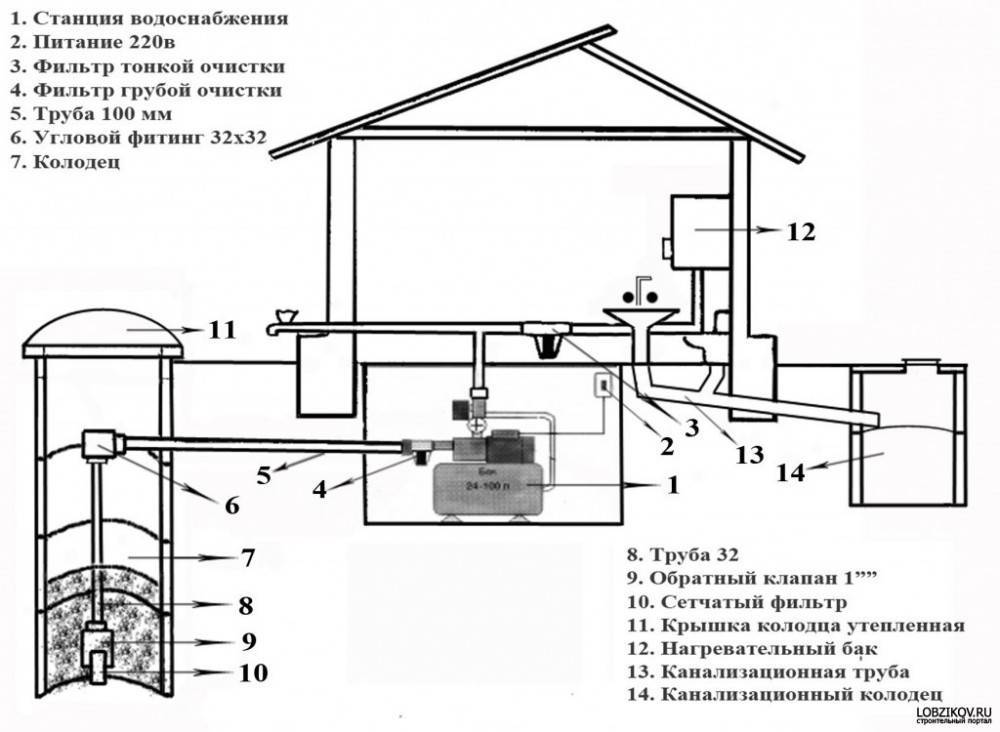
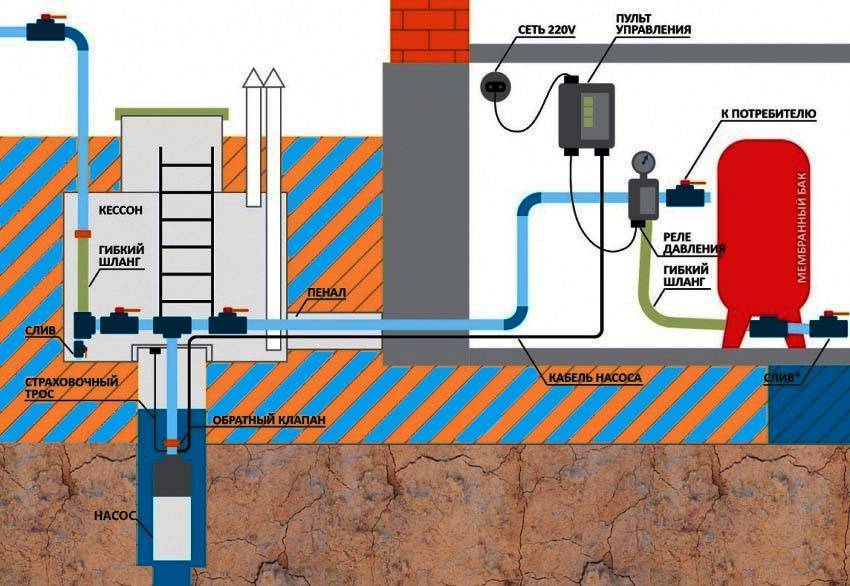


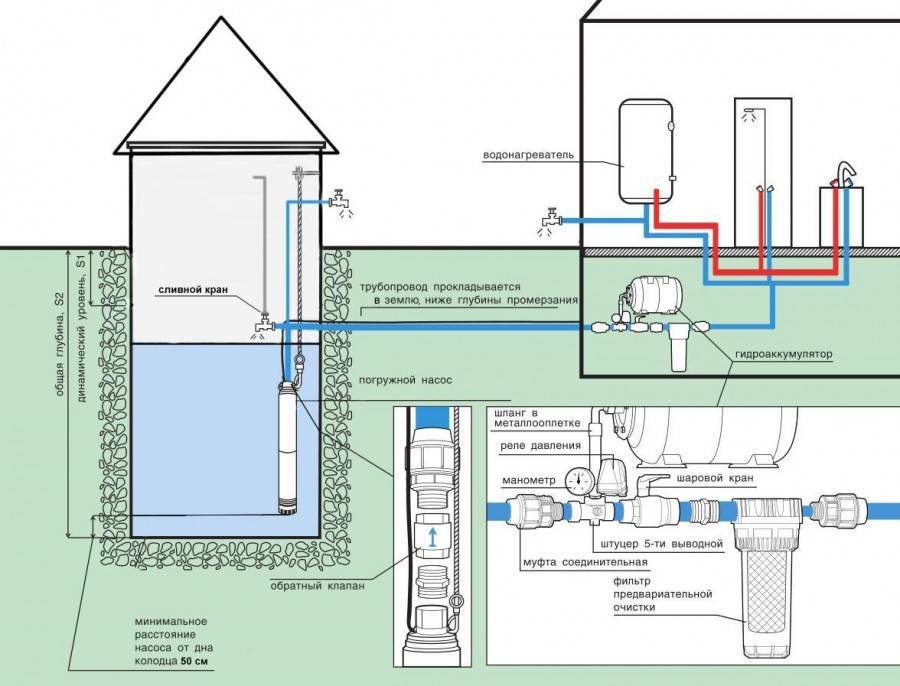
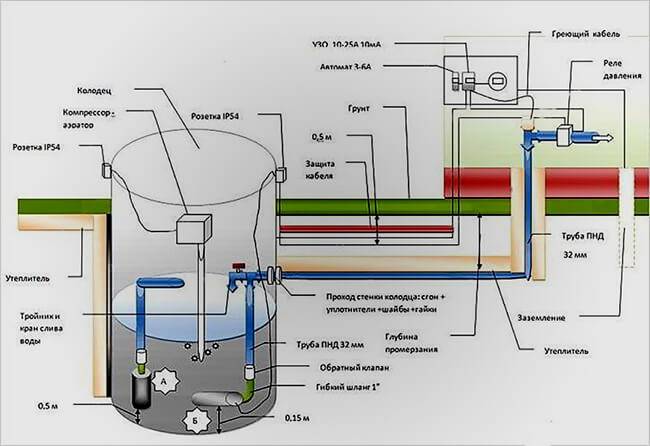

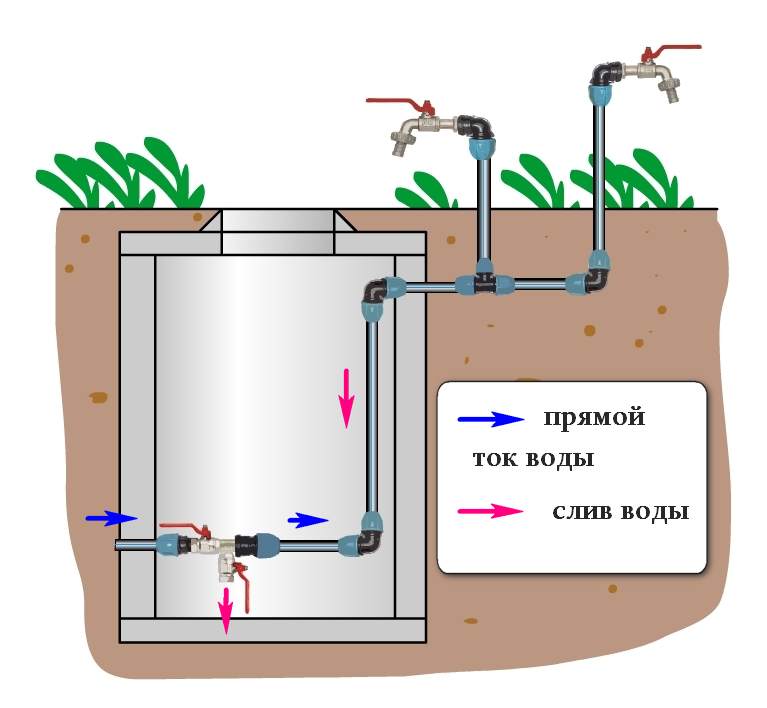
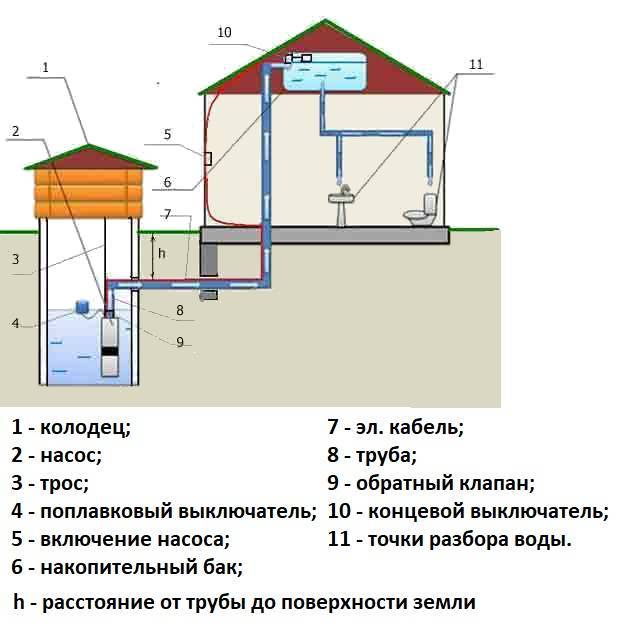
So, it is known that for a country house, laying a winter and summer water supply with your own hands with wiring starts from the pump. In this case, all pipes must be in the ground.In addition, it will be useful to carry out their warming. We would like to give you the following advice. The depth to which the water pipes are laid depends largely on the maximum depth of soil freezing in your area. For this reason, it is necessary to know in advance this figure in your area. Pipes are laid in the ground directly on the site. If necessary, they are insulated.
Inside the premises, the winter water supply is connected to the shut-off valves. Experts recommend using a ball valve, which is a reliable and easy-to-use valve. It is necessary in order to ensure a complete shutdown of water, if necessary.
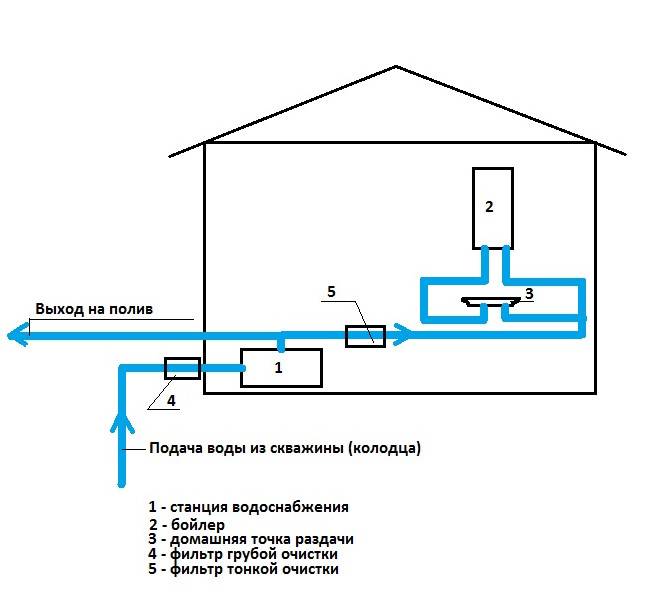

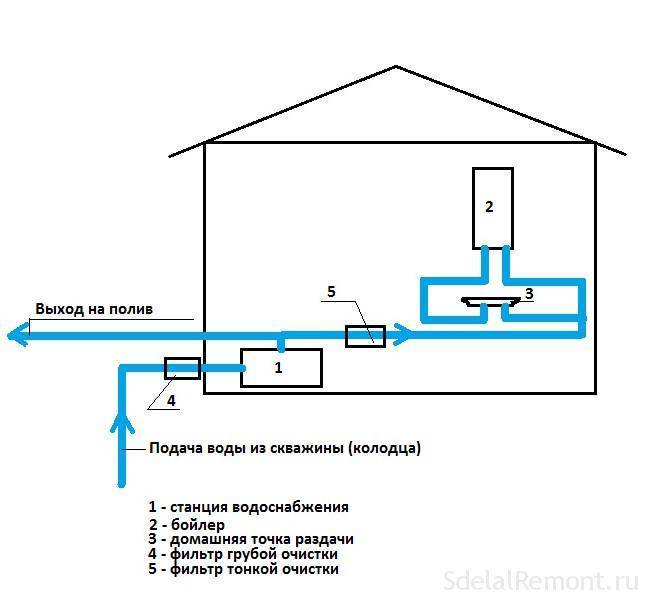
Water supply should be connected to the filtering devices from the shut-off valves. Quite often, in summer cottages, water supply is done with two filters. Coarse and fine filters are used. However, in the event that water enters the house from the well, and its depth is quite significant, then it will be quite enough to use one filter. After that, the water supply is displayed on a special fitting - five. It has three regular holes. The other two holes are used to secure the pressure gauge and pressure switch. From the fiver, the water supply moves directly to consumers, to the accumulator, if it is present in the water supply system in the country.
When a hot water supply system is installed at the summer cottage, the water supply will leave the five, dividing into two branches, for which a tee is used. As a result of this wiring, the first branch is used to supply cold water, and hot water is supplied to consumers through the other. This branch is connected to a water heater, such as a boiler.It turns out that direct supply of cold and hot water is carried out. And along with this, the supply of water from the reserve, that is, located in the tank of the accumulator. Due to the fact that the tank has a certain volume, we can say that when using such a system, a certain supply of both cold and hot water is formed.
If the water heater (boiler) installed in the water supply system has a small volume, then you can proceed as follows: from the accumulator, in which the volume is quite significant, the water supply must be divided into two branches. To do this, use a tee. One of the branches is fed into the cold water supply system, and the other is connected to the boiler.
Device
Pipes from the well to the dacha or house are mainly carried out already when the well is already functioning smoothly on the land.
The scheme of autonomous water supply through a pipeline to the house consists of:
- digging trenches for pipes;
- pipeline laying;
- selection of the optimal pump;
- pump installations;
- filter settings.
A detailed development of a water supply plan will also be required. The pipes themselves for conducting can be made of various materials. Metal, plastic, copper, cast iron are considered optimal. The most important element in the water supply scheme is the pump. You can install it directly in the house or above the well.
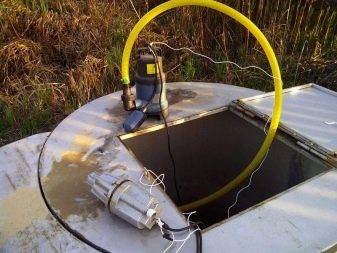
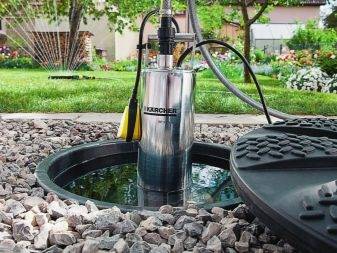
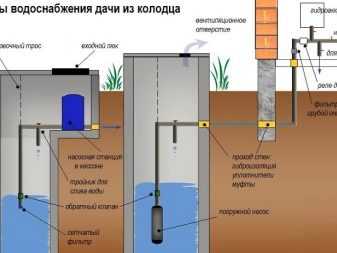
The pump is also installed in the well. This can be done in two ways. In the first case, you first need to drill a hole on the side of the second or third ring. After that, pass a plastic hose through this hole, on which the already mounted pump is lowered into the well so that it does not reach the bottom of 30 centimeters.An electrical cord must be passed through the same hole. In the second option, the pump hose that will pump water is already fixed directly in the well itself. This method is considered easier to perform and as convenient as possible. Since with such an installation, the pump, if necessary, can be easily obtained.
As for the water supply to the house, autonomous water supply schemes can differ significantly. It depends on whether it will be seasonal use of the well or permanent. Both in one and in the second option, the diameter of the pipe must be at least 32 millimeters. The piping should be at an angle to the well. Through each meter, the angle should be exceeded by 15 centimeters. If this is a seasonal water supply in a summer cottage, then it will be necessary to equip a tap through which the drain will be performed. To one of the water pipes, you need to attach a tee into which the pipe is inserted. In this case, it will serve as a drain.
How to install a plumbing system for permanent work
Mine preparation
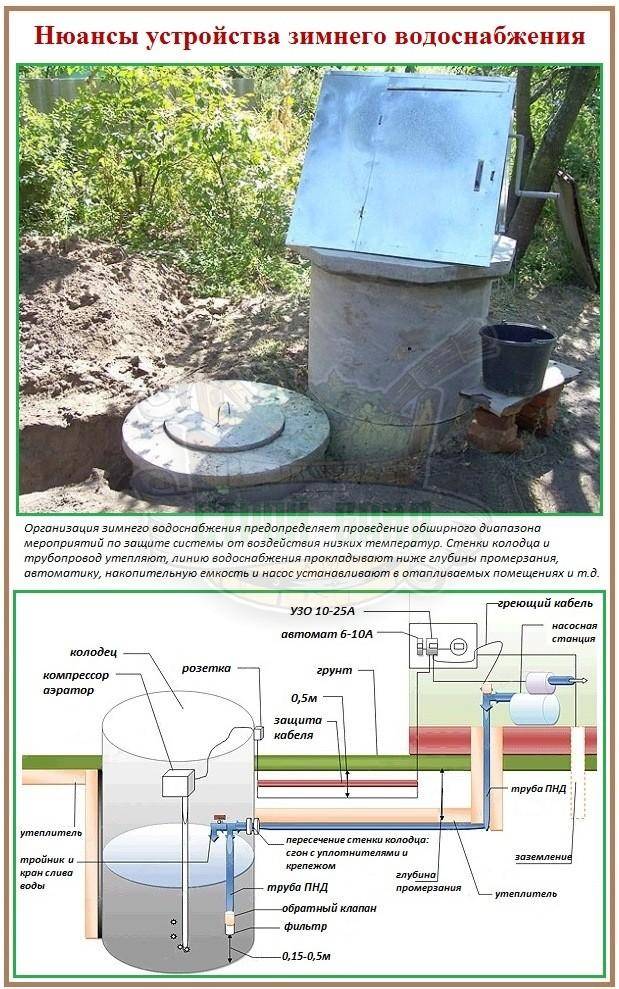
Before you make plumbing in the country from the well, you need to put it in order. The pump must be well supported on a solid, reliable base. Leaks from the upper layers of the soil should be eliminated - they significantly reduce water quality. Outside walls must be protected from freezing.
As a rule, the structure consists of concrete rings fastened together. The rings are dug up and inspected. The trench must accommodate a person. It is dug only on one side - the second is held by the ground.
Start by sealing the seams.They are cleared, cracks are expanded, primed and sealed with mortar. After its setting, the surface is covered with roofing material and coated with bituminous mastics. The inside is coated with liquid glass.
After waterproofing, they begin to insulate with geotextiles. To create more effective insulation, mineral wool boards are used, closed on both sides with polyethylene.
The choice of pipes for seasonal water supply
For the device of garden water supply, you can use materials:
- Steel;
- Polypropylene;
- Low-pressure polyethylene.
Steel pipes
The use of steel pipes when laying a country engineering network is the most irrational solution.
Advantages of steel:
- Strength;
- Temperature resistant.
However, when arranging a seasonal option, these pluses are not essential. At the same time, such material has much more disadvantages:
- Susceptibility to corrosion;
- Great weight;
- Fouling with dirt and salts;
- Complexity of processing.
Pipes made of polymeric materials
Polymer pipes are a much better option for arranging seasonal country water supply.
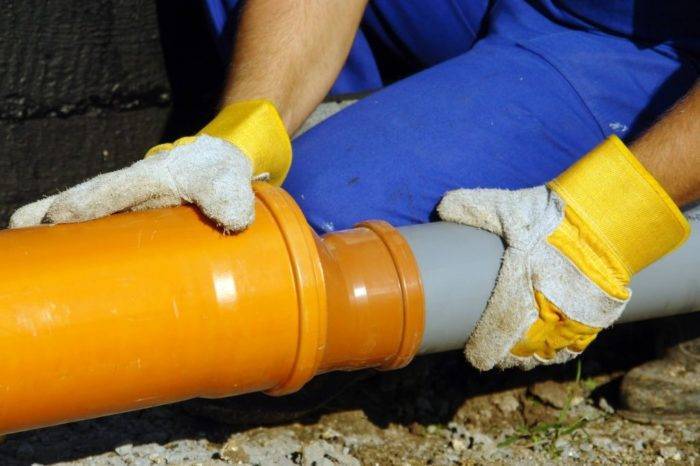
The advantages include the following:
- They are light;
- Do not rust;
- Due to the smoothness of the surface, nothing accumulates on them and is not deposited;
- They are easy to transport even in the trunk of a car.
Let's take a closer look at each type of plastic.
Polypropylene pipes
Street water supply from polypropylene branch pipes is a win-win option. At the same time, the most important advantage of PP pipes is the possibility of their one-piece joining in a fairly simple way.For assembly, two pipes are heated with a soldering iron until melting begins, then they are immediately connected, thereby obtaining a fairly strong bond without much effort. But if you are soldering pipes for the first time, then it is better to practice on unnecessary pieces first.



Another plus is the fact that the threat of leaks in such a system is minimized. Therefore, there is no need to worry about possible gusts and leaks with a hidden method of laying water pipes.
LDPE pipes
For laying a seasonal network of HDPE pipes, you only need a hacksaw and a special cone-shaped miter knife. The tools are designed for cutting pipes.
Nuts on fittings will need to be tightened exclusively by hand - using a wrench can cause overtightening, leading to further leaks.
Metal-plastic pipes
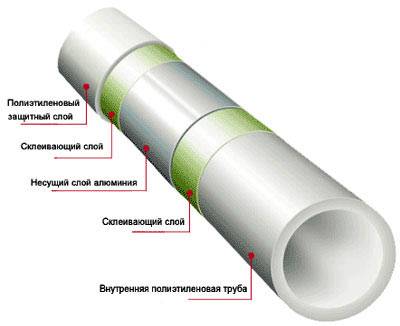
Metal-plastic pipes are a rather complex structure. The first layer is plastic. There is an adhesive layer on top of it. Next - aluminum, which bears the main load. Aluminum is covered with another adhesive layer, which, in turn, is protected by a layer of plastic. This is really a good option. Pipes are light, durable, non-corrosive and can withstand quite a lot of pressure without harm to themselves.
But the complexity of manufacturing and the high cost of aluminum lead to the fact that the price for them is set quite high. Many people who are willing to spend tens of thousands of rubles to equip summer water supply in the country.
Do-it-yourself summer water supply in the country - stages of installation work
The sequence of actions for arranging a water supply system looks something like this:
- A detailed network diagram is drawn up in relation to the site plan. It marks not only the equipment (cranes, sprinkler heads, etc.), but also all the details of the pipeline - tees, angles, plugs, etc. The main wiring, as a rule, is made with a pipe with a diameter of 40 mm, and outlets to the points of water intake - with a diameter of 25 or 32 mm. The depth of the trenches is indicated. On average, it is 300 - 400 mm, but if the pipelines are located under the beds or flower beds, here the laying depth should be increased to 500 - 700 mm - in order to avoid damage by a cultivator or a shovel. It is also necessary to consider how the system will drain. Typically, pipes are laid with a slope towards the source or tie-in to the centralized water supply. At the lowest point, it is necessary to provide for the installation of a drain valve. The number and location of water taps are provided in such a way that watering the entire area can be carried out using short lengths of hose from 3 to 5 m long. On a standard six acres, there can be from 7 to 10.
- Based on the scheme, a specification is drawn up, according to which equipment and materials will be purchased.
- If it is supposed to supply the country water supply from a centralized network, it is necessary to make a tie-in. The easiest way, which, moreover, does not require turning off the water, is based on the use of a special part - a saddle. It is a clamp with a seal and a threaded pipe. The saddle is installed on the pipe, then a ball valve is screwed onto its branch pipe and a hole is made right through it in the pipe wall. After that, the valve is immediately closed.
- Next, trenches are prepared for laying pipes.
- The system is assembled by connecting pipelines to taps and other elements by means of fittings.
- The finished water supply should be tested for tightness by supplying water to it and observing the condition of the connections for some time.
- It remains to dig trenches.
Final stage
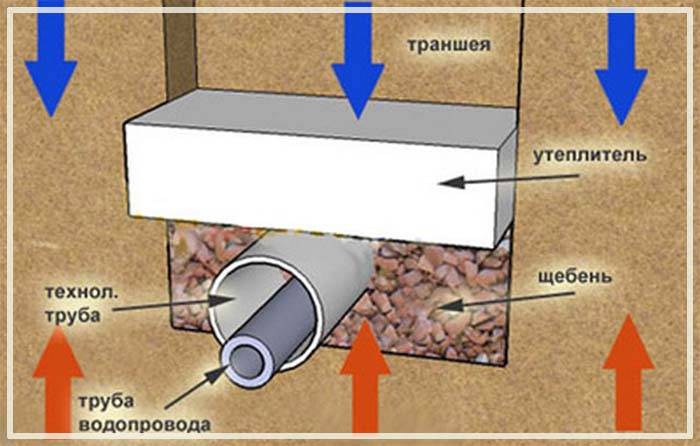
After assembling and connecting all the elements of the system, they are tested. If everything works properly, you can proceed to the final stage of the assembly. Since our water supply will be operated in the winter, all pipes must be well insulated. To do this, do the following:
- Pipes in trenches are carefully wrapped with geotextiles.
- If the trenches were dug below the freezing mark, then it is enough to fill the hole with sand and lightly tamp. From above, everything is covered with soil.
- When digging a trench above the freezing mark, a heat-insulating material is used to backfill pipes - expanded clay, slag, foam plastic chips. At the same time, on top of the pipes, this material should give a layer of at least 20-30 cm. Then everything is also covered with soil.
- If the system provides for manholes, then hatches are installed on them.
Video instruction on how to make plumbing from a well or well that will work in summer and winter:
Summer and winter plumbing
Previously, you most likely heard such definitions as summer and winter plumbing systems. Study the main properties of these options, it is quite possible that even the simplest summer option will be able to satisfy your needs.Otherwise, you can immediately proceed to the study of the following sections of the manual on the arrangement of a full-fledged water supply.
Summer option
Summer plumbing in the country
The features of such a water supply system are clear from its name - the operation of such a system is possible only in the warm period. There are stationary and collapsible modifications of the system.
The collapsible summer water supply system has a very simple design: it is enough to connect the hoses to a pump of suitable parameters and lay them on the soil surface so that they do not interfere with normal movement around the summer cottage.
Summer plumbing in the country
Silicone and rubber hoses are suitable for arranging the system. The connection is made using special adapters. Also in specialized stores are available more modern products for connecting hoses - latches. One side of such a latch is equipped with a spring-loaded connector, and on the other side there is a “ruff”. With the help of such latches, hoses are connected quickly, reliably and simply.



Most often, such a collapsible system is used for irrigation. It is pointless to organize on its basis a full-fledged water supply to solve domestic needs.
Piping for summer plumbing
The laying of a stationary summer water supply is carried out underground. Flexible hoses are not suitable for arranging such a system. The best option is plastic pipes.
Pipes of stationary seasonal water supply are laid at a meter depth. After the end of the season, water must be pumped out of the pipes, otherwise, with the advent of cold weather, it will freeze and ruin the pipeline.
In view of this, the pipes must be laid with a slope towards the drain valve.Directly the valve is mounted near the water source.
Winter option
Such water supply can be used throughout the year.
Plumbing in the country
Pipes made of polyethylene and polypropylene are suitable for arranging the system. The former are sold at a lower price and are mounted without the use of special tools. The latter are somewhat more expensive and require the use of a pipe soldering iron during installation. However, in the end, you will spend more money on additional parts for mounting pipes based on polyethylene than on additional products used in the installation of polypropylene pipes.
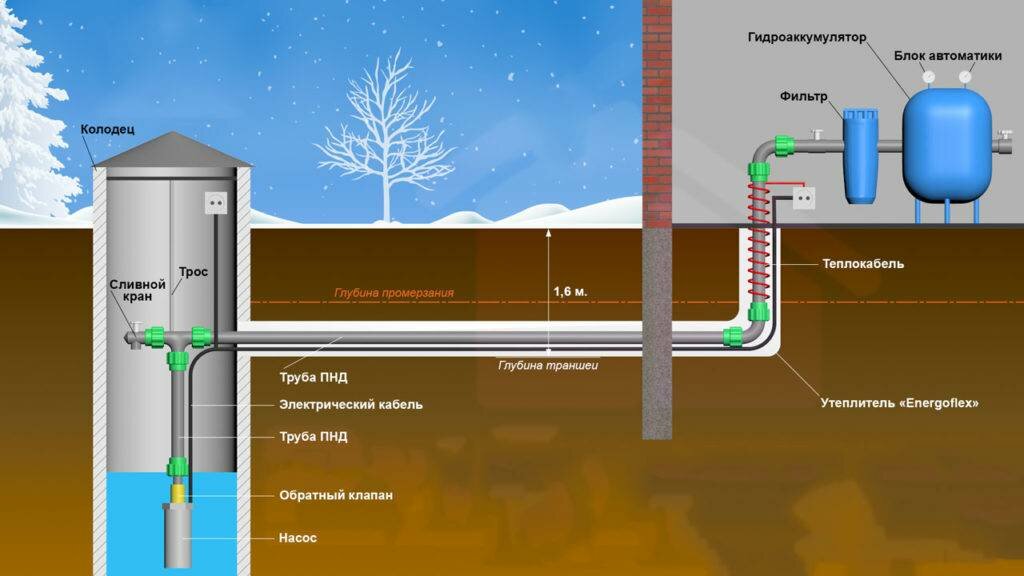
Water pipes are laid with a slight slope towards the source of water supply. The pipeline should run 200-250 mm below the freezing point of the soil.
Pipe slope
There is also an option with pipe laying at a depth of 300 mm. In this case, additional insulation of the pipeline is mandatory. Foamed polyethylene perfectly copes with the functions of thermal insulation. There are special products of a cylindrical shape. It is enough to simply put such rounded polypropylene on the pipe and as a result the product will be reliably protected from cold and other adverse effects.
Not only winter water pipes, but also a source of water need additional insulation.
Polystyrene "shell" for pipe insulation
For example, a well is insulated for the winter and covered with snow. These measures will be enough to ensure the protection of the structure from the cold.
Well insulation
Surface pumping equipment, if used, is equipped with a caisson.The caisson is a pit with additional insulation, equipped next to a water supply source equipped with a pump.
Caisson
The installation of automatic pumping stations can only be carried out in a room where the air temperature does not drop to negative levels even in the most severe frosts.
Typical device of a pumping stationInsulation of sewer pipes
Next, we will consider the procedure for arranging a full-fledged water supply, which can be used at any time of the year.
Piping, boiler and expansion tank